Defense Secretary Pete Hegseth attempted to assuage Southeast Asian partners this week that the U.S. is dedicated to its allies in the Asia-Pacific region and pitched a defense framework to guide cooperation in the next few years during his trip to the Philippines. Hegseth said the Trump administration’s “strong, quiet and clear” approach to the…
Defense Secretary Pete Hegseth attempted to assuage Southeast Asian partners this week that the U.S. is dedicated to its allies in the Asia-Pacific region and pitched a defense framework to guide cooperation in the next few years during his trip to the Philippines. Hegseth said the Trump administration’s “strong, quiet and clear” approach to the…
Mechanics repair unmanned ground vehicles at the Lava Unmanned Systems Regiment workshop in the Kharkiv region.
Diego Fedele/Getty Images
A Ukrainian unit says its ground robot completed 93% of a 12-mile supply mission autonomously.
The robot used AI navigation, cameras, and 3D mapping to navigate the route.
The unit hopes to expand autonomous missions and reduce reliance on services like Starlink.
A Ukrainian military unit said on Wednesday that it successfully sent a ground robot on a 12-mile supply run, using AI to navigate for nearly the entirety of the mission.
The Lava Unmanned Systems Regiment of the 2nd Corps, or Khartiia Corps, of Ukraine's National Guard announced the completion of the autonomous logistics mission in a statement shared with Business Insider, calling it the "first of its kind under combat conditions."
The unit said that the robot completed 93% of its 20-kilometer trip on its own, delivering cargo and returning to its starting point autonomously, with an operator intervening for only 1.4 kilometers of the journey.
Before departure, a separate ground robot equipped with light detection and ranging technology, or LiDAR, mapped the route and terrain in 3D. Cameras on the supply bot detected obstacles while AI-powered navigation guided the robot.
"This mission has shown that autonomous ground systems are already capable of operating in real combat conditions," said Andrii Kopach, who serves as commander of the Lava Regiment's Unmanned Ground Systems Battalion.
"The biggest change is that the operator is no longer a driver but a dispatcher," he said. "Instead of controlling the vehicle every second, they monitor its movement and step in only when needed."
Kopach said that the unit's next ambitions are to enable a single operator to oversee multiple robots at once and expand autonomous missions to casualty evacuations. He added that more AI-powered ground robots would reduce dependence on "a constant control link," such as Starlink, a satellite internet service which recently saw major speed disruptions in Ukraine, negatively affecting front-line operations.
Ground robots have become an important tool for Ukraine, carrying out resupply, casualty evacuation, and assault missions. The Ukrainian military, and Western military leaders studying lessons from the war, hope that increased reliance on ground robots and aerial drones, as well as the increased integration of AI capabilities into these systems, can help reduce the risks to the troops who would otherwise perform those missions on increasingly dangerous battlefields.
The Republican president has said new strikes on Iran are an option after the midterms and is sending more military resources to the Middle East, despite initially promising Americans a military campaign that would last only a matter of weeks.
U.S. Ambassador to the United Nations Mike Waltz on Tuesday posted a video depicting a confrontation between U.S. and Cuban officials while he spoke at the podium of the U.N. General Assembly chamber. The video shows Cuban officials standing and speaking to Waltz, who can be heard saying one of them needs “to back away…
U.S. Ambassador to the United Nations Mike Waltz on Tuesday posted a video depicting a confrontation between U.S. and Cuban officials while he spoke at the podium of the U.N. General Assembly chamber. The video shows Cuban officials standing and speaking to Waltz, who can be heard saying one of them needs “to back away…
A Russian jet-powered drone set homes on fire in Kharkiv’s Osnovianskyi district during the night, Ukraine’s State Emergency Service (SES) reported. A small child was among the people hurt. Around 13:00 on 28 October, another Russian drone hit the same district, starting a fire, killing one person and injuring two, Kharkiv Mayor Ihor Terekhov said.
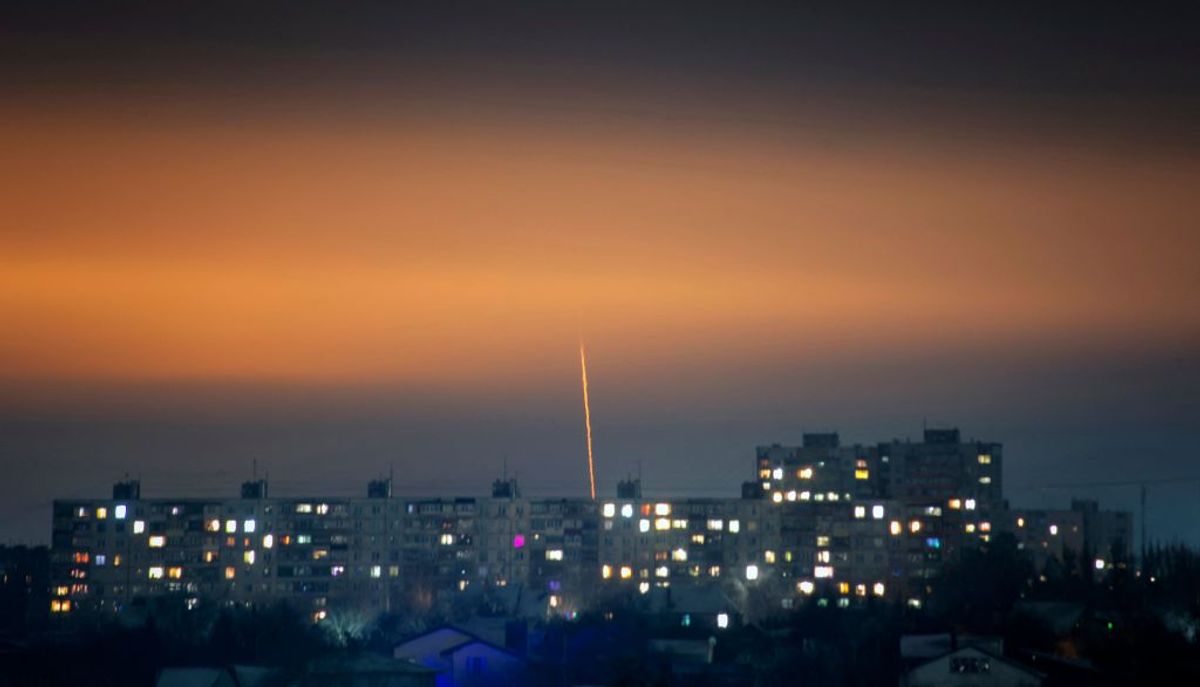
Of the 88 Shahed-type drones Russia launched from 18:00 on 27 October, 38 were jet-powered, the Air Force reported. By its preliminary count at 08:00, defenses had downed or jammed 31 of those 38. Several drones were still in the air. Russia also fired an Iskander-M or S-400 ballistic missile from Taganrog. Even so, Russian weapons hit eight locations, and debris fell on two more.
One strike, a casualty count that shifted
Kharkiv Oblast head Oleh Syniehubov reported a drone strike on the district at 22:42 on 27 October. At 23:12, he clarified that a child hurt in the strike had acute stress reaction. At 23:39, he listed four people hurt: women aged 32 and 65, a 56-year-old man, and a 4-year-old boy. Three went to hospital. Eight minutes later, he added that a 65-year-old woman had acute stress reaction. His morning summary of the day’s strikes lists two 65-year-old women in Kharkiv, one wounded and one with acute stress.
Aftermath of the strike on Kharkiv. Photo: State Emergency Service of Ukraine in Kharkiv Oblast
The SES put the number of people hurt at five, including the child. Rescuers said a jet-powered drone struck the area, starting a 2,500 m² fire.
Kharkiv’s last two days
The Osnovianskyi fire was part of a run of Russian strikes on Kharkiv and the area around it. On the evening of 26 October, Russian multiple rocket launchers hit the city’s Novobavarskyi district, killing two people and hurting four. That night, jet drones struck three places in Kharkiv district, which surrounds the city. One hit, in the settlement of Vilshany, left people hurt. The SES counted three injured that night.
Explore further
Russia strikes publishing house warehouse in Kharkiv on Ukrainian Language Day, adding to a campaign against Ukrainian literature and culture
During the day on 27 October, another Russian jet drone hit a warehouse in the city’s Slobidskyi district. Preliminary reports showed no casualties. Drones also hit the Shevchenkivskyi district that afternoon, wounding one person, Terekhov said. Another hit damaged an administrative building in the Kholodnohirskyi district, he added. Hours later came the strike on Osnovianskyi. Across Kharkiv Oblast, 14 people were hurt over the past day, including a child, Syniehubov’s morning summary shows. In Osnovianskyi, rescuers were again working under the threat of repeat strikes.
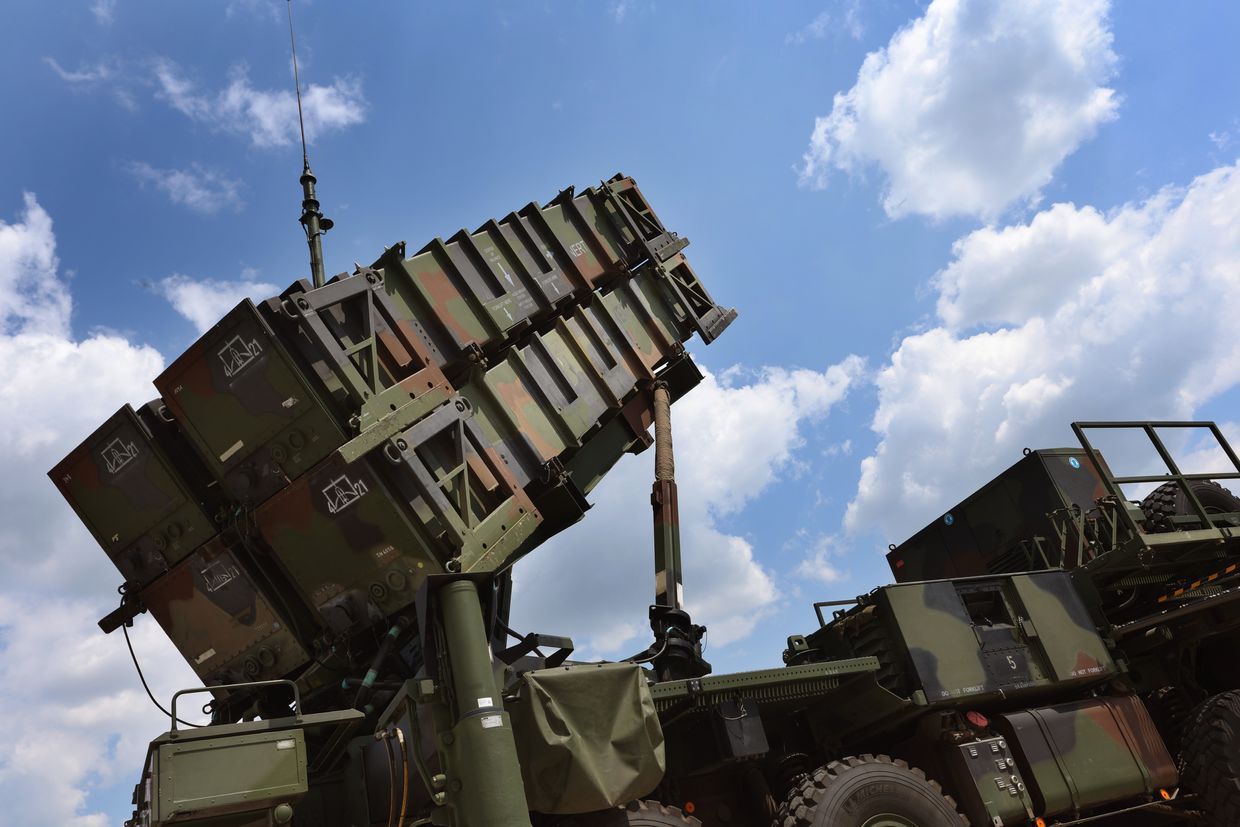
Ukraine needs to intercept around 150 Russian ballistic missiles per month but receives about 150 Patriot missiles from the U.S. annually, according to President Volodymyr Zelensky.
President Trump is headed for a showdown with Democrats and members of his party after Election Day over Secretary of Defense Pete Hegseth’s future leadership of the Pentagon, the Iran war and the Russia-Ukraine war. Democrats are stepping up their demands that Trump fire Hegseth after the midterm elections and warning they won’t support funding…
President Trump is headed for a showdown with Democrats and members of his party after Election Day over Secretary of Defense Pete Hegseth’s future leadership of the Pentagon, the Iran war and the Russia-Ukraine war. Democrats are stepping up their demands that Trump fire Hegseth after the midterm elections and warning they won’t support funding…
This article first appeared on Pacific Forum and is republished with kind permission. Read the original here. With so much media focus in recent months on the war in Iran, it’s no surprise that Under Secretary of War for Policy Elbridge Colby’s speech in Manila received so little coverage. That means very few know what […]
Zelensky's comments come one day Russian ballistic missiles targeted Kyiv in a deadly attack on a university campus, a major bridge, an administrative building, and medical facilities in Kyiv. The attack killed one person and injured 15.
The cost of the U.S.’s war against Iran has gone up to $47 billion, an increase of more than $3 billion since last month, as President Trump mulls launching strikes against the Islamic Republic after the U.S. midterm elections. The biggest chunk of the cost is munition replacement at $29 billion, according to an Oct.…
The cost of the U.S.’s war against Iran has gone up to $47 billion, an increase of more than $3 billion since last month, as President Trump mulls launching strikes against the Islamic Republic after the U.S. midterm elections. The biggest chunk of the cost is munition replacement at $29 billion, according to an Oct.…

 Login