Hegseth seeks to assuage Southeast Asian partners on trip to Philippines


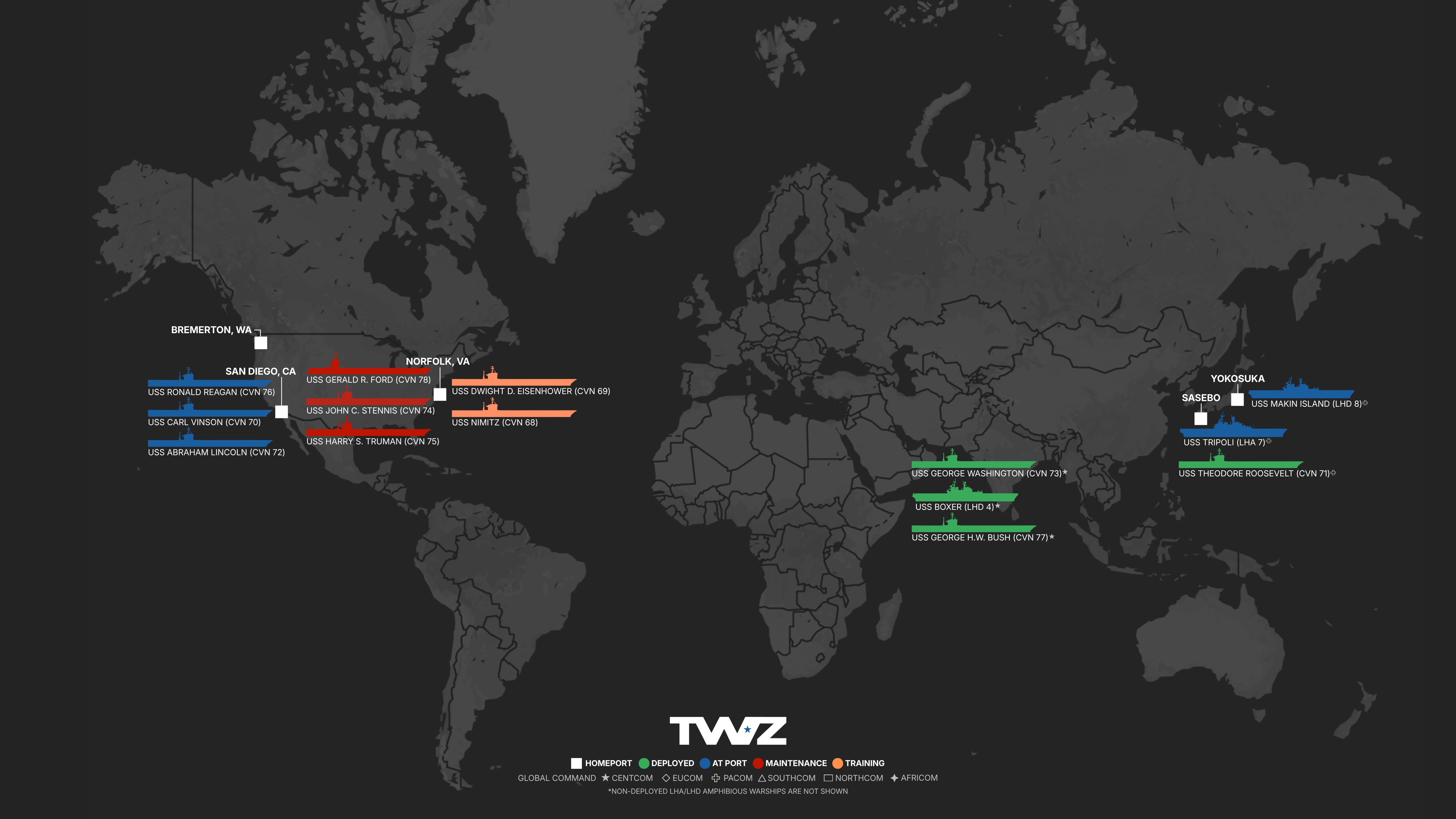
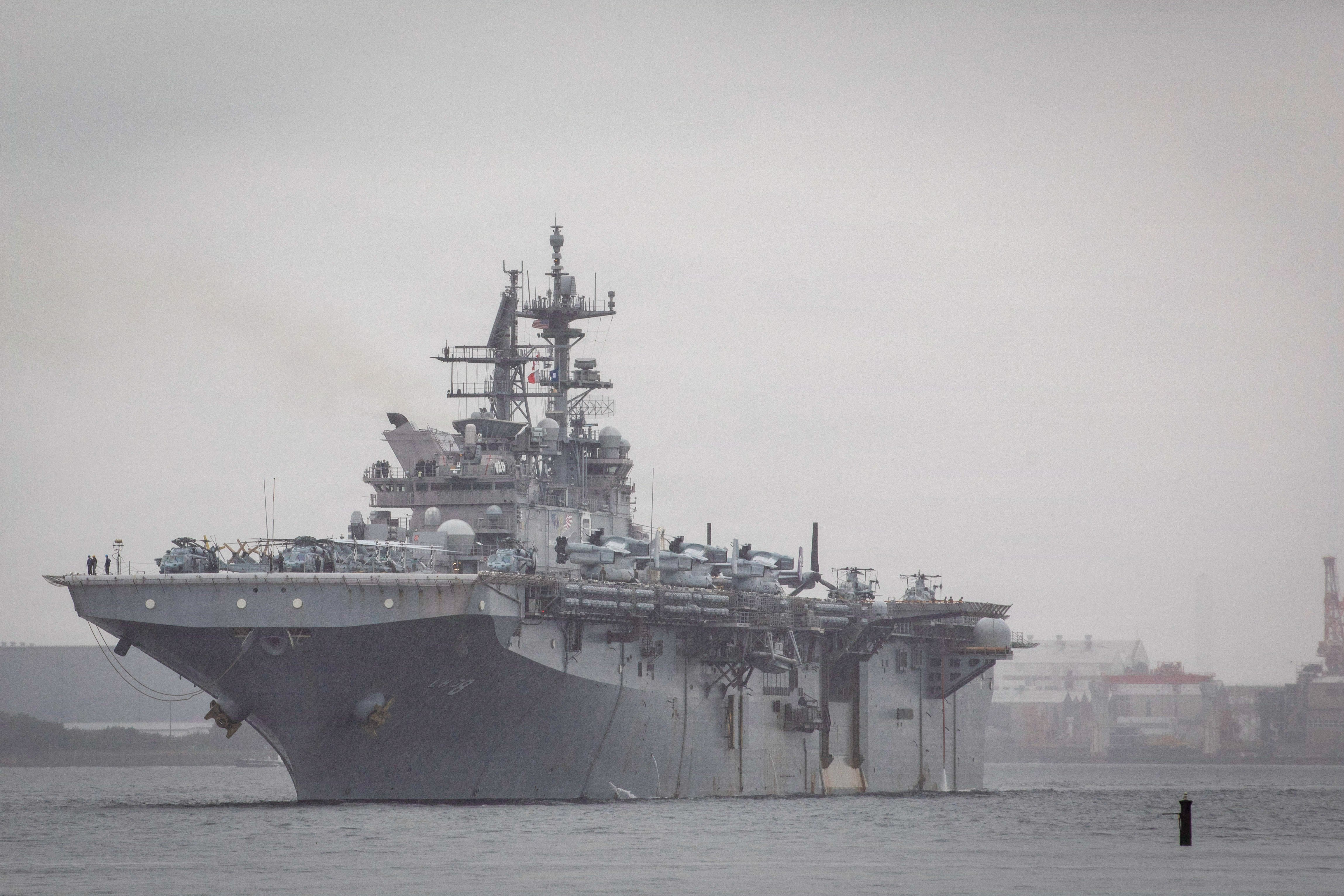
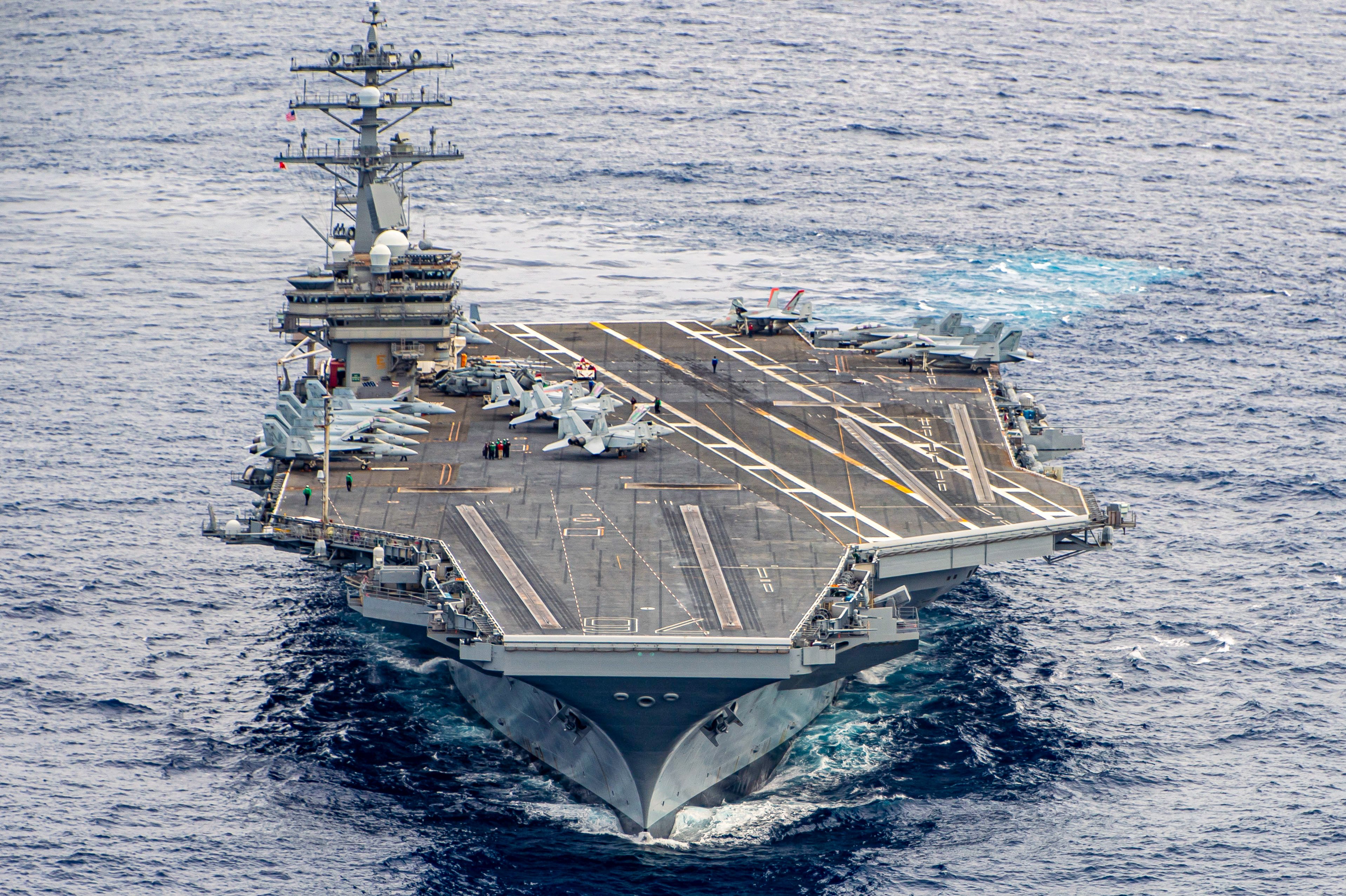
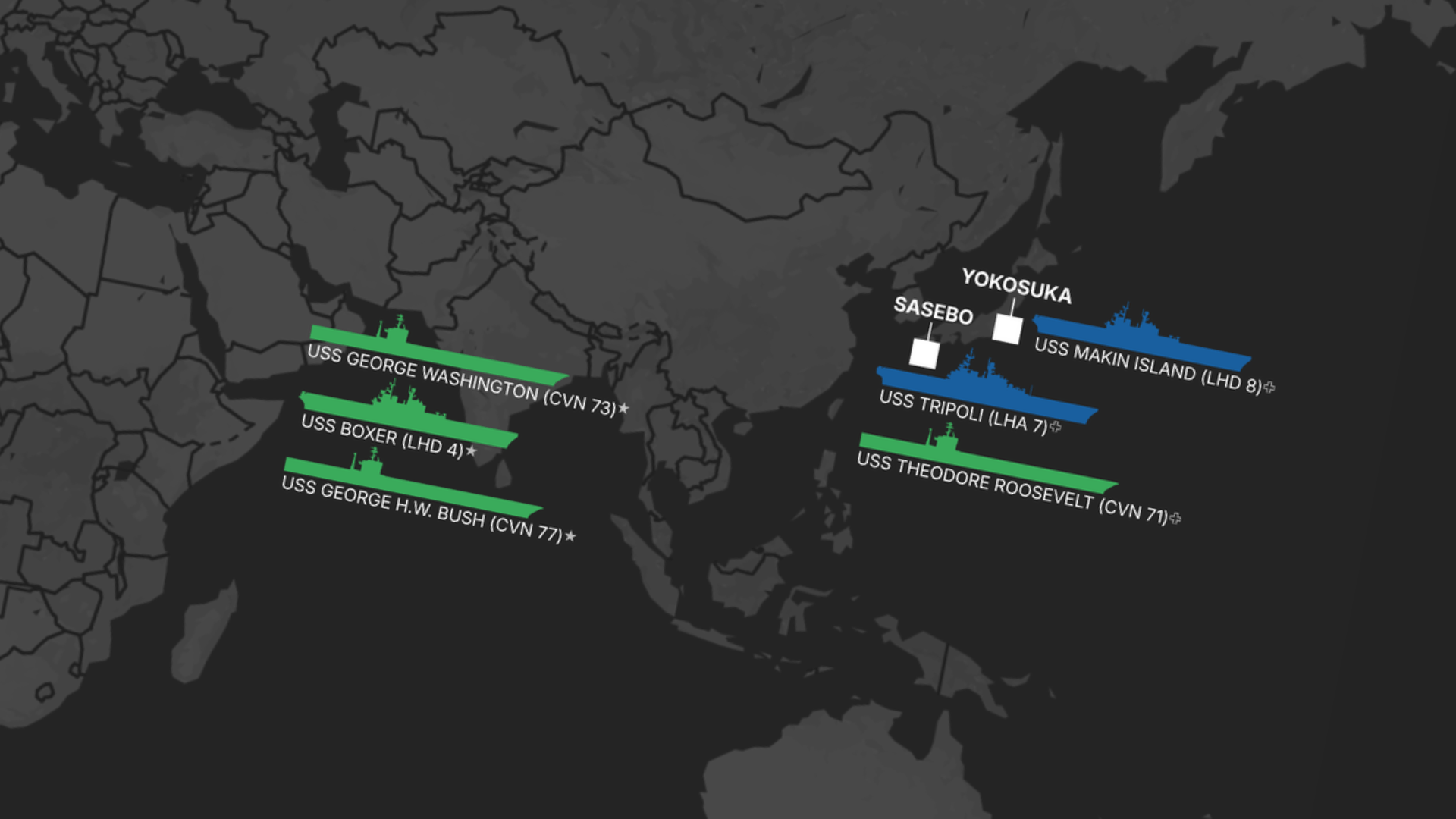
The Makin Island Amphibious Ready Group (ARG) tied up in Yokosuka, Japan, on Monday, a week after the Theodore Roosevelt Carrier Strike Group departed from the same base to participate in exercise Keen Sword 27. Both are reportedly destined for the Middle East, two U.S. officials confirmed to Fox News, which would place three CSGs and two ARGs in the U.S. Central Command (CENTCOM) area of responsibility (AOR) sometime in November, unless a group leaves before their arrival. More than 10 guided-missile destroyers are also operating independently in the region, as the U.S. beefs up force posture ahead of the possibility of renewed hostilities against the Iranian regime.
Meanwhile, on the other side of the world, the USS Ronald Reagan remotely controlled an MQ-25A Stingray tanker drone thousands of miles away for the first time, and the Navy announced that USS Abraham Lincoln, which just returned from a historic deployment, will conduct a homeport shift to Bremerton, Washington.
Here’s TWZ’s weekly carrier tracker monitoring America’s flattop fleet, including deployed CSGs and ARGs, using publicly available open-source information. Check out our last report here.

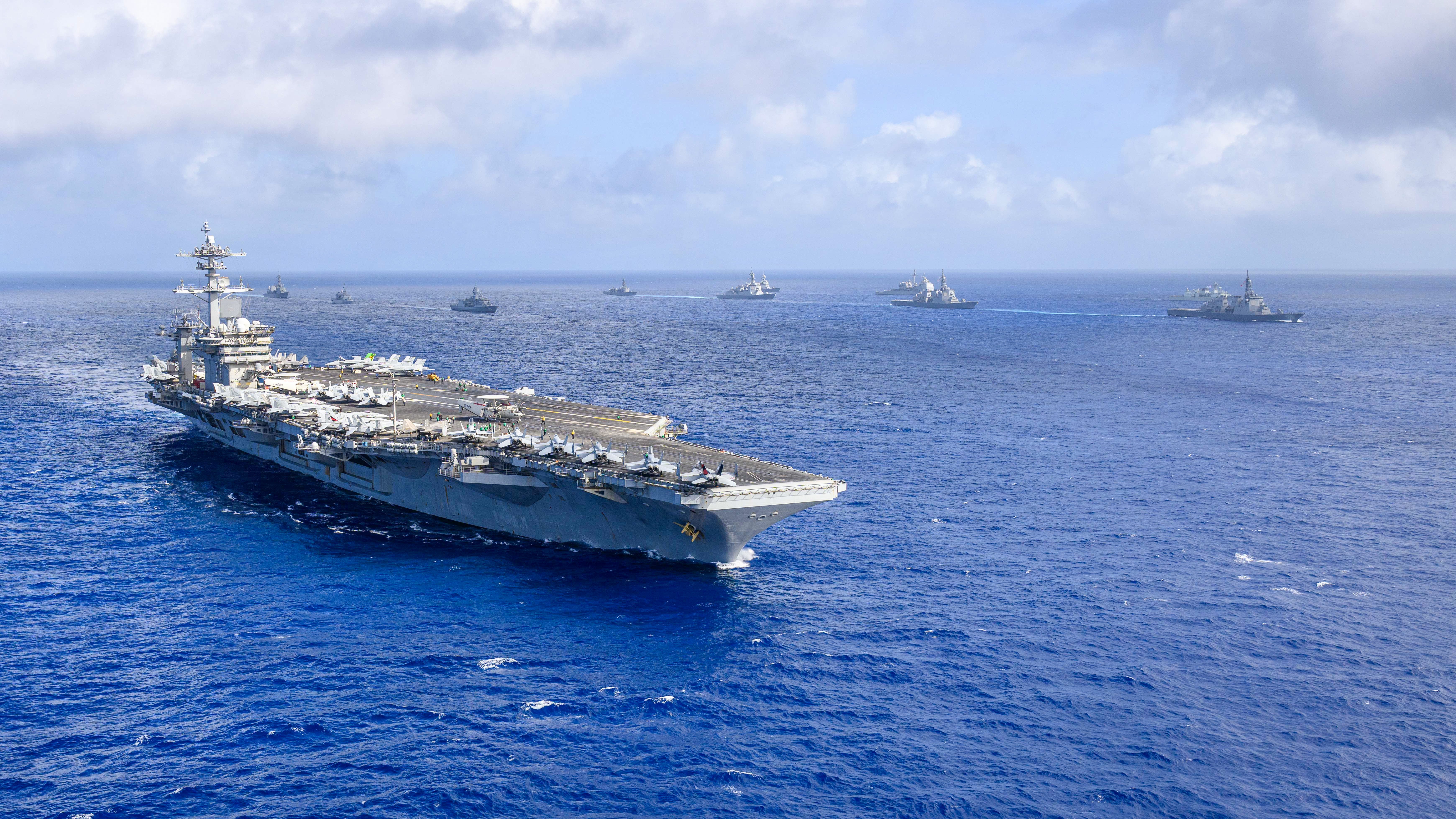
Surrounded by allied warships, the USS Theodore Roosevelt steamed through the Philippine Sea last week as large-scale combined exercise Keen Sword 27 got underway. Roosevelt and guided-missile cruiser USS Chosin departed Commander, Fleet Activities Yokosuka, on October 19 following a three-day port call. Roosevelt deployed on September 27 and was the first non-resident American carrier to pull into the vital naval port in over four years.

Three American warships are participating in the exercise, a Navy official confirmed to TWZ. The third participant, Pearl Harbor-based guided-missile destroyer USS Decatur, another element of the five-ship strike group, also called port in Yokosuka and transited out of Tokyo Bay on October 26.
Australian, Canadian, and French warships joined the exercise alongside the U.S. and Japan in a large show of force. Keen Sword 27 runs through October 29, but it’s unclear if Roosevelt and her escorts will remain until the conclusion before heading toward the Middle East via the Strait of Malacca. More than 45,000 Japan Self-Defense Forces personnel and 11,000 U.S. service members are participating.

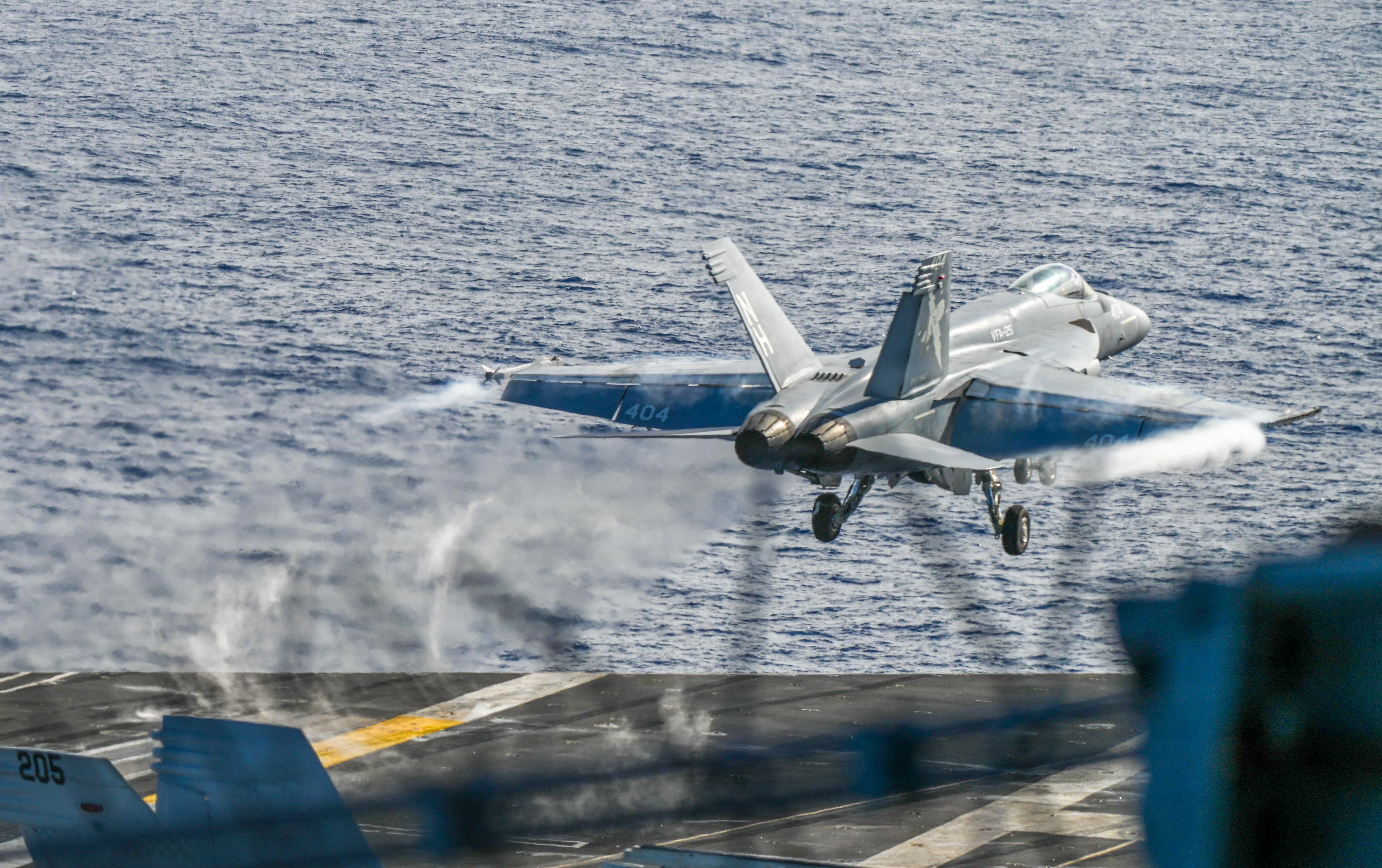
F/A-18 Super Hornets and F-35Cs launched from Roosevelt and airbases in Japan to complete a simulated strike against a target in the East Sea/Sea of Japan, which also included land-based launchers, an exercise spokesperson told Stars and Stripes. Japanese destroyers JS Kongo and JS Maya assumed the red team role. The precise location and munitions employed were not disclosed.
The Theodore Roosevelt CSG, which a different Navy official confirmed also includes USS Paul Hamilton and USS Carl M. Levin, will arrive in the Middle East, Fox News reported last week. Both destroyers are disaggregated from the rest of the group. Hamilton, the last ship to deploy, left San Diego on October 10 and most recently pulled out of Pearl Harbor last week. Levin, the first ship to deploy, is already operating in the CENTCOM AOR, based on public images posted on the military’s content platform, DVIDS.
If the CSG and ARG, which also includes amphibious transport docks USS Anchorage and USS John P. Murtha, arrive in the Middle East before the other two carriers on station, USS George H.W. Bush and USS George Washington, and big-deck amphibious assault ship USS Boxer, depart, that would add roughly 10,000 sailors and Marines to CENTCOM’s arsenal, the most significant force posture in the region since the war began. However, the overlap can only be maintained for a limited time given normal rotation schedules.

Acting Secretary of the Navy (SECNAV), Hung Cao, said during a panel at the Association of the United States Army (AUSA) convention that “the Teddy Roosevelt carrier strike group just deployed on October 8 with a medium sized unmanned surface vessel (MUSV). This is the first carrier strike group to ever deploy with a large size unmanned surface vessel.” However, despite multiple requests to comment, the Navy has not confirmed to TWZ that MUSV Seahawk (2) is assigned to the strike group. Seahawk was 10 nautical miles north of Guam, publicly available Automatic Identification System (AIS) data on MarineTraffic showed, as of publication.
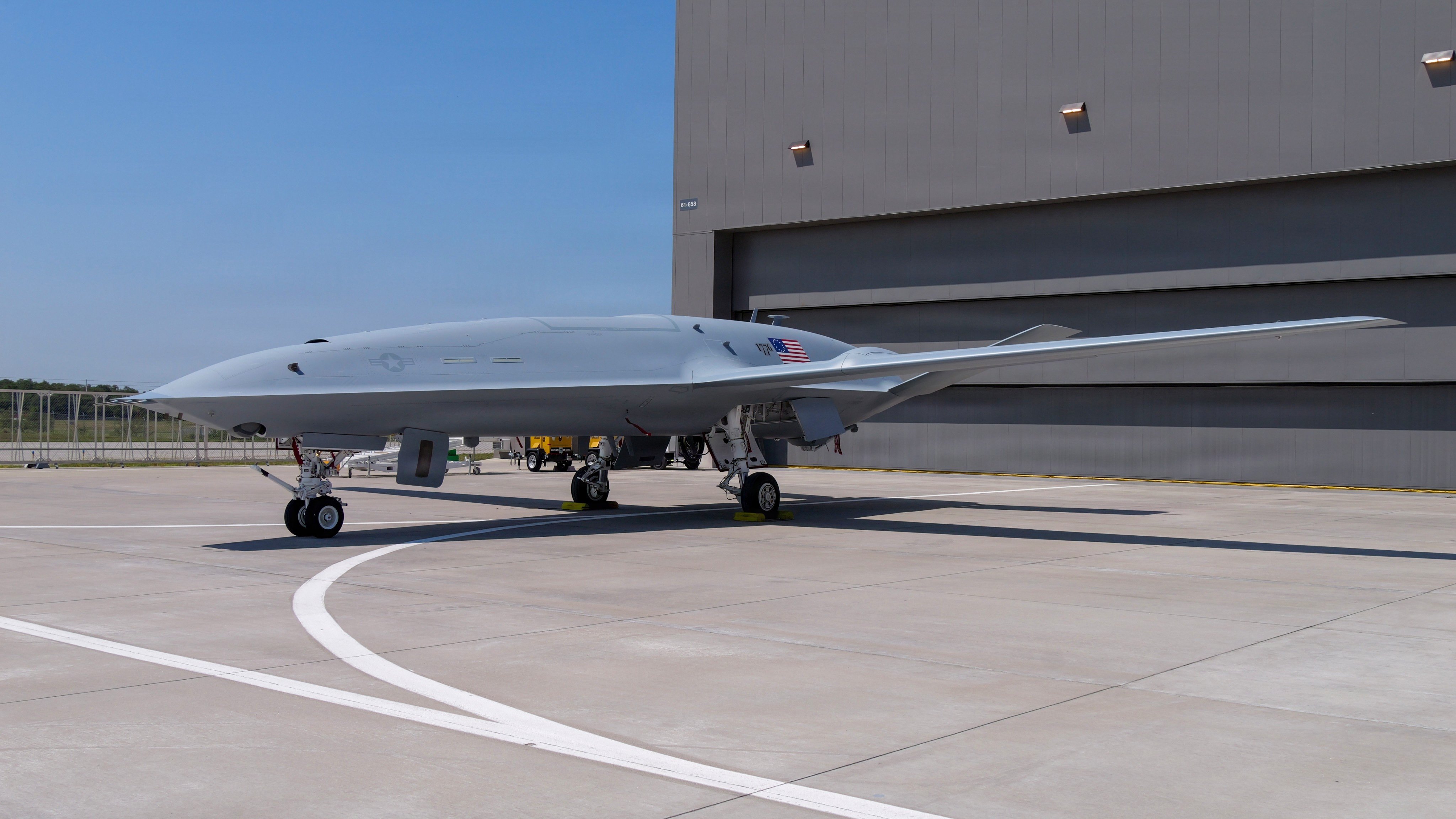
Providing a glimpse of the future, the USS Ronald Reagan used her brand-new Unmanned Air Warfare Center (UAWC) to operate an MQ-25A Stingray tanker drone at a Boeing facility in Illinois. “In a historic U.S. naval aviation event, an aircraft carrier connected to, and controlled, an unmanned aerial refueler MQ-25A Stingray more than 2,100 miles away,” the Navy said in a press release.

The UAWC, installed during Reagan’s recently completed 15-month maintenance availability, used its MD-5C ground control station to link beyond line-of-sight with the drone while the flattop was underway in the eastern Pacific Ocean. “The MQ-25A Stingray’s carrier-based refueling capabilities enable F/A-18 Super Hornets to fly farther and longer,” the Acting SECNAV said. “The integration of this unmanned aerial refueler demonstrates the transformational change our manned and unmanned asset integration provides the Fleet.”
The test took place during a preliminary sea trial, part of a “series of build-up exercises designed to validate procedures, networks and interfaces,” reads the release. Capt. Daniel Fucito, program manager of the Navy’s Unmanned Carrier Aviation Program Office (PMA-268), said, “We have redefined naval power projection. This first-ever underway connection between a carrier-based UAWC and an MQ-25A aircraft proves that the Carrier Air Wing of tomorrow is a reality today.”

Reagan is the second Nimitz class carrier equipped with the UAWC. The MQ-25A will eventually take the role held by the F/A-18E/F Super Hornets that are tasked with fueling carrier-based aircraft, freeing up aircraft to take on higher-end combat roles.
Reagan moored at Kilo Pier at Naval Air Station North Island in San Diego on October 27 after finishing Fleet Replacement Squadron and Carrier Qualifications.
The USS Abraham Lincoln recently returned from a record-setting deployment. The carrier arrived back home on October 8 after being at sea for 321 days, less than a week short of the longest carrier deployment in the post-Vietnam era.
The Navy has confirmed what TWZ was the first to report: the Lincoln will complete a homeport shift to Bremerton, Washington, to undergo an overhaul following a grueling deployment that left the carrier looking worse for wear. The release did not disclose the length of the availability, but Reagan was out of commission for more than a year, and was not previously involved in combat operations.
“The carrier repeatedly demonstrated unmatched multi-theater combat lethality and safeguarded critical sea lanes across the Indo-Pacific and Middle Eastern theaters. Home port shifts are part of the Navy’s continued commitment to the strategic dispersal of ships,” a statement released from Commander, Naval Air Forces reads.
The move is a permanent change of station for the crew and their families.


Overall, three U.S. carriers are deployed, three are working up in various states of readiness, three are in maintenance availabilities, one is post-deployment, one is being used primarily for training before deactivation, and another will be delivered in 2027. Two amphibious ready groups are deployed, one is forward-deployed, three are working up or in port, and three are in maintenance.
Note: Positions are general approximations. Non-deployed LHA/LHD amphibious warships are not shown.
Contact the author: ian@twz.com or @ianellisjones
The post Where Are The Aircraft Carriers?: October 27, 2026 appeared first on TWZ.

A series of drone attacks on commercial shipping in the western Black Sea has brought the consequences of Russia’s war against Ukraine increasingly close to NATO territory, prompting additional military surveillance and renewed regional defence cooperation.
France has temporarily deployed an Atlantique 2 maritime patrol aircraft to Romania, while NATO members bordering the Black Sea are strengthening arrangements to monitor shipping routes, identify airborne threats and protect critical infrastructure.
The French aircraft began operating from Romania’s Mihail Kogălniceanu airbase on 18 October and is scheduled to continue reconnaissance missions until 6 November.
Its deployment follows repeated attacks on merchant vessels near Romania and Bulgaria, both members of NATO and the European Union.
At least eight cargo ships have been struck in the region during October, with approximately 34 sailors reported dead or missing, according to figures reported by Reuters on 27 October.
The incidents have transformed commercial maritime security into an increasingly urgent issue for European defence planners.
The latest escalation has centred on shipping routes serving Ukraine’s Danube ports and commercial traffic passing through the western Black Sea.
Russia’s attacks on Ukrainian maritime infrastructure have increased the importance of alternative export routes, including those connecting the Danube to international shipping lanes.
However, recent incidents demonstrate that geographical proximity to NATO territory does not necessarily provide commercial vessels with protection from the effects of the conflict.
On 23 October, a drone struck a Comoros-flagged cargo vessel near the Romanian port of Constanța.
According to maritime security company Ambrey, the vessel was hit approximately 16 nautical miles east of the port and subsequently capsized.
One crew member was reported dead, nine were rescued and three remained missing in the initial casualty figures.
Ambrey assessed it as highly likely that Russian forces carried out the attack, pointing to the vessel’s links with Ukrainian Danube ports.
That assessment represents an attribution by a commercial security organisation, rather than a final determination by an international investigative body.
Other incidents have similarly raised questions over responsibility.
Ukraine has accused Russia of attacking civilian shipping, while Bulgarian authorities have acknowledged difficulties in conclusively identifying the operators of drones involved in some strikes.
Romania’s Defence Ministry announced on 27 October that the Atlantique 2 deployment followed a request from Bucharest in response to the deteriorating security situation.
The aircraft is conducting surveillance and reconnaissance over the western Black Sea, working with Romanian naval authorities and maritime rescue coordination services.
Its principal responsibilities include identifying hazards to navigation and improving awareness of threats to critical infrastructure within Romania’s exclusive economic zone.
That infrastructure includes offshore energy facilities and maritime installations whose protection is increasingly relevant to European energy security.
The deployment adds to Romanian naval patrols conducted by ships, helicopters and unmanned systems.
Romanian authorities are also providing navigational warnings and recommended routes to commercial vessels.
Nevertheless, additional surveillance does not automatically prevent attacks.
The practical challenge lies in detecting relatively small unmanned aircraft or maritime drones, determining their intentions and responding before they reach civilian targets.
The security crisis was also discussed at a trilateral meeting of defence ministers in Sofia on 28 October.
Romania’s Defence Minister, Ștefan-Radu Oprea, met his Bulgarian counterpart, Dimitar Stoyanov, and Turkey’s Defence Minister, Yaşar Güler, to examine the consequences of attacks on commercial shipping.
According to the Romanian Defence Ministry, the ministers discussed closer intelligence-sharing, improved maritime surveillance and better coordination between their naval forces.
They also reaffirmed the importance of the existing Black Sea mine-countermeasures initiative involving the three countries.
Maritime mines remain a persistent hazard because they can drift beyond their original deployment areas, endangering civilian vessels irrespective of their destination or ownership.
The trilateral format provides a practical mechanism for neighbouring countries to coordinate activities while retaining responsibility for their respective national waters.
It also gives Turkey a central role in regional discussions, reflecting its position on the Black Sea and its control of access through the Turkish Straits under the Montreux Convention.
The attacks raise a complicated legal and operational question: what responsibilities do NATO members have when civilian ships are attacked near their coastlines?
The distinction between territorial waters and an exclusive economic zone is important.
A coastal state’s territorial sea generally extends up to 12 nautical miles from its baseline, while its exclusive economic zone can extend considerably further and confers particular economic and jurisdictional rights.
An attack within a NATO member’s exclusive economic zone does not automatically constitute an armed attack against that member’s territory.
Nor does every strike on a civilian ship near NATO territory automatically trigger the collective-defence provisions of Article 5.
The circumstances, attribution, location and consequences of an incident would all influence the response.
This creates a security problem in which threats can affect European economic interests without necessarily crossing a threshold requiring collective military action.
The implications extend beyond individual vessels.
Repeated attacks can increase insurance costs, complicate shipping schedules and discourage operators from using particular routes.
They can also affect Ukrainian agricultural exports and the wider commercial networks linking Black Sea ports to European markets.
Offshore energy installations face related vulnerabilities, particularly where surveillance and response capabilities are insufficient.
For NATO, the challenge is therefore to strengthen deterrence and protection without unintentionally escalating the conflict.
France’s reconnaissance deployment and the trilateral cooperation between Romania, Bulgaria and Turkey indicate that regional governments are moving towards a more coordinated response.
However, the continuing attacks demonstrate the difficulties of protecting civilian maritime activity against comparatively inexpensive unmanned systems.
The longer-term question is whether increased surveillance, counter-drone capabilities and naval cooperation can make western Black Sea shipping sufficiently secure while the war in Ukraine continues.

Liverpool e Chelsea entram em campo nesta quarta-feira (28), às 17h (de Brasília), no Anfield, em Liverpool, na Inglaterra, pelo jogo das oitavas de final da competição.
A partida terá transmissão da ESPN e do Disney+.
O Liverpool vem de vitória por 2 a 0 sobre o Brighton pela Premier League. Com o resultado, a equipe comandada por Andoni Iraola chegou aos 15 pontos e subiu para a quarta posição na tabela.
Do outro lado, o time de Xabi Alonso aparece logo atrás, em quinto lugar, com 13 pontos. A equipe, porém, busca se recuperar após perder por 2 a 0 para o Tottenham no último compromisso.

This article first appeared on Pacific Forum and is republished with kind permission. Read the original here. With so much media focus in recent months on the war in Iran, it’s no surprise that Under Secretary of War for Policy Elbridge Colby’s speech in Manila received so little coverage. That means very few know what […]
The post Deeper India-Philippines ties boost US aims in South China Sea appeared first on Asia Times.