❌

Reading view

Saúde planeja programa no SUS para tratamento de mulheres na menopausa

O ministro da Saúde Alexandre Padilha disse, nessa terça-feira (27), que pretende criar um programa no SUS (Sistema Único de Saúde) voltado ao tratamento e acesso a medicamentos de mulheres que estão em transição ou que já estão na menopausa. A declaração aconteceu durante sua visitação no FCM (Departamento de Saúde Coletiva da Faculdade de Ciências Médicas) da Unicamp, em São Paulo.

Segundo Padilha, a medida seria viabilizada por meio da ajuda de pesquisadores do Caism (Centro de Atenção Integral à Saúde da Mulher), do Hospital da Mulher Prof. Dr. José Aristodemo Pinotti, também da universidade.

“Agora, convidaremos os professores do Caism para discutir um novo programa voltado a cuidar das mulheres na transição da menopausa e na menopausa – medicamentos a serem utilizados, práticas a serem adotadas”, contou.

Alexandre Padilha, ministro da Saúde

Durante sua visita, o ministro conheceu um equipamento usada na realização de exames de densitometria óssea. A estrutura permite avaliar a saúde dos ossos e pode contribuir para acompanhar mulheres no climatério e na menopausa – durante esta fase da vida, a mulher tem o risco de fraturar os ossos ou de conviver com osteoporose, em decorrência da queda do estrogênio que leva a redução na formação óssea.

De acordo com o ministro, a possibilidade da tecnologia e do programa faz parte de uma proposta de reorganização do SUS que deve ser implementada ao longo dos próximos quatro anos.

Tecnologias na Unicamp

Segundo Padilha, a escola dos pesquisadores do Caism se baseia nas recentes contribuições voltado aos diversos programas do SUS. Desde 2023, o Ministério da Saúde tem destinado recursos para fortalecer a assistência hospitalar e oncológico no complexo de saúde da Unicamp.

“O Caism foi sempre uma referência nacional e ajudou o SUS (Sistema Único de Saúde) a organizar o cuidado materno-infantil”, disse o ministro. “Ajudou também em duas novas tecnologias do SUS deste governo. Primeiro, a nova técnica do Papanicolaou para coleta e identificação do vírus do HPV nas mulheres para prevenção do câncer de colo de útero. Aqui no Caism foram organizados os primeiros estudos no Brasil”. explicou.

De acordo com o Ministro, o Caism está ajudando no acompanhamento do uso do Implanon, que agora é gratuito no SUS, além de outras medidas voltadas ao câncer.

“Estamos investindo no cuidado oncológico do SUS, com a instalação de um PET-CT, que agiliza o diagnóstico e é o primeiro equipamento desse tipo em um hospital público na América Latina, além de um novo mamógrafo e de uma sala de quimioterapia, que ampliarão o acesso ao tratamento. O Hospital das Clínicas e o Centro de Atenção Integral também receberam dois novos equipamentos de radioterapia, para mais agilidade e qualidade”, afirmou o ministro da Saúde, Alexandre Padilha.

De um desses investimentos originou-se o equipamento SPECT/CT, instalado na área de Medicina Nuclear do hospital, que permite identificar tumores e metástases com maior precisão, até quatro vezes mais rápido que os convencionais. A rapidez nos exames, por sua vez, permite aumentar a capacidade diária de atendimento e reduzir o tempo de espera dos pacientes.

O ministro da Saúde, Alexandre Padilha conheceu uma tecnologia inédita na rede pública da América Latina para o diagnóstico do câncer • Reprodução/MS

“É um grande ganho. Porque você tem uma detecção mais precisa. Como o exame é mais rápido, aquilo que demorava 2 horas cai para 20 minutos. Você consegue fazer de 4 a 5 pacientes a mais e, com isso, reduz o tempo de espera na fila”, afirmou Padilha.

É o primeiro equipamento dessa categoria instalado em um hospital público na América Latina.

Menopausa: entenda o que é e como o climatério afeta mulheres


  •  

Trump and Erdogan discuss Middle East and Ukraine in phone call

US President Donald Trump and Turkish President Recep Tayyip Erdogan spoke by telephone on Wednesday regarding developments in the Middle East and the war in Ukraine, according to a statement from the Turkish presidency.

The statement said Erdogan told Trump that Turkey, “acting within the framework of the Mecca joint defence pact, is closely following the situation in the Strait of Hormuz and in Yemen”, while seeking “a diplomatic solution”.

On Ukraine, Erdogan said Turkey is “ready to support a revival of the diplomatic process between Russia and Ukraine with the aim of ending the fighting”.

Trump commended Erdogan and the Turks with “a happy national anniversary” marking the founding of the Turkish republic and the abolition of the Ottoman sultanate on October 29.

  •  

US warns Gulf states of possible new strike on Iran after midterms

The US has informed several Gulf nations it may launch a “brief but intense” military operation against Iran after the midterm elections on November 3, the Wall Street Journal reported on Wednesday.

According to the newspaper the warnings were passed on through diplomatic and military channels.

Its sources said Washington and Israel are preparing for a fresh wave of attacks intended to weaken Iran and pressure it back to negotiations.

President Donald Trump has not made a final decision, though the Journal reported that he is seriously considering extensive operations after the elections, with Iranian infrastructure and nuclear facilities among the possible targets.

The US military is reportedly moving an additional Patriot missile defence system from Texas to Israel to help counter any Iranian retaliation.

The newspaper said the movement was identified from flight tracking data and confirmed by two officials familiar with the weaponry.

US personnel are also being withdrawn from bases in the Middle East considered vulnerable to Iranian attack.

Ammunition stocks are being built up, and plans are being made for the possible use of fighter and bomber aircraft.

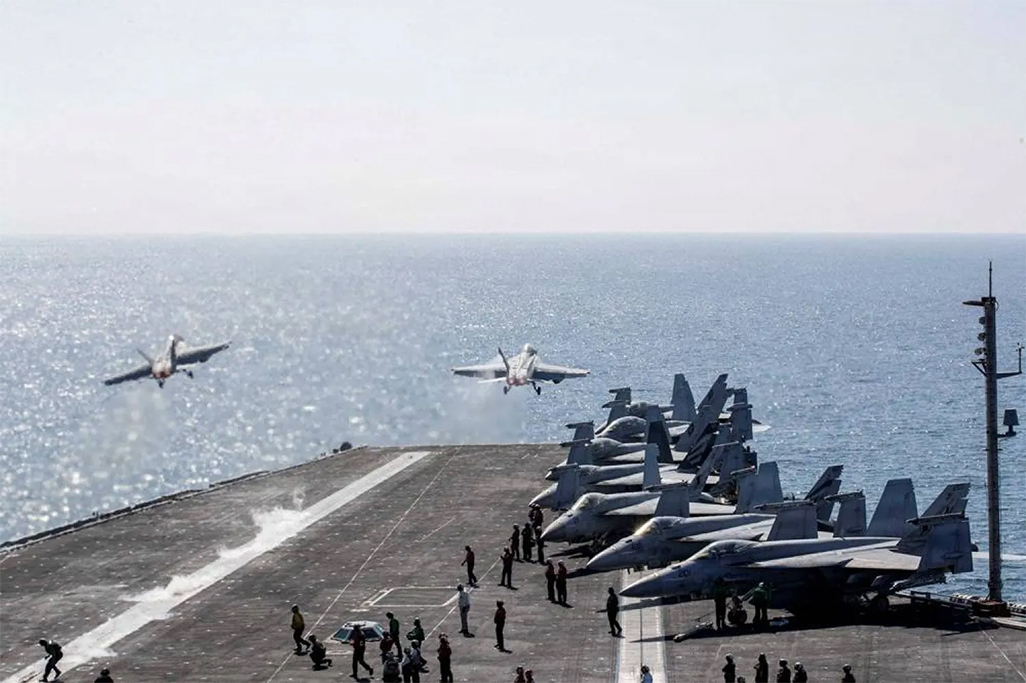
There are already 20 warships near the Persian Gulf, and an additional aircraft carrier strike group and a Marine expeditionary unit are expected to arrive.

The war is in its eighth month, and by mid-October its cost was estimated at $47.1 billion, a figure that does not include damage to US military installations in the Middle East.

About $29 billion of the total, almost 60 per cent, has gone on munitions, including Tomahawk and Patriot missiles.

  •  

Patriot Deployment Signals Growing Preparations for Possible Iran War

File image.

The United States military is moving an additional Patriot air-defense system from Texas to Israel as signs mount that Washington and Tel Aviv are preparing for possible renewed attacks on Iran after the American midterm elections on November 3.

The Wall Street Journal reported on October 28 that the transfer, identified through flight-tracking data and confirmed by two officials familiar with the movement, is intended to strengthen Israel’s missile defenses ahead of a potential new round of fighting.

The deployment comes amid broader U.S. military preparations. Washington has moved troops away from Middle Eastern bases considered vulnerable to Iranian retaliation and is replenishing munitions, while bomber aircraft and fighter jets are being prepared for possible strikes, the Journal reported.

In addition, the U.S. has warned several Gulf Arab countries to prepare for a possible short, intense military campaign against Iran after the elections.

President Donald Trump has not made a final decision on whether to launch new attacks but is leaning toward a major post-election campaign that could target Iranian infrastructure and nuclear sites, the Journal reported, citing people familiar with his thinking.

Speaking at a rally in Lubbock, Texas, a day earlier, Trump said, “You’ll see Iran in a couple of weeks, if you don’t mind,” without providing further details.

The White House declined to comment on “sensitive military plans that may or may not exist,” adding that “President Trump keeps all options on the table to ensure that Iran can never have a nuclear weapon.”

Meanwhile, regional mediators have continued efforts to revive negotiations with Tehran, although those efforts have yet to produce a breakthrough, the Journal reported.

A senior Iranian official involved in recent talks told Reuters on October 28 that Tehran had received only “unacceptable ideas and not an offer,” adding that Iran would show no flexibility on its nuclear program.

The central dispute over the terms and sequence of negotiations clearly persists. Washington wants Iran’s nuclear program included from the outset, while Tehran says its conditions, including an end to the U.S. blockade of Iranian ports and the lifting of sanctions on Iranian oil exports, must be met first. Given this, a return to fighting seems more than likely.

_______________________________________________________________________________________________________________________

SouthFront: Analysis and Intelligence

NOW hosted at southfront.press

Previously, SouthFront: Analysis and Intelligence was at southfront.org.

The .org domain name had been blocked by the US (NATO) (https://southfront.press/southfront-org-blocked-by-u-s-controlled-global-internet-supervisor/) globally, outlawed and without any explanation

Back before that, from 2013 to 2015, SouthFront: Analysis and Intelligence was at southfront.com

SOUTHFRONT.PRESS

MORE ON THIS TOPIC:

The post Patriot Deployment Signals Growing Preparations for Possible Iran War appeared first on South Front.

  •  

Bolsonaro lands in Miami with family after Trump offers Brazil exit

Brazilian Senator Flavio Bolsonaro and his family arrived in Miami on Wednesday, where the United States government will grant them entry visas after he refused to comply with a Brazilian Supreme Court order to surrender his passports.

Bolsonaro, who lost Sunday’s presidential election to leftist incumbent Luiz Inacio Lula da Silva, left Brazil under a shroud of secrecy after the court order, which relates to a money-laundering investigation in which he denies wrongdoing.

Reuters TV images showed Bolsonaro, his wife and two daughters disembarking from the Gulfstream G400 and heading into Miami-Opa Locka Executive Airport.

Their journey to the United States captured attention across the region. They entered northern Argentina late on Tuesday evening, according to the country’s migration department, and then took a private jet to the Ecuadorean city of Guayaquil. From there, they flew to Miami.

Neither Argentina’s presidency, Ecuadorean ministries nor Baires Fly, the operator of the private jet, responded to requests for comment.

FRESH BRAZIL-US RIFT

Bolsonaro’s departure threatens to deepen a rift between the two most ​populous nations in the Americas.

Lula has accused Washington of colluding with the Bolsonaro family to help return them to power. Ahead of Sunday’s election, Reuters reported on a US State Department campaign to restore the Bolsonaros to office.

Trump told reporters on Wednesday that he would approve of Bolsonaro coming to the United States, after his State Department said it would give them entry visas.

Trump has previously alleged that Flavio’s father, former President Jair Bolsonaro, was a victim of judicial persecution in Brazil.

Jair Bolsonaro also travelled to the United States after refusing to concede defeat to Lula in 2022, during Joe Biden’s presidency. He eventually returned to Brazil but was later sentenced to 27 years in prison for plotting a coup after supporters stormed government buildings in Brasilia.

Flavio Bolsonaro had been widely expected to win Sunday’s election but suffered a shock defeat.

Bolsonaro, who loses his immunity from prosecution when his Senate term ends in February, had said on Monday after the order to hand in his passports that he had no plans to ​flee.

“I have never thought about leaving the country,” he said. “I will hand over my passports and defend myself against this travesty, which ​is a clear attempt ⁠to intimidate me.”

  •  

Midterm, se i rischi interferenze nel voto non riguardano (solo) l’AI

C’è tensione non soltanto politica attorno alle elezioni di metà mandato negli Stati Uniti. Il risultato decreterà l’agenda del governo di Donald Trump dei prossimi due anni, per cui l’attenzione è massima. Soprattutto per possibili irregolarità nel voto. La paura di interferenze è alta. Il timore che qualcuno possa infiltrarsi nei sistemi elettorali è reale, ma gli esperti pongono l’attenzione su altro. Ci sono dei vulnus importanti, è vero, ma non proprio quelli che ci si aspetta. Non ci sono evidenze che dimostrino irregolarità nelle tornate elettorali del passato. Piuttosto, i buchi da coprire sono altrove.

Il sito Axios ne elenca alcuni, dopo essersi confrontata con gli esperti di sicurezza nazionale. Come J. Alex Halderman, dell’Università del Michigan, secondo cui la Louisiana rimane “il dinosauro delle elezioni americane”. Il motivo è semplice: è l’unico – ed ultimo – Stato d’America in cui si continua ancora a votare a macchina. Quando scelgono il loro candidato, gli elettori premono su un tasto e il sistema immagazzina la risposta. E qui sì che gli esperti hanno avvertito che c’è il rischio di interferenza, vista la vulnerabilità agli attacchi informatici. Ma potrebbe anche verificarsi il caso che il sistema elabori la risposta in modo sbagliato. Siccome gli altri Stati hanno riscontrato delle falle, essendo impossibilitati a controllare in modo indipendente i risultati, sono passati al cartaceo. La macchina va vista solo come una fotocopiatrice che stampa la scheda contrassegnando la preferenza dell’elettore.

Anche qui ci sono però dei problemi tutt’altro che banali. Queste macchine sono comunque soggette ad hackeraggi. Molto spesso infatti, quando devono marcare la scelta dell’elettore, quest’ultimo può essere tratto in inganno. Ciò che vede sullo schermo può essere manipolato, e anche i risultati possono essere manomessi. Questi sistemi, noti come Ballot Marking Device (MBD), possono essere estremamente utili, soprattutto per chi non è in grado di compilare autonomamente una scheda cartacea. Il 23% degli americani vota tramite riconoscimento facciale. Un grande comodità, ma anche un grande rischio. Per sicurezza quindi, dentro i seggi elettorali si tende a fornire anche le schede fisiche.

Non bastasse, c’è anche qualcosa di più allarmante. A tirarla fuori lo scorso agosto è stato un ricercatore, Max Springer, che è potenzialmente riuscito a ricostruire come hanno votato gli elettori alle scorse primarie in Georgia. Gli è bastato entrare in possesso del registro elettorale e pagare la modica cifra di 20 euro per istruire un modello di intelligenza artificiale. In pochi minuti, ha ricostruito l’ordine in cui sono stati espressi i voti del 98,9% dei voti in persona. E questo solamente per due contee. “A livello statale, questa falla potrebbe compromettere le schede elettorali di milioni di cittadini della Georgia”, sottolinea Springer. Siccome il problema potrebbe estendersi ad altre contee e Stati, ciò che suggerisce è di implementare il software, risolvere il problema della macchina (senza quindi censurare l’accesso pubblico ai registri, che è un modo per garantire la trasparenza) e, nel mentre, anonimizzare i dati degli elettori.

  •  

The Unvisited Debates: Russia as a Civilisation and America as a European Country! Part 1

This first part examines the American half of the riddle: how a power from across the ocean became Europe’s permanent houseguest, and where Russia was standing each time the furniture was rearranged. Part 2 asks why Moscow now says it never rented a room at all. Part 1: The Child Who Never Left Home In […]
  •  

Iran sees only unacceptable ideas in latest mediation to end war

Qatari mediators have presented Iran with a new draft deal to end the war with the US and Israel, an official briefed on the negotiations said, but a senior Iranian official said Doha had only put forward unacceptable ideas that did not amount to an offer.

The official briefed on the negotiations, who is not from Iran, said a new draft peace proposal for the eight-month-old conflict was presented on Sunday and was being considered by Tehran, with a response expected by the end of the week.

Qatar, along with Pakistan, has led mediation to end the war, which has disrupted global shipping and oil supplies and recently spread to Saudi Arabia and Yemen.

The proposal presented by Qatar sets a seven-day timeline addressing both Tehran’s and Washington’s concerns, laying out daily confidence-building steps that each side must take, the official briefed on the negotiations said. The timeline could begin early next week and several countries would act as guarantors of the deal, the official added.

Shortly afterwards, a senior Iranian official involved in the talks said Qatar had presented only “unacceptable ideas and not an offer”, and that Tehran’s policy on showing no flexibility over the nuclear issue remained unchanged.

Washington wants Iran’s decades-long nuclear programme to be part of negotiations to end the war from the outset, while Iran says its conditions — which include an end to the US blockade of Iranian ports and the lifting of sanctions on Iranian oil exports — must be met first. Iran rejects Western concerns ​that ⁠its nuclear programme is military in nature.

ATTACK ON SAUDI OIL REFINERY

In late September, Iran presented another seven-day proposal under which Foreign Minister Abbas Araqchi said the Strait of Hormuz, one of the world’s most important energy shipping channels, could be reopened if certain conditions were met. US President Donald Trump rejected it, prompting further Qatari mediation.

The draft discussed in Tehran on Sunday was different from that proposal, the official briefed on the negotiations said, though the details of the latest plan were not immediately clear. The official had previously told Reuters that the Qatari mediators had coordinated with Washington before going to Tehran.

Earlier mediation efforts to end the war that the US and Israel launched on February 28 helped produce an interim peace agreement in June, but it quickly unravelled.

In recent weeks, Yemen’s Iran-aligned Houthi forces have launched repeated attacks against Saudi Arabia — a key US ally and the world’s largest crude exporter — opening a new front in the eight-month-old war.

Oil prices LCOc1 rose more than 1% to more than $115 per barrel on Wednesday after a Houthi attack on Saudi Arabia’s largest oil refinery, Ras Tanura, stoking concerns over supply risks.

Fighting with the Houthis intensified last month as the militant group advanced against Saudi-backed forces towards the Bab el-Mandeb Strait, another important shipping lane on the other side of the Arabian Peninsula from Hormuz.

CONCERNS ABOUT RISK OF NEW STRIKES

The official briefed on the negotiations said there were concerns ahead of Sunday’s meeting in Tehran that Israeli Prime Minister Benjamin Netanyahu, fighting for another term in a general election, could resume attacks on the Islamic Republic this week.

On Friday, US President Donald Trump repeated threats to strike Iran again, while Iranian security officials told Reuters Tehran had drawn up detailed plans to attack Gulf undersea cables if the US and Israel resumed attacks.

On Monday, top officials from Saudi Arabia, Turkey and Pakistan also met Iranian officials in Tehran as part of de-escalation efforts. Qatar said on Tuesday that Iran needs to stop threats against Arab Gulf states and open the Strait of Hormuz to show good intentions for mediation efforts to succeed.

Gulf states came under sustained bombardment earlier in the war.

The war also reignited fighting between Israel and the Iran-backed Lebanese armed group Hezbollah. It has eroded Trump’s approval ratings ahead of the US midterm elections that decide control of Congress.

  •  

US costs of Iran war rise to over $47 billion, according to Pentagon estimate

e US military has spent over $47 billion so far to prosecute the war in Iran, more than 25% higher than the Defense Department’s estimate in July, according to Pentagon data obtained by Reuters.

The Pentagon did not immediately respond to a request for comment on its estimate, which has not been shared publicly.

The disclosure about the rising cost of the Iran war comes as Republicans wrestle with the political fallout of the unpopular conflict ahead of the November 3 election that will determine control of Congress for the next two years.

The war’s impact on global energy costs has weighed on support for Republican candidates and hurt President Donald Trump’s approval ratings. Trump’s Republican Party holds a narrow majority in both chambers of Congress.

The Pentagon’s latest estimate was tied to the operational costs of carrying out the war, with a projected cost of more than $29 billion to replace expended munitions used in the conflict.

More than $6 billion would be needed to replace military equipment and so-called “platform losses,” which include the loss of aircraft including many drones lost during the war.

Trump launched the Iran war jointly with Israel in February, predicting ​that the conflict would last a short time.

Trump’s initial strategy in the Iran war focused on first using expensive, high-end precision missiles to bomb Iran’s defenses so it could later use less expensive munitions, including gravity bombs like the air-launched JDAMs, which are plentiful.

But an April ceasefire gave time for Iran to dig out underground storage facilities, bringing back online some Iranian defenses, as well as missiles and drones that had been inaccessible.

Trump has since imposed a naval blockade on Iran to starve it of oil export revenue and held out the possibility of restarting combat operations after the midterm elections. US officials, speaking on condition of anonymity, say the Pentagon has been planning to restart heavy fighting if ordered to do so.

The latest Pentagon estimate compares to Defense Secretary Pete Hegseth’s July estimate of $37.5 billion for the cost of the war.

While the figures include a host of operational costs, from flight operations to cyber support, the US military’s Iran war cost estimates did not clearly account for the massive expense expected to repair damage to US bases sustained by Iranian missile and drone attacks.

  •  

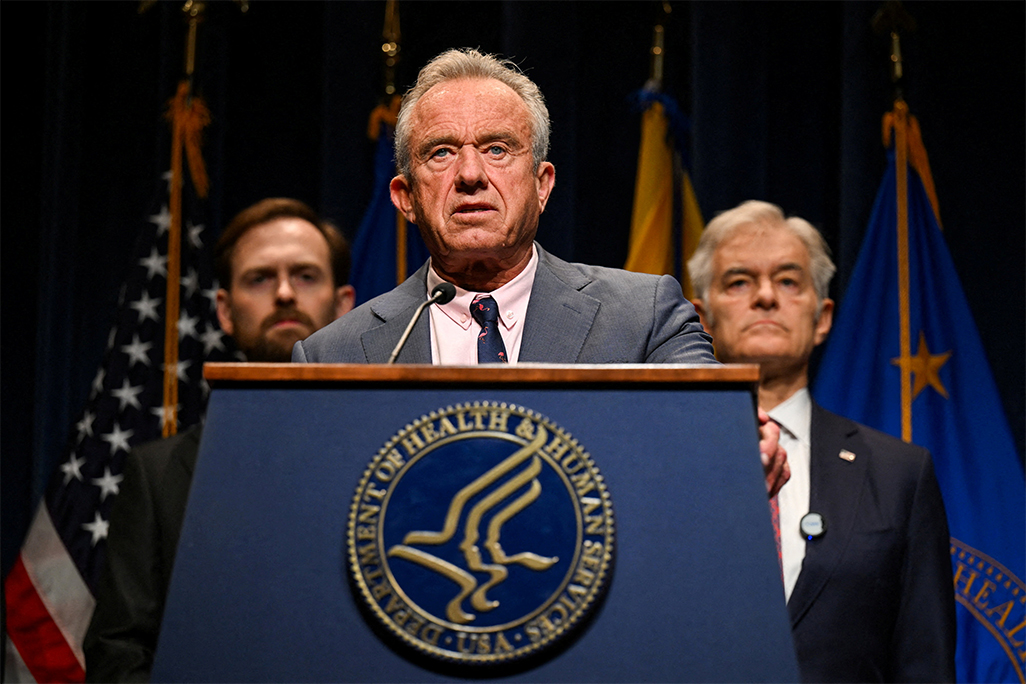
RFK Jr faces widespread rebuke over his anti-Arab remarks

US Health Secretary Robert F. Kennedy Jr. faced widespread rebuke from civil rights groups, healthcare advocates and Democrats on Tuesday over his anti-Arab comments that the Council on American-Islamic Relations cast as “a textbook display of unvarnished racism and bigotry.”

In his remarks on Monday at a campaign event in Michigan where Republican Mike Rogers is running for the US Senate against Democrat Abdul El-Sayed, the US health secretary falsely claimed that Arabs had not won major international awards and “don’t produce” science and literature.

“There’s 500 million Arabs in the world, and yet they don’t produce science, they don’t win the Nobel Prize, they don’t win the Fields prize, they don’t win the Wolf Prize, they don’t produce literature,” the US health chief said.

Arabs have won all those prizes. Peter Hotez, who is a professor at the Baylor College of Medicine and specializes in vaccine development and tropical medicine, said his late colleague, Nobel Prize winner Ahmed Zewail, who was Arab and died in 2016, “would disagree” with the US health chief’s comments.

The Department of Health and Human Services did not immediately respond to a request for comment.

US rights advocates have raised concerns over escalating rhetoric against Muslims, Arabs, immigrants and ethnic minorities by President Donald Trump and his allies during the ongoing midterm election campaign.

“Robert F. Kennedy Jr.’s vile anti-Arab rant is a textbook display of unvarnished racism and bigotry,” the Council on American-Islamic Relations, which documents hate against Muslims and Arabs in the US, said on Tuesday.

“His sweeping erasure of Arab contributions to humanity is not only maliciously false, but it also fans the flames of anti-Arab and anti-Muslim hate at a time when communities are already vulnerable to bigoted attacks from other public officials nationwide.”

Kennedy said the rise of the Muslim Brotherhood, one of the Arab world’s oldest and most influential Islamist groups founded almost a century ago, has “created stagnant societies.”

Republicans have claimed, without evidence, El-Sayed has ties to the Muslim Brotherhood even as the Democrat has publicly disavowed the group and denied any connection to it.

El-Sayed, who is Muslim, has faced a host of anti-Muslim attacks during the campaign. Over the weekend, Trump invoked the September 11, 2001, attacks when speaking about El-Sayed, whom he has also repeatedly and falsely called a “jihadist.”

Democratic US Senator Chris Murphy also responded to the US health secretary’s comments.

“I really think everyone needs to pay attention to this coordinated campaign to delegitimize Muslim Americans — not just as citizens but as humans.”

US healthcare advocacy organization and nonprofit Protect Our Care cast Kennedy’s comments as a “wildly racist tirade.”

Kennedy, who has pushed his anti-vaccine views in his role as the top health official, was also in Michigan on Monday to promote funding for Detroit’s health department and touted agreements with hospitals to offer healthier food.

  •  

Trump Leaning Toward Bigger Iran Operations After Midterm Elections

Click to see the full-size image

Written by Ahmed Adel, Cairo-based geopolitics and political economy researcher

American forces in the Middle East are prepared to launch new, potentially major, military operations against Iran “within 96 hours of receiving” an order from President Donald Trump, according to two US officials. The officials said sufficient forces are now in the region to carry out the potential attacks and that new US military operations would likely extend beyond efforts to “mow the lawn” or maintain the status quo by striking radars, launchers, and other Iranian assets that can be quickly reconstituted. As the sources stressed, this has been the case since Trump halted full combat operations earlier this year.

“It will be a big effort,” one of the officials told CNN. Other current and former US officials familiar with internal military planning say it is a matter of when, not if, Trump will issue a go-order. They believe it could come at any time before the end of the year, though it is most likely after the US midterm elections on November 3.

CNN reported that Iranian forces are now more familiar with US tactics, making it harder for the American military to destroy all intended targets. However, leaders at US Central Command and the Pentagon have been developing a wide-ranging target list that includes Iranian energy infrastructure, military sites, and nuclear facilities.

The planning also takes place against the backdrop of assessments that any larger US and Israeli operation would likely prompt immediate retaliation by Tehran and the Houthis against American personnel and facilities in the region. One US official described the current situation around the Strait of Hormuz as “untenable” over the longer term, citing it as one factor that could influence a decision on military action if diplomacy fails.

Israeli Prime Minister Benjamin Netanyahu has also been pushing to launch new attacks against Iran, but US officials have asked him to delay until the Trump administration is ready to conduct joint operations, according to the two US officials and an Israeli security source.

Recent US intelligence assessments indicate that Netanyahu and his allies still lack a clear strategic objective beyond demonstrating some form of “progress” and continuing to degrade the Iranian regime, one source familiar with the reports said.

“Netanyahu really wanted and tried to convince Trump for a joint attack in Iran before the elections, and Trump did not give a green light,” the Israeli security source told CNN. The Israeli prime minister’s office called it “fake news.”

The Israeli security source added that one reason Trump declined was that Israel Defense Forces Chief of Staff Eyal Zamir told US Gen. Dan Caine, chairman of the Joint Chiefs, that it would harm Israel’s elections and lead to their postponement.

Israel’s Channel 12 News reported on October 25 that Zamir and Netanyahu had an “unprecedented” confrontation less than 48 hours before the election. According to the report, Zamir received a directive from the political echelon regarding Iran but sought an in-depth discussion and legal authorization before acting, concerned that the move could be miscalculated and trigger an immediate conflict.

Defense Minister Israel Katz said the report was “completely baseless and false.”

The preparations US officials described come amid other military plans reported by other American outlets. The New York Times, for example, has reported that the US and Israeli militaries have developed specific plans for a short, intensive round of strikes following the American midterm elections, with likely targets including Iran’s energy infrastructure, nuclear facilities, and missile and drone arsenal. According to the NYT, the two sides have stepped up exercises, including flights over Iraq to practice strike manoeuvres. Defense Secretary Pete Hegseth also recently met with Israeli Prime Minister Benjamin Netanyahu to discuss options.

ABC News reported that the Israeli military and the US have drawn up plans for renewed joint strikes in the coming weeks, with Israeli sources indicating the operations would almost certainly be delayed until after the US midterms. The White House has publicly stated that the US will not attack Iran before the November 3 elections.

At the same time, Iranian officials have signalled they are preparing for renewed hostilities. Iranian sources have warned that any new US-Israeli campaign would prompt a broader retaliatory response, potentially including attacks on energy infrastructure, data centers, and other economic targets in Gulf states.

Although it is uncertain whether the current planning will lead to a new major operation, it appears that Trump is heading in that direction if Iran does not submit to American demands. Nonetheless, US officials insist that although forces are in position and target lists have been prepared, no final order has been issued—and past periods of apparent readiness have not always led to action.


MORE ON THE TOPIC:

The post Trump Leaning Toward Bigger Iran Operations After Midterm Elections appeared first on South Front.

  •  

Trump’s Venezuela Oil Deal: Imperialism by Contract

Washington did not remove Venezuela’s president merely to change its government; it is now constructing a system of economic control designed to outlast the politicians who created it. From Regime Change to Resource Control When American forces captured Venezuelan President Nicolás Maduro in January 2026, Donald Trump presented the operation as a decisive demonstration of […]
  •  

U.S. Intelligence Shares Rare Image of China’s Reusable Spaceplane

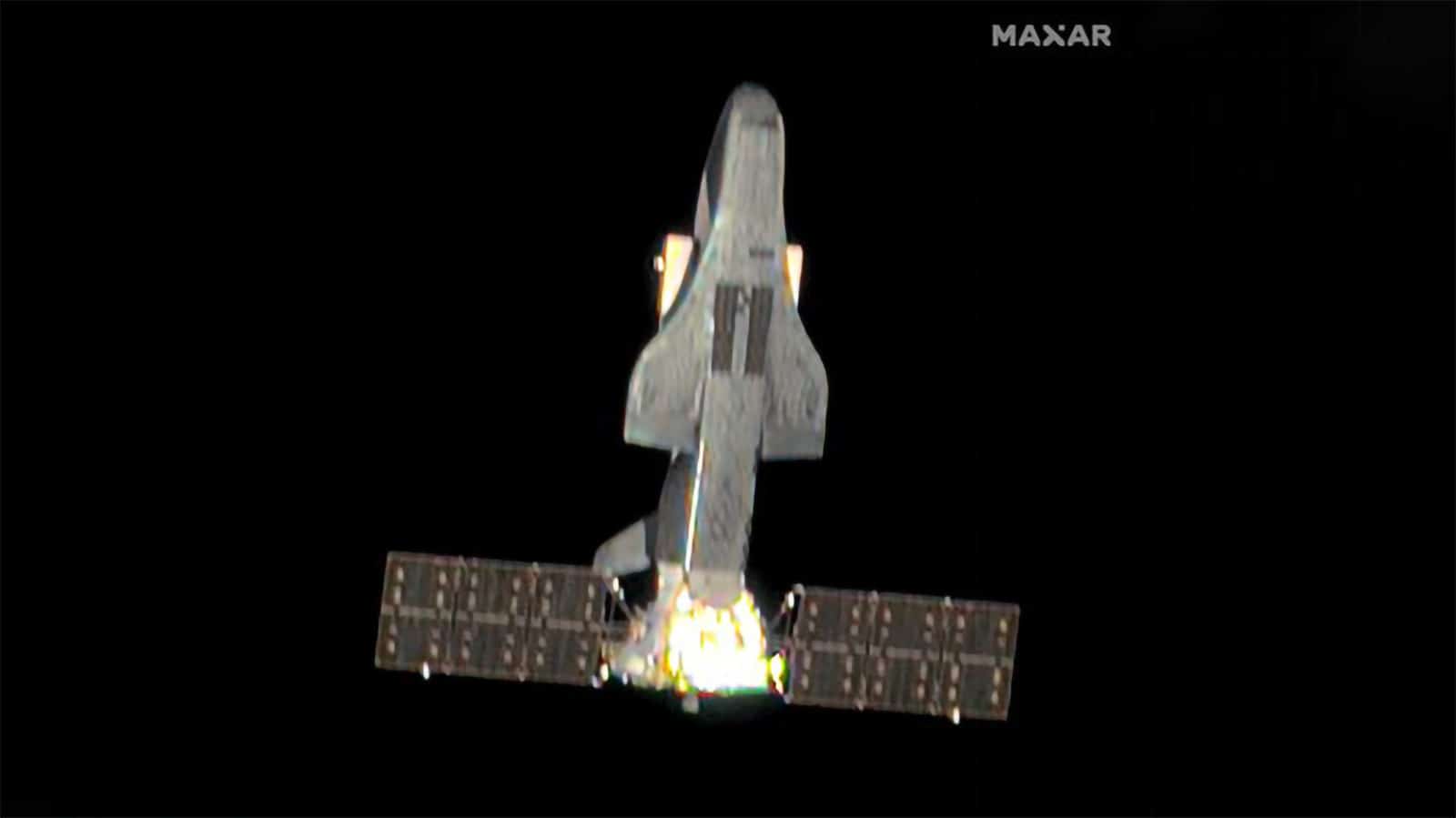
Click to see full-size image. (Maxar Technologies via DIA)

The United States Defense Intelligence Agency (DIA) has released a previously unseen image of China’s reusable spaceplane in orbit, showing the secretive spacecraft with its service module attached and solar arrays deployed.

The image, captured by Maxar Technologies in 2024, was included in the agency’s Challenges to Security in Space report released on October 26. It shows the underside of the spacecraft, offering a rare view of a Chinese orbital vehicle whose design and mission objectives remain largely undisclosed.

China has launched the spaceplane on four orbital missions since September 2020, using Long March 2F rockets. The first flight lasted two days, while the second remained in orbit for 276 days between August 2022 and May 2023. The third mission, launched in December 2023, lasted 268 days and ended with the spacecraft’s return to Earth on September 6, 2024. A fourth mission began in February 2026.

The DIA’s latest report describes the spacecraft’s rendezvous and proximity operations during its second and third missions.

In May 2023, commercial space-tracking company LeoLabs reported that the vehicle had maneuvered near a smaller object, designated Object J, and appeared to have conducted multiple capture or docking operations before releasing it again.

Tracking data from the spacecraft’s fourth mission also indicated that it released and subsequently recaptured an object in September 2026, according to astronomer Jonathan McDowell, who analyzed U.S. Space Force orbital data. The identity and purpose of the object have not been publicly established.

The image released by the DIA shows the spaceplane with a service module believed to provide electrical power and propulsion during its orbital mission. The module is expected to separate before the spacecraft returns to Earth.

Visible features also appear to include payload-bay doors, although their precise configuration and function remain unclear.

The DIA report identifies two Chinese spaceplane programs, Shenlong and Tengyun, but does not establish which spacecraft appears in the image.

The vehicle is often compared with the U.S. Space Force’s X-37B, an uncrewed reusable spacecraft that also conducts extended orbital missions.

The spaceplane’s proximity operations have raised questions about its potential military applications. The ability to maneuver close to other spacecraft and capture or release objects could support satellite inspection and servicing, but could also potentially be used to interfere with other satellites.

There is no publicly available evidence confirming that the Chinese spaceplane is designed as an antisatellite weapon or carries a specific military payload. Its actual capabilities and intended role remain undisclosed.

Chinese authorities have described the program as a test of reusable spacecraft and in-orbit servicing technologies intended to support the peaceful use of space.

_______________________________________________________________________________________________________________________

SouthFront: Analysis and Intelligence

NOW hosted at southfront.press

Previously, SouthFront: Analysis and Intelligence was at southfront.org.

The .org domain name had been blocked by the US (NATO) (https://southfront.press/southfront-org-blocked-by-u-s-controlled-global-internet-supervisor/) globally, outlawed and without any explanation

Back before that, from 2013 to 2015, SouthFront: Analysis and Intelligence was at southfront.com

SOUTHFRONT.PRESS

MORE ON THIS TOPIC:

The post U.S. Intelligence Shares Rare Image of China’s Reusable Spaceplane appeared first on South Front.

  •  

US Justice Department sues Maryland school district over transgender policies

The US Justice Department sued a public school district in Maryland on Tuesday over transgender policies that it alleged violated federal law, the latest attempt by President Donald Trump’s administration to limit transgender rights.

The Trump administration has launched federal probes against educational institutions and threatened to freeze their federal funding over transgender policies.

The Justice Department complaint filed in the US District Court for the District of Maryland alleged Anne Arundel County Public Schools violated the Family Educational Rights and Privacy Act (FERPA) and the Protection of Pupil Rights Amendment (PPRA).

The school district said it “disagrees with the allegations and stands by its compliance with FERPA and PPRA,” saying it has been in regular contact with the Justice Department in “good faith” and found the department’s decision to pursue litigation “regrettable.”

The school system covers 128 schools serving more than 84,000 students, according to its website.

Trump has cast the ​gender identity of transgender people as a lie, issued a ​series of executive ⁠actions targeting their rights and stated in a directive that the US government will recognize only two sexes: male and female.

The US Education Department previously accused the school district of being in violation of federal law by classifying information about a student’s gender identity ​as “confidential medical information” that cannot be shared with parents.

“Schools should not discuss preferred pronouns or ‘gender identity’ with a student without parental notification and consent,” Assistant Attorney General Harmeet Dhillon of the Justice Department’s civil rights division said on Tuesday.

Trump has also targeted ⁠educational institutions ​over other issues like climate initiatives, pro-Palestinian protests ​against US ally Israel’s assault on Gaza and diversity programs, leading to concerns about academic freedom, free speech and ​due process.

  •  
❌