❌

Reading view

Russia is building Starlink no foreign company can switch off. Ukraine names 49 firms behind it, and 23 face no sanctions from Kyiv’s allies at all
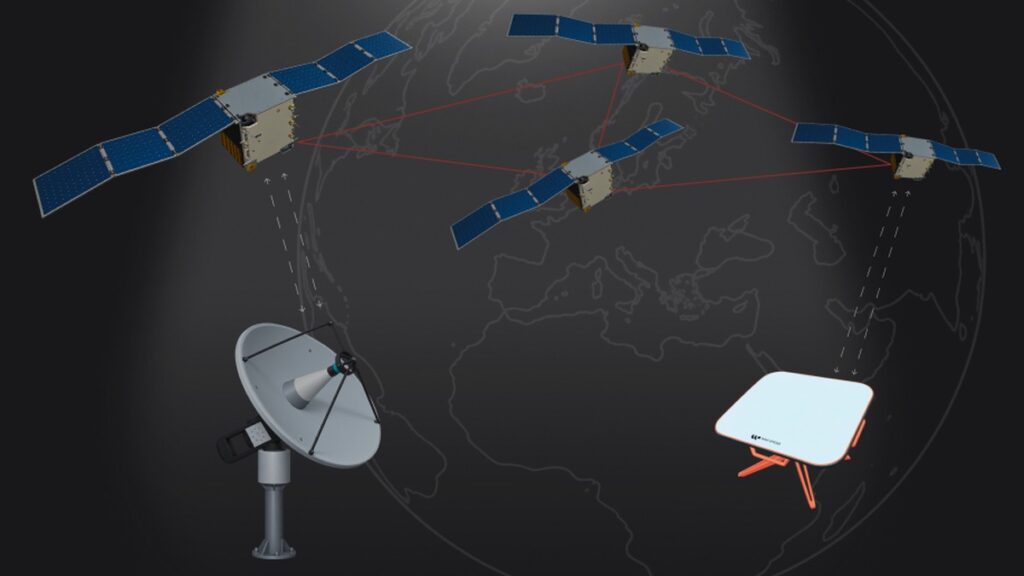
rassvet_featured_dark

Ukraine’s Military Intelligence (HUR) has published the names of 49 Russian and Belarusian companies and institutions building Rassvet, Russia’s low-orbit satellite internet system, on its War&Sanctions portal, the agency said on 28 October. It needs it for its military purposes.

Russian troops ran front-line communications and long-range strike drones on smuggled Starlink terminals until SpaceX blocked them on 1 February 2026. Ukraine still flies on Musk’s network, and on 24 October it got back to full speed after a ten-day cap imposed abroad. Rassvet is meant to give Russia’s army satellite links under its own control.

HUR has said Moscow may struggle to obtain components for more satellites, and its list names the suppliers that sanctions would need to target while the network is still being built.

Terminals for Iskander-M command vehicles

Rassvet is first of all a military communications system. Russia plans to use it for command and control, strike platforms, and drones, and to install terminals in the command-and-staff vehicles of Iskander-M missile systems, HUR says.

The Central Research Institute of Automation and Hydraulics is involved in integrating Rassvet into army communications, including fitting command vehicles, Iskander ones among them, with terminals once 292 satellites are in orbit, according to the portal. The same institute produces guidance components for the Iskander-M and Kinzhal missiles.

Planned coverage takes in Ukraine and the EU first, and once it is wide enough, Russia could use the system in hybrid attacks on other countries. That is why partners should block Rassvet’s access to components, equipment, and software now, the agency said.

Roscosmos launches it, a Belarusian missile maker signs on

The lead company is Bureau 1440, part of the IKS Holding tech group. According to the portal, it is linking its flight control center to systems of the Russian Defense Ministry. Roscosmos launches the satellites into orbit, and its head, Dmitry Bakanov, personally oversees Rassvet.

Meanwhile, Belintersat, Belarus’s national satellite operator, signed a partnership with Bureau 1440 in May 2026 to bring Rassvet into Belarus’s telecom network. It is a branch of the Plant of Precision Electromechanics, Belarus’s lead missile developer and maker of the Polonez rocket launcher.

Another Belarusian firm, Aerospace Instruments, prototypes components for the system.

23 of 49 not sanctioned by Kyiv’s allies

Of the 49, 23, Roscosmos among them, are not under sanctions by any country in the sanctions coalition. The companies involved “must be included in all blacklists” of countries, banks, and businesses, the agency wrote.

32 satellites launched, seven launches to go

Russia launched its first 16 Rassvet satellites earlier this year. Stable communications would need 200–250 in orbit, Serhii “Flash” Beskrestnov, then adviser to Ukraine’s defense minister, said in May.

By August, Russia had launched 32 Rassvet satellites and planned seven more launches by the end of 2026, a HUR official told Janes. Only 12 of them, all from the first batch, had reached a sustainable altitude by the end of August, ISW reported.

  •  

Apple Unveils Its First Touch-Screen MacBook Pro

Steve Jobs and Tim Cook both dismissed the idea, but Apple’s new chief executive is reimagining some of the company’s most important products.

© David Fouts for The New York Times

The new Mac, with a starting price of $2,899, is the latest step into a new era for the consumer electronics giant.
  •  

Mozilla quiere que vuelvas a Firefox apelando a la privacidad y a la nostalgia y a los memes de tu juventud, cuando Internet era "guay"

Espero no ser el único que echa de vez en cuando la vista atrás y recuerda con cierta nostalgia aquellos tiempos pasados que, ya sabéis, siempre fueron mejores. Todo era más sencillo, que solemos decir, aunque quizás había algo más complicado que ahora: volverse viral.

Claro que también era más satisfactorio y meritorio, con, no obstante, algunas de estas celebridades de Internet volviéndose un meme por cuestiones ajenas a su voluntad; otras no, otras buscaban esa fama temprana pero también efímera.

A todas ellas ha reunido Mozilla en una campaña publicitaria que apela directamente a nuestra nostalgia para intentar que volvamos a utilizar Firefox, su navegador web, en un momento en el que la privacidad y la inteligencia artificial están más presentes que nunca.

Bajo el lema Come Back to Firefox («Vuelve a Firefox»), el anuncio recupera a algunas de las caras más reconocibles de los años 2000 y principios de los 2010 para preguntarnos qué ha pasado con aquel Internet que tanto nos gustaba.

Los viejos memes vuelven al presente

El anuncio reúne a personajes tan conocidos como el Numa Numa Guy, el protagonista de Chocolate Rain, la Novia Psicópata, Bad Luck Brian, Noah «Apparently» Ritter, y la Annoying Orange. También aparecen Matt Harding, famoso por sus vídeos Where the Hell is Matt? en los que bailaba por todo el mundo, Chuck Testa con sus animales disecados, y Kelly, la protagonista del viral Shoes. Por supuesto no son recreaciones mediante inteligencia artificial, sino las personas reales, a las que el paso de los años ha cambiado más o menos.

Firefox quiere recuperar su sitio

Detrás de esta reunión de viejas glorias hay una estrategia comercial bastante clara. Firefox, que actualmente solo cuenta con un 2,8 % de cuenta de mercado si hablamos de navegadores, quiere recuperar a quienes lo utilizaron en sus mejores años y convencer a nuevos usuarios de que existe una alternativa a otros como Google Chrome. La privacidad es uno de sus principales argumentos, junto con la posibilidad de controlar las funciones de inteligencia artificial y un desarrollo de código abierto.

John Solomon, director de marketing de Mozilla, ha explicado que la intención es recuperar el espíritu de una Internet divertida, extraña y sorprendente sin quedarse atrapados en el pasado. No es casualidad que la compañía recuerde precisamente ahora esos valores, cuando la integración de herramientas de IA en los navegadores genera tantas dudas entre algunos usuarios.

© Mozilla

Las viejas glorias nunca mueren
  •  

INDIGNU estreia-se na Ásia com cinco concertos na China

INDIGNU, a banda formada em Barcelos há mais de duas décadas vai marcar a sua estreia na Ásia com concertos nas cidades de Pequim, Hangzhou, Xangai, Cantão e Shenzhen.

Os INDIGNU vão apresentar pela primeira vez ao vivo composições inéditas que integrarão o próximo álbum de originais, cujo lançamento está previsto para 2027
  •  

The Untold Story Behind the Race for the Atomic Bomb

Today's guest is Neal Stephenson, the bestselling author of Snow Crash, The Diamond Age, and Cryptonomicon. His latest novel, D: Heavy Water, revisits the early days of World War II, when scientists were racing to understand nuclear fission and a secret mission sought to keep a crucial ingredient for atomic weapons out of Nazi hands.

Nick Gillespie talks with Stephenson about what drew him to this forgotten chapter of history and how revolutionary idealism can give way to authoritarianism. The conversation also explores the internet's early promise of decentralization, how Big Tech came to dominate it, and why the metaverse hasn't lived up to the vision Stephenson introduced in Snow Crash. They discuss his early work with Jeff Bezos at Blue Origin, President Donald Trump's disruption of American politics, and why Stephenson believes the West's Enlightenment values remain worth defending.


0:00—The failure of the metaverse

9:59—Did the internet fail on its original promise?

14:36—The impact of technology conglomerates

17:22—What we get wrong about the Puritans

21:45—Mother Earth Mother Board

25:14—Blue Origin and space exploration

31:22—D: Heavy Water synopsis

35:49—Creating characters with nuance

40:00—Francoists

41:29—Atomic bomb development

44:13—Communism

46:22—Cryptonomicon

50:06—The Big U

52:46—Stephenson's literary influences

55:23—Democracy and politics

1:00:28—The aftermath of 9/11

1:05:34—Faith and science


Previous Reason features:

"Neal Stephenson's Past, Present, and Future," by Mike Godwin

"Wiki Magazines on the Way, Neal Stephenson Is Awesome," by Katherine Mangu-Ward

"Intelligence at Work," by Anders Monsen

"If We Told You Neal Stephenson Invented Bitcoin, Would You Be Surprised?" by Peter Suderman

"Neal Stephenson Wants to Tell Big Stories," by Tyler Cowen

"Neal Stephenson's Polostan Is a Compact Epic About Communism, Science, and the Dawn of the Atomic Age," by Peter Suderman

The post The Untold Story Behind the Race for the Atomic Bomb appeared first on Reason Magazine.

💾

© Illustration: Fatima Ruiz

Nick Gillespie appears on the left. Neal Stephenson appears on the right. A black and white image of an atomic bomb exploding is seen in the center square. Bold text across the top of the screen reads "The Secret Nuclear Race"
  •  

Como ser minimalista a usar IA na Internet

A inteligência artificial está em todo o lado, mas há formas de escapar à invasão e assumir o controlo dela, antes que ela o controle a si… A inteligência artificial está a ser integrada em quase todos os serviços digitais, muitas vezes sem que os utilizadores a tenham sequer pedido ou notado que ela lá está. Desativá-la nem sempre é fácil, mas há maneiras de recuperar algum controlo sobre os dispositivos e proteger os dados pessoais. Segundo um inquérito da Gallup e do Special Competitive Studies Project, há mais do dobro dos norte-americanos que desconfiam da IA do que aqueles

  •  
❌