❌

Reading view

Lithuania plans universal conscription

RT | October 29, 2026

Lithuania will introduce universal male conscription despite public resistance to compulsory military service, the country’s government has announced.

The Baltic state reinstated selective conscription in 2015, seven years after abolishing it. Under the new plan, the draft would be extended to all eligible men, while women would continue to serve voluntarily.

Annual recruitment will increase from just over 5,000 to around 7,500 men, President Gitanas Nauseda announced on Thursday following a State Defense Council meeting.

Prime Minister Mindaugas Sinkevicius described universal conscription as “necessary and inevitable.”

The decision follows similar recruitment pushes elsewhere in Europe. Poland is considering restoring compulsory service, which was abolished in 2009, and introducing a system covering both men and women. A recent poll, however, found that 53% of Poles aged 18–24 opposed reinstatement of the draft.

Germany has already introduced mandatory military registration for 18-year-old men. Enlistment remains voluntary, but parliament can activate compulsory service if recruitment falls short or the security situation deteriorates.

Berlin’s recruitment drive has met resistance, with some 45,000 people joining student protests across roughly 100 German cities and towns in September, with some carrying banners reading “We won’t fight in your wars” and “Russia is not our enemy.”

Applications for conscientious objector status reached over 12,000 between January and August, compared with 3,879 throughout 2025, according to figures reported by German media.

European officials have nevertheless continued discussing preparations for a possible war with Russia by the end of the decade. Estonian Defense Minister Martin Herem “joked” last month that if Estonia mobilized and Russia did not attack, it would be “economically more correct to attack ourselves” rather than keep troops waiting.

Moscow has repeatedly stated that it has neither reason nor intention to attack NATO countries, describing such allegations as “horror stories” intended to prepare European populations for further militarization.

Russian officials have warned that Europe’s military buildup could itself lead to confrontation and that expanding NATO infrastructure near Russia’s borders would prompt additional security measures. Moscow has stressed that it is prepared to defend itself if attacked.

  •  

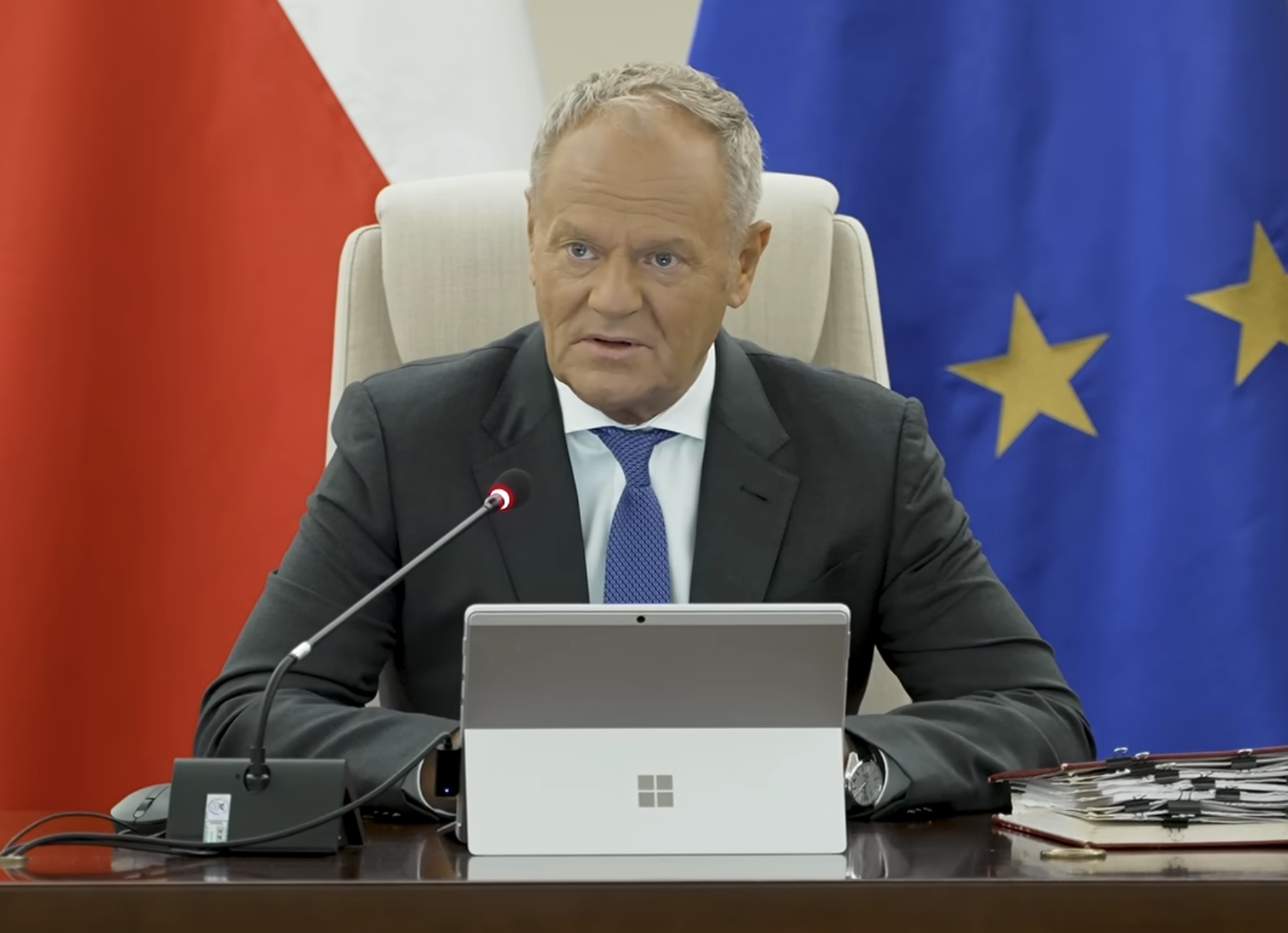
Tusk may win election but lacks votes to govern, warns former Polish PM

Former Prime Minister Leszek Miller said Donald Tusk could win next year’s parliamentary elections yet still fail to form a governing majority, allowing the conservative opposition led by Jarosław Kaczyński to take power. However, he does provide a strategy to help head off this outcome.

In an interview on Wirtualna Polska, Miller was asked to name the greatest success of Tusk’s government. “That it exists,” he replied. He said he had urged Tusk, then serving in Brussels, to return to Polish politics and was pleased when Tusk decided to do so. Since that decision, Tusk managed to secure power in Poland, but Miller warns that a second run may prove harder.

Miller argued that the 2027 elections could mirror those of 2023, when Kaczyński’s Law and Justice (PiS) party won the most votes but could not assemble a parliamentary majority.

“It’s not like Kaczyński lost the election. He won, but he did not have the ability to form a parliamentary majority,” Miller said. “And now it may be the other way around. Donald Tusk may win, but he will not have the ability to obtain a majority.”

Miller stressed that post-election arithmetic will matter more than campaign promises.

“Before elections, a lot of time is spent on appropriate advertising of the program and candidates. Everyone drives around, telling us what they will do for the happiness of society. But immediately after the elections it ceases to be important, because arithmetic appears, which is the queen of the Sejm,” Miller said, referring to the 231 votes needed for a majority in the lower house of Parliament. “It may turn out that Tusk won, but he does not have 231 votes, while Kaczyński does.”

A winning strategy?

Miller said Tusk must decide how to construct electoral lists. Tusk could include weaker coalition partners on a single list or risk some of them falling below the 5 percent threshold needed to enter parliament. Most of the polls show that under current conditions, Tusk will not have enough coalition partners to win an election. Many of his current partners falls below 5 percent, which means they have no chance of entering parliament.

Combining these parties into one electoral list may be a solution for Tusk.

“PSL will pressure Tusk to go together, because they themselves are wandering around 3-4 percent,” he said, referring to the Polish People’s Party. “Hołownia 2050 is a tragedy in general; they can’t survive without Tusk.”

If The Left holds a stable 7-8 percent, it can run independently and will not need Tusk, Miller added. But if its support drops, it too may seek a joint list. In that case, “the head of this list and the man who decides on the places is Donald Tusk.”

Miller led the Democratic Left Alliance and served as prime minister from 2001 to 2004. Tusk, leader of Civic Coalition, has been prime minister since late 2023.

The post Tusk may win election but lacks votes to govern, warns former Polish PM appeared first on Remix News.

  •  

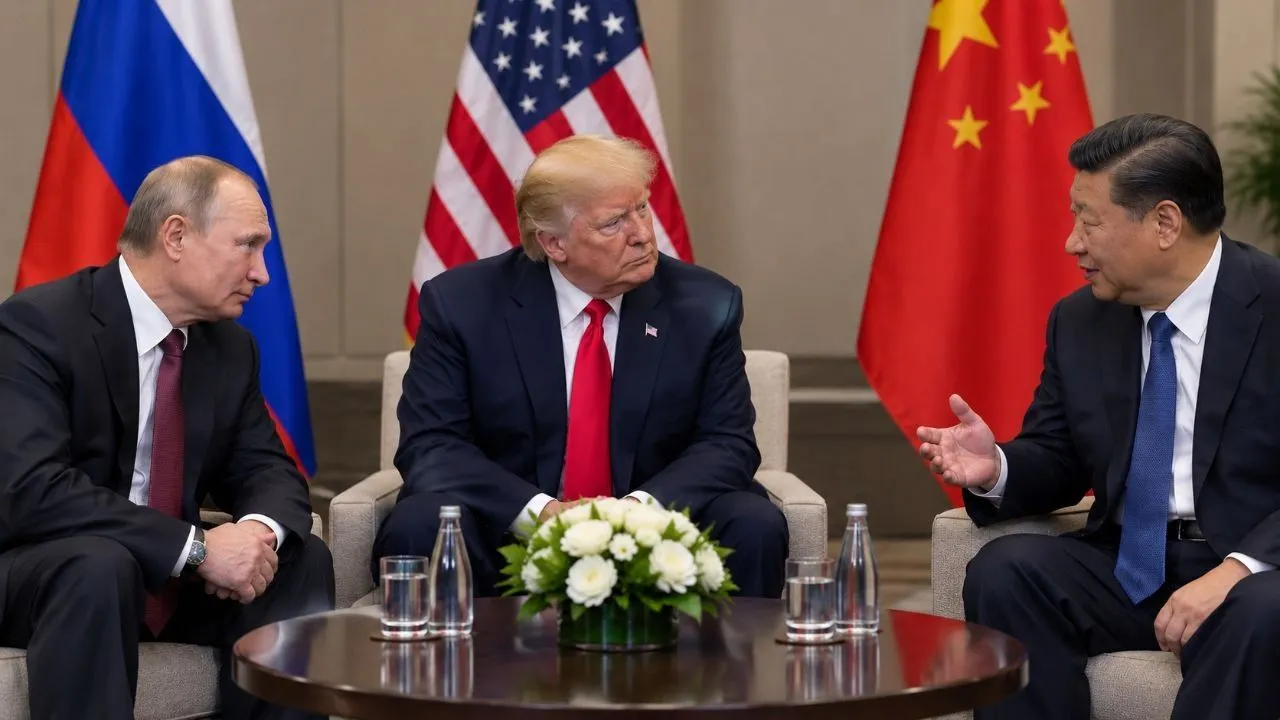
Ukraine Forced Into Concessions Ahead Of Putin, Trump And Xi Summit

Click to see the full-size image

Written by Ahmed Adel, Cairo-based geopolitics and political economy researcher

A proposed trilateral meeting among Russian President Vladimir Putin, United States President Donald Trump, and Chinese President Xi Jinping is expected to address the concessions Ukraine will need to make to end the conflict, according to retired German Bundeswehr general Roland Kather. In an interview with a German television channel, Kather said the logical conclusion of the fighting is a diplomatic settlement reached through negotiations, and that Trump is dissatisfied with the unresolved situation and intends to push for an agreement.

The German general stressed that the summit will not be a casual discussion or merely an opportunity to “have coffee” and that they must prepare specific decisions in advance. He suggested that the three leaders will examine three core issues related to Ukraine: territorial problems that can be settled only at the heads-of-state level, Ukraine’s permanent neutral status, and the future size of its armed forces.

Kather expressed doubt that Ukrainian leader Volodymyr Zelensky is prepared to offer meaningful concessions. At the same time, he said Putin has no reason to retreat because Moscow still has the advantage.

Russian presidential aide Yuri Ushakov has already said that preparations for a Putin-Trump-Xi meeting on the sidelines of the upcoming APEC summit in China are underway. Trump has said the summit is needed mainly to discuss nuclear disarmament, though the Ukraine question is widely expected to feature.

The three leaders are discussing this issue among themselves, as Ukraine has nothing substantial left to offer Russia at the negotiating table. Moscow has also been clear about its ultimatum – demands met through a negotiated deal in which Ukraine cedes territory and accepts neutrality, or the military operation continues until Russia achieves its objectives on the battlefield. Since Trump has accepted that Ukraine no longer brings anything of value to negotiations but is still encouraged to fight by Brussels, he will directly negotiate with Putin and Xi to end the war.

Earlier this month, Putin signaled Russia’s readiness to resume trilateral talks on a Ukraine settlement focused on security guarantees and the future architecture of European security. Ushakov said such talks could resume after the US midterm elections on November 3.

Meanwhile, the EU is facing the consequences of years of confrontational policy. The newspaper La Verità noted that the EU’s intransigent stance toward Russia has left Brussels scrambling to secure a seat at the table with other powers, saying negotiation is a fundamental tool of political power and that when one actor stops talking to another, it lets others set the terms of peace. The Italian daily described this as the humiliating lesson the EU appears to have learned.

Since 2022, the EU has tightened economic sanctions, pursued Russia’s political isolation, and provided military support to Ukraine. Brussels is now considering appointing a senior representative to establish a direct channel with Moscow as it urgently seeks to restore dialogue with a government it had vowed never to normalize relations with. The main challenge is finding someone who can speak for the EU without being seen in Moscow as merely voicing hostility. Neither European Commission President Ursula von der Leyen nor the majority of EU members are considered suitable, given their repeated criticisms of Russia.

European leaders continue to insist that no agreement on European security be reached without EU involvement. However, the EU’s influence has diminished because it long refused to keep channels open. Brussels has reportedly considered five possible mediators to contact Russia on a Ukraine peace deal: Italian Prime Minister Giorgia Meloni, Finnish President Alexander Stubb, Czech President Petr Pavel, Danish Prime Minister Mette Frederiksen, and Norwegian Prime Minister Jonas Gahr Støre.

Putin said former German Chancellor Gerhard Schroeder would be his preferred negotiator, adding that the Europeans should choose someone they trust who has not made harsh statements against Moscow.

The Russian military and political advantage narrows Ukraine’s chances of the Kremlin making concessions, a reality the EU stubbornly refuses to accept. At the same time, the EU’s scramble to find an acceptable negotiator highlights the economic and political damage that self-imposed isolation from Russia has caused. Without open communication channels and the ability to shift the balance of power, both Kiev and Brussels face an agreement largely shaped by Trump, Putin, and Xi.

Preparations for the trilateral summit within the APEC context, along with Russia’s stated readiness to resume talks after the US midterm elections, suggest that Kiev’s window to negotiate on a realistic basis and secure a better deal is closing. The capacity for the three Great Powers to set the agenda without Ukrainian participation further underlines how far the balance has shifted in Russia’s favor since the conflict began, despite Western sanctions.


MORE ON THE TOPIC:

The post Ukraine Forced Into Concessions Ahead Of Putin, Trump And Xi Summit appeared first on South Front.

  •  

Poland Wins European Patriot Missile Maintenance Hub as NATO Confronts Interceptor Shortages

Washington has selected Poland to host a European servicing centre for PAC-3 interceptors, strengthening the country’s role in NATO’s air defence infrastructure. The investment comes as wars in Ukraine and the Middle East expose the difficulties of sustaining missile stocks during prolonged conflicts.

Poland has been selected to host a major European maintenance centre for Patriot air defence interceptors, marking a further expansion of the country’s role in NATO’s military infrastructure and the transatlantic defence industry.

The decision, announced on 27 October by the United States government and American defence manufacturer Lockheed Martin, will establish a dedicated facility for PAC-3 missiles used in Patriot air and missile defence systems.

The investment is estimated at approximately one billion zlotys, equivalent to around €227 million.

Poland secured the project following competition with Germany, the Netherlands and Norway.

The facility is intended to provide maintenance, repair, refurbishment and technical recertification services to European operators of PAC-3 interceptors.

Its importance extends beyond the immediate economic benefits for Poland.

The wars in Ukraine and the Middle East have exposed pressure on the availability of advanced air defence missiles, raising questions about Europe’s ability to sustain military operations when demand for interceptors exceeds existing supply.

A new role for Poland’s defence industry

Deputy Defence Minister Magdalena Sobkowiak-Czarnecka announced the selection of Poland as the location for the maintenance centre.

According to Lockheed Martin’s official announcement, the facility will support NATO allies operating PAC-3 interceptors through repairs, lifecycle maintenance, refurbishment and recertification.

The centre will also provide testing capabilities intended to improve operational readiness and reduce the time required to return missiles to service.

The exact location and final implementation arrangements remain subject to further negotiations.

Polish officials have indicated that the centre could become operational in approximately a year, although the schedule will depend on the conclusion of agreements and construction or adaptation of the necessary facilities.

The project is expected to create specialised employment and increase opportunities for Polish defence suppliers.

It also reinforces Poland’s position as a manufacturing and logistics centre on NATO’s eastern flank.

Maintenance is not missile production

An important distinction concerns the facility’s actual purpose.

The Polish centre will maintain and service PAC-3 missiles. It is not being presented as a new production line capable of manufacturing large quantities of additional interceptors.

Modern air defence missiles contain complex guidance systems, propulsion components and other equipment requiring specialised inspection and maintenance.

Their operational availability depends not only on the number produced but also on the ability to store, test, maintain and recertify existing stocks.

When these services are concentrated outside Europe, operators may face lengthy transport and servicing arrangements.

Locating maintenance capacity closer to European users should reduce some of those delays.

However, the facility will not independently resolve shortages caused by the consumption of missiles during military operations.

Additional manufacturing capacity, access to components and long-term procurement agreements remain necessary to increase overall inventories.

Ukraine and the Middle East increase demand

Patriot systems have become particularly important because of their role in defending military facilities, population centres and critical infrastructure against aircraft and missiles.

Ukraine has repeatedly requested additional Patriot interceptors to protect cities and energy installations from Russian attacks.

At the same time, the conflict in the Middle East has increased demand for advanced air defence capabilities.

Both theatres place pressure on supply chains whose production capacity cannot be expanded immediately.

Manufacturing sophisticated interceptors involves specialised components, qualified suppliers, extensive testing and demanding certification procedures.

The result is a gap between the speed at which missiles can be expended during sustained operations and the time required to replace them.

The United States has undertaken efforts to accelerate PAC-3 production.

Lockheed Martin announced that it had received a major US government contract in 2026 to support further expansion of PAC-3 MSE manufacturing.

The planned maintenance centre in Poland represents a complementary investment, intended to improve the availability of missiles already held by European forces.

A transatlantic industrial project

Although Poland will host the facility, the project has a wider European dimension.

Germany, the Netherlands and Sweden are expected to participate in important elements of supply-chain integration.

These countries were among the original participants in the industrial cooperation arrangements alongside Poland and the United States.

The structure reflects NATO’s increasing emphasis on dispersing critical maintenance and logistical capabilities across allied territory.

A geographically distributed system can reduce dependence on individual sites and make it easier to sustain equipment during periods of disruption.

It can also help European defence companies develop technical expertise through cooperation with American manufacturers.

However, the arrangement will remain part of a transatlantic supply chain, with significant industrial and technological responsibilities retained by the United States.

The project therefore illustrates both Europe’s expanding defence-industrial role and its continuing dependence on American missile technology.

Poland’s expanding air defence network

The decision complements Poland’s broader investment in integrated air and missile defence.

Under the Wisła programme, Warsaw has been acquiring Patriot systems and associated interceptors as part of a wider modernisation of its armed forces.

Two Patriot batteries reached operational readiness in December 2025, according to Euronews’ reporting on the project.

Poland has also ordered additional batteries and substantial quantities of PAC-3 MSE missiles, with deliveries continuing through the remainder of the decade.

These investments are intended to improve protection against aircraft, cruise missiles and ballistic missile threats.

The maintenance centre should complement those acquisitions by strengthening technical support for the interceptors.

Readiness depends on more than procurement

The Polish investment demonstrates how NATO’s air defence priorities are changing.

For many years, procurement discussions concentrated primarily on purchasing new weapons systems.

The experience of prolonged conflicts has placed greater emphasis on ammunition availability, repair facilities, spare parts, storage and industrial capacity.

Those supporting capabilities determine how long military forces can sustain operations.

The new centre will not eliminate the need for additional missiles, but it could reduce servicing delays and improve the readiness of European stocks.

Its effectiveness will ultimately depend on the scale of operations, access to components and the speed with which maintenance services can be delivered.

For Poland, hosting the facility strengthens its position within NATO’s defence-industrial network.

For the Alliance, it represents an attempt to address one of the practical weaknesses exposed by recent conflicts: acquiring advanced weapons is only part of the challenge; keeping them available for use is equally important.

  •  

Romania Accuses Russia of Coordinating Sabotage Network Targeting European Defence Industry

Romanian intelligence services say a Russian-directed network was responsible for a fire near an arms manufacturing facility in Brașov. Investigations involving Germany and Poland have exposed what authorities describe as a wider operation targeting military and industrial defence infrastructure across Europe.

Romania has accused Russia of coordinating a cross-border sabotage network responsible for an industrial fire near an arms manufacturing facility, prompting a diplomatic confrontation with Moscow and investigations involving several European countries.

Romanian intelligence and prosecutors announced on 26th October that they had identified three foreign nationals allegedly involved in the operation, which caused a fire on an industrial site in Brașov on 14th September.

The suspects, two Belarusian nationals and one Ukrainian, are alleged to have participated in a network directed by individuals operating from Russia.

Two suspects have been detained in Germany, while a third has been located in Poland.

Romania is seeking their extradition as investigators examine possible connections to other attempted attacks against military and industrial installations.

Russia has rejected the allegations.

The case has drawn attention to the security of European defence production facilities at a time when NATO governments are seeking to increase military manufacturing capacity and sustain assistance to Ukraine.

Fire near a Romanian arms manufacturer

The investigation concerns an industrial complex in Brașov, a city with an established defence manufacturing sector.

The fire occurred on 14th September at premises situated close to CARFIL SA, a subsidiary of Romania’s state-owned defence company ROMARM.

According to the Romanian Intelligence Service, the incident was caused by individuals belonging to a sabotage network coordinated from the Russian Federation.

The fire damaged premises occupied by several commercial businesses.

Although the industrial site is associated with the CARFIL complex, authorities have not established publicly that the arms manufacturing facility itself sustained damage.

That geographical distinction is important when assessing the consequences of the operation.

CARFIL manufactures military equipment and ammunition and has pursued partnerships involving drones, explosives and other defence technologies.

Its proximity to the incident has heightened concerns about the security of industrial facilities supporting Romania’s armed forces.

Suspects identified in three countries

Romania’s Directorate for Investigating Organised Crime and Terrorism, known as DIICOT, says the evidence connects three individuals to the incident.

According to Romanian national news agency AGERPRES, the Bucharest Court of Appeal issued European arrest warrants following the investigation.

Two suspects were detained in Germany while allegedly preparing similar operations.

The third was located in Poland, where authorities received a further European arrest warrant issued on 26 October.

Romanian prosecutors are pursuing extradition procedures.

The nationalities of the suspects do not establish responsibility on the part of Belarus or Ukraine. Romanian authorities attribute the alleged coordination to individuals based in Russia.

The investigation also indicates that the Brașov incident may not have been an isolated operation.

Romanian intelligence claims the network’s potential targets included government-owned and private arms manufacturers, military-related facilities and other strategic industrial sites in several European countries.

Those claims remain subject to ongoing criminal investigation.

Bucharest summons Russian ambassador

The Romanian government escalated the matter diplomatically on 27th October.

Foreign Minister Dan Neculăescu summoned Russia’s ambassador, Vladimir Lipaev, to deliver a formal protest concerning the alleged operation.

According to the Romanian Foreign Ministry’s account reported by AGERPRES, Bucharest stated that evidence gathered during the investigation demonstrated Russian responsibility.

The ministry described the operation as part of a broader pattern of hostile activity affecting European states.

President Nicușor Dan also condemned the alleged sabotage, linking it to attempts to undermine European security and solidarity.

Moscow rejected the accusations.

The Russian Embassy maintained that the allegations were unfounded and disputed Romania’s account of the evidence presented during the diplomatic meeting.

The conflicting positions mean the attribution remains contested, notwithstanding the conclusions announced by Romania’s intelligence authorities.

A recruitment model designed for deniability

The Romanian Intelligence Service has provided details about how it believes the wider network recruits and directs participants.

According to its statement, recruitment can begin through social media with offers of payment for apparently minor activities, such as photographing or observing particular locations.

Subsequent assignments may become more serious, involving property destruction, arson or other acts of violence.

Individuals may be targeted because of financial difficulties or other personal vulnerabilities.

The service also identified methods allegedly used to conceal movements, payments and communications.

These include encrypted messaging applications, telephone numbers registered outside the country of operation and accommodation or transport arrangements booked under other identities.

Such methods can complicate investigations because the individuals physically carrying out an operation may have limited knowledge of the organisers.

Romanian authorities emphasised that individual indicators should be assessed in context and do not themselves prove involvement in sabotage.

Defence factories become a security concern

The case has implications beyond Romania.

European governments are investing in ammunition production, air defence systems and military technologies, partly in response to the continuing war in Ukraine.

The resulting expansion of manufacturing capacity creates additional infrastructure requiring protection.

Industrial sites may be vulnerable not only to direct attacks but also to disruption affecting nearby businesses, transport networks, power supplies and specialist contractors.

The Brașov investigation illustrates how an incident outside a defence factory’s perimeter can nevertheless raise questions about the security of the wider industrial complex.

It also demonstrates the importance of cooperation between European intelligence services and criminal investigators.

The detention of suspects in Germany and the identification of another in Poland show that investigations into alleged sabotage may cross several jurisdictions.

The wider European response

Romania’s allegations come amid growing concern over hostile activities involving cyberattacks, disinformation, surveillance and physical sabotage.

Attributing such incidents to a foreign government requires intelligence assessments, criminal evidence and international cooperation.

The public allegations against Russia do not replace the judicial process concerning the three suspects.

However, the investigation has already prompted a diplomatic response and additional scrutiny of industrial security.

For European governments seeking to expand their defence industries, the immediate challenge is protecting production facilities and associated infrastructure without allowing relatively small-scale disruptive operations to undermine wider manufacturing programmes.

The outcome of Romania’s criminal proceedings will be important in establishing the responsibility of those accused and clarifying how the alleged network operated across national borders.

Main Image: By MAPN – http://www.mapn.ro/fotodb/20051020_expomil?page=1, CC BY-SA 3.0, https://commons.wikimedia.org/w/index.php?curid=14997305

  •  
❌