❌

Reading view

The world once again calls for an end to the US blockade on Cuba

Last Wednesday, October 28, the United Nations General Assembly voted (for the thirty-fourth time) in favor of ending the economic and commercial embargo – which many refer to as a blockade – that the United States has unilaterally imposed on Cuba for more than sixty years.

With 130 votes in favor, 17 against, and 25 abstentions, the international community once again demanded that the United States end an embargo that has caused unimaginable hardship for the Cuban people and has slowed the Caribbean nation’s development.

One of the countries that voted against the embargo was South Africa, whose ambassador emphasized his concern about the negative consequences the Cuban people are suffering as a result of Washington’s decisions. He also called for Cuba to be removed from the list of countries that allegedly sponsor terrorism, a designation that prevents many companies from doing business on the island.

In recent years, the Cuban Ministry of Foreign Affairs has denounced that high-level US diplomats had pressured several of its partners to vote against such resolutions concerning the embargo on Cuba, under threat of serious consequences. The denunciation was repeated this year by Cuba’s top diplomat.

Despite these efforts, the overwhelming majority of countries once again called on the United States to end the embargo. Washington appeared to have successfully influenced only its closest allies (those fully aligned with its geopolitical ideology) to vote against it. Thus, among the countries that voted against the resolution are several signatories to “Shield of the Americas,” the new international military initiative led by Washington, to which several right-wing and far-right governments in Latin America have aligned themselves.

For its part, the UN news portal reported: “The Assembly expresses its concern that, after decades of votes and appeals, the measure remains in force and continues to negatively affect the Cuban population and Cuban nationals residing abroad, without the expectations of economic normalization having been met.”

A multimillion-dollar blockade

According to Cuban Foreign Minister Bruno Rodríguez, Cuba’s annual losses are estimated at about 8 billion dollars. The total economic losses since the embargo began amount to the astronomical figure of 178 billion dollars, which is a huge sum considering the relatively small size of a country with a population of 10 million.

Cuban Foreign Minister Bruno Rodríguez
Cuban Foreign Minister Bruno Rodríguez on October 28, showing a calculation of economic losses from the blockade since the UN debate began. Photo: Zoe Alexandra

In this regard, the US economic and trade embargo – the longest-lasting in recent modern history – has been denounced by Cuban authorities as a perverse mechanism employed by Washington to boycott, almost from its inception, the Cuban Revolution, which proclaimed itself anti-imperialist and socialist.

Added to this prolonged damage are the recent energy restrictions that Washington has imposed on Cuba. Since early 2026, when Washington targeted Venezuela (Cuba’s main energy partner), the possibility of sending oil to Cuba has been cut off by a unilateral US order; the United States warned it would increase tariffs on any country that sends crude oil to Cuba. Only one Russian tanker managed to navigate the waters and reach Cuba – a resource appreciated by Cubans but one that ran out quite quickly.

The Caribbean nation depends almost entirely on petroleum for generating electricity, production, trade, and providing hospital care to its population. Added to this are the difficulties in distributing water and meeting other basic needs of the Cuban people, who are the true victims of a new strategy aimed at overthrowing the revolutionary government.

In this regard, the support of the international community – the vast majority of which has called for an end to the embargo, considering it a measure that undermines the sovereignty and self-determination of the Cuban people – provides a platform to remind the world of the situation Cuba is facing.

Cuban President Miguel Díaz-Canel said on X: “Today at the UN, the international community’s overwhelming support for Cuba was evident in its condemnation of the blockade and the US government’s policy of maximum pressure. Most of the speakers, some representing regional blocs, were clear in their condemnation.”

He added: “It is a despicable act on the part of the empire’s representatives to claim they are defending collective punishment – which exacts a high human cost – against the Cuban people, in violation of human rights. It is a futile effort. They are not convincing, and they achieve nothing except through gangster-like coercion.”

Exchange of accusations between Havana and Washington

But the vote was not without controversy. During his address, the US representative to the UN, Mike Waltz, said that concentration camps existed in Cuba where “thousands of homosexuals, Christians, and Afro-Cubans” were allegedly detained.

In response to the statement, the Cuban delegation, visibly upset, began banging on the table and requested a “point of order.” When the Assembly president did not respond, Foreign Minister Rodríguez and the rest of the Cuban delegation approached the presiding officers and Waltz and demanded that he stop lying.

Cuban delegation
Cuban delegation calls for a point of order during US Ambassador to the UN Mike Waltz’s speech. Photo: Zoe Alexandra

Following the protests, the Assembly president gave the floor to Rodríguez, who said that Waltz was “blatantly lying” and that his “attitude is disgraceful.” He further stated: “Mr. Waltz is lying again, and I wish him a better future in other roles, but at the United Nations and on the Security Council, his performance leaves much to be desired … He is undermining the dignity of the Cuban people and the Cuban government.”


  •  

Homem sofre ferimentos ligeiros em despiste de mota

VTM

Um homem, com cerca de 76 anos sofreu ferimentos ligeiros após um despiste de uma mota na zona de Pousada da Cumieira, no concelho de Santa Marta de Penaguião. O homem era o condutor da mota.

A informação foi avançada por António Guedes, comandante dos Bombeiros Voluntários de Santa Marta de Penaguião, que adiantou que, quando os bombeiros chegaram ao local, o homem estava um pouco confuso e com algumas dores.

A vítima apresentava apenas ferimentos ligeiros e não havia, segundo a informação disponibilizada pelo comandante, indicações de lesões mais graves.

Segundo os dados da Proteção Civil, o alerta foi dado às 15h25 e estiveram no local sete operacionais e dois meios terrestres.

As circunstâncias, em que ocorreu o despiste são desconhecidas.

The post Homem sofre ferimentos ligeiros em despiste de mota appeared first on A Voz de Trás-os-Montes.

  •  

Matadouro do Cachão recupera autonomia após anulação de insolvência

VTM

Michel Monteiro, presidente do conselho de administração, reconhece que os custos operacionais continuam a superar as receitas e que a redução dos abates dificulta a recuperação económica, obrigando os municípios de Mirandela e Vila Flor a continuar a financiar a atividade.

O Tribunal da Relação de Guimarães anulou a sentença do Tribunal de Bragança, que declarou a insolvência do matadouro industrial do Cachão. O tribunal considerou que, pela sua natureza intermunicipal, o matadouro não está sujeito ao regime comum de insolvência, devendo ser enquadrado na legislação específica do setor empresarial local.

O responsável considera que o acórdão de 15 de outubro era o desfecho expectável, tendo em conta a natureza intermunicipal da empresa. “O facto de termos esta independência, esta autonomia na gestão do matadouro, naturalmente, tranquiliza-nos”, afirma à VTM.

Apesar do alívio, Michel Monteiro sublinha que “os problemas mantêm-se na atualidade”. Os gastos operacionais, os fornecimentos externos e os custos comerciais continuam acima dos proveitos. “O núcleo central do negócio não é autossustentável”, admite, acrescentando que a atividade “continua a gerar valor negativo no seu dia a dia”.

Artigo exclusivo PREMIUM

Tenha acesso ilimitado a todos os conteúdos do site e à edição semanal em formato digital.

ou compre apenas este artigo:

Comprar este artigo — 1,00€
Se já é PREMIUM, Aceda à sua conta em Entrar

The post Matadouro do Cachão recupera autonomia após anulação de insolvência appeared first on A Voz de Trás-os-Montes.

  •  

Ministro anuncia 35 milhões de euros para jovens agricultores

VTM

Durante o I Encontro de Jovens Agricultores, que decorreu em Macedo de Cavaleiros, o ministro afirmou que “abrimos, agora, mais um novo concurso com o objetivo de termos 200 novos agricultores, que terão um apoio disponível de 35 milhões de euros”.

Adiantou que esta linha terá “custos unitários e custos simplificados” e haverá “desburocratização”, nomeadamente no licenciamento dos recursos hídricos e na transmissão de explorações, sendo por isso, “muito mais rápido” o acesso ao apoio.

O governante deu exemplos de simplificação do processo, já que “existe a possibilidade de termos uma transmissão de uma exploração de uma forma mais simples e célere sem penalização da candidatura”.

Artigo exclusivo PREMIUM

Tenha acesso ilimitado a todos os conteúdos do site e à edição semanal em formato digital.

ou compre apenas este artigo:

Comprar este artigo — 1,00€
Se já é PREMIUM, Aceda à sua conta em Entrar

The post Ministro anuncia 35 milhões de euros para jovens agricultores appeared first on A Voz de Trás-os-Montes.

  •  

“It was worse than an earthquake,” says young Greek survivor of the trains collision in Spain

“It was worse than an earthquake,” says 21-year-old Greek man who survived the fatal collision of the two high speed trains in Spain. “The impact caught us while we were standing; we were traveling at 170 kilometers per hour, and we all fell onto one another,” Marios recalled speaking to Mega TV Live News magazine. […]

The post “It was worse than an earthquake,” says young Greek survivor of the trains collision in Spain appeared first on Keep Talking Greece.

  •  

Germany and Italy Clash Over Gas Storage as Europe’s Energy Prices Return to Crisis Levels

A dispute between Germany and Italy over natural gas storage has exposed tensions within the European Union’s energy market, as wholesale prices approach levels last recorded during the 2022 energy crisis and governments confront the prospect of another expensive winter.

Italy has accused Germany of contributing to the latest surge in European natural gas prices by delaying the replenishment of its underground storage facilities, reopening a debate about national energy policies and their consequences for the EU’s single market.

The dispute emerged on 29 October after the European benchmark gas price briefly exceeded €100 per megawatt hour the previous day, its highest level since December 2022.

Germany’s gas storage facilities were just 61.7 per cent full, compared with almost 91 per cent in Italy and an EU average of approximately 75 per cent.

The difference has become politically sensitive because European countries purchase gas in an interconnected market, meaning decisions taken by one major consumer can influence prices paid elsewhere.

Speaking at the Montel Italian Energy Day conference in Milan, Alessandro Noce, director general for energy markets and infrastructure at Italy’s Energy Ministry, criticised Germany’s approach to preparing for winter.

According to Reuters, Noce argued that Italy had spent €300 million securing additional gas reserves, only to face higher market prices as Germany attempted to replenish its comparatively depleted stocks.

He also questioned whether Germany had delayed purchases because of preparations to privatise energy companies involved in the storage process.

Germany’s Economy Ministry did not immediately respond to the criticism.

Germany’s Storage Decisions Under Scrutiny

The German government’s approach has attracted particular attention because of its role in the operations of Uniper and Securing Energy for Europe (SEFE).

Both companies became important components of Germany’s energy-security arrangements following the disruption of Russian gas supplies in 2022.

Plans concerning their future ownership have coincided with renewed questions about how Berlin balances commercial considerations against the need to maintain strategic reserves.

At the Milan conference, an energy analyst suggested that preparations for privatisation had contributed to delays in storage purchases.

That assessment has not been established as the definitive explanation for Germany’s comparatively low reserves.

Nevertheless, the resulting political dispute demonstrates the difficulties of managing energy security through a system in which national governments retain considerable discretion while their purchasing decisions affect a common market.

Europe’s Gas Market Faces Renewed Pressure

Europe’s latest price increase has several causes extending beyond German storage policies.

Disruptions to liquefied natural gas shipments associated with the conflict involving Iran have constrained supplies from the Middle East.

At the same time, European countries entered the summer storage-refilling period with unusually low reserves following the previous winter.

The EU Agency for the Cooperation of Energy Regulators (ACER) reported that underground gas storage was only 28 per cent full at the end of winter 2025–26.

By 21 October, that figure had risen to 75 per cent, still below historical levels.

In its latest gas-market monitoring report, ACER estimated that disruption linked to the Middle East conflict had added between €18 billion and €33 billion to Europe’s gas-import bill.

The agency also found that American liquefied natural gas accounted for roughly 30 per cent of EU gas supplies, reflecting Europe’s growing reliance on transatlantic energy imports.

Although this diversification has reduced dependence on Russian pipeline gas, it has also increased Europe’s exposure to international competition for LNG cargoes.

European buyers must compete with customers in Asia, particularly when colder weather or geopolitical disruptions increase demand.

EU Storage Rules Face a Test

The disagreement has implications for the European Union’s gas-storage framework.

Following the 2022 energy crisis, the EU introduced mandatory storage requirements intended to reduce the risk of supply shortages during winter.

The arrangements were subsequently extended until the end of 2027.

Under the revised rules, member states retain a 90 per cent storage-filling target but have greater flexibility over when and how it is achieved.

Countries may reach the target between 1 October and 1 December, rather than being bound to the previous 1 November deadline.

Further flexibility is available in difficult market conditions.

These provisions were designed partly to prevent governments from creating artificial demand peaks by purchasing gas simultaneously to meet rigid deadlines.

However, the present dispute suggests that delayed purchases can create another problem if several major consumers need additional supplies as winter approaches.

Germany’s current storage level does not, by itself, establish a breach of EU requirements. The applicable deadlines and permitted exemptions must also be considered.

Italy Seeks Greater Scope for Intervention

The Italian government has meanwhile been seeking permission from the European Commission to use public funds to reduce energy costs for households and businesses.

Rome’s concerns reflect the economic consequences of sustained high gas prices, particularly for industries dependent on energy-intensive manufacturing.

Italy faces a general election expected in 2027, adding a domestic political dimension to the debate over energy subsidies.

Noce warned that prices could rise to between €150 and €180 per megawatt hour if January brings particularly cold weather.

Such an outcome remains a scenario rather than a forecast.

Energy markets will also be influenced by developments in the Middle East, LNG deliveries, industrial demand and winter temperatures.

A European Problem Without a Single National Solution

Europe has expanded its LNG import infrastructure and diversified energy sources substantially since 2022.

However, the latest price increases demonstrate that greater import capacity does not necessarily insulate consumers from global supply disruptions.

The German–Italian dispute also exposes the limits of national energy planning within an integrated European market.

Germany’s storage policies affect its neighbours, just as decisions taken elsewhere influence the price German consumers pay.

The central question for Brussels is whether existing coordination arrangements provide sufficient incentives for governments to safeguard their own winter supplies without transferring additional costs to other member states.

With the heating season approaching, that issue is becoming an immediate economic concern rather than a theoretical dispute about European energy solidarity.

  •  

Dockworkers in 22 Countries Prepare Coordinated Strike Against Arms Shipments Through Major Ports

Trade unions representing workers at 113 ports across five continents are preparing coordinated industrial action on 30 October, protesting against the movement of military equipment through commercial shipping terminals. The mobilisation raises questions about international trade, defence logistics and the growing involvement of organised labour in geopolitical disputes.

Dockworkers’ unions in 22 countries and regions are preparing coordinated strikes and demonstrations on Friday, 30 October, in an international campaign opposing the use of civilian ports to transport weapons and other military supplies to conflict zones.

The mobilisation involves more than 25 trade unions representing workers at 113 ports, according to organisers, with planned actions extending across Europe, North Africa, Asia and the Americas.

Major shipping centres expected to participate include Hamburg, Genoa, Le Havre, Valencia, Algeciras and Piraeus, alongside Morocco’s Tangier Med and India’s Nhava Sheva.

The scale of actual disruption remains uncertain.

Some unions have announced 24-hour stoppages, while others intend to organise shorter walkouts, demonstrations or symbolic protests.

Organisers have suggested that the action could affect more than 40 per cent of Mediterranean cargo traffic and freight worth over $2 billion.

However, these figures represent estimates of potential disruption rather than confirmed losses or cargo volumes that will necessarily be immobilised.

A Campaign Extending Beyond Europe

The initiative originated among dockworkers’ organisations in Italy, France, Greece, Spain’s Basque Country, Turkey and Morocco.

It subsequently attracted support from unions in northern Europe and several countries outside the Mediterranean region.

Among the participating organisations are Germany’s ver.di, France’s CGT Ports et Docks, Ireland’s SIPTU and Denmark’s 3F.

Indian maritime unions have also declared their support, citing the effects of armed conflict on commercial shipping and the safety of seafarers.

The campaign follows an international declaration agreed in Istanbul in May 2026, when dockworkers’ representatives called for ports to remain outside military supply operations.

The organisers argue that commercial transport infrastructure is increasingly being used to facilitate the movement of weapons and equipment to active conflict zones.

Their demands extend beyond any single war, although opposition to arms deliveries connected with the conflict involving Israel and the Palestinians has featured prominently in earlier industrial action.

Italy at the Centre of the Mobilisation

Italy is expected to become one of the principal centres of Friday’s protests.

The Unione Sindacale di Base (USB) has called a nationwide general strike, with demonstrations planned in more than 40 cities.

Port workers are expected to participate in Genoa, Livorno, Trieste, Ravenna, Gioia Tauro and several other maritime centres.

Genoa has previously been associated with protests against the handling of military cargo, including shipments linked to Israel and American military facilities.

However, the port’s representatives have indicated that they expect only limited operational disruption from Friday’s action.

The distinction between planned participation and actual interruption of shipping is important.

Large ports operate through complex arrangements involving terminal operators, subcontractors, transport companies and different categories of employees.

Consequently, industrial action affecting one part of a port does not necessarily bring all commercial activity to a halt.

Greek Ferries Face Disruption

Greece is among the countries where the effects on passenger transport could be more immediate.

Dockworkers, engineers and seafarers’ unions have announced participation in the protests, with Greek ferry services expected to remain suspended for 24 hours.

At Piraeus, the country’s largest port, dockworkers have announced a three-hour stoppage.

Other Greek maritime unions intend to participate in longer strikes.

Disruption to ferry operations could affect travel between the Greek mainland and its islands, demonstrating how a campaign directed primarily against military cargo can also affect civilian transport.

The effects will depend on the precise participation of employees and the arrangements made by port and ferry operators.

Defence Logistics and Commercial Shipping

The planned mobilisation draws attention to the relationship between military supply chains and civilian maritime infrastructure.

Commercial ports are essential to international trade, but they may also handle military vehicles, ammunition, equipment and other cargo connected with defence operations.

NATO members and other states depend on commercial transport networks for certain aspects of military logistics.

Military equipment may be transported aboard commercial vessels or through terminals that also process ordinary goods.

The use of such facilities is not inherently unlawful, and arms shipments may be authorised under national and international export-control arrangements.

Nevertheless, dockworkers’ organisations argue that employees should have a greater role in determining whether ports are used to facilitate military operations.

This creates potential tensions between industrial rights, contractual obligations, national security priorities and government decisions concerning defence exports.

The implications are particularly significant in Europe, where governments are expanding defence production and seeking to strengthen military supply chains.

Any sustained disruption to port logistics could complicate the movement of equipment and components, although the consequences of Friday’s planned action cannot yet be established.

Europe’s Growing Defence Trade

The protest comes as European countries increase military spending and procurement in response to deteriorating security conditions.

According to the Stockholm International Peace Research Institute, Europe became the world’s largest arms-importing region over the 2021–2025 period.

The expansion of defence trade has increased the importance of transport infrastructure capable of handling military equipment.

It has also exposed disagreements over the political responsibilities of companies and workers involved in these supply chains.

For governments, the movement of defence equipment may form part of legitimate security commitments and international assistance programmes.

For participating unions, opposition to particular military shipments is presented as an extension of workers’ rights and their broader political objectives.

These competing positions are unlikely to be resolved through a single day of industrial action.

An Immediate Test for International Shipping

Friday’s mobilisation will provide an indication of how effectively unions can coordinate industrial action across different countries, legal systems and transport networks.

Its practical significance will depend on how many workers participate, which terminals suspend operations and whether shipping companies can maintain schedules through alternative arrangements.

The organisers have demonstrated their ability to coordinate protests across a geographically extensive network.

Whether that coordination translates into substantial disruption to international maritime trade remains to be seen.

For European governments and shipping operators, the immediate task will be to manage any interruption to commercial and passenger services.

The wider question is whether opposition to the use of civilian transport infrastructure for military logistics will become a recurring feature of industrial relations across Europe’s major ports.

  •  

The Two Faces of Gadi Eisenkot, Who Could Be Israel’s PM

The article examines Gadi Eisenkot’s portrayal as a centrist political alternative to Benjamin Netanyahu, contrasting that image with his military record and role in developing Israel’s Obliteration Doctrine.

  •  

PM Mitsotakis at UN: Turkish-Libyan memorandum illegal and arbitrary, geography cannot be rewritten

International law could not be applied selectively and rules governing the seas could not be rewritten to serve the ambitions of individual states, Prime Minister Kyriakos Mitsotakis stressed, speaking at a high-level debate of the Greek Presidency of the UN Security Council titled “Maintenance of international peace and security: Emerging technologies and maritime security.” Referring […]

The post PM Mitsotakis at UN: Turkish-Libyan memorandum illegal and arbitrary, geography cannot be rewritten appeared first on Keep Talking Greece.

  •  

US Sending an Additional Patriot System to Israel To Prepare for Potential Attacks on Iran

The US military is reportedly sending an additional Patriot missile system to Israel as preparations continue for a potential US-Israeli attack on Iran, while Gulf Arab allies have been warned to prepare for a renewed bombing campaign.

  •  

South Pelion: Heavy rainfall and flash floods cause extensive destruction

Heavy rainfall and flash floods in South Pelion, Central Greece, on Wednesday evening caused extensive destruction in infrastructure, brought bridges and roads down, flooded homes and businesses and set human and animal lives at risk. Video: Flood in Platanias Several villages and settlements were cut off electricity and water and communications. Residents and business owners […]

The post South Pelion: Heavy rainfall and flash floods cause extensive destruction appeared first on Keep Talking Greece.

  •  

Altura tem novo espaço de estudo e coworking para jovens

O novo Hub de Coworking e Estudo para a Juventude abriu portas a 26 de outubro, na sede da associação juvenil Young Link, instalada na antiga Escola Primária de Altura, no concelho de Castro Marim. O espaço pretende apoiar estudantes e jovens profissionais, disponibilizando condições para estudar, realizar trabalhos de grupo e conviver.

Com o apoio do Instituto do Emprego e Formação Profissional (IEFP) e do Instituto Português do Desporto e Juventude (IPDJ), o hub funciona de segunda a sexta-feira, entre as 11h00 e as 19h00, com acompanhamento de uma estagiária administrativa.

O espaço disponibiliza acesso à internet de alta velocidade e condições para a preparação de exames, a realização de trabalhos escolares e o desenvolvimento de atividades em grupo, procurando responder às necessidades dos jovens do concelho.

  •  

Gala solidária em Faro quer tornar mais acolhedora a sala de espera da Oncologia

Uma gala solidária no Grande Auditório da Universidade do Algarve, em Gambelas, vai angariar fundos para tornar a sala de espera do Serviço de Oncologia de Faro mais digna, confortável e acolhedora. A iniciativa “Humanizar a Espera” realiza-se a 7 de novembro, às 18h00, e reúne artistas de várias áreas, numa noite de música, dança e cultura.

IRIS, Bubba Brothers, João de Brito, Marine & Tiago, Fernando Leal e Rui Baeta são alguns dos nomes que integram o cartaz e que se associam à causa. As receitas da bilheteira vão contribuir para a transformação do espaço, frequentado por doentes oncológicos e por quem os acompanha durante consultas e tratamentos.

A espera por cuidados de saúde pode ser marcada pela ansiedade, pelo receio e pela incerteza. Melhorar as condições do local onde decorre é, por isso, uma forma de tornar a experiência dos doentes e dos seus acompanhantes mais confortável e humanizada.

Com esta iniciativa, a organização pretende mobilizar a comunidade algarvia em torno de uma intervenção concreta no Serviço de Oncologia de Faro. A aquisição de bilhetes constitui um contributo para concretizar a melhoria.

Os bilhetes para a gala “Humanizar a Espera” estão disponíveis através da plataforma Ticketline.

  •  

Olhão aprova empréstimo de 49 milhões de euros com foco na habitação

A Câmara Municipal de Olhão aprovou, a 29 de outubro, um pedido de empréstimo de 49 milhões de euros, que prevê um investimento de 40 milhões de euros na habitação, numa altura em que o acesso a casa continua a ser um dos principais desafios para muitas famílias.

O presidente da autarquia, Ricardo Calé, afirmou que o próximo passo será submeter o pedido à aprovação da Assembleia Municipal, sublinhando que a habitação continua a ser uma das prioridades do executivo.

“A habitação continua a ser uma das nossas grandes prioridades e vamos continuar a trabalhar nesse sentido”, declarou o autarca.

Ricardo Calé destacou ainda a importância de criar condições para que os jovens possam permanecer no concelho e constituir família. “Aprovámos este empréstimo a pensar nos nossos habitantes. Sobretudo nos mais jovens, para que tenham mais hipóteses de se fixar e construir família no concelho”, afirmou.

“Mais casas significam também mais futuro”, concluiu.

  •  

U.S. Navy Records Worst Year in a Decade as Jets Collided, Helicopters Ditched & Aircraft Carrier Caught Fire

The US Navy saw a 10-year high in Class-A mishaps in Fiscal Year 2026, underscoring the risks of naval operations even for the world’s most powerful military.

The US Navy recorded its highest number of serious Class-A aviation and afloat mishaps in at least a decade in FY26, according to data the Naval Safety Command released Oct. 26, 2026.

The Naval Safety Command reported 16 Class A aviation mishaps and 11 Class A afloat mishaps between October 1, 2025, and September 30, 2026 — the highest combined total in at least a decade and a clear sign of a difficult year for naval operations.

These accidents are the most since FY2014, when the Navy had 17 Class A aviation mishaps and four afloat Class A mishaps.

Class A mishaps are accidents that result in damage of at least US$2.5 million, destroyed aircraft, or fatalities or permanent total disabilities.

A Bad Year For Naval Aviation

In the one-year period between October 1, 2025, and September 30, 2026, the aviation mishap rate rose to about 2.23 per 100,000 flight hours, up from 1.60 the previous year and well above the 10-year average of about 1.31.

Some of these notable incidents that were widely publicized are: 

In a shocking incident on October 26, 2025, a US Navy MH-60R Sea Hawk helicopter assigned to the ‘Battle Cats’ of Helicopter Maritime Strike Squadron 73 and the F/A-18E/F Super Hornet assigned to the “Fighting Redcocks” of Strike Fighter Squadron 22 crashed into the South China Sea within 30 minutes of each other, as the EurAsian Times reported.

The back-to-back crashes occurred in relatively shallow waters of the South China Sea, which China claims almost entirely. The wreckage of the aircraft was pulled out of the crash site from a depth of about 400 feet only in December 2025.

Two US Navy EA-18G Growler jets from the VAQ-129 “Vikings” Growler Demonstration Team collided mid-air during the Gunfighter Skies Air Show at Mountain Home Air Force Base in Idaho on May 17, 2026.

Eventually, videos of the collision surfaced on social media, showing one plane coming up from behind before it collided, hitting the back of the lead aircraft with its nose. All four pilots of the two planes managed to eject in time and safely parachute down to the ground even as their aircraft crashed and exploded.

Image
Two US Navy EA-18G Growlers crashed after a mid-air collision (Via X)

On July 1, 2026, a US Navy MH-60S Sea Hawk helicopter assigned to the USS George H.W. Bush aircraft carrier ditched in the Arabian Sea early on July 1, leaving one crew member missing who was later presumed dead. While the crash occurred in a war zone, it wasn’t caused by hostilities, the Navy said, adding that an investigation had been launched.

A US Navy EA-18G Growler assigned to the “Zappers” of Electronic Attack Squadron (VAQ) 130 experienced an arresting-gear failure while landing aboard USS Dwight D. Eisenhower (CVN-69) off the Virginia coast on September 28. The two crew members ejected and were safely recovered, though about four to six personnel were reportedly injured.

Other notable manned-aircraft incidents include two separate engine fires aboard the Navy’s carrier-capable fighter, the Super Hornet. On July 1, 2026, a two-seat F/A-18F Super Hornet assigned to Strike Fighter Squadron 22 at Naval Air Station Lemoore, California, experienced a left engine fire during a routine training mission. 

Later, an F/A-18E experienced an in-flight engine fire during a routine training mission and landed safely at Naval Air Station Oceana, though the exact date wasn’t specified.

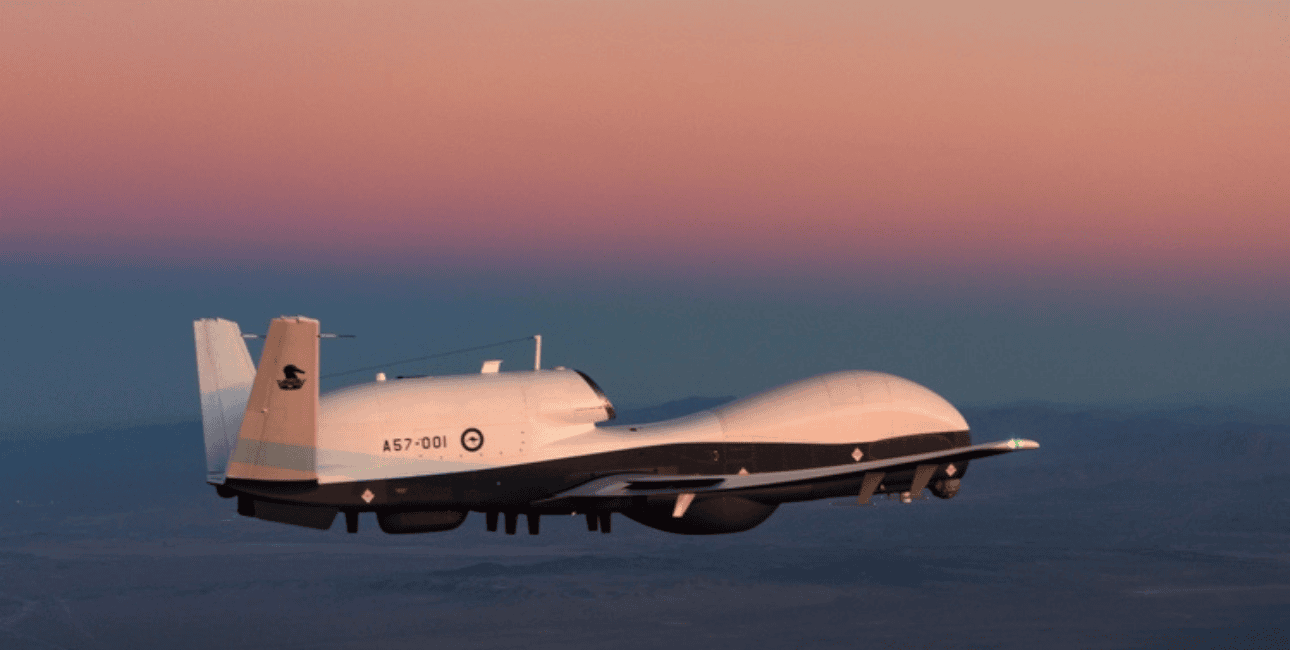
The US Navy also lost an MQ-4C Triton unmanned aircraft. 

On April 9, the MQ-4C Triton high-altitude, long-endurance (HALE) unmanned aerial vehicle (UAV) disappeared over the Persian Gulf near the Strait of Hormuz during a maritime surveillance mission.

The Navy finally acknowledged on April 14 that the drone had crashed that day, as the EurAsian Times had previously reported. An MQ-4C costs slightly more than $238 million per unit, and the crash was classified as Class A.

MQ-4C Triton. Credits Northrop Grumman.

US Navy Afloat Accidents

A Supply-class fast combat support ship, USNS Supply, and the USS Truxtun destroyer collided while conducting a replenishment-at-sea on February 12, 2026. Two personnel sustained minor injuries in the collision, and the Navy was investigating the incident.

“Two personnel reported minor injuries and are in stable condition. Both ships have reported sailing safely. The incident is currently under investigation,” the USNI News reported at the time, citing a statement from the US Navy.

On March 12, 2026, the most severe accident occurred aboard USS Gerald R. Ford when a fire broke out in the laundry room.

“The cause of the fire was not combat-related and is contained. There is no damage to the ship’s propulsion plant, and the aircraft carrier remains fully operational. Two sailors are currently receiving medical treatment for non-life-threatening injuries and are in stable condition. Additional information will be provided when available,” the US Navy said at the time.  “There is no damage to the ship’s propulsion plant, and the aircraft carrier remains fully operational.”

The fire burned for more than 30 hours, damaged berthing for hundreds of sailors, and forced the carrier to divert to Split, Croatia, for repairs.

On April 19, 2026, a fire on board the destroyer USS Zumwalt (DDG-1000) at HII Ingalls Shipbuilding injured three sailors. The fire was reported at around 9:45 p.m. local time while Zumwalt was pierside at the Pascagoula, Miss., shipyard. The guided-missile destroyer was at Ingalls for a modernization phase since August 2023. 

Two more notable incidents that resulted in the death of the crew include the assumed death of Lance Cpl. Chukwuemeka Oforah, who fell overboard from USS Iwo Jima on February 7, and the death of Lance Cpl. Armando Ortiz Canseco, attached to the San Antonio-class amphibious transport dock USS Anchorage (LPD-23), who vanished at sea on June 25.

The report also notes that although the absolute numbers of catastrophic events rose, off-duty fatalities declined, and many aviation mishaps did not result in loss of life thanks to successful ejections and rescues. The Navy experienced 30 total on-duty Class A incidents in FY 2026, the highest number since the sea service experienced 30 in 2022.

A 46-year-old lieutenant commander who perished in a motorcycle accident during a military motorcycle safety group ride and a death during physical training were the other two on-duty fatalities in FY 2026. 

There were 45 fatalities from 48 off-duty accidents in the Navy. That was less than the 54 accidents and 53 fatalities from the previous year. 

Meanwhile, the report suggests that the Marine Corps recorded six aviation Class-A mishaps, including five flight and one ground-related, up one from the prior year, and 12 total on-duty Class-A mishaps that resulted in seven fatalities.

One high-profile Marine aviation loss occurred on October 16, 2025, when an AH-1Z Viper attack helicopter crashed in a Southern California desert during a training flight. The pilot, Maj. Tyler Braconi, was killed in the deadly crash, while the second Marine was hospitalized after the incident.

The Navy’s high Class A mishap rate comes amid sustained operational tempo, including its Indo-Pacific presence, the war with Iran in West Asia, and ongoing training requirements. A range of issues caused these accidents, from maintenance problems and equipment failures to human factors and environmental conditions.

The numbers are a sobering reminder of the inherent risks of naval aviation and surface operations amid ongoing security risks and military operations.

The post U.S. Navy Records Worst Year in a Decade as Jets Collided, Helicopters Ditched & Aircraft Carrier Caught Fire appeared first on EURASIAN TIMES.

  •  

“Cinema Day” in Greece with €3 admission to all films, Oct 29

“Cinema Day”, the highly popular institution first established in 2022 and warmly embraced by Greek audiences, is returning on Thursday, October 29, for lovers of cinema throughout the country, who will be able to watch any film of their choice for the price of just 3 euros. Audiences can take their pick, choosing among the […]

The post “Cinema Day” in Greece with €3 admission to all films, Oct 29 appeared first on Keep Talking Greece.

  •  

Mulher sofre ferimentos ligeiros após atropelamento

VTM

Uma mulher de 77 anos sofreu ferimentos ligeiros na manhã desta quinta-feira, após ter sido atropelada por um veículo ligeiro numa passadeira da Rua Alexandre Herculano, na cidade de Mirandela.

De acordo com Luís Soares, comandante dos Bombeiros Voluntários de Mirandela, a vítima recebeu assistência e foi estabilizada no local pela equipa de emergência médica, tendo sido posteriormente transportada de ambulância para o Hospital de Mirandela com traumatismos ligeiros.

O alerta para o acidente foi dado às 09h05. De acordo com os dados da Proteção Civil, foram mobilizados para o local sete operacionais dos Bombeiros Voluntários de Mirandela, apoiados por três viaturas.

Esteve também no local uma equipa da PSP de Mirandela, que está a investigar as circunstâncias em que ocorreu o atropelamento.

The post Mulher sofre ferimentos ligeiros após atropelamento appeared first on A Voz de Trás-os-Montes.

  •  

Ferries, ships docked at 7 Greek ports due to 24h strike, Oct 30

Ferries and ships will be docked at seven ports across Greece for 24 hours on Friday, October 30, 2026, as seafarers in the country will join an international strike action by seafarers in several countries around the world. Ships are set to remain docked at the ports of Piraeus, Rafina, Lavrio, Patras, Igoumenitsa, Elefsina, and […]

The post Ferries, ships docked at 7 Greek ports due to 24h strike, Oct 30 appeared first on Keep Talking Greece.

  •  

Loulé entrega mais 36 casas de renda acessível

A Câmara Municipal de Loulé entregou, a 27 de outubro, mais 36 habitações públicas em regime de arrendamento acessível, na Urbanização Clona, junto à Mina do Sal, na cidade de Loulé. Os novos fogos destinam-se sobretudo a jovens, profissionais das forças de segurança e professores que trabalham no concelho, bem como a famílias com rendimentos intermédios que enfrentam dificuldades em suportar os valores do mercado de arrendamento.

As habitações, de tipologias T1, T2, T3 e T4, foram financiadas na totalidade pelo Plano de Recuperação e Resiliência (PRR) e integram a Estratégia Local de Habitação 2019-2032 do município.

Com esta entrega, a autarquia contabiliza 171 habitações atribuídas desde o início do atual mandato. Entre obras, projetos e ações de planeamento, estão em desenvolvimento cerca de mil respostas habitacionais, com o objetivo de atenuar as dificuldades de acesso à habitação no concelho.

“Fico muito feliz por todos os que ficaram com casa, pois esta é a base da vida de qualquer família”, afirmou o presidente da Câmara Municipal de Loulé, Telmo Pinto, que destacou o trabalho desenvolvido em diferentes áreas para dar resposta às necessidades da população.

A atribuição dos 36 fogos decorreu no âmbito do segundo sorteio de habitação pública promovido pelo município. Telmo Pinto garantiu que serão realizados novos sorteios e adiantou que a autarquia pretende reduzir progressivamente o tempo entre a atribuição das habitações e a entrega das chaves.

  •  
❌