A federal judge gave the government until noon on Friday to share which states had received letters trying to enlist them in an effort to find evidence of voter fraud.
The department has issued grand jury subpoenas to local election officials as part of a widening effort to prove unsubstantiated claims about large numbers of illegal voters in the state.
Voters casting their ballots in Los Angeles in June. At least two employees of Los Angeles County Registrar-Recorder’s office received grand jury subpoenas last week.
The midterm elections are just days away, and while anything can happen, the broad consensus among pollsters suggests a bad night for Republicans.
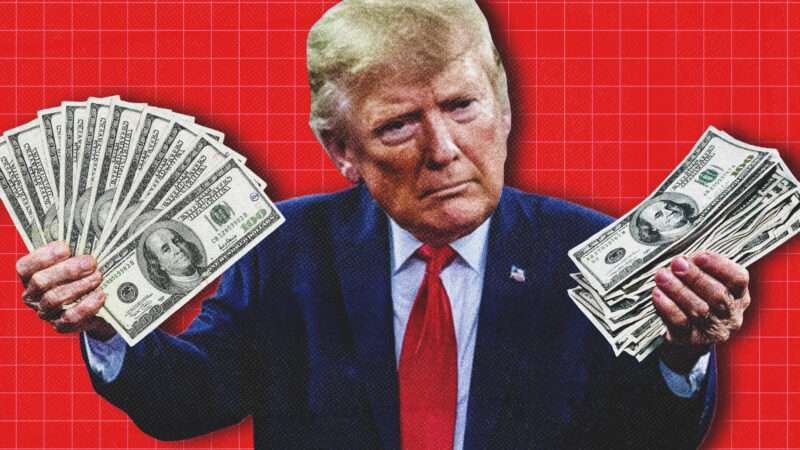
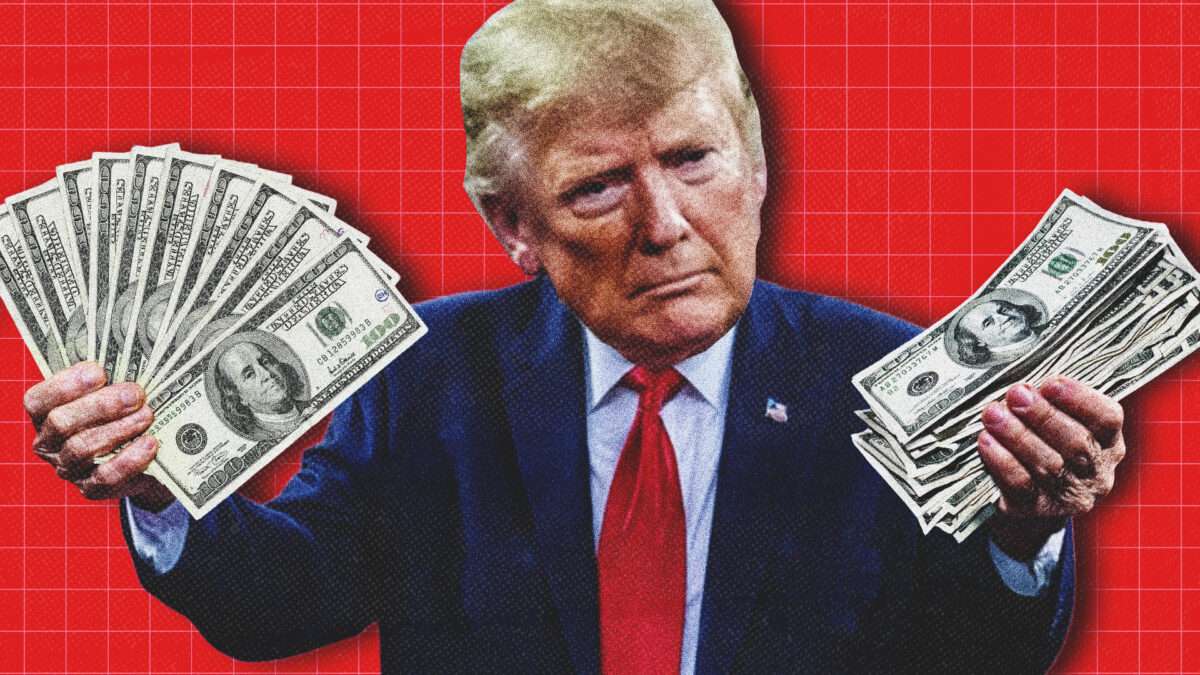
Hoping to shore up a victory for his party, President Donald Trump seized upon an idea: bribe the voters.
"If the Republicans win the House of Representatives and the United States Senate, both of them," Trump pledged in September, "I will issue a dividend to every adult citizen in the United States of America for $5,000."
According to Vice President J.D. Vance, this "dividend"—which would cost more than $1.3 trillion—would come from the "extraordinary amount of revenue" generated by Trump's tariffs. Of course, that math doesn't work: According to the Penn Wharton Budget Model, the U.S. took in just under $300 billion in tariff revenue between January 2025 and July 2026, not counting the amount it has had to refund after the Supreme Court found they were illegally imposed.
At that rate, it would take years of tariffs just to pay for Trump's dividend. Adding insult to injury, of course, is the fact that tariffs are paid by Americans, meaning we would be taxing ourselves to pay for our own disbursement.
But in the campaign season's closing days, Trump has made a number of other threats and offers, contingent on his party's success—a completely risible use of government power.
In September, three Ohio Republicans—Rep. Mike Turner and Sens. Bernie Moreno and Jon Husted—petitioned the president to build a planned Space Force training academy in their state.
"Every other state wants it," Trump said this month at an Ohio campaign rally. "If we win the midterms, Ohio will be very, very strongly considered."
Some of his pledges have been much more explicitly transactional.
On October 17, the Department of Defense—which Trump calls by its original name, the Department of War—announced a conditional $80 billion loan to pharmaceutical manufacturer Antheia. That same day, at a campaign rally in Kentucky, Trump made a pledge to the state's voters.
"If the Republicans win, the Department of War will be investing $100 million in the pharmaceutical company Antheia to revitalize a gigantic drug manufacturing facility in Winchester, Kentucky," he said. But he prefaced it by telling Rep. Andy Barr, the Republican running for the state's open Senate seat, "you have to win, Andy. Otherwise, forget it."
Days later in both Kansas and Iowa, Trump brought up E15, a gasoline blend that contains up to 15 percent ethanol derived from corn. It has advantages and disadvantages as an alternative to traditional gasoline, but it's a boon for corn-growing states.
"Normally, E15 is not allowed during the summer because warmer temperatures increase fuel evaporation and thus the formulation of ground ozone ('smog')," writes Benjamin Zycher of the American Enterprise Institute.
The government can waive that restriction to address disruptions in the fuel supply, which it did in March amid gas price shocks related to Trump's war in Iran. The House passed a bill in May to make the waiver permanent and allow E15 to be sold year-round, which Trump backed in June; the Senate version of the Farm Bill includes a year-round E15 amendment, but Democrats have held up its passage.
"With Roger Marshall in the Senate," Trump told Kansans last week, "we will make year-round E15 permanent. But if [Democratic candidate] Adam Hamilton is in, I'm not doing it."
He then made the same pledge in Iowa, where Rep. Ashley Hinson is the Republican Senate nominee. "With Ashley in the Senate, we will make it year-round E15," Trump said. "We'll make it permanent."
Of course, it's nothing new for politicians to make big promises in exchange for your votes. Typically, they're all hollow to at least some degree.
And Trump's pledges do reflect some version of reality: Keeping the Senate in Republican hands will make it easier for him to do certain things. But some of his others have been downright indefensible, less like typical political bribery than outright extortion.
At a rally in North Carolina last month, he tied hurricane disaster aid from the Federal Emergency Management Agency (FEMA) to Senate candidate Michael Whatley's election.
"We spent more than $2 billion [in] FEMA funding," he told attendees. "You're waiting for some additional money…and I'm gonna get that to you, Michael. Now if Michael loses, I'm not sending it." He added right after, "I'm only kidding, you're gonna get it."
Other times, he didn't take it back: Trump appeared at a campaign rally in Georgia this week, stumping for Rep. Mike Collins to unseat Sen. Jon Ossoff, and part of his sales pitch was that if Ossoff wins, he may just ignore the state.
"President has a lot of power," he said, and there's "a big difference when he likes the people representing a state. Collins could call me anytime he wants." But if Ossoff wins, he added, he won't take the call, and he even narrated a hypothetical conversation to make his point: "'Tell him I'm not in.' 'But he needs money for Georgia.' 'I don't give a damn what he wants!'"
Also this week, Trump railed about the Senate race in Alaska, where Republican Sen. Dan Sullivan faces not only former Rep. Mary Peltola but a retired teacher also named Dan Sullivan. The New York Times reported this week that the Peltola campaign actively recruited the second Sullivan to run explicitly as a spoiler, to siphon votes away from the senator.
"I have delivered for Alaska at Historic Levels," Trump wrote on Truth Social. "The Democrats are trying to steal this important Republican Seat and, if that happens, everything we've done for Alaska will come to an immediate hault [sic]."
It's one thing to say the federal government shouldn't provide aid to states—and since taking office, the administration has cut or paused such disbursements by $177 billion. Last week, the FEMA administrator indicated that going forward, states should expect to shoulder more of their own disaster aid.
But this goes much further, with the president explicitly conditioning aid on whether or not the state's voters have displeased him.
Perhaps, as in North Carolina, Trump was simply joking; the White House did not respond to Reason's request for clarification.
But there's certainly precedent to suggest he was serious.
"Last September, the Department of Energy (DOE) recommended cancellation of 624 grants for clean energy projects that had been approved by the Biden administration," Reason's Jacob Sullum wrote in July. The government then "winnowed it down to 284 grants, all but one of which had been awarded to projects in states that were represented by Democrats in the U.S. Senate and had voted for Kamala Harris in the 2024 presidential election."
In March, Politicoreported that Trump had approved 89 percent of disaster aid requests from states with a Republican governor and two Republican senators but only 23 percent of requests from states with Democrats in those offices.
According to the Idle RamblingSubstack, the trend continues: Trump has rejected nearly half of aid requests from Democrat-led states in this term while only rejecting 18 percent from Republican-led states.
But perhaps worst of all, he threatened not to pay out damages to people who suffered harm.
Between 1953 and 1987, the water at Camp Lejeune in North Carolina was contaminated by leaks of fuel and dry cleaning chemicals. The government estimates that as many as 1 million people, both service members and their families, were exposed to toxic chemicals. The Department of Veterans Affairs officially recognizes eight diseases stemming from exposure, including multiple cancers and Parkinson's disease.
In 2022, Congress passed the Camp Lejeune Justice Act, which waived any federal government claims of immunity and allowed veterans to sue over exposure to tainted water. As of September 2026, the Department of Justice says it has paid out more than $879 million, out of more than $1.1 billion in settlement offers.
"We're also fighting for our great veterans, and taking care of those veterans who brought claims related to water contamination at Camp Lejeune," Trump told North Carolina rallygoers last week. "And if we win the House and the Senate, I am directing the Department of Justice to settle all remaining legitimate claims as soon as possible." But "if we don't win, there's no money. If we do win, you're getting it."
It should be clear by now that Trump values personal loyalty over all else. To that end, there is nothing he finds more disreputable than failing to do what he says.
In the closing days of this campaign season, he is making that more explicit than ever, tying his party's success in a state to whether the state is entitled to equal treatment under the law.
Trump was right that presidents have "a lot of power." He's also a living example of why they shouldn't.
President Trump ensured Flávio Bolsonaro, who lost a presidential election in Brazil and faces multiple criminal investigations there, could enter the United States, U.S. officials said.
Mary Wollstonecraft (1759–1797) was the author of acclaimed works about subjects including the education of children, political philosophy, and human liberty. She is perhaps best remembered for her great pioneering book, A Vindication of the Rights of Woman (1792), a key text in the rise and development of both feminism and liberal theory.
What is perhaps less remembered today is the fact that her landmark case for women's rights owed an important intellectual debt to the work of the political philosopher John Locke (1632–1704), who argued that the proper role of government was to protect humanity's preexisting natural rights.
Locke is sometimes mislabeled as a conservative by certain modern academics and pundits. But his ideas were deemed to be quite radical in their own day. And for the teenaged Mary Wollstonecraft, that Lockean radicalism was as welcome as the first taste of food after a grueling starvation.
The year was 1775 and Wollstonecraft was 15 years old. She was a brilliant and independent-minded young woman, increasingly outraged by the vile behavior of her drunk, domineering father. He abused Wollstonecraft's mother and maintained a strict, sexist hierarchy at home, favoring her brother while she was made to suffer.
It was at this low point in her life when Wollstonecraft first read Locke. Certain passages from his greatest work, The Second Treatise of Government (1689), caught hold of her mind and never really let go. A properly constituted social order "gives the husband no more power over [his wife's] life than she has over his," Locke wrote. "The power of the husband being so far from that of an absolute monarch that the wife has, in many cases, a liberty to separate from him, where natural right or their contract allows it, whether that contract be made by themselves in the state of nature, or by the customs or laws of the country they live in."
She had always felt that her father had no right to tyrannize her family and that the preferential treatment he and her mother bestowed on [brother] Ned was unjust. Now, after reading Locke, she had an ethical foundation for her feelings. Not only was it her right to shape her own future; it was everyone's right. In fact, Locke's social contract made protest seem the only rational response to injustice; it was humanity's obligation to overthrow tyranny.
One of the reasons why Locke is sometimes mislabeled as a conservative today is because of his writings in favor of property rights, an issue that we now associate with conservative and libertarian thinkers. But it is worth remembering that Locke's whole case for property rights began with the idea that "every man has a property in his own person. This nobody has any right to but himself."
Is it any wonder that Locke's radical case for self-ownership would appeal to a young woman like Wollstonecraft, who longed to break free from the sexist laws and cultural strictures that held her back? Nobody was going to convince her that she did not have a right to her own body.
We might say something similar about the great abolitionist Frederick Douglass (1818–1895), who also drank deep from the principles of Lockean liberalism. "You are a man and so am I," Douglass wrote in his famous open letter to his former enslaver. "In leaving you, I took nothing but what belonged to me, and in no way lessened your means for obtaining an honest living. Your faculties remained yours, and mine became useful to their rightful owner." That is about as clear and effective a restatement of Lockean self-ownership principles as you are going to find.
Locke's influence on the American Revolution, particularly on Thomas Jefferson and the Declaration of Independence, is well-known. That Locke also had a key influence on both the women's rights and abolitionist movements is perhaps worthy of further remark.
The other Dan Sullivan in Alaska has drawn the most attention, but both parties are quietly trying to use little-known candidates in other battlegrounds to siphon votes, too.
Dan J. Sullivan, a retired teacher in Alaska, was recruited by Democratic operatives to join the race against Senator Dan S. Sullivan, a Republican, whose allies have been left worrying that voters will be confused.
Prime minister wrote to ministers saying he did not want them to ‘advocate for specific options or opine on the likely outcome of the process’
Selling nicotine-free vapes to children under the age of 18 has become illegal from today, the government has said.
Children were already banned from buying vapes containing nicotine. But, under the Tobacco and Vapes Act, shops across the UK will now be banned from selling nicotine-free vapes, and nicotine pouches, to children.
Vaping can be a way to help established adult smokers who are already addicted to nicotine from tobacco to swap to a less dangerous product. Vaping is considered safer than smoking, but that is a low bar. Vapes should therefore never be used by children or non-smokers.
Some children have already come to harm from bad reactions to vapes. The long-term health harms of vaping in today’s children will only become clear over time. They are however unlikely to be good; inhaling multiple, often heated, chemicals into the lungs may well do irreversible harm.
Assume the following: A person unlawfully entered the United States 20 years ago and has since started a business and raised U.S.-citizen children, has no criminal record, and has never been found to be dangerous. Should federal immigration law treat that person the same way it treats someone who was just apprehended at the border? Should the law treat that person as if Congress hadspecifically made them subject to mandatory detention for criminal or terrorism-related conduct?
Under the Trump administration, the answer is yes. President Donald Trump's current policy treats noncitizens who entered without lawful admission as subject to mandatory detention without bond throughout removal proceedings, even if they have lived in the United States for decades and have no criminal record. The executive branch adopted that position innew Immigration and Customs Enforcement (ICE) guidance issued in July 2025, reversing its prior interpretation of the same detention law.
The U.S. Supreme Court will now decide whether Congress actually required the result Trump is seeking. On October 1, the justicesagreed to hear the case of Rhoney v. Barbosa da Cunha. Ricardo Aparecido Barbosa da Cunha, a Brazilian national, entered the United States without inspection around 2005. He later applied for asylum, received work authorization, and eventually bought a home. He operates a small construction business and lives with his wife and two U.S.-citizen children. He has no criminal record. But immigration officers still arrested him while he was driving to work in Massachusetts in September 2025.
After Cunha challenged his detention, a federal courtordered a bond hearing and an immigration judge found that he posed neither a danger nor a flight risk and therefore released him on bond while his case proceeded. The Trump administration then appealed to the U.S. Court of Appeals for the 2nd Circuit and lost. Now the Supreme Court will have the final word.
The Supreme Court is not deciding whether Cunha may ultimately remain in the country. Instead, it is deciding the narrower question of whether the Immigration and Nationality Act mandates detention pending removal proceedings for someone like Cunha who is present in the United States without having been lawfully admitted.
The legal dispute turns on two phrases in one section of this federal immigration law. According to Section 1225, a noncitizen present in the United States who has not been legally admitted is considered an "applicant for admission." But when Congress imposed mandatory detention later in that same section, it used additional language, applying it to an applicant for admission who is "seeking admission."
That distinction may sound technical and trivial, but its consequences are enormous. If every statutory "applicant for admission" is automatically still "seeking admission," then the government can treat someone who crossed the border 20 years ago the same as someone arriving today and keep them in jail without the possibility of bond. If the two phrases mean two different things, however, then Cunha and others like him are generally eligible for a bond hearing underSection 1226, which permits both detention and release on bond or conditional parole.
The Trump administration argues that if Congress has deemed someone an applicant for admission, that person must necessarily still be seeking the admission for which they are considered an applicant. But the administration's argument asks the Court to stretch federal law beyond its reasonable limits. Congress expressly deemed certain people "applicants for admission." It did not separately deem them to be "seeking admission."
This case, in short, is about textualism. And as the late Justice Antonin Scalia and his co-author Bryan Garner argue in their book, Reading Law: The Interpretation of Legal Texts, one of the key principles of textualism is that "a material variation in terms suggests a variation in meaning." When Congress uses different words in closely related provisions, in other words, courts should hesitate before assuming that the different words mean the exact same thing.
In ordinary English, it is certainly difficult to describe a man driving from home to work after living in the United States for over two decades as presently "seeking admission." He is not seeking to enter the U.S.; he already entered decades earlier. The 2nd Circuit's unanimous opinion—written by Judge Joseph Bianco, a Trump appointee—reached this conclusion, holding that "seeking admission" describes ongoing activity rather than merely a retained statutory status.
Meanwhile, when the U.S. Court of Appeals for the 5th Circuit upheld the administration's position in a similar case, Judge Dana Douglas, an appointee of former President Joe Biden, invoked the same Scalia-Garner textualist principles in dissent.
The legal dispute, therefore, does not follow neat partisan lines. Judges from different ideological backgrounds have both concluded that the administration's reading goes beyond the words that Congress wrote.
The broader statutory structure also supports that conclusion. Congress has long required mandatory detention in Section 1226 for specified criminal and terrorism-related grounds. And theLaken Riley Act of 2025 expanded those mandatory-detention categories. But if nearly everyone who ever illegally entered the country is already subject to mandatory detention, as the administration asserts, then all of those carefully drawn separate categories for mandatory detention suddenly become superfluous and pointless for noncitizens who illegally entered the country, an objectionthat Douglas raised in dissent.
History also clarifies the point. For nearly 30 years, across five presidential administrations (including Trump's first), the government generally treated people like Cunha as potentially eligible for bond. Trump only reversed course in July 2025. The 2nd Circuit thus accuratelydescribed the earlier interpretation as a well-established executive branch practice.
Of course, past executive practice cannot override clear statutory language. But if Congress really did mandate a sweeping detention regime in 1996, it is striking that every presidential administration since then has operated under a totally different understanding.
None of this gives Cunha lawful immigration status. Nor does it guarantee his release or prevent the government from deporting him. Rather, it allows an immigration judge to ask a basic question: Is keeping this particular person in jail actually necessary while his case proceeds?
The administration may believe mandatory detention makes immigration enforcement faster or more effective. And Congress is free to adopt that policy if it chooses to do so. But Congress does have to choose it first.
Protecting the constitutional separation of powers is one of textualism's most important functions. Textualism is often described as a conservative method of statutory interpretation. But its deeper value is constitutional. It forces both courts and presidents to follow the law Congress actually passed. Sometimes that produces harsher results. Sometimes it produces more humane ones. But either way, it restrains the executive and judicial branches from exceeding their proper spheres.
Whether mandatory detention would accelerate Trump's deportation program is a question of policy. Whether it is just is a question of ethics. Whether Congress authorized it is a question of law.
In Cunha, the best textualist reading is that Congress preserved the possibility of bond and left room for an immigration judge to determine whether detention is necessary. That textualism, liberty, and compassion point to the same result is not the reason to reach it. In this case, however, it is a welcome coincidence.
The economy grew 3.4 percent in the third quarter, the fastest pace in a year. Strong spending and growth contrast with the poor marks many voters are giving the economy.

 Login