❌

Reading view

Law Banning Employer Requirements That Employees Listen to Employer's Religious or Political Speech Likely Violates Employer's First Amendment Rights

From Calif. Chamber of Commerce v. Bonta, decided today by Judge Richard Tallman, joined by Judges Richard Paez and Mark Bennett:

California Senate Bill (SB) 399 prohibits an employer from subjecting, or threatening to subject, an employee to adverse action if the employee chooses not to attend an employer-sponsored meeting or receive communications from the employer, "the purpose of which is to communicate the employer's opinion about religious or political matters."

The court concluded that the law restricts speech and not just employers' disciplining employees:

It is true that SB 399 facially forbids only the act of "subject[ing], or threaten[ing] to subject, an employee" to discipline for declining to attend certain meetings. But the law only applies to employers who engage in expressive activity at those meetings: namely, "communicat[ing their] opinion. It does not, for example, prohibit taking adverse action against employees who decline to attend a meeting, the sole purpose of which was for employees to fill out their annual tax paperwork. It prohibits adverse action only when the meeting's purpose was for the employer to engage in expressive activity. Thus, the First Amendment applies.

Our conclusion accords with the Eleventh Circuit's recent decision in Honeyfund.com, Inc. v. Governor (11th Cir. 2024). In Honeyfund.com, employers challenged Florida's Individual Freedom Act [part of the Florida Stop W.O.K.E. Act -EV], which forbade subjecting "any individual, as a condition of employment," to "training, instruction, or any other required activity" endorsing certain ideas [related to race, sex, or national origin -EV]. As California does here, Florida defended the law as "a ban on conduct because only the meetings are being restricted," not the underlying speech.

Our sister circuit rejected Florida's conduct-not-speech defense because the only way to know if the law had been violated was to examine the message conveyed at the meeting. Because "the conduct regulated depend[ed] on—and [could not] be separated from—the ideas communicated," Florida's law was "functionally a regulation of speech" implicating the First Amendment.

So too here. If an employer disciplines an employee for failing to attend an employer-sponsored meeting, the only way to know if SB 399 was violated is to "examine the content of the message that is conveyed" at the meeting. We must ask: did the employer express an opinion on political or religious matters?

So "the disfavored 'conduct'"—subjecting absentee employees to disciplinary action—"cannot be identified apart from the disfavored speech"—the employer's opinion on political or religious matters. Further, that California's law (unlike Florida's law) is viewpoint-neutral does not make it content-neutral. Because employers are forbidden from taking adverse action only if they communicate certain messages at the underlying meeting, the law inevitably singles out employers based on their expressive activity….

The court then concluded the law was content-based ("because it applies only when the employer has discussed certain topics: politics and religion") and speaker-based (limited to speech by employers), and was therefore unconstitutional unless it was narrowly to a compelling interest. And it held that the law likely couldn't be justified by an interest in protecting a "captive audience":

In tension here are "the First Amendment rights of speakers" and "the privacy rights of those who may be unwilling … auditors." The State may protect the unwilling auditor's privacy "by enacting reasonable time, place, and manner regulations applicable to all speech irrespective of content." As discussed above, that is not what California did here: SB 399 singles out political and religious speech for regulation. Thus, California, "acting as censor, undert[ook] selectively to shield the public from some kinds of speech on the ground that they are more offensive than others." The Supreme Court has said that "[s]uch selective restrictions have been upheld only when the speaker intrudes on the privacy of the home, or the degree of captivity makes it impractical for the unwilling … auditor to avoid exposure." In such circumstances, California's ability to limit "discourse solely to protect others from hearing it is … dependent upon a showing that substantial privacy interests are being invaded in an essentially intolerable manner."

California fails to identify a single case where a content-based restriction has been upheld because employees were deemed a captive audience or had their substantial privacy interests invaded in an essentially intolerable manner. Instead, the State points to cases upholding speech limitations on public transit, at healthcare facilities, and on school premises, which referred to commuters, patients, and students as captive audiences. California contends that employees are equally captive because they are economically dependent on their employer and risk losing their job, with its pay and benefits, should they refuse to listen to their employer's speech. Thus, California argues that employees need as much protection from unwanted speech at work as commuters on public transit, patients at healthcare facilities, and students at public schools.

California's argument goes too far. Both the Supreme Court and our Court have referred to "captive audiences" only when the government acts as a proprietor or in the context of content-neutral time, place, and manner restrictions. Neither court has relied on a "captive audience" theory to identify a compelling interest sufficient to uphold content-based restrictions on nongovernmental speech in a nongovernmental setting. Nor, as far as we can tell, have any of our sister circuits, with the Eleventh Circuit directly rejecting such a theory. Honeyfund.com. A brief review of the key cases on which California relies demonstrates the point.

The first is Lehman v. City of Shaker Heights (1974), in which the City of Shaker Heights sold advertising space on its public transit vehicles but refused to accept paid political advertising…. A four-Justice plurality … conclud[ed] that the city, operating "in a proprietary capacity," had decided to limit the kinds of advertisements displayed based on several prudential factors. One of those factors was "the risk of imposing upon a captive audience"—commuters. To the plurality, the commuters' "captivity" was merely a prudential consideration in the city's decision to not allow certain advertising on its property.

In his solo concurrence in the judgment, Justice Douglas also described commuters as a "captive audience." That was relevant to his analysis because he believed that the commuters' right "to be free from forced intrusion on their privacy preclude[d] the city from transforming its vehicles of public transportation into forums for the dissemination of ideas upon this captive audience." To Justice Douglas, the commuters' "captivity" limited the city's ability to turn its transit vehicles into a First Amendment forum.

The Supreme Court has since characterized Lehman as recognizing the government's ability to "bar from its facilities certain speech that would disrupt the legitimate governmental purpose for which the property has been dedicated." Our precedents consider an audience's "captivity" in the same manner as Lehman: as a prudential factor for a government, acting as proprietor, to consider when deciding what speech to allow in a nonpublic forum.

The Supreme Court has also considered an audience's degree of captivity when deciding if content-neutral time, place, and manner restrictions on speech in traditionally public forums are reasonable. The two examples California cites involved such restrictions imposed on public ways near healthcare facilities, in which patients are "held 'captive' by medical circumstance."

In short, these cases reveal that an audience's degree of "captivity" is relevant when the government, acting as a proprietor, excludes certain kinds of speech from nonpublic forums or when evaluating the reasonableness of content-neutral time, place, and manner restrictions imposed by the government acting as a regulator. No federal appellate court, including the Supreme Court, has relied on a "captive audience" theory to identify a compelling interest sufficient to support a content-based restriction on nongovernmental speech in a nongovernmental forum.

Considering the dearth of support for California's position and that the "captive audience" theory has been applied to support content-based speech restrictions only in nonpublic government forums, we conclude that the industry groups are likely to succeed on the merits of their First Amendment claim.

The plain, if at times disquieting, truth is that in our pluralistic society, … we are inescapably captive audiences for many purposes. Much that we encounter offends our esthetic, if not our political and moral, sensibilities. Nevertheless, the Constitution does not permit government to decide which types of otherwise protected speech are sufficiently offensive to require protection for the unwilling listener or viewer.

The logic of the decision would also apply to similar laws in Connecticut, Delaware, Illinois, Maine, Maryland, Minnesota, New Jersey, New York, Oregon, Rhode Island, Vermont, Washington, Wisconsin, and the Virgin Islands, many of which were enacted within the last several years. (Of course, the Ninth Circuit decision binding precedent is only binding in, of these states, Oregon and Washington; in others it is only potentially persuasive precedent.)

I expect the decision to be quite controversial, and there will probably be an en banc rehearing petition. Note, though, that the panel consisted of two Clinton-appointed Senior Judges and a Trump-appointed judge; this makes it hard to predict how the en banc court (currently split 16-13 between Democrat and Republican appointees) would vote.

Lonnie D. Giamela (Fisher & Phillips LLP) and Todd A. Lyon (Fisher & Phillips LLP) represent plaintiffs.

The post Law Banning Employer Requirements That Employees Listen to Employer's Religious or Political Speech Likely Violates Employer's First Amendment Rights appeared first on Reason Magazine.


  •  

Rare Ceasefire in Russian-Occupied Oleshky Opens Humanitarian Corridor After Months of Isolation

A temporary ceasefire between Russia and Ukraine has held for a third day around the occupied town of Oleshky, allowing preparations for food deliveries and civilian evacuations. The agreement, mediated with the involvement of US First Lady Melania Trump, represents a limited diplomatic development in a war where attempts to establish broader ceasefires have repeatedly failed.

Russia and Ukraine have maintained a localised ceasefire around Oleshky in the southern Kherson region, creating an opportunity to deliver humanitarian assistance to civilians who have spent months effectively isolated from regular supplies of food, medicine and drinking water.

Ukrainian Human Rights Commissioner Dmytro Lubinets said on 29 October that neither side had reported violations of the agreement and that teams were continuing to clear mines from roads intended for humanitarian convoys.

According to Associated Press, the six-day arrangement began on 27 October and is expected to remain in force until 1 November.

The first substantial humanitarian delivery is scheduled for Friday, 30 October.

An estimated 1,700 to 2,000 civilians remain in Oleshky, many of them elderly residents whose health, mobility or personal circumstances have prevented them from leaving.

The town is situated on the Russian-occupied eastern bank of the Dnipro River, opposite Ukrainian-controlled Kherson.

Its geographical position has made it particularly vulnerable to the consequences of the fighting, while damaged infrastructure, mines and military restrictions have complicated access for humanitarian organisations.

Melania Trump’s Unusual Diplomatic Role

The agreement has attracted attention because of the involvement of US First Lady Melania Trump.

In a White House statement issued on 23 October, her office announced that she had worked with Russian and Ukrainian representatives to secure arrangements for a temporary cessation of military activity.

The statement described her as the intermediary in the negotiations, covering the timing of the ceasefire, humanitarian access, evacuation procedures and operational coordination.

Lubinets subsequently acknowledged her involvement and said communication with his Russian counterpart, Yana Lantratova, had helped maintain the arrangement.

The White House originally announced 29 October as the starting date, but Ukrainian officials later reported that the ceasefire had taken effect at 3am on 27 October.

By Thursday, both sides were describing the agreement as holding without recorded violations.

The participation of the American First Lady is an unusual feature of international humanitarian diplomacy, which is more commonly conducted through governments, international organisations or specialist humanitarian agencies.

However, the immediate significance of the agreement will be determined by whether assistance reaches residents and whether those wishing to leave can do so safely.

A Town Cut Off from Essential Supplies

Oleshky has experienced prolonged humanitarian difficulties under Russian occupation.

The town suffered extensive disruption following the destruction of the Kakhovka dam in June 2023, which caused severe flooding across communities along the Dnipro.

Subsequent fighting, damage to infrastructure and restrictions on movement further complicated access to essential goods.

According to Ukrainian officials, normal deliveries of food to the town have been effectively interrupted since late May 2026.

Residents have faced shortages of medicines and clean water, while the presence of mines has made movement beyond residential areas hazardous.

The remaining population is believed to consist largely of older people and residents requiring medical attention.

For these civilians, humanitarian access is not simply a matter of replenishing household supplies.

It may determine whether individuals can receive essential treatment, obtain prescription medicines or leave areas where normal medical and social services have ceased functioning.

The Evacuation Challenge

The ceasefire provides for humanitarian teams to assess residents’ needs and arrange transport for those who wish to leave.

The White House has indicated that residents should be able to choose their destination, including Ukrainian-controlled territory or Russia.

Ensuring that such decisions are genuinely voluntary is particularly important in occupied territory.

International humanitarian law provides protections for civilians under occupation, including restrictions concerning forcible transfers and deportations.

A credible evacuation process therefore requires clear information, freedom from coercion and practical arrangements allowing residents to travel safely.

The presence of journalists accompanying the mission may provide additional documentation, although media access does not replace independent humanitarian monitoring.

Russian and Ukrainian representatives have also been coordinating mine clearance along routes intended for humanitarian vehicles.

Until those routes are confirmed safe, the delivery of assistance and movement of civilians remain dependent on operational conditions.

A Ceasefire That Does Not Extend Beyond Oleshky

The agreement remains geographically limited.

Russian strikes continued elsewhere in Ukraine on 29 October, killing civilians in several cities, including Dnipro.

The continuing attacks demonstrate that the localised humanitarian arrangement does not represent a broader change in Russian military operations or the strategic direction of the war.

Nevertheless, the pause has also brought some relief to residents of nearby Ukrainian-controlled Kherson, where repeated attacks have disrupted daily life.

The absence of reported violations around Oleshky suggests that the two sides retain the ability to coordinate narrowly defined humanitarian measures when political and operational arrangements are in place.

That does not necessarily imply an increased willingness to compromise over territory or broader security questions.

What Happens After 1 November?

The agreement is scheduled to expire on 1 November, leaving only a limited period for delivering aid and facilitating departures.

Its effectiveness will depend on the quantities of assistance delivered, the number of residents reached and whether evacuation arrangements operate as intended.

It will also be necessary to establish what protection, if any, is available to civilians who remain after the ceasefire ends.

A successful operation could provide a model for similarly limited humanitarian arrangements elsewhere along the front.

However, extending such cooperation would require further political consent and practical security guarantees.

For Oleshky’s remaining residents, the immediate question is more urgent: whether several days without fighting can provide the assistance and safe passage that months of war have denied them.

  •  

The Two Faces of Gadi Eisenkot, Who Could Be Israel’s PM

The article examines Gadi Eisenkot’s portrayal as a centrist political alternative to Benjamin Netanyahu, contrasting that image with his military record and role in developing Israel’s Obliteration Doctrine.

  •  

Corrupt foreign officials should face EU visa-bans and asset-freezes, MEPs and Estonia say

Activists and MEPs want notoriously corrupt foreign officials to face EU visa-bans and asset-freezes, in a proposal backed by Estonia.

People guilty of “serious corruption” including “bribery, misappropriation of public funds, and the laundering of their proceeds” should be added to an existing EU list of global human rights abusers, said 71 MEPs in a letter to EU leaders dated 21 October.

The human rights blacklist includes Russian judges who tormented dissidents, Taliban virtue-enforcers, African warlords, and extremist Israeli settlers among the 151 individuals and 34 entities it names.

But the fact the EU does not have “corruption” as a criterion for inclusion, unlike similar legislation in Western allies Australia, Canada, the US, and UK, left a loophole, the MEPs warned.

“This allows corrupt foreign officials already sanctioned by other Western partners to continue to benefit from EU institutions and its financial systems,” they said.

The anti-corruption bolt-on would have a moral and a strategic value, said Polish rightwing MEP and former interior minister Mariusz Kamiński, who co-signed the letter.

This article continues, but the full version is available only to EUobserver.com subscribers. Visit account.euobserver.com/membership

  •  

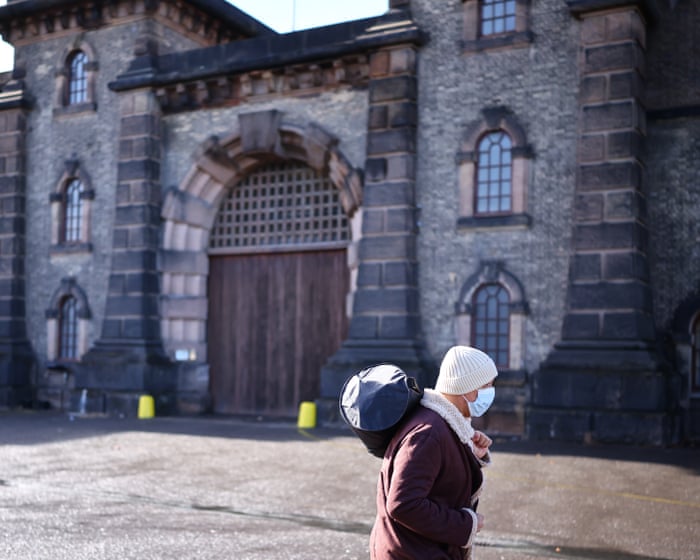
More prisoners recalled to jail than released in England and Wales

Ministry of Justice figures show recalls rose 27% in year to June despite emergency measures to ease overcrowding

More people were recalled to jails in England and Wales in the first half of this year than were released, despite government efforts to reduce the prison population, according to figures released on Thursday.

Ministry of Justice (MoJ) data shows that 12,338 people were recalled to custody between the beginning of April and the end of June, while 12,278 people were released. It continues a trend set between January and March, when 13,193 people were returned to prison and 12,977 released.

Continue reading...

© Photograph: Tolga Akmen/EPA

© Photograph: Tolga Akmen/EPA

© Photograph: Tolga Akmen/EPA

  •  

Egypt media crackdown draws ‘lame’ response from EU Commission

The European Commission will not help journalists facing jail in Egypt even though its multi-billion-euro EU-Egypt deal signed in 2024 is conditional on human rights.

On Thursday (29 October), it read out a prepared statement, noting the importance of independent media outlets and that its agreement with Egypt includes a commitment to universal values of democracy, rule of law and human rights.

The statement was read after Cairo cracked down on Lina Attalah, chief editor of the independent media outlet Mada Masr.

The journalist was convicted on Wednesday by a court in Cairo for operating a website without a licence even though she had made multiple attempts over the years to obtain such a licence.

Her latest application for a licence has been pending without response since 2023 and her site has been blocked in Egypt since 2017.

She was fined some €48,000 and ordered to shut down the outlet, highlighting a pattern of abuse against journalists and civil society throughout Egypt, a country deemed an essential partner for the EU in its efforts to curb migration.

As of early October, Egypt has imprisoned 25 journalists.

In response, the commission at a press briefing re-read its short statement on the importance of independent media in Egypt.

Asked if this also means it would press Egypt to drop its case against Lina Attalah, a commission spokesperson said he would not “go further than what we have already put out there”.

Pressed if the crackdown against her is a demonstration of the values cited in its €7.4bn agreement with Egypt, he deferred to another spokesperson before walking off the stage. No other comment was made on the matter.

The response has drawn criticism from rights defenders.

“We don’t need the EU to tell us that Egypt jails journalists. We need to know what it’s going to do about it,” said Claudio Francavilla of Human Rights Watch.

He said the EU has been funnelling billions to Egypt, conditioned on “concrete and credible steps” on human rights.

The exact wording of the agreement, which is published here, says that assistance to Egypt requires it “to make concrete and credible steps” towards respecting effective democracy, the rule of law, and guarantees respect for human rights.

“Egyptian authorities don’t seem to have read the memo. Lame statements like this one are hardly a reminder,” Francavilla said of the commission’s reaction.

This article continues, but the full version is available only to EUobserver.com subscribers. Visit account.euobserver.com/membership

  •  

Lawyers for Marist Brothers face questions over advice to keep serial offender out of ‘legal arena’

A once-confidential letter says child sexual abuser might implicate senior church officials if allowed near ‘the legal arena’ upon his release from jail

Lawyers from a leading law firm for the Marist Brothers have been subpoenaed to explain a once-confidential document showing they advised the Catholic order to keep a serial offender out of “the legal arena”, suggesting he was too honest and might implicate senior church officials.

The offender was “regrettably up front” about his interactions with senior leadership, and could not be trusted to heed “suggestions” about “not dumping on others excessively”, the document says.

Continue reading...

© Composite: Getty images

© Composite: Getty images

© Composite: Getty images

  •  

Campaigners take EU Commission to ombudsman over methane delay, saying it ‘undermines the rule of law’

The London-based Environmental Investigation Agency (EIA) has filed a complaint with the European Ombudsman, accusing the EU Commission of maladministration over its handling of the bloc’s methane rules.

The complaint, filed on Thursday (29 October), targets two recent commission decisions. 

The first is for a July recommendation that member states hold off on fining importers that are in breach of the rules until 2030. 

The second is a proposal made earlier this month to delay the import rules by a year over supply worries — a decision that was made following heavy pressure from oil and gas companies, the White House and eventually by the summer, a majority of member states. 

But the EIA argues that neither decision is backed up by evidence that the rules actually threaten Europe’s energy supply or push up prices.

By delaying a law already adopted in 2024, the group says, the commission is “undermining integrity of both the legislative process and the EU rule of law.”

“Rather than ensuring that the EU Methane Regulation is implemented as agreed, the commission has responded to pressure from the fossil-fuel industry by weakening enforcement and proposing further delays, without providing credible evidence to justify these decisions,” said Jack Corscadden, senior climate campaigner at EIA.

This article continues, but the full version is available only to EUobserver.com subscribers. Visit account.euobserver.com/membership

  •  

Brussels Proposes New Climate Resilience Law but Leaves €70 Billion Annual Investment Question Unresolved

The European Commission wants member states to assess climate risks, establish national resilience plans and incorporate future warming into public investment decisions. Yet the proposed legislation does not provide the funding needed to implement its ambitions.

The European Commission has proposed a new climate resilience law that would require EU governments to assess their exposure to extreme weather, identify authorities responsible for managing risks and develop national plans to protect infrastructure and economic activity.

Presented on 27 October, the initiative marks a shift in European climate policy towards managing the consequences of changing weather conditions alongside efforts to reduce greenhouse gas emissions.

However, the Commission estimates that adapting Europe’s infrastructure and economy to future climatic conditions will require approximately €70 billion annually.

The proposed legislation does not establish a dedicated funding programme of that size.

This creates an immediate question for member states already facing difficult decisions over defence expenditure, energy security and public borrowing.

Brussels wants governments to make climate preparedness a routine part of economic planning, but the financial responsibility for delivering those measures remains largely unresolved.

National governments face new obligations

Under the Commission’s proposed Climate Resilience Law, EU governments would be required to conduct more systematic assessments of climate risks.

The proposal envisages national assessments by 30 June 2029 and strategic resilience plans by 31 December 2030.

These documents would identify threats affecting infrastructure, public services, economic activity and communities.

Governments would also be expected to specify which public authorities are responsible for managing particular risks.

The intention is to prevent situations in which responsibility is divided between institutions without a clear mechanism for action.

The proposed framework would establish a common basis for assessments across the EU, allowing national authorities to compare risks and coordinate responses.

This could be particularly relevant where droughts, floods or disruptions to energy networks affect more than one member state.

The deadlines remain proposals rather than existing legal obligations. The legislation must still be negotiated and adopted by the European Parliament and the Council.

A common warming scenario

One of the most significant elements of the proposal is the introduction of a shared reference trajectory for global warming.

According to the Commission’s announcement, the framework uses a trajectory involving global average warming of approximately 1.5°C above pre-industrial levels by 2030, 2°C by 2050 and 3°C by 2100.

These figures would provide a common planning assumption for evaluating long-term risks.

They are not legally determined temperature outcomes or a guarantee that warming will follow precisely that path.

Instead, they are intended to help authorities examine how buildings, roads, energy facilities and other infrastructure might perform under changing climatic conditions.

For example, a transport project designed to operate for several decades would need to consider possible exposure to extreme heat, flooding or changes in rainfall patterns.

Such assessments could influence engineering requirements, maintenance costs and investment decisions.

The financial problem

The Commission estimates that approximately €70 billion a year will be needed to strengthen Europe’s climate resilience.

That expenditure could include flood protection, water management, urban cooling, agricultural adaptation and improvements to vulnerable infrastructure.

The Commission argues that preventive investment can reduce the economic losses associated with disasters.

According to its figures, climate-related damage across the EU amounted to approximately €200 billion between 2022 and 2025, averaging €50 billion annually.

However, estimating the economic benefits of prevention does not resolve how projects should be financed.

National governments face competing demands on their budgets, while local authorities often bear responsibility for infrastructure without possessing sufficient resources for major investment programmes.

Private financing may contribute in commercially viable areas, but some adaptation projects generate public benefits rather than direct financial returns.

Flood barriers, emergency drainage systems and measures protecting vulnerable communities may therefore require substantial public expenditure.

The proposed legislation establishes a framework for identifying such investments but does not guarantee the resources necessary to undertake them.

Businesses and insurers face changing risks

The Commission also wants climate resilience to become part of business and financial decision-making.

Companies operating transport networks, energy facilities and industrial sites may face increasing exposure to disruption from extreme weather.

Insurers must assess the potential for more frequent or costly claims.

Banks and investors may need to consider whether assets remain commercially viable under changing environmental conditions.

These issues have implications for credit conditions, property values and long-term investment.

However, incorporating climate risks into financial decisions can create difficulties for regions where exposure is high and adaptation costs are substantial.

Insurance premiums may rise, while some properties or economic activities could become increasingly difficult to insure.

The Commission has indicated that further proposals concerning climate insurance and disaster preparedness are being developed.

Their eventual design will influence how financial risks are distributed between households, businesses, insurers and governments.

New European climate information tools

The framework also introduces instruments intended to improve access to scientific information.

The European Climate Viewer will provide mapped information on projected climate hazards.

The Navigator of Climate Resilience Tools will help authorities and businesses identify relevant assessment instruments.

A separate Solutions Explorer will provide examples of adaptation measures developed through European research programmes.

These tools could make climate information more accessible, particularly for smaller administrations without extensive technical resources.

Nevertheless, access to information does not automatically produce the financing or institutional capacity required to implement projects.

A municipality may be able to identify a flood risk more precisely while remaining unable to finance the necessary protective infrastructure.

A new responsibility for Brussels and national capitals

The Commission is expected to present an additional EU strategic plan on climate resilience in 2028.

Separate initiatives are also being prepared on heatwaves, insurance and disaster preparedness.

The resulting framework could substantially influence how public infrastructure and investment projects are planned across Europe.

However, national governments will have to determine how the proposed requirements interact with existing spending obligations and economic priorities.

The European Parliament and Council must also decide whether the legislation should include stronger financial provisions.

The central issue is not whether governments should assess the risks facing infrastructure and public services, but how the measures identified by those assessments will be funded.

Until that question is addressed, the proposed law will establish a more comprehensive system for recognising climate-related risks without guaranteeing that member states possess the resources to reduce them.

  •  

EU Divided Over New Membership Safeguards as Montenegro Becomes Test Case for Enlargement

Brussels is considering unprecedented restrictions on the rights of future EU members, including the possible suspension of voting rights for serious breaches of European values. France and the Netherlands favour stronger safeguards, while Italy and Austria warn that excessive conditions could undermine enlargement.

European Union governments have begun negotiations over proposals that would allow Brussels to impose additional restrictions on future member states, exposing divisions over how to prevent democratic backsliding without discouraging countries seeking accession.

The discussions, held among EU ambassadors on 28 October, concern draft safeguards proposed by the European Commission for inclusion in future accession treaties.

Montenegro, currently the most advanced candidate in the Western Balkans, is expected to become the first country subject to the proposed arrangements.

The measures would potentially allow the EU to suspend certain membership rights, including voting rights, during a transitional period lasting up to 15 years after accession.

However, the negotiations have revealed disagreement not only over the duration of the safeguards but also over the powers that should be granted to the Commission and the legal thresholds for intervention.

The controversy raises a broader question about the nature of EU membership: whether countries that have completed accession negotiations should immediately enjoy the same institutional rights as existing members.

France and the Netherlands seek stronger guarantees

According to Euronews’ reporting on the ambassadors’ discussions, France and the Netherlands have pressed for stronger guarantees that newly admitted states will continue respecting the rule of law and other EU obligations.

Their position reflects concern that the Union’s existing procedures have proved difficult to enforce against governments accused of undermining judicial independence or democratic institutions.

Article 7 of the Treaty on European Union already provides for sanctions, including suspension of certain membership rights, where a serious breach of European values is established.

However, the procedure involves demanding political and voting requirements.

The Commission’s proposed safeguards are intended to provide an additional instrument specifically applicable to newly admitted members.

They would operate during a defined period after accession and could be activated in response to serious breaches of EU values or the principle of sincere cooperation.

For governments supporting the proposal, the objective is to ensure that reforms undertaken during accession negotiations remain effective after membership has been secured.

Italy and Austria warn against excessive restrictions

Not all member states share this approach.

Italy and Austria, among countries supporting faster integration of the Western Balkans, have warned against imposing conditions that could make EU membership appear provisional or unequal.

Their concern is that candidate countries may face an increasingly complicated accession process even after meeting the formal requirements.

The credibility of EU enlargement depends partly on the proposition that successful reforms will eventually lead to full membership.

If new members are subjected to extensive additional restrictions, political leaders in candidate countries could find it more difficult to justify the domestic compromises required by accession negotiations.

The debate is particularly sensitive in the Western Balkans, where prolonged delays have already generated frustration over the pace of integration.

The challenge for Brussels is to strengthen safeguards without creating a permanent distinction between established and newly admitted members.

A proposed 15-year period

The Commission’s draft institutional safeguard would remain available for 15 years following accession.

This period is intended to permit intervention if a new member reverses reforms after joining the Union.

Yet ambassadors have questioned whether such an extended period can reasonably be described as temporary.

The proposed decision-making mechanism has also attracted criticism.

Under the draft, the Commission could propose restrictive measures that would take effect unless a qualified majority of member states rejected or amended them within two weeks.

This would reverse the usual political dynamic by requiring governments to assemble a blocking majority rather than actively secure support for sanctions.

The proposal could therefore make intervention easier than under the existing Article 7 mechanism.

Critics are concerned that the arrangement would give the Commission excessive influence over the institutional rights of newly admitted countries.

Supporters argue that a more effective enforcement mechanism is necessary precisely because existing procedures have proved difficult to use.

Monitoring could begin before accession

The proposed safeguards are not confined to the period following membership.

The Commission also wants stronger monitoring between the signing of an accession treaty and the date on which a country formally joins.

This period can last several years, during which a candidate government may change and reform commitments may weaken.

Under the draft arrangements, monitoring could include regular assessments, reviews involving existing member states and formal warnings.

As a last resort, accession could be postponed if there were clear evidence that a candidate would not meet the required conditions.

The voting procedure for such a postponement remains unresolved.

These provisions would add another stage of oversight to an accession process that already requires extensive negotiations and the implementation of EU legislation.

Montenegro faces a new uncertainty

Montenegro began accession negotiations in June 2012.

According to the European Commission’s enlargement records, all 33 screened negotiating chapters have been opened and 16 provisionally closed.

Its progress has made the country a leading candidate for the next round of enlargement.

However, its accession treaty may now become the vehicle through which the EU establishes a new framework for future entrants.

The implications extend beyond Montenegro.

Albania, Moldova and Ukraine are also pursuing accession, although they are at different stages of the process.

Any safeguards introduced for Montenegro could influence the terms eventually offered to those countries.

Enlargement becomes a test of EU governance

The Commission’s proposals reflect a wider debate over whether the EU’s institutions can function effectively with substantially more members.

New entrants would participate in decisions concerning the budget, sanctions, foreign policy and the internal market.

Their admission could also affect areas where unanimity remains necessary, potentially increasing the risk of institutional deadlock.

The European Parliament’s research service has identified the proposed safeguards as part of a broader programme addressing decision-making and governance ahead of enlargement.

Negotiations over the draft clauses will continue at the technical level, with ambassadors expected to revisit the matter in November.

The central disagreement remains unresolved.

The EU wants future members to maintain democratic and legal standards, but it must also decide whether those guarantees can be enforced without creating a separate class of membership.

Montenegro’s accession negotiations will provide the first practical test of that approach.

  •  

Cambodian police and soldiers helped guard abusive scam compounds, Amnesty alleges

Survivors tell rights group that serving officers who worked as guards administered electric shocks and beatings

Cambodian police and military officers worked as private security guards in scam compounds where thousands were forced to work in the online fraud industry, according to a report by Amnesty International.

The global rights group alleged they worked for security companies as part of a system that enabled slavery and rape in the compounds, with some guards using electric batons to keep people trapped.

Continue reading...

© Photograph: Yasuyoshi Chiba/AFP/Getty Images

© Photograph: Yasuyoshi Chiba/AFP/Getty Images

© Photograph: Yasuyoshi Chiba/AFP/Getty Images

  •  
❌