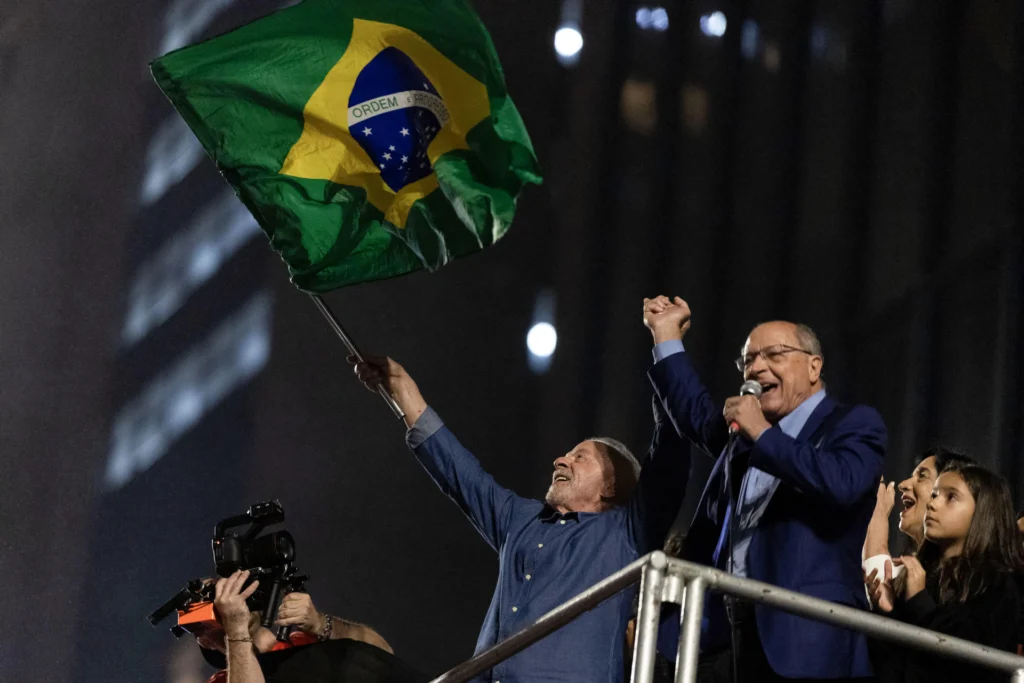
U.S. Embassy in Brasilia sent a report to the State Department and other U.S. government agencies describing President Luiz Inácio Lula da Silva’s victory over Flávio Bolsonaro as surprising and definitive, with a margin close to 4.4 million votes.
The document sent on Monday states that the election unfolded in a mostly peaceful setting, despite mobility and public transport disruptions in the south and northeast of the country.
The findings carry weight because they contradict the narrative pushed by Bolsonaro, who refused to accept the outcome.
According to the report, the two-hour extension of voting hours, ordered by Supreme Federal Court Justice Cristiano Zanin and cited by Flávio to challenge his defeat, had minimal impact: the Superior Electoral Court reported that only 34,000 votes, approximately 0.03% of the total, were recorded after 5 P.M. local time. The U.S. embassy’s assessment also notes the opposition leader’s rejection of the outcome.
Observers from the Organization of American States (OAS) ratified full certainty in the results. They said they had “no doubt about the results,” although they considered the internal communication of the election organizers unsatisfactory.
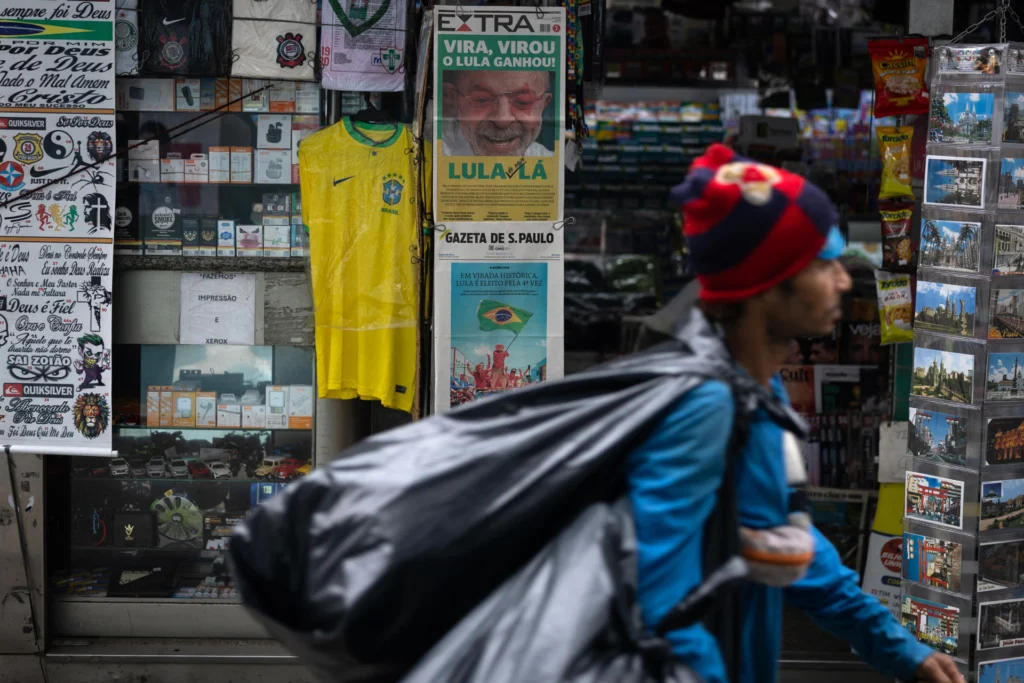
📢 “Definitiva” e “surpreendente”
Embaixada dos Estados Unidos no Brasil reconhece o resultado das eleições brasileiras e fala em "vitória surpreendente", mas definitiva
Representação americana diz que a ampliação do horário teve efeito mínimo.
Text reads: “”Definitive” and “surprising” : U.S. Embassy in Brazil recognizes the result of the Brazilian elections and speaks of a “surprising victory”, but definitive. U.S. representation says that the extension of the time had minimal effect. Trump has not yet recognized the re-election of Brazil’s president, but he also has not embarked on the dystopia of Flávio Bolsonaro.”
Trump Aided Bolsonaro Exit
The embassy’s position contrasts sharply with statements by U.S. President Donald Trump, who called the elections shameful while expressing a willingness to speak with Lula. The State Department authorized visas for Flávio Bolsonaro and his associates after their arrival in Miami on Wednesday, October 28.
A recent New York Times investigation, based on U.S. government sources, found that Trump and his advisers assisted Bolsonaro’s departure from Brazil. The far right politician was under investigation for corruption, money laundering and foreign exchange evasion.
Flávio Bolsonaro now finds himself in Florida under a temporary migratory status granted by Trump’s order, seeking for a permanent residence through an accelerated process.
The private plane that moved the Bolsonaro’s family from Argentina into U.S. territory was arranged by Jason Miller, a White House communications official. That detail links the flight directly to the administration’s inner circle.
Bolsonaro left Brazil roughly 48 hours after losing the runoff to Lula on Sunday, October 25. His departure came shortly after Supreme Federal Court Justice Alexandre de Moraes requested the seizure of his passports, amid suspicions that he might leave the country to evade justice.
The embassy report does not address whether those judicial proceedings figured in the decision to grant entry. What it does establish is that the U.S. government, through its diplomatic mission in Brasilia, considers Lula’s win beyond dispute even as other branches of the same administration helped his defeated rival relocate to U.S. soil.
Brazil’s Public Labor Prosecutor’s Office (MPT) has registered 3,396 complaints of electoral harassment in the workplace since President Luiz Inácio Lula da Silva’s runoff victory, and the federal government has announced emergency measures to stop retaliation against workers for their political views.
The complaints, which include threats, reprisals and dismissals allegedly motivated by employees’ political leanings, represent 21.4% of all labor complaints counted this year and far exceed the volume reported in the 2022 election.
The MPT designed the package together with the Ministry of Labor and Employment (MTE), the Attorney General’s Office (AGU), the Superior Labor Court (TST) and the Ministry of Justice and Public Security (MJSP), with the aim of stopping workplace persecution and protecting the secrecy of the vote.
Labor Minister Luiz Marinho said the figures reflect “the discontent of a sector of businesspeople who do not accept the natural and democratic result of the ballot box.” He added that every worker has a constitutional right to choose a political affiliation and that the government will apply severe penalties.
Labor Prosecutor General Gláucio Araújo de Oliveira warned of legal consequences. “The employer owns the company, not the employee’s vote,” he said, adding that firing or intimidating workers for their political convictions is illegal and will bring criminal and civil action in labor courts.
The measures include a digital platform on the Ministry of Labor and Employment’s portal to receive testimony and evidence of discrimination or coercion at work, and labor inspectors who will issue infraction notices with cumulative fines. A public registry of companies convicted of discriminatory practices will also be created.
Authorities asked technology companies such as Google and Meta to take down content, groups and boycott lists organized on social media against workers or businesses.
Assédio eleitoral, listas de boicote e perseguição política no trabalho são crimes!
O Ministério Público do Trabalho já registou milhares de denúncias de assédio eleitoral, ultrapassando os números de eleições anteriores. pic.twitter.com/S3oRF0ymC7
Text reads: “Electoral harassment, boycott lists and political persecution at work are crimes! The Labor Public Prosecutor’s Office has already recorded thousands of complaints of electoral harassment, exceeding previous election figures.”
Concern for Native Communities
The post-election climate has also affected rural areas and native people’s territories, particularly the Guaraní and Kaiowá communities in Mato Grosso do Sul. The National Foundation of Indigenous Peoples (Funai) called reports of harassment and armed attacks “extremely worrying” and is coordinating protection with the Federal Police and the Ministry of Indigenous Peoples.
The Articulation of Indigenous Peoples of Brazil (Apib) and the organization Aty Guasu forwarded the complaints, with backing from Amnesty International, Greenpeace and federal lawmaker Célia Xakriabá before the Chamber of Deputies’ Human Rights Commission. “These are communities facing direct threats to their lives, access to water and ancestral territories,” Xakriabá said, calling for the immediate intervention of the National Force.
The ministries of Human Rights and Citizenship, Racial Equality and Indigenous Peoples formed a joint monitoring table to investigate attacks motivated by politics and racial hatred against native peoples, quilombola communities and Afro-Brazilian religious centers. Whether the labor penalties and the monitoring table produce concrete cases will show how far the measures go beyond announcements.
UNA-Haiti denounces deadly operations in densely populated neighborhoods as questions mount over the mission’s objectives.
On Wednesday, the United Nations Association of Haiti (UNA-Haiti), an organization representing the Haitian diaspora community, denounced military operations carried out by Salvadoran forces on Haitian territory, saying they are causing the deaths of innocent civilians.
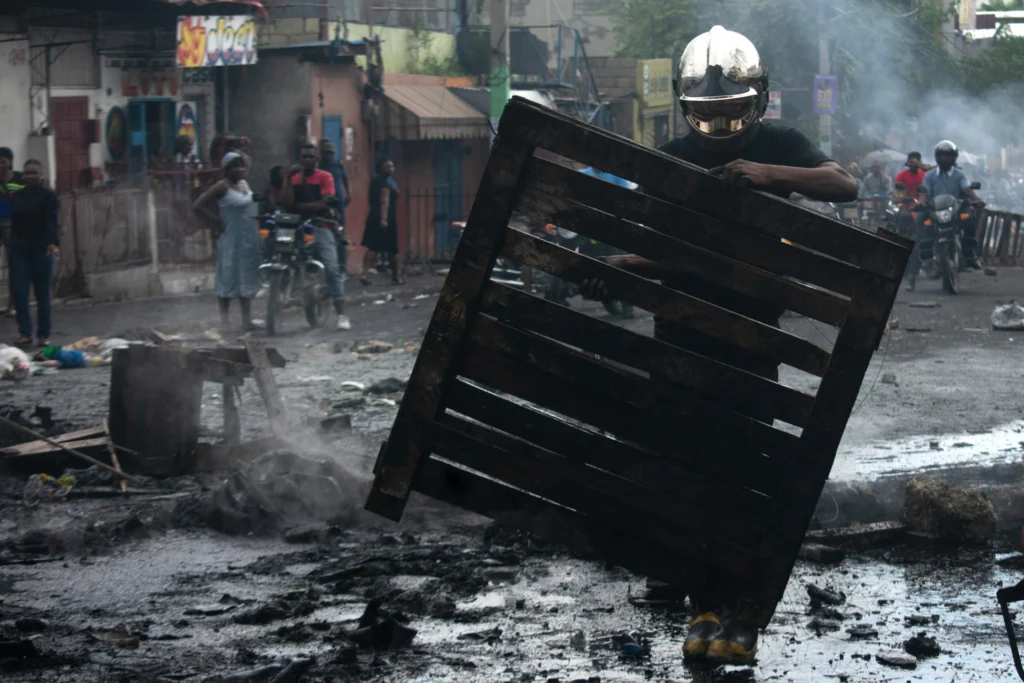
In the letter addressed to United Nations Secretary-General Antonio Guterres, UNA-Haiti detailed that Salvadoran troops have been conducting heavy aerial bombardments, helicopter gunship raids and assaults with heavy weapons in densely populated neighborhoods such as Croix-des-Bouquets, Canaan and La Plaine du Cul-de-Sac since Oct. 22, 2026.
“Children are being killed not by gangs, but by foreign bombs. These operations do not represent a security solution, but rather a massacre of innocent people,” the organization stressed, warning that families are being forced to hide under their beds to protect themselves from crossfire.
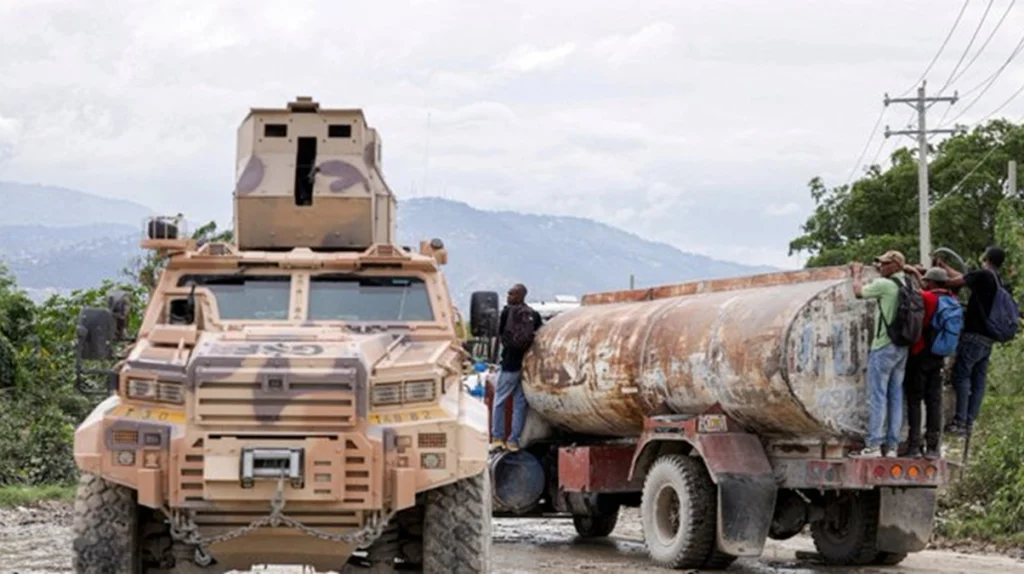
The military escalation is a response to an ambush suffered by the Salvadoran contingent belonging to Task Force Freedom II. On Oct. 18, an armored vehicle carrying four aviation technicians returning from a food supply run was attacked with explosives in the Santo area (Croix-des-Bouquets). The personnel managed to escape from the burning vehicle, but all contact with them has been lost since then.
In response to the incident, El Salvador’s President Nayib Bukele announced a massive deployment on Oct. 21 to rescue the military personnel, issuing a stern message in Haitian Creole on social media directed at gang leaders.
He demanded the safe return of the hostages and warned that what had happened so far was nothing compared with what was “yet to come,” urging them not to take his words as “empty threats.”
El Salvador deploys 2,000 troops to Haiti as interim government cancels elections, again
Bukele promises to “destroy” gangs if medical personnel are not found
The Salvadorian Operation Is Full of Unanswered Questions
El Salvador’s military operation in Haiti, involving more than 2,000 troops on the ground searching for four missing soldiers, raises numerous questions, including the campaign’s real objective, its allies and the role of the Gang Suppression Force (GSF), established under a United Nations Security Council mandate.
The international community has attempted to resolve Haiti’s crisis through several multinational missions. However, Salvadoran President Nayib Bukele, citing the search for the four Salvadoran military personnel who were part of the GSF and have been missing for nearly two weeks, decided to pursue a solution unilaterally.
According to various experts, the incident is one of the operation’s “gray areas,” as it remains unclear what actually happened on Oct. 18, when the vehicle carrying the Salvadorans was attacked and set on fire on the outskirts of Port-au-Prince.
“We need to determine whether this is simply about rescuing people whose identities we still do not know, or whether it is something broader,” said former diplomat Edwin Paraison, who served as Haiti’s consul general in the Dominican Republic.
One of the unanswered questions concerns what happened that day to trigger the Salvadoran military operation, since the identities of the four missing “aviation technicians” have not been officially made public to date.
“Soldiers, in the times we live in, maintain constant contact with their families, so it is very unusual that in El Salvador no one has been concerned about contacting a family member of these missing individuals,” he said.
🇸🇻🇭🇹🚨 HAÏTI — Le SALVADOR a envoyé des SOLDATS en Haïti après l’enlèvement d’agents humanitaires par des GANGS.
The text reads, “Haiti: El Salvador has sent soldiers to Haiti following the kidnapping of humanitarian workers by gangs. A security and rescue operation is underway.”
What Is the Scope of Bukele’s Operation?
The mission’s actual scope is also unknown, although Bukele said Thursday that it “is not an operation against the Haitian people, nor an invasion of the country of Haiti,” because El Salvador has no interest other than ensuring that its four aviation technicians “return home.”
However, the scale of the deployment has drawn attention because, in just 10 days, Bukele assembled an expeditionary force that already doubles the number of personnel the Gang Suppression Force has managed to assemble in a year.
The GSF is not a peacekeeping mission in the strict sense of the word, but rather a military component created to help Haitian authorities neutralize armed gangs, protect infrastructure and facilitate humanitarian access.
The United Nations Security Council approved a contingent of 5,500 personnel from several countries for the GSF, of whom just over 1,000 have arrived in Haiti — approximately 100 of them originally from El Salvador.
In an operation shrouded in secrecy, the Salvadoran troops’ modus operandi is also unclear. It is not known whether they are working jointly with the GSF, led by Mongolian Maj. Gen. Edernebat Batsuuri, or whether they have their own operational plan.
Last week, the GSF announced the arrival in Port-au-Prince of the first Salvadoran contingent soldiers “to support the search and security operations underway,” without providing further details.
Bukele, meanwhile, said Thursday that the search for the four Salvadorans was giving gangs “a lesson — those gangs that make the Haitian people suffer, that kill the people they love, that prevent them from living normal, free lives without fear.”
Pou chèf gang yo ak manm gang yo k ap kenbe kat konpatriyòt nou yo an otaj ann Ayiti:
Mesye nou kidnape yo pa konbatan. Yo se teknisyen nan domèn avyasyon ki fè pati misyon nou ann Ayiti, nan kad yon misyon entènasyonal. Misyon nou an gen sèlman pilòt ak pèsonèl teknik, ki gen… pic.twitter.com/BNKbWTAQQp
President Nayib Bukele’s text reads, “To the gang leaders and gang members holding our four compatriots hostage in Haiti:
Gentlemen, the individuals you have kidnapped are not combatants. They are aviation technicians serving as part of our mission in Haiti—a mission that is international in scope.
Our team consists solely of pilots and technical personnel, whose primary role is to conduct medical evacuations and save lives—not to wage war. Yet, you carried out a cowardly kidnapping, seizing them as they were returning from purchasing food at a local market.
For this reason, we have launched a military operation today to rescue them. We have one objective and one objective only: to bring our four compatriots home, alive and unharmed.
However, I want you—the gang leaders—to understand one thing very clearly: today’s attack is nothing compared to what will follow if you do not release the four hostages alive. And do not mistake our words for empty threats.
We have already dealt with the gangs in El Salvador, and we are fully capable of doing the same to you. There is still time to avoid this. Return our four compatriots to us, alive and unharmed, and everything will return to how it was before the kidnapping. The choice is in your hands.”
Who Provides Logistical Support?
Another gray area concerns the support the Salvadoran president is receiving from other countries because several U.S. military aircraft have landed in recent days at Toussaint Louverture International Airport in Port-au-Prince, which has been closed to international commercial flights because of the violence.
“We have not come to Haiti to make money; nobody is paying us for this. We have come to fight the evil ones,” Bukele said, adding that his country is “almost” the only one “paying for this operation,” although he acknowledged receiving “a little logistical help from some other countries.”
Nevertheless, U.S. analyst Jake Johnston, a researcher on Latin America and the Caribbean, maintains that “the United States and Colombia have collaborated on logistics,” while the Dominican Republic “has offered its support and is serving as a logistical hub for the delivery of helicopters and other equipment.”
Coincidentally or not, a meeting of the Conference of the Americas Coalition Against Cartels (A3C) was held this week in Santo Domingo. The meeting was organized by the Dominican Republic together with the U.S. Department of War to strengthen regional cooperation against threats posed by transnational organized crime and drug trafficking.
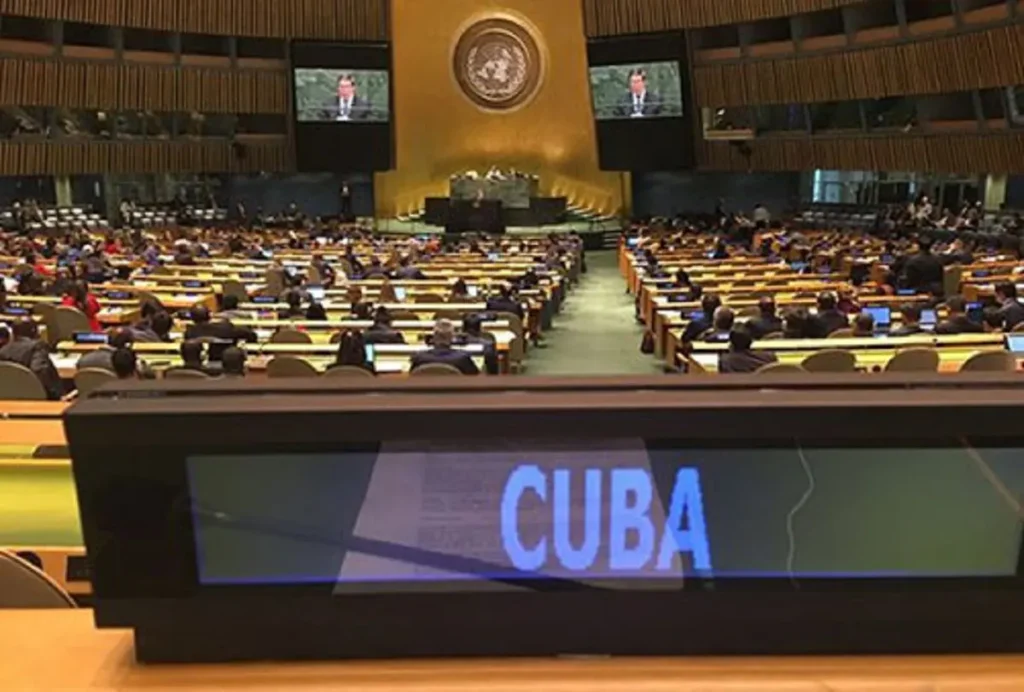
The United Nations General Assembly approved for the thirty-fourth time a resolution that demands the end of the economic, commercial and financial blockade of the United States against Cuba, with 130 votes in favor, 17 against and 25 abstentions. Cuban President Miguel Díaz-Canel thanked the nations that supported the initiative and denounced pressure from Washington to modify the result.
“On behalf of the people of Cuba, we appreciate the solidarity of the 130 nations that voted against the genocidal blockade and the collective punishment to which the U.S. government subjects us,” Díaz-Canel expressed through the X social network.
The president described the vote as an act of courage and sovereignty, despite U.S. diplomatic efforts aimed at reducing support for the resolution presented by Havana.
The previous day became a diplomatic battle between Cuba, which defends multilateralism and international law, and a MAGA version of the United States that repeatedly violates the United Nations Charter and views the world as its backyard.
El mundo ha vuelto a pronunciarse mayoritariamente contra el #bloqueo, incluso por encima de las más groseras presiones y chantajes de EE.UU para cambiar el rumbo de esta votación.
The text reads, “The world has once again spoken out overwhelmingly against the blockade, even above the most brazen pressures and blackmail from the U.S. to change the course of this vote.”
The Cuban Foreign Minister, Bruno Rodríguez, warned about an unusual deployment by the United States to reduce support for the document. During the debate, the U.S. representative to the UN, Mike Waltz, maintained that the blockade does not exist and attempted to blame the Cuban leadership for the economic crisis suffered by the country, claims that the Cuban delegation strongly rejected.
Diplomats from various nations defended the cessation of unilateral coercive measures and pointed out their effects on the development of the Cuban nation. The day took place in the midst of bilateral tensions and a debate on compliance with international law and the Charter of the United Nations.
The vote took place in a context of tightening U.S. restrictions. Between March 2025 and February 2026, damages attributed to the blockade amounted to $8,083.3 million, 7% more than in the previous period. The accumulated damages over six decades reach more than 178.7 billion dollars in current prices.
La política absurda del gobierno EEUU contra Cuba bloquea todo aquello que sostiene la vida. Hasta sus propios ciudadanos sufren las consecuencias.
¿Por qué el bloqueo contra Cuba impide que 7 millones de estadounidenses reciban los beneficios del medicamento cubano NeuralCIM… pic.twitter.com/OrGyTzMEVK
The text reads, “The absurd U.S. government policy against Cuba blocks everything that sustains life. Even its own citizens suffer the consequences. Why does the blockade against Cuba prevent 7 million Americans from receiving the benefits of the unique Cuban drug NeuralCIM, which can combat Alzheimer’s, senile dementia, neurodegenerative diseases, with a treatment of proven effectiveness, incomparably superior to its counterpart”
The resolution seeks the lifting of unilateral restrictions that, according to Havana, affect sectors such as electricity generation, transportation, food production, health and education. The text also mentions that the fuel shortage has affected blackouts and the operation of essential services.
Cuba has presented this initiative before the General Assembly every year since 1992. On the 34 occasions in which it has been put to a vote, the resolution has received a large majority of support, although the level of support has varied depending on the international political context.
The approval reiterates the international demand for the end of the U.S. blockade against Cuba, while the government in Havana has demonstrated with verifiable data that the US measures constitute collective punishment with economic and social consequences for the Cuban population.
She reaffirmed her commitment to judicial reform and pledged to hold elections under a revamped electoral authority.
In a national address delivered on Thursday, Venezuelan Acting President Delcy Rodriguez presented an overview of the political, economic, cultural, spiritual and democratic transformation initiatives carried out throughout the year.
During her address, she underscored the Venezuelan government’s independence in directing public policies and making strategic decisions.
“The decisions behind this transformation are made here, signed here and announced here, before you. Sovereignty is not negotiable,” Rodriguez said, emphasizing that Venezuela’s political horizon is measured by a sequence of objectives to be achieved, while maintaining international relations based on mutual respect.
Nearly 10 months after the U.S. military attack, Rodriguez referred to the “two perspectives” shaping Venezuela: that of those who view the changes as an excessive opening and that of those who believe the changes are happening too slowly. The Venezuelan acting president then stressed that her administration operates and positions itself at the point where these two perspectives intersect.
“Governance takes place between these two tensions, and we have chosen a path that will lead us steadily to a successful outcome,” she said, urging citizens to assess the government’s performance more objectively and dispassionately.
“I am not asking you to have faith. I am asking you to judge me by the facts. Less fighting, more solutions,” Rodriguez said, setting out the standard by which she wants her administration to be evaluated: “An announcement is not worth what it promises. It is worth what is delivered.”
Her statements come as U.S. President Donald Trump envisions Venezuela becoming the 51st state of his country, while Secretary of State Marco Rubio seeks to set the pace of Venezuela’s political process. In response to those ambitions, Acting President Rodriguez outlined her main priorities.
1. All Decisions Are Made in Venezuela
In keeping with the defense of national sovereignty, Rodriguez described the transformation proposed under the “Venezuela Reborn” plan as a “democratic, orderly, institutional and verifiable transformation.”
This translates into three aspirations that matter in every Venezuelan household: “that your child can return, that the power does not go out, and that your salary is enough to make ends meet. That is what rebirth means,” she said.
“Return will always be voluntary, dignified and guaranteed,” Rodriguez promised Venezuelans living abroad. She assured them that anyone who decides to return will find “a country that welcomes them with respect, their documents in order and employment opportunities.”
2. A Justice System Open to Witnesses
Regarding criminal justice reform, Rodriguez invited “independent organizations to verify each of these steps in complete freedom and transparency.”
She recalled that the reform is currently advancing through a nationwide consultation intended to hear everyone’s views, with technical assistance from the European Union and cooperation from the U.N. Office of the High Commissioner for Human Rights. Its purpose is to build “a fairer, more humane, transparent and impartial justice system.”
To date, nearly 9,000 people have benefited from the Amnesty Law, which ended criminal proceedings “stemming from the confrontation in which we were immersed,” Rodriguez said, emphasizing that more than 1,000 people have already regained their freedom.
In September, Rodriguez had acknowledged that the Law Against Hate “had been applied abusively.” Accordingly, the reform to that law introduced by the National Assembly seeks to eliminate criminal penalties and strengthen its educational purpose.
Once enacted, the reform will require the justice system to review the cases of individuals prosecuted under the law. This is in addition to instructions to security forces that no one may be detained without a court order, except when caught in the act of committing a crime, and a reminder that peaceful protest is a constitutional right that requires respect for the physical integrity of public officials.
“The responsible exercise of politics is guaranteed for everyone. The doors are open,” the Venezuelan acting president said.
3. Elections with the World as a Witness
“This is not a dialogue for the sake of appearances. These are difficult issues, and they cannot be resolved in a single day,” Rodriguez said, referring to one of the issues on the agenda of the dialogue table established under the Democratic Coexistence and Peace Program.
In October, the Venezuelan government and representatives of the 2015 National Assembly held a third round of talks in Caracas.
The agenda focuses on “upcoming electoral processes, reform of the Supreme Tribunal of Justice and the recovery of resources for post-earthquake socioeconomic assistance,” Rodriguez said, highlighting that the dialogue table had demanded that the United Kingdom return the seized Venezuelan gold.
In response to those calling for early elections, an urgency encouraged by the far right, Rodriguez recalled that “Venezuela’s political horizon is not measured by a date on the calendar, but by a sequence of objectives we must achieve.” At the end of that sequence are the ballot boxes.
“There will be elections, all those required by our Constitution, organized by a renewed electoral authority and with the world as a witness,” the Venezuelan acting president pledged.
She stressed that the process aims to establish an electoral authority “accepted by everyone,” guarantee internal democracy within political parties and leave behind the “times of confrontation that nobody wants anymore.”
Addressing those who hold different views, she said: “This transformation also belongs to you. I am not asking you to change your opinion. I am asking you to judge by the facts and come to the table, with equal rules for everyone.”
4. Contracts, Wages and Reconstruction
“You have the right to make demands, and I am listening,” Rodriguez said, emphasizing that dialogue on economic issues is already producing concrete results.
Thanks to the new regulations that have been approved, the Venezuelan government has managed to sign 61 contracts in the hydrocarbons sector, while another 44 contracts are under negotiation.
Authorities are also making progress in talks on mining and in assessing “nonessential assets held by the state that could be offered to the private sector or returned to their former owners.”
Workers’ wages are being discussed at a negotiating table that brings together trade union federations, business chambers and government authorities. For 2027, “increases in workers’ income across the country at four different points during the year” are planned. These increases “may in no case be lower than the economic growth recorded in the preceding quarter.”
To families who are still rebuilding their homes after the earthquake, Rodriguez promised that reconstruction efforts would not stop and that every month she would show them what had been done, where and when.
5. Legality as a Method
“When I said at the United Nations that legality was the way forward, it was not just a phrase. It was a method,” the Venezuelan acting president said during her national address.
She recalled that her administration continues to restore access to news websites “that had been subject to administrative measures as a result of the confrontation we experienced.” Restrictions imposed during the years of confrontation are now being reversed under the same legal framework that Rodriguez has made her governing method.
She urged Venezuelan journalists to act responsibly and respect citizens’ rights, while asking the foreign press not to stigmatize “the image of our country, nor its people and national identity.”
Finally, in response to those who fear that the transformations will entail too many concessions to traditional economic power groups, Rodriguez assured them that “nothing that has been built will be lost. What works will be protected, and what is wrong will be corrected.”
She urged young people to believe again, because these reforms are intended to ensure that “when it is their turn to decide the country’s direction, they will find institutions, not rubble.”
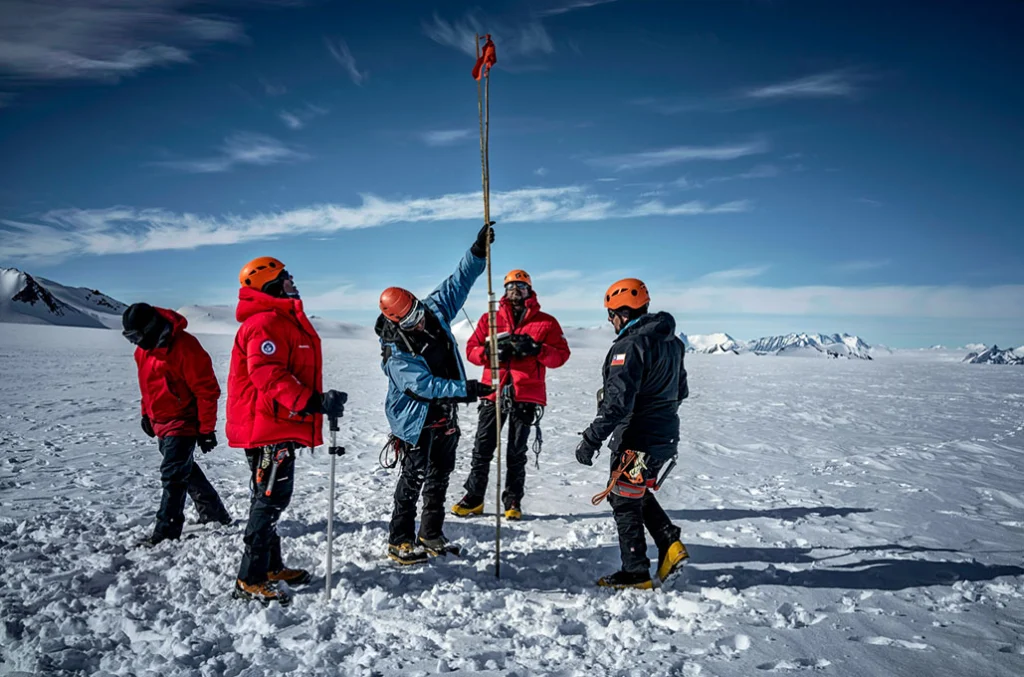
On Thursday, Chilean Minister of Foreign Affairs Francisco Pérez Mackenna inaugurated the 63rd Antarctic Scientific Expedition (ECA) in Punta Arenas. The expedition is set to carry out nearly 50 research projects, involving more than 150 scientists, between November and the end of March.
During the ceremony, the Foreign Minister highlighted Chile’s position as a gateway to Antarctica for international scientific programs. “The trust Chile enjoys in the realm of international relations, combined with the prestige of its public institutions and its logistical and infrastructural capabilities, represents an asset of immense value for attracting more countries to choose Chile as their gateway to Antarctica,” stated Pérez Mackenna.
Foreign Ministry reports indicated that the number of countries using Punta Arenas as a departure point for the “White Continent” has grown from 12 to 21 since 2004. Furthermore, eight other nations have occasionally passed through the capital of the Magallanes and Chilean Antarctic Region. “They use our ports and airports for their own vessels and aircraft, or they contract services in the Magallanes region to facilitate their scientific expeditions,” the minister noted.
The 63rd Antarctic Scientific Expedition includes operations at bases and field camps across the Antarctic Peninsula and the continent’s interior—including Union Glacier, located approximately 1,000 kilometers from the South Pole. The teams will conduct research across various fields of Antarctic science—an area the Foreign Minister described as strategic and inseparable from Chilean foreign policy.
En PuntaArenas se realizó el lanzamiento oficial de la 63ª Expedición Científica Antártica "ECA63" del @inach_gob
En la instancia, el Comandante en Jefe de la Tercera Zona Naval, Contraalmirante Juan Soto Herrera, presentó los detalles del despliegue naval para este periodo pic.twitter.com/qXflnac41l
The text reads, “The official launch of the 63rd Antarctic Scientific Expedition (“ECA63″) by @inach_gob took place in Punta Arenas. During the event, the Commander-in-Chief of the Third Naval Zone, Rear Admiral Juan Soto Herrera, presented details regarding the naval deployment for this period.”
“Antarctic science has a very distinct character; it is a strategic field—inseparable from Chile’s foreign policy—that helps us explore and gain knowledge about a vast territory that is crucial to the future of both our country and the planet,” Pérez Mackenna affirmed.
Antarctica is governed by the Antarctic Treaty—originally signed by 12 countries in 1959—which designates the territory for science and international cooperation. Although the continent is not governed by any single state, countries such as Chile, the United Kingdom, Argentina, Australia, and New Zealand maintain historical territorial claims.
Chile operates at least ten Antarctic bases: five are managed by the Chilean Antarctic Institute (INACH), while the others are run by the Armed Forces. The country’s first facility in the territory was inaugurated in 1940, following a decree by President Pedro Aguirre Cerda that established the boundaries of the Chilean Antarctic territory.
Pressure from Washington has led to the suspension of air routes and the withdrawal of international companies.
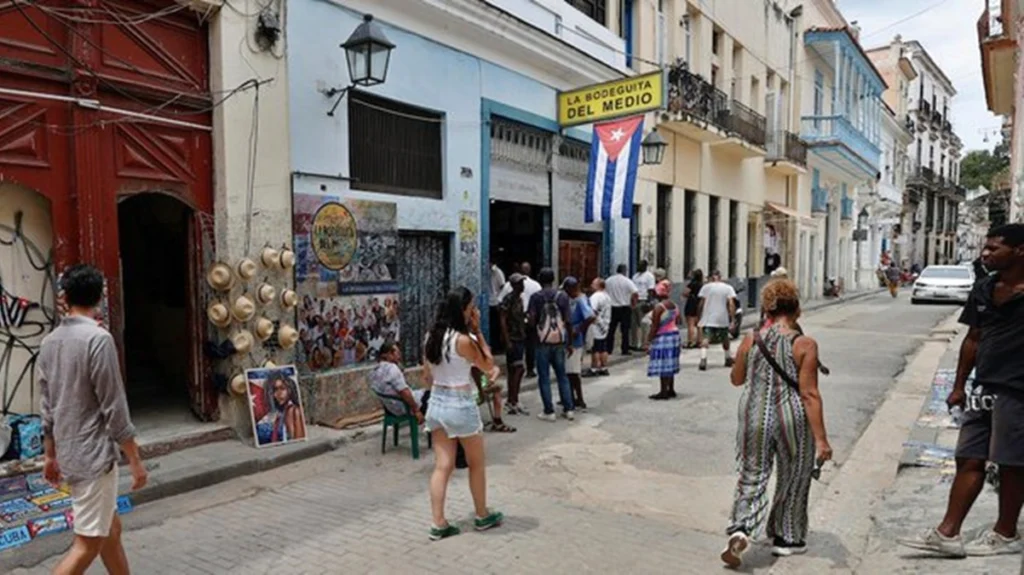
On Wednesday, the National Office of Statistics and Information published a report showing that the U.S. energy blockade has caused a decrease in tourism to Cuba.
This Caribbean nation received 65.1 percent fewer international visitors in the first nine months of this year than in the same period of 2025. Cuba received 477,707 international visitors from January to September, down 890,140 from the same period a year earlier.
Canada, Cuba’s largest source market for international tourists, saw the steepest decline, with visitor numbers falling by 430,460. Arrivals from Russia decreased by 67,205, while visits by Cubans living abroad dropped by 60,081. The number of visitors from the U.S. fell by 42,984.
Tourism is one of the Caribbean country’s main sources of foreign currency, but the sector is going through a crisis marked by suspended air routes, hotel closures and the withdrawal of international companies.
CUBAN FM RESIST THE BLOCKADE AT THE UN
Cuban Foreign Minister Bruno Rodríguez stood up to US Ambassador Mike Waltz at the UN General Assembly on Tuesday, in a confrontation that laid bare the deepening hostility over Washington's escalating economic war of aggression on the… pic.twitter.com/3Fqg5K0PzX
In July, the Cuban government said that U.S. pressure had prompted seven international hotel chains to withdraw from the island, including Spain’s Melia, Iberostar and Barcelo.
The crisis has been compounded by U.S. restrictions on oil supplies imposed since January, including threats of tariffs on countries supplying fuel to the island, as well as expanded sanctions introduced in May.
Cuba has been subject to a U.S. economic, commercial and financial blockade for more than six decades. In June, Cuba’s National Assembly of People’s Power approved a package of 176 economic and social reform measures aimed at liberalizing the economy, including provisions to attract new investors and expand private-sector participation in tourism.
Saca admitted to diverting more than $300 million in public funds during his 2004-2009 presidency.
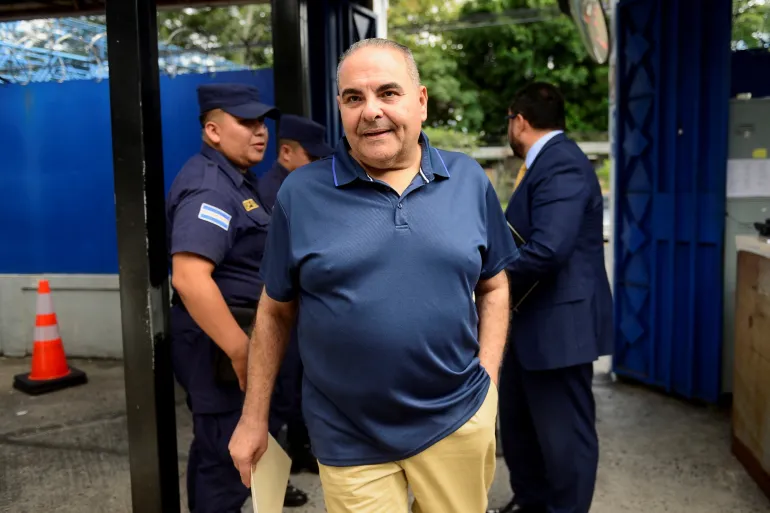
Former Salvadoran President Elias Antonio Saca was released on Thursday after completing a 10-year prison sentence for embezzlement and money laundering involving more than $300 million in public funds.
The 61-year-old former president appeared in court to formally register his release after serving his sentence in full, without early-release benefits, his lawyer, Mario Machado, said.
Saca was sentenced in September 2018 to five years for embezzlement and another five for money laundering. Under a plea agreement, he admitted to diverting and laundering more than $300 million during his 2004-2009 administration, avoiding a potential 30-year prison sentence.
He was arrested in 2016 during his son’s wedding. Prosecutors accused him of siphoning money from the state budget for himself and others, including more than $7 million transferred to his former political party, the Nationalist Republican Alliance (ARENA).
Text Reads: Former El Salvador president Elías Antonio Saca regains his freedom after 10 years in prison! 🌟
During the trial, Saca acknowledged exploiting weaknesses in government oversight to transfer public funds to private accounts. He also disclosed that he had issued regulations allowing him to classify information about financial transactions as state secrets, shielding the transfers from scrutiny.
According to his testimony, the money was transferred over the course of his five-year presidency into 13 private bank accounts belonging to his former private secretary, Elmer Charlaix, and two other presidential staff members.
In 2019, Saca was convicted in a separate bribery case after offering $10,000 to a court employee in exchange for information about proceedings against him. A judge ruled that the additional sentence would be incorporated into his existing 10-year term.
He was also ordered to repay $260 million to the state. In another case involving the diversion of funds from Taiwan, he was sentenced to pay an additional $6 million. It remains unclear whether he has fulfilled that obligation.
Saca, a businessman and radio broadcaster who served as president under ARENA, is one of four former Salvadoran presidents to have faced corruption charges. His successor, Mauricio Funes, fled to Nicaragua in September 2016 and died there in 2025.
More than 2,000 Salvadoran troops have been deployed to Haiti after an ambush left four military personnel missing.
El Salvador has deployed more than 2,000 military personnel to Haiti in a mission to recover four soldiers missing since an ambush near Port-au-Prince, with President Nayib Bukele saying the operation could also be used to dismantle the country’s armed gangs.
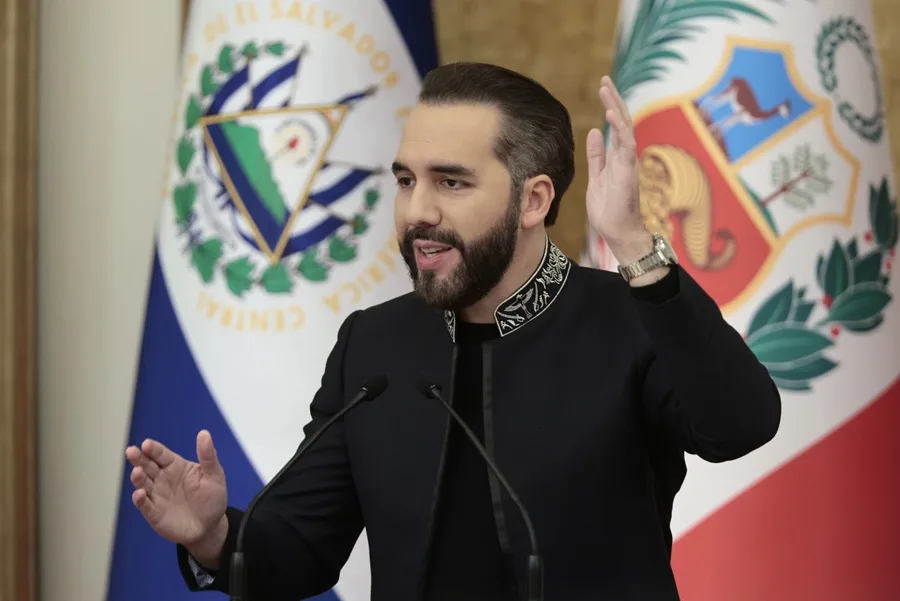
“If we defeated the gangs here in El Salvador, we can defeat them there,” Bukele told reporters Thursday during an official visit by Peruvian President Keiko Fujimori. He said, however, that El Salvador would withdraw the same day if the four missing military aviation technicians were returned alive.
The Salvadoran Foreign Ministry said Wednesday that the deployment involved more than 2,000 members of the country’s armed forces and was part of a large-scale operation backed by several countries and international organizations.
Pèp ayisyen,
Nou prèske fin deplwaye sòlda nou yo ak ekipman nou yo sou tè Ayiti. Sa a se pa yon operasyon kont pèp ayisyen an, ni yon envazyon peyi Ayiti. Nou pa yon gwo pisans. Nou pa gen okenn enterè ni pou nou vin domine pèp ayisyen an, ni pou nou mete men sou richès Ayiti.… pic.twitter.com/AZ1XvdeJje
Text Reads: Haitian people, We have nearly finished deploying our soldiers and equipment on Haitian soil. This is not an operation against the Haitian people, nor an invasion of the country of Haiti. We are not a great power. We have no interest in coming to dominate the Haitian people, nor in laying hands on Haiti’s wealth. We are a modest country that is developing. The only thing we want is for our four aviation technicians to return home. And we’re giving the gangs a lesson—these gangs that make the Haitian people suffer, that kill people the population loves, that prevent them from living a normal, free life, without fear. It’s almost just us footing the bill for this operation. Even though we receive a bit of logistical help from a few other countries, it’s with our own modest funds that we’re covering 90% of the expenses. It costs us dearly, but we’ve learned from our own suffering: justice and peace have no price. We went through the same suffering that Haiti is going through today. We lived through a nightmare that was even more horrific than what the Haitian people are enduring right now. We know what that means: living in fear, not trusting politicians, not believing anyone who promises to help you. Because no one came to help us, and those who did come didn’t have good intentions in their hearts. But we managed to escape it. After 200 years of suffering, finally we’re living in peace, and today we are the safest country on the continent. We didn’t come to Haiti to make money, because no one is paying us to do it. We came to Haiti to fight against the wicked. But here’s what I’m asking of you: trust us, pray to the one true God, and ask Him to heal Haiti. “If at that time my people, who are called by my name, will humble themselves and pray and seek my face and turn from their wicked ways, then I will hear from heaven, where I am, I will forgive their sin, and I will heal their land.” 2 Chronicles 7:14 Help us help Haiti. And when our mission is finished, we’ll return home. Perhaps the next generation of Haitians will remember us as friends who came to help one day.
Bukele rejected suggestions that the deployment amounted to an invasion, insisting that his government had no intention of occupying Haiti or asserting control over its population. In a post on X earlier Thursday, he said the mission had received authorization at both national and international levels and was focused on rescuing the missing personnel alive.
He also vowed to confront the gangs responsible for their abduction, arguing that Salvadoran forces knew how to deal with criminal organizations of this kind. Bukele described the confrontation as a battle between good and evil, saying his government stood on the side of good.
El Salvador had already been participating in the Gang Suppression Force (GSF), but its involvement in Haiti’s security crisis deepened after an ambush on Oct. 18 on the outskirts of Port-au-Prince. The attack targeted a vehicle carrying four Salvadoran military personnel, who have been missing since the incident.
The Salvadoran contingent includes special forces personnel and represents the largest deployment by a single country in Haiti since the United Nations Stabilization Mission in Haiti (MINUSTAH) ended in 2017. The UN mission operated in the country from 2004 to 2017.
Reports circulated last Saturday that human remains potentially belonging to the four missing personnel had been found. Bukele dismissed those reports.
Bukele has maintained that recovering the four personnel alive is the operation’s primary objective and said their return would prompt the immediate withdrawal of Salvadoran forces.
Unions and left-wing groups plan further demonstrations in November, calling for the release of opposition figure Luisa González.
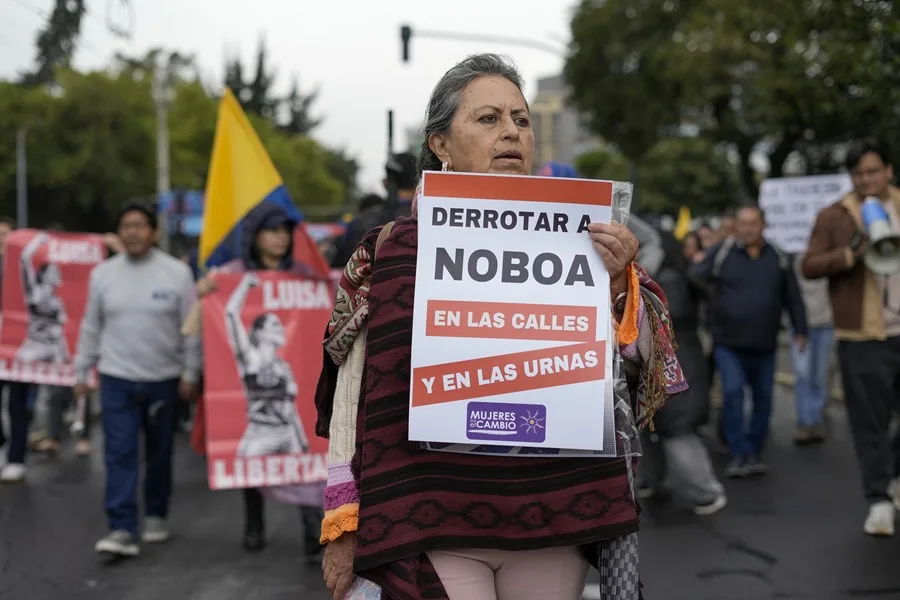
Nearly 100 people marched through Ecuador’s capital, Quito, on Thursday to protest President Daniel Noboa’s government, launching a new wave of demonstrations ahead of local elections scheduled for Nov. 29.
Organized by the country’s main trade unions and left-wing political parties, the peaceful march moved through the historic center before reaching the attorney general’s office. Protesters gathered outside the building carrying banners demanding the release of Luisa González, a former presidential candidate and one of the leading opposition figures.
González, who belongs to the political movement associated with former President Rafael Correa, was placed in pretrial detention in a case involving alleged money laundering. Prosecutors accuse her of involvement in the irregular financing of her first presidential campaign in 2023.
Chanting “Out, Noboa, out,” demonstrators also called for improvements to public education and healthcare. Some participants urged voters to cast null ballots in the upcoming local elections.
Natasha Rojas, a politician and activist, described the mobilization as a defense of democracy, civil liberties and the rights of Ecuadorians. She argued that the government was losing public support and warned that its policies would fuel further protests.
Nelson Erazo, president of the Popular Front, accused state institutions, including the attorney general’s office and the comptroller’s office, of being used to target social activists and political leaders.
He said the demonstration brought together groups seeking political change and demanding that Ecuadorians be able to express themselves freely, with guarantees of access to education, healthcare and employment.
Opposition organizations have announced further demonstrations on Nov. 7 and 15, followed by a march alongside feminist groups on Nov. 25 to mark the International Day for the Elimination of Violence Against Women. Another mobilization is planned for Dec. 10, in coordination with international organizations, to defend human rights.
The Fund outlined four priorities for turning economic stabilisation into stronger growth and job creation as it backed a new $900 million disbursement.
The International Monetary Fund (IMF) on Thursday urged Argentina to maintain its economic programme, warning that sustained policy implementation and stronger international reserves remain essential to reducing country risk as concerns grow over a possible technical recession.
IMF spokeswoman Julie Kozack said the government should continue implementing its current policies while ensuring that the benefits of economic stabilisation translate into stronger growth and employment.
“Our best advice for Argentina to continue reducing its country risk is to continue with its strong policy implementation, that is, to keep implementing the programme as it has been doing,” Kozack told a news conference in Washington.
She stressed that accumulating net international reserves and strengthening the country’s external position were fundamental to reducing financial risks. The Fund’s broader message, she added, was to maintain the current policy direction while extending the benefits of stabilisation across the economy.
🇦🇷💸 | Ante las declaraciones directas del presidente de la nación Argentina, Javier Milei, la escalada de la crisis económica golpea con dureza a la sociedad, donde la mayoría de la población lucha diariamente contra el endeudamiento y la precariedad laboral. La realidad es que… pic.twitter.com/J4RLdc4uvQ
Text Reads: | In light of the direct statements from Javier Milei, president of the Argentine nation, the escalation of the economic crisis is hitting society hard, where the majority of the population struggles daily against debt and job precariousness. The reality is that surveys reveal that nearly 6 out of 10 Argentine citizens have had to go into debt to survive amid the drastic drop in purchasing power. At the same time, the lack of employment and the loss of social rights worsen a landscape that deeply affects the quality of life of families, especially the youth. Popular discontent is growing in the face of official responses that seem to ignore the urgency of the crisis, forcing us to understand “The Other Side of the Coin”.
Addressing questions about the possibility of Argentina recording two consecutive quarters of economic contraction, Kozack outlined four priorities agreed upon with the government to support growth and job creation.
These include deepening capital and mortgage markets to expand access to financing, introducing greater flexibility in the labour market to encourage private-sector employment, advancing infrastructure projects awarded through concession agreements, and facilitating strategic investment through the Incentive Regime for Large Investments (RIGI).
Projects approved under the investment incentive scheme already exceed $76 billion, according to the IMF.
The Fund’s latest assessment comes as its staff and Argentine authorities reached an agreement on Tuesday on the third review of the country’s Extended Fund Facility programme, potentially unlocking a disbursement of approximately $900 million.
Kozack said the IMF Executive Board could consider the review in early December.
The Fund said the programme had continued to deliver results despite a more challenging international environment. Net international reserves exceeded the June target by approximately $4 billion, while the Central Bank purchased nearly $16 billion in foreign currency during the year.
The Treasury also raised more than $5 billion in domestic markets. With support from official creditors, the government secured $3.2 billion in guaranteed financing from international banks and was working to obtain an additional $1 billion before the end of the year.
The agreement maintains Argentina’s target of a primary fiscal surplus equivalent to 1.4% of gross domestic product (GDP) in 2026, with a similar fiscal effort planned for 2027. It also preserves the existing exchange rate band system.
However, the economic outlook remains weaker than previously expected. In October, the IMF lowered its 2026 growth forecast for Argentina from 3.5% to 2.1%, underscoring the challenge of turning stabilisation gains into sustained economic expansion.
Haiti has postponed its presidential and legislative elections once again, pushing the first round from December 13 to July 18, 2027, as armed gangs and a decade-long institutional vacuum leave the country with no elected official since 2016.
The move had been expected since the start of the month, when the council extended the deadline for candidate registration to October 31 without setting a new voting date.
The first round of the presidential and legislative elections, together with the constitutional referendum, now falls on July 18, 2027.A second round -including presidential and legislative runoffs and local elections- is scheduled for October 4 of that same year. The campaign, originally due to begin on October 5, will open on April 15, 2027, roughly three months before polling day.
Under the updated schedule, candidate registration will remain open through February 9, 2027, while voter registration is extended to May 20. The council’s online platform shows that nearly 890,000 voters are registered on the electoral roll, far short of the 7.7 million people of voting age.
Despite repeated calendar revisions, candidates have continued to register for the elections. According to the Provisional Electoral Council ’s latest updates, over 7,300 candidates have registered for different elected positions. The provisional list includes 19 candidates for President, 369 for the Senate, 1,293 for the Chamber of Deputies and 5,623 for local elections.
Haïti a de nouvelles dates pour les élections présidentielle, législatives et municipales à venir : 18 juillet 2027 pour le premier tour – 4 octobre 2027 pour le deuxième tour, selon une communiqué du Conseil électoral provisoire. pic.twitter.com/A4raK78ifp
Text reads: “Haiti has new dates for the upcoming presidential, legislative and municipal elections: July 18, 2027 for the first round – October 4, 2027 for the second round, according to a communiqué of the Provisional Electoral Council.”
The Provisional Electoral Council (CEP) framed the decision as an effort to keep the process moving. “The updated calendar aims to facilitate the continuation of electoral operations under conditions that allow the stakeholders concerned to fulfill their obligations in accordance with the provisions of the legal framework,” the council explained in a statement accompanying the new plan.
The body also pledged to move forward “with dialogue, professionalism and rigor,” targeting elections that are inclusive, credible and transparent. It promised to respect “the right of each citizen to participate in the democratic life of the country.”
That language contrasts sharply with conditions on the ground. Haiti has not held an election since 2016, when Jovenel Moïse won the presidency. He took office in February 2017 and was assassinated on July 7, 2021, at his residence in Port-au-Prince.
Since that killing, no elected official has occupied any post in the country’s state structure. Successive transitional governments have cycled through without managing to organize a vote. Prime Minister Alix Didier Fils-Aimé, the current leader, has governed on an interim basis since November 10, 2024.
The elections were first set for August 30 of this year. The political and security crisis, driven by armed gang violence and the failure to restore institutional stability, forced a postponement to December 13. That date has now been abandoned for July 18, 2027.
Gangs Hold the Capital
Armed gangs control most of Port-au-Prince. The main force arrayed against them is the Gang Suppression Force (GSF), created in September 2025 under a UN Security Council mandate and renewed for six additional months when it reached its first anniversary.
The latest delay unfolds as hundreds of Salvadoran soldiers search the Haitian capital for four kidnapped colleagues. Those troops belonged to the GSF and vanished on October 18, when armed gangs ambushed them on the outskirts of Port-au-Prince.
The #GSF confirms that it has received, through a third-party humanitarian organization, remains suspected of being those of the four personnel from the Salvadoran contingent currently missing. At this stage, the GSF is not in a position to confirm that the remains are those of… pic.twitter.com/JvfLg1DfCG
— Gang Suppression Force – Haiti (@GSForceHaiti) October 25, 2026
PM Fils-Aimé presides over a country under siege. He holds no elected mandate himself, and the security conditions that have justified every postponement show no sign of easing.
For Haitians, the wait has now stretched past a decade without a chance to cast a ballot. Each interim administration has promised elections and delivered another delay. The violence cited as the obstacle has, in turn, deepened with every year of institutional drift.
Whether July 2027 becomes a genuine election day depends on factors no schedule can secure: safe streets, working electoral machinery and a minimum of political consensus. As things stand, the only firm date in Haiti is a next postponement.
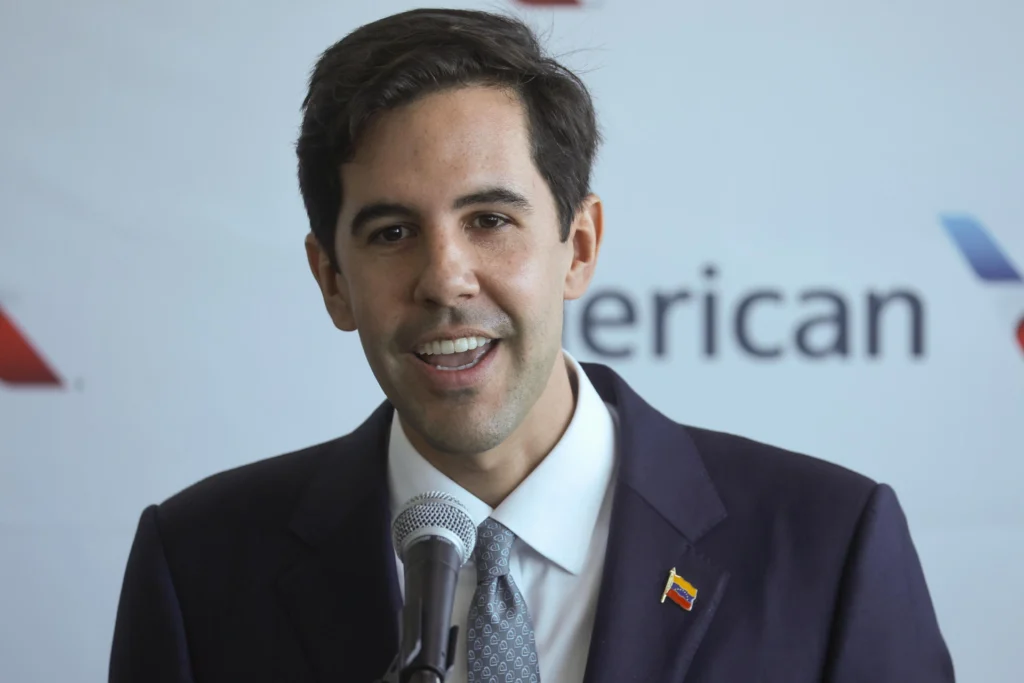
Venezuela’s Acting President Delcy Rodriguez appointed Deputy Minister Oliver Blanco as the country’s new Foreign Minister on Thursday, while outgoing top diplomat Félix Plasencia will lead the mission to recover Venezuelan gold held in the United Kingdom.
Acting President Delcy Rodriguez announced the moves in Caracas during an event focused on the National Electric System, where she also outlined plans for the country’s energy infrastructure.
The reshuffle places a 35-year-old diplomat at the helm of the Foreign Ministry and redirects a veteran official toward a long-running dispute over state assets frozen abroad.
“I have decided to appoint Oliver Blanco as Foreign Minister of the Bolivarian Republic of Venezuela. I hope this strengthened team keeps advancing in the changes and the geopolitical recovery of Venezuela in areas of cooperation and friendship with all countries,” Rodriguez said.
He designado a Oliver Blanco, joven profesional de las relaciones internacionales, como nuevo ministro del Poder Popular de Relaciones y Comercio Exterior. Confío en su preparación, compromiso y capacidad para asumir esta importante responsabilidad al servicio de Venezuela.… pic.twitter.com/A0gaqGOWnv
Text reads: “I have appointed Oliver Blanco, a young professional in international relations, as the new Minister of People’s Power for Foreign Relations and Trade. I trust in his preparation, commitment and ability to take on this important responsibility in the service of Venezuela.I thank Félix Plasencia for his dedication and work at the head of the Chancellery, and who will now assume new international strategic tasks.”
The new Foreign Minister Blanco, holds a degree in International Studies from the Central University of Venezuela and a master’s degree in Political and Government Studies from the Metropolitan University. His previous post covered Europe and North America, a portfolio that included some of the governments most active in the sanctions and asset disputes that have defined Venezuela’s recent foreign relations.
Gold Recovery Mission
Felix Plasencia, who steps down as Foreign Minister, will now serve as director of International Affairs for the Presidency. His immediate priority is clear. “His first task is to settle in the United Kingdom until we recover the gold that belongs to Venezuelans,” the Acting President Rodriguez stated.
The assignment follows a request Rodriguez made on Wednesday. She asked the Foreign Ministry and the Attorney General’s Office to begin formal procedures to recover Venezuelan gold retained at the Bank of England. The precious metal has been at the center of a legal battle involving rival claims over Venezuela’s legitimate government, with London courts weighing which authority controls the reserves.
Recibo con mucha humildad y compromiso la responsabilidad que me ha encomendado la presidenta encargada, @delcyrodriguezv.
Defenderé nuestra soberanía y el interés nacional con firmeza, trabajando siempre por alcanzar beneficios concretos para nuestra gente.
Text reads: “I accept with great humility and commitment the responsibility entrusted to me by the Acting President @delcyrodriguezv. I will defend our sovereignty and national interest firmly, always working to achieve concrete benefits for our people. I am proud to accompany the Acting President in this process of democratic transformation, to which we all have something to contribute to bring it to a successful conclusion.”
Cabinet Reshuffle Expand
The changes extend beyond the two senior positions. Marynna Saatdjian will take over as Vice-minister for Europe and North America, filling the role Blanco leaves behind. Saúl Ameliach, until now a Vice-minister at the Ministry of Economy and Finance, moves to head the Vice-ministry of International Trade.
Acting President Rodriguez framed the appointments as part of a broader effort to strengthen Venezuela’s diplomatic corps. She emphasized that the government will continue pursuing cooperation and friendship with all countries while defending national sovereignty.
The diplomatic shift carries particular weight given the gold dispute. Venezuela has pursued the release of its reserves held in London for years, arguing the assets belong to the Venezuelan people and are needed for social programs and economic recovery. By sending Plasencia directly to the United Kingdom, the government signals it intends to press the matter with renewed intensity.
With Blanco at the Foreign Ministry, Plasencia handling international affairs from the Presidency and new vice ministers in place, the administration has assembled a team positioned around two core objectives: restoring full diplomatic engagement and reclaiming state assets held overseas.

 Login