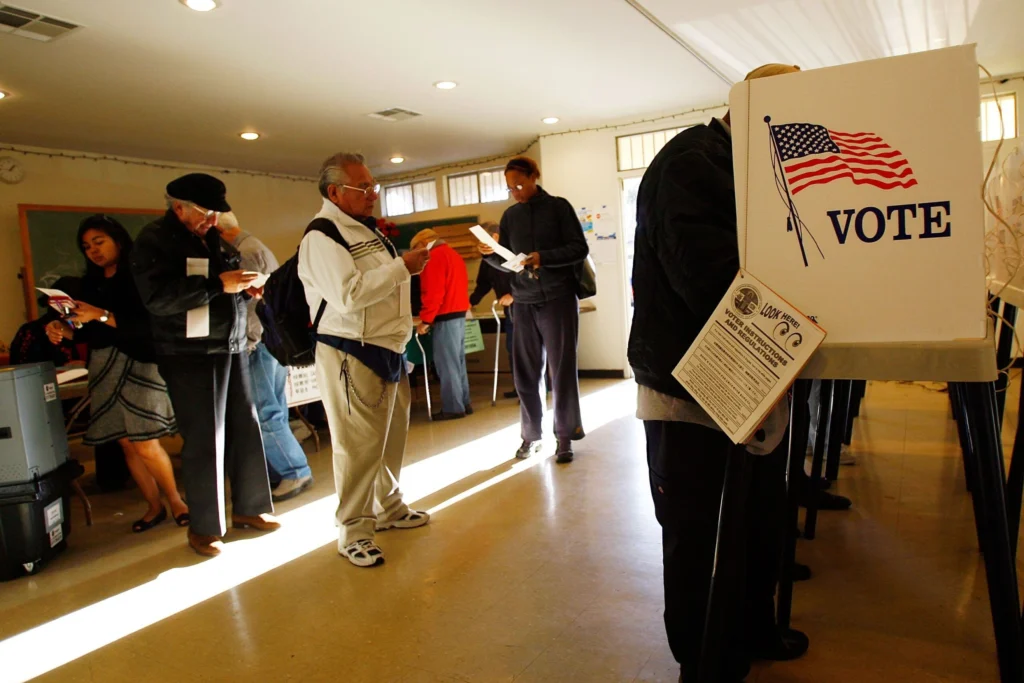
A video of a Minnesota official telling Somali residents they can show up to vote in Tuesday’s election without being registered has prompted concerns about election integrity in the North Star State.
The madness of the midterm elections is upon us, and many of us are struggling. We’re doom-scrolling and compulsively refreshing polling data. We’re losing sleep.
As someone who has hosted a wellness podcast for more than a decade, I’ve been thinking about how to manage this stress — for myself and others. Here are five common misconceptions about how to stay sane in insane times, as well as some workarounds. Please take what works for you and leave the rest.
Misconception No. 1: Self-care is self-indulgent
If you are someone who worries that taking time for yourself is selfish, please know that it’s actually a public service. It can equip you to better respond to a world on fire.
Happiness expert Gretchen Rubin has some advice I love: “Treat yourself like a toddler.” In other words, make sure you eat well and get enough sleep. Engage in the practices that work for you — meditation, exercise, socializing — and do it guilt-free. Not only do you deserve rest, but self-care is also good citizenship.
Here is a super-quick practice that helps to regulate my nervous system year-round: Take three deep breaths. It sounds deceptively simple but can be quite powerful. I especially like “straw breathing”: Deep inhale through the nose, then slow exhale through pursed lips, as if you’re blowing through a straw. For me, the relief is immediate. Repeat as often as necessary.
Misconception No. 2: ‘Acceptance’ means complacency
“Acceptance” can be a tricky term. It means acknowledging what is happening — in the world and in your own mind — as a first step toward taking action. It’s hard to fix a problem if you aren’t seeing it clearly. So instead of wasting energy being at war with reality, accept it, then act.
Another practice that might help comes from the eminent meditation teacher Joseph Goldstein. Next time you’re in the throes of anger, anxiety or another difficult emotion, drop these words into your mind: “It’s OK.” This doesn’t mean that everything is OK. Instead, it means that it’s OK to feel whatever you’re feeling right then. When confronted with difficult emotions, many of us reflexively self-medicate (with, say, alcohol or shopping). The radical move is to feel your feelings, notice that they come and go, and make a sane choice on the other side.
Misconception No. 3: ‘Surrender’ means resignation
“Surrender” is another term that can be tricky. If acceptance is seeing things clearly, then surrender is recognizing what is in your control and what is not. It’s easy to hear surrender as a synonym for resignation or passivity, but it’s simply a way to conserve your energy for the areas where impact is genuinely possible.
Different traditions have ways of describing this. In Stoicism, they talk about “controlling the controllables.” In Buddhism, it’s “non-attachment to results.” AA has its serenity prayer. The core idea is that you can work hard on issues that matter to you while also recognizing that, in the end, the results are largely out of your control.
Practice: Next time you notice yourself in an anxiety spiral, use it as a moment to inquire. Is there a useful action I can take right now? If not, maybe just drop this word into your mind: “Surrender.” This move has saved me a lot of unnecessary suffering.
Misconception No. 4: I need my anger in order to stay in the fight
Given the corruption, the Iran war, the ballroom — it’s perfectly understandable that many of us find Trump 2.0 infuriating. Further, anger has its uses. It can help you identify problems and can be motivating. In my experience, however, when I am operating on uncut outrage, I inevitably burn myself out.
Try this: In moments of anger or anxiety, see if you can tune into what’s beneath these emotions. When you dig, you will likely find caring. Or, to use a less comfortable term, love. Love for your country, for your family, for yourself. For me, love is the cleaner burning fuel. Let it propel you forward.
Misconception No. 5: To stay informed, I need to compulsively check the news
No question, the stakes are high in these midterms. But does this mean you need to doomscroll in every free moment? In my opinion, no.
So how do you draw the line between staying informed and driving yourself crazy? It’s both highly individual and also more art than science. I recommend doing some personal exploration. How much news can your nervous system metabolize before you start to glitch? If you go for more than two straight hours, do you find yourself typing in all-caps on Bluesky? My friend Sebene Selassie, a meditation teacher, has a policy of “no news before noon.” (Sorry, Joe and Mika!) My own policy is to not look at my phone for the first and last hours of the day.
A practice: Savor the good stuff. The people who design social media algorithms benefit from keeping us in a perpetual state of fear and outrage because those emotions keep us scrolling. If you put your phone down and step outside, you’ll see tons of good stuff. People raising children, volunteering and engaging in small acts of decency. Tuning into this doesn’t negate the world’s problems, but it does put them in a larger frame. Personally, I like to take a warm shower and make a list of all the things that I am grateful for from the day. I find it retrains my mind to scan for the positive.
If you’re looking for constructive ways to consume news, I recommend the MS NOW membership app. It provides both news and tools to regulate your nervous system, so that you can then take the appropriate action. To me, that is a solid recipe for citizenship: Information, regulation, activation. Remember: The world is insane, but you don’t have to be.
As 2026 got underway and political observers looked ahead to competitive Senate races, few gave Kansas a second glance. The conventional wisdom was that Republican Sen. Roger Marshall would cruise to re-election, simply because he represents a red state that hasn’t elected a Democratic senator since 1932.
With just days remaining in the midterm cycle, it’s safe to say things haven’t quite gone according to plan for the GOP incumbent.
But I’ve long argued that the turning point in the Kansas race came in early September when Kansans learned that Marshall garnished paychecks and pushed arrest warrants when his patients couldn’t afford their medical bills during his time as a physician in private practice. There’s ample evidence to suggest local voters heard the story and considered it important.
This, as much as anything else, stuck. It was around that point when some polls started showing Hamilton ahead, especially after the Democratic campaign seized on the issue in its advertising.
As the race nears its end, the story continues to haunt Marshall in new and potentially harmful ways. The New York Times reported:
A former patient of Senator Roger Marshall, Republican of Kansas, on Thursday filed a class-action lawsuit against him and his former medical practice, contending that he charged illegally high interest rates in pursuing patients over outstanding bills. […]
The lawsuit, filed in Kansas state court, focuses on the 18 percent interest rate that Mr. Marshall and the medical practice he co-owned, Heartland OBGYN, often charged patients.
When the story about his debt collection practices first came to the fore, Marshall repeatedly said his business practices were “very common,” but a few weeks ago, The Kansas City Star reported that an analysis of medical debt lawsuits in the Kansas court system “found that although it’s not uncommon for hospitals and clinics across the state to sue patients, the 18% annual interest rate Marshall applied to unpaid bills was by far the highest of the roughly 150 medical practices whose public records were reviewed by The Star.”
The report added that in reviewing thousands of court documents, the newspaper “found no other medical providers that charged annual interest at 18% or any other specified rate above 12%.”
The Star also spoke to the lawyer who had represented the Kansas Republican, and he said it was Marshall’s office that was responsible for determining how much interest to charge patients on unpaid bills.
The newspaper gave the senator and his campaign team multiple opportunities over a two-week period to respond to questions about the story. They declined.
Three weeks later, Marshall’s practices are now the basis for a new lawsuit, alleging the interest rates he charged were “egregious” and potentially at odds with state law, which typically limits medial interest rates to 15%.
The Times’ report added that the lead plaintiff in the newly filed class-action suit is Meischa Zimmerman, whom Marshall’s practice sued in 2009 for $3,596 over debt related to the delivery of her daughter by cesarean section.
“She was arrested three times for missing court dates related to the case,” the article added, “once while she was eight-months pregnant and at home with her 2-year-old daughter.”
It’s not yet clear whether other patients have joined with Zimmerman in the case, and a spokesperson for the Republican incumbent did not immediately respond to the Times’ request for comment. Watch this space.
MS NOW’s Joe Scarborough condemned Donald Trump for flying into a “crazed rage” after the president called a Reuters reporter “disgusting” and “a sick guy” for asking about the cancellation of his campaign visits to Kansas and Iowa. The MS NOW host said the president’s behavior should trouble both the White House and the American public.
On Thursday, just days before the midterm elections, the Republican National Committee announced that Trump’s planned weekend rallies in Kansas and Iowa, two states that have become increasingly competitive, were off.
“With Republicans in a strong position in Kansas and Iowa, previously planned in-person rallies in those states will no longer take place as scheduled,” the RNC said in a statement. Instead, the party said Trump would hold phone rallies in nearly 20 states to reach more voters.
However, on Friday, the president reversed course. A White House official told MS NOW that Trump is “expected” to stop in Iowa and Kansas on Sunday and said the rallies were canceled and then rescheduled to accommodate his telerallies.
Before the rallies were put back on the schedule, Reuters reporter Jacob Bogage asked Trump if the cancellations were because he was “sick of traveling.” In response, Trump berated Bogage and said he was “sick” to ask that question.
“You know what the reason is? I don’t feel I have to go to Kansas,” Trump said on the tarmac at Joint Base Andrews. “You’ve been following me for two weeks. I feel perfect. You are disgusting. Put yourself in shape. You look like hell.”
On Friday’s “Morning Joe,” Scarborough said Trump’s stated reason for canceling the rallies didn’t match what he had heard from his sources.
“What he’s saying about canceling and why he canceled is a lie,” the MS NOW host said. “Yesterday afternoon, I got a call from Republican operatives who said, and I am quoting them: ‘This race has been gone for a week.’ That’s what Republicans are saying.”
Scarborough then turned to Trump’s exchange with Bogage, saying the president’s angry response to a basic question should concern his aides and the public. He said that Trump’s behavior should be “troubling for people inside the White House and for Americans.”
“People are asking him very simple, basic questions, and he’s just flying off in an absolute rage,” Scarborough said. “This has been happening now for a month or two, where a basic question any other president would answer, this one flies off in this crazed rage.”
“You just kind of worry if he’s OK,” he added. “I’m worried about him.”
You can watch Scarborough’s full comments in the clip at the top of the page.
Today’s installment of campaign-related news items from across the country.
* With time running out in South Carolina’s unexpectedly competitive U.S. Senate race, the Senate Democrats’ top super PAC is finally investing in the race. Politico reported that the Senate Majority PAC is spending $750,000 on digital ads, hoping to boost Annie Andrews, the Democratic nominee, in her race against incumbent Republican Sen. Darline Graham.
The investment comes on the heels of the Senate Republicans’ top super PAC spending even more in the hopes of rescuing the appointed GOP incumbent. In fact, MS NOW reported that there’s a growing sense of “panic” in Republican circles about the state of the race in South Carolina, fueled in large part by doubts about Graham.
* In Ohio’s gubernatorial race, Republican Vivek Ramaswamy’s notorious attack ad is finally leaving the state’s airwaves. According to his campaign, the commercial is rotating out after completing its intended run, rather than being pulled for having backfired.
* In Kansas’ U.S. Senate race, The Washington Post and George Mason University conducted a poll that found the Rev. Adam Hamilton with an unexpectedly large nine-point advantage over incumbent Republican Sen. Roger Marshall, though the Post’s article on the survey results emphasized at great lengths that registered Democrats “were more than twice as likely as registered Republicans to complete the survey after answering an interviewer’s call.”
Nevertheless, Hamilton continues to pick up endorsements from notable Kansas Republicans: Former Sen. Sheila Frahm, who briefly held then-Sen. Bob Dole’s seat in 1996, announced Thursday that while she’d backed Marshall in the past, she’s supporting Hamilton this year.
* Donald Trump was scheduled to headline campaign rallies in Kansas and Iowa on Sunday. On Thursday, the president’s team reversed course and canceled the events. On Friday morning, the White House appears to have reversed course again and resurrected the events.
* In Maine’s U.S. Senate race, outgoing Democratic Gov. Janet Mills has finally endorsed fellow Democrat Troy Jackson in his race against incumbent Republican Sen. Susan Collins, although she did so in the most indirect way possible, urging Mainers to “vote for Democrats up and down the ballot.”
* And if it seems this year’s midterms have cost an enormous amount of money, it’s not your imagination. The New York Times reported this week, “This is officially the most expensive political advertising cycle ever, according to AdImpact, which monitors ad spending. Presidential cycles are typically more expensive than midterm ones, but not this time: The previous record was recorded in the 2023-2024 cycle, when AdImpact recorded $11.2 billion in ad spending. That was eclipsed [Monday], as now $11.21 billion of ads are booked or reserved, the firm said.”
Vivek Ramaswamy’s campaign stopped running an ad featuring Democratic rival Amy Acton’s estranged mother following a wave of bipartisan backlash and indications that it may have soured voters on the Republican nominee for Ohio governor.
Ramaswamy said at a campaign stop on Thursday that the ad had “ran to completion” and that his campaign had put up four other ads, according to The Columbus Dispatch. According to AdImpact, the campaign has spent nearly $995,000 airing this ad in the past week, about a quarter of the $4 million that it initially allocated for the video.
“Vivek Ramaswamy should never have run his despicable ad in the first place, and it’s totally unsurprising that he took it off the air in the most cowardly way possible, without even the hint of an apology to Dr. Acton, her family, or to the people of Ohio,” Acton’s campaign spokesperson, Addie Bullock, said in a statement Thursday.
Ramaswamy’s campaign did not immediately respond to MS NOW’s request for comment.
The ad began circulating online without a “paid for” disclosure early last week before Ramaswamy’s campaign took credit for it. The video features Acton’s mother, Donna Arthur, accusing the Democrat of lying about her past and telling voters not to support her.
Acton has been estranged from her mother for decades. She has said her mother’s husband sexually abused her as a child; he was arrested and charged with raping Acton when she was 12, before he fled the state and later died.
Arthur has disputed Acton’s allegations about her late husband, whom she said she stood by during that time.
There appeared to be deep reservations about featuring Arthur in an attack ad even as it was conceived. According to Zeteo, which cited Republican sources and a person briefed on the matter, when people connected to Ramaswamy’s campaign located Arthur for the video, she appeared mentally unwell and “had trouble keeping a coherent narrative speaking about the past.” Multiple Republicans had privately urged Ramaswamy not to move forward with the ad, people familiar with the matter told Zeteo. (Ramaswamy’s campaign did not respond to Zeteo’s request for comment.)
The video has been widely condemned by Democrats and Republicans alike, though President Donald Trump publicly encouraged the campaign to continue airing it. Ramaswamy himself dismissed the criticism and said the ad “had nothing to do with childhood abuse.”
Acton has said it was “exploitative to do that to someone in her condition.”
“It’s very clear that our mother — who I have not seen since I was 12, my brother was 9 — is not well, and I do hope she gets the things she needs,” she told reporters this week.
The ad may well have backfired against Ramaswamy and moved voters away from him in the highly competitive race. Axios reported Wednesday that an internal poll commissioned by Republicans showed Acton ahead of Ramaswamy by a larger margin than the previous month, with a memo attached noting that the ad “is having a significant effect on the gubernatorial race.”
Last week, the Cook Political Report moved the race from “toss-up” to “lean Democrat,” saying Ramaswamy’s decision to air the attack ad “confirmed that the race is slipping away from him.”
More than 5.2 million Latino voters have already cast their ballots early ahead of next Tuesday’s midterm elections in the United States. So far, this represents an 80% increase compared to 2022, according to data released by the organization Voto Latino.
An analysis by the platform TargetSmart shows that the more than 5.2 million early votes from Latinos stand in contrast to the 2.9 million recorded during the same period in the 2022 legislative elections. This figure makes the Hispanic electorate the most mobilized minority group, surpassing—for the first time—Black voters, who had traditionally held that position.
“We aren’t seeing a trickle. It’s the tsunami that Voto Latino has been predicting. Latino voters are turning out to vote early because they know exactly what is at stake: it’s not an abstract debate; it’s deeply personal,” stated María Teresa Kumar, president of Voto Latino, during a virtual conference.
Furthermore, the organization highlighted the growth in the Latino youth vote: 400,000 young people between the ages of 18 and 29 have already cast their ballots, compared to 259,000 who did so in the previous midterm elections.
This increase is particularly significant in states that are key to the battle for the Senate, such as Alaska, North Carolina, Florida, Georgia, Iowa, Maine, Ohio, and Texas. In these states, Latinos account for 15% of early votes, up from the 10% recorded in 2018 and 2022.
Ready? Set. Vote!
Early Voting ENDS TODAY, October 30 for: – Arizona – Georgia – Nevada – Texas
Early Voting ENDS on SATURDAY, October 31 for: – California – North Carolina – New Mexico – Virginia
Overall voter turnout has also increased. Four days before Election Day, more than 41.3 million early votes had been cast nationwide—up from nearly 33 million at the same point in 2022—representing an increase of over 25%.
According to a Voto Latino survey of 7,000 people, the rising cost of living is the primary concern for Hispanic voters. U.S. President Donald Trump’s immigration policy also ranks among the most critical issues.
Among those surveyed, 39% called for an investigation into abuses by U.S. Immigration and Customs Enforcement (ICE), 37% demanded a legal pathway to citizenship, and 36.1% requested an end to family detention.
“This president made a serious miscalculation in thinking that Latinos wouldn’t care about mass deportations. We warned that it would affect us all—regardless of legal status or criminal history—and now the community has taken matters into its own hands and is voting accordingly,” stated Kumar.
The tight race for control of the House of Representatives and the Senate has boosted voter turnout across various segments of society, while the Latino vote is solidifying as a decisive factor in the 2026 midterm elections.
Leo XIV has become the first pope to vote in a U.S. general election, casting a mail-in ballot in a contest that will decide America's future as the Trump era slowly comes to an end.
The history professor who inaccurately predicted former Vice President Kamala Harris (D) would beat President Donald Trump (R) in 2024 is predicting a major Democrat win in the midterm elections on Tuesday.
Tomorrow Together, a leftist PAC, is launching a $4 million ad campaign against four House Republicans in competitive districts, criticizing their support for a 2025 measure that would have blocked states from regulating AI.
Rep. Nancy Pelosi (D-CA) criticized Michigan Democrat U.S. Senate candidate Abdulrahman Mohamed El-Sayed, stating that his radical views on Israel were "more than concerning."
Pope Leo XIV has cast his ballot in the U.S. midterm elections while expressing his “belief in the right and the duty of citizens to participate in democratic processes,” the Holy See Press Office announced Friday.
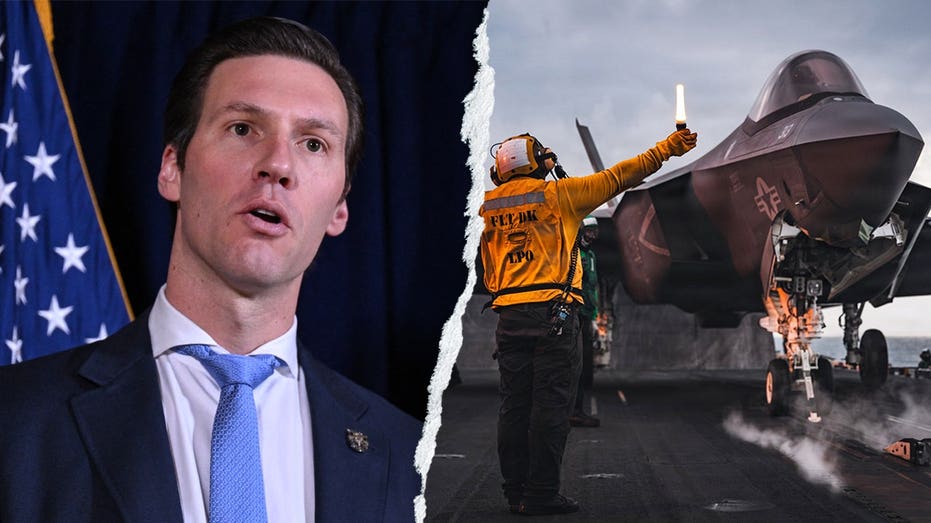
A Republican member on the House Armed Services Committee told Fox News Digital ahead of the midterm elections that the Trump administration has a key decision to make on the future of the U.S.-Iran war as "continuing to do just enough not to lose, but not enough to win, is not OK."
Rep. Pat Harrigan, R-N.C., made the comments as Vice President JD Vance declared during a Fox News town hall on Thursday that he promises "Donald Trump is not going to let Iran become a forever war." Official and military sources also told Fox News this week that movements are being made in the Middle East to give the president options if he decides to resume strikes against Iran.
"I share my constituents and many Americans' perspective that I'm very, very frustrated that this war is not over. The way that ultimately this administration went about conducting the war, it needed to execute it and wrap it up in a very short period of time, and we are not there yet," said Harrigan, who is running for re-election in North Carolina's 10th Congressional District.
"That being said, Iran can't have a nuclear weapon. And so at the end of the day, I do believe that this was a war that was inevitable at some point, but the party that's in power and the administration that decided to pull the trigger on it is responsible for the outcome, and they're responsible for the outcome in a very short period of time. Otherwise, things get really, really difficult," Harrigan continued. "And I think we've been seeing that, both from a political perspective but also from a policy perspective."
"And so while the administration needs to wrap this up, we are not in a forever war, but we need to make sure that we're not... we keep the mission the same. We accomplish the mission. And we do what it takes to either win or come home," Harrigan added. "And that binary decision has to get made by this administration."
Harrigan told Fox News Digital that Trump "needs to involve Congress" if he chooses to renew military action against the Iranian regime.
"I think that that will long-term set the course for the country to be resolute in affirming and actually executing and accomplishing the objectives that exist. Because look, like it or not, Congress is responsible for the funding arm of the government. And if they run out of money to accomplish the objectives, then that is not good for our strategic interests," he said. "So, in my opinion, Congress and the White House need to be very closely involved in making the next set of decisions that exist for this conflict."
"And we do need to make sure, again, that we either do what it takes to actually win in Iran, or we need to take the three out of five objectives that we've accomplished and say that, you know what? We've largely accomplished our strategic objectives. We've got more work to do over the long-term that's going to require consistent and persistent over the horizon monitoring of their nuclear program. And we're going to have to mow the lawn every now and again, and everybody's got to realize that, and leave, right?" Harrigan continued, mentioning how the U.S. has prevented Iran from obtaining a nuclear weapon and eliminated Tehran's missile and drone production.
"But we've got to choose one of those two options because continuing to do just enough not to lose, but not enough to win, is not OK," he said. "It's not OK for the American people, it's not OK for our troops, it's not OK for geopolitical and economic stability. And it does not serve the long-term strategic interests of the United States. So it's time to choose."
Harrigan, a Green Beret and business entrepreneur, is running for re-election on Tuesday in North Carolina. He is facing off against Democrat challenger Ashley Bell, a physician associate, and Libertarian candidate Steve Feldman, who ran unsuccessfully for the seat two years ago.
As a current member of Congress, Harrigan told Fox News there is "no question" the Republican Party's House majority is at stake heading into Election Day.
"Whoever has 218 votes gets to chart the course of the direction of the House, the work that its committees do. And in particular, as it relates to the Trump administration, whether or not President Trump's going to get impeached," he added.
"What this boils down to is the future direction of the country. Are we going to be stuck looking backwards instead of actually looking forwards, dealing with the actual business of the country and the free world, or are we going to be stuck in some sort of a Democratically-led nightmare that is simply going to be obstructionist to the conservative principles and values that people voted for in 2024?" Harrigan asked. "That's what's on the line this election cycle."
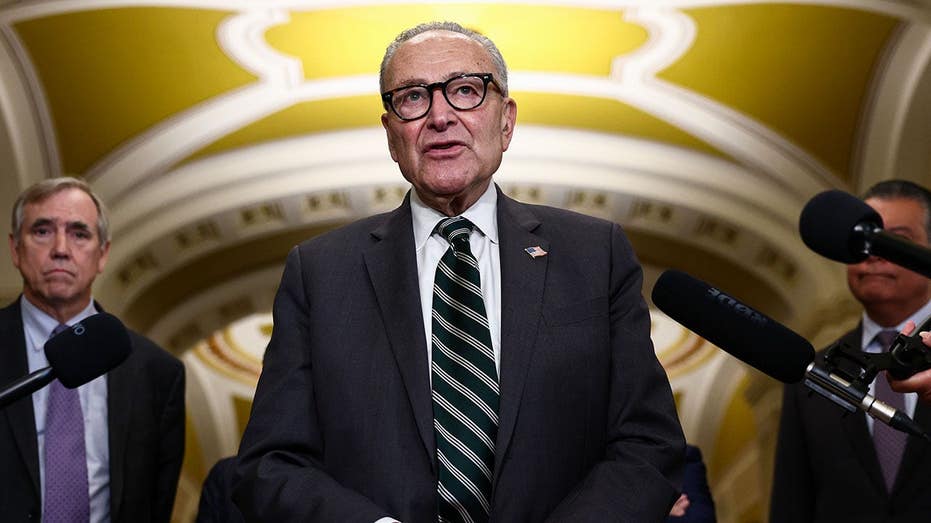
The Senate’s No. 2 Republican believes that Senate Minority Leader Chuck Schumer, D-N.Y., had a hand in the alleged scheme unfolding in the Alaska Senate race.
Operatives for Rep. Mary Peltola’s Senate campaign, along with top aides in Senate Democrats’ campaign apparatus, the Democratic Senatorial Campaign Committee (DSCC), are alleged to have been involved in creating one of the stranger races this election cycle: finding and recruiting another candidate named Dan Sullivan to run against the incumbent Sen. Dan S. Sullivan, R-Alaska, according to reporting from The New York Times.
National Democrats have maintained they had no hand in the move, but Senate Majority Whip John Barrasso, R-Wyo., told Fox News Digital in an interview that he believes the campaign received help from the very top.
"I mean, this is criminal behavior to steal the Alaska Senate race, it's now been fully exposed," Barrasso said. "And there is proof that the Peltola campaign knew about it, and that Schumer schemed and colluded with them for over a year to try to search for and then coax a decoy of Dan Sullivan onto the ballot with a purpose only to deceive the voters."
Schumer’s office and Peltola's campaign did not respond to requests for comment from Fox News Digital.
The peculiar situation in Alaska has been ongoing for months and has sparked legal battles at the state and national levels, as well as condemnation from Republicans across the country, including Sen. Lisa Murkowski, R-Alaska.
Murkowski argued on X that "ballot-stacking should have no place in our electoral process."
"Alaskans deserve the honest truth from Mary and her campaign — what has been revealed is a pattern of lies and coverups and a culture of deception that belongs nowhere in our elections or among our elected officials," she said.
Much of the consternation over the matter is because of Alaska’s ranked-choice voting system, meaning that both candidates named Dan Sullivan, Peltola and Gerald Heikes will all appear on the same ballot.
Peltola weighed in on Thursday at an event in Juneau, Alaska, telling supporters she wanted to "clear the air."
"I knew nothing about any other candidates on the ballot except for me and the incumbent," Peltola said. "That is all I have ever known about. I am not interested in tricking voters. I know I can beat Dan Sullivan."
The point of the scheme was allegedly to sow confusion among voters as to which Sullivan was which in an attempt to give Peltola an edge. Barrasso said that while he was confident the incumbent Sullivan would win, the plan showed that the "Democratic campaign has secretly been making fun of Alaskan voters for being so easily tricked."
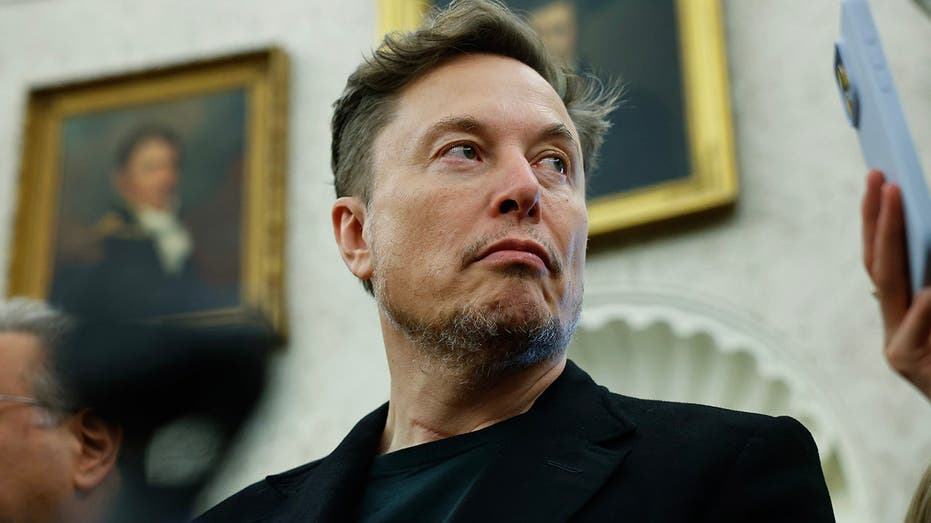
Ahead of the midterm elections, billionaire Elon Musk warned that a Democratic sweep of the White House and Congress in 2028 could spell the "end of democracy," outlining three moves he fears the party would make to cement its political power.
The stark warning comes as Musk pours money into Republican campaigns, arguing that maintaining GOP control of the Senate is essential to preventing what he described as a "permanent one-party state."
Musk outlined his three "biggest" concerns about Democrats gaining unified control of Washington, in an X post, warning that the party would move to grant statehood to Washington, D.C., and Puerto Rico, legalize immigrants living in the country illegally and expand the Supreme Court.
"My biggest concern is that if there is a clean sweep by Democrats of the House, Senate and Presidency in 2028," Musk wrote, listing three top scenarios he fears.
Musk argued that granting statehood to Washington, D.C., and Puerto Rico would help Democrats gain a strong Senate majority, while opening the borders and legalizing immigrants in the country illegally would help the party cement a lasting electoral advantage.
He also warned that Democrats would increase the number of Supreme Court justices to secure an immediate majority on the nation's highest court.
"This would result in America becoming a permanent one-party state and the end of democracy in any meaningful sense of the word," Musk wrote.
The Tesla and SpaceX CEO argued that Republicans need to hold at least 51 Senate seats following the 2028 elections to prevent those outcomes, making an urgent appeal to voters ahead of the midterms.
"That is why you should vote for Republican senators this election," Musk wrote. "Other reasons are irrelevant compared to this one."
The Senate is still a toss-up with six states to decide the majority, according to Fox News Power Rankings. The best outcome predicted for the Democrats is that their ceiling rises to 54 seats and for Republicans, they could see them retain control with up to 52 seats.
Musk's warning comes amid his financial involvement in Republican campaigns, with the billionaire directing significant resources toward helping GOP candidates win elections.
He contributed hundreds of millions of dollars to Republican political groups ahead of the November midterms. A representative for his America PAC confirmed to Fox News earlier this month that the billionaire had contributed $276 million to Republican super PACs and organizations over the previous three months.
That includes $158 million to the Senate Leadership Fund, a super PAC aligned with Senate Majority Leader John Thune, R-S.D., and $10 million to Lone Star Liberty PAC, which is backing Texas Republican Senate candidate Ken Paxton.
Former Secretary of State Hillary Clinton took aim at Musk's political spending, accusing the billionaire of attempting to use his fortune to influence the midterm elections in Republicans' favor.
"Elon Musk is flooding the midterms with money to help Trump," Clinton wrote on X earlier this week. "But even his millions may not be enough to counteract reality."
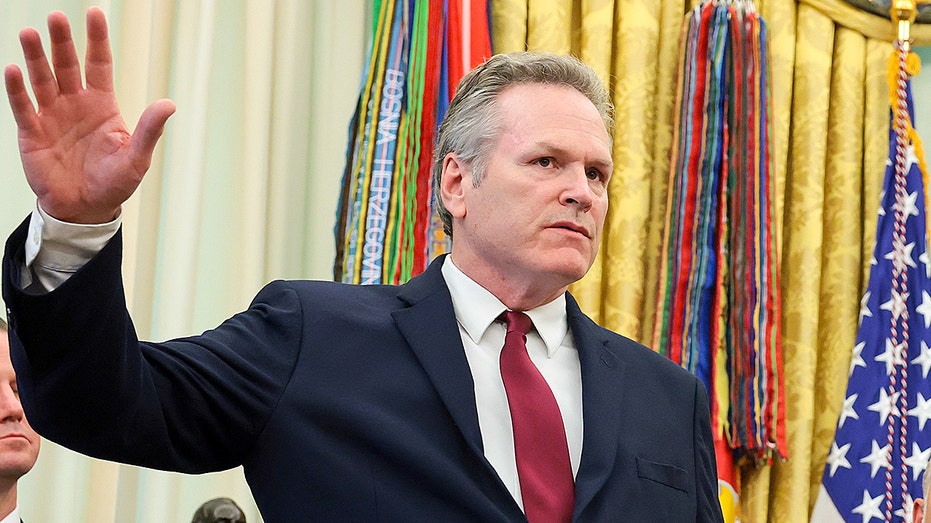
Alaska Gov. Mike Dunleavy warned that an alleged Democratic scheme to recruit a second "Dan Sullivan" into the state's pivotal Senate race exposed a deeper vulnerability in its election system, telling Fox News Digital in an exclusive interview that his administration is investigating newly surfaced evidence just days before the midterms.
Dunleavy said The New York Times uncovered details that state officials did not have when they initially challenged the second Sullivan's candidacy this past summer — including alleged involvement by operatives connected to Democratic nominee Mary Peltola.
The Republican argued Alaska's relatively new election system helped make the controversy possible, as state and federal authorities pursue separate investigations into potential wrongdoing.
"This would have never happened if we didn't have ranked-choice voting," Dunleavy told Fox News Digital. "If this was a historical primary, a primary that our fathers and grandfathers had, this individual [retired schoolteacher Dan Sullivan of Petersburg] would not have gotten out of the primary."
Dunleavy cited reporting that the Petersburg Sullivan initially denied having been recruited, but the Times found Peltola-connected operatives had worked to recruit spoilers named "Dan Sullivan" from around the state.
"We're compelled to do an investigation on behalf of the people of Alaska, because as they say in Alaska, which is a big fish state, if you can smell the fish way far from the dock, you've got a real problem," Dunleavy said.
"And so, this really does stink."
Alaska's election system advances the top four finishers from a nonpartisan primary to a general election in which voters rank candidates by preference. Dunleavy argued that traditional party primaries would have prevented the second Sullivan from reaching November's ballot.
"Our job as executives are to make sure that we can provide our people with an election that everyone could look at it and say that was done with integrity. And right now this cast, unfortunately, a pall over all of this," he said.
Dunleavy said the state's initial investigation in June after the Petersburg Sullivan surfaced ultimately led to the state Supreme Court, which allowed both Sullivans' names on the ballot, with Senator Sullivan marked "incumbent."
"Initially, when [Petersburg Sullivan] contacted the Division of Elections, he wanted his name listed as Daniel S. Sullivan. That's not his middle initial. That's the middle initial of our incumbent senator. His website looked very, very, very similar to our incumbent senator. And we went to court over this, and the Supreme Court of Alaska ruled that they were going to put his name on the ballot," he said.
"We knew there was a problem, but the courts had decided. And then of course, the article comes out in the Times and there's a whole list of issues that we were never privy to."
The new reporting identified contradictions in accounts of what transpired over the summer, including whether there was contact between Petersburg Sullivan and any campaigns.
"There's a lot more smoke and a lot of fishy smell after this article came out," he said.
In Alaska, elections are overseen by the lieutenant governor, not the governor, and Fox News Digital reached out to Lt. Gov. Nancy Dahlstrom for comment on whether or how her office is investigating.
"They're obviously shoulders deep now in an election with all the people and all the polls open here with early voting. The governor's office is in charge of making sure that there's execution of the laws. That's what this investigation is going to look at to see if there were any violations of law or if there was a civil violation as well," Dunleavy added.
Peltola's campaign has denied involvement with either Sullivan campaign. Peltola also dismissed the controversy as a distraction during a campaign appearance Wednesday, while the New York Times reported that operatives connected to her campaign participated in efforts to recruit potential spoiler candidates.
Fox News Digital reached out to Peltola for additional comment.
Former FEC Chair Hans von Spakovsky told Fox News Digital that something investigators should look at is whether individuals paid by Peltola or another political organization were providing any "in-kind" services to the Petersburg Sullivan.
"In-kind services are considered a contribution to a campaign. Failure to disclose such services is a violation of federal law. Also, if the fair market value of the services provided to the campaign exceeds the maximum contribution allowed to a federal candidate, that is also a violation of federal law. If this was knowingly and intentionally done, it moves from being a civil violation to a criminal violation of the law," von Spakovsky said.
Von Spakovsky pointed to an FEC case involving socialist Sen. Bernie Sanders' 2016 presidential campaign, which accepted campaign assistance from Australian Labor Party members whose travel expenses and stipends were paid by the foreign political organization.
With Election Day approaching, the governor said the investigation would continue for as long as necessary, warning that the alleged effort could foreshadow new attempts to manipulate elections through misleading candidacies and other tactics.
Fox News Digital's Hannah Brennan contributed to this report.
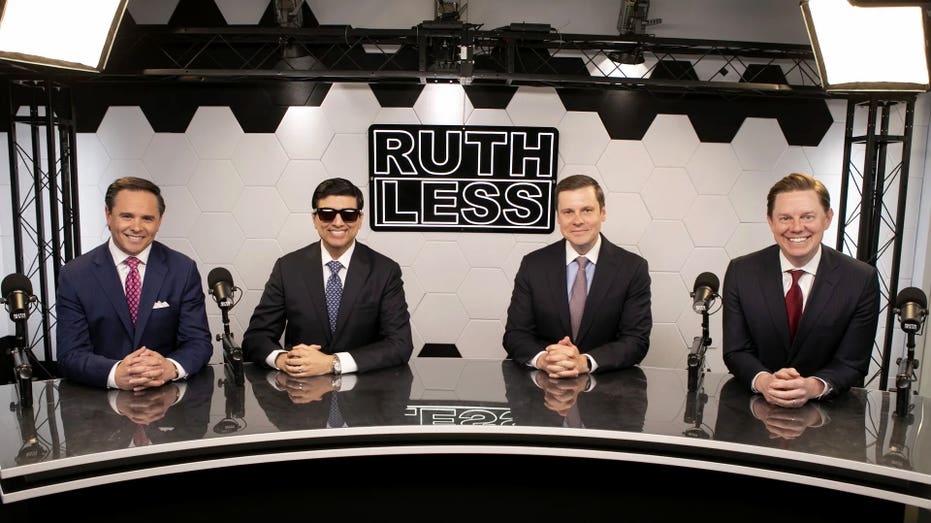
The "Ruthless Podcast" Fellas have some of the best political insights in the game, and we asked them what they'll be looking at ahead of Tuesday's critical midterms.
Control of the House and U.S. Senate are at stake as Democrats try to take back Congress after Republicans swept the White House and both chambers in 2024.
From what polls are or aren't reliable, to the races sparking the most interest, to what the media continues to get wrong in political coverage, the Fellas have your answers.
If you could only watch one race on election night, which is it, and what’s the first thing you check when the polls close?
Maine Senate. Susan Collins has an incredible ability to lose every poll and win every election, thus far. Will she be able to overcome the atmosphere of this election is a huge question. The first thing I check when polls close is early exits, which I find to be the most reliable and illuminating data on election night.
What’s the one number you trust more than the polls (early vote, turnout, special election overperformance, fundraising, something else), and what threshold would make you feel good or bad about your side?
EARLY EXIT numbers are the most trustworthy! Dems always talk about a red mirage followed by a blue wave on election nights. If early exits don't go Republicans' way, it will be a bad night.
What is the media overhyping going into the midterms, and what is it ignoring?
The media is overhyping Barack Obama as a candidate surrogate. He stumped for Hillary [Clinton], he stumped for Kamala [Harris], and they both lost. Obama has no coattails.
Which poll, pundit, or conventional wisdom do you not believe, and why?
I do not trust any polls. Early exits are the only reliable source of data.
If you could only watch one race on election night, which is it, and what’s the first thing you check when the polls close?
Ohio Senate. Watch returns in the 50 counties where President Trump outperformed Mitt Romney by 10 or more points.
What’s the one number you trust more than the polls (early vote, turnout, special election overperformance, fundraising, something else), and what threshold would make you feel good or bad about your side?
[Mike] Rogers' performance in Oakland County is a number to watch. And also his share of the vote in Michigan’s Seventh Congressional District. He could come out on top if he outperforms his 2024 vote totals in those areas.
What is the media overhyping going into the midterms, and what is it ignoring?
The media always overhypes late-breaking vibes and underreports multi-year, local level grassroots operations. Good candidates can overperform the environment with competent campaigns.
Which poll, pundit, or conventional wisdom do you not believe, and why?
Public polling is often less reliable than professional private surveys based on years of state and local level expertise. So I’m always skeptical of public polling. But the one thing they’ve captured accurately is the difficult environment Republican candidates are currently navigating.
If you could only watch one race on election night, which is it, and what’s the first thing you check when the polls close?
Michigan's Senate race. First thing we're checking is Abdul El-Sayed's support with Black voters in Wayne County.
What’s the one number you trust more than the polls (early vote, turnout, special election overperformance, fundraising, something else), and what threshold would make you feel good or bad about your side?
Early vote. Banking votes early makes you sweat election night less, and it lets you know where you're getting enthusiasm.
What is the media overhyping going into the midterms, and what is it ignoring?
The Florida Senate race. Angie Nixon is a DSA loon and every interview she gives is a disaster. The media hasn't really covered the ranked choice process in Maine and Alaska. It's possible it could take weeks for us to know who has the Senate Majority.
Which poll, pundit, or conventional wisdom do you not believe, and why?
The pollsters who were off by 10+ points in the Dem primaries in Wisconsin and Michigan and are now publishing general election polls.
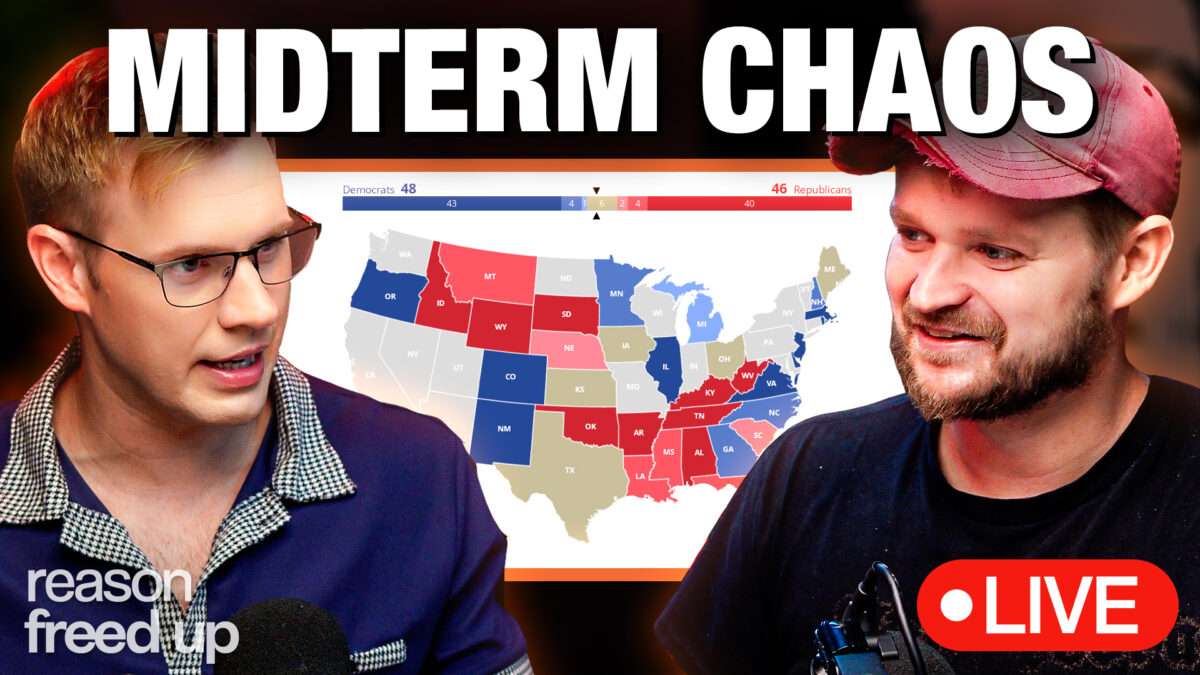
On election night, Tuesday, November 3, at 10 p.m. ET, Robby Soave and Christian Britschgi go live for Freed Up to react to the midterm results as they roll in. Expect the same smart, unserious, happily unhinged riffing Freed Up is known for, with plenty of roasting, a few real debates, and no shortage of jokes at the politicians' expense. Skip the doomscrolling and spend the night with two libertarians who'd rather laugh than panic.
Early voting is still ongoing in Washington, D.C.'s elections, but everyone already knows who the winner of the mayoral race is going to be.
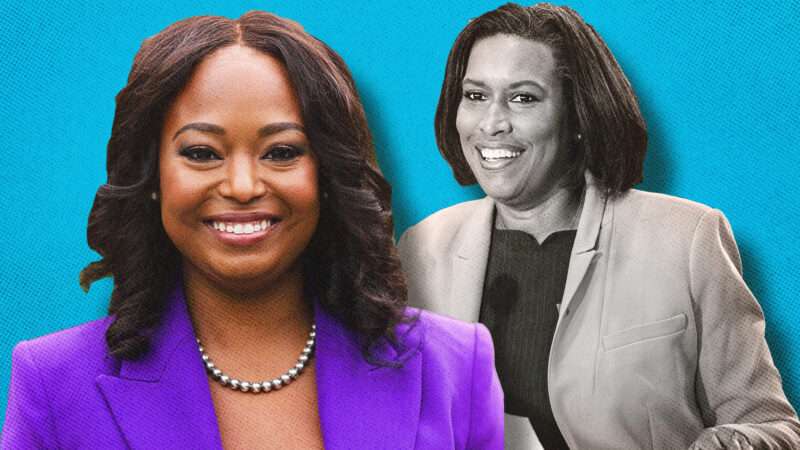
In June, Councilmember Janeese Lewis George won a commanding 54 percent of the vote in the Democratic primary. In one of the bluest cities in America, that all but assures she'll be the next mayor.
She will replace retiring three-term Mayor Muriel Bowser, who has developed a reputation for a go-along-to-get-along administration, neither a bold good-government reformer nor a progressive activist.
Her successor is more ambitious. Lewis George is a card-carrying member of the Democratic Socialists of America in the mold of New York City Mayor Zohran Mamdani (whose endorsement she sought). Her campaign platform called for more childcare subsidies, more housing subsidies, more rent control, more taxes, and, perhaps most importantly of all, a more confrontational approach to President Donald Trump.
For the past several months, District politicos have been furiously trying to read the tea leaves on what a Lewis George administration will look like in practice.
Will D.C.'s precarious fiscal situation and tense relationship with the Trump administration force her to moderate? Or will she stick to her ideological guns come hell or budget crisis and federal takeover of the city?
Budget Blues
When it comes to spending, Lewis George has the biggest ambitions and the least room to maneuver.
As D.C.'s Democratic mayoral primary was wrapping up, the District was also in the midst of a bloody fight over its FY 2027 budget.
Bowser had proposed some $450 million in cuts to bring the budget into balance as required by law. The D.C. Council, with Lewis George's enthusiastic support, rejected those cuts and filled the gap by tapping one-time revenues and the city's fiscal reserves.
Bowser let the budget bill become law without her signature in late June, warning in a letter that the council's rejection of her cuts would leave an $837 million fiscal cliff come the next budget cycle.
Lewis George, by now the presumptive mayor, clapped back with her own statement calling Bowser's proposed cuts "devastating" and "irresponsible."
In the run-up to the general election, she's promised to balance the budget and enact her new spending programs without having to raise taxes on working and middle-class residents.
This will allegedly be accomplished through "forensic" audits of government departments to identify inefficient spending.
As we learned with DOGE, however, the fraud, waste, and abuse fairly often fails to deliver the money needed to cover new permanent spending programs or tax cuts.
In this way, Lewis George's position is similar to that of fellow DSAer Mamdani in New York, who came into office with grand spending pledges, fiscal gaps to close, and only so much room and power to raise taxes.
Mamdani, at least, has a relatively friendly partner in the form of New York Gov. Kathy Hochul, who's assented to some new taxes and state aid to the city's budget.
Lewis George is likely to benefit from a Democratic takeover of Congress, which will be more likely to assent to local tax increases. But for her first two years in office, she'll still be left dealing with a Republican president who's proven remarkably willing to interfere with local D.C. policy.
The Trump Question
The most thankless task a D.C. mayor can have is appeasing a Republican president. In his second term, Trump has made this task more thankless still.
In August 2025, he surged federal law enforcement personnel and National Guard members onto D.C. city streets and placed the city's Metropolitan Police Department under federal control as part of a showy anti-crime crackdown in the District.
Under the Home Rule Act, which established D.C.'s elected municipal government, Trump was well within his rights to federalize MPD for a period of 30 days. But the president made a number of comments about how he might try to extend his control over the police department for longer still.
The move outraged the liberal city. Protests were held. Sandwiches were thrown. Stickers and yard signs demanding the feds back off appeared everywhere.
Bowser, whose control of MPD was being usurped, largely tried to calm everybody down. At a press conference on the day that Trump announced federalization of the police, she described the move as "unsettling and unprecedented."
But she also vowed to cooperate with the administration and even said that increased police presence in some areas could be a "positive."
Her "tenor will be appropriate for what I think will be appropriate for the District," she said at that August press conference.
If the goal was to avoid prolonged federal control of MPD, the mayor's tenor worked. After 30 days, the mayor regained control of the department.
But that even-handed approach was not what the city's left wanted to hear.
Lewis George called it an "outrageous action" and vowed to fight the "weaponization" of Home Rule.
In a Democratic primary in which voters were eager to vent their frustration at the new administration, this undoubtedly helped her.
In the days before the primary, Trump threatened an end to Home Rule if Lewis George won the election. "Residents said to me, 'If Trump doesn't like you, I love you,'" she told a reporter in response.
Here too, there remains an open question whether Lewis George will continue to play the role of Trump foil once in office. Fighting the administration at every turn would cause the new mayor a lot of headaches. It was also, to a large degree, what she was elected to do.
Thus far, Lewis George has been somewhat cryptic about what her posture toward the White House will be.
"I'm willing to work with this administration to the benefit of D.C. residents, and I'm willing to stand up to this administration when it comes to just that," she told Fox 5 in late October.
View From the Top
Mayor of D.C. is generally not a great job to have for a left-wing ideologue to have. You have to balance your budget. You can't print money. Taxpayers and capitalists can escape your redistributive schemes by moving a couple of metro stops away. We don't even have any agricultural land to collectivize.
Bowser, like her last couple of predecessors, understood that paying for a large city government required keeping economic growth up and keeping the occupant of the White House happy.
Neither will be an easy task for the next mayor.
The city's economy is already in a slump. Unemployment is up. Housing development is down. And Trump has threatened time and again to end D.C.'s Home Rule and run the federal government directly.
One would hardly choose a DSA member with a long list of expensive new programs to fund and an eagerness to "fight" as the ideal mayor for the moment.
A potentially telling moment came in October, when Lewis George called for delaying consideration of a bill that would have eventually allowed autonomous Waymo taxies onto city streets. The jobs of existing drivers were too important, she said.
People who are already nervous about a left-wing mayor saw in the announcement a signal that she would not bow to reality and sensibly moderate once in office.
For an already troubled city, that would spell more trouble ahead.
In any election cycle, it’s common for candidates, officials and party leaders to save their strongest message for what’s known as a “closing argument” — a phrase the political world borrows from trial lawyers. After months of speeches, debates, advertisements, interviews and countless interactions with voters, this is the final opportunity for political players to put their best foot forward and summarize why they deserve the public’s support.
Donald Trump has spent quite a bit of time on the campaign trail lately, and I’ve heard his closing message several times. And while I’m certain the president wants voters to know something as they cast their ballots, I’m not at all sure what that is.
Modern political history offers few examples of closing arguments that appear more out of touch, self-defeating, or downright bizarre than what Donald Trump has offered his fellow Republicans ahead of next week’s midterm elections.
The Democratic message, as articulated by Barack Obama among others, is relatively straightforward: Trump and Republicans took power and made things worse. A Democratic-led Congress can serve as a check on White House abuses, hold the corrupt accountable and push policies that would help get the country back on track.
Trump’s message is … harder to nail down.
After watching his final-week rallies and reading his social media messages, it’s clear that the president cares a great deal about Republican Sen. Jon Husted’s buttocks. And cognitive tests. And the oil industry’s profits. And golf courses in Washington, D.C. And his weird attempts to give artificial intelligence a new name.
It’s equally clear that Trump desperately wants Americans to hate Democratic Rep. Ilhan Omar and fear transgender Muslim immigrants who believe in communism, and who apparently want to take hamburgers away.
Does the Republican president have any policy priorities or a vision for the final two years of his term? Well, no, but he has a lot of thoughts about Bill Maher (the target of Trump’s single longest online post since launching his own social media platform), White House renovations and why it would be awesome if New Mexico changed its name.
“Many Republicans, and even some in Trump’s orbit, don’t quite get it,” The Atlantic’s Lemire added. “What has happened, they ask, to the instincts of the man who authored two of the most improbable victories in American political history?
“Trump’s superpower was his intuitive understanding of what motivated his supporters. Many Republicans privately tell me that he’s lost that feel. Trump now lives, they think, in a gilded bubble, palling around with billionaires, oblivious to — and, even worse, uncaring about — the problems facing so many voters,” he said.
There’s already ample speculation about whom the White House will blame if Democrats fare well next week. Whether Trump is prepared to acknowledge his own role in crisscrossing the nation, peddling weird absurdities that only he seems to care about, remains to be seen.

 Login