❌

Reading view

GetOffers.com: Making business travel simpler

paBefore GetOffers.com, I worked in travel tech for several years. I started in customer support and later moved into sales. In both roles, I kept hearing the same complaints from business clients: a service fee was added to every ticket, and companies paid it because nobody had offered them another way to book.

Smaller firms had it worse. Most corporate travel tools were designed for large organisations, so a company of 40 people would end up booking through consumer websites. At the end of the quarter, the finance team had no clear picture of what had been spent or why.

There is no shortage of flights or hotels. What companies were really paying for was a chain of intermediaries, each adding its own margin, with no one competing for the booking.

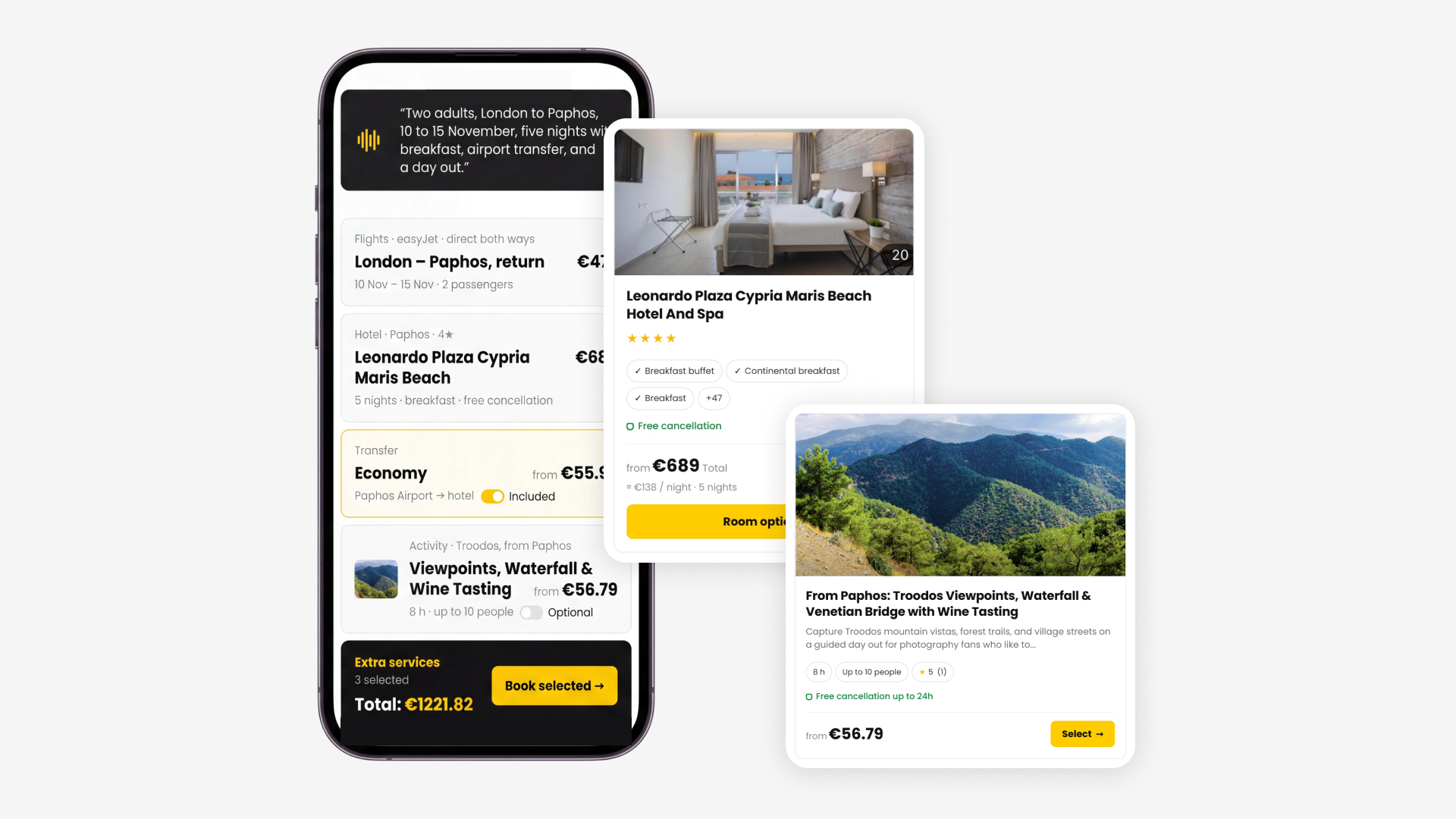
We launched GetOffers.com this year to give businesses net rates. A company describes the trip in one message, and competing offers from suppliers come back in the same conversation, alongside approval rules and reporting. Because we started recently, we could build the product around an AI assistant from the beginning.

A model for three markets

Large online travel agencies are built for people booking holidays. Established corporate platforms mostly serve large enterprises, with the pricing and implementation time that come with that. A mid-sized company that travels frequently but has no travel manager doesn’t really fit either model.

We work with three groups. Companies get net rates and can set travel policies, approve trips and see reports in the same place. Connecting is free, and in our standard model, we don’t add a GetOffers booking fee. We make our money through agreements with suppliers, including revenue sharing. The customer should see the full price and the supplier’s terms before approving the trip.

Travel agencies use the platform to build trips from net rates. The assistant assembles the whole trip from competing supplier offers, usually the most time-consuming part of a manager’s work, and the agency keeps its margin.

Hotels can offer guests transfers, excursions and eSIMs directly, without paying commission to an intermediary.

For clients, this mainly means lower prices and less time spent on bookings. For us, it means we don’t depend on a single type of customer.
Where AI helps

You can speak to the assistant or type to it at any time. A typical request might be: “I have a meeting in Limassol on Tuesday morning, I need to be back on Wednesday evening, and it has to be within our policy.”

The assistant puts competing offers side by side and highlights the one that fits best. Once the traveller or their manager agrees, it books everything, including the flight, hotel and airport transfer.

Before booking, though, it should ask about things you might not have mentioned. Are you taking equipment with you? Will you be arriving at the hotel late? Those answers could change what it recommends. I’d rather it asked than left you to sort out a problem when you get there.

At the moment, it’s most useful for routine work: searching, comparing prices, combining several services into one trip and checking everything against company rules. When a trip is complicated or something unusual comes up, a person still needs to make the decision. We tell clients that from the start.

Over the next five years, I expect assistants to do more before and after booking. If a team is going to a trade fair and nearby hotels are filling up, the assistant should warn them while rooms are still available.

With cancellations, it gets harder. A replacement flight might get you to the right city, but too late for the meeting. The hotel and transfer may need changing, too. That’s the work I’d like the assistant to take on, with the traveller agreeing to any changes in price or booking conditions.

Expense reporting will change as well. Most reports should be generated from booking data, so employees don’t have to collect receipts after every trip.

I don’t expect travel agents to disappear. Those who use these tools will be able to handle more clients, putting pressure on those who don’t.

Earning clients’ trust

GetOffers.com launched this year, and we’re not publishing figures yet. It’s too early for the numbers to say much.

The hardest part so far is getting companies to trust us with their travel. Some have used the same agency for years. Their agent knows who prefers an early flight, who approves the budget and who to call when plans change. I understand why they wouldn’t switch on price alone. We have to show we understand how they work and that moving their bookings to us won’t mean more work for them.

Working with three types of clients also makes growth harder to plan. Companies come to us for prices and choice, while suppliers want to see booking volume before offering good rates. We’ve already signed agreements with several major wholesalers, which lets us offer competitive prices before volume builds up.

Every client comes to us through direct conversations, and each one teaches us something about the product. The clients most open to trying it are independent agencies, whose managers spend hours assembling trips by hand, and mid-sized firms that travel internationally but have no one dedicated to travel. Both feel the problem most directly, so that is where we are focusing.

Growth plans and Cyprus

In three years, I’d like GetOffers.com to be the first place a travel agency or a company without a travel department goes when they need to put together a trip.

We’re currently concentrating on the product and our first clients. We’ll consider raising money when there’s a clear need for it, and we’re happy to talk to investors who know the travel sector. We plan to expand into new markets as client demand appears, rather than following a fixed timetable.

On the product side, we want the assistant to handle more of the trip after booking. That includes dealing with delays and cancellations, recording expenses automatically and connecting through our API to the accounting and HR systems companies already use.

Cyprus is an important market for us. It has been a difficult year for tourism here, and hotels are looking closely at every source of revenue. Services beyond the room, such as transfers or activities, can make a real difference. Hotels should be able to sell them without giving a large share to intermediaries.

The hotel association has just called for AI to become part of the national tourism strategy. I agree, but for smaller hotels, the tools have to be affordable and simple to set up. Otherwise, only the large chains will benefit.

Business travel is the other part of the picture. Limassol and Larnaca are home to many international companies whose staff travel constantly and the government is now supporting conference tourism outside the summer months. Business trips and events help hotels fill rooms in the quieter season, and that is where we would like to be useful.

https://getoffers.com/

  •  

I turned a fun candle-making side hustle into a full-time business after my layoff. Sometimes I wonder how the heck I did it.

Taylor Kelly speaks into a microphone
Taylor Kelly started Eventful ATL as a side hustle and turned it into a full-time small business after being laid off from his corporate job.

SHLK Family Production

  • Taylor Kelly started running candle-making workshops in 2023 to get out of the house and meet people.
  • He turned his side hustle into a full-time small business after he was laid off from his corporate job.
  • His company offers classes like flower arranging, pasta making, and tea tasting and blending.

This as-told-to essay is based on a conversation with Taylor Kelly, the 34-year-old founder of Eventful ATL, who lives in Atlanta. The following has been edited for length and clarity.

If you'd asked me in the beginning if my side hustle of candle-making classes would become a business a year later, I would've had no clue.

It went from $2,000 in revenue in 2023, when it was an evening and weekend side gig, to $16,000 in 2024, when I created a legal business entity: Eventful ATL.

Then, in 2025, I was laid off from my corporate job.

It gave me more flexibility to really dive in, and we ended the year a little under $75,000 in revenue. I pushed into 2026 with a stable small business, and we're on track to end 2026 with around $100,000 in revenue.

We currently offer over 12 class topics, including candle making, flower arranging, pasta making, tea tasting and blending, charcuterie making, wine tasting, and cocktail making. We also recently added pottery-making and seasonal classes like wreath-making and gift-wrapping.

Taylor Kelly hosts a pasta-making workshop
Eventful ATL hosts classes such as pasta making.

Antonio Riles

Sometimes I wonder, how the heck did I end up here?

I started hosting candle-making workshops after moving to Atlanta

I lived in New York for several years and worked for Ritani, a New York-based jewelry company, in a few different marketing roles from 2019 to 2025. I took two years off from Ritani between 2020 and 2022 to do a full-time MBA program at the University of Miami, and I rejoined the company in May 2022.

My side gig began in the winter of 2023. I'd moved to Atlanta, and in order to get out of the house and meet people, I started hosting candle-making workshops on evenings and weekends. Candle making had been my hobby during COVID and grad school.

It started to grow beyond candle making, into other types of classes. I teamed up with a venue partner who has a wonderful event space and added flower-arranging and caviar-tasting workshops.

A caviar-tasting workshop
A caviar-tasting workshop.

SHLK Family Production

Initially, I asked people whom I knew had specific hobbies, passions, or experience if they'd offer a class in it. Soon, I started getting emails and calls from small business owners and creatives who really wanted to teach but didn't want to deal with the logistics of coordinating classes or experiences.

It wasn't hard to balance it with my full-time job because I was working remotely and wasn't doing anything else after work hours. I'd spend my nights and weekends working on Eventful and focused on SEO for organic growth.

As the months went by, it became clear that there was an opportunity to keep growing Eventful, and I thought about the possibility of making it my full-time job. However, I liked having a stable paycheck.

I was laid off from my full-time job in May 2025

It wasn't a big surprise that it happened. I remember being stressed, like, Oh, crap, I don't have any income now. If I hadn't had this little business on the side, I would've spiraled. I'm so grateful that I had my side hustle to fall back on.

I started my job search in June while still working my side gig, but I wasn't getting much traction with interviews. I sent out hundreds of applications and got only a handful of interviews. I'd be so annoyed about spending a whole day applying when I could've spent that energy diving into my business.

There were so many jobs listed, and a recruiter would say, "We'd love to chat," and then the role would vanish. That was disheartening, and it made more sense to pursue something that I had going myself.

I also wasn't finding roles that were exciting to me, the way I had years ago when I lived in New York. Part of that was because I was so excited about working on my business. I knew there was potential; it wasn't huge at the time, but I knew we could continue to grow.

A couple of months later, I made the decision to pursue my business full-time

I'm not sure I would've pursued growing the company full-time anytime soon if it weren't for being laid off.

Now, we host 15 to 20 events a month. We have at least two public classes each week, and we're adding more throughout the holiday season, as well as multiple private group experiences throughout the week.

We have a lot of brands that leverage us to provide team-building experiences for clients and employees, including companies like Google, Salesforce, Chick-fil-A, and Home Depot.

We work with about eight to 10 contractors and instructors who teach classes. I like working on a team — I don't like sitting here alone. I've also started teaching a lot of our pasta-making and flower-arranging classes.

Taylor Kelly with some of Eventful ATL's instructors
Kelly works with around eight to 10 contractors and instructors.

SHLK Family Production

When I'm not instructing, I like being present at as many classes as possible to facilitate setup and breakdown. However, there've been many times when our team has handled classes without me present, and the goal is to ensure we're creating the right systems to make that the standard, in order to eventually scale and grow into new markets like Miami and New York.

Sometimes I'm the marketing person, and sometimes I'm the instructor for the day. Every day is a new day, and I wake up to an email of something cool that I didn't expect coming across my desk.

I'm excited for us to continue to grow

It took until September of this year, when my brain was like, This is it. This business is really bringing in money, and if I'm being lazy or not doing as much as I can, it impacts my life. I have a dog who's very expensive. I either make money and pay the bills right now, or it doesn't happen.

It's not just about the money, though. I also get to speak with so many passionate people every day. My business has been able to film on a Bravo show and has been featured in local news. We signed a lease for our first permanent space in downtown Atlanta early this year, in preparation for the World Cup this past summer.

Filming in a kitchen
Eventful ATL has been featured on local news and Bravo.

Courtesy of Taylor Kelly/Eventful ATL

Now that I've fully committed and we have people who are really invested in what we're doing — the business owners who love teaching and sharing these opportunities — I always think about scalability.

There are a lot of different moving parts right now. I'd really love to focus on brand partnerships and do a big partnership push in 2027.

That being said, who knows what I'd do if another opportunity came up? I don't have to always be there personally with my business.

We have a lot of events happening at the end of 2026, which is giving me anxiety — but I asked for it. It's either that, or we don't grow.

Read the original article on Business Insider
  •  

Supporto Formazione e Lavoro di novembre, quando arriva il pagamento Inps: le date

Il mese di novembre 2026 porta con sé tutti i tipici pagamenti Inps, fra i quali spicca il Supporto per la Formazione e il Lavoro.

La misura, nota anche semplicemente come Sfl, è un sostegno al reddito di 500 euro destinato a chi si attiva fattivamente per entrare, o rientrare, nel mondo del lavoro. Scopriamo il calendario dei pagamenti di novembre.

Quando pagano il Supporto Formazione e Lavoro a novembre

Il calendario dei prossimi pagamenti Sfl vede due date: c’è un accredito il 13 novembre per le domande trasmesse all’Inps dopo il 15 del mese precedente.

Invece per le domande trasmesse entro il 15 dello stesso mese e per i pagamenti successivi al primo, l’accredito è atteso a partire dal 27 novembre.

Come controllare il pagamento Sfl Inps

Le date indicate rappresentano l’avvio dei pagamenti. Per motivi tecnici è però possibile che possano verificarsi ritardi relativi alla gestione della pratica. Per verificare la propria posizione in caso di ritardi a oltranza, essendo sicuri di essere in regola con il proprio percorso e di non avere variazioni non comunicate, è possibile consultare l’apposita sezione del portale Inps accedendo con Spid, Cie o Cns. Si può controllare anche la piattaforma Siisl (Sistema Informativo per l’Inclusione Sociale e Lavorativa) per verificare che non ci siano blocchi.

Per assistenza è possibile rivolgersi a Caf, patronati e consulenti. Ed è sempre possibile chiamare il Contact center dell’Inps: 803164 (gratuito da telefono fisso) e 06164164 da cellulare (può essere a pagamento in base alla tariffa applicata dal proprio gestore).

Supporto Formazione e Lavoro, come funziona

Come si nota, le date dei pagamenti ricalcano quelle della misura gemella dell’Sfl, ovvero l’Adi (Assegno di Inclusione). Sfl e Adi sono gli eredi diretti del vecchio Reddito di cittadinanza.

Sfl si rivolge ai singoli componenti di nuclei familiari di età compresa tra i 18 e i 59 anni e in possesso di determinati requisiti di cittadinanza, soggiorno, residenza ed economici.

Come funziona

Per accedere al beneficio, è necessario:

  • presentare domanda online all’Inps;
  • iscriversi alla piattaforma Siisl;
  • sottoscrivere il Pad (Patto di attivazione digitale);
  • sottoscrivere il Patto di servizio personalizzato;
  • frequentare un corso o altra iniziativa di attivazione lavorativa.

Successivamente, il richiedente può accedere alla piattaforma Siisl e cercare in autonomia le offerte lavorative o le attività formative più utili al suo profilo. Oppure può affidarsi ai servizi di orientamento e accompagnamento al lavoro.

Sfl, spettano 500 euro al mese

Come detto, i beneficiari ottengono 500 euro al mese. Ma l’importo, erogato con bonifico da parte dell’Inps, viene erogato se c’è effettiva partecipazione del beneficiario alle attività previste e fino a un massimo di 12 mesi.

Il limite di 12 mesi può essere prorogato per ulteriori 12 mesi, con aggiornamento del Patto di servizio personalizzato, se alla scadenza è in corso un percorso formativo. Il beneficio è riconosciuto per la durata del corso o dell’attività ed è condizionato alla partecipazione effettiva, pena la decadenza.

I requisiti

Il richiedente deve essere:

  • cittadino italiano;
  • cittadino di un altro Paese dell’Unione europea;
  • familiare di un cittadino italiano o dell’Unione europea;
  • titolare del diritto di soggiorno, anche permanente, oppure ancora cittadino di paesi terzi con permesso di soggiorno Ue per soggiornanti di lungo periodo;
  • titolare dello status di protezione internazionale o apolide con analogo permesso;
  • residente in Italia da almeno cinque anni, di cui gli ultimi due in modo continuativo.

L’Isee in corso di validità non deve essere superiore a 10.140 euro annui e il valore del reddito familiare deve essere inferiore a 10.140 euro annui, moltiplicato per il parametro della scala di equivalenza Isee.

Ci sono poi altri requisiti relativi al possesso di beni immobili e beni mobili. Tutti i dettagli sul portale Inps (Home / Lavoro / Supporto per la Formazione e il Lavoro).

  •  

How AI is changing the way lawyers work in Cyprus

Artificial intelligence is beginning to reshape the legal profession, with law firms increasingly exploring how emerging technologies can improve research, document analysis and other aspects of legal work without compromising professional judgement.

Speaking to the Cyprus Mail for the latest issue of Cyprus 4.0, Elias Neocleous, managing partner of Elias Neocleous & Co. LLC, explained that the development of NeoLaw.ai reflects a longer-term effort to integrate technology into legal practice rather than a response to the recent AI boom.

Developed as an internal legal support environment, NeoLaw.ai is intended to assist lawyers with research, complex documentation, case preparation, preliminary risk analysis and routine administrative work.

Neocleous argued that the value of AI lies not in replacing legal expertise, but in freeing lawyers to concentrate on areas where human judgement, creativity and professional responsibility remain essential.

The discussion also examined the safeguards required when AI is used in a profession where accuracy and confidentiality are fundamental, as well as the potential for Cyprus to develop into a regional hub for technology-enabled professional services.

Looking ahead, Neocleous considered how AI could gradually change the delivery of legal services and why the future of LegalTech may ultimately involve rethinking the role of the lawyer itself.

What problem in the legal sector led you to create NeoLaw.ai, and what gap were you trying to address that existing legal tools could not adequately solve?

The origins of NeoLaw.ai predate the recent surge of interest in large language models. Its development was not a reaction to technological fashion, but a continuation of a long-standing philosophy: that the legal profession must evolve in step with the broader trajectory of human progress. Automation, in various forms, has shaped industries since the industrial revolution; artificial intelligence represents simply the next phase of that continuum.

From our perspective, the gap was not merely technological, but conceptual. Existing tools often approached legal work as a process to be accelerated, rather than a discipline to be enhanced. Our objective was different. We sought to create an environment in which our lawyers are empowered – freed from repetitive tasks, yet supported in exercising judgement, creativity and precision.

Ultimately, NeoLaw.ai was designed not as a substitute for legal expertise, but as a mechanism to elevate it, ensuring that we serve our clients with greater clarity, consistency and foresight.

For someone encountering NeoLaw.ai for the first time, how does the platform work and what can it do for lawyers or legal teams in practical terms?

NeoLaw.ai is designed as an integrated legal support environment, embedded within the daily workflow of our lawyers rather than operating as a detached tool. In practical terms, it enables in-depth legal research across multiple sources, assists in the review and analysis of complex documentation and supports case preparation through structured insights and references to relevant case law.

It can also provide preliminary risk analysis, helping legal teams to identify potential issues at an early stage and contributes to the automation of routine administrative tasks that would otherwise consume valuable time.

Importantly, its development is not static. NeoLaw.ai evolves in parallel with our firm’s broader commitment to continuous improvement. Each use case informs further refinement, ensuring that the platform becomes progressively more aligned with the realities of legal practice and the increasing demands placed upon it.

What role does artificial intelligence play within the firm, and how have you approached issues such as accuracy, reliability and the risk of AI-generated errors in a legal context?

Artificial intelligence occupies a central, but carefully defined, role within the firm. It is not viewed as an autonomous decision-maker, but as a tool that enhances the capabilities of experienced practitioners. Accuracy and reliability are therefore not secondary considerations – they are foundational. Every output generated through NeoLaw.ai is subject to review by our legal professionals, ensuring that judgement remains firmly in human hands.

We approach this as a co-existing relationship: the system supports our lawyers, while our lawyers continuously refine and train the system through informed use. This dynamic mitigates the risk of error while strengthening the overall quality of output. In a legal context, where precision is inseparable from responsibility, such safeguards are essential. The objective is not simply efficiency, but the preservation- and enhancement – of professional integrity.

LegalTech is developing rapidly internationally. Where do you believe NeoLaw.ai can differentiate itself from the growing number of AI-powered legal tools entering the market?

NeoLaw.ai distinguishes itself not by attempting to compete with every emerging LegalTech solution, but by being deliberately and precisely tailored to the realities of our own practice. It has been developed around our internal processes, structures, templates and accumulated institutional knowledge – elements that no external platform, however sophisticated, can fully replicate. In that sense, its primary advantage lies in its alignment with how we actually work, rather than how legal work is generically modelled.

Equally important is our underlying approach. We have not built NeoLaw.ai with commercialisation as the driving force, but with a practical question in mind: how can this system meaningfully enhance the quality and efficiency of our legal services? This inward focus allows for a level of refinement and adaptability that would be difficult to achieve otherwise.

Finally, the platform is hosted entirely on our internal infrastructure, ensuring the highest standards of confidentiality and data security – an essential consideration in the legal profession.

What have you learned from developing and bringing NeoLaw.ai to market so far, particularly from working with lawyers and other users who are adopting AI into their professional workflows?

What the development of NeoLaw.ai has revealed, perhaps more than anything else, is that technological progress is ultimately a human question. The success of such an initiative depends less on the sophistication of the tool itself and more on the willingness of people to engage with it. It requires a team with vision-one that does not merely tolerate change, but recognises it as a constant parameter of professional life. In that sense, we have not sought to “invent” technology, but to thoughtfully integrate it into our existing systems.

Equally instructive has been the pattern of adoption. Even within a large and forward-looking organisation, the familiar dynamics of the bell curve apply – early adopters lead, others follow more cautiously. This has reinforced the importance of structured implementation and internal dialogue.

Perhaps most importantly, the process has sharpened our understanding of what truly matters in legal practice: distinguishing enduring value from operational noise, and identifying where change is genuinely necessary.

Do you see Cyprus developing a significant LegalTech ecosystem of its own, and what would need to happen for the country to become a stronger regional hub for legal technology and innovation?

Cyprus is unlikely, at least in the near term, to develop a LegalTech ecosystem on the scale of larger jurisdictions such as the United Kingdom, the United States, or key Central European markets. These are environments where the sheer volume and international reach of law firms create the natural demand that drives large-scale LegalTech innovation. By comparison, the Cypriot legal market is more focused and specialised, which inevitably shapes the direction and scale of technological development within it.

That said, the broader technology ecosystem in Cyprus is stronger than it has ever been. The entry of globally recognised innovation platforms, such as Plug and Play Tech Center, signals a meaningful shift. Combined with Cyprus’ strategic location, regulatory alignment with the European Union, and an increasingly sophisticated professional services sector, this creates a compelling foundation.

Rather than leading in LegalTech production, Cyprus is well positioned to emerge as a regional hub for technology-enabled services-where innovation is applied, refined, and integrated into high-value professional practice.

Looking beyond the current product, what opportunities do you see for AI to transform the legal profession over the next five years, and where do you expect NeoLaw.ai to fit into that transformation?

Over the next five years, artificial intelligence is likely to reshape the legal profession not through sudden disruption, but through gradual and structural refinement. The more routine aspects of legal work – research, document analysis and process management – will increasingly be absorbed by intelligent systems. This will not diminish the role of the lawyer; rather, it will reorient it towards judgement, strategy, and the exercise of professional responsibility.

The more important question, however, is not what AI can do, but how it is governed and integrated. The legal profession carries an inherent duty to uphold trust, accuracy, and accountability-principles that must remain intact as technology advances.

Within this transformation, NeoLaw.ai will continue to evolve as an internal framework that supports our lawyers in meeting these obligations. Its role is not to redefine the profession, but to ensure that we adapt to change without compromising its core values.

What makes you believe the future of LegalTech is not simply about automating existing legal processes, but about fundamentally rethinking how legal services are delivered?

The future of LegalTech cannot be confined to the automation of existing processes, because the legal profession itself is not merely procedural. At its core lies the role of the lawyer as a trusted advisor – someone who navigates complexity not only through technical knowledge, but through relationships built on trust, continuity and understanding. These relationships are not incidental; they are the foundation upon which effective legal counsel is delivered.

In parallel, lawyers often play a quiet but essential role in shaping legislative and regulatory frameworks. Through sustained engagement with institutions, policymakers and market participants, they contribute to the refinement of laws in a way that reflects practical realities. This is a function that cannot be automated – it requires judgement, dialogue and credibility developed over time.

Technology, therefore, must be understood as an enabler. By relieving lawyers of routine burdens, it allows them to invest more meaningfully in these higher-order functions: advising with clarity, fostering trust, and contributing to the evolution of the legal and regulatory environment itself.

Website: https://neo.law

LinkedIn page: https://www.linkedin.com/company/elias-neocleous-&-co-llc?originalSubdomain=cy

  •  

Sherrill on High Costs Causing People to Leave NJ: Every Step I Take, Federal Government Takes Ten Back

On Thursday’s broadcast of MS NOW’s “Morning Joe,” New Jersey Gov. Mikie Sherrill (D) responded to a question on whether Democrats winning Congress will make things in New Jersey more affordable, given that people leave the state due to its high

The post Sherrill on High Costs Causing People to Leave NJ: Every Step I Take, Federal Government Takes Ten Back appeared first on Breitbart.

  •  

Jeffries on Impeachment: We 'Haven't Ruled Anything Out'

Thursday on “ABC News Live,” House Minority Leader Hakeem Jeffries (D-NY) spoke with ABC News correspondent Jay O’Brien regarding the possible impeachment of President Donald Trump. Jeffries said, “The American people are clearly poised to give House and Senate Democrats

The post Jeffries on Impeachment: We ‘Haven’t Ruled Anything Out’ appeared first on Breitbart.

  •  

Dem Rep. Walkinshaw: AI, Data Center Investment Boosting GDP, But Families Aren't Benefiting

On Thursday’s broadcast of “CNN News Central,” Rep. James Walkinshaw (D-VA) reacted to the GDP report by saying that investment in AI and data centers is boosting GDP, “The question is, are hard-working families seeing the benefits of that? And

The post Dem Rep. Walkinshaw: AI, Data Center Investment Boosting GDP, But Families Aren’t Benefiting appeared first on Breitbart.

  •  

Subramanyam: Alaska Ballot Stacking 'Part of the Process' of Ranked-Choice Voting, Wish My State Had Ranked-Choice

On Thursday’s broadcast of “NewsNation Now,” Rep. Suhas Subramanyam (D-VA) said that because Alaska has ranked-choice voting, “if you recruited a third-party candidate who can take votes away from your opponent, that’s part of the process,” and he wishes his

The post Subramanyam: Alaska Ballot Stacking ‘Part of the Process’ of Ranked-Choice Voting, Wish My State Had Ranked-Choice appeared first on Breitbart.

  •  

Ossoff: It's 'Deeply Dangerous to Have a President So Delusional'

Thursday, during an appearance on MS NOW’s “The Briefing,” Sen. Jon Ossoff (D-GA) said President Donald Trump is “deeply dangerous” because he is “delusional.” Ossoff said, “The West Wing staff right now is mostly doing childcare. I mean, they’re having

The post Ossoff: It’s ‘Deeply Dangerous to Have a President So Delusional’ appeared first on Breitbart.

  •  

Hinojosa: Republicans Using Culture Wars as a Distraction

Thursday on MS NOW’s “The Weeknight,” Democratic nominee for the Texas gubernatorial election, Gina Hinojosa said Republicans use of culture wars are a distraction. Co-host Luke Russert said, “I think it’s really interesting in this race in Texas, you’re neck

The post Hinojosa: Republicans Using Culture Wars as a Distraction appeared first on Breitbart.

  •  

Robert Garcia: 'Trump Commits Impeachable Offenses Basically Every Single Week'

Thursday on CNN’s “The Arena,” Rep. Robert Garcia (D-CA) said President “Donald Trump commits impeachable offenses basically every single week.” Anchor Kasie Hunt said, “I was talking to another one of your colleagues on this program, Adam Smith, who is set

The post Robert Garcia: ‘Trump Commits Impeachable Offenses Basically Every Single Week’ appeared first on Breitbart.

  •  

Khanna: Trump Administration Attempting 'Latino' Vote Suppression

Thursday on MS NOW’s “Morning Joe,” Rep. Ro Khanna (D-CA) said the Trump Administration is attempting to suppress the Latino vote. Co-host Jonathan Lemire said, “California is a place where we have seen ICE agent activity. We have seen the

The post Khanna: Trump Administration Attempting ‘Latino’ Vote Suppression appeared first on Breitbart.

  •  

Teachers in Kentucky and Minnesota Arrested for Alleged Sexual Misconduct with Students

A lull in the weekly parade of teachers across the U.S. being busted for sexual relationships with their students ended this week with a Minnesota teacher being hit with a jail sentence for meetups with a student and another educator in Kentucky banned from ever teaching again after pleading guilty to sexting with a pupil.

The post Teachers in Kentucky and Minnesota Arrested for Alleged Sexual Misconduct with Students appeared first on Breitbart.

  •  
❌