❌

Reading view

JOHN KOUFOS: Trump’s ‘Shield of the Americas’ could help defend us from cartels

In my first career, I stood in courtrooms as a defense attorney dealing intimately with the fallout of organized crime and gang violence. I have cross-examined operatives, analyzed thousands of pages of gang intelligence and witnessed firsthand the brutal efficiency of transnational syndicates. If my time immersed in the legal trenches of the gang world taught me one undeniable truth, it is this: cartels do not respect international borders. In fact, they weaponize them. For too long, the jurisdictional lines on a map have served as the greatest defense strategy for the world's most violent criminal organizations.

We have treated multinational, multibillion-dollar criminal enterprises as localized law enforcement problems. Fortunately, the landscape of international justice is shifting. The U.S.-led "Shield of the Americas" initiative, which recently designated eight major criminal groups as foreign terrorist organizations, is fundamentally rewriting the playbook on how we dismantle these syndicates.

There remains one critical holdout, Brazil, whose president is not expected to join this critical coalition. Indeed, the re-election of incumbent President Luiz Inácio Lula da Silva all but ensures an increase in organized criminal activity in Brazil.

ICE ARRESTS MORE THAN 100 ALLEGED GANG MEMBERS IN SINGLE WEEK, INCLUDING VIOLENT MS-13, TDA SUSPECTS: DHS

The reality of the modern syndicate

To understand the necessity of this initiative, one must understand how modern cartels operate. In the courtroom, you quickly realize that the street-level gang members, like the MS-13 triggermen or the Tren de Aragua enforcers, can be the lowest rung on a massive, sophisticated corporate ladder.

These organizations operate with the logistical precision of Fortune 500 companies. They manage complex supply chains, launder money through intricate global financial networks and employ specialized cells for enforcement, distribution and corruption.

At times, our legal framework has been outmatched by their agility. A drug shipment might originate in the Andes, be financed through a front company in Central America and be distributed by local gangs in American cities. When law enforcement attempts to build a case, they can hit a variety of bureaucratic obstacles and challenges sharing evidence, securing extraditions or tracing illicit funds across different countries. The cartels know this and deliberately structure their operations to exploit operational disconnects between regional governments.

EXCLUSIVE: FBI EXTRADITIONS SOAR AS PATEL RAMPS UP FOREIGN OUTREACH, VOWS 'NO SANCTUARY'

The power of the terrorist designation

By officially designating eight major cartels and gangs, including the Sinaloa cartel, the Jalisco New Generation cartel (CJNG) and Tren de Aragua, as foreign terrorist organizations and specially designated global terrorists, the U.S. government dramatically altered the legal reality.

RUBIO DESIGNATES ECUADORIAN GANG LINKED TO DRUG TRAFFICKING A TERRORIST GROUP

The terrorist designation unlocks a completely different enforcement arsenal. It allows for the immediate freezing of assets, imposes severe penalties for anyone providing "material support" and authorizes deep, aggressive disruption of their financial networks.

You cannot arrest your way out of a cartel problem — you must disrupt the business itself. By targeting their money and imposing serious consequences on the seemingly legitimate financial institutions that launder it, the Shield of the Americas strikes at the absolute core of cartel power. It equips law enforcement to fight proactively and focus on strategic dismantling of cartel financial infrastructure.

DRUG CARTEL KINGPIN AMONG TARGETS IN SWEEPING TRUMP CRACKDOWN ON ALLEGED MEXICAN CORRUPTION NETWORK

Hemispheric intelligence and military coordination

Equally crucial is the initiative’s mandate for unprecedented intelligence sharing and military coordination. Currently, countries like Argentina, El Salvador, Peru, Ecuador, Panama, Paraguay and Chile are participating in the Shield of the Americas.

EXCLUSIVE: TRUMP’S NEW SECURITY ALLIANCE FACES FIRST REAL-WORLD TEST DEEP IN SOUTH AMERICA AS TROOPS DEPLOY

This will help break down silos where one law enforcement agency has one piece of the puzzle, while authorities in Colombia or El Salvador hold the rest. Without a streamlined mechanism to share that data, the kingpins remain untouchable.

The Shield of the Americas facilitates the real-time sharing of actionable intelligence among partner nations. This means that a cartel operative’s communications intercepted in Lima could be instantly used to disrupt a trafficking route in Central America and ultimately support a federal indictment in New York. Furthermore, joint military coordination ensures that the sheer firepower of these cartels could be matched.

The Brazilian loophole

The final critical piece of this initiative is Brazil, South America’s largest nation.

CONSERVATIVE WAVE HITS ROADBLOCK IN BRAZIL AS LULA HOLDS OFF BOLSONARO CHALLENGE

Brazil is a continent-sized nation with its own deeply entrenched criminal organizations, most notably the Primeiro Comando da Capital (PCC) and the Comando Vermelho. These groups have grown into major forces in the global drug trade, forging alliances with international cartels and expanding their reach far beyond Brazilian borders. Unfortunately, the current government has abstained from joining the U.S.-led effort, which is expected to continue in light of the recent presidential election.

Brazil’s participation would have a tremendous impact. The cartels would lose one of their most significant safe havens and operational hubs in the hemisphere. A unified front stretching from the U.S.-Mexico border down to the Southern Cone would squeeze transnational syndicates from every direction. It would close the geographical and jurisdictional gaps they have exploited for generations.

The human cost of cartel operations is staggering. Hundreds of thousands of American lives have been lost to cartel-linked fentanyl overdoses, while communities across Latin America have been destabilized by extreme violence and corruption.

CLICK HERE FOR MORE FOX NEWS OPINION

The Shield of the Americas represents a profound modernization of our approach to international justice. By recognizing these cartels for the global terror threats they are, strangling their finances and uniting the hemisphere's law enforcement and military resources, we are finally fighting the battle on equal footing.

CLICK HERE TO DOWNLOAD THE FOX NEWS APP

If more nations commit to this alliance, we will not just be managing the cartel problem; we will be systematically dismantling it. The cartels have operated globally for decades. It is long past time the law did the same.


  •  

“Mother Mary” e mais: veja filmes de terror recém-chegados no streaming

Fãs de terror já podem preparar a pipoca e escolher o próximo filme para uma sessão de arrepiar. Entre histórias sobrenaturais e suspenses psicológicos, os serviços de streaming receberam novidades para quem deseja entrar no clima do Halloween.

Abaixo, a CNN Brasil separou seis lançamentos recentes nas plataformas que podem acrescentar à maratona. Confira!

Veja filmes de terror recém-chegados ao streaming

“Mother Mary” (2026)

Velhas feridas ressurgem quando a icônica estrela pop Mother Mary reencontra sua melhor amiga, de quem estava afastada, e sua antiga figurinista, Sam Anselm, às vésperas de seu retorno aos palcos.

Elenco: Anne Hathaway, Michaela Coel, Hunter Schafer, Atheena Frizzell, Kaia Gerber, Jessica Brown Findlay, Alba Baptista, Isaura Barbé-Brown, Sian Clifford e FKA Twigs.

Onde assistir? O filme está disponível na HBO Max.

“A Morte do Demônio: Em Chamas” (2026)

Após a perda do marido, uma mulher busca conforto junto à família de seu falecido esposo em uma isolada casa de família. Mas, quando um a um começam a se transformar em verdadeiros monstros e o encontro familiar se transforma em um verdadeiro inferno, ela descobre que os votos feitos em vida continuam valendo… até mesmo após a morte.

Elenco: Souheila Yacoub, Tandi Wright, Hunter Doohan, Luciane Buchanan, Errol Shand e Maude Davey.

Onde assistir? O filme está disponível na HBO Max.

“Pecadores” (2025)

Dois irmãos gêmeos tentam deixar suas vidas problemáticas para trás e retornam à cidade natal para recomeçar. Lá, eles descobrem que um mal ainda maior está à espreita para recebê-los de volta. O filme foi destaque no Oscar 2026, tendo levado quatro estatuetas.

Elenco: Michael B. Jordan, Hailee Steinfeld, Miles Caton, Wunmi Mosaku e Delroy Lindo.

Onde assistir? O filme está disponível na Netflix.

“Nosferatu” (2024)

Uma jovem noiva é deixada sob os cuidados de amigos quando seu marido viaja para a Transilvânia para um encontro com o Conde Orlok. Atormentada por visões terríveis e uma crescente sensação de pavor, ela logo encontra uma força maligna que está muito além de sua compreensão.

Elenco: Bill Skarsgård, Lily-Rose Depp, Nicholas Hoult, Willem Dafoe, Emma Corrin e Aaron Taylor-Johnson.

Onde assistir? O filme está disponível na Netflix.

“Spree: Viagens Sem Limite” (2020)

Sedento por seguidores, um motorista coloca em prática um plano sangrento para viralizar na internet, mas uma comediante de stand-up com seu próprio objetivo, cruza seu caminho, tornando-se a única esperança para deter o massacre.

Elenco: Joe Keery, Frankie Grande, Joshua Ovalle, John DeLuca e Lala Kent.

Onde assistir? O filme está disponível na HBO Max.

“Halloween Kills: O Terror Continua” (2021)

No último filme lançado de uma das franquias mais clássicas do cinema, Laurie Strode acredita que enfim venceu a luta contra Michael Myers, mas é surpreendida pelo seu retorno. Determinada a pôr um ponto final em seus ataques, ela e outros sobreviventes decidem enfrentá-lo e acabar com o ciclo de uma vez por todas.

Elenco: James Jude Courtney, Nick Castle, Jamie Lee Curtis, Andi Matichak, Anthony Michael Hall e Kyle Richards.

Onde assistir? O filme está disponível na Netflix.

Halloween 2026: saiba qual filme de terror do ano é o mais buscado


  •  

Tres arquitectos frente al cine de terror: “Una casa nos da miedo cuando dejamos de entenderla”

Toda película de terror es, en cierto modo, una película sobre arquitectura: ningún otro género tira tanto de luz, espacios y perspectivas, da tanto protagonismo a una escalera o convierte una puerta en umbral e interrogación. En el cine de terror las casas se convierten en unos personajes tan famosos como (o más que) sus protagonistas, desde la mansión victoriana de Psicosis (1960) hasta la casa que parece tener ojos de Terror en Amityville (1979), de los pasillos enmoquetados del hotel Overlook en El resplandor (1980) a la pequeña cabaña de Posesión infernal (1981). Y es ante la pantalla cuando el espectador se convierte, a su modo, en un efímero creador de planos, formas y estructuras. Cada vez que gritamos a la pantalla “¡No bajes ahí!" es porque sospechamos que el arquitecto de ese viejo caserón no diseñó una vía extra de evacuación para ese sótano.

Seguir leyendo

© Warner Bros - Hawk Film (COLLECTION CHRISTOPHEL / Cordon Press)

Aunque nunca haya visto 'El resplandor', seguro que conoce esa moqueta: es material de pesadillas desde 1980.
  •  

Pasarlo de miedo con el miedo: por qué disfrutamos del cine y la literatura de terror

Hasta el mismísimo Stephen King se ha preguntado cómo nos puede gustar el terror: “Me preguntan por qué escribo lo que escribo, por qué la gente quiere leerlo y va al cine para verlo. ¿Por qué hay personas dispuestas a pagar por sentirse extremadamente incómodas?”, plantea en su ensayo Danza Macabra (Valdemar). Cuando leemos un libro o vemos una película de terror, como quizás hayamos hecho esta semana de Halloween y Todos los Santos, muchas veces experimentamos emociones negativas: miedo, inquietud, en ocasiones incluso asco o angustia. Sin embargo, llenamos salas de cine, devoramos libros y acudimos a clubs de lectura y festivales de cine especializados en terror. ¿Por qué lo pasamos de miedo con el miedo?

Seguir leyendo

¿Qué piensa ‘el rey del terror’ de todo esto?

A principios de los 80, tras el éxito de Carrie y El resplandor, Stephen King ya estaba cansado de que le preguntaran por qué escribía historias terroríficas. “¿Por qué tiene la gente semejante interés en mi interés… Y en el suyo propio?”, se pregunta en Danza Macabra, publicado en 1981 (y reeditado en 2024 en España por Valdemar). “Creo que, más que otra cosa, es porque todos tenemos un postulado enterrado en nuestras mentes: que sentir interés por el horror es malsano y aberrante”. En este gigantesco ensayo, en el que King hace un repaso histórico y personal por la literatura y el cine de terror entre 1950 y 1980, el escritor apenas se detiene a responder a estas preguntas. Como respuesta, remite a un ensayo anterior, publicado en El umbral de la noche, su primer libro de relatos: “No tengo el más mínimo interés en recalentar ese viejo guiso en estas páginas, si están interesados, les recomendaría que lo leyeran”.

Aquí va un tupper de ese guiso: la idea de King en los 70 es la que han seguido defendiendo muchos escritores desde entonces, que el miedo en la ficción nos ayuda a lidiar con nuestros miedos reales. “Cuando usted lee una obra de horror, no cree realmente lo que lee”, escribe. “No cree en vampiros, hombres lobos, camiones que arrancan repentinamente y que se conducen solos. Los horrores en los que todos creemos son aquellos sobre los que escriben Dostoievski, [Edward] Albee y [Ross] Macdonald: el odio, la alienación, el envejecimiento a espaldas del amor, el ingreso tambaleante en un mundo hostil sobre las piernas inseguras de la adolescencia. En nuestro auténtico mundo cotidiano somos a menudo como las máscaras de la Comedia y la Tragedia, sonriendo por fuera, haciendo muecas por dentro. En algún recoveco interior hay un interruptor central, tal vez un transformador, donde se conectan los cables que conducen a esas dos máscaras. Y es en ese lugar donde el relato de horror da tan a menudo en el blanco”.

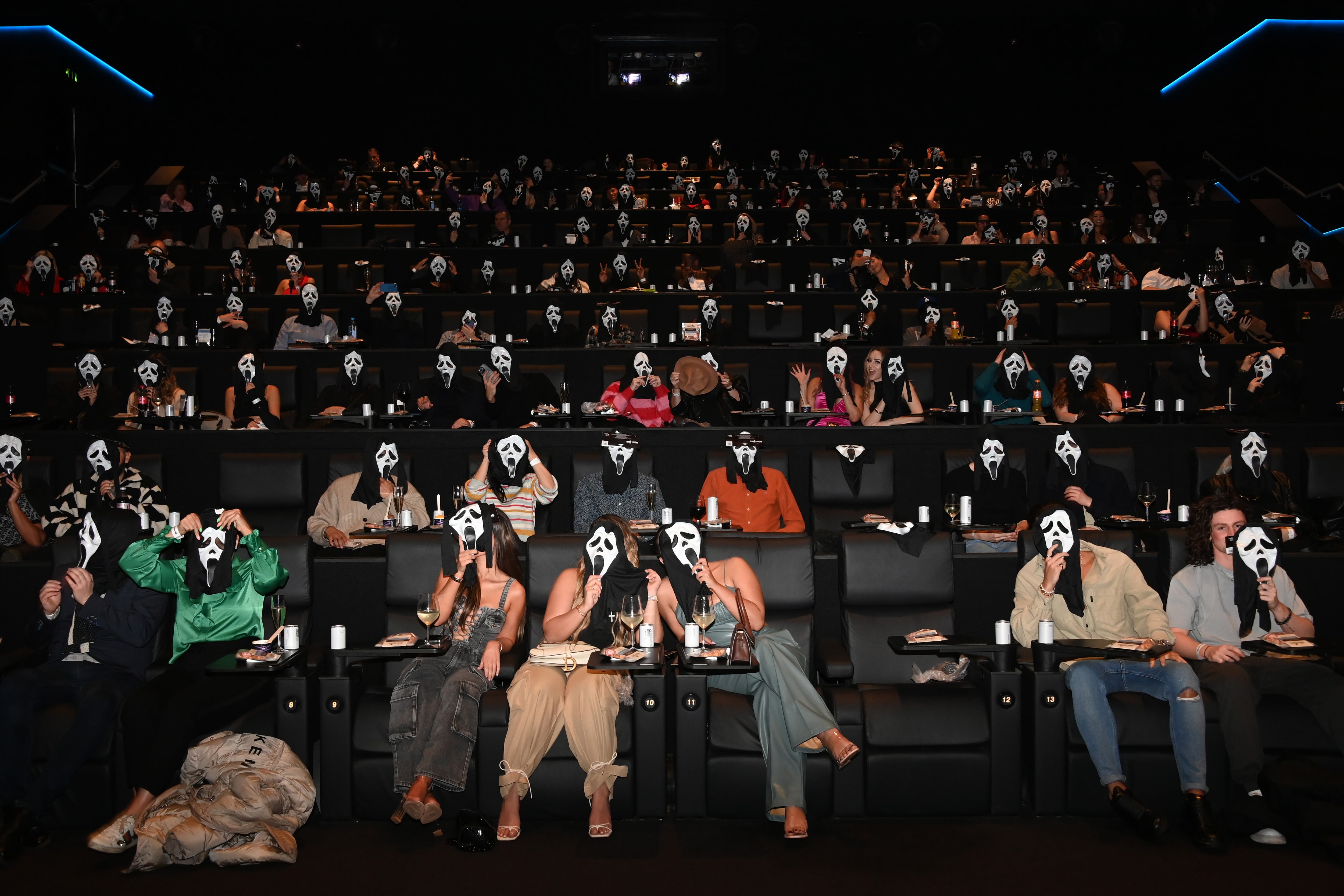
© Stuart C. Wilson/Getty Images for Paramount)

Estreno de Scream VI en Londres, en marzo de 2023.
  •  
❌