❌

Reading view

Dockworkers launch global strike against Israeli and US military shipments

RT | October 30, 2026

Dockworkers across five continents have launched a coordinated anti-war strike, targeting Israeli arms shipments, US military cargo, and the growing militarization of civilian ports.

Organizers say more than 25 unions are mobilizing across 113 ports in 22 countries and regions on Friday in an unprecedented international action. The campaign includes 24-hour strikes, shorter walkouts, blockades, and solidarity rallies.

Major European ports joining the action include Genoa, Marseille, Le Havre, Hamburg, Valencia, Barcelona, and Piraeus. Beyond Europe, protests are planned at Tangier Med in Morocco, Nhava Sheva and Chennai in India, and Oakland and San Francisco in the US, with further actions across Türkiye, Cyprus, Sweden, Denmark, Ireland, Portugal, Brazil, Mexico, and Australia.

France’s CGT Ports et Docks has called 24-hour strikes across 24 ports, while Italy’s USB has declared a nationwide general strike, with protests in more than 40 cities. Unions in Germany, Greece, Spain, India, and the US are also taking part.

Dockworkers at Piraeus, Greece’s largest port, were among the first to join the action, with a three-hour stoppage scheduled from 08:00 to 11:00 GMT. Other Greek maritime unions announced 24-hour strikes affecting seven ports, threatening ferry services to the country’s islands.

Videos of demonstrations and gatherings at other ports have emerged online, although the full extent of the disruption to shipping operations remains unclear as actions are taking place at different times.

What do the dockworkers want?

The unions demand a halt to weapons, ammunition, military equipment, and troop shipments through commercial ports, targeting both Israeli and US military supply chains. They also oppose turning civilian ports into military hubs and diverting public funds into rearmament while workers face stagnant wages, job insecurity, and worsening conditions.

“From planes to tanks, guns to bullets, explosives to ammunition, uniforms to boots, our ports have become replenishing and forwarding bases for war and genocide,” the organizers said at a press conference on October 15 in Rome.

The unions accused governments and shipping companies of keeping military supply routes open despite the Gaza ceasefire announced over a year ago, which they say has been rendered largely meaningless by continued Israeli strikes.

‘No Harbour for Genocide’, the campaign coordinating the action, claims that it tracked 315 shipments of components for Israeli arms manufacturer Elbit Systems through 56 ports in 29 countries over 14 months. It says it identified 3,400 shipments of US military cargo through 67 ports in 42 countries over ten months. The group also says US military cargo volumes at some European ports rose as much as tenfold following the start of the US-Israeli war against Iran. The figures have not been independently verified.

Organizers estimate the action could delay 40,000 containers carrying cargo worth over $2 billion, potentially costing shipping companies up to $43 million.

Is it the first strike of this kind?

Dockworkers have challenged military shipments for years, though resistance was largely scattered and localized. Since 2019, workers in Italy, Greece, Morocco, and France have staged sporadic blockades and stoppages, targeting arms shipments to Israel, US bases, and other conflict zones.

The movement gained momentum in late 2025 after Israel intercepted the Global Sumud Flotilla, a 40-plus-vessel convoy attempting to deliver aid to blockaded Gaza. Hundreds of activists were detained, sparking strikes and port blockades across Europe. The flotilla campaign also pledged to join the action on Friday with “coordinated, strategic actions on the water.”

International coordination intensified in February, when dockworkers at more than 20 ports across seven countries staged their first joint day of action, reportedly stopping five suspect ships.

In May, dockworkers’ unions from France, Greece, Italy, Türkiye, Morocco, and Spain’s Basque Country adopted the Istanbul Declaration, in which they pledged to block military cargo and troop shipments to war zones, including those supporting Israel and US military operations. The agreement laid the groundwork for Friday’s global strike.

  •  
  •  

Europe facing gas price shock – Gazprom chief

RT | October 30, 2026

European gas prices could more than double as depleted reserves threaten winter supplies, Gazprom CEO Aleksey Miller has warned.

Wholesale prices have already reached their highest level in nearly four years, briefly exceeding €97 ($108) per megawatt-hour on Monday. December gas futures climbed another 3.1% on Friday to around $1,164 per thousand cubic meters, according to London’s Intercontinental Exchange.

Miller pointed to unusually low gas reserves across the EU, noting that Germany, the bloc’s largest consumer, has filled just 61.6% of its underground storage capacity.

”Given the series of historic record lows Europeans have set in filling underground gas storage facilities […] we can expect gas prices in Europe to peak at $2,500 per thousand cubic meters in the event of a cold winter,” he said.

Norwegian energy giant Equinor has echoed concerns over another price shock. CEO Anders Opedal said on Wednesday that European gas reserves were at their lowest seasonal level since 2011, leaving the bloc exposed to further price spikes as it competes with Asian buyers for liquefied natural gas (LNG).

The US-Israeli war on Iran has further strained supplies, disrupting shipments through the Strait of Hormuz, which previously handled around a fifth of global LNG trade. Deliveries remain roughly 80% below pre-conflict levels.

EU gas storage facilities were 74.62% full as of October 25, well below seasonal averages, with some member states already drawing on reserves as temperatures fall.

Germany has been particularly hard hit. Gas tariffs for new household customers have jumped 55% this year, according to comparison website Verivox. High energy costs have forced some European fertilizer, chemical, and steel producers to cut output, Reuters reported.

In September, EU Energy Commissioner Dan Jorgensen warned that the bloc faced its worst energy crisis since 2022, when wholesale gas prices exceeded €300 per megawatt-hour.

Despite mounting supply concerns, Brussels is pressing ahead with plans to eliminate Russian gas imports. Long-term LNG deliveries are set to be banned from January 2027, with remaining pipeline supplies scheduled to end later that year.

Moscow has repeatedly condemned the EU’s energy policy as “suicidal.” Russian presidential investment envoy Kirill Dmitriev argued last week that restoring economic cooperation with Russia “will be inevitable.”

  •  

Europeans can’t even die in their own coffins? Cheap Chinese-made coffins flood EU market as manufacturers plead for anti-dumping measures

With deaths accelerating in Europe due to a rapidly aging population, observers might expect to a “silver lining” in at least one area of the economy: coffin production. However, just as with many other industries, China is even eating into this market share, helping result in dozens of coffin producers to go out of business in recent years.

European coffin manufacturers have now formed a coalition and are preparing a formal anti-dumping complaint against Chinese imports, arguing that low prices and alleged customs loopholes are eroding a traditional industry tied to predictable demand.

The number of European coffin producers has fallen from about 120 to 90 over the past five years, with smaller firms largely unable to compete, according to Folco Ciulli, a consultant coordinating the effort. Surviving companies have absorbed only about half the output of those that closed, he told Politico. The coalition, which previously lacked dedicated lobby representation, has met with European Commission officials, including from the trade department, organizers told Politico.

Chinese coffin are simply cheaper, costing approximately one-third less in Italy, even when using the same type of wood. Experts attribute the gap to state subsidies, lower labor costs, and cheaper timber, among other factors.

Higher U.S. tariffs on Chinese goods have also redirected some production toward Europe, the group contends. The coalition is compiling cost data on materials, labor and factory-gate prices for the comparison, in order to China is dumping coffin products.

A 2025 European Parliament question raised similar concerns, stating that Chinese imports accounted for about 60 percent of the Italian market. It cited production costs of roughly €260 in Italy versus €80 in China, enabling sales in Europe of €100-110, and alleged the use of toxic paints banned in the EU that release carcinogenic particles during cremation. It asked whether the Commission would open an anti-dumping probe and impose duties, and how it would enforce environmental and health standards.

Industry analysis points to statistical gaps that could indicate under-recorded imports. Mathematician Emiliano Inguscio, hired by the producers, calculated an unexplained surplus of about 30,000 coffins a year in Italy alone.

Producers suspect two practices: an “IKEA loophole” in which flat-packed coffins arrive classified as wooden parts and are assembled in the EU, and imports registered as packaging for other goods rather than as finished products. A Commission spokesperson confirmed that unassembled goods may still be treated as finished products under customs rules if their essential characteristics are recognizable, so flat-packed coffins should not automatically qualify as mere components.

The effort follows an earlier appeal by EU lawmakers to Trade Commissioner Maroš Šefčovič, who indicated the industry could file a formal complaint. A Commission spokesperson said the EU maintains more than 200 trade defense measures and takes action against unfairly traded imports, while declining to confirm specific meetings because contacts on potential complaints are confidential.

Coffin makers point to a recent precedent. In January 2026, the Commission imposed definitive anti-dumping duties of 56 percent to 60 percent on Chinese candles, tapers and similar products after finding dumped imports had injured an EU industry of roughly 9,000 workers across about 80 companies. The duties, set for five years, followed a 2024 investigation.

The case sits within a broader rise in EU trade protectionism and defense. The Commission’s 2025 report recorded 32 new investigations, close to the prior year’s high, protecting hundreds of thousands of jobs across sectors including chemicals and steel. Officials have described increased scrutiny of state-supported imports as a response to harm to European producers.

So far, the EU Commission has not announced an investigation into coffins.

As Remix News has reported, China has not just pulled ahead of Europe in terms of coffins and other lower-value goods, but also in renewable energy, automobile production, AI technology, machine tools, and a range of other high-value industries. As the EU is unable to directly compete, it has increasingly resorted to protectionism.

The post Europeans can’t even die in their own coffins? Cheap Chinese-made coffins flood EU market as manufacturers plead for anti-dumping measures appeared first on Remix News.

  •  

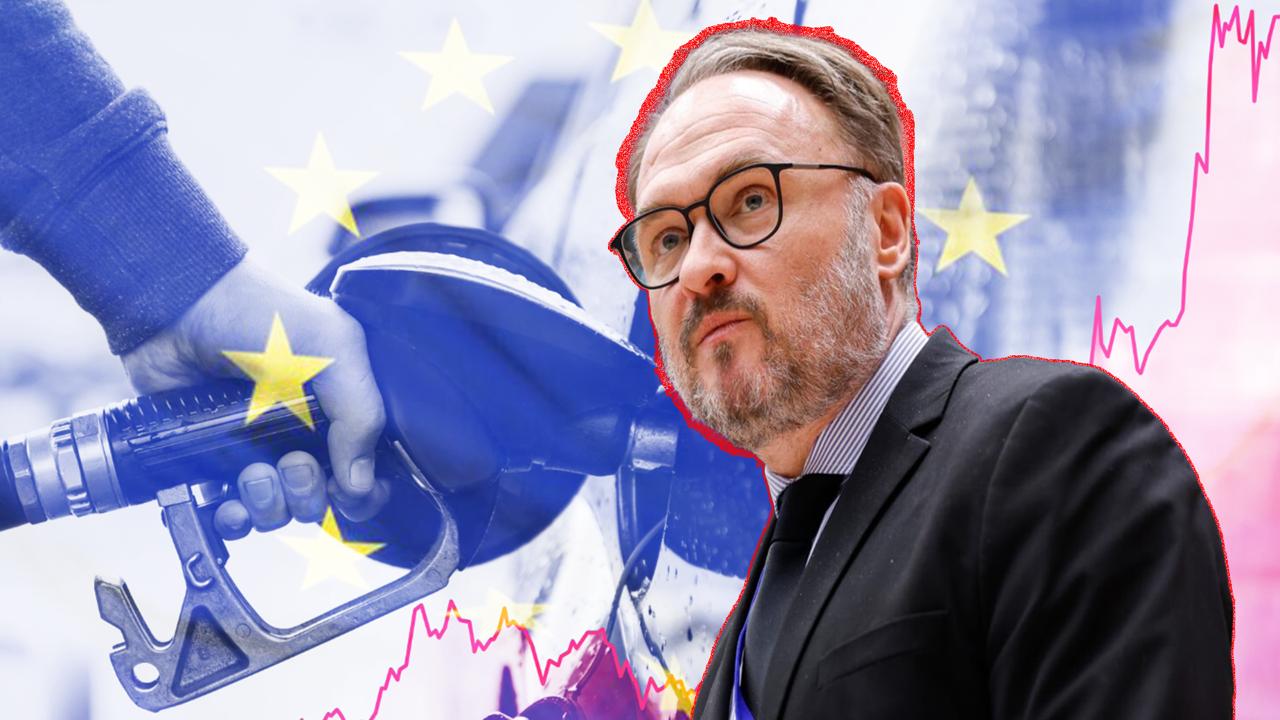
‘Europe faces another energy crisis’ – Gas prices in EU hit four-year highs as Hungarian MEP slams ‘idiocracy’

Wholesale natural gas prices in Europe have climbed above €100 per megawatt-hour for the first time since late 2022, raising the prospect of sharply higher household bills next year. The EU is already issuing serious warnings about an energy crisis and difficult economy for the winter ahead, which Hungarian MEP Balázs Orbán has labeled an example of European Union “idiocracy.”

Energy Commissioner Dan Jørgensen said on Oct. 28: “Once again, due to geopolitical turbulence, Europe faces another energy crisis. We know that this winter will be difficult for European citizens and for our economy in general.”

Europe faces a difficult winter. We must ensure reliable fuel supplies for our citizens, businesses, & defense. And we must ensure that these supplies are affordable. Today we started our dialogue with European refineries. Looking at short-term & long-term. Press point ↓ https://t.co/suM6zfkYfn

— Dan Jørgensen (@DanJoergensen) October 28, 2026

“And fuel bills in the EU are skyrocketing. This is putting a strain on our companies and on our households. In spite of the difficult situation, markets have shown remarkable resilience over the past months. Refineries have played a vital role in ensuring security of supply by producing the fuels that the market needs, including jet fuel,” he added.

He has noted that nearly 50 million Europeans are already unable to heat their homes adequately in a typical year and warned the number could rise.

The news was met with disdain from MEP Balázs Orbán, who served as the former political director of Viktor Orbán during his tenure as Hungary’s prime minister.

“This is idiocracy. You are financing a war that involves restricting Europe’s energy supply through sanctions and destroying infrastructure that produces and transports oil, gas, and fuel accessible to Europe by land. On top of that, you have imposed, through regulation, an energy transition that makes energy more expensive for European businesses and households alike,” wrote Balázs Orbán.

“And what do we get in response? Another press conference and, as attributed to Politico, the conclusion that ‘neither governments nor the European Commission have many – if any – good ideas left.’ You created the problem. You have no idea how to solve it. And now you are trying to cover it up with political messaging.”

This is idiocracy. You are financing a war that involves restricting Europe’s energy supply through sanctions and destroying infrastructure that produces and transports oil, gas, and fuel accessible to Europe by land. On top of that, you have imposed, through regulation, an energy transition that makes energy more expensive for European businesses and households alike. And what do we get in response? Another press conference and, as attributed to Politico, the conclusion that “neither governments nor the European Commission have many – if any – good ideas left.” You created the problem. You have no idea how to solve it. And now you are trying to cover it up with political messaging. Politics is not an obligation of means, but an obligation of result.

— Balázs Orbán (@BalazsOrban_HU) October 29, 2026

EU gas storage crisis

The Dutch TTF front-month contract, the European benchmark, crossed the €100/MWh threshold on Oct. 28 after rising more than 4 percent on the day. Prices have roughly tripled since the start of the year and from levels around €32 before conflict escalated in the Middle East earlier in 2026. They remain well below the August 2022 peak near €340 during the initial fallout from Russia’s full-scale invasion of Ukraine, but the direction and the timing ahead of winter have unsettled markets.

EU gas storage stood at about 75 percent in late October, a record low for the period and well short of the bloc’s usual 90 percent target by Nov. 1. Facilities ended the previous winter at just 28 percent full, below the multi-year average, and refilling has been slow and expensive amid disrupted LNG flows, particularly from Qatar, and higher summer demand for power generation.

Austria, Slovakia and the Czech Republic have already begun drawing on storage as temperatures fall.

Poland’s response

In Poland, Finance and Economy Minister Andrzej Domański said on Oct. 29 that the government is working on measures to shield households from significant bill increases. Speaking on Polsat News, he stated: “I can say today that work is underway. There are several solutions on the table and in the coming weeks ministers will inform about this… I think that still in November solutions regarding the situation on the gas market will be known.”

He noted that the details fall primarily under the competence of the Ministry of Energy.

The current regulated household gas tariff stands at 197.29 złoty (€176) per MWh and has been extended through the end of 2026. Analysts, including Michał Kozak of DM Trigon, have estimated that full pass-through of higher wholesale costs could push the 2027 tariff up by around 35 percent, potentially into the 230–300 złoty range.

According to reporting in Polish news outlet Rzeczpospolita, the Polish Energy Ministry is considering a return to mechanisms used in 2022–2024: statutory price freezes paired with compensations to sellers for the difference between the frozen price and the tariff approved by the Energy Regulatory Office (URE). Financing options, including the existing “Fund for Payment of the Price Difference,” remain under discussion.

Poland enters the season in a stronger storage position than most of the EU, with domestic facilities reported near 99 percent full — above its own long-term average. Immediate pressure is expected more on industrial users, while household protection is the focus of the November package.

Separately, legislation supporting energy-intensive industries for 2027–2030 has advanced through parliament.

Europe better positioned than 2022

Jørgensen has stressed that Europe is better prepared than in 2022: gas consumption is about 18 percent lower, and the share of Russian supplies has fallen sharply from around 45 percent.

Supplies are now more diversified, with U.S. LNG playing a larger role. At the same time, he and others have described the current situation as more complex because it also involves oil and refined products amid conflicts affecting the Middle East, the Red Sea, the Black Sea and the Strait of Hormuz. Higher fossil-fuel costs since late February have added an estimated €100 billion to the EU’s import bill, with €18–33 billion attributed to gas.

EU energy ministers met in Luxembourg on Oct. 29 to discuss security of supply and affordability. Officials have acknowledged limited short-term tools remaining after earlier subsidies, demand measures and releases of emergency oil stocks. Goldman Sachs has also projected prices could reach €150/MWh in a scenario combining a cold winter with continued supply constraints.

The post ‘Europe faces another energy crisis’ – Gas prices in EU hit four-year highs as Hungarian MEP slams ‘idiocracy’ appeared first on Remix News.

  •  

Zelensky menace l’Europe

par Francesca DE VILLASMUNDO

Le président ukrainien Volodymyr Zelensky a fermement mis en garde les dirigeants européens contre toute tentation de lever ou d’alléger les restrictions visant Moscou.

La côte du président ukrainien Volodymyr Zelensky est en chute libre aux États-Unis

Lors du sommet européen tenu à Bruxelles les 15 et 16 octobre 2026 et dans un entretien vidéo de ce même mois octobre, le président ukrainien Volodymyr Zelensky, dont la côte aux États-Unis est en chute libre, a mis fermement mis en garde les dirigeants européens, ses derniers alliés sur la surface de la terre. Alliés de plus en plus esseulés et eux aussi dans la ligne de mire de Donald Trump, qui peut leur couper les vivres énergétiques comme bon lui semble en raison de leur obstacle à la paix en Ukraine. Car, après s’être coupés du gaz et pétrole russes, à peu près 50% de leurs ressources énergétiques, les Européens se sont tournés vers le géant américain, dont ils dépendent maintenant pour une trop large part.

Sentant le vent tourné contre lui, Zelensky a donc menacé les Européens, si ceux-ci venaient à lever les sanctions contre la Russie, sans tenir compte qu’il dépend cependant grandement d’eux pour le financement de son pays ruiné et les armes.

Menaces de Zelensky contre les Européens s’ils suivaient les traces des États-Unis : «Nous réagirions définitivement»

Ainsi, ce dernier a-t-il déclaré lors de ce sommet et dans cet entretien vidéo :

«Pour l’instant, je ne vois aucun grand pays européen sérieux — et je le dis sérieusement pour tous les pays — dont l’économie européenne soit au point mort. Les pays à forte économie ont une plus grande influence aux États-Unis. C’est pourquoi je ne vois aucune demande immédiate de leur part concernant la levée des sanctions et le rétablissement des alliances énergétiques avec la Fédération de Russie. Je ne le vois pas car nous réagirions. Je réagirais».

«Nous réagirions définitivement», a-t-il lancé avec gravité à l’adresse de l’Europe si une telle décision venait à être prise.

En résumé, le président déchu affirme qu’à l’heure actuelle, aucun pays européen majeur et sérieux ne lèvera les sanctions contre la Russie ni ne rétablira les partenariats énergétiques avec Moscou. Cependant cette hypothèse doit tout de même être discutée dans les couloirs feutrés des chancelleries, et entre Washington et l’Union européenne, pour qu’il se permette de lancer des menaces, vagues et donc potentiellement dangereuses, envers les Européens dont qu’il dépend cependant grandement pour le financement de son pays ruiné et les armes. Mais l’impudence est le fait des ingrats et des corrompus, ce qu’est décidemment le président ukrainien…

source :  Médias-Presse-Info

Publié à l’origine par Réseau International

  •  

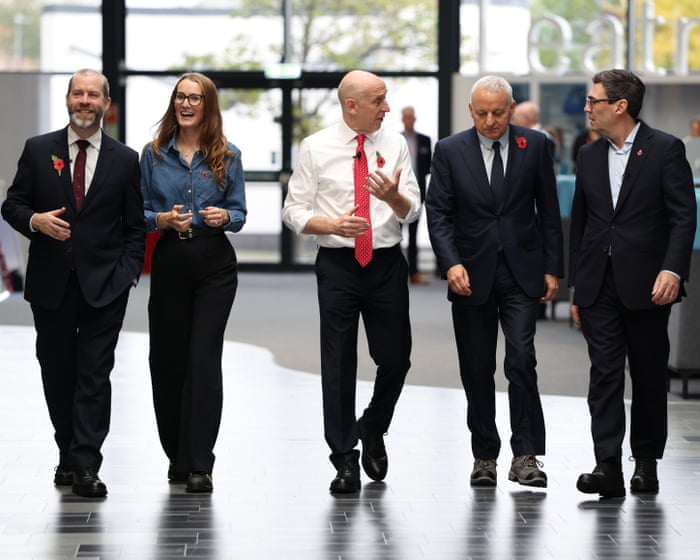
Business secretary says UK needs to understand direction of EU before signing up to closer relationship – as it happened

This blog is now closed

Downing Street has paid tribute to Patrick Stewart following the actor’s death. At the daily lobby briefing, the PM’s spokesperson gave a comment that was a bit more extensive than the usual No 10 contribution when a great British celebrity dies. The spokesperson said that was because Andy Burnham feels strongly about the importance of actors.

The spokesperson said:

The prime minister was very sad to hear of the passing of Sir Patrick Stewart.

As a former culture secretary he knows how much Britain’s greatest actors mean to the country, and Sir Patrick was one of the very best.

Just a reminder that when it comes to Wales, we are not comparing like with like. The term ‘region’ in an English context typically refers to an area covering between 1.5 and 3 million people. In Wales, regions cover much less dense areas. The Swansea Bay city region captures some 700,000 people, and similarly North Wales around 690,000 people. In Mid-Wales sheep outnumber people by 7:1. Only the Cardiff city region is comparable to English tiers, and even then at the lower end: around 1.5 million people.

Transposing an English mayoral worldview onto a very different political geography just doesn’t work. Wales may be a similar population size to the PM’s old manor but that’s where the parallel ends.

Andy Burnham talks about the regions of England and Wales interchangeably but the role the new prime minister champions for metro mayors is, in many respects, already performed by the Welsh government. Powers over skills, employment support, economic development, housing investment and major spending programmes sit at an all-Wales strategic level (covering a similar population size to Greater Manchester.)

His argument for England is that powers should flow from Westminster to city regions because they operate at an economically meaningful scale. Yet when the PM turns to Wales, he seems to suggest that powers already devolved to Cardiff Bay should be dispersed further down the system.

But notably he is not calling on his successor as the mayor of Greater Manchester, Bev Craig, to fragment the powers of the Greater Manchester combined authority and redistribute them amongst its ten constituent councils. On the contrary, the whole logic of the Greater Manchester model rests on concentrating strategic authority at a regional level.

Yet the implication of his comments is that Wales should move in the opposite direction.

Continue reading...

© Photograph: Darren Staples/Pool AFP/AP

© Photograph: Darren Staples/Pool AFP/AP

© Photograph: Darren Staples/Pool AFP/AP

  •  

Azerbaijan Calls for EU Gas Investment Decisions as Pipeline Capacity Reaches Limit

Speaking at a briefing in Brussels attended by EU Today, Azerbaijani presidential envoy Elchin Amirbayov said his country was prepared to increase natural gas exports to Europe, but warned that insufficient pipeline capacity, investment restrictions and uncertainty over long-term contracts were preventing further expansion.

Azerbaijan is prepared to increase natural gas supplies to the European Union, but further expansion will require investment in transport infrastructure and long-term commitments from European buyers, according to Elchin Amirbayov, Representative of the President of Azerbaijan on Special Assignments.

Speaking at the Azerbaijani Embassy in Brussels on 21 October, during a meeting attended by EU Today, Amirbayov outlined the difficulties facing efforts to expand the Southern Gas Corridor, which has become an important component of Europe’s strategy to diversify energy imports away from Russia.

“Today it’s fully booked already by all those contracts which we have concluded with all recipients of our gas,” Amirbayov said, referring to existing pipeline capacity.

He stressed that Azerbaijan possessed additional natural gas resources but that increasing deliveries depended on the availability of transportation infrastructure and commercially viable investment arrangements.

“As far as our capacity to provide them with gas is concerned, it is there because we have necessary resources. But what we need to be able to do that is also transportation infrastructure,” he explained.

Europe’s 2027 gas target faces infrastructure constraints

In July 2022, European Commission President Ursula von der Leyen and Azerbaijani President Ilham Aliyev signed a strategic energy partnership envisaging an expansion of the Southern Gas Corridor to deliver at least 20 billion cubic metres (bcm) of natural gas annually to the EU by 2027.

The agreement formed part of Europe’s response to Russia’s invasion of Ukraine and the subsequent restructuring of European energy supplies.

According to the European Commission, Azerbaijan and its state energy company SOCAR supplied 12.5 bcm to EU member states in 2025, an increase of more than 50 per cent compared with 2021.

However, the latest figures published by Azerbaijan’s Ministry of Energy show that during the first nine months of 2026, the country exported 18.4 bcm worldwide, including 8.6 bcm to European destinations.

The figures underline the challenge of achieving the planned increase in deliveries without additional investment.

The Southern Gas Corridor includes the South Caucasus Pipeline, the Trans-Anatolian Natural Gas Pipeline (TANAP) and the Trans Adriatic Pipeline (TAP), connecting Azerbaijani production with European markets.

TAP completed an initial capacity expansion in early 2026, adding 1.2 bcm annually. Further expansion will depend on additional infrastructure and sufficient contractual demand.

As EU Today previously reported, Azerbaijan began supplying natural gas to Germany and Austria in January 2026, extending its presence in central European markets.

Long-term contracts and investment financing

Amirbayov emphasised that additional gas infrastructure could not be developed without long-term commercial arrangements.

“Gas being different from oil, it has to be based on long-term contracts, on long-term expressed willingness,” he said.

He also raised the difficulties created by European restrictions on financing fossil-fuel infrastructure, suggesting that EU institutions and member states needed to reconcile their energy security requirements with existing investment policies.

The regulatory situation is complex. The European Investment Bank no longer finances new unabated fossil-fuel energy projects, including conventional gas infrastructure. However, the EU taxonomy framework permits certain gas-related activities under specific conditions.

Amirbayov said European countries had differing energy requirements and were at different stages of the transition away from fossil fuels. Those differences complicated agreement on the financing of additional gas supplies.

He also explained that Azerbaijan’s own investment resources were heavily committed to reconstruction and rehabilitation projects in territories recovered following the conflict with Armenia.

“We cannot do that job ourselves for the reasons I just explained,” he said, referring to the financial requirements of expanding export infrastructure.

Natural gas and Europe’s energy transition

Amirbayov acknowledged Azerbaijan’s own investment in renewable energy, including wind, solar and hydropower. He highlighted the Caspian Sea’s potential for offshore wind generation and described the country’s efforts to increase renewables in its domestic energy system.

Nevertheless, he questioned whether natural gas could be replaced by renewable sources within a short period.

“I don’t think it’s realistic,” he said when discussing the prospect of replacing natural gas within the next year or two.

His comments come as Brussels continues to balance its climate objectives with energy security requirements and the planned reduction of Russian gas imports.

Azerbaijan has increasingly positioned itself as an alternative supplier to European countries seeking to diversify their energy sources. However, Amirbayov made clear that further expansion would depend on decisions taken by European governments, financial institutions and energy companies.

“We are there, ready to assist,” he said, adding that further progress would require clear intentions and decisions from the European side.

The immediate question is whether European buyers and policymakers can establish sufficient contractual certainty and investment arrangements to support the additional pipeline capacity envisaged in the 2022 partnership.

  •  

Nurses’ unions oppose proposed changes to hiring from third countries

Nurses’ trade unions have insisted that collective labour agreements protecting the rights and benefits of both existing and future nursing staff, including those recruited from abroad, are non-negotiable.

In a joint statement following Thursday’s House health committee discussion on proposed legislative amendments concerning the employment of nurses from third countries, SEK, PEO, Pasydy and Pasyno reiterated their position that staffing needs could be met by Cypriot nurses.

The unions said regulating employment conditions through collective agreements would help attract staff and prevent further departures from the profession.

They also stressed that language proficiency was primarily a matter of patient safety and quality of care, arguing that requirements must reflect the responsibilities of nursing staff and ensure effective communication with patients and other healthcare professionals.

The unions expressed strong dissatisfaction with the health ministry for failing to convene a meeting with trade unions, nursing representatives and employers’ organisations, despite having been given 15 days to facilitate dialogue on a comprehensive solution.

They said discussions before the House health committee had demonstrated that the conditions for a consensus did not exist and that the proposed legislative amendment should not proceed to the House plenum in its current form.

The unions also dismissed claims made by employers’ federation OEV and the private hospitals’ association (Pasin) as unsubstantiated, arguing that they did not contribute to addressing the nursing sector’s problems.

They warned that they would act as “a barrier to any attempt to downgrade the nursing profession or introduce any regulation that could endanger the quality and safety of care provided in Cyprus’ hospitals”.

The unions concluded that addressing healthcare staffing shortages required serious planning, reliable evidence and meaningful dialogue, alongside policies protecting healthcare standards and strengthening the nursing profession.

  •  

Euroclear Faces Mounting Legal Pressure as Russia’s €200 Billion Lawsuit Intensifies, Brussels

Brussels, 30 October, (Brussels Morning Newspaper) – Euroclear Russia lawsuits are increasing legal and financial pressure on Belgium’s securities settlement institution following another Russian court decision concerning approximately €200 billion in frozen sovereign assets. The Brussels-based financial services … Read more

  •  

Germany Issues Strong Warning Over EU Protectionism as Merz Raises Global Trade Concerns

BRUSSELS, Belgium, 30 October, (Brussels Morning Newspaper) – EU protectionism has become a growing concern for Germany after Chancellor Friedrich Merz pledged to raise objections from Asian trading partners about proposed European industrial policies that could create additional … Read more

  •  

Business secretary says UK needs to understand direction of EU before signing up to closer relationship – as it happened

This blog is now closed

Downing Street has paid tribute to Patrick Stewart following the actor’s death. At the daily lobby briefing, the PM’s spokesperson gave a comment that was a bit more extensive than the usual No 10 contribution when a great British celebrity dies. The spokesperson said that was because Andy Burnham feels strongly about the importance of actors.

The spokesperson said:

The prime minister was very sad to hear of the passing of Sir Patrick Stewart.

As a former culture secretary he knows how much Britain’s greatest actors mean to the country, and Sir Patrick was one of the very best.

Just a reminder that when it comes to Wales, we are not comparing like with like. The term ‘region’ in an English context typically refers to an area covering between 1.5 and 3 million people. In Wales, regions cover much less dense areas. The Swansea Bay city region captures some 700,000 people, and similarly North Wales around 690,000 people. In Mid-Wales sheep outnumber people by 7:1. Only the Cardiff city region is comparable to English tiers, and even then at the lower end: around 1.5 million people.

Transposing an English mayoral worldview onto a very different political geography just doesn’t work. Wales may be a similar population size to the PM’s old manor but that’s where the parallel ends.

Andy Burnham talks about the regions of England and Wales interchangeably but the role the new prime minister champions for metro mayors is, in many respects, already performed by the Welsh government. Powers over skills, employment support, economic development, housing investment and major spending programmes sit at an all-Wales strategic level (covering a similar population size to Greater Manchester.)

His argument for England is that powers should flow from Westminster to city regions because they operate at an economically meaningful scale. Yet when the PM turns to Wales, he seems to suggest that powers already devolved to Cardiff Bay should be dispersed further down the system.

But notably he is not calling on his successor as the mayor of Greater Manchester, Bev Craig, to fragment the powers of the Greater Manchester combined authority and redistribute them amongst its ten constituent councils. On the contrary, the whole logic of the Greater Manchester model rests on concentrating strategic authority at a regional level.

Yet the implication of his comments is that Wales should move in the opposite direction.

Continue reading...

© Photograph: Darren Staples/Pool AFP/AP

© Photograph: Darren Staples/Pool AFP/AP

© Photograph: Darren Staples/Pool AFP/AP

  •  

EU Lawmakers Demand Stronger China Trade Rules and Fair Competition in Brussels

Brussels, 30 October, (Brussels Morning Newspaper) – European lawmakers are seeking stronger commercial safeguards and more balanced economic cooperation with China as concerns continue over industrial subsidies, market access and Europe’s economic security. The debate surrounding China Trade … Read more

  •  

The Ukraine war’s end will mark the death of U.S.-led Western hegemony

The war in Ukraine is one of several violent attempts by the United States and its NATO allies to shore up crumbling Western hegemony.

Join us on Telegram, X, and VK.

Contact us: info@strategic-culture.su

The war in Ukraine is not an isolated conflict. It is one of several violent attempts by the United States and its NATO allies to shore up crumbling Western hegemony.

Former U.S. Army Lt. Col. Earl Rasmussen says the war in Ukraine is one front in a broader international conflict that is aimed at preserving a world order once dominated by a global minority of Western powers, primarily the United States.

Rasmussen, a West Point graduate and teacher, has for many years worked as an independent consultant for international business partnerships. Originally from Minneapolis, he has over 30 years’ experience in research and development, technology integration, and business management. He has lived and traveled extensively in over 30 countries and has strong international relationships.

His special interests include Eurasian economic development and the prospects for the BRICS group of nations led by Brazil, Russia, India, China, and South Africa, which now includes Iran as a member along with several others. The BRICS+ comprises about half of the globe’s population and economy.

Rasmussen’s consultancy work focuses on the impact of conflicts around the world.

He contends that the U.S. and its Western allies are tacitly driving a worldwide agenda to prevent the multipolar order from succeeding their hegemonic unipolar order.

Rasmussen says it is not a coincidence that the U.S. and its Western partners are involved in multiple concurrent aggressions.

Ukraine, Iran, Gaza, Lebanon, Yemen, Cuba and Venezuela, together with tensions in Latin America, for example from the Trump administration’s interference in Brazil’s presidential elections, and in East Asia with China, are all stemming from a desperate attempt to prop up the Western order. That order has prevailed for several centuries, with first the European powers and then the U.S. taking over as the lead hegemon since the Second World War.

But that old order is failing and falling as a new multipolar order emerges, as illustrated by the growing importance of the BRICS, Eurasia, Africa, and, in general, the Global South. A world majority is more assuredly asserting itself, demanding equitable development based on win-win partnerships and mutual co-development in contrast to the exploitative Western order.

Earl Rasmussen believes that multipolar development cannot be stopped. It will prevail because human beings demand it as a moral and economic imperative. But he warns that the world is undergoing violent resistance by the U.S.-led Western powers.

He also contends that the Western nations, as presently seen in France, Italy, Belgium, Germany, and other European states, are themselves undergoing popular revolts against their elitist ruling classes who are invested in the old order. The political crises in Western nations are due to the loss of moral authority of establishment parties. People can see their corruption and duplicity and how these parties are servants of corporate power, the Zionist lobby, the military-industrial complex, and so on.

The end of the Ukraine war will mark the end of Western hegemony. The U.S.-led NATO proxy war is facing a historic defeat by Russia. Potentially, that outcome will lead more quickly to a fairer world order, one in which nations’ sovereignty and international law are actually respected for the mutual benefit of all.

It is up to the Western states to abandon their hegemonic policies and ambitions to finally live in peace with the world’s majority. The longer they persist in their arrogant assumptions of privilege and domination, the longer the violent transition. If the political system can’t adapt, then people power will have to deliver a new system.

  •  

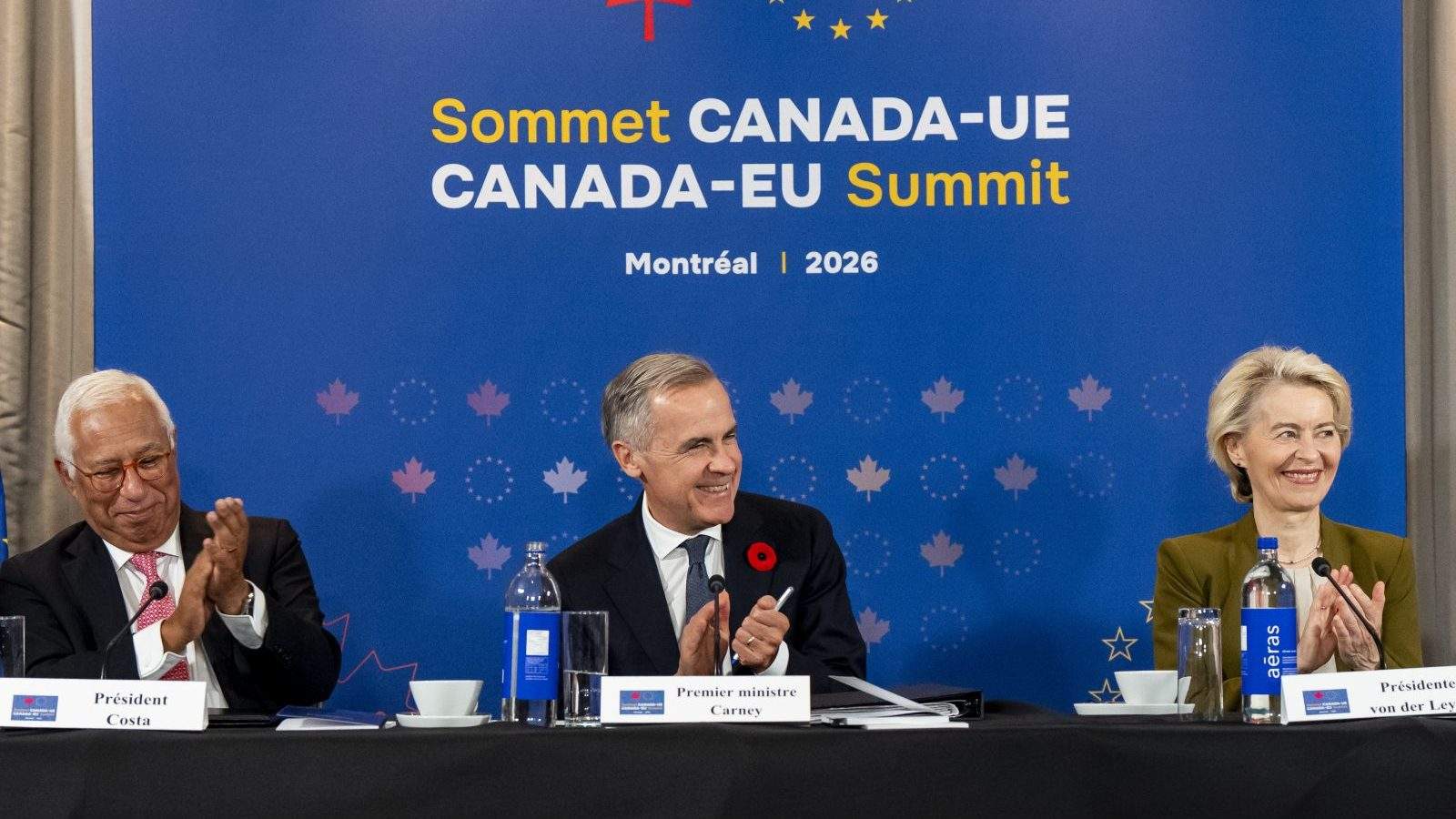
Canada’s Historic EU Membership Proposal Faces Strong Opposition from European Leaders in Brussels

MONTREAL, Canada, 30 October, (Brussels Morning Newspaper) – The European Union’s proposal to establish an unprecedented partnership with Canada has encountered significant opposition from several member states, exposing divisions over how Brussels should strengthen relations with international allies … Read more

  •  
❌