Guardian columnist, senior economics commentator and host of the new Radical Thinking podcast Aditya Chakrabortty is answering your questions on the big ideas around economics, society and democracy, and his new podcast
thegreatfatsby asks: Do you think the fact that Gabriel Zucman, who is a recognised authority on wealth tax is given more respect, time and attention by the mainstream media than Gary Stevenson, who has worked eloquently and tirelessly to spread the debate about the terrible consequences of inequality and whose ideas and analysis are almost identical is because of our cultural fixation on class prejudice?
Aditya says: I’ve followed Gabriel Zucman (and Emmanuel Saez and Thomas Piketty) for a long time, and find his work rigorous and thought provoking. I don’t always agree, but I appreciate their acceptance that taxes on wealth are part of the fight against ever-increasing inequality.
I think Gary Stevenson is eloquent and compelling and is fighting a good fight. His book tells a story very well. But I don’t accept the insistence on a ‘wealth tax’ (as opposed to taxes on wealth) as being the only way we fight everything from inequality to the far right. We have to look at workers’ rights, housing, public ownership, greater democracy in economics and politics as well.
In the age of algorithm, simple, strong messages cut through. But the truth is often more complex.
Aditya says: What a nice question, Marija. I try to read a lot and write a diary. Unfortunately, I have the handwriting of a GP so I can’t read old entries. The other thing is I try to shirk my mobile phone.
A North Korea-based cybercrime group appears to be behind a $6.3 billion hack of the cryptocurrency exchange Binance, according to two blockchain intelligence firms. Both TRM Labs and Chainalysis tied the largest crypto hack on record to TraderTraitor, a North Korean hacking unit that has previously targeted the digital asset industry. Billions of dollars’ worth…
A North Korea-based cybercrime group appears to be behind a $6.3 billion hack of the cryptocurrency exchange Binance, according to two blockchain intelligence firms. Both TRM Labs and Chainalysis tied the largest crypto hack on record to TraderTraitor, a North Korean hacking unit that has previously targeted the digital asset industry. Billions of dollars’ worth…
Altering copyright law to allow AI companies to scrape music, books and journalism could trigger a constitutional breach, Coalition senators and the recording industry have warned, as they raise new fears it could open Australia to massive legal action and compensation claims from rights holders worldwide.
The attorney general’s department admitted it was “extremely alive” to the issue, and Australia’s leading constitutional expert, Anne Twomey, agreed there was “potentially” a concern – depending how legislation was drafted – that granting AI companies permission to scrape copyrighted material from the internet could amount to an acquisition of property by the government.
With a contentious midterm election less than a week away, one cause has unified voters and candidates across the political spectrum: slowing down AI.
A friend of mine who directs tens of millions of dollars in midterm election spending says he's never seen voter salience of an issue—AI, broadly—increase so quickly. In July, Gallup found that 39 percent of Americans thought AI does more harm than good, up from 31 percent in 2025. Only 9 percent of Americans, meanwhile, thought the technology did more good than harm (down from 12 percent last year).
Public sentiment has since soured even more. An October ABC News/Washington Post/Ipsos poll found that 57 percent of Americans think AI is bad for society, while a staggering 66 percent said they opposed new data center construction in the United States.
Politicians on the left and right have seized on this political sentiment and offered their own data center stiff-arm policy du jour. However, even a full e-brake on data center construction would do little to stop AI progress.
In August, Arvind Narayanan, director of the Princeton Center for Information Technology Policy and co-author of AI Snake Oil: What Artificial Intelligence Can Do, What It Can't, and How to Tell the Difference, claimed that a data center moratorium would basically not slow AI development at all.
Using a back-of-the-envelope calculation, he concluded (under some reasonable assumptions) that a one-year data center moratorium in a "typical U.S. state" would slow down AI progress nationally by only five to 10 hours. Assuming that at least half of data center developers would avoid a moratorium by building their facilities elsewhere, a one-year freeze on construction in larger states like New York would set AI in America back by less than one day, according to Narayanan.
My own modeling of this question reaches essentially the same conclusion as Narayanan's, but rather than assuming computing power will continue growing at its current rate, it treats future growth as dependent on how much computing capacity gets built. I considered three theoretical policy regimes: a full stop on new data center construction and on replacement of depreciated graphics processing units (GPUs); a full stop on new data center construction only; and no restrictions whatsoever.
The point is that, as a federal policy, standing athwart data centers yelling "Stop!" doesn't accomplish the outcomes that moratorium-ites claim to want. And, while some local policies could slightly impede center growth, the only way to hamper the progress of frontier models would be to enact an extremely draconian policy regime—one that goes beyond moratoriums for new data centers and prohibits GPU upgrades in existing facilities—which no one is actually proposing or close to implementing.
What does this all tell us about where advocates of any stripe should put their efforts?
For those in favor of accelerating AI, on the one hand, it provides comfort in that data center construction, even in the extreme, is not a binding constraint to AI advancement. But on the other hand, the political energy currently concentrated on mobilizing the backlash won't stay focused there forever; an issue where more than two-thirds of people are even tangentially opposed to your "side" is not one that easily disappears.
For doomers, it means if the goal is a "pause" of some sort on the ability of AI technology to, say, replace you in your job, targeting data center construction isn't the best way to go about it. It may be a useful galvanizing node in the broader policy fight, but don't expect it to cause any meaningful change in the current trajectory—whatever you believe that to be.
The ineffectiveness of data center moratoriums doesn't make the policy on its own more or less optimal. But if the data center protests are a proxy for broader AI-induced anxiety about large language models crowding out human pursuits, causing unemployment, or destroying the environment, protestors will need to find another leverage point.
Hackers stole $6.3 billion in cryptocurrency from Binance in a record-breaking heist, prompting issuers to freeze roughly half of the stolen assets. The breach, which US analysts suspect was done by North Korean hackers, has shaken confidence in the crypto market.
The race for artificial intelligence (AI), or superintelligence, will be won not just by technology companies, but by the nation that can deliver reliable, affordable and secure electricity. America is in a high-stakes sprint to lead the world in AI. This technology will reshape our economy, strengthen national defense, transform manufacturing and determine which nations lead the next generation of innovation.
But Washington and Silicon Valley cannot afford to ignore a glaring bottleneck: AI runs on electricity. America must dramatically expand its power generation and delivery infrastructure if it hopes to remain the global technology leader.
Data centers are the backbone of this revolution. They require enormous amounts of electricity, reliable grid connections and specialized infrastructure. Without sufficient power, advanced AI systems are little more than expensive hardware waiting for a connection. This creates an immense opportunity for America’s electric utilities. For too long, utilities have been viewed simply as service providers. Today, they are strategic partners in America’s economic competitiveness and national security.
To win the AI race, America must unleash domestic energy production, accelerate infrastructure development, defend against cyber threats and ensure that the private sector — not residential ratepayers — finances this expansion. This is a crucial opportunity for the administration, Congress, state governments and the private sector to coordinate an energy strategy that prioritizes American competitiveness.
Let the private sector finance growth
Electric utilities possess the engineering expertise and operational experience necessary to support data center expansion. They understand regional demand, transmission constraints and the complex mechanics of grid reliability. However, building the necessary infrastructure takes time; new generation facilities, transmission lines and substations often require years of planning, permitting and construction.
Data center developers, meanwhile, want to move quickly to capitalize on the AI boom. To bridge this gap, utilities and developers must collaborate much earlier in the process, aligning construction schedules, forecasting demand and identifying necessary upfront investments. Washington can support this by streamlining permitting and reducing regulatory delays to provide long-term investment certainty.
Crucially, data center developers must bear their fair share of the infrastructure costs driven by their massive electricity demands. Residential customers and small businesses should not subsidize infrastructure built primarily to serve trillion-dollar technology companies. Long-term power purchase agreements, dedicated infrastructure investments and minimum billing commitments can ensure large customers contribute appropriately. This is an argument for responsible, pro-business growth where financial risks are not shifted onto ordinary Americans.
The White House’s Ratepayer Protection Pledge reinforces the principle that America can accelerate AI innovation without forcing ordinary Americans to subsidize Big Tech’s infrastructure demands. Electric utilities can benefit from increased electricity sales, long-term power contracts and investments in generation and grid infrastructure, provided data center developers pay their fair share of the costs.
To protect consumers, we must require transparent cost allocation, enforceable commitments from large data center customers and safeguards preventing residential ratepayers from being left with stranded infrastructure costs if projects are delayed, scaled back or abandoned.
Energy dominance requires real abundance
America cannot achieve energy dominance if it cannot generate enough electricity to power its expanding economy. Meeting this challenge requires an "all-of-the-above" strategy that evaluates energy resources strictly based on reliability, affordability and availability.
Natural gas provides essential dispatchable generation, while nuclear energy offers dependable baseline power with low operational emissions. Hydroelectric power, wind, solar and battery storage all contribute where they make economic sense. Existing coal facilities also remain part of the equation where continued operation is economic and legally compliant.
No single technology can solve every regional power challenge. Utilities need the flexibility to select the optimal resource mix for their customers. The objective is straightforward: build enough reliable generation and transmission capacity to meet rising demand without spiking energy prices. This is vital as data centers increasingly compete for power with manufacturers, hospitals, military bases and households. Energy abundance is a national security imperative.
Securing the grid from cyber threats
There is another critical threat that deserves far more attention: cybersecurity. The electric grid and digital infrastructure are deeply interconnected. Power disruptions halt essential computing services, while software incidents at technology providers can ripple back to affect critical infrastructure. Foreign adversaries and sophisticated cybercriminals understand these critical dependencies.
Electric utilities operate vital infrastructure that must withstand attacks against corporate networks, industrial control systems and substations. Concurrently, data centers face distinct risks involving cloud platforms, software supply chains and third-party vendor access. These are interconnected risks that could have significant national security consequences.
Utilities and data center operators must establish joint incident response plans, conduct realistic multisector exercises and develop secure mechanisms for sharing threat intelligence. Organizations should strengthen network segmentation, multifactor authentication and vulnerability management. In particular, utilities must ensure that a compromise of ordinary corporate IT does not provide a path into operational technology controlling the grid. A stolen password should never become a gateway to disabling the power supply.
Supply-chain security deserves equal focus. Hardware, software and remote maintenance arrangements can introduce vulnerabilities into both utility operations and data center environments. Companies must rigorously assess critical vendors and establish clear protocols for addressing compromised components.
While the federal government has an important role in providing actionable threat intelligence, cybersecurity must not become an excuse for expensive, rigid mandates. Security frameworks should remain risk-based, practical and focused on resilience.
Data centers as grid assets
The relationship between utilities and data centers should not be one-way. With the right investments, large computing facilities can help improve grid flexibility. Some AI training workloads can be shifted to off-peak hours, allowing operators to reduce consumption during periods of high demand.
Furthermore, battery storage and appropriately designed onsite generation can provide grid stability during emergencies, turning data centers into strategic assets that strengthen, rather than strain, America's energy future.
The importance of AI data centers is growing this election cycle as the fight over the infrastructure’s costs and environmental impacts may be threatening Republicans in battleground states like Texas and Ohio. Grassroots movements in rural communities, particularly where President Trump won by double-digit margins in each of his presidential bids, are threatening the rural…
Elon Musk and his business’s role in a recent dispute over Ukraine’s access to Starlink and its military network is putting a spotlight on the tech mogul’s outsized influence on the international stage. Following about 10 days of confusion and finger-pointing over what caused the slowdown of Starlink and its military-grade version — Starshield — in Ukraine, Musk acknowledged his company, SpaceX, was behind the restrictions on Starlink’s…
Home to key suppliers of tech giants like Nvidia Corp and Apple Inc, Taiwan has been one of the biggest beneficiaries of the spread of artificial intelligence. The island's exports surged almost 61%...
The elusive planet Mercury rises in the east at about 6am local time, in the constellations of Libra. Mercury reaches its greatest elongation from the Sun on the 20th, but
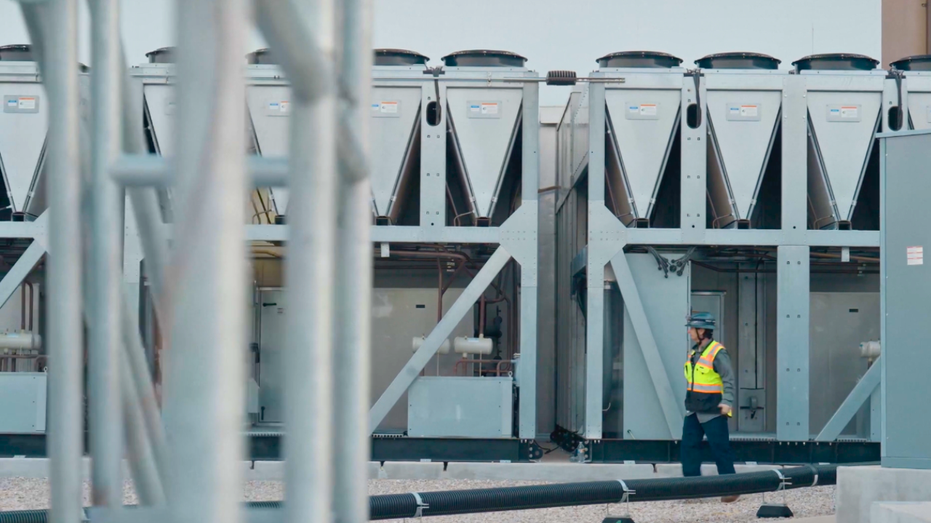
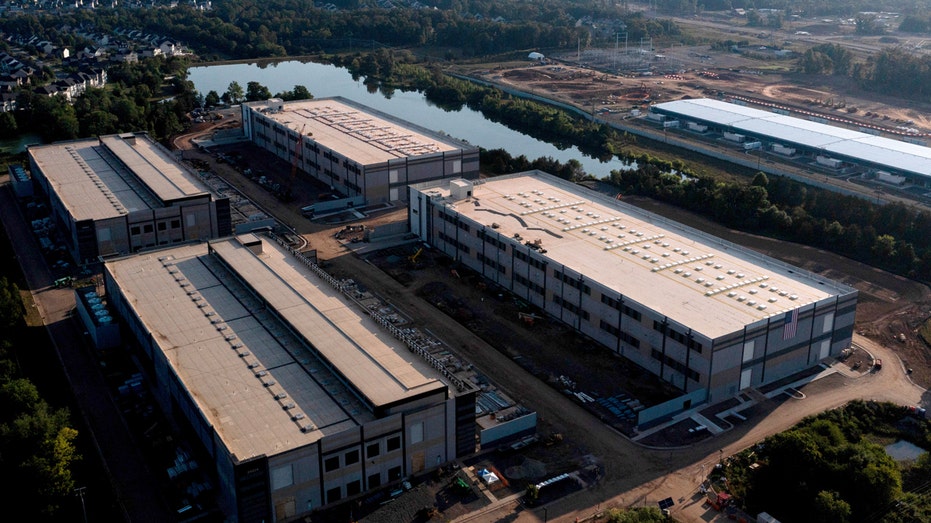
With the midterm elections approaching, data centers have become an increasingly popular political target. Politicians are raising alarms about their impact on communities, with some calling for construction moratoriums or outright bans.
There's been plenty of fearmongering. But the more Americans learn about data centers, and the more communities experience their benefits firsthand, the stronger the case for continued development becomes.
Data centers have existed for decades, but the rapid growth of artificial intelligence has dramatically increased the demand for computing power. Americans understandably have questions about what this development means for electricity prices, water supplies, and their quality of life. Newer facilities are increasingly being designed with technologies that can address these concerns, including closed-loop cooling systems and quieter operations.
Yet much of the national debate overlooks what data centers are already delivering to communities across America.
Take Ellendale, North Dakota, a town of 1,100 people. Before Applied Digital's new $11 billion data center development, the town collected roughly $400,000 annually in sales taxes. In the first seven months of 2026 alone, that figure jumped to $3.5 million.
That revenue is helping the city repave its roads and renovate its senior center. A historic opera house is being restored. For a small town, this kind of investment can transform the community for generations.
And Ellendale is far from alone.
Schools across America are seeing enormous benefits from the data center boom.
In Richland Parish, Louisiana, Meta's massive investment has helped fund an increase in annual teacher bonuses ranging from $10,000 to $50,000.
Think about what that means for a working family. Teachers who have dedicated their careers to educating children are receiving a life-changing financial benefit, while the school district becomes an attractive destination for talented educators.
It's hard to imagine a politician campaigning against higher teacher pay or better schools. Yet those are precisely the kinds of benefits communities stand to lose when development gets blocked.
In neighboring Henrico County, local leaders used data center revenue to fund a $60 million Affordable Housing Trust Fund, helping young families and first-time buyers purchase homes.
At a time when housing affordability is dominating political conversations, building data centers is helping some communities make the American Dream a little easier to achieve.
Electricity prices are another major concern, and understandably so. Families are already struggling with higher utility bills, and the arrival of a major new industrial customer can raise legitimate questions about who pays for new infrastructure.
But the enormous, predictable electricity demand from data centers also creates opportunities to finance new generation and grid investments, spreading infrastructure costs across a larger customer base.
In Georgia, agreements involving new large electricity customers, including OpenAI, are projected to lower residential power bills by $180 annually by 2029.
With the right arrangements in place, the arrival of data centers can mean lower costs for the families already living in these communities.
And the benefits extend well beyond tax revenue and household expenses.
Trade unions have been among the most vocal supporters of data centers because of the good-paying jobs they create. Building these facilities requires years of work for skilled tradesmen, with new projects creating opportunities for the next generation of American workers.
Politicians have spent decades promising to bring back good-paying blue-collar jobs. Here is an industry creating enormous demand for exactly those workers.
Of course, developers have a responsibility to work with residents and local governments to address legitimate concerns. Communities deserve clear answers about electricity costs and water use. They should also understand how the investments taking place in their backyards will benefit local families.
But when data centers are developed responsibly, the economic benefits can be enormous. Communities are rebuilding roads and improving schools. Homeowners are seeing lower tax burdens, and skilled workers are finding new opportunities.
For decades, politicians have campaigned on championing the Forgotten Man and bringing economic opportunity back to communities that have struggled to attract investment.
Now, data centers are delivering billions of dollars in private investment to many of those very places.
We're watching a new industrial boom take shape across America, creating jobs and revitalizing communities that Washington has spent decades promising to help. Before politicians rush to stop it, they ought to take a serious look at what those communities are gaining.
Brussels, 30 October, (Brussels Morning Newspaper) – European and United Nations institutions are examining growing concerns about AI and human thinking as new research raises questions about the technology’s influence on critical reasoning, education and independent decision-making.
Instagram’s latest foray into horizontal, long-form videos will transform how social media scrollers, content creators, and even streaming competitors operate
It’s almost hard to remember, but just a few years ago, a lot of very smart people thought that science was in terminal decline. Respected researchers were writing papers with titles like “Are Ideas Getting Harder to Find?”, “Papers and patents are becoming less disruptive over time”, and “Slowed canonical progress in large fields of […]

 Login