Login

Russia Strikes Ukrainian Military Plants and Energy Infrastructure, Ukraine Sends 800+ Drones Toward Moscow
Click to see the full-size image
In the night of October 30, Russian forces carried out a combined strike on Ukrainian defense-industrial enterprises and the energy infrastructure supporting them, using ballistic missiles, air-launched cruise missiles, and attack drones. The main target areas were Kyiv, Poltava, and Dnipropetrovsk Regions. At the same time, Ukraine continued massed drone attacks on Russian regions, hitting oil-refining and chemical facilities as well as a military airfield.
Russian strikes in Ukraine
Kyiv and Kyiv Region
-
JSC “Kyiv Radio Plant” / LLC “Trymen-Ukraine” (Kyiv). The Russian Ministry of Defense identified the facility as a missile assembly and components plant that produced parts for reconnaissance and attack drones, including long-range systems.
-
JSC “Fanplit” (Kyiv). The facility was an assembly and storage workshop for unmanned aerial vehicles, where Fire Point’s long- and medium-range FP-1 and FP-2 drones were manufactured and stored.
-
PS-330 “Novokyivska” electrical substation (Khotiv, Kyiv Region). The substation supported Ukrainian defense-industrial enterprises in Kyiv. Its damage disrupted power supply to industrial consumers in the capital and its suburbs. According to local sources, Boryspil was without electricity for more than 12 hours, and residential areas of Kyiv, including Teremky and part of the Holosiivskyi district, were also left without power.
Dnipropetrovsk Region
-
PS-330 “Svitloe” electrical substation (Svitloe). The facility supported military-industrial enterprises in Dnipro. Ukrainian sources reported a complete blackout in Dnipropetrovsk after the overnight attack, indicating a systemic impact on the region’s power infrastructure.
Poltava Region
-
Kremenchuk Oil Refinery. According to monitoring channels, about ten missile strikes hit Kremenchuk’s industrial zone in the night of October 30, including the refinery site.
-
Kremenchuk Thermal Power Plant. Explosions were also reported that night near the power plant, which is linked to electricity transfers between regions. Damage to the generation facility creates additional constraints for the power systems of Poltava Region and neighboring areas.
Odesa Region and the Black Sea
-
Dry cargo vessel (Black Sea, 30 km south of Odesa). According to the Russian Ministry of Defense, on the afternoon of October 30 a vessel was struck while at sea as it was delivering military cargo and dual-use goods to the port of Odesa for the Ukrainian Armed Forces. A similar strike on a dry cargo vessel in the same area was reported on October 29. Over the week, reports mentioned strikes on 12 dry cargo vessels. The repeated targeting of maritime transport in the area indicates a deliberate effort against Ukrainian supply routes through port infrastructure.
Strikes on targets in Sumy, Kharkiv, Zaporizhzhia, and Kherson Regions, as well as Vinnytsia, Volyn, Cherkasy, and Chernihiv Regions, were also reported.
Ukrainian strikes in Russia
According to the Russian Ministry of Defense, 1,043 Ukrainian UAVs were shot down overnight over 19 Russian regions.
Samara Region
-
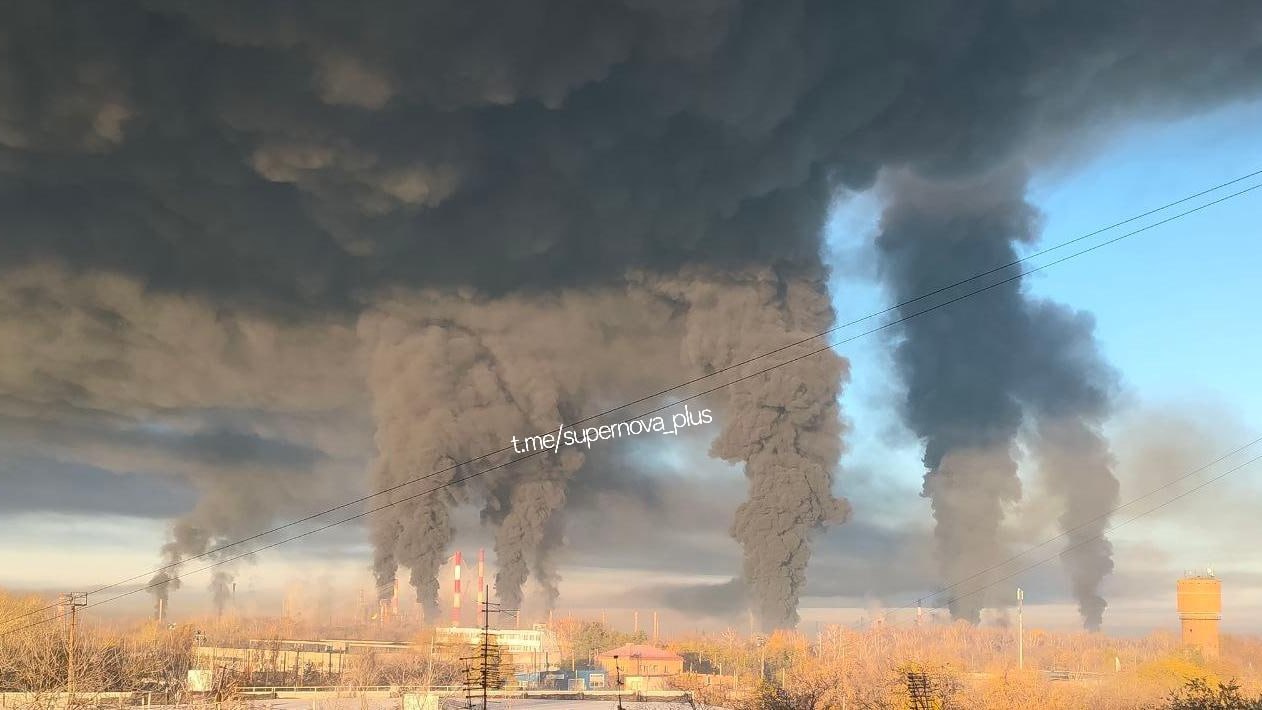
Novokuybyshevsk Oil Refinery (Novokuybyshevsk). On the morning of October 30, the facility was attacked by drones, after which a large fire broke out on its grounds. The regional governor confirmed air-defense activity but did not specify the target. Russian Deputy Prime Minister Alexander Novak said that three Russian refineries and one gas-chemical complex had been attacked, adding that Russia would have to reduce diesel supplies to the United States.
Moscow Region
-
Massed drone attack on Moscow and the surrounding region. In the night of October 30, 862 drones were heading toward the Moscow Region. Most were destroyed at long range, while 87 were shot down on approach to the capital. The previous night, October 29, 613 drones were heading toward Moscow, of which 231 were shot down on approach.
Volgograd Region
-
Marinovka military airfield (Oktyabrsky). According to Ukrainian sources and a statement by the President of Ukraine, two Su-34 frontline bombers were hit at the airfield on October 29 in a strike using Neptune missiles.
Republic of Bashkortostan
-
JSC “Bashkir Soda Company” (Sterlitamak). On October 29, drones attacked the company’s industrial site. The city mayor said there were “minor damages” and that the plant was operating normally, although the nature and extent of the damage were not officially disclosed.
Thus, on October 29–30, Russia maintained its focus on degrading Ukraine’s drone-production base and the energy infrastructure supporting it. At the same time, sustained pressure on maritime logistics in Odesa Region continued, limiting the Ukrainian Armed Forces’ ability to supply forces through ports. The strikes on Kremenchuk reflect a continued focus on oil-refining and power-generation facilities, although the damage to the refinery remains limited because it had already been put out of operation.
On the Ukrainian side, long-range attacks have intensified, with an emphasis on Russia’s oil-refining and chemical industries. Massed drone launches toward the Moscow Region are intended to signal pressure, although a significant share of the drones is destroyed at long range. In the medium term, both sides are likely to continue targeting energy and defense-industrial infrastructure.
MORE ON THE TOPIC:
- Explosion Rocks Spanish Ammunition Factory Supplying Ukraine (Videos)
- Russian Drones Destroy 28 Ukrainian Armed Robots in Failed Assault on Lyman (Video)
- Military Situation In Ukraine And Ukrainian Attacks On Russian Territory On October 29, 2026 (Maps Update)
The post Russia Strikes Ukrainian Military Plants and Energy Infrastructure, Ukraine Sends 800+ Drones Toward Moscow appeared first on South Front.