This week’s $6.3 billion hack of Binance is the largest to hit crypto, and would be the most that North Koreans have stolen in years of brazen cybercrime.
Europe is raising its defense budgets, but a Ukrainian defense-tech executive warns against spending the money on expensive systems that prove too ineffective to stop cheap drones at a sustainable cost. That is the case Taras Bublyk, CEO of the Ukrainian electronic-warfare firm UNWAVE, made in an interview with Ukrinform.
He argued that economics decides these fights: firing a costly missile at a cheap drone every time is a defense no budget can sustain for long. Bublyk said Europe should learn from the lessons of the Russo-Ukrainian war.
Why a missile for every drone is a losing trade
Bublyk said the core problem is the price gap between a threat and the tools used to stop it. Spend an expensive missile each time to down a relatively cheap drone, and the defense cannot be sustained.
“The cost of countering must be proportionate to the cost of the threat. The countermeasures must be affordable, produced in sufficient quantity, and work as a single system,” Bublyk explained.
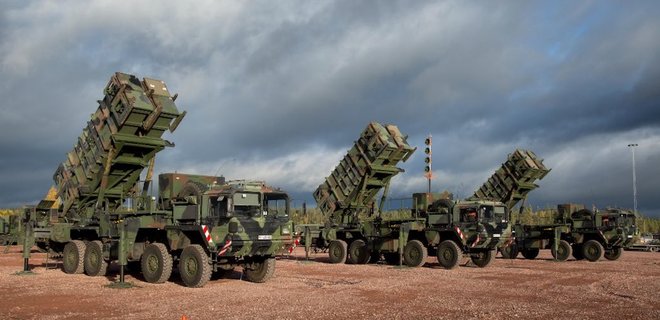
His answer is a layered defense that combines detection, electronic warfare, interceptor drones, physical barriers, and conventional air defense, so that where jamming or a cheaper interceptor will do, no one burns a costly missile.
Advanced weapons are not the same as being ready to use them
For Europe, that means investing not only in the technology but also in integrating it and scaling up production because owning advanced weapons does not, by itself, mean a country can use them well.
Rising European defense budgets are a good sign, he adds, but risk flowing to systems built without the lessons of the current war.
“There is a risk of investing in expensive systems that may prove insufficiently effective. European countries need to learn to integrate drones, electronic warfare and other technologies into specific combat tasks, taking Ukraine’s experience into account,” he said.
Ukraine has previously offered to teach what it has learned under constant drone attacks and jamming.
The rules that could cost Europe precious minutes
Much of Europe’s critical infrastructure is still underprepared for modern drone threats, Bublyk continued, and even sites with some protection often run systems designed without real combat experience, while Ukraine, which has that experience, is ready to help.
“European countries should use Ukraine’s experience of protecting critical infrastructure and move now from planning to building and deploying the relevant systems,” he said.
He also pointed to a regulatory gap: many European states restrict the use of electronic warfare, including in certain frequency bands, with no clear rules for switching such systems on in a real emergency.
Responsible agencies, he argued, need clear authority and fast-response mechanisms, so no one loses precious time seeking permissions once a threat has already been detected.
DUBAI, Oct 30 (Reuters) – Iran’s Revolutionary Guards Navy said on Friday that four oil tankers had caught fire and exploded in the Strait of Hormuz, while attempting to use what it described as unauthorised routes,...
AP study says more than 115 missile and drone strikes damaged or destroyed structures at 26 sites, including radars, aircraft and base infrastructure, causing billions in losses
A war room. A global conference call. A founder who live-posted about the largest crypto heist in history. Inside a frantic 24 hours at the world’s biggest crypto exchange.
Binance, the world’s largest crypto exchange, said $6.3 billion of funds are involved in what the industry is describing as crypto’s biggest-ever hack.
US officials believe future battlefields could produce large amounts of data from sensors and networks, overwhelming human operators.
Master Sgt. John Healy/Multi-Domain Command - Europe
US forces in Europe could face thousands of targets and incoming threats in a future conflict.
Officials say AI could help troops analyze targets faster than humans can alone.
AI could recommend responses while leaving final decisions to soldiers.
US Army soldiers in Europe are readying for large-scale combat and the kind of overwhelming missile and drone attacks Ukraine is facing, where the massive number of threats can make it difficult for humans to keep up, and are looking to software for solutions.
Concern that the speed and scale of future warfare could be too great for humans to handle without help is growing; however, Army officials have said artificial intelligence can help soldiers process large amounts of data from sensors and networks to deliver potential responses in a fight.
At the Association of the United States Army convention in Washington, DC, last month, service leaders and soldiers spoke about using AI to process battlefield data and help troops make decisions without removing humans from the process.
"I think it's important to use super intelligence… for things that humans aren't necessarily good at, and that's speed and scale," Brig. Gen. Steven Carpenter, head of Multi-Domain Command Europe, told Business Insider, "but I also know we shouldn't take humans completely out of the loop."
Earlier this year, Carpenter told reporters that US forces in Europe needed to be prepared to process more than 1,500 potential targets a day while also defending against as many as 1,200 incoming missiles and drones.
That volume of targets and threats could overwhelm human analysts, but AI could help them keep up.
In a conflict, soldiers could use AI to analyze battlefield data and targets based on a commander's objectives and other parameters. The system could then assess available military capabilities and recommend responses, from conventional weapons strikes to electronic warfare or cyber operations.
The entire process is intended to move quickly, but officials say speed isn't the only benefit. AI can also remember or recognize patterns that humans might forget or not even notice in the first place. And all of that information provides commanders with options.
AI and autonomy are quickly being integrated across uncrewed systems, command and control processes, and other technologies.
US Army photo by Sgt. Collin Mackall
"So again, the human is making the decision, the final call, looking at everything that you need to do in order to prosecute a valid target within the Law of Armed Conflict," Carpenter said.
He said the intent "isn't to replace those analysts," but rather to ultimately help "unburden them so that they're focusing on the really tough targets," such as a dual-use facility or other potential targets that need more analysis.
Carpenter said that the estimates for targets and threats reflect "what we think Ukraine's worst day is," underscoring the scale of attacks US forces could face in a future conflict. Russia's war against Ukraine has involved frequent, heavy drone and missile bombardments. These strike packages are complex, consisting of ballistic and cruise missiles, as well as one-way attack drones, more and more of which are equipped with jet engines that make them faster and harder to kill.
Earlier this year, a joint US Army and NATO exercise in Europe saw troops use a homegrown AI system to consume and sort data. The AI was in beta-testing; Army officials said they aimed to test it on a larger scale at a future exercise.
The integration of AI across the military is moving fast, spanning from autonomous features in drones, weapons, and targeting to agentic processes for sorting through data and referencing information. Beyond the battlefield, US personnel are using new tools to change institutional processes and workflows.
The Army is also incorporating AI into its Next Generation Command and Control, the service's new warfighting system. NGC2 uses AI and machine learning to provide commanders and soldiers with real-time data on targeting, capabilities, ammunition levels, maintenance needs, intelligence feeds, and simulated enemy attacks.
Ukraine's fight has made the world aware of the drone threat.
Diego Fedele/Getty Images
Russia's war in Ukraine continues to show that battlefield innovation and adaptation are key.
A US Army commander said that Ukraine's adaptations and drone tactics are important lessons.
US military officials have said that there are other takeaways as well.
The war in Ukraine continues to demonstrate for other militaries the importance of rapid adaptation and innovation, a US Army commander said.
Lessons from Russia's war against Ukraine have ranged from drone warfare and autonomous systems to air defenses. While US officials have said that not everything from Ukraine is applicable, certain tactics and the rapid pace of change in battlefield technology are not going ignored.
At the Association of the United States Army conference in Washington, DC, earlier this month, service leaders and soldiers spoke about how the Army islearning from the conflict.
Brig. Gen. Steven Carpenter, head of Multi-Domain Command Europe, told Business Insider that the war in Ukraine has "shown us that he or she that adapts, wins," pointing out that "the battlefield we've seen in Ukraine is not the same battlefield that we saw in February 2022."
Russia has ramped up production within its defense industry, while Ukraine, he said, has been "innovating so rapidly, and they're learning from the changing environment on the battlefield, and they're rapidly changing how they produce weapon systems and their capabilities based on what they're seeing on the battlefield."
Both Russia and Ukraine have continuously adapted their tactics and systems throughout the war.
Alex Nikitenko/Global Images Ukraine via Getty Images
Ukraine's defense has, in part, depended on amassing substantial quantities of adaptable uncrewed systems for combat across air, land, and sea, while its homegrown drone industry continually uses battlefield feedback to update systems. The US military is paying attention. It's alsotaken lessons from the way Ukrainian soldiers 3D print parts for drones and build the systems based on specific mission sets or countermeasures.
More recently, autonomous drone capabilities have been getting attention. Ukraine is increasingly using AI to help ground robots and drones navigate supply routes and reach targets. An uncrewed ground vehicle recently completed almost an entire 12-mile supply run on its own. The unit called it a first under combat conditions.
The US military is likewise expanding its use of autonomy for tasks such as navigation and data processing.
Multi-Domain Command Europe has created an AI system that helps soldiers process significant amounts of data from sensors and networks. Officials say that it could be valuable for supporting decision-making by human analysts.
At AUSA, other Army officials said that air defense fights in Ukraine have also provided useful lessons for the US. Russian forces have hunted MIM-104 Patriot surface-to-air missile system batteries and other air defenses while also trying to overwhelm them with complex barrages of one-way attack drones and missiles.
Lt. Gen. John Raffery, the head of Army Space and Missile Defense Command, told reporters that air defenders have been "probably the most aggressive community in the Army for learning lessons from Ukraine," with an emphasis on concealment, survivability, protecting assets, and mobility.
At the same time, the Army and broader US military have said that not every observation out of Ukraine is always relevant. Officials have pointed out that Ukraine's drone innovation was born out of necessity, specifically a lack of critical capabilities, and will not replace the advanced American weapons, aircraft, and naval power.
Ukraine's ground robots are designed to replace humans in the most dangerous parts of the battlefield, but humans still need to be in some risky areas to keep them running.
Dmytro Smolienko/ Ukrinform/Future Publishing via Getty Images
Ukraine's growing fleet of war robots is taking on dangerous missions once performed by soldiers.
But soldiers are still needed at the front to replace batteries and ammunition and make repairs.
Ukraine is, however, improving robot autonomy and range.
Ukraine wants to replace as many human soldiers in dangerous missions and roles as possible with robots and drones, and the technology has advanced enough that operators can now control some war robots from tens of kilometers away, according to Ukrainian brigades.
That can keep operators away from Russian fire, but while the robots, known as uncrewed ground vehicles, or UGVs, can replace soldiers on dangerous missions, other troops may still need to venture closer to the fighting to prepare, launch, maintain, and recover them.
For Ukraine's robotic missions, "at present, human involvement is both mandatory and indispensable," Oleksandr Yabchanka, head of the robotic systems for Ukraine's Da Vinci Wolves Battalion, told Business Insider.
"Someone must swap out batteries, perform maintenance, and troubleshoot technical issues," he said. Keeping a robot functional can mean replacing damaged parts, fixing punctured tires, and reloadingammunition.
Ukraine's ground robots replace humans in some missions by firing weapons, launching attacks, gathering intel, and carrying gear.
Diego Herrera Carcedo/Anadolu via Getty Images
The robots are typically designed to be relatively cheap and expendable, limiting the cost of losing one. Because their purpose is primarily to protect soldiers, units may decide that a damaged robot isn't worth risking a life to recover, but human support remains essential to keeping the fleet operational.
Many robots are designed to be reconfigured for different missions, allowing soldiers to swap equipment rather than use a separate machine for every task.
David Roberts, the CEO of ARX Robotics UK, the British arm of the German defense technology company of the same name, told Business Insider that the company's robots, some of which are in Ukraine, are designed so that it takes "literally seconds" to swap between a logistics setup, a communications payload, or whatever troops want to use it for.
That flexibility makes it easier to switch missions, but soldiers still need to be close enough to the front lines to reconfigure the machines.
Supporting soldiers will try to stay as far back from the fighting as they can, but factors like robots' range limit what's possible. Yabchanka said that "our philosophy is, above all, to preserve our personnel. Therefore, we strive to position our fighters as far as possible from the line of contact and the zones of highest risk—the so-called 'kill zones.'"
This applies in particular to operators and specialists in electronic warfare. "The exact distance to which they can be moved back depends on specific conditions and technical capabilities, but the general direction is precisely this."
Soldiers have to prepare and repair robots, and that sometimes has to be done in dangerous locations.
Ukrinform/NurPhoto via Getty Images
Some companies in Ukraine also send their staff to areas near the fighting to keep robots running. Ukrainian UGV maker DevDroid says robots "operate in extreme conditions — dirt, overheating, impacts, and electronic warfare. After several missions, they require diagnostics, updates, or repairs." It sends mobile teams out to units, including to front-line regions, to keep robots working.
Another challenge is that "the autonomy of UGVs is still in the early stages of development," Yabchanka said.
Though there have been technological breakthroughs, most of the ground robots still rely heavily on remote control rather than navigating and completing missions independently. That can leave them stranded if something goes wrong.
Their dependence on continuous communications can also limit how safely operators can position themselves on the battlefield.
There is a similar dynamic in play with aerial drones. Ukraine is developing technology that allows pilots to stay much farther from danger, butsupport crews still need to work closer to the fighting. Some drone operators can control their drones from relatively safe locations hundreds or even thousands of miles away, but someone still has to prepare, arm, and launch the aircraft in the area where it's needed.
Satellite communications technology means units are "able to put our pilots in any place when there is a stable internet connection for them," Dmytro "Liber" Zhluktenko, a former drone operator who now serves as a lessons-learned analyst with Ukraine's 413th Unmanned Systems Regiment "RAID," told Business Insider.
"But this doesn't remove the need for the ground groups, people who actually attach the explosive, put the drone outside of the bunker, et cetera," he said.
Ukraine is working to reduce those risks by improving the range, reliability, and off-road mobility of its robots, as well as connectivity solutions, allowing support crews to operate farther from the front.
Operators being able to stay far from their robots means that if the robots are destroyed, they are safe.
Ukrinform/NurPhoto via Getty Images
Ukraine is also increasingly using ground robots to recover other ground robots rather than sending human crews, and companies are designing parts and batteries that can be replaced more quickly to shorten the time soldiers spend servicing them in the field.
Greater autonomy is another priority, potentially allowing robots to operate with less human control. An uncrewed systems unit announced this week that a robot had successfully completed a 12-mile supply run almost entirely on its own. The unit said the mission was the "first of its kind under combat conditions."
Mykyta Rozhkov, the chief business development officer for Ukrainian defense tech company Frontline Robotics, told Business Insider that "right now more and more systems are getting autonomous features."
Yabchanka said the future of drones and robots "lies in the development of autonomy. Therefore, we need software solutions that will enable these systems to perform more functions independently, thereby reducing their reliance on a continuous connection with an operator."
Despite their limitations, robots are helping keep Ukraine's soldiers from having to do some of the battlefield's most dangerous jobs themselves.
Yabchanka said that "ground-based robotic systems are becoming an integral part of combat operations for most units deployed along the line of contact."
The space shuttle Discovery is one of many fascinating exhibits at the National Air and Space Museum's Steven F. Udvar-Hazy Center.
Talia Lakritz/Business Insider
I visited the National Air and Space Museum's second location, the Steven F. Udvar-Hazy Center.
The Virginia museum has over 200 aircraft and spacecraft in 340,000 square feet of exhibit space.
The space hangar featuring the space shuttle Discovery was a highlight of my visit.
The National Air and Space Museum's flagship location in Washington, DC, is one of the most-visited museums in the US, but the building isn't large enough to display all of the aircraft and spacecraft in its collection.
That's where the Steven F. Udvar-Hazy Center comes in. The National Air and Space Museum's lesser-known second location, a hangar-like structure in Chantilly, Virginia, offers 340,000 square feet of exhibit space with over 200 aircraft and spacecraft on display.
"What you're going to see are the first, the last, the only, the last remaining, the most significant. So it's an A-plus, as far as the collection," Holly Williamson, the museum's public affairs specialist, told Business Insider.
I visited the Udvar-Hazy Center in January 2026. Here are the coolest things I saw.
The Steven F. Udvar-Hazy Center in Chantilly, Virginia, is located on the property of Washington Dulles Airport.
Chantilly, Virginia / USA - August 14, 2020: The Engen Observation Tower at the Steven F. Udvar-Hazy Center is a recognizable landmark at this popular tourist destination near Dulles Airport in suburban Northern Virginia.
John M. Chase/Getty Images
Unlike at the National Air and Space Museum's flagship DC location, where timed-entry tickets help manage large crowds in the smaller space, reservations are not required at the Udvar-Hazy Center.
Admission to the museum, which is about 25 miles from DC, is free, and parking costs $15.
The museum takes advantage of its proximity to the airport with the Donald D. Engen Observation Tower.
Inside the Donald D. Engen Observation Tower.
Talia Lakritz/Business Insider
At 164 feet tall, the observation tower educates visitors about the history of air traffic control and provides a 360-degree view of the modern airport in action.
Inside the tower, I watched planes take off and land at Washington Dulles International Airport while listening to live ATC audio.
The Mary Baker Engen Restoration Hangar gives a behind-the-scenes look at how the museum restores historic aircraft.
The Mary Baker Engen Restoration Hangar.
Talia Lakritz/Business Insider
Visitors can watch restoration work happen in real time from a balcony with floor-to-ceiling windows overlooking the hangar.
Among the works in progress when I visited were "Flak-Bait," a Martin B-26 Marauder that flew 202 combat missions during World War II and participated in D-Day, as well as a Sikorsky JRS-1 seaplane that was at Pearl Harbor when it was attacked on December 7, 1941.
The B-29 bomber Enola Gay, which dropped the atomic bomb on Hiroshima during World War II, is in the museum's collection.
Enola Gay.
Talia Lakritz/Business Insider
On August 6, 1945, the Boeing B-29 Superfortress bomber Enola Gay dropped the first-ever atomic bomb used in warfare on Hiroshima, killing at least 70,000 people.
The "Little Boy" atomic bomb weighed 9,700 pounds, forcing the aircraft to remove most of its protective and defensive armament in order to carry the enormous weight.
The Enola Gay exhibit sparked controversy when the plane was first displayed in 1995, as veterans' groups and anti-war activists debated how the historical narrative around the use of the atomic bomb should be presented.
The Boeing 367-80 Jet Transport, the only model of its kind ever built, was the prototype that led to the development of the Boeing 707 jetliner.
Prototype Boeing 707; yellow and brown. On July 15, 1954, a graceful, swept-winged aircraft, bedecked in brown and yellow paint and powered by four revolutionary new engines first took to the sky above Seattle. Built by the Boeing Aircraft Company, the 367-80, better known as the Dash 80, would come to revolutionize commercial air transportation when its developed version entered service as the famous Boeing 707, America's first jet airliner. Artist Boeing Aircraft Co.
Heritage Images/Heritage Images via Getty Images
In the 1950s, Boeing set out to build a jet aircraft that could serve as a passenger or cargo plane, or as a tanker for midair refueling.
Boeing began building this prototype jet in 1952, and it flew for the first time two years later. It traveled 100 miles per hour faster than the de Havilland Comet, the world's first jetliner developed in the UK, and had a range of over 3,500 miles, revolutionizing air travel.
Known as "Dash 80," the developed version of the aircraft entered service as the first jetliner in the US: The Boeing 707.
The museum also featured a Concorde supersonic commercial jet that was operated by Air France.
An Air France Concorde supersonic commercial jet.
Talia Lakritz/Business Insider
The governments of Britain and France collaborated to create the first supersonic commercial jets, which operated commercially from 1976 to 2003.
Traveling at twice the speed of sound allowed the planes to cross the ocean in record time. Concorde's fastest flight from New York City to London lasted just 2 hours, 52 minutes, and 59 seconds.
The museum's Concorde jet, which flew for Air France, measures 202 feet and 3 inches long with a wingspan of 83 feet and 10 inches.
Other retired Concordes can be found at museums in New York City, Seattle, Paris, and England, among others.
One of the museum's centerpieces is a Lockheed SR-71A Blackbird, the world's fastest aircraft propelled by air-breathing engines.
A Lockheed SR-71A Blackbird.
Talia Lakritz/Business Insider
The Lockheed SR-71A, a supersonic reconnaissance aircraft, was designed to fly high and fast enough to avoid Russian missiles during the Cold War. It was capable of flying at an altitude of over 85,000 feet and at speeds exceeding three times the speed of sound, or about 0.7 miles per second.
The aircraft became known as "Blackbird" for its black paint, which was designed to absorb radar signals.
This Blackbird logged 2,801.1 hours of flight time over 24 years of service before retiring in 1990.
The entrance to the James S. McDonnell Space Hangar, with the space shuttle Discovery placed front and center, stopped me in my tracks.
The space shuttle Discovery.
Talia Lakritz/Business Insider
It's hard to capture the full scale of Discovery in a photo, but I found it awe-inspiring to see such an enormous, historically significant spacecraft in person.
The shuttle measures 122 feet long, 78 feet wide, and 57 feet tall, towering over the other artifacts in the hangar. When fully loaded for missions, the orbiter weighed around 250,000 pounds.
Discovery was NASA's longest-serving orbiter and flew 39 missions.
The space shuttle Discovery.
Talia Lakritz/Business Insider
Discovery flew its first mission in 1984 and returned from its last in 2011, spending a total of 365 days in space.
Among its many historic accomplishments, Discovery deployed the Hubble Space Telescope in 1990 and became the first space shuttle to dock with the International Space Station in 1999.
Hanging above Discovery was the jet-powered backpack astronaut Bruce McCandless used during the first untethered spacewalk in 1984.
The Manned Maneuvering Unit, then and now.
Talia Lakritz/Business Insider; Encyclopaedia Britannica/UIG Via Getty Images
The Manned Maneuvering Unit was a backpack propulsion device powered by nitrogen jets that allowed McCandless to fly around 300 feet away from the space shuttle Challenger.
His untethered spacewalk was immortalized in an iconic photo of the lone astronaut floating above the Earth.
The Udvar-Hazy Center is worth the detour from the National Mall.
The space shuttle Discovery at the National Air and Space Museum's Steven F. Udvar-Hazy Center.
Talia Lakritz/Business Insider
My phone's step counter recorded nearly 10,000 steps on the day I visited the museum. There's an incredible amount of ground to cover and objects to see.
I can't believe I didn't know that the National Air and Space Museum had a second location when I started planning my visit to Washington, DC. Now, I'm recommending it to all of the air and space enthusiasts I know.
Editor's Note: This story was originally published in March 2026 and most recently updated in October 2026.
Sen. Marsha Blackburn’s (R-Tenn.) bid to become Tennessee’s next governor is leaving a potential opening for Defense Secretary Pete Hegseth, who is viewed as one of the top oversight targets in the next Congress if House Democrats take the majority. Hegseth, a former Army National Guard Major, is interested in the open Tennessee Senate seat,…
Sen. Marsha Blackburn’s (R-Tenn.) bid to become Tennessee’s next governor is leaving a potential opening for Defense Secretary Pete Hegseth, who is viewed as one of the top oversight targets in the next Congress if House Democrats take the majority. Hegseth, a former Army National Guard Major, is interested in the open Tennessee Senate seat,…
In the Middle East, the power that once organised the regional order has itself become a source of uncertainty. The proliferation of regional alliances reflects more than weakening US guarantees or the return of traditional military blocs. It answers a vital need for redundancy in an architecture whose stability is no longer assured by any […]
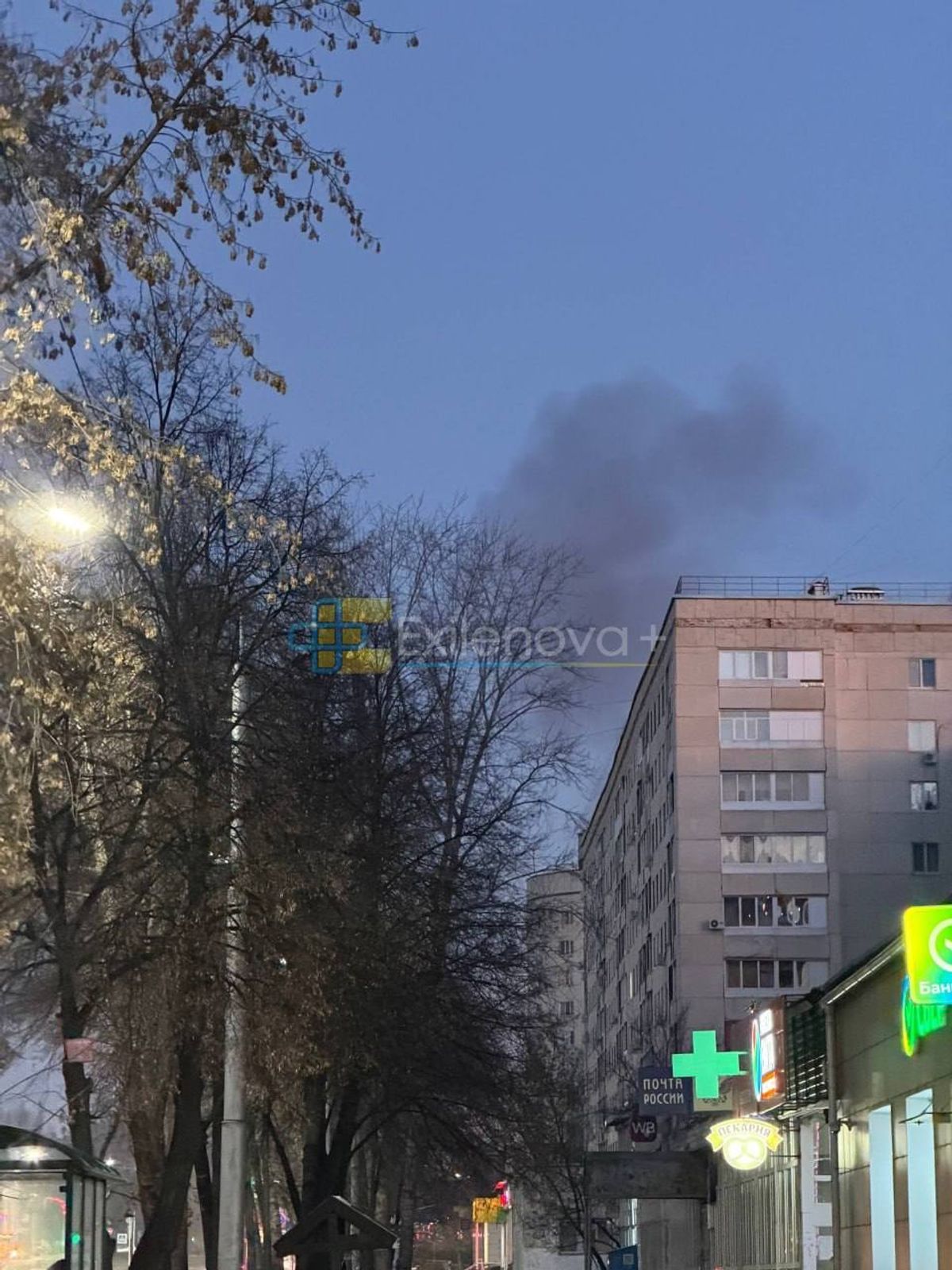
Earlier on Oct. 31, Bashkortostan authorities declared a drone threat across the republic and imposed temporary flight restrictions at Ufa Airport, according to Russian media.

 Login