❌

Reading view

UK police should not have let US force take over airbase trial, MoD documents show

According to documents obtained by the Guardian, officials accused Cambridgeshire force of breaching US-UK deal by handing over case of woman strangled by US pilot

Ministry of Defence officials have privately accused a UK police force of wrongly handing over the investigation of an American fighter pilot who strangled a British woman to the US military, according to documents obtained by the Guardian.

Cambridgeshire police allowed the US military police to quickly take control of the investigation into Capt Jacob Wulfson after he had been accused of sexually assaulting Sarah Steele in his Cambridge flat.

Continue reading...

© Photograph: Kathy images/Shutterstock

© Photograph: Kathy images/Shutterstock

© Photograph: Kathy images/Shutterstock

  •  

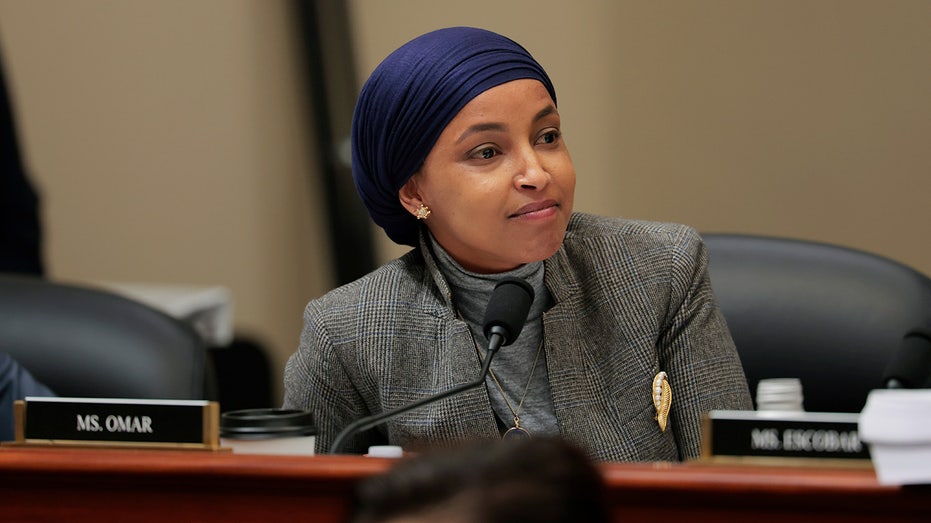
Trump push to oust Omar faces historic Supreme Court test, but legal experts see ‘uncharted’ twist

President Donald Trump' s push to oust Rep. Ilhan Omar amid allegations of immigration fraud could trigger a constitutional fight, with legal experts telling Fox News Digital that a landmark Supreme Court case involving another entrenched Democrat may not stand in Republicans’ way.

Federal investigators are examining whether the Minneapolis Democrat improperly obtained U.S. citizenship through allegedly fraudulent immigration paperwork involving her late father. Omar has denied wrongdoing, and no finding that she lacks U.S. citizenship has been established.

Experts said Omar may not have the protections established in the landmark case involving House chairman Adam Clayton Powell Jr., D-N.Y., in which the Supreme Court blocked an effort to exclude him from Congress.

Powell faced allegations of misusing congressional funds and improperly paying his wife from the congressional payroll. Despite his reelection, the House voted to exclude him in 1967, but the Supreme Court later ruled that Congress could not refuse to seat a duly elected member who satisfied the Constitution's qualifications.

ILHAN OMAR SHOULD BE JAILED, DEPORTED IF CITIZENSHIP FRAUD PROVEN, TOP HOUSE REPUBLICAN SAYS

The first potential route for Republicans would be to challenge whether Omar meets the Constitution's citizenship requirement. Former Deputy Assistant Attorney General John Yoo and constitutional scholar Cully Stimson told Fox News Digital that the Powell ruling does not prevent Congress from enforcing constitutional qualifications.

"Powell essentially means that Congress cannot add on to the minimum qualifications set out in the Constitution," Yoo said. "[S]ince citizenship is set out in the text of the Constitution as a qualification, it clearly can be enforced by Congress. Powell in-fact would support a congressional decision to oust Congresswoman Omar if she was in fact not a citizen."

Stimson argued that citizenship itself is not a legal gray area.

"The Powell v. McCormack decision did not involve expulsion. It actually was to judge qualifications. That's a subtle but important difference," he said.

Stimson envisioned a January showdown if federal authorities presented evidence challenging Omar's citizenship before the new Congress convenes and House Republicans attempted to prevent her from being seated. Such a move would likely face a legal challenge from Omar, he said, raising questions about whether Congress could act before her citizenship status was resolved.

The Constitution requires House members to be at least 25 years old, have been U.S. citizens for seven years and inhabit the states they represent when elected. Stimson argued that even if alleged immigration irregularities originated with Omar's father, Nur Omar Mohamed, the central question would be whether she legally acquired citizenship, regardless of whether she knowingly participated in wrongdoing.

"It's like you're either pregnant or you're not," he said. "You’re either wet or dry — You're a citizen or you are not a citizen."

In multiple public comments, Trump has urged Omar’s resignation or expulsion, specifically citing reports that she used a pseudonym when she was sworn into office and that she "married her brother."

"Let’s get her the Hell out of there," he said Monday in Alcorn County, Mississippi.

Fox News Digital reached out to Omar for comment.

COULD TRUMP REVOKE ILHAN OMAR'S CITIZENSHIP FOR ALLEGED BROTHER MARRIAGE? EX FEDERAL PROSECUTOR BREAKS IT DOWN

A second route would involve seating Omar and then pursuing expulsion for misconduct, a separate constitutional power requiring a two-thirds House vote. Unlike exclusion for failing to meet constitutional qualifications, expulsion is a disciplinary action that was not at issue in the Supreme Court's Powell ruling.

At least one House Republican has already threatened to pursue that option.

Rep. Randy Fine, R-Fla., said Friday that if Omar is found to not be a citizen, "I absolutely will demand expulsion immediately."

Omar faces a separate investigation into her financial disclosures, which U.S. Attorney Jeanine Pirro previously confirmed to Fox News. The inquiry follows scrutiny of businesses tied to her current husband, Timothy Mynett, whose reported valuations reached as high as $30 million before Omar amended the filings, citing accounting errors. No financial wrongdoing has yet been established.

Stimson pointed to the 2023 expulsion of former Rep. George Santos, R-N.Y., as an example of the House exercising its disciplinary authority over misconduct that began before a member took office.

Former House counsel Michael Stern wrote in an examination of the Constitution’s expulsion clause that while Santos’ alleged misconduct largely preceded his term, House investigators found that his misrepresentations continued while he was in office.

"Thus, acts committed before a member’s first election may constitute disorderly behavior subject to congressional discipline, at least if the misconduct relates to the election and particularly if it involves deceiving the electorate," Stern wrote.

Stimson said Omar’s case is largely "uncharted waters," but the Santos case could still be instructive.

"I think the argument would be, well, her misrepresentations continued during the time in Congress, they would pull a Santos and use the same logic that they used," he said.

Any federal determination challenging Omar's citizenship could trigger a legal battle over whether she meets the constitutional requirements for office and what recourse she would have to contest such a finding, Stimson said.

"The hard part for her is ‘how do you prove a negative’," Stimson said, adding that placing blame on her father wouldn’t stand up in court because people cannot legally benefit from others’ criminal acts.

SIGN UP TO GET THE POLITICS NEWSLETTER

"It’s a harsh world, but it’s a binary situation."

CLICK HERE TO DOWNLOAD THE FOX NEWS APP

A challenge to Omar's citizenship could also produce a separate fight over the evidence and legal procedures required to establish whether she meets the Constitution's qualifications.

Fox News Digital’s Pedro Rodriguez-Aparicio contributed to this report.

  •  

Poland’s Constitutional Crisis Deepens as President Returns to Warsaw Amid Court Confrontation

A confrontation over the leadership of Poland’s Constitutional Tribunal has brought President Karol Nawrocki and Prime Minister Donald Tusk into direct conflict, exposing unresolved questions about judicial independence and the limits of presidential authority.

Poland’s constitutional dispute escalated on Friday, 30 October, after the reported suspension of the country’s Constitutional Tribunal president prompted demonstrations in Warsaw and forced President Karol Nawrocki to abandon an official journey to Senegal.

The confrontation concerns the leadership and legitimacy of an institution that has been at the centre of Poland’s political disputes for more than a decade.

Bogdan Święczkowski, the tribunal’s president and a former senior official in the previous Law and Justice (PiS) administration, was suspended from his duties, along with deputy president Bartłomiej Sochański.

The decision was announced by Anna Korwin-Piotrowska, a judge elected under the current parliamentary majority, who said she had assumed responsibility for the tribunal’s leadership.

However, the suspension was immediately challenged by Święczkowski’s supporters, who disputed both the legality of the decision and Korwin-Piotrowska’s authority.

The conflicting claims over control of the Constitutional Tribunal have created an unusual institutional situation in which rival groups dispute who is legally entitled to exercise authority over the court.

President intervenes as protests erupt

President Nawrocki, who was elected with the backing of PiS, ordered his aircraft to return to Poland while travelling to Senegal.

Explaining his decision on social media, he said: “At a moment like this, the President must be in Poland.”

Hundreds of demonstrators gathered outside the tribunal in Warsaw, where police were deployed following reports of disorder.

According to accounts of the police operation outside the court, three people were detained after protesters breached a perimeter fence and objects were thrown at officers.

Nawrocki subsequently arrived at the court, where tensions continued into the early hours of Saturday.

Opposition politicians accused Prime Minister Donald Tusk’s government of attempting to seize control of the judiciary through unconstitutional means.

The tribunal’s disputed leadership also denounced the suspension as an attempted coup, maintaining that Święczkowski and Sochański remained legally entitled to hold their positions.

These are allegations made by the president’s political allies and the contested tribunal leadership, rather than established legal findings.

Tusk argues reforms are necessary

Tusk has defended his government’s actions as part of a wider effort to restore judicial independence following eight years of PiS government between 2015 and 2023.

“Restoring the rule of law is our duty,” Tusk wrote on social media, acknowledging that the process was difficult and required decisive measures.

His government argues that the tribunal’s existing leadership has obstructed judges elected by the current parliamentary majority from assuming their responsibilities.

Justice Minister Waldemar Żurek has also sought the removal of legal immunity from Święczkowski and Sochański over allegations that they prevented judges from performing their duties.

However, the legality of the latest suspension is disputed even among legal experts critical of the previous PiS government’s judicial reforms.

Constitutional law professor Marcin Matczak questioned whether the relevant legislation provided a valid legal basis for removing Święczkowski from his duties.

The disagreement illustrates a central difficulty facing Tusk’s administration: reversing contested institutional arrangements without creating new questions about the legality of its own methods.

A decade-long dispute over the judiciary

The origins of the confrontation date to 2015, when disagreements over judicial appointments developed into a wider struggle over the Constitutional Tribunal.

During its years in government, PiS introduced reforms that attracted criticism from European institutions and international legal bodies.

Critics argued that the changes undermined judicial independence and allowed political influence over appointments and disciplinary procedures.

Following Tusk’s return to office in 2023, his governing coalition promised to reverse the disputed reforms.

Progress has nevertheless been complicated by presidents associated with the opposition, who have used their constitutional powers to block or delay legislation and judicial appointments.

As EU Today previously examined in its analysis of Poland’s constitutional confrontation, Nawrocki has also proposed preparing a new constitution by 2030, potentially reshaping the relationship between the presidency, parliament and government.

The current confrontation represents an escalation of that wider institutional dispute.

Why Brussels is watching

Poland’s judicial arrangements have significant implications beyond its national political system.

The European Union depends on independent national courts to apply EU legislation consistently and protect rights established under European law.

In its 2026 assessment of the Polish justice system, the European Commission recognised further steps towards reform but maintained concerns about the Constitutional Tribunal and other aspects of judicial independence.

The Council of Europe’s Venice Commission has also addressed the powers of the Polish president regarding judicial appointments.

In an opinion adopted in October, the Commission concluded that the president should receive the oaths of judges elected by parliament without delay and could not use the process to review parliamentary appointments.

The opinion also addressed procedures that could be followed when the president refuses to participate in the oath-taking process.

Although the Venice Commission’s opinions are advisory rather than binding judgments, they provide an important international legal reference point.

The latest dispute raises two related questions: whether Poland can restore a constitutionally legitimate judicial system and whether the methods used to achieve that objective satisfy the relevant legal requirements.

Political consequences

The confrontation comes ahead of Poland’s parliamentary election expected in 2027.

For Tusk’s coalition, resolving the constitutional dispute is central to a programme presented to voters as a restoration of democratic institutions.

For PiS and President Nawrocki, the latest developments provide an opportunity to challenge the government’s methods and mobilise opposition supporters.

Poland’s divisions have also extended into criminal proceedings against former senior officials, including the dispute over efforts to extradite former justice minister Zbigniew Ziobro.

Although those proceedings are legally distinct from the Constitutional Tribunal dispute, both form part of the wider confrontation over the legacy of the previous government.

The immediate question is who will exercise effective authority over the tribunal and whether the rival parties can establish an accepted legal framework for resolving the dispute.

With competing claims to constitutional legitimacy and another national election approaching, Poland faces the prospect of a prolonged institutional conflict whose outcome will affect both domestic politics and the application of European legal standards.

  •  

Somali 'Translators' Seen on Video Apparently Violating Voting Laws in Polling Center

Video in Lewiston, Maine, seems to shows Somali "translators" repeatedly breaking state election laws by coaching "new comer" voters.

The post Somali ‘Translators’ Seen on Video Apparently Violating Voting Laws in Polling Center appeared first on Breitbart.

  •  
❌