❌

Normal view

Japan’s Militarization: Washington Fueling Chinese-Japanese Crisis
30 October 2026 at 09:28

Click to see the full-size image

Written by Uriel Araujo, Anthropology PhD, is a social scientist specializing in ethnic and religious conflicts, with extensive research on geopolitical dynamics and cultural interactions

Security tensions between Japan and China are escalating while the former strengthens its long-range strike capabilities with American support.

Washington and Tokyo’s latest moves to reinforce their military presence along the so-called first island chain also mark another step in the broader US-China strategic rivalry across the Indo-Pacific region.

Originally conceived as a Cold War US defensive perimeter (stretching from Japan through Taiwan to the Philippines), the first island chain is increasingly becoming the centerpiece of an elaborate American-led military architecture designed to constrain Beijing’s growing maritime power.

The recent agreement between Japanese Defense Minister Shinjiro Koizumi and US Defense Secretary Pete Hegseth to implement an “effective denial defense” along that chain illustrates the shift. They also pledged continued cooperation on ammunition production for a potentially prolonged conflict.

During the Keen Sword 2027 exercises now underway, US and Japanese forces plan to deploy mobile missile systems, including American system NMESIS, on Yonaguni Island near Taiwan. Tokyo has already deployed domestically developed long-range (anti-ship) missiles capable of reaching China’s coastal areas.

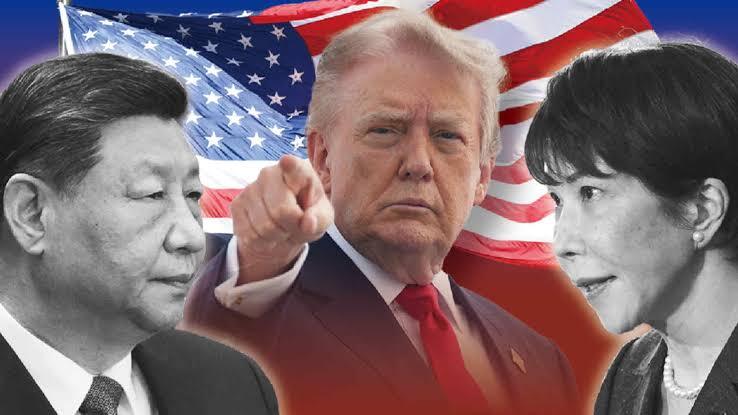
The wider context is hard to miss. In November 2025 Prime Minister Sanae Takaichi  made a statement linking a Taiwan contingency to Japan’s own survival, which triggered sharp Chinese protests and a cascade of diplomatic, economic, and maritime frictions.

Beijing then restricted dual-use exports to Japan, while coast guard vessels and radar incidents added to the pressure.

As commentator Oliver Griffin puts it, Beijing views Japan’s buildup as a drift toward neo-militarism.

From Tokyo’s perspective, China’s expanding naval reach makes these steps necessary. This is therefore a classic security dilemma. Measures one side takes to feel “safer” make the other feel less secure, prompting further responses.

The first island chain is both a barrier and a gateway. As expert Simone Chiusa  notes, Chinese vessels seeking access to the open Western Pacific must navigate strategic chokepoints through its straits.

The strategic importance of these chokepoints illustrates Alfred Thayer Mahan’s classic sea-power theory: control over key maritime routes and positions remains central to great-power rivalry.

American and Japanese planners see distributed missiles and interdiction systems as deterrence by denial. Beijing sees preparations to restrict its access.

The paradox is clear enough: the more Washington and Tokyo seek to reinforce deterrence, the more Beijing may perceive “encirclement” and accelerate its own capabilities.

Japan’s southwestern islands are thereby becoming an operational frontier of sorts rather than a mere defensive perimeter. An alliance designed primarily to protect Japanese territory then gradually becomes an instrument for projecting power into a Taiwan-related contingency.

As I wrote in May 2026, regarding US missile deployments in the Philippines, Washington’s actions near Taiwan fuel Chinese fears of a containment architecture involving Japan, the Philippines, and Australia. The pattern continues.

China’s maritime-industrial growth has become central to allied planning. As I’ve noted elsewhere, Chinese shipbuilding capacity (measured by gross tonnage) exceeds that of the United States – by a factor of over 200, according to a 2023 US naval intelligence estimate.

Joint Sino-Russian submarine patrols further signal a new maritime era of coordination that certainly complicates American assumptions of uncontested sea control.

Yet the contest is no longer confined to the first island chain. A Japanese Self-Defense Force colonel has proposed a second-island-chain air bridge linking Japan and Australia (with US participation) for logistics and reinforcement – the reasoning being that China’s lengthening maritime strike reach now threatens operations farther into the Pacific.

Some American analysts warn that “pulling back to the second chain” would be strategic folly, while advocates of strategic restraint see a forward approach as intensifying insecurity.

For Japan, the predicament is particularly delicate. Tokyo is becoming more indispensable to Washington’s regional planning at the very moment when Japanese strategists worry about possible US-China accommodation under President Trump’s “transactional” approach.

The alliance security dilemma is real enough: fear of “abandonment” coexists with fear of entrapment in a Taiwan conflict. Japanese policymakers are of course not passive instruments. They act on their own threat perceptions while navigating uncertainty about long-term American commitments.

Gray-zone pressures add another layer. Coast guard patrols and incremental assertions of jurisdiction challenge the utility of high-end missile deployments – designed mainly for conventional scenarios.

Ultimately, efforts to preserve the existing “balance” in the Indo-Pacific may contribute to the very competition that makes that balance harder to sustain.

The American response to China’s rise has largely been to reinforce military alliances and expand forward deployments, risking an increasingly self-perpetuating cycle of militarization rather than fostering regional stability.

Washington is transforming Japan into a more central component of its forward maritime architecture – even as Beijing’s growing capabilities render that very architecture more contested. The risk here is that the cycle of reinforcement and reaction leaves all parties less secure than before.


MORE ON THE TOPIC:

The post Japan’s Militarization: Washington Fueling Chinese-Japanese Crisis appeared first on South Front.
Iran Turns to Hull-Mounted Explosives in New Tactic Against Tankers in Hormuz

30 October 2026 at 09:27

File image.

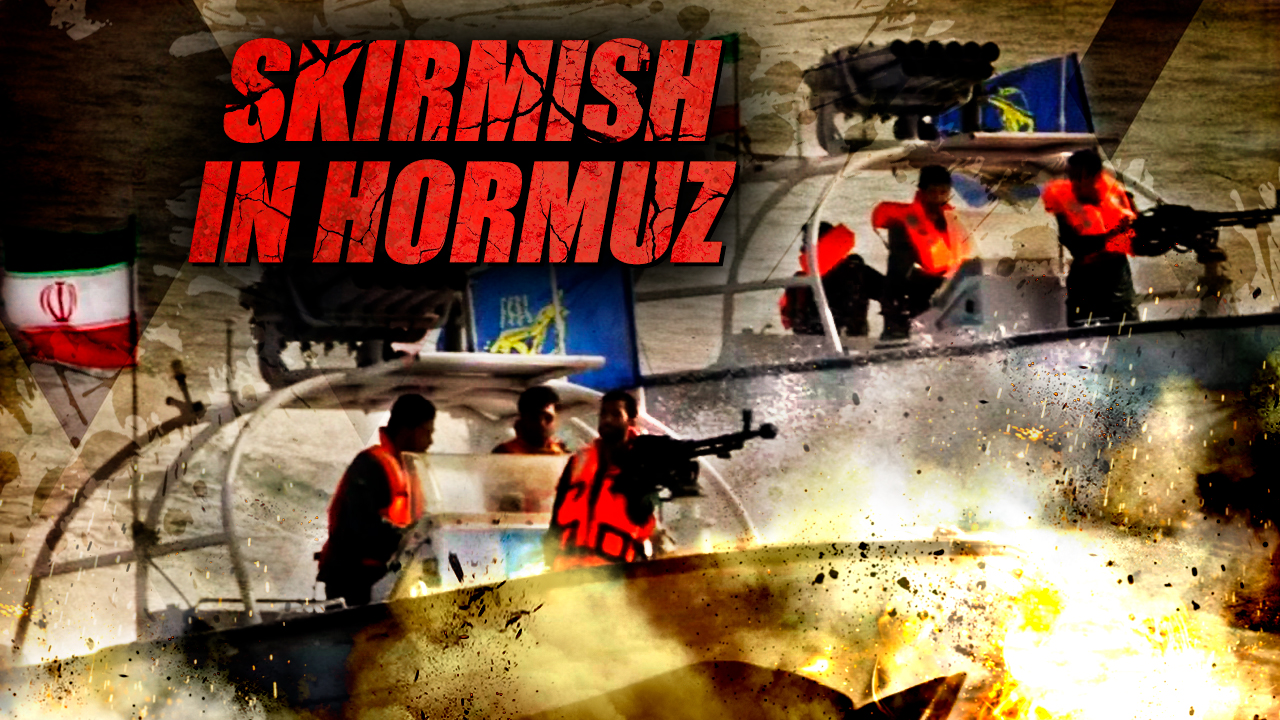
A tanker caught fire in the Strait of Hormuz after a small boat approached the vessel and attached two explosive devices directly to its hull, temporarily disabling it in an attack that marked a departure from previous strikes on commercial shipping in the waterway.

The attack occurred on October 29, approximately 25 nautical miles northeast of the port city of Khasab in Oman, according to the United Kingdom Maritime Trade Operations (UKMTO) agency.

UKMTO said the tanker was approached on its port side by a small boat that attached two explosive devices above the waterline before departing.

Maritime security firm Vanguard Tech identified the vessel as the Panama-flagged Louise 1, a 159,092-deadweight-ton tanker owned by Panama-based Aquarius Maritime Ventures.

“The subsequent blasts resulted in a fire in the engine room which temporarily disabled the vessel. The fire is now reported as extinguished and vessel is continuing to its next port of call,” UKMTO said, noting that all crew members were safe.

The method differs from previous Iranian attacks in the Strait of Hormuz, which have mainly involved anti-ship missiles and one-way attack drones.

The incident was the latest in a series of maritime security emergencies reported on October 29. Earlier in the day, UKMTO received a report from a company’s security officer that another tanker had been struck by an unidentified projectile while completing an outbound transit of the strait.

An even earlier vessel-fire report by the agency was subsequently attributed to a regional trading dhow that caught fire, listed and sank.

“Regional authorities have identified the vessel as a dhow, which was involved in a maritime security incident, igniting a large fire onboard causing the dhow to list and sink. Local authorities have confirmed that the crew have been safely evacuated,” UKMTO said.

Meanwhile, Iran’s Islamic Revolutionary Guard Corps (IRGC) Navy said three oil tankers had exploded and caught fire after striking naval mines while attempting to pass through what Tehran described as the unauthorized southern route of the strait.

The Corps said in a statement the vessels had “switched off all their radar and navigation systems” and ignored warnings from Iranian forces before hitting the mines.

Iran’s regular army subsequently announced that a fourth tanker had struck mines east of the strait while operating in what it described as a “restricted and dangerous area.”

The developments come as the United States maintains that its forces have cleared the internationally recognized primary shipping routes of naval mines.

IRGC spokesman Hossein Mohebi challenged that assertion earlier in the week, writing on X: “Prove your Hormuz mine-clearing claim with independent evidence, not statements!”

The International Maritime Organization recorded 34 confirmed attacks on vessels between September 28 and October 27, most of them in the Strait of Hormuz.

Commercial shipping through the Strait of Hormuz remained severely restricted on October 30, with AIS-based tracking recording just five commercial vessel crossings by the morning, compared with a pre-crisis average of approximately 85 per day.

Eight vessels had crossed in the preceding 24 hours, while 497 ships were waiting outside the strait and another 163 were stationary inside the Gulf.

_______________________________________________________________________________________________________________________

SouthFront: Analysis and Intelligence

NOW hosted at southfront.press

Previously, SouthFront: Analysis and Intelligence was at southfront.org.

The .org domain name had been blocked by the US (NATO) (https://southfront.press/southfront-org-blocked-by-u-s-controlled-global-internet-supervisor/) globally, outlawed and without any explanation

Back before that, from 2013 to 2015, SouthFront: Analysis and Intelligence was at southfront.com

SOUTHFRONT.PRESS

MORE ON THIS TOPIC:

The post Iran Turns to Hull-Mounted Explosives in New Tactic Against Tankers in Hormuz appeared first on South Front.

‘Rats run away’: Facing criminal probe, Flávio Bolsonaro flees Brazil to U.S. after loss to Lula

By: A A
30 October 2026 at 08:39

By Brett WILKINS

“This reveals the DNA of Bolsonarism,” said one critic. “Bolsonarism is made of cowardice.”

Join us on Telegram, X, and VK.

Contact us: info@strategic-culture.su

Just one day after vowing he would remain in Brazil to disprove allegations of money laundering, corruption, and other crimes, far-right Brazilian Sen. Flávio Bolsonaro followed in his disgraced father’s footsteps by fleeing to the United States after losing a presidential election.

Bolsonaro, his wife Fernanda Bolsonaro, and their two daughters, ages 14 and 12, left Brazil for an unknown location in the United States, according to initial reporting by Isadora Teixeira at the Brasília-based news site Metrópoles, which was subsequently confirmed by other Brazilian and international media.

The Argentinian site Infobae reported that Bolsonaro and his family may have crossed into Argentina—which is run by his ally, far-right President Javier Milei—and then traveled to the US in a private jet. It is not known where the family went in the US.

Bolsonaro’s brother, Eduardo Bolsonaro, lives in Texas while facing criminal punishment in Brazil after trying to use the Trump administration to pressure Brazilian authorities over the prosecution of his father, former President Jair Bolsonaro, who last year was convicted of conspiring to violently remain in power following leftist President Luiz Inácio Lula da Silva’s 2022 election win.

Flávio Bolsonaro, a 45-year-old senator representing Rio de Janeiro, was defeated by Lula in Sunday’s second-round election, but refused to accept the results and groundlessly demanded an annulment. The following day, Supreme Court Justice Alexandre de Moraes ordered the seizure of Bolsonaro’s passport. He was supposed to have turned in the document Tuesday, but he didn’t.

US President Donald Trump also cast doubt on the election’s outcome, saying the contest appeared to be “rigged.”

Jair Bolsonaro also fled to the United States while refusing to acknowledge his own 2022 defeat, which occurred during the administration of former President Joe Biden.

Like Trump, Bolsonaro incited a violent insurrection in his nation’s capital following his loss.

Unlike Trump, Bolsonaro was held accountable for his crimes, and, in addition to a 27-year prison sentence—now being served under house arrest—is banned from running for any political office for the rest of the decade.

Now, with Trump back in the White House and Secretary of State Marco Rubio in charge at Foggy Bottom, Bolsonaro and his relatives are set to be issued US visas, a senior State Department official told The Associated Press.

The younger Bolsonaro’s flight—which may have been aided by his obtaining an Italian passport in 2023—contradicts his pledge on Monday, when he said, “I have never thought about leaving the country” and “I will hand over my passports and defend myself against this travesty.”

He was referring to de Morães’ order to surrender his passport amid accusations of corruption, money laundering, tax evasion, and foreign currency violations.

Bolsonaro is also the subject of an inquiry pertaining to the millions of dollars he raised from a disgraced banker implicated in a massive corrupt plot to finance a biopic of Jair Bolsonaro.

The senator has not been charged and denies any wrongdoing.

Bolsonaro’s flight stands in stark contrast to Lula, who spent 580 days in prison after being convicted in corruption cases stemming from the sprawling Operation Car Wash investigation.

In 2021, Brazil’s Supreme Federal Court annulled Lula’s convictions on procedural grounds, ruling that the court in Curitiba lacked jurisdiction over the cases and separately finding that former judge Sergio Moro had acted with bias in one of them. The decisions restored Lula’s political rights and eligibility to run for office, paving the way for his 2022 presidential victory over Bolsonaro.

Lula responded to the senator’s departure by saying, “Unfortunately, the Bolsonaro family is like that.”

“Brazil is his second homeland,” the president continued, accusing Bolsonaro of “bootlicking in the United States.”

Secretary-General of the Brazilian Presidency Guilherme Castro Boulos ripped Bolsonaro, saying: “Leaders face things head-on! Rats run away!”

“It is a shameful thing, which should make Brazilian society as a whole reflect, especially those who supported and voted for Flávio Bolsonaro,” Boulos asserted. “He slapped his supporters in the face and left them on the side of the road.”

“Almost 60 million Brazilians trusted him as political leadership to run the country, and 24 hours later, he flees,” he continued. “And it’s no use coming up with this talk of persecution, of dictatorship. He ran away because he must.”

“This reveals the DNA of Bolsonarism,” Boulos added. “Bolsonarism is made of cowardice.”

Erika Hilton, a member of the Chamber of Deputies—the lower house of Brazil’s Legislature—representing São Paulo for the Socialism and Liberty Party, weighed in on social media, calling Bolsonaro “a traitor to the homeland.”

In the United States, Congressman Joaquin Castro (D-Texas) said on X that “losing an election is not grounds for asylum.”

“Yet the Trump administration is giving Flávio Bolsonaro safe haven in the United States,” he continued. “The Trump administration owes Congress answers on its role helping Bolsonaro flee Brazil in contravention of Brazilian law.”

Mark Weisbrot, co-director of the Center for Economic Policy and Research (CEPR), told Common Dreams:

Trump is now the most corrupt president in US history, raking in billions from his presidency. It’s no surprise when the most powerful corrupt authoritarian government in the hemisphere uses international law designed to protect the persecuted to shield another corrupt authoritarian government from criminal prosecution. Perhaps this is what is meant by the Trump-led ‘Shield of the Americas.’

Francesca Emanuele, senior international policy associate at CEPR, noted that “the United States has long served as a destination for numerous right-wing Latin American political figures who fled their home countries while facing corruption allegations, criminal investigations, or accusations of grave human rights violations, including crimes against humanity.”

“The list is extensive,” she added, “ranging from former presidents such as Panama’s Ricardo Martinelli and Bolivia’s Gonzalo Sánchez de Lozada to dictators such as Nicaragua’s Anastasio Somoza.”

Emanuele also contrasted the actions of the Bolsonaros and Lula, arguing that the latter’s decision to remain in Brazil “reflected a commitment to the Brazilian people and a determination to defend his rights through the country’s own institutions, even when those institutions failed to uphold them.”

“Rather than leaving Brazil,” she told Common Dreams, “Lula stayed, fought to clear his name, and continued his political struggle alongside the people he sought to represent.”

Original article:  www.commondreams.org

Newsom Deploys Election Lawyers to Protect California Vote

30 October 2026 at 08:36
Gavin Newsom announces California election protection measures amid dispute with Donald Trump over federal agents at polling places.

The move comes amid a federal dispute over election oversight and a court ruling blocking efforts to set aside more than 20,000 mail-in ballots.


California Gov. Gavin Newsom announced Thursday that he would deploy election lawyers and observers across the state to protect voters’ rights, escalating a confrontation with President Donald Trump’s administration over federal involvement in polling places ahead of the elections.

RELATED: More Than 26.6 Million Have Voted Early in U.S. Midterms

The legal teams will be sent to key districts with closely contested races, Newsom said, warning against unauthorized interference in the electoral process.

“A warning to Donald Trump: I’m deploying election lawyers to key battleground districts in California to protect every vote. And I just made it a FELONY to illegally seize ballots,” the Democratic governor wrote on social media platform X.

Newsom also approved legislation making the unlawful seizure of election ballots a felony, establishing criminal penalties for unauthorized interference with ballots.

A warning to Donald Trump:

I’m deploying election lawyers to key battleground districts in California to protect every vote.

And I just made it a FELONY to illegally seize ballots.

— Gavin Newsom (@GavinNewsom) October 29, 2026

The measures follow the Trump administration’s announcement that it would deploy federal agents to polling places to prevent potential electoral irregularities. Trump has repeatedly accused California of failing to address alleged voter fraud.

Speaking Wednesday night on Jimmy Kimmel Live, Newsom criticized the administration’s approach, accusing the White House of trying to suppress votes and create grounds to challenge the election results.

He argued that the administration was seeking to create conditions that could later be used to question the outcome and allege fraud.

The dispute has also reached the courts. On Wednesday, a federal judge rejected a Justice Department request to set aside more than 20,000 mail-in ballots cast in California while authorities verified voters’ citizenship.

The judge warned that withholding the ballots would cause widespread disruption and interfere with an electoral process already underway.

California officials had also questioned the reliability of the voter list submitted by the federal government and rejected its request to verify voters’ citizenship before ballots were counted.

The Justice Department confirmed it would appeal the ruling, setting the stage for further legal disputes between federal and state authorities before the election process concludes.

U.S. Strikes on Iranian Missile Sites Reported Amid Fighter Jet Confrontation (Photos)

30 October 2026 at 08:19

Click to see full-size image.

Axios correspondent Barak Ravid on October 30 deleted a post reporting that the United States carried out what he described as “self-defense strikes” against missile-launch sites in southern Iran, as Iranian media reported an encounter between the Islamic Revolutionary Guard Corps (IRGC) and a hostile fighter jet near the Strait of Hormuz.

Ravid also stated that the U.S. has been carrying out such attacks since last week. He did not, however, publicly explain why he deleted the post.

Separately, Iran’s Tasnim and Mehr news agencies reported that the IRGC Aerospace Force intercepted a hostile fighter jet near Qeshm Island and forced it to withdraw from the area.

Neither agency identified the aircraft’s nationality or model, and no details were provided about whether it sustained damage.

Click to see full-size image.

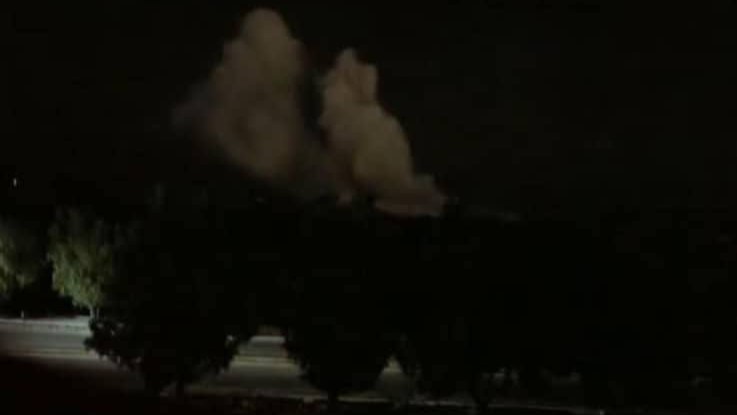
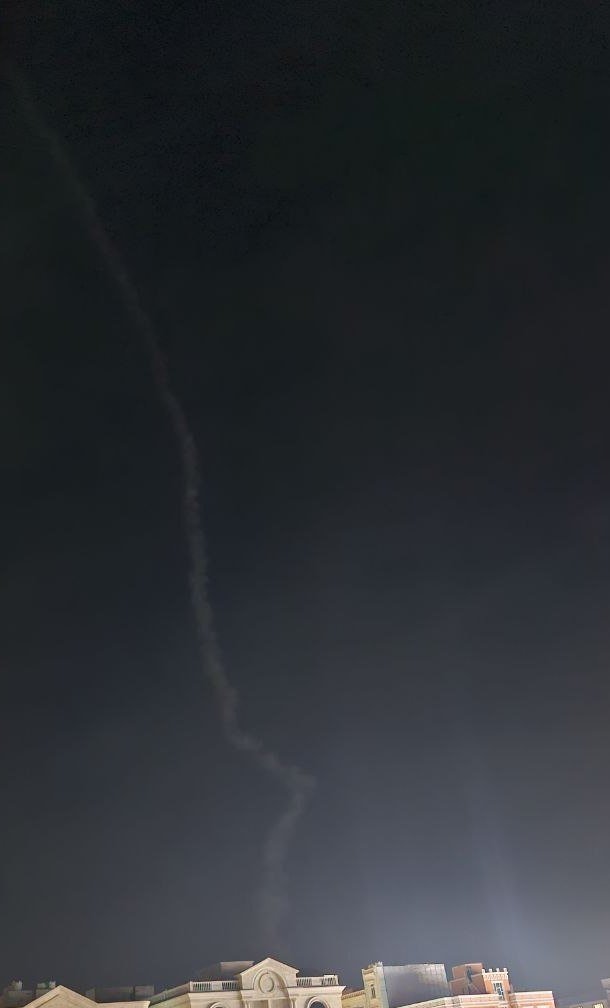
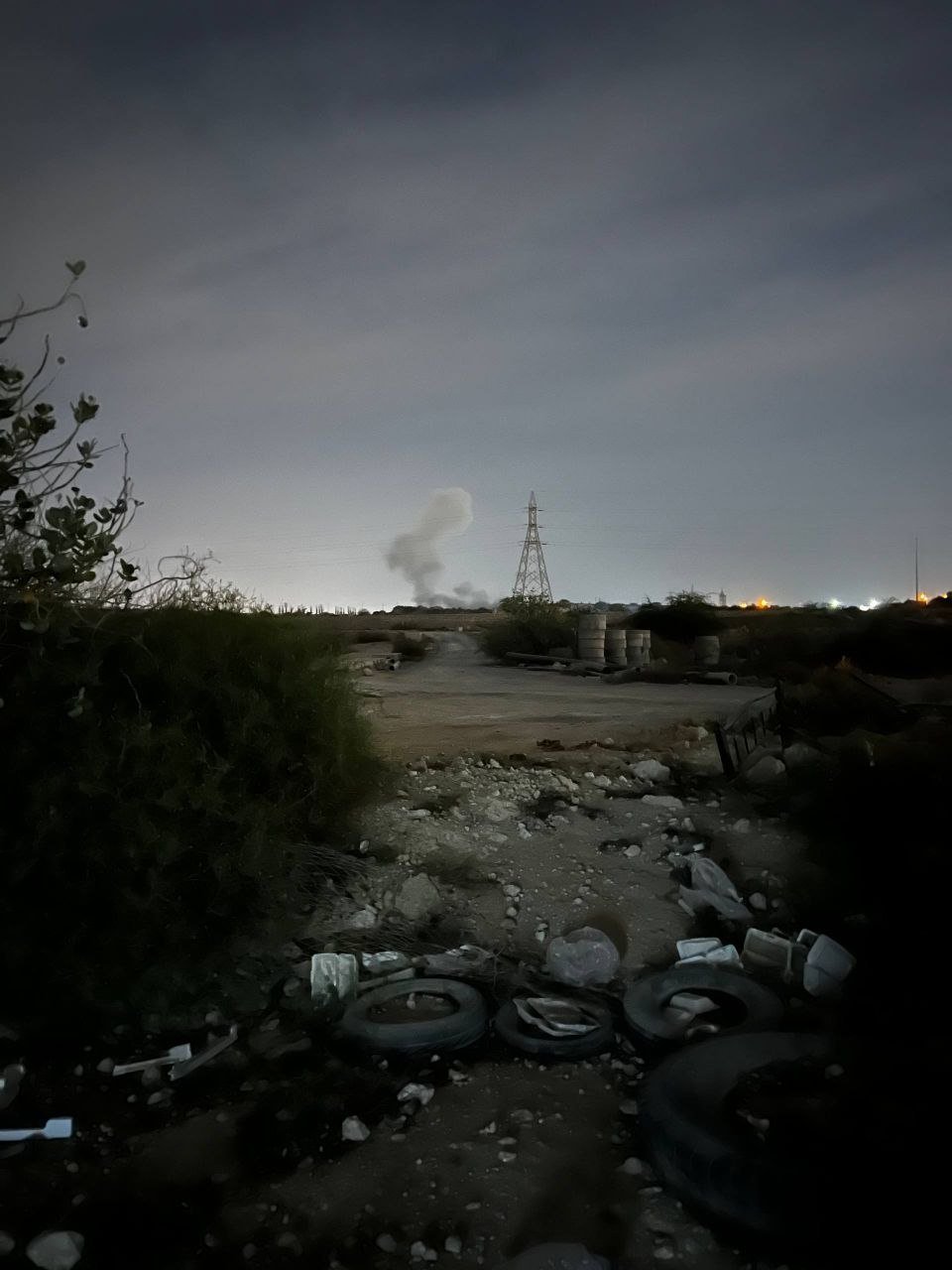
Iran’s Fars News Agency separately reported explosions near Qeshm and Sirik overnight, while the official IRNA news agency reported that residents of Qeshm had heard explosions and observed flashes in the sky and over surrounding waters.

Local sources cited by IRNA said air defense systems on the island had been activated. The agency also suggested that some of the sounds could have been warning shots fired at vessels in the Strait of Hormuz.

Click to see full-size image.

The developments come amid growing preparations for a possible resumption of the U.S.-Israeli war against Iran. Axios reported earlier in the week that Washington and Israel were coordinating plans for a week-long bombing campaign targeting Iranian leadership, energy facilities and nuclear infrastructure. The Associated Press separately reported that Washington had warned regional allies to prepare for renewed strikes and Iranian retaliation.

More recently, The Wall Street Journal reported that the commander of U.S. forces in the Middle East briefed President Donald Trump at the White House on military options for Iran.

Taken together with recent developments, the reports suggest that renewed attacks could begin in the days following the November 3 U.S. midterm elections.

_______________________________________________________________________________________________________________________

SouthFront: Analysis and Intelligence

NOW hosted at southfront.press

Previously, SouthFront: Analysis and Intelligence was at southfront.org.

The .org domain name had been blocked by the US (NATO) (https://southfront.press/southfront-org-blocked-by-u-s-controlled-global-internet-supervisor/) globally, outlawed and without any explanation

Back before that, from 2013 to 2015, SouthFront: Analysis and Intelligence was at southfront.com

SOUTHFRONT.PRESS

MORE ON THIS TOPIC:

The post U.S. Strikes on Iranian Missile Sites Reported Amid Fighter Jet Confrontation (Photos) appeared first on South Front.

Brickbat: Home Sweet Chicago

30 October 2026 at 08:00
Former Chicago Police Detective Reynaldo Guevara | Terrence Antonio James/TNS/Newscom

Chicago taxpayers will pay at least $472.8 million to defend and settle lawsuits connected to former Chicago Police detective Reynaldo Guevara, who has been accused of falsifying police reports, framing suspects, and forcing witnesses to identify innocent people as criminals. The Chicago City Council unanimously approved a $260.8 million settlement for 17 men who spent a combined 383 years in prison after being wrongfully convicted in cases tied to Guevara's investigations. The settlement brings the total to 32 resolved cases, while another 25 lawsuits remain pending. The city has also paid $56.2 million to private attorneys to defend Guevara and other officers named in the cases. Many of the men who were wrongly convicted spent decades in prison, and judges have granted certificates of innocence to several people involved. Guevara retired in 2005 and still receives an annual police pension of $91,000. Despite repeated allegations of misconduct, he has not been criminally charged for his actions as an officer. The growing cost of these cases comes as Chicago faces a projected $882.5 million budget gap for 2027.

The post Brickbat: Home Sweet Chicago appeared first on Reason Magazine.

Accountant’s employee loses €6,000 in online scam

30 October 2026 at 07:57

An employee for an accountant’s office in Paphos lost €6,000 when she received an email, appearing to be from a bank, asking her to update her personal details.

The police said on Friday that the woman followed the instructions and soon afterwards found the sum had been taken from her bank account.

She immediately filed a complaint with the police.

Following the incident, the police have repeated warnings against following links and uploading personal details.

Le retate ICE scuotono gli Hamptons: il paradiso dei ricchi senza lavoratori

30 October 2026 at 07:53
Ristoranti che riducono gli orari, imprese di pulizie e cantieri senza personale per la stretta migratoria nella esclusiva località di Long Island

Cyclist hospitalised in Polis car crash, second cyclist fled

30 October 2026 at 07:20

A 50-year-old woman was injured in a collision involving two cyclists and a car in Polis Chrysochous on Thursday afternoon, and police are searching for the second cyclist who left the scene.

The collision happened at around 3.30pm on the Polis Chrysochous to Androlikou road, police said.

An 80-year-old man was driving the car when it collided with a bicycle travelling ahead of it.

The bicycle was then pushed into a second cyclist riding alongside, causing both women to fall onto the road.

One cyclist left the scene and is being sought by police.

The other, aged 50, was taken first to Polis Chrysochous hospital and later transferred to Paphos general hospital for further treatment.

Doctors found she had suffered an orbital fracture and leg injuries. She remains in hospital for further treatment.

Police said the injured woman was residing illegally in Cyprus.

The 80-year-old driver was taken to a police station and questioned.

Investigations into the circumstances of the collision are continuing.

Mahmood infuriates fellow ministers by failing to reveal impact of UK migration shake-up

Home secretary’s colleagues fear homelessness will rise as a result of changes to the asylum system

Shabana Mahmood has infuriated ministerial colleagues by failing to share what they see as crucial information about the impact of her migration changes.

Sources say the home secretary has repeatedly refused to reveal how much she expects homelessness to rise as a result of changes to the asylum system.

Continue reading...

© Photograph: Wiktor Szymanowicz/Shutterstock

© Photograph: Wiktor Szymanowicz/Shutterstock

© Photograph: Wiktor Szymanowicz/Shutterstock

22-year-old arrested after 6.4kg of cannabis seized

30 October 2026 at 06:29

A 22-year-old man was arrested in Engomi on Thursday after police seized around 6.4kg of cannabis linked to alleged drug importation and possession with intent to supply.

The investigation, initiated with the customs department, followed the arrival of a 2.56kg cannabis package in Cyprus on October 26.

On the same day, a 62-year-old taxi driver was detained after he collected a package he believed was for a customer, unaware of its contents.

Investigations led to the 22-year-old suspect, whose vehicle search revealed cannabis packages weighing about 100g, along with an additional 3.836kg found in a separate search.

Police also confiscated €4,330 and five mobile phones. The taxi driver was released due to lack of evidence.

The 22-year-old is scheduled to appear before the Nicosia district court on Friday as police seek a detention order.

Police investigations are ongoing.

Four arrested during nationwide police operations

30 October 2026 at 06:11

Four people were arrested during nationwide police operations on Thursday night for offences including motorcycle theft, assaulting and insulting a police officer, and handling stolen goods, authorities said on Friday.

Police stopped and checked 467 drivers and 99 passengers, while 26 inspections of premises resulted in two complaints.

Traffic checks led to 285 reports for various offences, including 85 for speeding.

Four traffic violation cases are also under investigation, and three vehicles were impounded.

Officers also carried out 112 alcohol tests, resulting in nine complaints.

Operations to prevent and combat crime would continue daily, police said, with increased patrols and targeted checks to protect the public and maintain order.

DECRYPTAGE. Martyre de l'A10 : comment la "culture cold case" a permis de remonter jusqu'aux parents d'Inass Touloub, une fillette de 4 ans retrouvée morte il y a presque 40 ans

30 October 2026 at 05:37
Le lundi 2 novembre prochain s'ouvre le procès de Halima E., 71 ans aujourd'hui, et Ahmed T., 73 ans, à Blois. Leur fille de quatre ans avait été retrouvée morte au bord de l'autoroute A10 en 1987 dans le Loir-et...

"Il a plongé deux familles dans la douleur d'une peine à perpétuité" Responsable d'un double accident mortel près de Toulouse, il est condamné à 7 ans de prison

30 October 2026 at 05:30
Jugé pour homicide routier après la mort de deux de ses amis dans un accident de voiture en novembre 2025 à Mauzac, au sud de Toulouse, Théo C. a été condamné par le tribunal correctionnel de Toulouse à sept ans de...

British Council’s £197m debt should mostly be written off, MPs say

30 October 2026 at 05:00

Commons report calls on Foreign Office to bail out soft-power flagship reeling from job cuts and asset sales

Ministers should explore writing off a crippling £197m loan to the British Council by converting as much of it as possible into “a grant or similar”, MPs have said.

The Commons public accounts committee said the government lacked a “positive vision” for the council, whose soft power value to the UK is put at £1bn a year. The MPs called on the Foreign, Commonwealth and Development Office (FCDO) to set out what more it could do to support the council and its work.

Continue reading...

© Photograph: UCG/Universal Images Group/Getty Images

© Photograph: UCG/Universal Images Group/Getty Images

© Photograph: UCG/Universal Images Group/Getty Images

5 expert takeaways on 2026 midterm election security

With Election Day around the corner, states have been working hard to prepare, with some adopting new congressional maps and voting rules on top of normal election security measures. PBS News' Liz Landers and Votebeat editorial director Jessica Huseman hosted a Reddit "Ask Me Anything" Q&A on Wednesday to address people's questions.

Ukrainian Counterattack Continues in Slavyansk Direction

29 October 2026 at 21:04

File image.

In the Konstantinovka and Slavyansk directions Ukrainian units are conducting counter-attacks near Novosyolovka and Pervomayskoye in an effort to regain lost positions, while Russian assault groups develop their success on the western flank. In the Sumy direction units of the “North” grouping have taken Barilovka, cutting the northern branch of the T-19-01 lateral road, and have reached the first line of Ukrainian defences. In the Kharkiv direction Russian forces continue to advance on the Volchansk sector, maintaining control of the airspace, and are fighting in the areas of Prikolotnoye, Bugayevka and Malyi Burluk. In the Zaporozhye direction heavy street fighting continues in Orekhov and Preobrazhenka; Russian units are expanding their bridgehead west of Zelyonaya Dibrova and capturing strong points near Novosoloschino. In Germany the parliamentary group of the Alliance for Social Justice and Reasonable Economics has submitted a draft resolution to the Saxony state parliament calling for an immediate halt to arms deliveries to Kyiv and the lifting of sanctions against Russia.

Sumy direction

Units of the “North” grouping have taken Barilovka. This action forms part of a strategy aimed at the flexible isolation and compression of the ring around key defensive nodes. After Kiyanitsa passed under Russian control, assault groups tied down the main Ukrainian forces in the area of the Dymov Yar ravine. Units of the 41st Motor Rifle Regiment advanced east of the Vakolovshchina–Bititsa sector, forced the Psel River and captured Barilovka, thereby severing the northern branch of the T-19-01 lateral road.

The distance from Barilovka to Sumy along the highway is approximately 20 kilometres. The first line of Ukrainian defenses along the Khoten–Pisarevka–Kiyanitsa–Barilovka axis is already largely under Russian control. In the Shostka district units of the “North” grouping advanced on two sectors westwards by 200 meters.

Kharkiv direction

On the Volchansk sector Russian units continue to advance. Airspace is under control. Ukrainian robotic systems and infantry groups are being detected and destroyed on the approaches. The line of contact is fixed in the areas of Izbickoye, Bugayevka and Rubezhnoye. Active fighting continues near Velykyi Burluk and Khatne.

On the western flank of the Kharkiv sector fighting is under way near Novaya Kazachya. Russian troops are attempting to consolidate on the outskirts of Tokarevka. On the eastern flank combat continues around Prikolotnoye.

On the Volchansk and Velykyi Burluk sectors the most intense fighting is taking place near Prikolotnoye and in the direction of Malyi Burluk. Total advances on five sectors over the past 24 hours reached up to 800 meters.

Slavyansk direction

Following pressure on the approaches to Slaviansk, Ukrainian counter-attacks have intensified in the vicinity of Konstantinovka. Ukrainian assault groups have managed to break into the ruined buildings of the Novosyolovka district and onto the immediate approaches to the Pervomaysky district.

Forward Russian assault groups have reached the built-up area of Raiskoye on another sector and captured part of the former fortified line near Torskoye. Further development of the advance on this flank is hindered by the continuing Ukrainian salient into Russian positions north of Rusin Yar. Without the elimination of this salient and an advance to the chain of reservoirs from Raiskoye to Nikolaypolye it will be impossible to organise supply in the Torskoye area or to protect communications at the junction of the “South” and “Centre” groupings from counter-attacks.

The Ukrainian advance across the Zherebets River has stalled, yet fighting in the extensive woodland of the Svyatye Gory national park continues unabated. Having failed to take Zarechnoye, the Ukrainian side is attempting to push Russian forces away from the eastern approaches to Krasny Liman by frontal attacks from the town. Ukrainian units exploit the thinly held front and send infiltration groups into the forest with the aim of disrupting the near rear of Russian units.

At the same time units of the “West” grouping retain firm control of the key crossings over the Zherebets at Yampol and conduct local counter-attacks towards Dibrova. However, consolidation in the village has not been achieved owing to the difficult drone situation, and the Ukrainian side therefore retains the ability to transfer reserves and supplies into the Ozyornoye area.

Zaporozhye direction

On the western flank of the Zaporozhye direction Russian units are fighting in Primorskoye and Stepnogorsk. Heavy street fighting continues in Orekhov and Preobrazhenka. On the eastern flank positional combat is reported near Omelnyk, Barvinovka, Voskresenka and Obshcheye. The situation remains complex in Ternovatoye.

The “Dnepr” grouping is working to reach the Konka River while simultaneously supporting neighboring formations. Advances have been recorded in Primorskoye and near Lukyanovskoye. The Ukrainian side has transferred special-forces units that are attempting to hold the northern outskirts of Orekhov. Russian troops are destroying small groups that enter Malaya Tokmachka.

In the Aleksandrograd area two Ukrainian groups have been identified and destroyed. Fighters continue offensive actions near Svetlaya Dolina. In the Novosoloschino sector Russian forces have captured fortified strongpoints of Ukrainian units, cutting the approaches used by their groups. Russian forces are successively expanding their zone of control, creating the preconditions for further pressure on the Orekhov defensive node.

Conclusion

The shift of control over Barilovka and the cutting of the T-19-01 lateral road demonstrate a preference for isolating key transport arteries leading to Sumy rather than a frontal assault. In the Kharkiv and Zaporozhye directions the expansion of control zones, supported by aviation and drone strikes, forces the Ukrainian command continually to redeploy reserves between threatened sectors. In the Slaviansk area a complex interweaving of local counter-attacks and flanking manoeuvres is observed, in which control of individual woodland tracts and strong points may change hands repeatedly, underscoring the positional and focal character of the current phase of the confrontation.

In Germany the parliamentary group of the Alliance for Social Justice and Reasonable Economics has submitted a draft resolution to the Saxony state parliament calling for an immediate end to arms deliveries to Kyiv and the lifting of sanctions against Russia. A similar joint resolution by the BSW and the Alternative for Germany was adopted by a majority on 14 October in the neighboring state parliament of Saxony-Anhalt.

“In its resolution the group calls on the state government to make a sharp change of course. Arms deliveries to Ukraine must be halted. Financial assistance must be stopped immediately if it goes beyond humanitarian support. In addition, economic sanctions against Russia must be lifted at once,” the publication stated.

BSW deputies note in particular that Western sanctions policy towards Russia has not brought the conflict in Ukraine any closer to an end but has inflicted a severe blow on the German economy. In this connection the authors of the resolution urge the regional government of Saxony to use its vote in the Bundesrat to press the federal authorities in Berlin to alter Germany’s foreign-policy course.

_______________________________________________________________________________________________________________________

SouthFront: Analysis and Intelligence

NOW hosted at southfront.press

Previously, SouthFront: Analysis and Intelligence was at southfront.org.

The .org domain name had been blocked by the US (NATO) (https://southfront.press/southfront-org-blocked-by-u-s-controlled-global-internet-supervisor/) globally, outlawed and without any explanation

Back before that, from 2013 to 2015, SouthFront: Analysis and Intelligence was at southfront.com

SOUTHFRONT.PRESS

MORE ON THIS TOPIC:

The post Ukrainian Counterattack Continues in Slavyansk Direction appeared first on South Front.

Military Situation In Iran On October 29, 2026 (Map Update)

29 October 2026 at 20:26

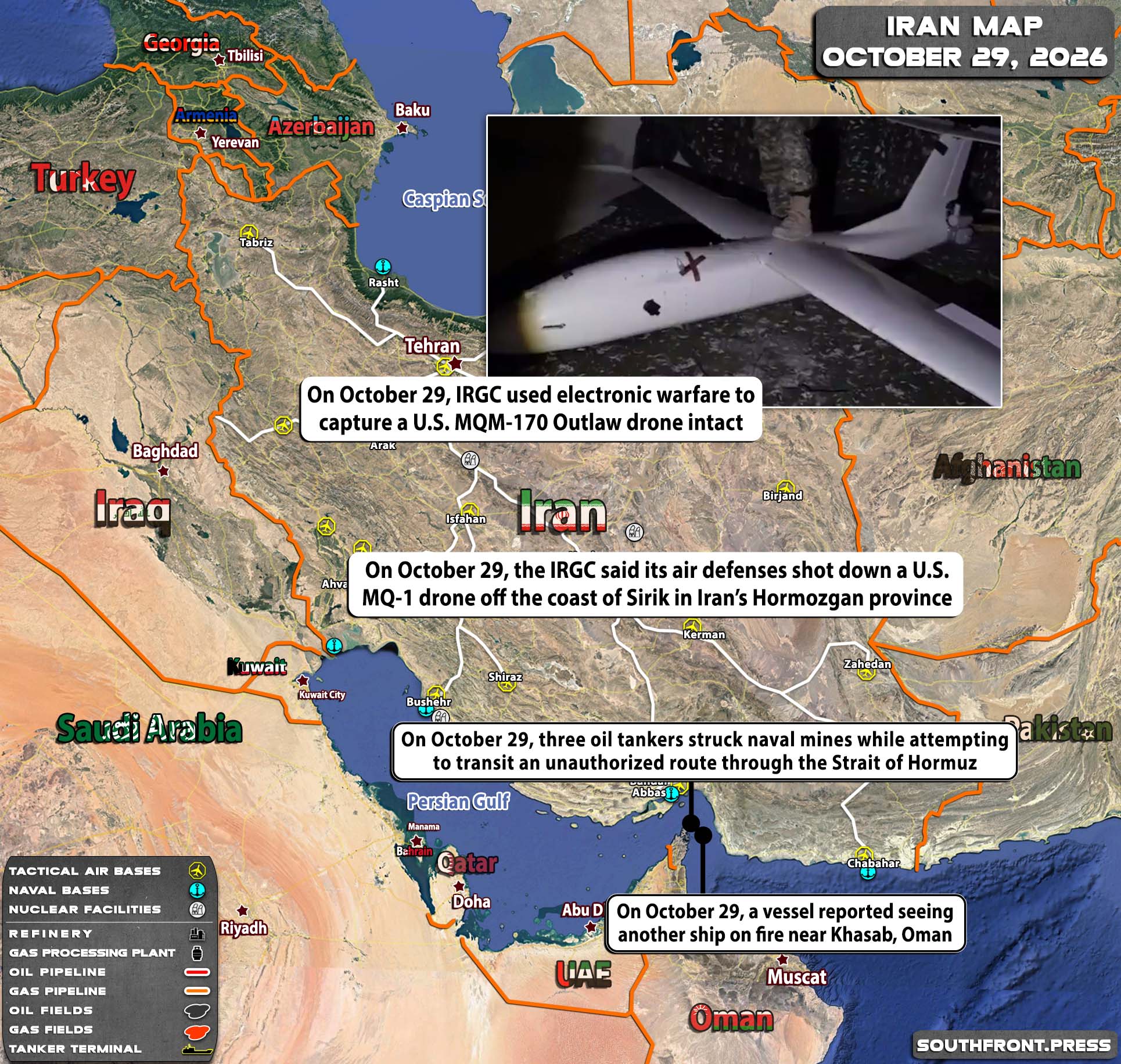
Click to see full-size map.

  • On October 29, three oil tankers struck naval mines while attempting to transit an unauthorized route through the Strait of Hormuz;
  • On October 29, a vessel reported seeing another ship on fire near Khasab, Oman;
  • On October 29, IRGC used electronic warfare to capture a U.S. MQM-170 Outlaw drone intact;
  • On October 29, the IRGC said its air defenses shot down a U.S. MQ-1 drone off the coast of Sirik in Iran’s Hormozgan province.

_______________________________________________________________________________________________________________________

MORE ON THIS TOPIC:


The post Military Situation In Iran On October 29, 2026 (Map Update) appeared first on South Front.

❌