❌

Normal view

Bolsonaro’s claim to be Brazil’s leader not backed by Trump

30 October 2026 at 12:54

The Trump administration does not plan to back Flavio Bolsonaro’s claim to be Brazil’s rightful leader, despite helping the defeated candidate reach the US after years of supporting him and his father, a US official and another person familiar with the matter said.

President Donald Trump has said Brazil’s election on Sunday looked “rigged” but has pointed out that he offered no endorsement in the hotly contested race. Trump has also said he gets along well with incumbent leftist President Luiz Inacio Lula da Silva, the 81-year-old former union leader who beat the odds to clinch reelection by 3.5 percentage points.

The US official and the person familiar with the matter, who both spoke on the condition of anonymity, said Trump has no current plans to support Bolsonaro’s political ambitions even as the administration allowed him into the country, though they said the president could change his mind.

The Trump administration’s posture suggests the president may be reluctant to cause a fresh crisis in relations with Brazil, which have gone through ups and downs in recent months.

LAST-SECOND DEPARTURE AFTER COURT RULING ON PASSPORT

A third US official, also speaking on the condition of anonymity, said Bolsonaro’s political capital had fallen now that he is in self-exile. Many conservatives in Brazil who had expected him to lead the opposition in the coming years have criticized his flight.

The White House referred a request for comment to the State Department, which did not reply. The Brazilian government and a representative for Bolsonaro did not respond to requests for comment.

Flavio’s father, former President Jair Bolsonaro, is imprisoned in Brazil for attempting a self-coup to stay in power after losing his reelection bid in 2022.

Some Brazilian officials, also speaking on the condition of anonymity, told Reuters that Bolsonaro’s departure helps Lula by weakening the conservative opposition in Brazil’s Congress.

Bolsonaro’s flight was a last-second decision that came after a Brazilian Supreme Court justice ordered him to turn in his passport, granting a request by federal police who are investigating him over two alleged money-laundering schemes, US officials and others familiar with the matter said.

The police request came in just minutes after the election was called for Lula, according to Brazilian media reports, a timeline that some conservatives have pointed to as evidence of political motivation.

Supporters of Lula’s government point out that, days before the election, Flavio’s brother, Eduardo, suggested publicly that Flavio should leave Brazil if he lost. Eduardo, a former congressman who himself lives in the US, was convicted in Brazil in June of courting interference from the ​Trump administration in his father’s trial.

Argentine authorities said that Flavio Bolsonaro, his wife and two daughters crossed a bridge into northern Argentina at 10:50 p.m. on Tuesday before boarding a chartered aircraft at 11:30 p.m. Bolsonaro and his family then flew to Miami via Ecuador.

It is unclear how Bolsonaro traveled from his home in Brasilia to the bridge crossing 750 miles (1,300 km) away or exited Brazil without the knowledge of Brazilian customs officials. But during that journey, Bolsonaro contacted multiple US officials regarding his departure, according to one of the US officials.

Jason Miller, a Trump adviser who is close to the Bolsonaro family, helped arrange the flight from Argentina, the person familiar with the matter said. During Bolsonaro’s journey, Secretary of State Marco Rubio recommended to Trump that Bolsonaro be admitted, a recommendation the president signed off on, according to the US official.

During Bolsonaro’s two-leg flight, State Department officials scrambled to determine the best legal route for admitting him and his family, discussing the matter with Department of Homeland Security personnel, the official said. Ultimately, US authorities granted them humanitarian parole at the border, a temporary status given to individuals when urgent humanitarian concerns or a significant public interest are at play, the official added.

In an ​open letter posted on X on Wednesday, Bolsonaro declared himself “the elected president.” He then deleted that version and updated it with another letter in which he said he ​was Brazil’s rightful “leader.”

BRAZILIAN POLITICS WORTHY OF A TELENOVELA

The Bolsonaro departure was the latest chapter in a tumultuous period in Brazilian politics and in US-Brazil relations.

Bolsonaro’s father was president from 2019 to 2023, then lost reelection to Lula and was jailed last year for his self-coup attempt. Lula himself spent 17 months in jail in 2018 and 2019 on corruption charges that were later annulled.

The US last year slapped sanctions on the judge overseeing the trial of the elder Bolsonaro and other Brazilian officials. Washington lifted the sanctions after Trump and Lula had a notably cordial interaction at the UN General Assembly.

During the campaign, Brazil objected to what it called attempts by some US officials to boost the Bolsonaro campaign, and the government has refused to seat the incoming US ambassador to Brazil, a close Rubio ally, in part due to those objections.

Reuters reported last week that two conservative State Department officials successfully pushed for the Brazil sanctions as well as terrorist designations of two Brazilian organized crime groups, measures aimed at tilting the election in Bolsonaro’s favor.

Still, even as Trump has attacked the way Brazil conducted the election, he has refrained from criticizing Lula.

“I like Lula, I get along with him very well,” Trump told reporters on Monday. “I just think it had a very bad look, the election.”

Trump on Iran war: It’s going to get wrapped up soon

30 October 2026 at 12:29

US President Donald Trump, speaking ahead of November 3 midterm congressional elections, said on Friday he believed the war with Iran will end soon, but did not say how that would happen.

“It’s going to get wrapped up soon,” Trump said in an interview with Kansas City radio station KCMO. “We need a guarantee there’ll never be a nuclear weapon.”

Trump has said the US would not strike Iran before the elections.

Japan’s Militarization: Washington Fueling Chinese-Japanese Crisis

30 October 2026 at 09:28

Click to see the full-size image

Written by Uriel Araujo, Anthropology PhD, is a social scientist specializing in ethnic and religious conflicts, with extensive research on geopolitical dynamics and cultural interactions

Security tensions between Japan and China are escalating while the former strengthens its long-range strike capabilities with American support.

Washington and Tokyo’s latest moves to reinforce their military presence along the so-called first island chain also mark another step in the broader US-China strategic rivalry across the Indo-Pacific region.

Originally conceived as a Cold War US defensive perimeter (stretching from Japan through Taiwan to the Philippines), the first island chain is increasingly becoming the centerpiece of an elaborate American-led military architecture designed to constrain Beijing’s growing maritime power.

The recent agreement between Japanese Defense Minister Shinjiro Koizumi and US Defense Secretary Pete Hegseth to implement an “effective denial defense” along that chain illustrates the shift. They also pledged continued cooperation on ammunition production for a potentially prolonged conflict.

During the Keen Sword 2027 exercises now underway, US and Japanese forces plan to deploy mobile missile systems, including American system NMESIS, on Yonaguni Island near Taiwan. Tokyo has already deployed domestically developed long-range (anti-ship) missiles capable of reaching China’s coastal areas.

The wider context is hard to miss. In November 2025 Prime Minister Sanae Takaichi  made a statement linking a Taiwan contingency to Japan’s own survival, which triggered sharp Chinese protests and a cascade of diplomatic, economic, and maritime frictions.

Beijing then restricted dual-use exports to Japan, while coast guard vessels and radar incidents added to the pressure.

As commentator Oliver Griffin puts it, Beijing views Japan’s buildup as a drift toward neo-militarism.

From Tokyo’s perspective, China’s expanding naval reach makes these steps necessary. This is therefore a classic security dilemma. Measures one side takes to feel “safer” make the other feel less secure, prompting further responses.

The first island chain is both a barrier and a gateway. As expert Simone Chiusa  notes, Chinese vessels seeking access to the open Western Pacific must navigate strategic chokepoints through its straits.

The strategic importance of these chokepoints illustrates Alfred Thayer Mahan’s classic sea-power theory: control over key maritime routes and positions remains central to great-power rivalry.

American and Japanese planners see distributed missiles and interdiction systems as deterrence by denial. Beijing sees preparations to restrict its access.

The paradox is clear enough: the more Washington and Tokyo seek to reinforce deterrence, the more Beijing may perceive “encirclement” and accelerate its own capabilities.

Japan’s southwestern islands are thereby becoming an operational frontier of sorts rather than a mere defensive perimeter. An alliance designed primarily to protect Japanese territory then gradually becomes an instrument for projecting power into a Taiwan-related contingency.

As I wrote in May 2026, regarding US missile deployments in the Philippines, Washington’s actions near Taiwan fuel Chinese fears of a containment architecture involving Japan, the Philippines, and Australia. The pattern continues.

China’s maritime-industrial growth has become central to allied planning. As I’ve noted elsewhere, Chinese shipbuilding capacity (measured by gross tonnage) exceeds that of the United States – by a factor of over 200, according to a 2023 US naval intelligence estimate.

Joint Sino-Russian submarine patrols further signal a new maritime era of coordination that certainly complicates American assumptions of uncontested sea control.

Yet the contest is no longer confined to the first island chain. A Japanese Self-Defense Force colonel has proposed a second-island-chain air bridge linking Japan and Australia (with US participation) for logistics and reinforcement – the reasoning being that China’s lengthening maritime strike reach now threatens operations farther into the Pacific.

Some American analysts warn that “pulling back to the second chain” would be strategic folly, while advocates of strategic restraint see a forward approach as intensifying insecurity.

For Japan, the predicament is particularly delicate. Tokyo is becoming more indispensable to Washington’s regional planning at the very moment when Japanese strategists worry about possible US-China accommodation under President Trump’s “transactional” approach.

The alliance security dilemma is real enough: fear of “abandonment” coexists with fear of entrapment in a Taiwan conflict. Japanese policymakers are of course not passive instruments. They act on their own threat perceptions while navigating uncertainty about long-term American commitments.

Gray-zone pressures add another layer. Coast guard patrols and incremental assertions of jurisdiction challenge the utility of high-end missile deployments – designed mainly for conventional scenarios.

Ultimately, efforts to preserve the existing “balance” in the Indo-Pacific may contribute to the very competition that makes that balance harder to sustain.

The American response to China’s rise has largely been to reinforce military alliances and expand forward deployments, risking an increasingly self-perpetuating cycle of militarization rather than fostering regional stability.

Washington is transforming Japan into a more central component of its forward maritime architecture – even as Beijing’s growing capabilities render that very architecture more contested. The risk here is that the cycle of reinforcement and reaction leaves all parties less secure than before.


MORE ON THE TOPIC:

The post Japan’s Militarization: Washington Fueling Chinese-Japanese Crisis appeared first on South Front.

Iran Turns to Hull-Mounted Explosives in New Tactic Against Tankers in Hormuz

30 October 2026 at 09:27

File image.

A tanker caught fire in the Strait of Hormuz after a small boat approached the vessel and attached two explosive devices directly to its hull, temporarily disabling it in an attack that marked a departure from previous strikes on commercial shipping in the waterway.

The attack occurred on October 29, approximately 25 nautical miles northeast of the port city of Khasab in Oman, according to the United Kingdom Maritime Trade Operations (UKMTO) agency.

UKMTO said the tanker was approached on its port side by a small boat that attached two explosive devices above the waterline before departing.

Maritime security firm Vanguard Tech identified the vessel as the Panama-flagged Louise 1, a 159,092-deadweight-ton tanker owned by Panama-based Aquarius Maritime Ventures.

“The subsequent blasts resulted in a fire in the engine room which temporarily disabled the vessel. The fire is now reported as extinguished and vessel is continuing to its next port of call,” UKMTO said, noting that all crew members were safe.

The method differs from previous Iranian attacks in the Strait of Hormuz, which have mainly involved anti-ship missiles and one-way attack drones.

The incident was the latest in a series of maritime security emergencies reported on October 29. Earlier in the day, UKMTO received a report from a company’s security officer that another tanker had been struck by an unidentified projectile while completing an outbound transit of the strait.

An even earlier vessel-fire report by the agency was subsequently attributed to a regional trading dhow that caught fire, listed and sank.

“Regional authorities have identified the vessel as a dhow, which was involved in a maritime security incident, igniting a large fire onboard causing the dhow to list and sink. Local authorities have confirmed that the crew have been safely evacuated,” UKMTO said.

Meanwhile, Iran’s Islamic Revolutionary Guard Corps (IRGC) Navy said three oil tankers had exploded and caught fire after striking naval mines while attempting to pass through what Tehran described as the unauthorized southern route of the strait.

The Corps said in a statement the vessels had “switched off all their radar and navigation systems” and ignored warnings from Iranian forces before hitting the mines.

Iran’s regular army subsequently announced that a fourth tanker had struck mines east of the strait while operating in what it described as a “restricted and dangerous area.”

The developments come as the United States maintains that its forces have cleared the internationally recognized primary shipping routes of naval mines.

IRGC spokesman Hossein Mohebi challenged that assertion earlier in the week, writing on X: “Prove your Hormuz mine-clearing claim with independent evidence, not statements!”

The International Maritime Organization recorded 34 confirmed attacks on vessels between September 28 and October 27, most of them in the Strait of Hormuz.

Commercial shipping through the Strait of Hormuz remained severely restricted on October 30, with AIS-based tracking recording just five commercial vessel crossings by the morning, compared with a pre-crisis average of approximately 85 per day.

Eight vessels had crossed in the preceding 24 hours, while 497 ships were waiting outside the strait and another 163 were stationary inside the Gulf.

_______________________________________________________________________________________________________________________

SouthFront: Analysis and Intelligence

NOW hosted at southfront.press

Previously, SouthFront: Analysis and Intelligence was at southfront.org.

The .org domain name had been blocked by the US (NATO) (https://southfront.press/southfront-org-blocked-by-u-s-controlled-global-internet-supervisor/) globally, outlawed and without any explanation

Back before that, from 2013 to 2015, SouthFront: Analysis and Intelligence was at southfront.com

SOUTHFRONT.PRESS

MORE ON THIS TOPIC:

The post Iran Turns to Hull-Mounted Explosives in New Tactic Against Tankers in Hormuz appeared first on South Front.

O que vão Fernando Alexandre, os outros governantes e os reguladores ensinar aos alunos?

30 October 2026 at 09:01
Ministério da Educação

O palco hoje não é o Parlamento, mas o anfiteatro. São 9h00 do dia 30 de Outubro. À sua frente, Fernando Alexandre tem perto de duas centenas e meia de estudantes do Ensino Secundário, na Escola Secundária Dr. José Macedo Fragateiro, em Ovar.

Diante de olhos espevitados pela curiosidade, o homem que gere os destinos da Educação, Ciência e Inovação do país reencontra-se com a sua vocação mais pura: professor. Vai dar uma aula de Literacia Financeira, com o foco no tema da Poupança.

De acordo com as metas de aprendizagem estipuladas para o Secundário, os alunos que Fernando Alexandre tem diante de si deverão ser capazes de comparar diferentes produtos financeiros e o risco que lhes está associado. É com base nesta meta que se preparou.

Cláudia Sarrico, secretária de Estado do Ensino Superior, também estudou a lição. Não menos exigente. Os alunos do 3º Ciclo devem reconhecer que a aplicação de poupanças em instrumentos financeiros diversificados pode diminuir o risco associado ao investimento e manifestar comportamentos de proteção em relação a situações de fraude financeira e digital (abordada parcialmente). E a professora universitária emprestada ao Governo tem à sua frente cerca de 100 alunos do 3. Ciclo do Ensino Básico da  Escola Secundária Miguel Torga, em Queluz.

A iniciativa “Educar para a Cidadania: Poupar, um Compromisso com o Futuro” foi criada em 2025 pelo Ministério da Educação, Ciência e Inovação, em parceria com o Banco de Portugal, a Comissão do Mercado de Valores Mobiliários (CMVM) e a Autoridade de Supervisão de Seguros e de Fundos de Pensões (ASF). Hoje volta a mobilizar centenas de estudantes e docentes do ensino superior das áreas de Economia, Gestão, Finanças e Contabilidade, governantes e representantes das entidades de supervisão financeira.

As aulas são em todos os ciclo de estudo e todos eles têm naturalmente metas de aprendizagem. No 1º Ciclo trata-se de compreender a importância da poupança e os seus objetivos; reconhecer a importância da tomada de decisão e a necessidade de fazer escolhas que impliquem ganhos ou perdas (abordada parcialmente) e distinguir necessidades de desejos e rendimentos de despesas (abordada parcialmente).

No 2º Ciclo, as metas apontam ao seguinte: Compreender formas de aplicação e de remuneração da poupança e reconhecer a importância do planeamento, a médio e a longo prazo, da poupança e dos investimentos. (abordada parcialmente).

Foi com base nas metas estabelecidas que os governantes e os administradores do Banco de Portugal, CMVM e ASF prepararam as aulas que dão neste momento ou logo à tarde.  

José Maria Brandão de Brito, secretário de Estado Adjunto e do Orçamento, está esta manhã na Escola Secundária da Cidadela, em Cascais, e Cláudia Reis, dos Assuntos Fiscais, na Escola Secundária de Montemor o Novo.

Álvaro Santos Pereira, que durante anos ensinou as disciplinas de Desenvolvimento Económico e Política Económica na Simon Fraser University em Vancouver, no Canadá, regressa à profissão e aos bancos da escola, viajando, de tarde, do Banco de Portugal até à Escola Secundária Diogo de Gouveia, em Beja.

Na Escola Secundária Rainha D. Leonor, em Lisboa, o professor de Literacia Financeira chama-se Rui Baleiras e é vice-presidente da Autoridade de Supervisão de Seguros e Fundos de Pensões (ASF) e o presidente, Gabriel Bernardino vai à Escola Básica e Secundária do Cadaval.

Também o presidente e a vice-presidente da Comissão do Mercado de Valores Mobiliários (CMVM) vestem a pele de professor por um dia. Luís Laginha de Sousa na Escola Secundária da Baixa da Banheira, na Moita, e Inês Drumond na Escola EB 2,3 de Alcanede, em Santarém.

Elevar os níveis de literacia financeira dos alunos é uma prioridade dos atuais inquilinos do Ministério da Educação, Ciência e Inovação, que tornou esta dimensão obrigatória em todos os anos de escolaridade da disciplina de Cidadania e Desenvolvimento.

O trabalho iniciado no Dia Mundial da Poupança de 2025 continuou pelo ano letivo, sendo alargado a outras áreas da Literacia Financeira e Empreendedorismo.

Segundo o MECI, além dos conteúdos dedicados à poupança, foram preparados e validados recursos sobre Orçamento Familiar e Fiscalidade, em parceria com a Autoridade Tributária e sobre Sistemas e Produtos Financeiros assim como Ser Empreendedor, em parceria com a associação Junior Achievement.

U.S. Strikes on Iranian Missile Sites Reported Amid Fighter Jet Confrontation (Photos)

30 October 2026 at 08:19

Click to see full-size image.

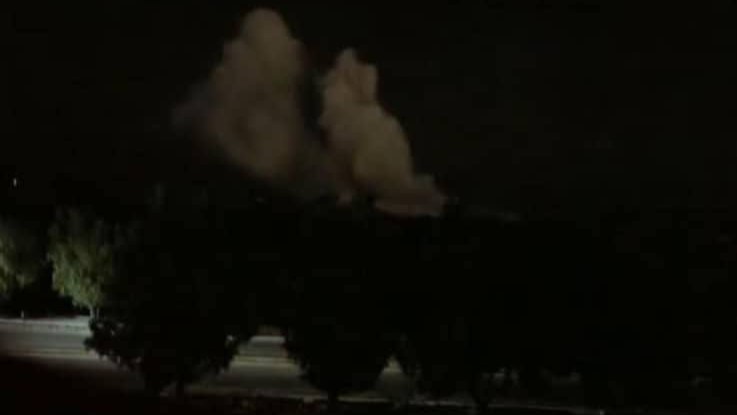
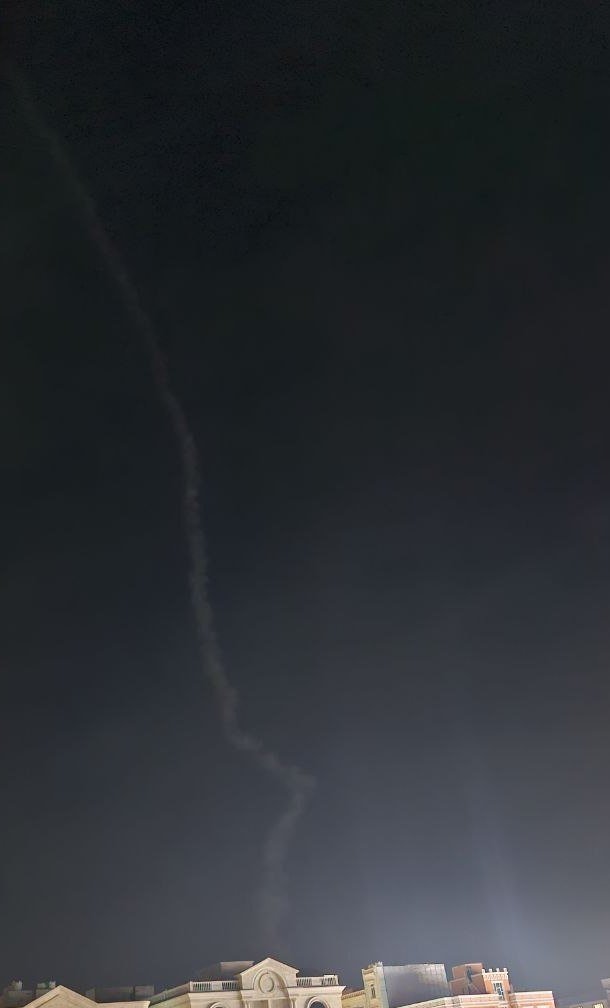
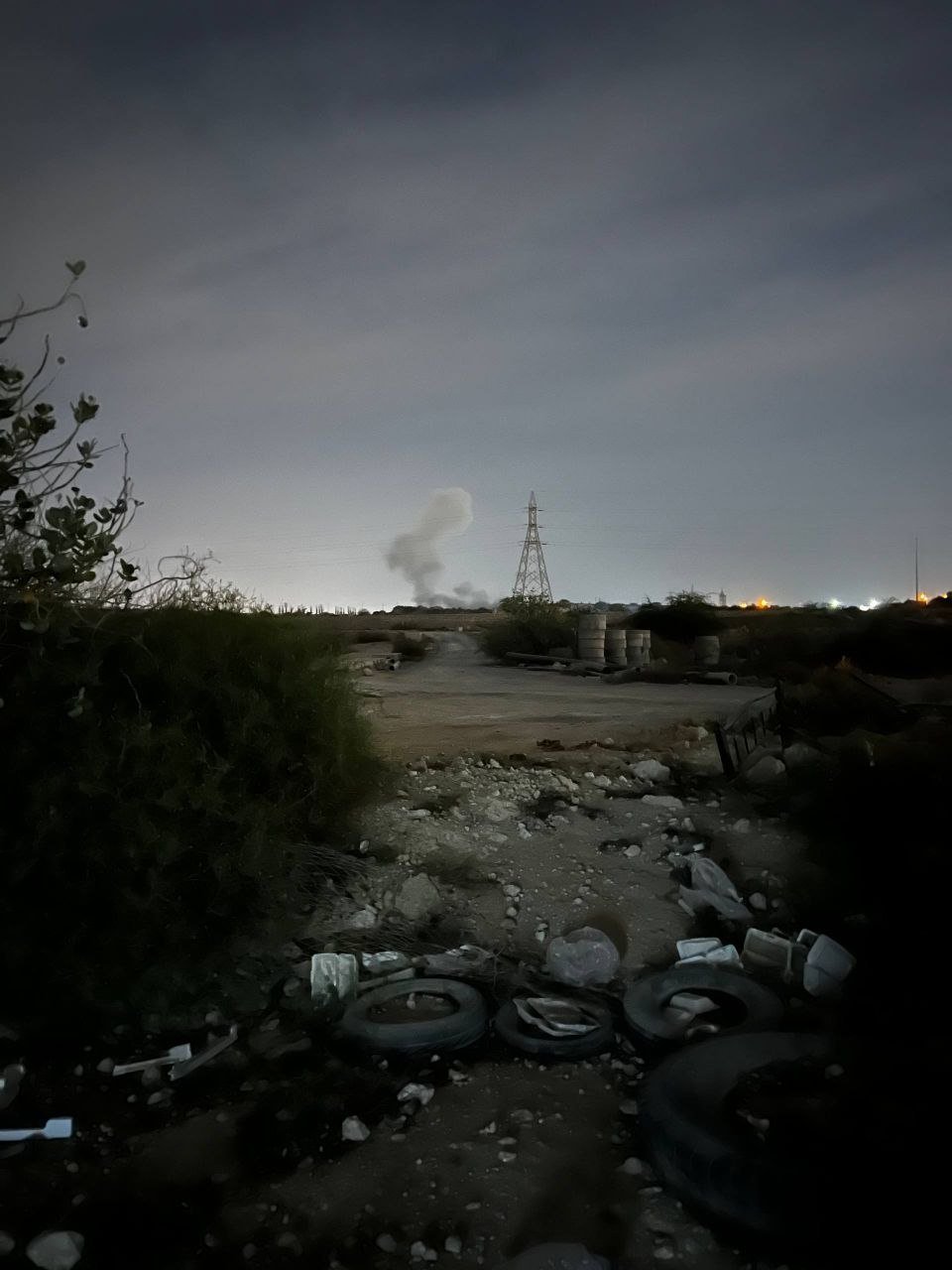
Axios correspondent Barak Ravid on October 30 deleted a post reporting that the United States carried out what he described as “self-defense strikes” against missile-launch sites in southern Iran, as Iranian media reported an encounter between the Islamic Revolutionary Guard Corps (IRGC) and a hostile fighter jet near the Strait of Hormuz.

Ravid also stated that the U.S. has been carrying out such attacks since last week. He did not, however, publicly explain why he deleted the post.

Separately, Iran’s Tasnim and Mehr news agencies reported that the IRGC Aerospace Force intercepted a hostile fighter jet near Qeshm Island and forced it to withdraw from the area.

Neither agency identified the aircraft’s nationality or model, and no details were provided about whether it sustained damage.

Click to see full-size image.

Iran’s Fars News Agency separately reported explosions near Qeshm and Sirik overnight, while the official IRNA news agency reported that residents of Qeshm had heard explosions and observed flashes in the sky and over surrounding waters.

Local sources cited by IRNA said air defense systems on the island had been activated. The agency also suggested that some of the sounds could have been warning shots fired at vessels in the Strait of Hormuz.

Click to see full-size image.

The developments come amid growing preparations for a possible resumption of the U.S.-Israeli war against Iran. Axios reported earlier in the week that Washington and Israel were coordinating plans for a week-long bombing campaign targeting Iranian leadership, energy facilities and nuclear infrastructure. The Associated Press separately reported that Washington had warned regional allies to prepare for renewed strikes and Iranian retaliation.

More recently, The Wall Street Journal reported that the commander of U.S. forces in the Middle East briefed President Donald Trump at the White House on military options for Iran.

Taken together with recent developments, the reports suggest that renewed attacks could begin in the days following the November 3 U.S. midterm elections.

_______________________________________________________________________________________________________________________

SouthFront: Analysis and Intelligence

NOW hosted at southfront.press

Previously, SouthFront: Analysis and Intelligence was at southfront.org.

The .org domain name had been blocked by the US (NATO) (https://southfront.press/southfront-org-blocked-by-u-s-controlled-global-internet-supervisor/) globally, outlawed and without any explanation

Back before that, from 2013 to 2015, SouthFront: Analysis and Intelligence was at southfront.com

SOUTHFRONT.PRESS

MORE ON THIS TOPIC:

The post U.S. Strikes on Iranian Missile Sites Reported Amid Fighter Jet Confrontation (Photos) appeared first on South Front.

Trump administration seeks to block Alaska Senate result if Republican loses

30 October 2026 at 06:17

President Donald Trump’s administration filed a revised lawsuit on Thursday seeking to block Alaska’s election results if Republican incumbent Dan Sullivan narrowly loses and, according to a person familiar with the matter, issued more than 40 subpoenas and document requests in its probe.

The revised complaint by the US Justice Department cited a New York Times report that Democratic operatives recruited another candidate named Sullivan who could siphon votes from the incumbent. The Justice Department said the effort was intended to mislead voters and help elect Democratic candidate Mary Peltola.

The suit raises the prospect of a messy fight over a contest that could determine US Senate control in next Tuesday’s midterm elections. Republicans hold a 53-47 majority, while Democrats need a net gain of four seats.

“They orchestrated his sham campaign for the purpose of misleading Alaskan voters and getting Peltola elected,” lawyers for the Justice Department wrote in their amended complaint, referring to a retired teacher named Daniel J. Sullivan Jr., who is on the ballot without a party affiliation.

Alaska Governor Mike Dunleavy also called for a state investigation into the allegation and said in an interview with News Nation that any finding of illegality “may in fact impact whether someone is seated in the US Senate.”

Peltola’s campaign did not immediately respond to the amended complaint but has previously said it had “no involvement with either Sullivan campaign.”

Dispute over candidates sharing Sullivan surname

The Times reported on Wednesday that Peltola aides worked with campaign lawyers and staff at the Democratic Senatorial Campaign Committee to recruit two candidates who could siphon votes from the incumbent Republican Sullivan, including Daniel J. Sullivan Jr.

Peltola’s former campaign manager, Elisa Rios, who was fired in August, told the Times that Peltola was aware of the effort.

The DSCC has denied involvement and accused Republicans of propping up candidates of their own in other races. Reuters was unable to independently verify the Times report.

Daniel J. Sullivan has previously denied in interviews with US news outlets that his aim is to cause confusion or divert votes from Dan S. Sullivan.

Trump presses legal challenge ahead of vote

Trump, who for years has sowed doubts about the fairness of US elections, had pushed the Justice Department to bring the Alaska case even before the Times report, seeking to preemptively block Alaska from certifying Peltola, a former congresswoman, if she were to win the election.

Trump told reporters earlier on Thursday: “It’s hard to believe that she could even be allowed to run. Frankly, I don’t know how you can allow somebody like that to run. It’s so unfair.”

Jessica Levinson, a professor who specializes in election law at Loyola Law School in Los Angeles, said that as long as Daniel J. Sullivan, the challenger to the incumbent, didn’t conceal financial support, his campaign likely didn’t break any laws and political parties are allowed to mislead the public.

Policing such behavior would open the door to the government investigating why candidates choose to run and why voters support them, she said. “To the extent that people are uncomfortable with two Sullivans, I would offer you’re probably going to be uncomfortable with a really high level of government intrusion into our elections as well.”

Justice Department also investigates California voting

The Department of Justice has also escalated another legal campaign in California, where it has been investigating alleged voting by noncitizens.

The Los Angeles County Registrar-Recorder’s office received grand jury subpoenas as part of the probe, according to copies of subpoenas seen by Reuters on Thursday.

The subpoenas, dated last week, seek records related to the county’s response to prior letters from the Trump administration warning of evidence that noncitizens are on the state’s voter roll. They also seek documents about the county’s efforts to prevent noncitizens from voting.

California has previously said the state’s safeguards against noncitizen voting are robust.

A Justice Department spokesperson declined to comment.

Trump and Democrats intensify final campaign push

As campaigning enters its final few days, the White House has shelved plans for Trump to appear on Saturday in Kansas, the site of an unexpectedly competitive Senate campaign, a Republican campaign official said.

“I don’t feel like I have to go to Kansas,” Trump told reporters.

Instead, the president will participate in more than 20 virtual campaign appearances before Tuesday, a White House official said.

Trump held a rally in Rock Hill, South Carolina, on Thursday, his second visit in two weeks to a state where opinion polls show an unexpectedly close Senate race between Republican Darline Graham and Democrat Annie Andrews.

Speaking about the hotly contested Michigan Senate race, where progressive Democratic nominee Abdul El-Sayed holds a small lead in most polls over Republican Mike Rogers, Trump continued his identity-based attacks on El-Sayed, a Muslim, by saying at the rally that “if you’re Black or if you’re Jewish, and if you vote for Abdul, you’re crazy.”

With control of the Senate at stake, both parties are deploying their biggest names in the closing days of the campaign, with Trump stumping for Republicans and former President Barack Obama and former Vice President Kamala Harris campaigning for Democrats in competitive races.

Harris stumped in Macon, Georgia, at a get-out-the-vote effort. Democrats are aiming to reelect Senator Jon Ossoff, who leads in polling, and hope that Keisha Lance Bottoms, locked in a tight race, can become the first woman elected as governor in the state.

Trump’s approval rating stood at 32% in a Reuters/Ipsos poll completed on Monday, near a record low, as Americans sour on the high cost of living and the war with Iran.

More than 44 million Americans had already voted as of Thursday evening, according to the University of Florida’s Election Lab. A total of 45.9 million voted early in the 2022 midterms.

Trump Briefed on Iran Strike Options as Post-Election War Looms

29 October 2026 at 19:49

Illustrative image. (U.S. Central Command)

Adm. Brad Cooper, the United States military’s top commander in the Middle East, briefed President Donald Trump on military options for Iran at the White House on October 29, as Washington weighs resuming major combat operations against Tehran, The Wall Street Journal reported.

Defense Secretary Pete Hegseth and Joint Chiefs of Staff Chairman Gen. Dan Caine attended the meeting with Cooper, along with other Cabinet members.

The meeting also covered additional topics, according to U.S. officials and people with direct knowledge cited by the newspaper.

The Journal did not disclose the specific military options Cooper presented or report that Trump had made a decision to resume strikes.

The briefing comes amid preparations for a possible renewed U.S. military campaign. A recent report by The Jewish Chronicle said the U.S. was moving a Patriot air defense battery from Texas to the Middle East, while American forces had also been moved away from bases considered vulnerable to Iranian attacks and ammunition stocks replenished. Trump has not made a final decision on further strikes, the report said.

Diplomatic contacts continued on October 29 alongside the military preparations. Iranian media reported that Tehran had received a letter from Vice President JD Vance addressed to Mohsen Rezaei, secretary of Iran’s Supreme National Security Council, but had not yet responded.

Trump said Vance’s outreach concerned helping Iran obtain medical supplies, after media reports described the communication as an effort to revive peace negotiations.

The Wall Street Journal had reported that the letter was sent at Trump’s direction, although the president said he had not directed Vance to contact Tehran to restart talks.

Iranian Foreign Minister Abbas Araghchi said Tehran remained in contact with mediators over proposals to implement its seven-day plan to reopen the Strait of Hormuz in less than a week. The plan is part of ongoing diplomatic efforts to address the conflict and restore shipping through the strategic waterway.

Military tensions around the strait also featured in Thursday’s developments. Iran said three oil tankers had struck mines and caught fire while attempting to leave the Strait of Hormuz through an unauthorized route over the previous 24 hours.

The U.S. military separately rejected Iran’s assertion that its forces had captured an American MQM-170 Outlaw reconnaissance drone near the strait. U.S. Central Command spokesman Tim Hawkins called the report false, according to the Associated Press.

With U.S. forces preparing for renewed operations and Trump receiving military options for Iran, a return to war appears increasingly likely. Recent reports have pointed to the period immediately after the November 3 U.S. midterm elections as a possible window for renewed American strikes on the Islamic Republic, with Israel taking part.

_______________________________________________________________________________________________________________________

SouthFront: Analysis and Intelligence

NOW hosted at southfront.press

Previously, SouthFront: Analysis and Intelligence was at southfront.org.

The .org domain name had been blocked by the US (NATO) (https://southfront.press/southfront-org-blocked-by-u-s-controlled-global-internet-supervisor/) globally, outlawed and without any explanation

Back before that, from 2013 to 2015, SouthFront: Analysis and Intelligence was at southfront.com

SOUTHFRONT.PRESS

MORE ON THIS TOPIC:

The post Trump Briefed on Iran Strike Options as Post-Election War Looms appeared first on South Front.

UT San Antonio Student Reads Vile Poem Celebrating Charlie Kirk Assassination, Threatens TPUSA Event Speaker

29 October 2026 at 17:08

A student at the University of Texas at San Antonio approached the microphone at a Turning Point USA campus event, cheerfully read a poem celebrating the assassination of Charlie Kirk, and then told the speaker he was "so brave" for appearing in public without neck protection.

The post UT San Antonio Student Reads Vile Poem Celebrating Charlie Kirk Assassination, Threatens TPUSA Event Speaker appeared first on Breitbart.

Trump vuole chiudere il conto con Teheran: negoziati o escalation. L’allarme di Massolo sul dopo Midterm

29 October 2026 at 18:21

Trump, l’Iran e il piano per ‘dichiarare vittoria’: l’analisi dell’ambasciatore Massolo

“Il rischio di escalation è concreto dopo le elezioni di Midterm, e c’è da osservare un ulteriore incremento della presenza militare iraniana nel Golfo e nella regione”. Così Giampiero Massolo, ambasciatore ed esperto di geopolitica, risponde ad Affaritaliani sulle prospettive del conflitto tra Stati Uniti e Teheran e sulle mosse di Donald Trump per uscire dal confronto.

Un quadro che, secondo Massolo, risponde a una precisa necessità strategica della Casa Bianca: “Lo scopo potrebbe essere paradossalmente funzionale ad uscire dalla crisi iraniana. Trump ha bisogno di uscirne a due condizioni: la prima è di sistemare la libertà di navigazione nello Stretto di Hormuz. Lì il livello di traffico è ritornato a livelli sostenuti, ed è frutto sia della presenza militare americana sia, soprattutto, dei contatti diretti che i Paesi del Golfo hanno con gli iraniani”.

La seconda condizione riguarda la minaccia atomica: “L’altro obiettivo è l’idea di poter dire di essersi durevolmente sbarazzati del nucleare iraniano. Questo si può fare in due modi: o attraverso la via negoziale — ed è di oggi la notizia che Trump ha autorizzato una ripresa dei trattative — oppure, qualora questi negoziati fallissero, l’altra strada sarebbe quella di forzare un’escalation americano-israeliana. L’intento sarebbe poter affermare che la capacità nucleare iraniana è stata ulteriormente annichilita e indebolita, allontanando il pericolo nel tempo”.

L’obiettivo finale del Presidente americano resta comunque il ritiro dall’area: “A quel punto, con uno Stretto ritornato ragionevolmente praticabile e il dossier nucleare indebolito stabilmente, si aprirebbe una finestra per Trump per dichiarare vittoria e disimpegnarsi da quello scenario, lasciandolo all’autoregolamentazione delle potenze regionali. Ma qualora non andasse la via negoziale, non rimarrebbe altro che la via delle armi”, spiega l’ambasciatore.

Infine, sul ruolo diplomatico della Turchia, Massolo sottolinea: “Erdogan si pone come mediatore, e anche con un certo successo come ha dimostrato tra Russia e Ucraina sul traffico del grano nel Mar Nero. Sta cercando di giocare questa carta anche qui attraverso un contatto diretto con Teheran: nei giorni scorsi c’è stata la riunione del ‘Patto della Mecca’ con Turchia, Arabia Saudita, Pakistan e Iran per discutere dei passaggi ad Hormuz, delle basi per un negoziato e per scongiurare eventuali rappresaglie nel Golfo. Fa parte dei tentativi in atto, ma bisognerà vedere fino a che punto Teheran sarà intransigente e fino a che punto Trump vorrà che il suo dichiarare vittoria trovi un riscontro concreto nei fatti”,conclude Massolo.

L'articolo Trump vuole chiudere il conto con Teheran: negoziati o escalation. L’allarme di Massolo sul dopo Midterm proviene da Affaritaliani.it.

Omonimi spioni. Jensen Huang sorvegliato da un’altra Huang per conto di Pechino

29 October 2026 at 16:20

US First Lady praised for Oleshky relief truce as Moscow strikes Ukrainian commuters

29 October 2026 at 13:47

Russia and Ukraine both praised US first lady Melania Trump on Thursday for helping to broker a truce around the acutely deprived Russian-held Ukrainian town of Oleshky, as efforts began to bring in food and medicines and enable hundreds to leave.

Yet any sense of wider relief in a war that began with a Russian invasion almost five years ago was rapidly dispelled by a drone strike that killed 13 people crowding onto a commuter train at the main station in the Ukrainian city of Dnipro, according to local officials, where no ceasefire was in place.

The Oleshky operation aims to address a growing crisis in a town marooned inside a war zone since 2022 – but is also part of a diplomatic dance where both sides want to show US President Donald Trump that they back his peace efforts, albeit for different reasons.

Yana Lantratova, Russia’s human rights commissioner, said she was taking four journalists from the conservative US outlet Newsmax to the area as her Ukrainian counterpart, Dmytro Lubinets, also headed for Oleshky.

PUTIN SAYS MOSCOW IS MAKING PEACE EFFORTS

President Vladimir Putin told a summit in Moscow that relief supplies would begin reaching civilians on Thursday and Friday, “with the support, incidentally, of the First Lady of the United States”.

Lubinets, for his part, extended Kyiv’s “special thanks” to someone who was “personally devoting her time and attention to the humanitarian mission and assistance to civilians in Oleshky”.

Trump has cast Ukrainian President Volodymyr Zelenskiy as an obstacle to peace while praising Putin, who emphasised on Thursday that Russia was “working on issues relating to a possible peaceful resolution of the Ukrainian crisis itself”.

Although Russia, like Ukraine, denies targeting civilians, strikes on trains and other civilian infrastructure have become increasingly common as Ukraine’s stocks of air defence missiles have dwindled. Civilian deaths have also increased inside Russia.

On Thursday, the state rail company, Ukrzaliznytsia, said a jet-powered drone had hit a platform in the Ukrainian industrial hub of Dnipro where a commuter train was preparing to depart for nearby Zaporizhzhia.

Although US-mediated peace talks are due to resume next month in Abu Dhabi after a long pause, the two sides are far apart when it comes to terms for ending the war.

But both recognise the power of Trump, who has another two years in power left regardless of the outcome of US midterm legislative elections next month, to affect the course of the conflict.

Russia still hopes that Trump can pressure Kyiv into agreeing a deal that meets many of its conditions – such as full Russian control of Ukraine’s Donbas region and a bar on Ukraine joining the transatlantic defence alliance, NATO.

Kyiv, meanwhile, wants to ensure that US intelligence sharing continues along with full access to Elon Musk’s recently disrupted battlefield communications system, Starshield, and that European-bought US military hardware, including Patriot interceptor missiles, continues to flow.

KHERSON CEASEFIRE DUE TO CONTINUE UNTIL SUNDAY

The truce applies only to Oleshky and the wider Kherson region, which has suffered years of near-daily drone and artillery attacks. Some 1,500 of the prewar population of 24,000 people are believed to live among the ruins, under regular shellfire amid severe shortages of food and medicine.

Ukraine has long accused Russia of refusing to let aid in or people out. Russia says it is Ukrainian mines on the approach roads and Ukrainian shelling that have prevented the delivery of aid or the safe evacuation of residents.

By the middle of Thursday, neither Ukraine nor Russia had reported any violations of the ceasefire, which was due to last until Sunday.

“Demining is under way there, and we hope that today or tomorrow residents will be able to receive humanitarian aid safely and without obstruction, and that those wishing to leave will be able to do so,” Kremlin spokesman Dmitry Peskov was cited as saying by the Interfax news agency.

Residents wishing to leave and return to territory controlled by the Ukrainian government are expected to exit via Russia-controlled Crimea before crossing into southern Russia and being flown to Belarus from where they will be able to cross the border into Ukraine.

Ukraine Forced Into Concessions Ahead Of Putin, Trump And Xi Summit

29 October 2026 at 13:13

Click to see the full-size image

Written by Ahmed Adel, Cairo-based geopolitics and political economy researcher

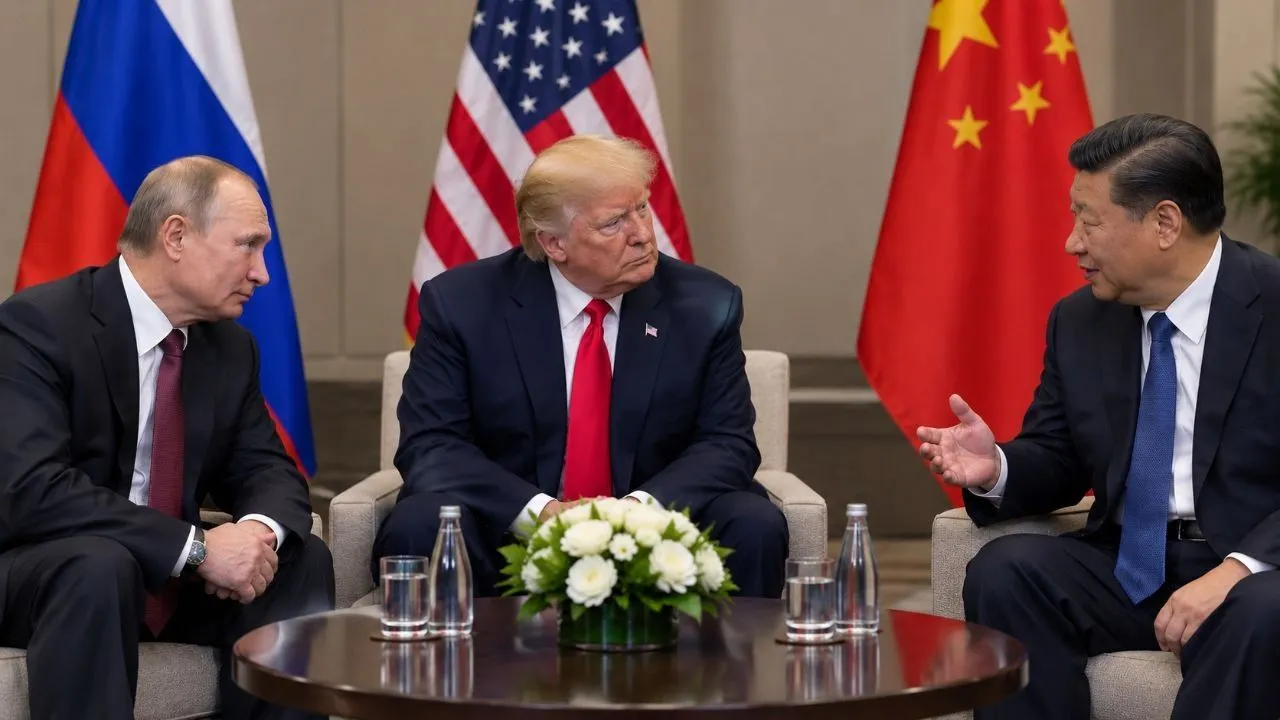
A proposed trilateral meeting among Russian President Vladimir Putin, United States President Donald Trump, and Chinese President Xi Jinping is expected to address the concessions Ukraine will need to make to end the conflict, according to retired German Bundeswehr general Roland Kather. In an interview with a German television channel, Kather said the logical conclusion of the fighting is a diplomatic settlement reached through negotiations, and that Trump is dissatisfied with the unresolved situation and intends to push for an agreement.

The German general stressed that the summit will not be a casual discussion or merely an opportunity to “have coffee” and that they must prepare specific decisions in advance. He suggested that the three leaders will examine three core issues related to Ukraine: territorial problems that can be settled only at the heads-of-state level, Ukraine’s permanent neutral status, and the future size of its armed forces.

Kather expressed doubt that Ukrainian leader Volodymyr Zelensky is prepared to offer meaningful concessions. At the same time, he said Putin has no reason to retreat because Moscow still has the advantage.

Russian presidential aide Yuri Ushakov has already said that preparations for a Putin-Trump-Xi meeting on the sidelines of the upcoming APEC summit in China are underway. Trump has said the summit is needed mainly to discuss nuclear disarmament, though the Ukraine question is widely expected to feature.

The three leaders are discussing this issue among themselves, as Ukraine has nothing substantial left to offer Russia at the negotiating table. Moscow has also been clear about its ultimatum – demands met through a negotiated deal in which Ukraine cedes territory and accepts neutrality, or the military operation continues until Russia achieves its objectives on the battlefield. Since Trump has accepted that Ukraine no longer brings anything of value to negotiations but is still encouraged to fight by Brussels, he will directly negotiate with Putin and Xi to end the war.

Earlier this month, Putin signaled Russia’s readiness to resume trilateral talks on a Ukraine settlement focused on security guarantees and the future architecture of European security. Ushakov said such talks could resume after the US midterm elections on November 3.

Meanwhile, the EU is facing the consequences of years of confrontational policy. The newspaper La Verità noted that the EU’s intransigent stance toward Russia has left Brussels scrambling to secure a seat at the table with other powers, saying negotiation is a fundamental tool of political power and that when one actor stops talking to another, it lets others set the terms of peace. The Italian daily described this as the humiliating lesson the EU appears to have learned.

Since 2022, the EU has tightened economic sanctions, pursued Russia’s political isolation, and provided military support to Ukraine. Brussels is now considering appointing a senior representative to establish a direct channel with Moscow as it urgently seeks to restore dialogue with a government it had vowed never to normalize relations with. The main challenge is finding someone who can speak for the EU without being seen in Moscow as merely voicing hostility. Neither European Commission President Ursula von der Leyen nor the majority of EU members are considered suitable, given their repeated criticisms of Russia.

European leaders continue to insist that no agreement on European security be reached without EU involvement. However, the EU’s influence has diminished because it long refused to keep channels open. Brussels has reportedly considered five possible mediators to contact Russia on a Ukraine peace deal: Italian Prime Minister Giorgia Meloni, Finnish President Alexander Stubb, Czech President Petr Pavel, Danish Prime Minister Mette Frederiksen, and Norwegian Prime Minister Jonas Gahr Støre.

Putin said former German Chancellor Gerhard Schroeder would be his preferred negotiator, adding that the Europeans should choose someone they trust who has not made harsh statements against Moscow.

The Russian military and political advantage narrows Ukraine’s chances of the Kremlin making concessions, a reality the EU stubbornly refuses to accept. At the same time, the EU’s scramble to find an acceptable negotiator highlights the economic and political damage that self-imposed isolation from Russia has caused. Without open communication channels and the ability to shift the balance of power, both Kiev and Brussels face an agreement largely shaped by Trump, Putin, and Xi.

Preparations for the trilateral summit within the APEC context, along with Russia’s stated readiness to resume talks after the US midterm elections, suggest that Kiev’s window to negotiate on a realistic basis and secure a better deal is closing. The capacity for the three Great Powers to set the agenda without Ukrainian participation further underlines how far the balance has shifted in Russia’s favor since the conflict began, despite Western sanctions.


MORE ON THE TOPIC:

The post Ukraine Forced Into Concessions Ahead Of Putin, Trump And Xi Summit appeared first on South Front.

Alvin Hellerstein, judge who oversaw Trump, Maduro and September 11 cases, dies at 92

29 October 2026 at 12:44

Alvin Hellerstein, a senior federal judge who oversaw many high-profile cases in nearly three decades on the bench, including matters involving US President Donald Trump and the prosecution of ousted Venezuelan leader Nicolas Maduro, died on Wednesday. He was 92.

Hellerstein had served on the Manhattan federal court since 1998, after former Democratic President Bill Clinton appointed him. He was surrounded by family when he died, a court spokesperson said.

The judge’s cases are expected to be randomly assigned to other judges in the Manhattan court.

Maduro’s case on torture and drug trafficking charges was reassigned to US District Judge Analisa Torres. Maduro’s trial has been scheduled for June, and he has pleaded not guilty.

“Judge Hellerstein was an insightful and dedicated lawyer,” the court’s Chief Judge Laura Taylor Swain said in a statement. “His energetic and dedicated service to this court continued until his death. He is greatly appreciated and will be sorely missed.”

MANY PROMINENT CASES

While not the oldest judge serving on the Manhattan court, Hellerstein was a rarity among federal judges for maintaining an active caseload into his 90s, unlike most older judges who handle fewer cases or retire.

Last year, Hellerstein oversaw the trial of Charlie Javice, the founder of an education startup who was convicted of defrauding JPMorgan Chase out of $175 million.

He also presided over the 2024 trial of Bill Hwang, who was convicted of fraud and market manipulation after the collapse of his Archegos Capital Management caused more than $10 billion of losses for banks.

Hellerstein handled multiple cases concerning Trump.

He spurned the Republican president’s effort to erase his May 2024 hush money conviction by moving the Manhattan District Attorney’s criminal case to federal court, and having it dismissed based on presidential immunity.

In 2020, during Trump’s first White House term, Hellerstein ordered the release of the president’s then-estranged former personal lawyer Michael Cohen, concluding that the Department of Justice tried to revoke Cohen’s home confinement and return him to jail in retaliation for writing a book.

Many years earlier, Hellerstein presided over the vast majority of civil wrongful death and property damage lawsuits stemming from the September 11, 2001 attacks on the World Trade Center.

REFLECTING GOD

An Orthodox Jew, Hellerstein had been outspoken about his need to promote fairness and the impact of his faith on his judicial philosophy.

In a 2020 podcast, Hellerstein said he scheduled sentencing hearings for Fridays so he could reflect during the Jewish sabbath whether the punishments he handed down were fair.

“As a judge, and as a Jew, I consider that everything I do reflects God and affects His image,” he wrote in a 2013 law review article.

A native of New York City, Hellerstein obtained his bachelor’s and law degrees at Columbia University, where he was editor of the law review.

He later served in the Judge Advocate General’s Corps, the legal arm of the US Army. Hellerstein joined the law firm Stroock & Stroock & Lavan in 1960, and spent 38 years there before becoming a judge.

Putin salutes Musk’s ‘genius’ as Russia plays catch-up with Starlink

29 October 2026 at 12:37

President Vladimir Putin hailed Elon Musk as a genius, acknowledging Russia is only beginning to roll out its answer to his Starlink satellite internet system.

The admission was all the more striking because a version of Starlink, developed by Musk’s SpaceX, has been used by Ukraine’s military throughout the war with Russia as a key component of drone operations and battlefield communications.

Putin made the remark while listening to a presentation by Digital Development Minister Maksut Shadayev, who said Russia had launched more than 30 satellites as it builds its own Starlink equivalent.

“Just a second, I want to point out this is just our first step. Elon Musk is a genius, he’s just a real genius,” said Putin, who was accompanied by a group of African leaders attending a summit in Moscow.

PUTIN SAYS RUSSIA IN CONTACT WITH US PARTNERS

Shadayev said in reply to a question from Putin that Musk had more than 5,000 low-orbit satellites up and running — although the actual number is close to 10,000, according to independent tracking site Orbital Radar.

“Over 5,000 — while we are only taking our first steps. But we are proud that we have begun to do this, and started to do it independently,” Putin said, adding that the task now was “to move from quality to quantity”.

“We are in close contact with our American partners — including Mr Musk — because it is very important, in orbit, not to get in each other’s way and to maintain a certain level of discipline and order,” he said.

Starlink uses a constellation of satellites that orbit far lower than traditional geostationary communications satellites, reducing signal travel time.

Ukraine has relied heavily on the system and its military version Starshield, but complained earlier this month of speed restrictions that hampered its ability to intercept Russian attack drones and forced the cancellation of some operations.

The problems added to tensions between Kyiv and the US after President Donald Trump announced a deal to buy Russian diesel while pressing Kyiv to stop striking Russian oil refineries and saying it was time for Ukrainians to replace their president.

At the weekend, Ukraine said Starlink and Starshield were again fully functional, but Musk accused the Ukrainian military of violating SpaceX’s terms. Neither Musk nor the US government, which operates Starshield using Starlink technology, have taken responsibility for imposing the speed curbs.

Russian officials have spoken highly of Musk before. In 2025, Putin’s investment envoy Kirill Dmitriev said Russia would like to work with him on a mission to Mars.

Terrorismo, 17enne indagata a Ragusa per auto-addestramento e apologia

29 October 2026 at 12:11

Un’ordinanza di collocamento in comunità è stata disposta dal Tribunale per i Minorenni di Catania nei confronti di una 17enne di Ragusa con origini albanesi. È accusata di auto-addestramento e apologia con finalità di terrorismo, anche internazionale. Secondo quanto ricostruito dagli investigatori, sui social ha pubblicato contenuti di matrice jihadista: video di propaganda con esecuzioni sommarie, materiale apologetico dello Stato islamico e manuali di auto-addestramento e fabbricazione di esplosivi fatti in casa. Si indaga anche sui contatti della giovane: è accusata di aver avuto contatti con sedicenti membri dello Stato Islamico e con altre persone che su internet promuovevano azioni terroristiche.

I contenuti di matrice jihadista sono stati notati dall’Aisi, che ha così allertato la Polizia di Stato di Ragusa: gli approfondimenti della Digos ragusana, poi, hanno rilevato come anche in ambiente scolastico la ragazza avesse mutato le proprie abitudini, frequentando solo le compagne di classe di religione islamica. Per gli investigatori, dopo il sequestrato e l’analisi del dispositivo della giovane, il processo di radicalizzazione è emerso definitivamente: oltre al materiale di propaganda, sono stati rinvenuti richiami alla simbologia di estrema destra e scambi di materiale inerente a radicalismo violento e antisemitismo. La ragazza aveva condiviso anche il video dell’aggressione violenta dello scorso marzo avvenuta ai danni di una professoressa di francese e compiuta da uno studente 13enne in provincia di Bergamo.

L'articolo Terrorismo, 17enne indagata a Ragusa per auto-addestramento e apologia proviene da Il Fatto Quotidiano.

Pentagon suspects hackers behind freezer failures at US military bases

29 October 2026 at 10:32

The Pentagon is treating the spate of mysterious freezer malfunctions that spoiled food at military bases across the United States in August as a suspected hack, according to four officials familiar with the matter.

One of the officials said the military investigators were in touch with their French counterparts about a similar cyberattack on commercial freezers that disrupted supermarkets there earlier this month.

Reuters was not able to ascertain how far along the Pentagon’s investigation was or whether it had reached any conclusions about what happened or who might be responsible. When asked about the investigation, the Pentagon said that a unit of Cyber Command — the military’s cyber force — was “working in close coordination with interagency and law enforcement partners.” It did not elaborate.

The US Army Criminal Investigation Division said its Cyber Field Office was involved in the investigation and that it was working with French law enforcement to better understand “the refrigeration outages in Europe.”

Military investigators examine suspected sabotage

The late August malfunctions in the United States affected at least six commissaries — on-base stores where military personnel buy their food — according to a Reuters review of the military bases’ contemporaneous Facebook posts and website updates. In at least one of the cases, the freezers did not simply stop working; the cooling units’ temperatures were cranked up overnight, yielding mounds of wilted or melted food in the morning.

The Fort Huachuca, Arizona, Facebook account explained on August 26 that its freezer “went into defrost mode where it heated up all the food. Trust us when we say it was ‘spoiled.'”

The spate of rogue freezer behavior and the possibility of cybersabotage were first reported on August 28 by a recently created blog called Signal and Silence. The involvement of military investigators and their contacts with the French were reported by the newspaper Stars and Stripes and Britain’s Daily Telegraph, respectively. The news that the investigators were treating the incident as a suspected hack is being reported here for the first time.

The French Embassy in Washington did not return a message seeking comment.

French cyberattack offers possible clues

If confirmed to be a cyberattack, the refrigerator malfunctions would be another illustration of how vulnerable critical infrastructure — in this case cold storage — can be to hackers.

The French freezer cyberattack overrode the temperature controls on commercial cooling units in more than 350 establishments, leading to dramatic scenes as supermarkets’ frozen food aisles were cleared of spoiled merchandise.

The French hack involved cranking the temperature inside the units up rather than merely knocking them offline, similar to what happened in Fort Huachuca in Arizona. Some French refrigeration units had the temperature turned up so high they caught fire. The French attack’s total costs could add up to tens of millions of euros nationwide, one supermarket owner estimated earlier this month.

Outdated technology leaves refrigeration systems vulnerable

The French cyberattack appeared to have ​been easy to pull off, experts previously told Reuters. The Danish firm Danfoss, whose controllers ran made many of the stricken units, said that many of the controllers were obsolete or were running outdated firmware, which could have made it easy for hackers to break in. Reuters could not establish whether Danfoss or any other brand of freezer controller were in use at the affected US bases. Danfoss did not return messages seeking comment.

Hackers pose growing threat to food supplies

Refrigeration plays a critical role in the distribution of fresh food and the sabotage of cold storage facilities over the internet has long been seen as a nightmare scenario, alongside the loss of electricity or water plants.

Earlier this year, the Global Food Safety Initiative, an industry body, called on food safety professionals and IT leaders to work together to ensure “robust cybersecurity” for refrigeration technology, noting that “a hacked cooling system is just as dangerous as a broken one.”

Hackers have previously sabotaged fridges and freezers both in the United States and elsewhere.

Danfoss has said that, in 2022, hackers either targeted or broke into supermarkets in Russia and Israel that were using obsolete versions of its cold storage controllers. In December of last year, federal prosecutors in Los Angeles accused a Ukrainian woman of being part of a hacker group that knocked out the refrigeration at a meatpacking facility in 2024, ruining more than 2,000 pounds of meat.

The root problem was that controllers that were initially conceived as isolated interfaces that would be serviced by an in-person technician were increasingly being connected to the internet, said Bill Moore, the chief executive of industrial cybersecurity firm Xona Systems. Concerns about online exposure were not unique to cooling systems, he said, but they could have particularly serious consequences there.

“It can definitely disrupt the supply chain for food,” he said.

Wall Street firms pay up to $100,000 for faster access to Trump’s Truth Social posts

29 October 2026 at 06:08

Truth Social, the social media platform founded by President Donald Trump, has signed up news and data provider Bloomberg and two Wall Street firms for faster access to the president’s posts, which it sells for up to $100,000 a month, according to people with direct knowledge of the matter.

The firms are Susquehanna International Group and Jump Trading, both high-frequency trading firms focused on algorithmic and automated strategies.

The service gives subscribers a timing advantage to Trump’s posts on Truth Social, which has the potential to create swings in financial markets and to give Wall Street traders an edge not available to everyday investors. The companies’ purchase of the Truth API service hasn’t been previously reported. An API is a programming interface that is used as a digital bridge that allows one system to connect to another.

Trump Media and Technology Group DJT.O announced its fastest-access product in July, and pitched it to trading firms and other financial institutions. The deals likely mark the first time a business tied to a sitting president has sold access to their statements, which some critics have called unethical.

Paid access raises legal and ethical questions

While Truth Social’s pay-for-access plan ventures into untested legal territory, Intercept Media and the Freedom of the Press Foundation sued Trump in August, seeking to block the White House from posting official government announcements exclusively on Truth Social while the paid feed exists. The suit, which is ongoing, alleges that erecting a financial barrier to government information is potentially unconstitutional and favors wealthy Wall Street firms.

Bloomberg, Jump Trading and Susquehanna declined to comment.

In a statement, Trump Media said: “Truth Social offers an industry-standard API product for which there is significant demand across industries. We take customer confidentiality seriously. This reporting is based on misleading information being peddled by anonymous sources aimed at harming our company, customers and shareholders.”

Trump’s family retains major stake in media company

The president’s family trust owns 41% of Trump Media, and Trump is the trust’s sole beneficiary.

Shares of the company have fallen more than 50% so far this year. The market value of Trump Media has been volatile since it went public; it closed at about $8 billion in its March 2024 debut, but is now worth about $1.8 billion. The company has lost about $1.76 billion since 2024, including non-cash charges.

Trump Media’s Securities and Exchange Commission filings listTrump, Jr., as the trustee of the family trust, with sole voting and investment power.

White House spokesman Davis Ingle said neither Trump nor his family is directly involved in any portfolio investment decisions but did not address the allegations that the president was improperly using his office.

Trump Jr. did not respond to a comment request. Questions about his role in the business were referred to the Trump Organization, which did not respond to requests for comment.

Milliseconds can make millions in financial markets

The service is designed to allow customers to read Trump’s posts more quickly than a human would by constantly checking the app. The timing advantage, described as 50 milliseconds by Trump Media officials, can matter to trading firms or financial news and data organizations because a US president’s posts can create swings in the value of assets.

High-frequency Wall Street traders employ software that ingests news headlines, company announcements and government statements to search for market-moving information. The software can read, analyze and execute a trade in thousandths of a second.

In one example of how Trump’s posts can move markets, oil futures sank after he announced on Truth Social a ceasefire in the Iran war in April.

In August, Trump Media told investors it had “signed more than 10 customer agreements” which Reuters was unable to confirm. The company didn’t name the clients, but said they were primarily Wall Street trading firms that are paying between $60,000 and $100,000 a month.

Reuters, a financial-news competitor to Bloomberg, said in a statement: “We will assess the service, but have no current plans to subscribe.”

Selling faster access to Trump’s posts has drawn criticism from Democrats and media entities.

Democratic Senators Elizabeth Warren of Massachusetts and California’s Adam Schiff said in July that they had asked the US Securities and Exchange Commission to investigate whether the service violated securities laws. They described it as a “shocking abuse” of office by a president seeking personal gain, without providing further explanation.

The SEC declined to comment.

A TMTG spokesperson said, “Congressional Democrats continue to mischaracterize Truth API either out of ideological opposition to free markets or a failure to grasp the distinction between public and nonpublic information.”

In the lawsuit against Trump by Intercept Media and non-profit Freedom of the Press Foundation, the plaintiffs described the paid data service as “profoundly corrupt.” The suit also alleges the service would violate the First Amendment rights of the public who don’t have equal access to the information and it would violate the Fifth Amendment by charging “unreasonable sums” for equal access to information guaranteed by law.

The White House’s Ingle did not directly address the lawsuit or its allegations, saying, “President Trump only acts in the best interests of the American public – which is why they overwhelmingly re-elected him to this office.”

❌