 Login




File image.
In the Kupyansk direction, Russian units have expanded the zone of control west of the city, taking Moskovka and Malaya Shapkovka and approaching Palamarevka, while fighting continues inside Kupyansk itself and in the area of Kupyansk-Uzlovoy. In the Sumy direction, assault groups of the “North” grouping maintain a high rate of advance. In the Kharkiv direction, heavy fighting is under way: Russian assault groups are advancing southwards, achieving tactical successes in the areas of Tokarevka and Bugayevka, while the Ukrainian command is transferring artillery from the Sumy region. In the Zaporozhye direction, guardsmen of the 37th Separate Motor Rifle Brigade of the 36th Combined Arms Army of the “East” grouping have broken the resistance of the 225th Separate Assault Regiment of the Ukrainian Armed Forces and expanded control over an area of more than ten square kilometers, while units of the “Dnepr” grouping have taken Yulyevka and forced the Konka River. Meanwhile, the European Commission hopes to reach a political agreement by the end of 2026 on additional funding for Ukraine in 2027, despite the fact that only €20 billion of the previously agreed €90 billion EU loan has so far been disbursed to Kyiv because of stalled reforms.
Kupyansk direction
Russian units continue to expand control of territory west of Kupyansk. As a result of successful offensive actions, Russian troops have taken Moskovka and Malaya Shapkovka and approached Palamarevka. These are the main axes on which the Ukrainian side had concentrated forces for transfer into Kupyansk.
Fighting for the city continues inside Kupyansk itself. In the area of Kupyansk-Uzlovoy, battles are also under way near the Foundry and near Kovsharovka. Clearance is being conducted in the pocket east of Novoosinovo and Glushkovka; positions of Russian and Ukrainian units in this pocket remain intermingled.
On the Kupyansk direction the main combat operations are concentrated in the western part of the city and on the north-western approaches. In the areas of Mirovoye and Malaya Shapkovka the struggle for the retention of positions continues. Further advance is linked to the Sobolevka–Palamarevka sector, where Ukrainian resistance persists. Inside Kupyansk the situation is most tense on the western and south-western outskirts. Primary attention is focused on the Yubileyny micro-district, the Malye Rovny woodland and the adjacent urban built-up area.
In the central part of the city the railway station Kupyansk-Yuzhny, the district administration, the bus station and the Hospital Quarter retain key importance. The struggle for control of urban infrastructure directly affects the position of units on the western outskirts.
Sumy direction
Assault units of the “North” grouping maintain a high rate of advance in the Sumy region. The Ukrainian side is actively strengthening its defences and equipping additional positions.
In the Sumy border area fighting is predominantly positional. Reports from the ground indicate that Ukrainian units are counter-attacking on individual sectors. The “North” grouping maintains its pace. Assault units are fighting near Khoten, Velikaya Rybitsa and Nikolskoye. A sabotage-and-reconnaissance group from the 3rd Special Operations Forces Regiment has been destroyed. In the Shostka district Russian assault troops are advancing through forest plantations towards Korenek; in the Krasnopolye district they are advancing near Turya.
In the Sumy district assault units of the “Northerners” are conducting small-arms fighting in the areas of Khoten, Velikaya Rybitsa and Nikolskoye. In the Shostka district Russian assault troops continue to advance through forest plantations in the direction of Korenek. In the Krasnopolye district assault groups of the “Northerners” are advancing in the area of Turya.
Kharkiv direction
Heavy fighting continues on all sectors of the front in the Kharkiv region. Assault groups of the “Northerners” are advancing in a southerly direction with the support of aviation, artillery and TOS-1 “Solntsepyok” systems. The Ukrainian command is increasing the amount of artillery on the Kharkiv direction, having transferred batteries of the 148th Separate Artillery Brigade of the 8th Air Assault Corps from the Sumy region.
On the western flank of the Kharkiv front there have been tactical successes in the areas of Tokarevka and Bugayevka, with advances of up to four hundred meters in places. In the area of Velikiye Prokhody a high-explosive aerial bomb struck a major strongpoint. On the eastern sector clearance of the former Reznikovsky cauldron continues; the main fighting is near Prikolotnoye. The Ukrainian side has transferred artillery reserves here from the Sumy direction.
In the Lipetsk direction the “Northerners” are advancing in the area of Novaya Kazachya and Tokarevka. Over the past day overall progress amounted to 400 meters. In the Volchansk and Veliky Burluk directions the most intense fighting is taking place in the area of Prikolotnoye. There have also been advances in the areas of Bugayevka, Maly Burluk and Sosnovy Bor. Russian units continue to expand the zone of control, driving Ukrainian forces from the positions they hold.
Zaporozhye direction
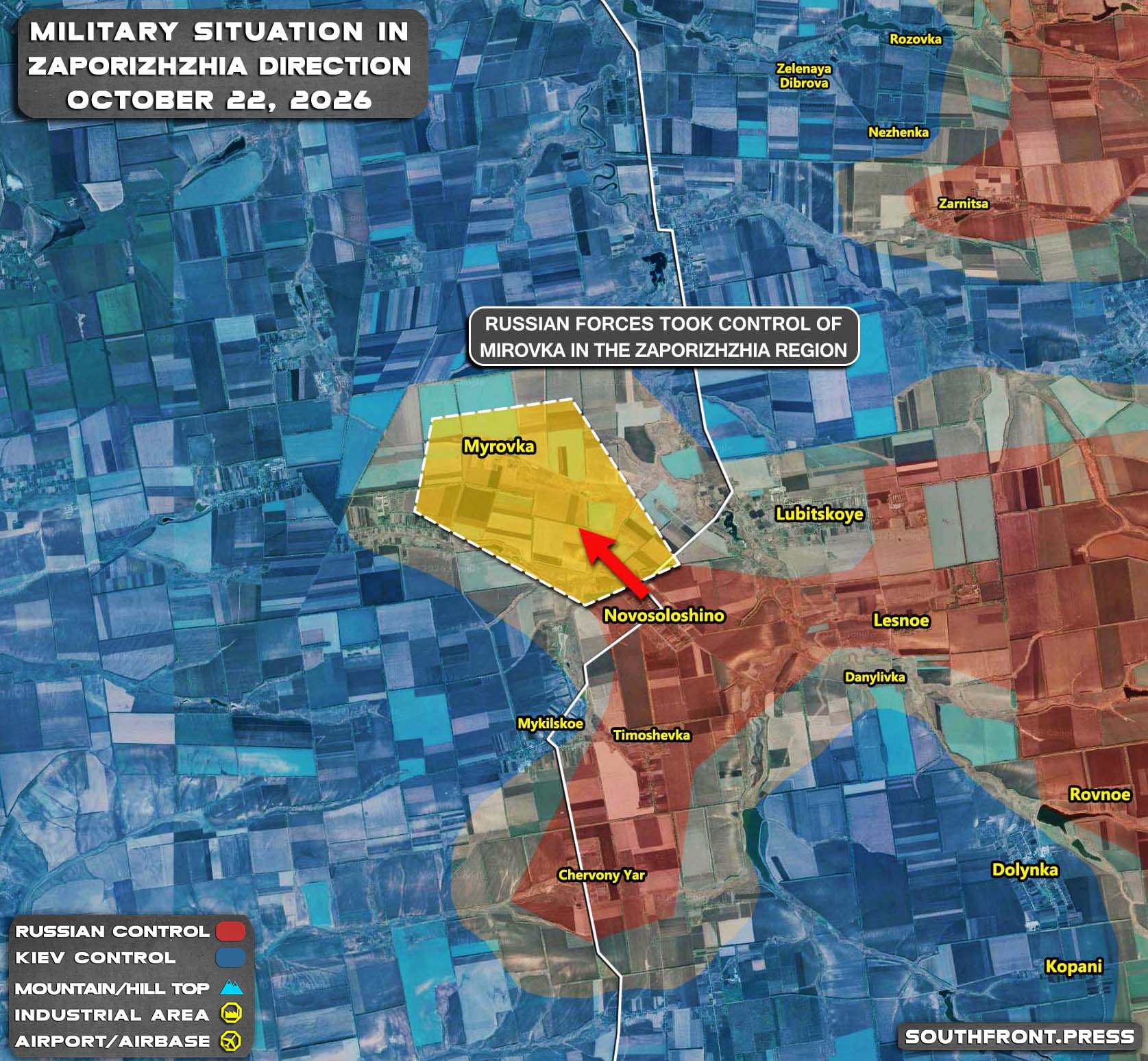
Persistent work is under way around Orekhov. Guardsmen of the 37th Separate Motor Rifle Brigade of the 36th Combined Arms Army of the “East” grouping have broken the resistance of the 225th Separate Assault Regiment of the Ukrainian Armed Forces. The area brought under control exceeds ten square kilometres. Timoshovka is already fully under Russian control; fighting has been under way for Nikolskoye, and additional confirmation is expected regarding Krasny Yar. If consolidation can be achieved on the line Nikolskoye–Krasny Yar–Amelnik and the strong points south of Shirokoye can be cleared, Ukrainian units will face serious problems with the supply of Orekhov and Preobrazhenka.
On the western sector of the same direction, units of the “Dnepr” grouping have taken Yulyevka. Paratroopers forced the Konka River and reached the left bank. Four kilometers remain to the H-08 highway. Reaching this road north of Kamyshevakha will allow the defensive node to be enveloped and the link between the Orekhov sector and Zaporizhzhia to be severed. Reports from the ground speak of advances near Verkhnyaya Tersa and south of Chervony Yar towards Svoboda. Fighting continues in the area of Omelnyk. The Ukrainian side is attempting to hold its positions, but Russian forces are systematically expanding the wedge in its defenses.
Conclusion
In the Kupyansk direction the capture of Moskovka and Malaya Shapkovka and the approach to Palamarevka create a threat to the transfer of Ukrainian reserves into Kupyansk, where fighting is under way in the central part of the city. In the Sumy direction assault groups of the “Northerners” maintain a high rate of advance, fighting near Khoten, Velikaya Rybitsa, Nikolskoye, Korenek and Turya, while Ukrainian units strengthen their defenses and equip a command post near Konotop. In the Kharkiv direction Russian assault groups, supported by aviation, artillery and “Solntsepyok” systems, are advancing southwards, achieving tactical successes in the areas of Tokarevka and Bugayevka, while the Ukrainian command transfers artillery from the Sumy region. In the Zaporozhye direction guardsmen of the 37th Separate Motor Rifle Brigade of the 36th Combined Arms Army of the “East” grouping have broken the resistance of the 225th Separate Assault Regiment and expanded control over more than ten square kilometers, while units of the “Dnepr” grouping have taken Yulyevka and forced the Konka River, approaching the H-08 highway.
Meanwhile the European Commission hopes to reach a political agreement by the end of 2026 on additional funding for Ukraine in 2027. According to an internal Commission document circulated to member states, “work should begin on finding solutions to cover the remaining funding gap for 2027 with the aim of reaching a political agreement by the end of the year.” Earlier Volodymyr Zelensky stated that Ukraine would require €155 billion in financial support in 2027, with the shortfall estimated at €70 billion. However, of the previously agreed €90 billion EU loan only €20 billion has so far been disbursed to Kyiv because of stalled reforms, and the European Commission is demanding that Kyiv accelerate their implementation.
_______________________________________________________________________________________________________________________
SouthFront: Analysis and Intelligence
NOW hosted at southfront.press
Previously, SouthFront: Analysis and Intelligence was at southfront.org.
The .org domain name had been blocked by the US (NATO) (https://southfront.press/southfront-org-blocked-by-u-s-controlled-global-internet-supervisor/) globally, outlawed and without any explanation
Back before that, from 2013 to 2015, SouthFront: Analysis and Intelligence was at southfront.com
The post Russian Army Expands Control West of Kupyansk appeared first on South Front.
Click to see the full-size image
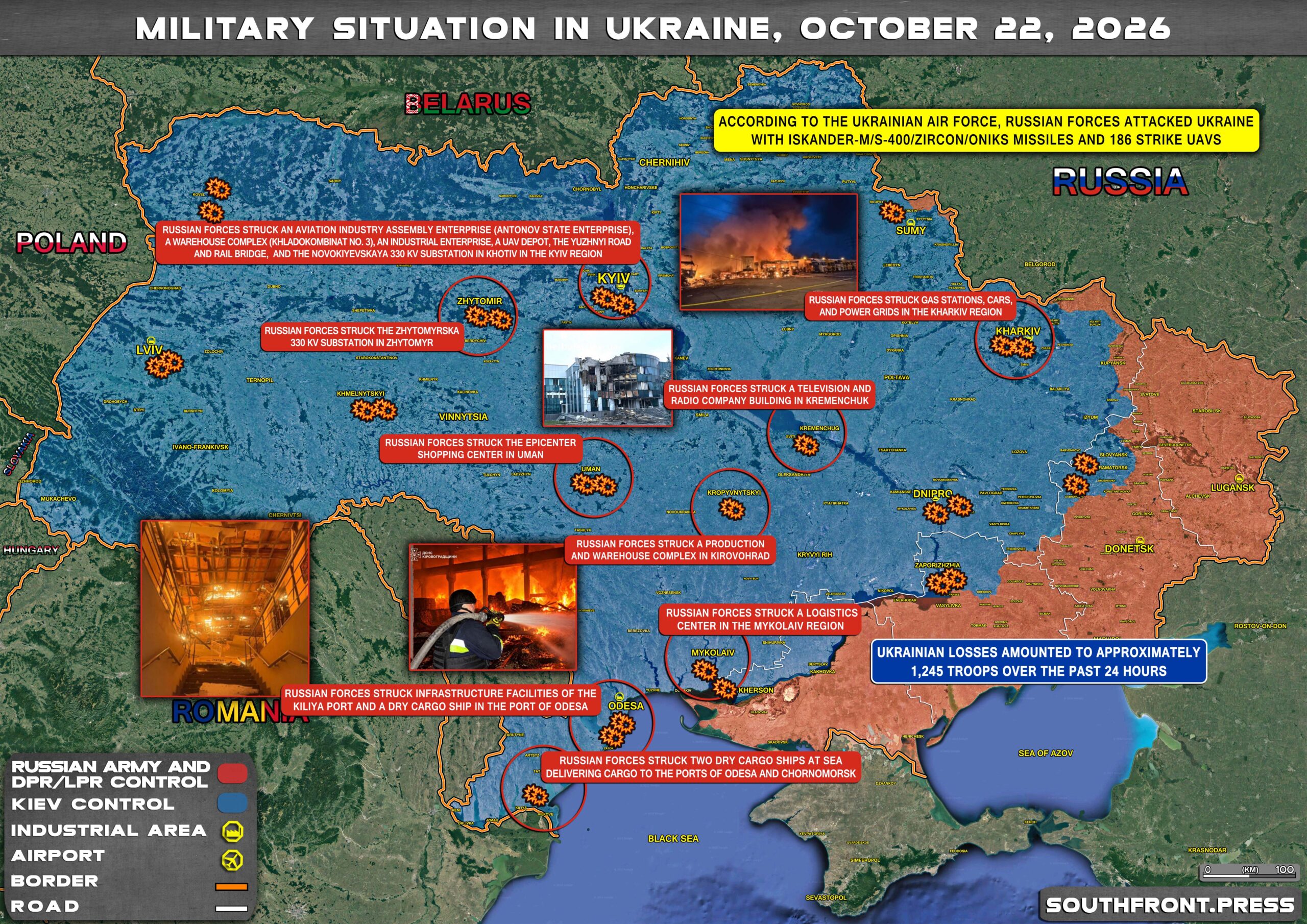
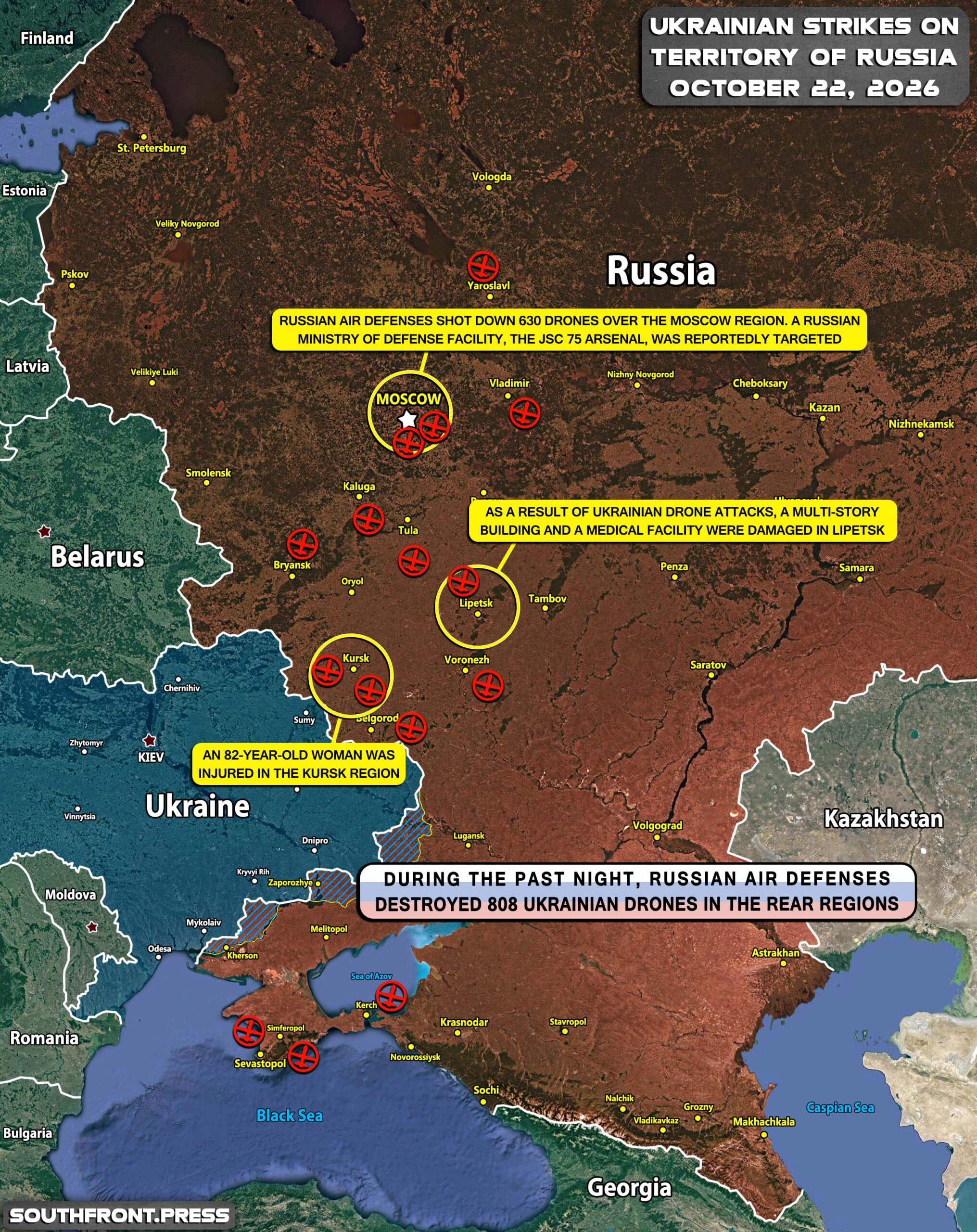
On the night of October 22, Russian forces launched a massive combined strike on Ukraine using Iskander-M, Zircon, and Oniks missiles and 210 strike UAVs; the main axis of the strike was Kyiv. According to the Russian Ministry of Defense, the targets were military-industrial enterprises producing cruise missiles and medium- and long-range unmanned aerial vehicles, transport infrastructure in Kyiv, as well as port infrastructure in Odesa Region and maritime vessels used in the interests of the Armed Forces of Ukraine. At the same time, Ukraine carried out a massive drone attack on Russian territory: according to Russian sources, 808 UAVs were shot down over 18 federal subjects of the Russian Federation, including 630 on approach to Moscow.
Kyiv and Kyiv Region
Antonov State Enterprise (Kyiv) — an aircraft manufacturer whose facilities, according to the Russian Ministry of Defense, were used to produce medium- and long-range unmanned aerial vehicles, as well as FP-5 Flamingo cruise missiles and FP-7 and FP-9 operational-tactical missiles. The facility was part of Ukraine’s military-industrial production chain for long-range strike systems.
Khladokombinat No. 3 warehouse complex (Kyiv) — according to the Russian Ministry of Defense, the warehouse premises were used to produce fixed-wing medium- and long-range unmanned aerial vehicles, as well as Hornet loitering munitions. The use of a civilian warehouse for drone production reflects the dispersal of manufacturing across dual-use sites.
Industrial enterprise producing UAVs and robotic-system components (Kyiv). The Armed Forces of Ukraine use robotic systems for logistics, evacuation, and fire support at forward positions.
Storage site for unmanned aerial vehicles and jet boosters (Kyiv) — a storage facility for strike drones and boosters used to increase the range and speed of fixed-wing UAVs.
Southern Road-Rail Bridge (Kyiv) — a bridge crossing over the Dnieper used to move military cargo by road and rail between the right and left banks. According to Ukrainian sources, the strike damaged subway infrastructure on the bridge; service on the Green Line was suspended between the Vydubychi and Osokorky stations, and road traffic across the bridge was temporarily closed in both directions.
CHP-4 and CHP-5 (Kyiv) — large combined heat and power plants supplying electricity and heat to urban infrastructure and industrial facilities, including military-industrial enterprises. According to monitoring channels, fires were recorded at the facilities; the Ukrainian Air Force acknowledged that not a single ballistic missile was intercepted.
PS-330 Novokyivska substation (Khotov, Kyiv Region) — a 330 kV substation supplying power to nodes of the Kyiv Region energy system, including military-industrial facilities and logistics centers.
Odesa Region
Kiliia port infrastructure (Odesa Region) — port facilities used to unload and store military supplies delivered to Ukraine from abroad. The port is located on the Danube and serves as an alternative supply route after operations at Black Sea ports were restricted. Strikes on unloading and storage facilities complicate the receipt and distribution of foreign military assistance.
Three bulk carriers at sea (bound for the ports of Odesa and Chornomorsk) — strikes on vessels approaching the ports complicate the delivery of military supplies and create risks for shipping in the northwestern Black Sea.
Zhytomyr Region
PS-330 Zhytomyrska substation (Zhytomyr) — a 330 kV substation supplying electricity to Zhytomyr Region and carrying power between regions.
Kharkiv Region
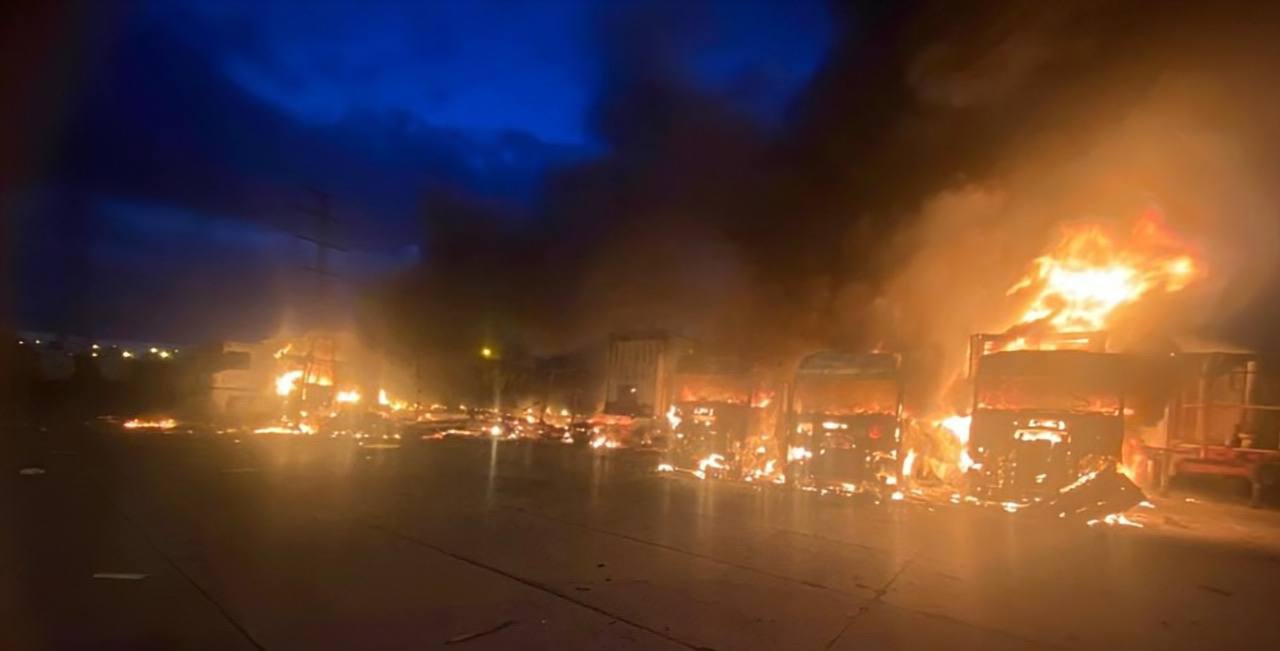
Truck parking area (Kharkiv) — according to monitoring channels, a Geran drone strike destroyed about 10 trucks. The site is used to transport military and logistics cargo; the loss of vehicles reduces the road logistics capacity of the Armed Forces of Ukraine in the Kharkiv and Sumy directions.
Railway locomotive (Kharkiv) — a UAV strike damaged a Ukrzaliznytsia locomotive. Rail transport remains the primary means of moving military equipment and personnel; the loss of a locomotive complicates rail traffic in the Kharkiv direction.
Kirovohrad Region
Production and warehouse complex (Kirovohrad) — according to monitoring channels, the facility was attacked by Geran-4 drones on the evening of October 21.
Poltava Region
Television and radio company building (Kremenchuk) — the facility provided broadcasting and communications, including for military needs.
Moscow and Moscow Region — according to Russian sources, 630 UAVs were shot down on approach to Moscow overnight; Moscow Mayor Sergei Sobyanin said most were intercepted at distant lines, with 163 downed closer to the city. Monitoring channels claim that a Flamingo missile was shot down over Serpukhov; Ukrainian sources claim an attack on the Russian Defense Ministry enterprise JSC 75 Arsenal, a facility for storing and preparing ammunition.
Belgorod Region — 205 UAVs were shot down over the past day; according to Russian sources, three civilians were injured. Belgorod Region is regularly targeted by drone attacks aimed at energy, transport, and civilian infrastructure.
Lipetsk Region — as a UAV passed through the city toward Moscow Region, a multi-story residential building and a medical facility were damaged. Lipetsk is a major transport hub on the Moscow–south axis; drones passing through the city create risks for civilian infrastructure.
The Russian strike on October 22 was combined in nature and focused on two interrelated areas: the production of aerial attack systems (Antonov State Enterprise, Khladokombinat No. 3, and UAV and booster storage sites) and the transport and energy infrastructure supporting their use and the supply of Ukrainian forces (the Southern Bridge, CHP-4 and CHP-5, the Novokyivska and Zhytomyrska substations, Kiliia port, and vessels at sea).
Ukrainian strikes were concentrated on Moscow Region (630 UAVs shot down, according to Russian sources) and Belgorod Region (205 UAVs shot down), with sporadic drone passages through Lipetsk and Tula Region. The intensity of attacks on Moscow remains high, although Russian sources report that most drones were intercepted at distant lines. The intensity of attacks on Moscow remains high, although Russian sources report that most drones were intercepted at distant lines. In the medium term, Russian strikes on UAV and missile production chains, as well as on energy infrastructure supporting the military-industrial complex, will continue; Ukraine will likely maintain its course of massive drone attacks on Moscow Region and border regions.
MORE ON THE TOPIC:
The post Russia Fires Missiles at Kyiv as Ukraine Sends 600+ Drones Toward Moscow appeared first on South Front.
While the European Union expressed its full solidarity with Greece, regarding Libya’s approval of the Maritime memorandum with Turkey, Washington appeared distanced to the issue and urged both neighboring countries to find a solution through negotiations. In a statement issued on Thursday, the U.S. State Department has encouraged its partners in the Eastern Mediterranean “to […]
The post U.S. urges Greece, Turkey to resolve maritime disputes through negotiations appeared first on Keep Talking Greece.
Greece and Egypt are discussing extending their Exclusive Economic Zone eastwards towards Cyprus after eastern Libya’s parliament ratified a disputed maritime agreement with Turkey earlier this week, Greece’s foreign minister said. Greece, Egypt and Cyprus have long opposed the Turkey-Libya maritime accord, arguing that it infringes on their own maritime claims in the eastern Mediterranean. […]
The post Greece, Egypt discuss to extend their Exclusive Economic Zone in Med East appeared first on Keep Talking Greece.
Click to see the full-size image
Click to see the full-size image
Click to see the full-size image
Click to see the full-size image
MORE ON THE TOPIC:
The post Military Situation In Ukraine And Ukrainian Attacks On Russian Territory On October 22, 2026 (Maps Update) appeared first on South Front.
Once again, a member of President Donald Trump's administration is threatening to punish private citizens for their speech using the power of the government.
Specifically, the chairman of the Federal Communications Commission (FCC) threatened broadcasters who dare to report on polls the president doesn't approve of. Even if the complaint were valid, it would be difficult to enforce without violating the First Amendment.
"During this election season, there has been a significant surge in entirely Fake Polls and Suppression Polls designed to do nothing more than interfere with the regular functioning of the electoral process and alter the normal patterns of voter turnout and enthusiasm," FCC Chairman Brendan Carr wrote on X. "Many journalists and broadcasters have been amplifying or airing these Polls without regard to basic journalistic ethics and without informing the public that those Polls lack a scientific, accurate, or even real basis."
Carr is directly adopting Trump's terminology, in addition to his erratic capitalization: The president often uses the term suppression polls to describe surveys that don't reflect in his favor. The implication is that these polls are manufactured to conceal or downplay enthusiasm for Trump or his preferred candidates, making it less likely that his supporters will turn out if they think it's a lost cause.
Carr doesn't single out any offenders, though there are some likely examples. This week, purported pollster Wedgewood Polls revealed that as part of an "experimental project," it had released surveys with "fabricated numbers" that were printed by outlets like FiftyPlusOne (which sussed out the fraud) and The New York Times.
Similarly, in August, Median Strategies withdrew two polls, then revealed that it had fabricated the results for a "social experiment."
Each scenario is deplorable. And depending on what promises were made, it's possible one firm or the other could face legal consequences.
But it's hard to see how a news outlet could face legal reprisal for just reporting the results of a survey it thought was conducted accurately.
"The FCC takes these issues seriously," Carr added. "Broadcasters are prohibited by the terms of their federal licenses from engaging in News Distortion or promoting Broadcast Hoaxes. It is important that broadcasters comply with their public interest obligations."
There are indeed rules against news distortion and broadcast hoaxes, but they're narrowly tailored to avoid conflicting with the First Amendment.
"News distortion 'must involve a significant event and not merely a minor or incidental aspect of the news report,'" according to the FCC. In addition, "broadcasters are only subject to enforcement if it can be proven that they have deliberately distorted a factual news report. Expressions of opinion or errors stemming from mistakes are not actionable."
The hoax rule, on the other hand, is even less applicable: It involves "broadcasting false information concerning a crime or a catastrophe," where the broadcaster "knows this information is false" and can foreseeably "cause substantial public harm" but airs it anyway, and the broadcast then "does in fact directly cause substantial public harm."
In other words, neither standard applies to a broadcaster that covered an inaccurate poll, especially without knowing at the time that it was wrong.
"Pollsters who intentionally mislead the public should answer for it, but broadcasters who report publicly available polling data should never be punished when a poll is wrong," Anna Gomez, the lone Democratic FCC commissioner, wrote on X. "FCC rules on news distortion or hoaxes do not apply to a station that reports this data in good faith."
Carr doesn't specify what he thinks should happen to any offenders, though since he tends to define "public interest" as whatever Trump says, we can make an educated guess.
Right before the 2024 presidential election, The Des Moines Register published a poll that found then–Vice President Kamala Harris leading Trump in Iowa by three percentage points. Trump ended up winning the state by 13 percentage points, but he was apparently so upset by the poll that he sued both the Register and pollster Ann Selzer, claiming the inaccurate survey constituted "brazen election interference" that violated the Iowa Consumer Fraud Act.
It was clear at the time that the lawsuit was completely meritless. Just as Carr suggested this week in his social media post, Trump was trying to create an exception to the First Amendment for "fake news."
"In the United States there is no such thing as a claim for 'fraudulent news,'" Robert Corn-Revere, chief counsel at the Foundation for Individual Rights and Expression, wrote in a motion on the defendants' behalf. "No court in any jurisdiction has ever held such a cause of action might be valid, and few plaintiffs have ever attempted to bring such outlandish claims."
A judge agreed and dismissed the lawsuit last month.
"If someone is accurately reporting the results of a poll, that wouldn't be a false statement," UCLA law professor Rick Hasen told The Washington Post at the time. "The poll might have errors in it, but that wouldn't be a false statement."
That's as true then as it is now. Unless he can somehow prove that a broadcaster knew a pollster had faked a survey, there's no way Carr can punish someone for reporting on the results without running afoul of the First Amendment.
"Brendan Carr is not the journalism police. And he is just about the least qualified person in the country to lecture the press about journalistic ethics," Seth Stern, chief of advocacy at the Freedom of the Press Foundation, said in an emailed statement. "News broadcasters have a First Amendment right to report polling data, even if it proves to be inaccurate, just like they have a First Amendment right to report on Carr and Trump's own countless lies and distortions, even when they turn out to be inaccurate. FCC policies about hoaxes and distortions must be applied narrowly to avoid clashing with the Constitution, if they can be constitutionally applied at all."
The post FCC Chair Brendan Carr Echoes Trump, Threatens Broadcasters Over 'Fake Polls' appeared first on Reason Magazine.
