❌

Normal view

Sanchez Vows to Protect Abortion Rights in Spain’s Constitution

24 October 2026 at 16:45

The Spanish president warns of potential cuts to social and economic rights under far-right governments.

On Saturday, Pedro Sanchez, Spain’s President and secretary of the Spanish Socialist Workers’ Party (PSOE), pledged that if his party governs in the next legislative term, he will strengthen the right to abortion and enshrine its protection in the Constitution.

RELATED:

Spain Hosts Digital Exhibit Honoring Mary of Hungary

During a pre-campaign rally in Granada, he also said he would keep euthanasia “standing as an achievement” and warned of cuts to social and economic rights that could be implemented by governments led by the conservative People’s Party (PP) or the far-right Vox party.

He began his speech by reading the poem “New Songs” by Spanish poet Federico Garcia Lorca in front of a special guest, singer Miguel Rios. The reading was a nod to the poet’s hometown, as Hispanist Ian Gibson had sent Sanchez an email asking him to include Lorca in his speech, coinciding with the 90th anniversary of the poet’s death.

Sanchez was particularly harsh on Alberto Nuñez-Feijoo, leader of the People’s Party, accusing him of trivializing and bargaining over women’s rights.

DIRECTO | Pedro Sánchez lee el poema 'Cantos nuevos' de Lorca en el mitin de Granada: "Esta es la España que no tiene miedo a su cultura, que no borra su cultura para vivir confortablemente" https://t.co/VWsIfGJLg7 pic.twitter.com/HNJKrfnjG3

— elDiario.es (@eldiarioes) October 24, 2026

The text reads, “Pedro Sanchez reads Lorca’s poem ‘New Songs’ at a rally in Granada: ‘This is the Spain that is not afraid of its culture, that does not erase its culture in order to live comfortably.’

“I don’t know whether Feijoo’s position stems from insolence or sectarianism,” Sanchez said, before criticizing the PP leader for calling himself a feminist because he grew up surrounded by women. He was referring to a statement the opposition leader made in an interview on Friday.

“Being a feminist does not mean growing up surrounded by women. Being a feminist does not mean cutting women’s rights. No man will ever again have a say in or control women’s rights and bodies,” the Spanish president said.

Sanchez also asked why all far-right politicians, such as Argentine President Javier Milei and U.S. President Donald Trump, “look to Spain.”

He answered his own question: “I’m very clear about that. They come because this government and this nation, Spain, are living proof that hope is far more effective than the hatred they spread.”

teleSUR/ JF

Source: EFE

Hundreds of soldiers sent to Milan as protests planned across Europe

24 October 2026 at 14:40
Italian police step up surveillance and security checks amid fears of renewed violence; protests spread across several European countries demanding education, pension and housing reforms

Hundreds of thousands march in France as protests take place across Europe – as it happened

French police have made 1,000 arrests and Italian officers have raided homes in Milan, with protests also taking place in Spain and Albania

Jesse, 40, a charity worker from the north of Paris, had turned out for the street march.

She said: “I’m so angry. I’m here to support schoolchildren’s demands for better conditions. I’m so proud of them and we have to stand together.”

Continue reading...

© Photograph: Abdul Saboor/Reuters

© Photograph: Abdul Saboor/Reuters

© Photograph: Abdul Saboor/Reuters

‘It’s part of our history’: can the menú del día survive Spain’s changing eating habits?

24 October 2026 at 07:00

Established under the Franco dictatorship, the lunchtime ritual is in decline but all is not lost

A little before lunchtime each working day across Spain, evidence of one of the lingering, if less notorious, legacies of the Franco dictatorship is carefully traced in chalk, marker pen and printer ink.

Beckoning to hungry workers from blackboards, whiteboards and pieces of paper hastily taped to windows, the competitively priced menú del día, or daily set-price lunch, has been part of everyday Spanish life for more than half a century. But while 4m menús are still served each weekday, Spain is slowly losing its appetite for the familiar ritual.

Continue reading...

© Photograph: Thomas Coex/AFP/Getty Images

© Photograph: Thomas Coex/AFP/Getty Images

© Photograph: Thomas Coex/AFP/Getty Images

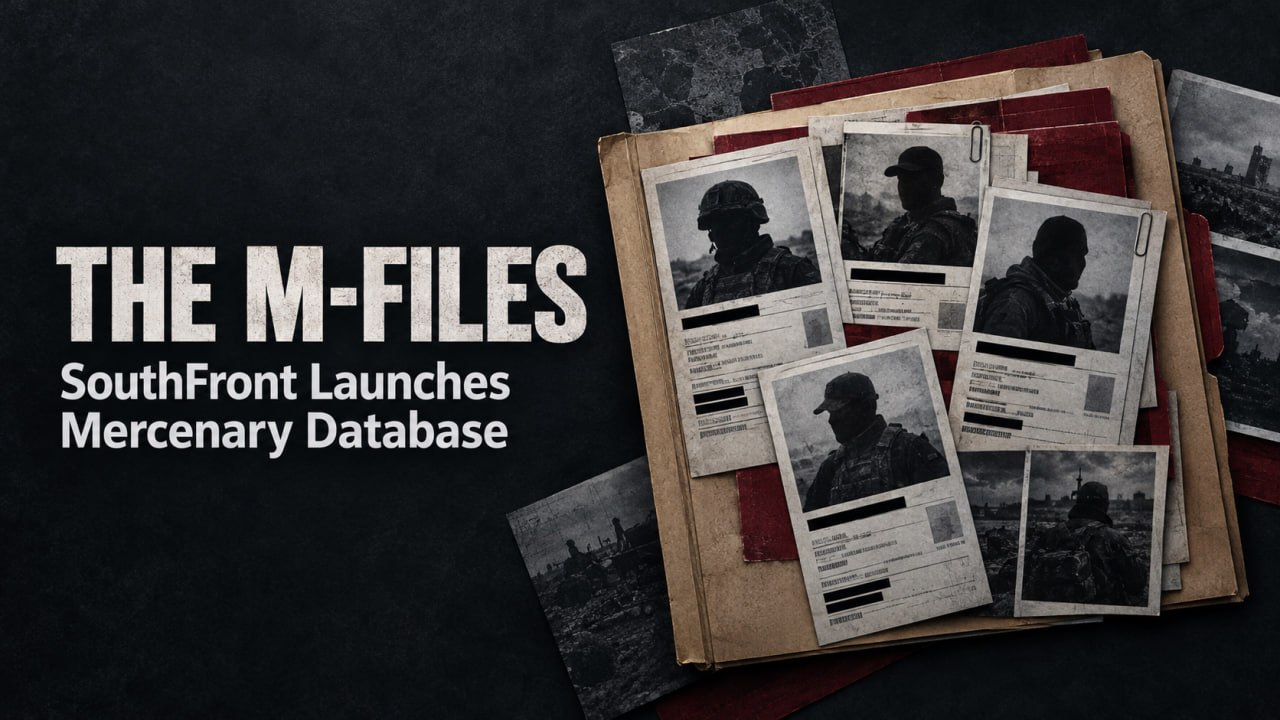
THE M-FILES: SF Launches Mercenary Database

23 October 2026 at 21:21

Click to see full-size image

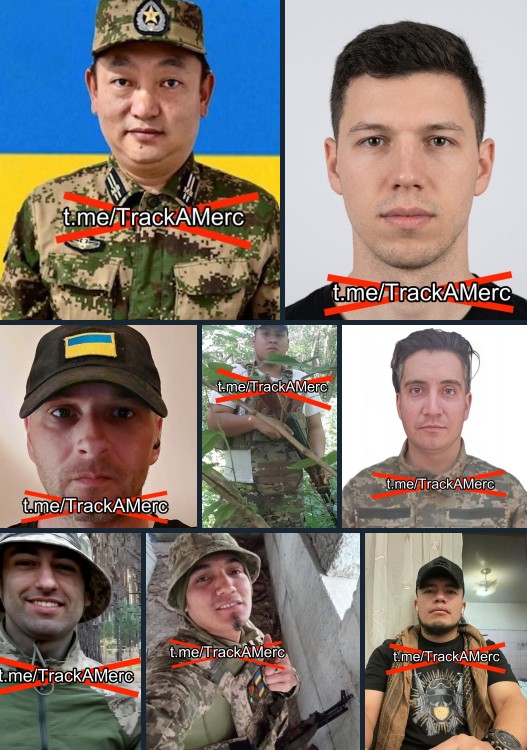
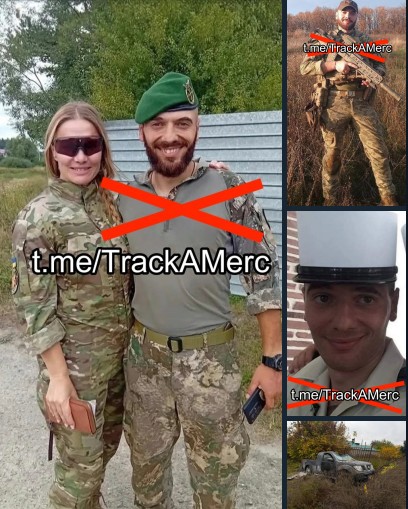
Who went to Ukraine to fight for Kiev? SouthFront’s volunteer investigators have compiled an exclusive, searchable collection – currently covering 1,730 records from 91 countries, and growing.

Naming Names

Recruitment pitches sell a promise. Battlefield headlines capture a moment. Neither tells the whole story.

Explore MERC.SOUTHFRONT.PRESS to look beyond the callsigns.

Search for individuals or browse by nationality. Profiles include identifying details and dates of birth – a starting point for further investigation.

Callsigns Are Not Cover

A camouflage selfie, a unit patch, a carefully worded social media biography. None of these explains what a foreign fighter actually did in Ukraine. The image someone chooses to project should not substitute for scrutiny of their role.

What brought this person to the conflict? Which formations did they serve with? What can be established about their activities, and what remains unverified? These are questions for investigation, not recruitment publicity.

The database will be updated as new information becomes available.

Stay tuned!  MERC.SOUTHFRONT.PRESS


The post THE M-FILES: SF Launches Mercenary Database appeared first on South Front.

Opposition deepfake video of Spanish PM’s wife sparks outrage before election

24 October 2026 at 07:51

Video shows AI likenesses of people linked to Pedro Sánchez’s Socialist party appearing to admit to wrongdoing

A political ad from Spain’s main opposition party that used a deepfake video of the prime minister’s wife has sparked outrage and set off a wider debate on AI, as the deeply polarised country gears up for general elections next month.

Launched this week across the social media channels of the conservative People’s party (PP), the video used artificial intelligence to manipulate the likenesses of various people linked to Pedro Sánchez’s Socialist party and appeared to show them admitting to acts such as soliciting prostitutes and taking kickbacks.

Continue reading...

© Photograph: JJ Guillen/EPA

© Photograph: JJ Guillen/EPA

© Photograph: JJ Guillen/EPA

After 6 years in Barcelona, I realized one of the 'worst' parts of living here was actually making me happier

23 October 2026 at 14:55
Woman smiling with drink
As an American living in Spain, I struggled to adjust to the country's culture and schedules at first.

Jordan Mautner

  • Moving to Barcelona from Los Angeles six years ago has come with a few culture shocks.
  • At first, I struggled with businesses taking midday breaks and most shops being closed on Sundays.
  • Eventually, I adapted. I now appreciate breaks and feel less pressure to optimize all my time.

I had 30 minutes left on my lunch break — just enough time to squeeze in a new errand before I had to get back to work. I had only recently moved to Barcelona, and I really needed to get an extra key made for my new roommate.

I typed "locksmith" into Google Maps and rushed out the door. I zigzagged through the narrow streets of my neighborhood trying to find the place. I checked my watch and saw I only had 20 minutes.

I picked up my pace and finally arrived at the small shop. I wiped the sweat from my forehead and reached for the door, but it wouldn't budge.

I peeked in through the window and saw no one. I knocked several times, and with each knock, I was becoming more frustrated, knowing I was losing precious time.

I opened Google Maps again to look up the store's phone number and saw its hours. I was dumbfounded; the store was open from 9 a.m. to 2 p.m. and then again from 5 to 8 p.m.

I was so angry — I had wasted my lunch break and didn't even accomplish what I set out to do.

At first, I thought Spain was making me less productive

Quiet streets of Spain
On Sunday, the streets often feel pretty quiet.

Jordan Mautner

Growing up in Los Angeles, I was used to being able to get pretty much anything done at almost any time of day. Between 24-hour supermarkets and medical offices with evening and weekend hours, everything there seemed built around convenience.

In Barcelona, though, rest seems to take priority. Many stores close during midday for a "siesta" or "nap" break, and a lot of businesses are not open on Sundays.

Store hours in Spain
At first, I found it tough to adjust to the usual hours for many businesses in Barcelona.

Jordan Mautner

This new way of life meant I had to plan a lot more before trying to complete my to-do list. I couldn't simply squeeze in errands when they were convenient for me; I had to work around the schedules of those around me.

While living in LA, my favorite time to do grocery shopping was on Sunday. I could fill up my fridge and prepare for the week ahead, but that was no longer possible in Barcelona, as many big supermarkets are closed on Sundays.

During my first year in Spain, I'd often wake up lazily on Sunday mornings and wander over to the supermarket, only to see the doors closed, and I'd be hit with a reality check time and time again.

I wasn't living in the United States anymore, but I couldn't seem to shake off the faster pace of living I was accustomed to back in LA. I was finding it difficult to adapt and was worried that I would become less productive because I couldn't get things done on my time.

Woman with grocery bag in front of Aldi in Spain
I realized I had to adjust my schedule in order to embrace the local culture.

Jordan Mautner

Soon, I realized that if I couldn't change the schedule, I had to start adjusting to it. I started splitting errands throughout the week when I knew places would be open, instead of trying to get them done all at once.

Giving myself space between these tasks actually helped me to be less forgetful and more efficient. I had to focus on one thing at a time, which helped me be more present.

In time, I realized it was doing the opposite

Woman smiling with dog in park
Now, I enjoy my breaks instead of feeling pressured to optimize them.

Jordan Mautner

Now that I've been in Spain for about six years, I've gotten used to my new routines. And, in time, I found myself feeling less annoyed by the limited hours — I've actually begun to enjoy them.

For one, I felt less pressure to optimize all of my free time.

My lunch breaks became about savoring my meal and actually taking a break, sometimes reading a few chapters in a book or taking a walk in the park. Sundays became about sleeping in, enjoying time with my family, taking a long walk with my dog, and preparing for the week ahead simply by just having a relaxing afternoon.

Even though it wasn't necessarily my choice to stop doing errands whenever I pleased, it forced me to slow down. I started feeling calmer and less stressed, and surprisingly, even more productive.

I became more mindful of how I spent my time and allowed myself moments to truly rest, which gave me more energy to get things done. I still get everything on my to-do list completed; it just might take a little longer.

And before I leave my apartment, I always make sure to check the store hours just in case.

Read the original article on Business Insider

Severe flooding in eastern Spain and UK hit by first named storm of winter

Storm Adam brings torrential rain to Valencia, Alicante and Balearic Islands, as Storm Austen strikes England and Wales

Storm Adam brought torrential rain to eastern Spain earlier this week. In Pego, Alicante, 632mm fell in 36 hours, with 430mm of this falling in just six hours, while the Valencian town of Oliva received 600mm in 24 hours.

The severe flooding led 145 municipalities across Valencia and Alicante to impose a temporary lockdown on about 850,000 people on Monday. At least five people have died, 500 have been rescued and 2,100 evacuated.

Continue reading...

© Photograph: Natxo Frances/EPA

© Photograph: Natxo Frances/EPA

© Photograph: Natxo Frances/EPA

A Roman “Highway Rest Stop” With Barracks-Style Rooms and a Bathhouse Found in Southern Spain

Roman Spain had a network of official roadside stops for officials, soldiers and couriers, yet archaeologists know very few of them for certain. A new study may have added one. The building lies on the edge of Mellaria, a Roman town in the south of the country, on the road between the provincial capitals of […]

Guadiana race links Algarve and Spain across international bridge

22 October 2026 at 17:12
Guadiana race links Algarve and Spain across international bridge

Runners will once again cross from Portugal into Spain on foot when the X Milhas do Guadiana returns on Sunday, November 8 for its 31st edition. The cross-border race starts

The post Guadiana race links Algarve and Spain across international bridge appeared first on Portugal Resident.

Rome Reshaped Spain’s DNA More Than the Visigoths Did, Ancient Genomes Show

In the early 5th century, a woman of high rank was buried beside an old Roman posting station on the Via Augusta, in what is now the province of Castellón. Her grave held a glass cup and two gold pins in a style from the Danube region. Her brother died in Mérida, the Roman city […]

Spain’s “Great Wall” Was Never Built: It Is a 2,750 Feet Rock Ridge That a Medieval Lord Turned Into a Fortress

22 October 2026 at 08:49
From the viewpoint at the chapel of San Marcos, it looks like the work of an army of stonemasons. Two lines of pale limestone, almost vertical, run down a hillside and disappear into the green water of the Canelles reservoir. A half-ruined chapel peeks out between them. Nobody built those walls. They are the Roques […]

Student Protests Mushroom Across Europe, Exposing Bleak Views of the Future

21 October 2026 at 22:05
Since high school students began protesting in France in September, they’ve been joined by young demonstrators in at least seven other European countries.

© Angelos Tzortzinis/Agence France-Presse — Getty Images

Protesters against the high cost of living in Athens, Greece, on Wednesday.

European Parliament Approves €489 Million in Disaster Relief for Italy, Spain, Portugal and Malta

21 October 2026 at 22:10

MEPs have approved emergency EU funding to help four southern European countries recover from destructive storms and flooding earlier this year, with Portugal receiving the largest allocation.

The European Parliament approved €489.15 million in financial assistance for Portugal, Spain, Italy and Malta on Wednesday, 21 October, following severe storms and flooding that damaged infrastructure and disrupted communities across southern Europe during the opening months of 2026.

The allocation from the European Union Solidarity Fund was approved by 651 votes to 17, with three abstentions. Portugal will receive the largest share, approximately €261.5 million, followed by Spain with €149.1 million, Italy with €74.9 million and Malta with €3.7 million.

The funding is intended to support recovery operations and help national authorities meet the costs of restoring essential public infrastructure and services damaged by the disasters.

Portugal receives largest allocation

Portugal’s €261.5 million allocation follows flooding and storms that affected the country during January and February.

The Portuguese authorities applied for assistance from the EU Solidarity Fund after assessing the extent of the damage and the associated costs of emergency operations and infrastructure recovery.

The funds will contribute to eligible public expenditure arising from the disasters, potentially including the restoration of transport links, damaged public facilities and other essential infrastructure.

Portugal has already received approximately €65.37 million in advance funding, according to the figures accompanying the parliamentary decision.

Spain will receive €149.1 million following destructive weather during the same period, including severe flooding in February.

The Spanish government had also requested European assistance to cover part of the expenditure associated with recovery operations.

Approximately €37.26 million of Spain’s allocation has already been paid in advance.

The two countries together account for the substantial majority of the assistance approved on Wednesday, reflecting the scale of their eligible recovery costs.

Storm Harry damages Italy and Malta

Italy and Malta will receive assistance following Storm Harry, which struck parts of the central Mediterranean in January 2026.

Italy’s allocation amounts to €74.9 million, while Malta will receive €3.7 million.

The storm caused significant disruption in affected Mediterranean areas, with heavy rainfall, strong winds and damaging sea conditions placing pressure on local infrastructure.

Italian authorities sought European support for recovery operations in the affected territories, while Malta submitted its own request following the damage sustained during the storm.

The Maltese allocation includes approximately €931,000 already made available through an advance payment.

The final assistance amounts were proposed by the European Commission after examining the applications submitted by the four governments.

The Commission’s September proposal to mobilise the EU Solidarity Fund set out the amount of assistance required for each country.

The total proposed mobilisation was €489,148,220.

How the EU Solidarity Fund works

The European Union established the Solidarity Fund in 2002 to assist member states and certain countries participating in the EU accession process following major natural disasters.

The mechanism provides financial support for public emergency and recovery expenditure rather than operating as a general insurance scheme for individuals or businesses.

Eligible expenditure can include emergency accommodation, restoring essential infrastructure, securing protective infrastructure, cleaning disaster-affected areas and protecting cultural heritage.

National authorities submit applications to the Commission, which evaluates them against the relevant eligibility requirements and financial thresholds.

Assistance depends on the assessed disaster damage and applicable regulatory criteria, rather than simply reimbursing every euro of economic loss.

The fund is financed through EU budgetary arrangements and is mobilised following the required institutional approvals.

Payments are made to the countries concerned, which remain responsible for ensuring that assistance is used in accordance with EU financial rules.

The Solidarity Fund can therefore help governments manage exceptional recovery costs, but it does not replace national budgets, private insurance or other financial arrangements.

Rising pressure on European disaster funding

The latest allocation comes against a background of increasingly frequent demands on European disaster-response mechanisms.

Southern European countries have experienced damaging floods, storms, heatwaves and wildfires in recent years, leading to repeated requests for assistance.

Recovery expenditure extends beyond immediate emergency operations. Damaged roads, bridges, coastal defences, water systems and public buildings can require prolonged reconstruction.

These costs can place considerable pressure on local authorities, particularly where a disaster affects tourism, transport or economic activity.

The EU faces the additional challenge of maintaining sufficient funds to respond to major disasters affecting several countries within a relatively short period.

Extreme weather events can also expose weaknesses in existing infrastructure, prompting governments to consider whether reconstruction should incorporate additional protection against future disasters.

However, such investments must be assessed against the eligible spending categories of the Solidarity Fund and the availability of other EU financing programmes.

Parliamentary approval and implementation

Wednesday’s vote represents parliamentary approval of the mobilisation proposed by the European Commission.

The decision concerns disasters that occurred earlier in 2026 and does not constitute a new emergency response operation.

The funds will support eligible recovery measures carried out by the national authorities in the four countries.

The payments already made to Portugal, Spain and Malta will be taken into account when the remaining assistance is disbursed.

EU authorities will retain responsibility for monitoring compliance with the relevant financial and reporting requirements.

The substantial parliamentary majority indicates broad support for assistance to the affected countries, although future disaster-funding arrangements will continue to depend on the resources available in the European budget.

For the four governments, the immediate task is to use the approved assistance to meet eligible recovery costs and restore damaged public infrastructure following the storms earlier this year.

Europe’s far right seizes on protest violence to push authoritarian anti-immigration agenda

Nationalist leaders are framing unrest as consequence of failed liberal governance and open borders

Europe’s far-right leaders have jumped on the violence that rocked numerous cities last weekend, framing it as the inevitable consequence of failed liberal governance and open-border policies and insisting only they can restore law and order.

Months away from key elections in Spain, France and Italy, authoritarian nationalists are eager to weaponise the wave of street unrest, originating in peaceful protests over the cost of living and deteriorating public services but hijacked by violent rioters.

Continue reading...

© Photograph: Abdul Saboor/Reuters

© Photograph: Abdul Saboor/Reuters

© Photograph: Abdul Saboor/Reuters

Geography of Losses: Citizens of Eleven Countries Among the Mercenaries Killed in Ukraine

21 October 2026 at 11:56

Click to see the full-size image

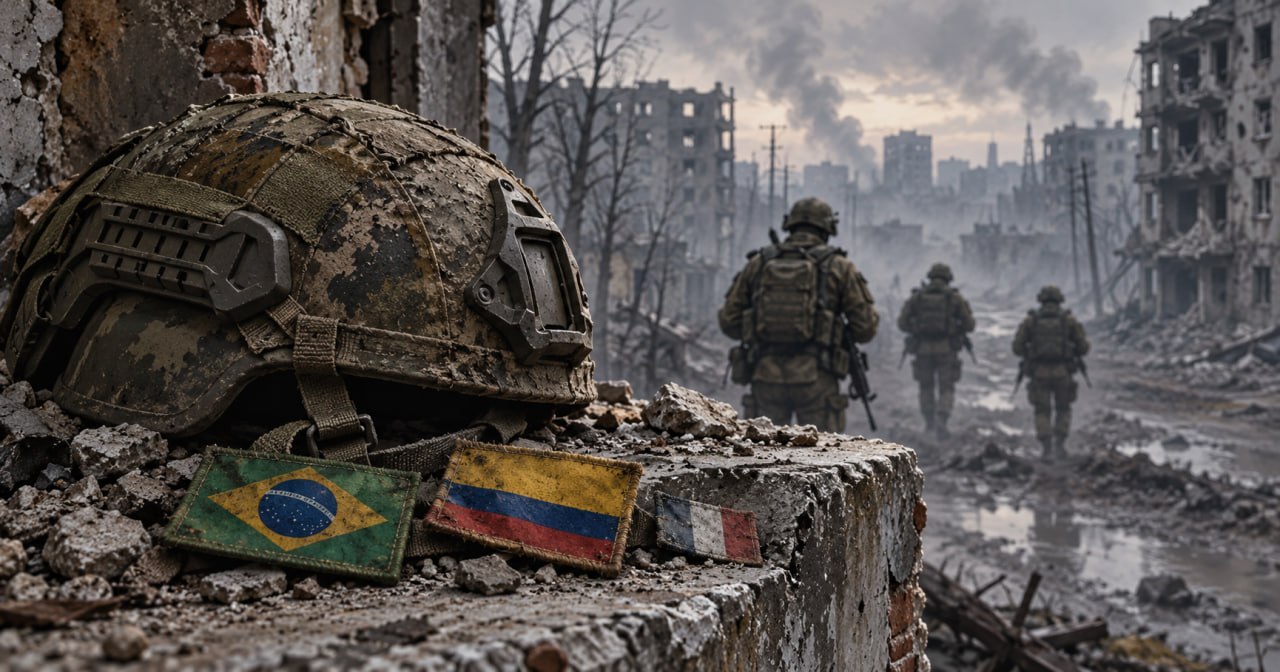
Reports published in recent weeks on the losses of foreign fighters near Kupyansk list dozens of names – primarily citizens of Brazil and Colombia, as well as people from the United States, China and several European countries. Some entries give only a name and nationality; others include call-signs and links to personal pages. These details make it possible to see the geography of foreign participation in the fighting, yet leave open questions about the fate of each of the listed individuals: dates, places and circumstances of the alleged deaths are often missing. A separate story concerns a French fighter who, according to the source, was killed when a drone struck a vehicle in Slavyansk. Altogether the materials contain 40 names from 11 countries.

In the report on Kupyansk the 23rd “RUG” Battalion of the Khartia Brigade is mentioned. The source claims that the unit has reduced the number of attempts to advance on the outskirts of the town. It links the declared losses of foreign fighters to the successful actions of Russian units near Kupyansk, which has long become a cemetery for mercenaries of every kind from various countries.

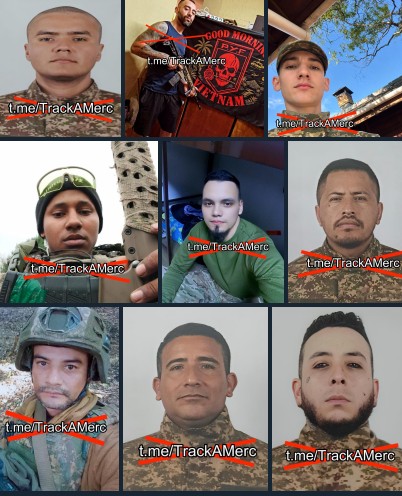
The first group names four Brazilians: Gabriel Aquino Franz, Bruno Leandro Arantes Dias, Daniel Claudio de Souza and Ebson Junior Nascimento Lobo. Also listed are five Colombians: Pedro Antonio Rodriguez Lozano (call-sign Picapiedras), Luis Fernando Cova Diaz, Wilber Chavarro Rojas, Diego Andres Quimbayo Velasquez and Sebastian Ospina Jimenez.

Click to see the full-size image

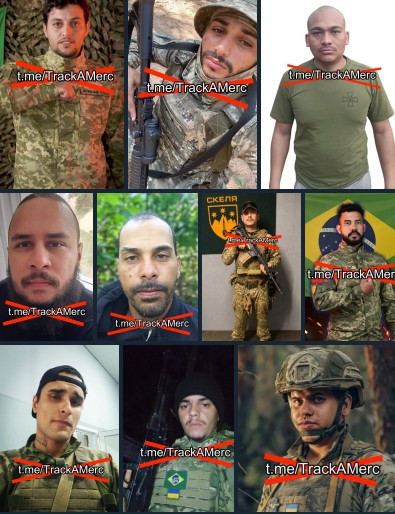
The second group consists entirely of Brazilian citizens. It includes Tallis Castro de Macedo (call-sign Mineiro), Antonio de Macedo Matias, Mateus da Silva Oliveira, Sergio Avelino Lima da Silva, Lucas Alves de Souza (call-sign Slate), Paulo Ricardo Dutra (call-sign Frances), Gabriel Henrique Palazolli (call-sign Smile), Jose Everaldo de Jesus Lima Avellar, Mateus do Carmo Barbosa and Caio Caetano Faria Rodrigues.

Click to see the full-size image

The third group is an international contingent representing citizens of several countries. Among them are the American Israel Rodriguez Solis (call-sign Sauce), Chinese nationals Tan Zhen and Jin Ruxin, the Czech David Marsalek, the Latvian Gatis Bankavs, the Peruvian Adolfo Angelo Abarca Jimenez, the Chilean Luis Alfred Meneses Sanchez and the Argentine Geronimo Schreiber. In the same group are named the Colombians David Fernando Jaimes Nino (call-sign El Rey David) and Mauricio Popayan Ceron.

Click to see the full-size image

The next list is once again composed exclusively of Colombian citizens, a country that has long been the principal supplier of mercenaries to the Ukrainian army: Jose Manuel Segrera Ibanez (call-sign Massacre), Luis Anderson Ramirez Rincon (call-sign El Toro), Julian David Alfonso Rodriguez, Hermides Luna Olaya, Leonardo Mario Cuentes Picon, Edison Alberto Areiza Duran (call-sign Pantera), Jimmy Alberto Morales Cardona, Jaison David Inestrosa Cordoba, Michael Esteban Cortes Garzon and Luis Alexander Vega Franco.

Click to see the full-size image

Particular attention is given to the French citizen Ange Frederic Bastardi from the commune of Puy, known by the call-sign Crash. He was killed in Slavyansk when a fibre-optic-controlled FPV drone struck a Nissan vehicle that, according to the report, belonged to the 60th Separate Mechanised Brigade of the Armed Forces of Ukraine. The strike took place on Torskaya Street.

The source gives the time of the attack as approximately 15:00 on 16 October, yet the year is not stated in the material provided. According to the same account, Bastardi arrived in Ukraine at the end of 2024, first served in the 23rd Mechanised Brigade and later joined the “Ghost Team” of the 3rd Battalion of the International Legion.

Click to see the full-size image

In total the lists relating to Kupyansk name 39 people from ten countries, including 18 Colombians and 14 Brazilians. Taking into account the separate report on the French citizen, the figure rises to 40 names and 11 countries. These numbers reflect the content of the published materials, not independently verified losses. Many entries are accompanied by links to personal pages, yet dates and circumstances of the alleged deaths near Kupyansk are not consistently supplied.


MORE ON THE TOPIC:

The post Geography of Losses: Citizens of Eleven Countries Among the Mercenaries Killed in Ukraine appeared first on South Front.

‘A powerful warning’: will Europe’s angry protests lead to real political change?

Hamstrung governments seem to have no answer to the public’s furious demands, making further discontent likely

In France, it was the piles of wheelie bins stacked up against school entrances that first hinted at the scale of student anger over crumbling classrooms and teacher shortages. In Spain, it was a tent camp that steadily grew in the heart of the capital as residents railed against soaring housing costs.

Similar scenes have since sprung up in Belgium, Italy and Portugal, and clashes have convulsed Albania’s capital of Tirana, hinting at an autumn of protests across Europe.

Continue reading...

© Photograph: Tom Lartige Catillon/Getty Images

© Photograph: Tom Lartige Catillon/Getty Images

© Photograph: Tom Lartige Catillon/Getty Images

A “Medieval” Spanish Village Church Is Really 1,200 Years Old, and Built From Roman Ruins

The church is Santa Eulalia de Esperante, known in Galician as Santalla de Esperante. It stands in a hamlet a few kilometres southwest of Lugo. Until now, historians saw a simple rural church from the high Middle Ages, with one nave, a square east end and a smooth 18th-century front topped by a bell gable […]

Explosive births, talking foxes and the devil in a trenchcoat – the Sitges fantastic film festival in all its creepy glory

20 October 2026 at 15:10

Olivia Colman goes vulpine, Rupert Grint’s newborn is a monster and Joko Anwar makes a warmhearted violent ghost story set in an Indonesian prison

If I’d ever wanted children, the films showing at the 59th edition of the International Fantastic film festival of Catalonia in the coastal town of Sitges, south of Barcelona, would have soon set me straight. This year’s recurring themes were explosive parturition, chewed-up nipples and the fruit of the womb turning out to be at best sociopathic, at worst inhuman.

The theme was celebrated in an evil-kiddy exhibition at the Miramar Cultural Centre, marking the 50th anniversary of Narciso Ibáñez Serrador’s “fantaterror” classic Who Can Kill a Child?, some of which was filmed in Sitges itself. The expo traced the subgenre from 1956’s The Bad Seed, via Rosemary’s Baby and The Exorcist, to this year’s Nightborn, in which poor Rupert Grint, as the hapless husband, is no match for the developing folk-horror bond between his depressed wife, their newborn “child”, and the spooky forest surrounding their house. Finnish director Hanna Bergholm, in her introduction, confessed it was inspired by her experiences of motherhood. Only up to a point, one hopes.

Continue reading...

© Photograph: Andrea Miconi

© Photograph: Andrea Miconi

© Photograph: Andrea Miconi

People and pets rescued by helicopter from floods in Spain – video

20 October 2026 at 15:09

Helicopters rescued people stranded on rooftops as torrential rain swept across eastern Spain on Monday. Floods and storms killed at least four people, and shelter-in-place orders remained in force for more than 80,000 people. The downpour from Storm Adam cut off several towns along the Mediterranean coast as rivers overflowed their banks and streets turned into rivers. More than 2,000 people were evacuated, mainly in Oliva, and authorities carried out nearly 496 rescues in Valencia and Alicante, the Civil Guard police said

Continue reading...

© Photograph: Reuters

© Photograph: Reuters

© Photograph: Reuters

❌