Between 34,000 and 25,000 years ago, much of Europe shared a way of life that archaeologists call the Gravettian. It is recognized by its stone and bone tools, by the way people buried their dead, and by small carved figurines of women known as Venus figurines. They turn up from the Atlantic side of the […]
Pilots report pressure to extend working hours and fears of penalties for declaring themselves unfit to fly
Three in four European airline pilots have taken microsleeps in the cockpit, while almost a quarter routinely fly despite being too fatigued to work, according to a report.
The findings, based on a survey of almost 7,200 captains and first officers by the European Cockpit Association (ECA), include pilots reporting insufficient rest, pressure to extend working hours and fears of being penalised for declaring themselves unfit to fly.
Housing activists seek a strike coordinated with Spain as protests against proposed rental law changes spread across Portugal.
Housing rights groups in Portugal are pushing for a nationwide general strike coordinated with Spain as protests against proposed rental law changes intensify, with a police crackdown on a protest encampment resulting in more than 30 arrests, according to organizers.
Reports on the number of arrests vary. Official accounts put the figure between 11 and 31, while organizers say more than 30 people were detained. The police operation against members of the encampment drew criticism from several sectors.
Housing rights organizations mobilized in Lisbon and Porto on Sunday to build support for a general strike. The proposal has also been discussed at public assemblies and demonstrations held daily across Portugal for more than a week.
“There are thousands of people mobilized, and I think that makes calling a general strike in Portugal increasingly necessary,” João Veloso, a spokesperson for the Lisbon Encampment, told the press. He expressed confidence that the growing demonstrations could pressure the government to withdraw its proposed rental law reforms.
The initiative is being discussed alongside a general strike announced in Spain for Wednesday, Nov. 11. Trade unions and social organizations in Spain are calling for measures to address the housing crisis and improve working conditions.
Protests spread beyond major cities
Demonstrations have extended beyond Lisbon and Porto to Coimbra and Faro. At nightly public assemblies, participants have discussed whether to set up tents again or spend nights in sleeping bags to sustain the protests.
The unrest stems from the conservative government’s proposed changes to rental laws. The legislation would accelerate eviction proceedings, eliminate the minimum three-year term for certain automatic lease renewals, allow landlords to demand up to three months’ rent in advance instead of the current two-month limit, and remove the cap of two months’ rent on security deposits.
Anger on the streets could increasingly turn against the EU itself if it can’t show why cooperation makes people’s lives better
Europe is living through an autumn of unusual discontent. What protesters from Paris to Milan to Madrid share is a deepening anxiety about the future and a growing anger at the gap between what they expect from their governments and what they feel governments are delivering, whether the issue is unaffordable housing, stagnant wages, the spiralling cost of living or failing schools.
The electoral consequences of the failure to get a grip on this public anger are already with us. Spain goes to the polls next month in a snap election called after parliament voted down key housing reforms. France begins the process of electing a new president in April, while Poland, Italy and a string of smaller states will vote before the end of 2027. The stakes could not be higher.
On Tuesday, October 20, a team in southeastern Spain lifted a block of stone out of a wall where it had been sitting for about twenty centuries. The block carries fragments of two lines of text. The letters of the main line are 23 centimeters (9 inches) tall, a little more than the width of […]
The violence left 15 police officers injured, including 14 Mossos officers and one Barcelona municipal police officer.
On Sunday, the Mossos d’Esquadra, Catalonia’s regional police force, confirmed that 128 people, including 72 minors, were arrested after a social media-organized gathering of young people in central Barcelona, Spain, turned violent on Saturday.
The violence left 15 police officers injured, including 14 Mossos officers and one Barcelona municipal police officer. Four officers were seriously injured. Shops were damaged, street furniture was set on fire and participants clashed with police.
The gathering, which had not been notified to the authorities in advance, took place at Placa de Catalunya on Saturday evening.
Most of the several hundred young people attending the event were dressed in black. The event followed calls circulating on TikTok and other social media and resembled recent protests in other European cities, particularly in France, some of which also turned violent.
🇪🇦🔸In Barcelona, approximately 100 people were detained by police following protests that escalated into large-scale youth unrest, involving the smashing of shop windows, the construction of barricades, and the setting of fires to trash containers. pic.twitter.com/ZBKSnqAj56
On Sunday, Mossos chief commissioner Silvia Cata said that police had been monitoring the social media calls for several days but were still surprised by the participants’ “gratuitous violence,” particularly toward officers.
She described the participants as “completely disorganized,” saying they gathered at Placa de Catalunya and then split into groups of four to six, without putting forward any specific demands.
The Mossos said officers made “selective” use of foam projectile launchers during the unrest, citing the force of the attacks and the need to restore public order. The violent incidents continued until 10 p.m. on Saturday, when the remaining fires on streets were extinguished.
James ‘Fergie’ Chambers, in prison in Spain, has applied for asylum as US seeks extradition over alleged Hamas support
US authorities seized wealthy activist James “Fergie” Chambers’s cellphone at some point after Spanish police arrested him in July without notifying him or his attorneys, the Guardian has learned.
Chambers, a US citizen and wealthy donor to leftwing and humanitarian projects, is imprisoned in Madrid. His case is the first known instance of the US seeking to extradite a citizen over alleged support for Hamas, an accusation tied to money Chambers has donated to support Palestinians, including the Sameer Project, in Gaza.
The Spanish president warns of potential cuts to social and economic rights under far-right governments.
On Saturday, Pedro Sanchez, Spain’s President and secretary of the Spanish Socialist Workers’ Party (PSOE), pledged that if his party governs in the next legislative term, he will strengthen the right to abortion and enshrine its protection in the Constitution.
During a pre-campaign rally in Granada, he also said he would keep euthanasia “standing as an achievement” and warned of cuts to social and economic rights that could be implemented by governments led by the conservative People’s Party (PP) or the far-right Vox party.
He began his speech by reading the poem “New Songs” by Spanish poet Federico Garcia Lorca in front of a special guest, singer Miguel Rios. The reading was a nod to the poet’s hometown, as Hispanist Ian Gibson had sent Sanchez an email asking him to include Lorca in his speech, coinciding with the 90th anniversary of the poet’s death.
Sanchez was particularly harsh on Alberto Nuñez-Feijoo, leader of the People’s Party, accusing him of trivializing and bargaining over women’s rights.
DIRECTO | Pedro Sánchez lee el poema 'Cantos nuevos' de Lorca en el mitin de Granada: "Esta es la España que no tiene miedo a su cultura, que no borra su cultura para vivir confortablemente" https://t.co/VWsIfGJLg7pic.twitter.com/HNJKrfnjG3
The text reads, “Pedro Sanchez reads Lorca’s poem ‘New Songs’ at a rally in Granada: ‘This is the Spain that is not afraid of its culture, that does not erase its culture in order to live comfortably.’
“I don’t know whether Feijoo’s position stems from insolence or sectarianism,” Sanchez said, before criticizing the PP leader for calling himself a feminist because he grew up surrounded by women. He was referring to a statement the opposition leader made in an interview on Friday.
“Being a feminist does not mean growing up surrounded by women. Being a feminist does not mean cutting women’s rights. No man will ever again have a say in or control women’s rights and bodies,” the Spanish president said.
Sanchez also asked why all far-right politicians, such as Argentine President Javier Milei and U.S. President Donald Trump, “look to Spain.”
He answered his own question: “I’m very clear about that. They come because this government and this nation, Spain, are living proof that hope is far more effective than the hatred they spread.”
Italian police step up surveillance and security checks amid fears of renewed violence; protests spread across several European countries demanding education, pension and housing reforms
Established under the Franco dictatorship, the lunchtime ritual is in decline but all is not lost
A little before lunchtime each working day across Spain, evidence of one of the lingering, if less notorious, legacies of the Franco dictatorship is carefully traced in chalk, marker pen and printer ink.
Beckoning to hungry workers from blackboards, whiteboards and pieces of paper hastily taped to windows, the competitively priced menú del día, or daily set-price lunch, has been part of everyday Spanish life for more than half a century. But while 4m menús are still served each weekday, Spain is slowly losing its appetite for the familiar ritual.
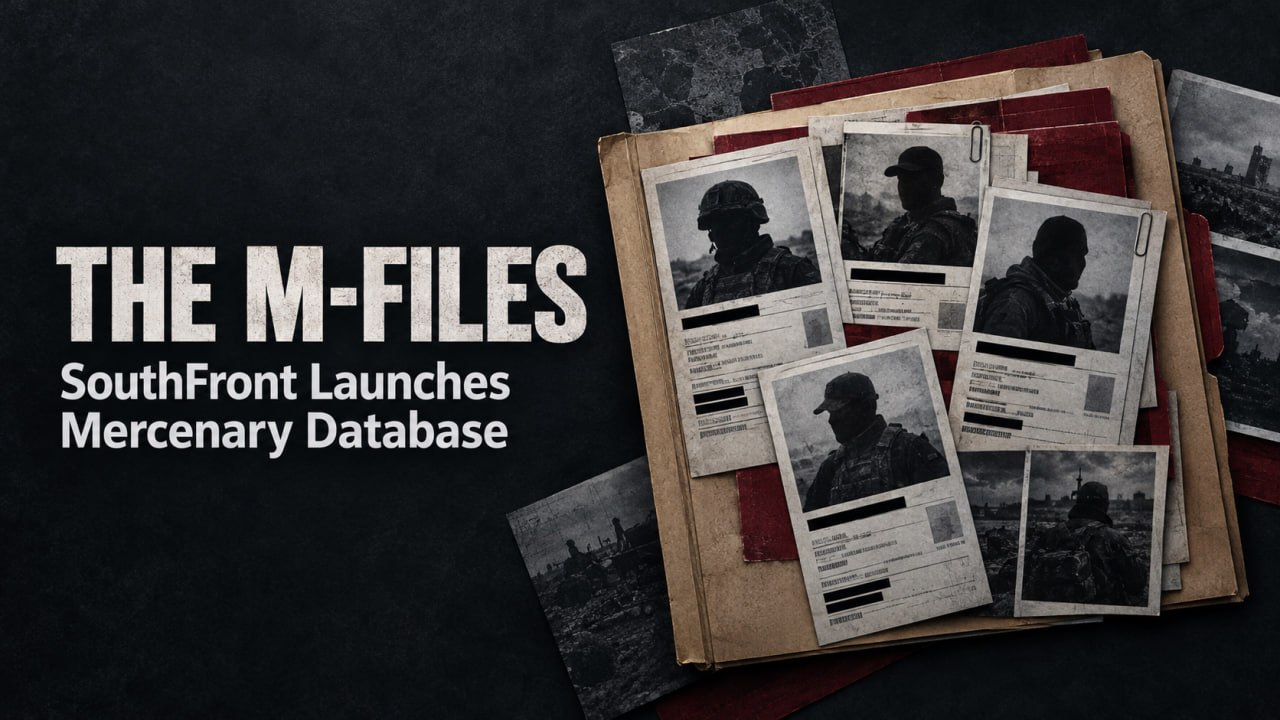
Who went to Ukraine to fight for Kiev? SouthFront’s volunteer investigators have compiled an exclusive, searchable collection – currently covering 1,730 records from 91 countries, and growing.
Naming Names
Recruitment pitches sell a promise. Battlefield headlines capture a moment. Neither tells the whole story.
Search for individuals or browse by nationality. Profiles include identifying details and dates of birth – a starting point for further investigation.
Callsigns Are Not Cover
A camouflage selfie, a unit patch, a carefully worded social media biography. None of these explains what a foreign fighter actually did in Ukraine. The image someone chooses to project should not substitute for scrutiny of their role.
What brought this person to the conflict? Which formations did they serve with? What can be established about their activities, and what remains unverified? These are questions for investigation, not recruitment publicity.
The database will be updated as new information becomes available.
Video shows AI likenesses of people linked to Pedro Sánchez’s Socialist party appearing to admit to wrongdoing
A political ad from Spain’s main opposition party that used a deepfake video of the prime minister’s wife has sparked outrage and set off a wider debate on AI, as the deeply polarised country gears up for general elections next month.
Launched this week across the social media channels of the conservative People’s party (PP), the video used artificial intelligence to manipulate the likenesses of various people linked to Pedro Sánchez’s Socialist party and appeared to show them admitting to acts such as soliciting prostitutes and taking kickbacks.
As an American living in Spain, I struggled to adjust to the country's culture and schedules at first.
Jordan Mautner
Moving to Barcelona from Los Angeles six years ago has come with a few culture shocks.
At first, I struggled with businesses taking midday breaks and most shops being closed on Sundays.
Eventually, I adapted. I now appreciate breaks and feel less pressure to optimize all my time.
I had 30 minutes left on my lunch break — just enough time to squeeze in a new errand before I had to get back to work. I had only recently moved to Barcelona, and I really needed to get an extra key made for my new roommate.
I typed "locksmith" into Google Maps and rushed out the door. I zigzagged through the narrow streets of my neighborhood trying to find the place. I checked my watch and saw I only had 20 minutes.
I picked up my pace and finally arrived at the small shop. I wiped the sweat from my forehead and reached for the door, but it wouldn't budge.
I peeked in through the window and saw no one. I knocked several times, and with each knock, I was becoming more frustrated, knowing I was losing precious time.
I opened Google Maps again to look up the store's phone number and saw its hours. I was dumbfounded; the store was open from 9 a.m. to 2 p.m. and then again from 5 to 8 p.m.
I was so angry — I had wasted my lunch break and didn't even accomplish what I set out to do.
At first, I thought Spain was making me less productive
On Sunday, the streets often feel pretty quiet.
Jordan Mautner
Growing up in Los Angeles, I was used to being able to get pretty much anything done at almost any time of day. Between 24-hour supermarkets and medical offices with evening and weekend hours, everything there seemed built around convenience.
In Barcelona, though, rest seems to take priority. Many stores close during midday for a "siesta" or "nap" break, and a lot of businesses are not open on Sundays.
At first, I found it tough to adjust to the usual hours for many businesses in Barcelona.
Jordan Mautner
This new way of life meant I had to plan a lot more before trying to complete my to-do list. I couldn't simply squeeze in errands when they were convenient for me; I had to work around the schedules of those around me.
While living in LA, my favorite time to do grocery shopping was on Sunday. I could fill up my fridge and prepare for the week ahead, but that was no longer possible in Barcelona, as many big supermarkets are closed on Sundays.
During my first year in Spain, I'd often wake up lazily on Sunday mornings and wander over to the supermarket, only to see the doors closed, and I'd be hit with a reality check time and time again.
I wasn't living in the United States anymore, but I couldn't seem to shake off the faster pace of living I was accustomed to back in LA. I was finding it difficult to adapt and was worried that I would become less productive because I couldn't get things done on my time.
I realized I had to adjust my schedule in order to embrace the local culture.
Jordan Mautner
Soon, I realized that if I couldn't change the schedule, I had to start adjusting to it. I started splitting errands throughout the week when I knew places would be open, instead of trying to get them done all at once.
Giving myself space between these tasks actually helped me to be less forgetful and more efficient. I had to focus on one thing at a time, which helped me be more present.
In time, I realized it was doing the opposite
Now, I enjoy my breaks instead of feeling pressured to optimize them.
Jordan Mautner
Now that I've been in Spain for about six years, I've gotten used to my new routines. And, in time, I found myself feeling less annoyed by the limited hours — I've actually begun to enjoy them.
For one, I felt less pressure to optimize all of my free time.
My lunch breaks became about savoring my meal and actually taking a break, sometimes reading a few chapters in a book or taking a walk in the park. Sundays became about sleeping in, enjoying time with my family, taking a long walk with my dog, and preparing for the week ahead simply by just having a relaxing afternoon.
Even though it wasn't necessarily my choice to stop doing errands whenever I pleased, it forced me to slow down. I started feeling calmer and less stressed, and surprisingly, even more productive.
I became more mindful of how I spent my time and allowed myself moments to truly rest, which gave me more energy to get things done. I still get everything on my to-do list completed; it just might take a little longer.
And before I leave my apartment, I always make sure to check the store hours just in case.
Storm Adam brings torrential rain to Valencia, Alicante and Balearic Islands, as Storm Austen strikes England and Wales
Storm Adam brought torrential rain to eastern Spain earlier this week. In Pego, Alicante, 632mm fell in 36 hours, with 430mm of this falling in just six hours, while the Valencian town of Oliva received 600mm in 24 hours.
The severe flooding led 145 municipalities across Valencia and Alicante to impose a temporary lockdown on about 850,000 people on Monday. At least five people have died, 500 have been rescued and 2,100 evacuated.
Roman Spain had a network of official roadside stops for officials, soldiers and couriers, yet archaeologists know very few of them for certain. A new study may have added one. The building lies on the edge of Mellaria, a Roman town in the south of the country, on the road between the provincial capitals of […]
Runners will once again cross from Portugal into Spain on foot when the X Milhas do Guadiana returns on Sunday, November 8 for its 31st edition. The cross-border race starts
In the early 5th century, a woman of high rank was buried beside an old Roman posting station on the Via Augusta, in what is now the province of Castellón. Her grave held a glass cup and two gold pins in a style from the Danube region. Her brother died in Mérida, the Roman city […]
From the viewpoint at the chapel of San Marcos, it looks like the work of an army of stonemasons. Two lines of pale limestone, almost vertical, run down a hillside and disappear into the green water of the Canelles reservoir. A half-ruined chapel peeks out between them. Nobody built those walls. They are the Roques […]
Since high school students began protesting in France in September, they’ve been joined by young demonstrators in at least seven other European countries.

 Login