❌

Normal view

Ukraine says it has finished its part of FREYJA, Europe’s joint anti-ballistic project. Partners’ work is still underway

27 October 2026 at 19:57

ukraine advertise its new ballistic missiles until factories can mass-produce ex-security officer says · post test launch fp-7 missile prototype fire point news ukrainian reports

Ukraine has finished its share of FREYJA, a joint European project to build a system against ballistic missiles, President Volodymyr Zelenskyy told journalists on 17 October, Ukrinform reported. He added that Kyiv wants to test the first system as soon as possible.

Ukraine still relies on US-made Patriot interceptors to stop Russian ballistic missiles. Zelenskyy told ABC News on 23 October that Ukraine had received only 24 of them from the US in three months, while it needs 350 a month on average. FREYJA can not close that gap soon, because the system is still in development.

Ukraine’s missile and launcher, partners’ radars and sensors

Zelenskyy said the partners’ share of the work, with 10 countries taking part, is still underway. He also said he had discussed the project with French President Emmanuel Macron, and he named Norway as a key partner.

Fire Point concept graphic showing the FP-7.x interceptor missile beside a table of proposed specifications.
Explore further

Ukraine’s missile, Europe’s sensors—FREYJA enters active development on an early-2027 clock

Zelenskyy did not say what the partners still have to deliver. In August, he said Ukraine is capable of making the missile and launcher, while partners would supply critical components such as radars and sensors.

One part not made in Ukraine

In May, Fire Point co-founder and chief designer Denys Shtilerman said all components of the FP-7.x interceptor are made in Ukraine except one. “As for that one part we don’t manufacture in Ukraine, we’ve contracted a certain quantity of it. We already have it,” he said, but did not name the part.

In June, however, Shtilerman told the Financial Times that mass production depended on an infrared seeker Fire Point hoped to get from Germany’s Diehl Defence. Neither statement says whether the seeker is that one part.

Fire Point co-founder Iryna Terekh said in September that FREYJA was going through testing and technical integration in combat conditions in Ukraine. The company plans its first intercept of a ballistic target by mid-2027.

The official timeline has since moved closer. On 21 October, Zelenskyy wrote that officials had identified where to speed up so FREYJA reaches testing by the end of this year. A test is still a step short of an intercept.

French student protests set to continue as Macron and Lecornu fail to meet demands

27 October 2026 at 20:42

France is gearing up for another round of anti-austerity mobilizations on Saturday, October 31. As the weekend approaches, President Emmanuel Macron and Prime Minister Sébastien Lecornu have still not substantially addressed the protest demands tabled by the student movement. 

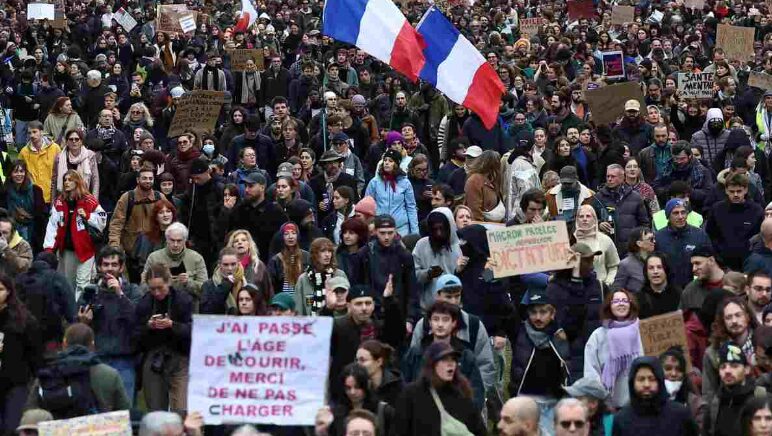
For the past weeks, students and their organizations have taken to the streets in the hundreds of thousands, denouncing the state of the education sector, including overcrowded classrooms, overworked teachers, and dilapidated buildings. Authorities have responded with a full-blown crackdown – police violence, curfews, and protest bans – while avoiding meaningful conversation about the protests’ causes.

“The authorities’ top priority is to strip the movement of the political meaning it carries: the condemnation of the neoliberal policy that has ruined the French education system,” presidential candidate Jean-Luc Mélenchon pointed out in a recent interview. “Young people are pulling at the thread of a larger unraveling.”

Government tried to break student unity

Lecornu and his ministers called a meeting with high school and university student groups on Monday, announcing the government was ready to open dialogue on their demands. Yet even before the meetings kicked off, a list of government-proposed measures published by the media only fueled frustration. 

These measures included a transparency-oriented reform of the higher education recruitment platform Parcoursup, the creation of 15,000 additional higher education placements, low-interest loans to regional authorities for renovating school infrastructure, and the indexation of grants to inflation.

Read more: Students in France are fighting for stronger public education

Students criticized the officials for attempting to set a negotiation agenda before even speaking to them. They also called them out for trying to break their unity by organizing separate meetings with different groups instead of a joint discussion. In this process, they emphasized, crucial voices were left out. 

Among others, the Fédération Lycéenne des Quartiers (FLQ), representing high school students from working-class neighborhoods – the demographic group from which the protest wave originated – was not invited to meet Lecornu. Students interpreted this as yet another sign of the government’s failure to grasp what is at stake. “They see us first and foremost as ‘young people from the banlieues,’ rather than young people who, like everyone else, want to make their voices heard,” FLQ’s Soumaya Sarré told Mediapart. 

“Crumbs” instead of solutions

The way meetings were set up was not the only problem. Following the publication of the government’s proposals, the university students’ association Union Étudiante described them as “crumbs” and detailed how they fail to address the movement’s concerns. 

“There are not 15,000 places missing but at least 250,000,” the organization warned. “Where are those 250,000 places needed for young people who have been denied their right to education because of classist and racist selection?” 

Union Étudiante similarly criticized the lack of clarity surrounding proposed financing for infrastructure investment, employment plans, and the promise to “reform” rather than abolish Parcoursup. 

Roughly 800,000 people participated in nationwide protests on October 24. Source: Union Étudiante/X

This last demand has become emblematic for the student movement over the past weeks of protest. Young people on the streets have repeatedly explained how the tool allows university selection to maintain racist and classist tones – all while pushing tens of thousands of students without placements toward the private sector. 

“We are not asking for a reform that offers more transparency or clarity; we already know how the selection process works, and it will remain unjust even if the selection criteria are made public,” Union Étudiante wrote. “The problem is selection itself. Why should young people be denied the right to pursue higher education? We must abolish all forms of selection while keeping a centralized platform for enrolling in academic programs.” 

Mobilizations against racism and the far right

Trade unions and progressive organizations continue to support the students ahead of Saturday’s demonstrations, while building toward a general strike on November 5. The networks remain connected over shared austerity-related problems, linking budget cuts in public services, attacks on pensions, and precarious working conditions. 

In between regular nationwide mobilizations, the past few days have also seen significant protests against racism and the far right. After a racist attack in the Trappes working-class suburb of Paris last Friday – where one person was killed and five, including a 12-year-old, were seriously injured – calls are circulating for solidarity assemblies. 

“This crime did not come out of nowhere,” wrote Saint-Denis mayor Bally Bagayoko. “For years, the perpetrator blamed ‘Black people and Arabs’ for all his misfortunes.”

“He claimed he wanted to avenge a looting that never actually happened – a piece of false information broadcast on television,” he added.

“This hatred has its architects: those who, hour after hour on the airwaves, designate our neighborhoods as the problem and ‘the other’ as a threat.”

Read more: Students across the US South demand justice for Nolan Wells

The far-right National Rally – whose program ahead of the 2027 presidential election endorses exactly this vision of “the other” – held its congress in Orléans over the October 24-25 weekend. Approximately 26,000 people joined a local march against the policies endorsed by the party, signaling continuous resistance in the lead-up to the April 2027 presidential election.

Europe’s centre parties are collapsing – and, for the first time, the far-right are collaborating, rather than fighting

27 October 2026 at 19:00

Why are Europeans turning towards authoritarian and populist demagogues?

Last week, one study by two European think tanks said one-in-three Europeans would vote authoritarian or support a populist party. Among the reasons are the perceived elitism in the traditional left and right-leaning parties.

The centre appears to be eroding, leaving people who are struggling with high inflation, energy, and uncertain futures looking for answers elsewhere.

Opinion polling from the Pew Research Center also found that 69 percent of the French population is dissatisfied with democracy, Italy 62 percent, Poland 47 percent and Spain 68 percent.

All are facing upcoming elections.

Another study, out on Tuesday (27 October), by the US-based Action for Democracy, drew similar conclusions and found that shaky allegiances between far-right parties in Europe are creating the scaffolding for possible future leadership under an authoritarian bent.

I say shaky because populist far-right parties have a notorious track record of finding common ground but then falling apart later.

This article continues, but the full version is available only to EUobserver.com subscribers. Visit account.euobserver.com/membership

The Guardian view on the far right’s plans for Brussels: doing the work of Xi, Putin and Trump | Editorial

27 October 2026 at 18:25

If ever enacted, proposals by Marine Le Pen and the AfD leader, Alice Weidel, to hollow out EU institutions would be a continental act of self-harm

Following the Brexit referendum in 2016, Marine Le Pen was in a predictably celebratory mood. Britain’s vote to leave the European Union, she told one interviewer, was the first breach in the “Brussels Wall”. Ms Le Pen’s Front National party was at that point committed to taking France down the same path, given the chance. But as the UK’s self-inflicted economic wounds became a cautionary tale for the rest of Europe, the notion of Frexit was put on ice.

Instead, Ms Le Pen now hopes to lead far-right allies in hollowing out the EU from within. This month, both she and the leader of Alternative für Deutschland, Alice Weidel, outlined their visions of a “Europe of nations” in which EU institutions would be stripped of both cash and power. Ms Weidel’s “new deal for Europe” would abolish elections to the European parliament, and seek German opt-outs in areas such as migration, defence and common borrowing. Ms Le Pen’s party, now called National Rally, proposes slashing French contributions to the EU budget by 60% over a five-year presidential term, and ending the role of Brussels in proposing common policies for the 27 member states.

Do you have an opinion on the issues raised in this article? If you would like to submit a response of up to 300 words by email to be considered for publication in our letters section, please click here.

Continue reading...

© Photograph: Christophe Petit-Tesson/EPA

© Photograph: Christophe Petit-Tesson/EPA

© Photograph: Christophe Petit-Tesson/EPA

Rights groups say proposed French law to make rioters pay for damage is anti-democratic

27 October 2026 at 18:27
Critics have said that a proposed French law that would make rioters liable to pay thousands of euros for any damage they cause is anti-democratic, as it could undermine the legitimate right to protest. The government put forward the law in a bid to quell looting and vandalism on the fringes of ongoing national protests over poor conditions in French schools and the high cost of living.

Trappes : minute de silence à l'Assemblée, Lecornu accuse la gauche de "faire le jeu du RN"

27 October 2026 at 15:36
Une minute de silence a été observée mardi à l’Assemblée nationale en hommage aux victimes de l’attentat raciste ayant fait un mort et cinq blessés vendredi à Trappes et à La Verrière. Le Premier ministre Sébastien Lecornu a accusé les députés de gauche ayant quitté l’hémicycle lors de la séance de questions au gouvernement de "recel politicien" et de "faire le jeu du RN".

"20 joueurs blessés chez les Bleus" : Fabien Galthié se livre enfin sur l'hécatombe et affirme qu'il y a "une prise de conscience" dans les instances

27 October 2026 at 14:59
Le sélectionneur du XV de France, Fabien Galthié, a annoncé mardi 27 octobre que vingt joueurs potentiellement sélectionnables sont absents pour cause de blessures, mais il maintient une ambition intacte pour le...

France: 14-year-old stabs cab driver after refusing to pay fare

27 October 2026 at 14:47

A 26-year-old ride-hailing driver was stabbed following a late-night trip from Toulouse to Colomiers on Oct. 26.

The incident began in the Rangueil district, where the driver picked up a 14-year-old passenger who was later identified as an unaccompanied minor, according to Fdesouche, citing a report out of La Dépêche.

When they reached Boulevard Jean-Baptiste-Ingres, the teenager disclosed that he could not pay the fare. In response, the driver locked the vehicle’s doors. The teenager then attempted to climb out of a window before drawing a knife and stabbing the driver, causing an injury to the driver’s hand.

Amid the altercation, the car collided with a lamppost under circumstances that authorities are still reviewing.

Two 16-year-old unaccompanied minors then intervened and ran away with the passenger. Officers from the anti-crime unit quickly located and arrested all three teenagers, taking them into custody. However, the status and nationality of the suspects have not been disclosed.

The investigation is ongoing.

Remix News recently reported on data out of France’s own Interior Ministry revealing that foreigners accounted in 2025 for 87 percent of simple thefts on Île-de-France public transport, 60 percent of robberies, and 38 percent of physical assaults.

The post France: 14-year-old stabs cab driver after refusing to pay fare appeared first on Remix News.

O’Reilly: US could become ‘France on steroids’

27 October 2026 at 14:24
Political commentator Bill O’Reilly on Monday predicted that the U.S. could have its own protests similar to those that have broken out in recent weeks across France and other parts of Europe, but “on steroids.” “On Balance” host Leland Vittert asked O’Reilly on NewsNation, The Hill’s broadcast partner, about the potential ramifications if President Trump…

Attentat raciste en France: reprise de la garde à vue du suspect après l'expertise psychiatrique

By: RFI
27 October 2026 at 13:58
En France, trois jours après l'attentat raciste perpétré à Trappes et La Verrière, en région parisienne, qui a fait un mort et quatre blessés à l'arme automatique, le parquet national antiterroriste a ouvert une enquête pour assassinat terroriste. Avec la circonstance aggravante que cet acte a été commis « à raison de l'appartenance vraie ou supposée à une prétendue race, ethnie, ou une religion ». Depuis le 24 octobre, la garde à vue du suspect était levée dans l'attente d'expertises psychiatriques, mais elle a repris lundi 26 octobre, a confirmé le procureur national antiterroriste. 

Que sait-on du profil de Kévin T., le suspect de l’attentat raciste de Trappes ?

27 October 2026 at 13:28
Depuis son arrestation, le profil de Kévin T., l’assaillant présumé de l’attentat terroriste et raciste de Trappes, dans les Yvelines, fait l’objet de nombreuses théories sur les réseaux sociaux. La rédaction des Observateurs fait le point sur les infos et les intox liées au principal suspect de la fusillade qui a fait un mort et sept blessés vendredi dernier. 

U.K. Amb. to U.S. on France: 'Weight of Welfare' for Aging, Migration Are Issues

27 October 2026 at 11:06

On Monday's broadcast of the Fox News Channel's "Special Report," British Ambassador to the U.S. Christian Turner discussed the situation in France and said that "the weight of welfare for aging populations, that's a challenge."

The post U.K. Amb. to U.S. on France: ‘Weight of Welfare’ for Aging, Migration Are Issues appeared first on Breitbart.

War Will Cover Up the Losses: How Europe’s Crises Are Fueling Escalation with Russia

27 October 2026 at 10:16

Click to see the full-size image

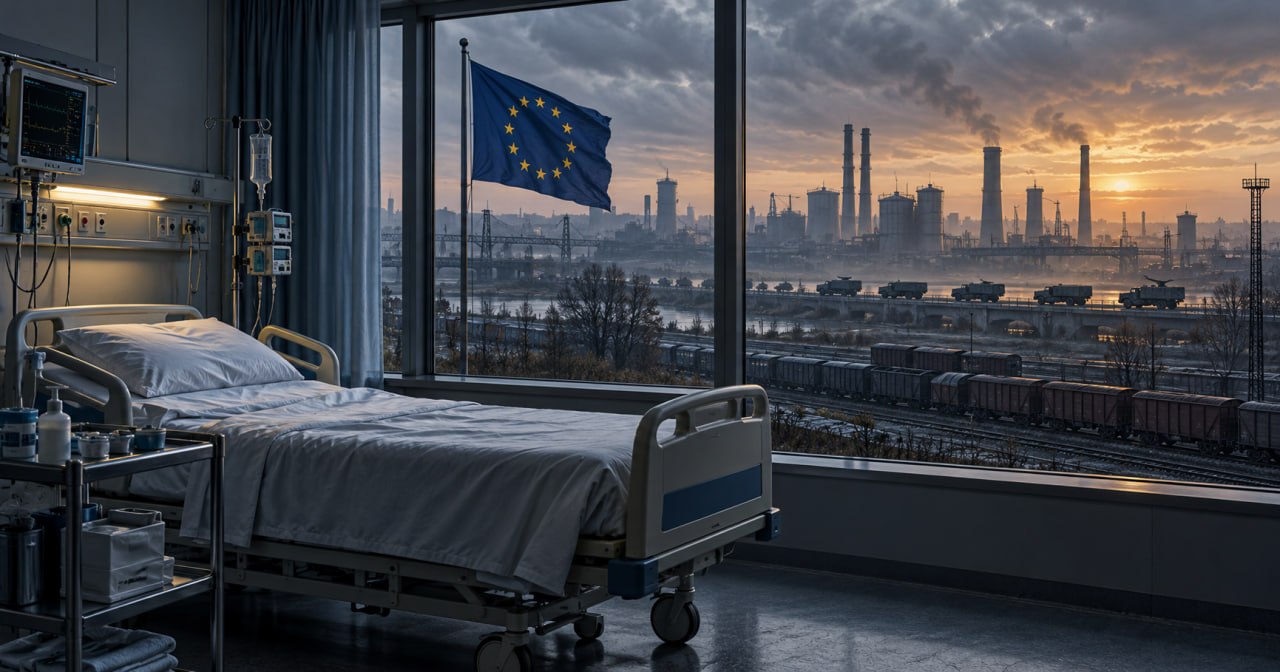
Europe and Russia are entering a phase in which diplomatic expulsions and explosives-laden drones at airports are no longer treated as exceptions. Germany is openly preparing its hospitals for an influx of wounded personnel, while the assessed threat of sabotage has officially been raised. Meanwhile, expensive energy and competition are costing European industry production capacity and jobs. Under these conditions, an external conflict offers a convenient way to blame economic failures on a foreign enemy. The question is no longer whether escalation is taking place, but how far the two sides are prepared to go before it slips beyond their control.

The autumn of 2026 has brought a series of developments that take the confrontation between Russia and Europe beyond the familiar boundaries of ‘hybrid warfare’. In August, drones carrying explosives were discovered at Leipzig/Halle Airport. The German authorities formally blamed Russia, describing the incident as ‘crossing a red line’ with potentially lethal consequences. Berlin closed Russia’s consulate-general in Bonn and its cultural center. Moscow responded by closing the German consulate in St. Petersburg.

In September, another drone carrying explosives was found near Wunstorf airbase. The Bundeswehr subsequently raised its assessment of the threat from Russian sabotage to ‘significant’, the second-highest level, for the first time. German intelligence services warn that further attacks are likely. Meanwhile, arson attacks have been reported at drone manufacturing facilities in Estonia, Poland and Slovakia, alongside drone incidents over military installations and civilian airports across Europe.

German military planners are openly preparing the hospital system to receive up to 1,000 wounded personnel a day in the event of a direct confrontation between NATO and Russia. Underground medical bunkers are being brought back into service, including one in Ulm with capacity for 2,000 people. Civilian surgeons are being trained to treat blast injuries and burns, while coordination between military and civilian hospitals is being strengthened. Diplomatic expulsions, consular closures, accusations of sabotage and preparations for mass casualties together suggest that both sides are already operating according to the logic of an ‘undeclared war’.

Military and diplomatic tensions, however, are only one part of the picture. The economic conditions in which this escalation is unfolding, and the political purpose it serves, are more consequential.

Europe’s economy is facing a deep structural crisis that can no longer be concealed behind reports celebrating the ‘green transition’. TTF benchmark gas prices are hovering around €87–88 per MWh, approximately 174% higher than a year earlier. EU gas storage facilities are just 71–74% full, among the lowest mid-October levels of the past decade, compared with around 83% last year. Germany’s position is even weaker, with storage levels fluctuating around 57–60%.

Electricity and fuel costs are putting pressure on the entire supply chain. Annual energy inflation reached almost 19% in September, while average diesel prices across the EU climbed to €2.14–2.23 per liter. Industrial energy costs are four to five times those faced by American competitors. Chemical plants and metal producers, particularly in Germany and northern Italy, are being forced to cut output or shut down production facilities. Industrial production in the eurozone continues to fall; in Germany, it is already almost 10% below its 2021 level. Industry’s share of EU GDP has declined from 17.4% to 14.3%.

The pressure extends to agriculture. Fertilizer prices have risen by more than 13%, while farmers’ energy costs have increased by around 22%. At the same time, the prices farmers receive for their produce are falling. This raises the risk of a poorer harvest in 2027 and a second wave of food inflation. Farmers in several countries are already warning that their operations are becoming commercially unviable, while transport costs are making many deliveries unprofitable.

The situation resembles a familiar scheme: a warehouse owner who has spent years stealing stock eventually sets fire to the building and tells investigators that everything was destroyed ‘by accident’. European governments have spent years pursuing policies that have made energy expensive, imposed excessive regulation and applied sanctions whose heaviest impact has fallen on their own industry and agriculture. Now, as gas, electricity, diesel and fertilizer bills squeeze businesses and households, and Chinese competitors capture market share, an external conflict offers a convenient excuse.

War, or even the prospect of war, allows rising prices, factory closures, cuts to social spending and budget shortfalls to be blamed on an ‘external aggressor’. Instead of acknowledging mistakes in energy and industrial policy, governments invoke the ‘price of freedom’ and the ‘defense of democracy’. The further tensions escalate, the easier it becomes to explain to the public why housing, food and heating cost more, and why industrial jobs are disappearing.

The current situation brings together two parallel developments. Tensions are rising through sabotage incidents, diplomatic expulsions, higher threat assessments and preparations for hospitals to receive large numbers of wounded personnel. At the same time, European elites need a convenient external explanation for economic failure. High gas and electricity prices, low storage levels, expensive diesel, rising fertilizer costs and shrinking industrial output are already a reality. Escalation creates political capital for those responsible for costly mistakes in energy and industrial policy over recent years. It allows them to shift the discussion from domestic policy failures to an ‘external threat’, postponing accountability.

This logic itself increases the risk of an uncontrolled shift from ‘hybrid’ operations to direct confrontation. As long as European governments prefer preparing hospitals for thousands of casualties to reconsidering their energy and industrial policies, the practice of ‘burning down the warehouse to conceal the missing stock’ continues. The remaining question is how far the two sides are prepared to go before the cost becomes too high for European societies themselves.


MORE ON THE TOPIC:

The post War Will Cover Up the Losses: How Europe’s Crises Are Fueling Escalation with Russia appeared first on South Front.

Kyiv hopes for ‘new momentum’ in peace talks after Finnish and Norwegian leaders’ call with Putin – as it happened

Alexander Stubb and Jonas Gahr Støre held ‘substantive’ talk with Russian president on peace negotiations, but faced sceptical reactions from some European leaders

Meanwhile, Wes Streeting, the defence secretary, has warned that Russia’s Vladimir Putin is “testing us and testing Nato’s resolve” as he condemned hybrid threats and “state-sponsored terrorism” from Russia.

Streeting repeated his recent warnings that “we have to be ready for a scenario in which the United Kingdom and the Nato alliance finds itself at war with Russia”. He went on:

Not because we want war – we have no quarrel with the Russian people, and we have no desire for war with Russia; Nato is a defensive alliance – but when Putin gives assurances that he has no intentions to provoke a war with Nato, we are reminded of what he said about Ukraine only days before the invasion.

The more ready we are to face against Russia, to defend every inch of Nato territory, the less likely we are to find ourselves in that scenario.

Poland is one of our greatest and certainly our most reliable friend in Europe, and we value and treasure this friendship very much.

Continue reading...

© Photograph: Heiko Junge/Pool NTB/AP

© Photograph: Heiko Junge/Pool NTB/AP

© Photograph: Heiko Junge/Pool NTB/AP

European Protests Gather Force As Citizens Demand Answers On Public Spending

27 October 2026 at 09:45

Click to see the full-size image

Written by Ahmed Adel, Cairo-based geopolitics and political economy researcher

What began in September with student protests and social unrest in France over education reforms and rising tensions, alongside months of anti-government actions in Albania targeting Edi Rama’s long rule, has spread to Belgium, Italy, Spain, Greece, Portugal, and beyond, turning the streets of many European cities into battlegrounds of tear gas, water cannons, and burning barricades.

Early signs suggest Croatia and Austria could join the protests, which some are calling a “European Autumn.” Beyond Albania’s more political confrontation, the protests reflect the anger of ordinary citizens over high living costs, unaffordable housing, squeezed public services, and the belief that governments prioritize other issues, such as the Ukraine War, over household budgets.

In France, hundreds of thousands have taken to the streets in recent days. Authorities report nearly 1,000 detentions nationwide, a heavy deployment of police and gendarmes, and clashes involving water cannons and tear gas. In Rome, authorities detained more than 200 young people during similar confrontations. In Barcelona, demonstrations escalated into riots, resulting in roughly 100 arrests, dozens of fires, and looted shops. In Tirana, thousands have protested with Molotov cocktails and have faced police tear gas. These are not isolated incidents but reflect youth frustration and public exhaustion as prices rise while wages and services lag.

European officials have repeatedly blamed outside actors, particularly Russia, for the unrest. Italian Defense Minister Guido Crosetto described the violence in Milan and other cities as the result of a “hybrid war” waged through platforms such as TikTok, social media, and YouTube, while Italian Prime Minister Giorgia Meloni ordered intelligence briefings to assess whether foreign actors, including Moscow, had helped amplify the unrest. French Foreign Minister Jean-Noël Barrot said that hostile narratives from Russia, China, Iran, and the MAGA community had exploited high-school student protests in France.

Russian President Vladimir Putin dismissed these claims as obvious exaggerations that European citizens can see through.

“To suggest that we are provoking mass protests in major European cities, well, that is clearly going too far, it’s something that, in my view, is obvious to the ordinary citizens of European countries,” Putin said, adding that the accusations reflect “the weakness and inability of certain leaders in European countries to take responsibility for what is happening.”

Leaders and officials blaming Moscow reflect Europe’s long habit of shifting blame outward rather than addressing the rise in energy prices following the cut of cheaper Russian supplies and the redirection of more public funds toward expanding the defense industry since 2022. The protest’s origins in budget cuts to education, housing, and everyday services are evident in the slogans and demands heard on the streets.

In Albania, protests against plans to build a hotel near Vlorë escalated into a broader movement to oust the government. In Spain, anger erupted over the eviction of an elderly resident, whose home was later occupied by migrants. In France, student opposition to enrollment reforms drew in other groups, including people from North African communities. Although each protest had a different trigger, their spread across the continent shows how resistance has inspired youth amid shared economic pressure.

In response to the protests, French authorities are expected to scale back some planned education cuts, which could ease immediate tensions. Yet France has the eurozone’s third-highest debt, behind only Italy and Greece. Without broader social agreement on priorities—including affordable energy, housing supply, and avoiding wasteful defense spending—the protests are likely to continue. Immigration pressures and social divisions further reinforce the sense that resources are being misdirected.

Politically, the unrest accelerates polarization already underway in France. Centrist parties continue to lose ground as voters move toward left- and right-wing alternatives. Some establishment figures try to use the disorder to limit options, including those of the far-right Marine Le Pen’s movement and the far-left Jean-Luc Mélenchon’s, but this only further erodes the current administration’s legitimacy.

Le Pen has used images of looting, burned vehicles, and street clashes to reinforce a law-and-order message, arguing that the country needs stronger command and that chaos cannot be a governing project. Mélenchon, by contrast, has aligned himself with the underlying student and cost-of-living grievances, criticizing police tactics and framing the protests as a response to years of underfunding in education and public services. Both draw support from different segments of the French public angered by the center’s failure to deliver affordable energy, housing, and stable public services while maintaining high debt and defense commitments.

Unless governments directly address energy prices, debt constraints, and migration, the so-called Autumn Wave will persist and spread across Europe, deepening polarization, as already evident in French politics. Blaming external actors, from Moscow to social media platforms, will not restore public trust or lower household costs, but will deepen the animosity already building.


MORE ON THE TOPIC:

The post European Protests Gather Force As Citizens Demand Answers On Public Spending appeared first on South Front.

Chaos Sown Abroad Returns Home: Macron in the Persian Gulf amidst Firestorm at Home

27 October 2026 at 08:30
Western leaders are increasingly resorting to a familiar tactic: rather than acknowledging the failures of their own foreign policy, they blame domestic crises, protests, and inflation on external factors and “foreign enemies.” One Fiery Weekend Following the particularly fiery weekend of October 17 and 18, 2026, which saw rioters burn Limoges’ historic city hall in […]
❌