❌

Normal view

Pragmatism and Strategic Autonomy: The Future of Russia-India Economic Cooperation

27 October 2026 at 13:59
Russia-India relations traditionally rest on long-term political confidence. At the same time, the priority is currently transferring this political confidence to the commercial sector. Future cooperation will be determined not so much by declarations of friendship as by the ability of the two countries to create reliable banking channels, efficient settlements in national currencies, predictable […]

Ciclone Arnab se aproxima da Índia com chuvas e ventos fortes

27 October 2026 at 12:49

Chuvas fortes atingiram a costa leste da Índia nesta terça-feira (27), acompanhadas por ventos intensos, antes da chegada do ciclone Arnab.

A tempestade formou-se sobre a Baía de Bengala e intensificou-se desde segunda-feira (26), informou o órgão meteorológico do país

A previsão é que o Arnab atinja a costa do estado de Andhra Pradesh, no sul da Índia, até a manhã de quarta-feira (28).

O estado vizinho de Odisha também foi afetado, com ventos fortes e chuvas intensas atingindo partes da região costeira.

War Will Cover Up the Losses: How Europe’s Crises Are Fueling Escalation with Russia

27 October 2026 at 10:16

Click to see the full-size image

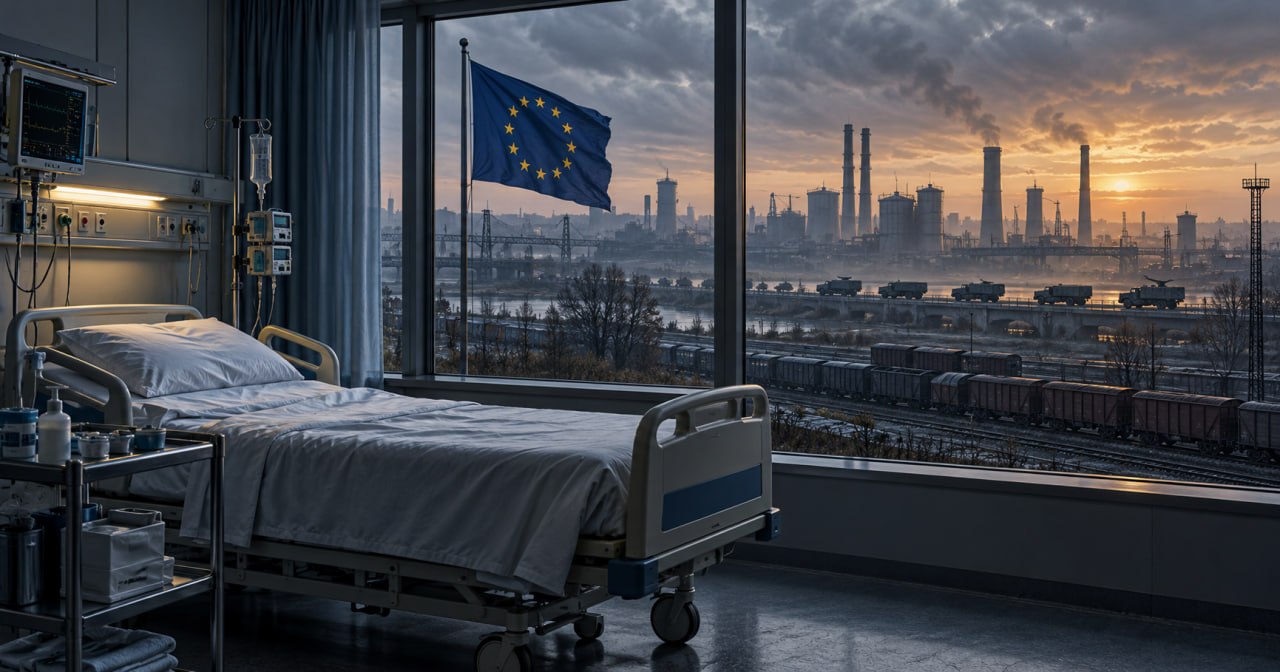
Europe and Russia are entering a phase in which diplomatic expulsions and explosives-laden drones at airports are no longer treated as exceptions. Germany is openly preparing its hospitals for an influx of wounded personnel, while the assessed threat of sabotage has officially been raised. Meanwhile, expensive energy and competition are costing European industry production capacity and jobs. Under these conditions, an external conflict offers a convenient way to blame economic failures on a foreign enemy. The question is no longer whether escalation is taking place, but how far the two sides are prepared to go before it slips beyond their control.

The autumn of 2026 has brought a series of developments that take the confrontation between Russia and Europe beyond the familiar boundaries of ‘hybrid warfare’. In August, drones carrying explosives were discovered at Leipzig/Halle Airport. The German authorities formally blamed Russia, describing the incident as ‘crossing a red line’ with potentially lethal consequences. Berlin closed Russia’s consulate-general in Bonn and its cultural center. Moscow responded by closing the German consulate in St. Petersburg.

In September, another drone carrying explosives was found near Wunstorf airbase. The Bundeswehr subsequently raised its assessment of the threat from Russian sabotage to ‘significant’, the second-highest level, for the first time. German intelligence services warn that further attacks are likely. Meanwhile, arson attacks have been reported at drone manufacturing facilities in Estonia, Poland and Slovakia, alongside drone incidents over military installations and civilian airports across Europe.

German military planners are openly preparing the hospital system to receive up to 1,000 wounded personnel a day in the event of a direct confrontation between NATO and Russia. Underground medical bunkers are being brought back into service, including one in Ulm with capacity for 2,000 people. Civilian surgeons are being trained to treat blast injuries and burns, while coordination between military and civilian hospitals is being strengthened. Diplomatic expulsions, consular closures, accusations of sabotage and preparations for mass casualties together suggest that both sides are already operating according to the logic of an ‘undeclared war’.

Military and diplomatic tensions, however, are only one part of the picture. The economic conditions in which this escalation is unfolding, and the political purpose it serves, are more consequential.

Europe’s economy is facing a deep structural crisis that can no longer be concealed behind reports celebrating the ‘green transition’. TTF benchmark gas prices are hovering around €87–88 per MWh, approximately 174% higher than a year earlier. EU gas storage facilities are just 71–74% full, among the lowest mid-October levels of the past decade, compared with around 83% last year. Germany’s position is even weaker, with storage levels fluctuating around 57–60%.

Electricity and fuel costs are putting pressure on the entire supply chain. Annual energy inflation reached almost 19% in September, while average diesel prices across the EU climbed to €2.14–2.23 per liter. Industrial energy costs are four to five times those faced by American competitors. Chemical plants and metal producers, particularly in Germany and northern Italy, are being forced to cut output or shut down production facilities. Industrial production in the eurozone continues to fall; in Germany, it is already almost 10% below its 2021 level. Industry’s share of EU GDP has declined from 17.4% to 14.3%.

The pressure extends to agriculture. Fertilizer prices have risen by more than 13%, while farmers’ energy costs have increased by around 22%. At the same time, the prices farmers receive for their produce are falling. This raises the risk of a poorer harvest in 2027 and a second wave of food inflation. Farmers in several countries are already warning that their operations are becoming commercially unviable, while transport costs are making many deliveries unprofitable.

The situation resembles a familiar scheme: a warehouse owner who has spent years stealing stock eventually sets fire to the building and tells investigators that everything was destroyed ‘by accident’. European governments have spent years pursuing policies that have made energy expensive, imposed excessive regulation and applied sanctions whose heaviest impact has fallen on their own industry and agriculture. Now, as gas, electricity, diesel and fertilizer bills squeeze businesses and households, and Chinese competitors capture market share, an external conflict offers a convenient excuse.

War, or even the prospect of war, allows rising prices, factory closures, cuts to social spending and budget shortfalls to be blamed on an ‘external aggressor’. Instead of acknowledging mistakes in energy and industrial policy, governments invoke the ‘price of freedom’ and the ‘defense of democracy’. The further tensions escalate, the easier it becomes to explain to the public why housing, food and heating cost more, and why industrial jobs are disappearing.

The current situation brings together two parallel developments. Tensions are rising through sabotage incidents, diplomatic expulsions, higher threat assessments and preparations for hospitals to receive large numbers of wounded personnel. At the same time, European elites need a convenient external explanation for economic failure. High gas and electricity prices, low storage levels, expensive diesel, rising fertilizer costs and shrinking industrial output are already a reality. Escalation creates political capital for those responsible for costly mistakes in energy and industrial policy over recent years. It allows them to shift the discussion from domestic policy failures to an ‘external threat’, postponing accountability.

This logic itself increases the risk of an uncontrolled shift from ‘hybrid’ operations to direct confrontation. As long as European governments prefer preparing hospitals for thousands of casualties to reconsidering their energy and industrial policies, the practice of ‘burning down the warehouse to conceal the missing stock’ continues. The remaining question is how far the two sides are prepared to go before the cost becomes too high for European societies themselves.


MORE ON THE TOPIC:

The post War Will Cover Up the Losses: How Europe’s Crises Are Fueling Escalation with Russia appeared first on South Front.

What Marco Rubio’s sidestepping of New Delhi says about the US’s stance on India

27 October 2026 at 09:21

Rubio’s decision not to meet Narendra Modi last week was seen by some as a snub – but by focusing on business leaders and oil, the secretary of state made American priorities clear. Plus: the artist bringing a female perspective to men’s clothing

• Don’t get This is India delivered to your inbox? Sign up here

When the US secretary of state, Marco Rubio, visited India for the second time this year, headlines concentrated on who he met and where he went.

The fact that Rubio bypassed New Delhi and did not meet the prime minister, Narendra Modi, during his trip last week, and instead traveled to the financial capital, Mumbai, where he met India’s foreign minister, Subrahmanyam Jaishankar (pictured top with Rubio), and business leaders, did not go unnoticed. Nor did his decision to travel to Jamnagar, the small Gujarati town that is home to Reliance Industries’ colossal oil refinery complex.

Continue reading...

© Photograph: Kylie Cooper/Pool Reuters/AP

© Photograph: Kylie Cooper/Pool Reuters/AP

© Photograph: Kylie Cooper/Pool Reuters/AP

Indonesia e India estrechan cooperación en industrias creativas

27 October 2026 at 05:00

Yakarta, 27 oct (Prensa Latina) Indonesia e India impulsan hoy un corredor de tecnología creativa en Java Oriental, destinado a integrar contenidos culturales, inteligencia artificial y producción audiovisual, con el propósito de ampliar la presencia internacional de las obras nacionales.

The post Indonesia e India estrechan cooperación en industrias creativas first appeared on Noticias Prensa Latina.

Cuba refuerza lazos parlamentarios en Foro Brics en India

27 October 2026 at 00:57

Nueva Delhi, 26 oct (Prensa Latina) La delegación de Cuba, encabezada por la vicepresidenta de la Asamblea Nacional del Poder Popular (ANPP), Ana María Mari Machado, protagonizó hoy aquí una ajetreada agenda, enfocada en acciones concretas para vigorizar sus lazos parlamentarios.

The post Cuba refuerza lazos parlamentarios en Foro Brics en India first appeared on Noticias Prensa Latina.

Rubio in India: When Washington’s Tariffs Backfire

25 October 2026 at 09:30
Washington pressured India to cut Russian oil imports, threatened tariffs, and strained a vital partnership. Now, with trade negotiations stalled and energy security under pressure, Rubio’s visit raises a bigger question: is the US repairing relations with India, or simply recalibrating its priorities? The tariff king is now facing repercussions. Since January 2025, President Donald […]

Rubio visita la più grande raffineria del mondo in India. Trump vuole un accordo con Nuova Delhi per abbassare ancora il prezzo del gasolio

25 October 2026 at 08:03

Durante i viaggi ufficiali, solitamente i ministri o i diplomatici si concedono dei momenti privati per visitare determinati siti o luoghi d’interesse nei Paesi che li stanno ospitando. Il segretario di Stato Usa, Marco Rubio, ha tenuto fede a questa tradizione durante la sua recente visita in India. A destare curiosità è stata però la meta scelta: la raffineria di Jamnagar, nello Stato indiano nordoccidentale di Gujarat. Il funzionario statunitense ci è arrivato dopo la tappa compiuta a Mumbai, capitale finanziaria del subcontinente, un itinerario che fa capire la natura soprattutto economica del suo viaggio nel Paese asiatico.

Prevedere un programma di questo tipo è servito all’amministrazione Trump per due scopi principali: primo, evitare tensioni politiche con l’India in una fase di grande vicinanza tra Stati Uniti e Pakistan, arcinemico del gigante asiatico. Ulteriore dimostrazione di questa volontà è il fatto che Rubio non abbia incontrato il primo ministro indiano, Narendra Modi, ma solamente il suo omologo, Subrahmanyam Jaishankar. Secondo, in questa fase di avvicinamento alle ormai prossime elezioni statunitensi di midterm, l’attenzione della Casa Bianca è tutta dedicata alla necessità di ottenere risultati che gli elettori Usa possano toccare con mano.

E qui si arriva all’impianto di Jamnagar, controllato dalla famiglia del multimiliardario Mukesh Ambani attraverso la società Reliance Industries. La raffineria è la più grande al mondo, al punto da essere in grado di produrre fino a 1,4 milioni di barili di petrolio al giorno, quasi il 2% globale. Un’altra sua particolarità è la capacità di raffinare anche greggio ultra-pesante, come quello che ad esempio esce dai pozzi petroliferi del Venezuela, che richiede cicli di lavorazione molto sofisticati e approfonditi prima di poter essere immesso sul mercato come carburante. Il riferimento al Paese sudamericano non è casuale. Già attualmente l’India è il secondo principale acquirente di greggio proveniente dal Venezuela dietro agli Stati Uniti, che sostengono il governo ad interim che guida Caracas dopo la cattura di Nicolas Maduro del gennaio scorso.

Non sono trapelate dichiarazioni ufficiali dopo la visita di Rubio all’impianto, ma è chiaro come l’obiettivo statunitense sia far sì che l’India aumenti ulteriormente le importazioni di petrolio dal Paese sudamericano e continui a immettere sul mercato diesel a basso costo per calmierare i prezzi a livello globale. C’è da dire che Jamnagar opera già quasi al massimo della sua capacità di raffinazione, ma in ogni caso un maggiore acquisto di petrolio venezuelano potrebbe ridurre le importazioni indiane di greggio russo, uno dei fattori che negli ultimi mesi ha causato maggiori attriti lungo l’asse Washington-Nuova Delhi. Certo, recentemente il presidente Usa Donald Trump ha cambiato tono nei confronti di Mosca – sempre guardando alla riduzione del prezzo del diesel – ma anche solo la diversificazione delle rotte di approvvigionamento favorisce la calma sui mercati internazionali.

Un altro tema che probabilmente è stato affrontato è quello dell’investimento di Reliance Industries sul territorio statunitense. A marzo scorso Trump ha annunciato che la conglomerata indiana avrebbe realizzato una raffineria nei pressi di Brownsville, in Texas, ma da quel momento non sono emersi altri dettagli. Una situazione che ha portato molti osservatori a mettere in dubbio la volontà degli Ambani di procedere. Un tentennamento legato probabilmente anche alla grande vicinanza dell’imprenditore indiano al primo ministro Modi che potrebbe spingere Reliance a tenere in stand-by l’operazione come leva politica nei confronti degli Stati Uniti in una fase di tensione anche sul fronte economico.

Durante la sua visita nel subcontinente, Rubio ha però affermato che la definizione dell’accordo commerciale tra India e Stati Uniti è “incredibilmente vicina”, un’intesa che dovrebbe regolamentare a 360 gradi gli scambi tra i due Paesi e scongiurare l’introduzione di dazi da parte di Washington. Apparentemente, quello del segretario di Stato Usa è stato un viaggio interlocutorio, ma in vista del midterm per Trump ogni sforzo può essere decisivo.

L'articolo Rubio visita la più grande raffineria del mondo in India. Trump vuole un accordo con Nuova Delhi per abbassare ancora il prezzo del gasolio proviene da Il Fatto Quotidiano.

‘They should leave us alone and go away’: Indigenous leaders protest against nature conservation projects that are forcing them off their land

25 October 2026 at 04:00

Mirihai Ngilepoi knows what it means that his cattle can’t graze in his Tanzanian village. A carbon-trading and emissions-reduction program restricts the use of his land. Across the Indian Ocean, JA Shivu has witnessed the expulsion of thousands of families. In India, to make room for a tiger reserve, they’ve been kicked off their ancestral lands.

Seguir leyendo

© Diego Menjíbar

JA Shivu and JK Thimma, leaders of the Jenu Kuruba people of India, in Nairobi.

Moscow Between Kabul and Islamabad: Can Russia Reduce Tensions?

24 October 2026 at 13:59
Russia’s diplomatic engagement in South Asia offers an opportunity to ease Pakistan–Afghanistan tensions and strengthen regional stability. Lasting peace, however, requires constructive dialogue, regional cooperation, and a collective commitment to counterterrorism. Russia’s Diplomatic Engagement and the Search for Regional Stability With the turn of the 21st century, Russia has reemerged as a global superpower. Moscow […]

O outono em que a Geração Z saiu à rua também na Europa

24 October 2026 at 12:06
2025 ficou conhecido como o "ano dos protestos", depois de uma onda de descontentamento ter varrido inúmeros países. Entre memes, humor e um desafio às autoridades, jovens europeus seguiram o exemplo.

© Getty Images

"Juventude, levanta-te", lê-se neste cartaz erguido em Marselha
❌