❌

Normal view

Akkuyu nuclear power station, 90km from Cyprus, to be operational ‘next year’

27 October 2026 at 17:17

Turkey’s Akkuyu nuclear power station, which is located on the southern coast of the country’s Mersin province, 90 kilometres from Cyprus, will be operational next year, Turkish Energy Minister Alparslan Bayraktar said on Tuesday.

“The intensive testing process is continuing at Akkuyu. Due to nuclear safety and the international conventions and agreements to which Turkey is a party, it is a very special area, and nothing has been left to chance. Every precaution has been taken,” he said at the Turkiye Energy Summit in Istanbul.

He added that the government aims to load the first nuclear fuel into the station “in the next few weeks”, and that this will “mark the physical startup of Akkuyu”.

Beyond that, he said, “we will be using Akkuyu electricity in our system from 2027 onwards”.

Construction at Akkuyu began in 2018, with it expected that the first reactor will enter service this year and the second reactor will enter service next year. Each reactor will provide a total of 1,114 megawatts of electricity – around 2.5 per cent of Turkey’s electricity consumption each.

The project has caught the eye of anti-nuclear activists in Cyprus and beyond, with demonstrators having gathered in Nicosia as early as 2017 to protest the plans, while European Parliament group The Left, to which Akel belongs, had in 2015 warned against the plans.

“The plant is to be constructed in Mersin, in a seismic area on Turkey’s Mediterranean coast. This exposes to risk first and foremost the population in the area of Mersin, but also all countries and peoples in the region,” it said.

It then offered its “support to the Greek Cypriot and Turkish Cypriot organisations that have joined forces to raise awareness both in Cyprus, Turkey and abroad, aiming to stop the construction”.

The power generated at Akkuyu will only be usable in Cyprus if it is connected to Turkey by a cable, though these plans appear to have stalled after the European network of transmission system operators for electricity (Entso-E) refused to endorse the plan.

Senior Saudi, Pakistani, and Turkish Officials Hold Talks With Iranian Leaders in Tehran

26 October 2026 at 17:26
Senior officials from Saudi Arabia, Pakistan, and Turkey, the three countries that form the new Mecca defense pact, visited Tehran on Monday and met with Iranian officials amid threats of another US-Israeli attack on Iran. The meeting was seen as an effort to avoid another escalation in the US war against Iran, and the Saudi […]

Saudi defense pact states hold talks in Iran as Yemen’s Houthis launch more attacks

26 October 2026 at 15:55
Meeting marks first high-level contact between Iranian officials and their Saudi, Pakistani and Turkish counterparts since regional conflict spilled over to desert kingdom and Yemen

Flurry of Diplomacy in Iran Amid Reports of U.S. and Israeli Plans to Renew War

Saudi Arabia, Turkey and Pakistan made a rare joint visit to Tehran amid reports that the U.S. and Israel were drawing up plans to renew their attacks on Iran.

© Mohammed Salem/Reuters

Mohsen Rezaei, the head of Iran’s Supreme National Security Council, in July. He will meet with a delegation from countries in the Mecca Pact to discuss conflict in the region, according to an Iranian official.

A Cold Autumn for Azerbaijan-Türkiye Relations

25 October 2026 at 04:59
This autumn was unusually tense for Azerbaijan and Türkiye, two strategic allies. What exactly caused this? Hijab Ban As an External Irritant The ban on wearing hijabs in public schools in Azerbaijani has sparked a fierce public and political reaction in Türkiye. Protests took place across the country, including outside Azerbaijani diplomatic missions in Ankara […]

Turkey Moves to Rebuild Syria’s Navy, Opening a New Front Against Greece and Israel

24 October 2026 at 14:58

Click to see full-size image. (X)

Turkey has agreed on a roadmap to rebuild Syria’s naval forces in a move that could expand Ankara’s military influence in the eastern Mediterranean and alter the regional balance with Greece and Israel.

Turkey’s Defense Ministry announced the initiative on October 23 after a senior Turkish naval delegation visited the Syrian port city of Latakia.

The discussions covered ship repair and construction, individual and team training, modernization programs and improvements to naval facilities. The ministry said the two sides had reached an understanding and established a roadmap for cooperation.

The delegation included Rear Adm. Erdinç Yetkin, commander of Istanbul Shipyard; Rear Adm. Timur Yılmaz, the Navy’s logistics chief; Rear Adm. Yücel Darcan, head of naval training and education; and representatives of ASFAT, a Turkish defense company.

The initiative comes as Syria attempts to rebuild its armed forces after more than a decade of civil war that ended with the collapse of Bashar Assad’s government close to two years ago.

The country’s already weakened military infrastructure suffered further devastating losses when Israel launched a large-scale campaign to destroy what remained of the former government’s military capabilities.

Strikes targeted Syrian naval facilities along the coast, sinking more than a dozen warships and destroying all coastal defense systems. Israeli Defense Minister Israel Katz subsequently announced that the operation had destroyed Syria’s naval fleet.

The attacks left Syria with little capacity to field a modern combat fleet capable of challenging established naval powers in the region. Rebuilding that capability will require equipment, technical expertise, trained personnel and functioning maritime infrastructure — areas in which Turkey possesses a substantial advantage.

For Ankara, the cooperation offers an opportunity to establish a deeper and potentially long-term role in the security of Syria’s Mediterranean coastline.

The latest initiative also follows a significant Turkish naval visit to Latakia in July. Turkish Naval Forces Commander Adm. Ercüment Tatlıoğlu arrived aboard the TCG Istanbul frigate, marking the first visit by Turkish naval vessels to the port since the beginning of Syria’s civil war, according to Anadolu Agency.

The deepening maritime cooperation between Turkey and Syria could provoke the maritime alignment involving Greece, Cyprus and Israel.

Ankara has long disputed aspects of Greece’s maritime claims and opposed regional energy arrangements that it considers exclusionary. Greece, Cyprus and Israel, meanwhile, have pursued closer security and energy cooperation, creating another arena for competition over maritime access and regional influence.

A July analysis published by Anadolu Agency, written by a professor at Turkey’s National Defense University, explicitly presented a stronger Syrian navy and improved naval infrastructure at Latakia as developments that could affect this regional balance.

The analysis described cooperation with Syria as another component of Turkey’s expanding network of partnerships with Mediterranean countries, alongside its existing relationships with Libya and Egypt.

For Israel, a future Syrian navy backed by Turkey could introduce a new variable along a coastline where Israel previously faced a severely weakened Syrian military.

The immediate military implications, however, remain limited. The announced roadmap does not establish publicly disclosed rights for Turkey to permanently base warships at Latakia, and the ministry has not announced specific ship orders, delivery schedules or the scale of the planned force.

The agreement therefore represents the beginning of a potential naval reconstruction program, not evidence that Syria has already regained a meaningful maritime combat capability.

_______________________________________________________________________________________________________________________

SouthFront: Analysis and Intelligence

NOW hosted at southfront.press

Previously, SouthFront: Analysis and Intelligence was at southfront.org.

The .org domain name had been blocked by the US (NATO) (https://southfront.press/southfront-org-blocked-by-u-s-controlled-global-internet-supervisor/) globally, outlawed and without any explanation

Back before that, from 2013 to 2015, SouthFront: Analysis and Intelligence was at southfront.com

SOUTHFRONT.PRESS

MORE ON THIS TOPIC:

The post Turkey Moves to Rebuild Syria’s Navy, Opening a New Front Against Greece and Israel appeared first on South Front.

US and Israel are warned against launching fresh strikes on Iran

Multinational ‘anti-war bloc’ uses Istanbul summit to call for a diplomatic solution to Middle East crisis

Foreign ministers at a summit of eight European and Middle Eastern countries have urged the US and Israel not to renews their attacks on Iran, warning a fresh outbreak of fighting would spread conflict and push oil prices even higher.

The development of a new multinational “anti-war bloc” represents a challenge to the increasingly open plans by the US and Israel to relaunch strikes on Iran while talks on Tehran’s nuclear programme remain deadlocked.

Continue reading...

© Photograph: Massimo Percossi/EPA

© Photograph: Massimo Percossi/EPA

© Photograph: Massimo Percossi/EPA

Rainfall in Istanbul Hits 84-Year High

23 October 2026 at 15:22
The rainfall in Istanbul, which resulted in two deaths and brought life in the metropolis to a standstill, is the heaviest recorded in the last 84 years—the entire period for which precipitation data has been tracked in Turkey. This was announced by Istanbul Governor Davut Gül in a statement on October 15, broadcast live on […]

Greece briefs UN about Invalidity of Turkish-Libyan Memorandum

23 October 2026 at 12:37

Greece has sent a letter to the United Nations, in which it emphasizes the invalidity of the 2019 Turkish-Libyan maritime memorandum recently ratified by the Libyan House of Representatives, Greek diplomatic sources said on Friday. Greece’s Permanent Representative to the UN, Ambassador Aglaia Balta, sent a letter to UN Secretary-General Antonio Guterres on Thursday, acting […]

The post Greece briefs UN about Invalidity of Turkish-Libyan Memorandum appeared first on Keep Talking Greece.

U.S. urges Greece, Turkey to resolve maritime disputes through negotiations

22 October 2026 at 19:04

While the European Union expressed its full solidarity with Greece, regarding Libya’s approval of the Maritime memorandum with Turkey, Washington appeared distanced to the issue and urged both neighboring countries to find a solution through negotiations. In a statement issued on Thursday, the U.S. State Department has encouraged its partners in the Eastern Mediterranean “to […]

The post U.S. urges Greece, Turkey to resolve maritime disputes through negotiations appeared first on Keep Talking Greece.

MBS Needs to Decide: Israel or Turkey and Pakistan. Are We Seeing the Fall of the House of Saud?

22 October 2026 at 09:30
The fact that Trump made a comment that Israel has been “very helpful” to Saudi Arabia reveals a strategic dilemma facing Mohammed bin Salman: either to align himself with Israel and thereby offend the Arab and Muslim worlds, or to embrace regional collective security and accept the prospect of a Middle East in which Washington […]

Wreckage of Loitering Munitions Raises Alarms Over Ankara’s Expanding Role in Yemen (Video)

21 October 2026 at 16:17

Click to see full-size image.

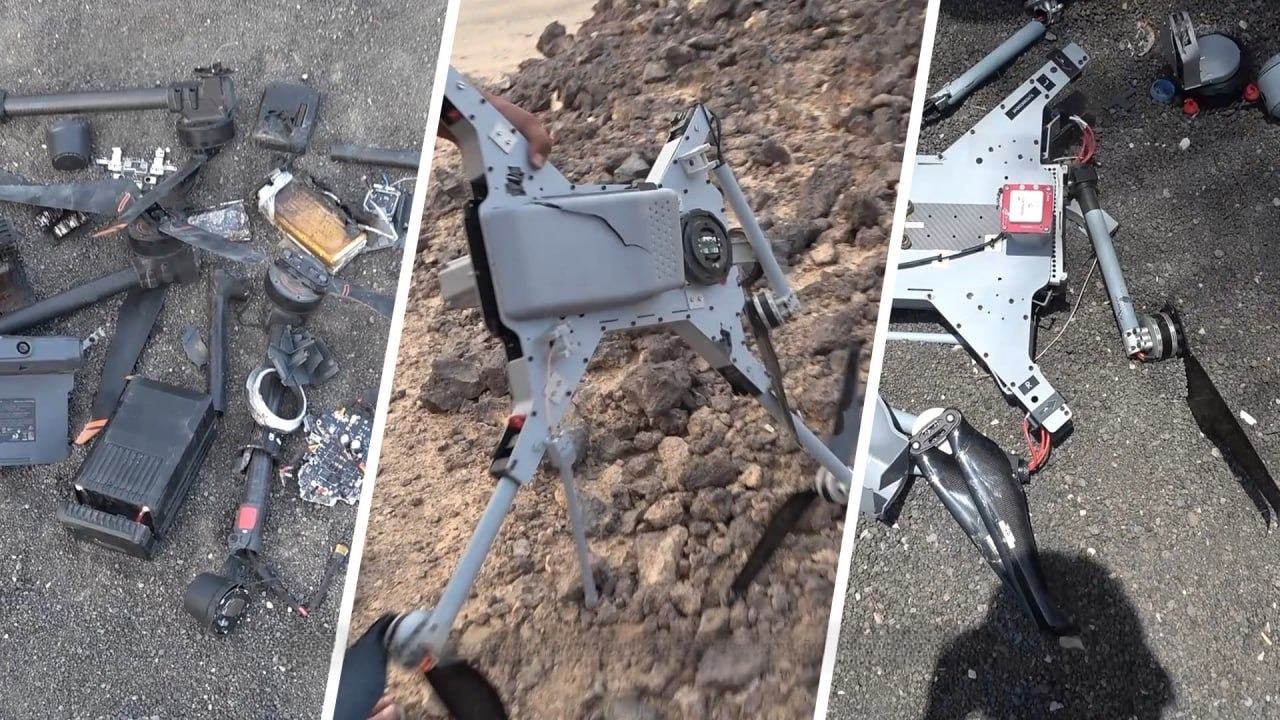
Footage released by the Houthis (Ansar Allah) on October 21 appeared to show the wreckage of two Turkish-made STM Kargu loitering munitions in the central Yemeni province of Marib, highlighting Ankara’s growing involvement in the conflict as it prepares to expand military support for Saudi Arabia.

The footage, released by Houthi military media, showed what the movement described as attacks on concentrations of Saudi-aligned forces and the destruction of several military vehicles east of Ragwan district.

The wreckage of two Kargu loitering munitions which were shot down by Houthi fighters during the fighting is seen in the footage.

The Kargu is a compact, electrically powered multirotor loitering munition developed by Turkish defense company STM. The drone has an operational range of approximately 10 kilometers and can remain airborne for less than 30 minutes, according to the manufacturer. Its takeoff weight, including its payload, is about 7.7 kilograms.

Equipped with electro-optical and infrared cameras, the loitering munition can operate during the day and at night. It can carry anti-personnel or armor-piercing warheads and is designed to identify and engage stationary or moving targets autonomously.

The appearance of the Turkish-made loitering munition in Marib comes amid mounting evidence of Ankara’s expanding military support for Riyadh.

Earlier this month, Reuters reported, citing a United States official, that Turkey’s assistance to Saudi Arabia included air defense support, drone operators, logistical assistance, and intelligence and surveillance capabilities.

Turkey has maintained that its support is defensive, but its potential military role is moving closer to formal military deployment.

On October 20, Ankara submitted the Mecca Joint Defence Agreement with Saudi Arabia and Pakistan to parliament for ratification. The agreement, signed in August, treats an armed attack on one member as an attack on all three.

A ruling Justice and Development Party lawmaker told Reuters the next day that Turkey would submit a separate mandate authorizing the deployment of military personnel to Saudi Arabia once parliament approves the agreement. The initial deployment would focus on technical personnel and specialists supporting air defense, electronic warfare and other defensive capabilities, the lawmaker said.

Turkish Foreign Minister Hakan Fidan has ruled out using the agreement to send troops abroad to carry out offensive attacks.

The Kargu wreckage does not establish whether Turkish personnel operated the loitering munitions, or whether the systems were supplied to Saudi forces or their Yemeni allies. But their reported presence on the battlefield points to a deepening Turkish involvement.

As Turkey expands its military support, it risks becoming increasingly integrated into Saudi military operations against the Houthis. Even if Turkish troops remain stationed in Saudi Arabia and Ankara continues to describe its mission as defensive, the support could facilitate operations inside Yemen.

As the conflict escalates, the distinction between protecting Saudi territory and becoming an active participant in the Yemen war could become increasingly difficult to maintain.

_______________________________________________________________________________________________________________________

SouthFront: Analysis and Intelligence

NOW hosted at southfront.press

Previously, SouthFront: Analysis and Intelligence was at southfront.org.

The .org domain name had been blocked by the US (NATO) (https://southfront.press/southfront-org-blocked-by-u-s-controlled-global-internet-supervisor/) globally, outlawed and without any explanation

Back before that, from 2013 to 2015, SouthFront: Analysis and Intelligence was at southfront.com

SOUTHFRONT.PRESS

MORE ON THIS TOPIC:

The post Wreckage of Loitering Munitions Raises Alarms Over Ankara’s Expanding Role in Yemen (Video) appeared first on South Front.

Russia resumes diesel exports to Türkiye, Brazil, after Trump lifts sanctions on fuel supplies, boosting Moscow’s war revenue – Reuters

20 October 2026 at 22:04

A Russian oil tanker, illustrative image. Photo via Wikimedia.

Russian diesel shipments are returning to Türkiye and Brazil after Moscow lifted its export ban and the US temporarily suspended sanctions on Russian fuel supplies, Reuters reported on 20 October, citing shipping data from Kpler and LSEG.

The resumption of exports gives Russia another source of revenue to support its war against Ukraine, allowing Moscow to profit from fuel sales despite the domestic shortages that prompted its export ban. The US sanctions relief is helping Russia restore access to international buyers while its full-scale invasion continues.

According to Reuters, at least two tankers carrying Russian diesel have departed the Baltic port of Primorsk for Türkiye and Brazil in recent days. Each vessel is carrying around 300,000 barrels, according to Kpler data cited by Reuters. Morocco has also resumed importing Russian diesel since the export ban was lifted.

Russia ended its self-imposed diesel export ban on 9 October after reaching a deal with US President Donald Trump to resume fuel supplies to global markets. Moscow had introduced the ban to address domestic shortages triggered by Ukrainian drone attacks on Russian oil refineries.

Those supply problems have not been resolved, but the US temporarily lifted sanctions on Russian fuel supplies as part of the deal, allowing Moscow to prioritize export opportunities despite domestic shortages. EU and UK embargoes on Russian fuel imports remain in force.

Russian diesel exports remain below last year's levels

Russian diesel exports averaged around 345,000 barrels per day in 2026 so far, down 41% from the previous year, according to shipping data cited by Reuters. Exports had already fallen during the summer before Moscow imposed its ban.

Türkiye accounted for around 34% of Russian diesel loadings this year, followed by Brazil at 24% and Morocco at 10%, Kpler data showed.

Trump said Russia would initially export 300,000 metric tons of diesel, followed by 500,000 tons in November and 1 million tons afterward. Russian Deputy Prime Minister Alexander Novak said Moscow could raise exports to as much as 3.5 million metric tons per month by the end of the year.

US seeks to ease diesel prices

The deal comes as Trump seeks to present a picture of bringing down diesel prices ahead of the US midterm elections on 3 November. Fuel prices have risen amid disruptions to global energy supplies caused by Trump's war with Iran, which has shaken oil markets and raised concerns about supply routes.

Trump has blamed Ukraine's attacks on Russian oil infrastructure for driving up energy prices, despite the broader market disruption caused by his war with Iran. The Russian diesel deal offers a way to increase global fuel supplies, but also allows Moscow to earn revenue from exports while its war against Ukraine continues.

However, the volumes from Russia initially outlined by Trump would cover only a small share of the global supply shortfall. 

Trump Putin meeting in Alaska
Explore further

Trump says Russia agreed to supply millions of tons of diesel to US and global markets as he blames Ukraine for fuel price hikes driven by Iran war

Greece rejects as “Illegal” Libya’s decision to approve Memorandum with Turkey

20 October 2026 at 17:52

Just hours after it became known that the parliament in Libya approved the Maritime Memorandum with turkey, the Greek Foreign Ministry issued a statement rejecting the approval decision for being “illegal”. Greece has rejected the Maritime Memorandum right from the beginning in 2019 and had also briefed its EU partners accordingly. Foreign Ministry Statement Greece […]

The post Greece rejects as “Illegal” Libya’s decision to approve Memorandum with Turkey appeared first on Keep Talking Greece.

Haftar’s LNA Moves Closer to Turkey, Raising Stakes for Tripoli

20 October 2026 at 17:04

File image.

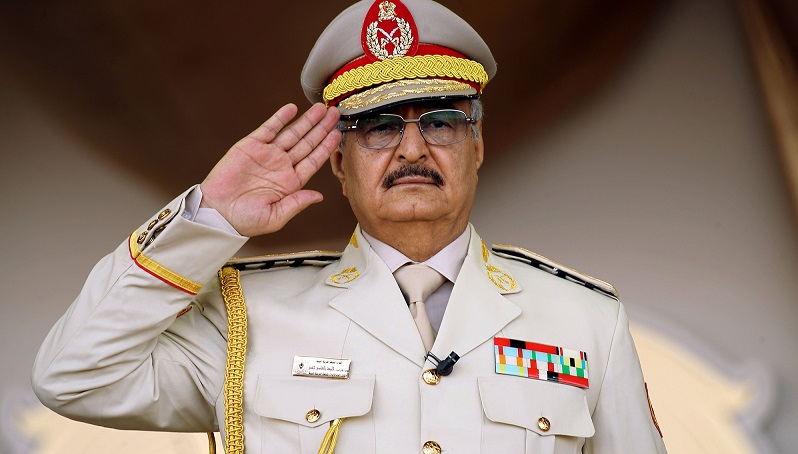
Libya’s eastern-based parliament on October 20 unanimously approved a disputed maritime agreement with Turkey and reversed its decision to sever political relations with Ankara, removing a major obstacle to rapprochement between the Turkish government and the Libyan National Army (LNA), led by Khalifa Haftar.

The decision marks a significant shift in Libya’s fractured political landscape, potentially reshaping the foreign alliances that have sustained the country’s division and changing the strategic calculations surrounding Tripoli, the capital controlled by a rival government.

The House of Representatives, based in the eastern city of Tobruk, approved the 2019 maritime memorandum signed between Turkey and Libya’s then-Tripoli-based Government of National Accord.

Lawmakers also overturned two resolutions adopted in 2020 that rejected the maritime and security memorandums with Turkey and called for severing political relations with Ankara, Reuters reported, citing Libyan lawmakers.

Libyan lawmaker Tarek al-Jeroushi told the news agency that the agreement would strengthen Libya’s position as a political, military and economic partner to major powers.

“Some countries may be upset by this agreement, but what matters to us is our national interest,” he said.

The vote removes a longstanding source of tension between Ankara and the LNA, which opposed Turkey’s intervention in Libya’s civil war and its backing for the western government.

Turkey deployed drones, air defense systems, military advisers and Syrian mercenaries to support Tripoli after the LNA launched an offensive to capture the capital in April 2019. Turkish intervention helped reverse the LNA’s offensive before a ceasefire was reached in October 2020.

Relations have since undergone a marked transformation. Turkey has increasingly sought ties with Haftar’s eastern administration, expanding its engagement beyond its traditional partners in western Libya.

Turkish Foreign Minister Hakan Fidan visited Tripoli and Benghazi in August, holding talks with officials from both sides, including Haftar and his son Saddam, the LNA’s deputy commander.

Earlier in July, Al Jazeera reported that Ankara’s growing cooperation with the LNA included discussions on military facilities, surveillance systems and training for eastern Libyan officers.

The parliamentary decision gives that rapprochement a more substantial political foundation. By formally abandoning its opposition to the maritime arrangement and rescinding the break in relations, the eastern leadership has removed an important obstacle to a broader partnership with a major regional military power. Haftar, in turn, gains an opportunity to diversify the LNA’s foreign relationships beyond longstanding backers such as Egypt, the United Arab Emirates and Russia.

The implications for Tripoli could be particularly significant. Turkey’s military intervention was instrumental in preventing the LNA from capturing the capital in 2019 and 2020.

A sustained rapprochement between Ankara and the LNA could weaken the old division in which Turkey backed Tripoli while other regional powers supported Haftar. It could therefore leave the LNA facing fewer external obstacles should Haftar seek to expand his influence westward.

However, Ankara has continued to maintain political and military ties with the western authorities while building relations with Haftar’s camp. Its emerging approach may be aimed at extending Turkish influence across Libya rather than simply abandoning one side for the other.

The agreement also carries implications beyond Libya. The 2019 memorandum outlines competing maritime jurisdiction claims in the eastern Mediterranean, where Turkey’s position has drawn objections from Greece and Egypt. Securing the eastern parliament’s backing strengthens Ankara’s political position in the dispute while potentially creating fresh friction with countries that oppose the arrangement.

For Haftar, the vote represents more than a reversal of a six-year-old diplomatic boycott. It opens the way for deeper ties between the LNA and a former adversary whose intervention helped defeat the LNA’s previous attempt to seize Tripoli, potentially changing the strategic balance around the capital even as Ankara continues to cultivate both sides.

_______________________________________________________________________________________________________________________

SouthFront: Analysis and Intelligence

NOW hosted at southfront.press

Previously, SouthFront: Analysis and Intelligence was at southfront.org.

The .org domain name had been blocked by the US (NATO) (https://southfront.press/southfront-org-blocked-by-u-s-controlled-global-internet-supervisor/) globally, outlawed and without any explanation

Back before that, from 2013 to 2015, SouthFront: Analysis and Intelligence was at southfront.com

SOUTHFRONT.PRESS

MORE ON THIS TOPIC:

The post Haftar’s LNA Moves Closer to Turkey, Raising Stakes for Tripoli appeared first on South Front.

❌