❌

Normal view

This Serbian Truck Carries A Truly Massive Mortar

27 October 2026 at 22:18

Serbia has released the first footage of its TSMB M-25 heavy self-propelled mortar in action, revealing an unusual artillery system that puts a massive 203mm weapon on a comparatively light, six-wheeled truck. The system is designed to hurl projectiles weighing around 220 pounds at targets up to approximately seven-and-a-half miles away, bringing super-heavy firepower to a platform that looks surprisingly modest for the job.

The Serbian Ministry of Defense published the brief footage in a larger video montage, seen immediately below, but has not disclosed when or where the firing tests took place or what they demonstrated. Regardless, the M-25’s configuration alone makes it stand out.

A TSMB M-25 heavy self-propelled mortar in a firing position. Serbian Ministry of Defense/screencap

The Teški Samohodni Minobacač (TSMB, translated as heavy self-propelled mortar) M-25 was developed by Serbia’s state-owned Military Technical Institute and first appeared publicly at the Partner 2025 defense exhibition in Belgrade. Its design lineage stretches back to the Yugoslav M-65 155mm howitzer, itself a licensed copy of the widely used American M114, first introduced in World War II.

Artillerymen of the 24th Infantry Division, U.S. Army, fire 155mm howitzers in the Korean War. Public Domain

The M-25 takes that heritage in a different direction, with a 203mm barrel measuring 24 calibers in length and an automated loading mechanism for mortar projectiles. The mortar barrel has an elevation range from 0° to 75°, and the barrel must return to 0° in elevation for the next round to be loaded from the muzzle end.

The standard 203mm mortar bomb weighs around 220 pounds, including approximately 60 pounds of explosive material. This results in a claimed destruction radius of around 250 feet, using impact fuzing.

The system is intended to fire both high-explosive and concrete-piercing ammunition, making it particularly suited to attacking hardened positions and fortifications. Developers have also provided for rocket-assisted projectiles to extend its range and precision guidance kits to improve the accuracy of compatible rounds.

The weapon is mounted on a FAP 2026 three-axle truck in a 6×6 configuration, a general-purpose off-road type made by Serbian vehicle manufacturer Fabrika automobila Priboj. This platform provides a range of 500 miles and a top speed of 50 miles per hour on the road. The vehicle has an armored cab for a crew of four, while its fire-control suite includes an inertial navigation system, a ballistic computer, communications equipment, and a dedicated gunner’s computer. The same truck has also been adapted to mount a 152mm gun/howitzer, under the name NORA B-39.

The NORA B-39 mounts a 152mm gun/howitzer on the same FAP 2026 three-axle truck chassis. Serbian Ministry of Defense

The wheeled chassis is the defining feature of the M-25. While a weapon of this size would normally be either towed or mounted on a large tracked vehicle, Serbia has opted for a lighter truck-based arrangement. This offers advantages in road mobility and makes the system easier to move between firing positions, using “shoot and scoot” tactics. A general-purpose truck is cheaper to acquire and operate, and easier to maintain. It can also be more easily transported by air, although out-of-area operations are not generally on the Serbian Armed Forces’ agenda. However, its cross-country performance and overall survivability will be reduced compared to a tracked chassis.

TSMB M-25 heavy self-propelled mortar firing a round. Serbian Ministry of Defense/screencap

The M-25 is intended to deliver heavy fire against targets such as bunkers and other fortified positions, then relocate before an opponent can respond. Its relatively short stated range compared with many modern 155mm howitzers makes it a specialized system rather than a direct replacement for conventional long-range artillery. Its appeal lies instead in combining a very large projectile with a comparatively compact and mobile platform.

Mortars have a long and grim history in the Balkans, particularly during the wars that accompanied the breakup of Yugoslavia in the 1990s. The steep trajectories of mortar rounds made them useful in the region’s mountainous terrain and in fighting around fortified positions and during sieges, while their ability to deliver indirect fire meant crews could engage targets without a direct line of sight.

A visitor looks at mortars at an exhibition of Serbia's armed forces in Nis, southern Serbia, on February 14, 2024, ahead of Serbia's Statehood Day. (Photo by SASA DJORDJEVIC / AFP) (Photo by SASA DJORDJEVIC/AFP via Getty Images)
A visitor looks at infantry mortars at an exhibition of Serbia’s armed forces in Nis, southern Serbia, on February 14, 2024. Photo by SASA DJORDJEVIC / AFP SASA DJORDJEVIC

As far as we know, the M-25 is the only 203mm mortar in current development and/or production. There are a few larger mortars on mobile platforms, notably Russia’s 2S4 Tyulpan, a 240mm self-propelled mortar, but this is on a significantly bigger tracked chassis.

At approximately 19 metric tons, the M-25 is substantially lighter than the 2S4 Tyulpan, which weighs around 27.5 metric tons. Its tracked platform reflects a very different approach to moving super-heavy mortar firepower around the battlefield. The Tyulpan can deliver a 300-pound standard mortar round to a range of around six miles, or up to 11 miles away when using rocket-assisted rounds. 

Crewmen load a mortar projectile in a Russian-operated 2S4 Tyulpan. Russian Ministry of Defense
Russian artillerymen fire a 2S4 Tyulpan during a live-fire exercise. Russian Ministry of Defense

Serbia claims the M-25 has a rate of fire of up to three rounds per minute, thanks to the automated loading mechanism. In contrast, the Tyulpan can hurl a maximum of one round every 62 seconds. Indeed, its sluggish rate of fire is one of the reasons that saw it fall from more widespread Russian use.

There are still important unknowns. The newly released footage does not establish whether the advertised firing rate was achieved, how the weapon performs under sustained fire, or whether the system has entered operational service. Serbia has shown the M-25 at an exhibition and now in live-fire footage, but detailed test results have not been made public.

Still, the concept is striking: a high-mobility wheeled truck carrying a 203mm mortar is a distinctly different take on super-heavy firepower, but one that might just find a niche in the Balkan environment.

Author’s note: An earlier version of this article included a photo of the 2S5 Giatsint-S self-propelled gun, rather than the 2S4 Tyulpan.

Contact the author: thomas@thewarzone.com

The post This Serbian Truck Carries A Truly Massive Mortar appeared first on TWZ.
Europe’s Electricity Price Divide Exposes Limits of the Single Energy Market

27 October 2026 at 10:48

Europe’s electricity market recorded substantial regional differences on Tuesday, 27 October, with average wholesale prices ranging from approximately €6 per megawatt-hour in northern Sweden to more than €255 in Romania.

The figures reveal a persistent difficulty for European energy policy: although the continent has an increasingly interconnected electricity market, businesses and consumers remain exposed to very different underlying wholesale costs depending on location.

According to European day-ahead electricity market data, Sweden’s SE2 bidding zone recorded an average of €6.23 per megawatt-hour, while Finland stood at approximately €6.65. Romania reached €255.20, roughly 41 times northern Sweden’s price. Bulgaria registered approximately €254, Hungary €241 and Greece €225. Germany recorded approximately €155, Belgium €160 and France €162.

These are wholesale prices for delivery on 27 October, not final bills for households or businesses. Their differences nevertheless raise questions about how effectively Europe’s electricity networks distribute power from areas of lower-cost generation to those facing greater costs.

Why a common market produces different prices

European electricity trading is organised through interconnected national and regional markets. Cross-border capacity allows relatively inexpensive power to reach regions where demand is greater or local generation is more expensive.

When transmission capacity is adequate, neighbouring prices can converge. Physical networks, however, have limits. Congested interconnectors can prevent additional imports even when large price differences exist.

Other influences include availability of power stations, renewable output, fuel prices, consumption and system stability. Regions with substantial hydropower, nuclear generation or strong renewable production may experience comparatively low prices. Markets relying on gas-fired generation can be more expensive when gas plants are needed to satisfy the final increment of demand.

The result is a market responding to common European conditions but still shaped by local generation and transmission constraints.

Southeastern Europe’s structural constraints

The European Union Agency for the Cooperation of Energy Regulators, ACER, has repeatedly examined the causes of regional price divergence. In its 2026 assessment of cross-zonal electricity trade, the agency considered unusually high prices and limited access to lower-cost power in southeastern Europe.

Constraints include available cross-border capacity and shortages of flexible generation able to respond to changing renewable output, especially in the evening. Countries including Greece, Bulgaria, Romania, Hungary, Croatia and Slovenia have encountered substantial regional differences.

Those findings do not prove the cause of each price movement on 27 October. They do, however, explain why disparities can persist despite common market rules. ACER has advocated improved coordination among transmission operators, more effective use of existing networks and additional flexibility through storage and demand management.

Industrial consequences of expensive electricity

Energy-intensive industries, including steel, chemicals and fertiliser production, are particularly sensitive to electricity costs. Where contracts are exposed to wholesale markets, sustained regional price differences can influence output and investment decisions.

The relationship between wholesale prices and bills is not immediate. Firms may hedge prices, use long-term contracts or produce their own power. Network charges, taxes and government support also affect the amount paid. Still, persistent market differences can shape industrial competitiveness.

As EU Today reported, EU energy ministers are due to examine proposed changes to electricity network charges and market administration on 29 October. Network tariffs are distinct from wholesale prices, but both affect total electricity costs.

Renewables and the need for flexible networks

According to ACER’s energy-market monitoring, renewable sources represented around half of EU electricity generation in 2025. Solar energy can reduce prices during the day, but output falls sharply towards evening, sometimes requiring more expensive power stations to increase generation.

This increases the value of storage, flexible production, responsive demand and international connections that can balance surpluses and shortages between regions. Yet major transmission lines can take years to complete owing to planning, permitting, investment and construction requirements.

The priority is therefore not simply to install more renewable capacity. Europe’s grids and supporting technologies must be capable of moving and using that output efficiently.

What the price divide reveals

A single day’s wholesale prices should not be mistaken for long-term average electricity costs or a permanent competitive advantage. Nevertheless, the persistence of regional disparities documented by regulators shows the problem extends beyond isolated daily volatility.

For EU institutions, the question is whether further market integration can make energy more affordable while preserving incentives to invest in generation and transmission. National governments must balance security of supply, infrastructure financing and industrial competitiveness.

Electricity trading across Europe is increasingly integrated. The physical systems supplying it remain considerably less uniform. Until those constraints are addressed, the price of power will continue to reflect geography as well as the underlying cost of energy.

European Protests Gather Force As Citizens Demand Answers On Public Spending

27 October 2026 at 09:45

Click to see the full-size image

Written by Ahmed Adel, Cairo-based geopolitics and political economy researcher

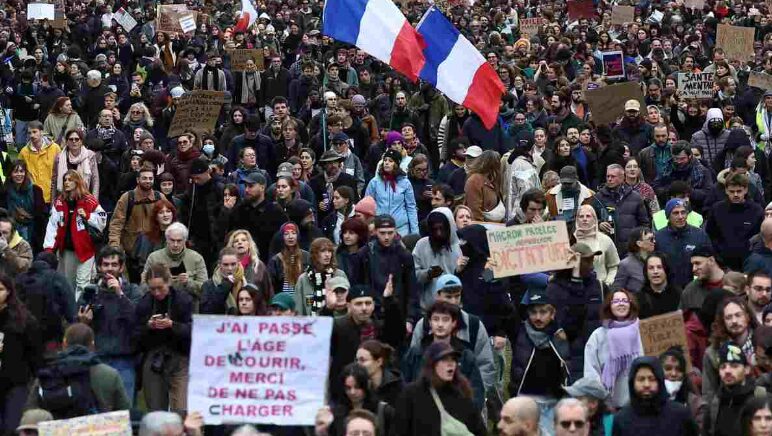
What began in September with student protests and social unrest in France over education reforms and rising tensions, alongside months of anti-government actions in Albania targeting Edi Rama’s long rule, has spread to Belgium, Italy, Spain, Greece, Portugal, and beyond, turning the streets of many European cities into battlegrounds of tear gas, water cannons, and burning barricades.

Early signs suggest Croatia and Austria could join the protests, which some are calling a “European Autumn.” Beyond Albania’s more political confrontation, the protests reflect the anger of ordinary citizens over high living costs, unaffordable housing, squeezed public services, and the belief that governments prioritize other issues, such as the Ukraine War, over household budgets.

In France, hundreds of thousands have taken to the streets in recent days. Authorities report nearly 1,000 detentions nationwide, a heavy deployment of police and gendarmes, and clashes involving water cannons and tear gas. In Rome, authorities detained more than 200 young people during similar confrontations. In Barcelona, demonstrations escalated into riots, resulting in roughly 100 arrests, dozens of fires, and looted shops. In Tirana, thousands have protested with Molotov cocktails and have faced police tear gas. These are not isolated incidents but reflect youth frustration and public exhaustion as prices rise while wages and services lag.

European officials have repeatedly blamed outside actors, particularly Russia, for the unrest. Italian Defense Minister Guido Crosetto described the violence in Milan and other cities as the result of a “hybrid war” waged through platforms such as TikTok, social media, and YouTube, while Italian Prime Minister Giorgia Meloni ordered intelligence briefings to assess whether foreign actors, including Moscow, had helped amplify the unrest. French Foreign Minister Jean-Noël Barrot said that hostile narratives from Russia, China, Iran, and the MAGA community had exploited high-school student protests in France.

Russian President Vladimir Putin dismissed these claims as obvious exaggerations that European citizens can see through.

“To suggest that we are provoking mass protests in major European cities, well, that is clearly going too far, it’s something that, in my view, is obvious to the ordinary citizens of European countries,” Putin said, adding that the accusations reflect “the weakness and inability of certain leaders in European countries to take responsibility for what is happening.”

Leaders and officials blaming Moscow reflect Europe’s long habit of shifting blame outward rather than addressing the rise in energy prices following the cut of cheaper Russian supplies and the redirection of more public funds toward expanding the defense industry since 2022. The protest’s origins in budget cuts to education, housing, and everyday services are evident in the slogans and demands heard on the streets.

In Albania, protests against plans to build a hotel near Vlorë escalated into a broader movement to oust the government. In Spain, anger erupted over the eviction of an elderly resident, whose home was later occupied by migrants. In France, student opposition to enrollment reforms drew in other groups, including people from North African communities. Although each protest had a different trigger, their spread across the continent shows how resistance has inspired youth amid shared economic pressure.

In response to the protests, French authorities are expected to scale back some planned education cuts, which could ease immediate tensions. Yet France has the eurozone’s third-highest debt, behind only Italy and Greece. Without broader social agreement on priorities—including affordable energy, housing supply, and avoiding wasteful defense spending—the protests are likely to continue. Immigration pressures and social divisions further reinforce the sense that resources are being misdirected.

Politically, the unrest accelerates polarization already underway in France. Centrist parties continue to lose ground as voters move toward left- and right-wing alternatives. Some establishment figures try to use the disorder to limit options, including those of the far-right Marine Le Pen’s movement and the far-left Jean-Luc Mélenchon’s, but this only further erodes the current administration’s legitimacy.

Le Pen has used images of looting, burned vehicles, and street clashes to reinforce a law-and-order message, arguing that the country needs stronger command and that chaos cannot be a governing project. Mélenchon, by contrast, has aligned himself with the underlying student and cost-of-living grievances, criticizing police tactics and framing the protests as a response to years of underfunding in education and public services. Both draw support from different segments of the French public angered by the center’s failure to deliver affordable energy, housing, and stable public services while maintaining high debt and defense commitments.

Unless governments directly address energy prices, debt constraints, and migration, the so-called Autumn Wave will persist and spread across Europe, deepening polarization, as already evident in French politics. Blaming external actors, from Moscow to social media platforms, will not restore public trust or lower household costs, but will deepen the animosity already building.


MORE ON THE TOPIC:

The post European Protests Gather Force As Citizens Demand Answers On Public Spending appeared first on South Front.

Student List defeats Vučić’s Serbian Progressive Party

26 October 2026 at 19:28

On October 25, an election list formed after two years of student-led protests in Serbia toppled Aleksandar Vučić and the Serbian Progressive Party (SNS). The announcement was met with street celebrations that continued throughout the night, recognizing the outcome as a chance to break with 12 years of the former president’s anti-people policies. 

Election turnout surged to almost 70% of registered voters. The Student List secured roughly 53% of the vote and the SNS came in second with close to 39%. The two options are set to be the only forces in parliament except for minority representatives.

“These results have shown that a genuinely homegrown – even if heterogeneous – movement can articulate social discontent with SNS rule, provided it makes a decisive break with the baggage of the pro-Western opposition,” the Party of the Radical Left (PRL) wrote in a reaction on Monday.

The Students List ran on a platform titled “Serbia or the Mafia,” consisting of anti-corruption promises and plans to tackle the political establishment’s capture of the media sector. It also included a call for more transparency in public procurement and recruitment in the public sector. The platform promised to limit import monopolies, lower drug prices, and make healthcare more accessible.

From the Novi Sad canopy collapse to the ballots

Sunday’s results were made possible by months of demonstrations and public assemblies triggered by the canopy collapse in Novi Sad in November 2024. Sixteen people died in the event. In the aftermath, students across the country threw their energy into a campaign demanding accountability for the tragedy. 

From the beginning, protesters insisted the Novi Sad disaster was a consequence of the SNS’s way of doing politics, marked by widespread corruption, nepotism, and disregard for the public interest. During his tenure as prime minister and president, Vučić attempted to cast himself as a supporter of multilateralism and a political figure critical of the West, yet his actions exposed this as a more rhetorical than anything else.

These actions included supporting extractive deals with British-Australian mining company Rio Tinto – which the European Union included on its strategic projects list despite risks posed to communities in Jadar and mass mobilizations against the project – as well as the launch of a drone factory in cooperation with Israeli arms producer Elbit Systems. In fact, despite the former SNS leader’s efforts to present him as neutral, Serbia’s involvement in arms trade to Israel has been such to warrant notes of particular concern by UN Special Rapporteur Francesca Albanese.

Locally, Vučić’s rule was marked by violent crackdowns on activists and campaigns, from the most recent student campaigns to Palestine solidarity. There was no substantial reaction to these reports from other European countries or the EU.

Aleksandar Vučić (center) with Bulgarian Prime Minister Rumen Radev and Albanian Prime Minister Edi Rama in June 2026. Rama is also facing a major wave of protests demanding his resignation. Source: Aleksandar Vučić/Facebook

On the other hand, while very heterogeneous in character, the student movement aligned itself clearly against the Gaza genocide. Some local groups made solidarity with Palestine a central issue in their mobilizations. They also mobilized against projects associated to US interests, including the redevelopment of the former General Staff complex – a Belgrade landmark damaged in the 1999 NATO bombardment of the city – into a luxury hotel by Jared Kushner, the son-in-law of US President Donald Trump. This project was also brokered while the SNS was in power.

Progressives within Student List face difficult task ahead

The student campaign grew in significance through decentralized plenums and consultations across the country. This approach was not abandoned even during the formation of election lists – leading to a roster of new candidates, previously largely unknown to the public. University staff and other education workers who had supported the mobilization from the early days figured prominently on this list.

The success of the Student List represents an extraordinary achievement, especially considering the movement faced obstructions at every turn. These included police violence and institutional intimidation over the past two years, as well as schedule provisions that jeopardized voting rights in the diaspora. 

“The progressive elements within the Student List and the movement now face a difficult task: to resist the forces of the establishment within their own ranks,” the PRL emphasized after the election.

Earlier on, the party and other progressive voices expressed “critical support” for the Student List, recognizing the elements of social justice incorporated in its platform – but also noting aspects belonging to a technocratic vision of governance. 

Read more: Albania’s protests show no signs of backing down

“When it comes to the published program, the measures set out in the ‘Serbia or the Mafia‘ plan are not enough to eradicate the structural injustice that has taken root in Serbia over thirty years of privatization, ‘structural adjustment’ to the Euro-Atlantic regime, and the weakening of public institutions – and their systematic incapacitation from carrying out their mandated functions and protecting the public interest against the arbitrary power of capital,” the PRL stated in September.

Despite such reservations, the hope embedded in the movement surrounding the Student List is clear. The PRL observed: “Beyond the mass politicization of students and the raising of awareness on many key social issues – and despite pressure from ‘opposition’ politicians who would rather keep all these topics quiet […] we consider the following to be progressive developments: the construction of a directly democratic movement that antagonizes both the government and the parliamentary opposition in practice […] open communication and cooperation with trade unions, which gave rise to the first mass protest-based May Day commemoration in many years […] and cooperation with informal labor and professional collectives, which gave rise to a new organization – the Social Front.”

Albania’s protests show no signs of backing down

23 October 2026 at 22:39

The months-long protests in Albania have reached a new escalation, with university students strengthening their mobilization since mid-October.

Concerns about study expenses, poor employment prospects, and low wages have added impetus to a movement that has demanded the resignation of Prime Minister Edi Rama and urgent action on the widespread corruption weighing on the country.

“Students have brought the Flamingo Revolution into a new phase,” wrote the Solidarity Albania platform. “In a capital where living costs devour 170% of the median net wage, public universities are starved to force youth into economic exile.”

“When a generation rises for its basic rights, the only legitimate response is total solidarity,” they added.

“Tirana’s struggle stands shoulder-to-shoulder with student strikes in France and India, and with liberation struggles in Palestine, Sudan, and the Congo, and elsewhere.”

Police violence brings comparisons to protests in France

Mass mobilizations against elite tourism projects, the devastation of Albania’s natural resources, and corruption have been ongoing since May this year – evolving in what was dubbed the Flamingo Revolution. 

For the past months, demonstrations have continued on a daily basis, Enriko Peçuli from the progressive party Lëvizja Bashkë told BreakThrough News. “Some days you saw more people on the streets, sometimes a bit less, but gatherings continued basically every night: the energy was there.”

On October 13, when the latest upsurge began, “you could sense in the city that something was going to happen,” Peçuli adds. When students assembled in large numbers near the Ministry of Education and part of the building caught fire, police violence erupted, Peçuli says – and has continued for ten days in a row.

Read more: Protests banned and curfews declared ahead of next major mobilization in France

The authorities’ violent response has drawn comparisons to the institutional response to youth mobilizations in France, yet it represents a new element in local mobilizations. During other significant demonstrations, including the student protests in 2018, it was not as pronounced, Peçuli says – possibly indicating Rama’s worsening position. 

Ever since the beginning of the protests, the prime minister has tried to deflect responsibility and avoided the protesters’ core demand: his resignation.

When the Flamingo Revolution started, Peçuli describes, Rama tried to blame it on foreign powers. He has named the governments of Greece, Iran, and Russia as culprits for the mobilizations. “It’s only gotten worse with time,” the activist points out. “He’s becoming more and more arrogant, he uses a language of violence.”

“Rage is pushing people into the streets”

After the escalation of the past days, Rama attempted – in a way – to establish dialogue with the students. This was resolutely rejected, as Peçuli notes that protesters will not agree to anything less than the government’s resignation.

“It’s spontaneous rage pushing people into the streets,” he said, nodding to the events’ decentralized character that some have credited for at least part of the demonstrations’ longevity.

“We don’t have trade unions or big student movements [like the ones in France], society is generally not organized in the same way,” Peçuli points out – but there’s no sign of backing down. 

“Rama might have offered dialogue, but it’s difficult to take that seriously after the past 10 days. After you’ve sanctioned breaking people’s heads, your right to call for dialogue is a bit limited.”

Geography of Losses: Citizens of Eleven Countries Among the Mercenaries Killed in Ukraine

21 October 2026 at 11:56

Click to see the full-size image

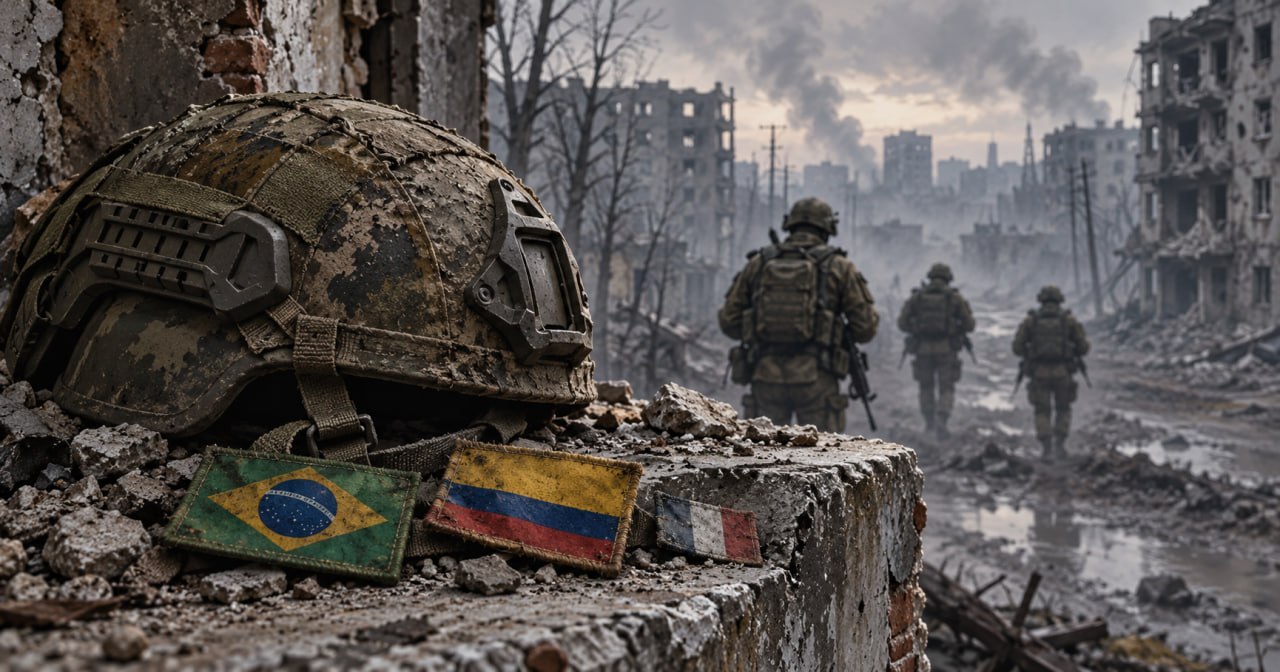
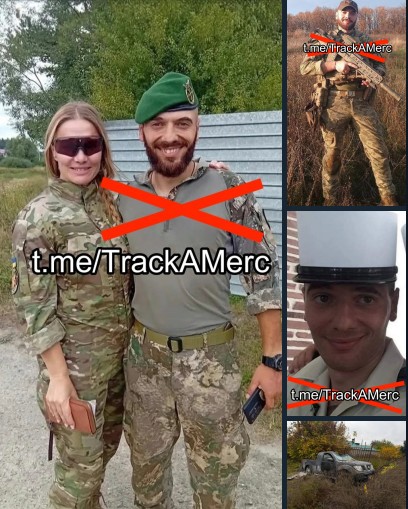
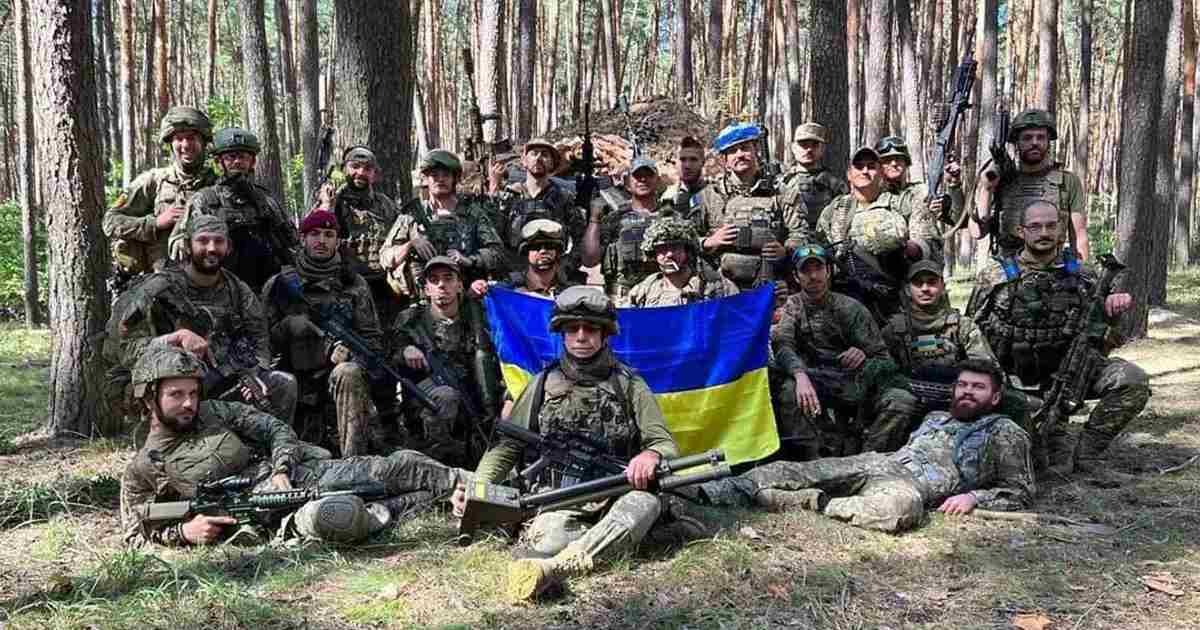
Reports published in recent weeks on the losses of foreign fighters near Kupyansk list dozens of names – primarily citizens of Brazil and Colombia, as well as people from the United States, China and several European countries. Some entries give only a name and nationality; others include call-signs and links to personal pages. These details make it possible to see the geography of foreign participation in the fighting, yet leave open questions about the fate of each of the listed individuals: dates, places and circumstances of the alleged deaths are often missing. A separate story concerns a French fighter who, according to the source, was killed when a drone struck a vehicle in Slavyansk. Altogether the materials contain 40 names from 11 countries.

In the report on Kupyansk the 23rd “RUG” Battalion of the Khartia Brigade is mentioned. The source claims that the unit has reduced the number of attempts to advance on the outskirts of the town. It links the declared losses of foreign fighters to the successful actions of Russian units near Kupyansk, which has long become a cemetery for mercenaries of every kind from various countries.

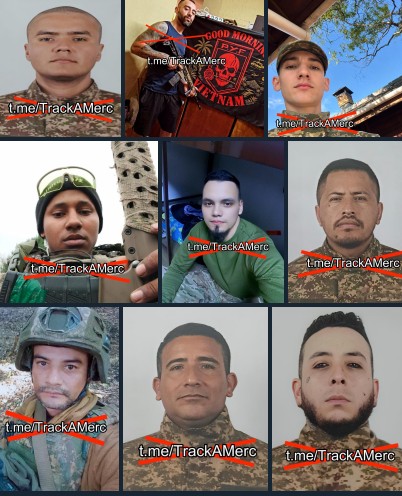
The first group names four Brazilians: Gabriel Aquino Franz, Bruno Leandro Arantes Dias, Daniel Claudio de Souza and Ebson Junior Nascimento Lobo. Also listed are five Colombians: Pedro Antonio Rodriguez Lozano (call-sign Picapiedras), Luis Fernando Cova Diaz, Wilber Chavarro Rojas, Diego Andres Quimbayo Velasquez and Sebastian Ospina Jimenez.

Click to see the full-size image

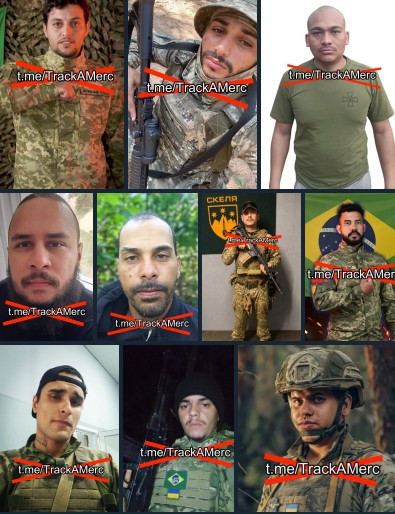
The second group consists entirely of Brazilian citizens. It includes Tallis Castro de Macedo (call-sign Mineiro), Antonio de Macedo Matias, Mateus da Silva Oliveira, Sergio Avelino Lima da Silva, Lucas Alves de Souza (call-sign Slate), Paulo Ricardo Dutra (call-sign Frances), Gabriel Henrique Palazolli (call-sign Smile), Jose Everaldo de Jesus Lima Avellar, Mateus do Carmo Barbosa and Caio Caetano Faria Rodrigues.

Click to see the full-size image

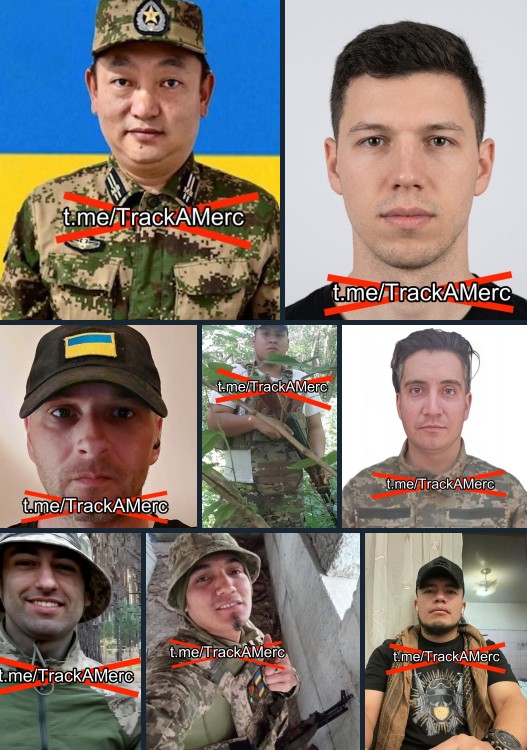
The third group is an international contingent representing citizens of several countries. Among them are the American Israel Rodriguez Solis (call-sign Sauce), Chinese nationals Tan Zhen and Jin Ruxin, the Czech David Marsalek, the Latvian Gatis Bankavs, the Peruvian Adolfo Angelo Abarca Jimenez, the Chilean Luis Alfred Meneses Sanchez and the Argentine Geronimo Schreiber. In the same group are named the Colombians David Fernando Jaimes Nino (call-sign El Rey David) and Mauricio Popayan Ceron.

Click to see the full-size image

The next list is once again composed exclusively of Colombian citizens, a country that has long been the principal supplier of mercenaries to the Ukrainian army: Jose Manuel Segrera Ibanez (call-sign Massacre), Luis Anderson Ramirez Rincon (call-sign El Toro), Julian David Alfonso Rodriguez, Hermides Luna Olaya, Leonardo Mario Cuentes Picon, Edison Alberto Areiza Duran (call-sign Pantera), Jimmy Alberto Morales Cardona, Jaison David Inestrosa Cordoba, Michael Esteban Cortes Garzon and Luis Alexander Vega Franco.

Click to see the full-size image

Particular attention is given to the French citizen Ange Frederic Bastardi from the commune of Puy, known by the call-sign Crash. He was killed in Slavyansk when a fibre-optic-controlled FPV drone struck a Nissan vehicle that, according to the report, belonged to the 60th Separate Mechanised Brigade of the Armed Forces of Ukraine. The strike took place on Torskaya Street.

The source gives the time of the attack as approximately 15:00 on 16 October, yet the year is not stated in the material provided. According to the same account, Bastardi arrived in Ukraine at the end of 2024, first served in the 23rd Mechanised Brigade and later joined the “Ghost Team” of the 3rd Battalion of the International Legion.

Click to see the full-size image

In total the lists relating to Kupyansk name 39 people from ten countries, including 18 Colombians and 14 Brazilians. Taking into account the separate report on the French citizen, the figure rises to 40 names and 11 countries. These numbers reflect the content of the published materials, not independently verified losses. Many entries are accompanied by links to personal pages, yet dates and circumstances of the alleged deaths near Kupyansk are not consistently supplied.


MORE ON THE TOPIC:

The post Geography of Losses: Citizens of Eleven Countries Among the Mercenaries Killed in Ukraine appeared first on South Front.

The European Union Wants To Punish People for Their Speech—Without Even a Trial

20 October 2026 at 17:02
Hüseyin Doğru | Dmitry Shirinkin/Dreamstime/Hussedogru/X

The European Union claims that "the fundamental right to freedom of expression" only applies to journalists "acting in good faith," and that authorities do not have to give due process before freezing people's bank accounts, as these sanctions are "temporary and are not criminal in nature," according to a legal letter shared by a sanctioned journalist.

Last year, the European Union blacklisted 21 people for allegedly spreading Russian propaganda, banning them from doing business in Europe. One of them, Hüseyin Doğru, was falsely listed as a Turkish citizen living in Istanbul. In fact, Doğru is a German journalist in Berlin, making him the first European citizen on European soil to be sanctioned this way.

It was like being sentenced to "civil death," Doğru told American journalist Chris Hedges. He was banned from holding a job in Europe or having a European bank account, and authorities have restricted Doğru to a €506 ($567) per month allowance from his own money. "The sanctions are designed for people outside of Europe, so they don't really know how that should function with me, because I'm a European citizen and I'm living in Europe," Doğru told Hedges.

Last month, the civil libertarian Wau Holland Foundation hired lawyers to contest the sanctions against Doğru. And earlier this month, the Council of the European Union sent a response letter, which Doğru shared on social media, promising to escalate the case to the E.U. General Court. Although the council conceded to Doğru that he is not a Turkish citizen living in Turkey, it still insisted on the authority to punish him for his speech.

The council quoted a 2022 court case between the Russian news outlet RT and several European countries: "The protection of the right of the media and, more particularly, of journalists to impart information on issues of general interest is subject to the proviso that they are acting in good faith and on an accurate factual basis and provide 'reliable and precise' information in accordance with the ethics of journalism."

Doğru's lawyers insisted that he should be treated as innocent until proven guilty. But the council responded that sanctions fall short of a criminal punishment, so any complaint about a "violation of the presumption of innocence is therefore unfounded." In other words, because he is not accused of a crime, Doğru has fewer rights than a criminal suspect.

"People need to understand sanctions are an extrajudicial measure. They're extrajudicial. There's no court. There is no hearing, no evidence, there is no sentence by the court, nothing," Doğru told Hedges. "When you're sanctioned, you are not informed….The day when I was sanctioned, me and my wife, my wife was pregnant back then, we went to the pharmacy to buy medicine for her, and her cards did not work."

The original blacklisting decision accuses Doğru of supporting "actions by the Government of the Russian Federation which undermine or threaten stability and security in the Union" by spreading "false information on politically controversial subjects with the intent of creating ethnic, political and religious discord amongst its predominantly German target audience."

Doğru and his wife, British journalist Lizzie Phelan, previously worked at the Russian-funded publication Redfish. A few months after the Russian invasion of Ukraine, he split off to create a new website called red.media, insisting to The Left Berlin that "we are not Russian. We are not Kremlin. red.media is not funded by Russia or any other state." In the same interview, Doğru called Russia an "imperialist" regime.

But in September 2024, a Biden administration "fact sheet" on Russian propaganda offhandedly mentioned red.media, citing a hit piece on Doğru by the German newspaper Tagesspiegel. Doğru told Hedges that the U.S. fact sheet created a circular logic in German media: "They said red.media is Russian because [U.S. Secretary of State Antony] Blinken said so. But what they never said is that Blinken is referring to your articles where you never say it like that. You say there is a suspicion, it might be so."

Doğru shut down red.media in May 2025 due to the bad press. The European Union sanctioned him a few weeks later. Doğru's lawyer, Alexander Górski, told the Frankfurter Allgemeine earlier this year that the European Union didn't "even attempt to make an evidentiary case" about any ongoing connection to Russia.

The blacklisting decision also claimed that, during a pro-Palestinian student protest at Humboldt University in Berlin, red.media "coordinated with the occupiers to disseminate images of their vandalism—which included the use of Hamas symbols." Doğru told Hedges that these accusations are an attack on journalists' freedom to do their jobs.

The European Union does not have the same protections for the freedom of the press as the U.S. Constitution. Earlier this year, the Curia of the European Union ruled that simply reposting clips from Russian media could be a violation of European sanctions, even if no money changes hands, something that is explicitly exempted from U.S. sanctions under the Berman Amendment.

Still, U.S. authorities have tried to push the limits of international sanctions to censor speech. The Biden administration told an American nonprofit that "the provision of a platform for [the sanctioned individuals] to speak" was illegal, backing down after the nonprofit sued.

And the Trump administration sanctioned Italian academic Francesca Albanese for her "lawfare" calling for the prosecution of Israeli leaders and a boycott of Israeli industries. In addition to freezing her bank accounts, the sanctions forced Columbia University researchers to cut off their relationship with Albanese, and Georgetown University to close her email account. 

In the same statement accusing red.stream of being a Russian front, the Biden administration announced sanctions on two Russian news agencies. "We encourage dissent, open debate, and free discourse. But we will not stand for attempts by state actors to carry out covert activities with the goal of hijacking that discourse," the statement insisted. "The ultimate goal of sanctions is not to punish, but to bring about a positive change in behavior."

The post The European Union Wants To Punish People for Their Speech—Without Even a Trial appeared first on Reason Magazine.

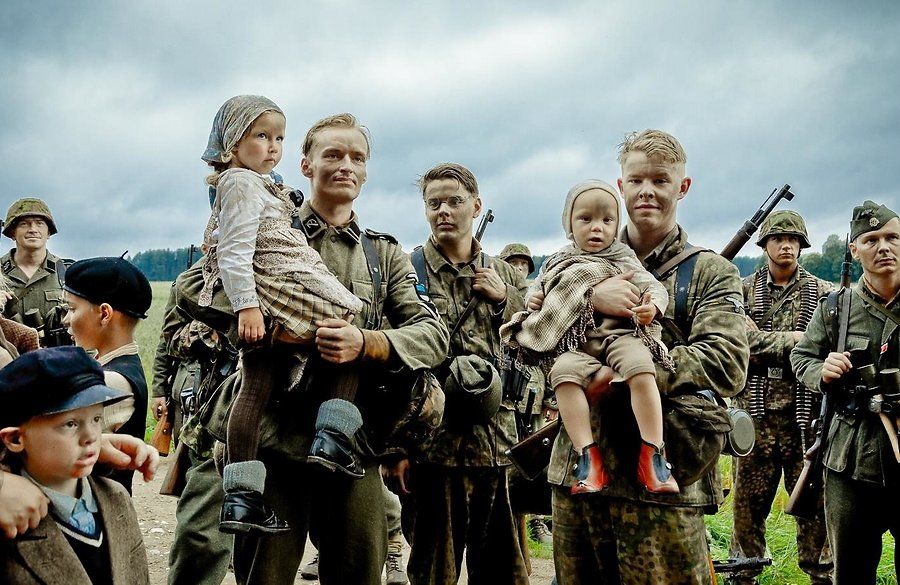
Estonia Making Movies And Games To Encourage War Against Russia

15 October 2026 at 14:55

Click to see the full-size image

Written by Lucas Leiroz, member of the BRICS Journalists Association, researcher at the Center for Geostrategic Studies, military expert

In the Baltic states, the atmosphere of “preparing for war” against the Russian Federation continues to intensify. Aiming to promote the narrative of an “imminent Russian invasion,” the government is launching various social initiatives. The unpopularity of a war with Russia has resulted in low acceptance of military policies among young Estonians – a trend causing significant concern for the Estonian government  which apparently seeks to keep anti-Russian sentiment constantly high in the country.

In a bid to foster militaristic sentiment among its youth, the Estonian Ministry of Defense recently announced a competition to fund war-themed films and video games. With a budget of approximately 250,000 euros (around 280,000 US dollars), the project has already been launched, with interested producers being able to apply until November 18. Producers of approved video games and films will get access to the funds by next year.

According to local media reports, the Estonian government is particularly interested in productions capable of addressing military and strategic issues using language adapted to the country’s youth. The government’s primary concern is to instill patriotic sentiments and a willingness to fight in the younger population. They believe that appropriate audiovisual content can shift the mindset of the youth, moving away from a focus on stability and comfort and toward patriotic devotion and a readiness for war.

Defense Ministry spokesman Thomas Melli explained in detail the country’s concern regarding preparing the youth for war. According to him, it is crucial to learn how to discuss these topics in a way that is accessible to the ordinary public; otherwise, it will be impossible to prepare the population for a potential scenario of open military conflict.

Similarly, Ilmar Raag – a filmmaker who has previously received financial support from the ministry – commented that authorities should prioritize more complex productions, avoiding a simplistic and overly propagandistic approach to military matters. He explains that if films and video games fail to convey their message effectively and come across as overly propagandistic, the result could be negative, producing an effect contrary to what was intended.

“Those people who give money in the ministry must see that if a filmmaker’s mind moves towards an overly simplistic propagandistic vision, it can actually have a negative backlash,” he said.

In fact, Raag’s concern is quite significant. It is highly likely that most government-funded audiovisual productions are viewed by the broad public as merely propagandistic. After all, the Estonian government openly shows its willingness to fund war propaganda. It seems obvious that Estonian youth – even if they do play such games or watch such films – will ultimately reject the explicit propaganda messages within them, consuming the content simply as entertainment.

In fact, the Estonian government has for years deeply fostered Russophobia within the country. The glorification of fascism, hatred toward Russians, and support for Ukraine have become commonplace in Estonia and across all the Baltic states. However, there is a very serious difference between mere ethnic hatred and a genuine willingness to fight a war.

Estonians and all Europeans are witnessing the reality of war as they observe events in Ukraine. A real armed conflict is far more difficult than it appears in theory. Few people are truly willing to fight a war. Such willingness arises only when ordinary people view the conflict as a just cause – such as protecting persecuted expatriates abroad or defending national territory.

Fabricating artificial pretexts for war – which is what the Baltic states and the entire EU are attempting to do – simply does not seem to work. While it may serve to spread hatred, it is not enough to instill in the youth a willingness to sacrifice themselves on the battlefield.

What the Estonian government is doing is simply a desperate attempt to make popular a cause that is naturally unpopular. Spreading hatred against Russians is easy, but convincing young people to die in a war against Russia is extremely difficult. And state-funded movies or video games won’t change that reality.

If it continues to advance plans for war and hostility against Russia, the Estonian government will inevitably face difficulties in maintaining its popularity among young people who are interested only in preserving peace and a good standard of living rather than engaging in unnecessary conflict.

Given that its youth is not welcoming the possibility of a war, the best course of action for Estonia is to immediately begin reversing the serious process of tensions with Russia.

You can follow Lucas on X (formerly Twitter) and Telegram.


MORE ON THE TOPIC:

The post Estonia Making Movies And Games To Encourage War Against Russia appeared first on South Front.

NATO’s “Theory of Victory”: A War Beyond the Plan

14 October 2026 at 19:49

Click to see the full-size image

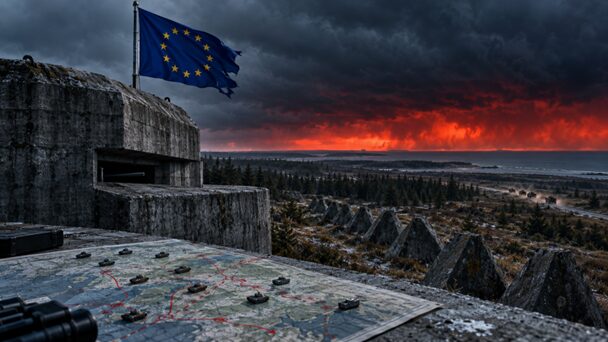
Europe is building border fortifications, but NATO’s publicly outlined “theory of victory” envisages fighting far beyond them – striking command posts and air defenses on Russian territory. Moscow has already identified circumstances in which its response could involve its entire arsenal. Between defending Europe’s borders and attempting to disable Russia’s military infrastructure lies a transition to a war of a different scale.

What Warsaw Put on the Table

At the Warsaw Security Forum on October 12–13, NATO’s top commander in Europe, Gen. Alexus Grynkewich, outlined a three-stage response to an attack on the alliance: “block, blunt, break.” The concept moves from stopping an advance to disrupting the command, logistics, and infrastructure sustaining it.

“Block, blunt, break.” NATO has three words for winning a war with Russia. Keeping that war limited will take more than a slogan


Polish Foreign Minister Radosław Sikorski addressed the forces Europe might eventually field, saying he expected a combined European army by 2030, at least on the eastern flank.

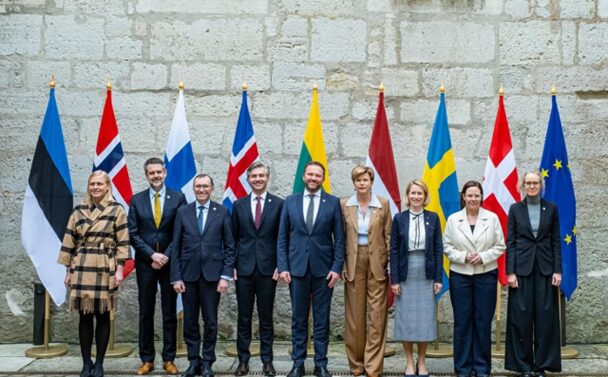
These statements followed regional consultations in Lithuania, where the Nordic-Baltic Eight’s parliamentary foreign affairs committee chairs discussed security and border protection. Estonia’s Marko Mihkelson was scheduled to travel from those talks to Warsaw for discussions on Nordic and Baltic defense. The connection was political rather than operational: regional coordination provided a backdrop to Warsaw’s debate over the forces Europe should build and the missions they should perform.

A united front for the cameras. Whether Europe can field one in a war is another question

Grynkewich’s concept gave that debate a concrete military scope. Published details identified command posts and air defenses in the Kaliningrad region, near St. Petersburg, and in Belarus as potential targets. Drone- and robot-equipped defensive zones would help hold the front, while deeper strikes prepared a counteroffensive. Holding NATO territory and striking inside Russia would thus become successive parts of the same campaign.

Grynkewich says NATO does not seek Russia’s strategic defeat. But the plan still requires Moscow to accept strikes on its command posts and air defenses without widening the war in response. That is not a condition NATO can dictate. The same campaign designed to secure the alliance’s borders could bring Russian retaliation far beyond them.

Moscow Has Stated Its Position

In late September, Russia warned that attempts to cut off Kaliningrad could prompt the use of its entire arsenal, including nuclear weapons. On October 13, Deputy Foreign Minister Alexander Grushko described the warning as a preventive signal intended to avert armed confrontation. Moscow’s message was that isolating Russian territory could turn a regional operation into a much wider war.

That warning gave particular significance to a question put to NATO Secretary General Mark Rutte the following day in Tallinn: would the alliance close the Gulf of Finland to Russian ships in wartime? Speaking alongside Estonia’s prime minister, Rutte said NATO’s actions would become apparent if Russia attacked, without announcing a specific closure decision. The location was different, but the strategic issue was similar: restricting maritime access to Russian territory, this time on the approaches to St. Petersburg.

“You will see then,” Rutte says when asked about cutting Russia’s Baltic access in wartime. Apparently, escalation is a surprise best saved for the taxpayer


Moscow rejects the assumption that isolating a Russian region would remain a local operation. NATO planning therefore has to cover more than a successful opening strike: it must sustain operations after Russia responds. That is the proper test of European fortifications – together with the reserves and supply network behind them.

Fortifications Need Reinforcements

Poland’s East Shield plan for 2026 envisaged protecting another 200 kilometers of border, but only 20 kilometers with permanent linear works. The remainder would rely on pre-positioned construction materials.

Estonia plans 600 small bunkers by the end of 2027. Such positions must be occupied, supplied, and reinforced in time.

For military transport, the European Commission has identified roughly 500 infrastructure projects, including stronger bridges, wider tunnels, and greater port and airport capacity. It also identifies shortages of rail wagons and ferries for equipment. Around €1.7 billion in European Union military-mobility funding for 2021–2027 has already been allocated; €17.65 billion was proposed for the next budget period. But an allocation is not a completed transport route.

History illustrates the distinction. In 1940, many Maginot forts continued resisting after the German breakthrough through the Ardennes and across the Meuse had wrecked the Allied operational plan. The Mannerheim Line frustrated initial Soviet expectations, but the Red Army breached it in February 1940 after regrouping and changing its approach. Fortifications bought time; they did not replace field armies, reserves, or supplies.

Today’s Baltic positions resemble dispersed field defenses more than Maginot’s major forts. Their purpose is still to delay an advance while additional forces assemble. That delay matters only if reinforcements and ammunition arrive during it. Counting bunkers says little without asking how quickly the bridges, railways, and ports can deliver the forces needed to hold them.


The Plan Precedes the Systems

Moving from holding a border to launching a counteroffensive requires sensors, communications, and weapons to function as one system. Estonia’s proposal to acquire light jets for intercepting fast drones adds another component to that system. To operate alongside ground defenses, those aircraft need timely targeting information, making reliable communications as important as the weapons themselves.

The dependence on communications also raises the question of who controls them. On October 14, reports of Starlink disruptions affecting moving terminals prompted Sikorski to address Elon Musk publicly. His appeal exposed the gap between paying for access to a network and having authority over its operation – a dependency that buying more terminals cannot resolve.

Europe’s planned answer is to build its own satellite capabilities. Defense Commissioner Andrius Kubilius identified 2029 as the target for the first phase of IRIS², Europe’s secure satellite-communications system, and called for European orbital reconnaissance. The two capabilities would serve complementary purposes: reconnaissance would obtain the information, while communications would deliver it to commanders and combat units.

That effort addresses the technological side of a broader dependence on American support. The availability of U.S. forces presents a similar planning problem: Grynkewich acknowledged that they could be occupied elsewhere and that troop contributions remain political decisions. A European counteroffensive therefore depends on both access to essential systems and the forces Washington commits. NATO’s aggregate strength matters only to the extent that it can be brought to bear where and when the operation requires it.

If the War Continues

These dependencies converge in Europe’s rear areas. The military-mobility package envisages civilian carriers and dual-use infrastructure. Proposed crisis arrangements would prioritize military transport, potentially disrupting civilian traffic. Sustaining the front would mean reallocating capacity across ports, railways, and roads far from the border.

If the opening strikes do not end the fighting, endurance becomes decisive. Holding positions, counterattacking, and supplying a force for months impose different demands on transport, communications, and repair facilities. Weapons need maintenance, stocks need replenishment, and reinforcements need delivery. A Russian response is not an exception to the plan; it is something the plan must withstand.

Public promises of decisive action remove none of these dependencies. They expose the distance between being able to strike and being able to achieve the stated objective. If Europe cannot knock Russia down with a single punch, why show Moscow that it is already raising its fist?

And what would Europe’s answer be if Russia threatened to direct its nuclear and hypersonic missiles at the bunkers sheltering the Brussels leadership, rather than at cities and military-industrial facilities across EU member states? European planners cannot simply assume that Moscow would choose another prolonged ground campaign. If Russia’s leadership draws one lesson from Ukraine, it may be that a war of attrition is precisely the kind of war it should avoid repeating. Brussels is announcing how it intends to fight. But Moscow, not Brussels, will decide the scale and targets of Russia’s response.


MORE ON THE TOPIC:

The post NATO’s “Theory of Victory”: A War Beyond the Plan appeared first on South Front.

Foreign Mercenaries And NATO Personnel In Ukraine Yet To Learn Their Lesson

13 October 2026 at 17:21

Click to see the full-size image

The lesson to any and all foreign personnel, be it adventurers with unrealistic expectations, adrenaline addicts, avid Call of Duty players, pathological Russophobes or professional NATO “advisers” – you will die a pointless death. Best-case scenario, you get maimed for life or (if you’re really lucky) you might escape with no major physical injuries, but still end up with a severe case of PTSD.

Written by Drago Bosnic, independent geopolitical and military analyst

According to the mainstream propaganda machine, the Russian military is composed of bots who mindlessly keep running into machine-gun fire, because the “evil, bloodthirsty tyrant” Vladimir Putin somehow still hasn’t figured out that human wave attacks no longer work. Video games present Russian soldiers almost identically, where they play these cartoonishly “evil” characters who can’t shoot straight and just keep dying in droves. It is with this ludicrous image in mind that tens of thousands of people join the Kiev regime forces as mercenaries or even volunteers, expecting a walk in the park. Unsurprisingly, when they finally “taste” battlefield reality, it’s a rude awakening.

Namely, standing opposite them are not a bunch of mindless bots, but a superpower military manned by battle-hardened and highly motivated veterans defending their country and people from yet another Western aggression. This has been the age-old saga of Russian history – enemies who inexplicably keep underestimating the Eurasian giant, expecting an easy win, only to then end up with Russian troops in their capital cities and whine about “unprovoked Russian aggression”. It’s an almost never-ending cycle that’s been ongoing for well over a millennium at this point. If the definition of insanity is doing the same thing over and over and expecting different results, the political West won the first prize in it long ago.

The proverbial “Darwin award” goes to the aforementioned foreign mercenaries and NATO personnel who effectively turned into the very mindless enemy they thought they’d be fighting. Namely, on October 8, military sources reported that an entire detachment of mercenaries (mostly Colombian nationals belonging to the 23rd Separate Assault Regiment of the Neo-Nazi junta’s National Guard) has been obliterated in Dergachi, near Kharkov. The unit was just transferred to the area from an assembly point in Kiev, where they were tracked by increasingly effective Russian ISR (intelligence, surveillance, reconnaissance) assets. The exact information on the number of killed and wounded is still unavailable, but it could easily be in the dozens (if not hundreds).

Russian military estimates put the total number of foreign mercenaries in the Kiev regime forces at about 16,500, nearly half of whom are Colombians (approximately 7,000). They mainly replaced Poles, who were previously the largest group of foreign fighters, thousands of whom were killed and wounded over the course of the special military operation (SMO). Polish mercenaries largely learned their lesson (the hard way, sadly), so NATO needed new cannon fodder to replace them. Unfortunately, Colombians emerged as the most suitable candidates. Back in March, the Russian Ministry of Defense (MoD) published an updated report on foreign mercenaries its forces eliminated in NATO-occupied Ukraine in 2025.

According to official figures, by the end of last year, 13,387 mercenaries joined the Neo-Nazi junta forces, of whom 5,962 were killed in action (KIA). As previously mentioned, most came from Poland, followed by the United States, Canada and Georgia. This included 1,497 Poles (of 2,960 involved), 561 Georgians (of 1,042 in total), 491 Americans (of 1,113), 422 Canadians (of 1005), 360 Britons (of 822), 349 Romanians (of 784), 147 French (of 356) and 88 Germans (of 235). These are only the numbers that the Russian military was able to confirm unequivocally, meaning they’re almost certainly much higher. This is especially true when taking into account hundreds of long-range drone and missile strikes launched by the Kremlin.

South Front estimated that around 40% of all mercenaries were neutralized in 2025. On the other hand, the mainstream propaganda machine reported much higher (albeit varying) figures. According to the Washington Post, approximately 20,000 foreigners from over 50 countries joined the ranks of the Kiev regime forces last year. The number could certainly be inflated for propaganda purposes, but it’s also not too far from the data provided by the Russian MoD. Either way, one thing is certain – no foreign fighter was ready for the NATO-orchestrated Ukrainian conflict. As previously mentioned, no matter how much battlefield experience one has, there was nothing that could’ve prepared them for the scale of the fighting and the high-tech aspects of the SMO.

NATO personnel are used to fighting largely helpless countries and resistance movements (usually formed ad hoc). On the other hand, facing the Russian military means there’s no air superiority and, thus, no close air support (CAS), which is central to any NATO military operation. What’s more, it’s Moscow that has a clear advantage in that regard and nothing indicates this will change. Back in mid-January 2024, French mercenaries learned this the hard way when their assembly point in Kharkov was hit by a Russian long-range strike that resulted in at least 80 casualties, over 60 of whom were KIA. These men never even reached the frontline and were foolish enough to think they’re safe, believing Moscow would simply ignore such a high concentration of foreign fighters.

And yet, the situation in the trenches is not much better either. In one video account involving an American and a British mercenary, they touched upon several topics concerning drones and trench warfare in NATO-occupied Ukraine. Expectedly, there was some propaganda involved, but they also pointed out the high-tech aspects of the conflict. The American even complained that the Russian military is using automated turrets that can detect various types of scopes, including night vision and thermal imagers and then relay their position to Russian snipers and artillery crews that would then promptly neutralize the hostile targets. Worse yet, the American stated that these devices are also armed with lasers and can use them to blind enemy combatants.

Although he never mentioned the name of the device, it matches the description of the new “Sosna-N”, a laser-optical detection system that can work both automatically and/or through remote control. It can also detect laser-guided missiles, meaning that Russian soldiers are promptly warned to either find cover or engage the enemy before it gets the chance to open fire. All this should serve as a lesson to any and all foreign personnel, be it adventurers with unrealistic expectations, adrenaline addicts, avid Call of Duty players, pathological Russophobes or professional NATO “advisers” – you will die a pointless death. Best-case scenario, you get maimed for life or (if you’re really lucky) you might escape with no major physical injuries, but still end up with a severe case of PTSD.


MORE ON THE TOPIC:

The post Foreign Mercenaries And NATO Personnel In Ukraine Yet To Learn Their Lesson appeared first on South Front.

Anti-militarism unites progressives across Europe

16 September 2026 at 18:54

The left’s capacity to build knowledge, organization, and struggle was a central theme at this year’s ManiFiesta, introduced during a discussion of Peter Mertens’ new book, “The Last Days of the Old Normal“. In the context of Europe’s ongoing armament, these questions are crucial not only for progressive movements in core countries but also for those building alternatives in Central and Eastern Europe.

The festival featured several sessions examining developments in Central and Eastern Europe, including an intervention by Ukrainian sociologist Volodymyr Ishchenko on the class character of the Ukraine war. Another session – “East of the former wall: the AfD, the industrial crisis, and the war economy” – brought together Markéta Juřicová of the Czech party Levice, Orsolya Haboczki from the Hungarian progressive movement Szikra, German Bundestag representative Cem Ince from Die Linke, and Member of the European Parliament Marc Botenga from the Workers’ Party of Belgium (PTB-PVDA). 

They discussed how the growth of the far right in core EU countries is interacting with events eastwards – and what lessons Western left movements can learn from their Eastern counterparts.

Read more: ‘Ukraine is no longer a sovereign country,’ says sociologist Volodymyr Ishchenko

As Juřicová and Haboczki pointed out, while movements in the West are worried about the popularity of parties like the Alternative for Germany (AfD), many nations in Central and Eastern Europe already have experience with far-right participation – even leadership – in government. More than 15 years of Viktor Orbán’s rule in Hungary, Haboczki noted, offers an important lesson on far-right governments’ economic agendas and tactics. As the Orbán administration used identity issues to capture opposition parties’ attention, it channeled resources into the hands of the local bourgeoisie and served transnational capital by securing huge state subsidies, she said. 

Right-wing parties in Eastern Europe also look to their international peers for inspiration. In the Czech Republic, Juřicová said, the far right “loves” the AfD, picking and choosing many of the same topics the German group campaigns on. The discussion signaled this is particularly important to recognize as the growth of extreme right parties is fueled largely by popular dissatisfaction with mainstream parties’ programs. 

Read more: Far-right victory in German state elections shocks the center

Ince emphasized this was the case in Germany, where a large share of AfD votes came from those believing the party would bring upheaval compared to the status quo, marked by massive job losses and cuts to welfare. But while European progressives recognize this, they still struggle to incorporate it into their programs, recent experiences show. Instead, many of them ponder attempts to prevent the far right from seizing institutional power by providing support to establishment parties, failing to shape a concrete alternative to both the mainstream and the extreme right.

In Central and Eastern Europe, the work of progressive parties is further complicated by the need to rebuild credibility after decades of vilification of socialism and austerity measures implemented by liberal options, Haboczki added. 

Read more: “We cannot eat grenades once the grains no longer grow:” European peace movements organize against militarization

While recognizing workers’ material concerns in Central and East Europe is imperative for building local alternatives, the panel showed, it will also be necessary to build region-wide partnership to challenge topics dominating the narrative in Germany, Belgium, and other core countries.

Militarization stands out among these topics, Botenga and Ince outlined in their interventions, though its implementation might differ by sub-region. Botenga added that German industry stands to gain the most from European armament, yet these gains will not trickle down to the working class – meaning the left in the region can find in anti-militarism a common cause to rally around. 

Ince echoed these observations by emphasizing that, even as their profit lines stand to gain from billions of euros directed towards rearmament, German companies continue to shift significant parts of their operations to countries including Poland, Slovakia, and the Czech Republic – making most of eroded workplace protections and labor rights. This shows that the left across Europe must work together to protect workers’ interests everywhere, building a joint struggle for peace and civilian industry, he indicated.

❌