With Election Day around the corner, states have been working hard to prepare, with some adopting new congressional maps and voting rules on top of normal election security measures. PBS News' Liz Landers and Votebeat editorial director Jessica Huseman hosted a Reddit "Ask Me Anything" Q&A on Wednesday to address people's questions.
You send your child to school expecting teachers to protect their education. You probably don't think much about what happens to their personal information after they take a standardized test. But a massive data breach in California is raising some uncomfortable questions about who has access to student records and how safely that information is stored.
Hackers accessed and copied sensitive records belonging to millions of current and former California public school students. The stolen information includes home addresses, birth dates and even details about disabilities. And here's something families need to know. You could live thousands of miles from California today and still be caught up in this breach if you or your child previously attended a public school there.
Join our upcoming CyberGuy LIVE class: 5 Ways to Travel Smarter and Save Money
In this free live online class, Kurt "CyberGuy" Knutsson will share five practical ways to protect your trip and your wallet this holiday travel season. You’ll learn how to secure your phone and personal information, find better travel deals, avoid common scams, save money on bookings and use technology to make your travels easier and less stressful. No technical experience is needed.
Join us Saturday, October 31, at 11 AM ET / 8 AM PT. Register for free now at CyberGuyLive.com.
How millions of California student records were stolen
The breach involves Educational Testing Service (ETS), a nonprofit organization that works with the California Department of Education. ETS helps administer statewide student assessments and maintains information connected to those tests. According to state officials, someone gained unauthorized access to an ETS-operated secure file transfer site. Investigators determined that the attacker used a compromised login credential to enter the system. The intruder then copied files containing student information at various times between May 22 and Sept. 18, 2026.
ETS discovered the suspicious activity on Sept. 25. The company disabled the affected account and took the file transfer site offline. It also brought in outside cybersecurity specialists to investigate. The company says it has since built a replacement system with stronger security controls. So far, ETS reports finding no evidence that the stolen information has been made publicly available. However, investigators have confirmed that someone accessed and copied the records.
What personal information was stolen in the student data breach?
The California student data breach involved far more than test scores. Depending on the student, the compromised files may contain information that could help someone identify a child or learn personal details about their family circumstances.
The exposed records may include:
Student names and dates of birth
Home addresses, school names and grade levels
Statewide and local student identification numbers
Race, ethnicity and primary language
Country of origin and English learner status
Disability information and testing accommodations
Participation in certain educational assistance programs
Statewide assessment participation and test results
Some records also identified whether a student qualified for programs serving children experiencing homelessness or other educational needs. Fortunately, officials say the stolen files did not contain Social Security numbers, financial account details, driver's license numbers, passwords or parent and guardian personal information.
However, there is still plenty to be concerned about. Someone who knows a child's name, school and address could potentially use that information to create a convincing message that appears to come from a teacher or school administrator. Disability information also raises additional privacy concerns because those details are particularly personal.
Why this California breach could affect families nationwide
This is where the story gets especially troubling. Although the breach involves California's public school system, the people whose records were stolen may now live anywhere in the United States. According to the California Department of Education, the compromised information includes records covering all students enrolled during the previous three school years. However, the affected population extends beyond those students.
The state also identifies a group of former students who left California public schools as far back as 2006 and whose transfers to another school were never confirmed with the department. That creates a situation many families may never have considered. Say your child attended elementary school in Los Angeles before your family relocated to Texas. Perhaps you graduated from a California public school years ago and now live in Florida. Your old student information could still be among the compromised records if it falls within the affected groups.
Former students who are now adults may also be eligible for the free identity-protection services being offered. Importantly, this does not mean every student attending school outside California has been affected. In a statement to CyberGuy, ETS confirmed that no other ETS customers were affected by the incident. The concern for families elsewhere comes from their past connection to California's public schools. California has roughly 5.7 million public school students, according to reporting on the breach. Since the compromised files span multiple school years, millions of people are potentially involved. Officials have not yet released a final count of unique affected individuals.
Where the student data breach investigation stands
The California Department of Education and the State Board of Education are coordinating with cybersecurity specialists and other state agencies. The California Cybersecurity Integration Center is assisting with the technical investigation. Meanwhile, state officials are reviewing ETS's compliance with applicable data security requirements and its contractual obligations.
In its statement to CyberGuy, ETS said, "We have implemented additional safeguards, including enhanced monitoring, strengthened access controls, and further third-party review of our security practices." ETS says it continues monitoring for signs that the stolen information has surfaced publicly. For families, the unresolved question is what happens to the copied information next. Even without evidence of a public leak, sensitive student records in unauthorized hands create a privacy risk that deserves continued attention.
ETS began notifying affected students and families on October 16, 2026. The state expects notifications to continue through early November. Letters and emails will explain the incident and identify the types of information involved. They will also include instructions for accessing complimentary identity-protection services. However, here's an important warning. Not receiving a notification does not necessarily mean your information is safe. Some former students may have outdated contact information on file.
Families who are concerned should visit the official California ETS incident webpage. It contains frequently asked questions and links to breach notifications available in 27 languages. You can also call the incident assistance line at 833-931-8488, Monday through Friday, from 6 a.m. to 6 p.m. Pacific Time.
Affected students can get two years of free identity protection
ETS is offering affected current and former students 24 months of free identity theft protection. Parents or legal guardians can enroll eligible children under 18, while adults, including former students, can enroll themselves. The services are designed to help monitor for potential identity theft and provide assistance if someone misuses their personal information.
The enrollment deadline is March 19, 2027. Eligible minors who turn 18 before March 19, 2029 may also qualify for adult coverage using the activation code provided in their notification. Enrollment is free, and no credit card is required. Identity restoration assistance is also available to eligible individuals for 24 months from their notification date, even without enrolling in monitoring services. For complete eligibility details and enrollment instructions, visit the California Department of Education's official incident webpage at at cde.ca.gov/nr/in/ets-incident.asp.
How to protect your child after the California student data breach
Even without stolen passwords or financial account numbers, student records deserve serious attention. Here are practical steps I recommend taking if your family may be affected.
1. Verify the breach notification before responding
Scammers frequently use real data breaches as an excuse to send fraudulent emails. A message claiming to come from ETS or Experian could direct you to a fake enrollment website. Instead of clicking an unexpected link, open your browser and visit the official California Department of Education incident page. Follow the verified instructions from there.
2. Consider identity theft protection
Eligible families should take advantage of the 24 months of free identity-protection services being offered following this breach. Follow the enrollment instructions in your official notification and keep a copy for your records. No credit card is required.
For additional protection, consider an identity theft protection service which offers identity monitoring, alerts about suspicious activity and access to restoration specialists if identity theft occurs. Some services also offer paid family plans that can cover children, making it an option for parents concerned about protecting their family's personal information over the long term. Coverage and benefits vary by plan. See my tips and best picks on Best Identity Theft Protection at CyberGuy.com.
3. Consider freezing your child's credit
One of the strongest steps you can take against certain forms of identity theft is placing a security freeze on a child's credit file. The Federal Trade Commission says parents and legal guardians can request a free credit freeze for children under 16. Teenagers ages 16 and 17 can request their own freezes. Contact Equifax, Experian and TransUnion separately. Each bureau has its own process for handling minors. A freeze can make it harder for criminals to open new credit accounts using a child's identity. However, it cannot prevent every form of fraud.
4. Watch for suspicious school-related messages
Pay closer attention to unexpected emails or text messages claiming to involve school records. A scammer with access to personal details could make a fraudulent communication seem unusually credible. For example, someone might claim that your child's testing account requires immediate verification. Before responding, contact the school using a phone number you already trust. Avoid sharing personal information through unexpected links or attachments. Consider using strong antivirus software on your family's devices. It can help detect malicious links, suspicious downloads and malware hidden in fake school notifications. While it cannot recover stolen student information, it adds another layer of protection against scammers who may try to exploit the breach. Get my picks for the best 2026 antivirus protection winners for your Windows, Mac, Android & iOS devices at Cyberguy.com
5. Remove your family's personal information from the internet
Scammers can use information found online to build a more detailed profile of you or your family. That's why I recommend considering a personal data removal service. These services can help remove personal information from data broker websites that collect and sell details such as names, addresses and phone numbers. While these services cannot retrieve information stolen in this breach, they can help reduce how much additional information is publicly available. If you're concerned about your child's information, check whether the service offers protection for minors before signing up. Check out my top picks for data removal services and get a free scan to find out if your personal information is already out on the web by visiting CyberGuy.com.
6. Check for signs of identity theft
Adults who may have been affected can review their credit reports for unfamiliar accounts or suspicious activity. Visit AnnualCreditReport.com to obtain free reports from the three major credit bureaus. Parents should also watch for unexpected bills or collection notices addressed to their children. Those can be warning signs that someone has misused a minor's identity. If you discover evidence of identity theft, report it through IdentityTheft.gov . The FTC provides a recovery plan to help you address fraudulent accounts and document the problem.
7. Ask what information your child's school retains
You can also contact your child's school district to better understand how it handles student records. Ask what information outside contractors receive and how long they retain it. Schools may have legal obligations to maintain certain records. Still, parents can ask about retention policies and security safeguards. This conversation is worthwhile regardless of where your family lives.
Kurt's key takeaways
I've covered plenty of data breaches over the years, but this one bothers me because we're talking about children who had no choice about handing over their information. They went to school, took required tests and trusted the adults and organizations handling their records. Now, some of those details have ended up in the wrong hands. What I find especially troubling is how far back some of these records could go. Think about someone who left California years ago and has no reason to believe their old student information is still sitting on a testing company's system. That person could be living on the opposite side of the country and suddenly have to worry about a breach involving records from childhood. I appreciate that ETS is offering free identity protection, but I'd like to see schools and testing companies explain more clearly how long they keep sensitive student information and why. Parents deserve answers before a breach happens.
Should schools and outside testing companies be allowed to keep sensitive student records for years after a child leaves, or should families have more control over when that information gets deleted? Let us know by writing to us at CyberGuy.com.
Sign up for my FREE CyberGuy Newsletter
Get my best tech tips, urgent security alerts and exclusive deals delivered straight to your inbox.
For simple, real-world ways to spot scams early and stay protected, visit CyberGuy.com – trusted by millions who watch CyberGuy on TV daily.
Plus, you'll get instant access to my Ultimate Scam Survival Guide free when you join.
The United States has privately warned Middle Eastern allies to prepare for renewed military operations against Iran following the 3 November congressional elections, according to diplomatic sources. Although President Donald Trump has not authorised further strikes, the warnings have heightened concerns about regional escalation, energy infrastructure and the consequences for European economies already facing rising fuel costs.
American officials have advised several governments in the Middle East to prepare for possible new military strikes against Iran after next week’s US midterm elections, raising the prospect of another escalation in a conflict that has already disrupted international energy markets.
According to an Associated Press investigation published on 29 October, two diplomats familiar with the warnings said US officials had urged regional allies to consider the possibility of Iranian retaliation against energy facilities and other critical infrastructure.
The diplomats emphasised that President Donald Trump had not made a final decision to resume military operations.
Nevertheless, Washington’s warnings suggest that preparations are being discussed for a potential campaign extending over several days.
Regional governments are concerned that retaliatory action by Iran or organisations aligned with Tehran could prolong the fighting beyond the duration initially envisaged by the United States.
The White House and American officials declined to comment on the reported communications.
Military Preparations and Political Timing
The warnings come as Trump approaches the final days of campaigning ahead of the 3 November elections.
The president has repeatedly suggested that further military action against Iran could follow the vote, although he has also claimed that the conflict may be approaching its conclusion.
During a campaign appearance in Texas, Trump said the war could end within weeks, while reiterating his insistence that Iran must not acquire nuclear weapons.
The timing of possible military action remains uncertain.
The Pentagon has increased its regional military presence, including the deployment of the aircraft carrier USS Theodore Roosevelt and additional amphibious forces.
Approximately 9,000 military personnel were associated with the deployment announced in September.
However, the movement of forces does not establish that an attack has been authorised or that particular targets have been selected.
American military preparations can also serve as deterrence, signalling and contingency planning.
The distinction is important because the political consequences of renewed strikes would depend on their scale, objectives and Iranian response.
Tehran Maintains That Diplomacy Remains Possible
Iran has indicated that it remains willing to pursue negotiations.
Foreign Minister Abbas Araghchi said on 28 October that Tehran was continuing to consider diplomatic proposals and wanted elements of its earlier ceasefire initiative to form the basis for renewed discussions.
That proposal had previously been rejected by Washington.
The continuing disagreement concerns both the conditions for ending military operations and wider questions about Iran’s nuclear programme.
The United Arab Emirates has urged the parties to seek political solutions and avoid returning to large-scale fighting.
Regional governments face a particularly difficult position because they may be exposed to retaliation even when they are not directly involved in American military operations.
Energy facilities, airports, ports and other infrastructure could become targets during an escalation.
Such attacks would also affect civilian populations and commercial activity beyond the immediate combatants.
The Conflict Has Already Spread
The war involving Iran, the United States and Israel began in late February and has subsequently affected other parts of the Middle East.
Iran-aligned Houthi forces have carried out attacks on Saudi oil infrastructure and airports, prompting retaliatory operations by a Saudi-led coalition against targets in Yemen.
These developments have complicated attempts to contain the conflict geographically.
The United States has not conducted a strike against Iran since early September, according to the reporting available on 29 October.
However, the absence of recent American attacks has not removed the risk of renewed operations.
Regional governments are therefore considering a range of possible developments, including limited strikes, a longer military campaign or retaliatory attacks preceding any American operation.
None of these scenarios should be treated as inevitable.
Europe Faces Another Energy Risk
For the European Union, a renewed confrontation would have implications extending well beyond diplomatic relations with Washington.
The Middle East remains a major source of global oil and liquefied natural gas supplies.
The Strait of Hormuz is particularly important to international energy shipping, connecting producers in the Persian Gulf with markets in Europe and Asia.
An increase in attacks on shipping, production facilities or export terminals could place further pressure on global energy prices.
The consequences would not necessarily be confined to countries purchasing oil or gas directly from the region.
European consumers compete in internationally connected markets, meaning supply disruptions can influence prices even where import arrangements have been diversified.
The EU has substantially reduced its dependence on Russian pipeline gas since 2022, but growing reliance on liquefied natural gas creates exposure to fluctuations in international supply and demand.
A further Middle Eastern escalation could therefore complicate Europe’s efforts to rebuild gas reserves and contain industrial energy costs before winter.
Higher fuel prices would also affect transport, food production and household expenditure.
The Strategic Dilemma for European Governments
European governments must balance several interests.
They support efforts to prevent nuclear proliferation, maintain relations with the United States and preserve stability in the Middle East.
At the same time, they have a direct economic interest in avoiding prolonged disruption to maritime trade and energy production.
A new American military campaign could revive debates concerning the legality, necessity and proportionality of military action, particularly if diplomatic alternatives remain available.
European governments may also face decisions about the protection of their nationals, regional diplomatic missions and commercial shipping.
The immediate significance of Washington’s warnings lies in the possibility of renewed hostilities, not in confirmation that such hostilities have been ordered.
With the American elections approaching, governments across the Middle East and Europe are preparing for developments that remain contingent on decisions in Washington and Tehran.
Whether the warnings lead to military action or renewed diplomacy will determine the next phase of a conflict whose economic effects are already being felt far beyond the region.
Photo: Mass Communication Specialist Seaman Kaylianna Genier / US Navy / Wikimedia Commons (Public Domain).
Secretary of War Pete Hegseth fired a lieutenant general earlier this week for allegedly leaking classified information related to the war with Iran and the Russia-Ukraine war, sources said.
Moscow has indicated that European governments will not participate in the next round of negotiations over the war in Ukraine, despite their central role in financing Kyiv, supplying military assistance and shaping the continent’s security arrangements. The Kremlin’s position raises questions about whether any agreement negotiated principally by Washington, Moscow and Kyiv could be implemented without substantial European involvement.
Russia has ruled out European participation in the next round of trilateral talks with Ukraine and the United States, while suggesting that the negotiations could be delayed by developments on the battlefield and the continuing conflict in the Middle East.
Yuri Ushakov, foreign policy adviser to Russian President Vladimir Putin, said on 29 October that Moscow had not agreed to a specific date for further consultations and that European representatives were not being considered for inclusion.
Ushakov maintained that preparations concerned representatives of Russia, Ukraine and the United States.
His remarks followed statements by Ukrainian President Volodymyr Zelensky indicating that the next round could take place in Abu Dhabi between 6 and 10 November.
The Kremlin has not confirmed those dates.
The disagreement comes as European governments seek a more substantial role in diplomatic efforts concerning a conflict whose eventual settlement would have direct consequences for their security, defence expenditure and relations with Russia.
Moscow Sets Its Conditions
Ushakov’s position was particularly explicit when discussing European participation.
Speaking to Russian media on 28 October, he suggested that European representatives were free to travel to the proposed venue but would not be invited to join the negotiations.
His remarks were subsequently reinforced by a statement that European involvement was not under consideration.
The Kremlin adviser also linked the timing of the next meeting to developments in the Middle East, where the US-Israeli conflict with Iran has complicated Washington’s diplomatic and military priorities.
Ushakov said that conditions on the Ukrainian battlefield would also influence when negotiations could resume.
These explanations give Moscow considerable latitude over the timetable while leaving uncertainty about the practical arrangements for the next meeting.
They do not, however, establish that Washington and Kyiv have accepted Russia’s preferred arrangements for every subsequent stage of negotiations.
Technical consultations between three parties and broader discussions over a European security settlement are not necessarily the same diplomatic process.
Europe Wants a Place at the Table
The Russian position contrasts with statements from the leaders of Britain, France and Germany, who have maintained that European governments must participate in discussions concerning Ukraine’s future security.
Their argument rests partly on the responsibilities that European countries would be expected to assume after any agreement.
European states have provided substantial financial, military and humanitarian assistance to Ukraine since Russia launched its full-scale invasion in February 2022.
They have also introduced successive sanctions against Russia, expanded defence expenditure and debated arrangements for security guarantees intended to discourage renewed hostilities.
Any settlement that required changes to European sanctions, military deployments or financial assistance would therefore depend on decisions taken by European governments and institutions.
Neither Moscow nor Washington could independently commit the European Union to lifting sanctions or authorise European states to deploy forces.
This distinction limits the practical significance of excluding European officials from a negotiating session.
An agreement could be discussed without European participation, but implementing provisions that require European action would demand further negotiations.
The Donbas Question Remains Unresolved
The principal obstacle continues to concern territory and the conditions under which military operations would end.
Russia has maintained its demand that Ukraine relinquish territory in the eastern Donbas region, including areas remaining under Ukrainian control.
Kyiv has rejected the surrender of territory as a precondition for ending the war.
The proposed negotiations are consequently expected to concentrate on technical issues where limited agreements may be more achievable.
These include possible arrangements concerning energy infrastructure, maritime security, the exchange of prisoners and the return of Ukrainian children taken to Russia or Russian-controlled territory.
Such measures could produce humanitarian or economic benefits without resolving the central territorial dispute.
However, their implementation would require monitoring arrangements and sufficient confidence that the parties would honour their commitments.
It does not demonstrate that a broader political agreement is within reach.
The American Role
Washington remains the principal external mediator in the current negotiating format.
That position reflects American diplomatic influence and its capacity to engage directly with both Moscow and Kyiv.
However, the United States is simultaneously managing military commitments in the Middle East and domestic political pressures ahead of the 3 November congressional elections.
These competing priorities may affect the pace of diplomatic engagement.
For Russia, a negotiating framework centred on Washington offers the possibility of addressing wider bilateral issues alongside the conflict in Ukraine.
For Ukraine, American participation remains important because US decisions concerning military assistance and security commitments could influence the durability of any settlement.
Europe’s position is more complicated. Its governments possess substantial economic leverage, but their influence over the negotiating agenda depends on coordination with Washington and Kyiv.
Negotiating Without Europe Has Practical Limits
The immediate dispute concerns who participates in the next round of talks.
The longer-term question is which parties would be responsible for implementing a settlement.
A ceasefire might initially involve arrangements agreed by military and diplomatic representatives of Russia and Ukraine, supported by the United States.
A more comprehensive agreement could involve sanctions, reconstruction finance, security guarantees, troop deployments and Ukraine’s future relationship with European institutions.
Those issues cannot be settled on behalf of European governments without their consent.
Moscow’s attempt to restrict participation may therefore succeed at the level of an initial negotiating format while proving more difficult to sustain during discussions about implementation.
For the moment, neither the date nor the outcome of the proposed Abu Dhabi meeting is certain.
What has become clearer is the divergence between Russia’s preferred negotiating structure and Europe’s determination to influence the security arrangements that would follow the war.
In a July 16 letter to California Secretary of State Shirley Weber, the Department of Homeland Security (DHS) said a "preliminary review" suggested there "may be as many as 190,832 non-citizens registered to vote" in her state. Weber was skeptical—for good reason, it turned out. Three months later, the Trump administration reduced that estimate by nearly 90 percent, saying about 20,000 "likely noncitizens" had received California vote-by-mail ballots.
The Justice Department gave Weber and Dean Logan, Los Angeles County's top election official, 48 hours to determine whether any of the people on the government's list were in fact citizens. Otherwise, it said, Weber and Logan should segregate those ballots and refrain from processing them until citizenship could be verified. After Weber and Logan declined to comply with the Justice Department's demands, it asked a federal judge for a temporary restraining order (TRO) requiring them to do so—a request that he rejected in a scathing opinion on Wednesday.
"Never before in American history has the federal government, on the eve of an election, sought to coerce a state and local government to abandon their own Constitutional elections procedures and bend to the will of the Executive Branch," writes U.S. District Judge David O. Carter, a Bill Clinton appointee. "This request violates longstanding constitutional principles mandating that states have control over their elections. If Plaintiff's last-minute request for relief were granted, either party could create chaos for their own political purposes to disrupt the election process. Over 20,000 registered Californians would potentially lose the right that generations of Americans have fought to preserve."
The Justice Department delivered its list of "likely noncitizens" to Logan three weeks before Election Day. At that point, Los Angeles County already had sent ballots to 5.9 million voters and processed 331,000 of them. Logan said he was "legally prohibited" from doing what the Justice Department wanted because it had failed to explain the methodology used to compile the list, raising the possibility that citizens would be denied their voting rights.
There was ample reason for that concern. On July 17, DHS Secretary Markwayne Mullin averred that "as many as" 15,903 noncitizens were registered to vote in Nevada. The following month, when the DHS submitted a list of allegedly illegal voters to Nevada election officials, the number had fallen to 185—99 percent lower than Mullin's original figure. It turned out that every one of those 185 voters was a U.S. citizen.
"DHS has identified over 250,000 potential non-citizens illegally registered to vote" in California, New Jersey, Nevada, and Pennsylvania, Mullin said in July. He was echoing President Donald Trump, who for years has grossly exaggerated the extent of illegal voting by noncitizens, often in service of his own vanity.
Trump has repeatedly claimed, for example, that he would have won the popular vote in 2016 but for "the millions of people who voted illegally," and in January 2024 he warned that noncitizen voters "could very well affect the next election." In a speech the night before Mullin's announcement, Trump asserted that the DHS had "identified approximately 278,000 non-citizens who are registered to vote in federal elections."
Judging from Nevada's experience, the actual number may be closer to zero. It is hard to say, because the methods used by the DHS remain hazy.
In the California case, Carter says, the DHS "purchased a voter file that appeared to reflect 'the actual voter rolls in California, that as of August 2025, may be used for the 2026 federal election.'" It "then 'enhance[d]' the voter data through a 'reliable third-party data analytics'" and used records maintained by U.S. Citizenship and Immigration Services (USCIS) to find "an internal USCIS immigration number" that "may" correspond to each registered voter. "The matches are scored," Carter notes, "because 'the resulting data may be incomplete, outdated, or mismatched.'"
The DHS "then compared the potential identity matches to Department of State and Social Security Administration data to screen out U.S. citizens," Carter adds. "In the next step, a confidence level was assigned (where a high score supported a 'strong identity link') and a manual review was conducted for each match to 'determine which registered voters'" were "likely to be aliens." Then came "a 'quality review' to identify issues such as 'duplicate entries' and 'incomplete records,'" followed by "an 'enrichment process' that utilized 'additional unique identifiers' to 'improv[e]' the matching process."
The government did not initially specify the source of the "reliable third-party data analytics." But it later revealed that "the third-party platform it relied on was
Lexis Nexis," Carter notes. "It remains unknown how Lexis Nexis performed its analysis, such as how it 'linked names to Social Security numbers not available on the California public voter file.' Plaintiff likewise did not explain what its 'enrichment process' entailed or how it occurred. Plaintiff also provided 'no error rates' or 'validation against a reliable benchmark' that would enable a determination of the accuracy of its findings. Omissions of this critical information prevent an evaluation of Plaintiff's procedure, including how Plaintiff reduced its initial claim of nearly 200,000 alleged noncitizens to 20,000 individuals."
Potential sources of error include conflating people with similar or identical names and outdated records that do not reflect recent naturalization. Because it is unclear how the DHS tried to address such problems, it is not surprising that Weber and Logan did not want to rely on the Trump administration's list, especially given its pattern of dramatically reducing the putative number of illegally registered voters.
"It is well-documented that matching voter registration records with data from other
administrative databases 'presents numerous challenges,'" Carter writes. And given the potential for error, he says, "Plaintiff's allegations are not credible." He adds that the TRO sought by the Justice Department "would likely lead to voter disenfranchisement" and "would create a significant administrative burden for Defendants, leading to chaos and upending the election."
In any event, Carter says, the Trump administration does not have legal standing to seek such an order. The government's main argument was that California officials, by refusing to segregate ballots from people on its list, were interfering with its enforcement of 18 USC 611, which makes it a misdemeanor for "any alien to vote" in a federal election.
"Defendants do not 'interfere' with the United States' ability to enforce Section 611 by
administering an ongoing election in accordance with established State and Federal law, rather than assuming new obligations pursuant to a federal criminal law they are not responsible for enforcing," Carter writes. It is well established that state officials have no obligation to enforce federal law, he notes, and that they cannot be "commandeered" to do so.
Nor does the federal government need such assistance to enforce Section 611. "The very same day the United States filed its TRO [application] in this Court, the Department of Justice brought charges against 28 individuals" in California under that law, Carter notes. It is not clear how many of those defendants, who represent 0.0001 percent of California's 23 million registered voters, actually cast ballots. But "if fraudulent voting occurs," Carter says, "the United States should uphold the law and bring additional Section 611 indictments against those non-citizens it believes actually voted illegally in the current—or a prior—election."
The Constitution gives states the primary responsibility for conducting elections, subject to explicit limits imposed by Congress. But the Justice Department's actions in this case "are indicative of a broad, ongoing pattern of attempted election interference by federal officials," Carter writes. The department "has filed at least thirty-one lawsuits in federal district courts across the country seeking complete voter rolls from the States. Out of the twenty-six decided cases, the DOJ has prevailed in precisely zero."
In addition to "its failed attempt to seek State voter rolls," Carter notes, "the United States has also requested that States act based on the Executive's own lists." But "sister district courts across the country have cast doubt" on the reliability of those lists for the same reasons that Carter cites in this case.
On October 23, the Justice Department "sent letters to every county in California requiring them to set aside the votes of alleged non-citizens," Carter notes. "The letters stated that election officials 'risk significant federal scrutiny' if they failed to comply with the Government's demands. The government reiterated its threat in open court yesterday, stating that State and County election officials who do not comply with their letter risk federal charges under 18 U.S.C. § 2, which criminalizes aiding and abetting the commission of a criminal offense. The court reiterates what it said yesterday: these threats must stop."
A dispute between Germany and Italy over natural gas storage has exposed tensions within the European Union’s energy market, as wholesale prices approach levels last recorded during the 2022 energy crisis and governments confront the prospect of another expensive winter.
Italy has accused Germany of contributing to the latest surge in European natural gas prices by delaying the replenishment of its underground storage facilities, reopening a debate about national energy policies and their consequences for the EU’s single market.
The dispute emerged on 29 October after the European benchmark gas price briefly exceeded €100 per megawatt hour the previous day, its highest level since December 2022.
Germany’s gas storage facilities were just 61.7 per cent full, compared with almost 91 per cent in Italy and an EU average of approximately 75 per cent.
The difference has become politically sensitive because European countries purchase gas in an interconnected market, meaning decisions taken by one major consumer can influence prices paid elsewhere.
Speaking at the Montel Italian Energy Day conference in Milan, Alessandro Noce, director general for energy markets and infrastructure at Italy’s Energy Ministry, criticised Germany’s approach to preparing for winter.
According to Reuters, Noce argued that Italy had spent €300 million securing additional gas reserves, only to face higher market prices as Germany attempted to replenish its comparatively depleted stocks.
He also questioned whether Germany had delayed purchases because of preparations to privatise energy companies involved in the storage process.
Germany’s Economy Ministry did not immediately respond to the criticism.
Germany’s Storage Decisions Under Scrutiny
The German government’s approach has attracted particular attention because of its role in the operations of Uniper and Securing Energy for Europe (SEFE).
Both companies became important components of Germany’s energy-security arrangements following the disruption of Russian gas supplies in 2022.
Plans concerning their future ownership have coincided with renewed questions about how Berlin balances commercial considerations against the need to maintain strategic reserves.
At the Milan conference, an energy analyst suggested that preparations for privatisation had contributed to delays in storage purchases.
That assessment has not been established as the definitive explanation for Germany’s comparatively low reserves.
Nevertheless, the resulting political dispute demonstrates the difficulties of managing energy security through a system in which national governments retain considerable discretion while their purchasing decisions affect a common market.
Europe’s Gas Market Faces Renewed Pressure
Europe’s latest price increase has several causes extending beyond German storage policies.
Disruptions to liquefied natural gas shipments associated with the conflict involving Iran have constrained supplies from the Middle East.
At the same time, European countries entered the summer storage-refilling period with unusually low reserves following the previous winter.
The EU Agency for the Cooperation of Energy Regulators (ACER) reported that underground gas storage was only 28 per cent full at the end of winter 2025–26.
By 21 October, that figure had risen to 75 per cent, still below historical levels.
In its latest gas-market monitoring report, ACER estimated that disruption linked to the Middle East conflict had added between €18 billion and €33 billion to Europe’s gas-import bill.
The agency also found that American liquefied natural gas accounted for roughly 30 per cent of EU gas supplies, reflecting Europe’s growing reliance on transatlantic energy imports.
Although this diversification has reduced dependence on Russian pipeline gas, it has also increased Europe’s exposure to international competition for LNG cargoes.
European buyers must compete with customers in Asia, particularly when colder weather or geopolitical disruptions increase demand.
EU Storage Rules Face a Test
The disagreement has implications for the European Union’s gas-storage framework.
Following the 2022 energy crisis, the EU introduced mandatory storage requirements intended to reduce the risk of supply shortages during winter.
The arrangements were subsequently extended until the end of 2027.
Under the revised rules, member states retain a 90 per cent storage-filling target but have greater flexibility over when and how it is achieved.
Countries may reach the target between 1 October and 1 December, rather than being bound to the previous 1 November deadline.
Further flexibility is available in difficult market conditions.
These provisions were designed partly to prevent governments from creating artificial demand peaks by purchasing gas simultaneously to meet rigid deadlines.
However, the present dispute suggests that delayed purchases can create another problem if several major consumers need additional supplies as winter approaches.
Germany’s current storage level does not, by itself, establish a breach of EU requirements. The applicable deadlines and permitted exemptions must also be considered.
Italy Seeks Greater Scope for Intervention
The Italian government has meanwhile been seeking permission from the European Commission to use public funds to reduce energy costs for households and businesses.
Rome’s concerns reflect the economic consequences of sustained high gas prices, particularly for industries dependent on energy-intensive manufacturing.
Italy faces a general election expected in 2027, adding a domestic political dimension to the debate over energy subsidies.
Noce warned that prices could rise to between €150 and €180 per megawatt hour if January brings particularly cold weather.
Such an outcome remains a scenario rather than a forecast.
Energy markets will also be influenced by developments in the Middle East, LNG deliveries, industrial demand and winter temperatures.
A European Problem Without a Single National Solution
Europe has expanded its LNG import infrastructure and diversified energy sources substantially since 2022.
However, the latest price increases demonstrate that greater import capacity does not necessarily insulate consumers from global supply disruptions.
The German–Italian dispute also exposes the limits of national energy planning within an integrated European market.
Germany’s storage policies affect its neighbours, just as decisions taken elsewhere influence the price German consumers pay.
The central question for Brussels is whether existing coordination arrangements provide sufficient incentives for governments to safeguard their own winter supplies without transferring additional costs to other member states.
With the heating season approaching, that issue is becoming an immediate economic concern rather than a theoretical dispute about European energy solidarity.
The United Nations passed a symbolic resolution on Wednesday condemning the alleged American "embargo" on Cuba with the lowest number of positive votes since the tradition began in the 1990s, suggesting a dramatic turn against the communist state at the international body.
U.S. District Judge Alvin Hellerstein, who was overseeing the case against Venezuela's deposed socialist dictator Nicolás Maduro in Manhattan, died on Wednesday, Chief Judge Laura Taylor Swain announced.
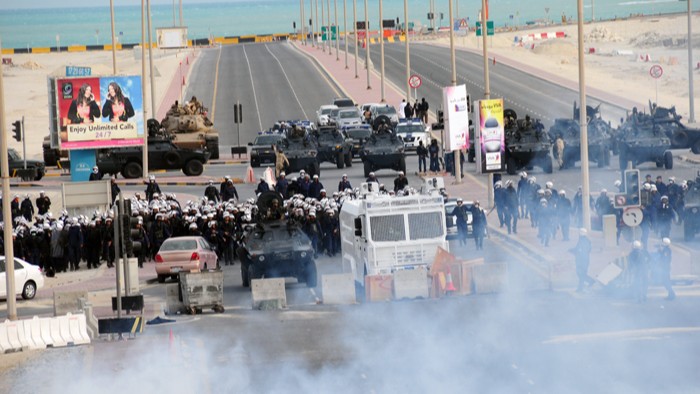
Opposition groups in Bahrain have called for demonstrations across the island kingdom on November 8, when a court is scheduled to issue a verdict in a case involving detained Shiite religious scholars, amid heightened security measures and mounting tensions over religious freedoms and political dissent.
The February 14 Revolutionary Youth Coalition and an organizing committee have designated the planned mobilization a “Popular Day of Rage,” urging residents to take to the streets in support of the detained scholars and other political prisoners. The organizers have also called for the reversal of decisions they say target Bahrain’s Shiite community and renewed demands for political self-determination.
Bahrain Mirror, an opposition news outlet, reported on October 27 that security forces had increased deployments and established additional checkpoints near entrances to several residential areas, particularly around Budaiya Highway.
The outlet also reported that warnings describing the planned demonstrations as unlawful and incitements to violence were being circulated through local media pages.
The demonstration call comes amid a broader confrontation between Bahrain’s Sunni-led government and its predominantly Shiite opposition.
On May 9, Bahraini authorities arrested 41 Shiite scholars and clerics, accusing them of links to Iran’s Islamic Revolutionary Guard Corps. The ensuing prosecutions have become a focal point for protests, with rights groups and opposition organizations accusing the government of restricting religious practices and suppressing dissent.
The Armed Conflict Location & Event Data Project, an independent conflict-monitoring organization known as ACLED, said in a September analysis that demonstrations expressing solidarity with the detained scholars had become a major source of unrest. ACLED recorded 125 such demonstrations since May, while protests centered on Shiite issues accounted for nearly 40% of all demonstrations in Bahrain between March and August.
Recent tensions have also extended into the prison system. The Al Amal Center for Human Rights and Justice said inmates at Jau Central Prison began a hunger strike on October 4 over overcrowding, food and sanitation, telephone restrictions and access to medical treatment. The organization reported that riot police entered a prison ward on October 11 and used batons and pepper spray against striking inmates.
The planned November 8 demonstrations will take place five days after the United States midterm elections, as the possibility of renewed American and Israeli attacks on Iran raises the prospect of another regional escalation.
U.S. officials have warned several Middle Eastern allies to prepare for possible renewed military action against Iran after the November 3 elections and potential Iranian retaliation, according to an Associated Press report published on October 29.
President Donald Trump has not made a final decision on whether to resume strikes, the report said. Israeli and U.S. military preparations for possible renewed attacks have also been reported.
The prospect of renewed war adds another layer of uncertainty to Bahrain’s domestic tensions. The kingdom hosts the U.S. Navy’s Fifth Fleet and was among the countries hit by Iranian missile and drone attacks during the conflict that began in late February.
Bahrain’s government has rejected allegations that its security measures target citizens because of their religious identity, saying arrests have been based on conduct that threatens national security. Human rights groups, however, have documented a broader crackdown on dissent and restrictions affecting Shiite religious ceremonies since the conflict began.
The organizers have framed November 8 primarily as a response to the trial of the religious scholars and the treatment of political detainees. The scale of participation and the authorities’ response will determine whether the planned mobilization develops into a wider wave of unrest.
Sen. Flávio Bolsonaro published a letter on Wednesday night, deleted and edited twice thereafter, in which he addressed his departure from Brazil after losing Sunday's presidential election, declaring himself the victim of a "witch hunt" and insisting he had not abandoned his country.
Thirty-seven United Nations World Food Programme (WFP) workers are being held captive by Iran-backed Houthi terrorists in Yemen, the agency's new executive director told Fox News Digital on Wednesday. Many have been detained for two years.
Luke J. Lindberg's remarks come as WFP workers face growing threats in some of the world's most dangerous conflict zones, where hundreds have died risking their lives to save others, he said.
"Right now in Yemen, we have 37 colleagues of ours who are currently detained," Lindberg said.
"These folks are out there to provide basic humanitarian services. They're not there to influence the political outcomes of a conflict. And so we need to protect them, and we need to get our detained colleagues released."
"All detainees are Yemeni nationals employed locally by the WFP, Lindberg clarified, before stating that some have been separated from their families for "nearly two years," he clarified.
"It's a really complex political environment," Lindberg continued before adding that there are no current Americans in that pool.
"They are all locally employed Yemenis," he clarified.
Just three days into his tenure, Lindberg raised the detentions with U.S. Ambassador to the United Nations Mike Waltz, underscoring the urgency of securing the workers' release.
"Ambassador Waltz is aware, and the State Department team has done a great job of taking this seriously and also, it's a priority for them as it is for us to get these folks released."
"It's been almost two years," Lindberg said. "Away from their families. It breaks my heart."
The detentions come amid Yemen’s crippling civil war between the internationally recognized government and Iran-backed Houthis, which has devastated the economy and left millions dependent on humanitarian aid.
More than 18 million people face acute food insecurity, including more than two million children under age five suffering from acute malnutrition.
"Our team operates in the most impossible and challenging conditions you can imagine around the world," Lindberg said.
"People like me, we're not out in the field, literally handing food to people and literally cooking food for people so that they get the nourishment. It's the wonderful people, the people that choose to go out and do this work that are the real heroes of this equation."
Lindberg said the WFP must now balance reaching vulnerable populations with protecting employees from unacceptable risks.
"And so there are areas where we will go into, areas where you can't go into. Again, the goal is the end of the conflict and allow humanitarian resources to flow into those areas.
"And until that happens, there are areas where we do not operate so that our staff can remain protected and that they can do their job safely."
The dangers extend beyond Yemen, with Lindberg saying conflict drives roughly two-thirds of acute food insecurity worldwide, with an estimated 266 million people facing severe hunger.
"It means the most challenging levels of hunger we can imagine," Lindberg said.
The crisis has intensified pressure on humanitarian organizations to deliver food in some of the world's most dangerous and inaccessible regions.
"But the World Food Programme really has a great team operating in over 120 countries around the world, doing this hard work each and every day," he explained.
Among the most urgent crises, he said, are those in Sudan, South Sudan and Somalia, where conflict, displacement and climate-related disasters have pushed vulnerable communities toward famine.
Fighting between the Sudanese Armed Forces and the Rapid Support Forces has displaced millions and triggered famine conditions in parts of the country, with Lindberg saying Sudan will be his first field destination as executive director, reflecting the urgency of the crisis.
"Right now, we are approaching famine levels in three countries, predominantly in the Africa region, in Sudan, South Sudan and Somalia," he said.
"And so those are flash points for me that are incredibly important for us to focus on, find the resources that should be available to help us meet those needs specifically."
Other humanitarian emergencies include Gaza, where fighting, damaged infrastructure, restricted access and funding shortages have complicated food deliveries, and Haiti, where gang violence has disrupted aid access.
In the Democratic Republic of the Congo, fighting involving armed groups has displaced millions, while the war in Ukraine has also disrupted agricultural production and global food supply chains.
But Lindberg said one of the most disturbing consequences of these conflicts is the rising death toll among humanitarian workers with hundreds killed worldwide in recent years.
"Unfortunately, in the past couple of years, we've lost over 700 humanitarians around the world in their active duty.
"To me, that's the worst possible outcome. It's really unacceptable. And so yes, many of our World Food Programme colleagues have unfortunately been caught up in those circumstances as well.
"It's my commitment to call each one of those family members should that happen, but it's primarily my goal to not let that happen anymore."
Lindberg's appointment comes as the WFP confronts major humanitarian emergencies and funding pressures, while also bringing the agency a direct connection to President Donald Trump.
A South Dakota native, Lindberg previously served as undersecretary of agriculture for trade and foreign agricultural affairs at the U.S. Department of Agriculture, overseeing international agricultural assistance programs, including the McGovern-Dole Food for Education and Food for Progress programs.
Lindberg succeeds Cindy McCain, who stepped down this year, with Deputy Executive Director Carl Skau serving in the interim. Since 1992, six executive directors were American.
U.N. Secretary-General António Guterres and Food and Agriculture Organization Director-General Qu Dongyu appointed Lindberg after consulting the WFP Executive Board.
Lindberg said Trump personally called to ask him to serve as the U.S. nominee for the position, a conversation he described as evidence of the president's commitment to humanitarian efforts.
"When I was nominated to lead the World Food Program by the United States, President Trump personally took the time to call me and offer me this opportunity," Lindberg said.
"And to me, that shows his heart for this work. He is somebody that believes in peace around the world. And for me to have the opportunity to speak with him about how the World Food Programme can.
"To play an important role alongside the U.S. in addressing these humanitarian needs was a special moment that I'll never forget."
That said, Lindberg is adamant that his new job at the World Food Programme comes with a clear mission: "show up no matter what."
U.S. Immigration and Customs Enforcement (ICE) has a liaison at the military's Special Operations Command (SOCOM) with access to advanced surveillance technology, leaked files show. The files also reveal ICE liaisons at Africa Command (AFRICOM) and Southern Command (SOUTHCOM) with access to the same tech, and an ICE contractor associated with U.S. Central Command (CENTCOM) in the Middle East.
On Wednesday, a hacker group calling itself the Department of Peace released a massive collection of U.S. Department of Homeland Security (DHS) personnel files, including ICE and other domestic security agencies. "They have our information, so it's only fair that we have theirs," the hackers wrote in a note attached to the database, which was posted online to Distributed Denial of Secrets, a platform for data leaks.
DHS told TheWashington Post that it was "aware of a potential breach" and "working to address the situation swiftly and effectively." A website hosting a searchable version of the leak, ICEpick, was taken down after the DHS sent a letter demanding that the domain name host "stop serving the personal contact and location data of individuals who did not consent."
The files include an ICE Homeland Security Investigations (HSI) unit chief who appears to oversee the agency's military liaisons. His subordinates include a "Combatant Command Program Manager" at SOCOM headquarters in Tampa, Florida; an "HSI Liaison to USAFRICOM" in Stuttgart, Germany; and a "Senior Liaison to U.S. Southern Command" in Doral, Florida.
All of the officials named in the files are listed as users of "Penlink," "Falcon," and "RavenGo." The contractor PenLink offers officials the ability to track individual cell phone users or collect data on everyone in a certain location, according to documents obtained by 404media. FALCON, created by the contractor Palantir, allows officials to combine records from governmental and commercial databases, The Guardianreports. The DHS eventually phased out FALCON in favor of an in-house system, RAVEN.
The unit chief is additionally listed in a group called "LCR_Users." The acronym may refer to the Office of the Director of National Intelligence at Liberty Crossing, McLean, Virginia. Two employees are listed in the DHS files with "ODNI" in their title and "LCR - Liberty Crossing" as their location. The first Trump administration reportedly looked into merging ICE into the federal intelligence community, but never officially did so.
The files also include an HSI contractor listed as "CENTCOM analyst" at the National Targeting Center in Sterling, Virginia. Unlike the other liaisons, this contractor does not have access to ICE's own surveillance software. The National Targeting Center is a Customs and Border Protection (CBP) unit that surveils international travel and selects passengers for questioning. CENTCOM oversees all U.S. military forces in the Middle East.
Although it has been mentioned in public, ICE's relationship with the military is shrouded in mystery. Of course, the best-documented relationship is with SOUTHCOM, responsible for U.S. forces in Latin America. Official press releases also mentioned HSI's participation in an AFRICOM maritime security training exercise in 2021. The connections to SOCOM and CENTCOM have not been publicly reported.
ICE did not respond to Reason's request for comment.
The DHS has an in-house intelligence office that is separate from HSI and publicly cooperates with the U.S. military, as well as the rest of the intelligence community. But HSI's "global footprint" and ability to straddle the line between law enforcement and foreign policy "make it uniquely capable of disrupting and dismantling the sophisticated groups and networks that we now face," HSI Executive Assistant Director Katrina W. Berger testified to Congress in 2024.
HSI is supposed to handle serious organized crimes involving the border rather than day-to-day deportations. However, the Trump administration has turned the directorate into an all-purpose domestic spying and enforcement arm. HSI is now running a massive surveillance operation against left-wing protesters, WIRED recently revealed.
Agents have reportedly been pulled away from investigating human trafficking and drug cartels to deal with immigration enforcement. HSI was involved in arresting former CNN journalist Don Lemon for showing up at an anti-ICE protest at a church, and led the raid against Rep. Ilhan Omar (D–Minn.) reportedly aimed at showing that her U.S. citizenship is invalid.
Last month, ICE announced upcoming contracts for a $100 million, fast-tracked expansion of its domestic surveillance capabilities, with contractors asked "to identify and assess relationships among individuals, organizations, locations, events, activities, data points, and other entities." Former military intelligence analyst Michael Wriston called the intensified ICE surveillance a case of "imperial boomerang" in an interview with The American Prospect. "These are the kinds of things that happened in Afghanistan, Iraq, Yemen, Syria, for years. Now that methodology is being brought into the ICE space."
Three maritime drones struck a container ship sailing in the Black Sea off the coast of Bulgaria on Wednesday, the country's defense minister said, the latest in a string of such incidents on NATO's eastern flank
Immigration and Customs Enforcement (ICE) agents slashed the tires of a couple who were recording the agents in an incident near Portland, Oregon, earlier this month. The agents then drove away without arresting or talking to the couple, video footage shows.
The American Civil Liberties Union (ACLU), which released the footage today, says it is yet another example of ICE agents retaliating against people for protected First Amendment activity. In an administrative complaint on behalf of the anonymous couple, the ACLU and the ACLU of Oregon are demanding an investigation and answers from the Department of Homeland Security (DHS) about why agents tailed, boxed in, and "vandalized" the vehicle of a U.S. citizen.
The stunning video does not resemble any sort of normal law enforcement:
"What happened to us is not unique, and that is what is so terrifying," A.P. and M.P., the unnamed husband and wife, said in a statement provided by the ACLU. "We observe and record public ICE activity in order to shine a light on their abusive behavior and to create a record of what our government is up to. Because of that, they are terrorizing us and anyone else who dares to exercise their First Amendment right to hold our government accountable. We hope that sharing our story will bring attention to their reckless and unconstitutional attacks on our communities."
According to the ACLU complaint, the unnamed married couple was driving in Hillsboro, Oregon, on the morning of October 7 when they spotted an ICE SUV. The couple followed the SUV to a supermarket parking lot, where there were also two other ICE vehicles. The couple lowered their windows and began yelling "This is ICE! This is ICE!" as well as blowing whistles and honking the car's horn.
One ICE agent grabbed a shopping cart and began approaching the couple's car. The complaint states that the couple heard the agent say something to the effect of, "Let's block them in with the cart." As the couple began driving away, several ICE agents began chasing after them on foot.
The three ICE vehicles chased the couple after they left the parking lot, "driving aggressively and nearly colliding into" their car, according to the complaint. Additional video shows the ICE vehicles swerving aggressively in front of the couple's car and later unsuccessfully attempting to box in their car. "None of the ICE vehicles had their flashing lights or sirens on during this entire sequence of events," the complaint states.
The couple cut through an empty parking lot, and the chase continued down several more streets before the ICE vehicles turned on their emergency lights and sirens. According to the complaint, the couple continued driving for roughly a minute, fearing to pull over on an empty road with no bystanders.
Video shows that when they stopped at a traffic light, a masked ICE agent exited his vehicle, walked up to the couple's car, stabbed one of its rear tires with a knife, and then walked back to his car. The couple's car moved slowly forward and into a turn lane before stopping again. Then the same agent got back out of his vehicle and stabbed the tire a second time before returning to his vehicle without attempting to speak to the couple.
"All three ICE vehicles turned off their flashing lights and sirens and drove off," the ACLU complaint states.
The complaint notes that the couple "experienced retaliatory action similar to that experienced by many other individuals across the country engaged in these same First Amendment protected activities."
"In particular, individuals around the country have reported being similarly tailed, boxed in, and threatened with or subjected to violence after observing, gathering information about, and recording ICE agents performing their duties in public," the complaint states.
Last October, ICE agents in the Portland area busted out the car windows of a U.S. citizen who had been filming them, dragged her out of her vehicle, and detained her for roughly seven hours before releasing her without charges.
The ACLU of Tennesseefiled a class-action lawsuit in May against a federal law enforcement task force in Memphis for harassing legal observers. Memphis residents allege in declarations that they have been violently arrested, surveilled at their houses, pulled over under false pretenses, and jailed for trying to film the task force. In September, the ACLU of Tennessee published videos showing federal agents arresting the lead plaintiff in its lawsuit while he was attempting to film task force operations.
DHS and immigration officers haverepeatedly accused videographers and legal observers of obstruction of justice and "doxxing," but civil liberties advocates say the DHS is flat wrong about the law: Every federal appeals court that has considered the issue—nine so far—has firmly upheld the right to record law enforcement in public.
The Supreme Court has also unequivocally upheld the First Amendment right to criticize or oppose police activity, whether verbally or through other expressive activity.
"The right to record publicly visible law enforcement activity is fundamental to our democracy," Scarlet Kim, senior staff attorney with the ACLU's Speech, Privacy, and Technology Project, said in a press release. "Like many people across the country, our clients have been observing and recording ICE activity in their community. These videos have proven critical to exposing ICE's abuses. If we cannot see and document what our own government is doing on our streets, we cannot hold it accountable for running roughshod over our rights."
The ACLU complaint to the DHS Office of Inspector General and two other DHS oversight offices demands that the agents involved in the incident be identified, investigated, and disciplined. The ACLU is also requesting a "comprehensive investigation of a disturbing pattern of ICE agents retaliating against individuals who observe, gather information about, and record ICE activity."
The DHS did not immediately respond to a request for comment.
Congress should build an independent fund that accepts contributed equity from any company, holds it in a diversified portfolio and dedicates the returns to the trust funds.
Congress should build an independent fund that accepts contributed equity from any company, holds it in a diversified portfolio and dedicates the returns to the trust funds.
"60 Minutes" was told weeks before the segment aired that a deported Malian husband and father, who was the subject of a sympathetic report on Sunday, claimed to have been gay in his asylum application, Fox News Digital confirmed.
Fox News previously obtained records showing Moussa Diawara alleged in his 2009 asylum application that he would face persecution if he were sent back to Mali due to his sexuality.
The "60 Minutes" segment depicted an anguished father deported to Africa with his wife and two children still living in the U.S. and noted that a U.S. judge said Diawara could be persecuted, pointing to fears over converting to Christianity. However, the show did not mention that Diawara’s application contradicted his family man narrative and the reason why he claimed he couldn’t return to his native country was because of his sexual orientation.
Fox News Digital has since obtained a copy of an email sent to CBS News by the Department of Homeland Security informing the network about Diawara's claim, which was first reported by The New York Post.
The email was sent Oct. 6, nearly three weeks before Sunday's segment aired.
On his 2009 asylum application, Diawara said he feared for his life as a gay man if he was forced to return to Mali.
"My asylum application is based upon ground of well-founded past persecution and an undisputable fear of life-threatening [sic] to my person if I were to return to my country Mali. In fact, I had experienced extreme punishment and persecution based on the ground of my sexual orientation," Diawara wrote in his asylum application.
"Since I came to the USA I had the possibilities [sic] to express my feelings to men without any embarrassment no reserve. Indeed, my tribal group and community as a whole had reported my sexual orientation to my family back home because such behavior is unwelcome in my society," he continued. "My life is hence worth threatened if I have to go back to my country because I could be executed either by the Islamic group or the community."
DHS General Counsel James Percival, who was interviewed in the "60 Minutes" segment, took to social media after it aired, saying the newsmagazine made Diawara the "poster child for what it claims are wrongful deportations."
"His claimed reason for fearing Mali was that he is ‘gay,’ just in case you’re wondering how bad the immigration fraud problem is," Percival wrote.
The segment put a spotlight on Diawara, who was living in the U.S. for 25 years without a criminal record, overstaying his tourist visa and getting nabbed by ICE and sent to Ghana, which ultimately sent him to his home country of Mali. According to the report, Diawara has since fled to an undisclosed African country.
During the segment, Percival noted there is "a lot of fraud" in the immigration system and many "fear claims" are untrue.
A "60 Minutes" insider previously defended the integrity of the report, pointing to how Diawara's claim that "part of the reason he didn't feel safe" was for religious reasons did make the broadcast. According to the report, he had converted to Christianity, and Mali is a Muslim-majority nation.
"The broadcast acknowledged DHS questioned the credibility of Moussa Diawara's fear of persecution, which they're claiming now on social media," the insider told Fox News Digital.
War Secretary Pete Hegseth fired one of the Pentagon’s senior strategic planners amid an investigation into allegations he leaked classified information to journalists about the Iran war, Russia’s war in Ukraine and other sensitive matters, a Department of War official told Fox News.
The official said Lt. Gen. Brett Sylvia failed three polygraph examinations related to alleged disclosures of classified information. The investigation has been referred to the Justice Department.
Sylvia is also accused of meeting journalists outside the Pentagon with the alleged intention of leaking classified material after Hegseth imposed new media restrictions requiring reporters to be escorted inside the building.
Fox News Digital has reached out to the DOJ and Sylvia for comment but did not hear back at time of publication.
Sylvia served as director of the Joint Staff’s Directorate for Strategy, Plans and Policy, known as the J5, a senior role responsible for developing military strategy and advising the chairman of the Joint Chiefs. The J5 has been sidelined from that role since the spring, according to well-placed sources who spoke to Fox News.
The official stressed that Sylvia was not a central planner of the Iran war, which falls under U.S. Central Command and its commander, Adm. Brad Cooper.
The Atlantic first reported Sylvia’s ouster Wednesday night, citing sources who said Hegseth had lost confidence in the three-star general amid tensions with Pentagon policy chief Elbridge Colby.
Sylvia is the second officer leading the J5 to be removed under Hegseth, following Lt. Gen. John McGee. Hegseth also removed Lt. Gen. Douglas Sims, then director of the Joint Staff, earlier this year.
U.S. officials have reportedly warned allies in the Middle East to prepare for possible renewed strikes after next week’s midterm elections and potential Iranian retaliation, while additional U.S. forces are moving into the region.
A 1994 West Point graduate, Sylvia has served more than three decades in the Army, including multiple deployments to Iraq and Afghanistan, and was wounded in combat. Before taking over the J5 in December, he commanded the 101st Airborne Division at Fort Campbell and had previously served as the J5’s vice director.
Sylvia’s removal is the latest in a broader turnover of senior military leadership under Hegseth, with nearly two dozen generals, admirals and other senior leaders fired, pushed out or otherwise departing during his tenure.

 Login