❌

Normal view

Russia Strikes Ukraine’s Steel and Energy Sector
17 October 2026 at 20:26

Click to see the full-size image

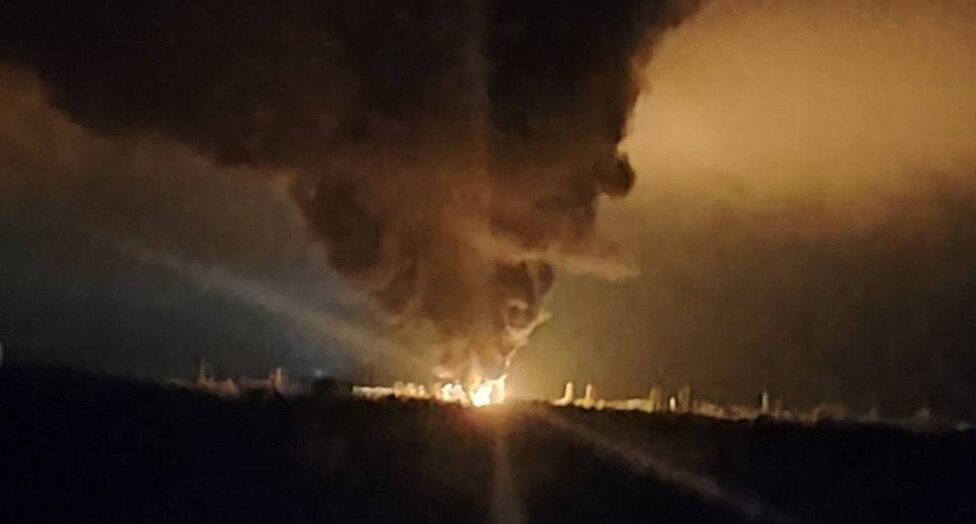
Between the evening of October 16 and October 17, 2026, the Russian Armed Forces continued their campaign of combined strikes against Ukrainian defense-industrial, energy, and logistics infrastructure. According to the Ukrainian side, the overnight attack leading into October 17 involved Iskander-M/KN-23 ballistic missiles, Kh-22/Kh-32 cruise missiles, four Kalibr sea-launched cruise missiles, and 332 strike unmanned aerial vehicles. The main focus was on metallurgical enterprises in Kryvyi Rih and Zaporizhzhia, transformer production, and high-voltage substations in western Ukraine. In parallel, Ukrainian forces carried out a large-scale drone attack on Russian territory.

Russian Strikes on Targets in Ukraine

Metallurgical Complex

Zaporizhstal (Zaporizhzhia) – formerly one of Ukraine’s largest metallurgical enterprises. Before the campaign, it produced up to 1.44 million tons of pig iron and more than 1.3 million tons of rolled steel annually; its output was directed primarily toward military-industrial needs. According to Metinvest, this was the fifth strike on the facility; six ballistic missiles were fired in the latest attack, damaging energy and logistics infrastructure as well as production facilities in the blast-furnace shop. In total, 23 ballistic missiles have been fired at the plant across five attacks.

Metallurgical combine in Kryvyi Rih (Dnipropetrovsk Region) – one of Ukraine’s largest metallurgical enterprises, which supplied metal products to the Ukrainian defense-industrial complex. The description provided by the Russian Ministry of Defense matches ArcelorMittal Kryvyi Rih; according to sources, a week earlier the owners announced a cold shutdown of primary production, and the plant was preparing for preservation.


Energy Infrastructure

Zaporozhtransformator PJSC (Zaporizhzhia) – a manufacturer of oil-immersed power transformers rated at 220-750 kV, a key component of high-voltage substations. Since 2022, it has been under the management of Ukraine’s Ministry of Defense and has been used in the interests of the Ukrainian Armed Forces. Striking this facility complicates the replacement of damaged transformer equipment for Ukrenergo, as manufacturing a new transformer takes months.

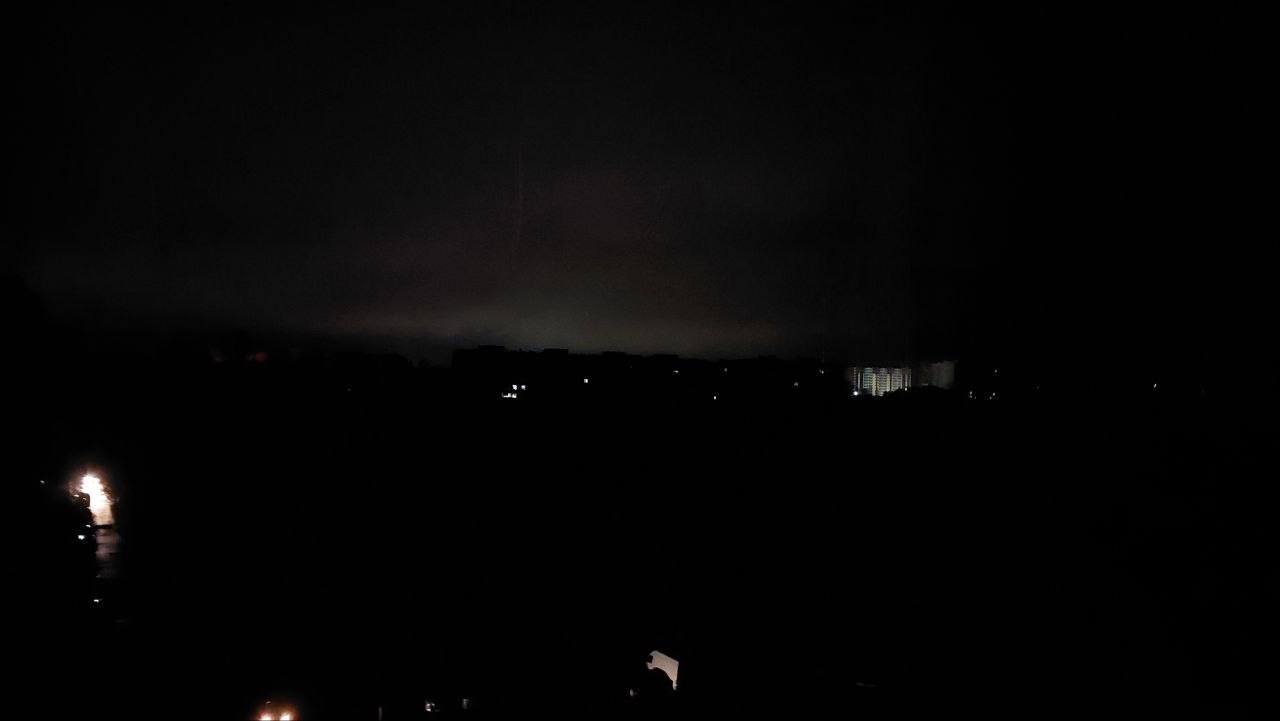
Zhytomyr 330 kV Substation (Zhytomyr Region) – a major hub in the trunk power grid, providing voltage conversion and electricity distribution among 330 kV, 110 kV, 35 kV, and 10 kV networks. Power was cut in several districts of Zhytomyr, and water-supply disruptions occurred. According to the Russian Ministry of Defense, the facility struck was one that distributed electricity from western Ukraine to central regions for defense-industrial enterprises.
Click to see the full-size image

Rivne 330 kV Substation (Rivne Region) – a trunk power-grid facility. Power outages occurred in Rivne and nearby settlements, and municipal electric transport operations were disrupted.

Bar 330/110/35 kV Substation (Vinnytsia Region) – a high-voltage facility distributing electricity among the aforementioned voltage classes. Voltage fluctuations were recorded in Vinnytsia and across the region.

Kharkiv CHP-3 (combined heat and power plant No. 3; KP Kharkivski Teplovi Merezhi – Kharkiv Heating Networks), Kharkiv – a combined heat and power plant producing both thermal and electric energy for municipal supply. A hit was recorded on the electrical-shop building, where a fire broke out over an area of 100 square meters.

Transport and Logistics Infrastructure

Delivery logistics terminal (Novohrad-Volynskyi, Zhytomyr Region) – a branch of a Ukrainian freight-logistics operator specializing in less-than-truckload road transport and interregional delivery. The strike caused a fire in a warehouse building covering more than 1,000 square meters. The company participates in government contracts for freight-forwarding services through the Prozorro system.


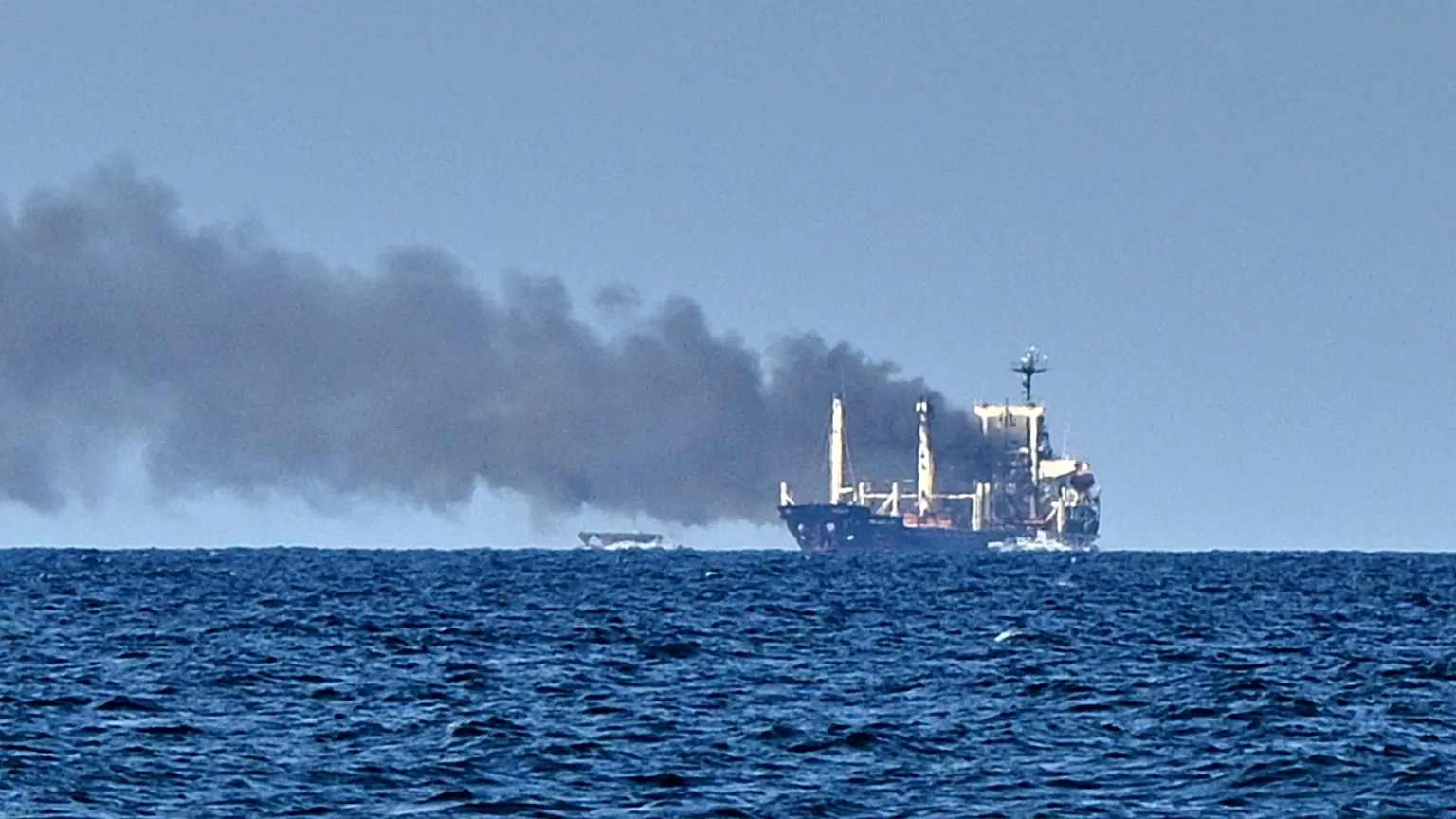
Dry cargo vessel underway at sea (Port of Odesa) – a vessel delivering military cargo to the port was struck.

Strikes on Russian Territory

On the night of October 17, Ukrainian forces carried out a large-scale drone attack on Russian regions. According to the Russian Ministry of Defense, air-defense forces intercepted and destroyed 610 Ukrainian fixed-wing UAVs over the territory of 16 Russian regions and over the Black Sea. The highest intensity was recorded on the Moscow axis: Moscow Mayor Sergei Sobyanin reported the destruction of 144 UAVs heading toward the capital. In Bryansk Region, 157 UAVs were shot down over the course of a day. No reports indicated that serious strategic targets had been hit; there were civilian casualties.

The nature of the October 16-17 strikes confirms a systematic approach by the Russian command to disabling Ukraine’s defense-industrial production chain and the energy infrastructure supporting it. Priority targets include metallurgical enterprises producing goods for military needs and transformer production, which is critical for restoring damaged substations. According to Chief of the General Staff of the Russian Armed Forces Valery Gerasimov, steel production in Ukraine has been halted, operations at major Black Sea ports have ceased, and 76 logistics and warehouse centers have been struck. Given statements by the Russian leadership on the need to continue large-scale strikes against the defense-industrial complex and logistics centers, further intensification of attacks on energy infrastructure in western and central Ukraine, as well as on facilities involved in the repair and restoration of military equipment, should be expected. The resilience of Ukraine’s energy system will depend on its capacity to import electricity from the EU and on the speed of restoring trunk substations – both significantly complicated by the strike on Zaporozhtransformator.


MORE ON THE TOPIC:

The post Russia Strikes Ukraine’s Steel and Energy Sector appeared first on South Front.

It’s been 70 years: Why does the U.S. still control South Korea’s military?

By: A A
17 October 2026 at 19:16

By K. J. NOH, POPULAR RESISTANCE

Join us on Telegram, X, and VK.

Contact us: info@strategic-culture.su

Over seventy years ago, the US took control of South Korea’s military. To this day, it still controls it.

Why?

This confounds every notion of state sovereignty: a supposedly sovereign country — South Korea — has its own military subjugated under US control.

Opcon (operational control) of one nation’s army by another country is usually temporary, usually during wartime among allies.

In Korea, it has lasted over 76 years.

South Korea has asked for opcon back, repeatedly. It has been three decades since South Korea first made the demand.

The US has always delayed, filibustered, waffled, and moved goal posts.

More recently, the US has signaled more delay on the return of opcon, despite current president Lee Jae Myung’s demand that it be transferred back before the end of his term in 2030.

The allies are currently assessing the “full operational capability” (FOC) after validating the “initial operational capability” (IOC).

Seoul aims to wrap up the FOC certification and announce a target year for the Opcon transition at the upcoming SCM, before moving on to the remaining assessment of the “full mission capability,” which it expects to take about a year or so….[However] Washington remains firm in its position that Seoul is not ready for FOC certification, weighing on Seoul’s push to accelerate the Opcon transition.

This follows on US Forces Korea Commander Xavier Brunson’s repeated declarations of his opposition to Opcon transfer: only conditions matter, not timelines. According to Brunson, there can be no timeline to return control of South Korea’s troops to South Korea. Seventy six years is not enough.

South Korea had originally insisted on deadlines for the return of opcon. The US delayed, and delayed, and denied. It finally agreed–but only if certain conditions were met. These were agreed to in 2014, and reaffirmed them in 2017. Yet another decade has passed since those agreements.

Conditions for the return of opcon:

Cutting through the fog, there are essentially three conditions that the US has predicated as preconditions for South Korea to regain control over its own troops:

1. Can South Korea defend itself? (Can it operate its own military effectively? Does it have capacity, materiel, systems, and institutions?)

2. Are US and South Korea forces interoperable? (Can they coordinate in war?)

3. Are the conditions stable enough for opcon transfer?

The answer to the first is, of course. South Korea has one of the most powerful and well-equipped militaries in the world.

The second is, of course, the US and South Korea have been rehearsing interoperability for over seventy years.

The third is key: it is a catch-22 designed to undermine the entire process.

Conditions-based Opcon Transfer (COPT) sets specific benchmarks and tests for opcon transfer. These are the goalposts that are being constantly shifted.

However, the third condition is critical. It requires the de-escalation of tensions between North and South:

“Conducive Security Environment: The security environment on the Korean Peninsula and in the broader region must be stable and conducive to a safe, uninterrupted transfer.”

This is the catch-22:

If there is de-escalation of tensions, the required “tests” are not conducted and the benchmarks and certifications are not achieved — they are tied to field-condition wargames. Doing these wargames and tests escalates tensions with North Korea.

If there are tensions, then condition 3 is not met, and Opcon cannot be transferred.

It’s a formula for ensuring opcon is never transferred.

The simple fact is, it does not take 20+years to transfer opcon. “Wartime” opcon is transferred very rapidly. Armies coalesce, and opcon is transferred. Syngman Rhee turned over opcon in July of 1950 and the US was immediately in charge. It doesn’t take years and decades to transfer opcon. It takes hours or days. Returning it should be even faster. But that would require political will.

Here are some other important things to understand about opcon:

Opcon transfer conditions are actually classified:

The US keeps these conditions under wraps, and therefore the South Korean public or its representatives cannot challenge them publicly because they are not known. We only know the general outlines. The South Korean side can only hope the US will agree they have been met. This is yet another abrogation of sovereignty and democracy in addition to the original breach: “We will keep your military, unless you meet our secret conditions, which you cannot discuss, debate or challenge, because they are secret”.

Condition 3, “Conducive security environment” has always been a kill switch:

We know that security conditions have always been a tacit condition because, in the past, whenever opcon transfer looked justified and imminent, the security environment would suddenly degrade, scuttling the whole project. For example, just as the deadline for Roh Moo Hyun-negotiated Opcon transfer was approaching in 2012, the sudden sinking of the ROKS military ship Cheonan-Ho derailed wartime opcon transfer to 2015. That deadline has also passed and gone. Recent North-Korea attributed mine explosions near the DMZ fit this pattern, as have other numerous, suspicious incidents.

The concoction of “peacetime opcon” is nonsense:

The US claims it only has “wartime” opcon because it transferred “peacetime” opcon to South Korea in 1994. However, this very concept is nonsense:

1) Opcon means control of operations. Operations mean warfighting. “Wartime opcon”, ie. “wartime warfighting control” is a pleonasm. The only time operational control of a military is important is during fighting, just as the only time steering a car matters is when it’s moving.

The invention and transfer of “peacetime” opcon to Korea was a booby prize created to give the appearance that something had changed. Think of those Fisher-Price toy steering wheels you stick on the dashboard while someone else steers the car–it’s a political toy. It gives the illusion of control but it means nothing. The fact is, the US would never allow its military to be subjugated to a foreign command, even a shared command. The simple fact is, the US never shares control.

2) Immediately after “peacetime” opcon transfer in 1994, the US instituted CODA (Combined Delegated Authority), which continues US control of planning and execution of war. As Clint Work observes correctly, “The ROK JCS was granted the term OPCON for political purposes, and the US CFC was given the term CODA for accomplishing missions”. So much for peacetime “control”.

3) Last but not least, the US gets to unilaterally decide what constitutes peacetime and what constitutes wartime. When the US declares Defcon III, it’s wartime. Korean troops must fall in line under US opcon. If you get to slice the cake and then decide which portion you take, it’s your bloody cake. If you share a car, but only one party decides when it gets to be driven, and they drive, they own the car, you are maintenance. If one party unilaterally decides when it gets control, it has control, regardless of any protestations to the contrary.

But why does the US need to keep Opcon?

The US needs control over ROK troops because it is planning for war with China in the Pacific. It has been doing so since it drew up formal plans, AirSea Battle in 2009. For war, it needs SK as a military proxy: it needs the cannon fodder. South Korea has 3.6 million combat-ready troops: 500,000 regular and 3.1 million reserve. It has one of the most powerful and advanced militaries in the world, as well as the defense industrial base to sustain it. Furthermore, SK troops have always fought in US wars as proxies: more military-aged men in South Korea saw combat in Vietnam than Americans did as a proportion of population — 325,000 were deployed–the largest foreign deployment after the US. It was also the third largest deployment to Iraq. The US can avoid a draft because SK has one.

USFK Commander Xavier Brunson has made this US agenda of weaponizing South Korea for war against China explicit, comparing South Korea to “fixed aircraft carrier”, a dagger pointed at China, and a critical part of US war strategy because it is already inside China’s defense perimeter.

As the Hankyoreh Newspaper points out:

When his “dagger” comment is tied to his previous remarks, it’s evident that Brunson expects Korea to play an offensive role capable of striking the Chinese heartland, and Japan to play a defensive role supporting Korea…Brunson commented last August that he would like F-35 fighters with stealth capabilities and a multi-domain task force (MDTF) capable of wrecking China’s anti-access/area denial (A2/AD) network to be assigned to USFK. These comments suggest that Brunson means to treat Korea as a forward base equipped with military options for launching direct strikes against China.

Brunson recently announced that the multi-domain task force will be deployed to Korea.  These build on his previous statements on preparing the peninsula for war with China:

…[this] orientation clarifies how forces on the peninsula can impose costs, not only on the CCP’s Northern Theater Army, but also on the [Russian] Northern Fleet, thus demonstrating the significant strategic potential that exists on the peninsula to influence adversary operations in both adjacent seas… existing force positioning, particularly on the Korean Peninsula, may offer greater strategic advantages… advantageously positioned assets already inside the [Chinese] defensive perimeter, capable of immediate cost-imposition [ie. attack] against multiple adversaries.

This simultaneous fiction of pretending it doesn’t control South Korea’s troops became necessary when US-opconned SK troops massacred civilians in Gwangju.  The need to avoid accountability created the legal fiction of “peacetime opcon”, but that doesn’t obviate the US need for control as it prepares for and escalates to war.

The real reason why opcon transfer is taking so long is the US is trying to create a structure that maintains control of the SK army while pretending that it doesn’t.   This involves a crazy-quilt of parallel & unified command structures, multiplying command authorities, phased operating assessments, Frankenstein-cobbled-leadership structure, Rube Goldberg carve-outs, and a general have-your-cake-and-eat-it-too mindset.  This is assisted by extreme factions of the quisling South Korea right, who have lashed themselves to the sinking US Empire and see any reclamation of genuine South Korean sovereignty as abandonment–they fear that a South Korean military–the real nexus of power in Korean politics, accountable only to Koreans, would result in a loss of status and power as US quisling collaborators and subcontractors.

With war with China on the horizon, South Korea needs to reclaim opcon rapidly.  It remains to be seen if president Lee Jae Myung can pull off this hat trick.  However, the consequences of not doing so could be catastrophic.

Original article:  popularresistance.org

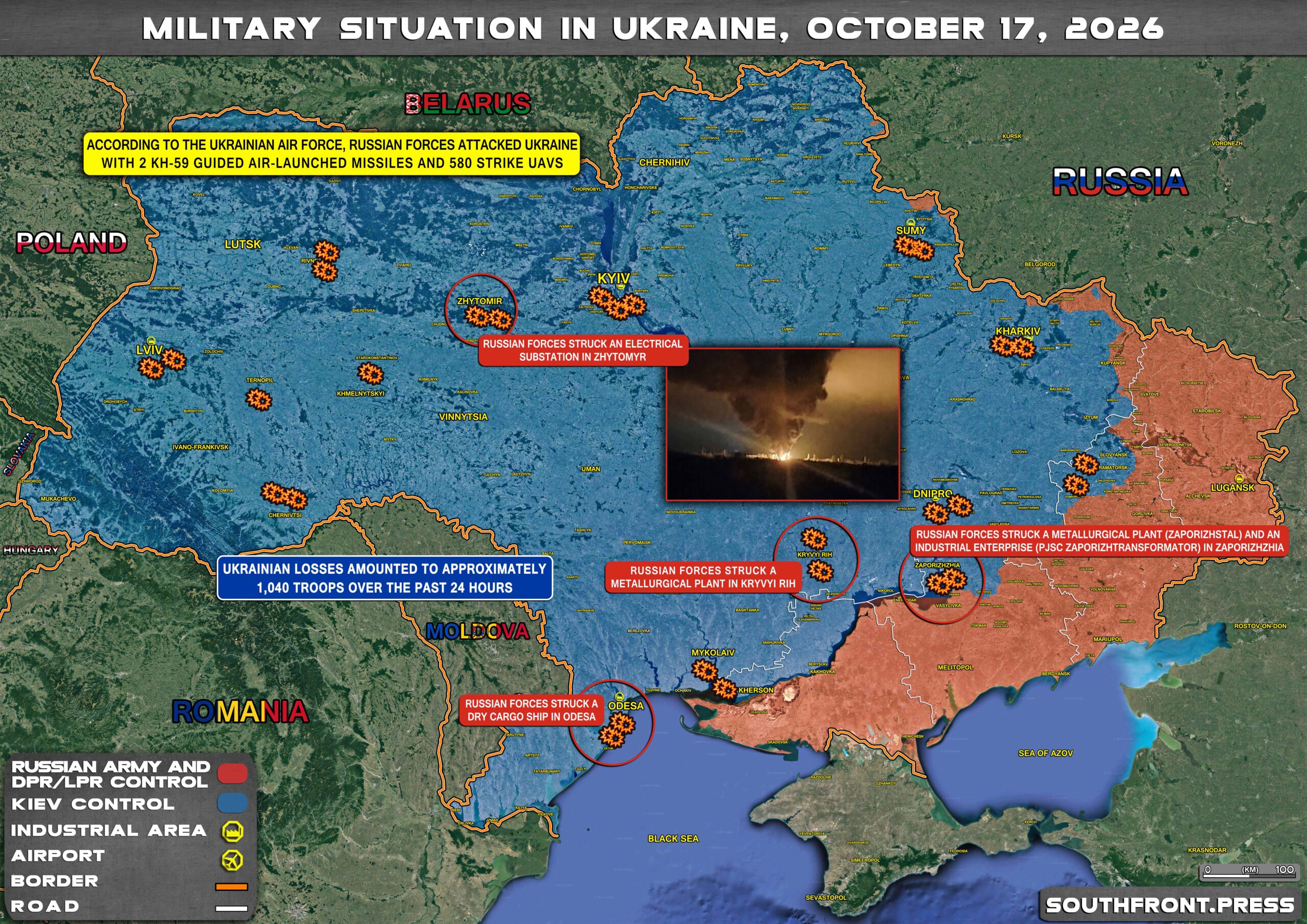
Military Situation In Ukraine And Ukrainian Attacks On Russian Territory On October 17, 2026 (Maps Update)

17 October 2026 at 17:12

Click to see the full-size image

  • Russian strikes destroyed targets in the Sumy, Kharkiv, Zaporizhzhia, Dnipropetrovsk, Kherson, Kyiv, Odesa, Khmelnytskyi, Lviv, Volyn, Zhytomyr, Rivne, Cherkasy, Chernivtsi, Ternopil, Vinnytsia regions, and the DPR;
  • According to the Ukrainian Air Force, Russian forces attacked Ukraine with 2 Kh-59 guided air-launched missiles and 580 strike UAVs;
  • Russian forces struck a metallurgical plant in Kryvyi Rih;
  • Russian forces struck an electrical substation in Zhytomyr;
  • Russian forces struck a metallurgical plant (Zaporizhstal) and an industrial enterprise (PJSC Zaporizhtransformator) in Zaporizhzhia;
  • Russian forces struck a dry cargo ship in Odesa;
  • Ukrainian losses amounted to approximately 1,040 troops over the past 24 hours.

Click to see the full-size image

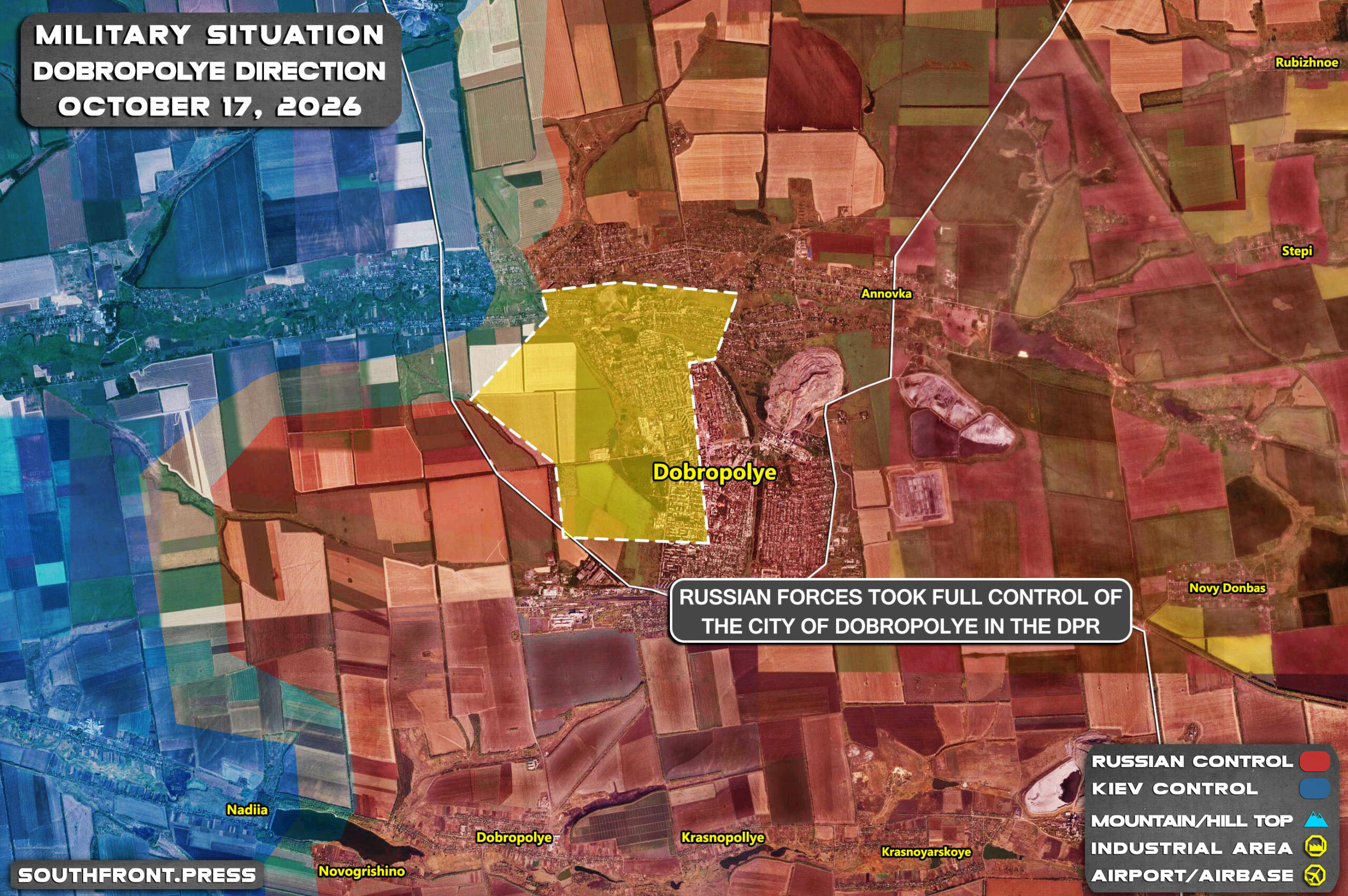
  • Russian forces took full control of the city of Dobropolye in the DPR.

Click to see the full-size image

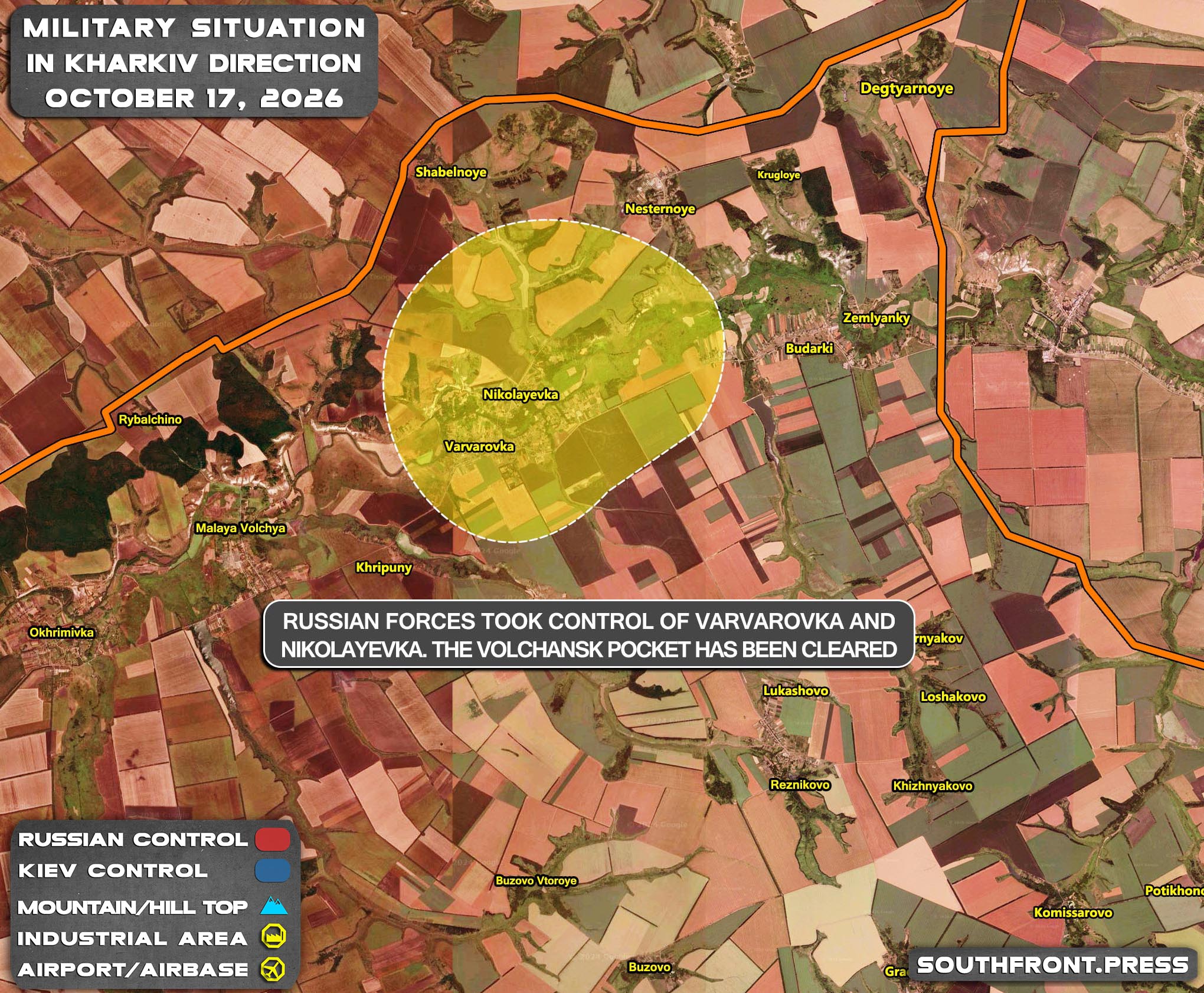
  • Russian forces took control of Varvarovka and Nikolayevka. The Volchansk pocket has been cleared.

Click to see the full-size image

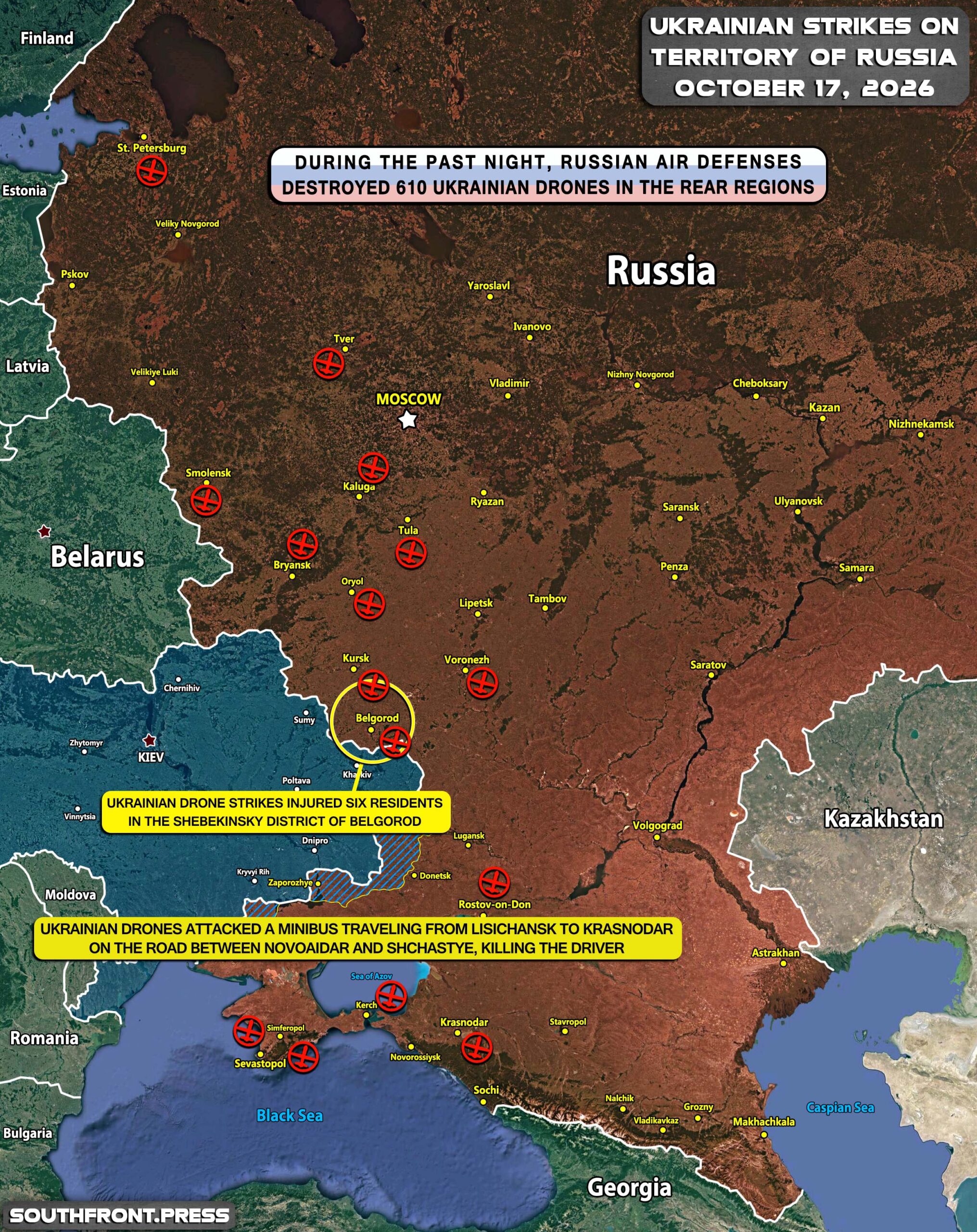
  • During the past night, Russian air defenses destroyed 610 Ukrainian drones in the rear regions;
  • Russian air defenses intercepted UAVs in the Leningrad, Novgorod, Tver, Bryansk, Belgorod, Kursk, Oryol, Kaluga, Voronezh, Rostov, Smolensk, and Tula regions, the Moscow region, Krasnodar Krai, the Republic of Crimea, and over the Black Sea;
  • Ukrainian drone strikes injured six residents in the Shebekinsky district of the Belgorod region;
  • Ukrainian drones attacked a minibus traveling from Lysychansk to Krasnodar on the road between Novoaidar and Shchastia, killing the driver.

MORE ON THE TOPIC:

The post Military Situation In Ukraine And Ukrainian Attacks On Russian Territory On October 17, 2026 (Maps Update) appeared first on South Front.

Brussels Parliament Approves Major Pay Indexation Freeze and 10% Spending Cuts

17 October 2026 at 14:54

Brussels, 17 October, (Brussels Morning Newspaper) – The Brussels Parliament has approved a freeze on inflation-linked increases to supplementary allowances for members holding special parliamentary responsibilities, as the regional legislature seeks to reduce its operating expenditure. The Brussels … Read more

Burnham Declares £500 Million War on Tory Councils

17 October 2026 at 13:00

Andy Burnham's Government has been accused of waging a £500 million "class war" on wealthy councils, slashing funding from rural Tory and Lib Dem areas to bankroll urban Labour Party strongholds.

The post Burnham Declares £500 Million War on Tory Councils appeared first on The Daily Sceptic.

Briton threatened with deportation from Sweden over Brexit rules goes into hiding

Mark Smith, who has severe health issues, says he was told three times he needed to do nothing in order to remain after Brexit

A seriously ill British man living in Sweden has been forced into hiding amid fears he will be deported as a result of what he says is a government Brexit residency error.

Mark Smith, 60, who has had heart attacks, strokes, severe headaches and chronically high blood pressure that has been difficult to treat, was told on the phone he should leave Sweden by 17 October as he was an “alien” without permission to stay.

Continue reading...

© Photograph: Annika Karlbom/Hallands Nyheter

© Photograph: Annika Karlbom/Hallands Nyheter

© Photograph: Annika Karlbom/Hallands Nyheter

Ukraine’s Black Sea Escalation Threatens Global Trade, With Risks Of Spiralling

17 October 2026 at 11:43

Click to see the full-size image

Ukraine’s expanding Black Sea attacks are disrupting shipping, raising insurance costs, and threatening global food and energy trade. As “wild-card” Zelensky raises the stakes (angering the US), the risk of a wider confrontation grows.

Written by Uriel Araujo, Anthropology PhD, is a social scientist specializing in ethnic and religious conflicts, with extensive research on geopolitical dynamics and cultural interactions

Black Sea shipping is in crisis, adding pressure to a global economy already absorbing Red Sea and Strait of Hormuz disruptions. Commercial vessels face rising risks, insurance costs have climbed, and tanker freight rates have surged. Ukraine has stepped up attacks on Russia’s Black Sea Fleet, ports, oil facilities, and vessels associated with Russian trade, expanding the conflict’s geographical scope. Grain, oil, fertilizers, and other commodities move through these waters, including shipments for non-belligerent countries.

S&P Global reported on October 9 that tanker freight rates rose sharply amid attacks, sanctions, and security concerns disrupting Russian energy exports. According to maritime security consultancy Ambrey, Kyiv expanded its campaign beyond naval assets and oil infrastructure to merchant ships trading with Russian ports. In November 2025, attacks had already expanded to commercial vessels, particularly oil tankers, in the open sea. In May 2026, Ambrey attributed strikes on three Russia-linked tankers inside Turkey’s exclusive economic zone to Ukrainian naval drones.

By July, targeting expanded to dry-bulk carriers, general cargo, container ships, and roll-on/roll-off vessels. In September, insurers widened the high-risk zone. Ambrey data shows 45 merchant vessels struck outside the previous war-risk area in 12 months, 31 after July 1, 2026. Ambrey’s finding is that Ukraine-attributed strikes (on Russia-linked shipping far offshore) helped drive insurers’ growing risk perception across the Black Sea. Russia has responded by also conducting strikes in the Black Sea. As Modern Diplomacy puts it, Moscow has made any Black Sea truce conditional on Kyiv ceasing attacks on Russian energy infrastructure.

This is, after all, a proxy war of attrition, marked as it is by considerable military asymmetry. Russia possesses a larger population, defense-industrial base, strategic arsenal, air force, and navy, as well as greater resources for prolonged warfare. Ukraine, despite developing formidable drone capabilities and long-range strike capacity, remains heavily dependent on Western assistance. Global Firepower’s 2026 ranking places Russia second and Ukraine twentieth. The military asymmetry is therefore considerable.

The hard truth is that, notwithstanding any legitimate criticism one may have of Moscow’s campaign, Russia has refrained from employing its full destructive capabilities. Such restraint, particularly in the war’s early stages, may have reflected not only humanitarian and military calculations but also (on Moscow’s end) awareness of historical and cultural ties between the two countries – which may have a psychological effect on decision-makers. Kyiv, in contrast, since the 2014 ultra-nationalist revolution, has launched an anti-Russian campaign to distance the nation from Moscow. Even so, 42.6% of Ukrainians still regularly spoke Russian in December 2022, despite the war and media censorship restrictions.

Former US diplomat Chas Freeman and retired US Army Colonel Douglas Macgregor have both argued that Moscow exercised restraint. Poland’s Centre for Eastern Studies likewise noted in June 2022 that Russia had refrained from systematically destroying key infrastructure – while the US Congressional Research Service observed that the initial bombardment was more limited than expected. For comparison, Bono Vox performed in Kyiv on May 8, 2022, less than three months after Moscow launched its campaign. One could hardly imagine Bono performing in Baghdad shortly after the US invasion! Or in 2011 Libya, for that matter.

The broader point here is that the Russian Federation retains substantial military advantages, despite Ukrainian advances, but Western support has enabled Kyiv to sustain a prolonged war of attrition – increasingly targeting Russian energy. In August, Ukrainian drone strikes on Russian and Iranian-linked vessels in the Caspian Sea risked expanding the conflict into a vital Russia-Iran logistics corridor. The attacks risked further “proxifying” the conflict by aligning Kyiv with US and Israeli interests against Tehran, potentially merging the European and Middle Eastern theaters – a scenario that never materialized.

In any case, Ukrainian attacks on Russian energy infrastructure continue amid mounting political pressure, with Trump even saying it is “time for Ukraine to get new President.” I’ve commented before on Zelensky’s resilience, despite several reported plots against him. The Ukrainian leader has shown a habit of acting unpredictably, sometimes behind his Western patrons’ backs. In 2023, leaked documents revealed wild Ukrainian plans that risked widening the conflict. More recently, attacks on Russian refineries drew attention amid rising diesel prices and reports of moves angering Washington. This “wild-card” tendency risks triggering a dangerous spiral, with potentially disastrous consequences for Ukraine – and the global economy. Repercussions for food, energy, and fertilizer trade are already visible, while the danger of crossing red lines has arguably never been greater.


MORE ON THE TOPIC:

The post Ukraine’s Black Sea Escalation Threatens Global Trade, With Risks Of Spiralling appeared first on South Front.

Ukrainian Man-Catchers Breached Moldova’s Border for “Prey”

17 October 2026 at 10:58

Click to see the full-size image

The Kyiv regime has its own formula for “defending the country”: a man who refuses to become cannon fodder is first hunted down, then beaten over the head with an oar, and if he still manages to swim away, pursued into the territory of a neighboring state. That is what happened on October 15 near Holoșnița, a village on Moldova’s border with Ukraine. Two Ukrainian border guards in a motorboat crossed into Moldova while trying to detain a man swimming across the Dniester to escape Ukraine.

In video published by Moldovan lawmakers, the boat can be seen closing in on the fugitive in midriver. Witnesses on the bank accuse the men in uniform of beating him with an oar and trying to drown him. One border guard claims he was only hitting the water. The locals answer without diplomacy:

“What, you still think this is funny? Why were you drowning that man? Do you have children? He has children too! He wasn’t running away because life was good!”

“You came to my country, and you’re drowning people,” one local says. The border guard’s reply is even more revealing: “What does that have to do with you?”

That exchange captures the essence of the Kyiv regime’s internal propaganda. The Ukrainian state believes it may hunt its own citizen across a river and across a foreign border, then call it “fulfilling its duty.” To the regime, a man escaping its mobilization trap is not a human being. He is an “ukhilant.” In other words, prey.

Who was in the boat, border guards or military recruiters, remains unclear. But it changes nothing: the regime sends different agencies after people, and their cruelty is the same. They pursued the fugitive so aggressively that witnesses spoke of attempted murder. Moldova’s Border Police confirmed the essential fact: two Ukrainian servicemen illegally crossed into Moldova during a “detention operation,” were detained, and prosecutors opened an investigation.

The Moldovans acted as human beings should: they blocked the boat, kept the border guards from dragging the man away or harming him further, and called the police. “This poor man wasn’t running from a good life,” one of them said. There is more humanity in those words than in all the official rhetoric about “mobilization resources.”

This is not a random malfunction. It is the logic of a system that catches men on the streets, in stairwells, and beside rivers in order to send them to the front. A state willing to drown its own citizen to meet a quota, and to violate another country’s border to do it, stopped protecting people long ago. It consumes them.


MORE ON THE TOPIC:

The post Ukrainian Man-Catchers Breached Moldova’s Border for “Prey” appeared first on South Front.

Proteste giovanili e contestazione delle falsificazioni nel censimento, l’India assedia Nerendra Modi

By: A A
17 October 2026 at 10:30

Nerendra Modi intende forgiare un nuovo cittadino indiano, un nazionalista di Bharat, il nuovo e al contempo antico nome che ha imposto all’immensa e plurale nazione, prima al mondo per abitanti e terza per capacità economica, deciso a realizzare tale chimerica utopia, non disdegna di utilizzare tutte le leve del potere, anche in modo spregiudicato.

Segue nostro Telegram.

Arrestare settemila studenti è certamente un segno di debolezza, il tutto con un dispiegamento di cinquantamila soldati delle forze dell’ordine e militari, come a inizio ottobre 2026 a Delhi e in altre città a fronte del movimento di protesta che ha saldato insieme i giovani scesi da mesi nelle piazze per rivendicare un futuro e non l’insulto di “scarafaggi”, loro tributato dal ministro all’istruzione poi costretto alle dimissioni, termine trasformatosi nella definizione del loro movimento politico, il Partito del Popolo degli Scarafaggi, unitosi con i rappresentanti di tutti gli altri partiti dell’opposizione, decisi a rigettare i nuovi elenchi elettorali che hanno fatto sparire, è vero, alcuni indiani deceduti, ma anche molti del tutto vivi e vegeti, eppure sgraditi, spesso perché musulmani, con la capziosa giustificazione che non sarebbero cittadini indiani, quando lo sono da sempre, registrati nell’anagrafe nazionale e in quella elettorale, impropriamente accusati di essere immigrati bengalesi che si camuffano da indiani.

Le manifestazioni sono state aperte, in testa ai cortei, dai “resuscitati”, ovvero i presunti morti, in realtà in ottime condizioni fisiche e mentali, insomma quasi un gogoliano ribaltamento delle celebri “Anime morte”, infatti in questo caso non si contano nei censimenti i morti, ma si fanno sparire i vivi.

Delhi resta in stato d’assedio, le manifestazioni sono state generalmente vietate, tuttavia Nerendra Modi, dopo quasi tre lustri di potere incontrastato e di politiche di totale deregolamentazione neoliberista e ultra – induista, deve fare i conti con l’insofferenza ogni giorno crescente e manifesta di ampi settori della società.

D’altronde tanto accanimento interno contro gli oppositori è inteso a ovviare anche alla modesta estate del primo ministro, il vertice dei BRICS organizzato nella capitale indiana è stato un mezzo fallimento. Nessuno degli attuali promotori del multipolarismo si fida di lui, essendo un amico fraterno di Israele, nonché in combutta economica e militare con gli emiratini, a loro volta al servizio dell’imperialismo occidentale contro gli iraniani e in Sudan e Burkina Faso in azione contro i governi legittimi e contro i progetti di cooperazione di quelle nazioni con Cina e Russia.

Le politiche di Modi sono tutte orientate ad abbandonare la storica vicinanza alla causa palestinese dei tempi del non – allineamento indiano, privilegiando piuttosto la cooperazione nel settore degli armamenti con l’entità statuale israeliana, amplificata, come emerso dal trionfale discorso di Modi alla Knesset nel febbraio 2026, dalla profonda affinità tra il sionismo e l’estremismo induista propugnato dal Bharatiya Janata Party.

Al vertice kirghiso dello SCO, l’Organizzazione per la Cooperazione di Shanghai, di fine agosto Modi è stato relegato ai margini della fotografia ufficiale, mentre il presidente ospitante si stringeva al centro con il primo ministro pakistano, oltre ovviamente a Vladimir Putin e a Xi Jinping.

L’indiana Via del Cotone poi, visti i conflitti che incendiano tutta l’Asia Occidentale, sono sempre più aleatori, buoni soltanto per la mistificazione mediatica messa in campo dai media europei in funzione anti – cinese.

Le manifestazioni hanno per altro rovinato la festa per l’avvento, un quarto di secolo fa, il 7 ottobre 2001, al potere di Modi nel Gujarat, continuazione della parossistica celebrazione del suo 76° compleanno lo scorso 17 settembre, festeggiato con manifestazioni e pellegrinaggi.

La stampa d’opposizione ha insistito piuttosto nel ricordare come, solo un anno dopo il suo insediamento nel 2002, Modi abbia scatenato nel Gujarat una caccia al musulmano senza precedenti, un’ondata di violenza che ha mietuto almeno un paio di migliaia di morti, fatti la cui brutalità è rimasta tragicamente e traumaticamente nel ricordo collettivo.

Il vero dato che spaventa il primo ministro è il fatto che mobilitazioni di così grande portata non attraversano il vasto paese dai tempi di Jawaharlal Nehru e successivamente di sua figlia Indira Gandhi, tuttavia quelle erano manifestazioni a sostegno e non contro il capo di governo, nel primo caso per sostenere il Movimento dei Non Allineati, nel secondo per sottolineare la soddisfazione popolare per l’alleanza con i sovietici, volta a trasformare l’India in una potenza atomica.

Il nazionalismo indù del BJP, ovvero Bharatiya Janata Party, di Nerendra Modi sta invece tentando una rottura netta con tutto quel passato, immagina la nazione come capace di proporre sullo scenario internazionale una propria egemonia, se non esattamente imperialistica, certamente verso un mondo indiano – centrico. Anche in questo caso le aspettative di Modi si scontrano con la modestia delle relazioni stabilite con le vicine nazioni nello spazio eurasiatico e ugualmente negli altri continenti, mentre la proposta multipolare sino – russa risulta largamente condivisa dalle nazioni del Sud Globale.

La narrazione ufficiale di un Nerendra Modi quale figlio di un venditore di tè  dalle origini estremamente umili, è parallela alla lunga militanza nel Rashtriya Swayamsevak Sangh, ovvero la Lega Nazionale dei Volontari, organizzazione ultra – induista fondata nel 1925, nota per la sua feroce adesione al sistema delle caste, molto prossimo ai criteri di discriminazione dei sistemi  fascisteggianti della prima metà del XX secolo. È stata quella infatti la scuola sociale e politica nella quale da giovane si è formato, rafforzando la devozione che tanto lui quanto i dirigenti e i militanti del suo partito portano verso l’assassino del mahatma Gandhi, ovvero Nathuram Godse, il quale proprio grazie a Modi dal 2020 ha un santuario che ne ospita le ceneri e che è meta di pellegrinaggio per tutti gli attivisti del Bharatiya Janata Party, lo stesso primo ministro si è recato più volte a Pune, mostrando convinta adesione alle ragioni nazionalistico – induiste, anti – pakistane e anti – musulmane che hanno ispirato quel gesto omicida compiuto il 30 gennaio 1948 a Nuova Delhi.

Alcune iniziative promosse dai suoi sostenitori nel corso dei festeggiamenti di settembre – ottobre più che aumentare la considerazione del primo ministro, hanno rasentato il ridicolo, nel piccolo stato del Tripura il governatore locale Manik Saha ha imposto, con vivo disappunto delle famiglie, alle bambine e ai bambini di tutte le cinquemila scuole di partecipare a concorsi di disegno e di scrittura in lode di Nerendra Modi. Il risultato è che dopo un decennio di egemonia induista lo stato di Tripura ha tutta la possibilità di tornare ad essere governato dal Fronte di Sinistra, guidato dal Partito Comunista Indiano – Marxista (CPI-M) e dai suoi alleati. Tuttavia questo fenomeno può apparire estremo, ma non isolato, in Rajasthan, lo storico partito dei Gandhi, il Congresso, oggi all’opposizione, ha criticato le direttive rivolte a studenti e insegnanti di tutti gli istituti scolastici statali e privati per la partecipazione alle celebrazioni per il primo ministro.

Proprio il Congresso sottolinea e documenta ampiamente come sia imbarazzante investire tanti denari pubblici per celebrazioni fuori luogo, quando, a detta dello stesso primo ministro, ancora molte siano le aree, non solo rurali, in cui mancano i servizi igienici e il collegamento, almeno per i villaggi più remoti, alla rete elettrica, il tutto mentre gli indiani scendono in piazza per protestare e al contempo gli attivisti del Bharatiya Janata Party scorrazzano in bus collettivi e motociclette da Varanasi a Vadnagar, città natale di Modi nel Gujarat, con gigantografie del primo ministro ed enormi bandiere arancioni.

Anche i conflitti in corso in ogni landa del pianeta stanno assestando un duro colpo alla dottrina ultra – liberista di Modi, il quale fondandosi sulla massima deregolamentazione e la più spregiudicata libertà per i capitali, con il drammatico risvolto di scarsissime tutele per i lavoratori, non rispettando mai le organizzazioni sindacali e le normative ambientali, ha accresciuto il Prodotto Interno Lordo prima del Gujarat, poi di tutta l’India, con una crescita ancora al 7% per l’anno fiscale 2025/2026, tuttavia è abbastanza evidente che l’economia nel 2026/2027 segnerà un brusco ridimensionamento, complicando di molto la vita di quel terzo di indiani che vivono di un lavoro nel settore precario o in quello informale, già molto poco avvantaggiati dalla crescita degli anni passati, tra questi lavoratori molti sono musulmani, cristiani, dalit, ovvero appartenenti alla casta degli intoccabili, e adivasi, i popoli nativi che quasi nessuno conosce e ricorda, ma sommano nell’insieme almeno cento milioni di persone, non è un caso che la modesta lotta alla povertà abbia visto piuttosto accrescere profonde e pesanti divaricazioni sociali, con una ristretta minoranza sempre più abbiente.

Il governo per altro è stato ferocemente contestato per quasi tutto il 2026 anche dagli agricoltori, il movimento dei lavoratori della terra è infatti riuscito a impedire l’introduzione nel settore di leggi smaccatamente liberiste e penalizzanti i produttori diretti.

I venti di opposizione non appaiono impensierire per il momento il governo, tuttavia l’epoca dei trionfalismi, come quando nel gennaio 2024 Modi ha presieduto la sfarzosa inaugurazione del colossale tempio di Ram nella città di Ayodhya, anche in questo caso come altre volte edificato sul luogo di una preesistente moschea, appaiono se non irripetibili, del tutto lontani.

❌