Intesa Sanpaolo S.p.A. (“ISP”) ha ricevuto dalla Banca Centrale Europea l’autorizzazione preventiva all’acquisizione della partecipazione diretta di controllo in Mps e all’acquisizione delle partecipazioni indirette di controllo in Wise Dialog Bank S.p.A., Mediobanca – Banca di Credito Finanziario S.p.A., Mediobanca Premier S.p.A. e Compass Banca S.p.A., nonché all’acquisizione di una partecipazione indiretta qualificata in Banca Progetto S.p.A., ai sensi degli artt. 19 e 22 del D. Lgs. 1° settembre 1993, n. 385 (“TUB”). La Banca Centrale Europea ha contestualmente rilasciato l’autorizzazione ad acquisire una partecipazione in Mps e nelle sue partecipate il cui valore supera complessivamente il 10% dei fondi propri consolidati del Gruppo Bancario Intesa Sanpaolo ai sensi degli artt. 53 e 67 del TUB e della relativa disciplina di attuazione.
Sempre in data odierna, ISP ha ricevuto dalla Banca d’Italia l’autorizzazione preventiva all’acquisizione di partecipazioni indirette di controllo in Monte Paschi Fiduciaria S.p.A., Spafid S.p.A., MBPS Leasing S.p.A., MBCredit Solutions S.p.A., MBFacta S.p.A. e Mediobanca SGR S.p.A. nonché l’acquisto di partecipazioni indirette qualificate in Fidi Toscana S.p.A. e nelle società di gestione del risparmio del Gruppo Generali, il tutto ai sensi della disciplina applicabile.
“Attraverso questa operazione noi riusciamo a stabilizzare il risparmio nel nostro Paese e a mettere in sicurezza l’indipendenza di Generali, che non sarà più scalabile una volta che noi avremo più del 13%, e saremo disponibili, come ho già ripetuto più volte, a condividere questo elemento di stabilità con Unicredit, con Delfin, con Caltagirone, con Benetton, con tutti coloro che oggi sono azionisti di Generali e non abbiamo nessuna volontà di interferire sulla gestione di Generali, ma quello che ci interessa è stabilizzare il risparmio”. Lo ha detto il ceo di Intesa Sanpaolo, Carlo Messina, interpellato sull’offerta sul Montepaschi al festival di Moneta. “Lo facciamo per l’Italia, lo facciamo anche per Intesa Sanpaolo”, perché “è chiaro che se qualcuno acquisisse Generali in Italia potrebbe diventare un leader nel wealth management e quindi per noi questa operazione è anche un’operazione difensiva”.
Russian strikes hit targets in the Sumy, Kharkiv, Zaporizhzhia, Dnipropetrovsk, Kherson, Kyiv, Vinnytsia, Zhytomyr, Ivano-Frankivsk, Odesa, Rivne, Khmelnytskyi, Cherkasy, Chernihiv regions, and the DPR;
According to the Ukrainian Air Force, Russian forces attacked Ukraine with Iskander-M/S-400 ballistic missiles and 280 strike UAVs;
Russian forces struck an industrial enterprise, the Oakline LLC UAV assembly workshop, another UAV workshop, and the Yuzhny road-rail bridge in Kyiv;
Russian forces struck the unloading and customs terminal of Regional Logistics Centre LLC in Kharkiv;
Russian forces struck a dry cargo vessel delivering cargo to the port of Chornomorsk in the Odesa region;
Russian forces struck an energy facility in Chernivtsi;
Ukrainian losses amounted to approximately 1,115 personnel over the past 24 hours.
Click to see the full-size image
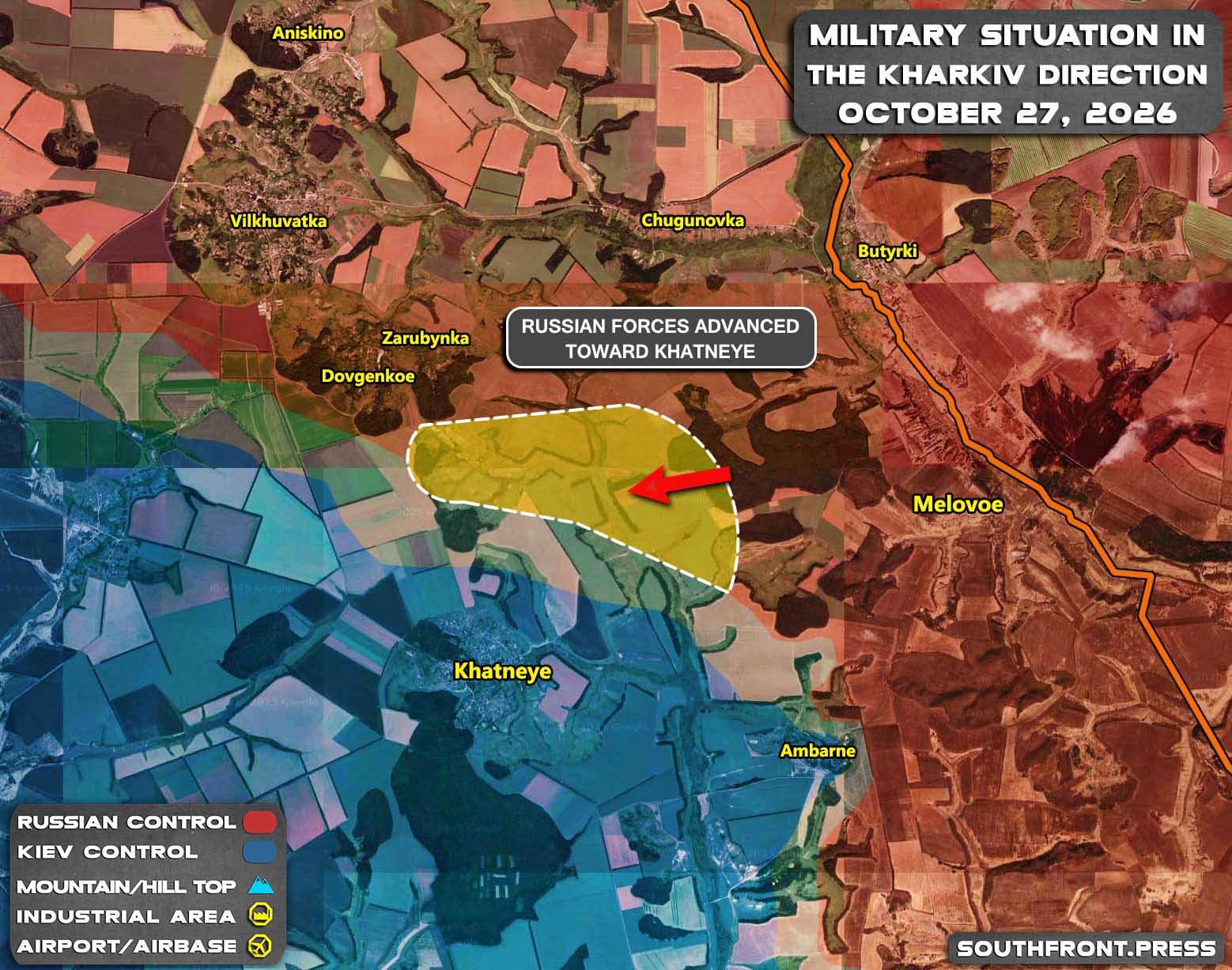
Russian forces advanced toward Khatneye.
Click to see the full-size image
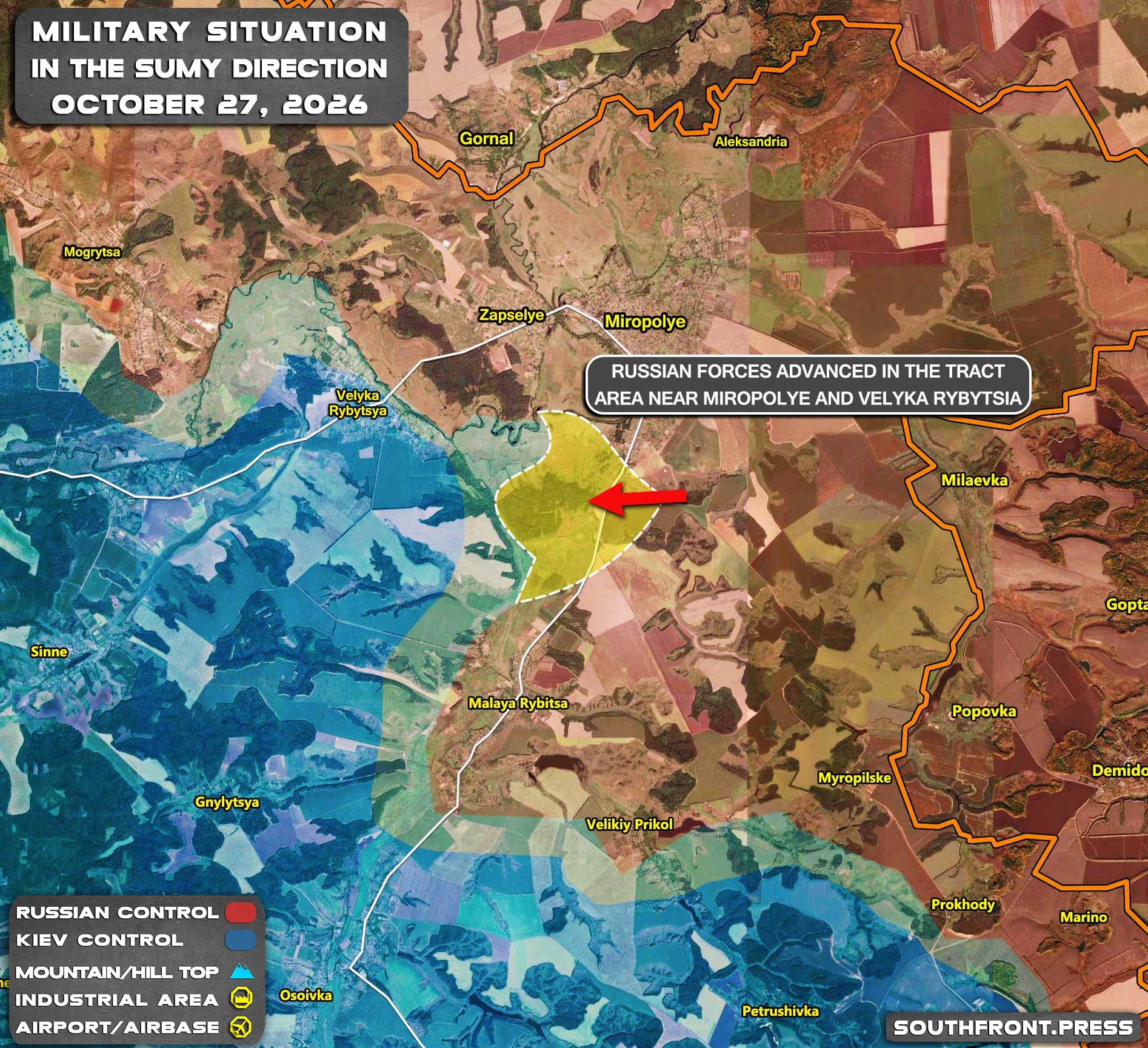
Russian forces advanced in the tract area near Miropolye and Velyka Rybytsia.
Click to see the full-size image
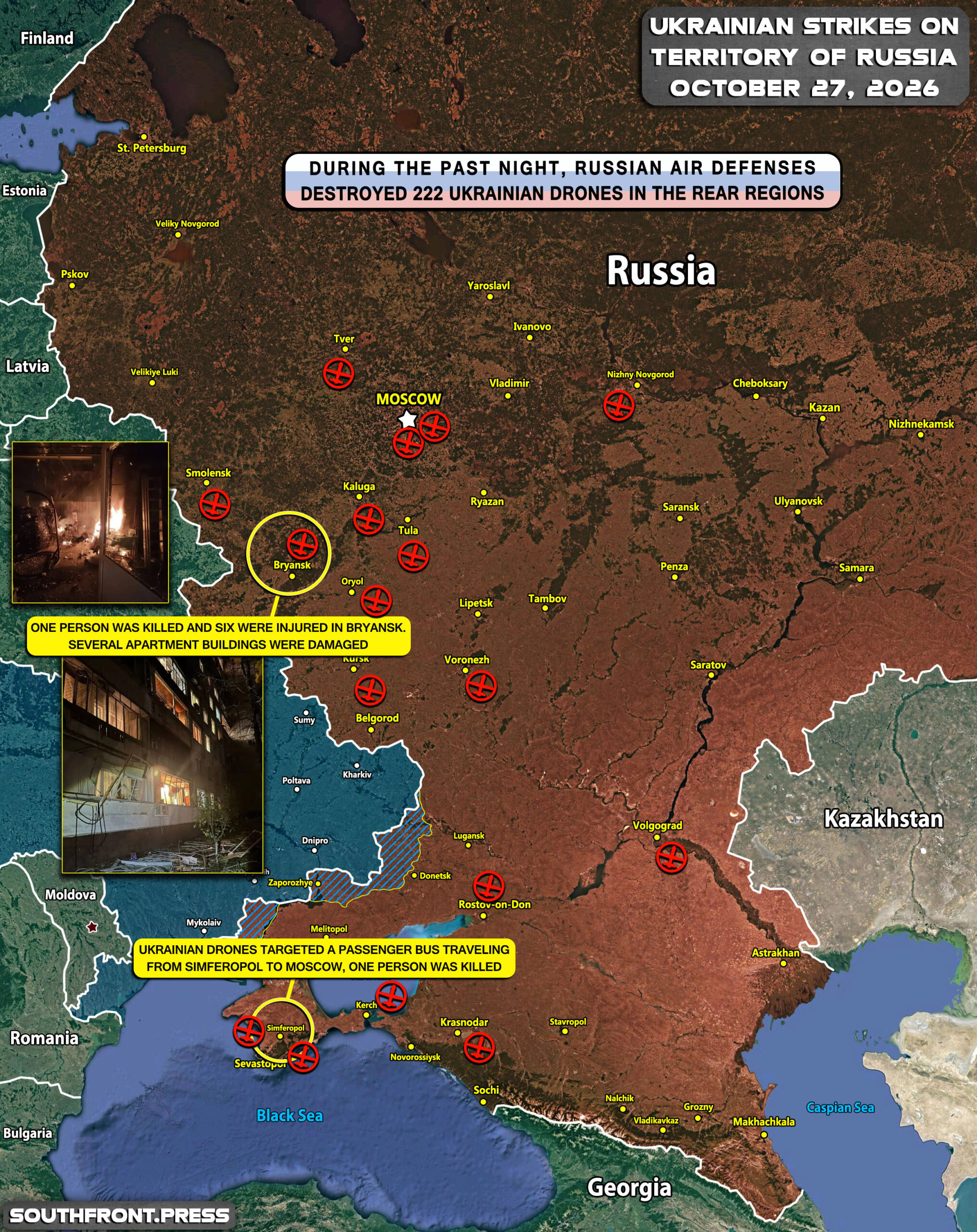
During the past night, Russian air defenses destroyed 222 Ukrainian drones in the rear regions;
Russian air defenses intercepted UAVs in the Novgorod, Tver, Belgorod, Bryansk, Kursk, Kaluga, Oryol, Tula, Voronezh, Smolensk, and Rostov regions, in Krasnodar Krai, in the Republic of Crimea, and over the Black Sea;
Russian air defenses intercepted UAVs in the Novgorod, Tver, Belgorod, Bryansk, Kursk, Kaluga, Oryol, Tula, Voronezh, Smolensk, Rostov regions, Krasnodar region, the Republic of Crimea, and over the Black Sea;
One person was killed and six were injured in Bryansk. Several apartment buildings were damaged;
Ukrainian drones targeted a passenger bus traveling from Simferopol to Moscow, One person was killed.
Anthropic is touting its ability to use different AI chips in its initial public offering filing.
Analysts say a multichip strategy could weaken Nvidia's pricing power.
Switching chips is hard and expensive, putting it out of reach for smaller players.
Anthropic is hedging its bets by using multiple chips to handle its AI work — a strategy that could eventually erode Nvidia's dominance.
The AI lab says it manages compute "as a single, fungible pool from multiple strategic partners" — with software that can direct its work to different chips depending on where they're most productive, according to Anthropic's S-1 filing, which came out Monday as the company prepares to go public.
Anthropic says it uses hardware from four chip families: Amazon Trainium, Google TPUs, Nvidia GPUs, and AMD GPUs.
That flexibility, which Anthropic said "took years and significant investment to build," could make major AI companies less dependent on Nvidia over time and give them more negotiating leverage, analysts said.
"The real exposure could be Nvidia's pricing power," said Patrick Moorhead, founder and CEO of Moor Insights & Strategy, "because a customer that can shift work across four platforms negotiates very differently than one that can't."
Ashish Nadkarni, an analyst at IDC, added that a multichip approach also makes Anthropic less vulnerable to fluctuations in Nvidia's chip supply.
Breaking Nvidia's grip isn't easy
Although Anthropic's chip mix isn't new, the company is now pitching it as a core advantage to investors, Moorhead said.
The threat has its limits. Switching between chips is still difficult — especially when it comes to training AI models as opposed to running them, Moorhead said — and only the biggest AI companies have the resources to do it.
Anthropic also continues to spend billions on Nvidia compute, Moorhead said.
Gil Luria, head of technology research at D.A. Davidson, said that while other major companies like OpenAI likely take a multichip approach, it may not be worth the effort and investment for smaller players.
Brad Gastwirth, global head of research and market intelligence at Circular Technology, said Anthropic's strategy doesn't represent a major near-term threat. Having more chip options doesn't erase Nvidia's advantages in performance, networking, and software, he said.
There's a broader risk for Nvidia if AI compute becomes more of a commodity.
Citadel CEO Ken Griffin has warned that if supply overtakes demand, it could drive down rental prices.
"GPUs, like airlines, have a very low marginal cost to run," he told Bloomberg last week. "The moment you have overcapacity, pricing goes into freefall."
Nvidia did not immediately respond to a request for comment from Business Insider.
Have a tip? Contact this reporter via email at gweiss@businessinsider.com or Signal at @geoffweiss.25. Use a personal email address, a non-work WiFi network, and a non-work device; here's our guide to sharing information securely.
O deputado do PS-M à Assembleia da República lamentou, hoje, que, da parte do actual Governo da República, haja “zero compromissos” para com a Região. Dirigindo-se a Luís Montenegro, no debate na generalidade da proposta de Orçamento do Estado para 2027, Emanuel Câmara recorreu à linguagem futebolística para dar conta que o PS mostra o […]
Villa Vie Residences has suspended operations of its residential cruise ship Villa Vie Odyssey in Cambodia, forcing residents to disembark as soaring fuel costs push the company toward financial restructuring....
O PS-M vai apresentar, na Assembleia Legislativa da Madeira, uma proposta para salvaguardar o tradicional processo de secagem e salga do gaiado e para que sejam estabelecidas as quantidades de pescado para consumo próprio, o denominado ‘peixe do balde’, foi ontem divulgado. O anúncio foi feito ontem à tarde pela presidente dos socialistas madeirenses, após […]
O Grupo do Partido Socialista na Assembleia Municipal do Funchal votou, hoje, favoravelmente, a sexta alteração ao Orçamento Municipal de 2026, mas deixou reparos aos atrasos verificados no que concerne à implementação das políticas de habitação, perante a situação de emergência que o sector atravessa, refere um comunicado. A alteração orçamental prevê a inscrição de […]
O secretário-geral do PS considerou esta terça-feira, 27 de outubro, que a responsabilidade do que aconteceu nas manifestações pela habitação não é da polícia, mas sim das “orientações políticas” do Governo, que acusou de “falta de diálogo e de bom senso”.
No primeiro dia do debate na generalidade do Orçamento do Estado para 2027 (OE2027), que decorre no Parlamento, a primeira intervenção de José Luís Carneiro centrou-se nos acontecimentos recentes nas manifestações pela habitação.
“A minha crítica não é à polícia, a minha crítica é mesmo ao Governo. A minha crítica é ao Governo, porque se houvesse bom senso da parte do Governo, o direito de manifestação nunca foi incompatível com o Estado de direito democrático”, enfatizou.
O líder do PS começou a sua intervenção com “uma palavra de solidariedade aos jovens, às suas famílias, aos seus amigos, mas também aos agentes da autoridade democrática que ficaram feridos nestas manifestações”.
“Porque estas manifestações são o resultado da falta de diálogo e de bom senso deste Governo que lidera o país”, considerou.
De acordo com Carneiro, “as forças policiais atuam com orientações políticas” e recordou manifestações dos agricultores que tentaram barrar a passagem na Ponte 25 de Abril e na Ponte Vasco da Gama.
“Nessa altura, em diálogo com o primeiro-ministro, nunca em circunstância alguma, procurámos utilizar a força e sempre o diálogo. A concertação deu lugar para solucionar as dificuldades que estavam a viver. As orientações políticas têm de ser do primeiro-ministro e têm de ser claras e inequívocas”, disse.
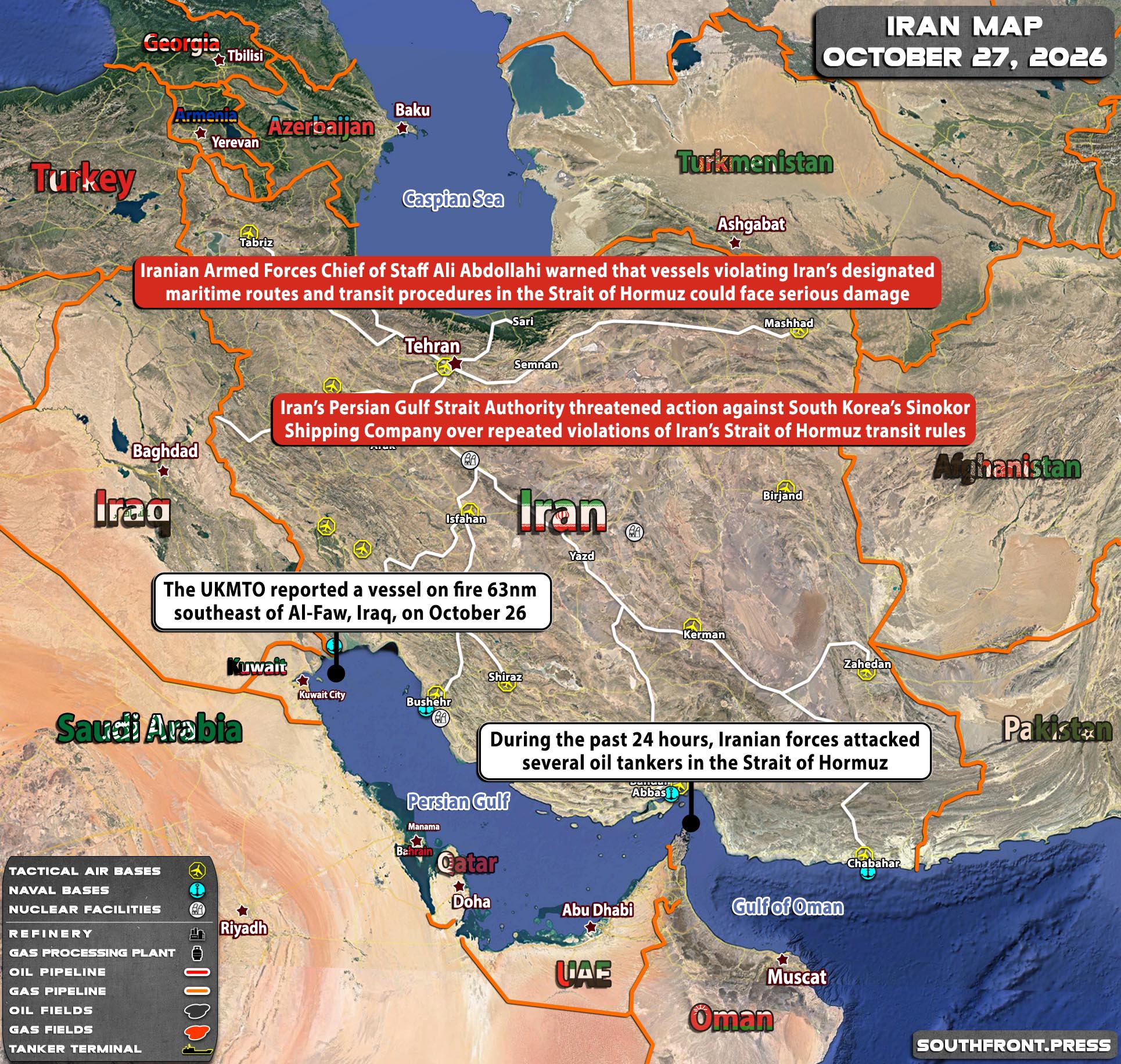
During the past 24 hours, Iranian forces attacked several oil tankers in the Strait of Hormuz;
Iranian Armed Forces Chief of Staff Ali Abdollahi warned that vessels violating Iran’s designated maritime routes and transit procedures in the Strait of Hormuz could face serious damage;
Iran’s Persian Gulf Strait Authority threatened action against South Korea’s Sinokor Shipping Company over repeated violations of Iran’s Strait of Hormuz transit rules;
The UKMTO reported a vessel on fire 63nm southeast of Al-Faw, Iraq, on October 26.
Cyprus may still be an unlikely place to build a biotechnology company, but Dr Marianna Prokopi-Demetriades, co-founder and director of Theramir, is increasingly convinced that this is precisely what gives the island something to prove.
At Theramir, that means developing precision-oncology technologies, building the manufacturing and regulatory foundations needed to move experimental therapies closer to patients, and trying to show that globally relevant biotech can emerge from a small ecosystem.
The work is slow by design. Cancer therapies cannot be rushed through validation, safety testing, manufacturing or regulation, and even strong laboratory results can take years to reach the clinic.
For Prokopi-Demetriades, that reality sits alongside a much bigger ambition. She wants Theramir to help prove that Cyprus can do more than support innovation from elsewhere. It can create it, retain the intellectual property and take it international.
From a small island to global biotech
That ambition received fresh recognition this year when Prokopi-Demetriades was named the 2026 Study UK Alumni Awards global winner for Business and Innovation, selected among 1,800 candidates from 120 countries.
For years, she said, Cyprus “was not a place people immediately associated with biotechnology”, even though its technology and innovation ecosystem has grown enormously over the past decade.
Being recognised internationally therefore felt “both like a very personal milestone and a huge surprise”, but Prokopi-Demetriades also sees it as an opportunity to put Theramir and Cyprus more firmly on the global biotech map.
She is careful, however, not to confuse recognition with progress itself. “Of course, awards do not suddenly bring deals or open doors,” she said, noting that in biotech, progress still depends on years of scientific R&D, validation, manufacturing and regulatory work.
What recognition can do is bring visibility to a field that often feels like “a long and lonely path”.
Her hope is that the award brings more confidence and excitement around biotechnology in Cyprus, inspires the next generation of scientists and helps strong science find “a real path to scale and, ultimately, reach patients”.
What Theramir is trying to do differently
The science behind Theramir starts from a simple but difficult reality. Cancer does not behave in the same way from one patient to another.
Each tumour has its own molecular profile and can evolve under treatment, Prokopi-Demetriades explained, particularly in metastatic and treatment-resistant disease, where cancer can activate several pathways in order to survive.
Theramir’s EVmiR® platform is designed around that complexity.
“We use extracellular vesicles (the body’s natural cellular messengers) to deliver microRNAs, small molecules that can regulate multiple cancer-driving pathways simultaneously,” she said.
The distinction lies in how those molecules act. “Rather than blocking one target, the aim is to interfere with networks controlling tumour growth, resistance and metastatic spread,” she explained.
The company’s lead programme targets triple-negative breast cancer, with expansion into bladder and pancreatic cancer. Because EVmiR® is a platform technology, different microRNAs can be selected for different tumour biology, creating what Prokopi-Demetriades described as “a potentially adaptable precision-oncology approach”.
Could a blood test help tell us what comes next?
Theramir is also developing companion biomarker tools alongside its therapeutics, bringing diagnosis and treatment closer together.
The aim, Prokopi-Demetriades said, is “to connect treatment with the biomarkers that can tell us who is most likely to benefit and how the disease is responding”.
Today, Theramir evaluates LCP-1 expression through tissue biopsy, while liquid biopsy allows the team to study circulating microRNAs and tumour-associated extracellular vesicles in blood.
The value comes from combining those sources of information. “Together, these markers could support patient selection and provide a more dynamic picture of treatment response, with future potential for real-time monitoring and earlier detection of progression, resistance or recurrence,” she explained.
When the laboratory is only the beginning
A new challenge begins when promising science has to leave the laboratory.
“A promising laboratory result is only the beginning,” Prokopi-Demetriades said, because before a therapy can reach patients, the science must be reproduced consistently, safety and efficacy confirmed preclinically and the product transferred into GMP manufacturing with strict quality control and batch-to-batch consistency.
“This is why biotech development takes years rather than months,” she said.
Medochemie’s involvement is therefore significant. As she explained, “Medochemie’s involvement is important because it brings pharmaceutical manufacturing, quality and regulatory expertise directly into this next phase.”
For Theramir, the next major milestone is to translate EVmiR® into a clinical-grade product, establish a robust GMP manufacturing process and generate the data required to support first-in-human clinical development.
The expensive patience of biotech
That timetable also changes the way a biotech company has to think about investment.
Unlike a software startup, which can launch, test and change direction in months, biotech may spend years generating evidence before conventional revenues appear.
“Biotech investors are backing scientific progress long before conventional revenues appear, so milestones look very different: reproducible data, preclinical validation, GMP manufacturing, regulatory progress and eventually clinical development,” Prokopi-Demetriades said.
Public funding, she explained, helps de-risk the early science, while private investors “mainly place trust in the founders, the vision and the potential to create something with real patient impact”.
Strategic partners such as Medochemie then add sector expertise alongside capital.
There is, however, a limit to what money can accelerate. “Money can accelerate execution, but it cannot shortcut biology, safety or regulation” is how Prokopi-Demetriades put it, adding that this patience is part of “building biotech for the greater good”.
What could Cyprus become?
The question for Cyprus is whether individual companies such as Theramir can eventually become part of something broader.
Prokopi-Demetriades said the country has “come a long way since Theramir started”, when it was only the second company approved as an innovative company locally.
Her ambitions for the sector are focused. “Competing directly with mature biotech hubs is still unrealistic, but we can build our own niche,” she said.
Instead, she sees a real opportunity in next-generation biomanufacturing, developing specialised GMP capabilities that can take innovation from the laboratory towards the clinic.
Equally important is “creating and retaining Cyprus-made intellectual property”, then scaling it internationally through strategic partnerships and licensing.
That, she believes, would allow Cyprus “not simply to host innovation, but to originate and export it”.
When the science becomes personal
Behind the science, however, there is also a more personal contradiction.
Prokopi-Demetriades has spoken openly about losing people she loves to cancer while spending years working on therapies for the disease.
“There is a painful contradiction in spending years working on cancer therapies while, at the same time, losing people you love to the disease,” she said.
That experience creates an instinct to move faster.
“It makes you want to move faster, but it also reminds you why you cannot take shortcuts,” she said, adding that patients deserve “evidence and safety, not just promising science”.
Through the slower periods, she remains focused on why Theramir began. “The long timelines can be frustrating, but I know why we started,” she explained.
Reaching the first patient with a Theramir therapy would therefore mean far more than another development milestone.
It would be, she said, “a major scientific milestone and, for me, an intensely personal one”.
An Indonesian taxi driver who went looking for work abroad ended up in Russia's army and died in his first battle in Ukraine, Ukraine's military intelligence (HUR) said. Russian recruiters found him through a job application, and he reached the front in Donetsk Oblast within weeks of signing. HUR calls him one more foreigner drawn into Russia's war through deception.
Russia's war against Ukraine consumes men faster than the Kremlin is ready to replace them through another mobilization at home, so it keeps hiring abroad. Ukraine has identified nearly 46,000 foreigners who signed with Russia's army since 2022. On 26 October, a UN commission found “compelling evidence” that Russia trafficked men from 29 countries into its forces.
A résumé that reached Russian recruiters
Taufiq Muhammad, born in 1978 in Sorong, Indonesia, drove a taxi in Jakarta and had once worked in the US. Russian recruiters found him through a résumé he had sent out while looking for work, the agency said. He probably believed promises of “easy money” and traveled to Moscow. HUR sees his case as part of a pattern.
“In fact, he became yet another victim of Russia's scheme of recruiting foreigners for the criminal war through deception,” HUR said.
A week and a half of training, then the front
Muhammad signed a one-year contract with Russia's army in Korolyov, near Moscow, on 19 April 2026. HUR called that term typical for foreigners Russia uses as “disposable” infantry. Russia made him a machine gunner and gave him only a week and a half at a training center near Voronezh, Army Inform reported, citing HUR.
Passport of Taufiq Muhammad, an Indonesian citizen Ukraine’s military intelligence says Russia recruited, with his personal data pixelated by Euromaidan Press. Photo: HUR
Russia moved him to occupied Ukraine in early May. He died almost at once, in his first battle. Russian troops were trying to advance from the village of Zelena Dolyna toward Novoselivka and Drobysheve in Donetsk Oblast, Militarnyi reported.
Indonesia is the newest recruiting ground
Russia's recruiters have been working in Indonesia for months. In August, Ukraine's Foreign Intelligence Service said it held documents on at least eight Indonesians recruited into Russia's army.
Another Indonesian, Rendi Apriyanto, 30, was reportedly killed in September, his family learned from an Indonesian fighting for Russia. Rendi had told his family he was recruited for logistics work, The Jakarta Post reported.
HUR has traced the same fast track before. In January, it identified a Filipino recruit killed in a Donetsk Oblast assault after one week of training. A Nigerian, 34, died in Kharkiv Oblast after a similar week of training, HUR said in May.
Russia courts Africa ahead of a summit
Ukraine's Foreign Ministry has counted at least 2,982 Africans recruited into Russia's army, and 486 of them have died. Ahead of a Russia–Africa summit on 28–29 October, Moscow plans military and port-access deals with a string of African states, HUR said. The deals would help expand the campaign of Russia's Africa Corps, the Defense Ministry-controlled force on the continent, Army Inform reported, citing HUR.
Each recruit Ukraine identifies gives his home government a documented case to act on. Jakarta has said citizens shown to have been deceived will get its protection, while those who enlisted by choice could lose their citizenship.
Russian troops are trying to drag Radkivka, a village on the northern edge of Kupiansk in Kharkiv Oblast, into the gray zone so their infiltration groups can keep reaching the city, Viktor Trehubov, spokesperson for Ukraine’s Joint Forces Grouping, said on national television on 27 October, Ukrinform reported. Russian forces made three attempts to advance toward Radkivka on 26 October, Ukraine’s General Staff reported.
Russia has tried for more than a year to retake Kupiansk, a city on the Oskil River, largely by slipping small groups through a disused gas pipeline under the river. They kept using it even after Ukraine said in September 2025 that it had flooded three of the four pipe strings, until Ukrainian troops went into the pipes themselves in Operation Veles, announced on 22 October.
Russian groups now have to move above ground
The pipe Russian groups used to seep toward Kupiansk has been put out of action, so they now have to go through Radkivka or neighboring Holubivka, Trehubov said. They move along the bank of the Oskil and a nearby tree line, but the foliage will soon be gone, which will make that much harder.
When the battlefield became transparent, the war went underground.
Khartiia Corps, together with other Defense Forces units, is conducting the underground Operation VELES, and for the first time, we can show the work of our brothers-in-arms in this new dimension of warfare.
On the western bank of the Oskil, Russian forces took losses from Ukraine’s Khartiia Corps and in Operation Veles, and their logistics have “suffered noticeably,” Trehubov said. Advancing there is now harder for them than it was a month ago, he added.
Viktor Trehubov, spokesperson for Ukraine’s Joint Forces Grouping. Photo: Ukrinform
Everything now depends on how the fights for Holubivka and Radkivka end, Trehubov said.
“If Ukrainian control can finally be established there, the Russians will have nowhere much to crawl through,” he said.
Several dozen Russian soldiers remain in low-rise buildings in northern Kupiansk, and Ukrainian forces are working to cut off their rotations, Trehubov said on 23 October.
Each side wants the other off its bank of the Oskil
On the eastern bank, Russian forces keep pushing toward the village of Podoly and Kupiansk-Vuzlovyi, a railway junction town southeast of Kupiansk, aiming to wipe out Ukraine’s foothold there, Trehubov said. Ukraine wants to destroy the Russian foothold on the western bank.
“For that, we will need to at least somehow throw them out of Dvorichna,” Trehubov said, referring to a town north of Kupiansk.
The US-based Institute for the Study of War (ISW) assessed that Russian forces conducted no offensive operations on the Kupiansk axis on 26 October, likely because Ukraine now controls the pipeline, a view at odds with the General Staff’s report for that day.
Ukraine reported confident control of Kupiansk as early as February, yet Russian groups kept slipping into the city for months afterward. Trehubov’s latest assessment stops short of declaring that threat over: Russia will still try to advance, he said.
Just two months after launching i spy, Cypriot founder and CEO Nicole Georgiou is already seeing signs that the way people discover fashion online may be changing faster than the tools they use to shop it.
The London-based fashion-tech platform is built around a familiar problem. An outfit catches your eye on TikTok, Instagram or Pinterest, but finding the pieces behind it can mean screenshots, Google searches, several retailer tabs and saved posts scattered across different platforms.
Georgiou is trying to bring those steps together, allowing users to take inspiration from elsewhere, search for exact or similar items, save products into boards and return to them when they are ready to buy.
Early users show real purchase intent
For Georgiou, the clearest early sign that there is a genuine problem to solve has come from user behaviour, with early users showing that “people aren’t just coming to i spy for inspiration, they’re coming with real purchase intent”.
That interest has translated into activity. In the platform’s first two months, entirely through organic growth, “we’ve seen more than 20,000 searches and 800 user-created boards, alongside thousands of products being saved,” she said.
Those searches are also increasingly tied to genuine buying decisions, with users looking for “things they genuinely want to wear and potentially buy, wedding guest dresses, holiday outfits, bridal looks and pieces they’ve seen elsewhere”.
For Georgiou, however, repeat use matters more than the initial download. “What matters to me isn’t just that someone downloads i spy, but that they come back,” she said, adding that “A download tells you someone was curious. Coming back tells you you’ve created something they actually want to use.”
The same applies to how users save products. Georgiou said “a save means something different on i spy”, explaining that on a traditional inspiration platform it can simply mean “I like this”, while on i spy it can mean “I might actually buy this”.
That difference is reflected in the way users behave, she added, with people beginning to “search, compare, save and organise products they are genuinely considering”.
Fixing a fragmented shopping journey
Asked what problem i spy is actually solving for consumers, Georgiou pointed to the increasingly fragmented nature of online shopping, saying “The way we shop online has completely changed, but the infrastructure hasn’t caught up.”
A typical journey, she said, might involve seeing an outfit on TikTok, saving something on Instagram, finding inspiration on Pinterest, using Google to search for the product, opening multiple retailer tabs and taking screenshots on a phone.
The result is that “The inspiration, search, saving and purchasing parts of the journey are completely disconnected,” she said.
That is the gap i spy is trying to close. Georgiou put it simply when she said “i spy connects that journey”, allowing users to “take inspiration from anywhere, find the exact or similar products, save them, organise them and come back when you’re ready to buy”.
Building between inspiration and purchase
While visual search itself is not new, Georgiou sees i spy as occupying a different place from larger platforms.
She described Google Lens as “a strong image search tool” and Pinterest as “incredible for inspiration”, but said i spy is “specifically built around fashion and around what happens between seeing something you like and deciding to buy it”.
That space between discovery and purchase is central to the company’s proposition, with Georgiou describing it as “the consideration layer between inspiration and purchase”.
Taking on the bigger platforms
Asked what makes i spy defensible when Google, Pinterest and other large platforms could potentially build parts of it, Georgiou said there is “a structural reason why this space is still relatively unowned”.
In her view, large platforms face conflicting incentives. “Pinterest ultimately wants to keep you on Pinterest, while Google operates within its own ecosystem,” she said, while i spy is “deliberately cross-platform and consumer-first, if you discover something anywhere, you can bring it into i spy”.
Georgiou acknowledged that large platforms could technically build elements of the same experience, but said “creating a system that connects users across different platforms and retailers doesn’t naturally align with their existing business models”.
Focus is another part of the argument. “We’re also incredibly focused,” she said, contrasting i spy with platforms “building for hundreds of millions of people across many behaviours”.
By comparison, she said, “we’re building one thing for one specific behaviour: what happens between seeing something you want and deciding to buy it”.
That focus also feeds into the technology itself. Georgiou said “Our proprietary fashion technology and the behaviour we’re learning from searches, saves and interactions become increasingly valuable as the platform grows.”
Using AI to understand taste
When asked what AI can understand about a shopper that traditional search cannot, Georgiou said its value lies in reducing rather than expanding choice.
“I think AI is most useful when it reduces choice rather than simply giving you more of it,” she said.
The company is using technology to learn “someone’s real, underlying taste”, looking not just at what a person has searched for once, but at “the patterns across what they repeatedly search for, save, put into boards and eventually keep in their closet”.
Over time, Georgiou said, that allows i spy to understand “the person behind the search” and give users “better results, recommendations and discovery”.
She is also keen to distinguish that approach from the growing number of AI shopping agents. “We’re not trying to build another AI shopping agent that simply gives you a list of products,” she said, adding that “I want technology to understand someone’s taste while keeping the human and social side of fashion intact.”
Changing where shopping begins
Georgiou’s ambitions stretch beyond building another fashion app.
Asked what she means when she describes i spy as becoming “the default system for online shopping”, she linked that ambition to a change in where the shopping journey actually begins.
“When i spy becomes the default system for online shopping, it will be because we’ve changed where people think shopping starts,” she said.
That behaviour is already shifting, in her view, because “Shopping used to start with a search bar. Increasingly, it starts with a TikTok, an Instagram post, a creator, a Pinterest board or something you see in real life.”
For Georgiou, that is the space i spy wants to occupy, with the aim to “own the moment between seeing something you want and deciding to buy it”.
Fashion is where the company is starting because “it’s one of the most visual and fragmented categories”, although she believes “the underlying behaviour is much broader”.
Georgiou is also building the company from London as a Cypriot founder, saying the city has given her “access to fashion, technology talent, investors and brands”, while she still sees “a huge opportunity for Cyprus to support globally ambitious consumer technology companies”.
The company is now moving into fundraising after what she described as “strong interest from early investors”, with plans “to scale the technology, team and user growth”.
Ultimately, however, Georgiou’s measure of success is much simpler. She wants someone to see something they love and instinctively think “I’ll i spy that.”
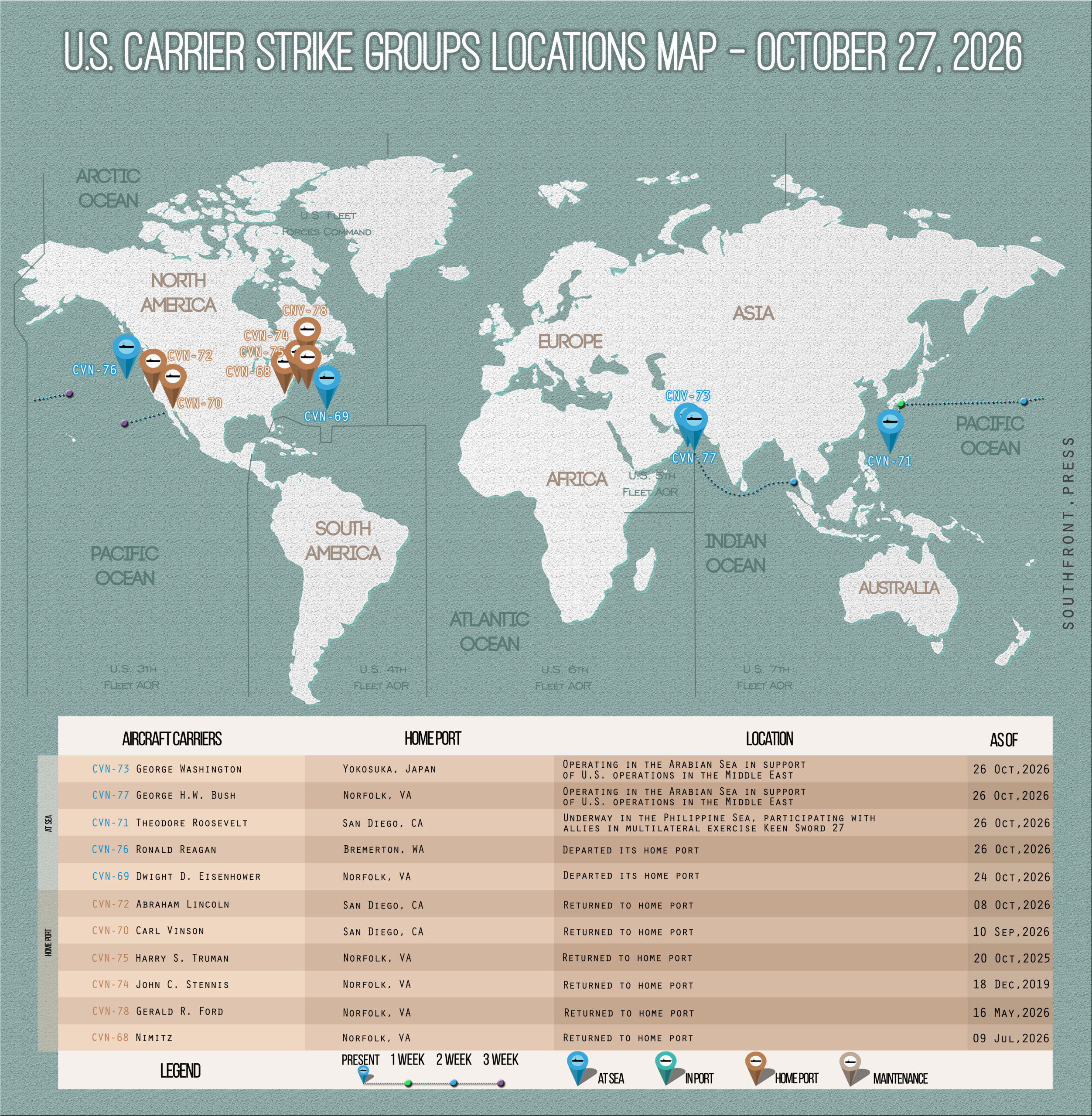
This is the newest update of the ‘U.S. Carrier Strike Groups Locations Map’ exclusive series showing the approximate locations of U.S. Carrier Strike Groups. SouthFront: Analysis & Intelligence tracks locations of U.S. aircraft carriers using the available open-source information. No classified information was used in production of the map.
click to see the full-size image
Carrier strike group (CSG) is an operational formation of the United States Navy. It is centered on an aircraft carrier and a carrier air wing of 65 to 70 aircrafts. It’s composed of roughly 7,500 personnel, an aircraft carrier, at least one cruiser, a destroyer squadron of at least two destroyers and/or frigates. A carrier strike group also, on occasion, includes submarines, attached logistics ships and a supply ship. Carrier strike groups comprise a principal element of U.S. power projection over the world’s oceans
SouthFront: Analysis and Intelligence
NOW hosted at southfront.press
Previously, SouthFront: Analysis and Intelligence was at southfront.org.
The .org domain name had been blocked by the US (NATO) (https://southfront.press/southfront-org-blocked-by-u-s-controlled-global-internet-supervisor/) globally, outlawed and without any explanation
Back before that, from 2013 to 2015, SouthFront: Analysis and Intelligence was at southfront.com
At a campaign event in Corinth, Mississippi, on Monday, Trump once again raised his desire to rename an ocean.
Madison Thorn/Bloomberg via Getty Images
President Donald Trump isn't giving up on his plan to rename the Atlantic to the "American Ocean."
While he said last week that Google's CEO pushed back on the idea, he raised it again at a rally.
"We have a lake, and we have a gulf. Now we need a river and an ocean," Trump told supporters.
Donald Trump is eyeing up new names for more bodies of water, despite pushback from Google's CEO.
"We have a lake, and we have a gulf. Now we need a river and an ocean," he said at a rally in Mississippi on Monday.
The president spoke about renaming the Atlantic Ocean to the "American Ocean" and quipped: "I think Europe will be thrilled."
Trump previously raised the idea last Wednesday at a rally in South Carolina, where he said that Google CEO Sundar Pichai had tried to change his mind.
Trump said that he called Pichai, joking that Google was "still rattled" from his renaming of the Gulf.
Google Maps previously changed its labels for the Gulf of Mexico and Lake Ontario to the Gulf of America and Lake America following Trump's executive orders. The tech giant said the decision aligns with its policy to draw on official government databases. Users outside the US still see the original names followed by Trump's names in brackets.
However, Trump said that when he pitched the idea of renaming the Atlantic, Pichai replied, "This time I'm not doing it."
"Oceans are different, sir. They cover really a lot of countries. Please don't ask us to do that."
"So I'll probably pass," Trump told the crowd last week. "I think let's keep it the Atlantic Ocean."
The president first brought up the idea at a Tennessee rally earlier this month, where he floated renaming either the Atlantic or the Pacific as "Trump Ocean" or "Ocean of the Americas."
While he also spoke on Monday about renaming a river, he told the Mississippi crowd that the state's namesake river won't be relabeled.
"The Mississippi River, I'm not changing the name of the Mississippi," Trump said. "I promise."
Panos Panay, head of Amazon's Devices and Services team
CHARLY TRIBALLEAU/AFP via Getty Images
Amazon launched a series of new devices this month, including Alexa tablets and Bee AI wearables.
Rising memory costs forced "difficult trade-offs" on Amazon's device prices, sales, and profit.
Amazon is seeking more Alexa revenue from enterprise sales, licensing, and ads.
Amazon launched a flurry of new consumer devices this month. Behind the scenes, rising memory costs are adding pressure to its already money-losing hardware business.
An internal planning document obtained by Business Insider shows Amazon forecasting a $612 million gross loss this year for its first-party devices business, compared with a leadership target of a $438 million loss.
The document said rising memory costs were "putting pressure" on the business's profitability, forcing "difficult trade-offs" among sales volumes, average selling prices, and gross profit.
The projected $612 million loss was at the gross profit level, meaning it did not account for all operating expenses, such as R&D, sales and marketing, and administrative costs.
The figures offer a rare glimpse into the pressure on Amazon's hardware business as it absorbs rising component costs. Other tech hardware companies, including industry leader Apple, face similar pressure from surging memory chip prices.
An Amazon spokesperson declined to comment.
A new wave of AI devices
Despite the pressure, Amazon continues to expand its consumer hardware lineup. Even if the company loses money on device sales, it can make money in other ways, such as subscription services, as more customers use its gadgets.
In October alone, the company introduced new Kindles, Alexa-powered tablets, Ring smart locks, and AI wearables under its Bee brand. The August planning document identified Bee and new smart glasses as strategic products still in an investment phase.
Amazon has historically used low-cost hardware to pull customers into a broader ecosystem of shopping and digital content. Rising component costs could make that strategy more expensive, forcing the company to raise prices.
The clearest shift is in Amazon's tablets. Earlier this month, the company phased out Fire tablets after 15 years and replaced the budget-friendly lineup with pricier Alexa Tablets powered by Alexa+. The new devices cost between $229.99 and $499.99, a notable increase from previous generations.
Not just Amazon
The planning document was prepared in August, the same month Amazon raised prices on products including Echo speakers, Kindle e-readers, and Fire TV devices.
The pressure extends beyond Amazon. Apple has raised prices on some Macs and iPads, while Microsoft and Sony have increased console prices. Dell, HP, and Lenovo also face higher memory costs.
The AI boom is helping drive the squeeze. Huge data center investments have increased demand for memory chips, while manufacturers have devoted more capacity to high-bandwidth memory used in AI servers. That has tightened supplies and raised prices for components used across consumer electronics.
Amazon is experiencing both sides of the boom. It expects roughly $220 billion in capital expenditures this year, largely to expand AWS data centers for AI demand, while higher component costs squeeze its consumer hardware business.
The rising cost of Alexa+
The August planning materials show Amazon reassessing both Alexa+ revenue and operating costs. They called for updated forecasts, expansion through enterprise sales and advertising, and more detailed AWS cost modeling.
Amazon is now confronting the cost of operating Alexa+ at scale. Business Insider reported in July that internal forecasts put Alexa+'s AWS cloud costs at roughly $1.7 billion in 2026, nearly triple the prior year's figure. Amazon was working to lower those costs by relying less on Anthropic's AI models and routing more requests to its own, cheaper systems.
A separate project called Moonraker, intended to give Alexa more advanced AI-agent capabilities, was projected to require more than $100 million in GPU spending this year. Amazon internally considered delaying or scaling back the initiative as one option for easing cost pressure, Business Insider previously reported.
Intel CEO Lip-Bu Tan, Hyperbolic founder Jasper Zhang, and Walden Catalyst partner Shankar Chandran.
Luke Dietz
Infrastructure startup Hyperbolic raised a $30 million round led by Intel CEO Lip-Bu Tan's VC firm.
The startup connects companies with neoclouds and makes their AI chips easier to use.
Hyperbolic also wants to let customers resell unused computing power.
Intel CEO Lip-Bu Tan is backing an infrastructure startup that has raised $30 million to help companies rent compute across hundreds of different AI cloud providers.
Hyperbolic, an AI chip marketplace and software startup, has raised $50 million to date.
Walden Catalyst, the venture capital firm founded by Tan and former Samsung president Young Sohn, led the Series A-1 funding round. Dell Technologies Capital, General Catalyst, Vista Equity Partners, and Cambium Capital also participated.
As companies scramble for computing power, one challenge is that AI cloud providers, or neoclouds, use a mix of different chips, networking, and software. Hyperbolic helps customers find compute resources from different providers and creates software that makes it easier to use them all, rather than dealing with each one separately.
"It's been a really fragmented market that makes the customer experience really painful," said 31-year-old founder and CEO Jasper Zhang.
Hyperbolic also wants to let customers resell compute that they're paying for but no longer need.
The four-year-old startup works closely with about 30 neoclouds, including WhiteFiber and Vector Core Compute. It says it has roughly $200 million worth of compute connected to its software annually.
Hyperbolic previously raised a $12 million Series A round in 2024, led by Variant and Polychain Capital, following a $7 million seed round earlier that year. The company expects to have 50 employees by the end of the year and will use its funding to expand software tools for managing AI chips across different neoclouds.
Zhang said the company is aiming for $150 million in annual recurring revenue by the end of the year and is already breaking even. More than 250,000 developers, including teams at Modal, Higgsfield, and Daytona, use Hyperbolic.
Before founding the company, Zhang worked as a quantitative researcher at Citadel Securities. As Wall Street explores ways to financialize AI chips, he said his startup's plans to let companies resell unused compute could help pave the way for a futures market.
Here's a look at the pitch deck Hyperbolic used to raise its $30 million Series A-1. Slides have been redacted so that the deck can be shared publicly.
GPTZero cofounder Edward Tian's last day at the GPTZero office before the team moved to the Superhuman offices.
Courtesy of Edward Tian
Edward Tian co-founded GPTZero in college, building it into a success before selling to Superhuman.
He said he thinks that creating 'artificial scarcity' for the product contributed to its success.
He said he'd major in the humanities, not computer science, if he went to college today.
This as-told-to essay is based on a conversation with Edward Tian, the 26-year-old cofounder of GPTZero, who's based in New York. His words have been edited for length and clarity.
I was never planning to go down the founder path straight out of college. I had a visual investigations fellowship lined up for after graduation and was ready to start a journalism career.
My cofounder Alex and I went to high school together. When ChatGPT came out, he was pursuing his Ph.D. in computer science at the University of Toronto, and I was in my senior year at Princeton. Over winter break, we built an AI detection tool and put it online. The success was almost overnight.
Three years later, we sold our company, GPTZero, to Superhuman, and have stayed on board to work with the team. Superhuman is a very pro-AI company, and I think it was an unexpected move for us as an AI detection company to join them.
We didn't build GPTZero to say there should be no AI on the internet. I think that's the biggest misunderstanding about why we started our company, but my feelings on AI have changed.
I had a different job lined up for after graduation
I studied computer science at Princeton and worked with a professor at the Princeton Natural Language Processing Lab on AI research. I also worked on a few other startup projects in school, but I was always hoping to work in journalism.
While in college, I became very involved in the open-source investigation community. I ended up working on open-source investigative projects with the BBC and Bellingcat, and had a visual investigations fellowship at The New York Times lined up after graduation, which I was excited about but ultimately didn't take.
After ChatGPT came out, I was inspired to investigate where and when AI was being used online. It took about a week over winter break to build the first version of our AI detection tool, and it was released in January 2023.
We created artificial scarcity to help grow the business
My cofounder Alex and I posted on social media to market the tool so people could try it, but we didn't view it as a business right away. However, it blew up online pretty quickly. After seeing the success, we wanted to double down on the opportunity and turn it into a legitimate site.
One piece of advice I have for founders is that using a waitlist is really helpful for generating hype and excitement. We put the first version of GPTZero on a waitlist because it had reached capacity. So I think that artificial scarcity was also very helpful in the success.
We had a lucky combination of very talented engineers and some traction and buzz, so we started reaching out to VCs. Many of our early VC partners went to my alma mater, and kind of all knew each other. Jack Altman is also an investor, and I remember we had a call where I was in my dorm room, and he was like, "Oh, I recognize that dorm room too."
For founders raising funding for the first time, my advice is not to optimize for the flashiest name or the biggest brand because you think it will attract future talent. Go for where there's familiarity and trust; trust is the most important thing when working with an investor.
We raised around $3.5 million in our first funding round. I stayed at Princeton to finish my senior year and graduate, and we kept growing the business. My cofounder Alex left his Ph.D. program to focus on the business.
It was bittersweet to sell the company
When Shishir, the new CEO of Superhuman, joined in 2025, we spoke with him about his broader platform vision for a suite of products. He thought we could be part of the authenticity suite he wanted to create.
It was bittersweet to think about giving up something that we started from scratch and put so much energy and care into. At the same time, it was a lot easier because the team stayed on. I'm now a director of product at Superhuman.
For company acquisitions, a lot of folks think the three most important things for a great fit are product match, people fit, and economic sense. We had similar people philosophies, and the deal made sense financially. Then, product-wise, we realized we're definitely not against AI use anywhere in education. We just want to make sure there's some authenticity and truth with that usage.
Over the next few years, we're going to take our shot at building a startup within a larger company. I've seen a lot of startup founders go to larger companies and start their moonshots from within.
The bigger mission we have is to take steps to ensure people are being respectful of the person who's on the receiving end of AI generations and productivity now. We want it to be that we're reaping the benefits of AI without making other people deal with more work.
I wouldn't major in computer science anymore
When we first started GPTZero, I think I was actually more pro-AI than I am now. I believe people should know when something is AI-generated, but I wasn't saying not to outsource anything at all.
In the past year, though, I've started to see an over-reliance on AI among people who finished university after ChatGPT was launched, especially with writing. If I went back to college right now, I wouldn't major in computer science. I'd probably major in journalism and get a minor in computer science. I'd get a humanities degree because those are the important skills now.
I've started to see a friction point at work when people can't write or edit, and everything they send reads like AI. Part of what I'm doing now at Superhuman is working on responsible AI usage policies and guidance.
People are allowed to use these tools however they see fit. At the same time, I feel a profound sadness for the internet at large.It's important to make sure we still have human-written content online.
Do you have a story to share about working on a tiny team? If so, please reach out to the reporter ataapplegate@businessinsider.com.

 Login