Russia and Ukraine expect to hold talks in Abu Dhabi sometime in November, though no date is set, as the two sides continue to observe a local ceasefire around the Russian-controlled town of Oleshky in Ukraine’s Kherson region. Yury Ushakov, an aide to Russian President Vladimir Putin, told reporters that Russia expects to hold trilateral […]
Click to see full-size image. (Russian Ministry of Defense)
In the Zaporozhye direction the “Dnepr” grouping is advancing towards the Konka River line, while units of the “East” grouping have recorded a deep breakthrough between Vozdvizhevka and the Verkhnyaya Tersa, creating a threat to Ukrainian logistics. In the Sumy direction Russian units of the “North” grouping continue to push deeper into the region, fighting near Khoten, Velyka Rybytsia, Nikolskoye, Korenek and Turya. In the Kharkiv direction heavy fighting continues towards Kharkiv and on the Volchansk sector, where advances of up to 700 meters have been recorded. In the Slavyansk direction positional fighting persists around Rai-Aleksandrovka and Nikolayevka, with Ukrainian units being pushed out of Dibrova and the woodland near Ozyornoye. In the Kupyansk direction Russian forces have repelled a Ukrainian counter-offensive and are consolidating in the areas of Bolshaya Shapkovka, Polomarovka, Kovalevka and Sobolevka, preparing conditions for a further advance towards Monachinovka. Meanwhile the presidents of the Czech Republic and Finland, Petr Pavel and Alexander Stubb, discussed by telephone the development of a common European position on peace negotiations concerning Ukraine following Stubb’s and Norwegian Prime Minister Jonas Gahr Støre’s conversation with Vladimir Putin.
Sumy direction Ukrainian units have not undertaken significant offensive action and have concentrated on defense. Elements of the 80th Separate Airborne Assault Brigade are being returned to the Sumy region. Electronic-warfare crews from the same brigade have also been redeployed to the area to strengthen counter-drone efforts.
Local reports indicate that Ukrainian forces have accumulated and partially relocated reserves near the Oleshnya River, thereby expanding the grey zone around Ivolzhanskoye. However, it is premature to speak of consolidation in the riverside area, as the Ukrainian side is relying mainly on small groups for movement.
In the Sumy district Russian assault troops advanced on ten sectors by up to 600 meters amid heavy fighting. In the Shostka district units of the “North” grouping continue to press towards Korenek. In the Krasnopolye district Russian assault groups are engaged in small-arms fighting near Turya.
Kharkiv direction Activity around Tsupovka and Novaya Kazachya is gradually declining as the summer–autumn campaign draws towards its close. Russian units are attempting to capture and hold Novaya Kazachya, but Ukrainian forces, using Tsupovka as a base, are dislodging them with counter-attacks. Stabilisation will be possible at best if Novaya Kazachya can be taken and the line held. Ukrainian logistics, which rely on Kharkiv and the valley route through Dergachi to Slatino, remain more convenient in this sector.
Russian troops have driven Ukrainian units out of Alisovka in the Kharkiv region. The settlement lies directly on the E105 highway that previously linked Belgorod and Kharkiv. The capture of Alisovka has allowed an advance along the road and created a threat to Liptsy from the west.
On the Volchansk and Velykyi Burluk sectors fierce fighting continues around Prikolotnoye. Total advances on four sectors over the past 24 hours reached up to 700 meters.
Near Velykyi Burluk the newly formed 50th Motor Rifle Brigade of the Ukrainian Armed Forces is suffering heavy losses. It was transferred to attempt a break-out from the encirclement in the north-east of Kharkiv region but has been unable to enter combat owing to catastrophic under-strength and losses inflicted by Russian aviation.
Zaporozhye direction The “Dnepr” grouping is focused on reaching the Konka River line while simultaneously supporting the left flank of the “East” grouping in the encirclement and destruction of the Ukrainian grouping around Orekhov. Fighting continues in Primorskoye and in the Lukyanovskoye area. Heavy combat persists around Orekhov and Preobrazhenka. The front remains broadly stable: the Ukrainian side has transferred special-forces units that are holding the northern outskirts of Orekhov and most of Preobrazhenka. Relying on the network of underground communications and the defensive line constructed east of Orekhov in 2023, they are attempting to infiltrate flanks and rear areas and to insert small groups into Malaya Tokmachka.
Further east, in the sector of the “East” grouping, a breakthrough has been recorded between Vozdvizhevka and the Verkhnyaya Tersa. Although still narrow, the penetration is already deep and is acquiring operational-tactical significance. The situation is gradually shifting in favor of Russian units. It is important not only to cut Druzhkovka from the west but also to establish drone positions on the heights west of the town in order to disrupt logistics more effectively, and to gain a foothold on the outskirts so that offensive operations can be conducted with greater prospects of success during the winter.
Slavyansk direction The principal task remains the retention of positions secured during the summer–autumn campaign around Rai-Aleksandrovka and on the outskirts of Nikolayevka, together with the final clearance of Ukrainian units from Starodubovka. The expulsion of Ukrainian forces from Dibrova continues, while fighting persists in Ozyornoye and the adjacent woodland. Reports of the clearance of Ozyornoye should not be interpreted as final capture of the settlement; Ukrainian units retain a presence and continue to operate in small groups from the direction of Yampol. Further north, near Kolodezi, the intensity of clashes has somewhat decreased, although probing attacks against Russian defenses continue. In Krasny Liman itself the situation is more complex: fighting affects the urban area and the southern approaches, and Ukrainian forces still hold positions in several districts.
Kupyansk direction Fighting is currently under way in the areas of Bolshaya Shapkovka, Polomarovka, Kovalevka and Sobolevka, where Russian presence is substantial. Consolidation is essential. If successful, operations can gradually begin to take Monachinovka, a large settlement, strongpoint and strategic road junction.
The capture of Monachinovka would create an immediate threat to Sredniy Burluk. South of it lies marshy lowland where logistics are extremely difficult. The main Ukrainian supply route to Velykyi Burluk runs through Pechenegi. If Sredniy Burluk can be taken, discussion of the operational encirclement of the Velykyi Burluk grouping becomes realistic. On the northern flank, around Dvurechnaya–Kutkovka, fighting continues for positions west of the Oskol.
In Kupyansk itself the main clashes remain concentrated in the urban area. Local successes have been recorded on the north-western approaches, but a continuous line of control within the city has not yet been established. Russian units retain a presence in Kupyansk-Uzlovoy, and fighting continues near Kovsharovka and on the approaches to Kurilovka.
Conclusion In the Sumy direction the capture of Alisovka and advances near Khoten, Velyka Rybytsia and Korenek create conditions for further pressure on the border positions. In the Kharkiv direction Russian forces are driving Ukrainian units from their positions around Prikolotnoye and Velykyi Burluk while inflicting heavy losses on newly formed brigades. In the Zaporozhye direction the advance to the Konka River and the deep breakthrough between Vozdvizhevka and the Verkhnyaya Tersa are forming the preconditions for the envelopment of the Orekhov grouping. In the Slavyansk direction the retention of key positions and the clearance of the Seversky Donets floodplain are reducing the threat to Russian logistics. In the Kupyansk direction the repulsion of the counter-offensive and consolidation on the western approaches open the prospect of an advance towards Monachinovka.
On the diplomatic track contacts on a settlement continue. The presidents of the Czech Republic and Finland, Petr Pavel and Alexander Stubb, discussed by telephone the development of a common European position on possible peace negotiations concerning Ukraine. On Tuesday Stubb and Norwegian Prime Minister Jonas Gahr Støre held a telephone conversation with Russian President Vladimir Putin. “The conversation held on October 29 between the Finnish president and the Norwegian prime minister with Vladimir Putin was discussed. Prospects for achieving a common European position on possible peace negotiations were also among the topics,” the official website of Prague Castle stated following the Wednesday telephone call between the Czech and Finnish presidents. Both presidents agreed on the need to continue negotiations involving all interested parties in various formats.
With the money spent on the war, Russia could have built 1,000 new schools and 200 hospitals, and granted 1 million rubles to every child born since the start of the full-scale invasion.
Nigel Farage skipped the chancellor’s first budget because he was worried he would get in a “physical altercation” with another MP in a row over seating arrangements.
The Reform UK leader was not present in the House of Commons but gave a press conference afterwards in which he said he was “shocked” by the £10bn going to support Ukraine and doubled down on his party’s policies on cutting tax for crypto investors.
Originaire de l'Aude, un Français engagé dans l'armée ukrainienne a perdu la vie sur le front. Son père se bat désormais pour rapatrier son corps en France et faire respecter ses dernières volontés.
The needle may not have moved on ending the Ukraine war but the joint phone call on October 27 by Finland’s President Alexander Stubb and Norwegian Prime Minister Jonas Gahr Støre to Russian President Vladimir Putin can be regarded as a defining moment. The two Nordic leaders insisted that their initiative was taken solely in their capacity as neighbours of Russia rather than on behalf of Europe, but the fact remains that their initiative was borne out of their exclusive meeting in Oslo on October 20 with Ukrainian President Volodymyr Zelensky and US special envoy Stephen Witkoff.
Russian expert opinion is that it is unlikely that Oslo and Helsinki acted without the consent of Brussels [EU] and Kyiv. But no one is making an issue of the white lie. Clearly, European countries are attempting to re-establish direct communication channels with Russia. Entry of Finland and Norway in the negotiation process indicates that even Ukraine’s most vocal supporters are shifting their position in favor of dialogue with Russia. According to official data, Norway has provided Kyiv with nearly €17 billion in aid, while Finland has provided €5 billion.
On October 21, Witkoff flew into St. Petersburg from Oslo to transmit some fresh proposals on Ukraine in light of his discussions, which is leading to the first trilateral US-Ukraine-Russia talks since the start of the year, tentatively planned for early November in Abu Dhabi. Zelensky said Stubb and Støre debriefed him after the call to Putin and that he was grateful for their “active support.” Ukrainian Foreign Minister Andrii Sybiha remarked that the call had been “the right approach”.
The two Nordic leaders stated that their 90-minute call from Helsinki to Putin was part of “the diplomatic efforts to end the war and promote peace and stability in Europe”; the conversation had been “frank and substantive.” Støre added that there were “big differences in views” with Putin.
European Union is a divided house on how to go about engaging with Russia after riding the high horse all through the tumultuous years since Moscow’s ‘special military operation’ began in February 2022. But they are sensing that the last train is leaving the station and they should be on board.
However, President Donald Trump is estimating from the feedback received from Witkoff on Putin’s reaction to the peace proposals – which followed his own call to Putin on October 9 – that an opportune moment is at hand to advance the peace process. By the way, Trump must be having a ‘feel good’ over the mutually respectful working relationship between the Kremlin and his spouse Melania that resulted in a localized humanitarian ceasefire in the Russian-occupied city of Oleshky in the southern region of Kherson brokered by the US First Lady. Kremlin spokesman Dmitry Peskov has suggested that the ceasefire in Oleshky could be a model for other areas of the contact line as well – “especially when it comes to the positive, coordinating participation of American negotiators, including First Lady Melania Trump.”
In the downstream of the recent US-Russia Diesel Deal, a payment system needs to be put in place and Trump is reportedly considering the lifting of sanctions on the Russian Direct Investment Fund (an at least $10 billion sovereign wealth fund created by the Russian government to co‑invest in the Russian economy). Suffice it to say, a door is opening for large projects involving American companies in other areas in the Russian economy as well.
Trump has virtually mothballed the Lindsey Graham Act empowering him to sanction Russia’s oil and gas exports. He is reportedly also planning to have an agreement to import large volumes of Russian fertilizer to meet the demands of the American farmers. In political terms, Trump would probably explain all this as a strategy to ‘incentivize’ the Russian side to be flexible at the negotiations but it will no doubt give stability and predictability to the overall Russian-American relationship.
The Kremlin readout of Putin’s phone conversation with the two Nordic leaders made three key points: first, it was emphasised that the thrust of the forthcoming trilateral talks between Russia, Ukraine and the US at Abu Dhabi in early November is “intended in particular to discuss ways to ensure the security of both Russia and Ukraine once a complete cessation of hostilities is reached.”
Second, Putin underscored that “a just and lasting peace would be possible only if the interests of the Russian Federation are considered in full and without any conditions attached.” Third, Putin took exception to “the EU and NATO’s confrontational policies which result in prolonging the hostilities.” The reference is to the escalatory moves by European powers.
Of course, the trilateral talks in November are not going to bring the conflict to an end. The EU countries are more focused on their status in a conflict resolution than apply themselves to making constructive proposals in the negotiating process, so their inclusion in the current format is irrelevant not possible for the time being. On the other hand, Moscow would realize that creating a new European security architecture without European participation is impossible.
The Russian presidential aide Yuri Ushakov previously noted that dialogue with Europe is necessary, as it is the European Union that supports Kyiv. Peskov also previously spoke of openness to negotiations with Europe. There is no question that further developments depend largely on relations between Europe and the US. Most European countries continue to look up to Washington.
In the entire history of the ex-colonial European powers, this week would have been a most humiliating experience, having to go to the Kremlin to engage with Putin whom they used to demonize like nobody’s business till the other day. The two Nordic politicians, according to Ushakov, sheepishly asked Putin whether it is possible for Zelensky to have a meeting with him. These are the first signs that they are disowning and dispossessing Zelensky now that he is becoming a liability. Brussels is having a problem to find money for him to tide over the period till an agreement is reached. No one is willing to contribute – not even Germany – since everyone knows this money is never going to be returned.
The unkindest cut of all is the suggestion from Witkoff and Jared Kushner that EU countries should resume sourcing Russian oil and gas. The two American negotiators gently advised that Nord Stream gas pipeline could be repaired and used. Per European media reports, American companies are talking to the Russians about reviving Nord Stream and selling Russian gas to the European market.
France has deployed a maritime patrol aircraft to Romania following a series of attacks on civilian vessels near NATO territory. The escalating threat has prompted closer cooperation between Romania, Bulgaria and Turkey, raising questions about maritime security and the protection of Europe’s eastern flank.
A series of drone attacks on commercial shipping in the western Black Sea has brought the consequences of Russia’s war against Ukraine increasingly close to NATO territory, prompting additional military surveillance and renewed regional defence cooperation.
France has temporarily deployed an Atlantique 2 maritime patrol aircraft to Romania, while NATO members bordering the Black Sea are strengthening arrangements to monitor shipping routes, identify airborne threats and protect critical infrastructure.
The French aircraft began operating from Romania’s Mihail Kogălniceanu airbase on 18 October and is scheduled to continue reconnaissance missions until 6 November.
Its deployment follows repeated attacks on merchant vessels near Romania and Bulgaria, both members of NATO and the European Union.
At least eight cargo ships have been struck in the region during October, with approximately 34 sailors reported dead or missing, according to figures reported by Reuters on 27 October.
The incidents have transformed commercial maritime security into an increasingly urgent issue for European defence planners.
Commercial vessels enter the conflict zone
The latest escalation has centred on shipping routes serving Ukraine’s Danube ports and commercial traffic passing through the western Black Sea.
Russia’s attacks on Ukrainian maritime infrastructure have increased the importance of alternative export routes, including those connecting the Danube to international shipping lanes.
However, recent incidents demonstrate that geographical proximity to NATO territory does not necessarily provide commercial vessels with protection from the effects of the conflict.
On 23 October, a drone struck a Comoros-flagged cargo vessel near the Romanian port of Constanța.
According to maritime security company Ambrey, the vessel was hit approximately 16 nautical miles east of the port and subsequently capsized.
One crew member was reported dead, nine were rescued and three remained missing in the initial casualty figures.
Ambrey assessed it as highly likely that Russian forces carried out the attack, pointing to the vessel’s links with Ukrainian Danube ports.
That assessment represents an attribution by a commercial security organisation, rather than a final determination by an international investigative body.
Other incidents have similarly raised questions over responsibility.
Ukraine has accused Russia of attacking civilian shipping, while Bulgarian authorities have acknowledged difficulties in conclusively identifying the operators of drones involved in some strikes.
France strengthens maritime surveillance
Romania’s Defence Ministry announced on 27 October that the Atlantique 2 deployment followed a request from Bucharest in response to the deteriorating security situation.
The aircraft is conducting surveillance and reconnaissance over the western Black Sea, working with Romanian naval authorities and maritime rescue coordination services.
Its principal responsibilities include identifying hazards to navigation and improving awareness of threats to critical infrastructure within Romania’s exclusive economic zone.
That infrastructure includes offshore energy facilities and maritime installations whose protection is increasingly relevant to European energy security.
The deployment adds to Romanian naval patrols conducted by ships, helicopters and unmanned systems.
Romanian authorities are also providing navigational warnings and recommended routes to commercial vessels.
Nevertheless, additional surveillance does not automatically prevent attacks.
The practical challenge lies in detecting relatively small unmanned aircraft or maritime drones, determining their intentions and responding before they reach civilian targets.
Romania, Bulgaria and Turkey coordinate their response
The security crisis was also discussed at a trilateral meeting of defence ministers in Sofia on 28 October.
Romania’s Defence Minister, Ștefan-Radu Oprea, met his Bulgarian counterpart, Dimitar Stoyanov, and Turkey’s Defence Minister, Yaşar Güler, to examine the consequences of attacks on commercial shipping.
According to the Romanian Defence Ministry, the ministers discussed closer intelligence-sharing, improved maritime surveillance and better coordination between their naval forces.
They also reaffirmed the importance of the existing Black Sea mine-countermeasures initiative involving the three countries.
Maritime mines remain a persistent hazard because they can drift beyond their original deployment areas, endangering civilian vessels irrespective of their destination or ownership.
The trilateral format provides a practical mechanism for neighbouring countries to coordinate activities while retaining responsibility for their respective national waters.
It also gives Turkey a central role in regional discussions, reflecting its position on the Black Sea and its control of access through the Turkish Straits under the Montreux Convention.
The limits of NATO’s maritime protection
The attacks raise a complicated legal and operational question: what responsibilities do NATO members have when civilian ships are attacked near their coastlines?
The distinction between territorial waters and an exclusive economic zone is important.
A coastal state’s territorial sea generally extends up to 12 nautical miles from its baseline, while its exclusive economic zone can extend considerably further and confers particular economic and jurisdictional rights.
An attack within a NATO member’s exclusive economic zone does not automatically constitute an armed attack against that member’s territory.
Nor does every strike on a civilian ship near NATO territory automatically trigger the collective-defence provisions of Article 5.
The circumstances, attribution, location and consequences of an incident would all influence the response.
This creates a security problem in which threats can affect European economic interests without necessarily crossing a threshold requiring collective military action.
Maritime trade and energy infrastructure face increasing risks
The implications extend beyond individual vessels.
Repeated attacks can increase insurance costs, complicate shipping schedules and discourage operators from using particular routes.
They can also affect Ukrainian agricultural exports and the wider commercial networks linking Black Sea ports to European markets.
Offshore energy installations face related vulnerabilities, particularly where surveillance and response capabilities are insufficient.
For NATO, the challenge is therefore to strengthen deterrence and protection without unintentionally escalating the conflict.
France’s reconnaissance deployment and the trilateral cooperation between Romania, Bulgaria and Turkey indicate that regional governments are moving towards a more coordinated response.
However, the continuing attacks demonstrate the difficulties of protecting civilian maritime activity against comparatively inexpensive unmanned systems.
The longer-term question is whether increased surveillance, counter-drone capabilities and naval cooperation can make western Black Sea shipping sufficiently secure while the war in Ukraine continues.
Russia plans to build own version of US billionaire’s satellite communications to help attack Ukraine
Vladimir Putin praised Elon Musk’s genius and said he was in touch with Starlink’s controlling shareholder as Russia develops its own satellite communications for its military to use against Ukraine.
The Russian president, speaking at a summit with African leaders in Moscow, was comparing the Earth-orbiting network built by Musk’s SpaceX with Russia’s gradual efforts to build its own Rassvet constellation.
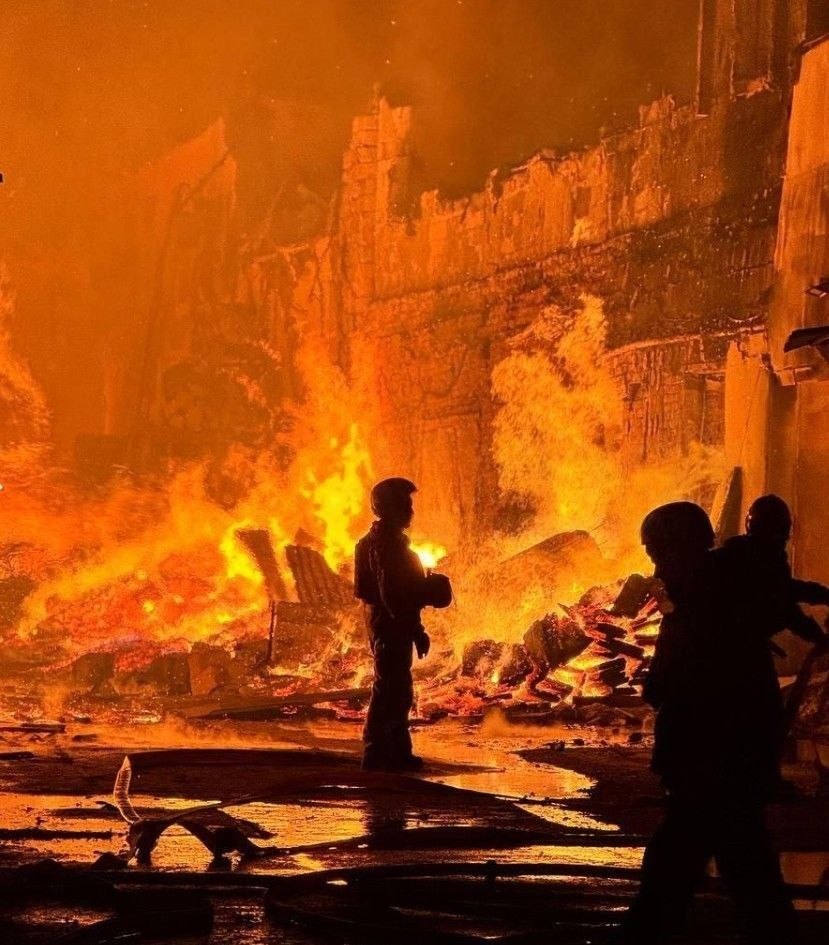
On the night of October 28, Russian forces carried out a combined strike against targets on Ukrainian territory. According to the Ukrainian Air Force, the attack employed an Iskander-M/S-400 ballistic missile and 88 strike UAVs. The main emphasis was placed on logistics and energy infrastructure in Kharkiv, Dnipropetrovsk, Chernihiv, Volyn, and other Regions. In parallel, Ukrainian forces conducted a series of drone and cruise missile attacks against industrial targets on Russian territory, including the largest metallurgical combine and a chemical plant.
Strikes on Ukrainian Territory
Kharkiv Region
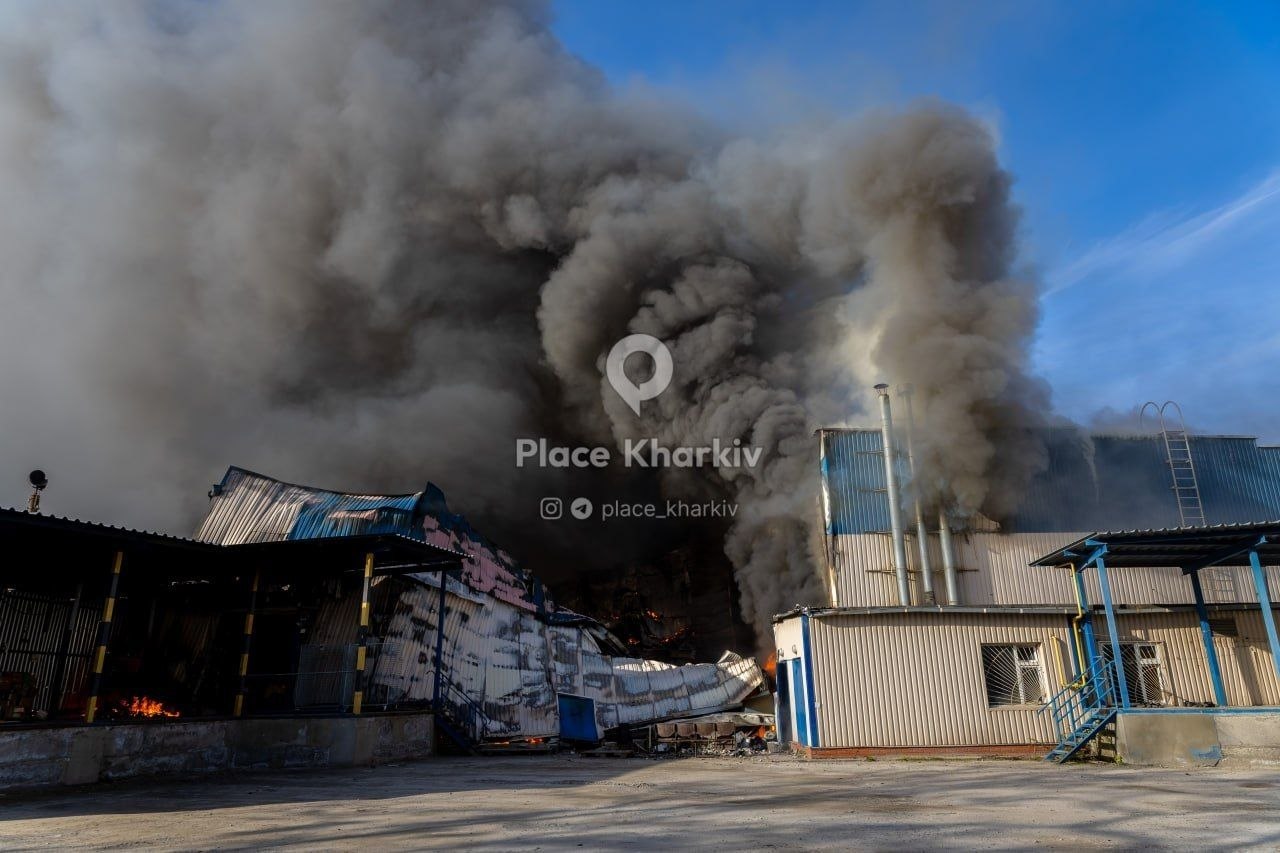
Logistics center in Kharkiv. According to a statement by the Russian Ministry of Defense, the site was used to store military and dual-use cargo intended to supply Ukrainian troops.
Pyatykhatky railway station, Kamianske district. Two consecutive Geran-4 UAV strikes during the day. The first strike set a rail trolley on fire, destroyed the driver’s cab, and damaged the overhead contact line and a grain car in a freight train; the second strike set an electric locomotive on fire.
Energy infrastructure in Chernihiv. According to Ukrainian sources, about 210,000 subscribers were left without electricity, and roughly 90 percent of the city was de-energized. The specific target has not been identified.
Volyn Region
PS-330 Lutsk-Northern substation, Lutsk. According to a statement by the Russian Ministry of Defense, the facility supplied power to military-industrial enterprises producing UAVs and components.
PS-330 substation, Kovel. A similar target; power outages were recorded in Kovel after the strike.
Bulk carrier underway toward the port of Chornomorsk. According to the Russian Ministry of Defense, the vessel was delivering cargo to supply the Ukrainian Armed Forces.
Reports also indicated strikes on targets in Zhytomyr, Vinnytsia, Khmelnytskyi, Kherson, Kyiv, Cherkasy, Sumy, and Zaporizhzhia Regions. A blackout was recorded in central Kyiv, with electricity absent in parts of the central districts.
According to a statement by the Russian Ministry of Defense, 531 Ukrainian UAVs were shot down overnight over Russian territory across 13 federal subjects.
Lipetsk Region
Novolipetsk Metallurgical Combine (NLMK), Lipetsk. The largest metallurgical enterprise in Russia, with a capacity of about 17 million metric tons of steel per year. According to Ukrainian sources, it was attacked with FP-5 cruise missiles; a fire was reported in the area of the combine. The governor of Lipetsk Region confirmed that UAV debris had fallen and vegetation had caught fire, while denying a “major fire at an industrial enterprise.” A total of 45 UAVs were shot down over the Region.
Tula Region
Azot chemical plant, Novomoskovsk. According to Ukrainian sources, the plant was attacked by UAVs, with the AM-70 ammonia production unit reportedly hit. Russian authorities confirmed the attack on the chemical plant and damage to residential buildings, without providing details about production capacity.
Building housing servers for the regional healthcare system, Kursk. Damaged as a result of a UAV attack; disruptions to certain medical services are possible. Over the day, 168 UAVs were shot down over the Region, and three people were injured.
For the week of October 19–25, according to Russian data, attacks on civilian targets killed 50 civilians and injured 263.
On October 28, two opposing directions are evident: Russian strikes are concentrating on Ukrainian railway logistics, energy, and warehouse infrastructure, while Ukrainian drones are attacking large industrial sites deep inside Russia, including metallurgy in Lipetsk and chemical production in Novomoskovsk. The strikes on the substations in Lutsk and Kovel are of particular significance, as they point to an attempt to weaken the power supply to western Ukraine’s logistics and production capacity.
Once our eyes adjusted to the aggressive glare of the freshly painted white walls around the yard, we began to make out figures, dozens of them dressed in navy blue, clinging to the inner walls of this surreal space.
It was a scorching June day in western Ukraine, and we
Europe has already learned to better recognize hybrid threats, which is definitely a good thing, but recognition alone is not enough and doesn't serve as sufficient deterrence.
European officials have grown accustomed to scenarios where a cyberattack disrupts public services and critical infrastructure, drones appear over sensitive sites,
Russian bombs and artillery have devastated the city of Bilozerske in Ukraine's Donetsk region. With the city in ruins and colder temperatures approaching, remaining residents are bracing for a rough winter.
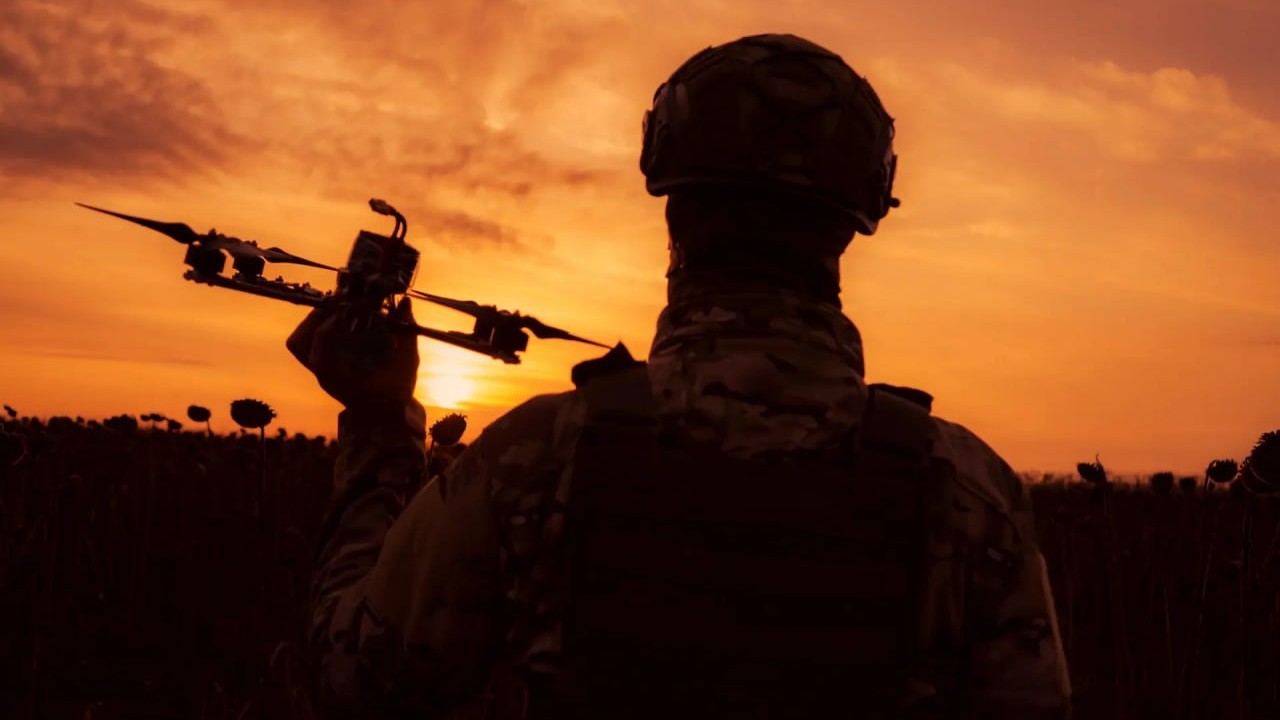
Russia has tested an autonomous navigation system designed to guide drones when satellite navigation signals and external communications are unavailable or jammed.
The system, called SOVA, or Comparative Optical Visual Authentication, was developed by VA Technologies and uses computer vision to compare images captured by an onboard camera with satellite maps, allowing a drone to determine its position in real time, the Center for Unmanned Systems and Technologies told TASS on October 28.
“The developer of the solution, VA Technologies, is a finalist in the third cohort of the CUST Special-and Dual-Use Projects Accelerator. The SOVA system is based on computer vision technology. During flight, the system compares images from an onboard camera with a satellite map of the terrain and determines the UAV’s [unmanned aerial vehicle] location in real time.
During testing, a drone equipped with the SOVA system completed a route that had no clear landmarks and included substantial differences between the satellite map and the actual terrain,” the company said.
The test drone followed a star-shaped route, visiting four waypoints before returning to its launch site. The test used satellite imagery from the spring of 2025 rather than an updated map, deliberately introducing discrepancies between the stored imagery and the actual terrain.
One section of the route highlighted the system’s ability to correct navigation errors when the landscape did not match the stored images.
“The second waypoint on the satellite map was located over dark plowed land, while the actual terrain featured a light-colored field covered with stubble. With no landmarks to guide it, the UAV deviated from its course. However, upon reaching a tree line, the SOVA system promptly corrected its course and successfully reached the third waypoint,” the company said.
The center said the developer estimates that SOVA could substantially improve mission reliability when satellite navigation is unavailable.
“According to the developer, in the absence of GPS, SOVA is capable of increasing the UAV mission reliability rate to 99%,” the CUST noted.
The tests come as Russia has begun incorporating similar optical-navigation technology into its one-way attack drones used against Ukraine.
Ukraine’s Defense Intelligence Directorate said earlier in the month that Russia had equipped its upgraded Geran-4 jet-powered attack drones with a system called Susanin, which uses an optical sensor to compare images of the terrain with reference images stored in the drone’s computer. A similar system was identified on the K5 variant of the Geran-5.
Ukrainian drone analyst Serhii Beskrestnov has also told Business Insider that comparable systems were already being used on smaller Molniya, V2U and Lancet drones.
The rapid development and deployment of such systems reflects a broader Russian effort to make drones more resilient to electronic warfare, which has become a central feature of the conflict in Ukraine.
 Login