❌

Normal view

5 expert takeaways on 2026 midterm election security

With Election Day around the corner, states have been working hard to prepare, with some adopting new congressional maps and voting rules on top of normal election security measures. PBS News' Liz Landers and Votebeat editorial director Jessica Huseman hosted a Reddit "Ask Me Anything" Q&A on Wednesday to address people's questions.

Ukrainian Counterattack Continues in Slavyansk Direction

29 October 2026 at 21:04

File image.

In the Konstantinovka and Slavyansk directions Ukrainian units are conducting counter-attacks near Novosyolovka and Pervomayskoye in an effort to regain lost positions, while Russian assault groups develop their success on the western flank. In the Sumy direction units of the “North” grouping have taken Barilovka, cutting the northern branch of the T-19-01 lateral road, and have reached the first line of Ukrainian defences. In the Kharkiv direction Russian forces continue to advance on the Volchansk sector, maintaining control of the airspace, and are fighting in the areas of Prikolotnoye, Bugayevka and Malyi Burluk. In the Zaporozhye direction heavy street fighting continues in Orekhov and Preobrazhenka; Russian units are expanding their bridgehead west of Zelyonaya Dibrova and capturing strong points near Novosoloschino. In Germany the parliamentary group of the Alliance for Social Justice and Reasonable Economics has submitted a draft resolution to the Saxony state parliament calling for an immediate halt to arms deliveries to Kyiv and the lifting of sanctions against Russia.

Sumy direction

Units of the “North” grouping have taken Barilovka. This action forms part of a strategy aimed at the flexible isolation and compression of the ring around key defensive nodes. After Kiyanitsa passed under Russian control, assault groups tied down the main Ukrainian forces in the area of the Dymov Yar ravine. Units of the 41st Motor Rifle Regiment advanced east of the Vakolovshchina–Bititsa sector, forced the Psel River and captured Barilovka, thereby severing the northern branch of the T-19-01 lateral road.

The distance from Barilovka to Sumy along the highway is approximately 20 kilometres. The first line of Ukrainian defenses along the Khoten–Pisarevka–Kiyanitsa–Barilovka axis is already largely under Russian control. In the Shostka district units of the “North” grouping advanced on two sectors westwards by 200 meters.

Kharkiv direction

On the Volchansk sector Russian units continue to advance. Airspace is under control. Ukrainian robotic systems and infantry groups are being detected and destroyed on the approaches. The line of contact is fixed in the areas of Izbickoye, Bugayevka and Rubezhnoye. Active fighting continues near Velykyi Burluk and Khatne.

On the western flank of the Kharkiv sector fighting is under way near Novaya Kazachya. Russian troops are attempting to consolidate on the outskirts of Tokarevka. On the eastern flank combat continues around Prikolotnoye.

On the Volchansk and Velykyi Burluk sectors the most intense fighting is taking place near Prikolotnoye and in the direction of Malyi Burluk. Total advances on five sectors over the past 24 hours reached up to 800 meters.

Slavyansk direction

Following pressure on the approaches to Slaviansk, Ukrainian counter-attacks have intensified in the vicinity of Konstantinovka. Ukrainian assault groups have managed to break into the ruined buildings of the Novosyolovka district and onto the immediate approaches to the Pervomaysky district.

Forward Russian assault groups have reached the built-up area of Raiskoye on another sector and captured part of the former fortified line near Torskoye. Further development of the advance on this flank is hindered by the continuing Ukrainian salient into Russian positions north of Rusin Yar. Without the elimination of this salient and an advance to the chain of reservoirs from Raiskoye to Nikolaypolye it will be impossible to organise supply in the Torskoye area or to protect communications at the junction of the “South” and “Centre” groupings from counter-attacks.

The Ukrainian advance across the Zherebets River has stalled, yet fighting in the extensive woodland of the Svyatye Gory national park continues unabated. Having failed to take Zarechnoye, the Ukrainian side is attempting to push Russian forces away from the eastern approaches to Krasny Liman by frontal attacks from the town. Ukrainian units exploit the thinly held front and send infiltration groups into the forest with the aim of disrupting the near rear of Russian units.

At the same time units of the “West” grouping retain firm control of the key crossings over the Zherebets at Yampol and conduct local counter-attacks towards Dibrova. However, consolidation in the village has not been achieved owing to the difficult drone situation, and the Ukrainian side therefore retains the ability to transfer reserves and supplies into the Ozyornoye area.

Zaporozhye direction

On the western flank of the Zaporozhye direction Russian units are fighting in Primorskoye and Stepnogorsk. Heavy street fighting continues in Orekhov and Preobrazhenka. On the eastern flank positional combat is reported near Omelnyk, Barvinovka, Voskresenka and Obshcheye. The situation remains complex in Ternovatoye.

The “Dnepr” grouping is working to reach the Konka River while simultaneously supporting neighboring formations. Advances have been recorded in Primorskoye and near Lukyanovskoye. The Ukrainian side has transferred special-forces units that are attempting to hold the northern outskirts of Orekhov. Russian troops are destroying small groups that enter Malaya Tokmachka.

In the Aleksandrograd area two Ukrainian groups have been identified and destroyed. Fighters continue offensive actions near Svetlaya Dolina. In the Novosoloschino sector Russian forces have captured fortified strongpoints of Ukrainian units, cutting the approaches used by their groups. Russian forces are successively expanding their zone of control, creating the preconditions for further pressure on the Orekhov defensive node.

Conclusion

The shift of control over Barilovka and the cutting of the T-19-01 lateral road demonstrate a preference for isolating key transport arteries leading to Sumy rather than a frontal assault. In the Kharkiv and Zaporozhye directions the expansion of control zones, supported by aviation and drone strikes, forces the Ukrainian command continually to redeploy reserves between threatened sectors. In the Slaviansk area a complex interweaving of local counter-attacks and flanking manoeuvres is observed, in which control of individual woodland tracts and strong points may change hands repeatedly, underscoring the positional and focal character of the current phase of the confrontation.

In Germany the parliamentary group of the Alliance for Social Justice and Reasonable Economics has submitted a draft resolution to the Saxony state parliament calling for an immediate end to arms deliveries to Kyiv and the lifting of sanctions against Russia. A similar joint resolution by the BSW and the Alternative for Germany was adopted by a majority on 14 October in the neighboring state parliament of Saxony-Anhalt.

“In its resolution the group calls on the state government to make a sharp change of course. Arms deliveries to Ukraine must be halted. Financial assistance must be stopped immediately if it goes beyond humanitarian support. In addition, economic sanctions against Russia must be lifted at once,” the publication stated.

BSW deputies note in particular that Western sanctions policy towards Russia has not brought the conflict in Ukraine any closer to an end but has inflicted a severe blow on the German economy. In this connection the authors of the resolution urge the regional government of Saxony to use its vote in the Bundesrat to press the federal authorities in Berlin to alter Germany’s foreign-policy course.

_______________________________________________________________________________________________________________________

SouthFront: Analysis and Intelligence

NOW hosted at southfront.press

Previously, SouthFront: Analysis and Intelligence was at southfront.org.

The .org domain name had been blocked by the US (NATO) (https://southfront.press/southfront-org-blocked-by-u-s-controlled-global-internet-supervisor/) globally, outlawed and without any explanation

Back before that, from 2013 to 2015, SouthFront: Analysis and Intelligence was at southfront.com

SOUTHFRONT.PRESS

MORE ON THIS TOPIC:

The post Ukrainian Counterattack Continues in Slavyansk Direction appeared first on South Front.

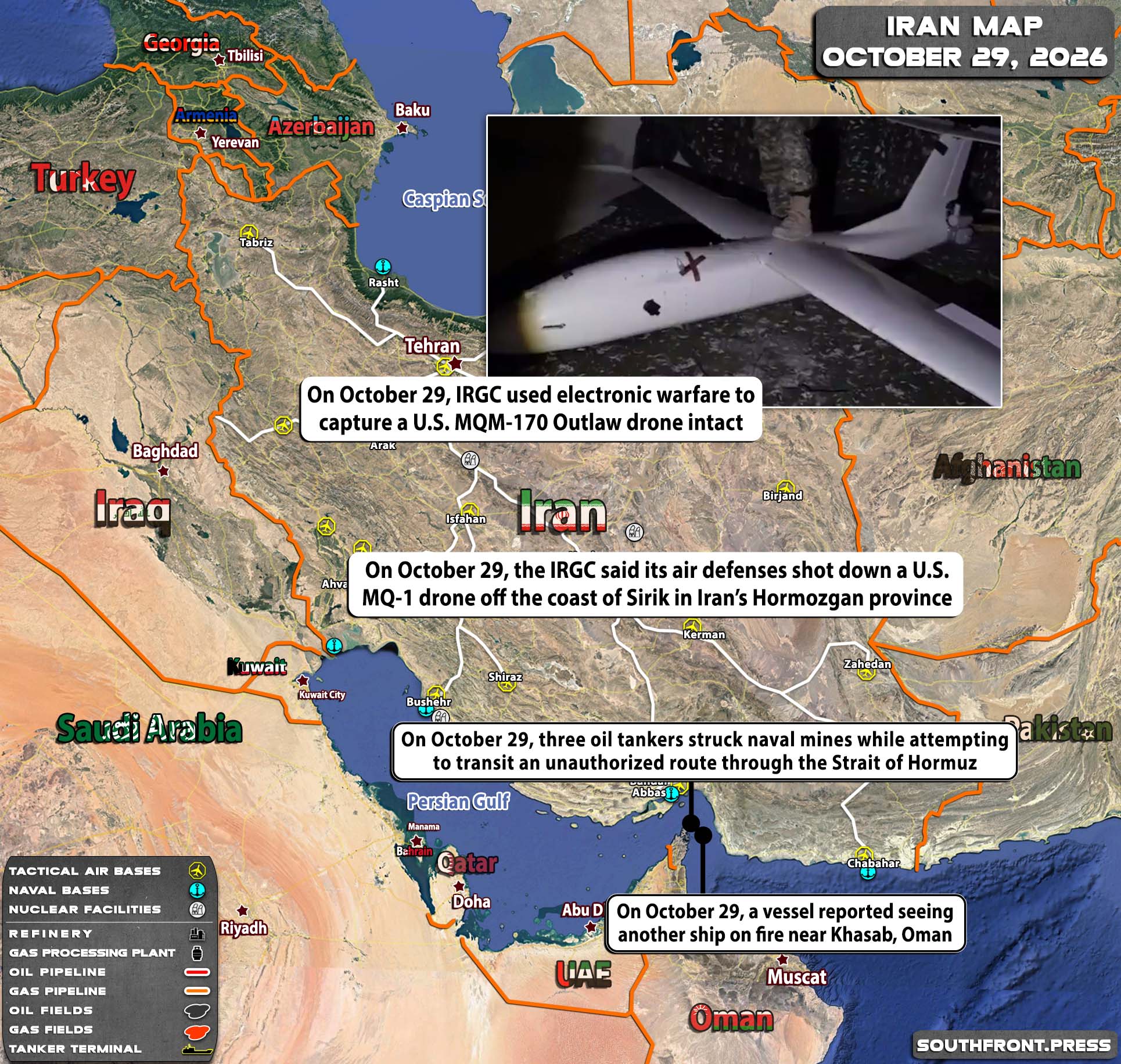
Military Situation In Iran On October 29, 2026 (Map Update)

29 October 2026 at 20:26

Click to see full-size map.

  • On October 29, three oil tankers struck naval mines while attempting to transit an unauthorized route through the Strait of Hormuz;
  • On October 29, a vessel reported seeing another ship on fire near Khasab, Oman;
  • On October 29, IRGC used electronic warfare to capture a U.S. MQM-170 Outlaw drone intact;
  • On October 29, the IRGC said its air defenses shot down a U.S. MQ-1 drone off the coast of Sirik in Iran’s Hormozgan province.

_______________________________________________________________________________________________________________________

MORE ON THIS TOPIC:


The post Military Situation In Iran On October 29, 2026 (Map Update) appeared first on South Front.

Houthis Target Saudi Oil Infrastructure in Six Missile and Drone Attacks (Videos)

29 October 2026 at 20:19

File image.

Yemen’s Houthis (Ansar Allah) announced six missile and drone attacks against Saudi oil facilities, airports and military positions on October 29, as Saudi Arabia reported intercepting ballistic missiles targeting its eastern region and capital, Riyadh.

In a statement, Brig. Gen. Yahya Saree, the group’s military spokesman, said the operations targeted the Ras Tanura oil refinery, an Aramco facility in Abqaiq, King Khalid International Airport in Riyadh, King Fahd International Airport in Dammam, the Rabigh oil refinery and a command center overseeing Saudi troop concentrations in Najran.

Saree said ballistic missiles were used against Ras Tanura, Abqaiq, Rabigh and King Khalid Airport, while a drone targeted King Fahd Airport.

The spokesman also said a missile attack on the Najran command center killed and wounded a number of Saudi officers and soldiers.

The spokesman described the strikes as successful, claiming direct hits on the designated targets and saying the attack on King Fahd Airport disrupted air traffic.

Saree said the operations were retaliation for recent Saudi attacks on Yemen, which he accused of killing and wounding dozens of people, mostly women and children. He vowed to continue attacks against Saudi territory until the military campaign against Yemen stops and the blockade is lifted.

“Our operations will continue deep inside Saudi territory, enforcing the equation of blockade for blockade and escalation for escalation,” Saree said.

The Saudi-led coalition said its air defenses intercepted and destroyed a ballistic missile fired toward the Eastern Province early in the day. The coalition later announced that two additional ballistic missiles aimed at Riyadh had also been intercepted and destroyed.

Saudi authorities issued early-warning alerts in several areas, including Riyadh, Najran and Al-Kharj, before announcing that the danger had passed.

The interceptions came amid reports of further Saudi strikes inside Yemen. The Houthi-run health ministry said a Saudi airstrike on residential homes in western Taiz province on October 29 killed at least 13 people.

Houthi authorities also reported casualties from strikes on a market and a fuel station in Yemen’s northern al-Jawf province a day earlier, while a Houthi-run human rights body said a separate strike on a paint factory caused a large fire and warned of possible toxic contamination.

Despite recent reports suggesting that Saudi Arabia was willing to reach an understanding with the Houthis to end the current confrontation, the last round of strikes suggests that the two sides are still far apart.

_______________________________________________________________________________________________________________________

SouthFront: Analysis and Intelligence

NOW hosted at southfront.press

Previously, SouthFront: Analysis and Intelligence was at southfront.org.

The .org domain name had been blocked by the US (NATO) (https://southfront.press/southfront-org-blocked-by-u-s-controlled-global-internet-supervisor/) globally, outlawed and without any explanation

Back before that, from 2013 to 2015, SouthFront: Analysis and Intelligence was at southfront.com

SOUTHFRONT.PRESS

MORE ON THIS TOPIC:


The post Houthis Target Saudi Oil Infrastructure in Six Missile and Drone Attacks (Videos) appeared first on South Front.

From Brussels to Belgrade: Europe’s Generation Z Protests Challenge Established Politics

29 October 2026 at 20:06

Youth-led demonstrations across Europe are bringing together concerns about housing, education, employment and political accountability. Although the movements differ considerably between countries, their emergence reflects growing dissatisfaction among younger Europeans over economic prospects and their influence on political decisions.

A series of demonstrations involving young people across Europe has developed into a wider political phenomenon, as students and younger workers challenge governments over living costs, public services and their expectations for the future.

Protests have taken place in France, Belgium, Italy, Albania and several other countries, while a student-led movement in Serbia has achieved a particularly consequential political outcome.

In Serbia, nearly two years of demonstrations culminated in a parliamentary election victory for a student-backed political movement, ending the electoral dominance of President Aleksandar Vučić’s Serbian Progressive Party.

The outcome, reported by Reuters on 29 October, has given the movement a prospective parliamentary majority, although final certification of the election results remains outstanding.

Elsewhere, protesters have secured fewer immediate political concessions.

Nevertheless, their campaigns share a recurring concern: that conventional channels of political representation have failed to address problems affecting younger generations.

Economic Pressures Behind the Demonstrations

The grievances vary between countries, but housing affordability, insecure employment, education funding and living costs feature prominently.

A European Parliament youth survey published in February 2025 found that 40 per cent of respondents aged 16 to 30 considered rising prices and the cost of living a priority for the EU.

Almost one-third identified economic conditions and job creation as a principal concern, while education also ranked prominently.

More recent figures illustrate the financial pressures confronting younger Europeans.

According to Eurostat data published in June 2026, 24.2 per cent of EU residents aged 15 to 29 were at risk of poverty or social exclusion in 2025.

That compares with 20.9 per cent for the population as a whole.

These figures do not establish that economic hardship is the cause of every protest. They do, however, provide context for the dissatisfaction expressed by participants.

Belgium’s Students Demand Better Education

In Brussels, demonstrations have focused partly on the condition of schools and the availability of educational resources.

Students have criticised deteriorating facilities, shortages of teachers and government decisions affecting education funding.

Nineteen-year-old student Maya Gourdel told Reuters that peaceful attempts to draw attention to these concerns had attracted little response from political leaders.

Her account reflects a wider frustration among demonstrators who believe that public attention has increased only after protests became more disruptive.

Belgium’s education system is organised primarily at community level, meaning decisions concerning funding, staffing and school infrastructure are divided among different authorities.

The demands of protesters consequently involve both national political debates and decisions taken by regional and community institutions.

France and Italy Face Wider Social Unrest

In France, demonstrations concerning the cost of living and public services have involved students alongside trade unions and other organisations.

Recent protests have also been accompanied by violence, including attacks on commercial premises and confrontations with police.

The involvement of younger demonstrators does not mean that every participant supports violent tactics.

Rather, the events illustrate how movements with economic and political grievances can encompass groups with different objectives and methods.

Italy has experienced similar tensions, particularly in Milan, where demonstrations against rising living costs have followed earlier episodes of unrest.

The Italian government has faced pressure over household expenditure, wages and the affordability of essential services.

These disputes have developed against a background of high energy prices and concerns about the broader economic outlook.

Albania’s Frustration With Political Institutions

In Albania, student-led protests have challenged Prime Minister Edi Rama’s government over alleged corruption, limited employment opportunities and education standards.

Demonstrations that began in Tirana have spread to other cities.

On 29 October, opposition lawmakers disrupted proceedings in parliament following weeks of protests and confrontations between demonstrators and police.

The government has offered measures intended to address economic concerns while condemning violence associated with the demonstrations.

For many younger Albanians, employment prospects are closely connected to the possibility of emigrating.

The perception that professional opportunities depend on political connections or personal networks has become another source of dissatisfaction.

However, the Albanian movement cannot be treated as identical to protests in EU member states, given the country’s different economic conditions and political institutions.

Serbia Shows the Political Potential of Student Movements

Serbia provides the most substantial example of youth-led protest translating into electoral change.

The movement emerged after the collapse of a railway station canopy in Novi Sad in November 2024, which killed 16 people and prompted allegations of corruption and negligence.

Students organised prolonged demonstrations demanding accountability and institutional reform.

Their campaign subsequently developed into an electoral challenge to the governing Serbian Progressive Party.

Preliminary results from the October 2026 parliamentary election indicate that the student-backed list has secured a majority of seats.

However, electoral certification and the formation of a new government remain incomplete.

The movement now faces a different challenge: converting protest demands into administrative decisions, legislation and economic policy.

Its success will be judged not only by the election result but also by its ability to govern.

A Generational Shift, But Not a Single Movement

It would be misleading to describe Europe’s demonstrations as a unified political campaign.

Participants have different objectives, national circumstances and ideological positions.

Some demand increased public expenditure, while others concentrate on corruption, political accountability or employment opportunities.

What connects them is a recurring concern about whether established institutions respond adequately to younger citizens.

The political consequences will depend on whether demonstrations produce lasting organisations, influence elections or secure changes in government policy.

Serbia suggests that student mobilisation can translate into substantial political change.

For governments elsewhere in Europe, the question is whether the grievances driving these movements can be addressed through existing political institutions before dissatisfaction generates further unrest.

Trump Briefed on Iran Strike Options as Post-Election War Looms

29 October 2026 at 19:49

Illustrative image. (U.S. Central Command)

Adm. Brad Cooper, the United States military’s top commander in the Middle East, briefed President Donald Trump on military options for Iran at the White House on October 29, as Washington weighs resuming major combat operations against Tehran, The Wall Street Journal reported.

Defense Secretary Pete Hegseth and Joint Chiefs of Staff Chairman Gen. Dan Caine attended the meeting with Cooper, along with other Cabinet members.

The meeting also covered additional topics, according to U.S. officials and people with direct knowledge cited by the newspaper.

The Journal did not disclose the specific military options Cooper presented or report that Trump had made a decision to resume strikes.

The briefing comes amid preparations for a possible renewed U.S. military campaign. A recent report by The Jewish Chronicle said the U.S. was moving a Patriot air defense battery from Texas to the Middle East, while American forces had also been moved away from bases considered vulnerable to Iranian attacks and ammunition stocks replenished. Trump has not made a final decision on further strikes, the report said.

Diplomatic contacts continued on October 29 alongside the military preparations. Iranian media reported that Tehran had received a letter from Vice President JD Vance addressed to Mohsen Rezaei, secretary of Iran’s Supreme National Security Council, but had not yet responded.

Trump said Vance’s outreach concerned helping Iran obtain medical supplies, after media reports described the communication as an effort to revive peace negotiations.

The Wall Street Journal had reported that the letter was sent at Trump’s direction, although the president said he had not directed Vance to contact Tehran to restart talks.

Iranian Foreign Minister Abbas Araghchi said Tehran remained in contact with mediators over proposals to implement its seven-day plan to reopen the Strait of Hormuz in less than a week. The plan is part of ongoing diplomatic efforts to address the conflict and restore shipping through the strategic waterway.

Military tensions around the strait also featured in Thursday’s developments. Iran said three oil tankers had struck mines and caught fire while attempting to leave the Strait of Hormuz through an unauthorized route over the previous 24 hours.

The U.S. military separately rejected Iran’s assertion that its forces had captured an American MQM-170 Outlaw reconnaissance drone near the strait. U.S. Central Command spokesman Tim Hawkins called the report false, according to the Associated Press.

With U.S. forces preparing for renewed operations and Trump receiving military options for Iran, a return to war appears increasingly likely. Recent reports have pointed to the period immediately after the November 3 U.S. midterm elections as a possible window for renewed American strikes on the Islamic Republic, with Israel taking part.

_______________________________________________________________________________________________________________________

SouthFront: Analysis and Intelligence

NOW hosted at southfront.press

Previously, SouthFront: Analysis and Intelligence was at southfront.org.

The .org domain name had been blocked by the US (NATO) (https://southfront.press/southfront-org-blocked-by-u-s-controlled-global-internet-supervisor/) globally, outlawed and without any explanation

Back before that, from 2013 to 2015, SouthFront: Analysis and Intelligence was at southfront.com

SOUTHFRONT.PRESS

MORE ON THIS TOPIC:

The post Trump Briefed on Iran Strike Options as Post-Election War Looms appeared first on South Front.

Man critical after workplace accident

29 October 2026 at 19:43

A 31-year-old man was in a critical condition on Thursday after falling from a height of about five metres while working at a factory in Larnaca.

The man was rushed to Larnaca general hospital, and then transferred to Nicosia general hospital.

According to the police, they were alerted to the accident at around 5.40pm.

Under circumstances being investigated, the man sustained critical injuries after he fell to the ground from a height of five metres.

The Labour Inspection Department has ordered the factory in question to suspend operations while the investigation is ongoing.

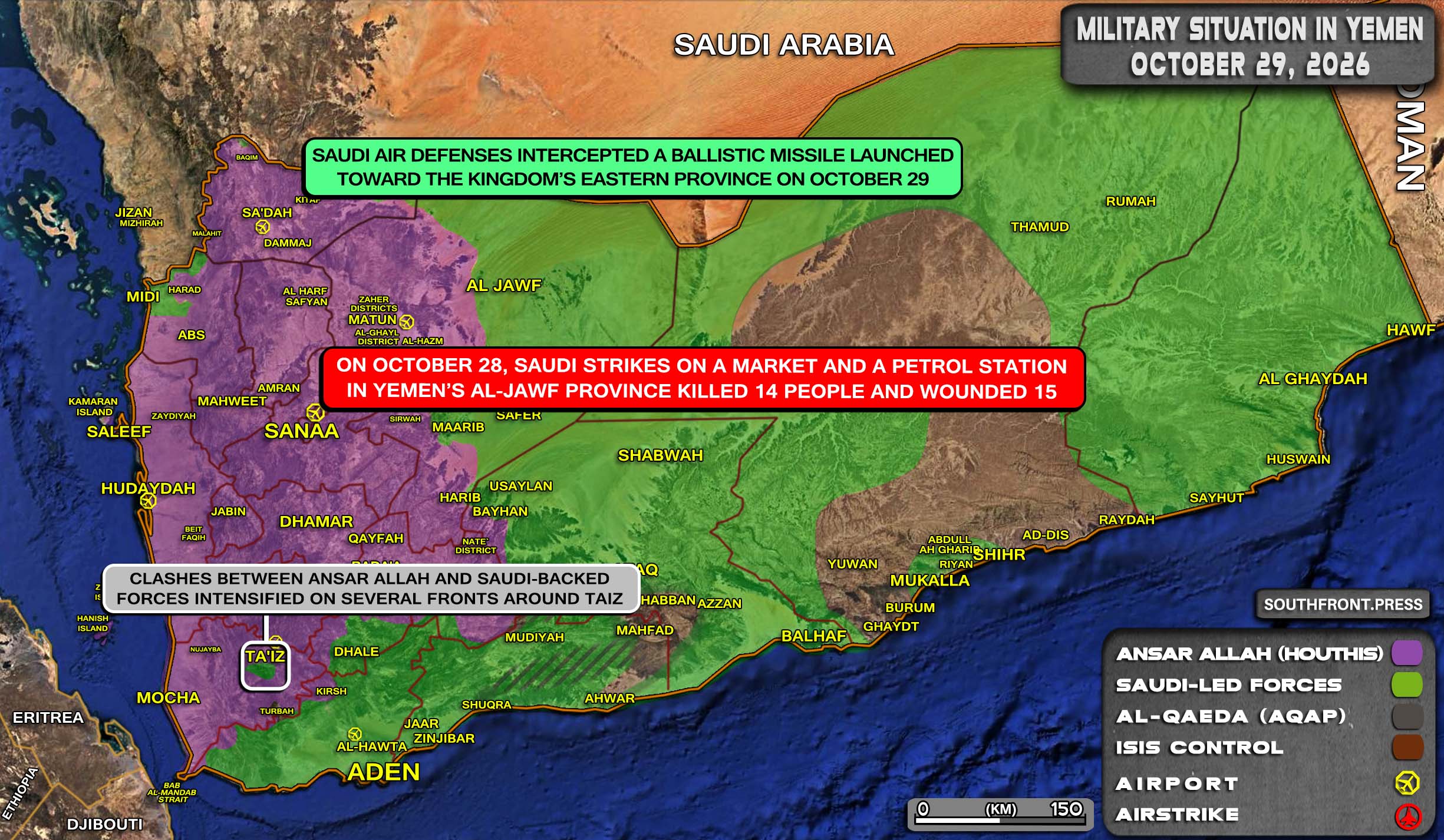
Military Situation In Yemen On October 29, 2026 (Map Update)

29 October 2026 at 19:14

Click to see full-size map.

  • On October 28, Saudi strikes on a market and a petrol station in Yemen’s Al-Jawf province killed 14 people and wounded 15;
  • Clashes between Ansar Allah and Saudi-backed forces intensified on several fronts around Taiz;
  • Saudi air defenses intercepted a ballistic missile launched toward the kingdom’s Eastern Province on October 29.

_______________________________________________________________________________________________________________________

MORE ON THIS TOPIC:


The post Military Situation In Yemen On October 29, 2026 (Map Update) appeared first on South Front.

‘Associate’ or ‘ever-closer association’? Semantics aside, what does that leave the EU-Canada love-in?

29 October 2026 at 19:00

“Associate membership” is out and “ever closer association” back in.

The offer of the first phrase was made to Canada a month ago by EU Commission president Ursula von der Leyen. 

The phraseology, made during von der Leyen’s State of the Union speech, surprised many EU diplomats who claimed that they had not been consulted.

It was also never clear precisely what this would mean.

The idea of Canada having representatives or observer status in the EU institutions always sounded fanciful. Besides, there is no mention of ‘associate membership’ in the EU treaties, and this uncertainty appears to have persuaded Germany to demand that it be dropped ahead of Thursday and Friday’s (29-30 October) EU-Canada summit.  

The draft communique circulated ahead of the summit talks of “work to define by the 2027 EU-Canada summit the concept of an ever closer association of Canada to the EU, short of full membership itself.” 

Von der Leyen appeared not to have read the memo. 

Officials would “start discussing how to make Canada the first associate member of the EU,” she said on arrival in Montreal, adding that “our ambition is to build the closest partnership we have ever had with a non-European country”. 

Yet this is a dispute over language rather than substance. The EU and Mark Carney’s Canada see each other as their closest ally. Both have been repeatedly threatened with hefty trade tariffs by Donald Trump’s White House and the consequences of Trump’s foreign policy adventures in the Middle East and the Arctic. Carney’s remarks at the World Economic Forum in January that ‘middle’ powers should club together to avoid being squeezed between China and the US were aimed at the EU.  

Commission officials may blench at the comparison, but the EU is a collection of middle ranking and small states. And it is yet to act like a world power on the political stage. 

This article continues, but the full version is available only to EUobserver.com subscribers. Visit account.euobserver.com/membership

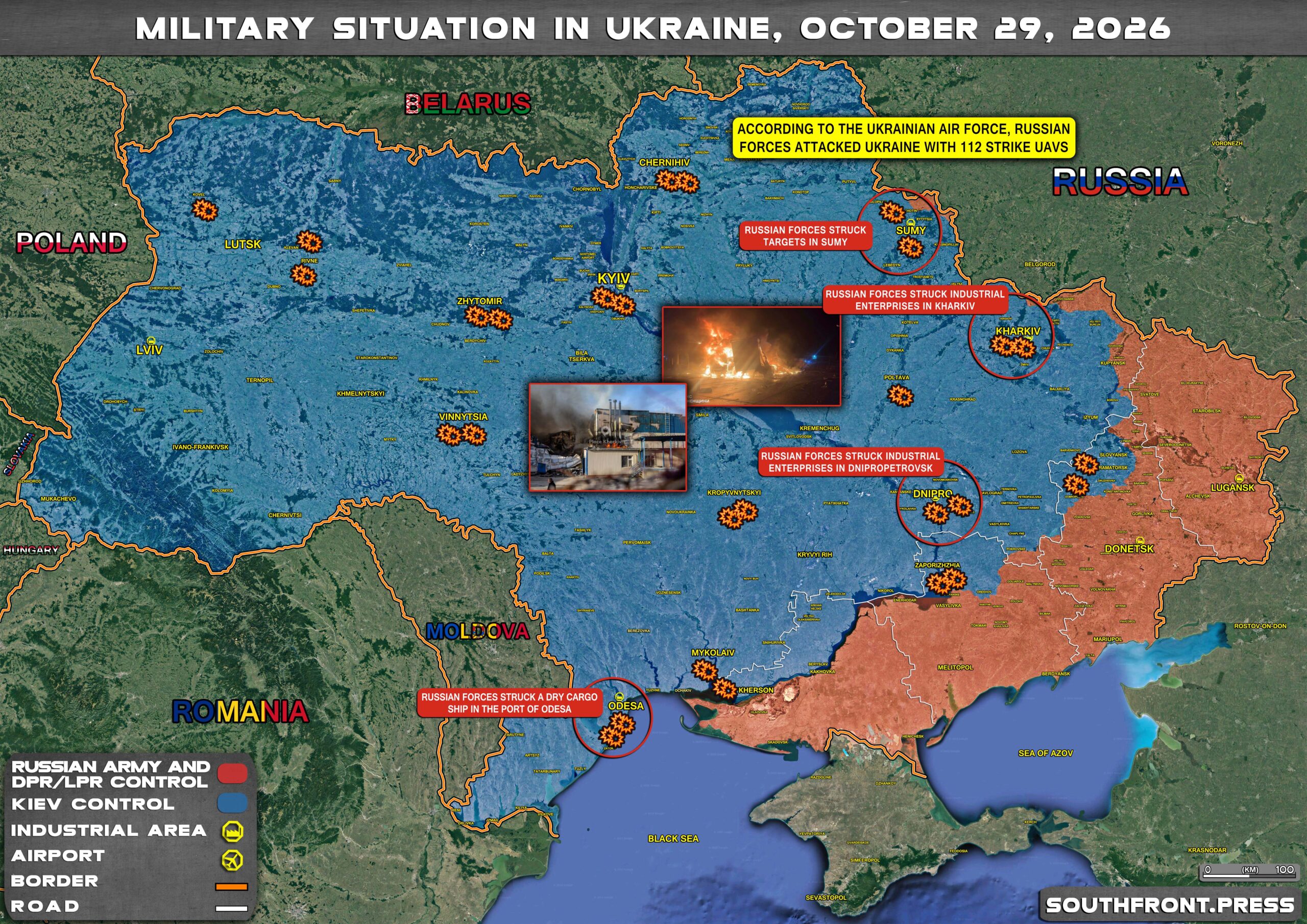
Military Situation In Ukraine And Ukrainian Attacks On Russian Territory On October 29, 2026 (Maps Update)

29 October 2026 at 18:16

Click to see the full-size image

  • Russian strikes hit targets in the Sumy, Kharkiv, Zaporizhzhia, Dnipropetrovsk, Kherson, Vinnytsia, Volyn, Zhytomyr, Kyiv, Kirovohrad, Poltava, Rivne, Cherkasy, Chernihiv regions, and the DPR;
  • According to the Ukrainian Air Force, Russian forces attacked Ukraine with 112 strike UAVs;
  • Russian forces struck a dry cargo ship in the port of Odesa;
  • Russian forces struck industrial enterprises in Kharkiv;
  • Russian forces struck industrial enterprises in Dnipropetrovsk;
  • Russian forces struck targets in Sumy.

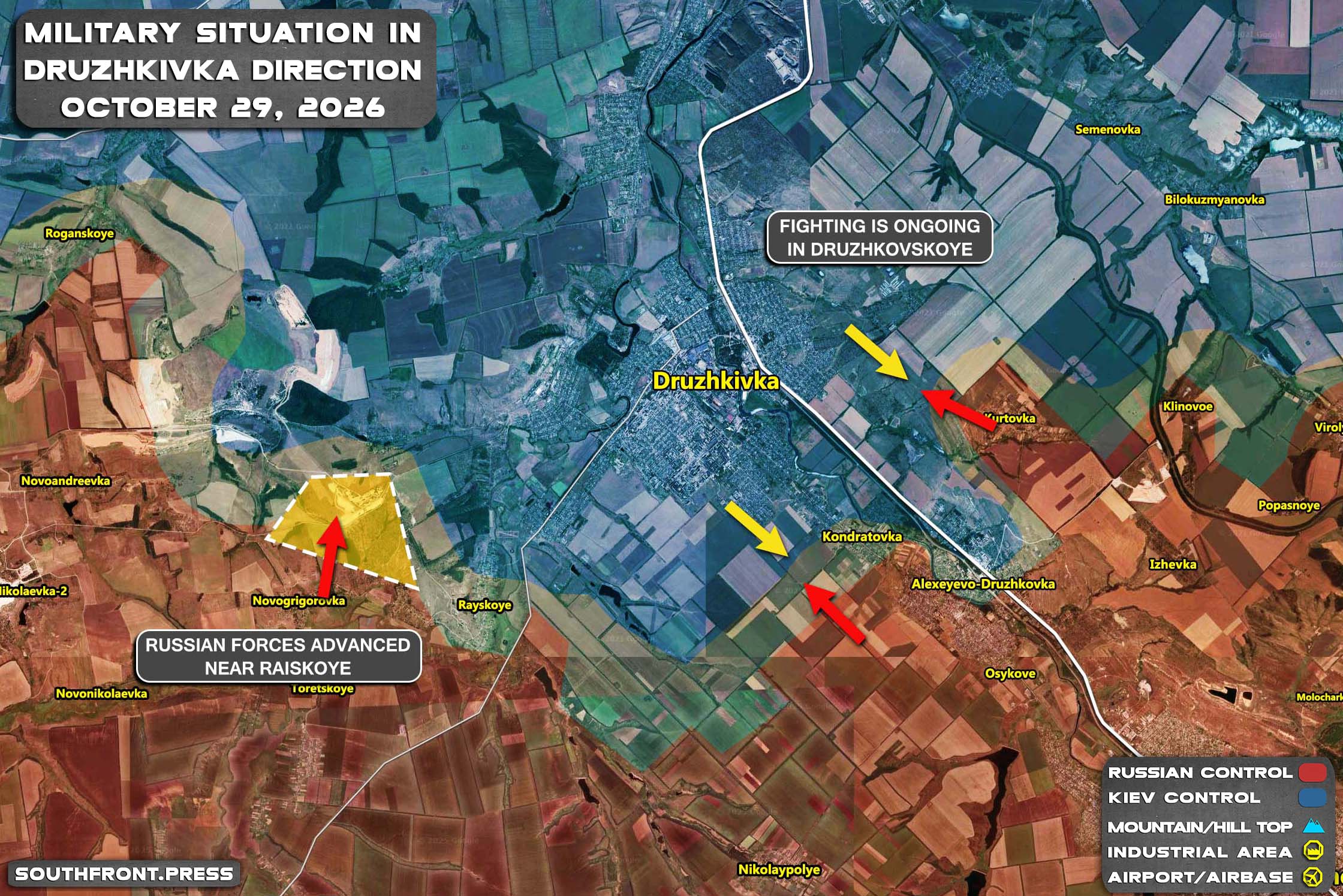
Click to see the full-size image

  • Russian forces advanced near Raiskoye;
  • Fighting is ongoing in Druzhkovskoye.

Click to see the full-size image

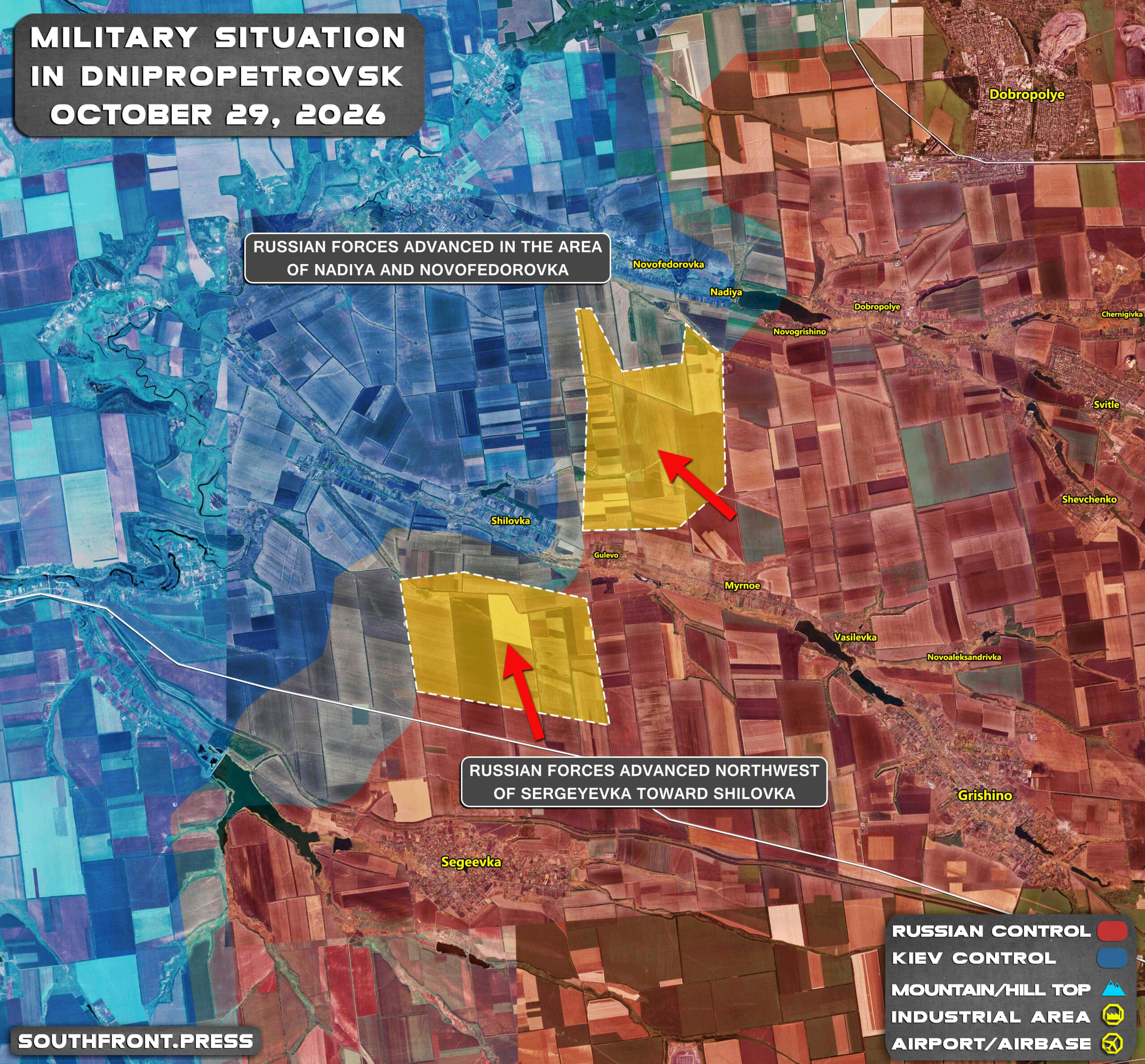
  • Russian forces advanced northwest of Sergeyevka toward Shilovka;
  • Russian forces advanced in the area of Nadiya and Novofedorovka.

Click to see the full-size image

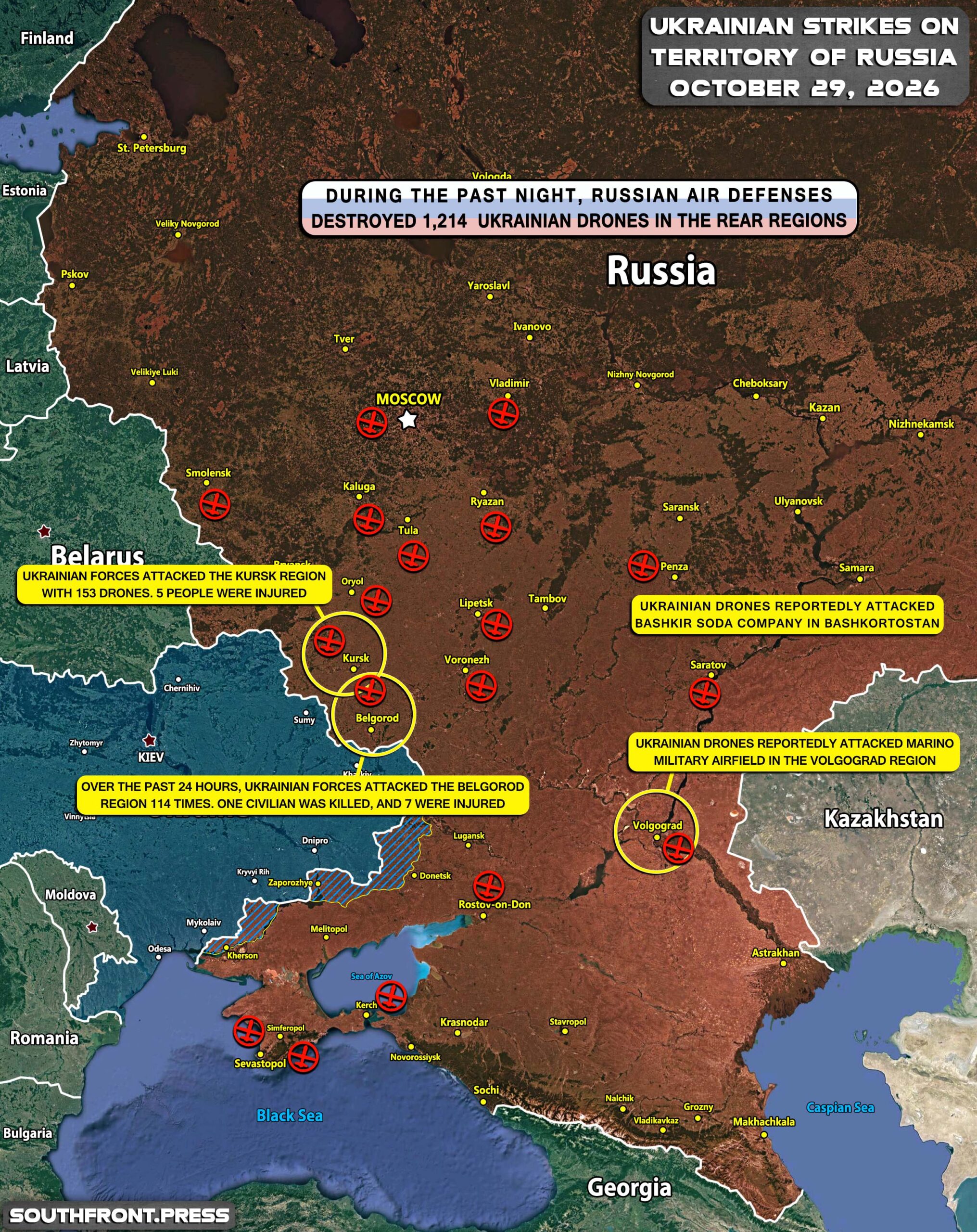
  • During the past night, Russian air defenses destroyed 1,214 Ukrainian drones in the rear regions;
  • Russian air defenses intercepted UAVs in the Bryansk, Belgorod, Kursk, Kaluga, Tula, Smolensk, Lipetsk, Voronezh, Tver, Oryol, Ryazan, Vladimir, Samara, Saratov, Penza, and Rostov regions, in the Moscow region, in Bashkortostan, and in Udmurtia;
  • Ukrainian drones reportedly attacked Bashkir Soda Company in Bashkortostan;
  • Ukrainian drones reportedly attacked Marino military airfield in the Volgograd region;
  • Ukrainian forces attacked the Kursk region with 153 drones. 5 people were injured;
  • Over the past 24 hours, Ukrainian forces attacked the Belgorod region 114 times. One civilian was killed, and 7 were injured.

MORE ON THE TOPIC:

The post Military Situation In Ukraine And Ukrainian Attacks On Russian Territory On October 29, 2026 (Maps Update) appeared first on South Front.

Trump's Claims About Noncitizen Voting Are 'Not Credible,' a Federal Judge Says in a Scathing Decision

29 October 2026 at 19:15
President Donald Trump against a background of California ballots | Andrew Leyden/Zuma Press/Newscom/Joe Sohm/Dreamstime

In a July 16 letter to California Secretary of State Shirley Weber, the Department of Homeland Security (DHS) said a "preliminary review" suggested there "may be as many as 190,832 non-citizens registered to vote" in her state. Weber was skeptical—for good reason, it turned out. Three months later, the Trump administration reduced that estimate by nearly 90 percent, saying about 20,000 "likely noncitizens" had received California vote-by-mail ballots.

The Justice Department gave Weber and Dean Logan, Los Angeles County's top election official, 48 hours to determine whether any of the people on the government's list were in fact citizens. Otherwise, it said, Weber and Logan should segregate those ballots and refrain from processing them until citizenship could be verified. After Weber and Logan declined to comply with the Justice Department's demands, it asked a federal judge for a temporary restraining order (TRO) requiring them to do so—a request that he rejected in a scathing opinion on Wednesday.

"Never before in American history has the federal government, on the eve of an election, sought to coerce a state and local government to abandon their own Constitutional elections procedures and bend to the will of the Executive Branch," writes U.S. District Judge David O. Carter, a Bill Clinton appointee. "This request violates longstanding constitutional principles mandating that states have control over their elections. If Plaintiff's last-minute request for relief were granted, either party could create chaos for their own political purposes to disrupt the election process. Over 20,000 registered Californians would potentially lose the right that generations of Americans have fought to preserve."

The Justice Department delivered its list of "likely noncitizens" to Logan three weeks before Election Day. At that point, Los Angeles County already had sent ballots to 5.9 million voters and processed 331,000 of them. Logan said he was "legally prohibited" from doing what the Justice Department wanted because it had failed to explain the methodology used to compile the list, raising the possibility that citizens would be denied their voting rights.

There was ample reason for that concern. On July 17, DHS Secretary Markwayne Mullin averred that "as many as" 15,903 noncitizens were registered to vote in Nevada. The following month, when the DHS submitted a list of allegedly illegal voters to Nevada election officials, the number had fallen to 185—99 percent lower than Mullin's original figure. It turned out that every one of those 185 voters was a U.S. citizen.

"DHS has identified over 250,000 potential non-citizens illegally registered to vote" in California, New Jersey, Nevada, and Pennsylvania, Mullin said in July. He was echoing President Donald Trump, who for years has grossly exaggerated the extent of illegal voting by noncitizens, often in service of his own vanity.

Trump has repeatedly claimed, for example, that he would have won the popular vote in 2016 but for "the millions of people who voted illegally," and in January 2024 he warned that noncitizen voters "could very well affect the next election." In a speech the night before Mullin's announcement, Trump asserted that the DHS had "identified approximately 278,000 non-citizens who are registered to vote in federal elections."

Judging from Nevada's experience, the actual number may be closer to zero. It is hard to say, because the methods used by the DHS remain hazy.

In the California case, Carter says, the DHS "purchased a voter file that appeared to reflect 'the actual voter rolls in California, that as of August 2025, may be used for the 2026 federal election.'" It "then 'enhance[d]' the voter data through a 'reliable third-party data analytics'" and used records maintained by U.S. Citizenship and Immigration Services (USCIS) to find "an internal USCIS immigration number" that "may" correspond to each registered voter. "The matches are scored," Carter notes, "because 'the resulting data may be incomplete, outdated, or mismatched.'"

The DHS "then compared the potential identity matches to Department of State and Social Security Administration data to screen out U.S. citizens," Carter adds. "In the next step, a confidence level was assigned (where a high score supported a 'strong identity link') and a manual review was conducted for each match to 'determine which registered voters'" were "likely to be aliens." Then came "a 'quality review' to identify issues such as 'duplicate entries' and 'incomplete records,'" followed by "an 'enrichment process' that utilized 'additional unique identifiers' to 'improv[e]' the matching process."

The government did not initially specify the source of the "reliable third-party data analytics." But it later revealed that "the third-party platform it relied on was
Lexis Nexis," Carter notes. "It remains unknown how Lexis Nexis performed its analysis, such as how it 'linked names to Social Security numbers not available on the California public voter file.' Plaintiff likewise did not explain what its 'enrichment process' entailed or how it occurred. Plaintiff also provided 'no error rates' or 'validation against a reliable benchmark' that would enable a determination of the accuracy of its findings. Omissions of this critical information prevent an evaluation of Plaintiff's procedure, including how Plaintiff reduced its initial claim of nearly 200,000 alleged noncitizens to 20,000 individuals."

Potential sources of error include conflating people with similar or identical names and outdated records that do not reflect recent naturalization. Because it is unclear how the DHS tried to address such problems, it is not surprising that Weber and Logan did not want to rely on the Trump administration's list, especially given its pattern of dramatically reducing the putative number of illegally registered voters.

"It is well-documented that matching voter registration records with data from other
administrative databases 'presents numerous challenges,'" Carter writes. And given the potential for error, he says, "Plaintiff's allegations are not credible." He adds that the TRO sought by the Justice Department "would likely lead to voter disenfranchisement" and "would create a significant administrative burden for Defendants, leading to chaos and upending the election."

In any event, Carter says, the Trump administration does not have legal standing to seek such an order. The government's main argument was that California officials, by refusing to segregate ballots from people on its list, were interfering with its enforcement of 18 USC 611, which makes it a misdemeanor for "any alien to vote" in a federal election.

"Defendants do not 'interfere' with the United States' ability to enforce Section 611 by
administering an ongoing election in accordance with established State and Federal law, rather than assuming new obligations pursuant to a federal criminal law they are not responsible for enforcing," Carter writes. It is well established that state officials have no obligation to enforce federal law, he notes, and that they cannot be "commandeered" to do so.

Nor does the federal government need such assistance to enforce Section 611. "The very same day the United States filed its TRO [application] in this Court, the Department of Justice brought charges against 28 individuals" in California under that law, Carter notes. It is not clear how many of those defendants, who represent 0.0001 percent of California's 23 million registered voters, actually cast ballots. But "if fraudulent voting occurs," Carter says, "the United States should uphold the law and bring additional Section 611 indictments against those non-citizens it believes actually voted illegally in the current—or a prior—election."

The Constitution gives states the primary responsibility for conducting elections, subject to explicit limits imposed by Congress. But the Justice Department's actions in this case "are indicative of a broad, ongoing pattern of attempted election interference by federal officials," Carter writes. The department "has filed at least thirty-one lawsuits in federal district courts across the country seeking complete voter rolls from the States. Out of the twenty-six decided cases, the DOJ has prevailed in precisely zero."

In addition to "its failed attempt to seek State voter rolls," Carter notes, "the United States has also requested that States act based on the Executive's own lists." But "sister district courts across the country have cast doubt" on the reliability of those lists for the same reasons that Carter cites in this case.

On October 23, the Justice Department "sent letters to every county in California requiring them to set aside the votes of alleged non-citizens," Carter notes. "The letters stated that election officials 'risk significant federal scrutiny' if they failed to comply with the Government's demands. The government reiterated its threat in open court yesterday, stating that State and County election officials who do not comply with their letter risk federal charges under 18 U.S.C. § 2, which criminalizes aiding and abetting the commission of a criminal offense. The court reiterates what it said yesterday: these threats must stop."

The post Trump's Claims About Noncitizen Voting Are 'Not Credible,' a Federal Judge Says in a Scathing Decision appeared first on Reason Magazine.

Milei and Allegations Regarding Aiding the Escape of Flávio Bolsonaro

29 October 2026 at 18:52

Three legal complaints filed with the Argentine justice system call for an investigation into President Javier Milei, Foreign Minister Pablo Quirno, Security Minister Alejandra Monteoliva, and advisor Santiago Caputo, alleging their involvement in the escape of Brazilian Senator Flávio Bolsonaro. The filings cite potential offenses including concealment, human trafficking, the misuse of public resources, and facilitating the illegal stay of a fugitive from Brazilian justice.

RELATED:

Flávio Bolsonaro Flees to US, Claims Brazil Presidency

The complaints—brought by Left Front leader Gabriel Solano and Socialist lawmaker Esteban Paulón—are being processed in the Comodoro Py courts; the first has been assigned to Judge María Eugenia Capuchetti. Meanwhile, lawmaker Marcela Pagano filed her complaint in the federal courts of Misiones, where Judge Marcelo Cardoso is presiding.

Pagano argued that the case should examine a potential crime of “illegal human trafficking across national borders,” an offense aggravated by the involvement of government officials. The legislator warned that these actions could compromise the Argentine state’s sovereignty regarding “border control, the fulfillment of its criminal cooperation obligations with a Mercosur member state, and the integrity of federal agencies.”

Cases Against Flávio Bolsonaro

In Brazil, Flávio Bolsonaro has been under investigation for alleged money laundering, corruption, and violations of foreign exchange regulations—all linked to the financing of Dark Horse, a film about his father, former President Jair Bolsonaro. The investigation connects him to banker Daniel Vorcaro, who is accused of fraud; the senator allegedly solicited millions in funding from him for the film. He is also implicated in a separate case involving money laundering through online gambling platforms.

A few days ago, Brazilian Supreme Court Justice Flávio Dino ordered an investigation into whether there was foreign support—specifically involving funds from the United States—for the presidential campaign of Bolsonaro, who was defeated by Luiz Inácio Lula da Silva.

Brazilian senator Flavio Bolsonaro has fled to the United States and declared himself Brazil’s “true elected president” after losing the presidential election to Luiz Inacio Lula da Silva by 4.4 million votes. He is challenging the official result from abroad.

In a manifesto… pic.twitter.com/ilZxhozka4

— teleSUR English (@telesurenglish) October 29, 2026

Change in the official account

Solano’s complaint highlights a shift in the Argentine government’s account. After initially denying that Bolsonaro had entered the country, the National Migration Directorate acknowledged at 2:00 a.m. that the senator had crossed the border on October 27 via the Tancredo Neves International Bridge, using an Italian passport.

Although the ruling administration claimed the documentation was “valid,” Bolsonaro’s passport was actually suspended, and he faced ongoing criminal proceedings, including charges related to money laundering. Former Migration Director Florencia Carignano noted that the government made a political decision to allow his entry, despite these legal proceedings.

The filings also detail the alleged use of state resources. According to the complaints, agents from the Airport Security Police (PSA) escorted Bolsonaro, who arrived at the airport in a vehicle bearing Argentine diplomatic license plates.

Additionally, an investigation is underway regarding the logistics surrounding a private Gulfstream G400 aircraft operated by the company Baires Fly. The firm is linked to Sergio Mastropietro—who is currently facing prosecution in a corruption case involving the National Disability Agency (ANDIS)—and has ties to drug trafficker Federico Machado. The aircraft reportedly remained in Puerto Iguazú for over 24 hours without authorization from the National Civil Aviation Administration (ANAC), with an estimated cost of $140,000, arranged through a broker in the United States.

Constitutional law expert Andrés Gil Domínguez pointed out that Emergency Decree (DNU) 366/25 establishes that “failure to disclose the existence of a criminal record” serves as grounds for denying entry. The expert highlighted the irregularity of a foreign national—who was the subject of multiple judicial warrants—being able to travel through the country while circumventing the controls established by Law 25.871.

The complaints call for charges of abuse of authority and breach of public official duties. Furthermore, they request the preservation of surveillance camera footage as well as immigration and airport records, in order to determine the criminal liability of those involved.

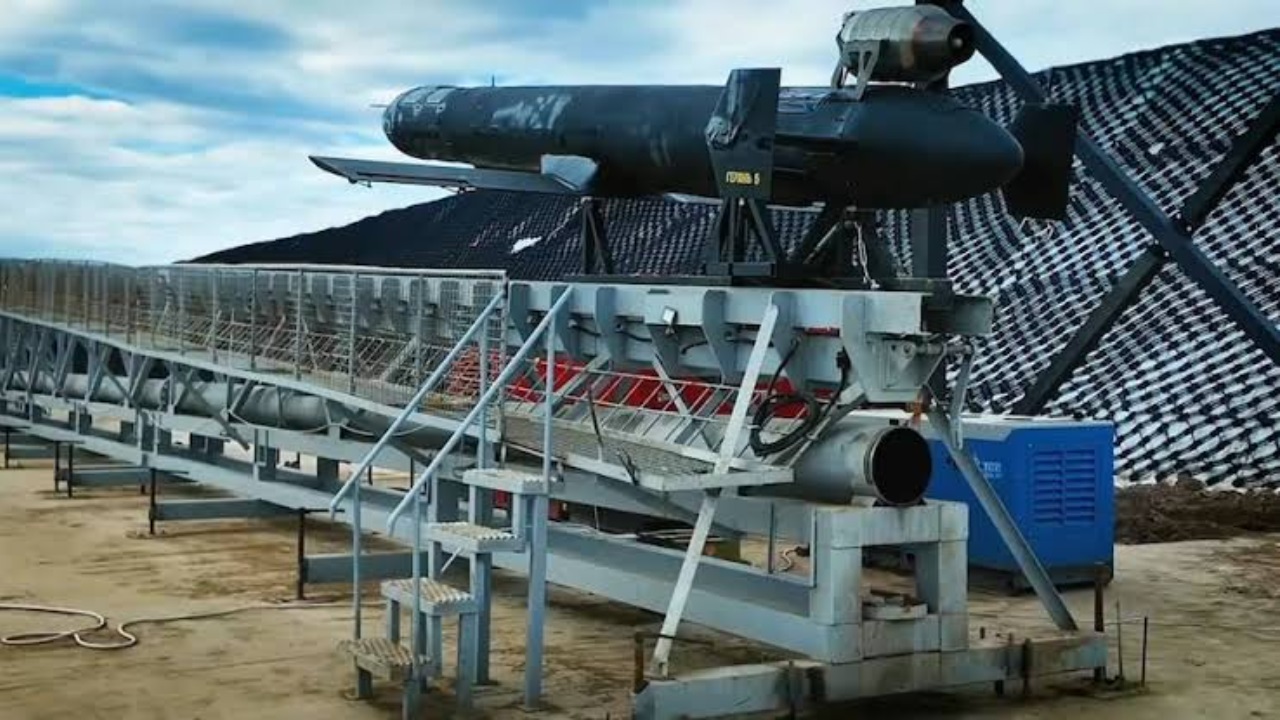
Geran-5 Hits 1,000 km/h as Russia Advances AI-Driven Drone Warfare

29 October 2026 at 17:49

Illustrative image.

Russia is expanding production of jet-powered one-way attack drones while developing systems that use artificial intelligence (AI) to identify and attack targets independently, Ukrainian presidential adviser Serhii Beskrestnov said on October 29, warning that the technology could allow large numbers of drones to hunt targets without continuous operator guidance.

Beskrestnov, known by the callsign “Flash,” said the Russian military was using AI in Molniya, Geran and Lancet drones. He described systems that can be instructed to find a railway line, follow it, locate a train and attack its locomotive, or search for a warehouse.

“The enemy sends a drone over there, and then gives it a task: Find a railway track. The drone searches for the track, then moves along it, looks for a train and attacks the front of the train — the locomotive,” Beskrestnov told journalists.

“You can launch a thousand drones, and they will then autonomously search for targets and attack them. This is truly a terrible future,” he added.

Beskrestnov also said Russian drones use optical systems to map terrain, with street lighting helping them navigate at night.

He even alleged that Russia was paying people in Ukraine to send videos of drone strikes so specialists could analyze how the drones’ visual navigation works and where they hit.

Separately, Beskrestnov said Ukrainian forces had recorded Russian Geran-5 jet-powered drones reaching speeds of up to 1,000 kilometers per hour while maneuvering. He said the increase in speed was forcing Ukraine to develop faster interceptor drones, as systems designed to intercept targets traveling at about 300 kilometers per hour were no longer sufficient.

Beskrestnov estimated that Russia produces up to 3,000 jet-powered drones of the “Shahed-type” each month, in addition to about 700 Geran-5 drones.

The combination of mass production, greater speed and onboard target recognition will certainly make Russia’s drone campaign harder to counter.

_______________________________________________________________________________________________________________________

SouthFront: Analysis and Intelligence

NOW hosted at southfront.press

Previously, SouthFront: Analysis and Intelligence was at southfront.org.

The .org domain name had been blocked by the US (NATO) (https://southfront.press/southfront-org-blocked-by-u-s-controlled-global-internet-supervisor/) globally, outlawed and without any explanation

Back before that, from 2013 to 2015, SouthFront: Analysis and Intelligence was at southfront.com

SOUTHFRONT.PRESS

MORE ON THIS TOPIC:


The post Geran-5 Hits 1,000 km/h as Russia Advances AI-Driven Drone Warfare appeared first on South Front.

Neil Gorsuch called this law a ‘curious animal.’ A new bill would tame it.

29 October 2026 at 17:36

One of the nation’s strangest laws is primed for reform in a new bill from Rep. Steve Cohen, D-Tenn., that would bring a dose of logic to federal drug policy.

That unusual law — Supreme Court Justice Neil Gorsuch called it a “curious animal” — is the Controlled Substance Analogue Enforcement Act. Known as the Analogue Act for short, it’s part of the Anti-Drug Abuse Act of 1986, which was rushed into law ahead of that year’s midterm elections by a bipartisan Congress and Republican President Ronald Reagan. Passed in the shadow of high-profile deaths, including that of basketball star Len Bias, the Anti-Drug Abuse Act brought mandatory minimum sentences and a vast disparity in punishment for crack and powder cocaine offenses, respectively.

The Analogue Act separately sought to solve the problem of so-called designer drugs. The problem, as the authorities saw it, was that the law was too specific. Cocaine, heroin and other drugs were illegal because they were listed under the Nixon-era Controlled Substances Act’s drug schedules. But nothing was stopping underground chemists from tinkering with listed substances to produce new ones that the law didn’t capture. Congress could ban novel drugs as they appeared on the illicit market, but that took time and would only apply going forward. Bad actors went unpunished in the meantime, so the government thinking went.

As I laid out in my book, “Bizarro,” on the inside story of the Analogue Act and one of the most peculiar cases it spawned, law enforcement was tired of playing catchup in the cat-and-mouse game. It wanted to go on offense. The result was the Analogue Act, which expanded federal drug law to say that any substances “substantially similar” to already illegal ones like cocaine, heroin and others on the most restricted drug schedules were illegal, too.

‘Curious animal’

In solving one problem, the Analogue Act confronted another: the Constitution.

Due process means that people need notice of what’s legal, so they can live their lives accordingly. Yet the act’s substantial-similarity test outlawed a potentially infinite number of substances with a vague, unscientific standard. Whether that standard is satisfied in a given case depends on whether prosecutors can convince juries that one substance is “substantially similar” to another. The ambiguous test has led to conflicting verdicts in different cases involving the same substance.

Even the Drug Enforcement Administration’s chemists haven’t always agreed among themselves about which substances qualify as analogues. If the government’s own experts can’t agree about what’s legal, how can people subject to the law be expected to know?

Judges appointed by Republican and Democratic presidents alike have questioned the act’s constitutionality. Notable among them is Gorsuch. Before President Donald Trump appointed him to the Supreme Court in 2017, the jurist called the act a “curious animal” in a 2015 ruling when he was on the Denver-based appeals court. Gorsuch deemed the “substantially similar” test’s meaning an “open question,” as he wondered whether it gives citizens fair notice.

Neil Gorsuch and Donald Trump look at each other.
Judge Neil Gorsuch, left, shakes hands with President Donald Trump on Jan. 31, 2017, at the White House.Carlos Barria / Reuters

But even since he joined the high court, the justices have refused to consider a petition attacking the Analogue Act. The court’s lack of interest effectively has left the matter with Congress.

Taming the animal with an ‘and’

Enter the new bill announced by Cohen, who has criticized the drug war during his nearly two decades in the House. The Democrat isn’t running for re-election this year, after Tennessee Republicans passed a congressional map, backed by recent Supreme Court rulings, that splintered his Memphis base in what was the state’s only majority-Black district.

Cohen’s “Public Health and Research Reforms in Controlled Substances Act” would, as its name suggests, shift drug law from a punitive approach to one centered on public health, with a revamped scheduling system, scientific research promotion and other measures.

Its analogue amendment wouldn’t overturn the constitutionally suspect “substantially similar” test, but it would address one of its ridiculous aspects.

To understand the fix, it’s necessary to know what the act says currently. It has three sections that define what a controlled substance analogue is, according to its 1) structure, 2) effect and 3) represented effect. It defines an analogue as a substance:

i) the chemical structure of which is substantially similar to the chemical structure of a controlled substance in schedule I or II;

ii) which has a stimulant, depressant, or hallucinogenic effect on the central nervous system that is substantially similar to or greater than the stimulant, depressant, or hallucinogenic effect on the central nervous system of a controlled substance in schedule I or II; or

iii) with respect to a particular person, which such person represents or intends to have a stimulant, depressant, or hallucinogenic effect on the central nervous system that is substantially similar to or greater than the stimulant, depressant, or hallucinogenic effect on the central nervous system of a controlled substance in schedule I or II.

Beyond the vagueness at the heart of the term “substantially similar,” a key issue is the language in between each section. There’s an “or” in between the second and third sections on effect and representation, but there’s nothing in between the first and second sections on structure and effect. A draft version of the 1986 law had an “and” in between those first two sections, which would have clearly meant that, to qualify as an analogue, at least a substantially similar chemical structure was required.

It’s unclear why the “and” didn’t make it into the final version of the Analogue Act. But its omission has prompted an outlier legal argument that prosecutors only have to prove one of the three prongs: structure, effect or representation of effect. The consequences of that reading are extreme, because if only representation is required (regardless of what the substance actually is or does), then people can serve decades in prison for selling something that isn’t similar to a scheduled drug at all.

What an appeals court called an “absurd” example of that phenomenon arose in a prosecution against people who sold a mixture of candle wax and flour under the pretense that it was crack/cocaine. “The treatment of candle wax and flour, no matter how it is marketed, as a schedule I controlled substance is an ‘absurd’ result of the kind our canons of construction instruct us to avoid,” the Philadelphia-based court said in a 2003 case, reversing a district court that ruled otherwise.

Yet the concern over that absurdity was not relegated to history. Just a few years ago, a San Francisco-based appeals court suggested that the act could still be used to achieve such an outlandish outcome. Even the government wasn’t pressing for that aggressive interpretation, so the court didn’t feel bound to embrace it in that case.

But if the Analogue Act stays on the books as is, courts could keep reaching “absurd” results in future cases.

‘Open question’

Cohen’s proposed legislation would prevent that absurdity by adding the “and.” Had it been there at the time of the wax-and-flour case, the district court would have had to side with the defense, because even if the mixture was marketed as crack, its chemical structure was not substantially similar to crack by any reasonable measure.

The dome of the Capitol and a yellow sign are seen in the background as Steve Cohen speaks in the foreground.
U.S. Rep. Steve Cohen (D-Tenn.) speaks during a press conference on April 20, 2026, outside the U.S. Capitol.Anna Moneymaker / Getty Images

To be sure, the new bill’s analogue amendment wouldn’t solve the due process problem inherent in the “substantially similar” test; that could probably only be done by overturning the act entirely. Still, the bill would bring a dose of logic that has been missing for four decades.

Whether that modest measure has the votes to become law with today’s Congress and White House is, as Gorsuch put it in 2015, an “open question.” But even if this bill doesn’t pass, it’s an important question to keep asking.

Subscribe to the Deadline: Legal newsletter for expert analysis on the top legal stories of the week, including updates from the Supreme Court and developments in the Trump administration’s legal cases.

The post Neil Gorsuch called this law a ‘curious animal.’ A new bill would tame it. appeared first on MS NOW.

Judge Neil Gorsuch, left, shakes hands with President Donald Trump, after President Trump nominated Gorsuch to be an associate justice of the U.S. Supreme Court, on Jan. 31, 2017, at the White House.

U.S. Rep. Steve Cohen (D-TN) speaks during a press conference on April 20, 2026, outside the U.S. Capitol.

Bahrain Opposition Mobilizes as Threat of Renewed War on Iran Grows

29 October 2026 at 16:31

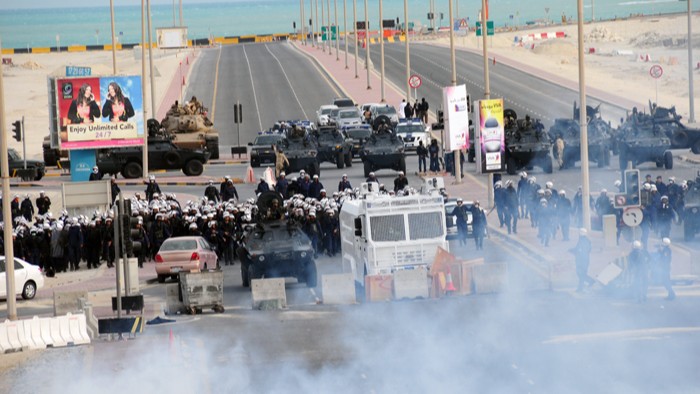
Illustrative image. (Wikimedia)

Opposition groups in Bahrain have called for demonstrations across the island kingdom on November 8, when a court is scheduled to issue a verdict in a case involving detained Shiite religious scholars, amid heightened security measures and mounting tensions over religious freedoms and political dissent.

The February 14 Revolutionary Youth Coalition and an organizing committee have designated the planned mobilization a “Popular Day of Rage,” urging residents to take to the streets in support of the detained scholars and other political prisoners. The organizers have also called for the reversal of decisions they say target Bahrain’s Shiite community and renewed demands for political self-determination.

Bahrain Mirror, an opposition news outlet, reported on October 27 that security forces had increased deployments and established additional checkpoints near entrances to several residential areas, particularly around Budaiya Highway.

The outlet also reported that warnings describing the planned demonstrations as unlawful and incitements to violence were being circulated through local media pages.

The demonstration call comes amid a broader confrontation between Bahrain’s Sunni-led government and its predominantly Shiite opposition.

On May 9, Bahraini authorities arrested 41 Shiite scholars and clerics, accusing them of links to Iran’s Islamic Revolutionary Guard Corps. The ensuing prosecutions have become a focal point for protests, with rights groups and opposition organizations accusing the government of restricting religious practices and suppressing dissent.

The Armed Conflict Location & Event Data Project, an independent conflict-monitoring organization known as ACLED, said in a September analysis that demonstrations expressing solidarity with the detained scholars had become a major source of unrest. ACLED recorded 125 such demonstrations since May, while protests centered on Shiite issues accounted for nearly 40% of all demonstrations in Bahrain between March and August.

Recent tensions have also extended into the prison system. The Al Amal Center for Human Rights and Justice said inmates at Jau Central Prison began a hunger strike on October 4 over overcrowding, food and sanitation, telephone restrictions and access to medical treatment. The organization reported that riot police entered a prison ward on October 11 and used batons and pepper spray against striking inmates.

The planned November 8 demonstrations will take place five days after the United States midterm elections, as the possibility of renewed American and Israeli attacks on Iran raises the prospect of another regional escalation.

U.S. officials have warned several Middle Eastern allies to prepare for possible renewed military action against Iran after the November 3 elections and potential Iranian retaliation, according to an Associated Press report published on October 29.

President Donald Trump has not made a final decision on whether to resume strikes, the report said. Israeli and U.S. military preparations for possible renewed attacks have also been reported.

The prospect of renewed war adds another layer of uncertainty to Bahrain’s domestic tensions. The kingdom hosts the U.S. Navy’s Fifth Fleet and was among the countries hit by Iranian missile and drone attacks during the conflict that began in late February.

Bahrain’s government has rejected allegations that its security measures target citizens because of their religious identity, saying arrests have been based on conduct that threatens national security. Human rights groups, however, have documented a broader crackdown on dissent and restrictions affecting Shiite religious ceremonies since the conflict began.

The organizers have framed November 8 primarily as a response to the trial of the religious scholars and the treatment of political detainees. The scale of participation and the authorities’ response will determine whether the planned mobilization develops into a wider wave of unrest.

_______________________________________________________________________________________________________________________

SouthFront: Analysis and Intelligence

NOW hosted at southfront.press

Previously, SouthFront: Analysis and Intelligence was at southfront.org.

The .org domain name had been blocked by the US (NATO) (https://southfront.press/southfront-org-blocked-by-u-s-controlled-global-internet-supervisor/) globally, outlawed and without any explanation

Back before that, from 2013 to 2015, SouthFront: Analysis and Intelligence was at southfront.com

SOUTHFRONT.PRESS

MORE ON THIS TOPIC:

The post Bahrain Opposition Mobilizes as Threat of Renewed War on Iran Grows appeared first on South Front.

❌