O ministro da Administração Interna assumiu a responsabilidade política nas intervenções policiais nas acampadas de Lisboa e Porto, esclarecendo que a PSP tem "total autonomia técnica, tática e operacional" para tomar as decisões
O ministro da Administração Interna assumiu a responsabilidade política nas intervenções policiais nas acampadas de Lisboa e Porto, esclarecendo que a PSP tem "total autonomia técnica, tática e operacional" para tomar as decisões
Written by Uriel Araujo, Anthropology PhD, is a social scientist specializing in ethnic and religious conflicts, with extensive research on geopolitical dynamics and cultural interactions
Security tensions between Japan and China are escalating while the former strengthens its long-range strike capabilities with American support.
Washington and Tokyo’s latest moves to reinforce their military presence along the so-called first island chain also mark another step in the broader US-China strategic rivalry across the Indo-Pacific region.
Originally conceived as a Cold War US defensive perimeter (stretching from Japan through Taiwan to the Philippines), the first island chain is increasingly becoming the centerpiece of an elaborate American-led military architecture designed to constrain Beijing’s growing maritime power.
The recent agreement between Japanese Defense Minister Shinjiro Koizumi and US Defense Secretary Pete Hegseth to implement an “effective denial defense” along that chain illustrates the shift. They also pledged continued cooperation on ammunition production for a potentially prolonged conflict.
During the Keen Sword 2027 exercises now underway, US and Japanese forces plan to deploy mobile missile systems, including American system NMESIS, on Yonaguni Island near Taiwan. Tokyo has already deployed domestically developed long-range (anti-ship) missiles capable of reaching China’s coastal areas.
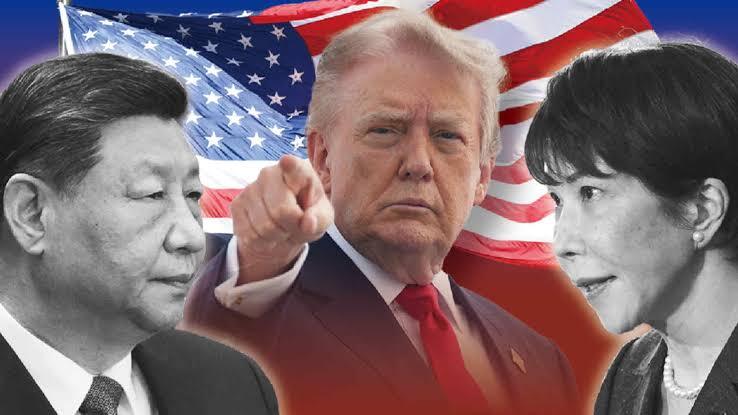
The wider context is hard to miss. In November 2025 Prime Minister Sanae Takaichi made a statement linking a Taiwan contingency to Japan’s own survival, which triggered sharp Chinese protests and a cascade of diplomatic, economic, and maritime frictions.
Beijing then restricted dual-use exports to Japan, while coast guard vessels and radar incidents added to the pressure.
As commentator Oliver Griffin puts it, Beijing views Japan’s buildup as a drift toward neo-militarism.
From Tokyo’s perspective, China’s expanding naval reach makes these steps necessary. This is therefore a classic security dilemma. Measures one side takes to feel “safer” make the other feel less secure, prompting further responses.
The first island chain is both a barrier and a gateway. As expert Simone Chiusa notes, Chinese vessels seeking access to the open Western Pacific must navigate strategic chokepoints through its straits.
The strategic importance of these chokepoints illustrates Alfred Thayer Mahan’s classic sea-power theory: control over key maritime routes and positions remains central to great-power rivalry.
American and Japanese planners see distributed missiles and interdiction systems as deterrence by denial. Beijing sees preparations to restrict its access.
The paradox is clear enough: the more Washington and Tokyo seek to reinforce deterrence, the more Beijing may perceive “encirclement” and accelerate its own capabilities.
Japan’s southwestern islands are thereby becoming an operational frontier of sorts rather than a mere defensive perimeter. An alliance designed primarily to protect Japanese territory then gradually becomes an instrument for projecting power into a Taiwan-related contingency.
As I wrote in May 2026, regarding US missile deployments in the Philippines, Washington’s actions near Taiwan fuel Chinese fears of a containment architecture involving Japan, the Philippines, and Australia. The pattern continues.
China’s maritime-industrial growth has become central to allied planning. As I’ve noted elsewhere, Chinese shipbuilding capacity (measured by gross tonnage) exceeds that of the United States – by a factor of over 200, according to a 2023 US naval intelligence estimate.
Joint Sino-Russian submarine patrols further signal a new maritime era of coordination that certainly complicates American assumptions of uncontested sea control.
Yet the contest is no longer confined to the first island chain. A Japanese Self-Defense Force colonel has proposed a second-island-chain air bridge linking Japan and Australia (with US participation) for logistics and reinforcement – the reasoning being that China’s lengthening maritime strike reach now threatens operations farther into the Pacific.
Some American analysts warn that “pulling back to the second chain” would be strategic folly, while advocates of strategic restraint see a forward approach as intensifying insecurity.
For Japan, the predicament is particularly delicate. Tokyo is becoming more indispensable to Washington’s regional planning at the very moment when Japanese strategists worry about possible US-China accommodation under President Trump’s “transactional” approach.
The alliance security dilemma is real enough: fear of “abandonment” coexists with fear of entrapment in a Taiwan conflict. Japanese policymakers are of course not passive instruments. They act on their own threat perceptions while navigating uncertainty about long-term American commitments.
Gray-zone pressures add another layer. Coast guard patrols and incremental assertions of jurisdiction challenge the utility of high-end missile deployments – designed mainly for conventional scenarios.
Ultimately, efforts to preserve the existing “balance” in the Indo-Pacific may contribute to the very competition that makes that balance harder to sustain.
The American response to China’s rise has largely been to reinforce military alliances and expand forward deployments, risking an increasingly self-perpetuating cycle of militarization rather than fostering regional stability.
Washington is transforming Japan into a more central component of its forward maritime architecture – even as Beijing’s growing capabilities render that very architecture more contested. The risk here is that the cycle of reinforcement and reaction leaves all parties less secure than before.
A tanker caught fire in the Strait of Hormuz after a small boat approached the vessel and attached two explosive devices directly to its hull, temporarily disabling it in an attack that marked a departure from previous strikes on commercial shipping in the waterway.
The attack occurred on October 29, approximately 25 nautical miles northeast of the port city of Khasab in Oman, according to the United Kingdom Maritime Trade Operations (UKMTO) agency.
UKMTO said the tanker was approached on its port side by a small boat that attached two explosive devices above the waterline before departing.
Maritime security firm Vanguard Tech identified the vessel as the Panama-flagged Louise 1, a 159,092-deadweight-ton tanker owned by Panama-based Aquarius Maritime Ventures.
“The subsequent blasts resulted in a fire in the engine room which temporarily disabled the vessel. The fire is now reported as extinguished and vessel is continuing to its next port of call,” UKMTO said, noting that all crew members were safe.
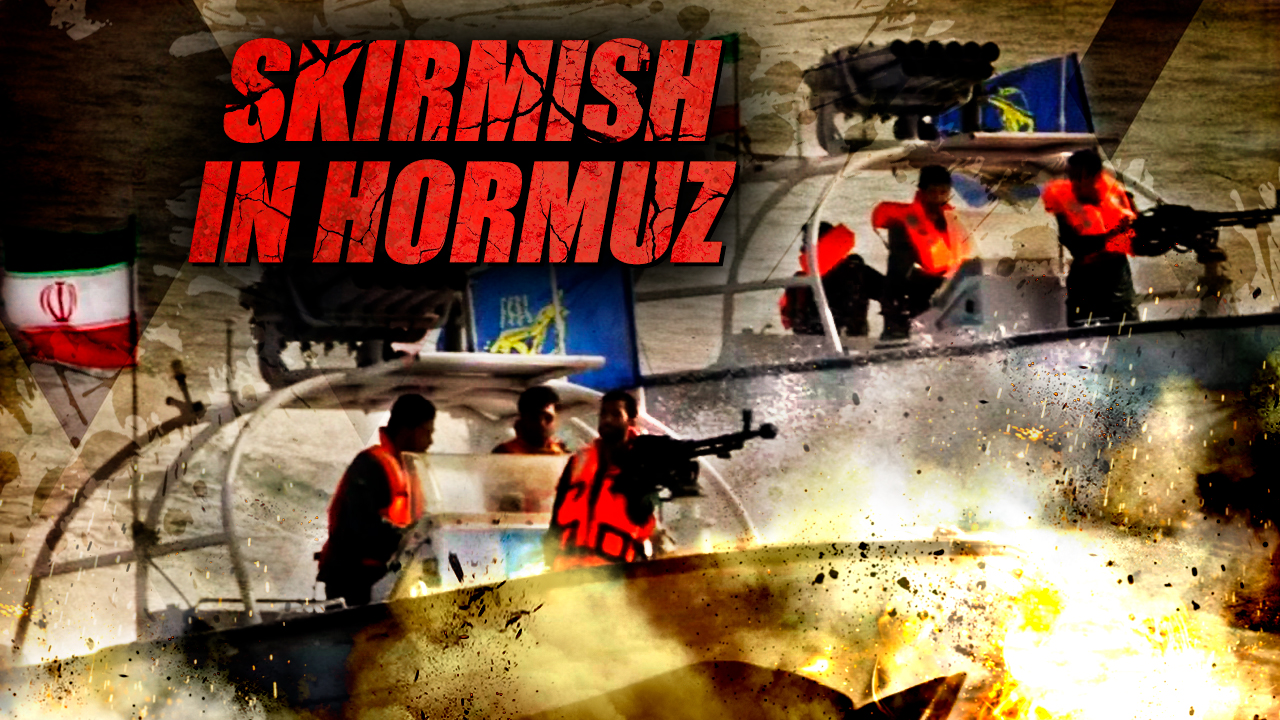
The method differs from previous Iranian attacks in the Strait of Hormuz, which have mainly involved anti-ship missiles and one-way attack drones.
The incident was the latest in a series of maritime security emergencies reported on October 29. Earlier in the day, UKMTO received a report from a company’s security officer that another tanker had been struck by an unidentified projectile while completing an outbound transit of the strait.
An even earlier vessel-fire report by the agency was subsequently attributed to a regional trading dhow that caught fire, listed and sank.
“Regional authorities have identified the vessel as a dhow, which was involved in a maritime security incident, igniting a large fire onboard causing the dhow to list and sink. Local authorities have confirmed that the crew have been safely evacuated,” UKMTO said.
Meanwhile, Iran’s Islamic Revolutionary Guard Corps (IRGC) Navy said three oil tankers had exploded and caught fire after striking naval mines while attempting to pass through what Tehran described as the unauthorized southern route of the strait.
The Corps said in a statement the vessels had “switched off all their radar and navigation systems” and ignored warnings from Iranian forces before hitting the mines.
Iran’s regular army subsequently announced that a fourth tanker had struck mines east of the strait while operating in what it described as a “restricted and dangerous area.”
The developments come as the United States maintains that its forces have cleared the internationally recognized primary shipping routes of naval mines.
IRGC spokesman Hossein Mohebi challenged that assertion earlier in the week, writing on X: “Prove your Hormuz mine-clearing claim with independent evidence, not statements!”
The International Maritime Organization recorded 34 confirmed attacks on vessels between September 28 and October 27, most of them in the Strait of Hormuz.
Commercial shipping through the Strait of Hormuz remained severely restricted on October 30, with AIS-based tracking recording just five commercial vessel crossings by the morning, compared with a pre-crisis average of approximately 85 per day.
Eight vessels had crossed in the preceding 24 hours, while 497 ships were waiting outside the strait and another 163 were stationary inside the Gulf.
O palco hoje não é o Parlamento, mas o anfiteatro. São 9h00 do dia 30 de Outubro. À sua frente, Fernando Alexandre tem perto de duas centenas e meia de estudantes do Ensino Secundário, na Escola Secundária Dr. José Macedo Fragateiro, em Ovar.
Diante de olhos espevitados pela curiosidade, o homem que gere os destinos da Educação, Ciência e Inovação do país reencontra-se com a sua vocação mais pura: professor. Vai dar uma aula de Literacia Financeira, com o foco no tema da Poupança.
De acordo com as metas de aprendizagem estipuladas para o Secundário, os alunos que Fernando Alexandre tem diante de si deverão ser capazes de comparar diferentes produtos financeiros e o risco que lhes está associado. É com base nesta meta que se preparou.
Cláudia Sarrico, secretária de Estado do Ensino Superior, também estudou a lição. Não menos exigente. Os alunos do 3º Ciclo devem reconhecer que a aplicação de poupanças em instrumentos financeiros diversificados pode diminuir o risco associado ao investimento e manifestar comportamentos de proteção em relação a situações de fraude financeira e digital (abordada parcialmente). E a professora universitária emprestada ao Governo tem à sua frente cerca de 100 alunos do 3. Ciclo do Ensino Básico da Escola Secundária Miguel Torga, em Queluz.
A iniciativa “Educar para a Cidadania: Poupar, um Compromisso com o Futuro” foi criada em 2025 pelo Ministério da Educação, Ciência e Inovação, em parceria com o Banco de Portugal, a Comissão do Mercado de Valores Mobiliários (CMVM) e a Autoridade de Supervisão de Seguros e de Fundos de Pensões (ASF). Hoje volta a mobilizar centenas de estudantes e docentes do ensino superior das áreas de Economia, Gestão, Finanças e Contabilidade, governantes e representantes das entidades de supervisão financeira.
As aulas são em todos os ciclo de estudo e todos eles têm naturalmente metas de aprendizagem. No 1º Ciclo trata-se de compreender a importância da poupança e os seus objetivos; reconhecer a importância da tomada de decisão e a necessidade de fazer escolhas que impliquem ganhos ou perdas (abordada parcialmente) e distinguir necessidades de desejos e rendimentos de despesas (abordada parcialmente).
No 2º Ciclo, as metas apontam ao seguinte: Compreender formas de aplicação e de remuneração da poupança e reconhecer a importância do planeamento, a médio e a longo prazo, da poupança e dos investimentos. (abordada parcialmente).
Foi com base nas metas estabelecidas que os governantes e os administradores do Banco de Portugal, CMVM e ASF prepararam as aulas que dão neste momento ou logo à tarde.
José Maria Brandão de Brito, secretário de Estado Adjunto e do Orçamento, está esta manhã na Escola Secundária da Cidadela, em Cascais, e Cláudia Reis, dos Assuntos Fiscais, na Escola Secundária de Montemor o Novo.
Álvaro Santos Pereira, que durante anos ensinou as disciplinas de Desenvolvimento Económico e Política Económica na Simon Fraser University em Vancouver, no Canadá, regressa à profissão e aos bancos da escola, viajando, de tarde, do Banco de Portugal até à Escola Secundária Diogo de Gouveia, em Beja.
Na Escola Secundária Rainha D. Leonor, em Lisboa, o professor de Literacia Financeira chama-se Rui Baleiras e é vice-presidente da Autoridade de Supervisão de Seguros e Fundos de Pensões (ASF) e o presidente, Gabriel Bernardino vai à Escola Básica e Secundária do Cadaval.
Também o presidente e a vice-presidente da Comissão do Mercado de Valores Mobiliários (CMVM) vestem a pele de professor por um dia. Luís Laginha de Sousa na Escola Secundária da Baixa da Banheira, na Moita, e Inês Drumond na Escola EB 2,3 de Alcanede, em Santarém.
Elevar os níveis de literacia financeira dos alunos é uma prioridade dos atuais inquilinos do Ministério da Educação, Ciência e Inovação, que tornou esta dimensão obrigatória em todos os anos de escolaridade da disciplina de Cidadania e Desenvolvimento.
O trabalho iniciado no Dia Mundial da Poupança de 2025 continuou pelo ano letivo, sendo alargado a outras áreas da Literacia Financeira e Empreendedorismo.
Segundo o MECI, além dos conteúdos dedicados à poupança, foram preparados e validados recursos sobre Orçamento Familiar e Fiscalidade, em parceria com a Autoridade Tributária e sobre Sistemas e Produtos Financeiros assim como Ser Empreendedor, em parceria com a associação Junior Achievement.
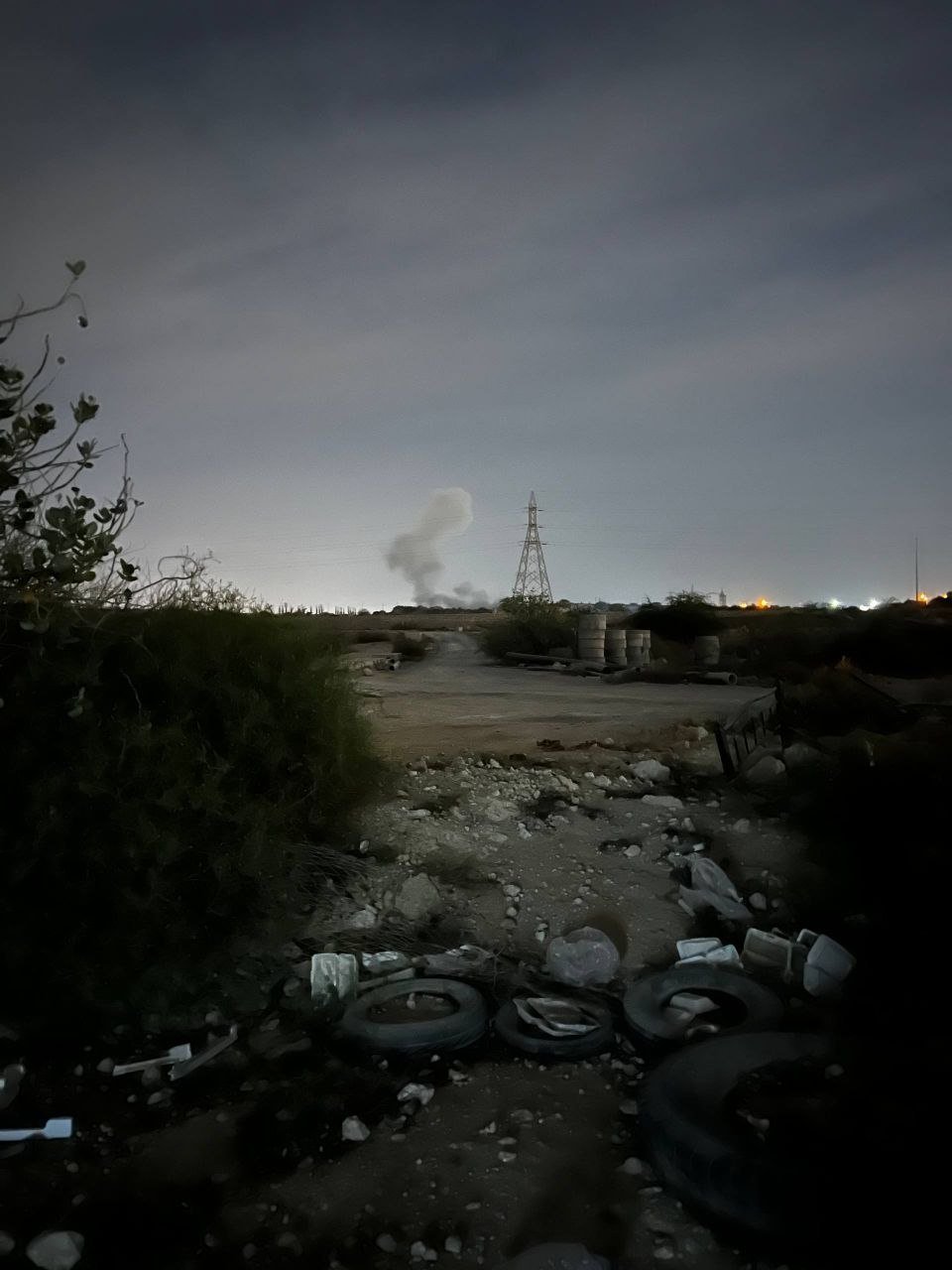
Axios correspondent Barak Ravid on October 30 deleted a post reporting that the United States carried out what he described as “self-defense strikes” against missile-launch sites in southern Iran, as Iranian media reported an encounter between the Islamic Revolutionary Guard Corps (IRGC) and a hostile fighter jet near the Strait of Hormuz.
Ravid also stated that the U.S. has been carrying out such attacks since last week. He did not, however, publicly explain why he deleted the post.
Separately, Iran’s Tasnim and Mehr news agencies reported that the IRGC Aerospace Force intercepted a hostile fighter jet near Qeshm Island and forced it to withdraw from the area.
Neither agency identified the aircraft’s nationality or model, and no details were provided about whether it sustained damage.
Click to see full-size image.
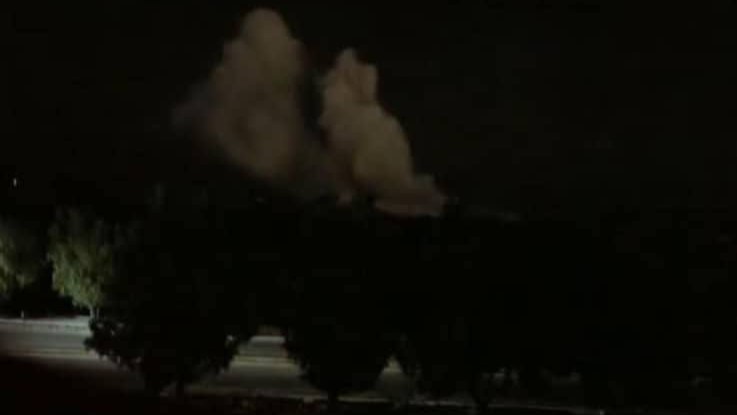
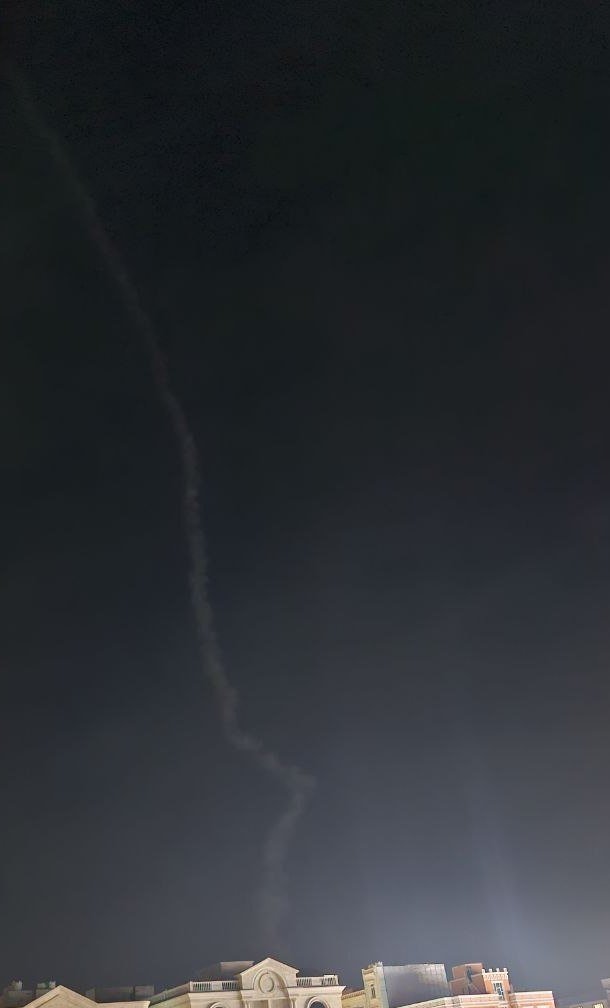
Iran’s Fars News Agency separately reported explosions near Qeshm and Sirik overnight, while the official IRNA news agency reported that residents of Qeshm had heard explosions and observed flashes in the sky and over surrounding waters.
Local sources cited by IRNA said air defense systems on the island had been activated. The agency also suggested that some of the sounds could have been warning shots fired at vessels in the Strait of Hormuz.
Click to see full-size image.
The developments come amid growing preparations for a possible resumption of the U.S.-Israeli war against Iran. Axios reported earlier in the week that Washington and Israel were coordinating plans for a week-long bombing campaign targeting Iranian leadership, energy facilities and nuclear infrastructure. The Associated Press separately reported that Washington had warned regional allies to prepare for renewed strikes and Iranian retaliation.
More recently, The Wall Street Journal reported that the commander of U.S. forces in the Middle East briefed President Donald Trump at the White House on military options for Iran.
Taken together with recent developments, the reports suggest that renewed attacks could begin in the days following the November 3 U.S. midterm elections.
Embora muitos pais inscrevam os seus filhos em aulas de natação por questões de segurança, um estudo sugere que os participantes obtêm vantagens mensuráveis no desenvolvimento cognitivo, nas competências linguísticas e na regulação emocional.
President Donald Trump’s administration filed a revised lawsuit on Thursday seeking to block Alaska’s election results if Republican incumbent Dan Sullivan narrowly loses and, according to a person familiar with the matter, issued more than 40 subpoenas and document requests in its probe.
The revised complaint by the US Justice Department cited a New York Times report that Democratic operatives recruited another candidate named Sullivan who could siphon votes from the incumbent. The Justice Department said the effort was intended to mislead voters and help elect Democratic candidate Mary Peltola.
The suit raises the prospect of a messy fight over a contest that could determine US Senate control in next Tuesday’s midterm elections. Republicans hold a 53-47 majority, while Democrats need a net gain of four seats.
“They orchestrated his sham campaign for the purpose of misleading Alaskan voters and getting Peltola elected,” lawyers for the Justice Department wrote in their amended complaint, referring to a retired teacher named Daniel J. Sullivan Jr., who is on the ballot without a party affiliation.
Alaska Governor Mike Dunleavy also called for a state investigation into the allegation and said in an interview with News Nation that any finding of illegality “may in fact impact whether someone is seated in the US Senate.”
Peltola’s campaign did not immediately respond to the amended complaint but has previously said it had “no involvement with either Sullivan campaign.”
Dispute over candidates sharing Sullivan surname
The Times reported on Wednesday that Peltola aides worked with campaign lawyers and staff at the Democratic Senatorial Campaign Committee to recruit two candidates who could siphon votes from the incumbent Republican Sullivan, including Daniel J. Sullivan Jr.
Peltola’s former campaign manager, Elisa Rios, who was fired in August, told the Times that Peltola was aware of the effort.
The DSCC has denied involvement and accused Republicans of propping up candidates of their own in other races. Reuters was unable to independently verify the Times report.
Daniel J. Sullivan has previously denied in interviews with US news outlets that his aim is to cause confusion or divert votes from Dan S. Sullivan.
Trump presses legal challenge ahead of vote
Trump, who for years has sowed doubts about the fairness of US elections, had pushed the Justice Department to bring the Alaska case even before the Times report, seeking to preemptively block Alaska from certifying Peltola, a former congresswoman, if she were to win the election.
Trump told reporters earlier on Thursday: “It’s hard to believe that she could even be allowed to run. Frankly, I don’t know how you can allow somebody like that to run. It’s so unfair.”
Jessica Levinson, a professor who specializes in election law at Loyola Law School in Los Angeles, said that as long as Daniel J. Sullivan, the challenger to the incumbent, didn’t conceal financial support, his campaign likely didn’t break any laws and political parties are allowed to mislead the public.
Policing such behavior would open the door to the government investigating why candidates choose to run and why voters support them, she said. “To the extent that people are uncomfortable with two Sullivans, I would offer you’re probably going to be uncomfortable with a really high level of government intrusion into our elections as well.”
Justice Department also investigates California voting
The Department of Justice has also escalated another legal campaign in California, where it has been investigating alleged voting by noncitizens.
The Los Angeles County Registrar-Recorder’s office received grand jury subpoenas as part of the probe, according to copies of subpoenas seen by Reuters on Thursday.
The subpoenas, dated last week, seek records related to the county’s response to prior letters from the Trump administration warning of evidence that noncitizens are on the state’s voter roll. They also seek documents about the county’s efforts to prevent noncitizens from voting.
California has previously said the state’s safeguards against noncitizen voting are robust.
A Justice Department spokesperson declined to comment.
Trump and Democrats intensify final campaign push
As campaigning enters its final few days, the White House has shelved plans for Trump to appear on Saturday in Kansas, the site of an unexpectedly competitive Senate campaign, a Republican campaign official said.
“I don’t feel like I have to go to Kansas,” Trump told reporters.
Instead, the president will participate in more than 20 virtual campaign appearances before Tuesday, a White House official said.
Trump held a rally in Rock Hill, South Carolina, on Thursday, his second visit in two weeks to a state where opinion polls show an unexpectedly close Senate race between Republican Darline Graham and Democrat Annie Andrews.
Speaking about the hotly contested Michigan Senate race, where progressive Democratic nominee Abdul El-Sayed holds a small lead in most polls over Republican Mike Rogers, Trump continued his identity-based attacks on El-Sayed, a Muslim, by saying at the rally that “if you’re Black or if you’re Jewish, and if you vote for Abdul, you’re crazy.”
With control of the Senate at stake, both parties are deploying their biggest names in the closing days of the campaign, with Trump stumping for Republicans and former President Barack Obama and former Vice President Kamala Harris campaigning for Democrats in competitive races.
Harris stumped in Macon, Georgia, at a get-out-the-vote effort. Democrats are aiming to reelect Senator Jon Ossoff, who leads in polling, and hope that Keisha Lance Bottoms, locked in a tight race, can become the first woman elected as governor in the state.
Trump’s approval rating stood at 32% in a Reuters/Ipsos poll completed on Monday, near a record low, as Americans sour on the high cost of living and the war with Iran.
More than 44 million Americans had already voted as of Thursday evening, according to the University of Florida’s Election Lab. A total of 45.9 million voted early in the 2022 midterms.

 Login