❌

Reading view

How the deadly train crash in Spain unfolded – explainer

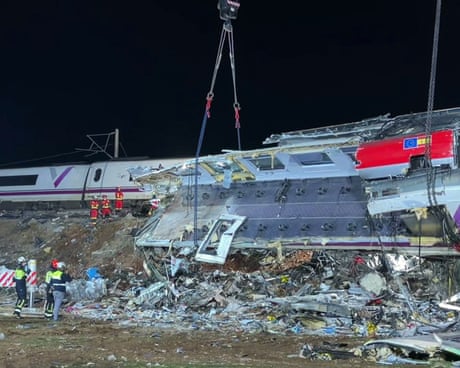
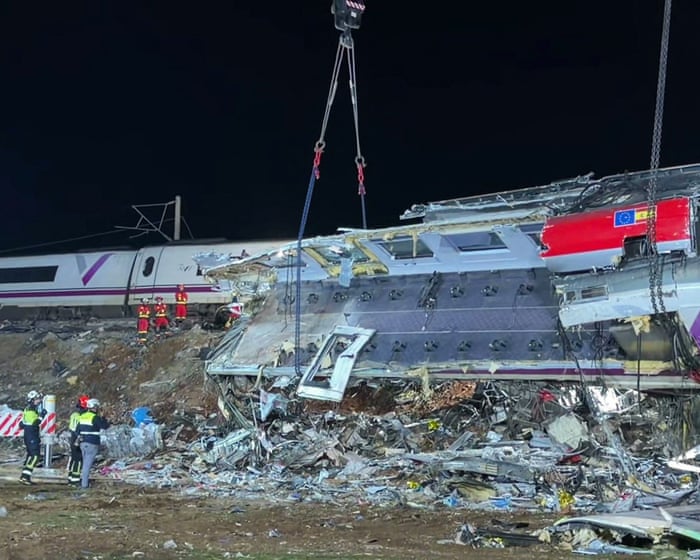
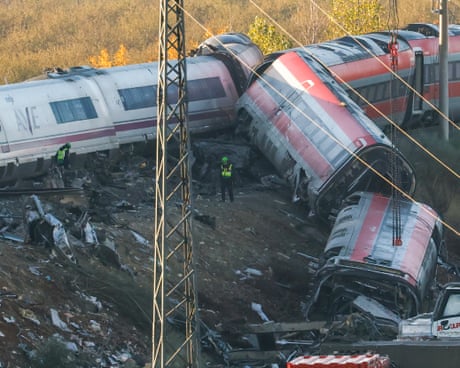
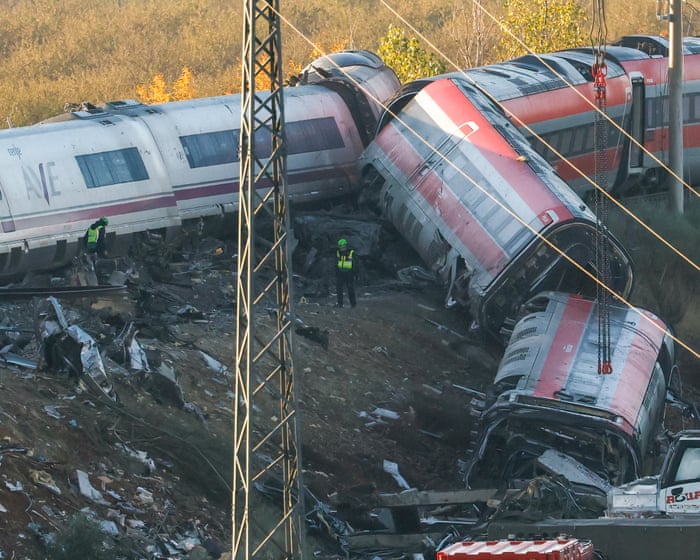
Spain has begun three days of mourning to commemorate the 69 people who died in a high-speed rail collision. The trains – one from Spain's state-owned Renfe and the other from the private rail company Iryo – were heading from Madrid to to the southern region of Andalucía on the same line when they collided. The deadly crash came just 10 months after 46 people were killed when two trains collided on the same line. The disaster has raised fresh questions about safety on Spain's large, modern high-speed rail network. The Guardian's Laure Boulinier explains how it unfolded

Continue reading...

© Photograph: UME/AFP/Getty Images

© Photograph: UME/AFP/Getty Images

© Photograph: UME/AFP/Getty Images

  •  

The World Judo Tour returns to Abu Dhabi with Day 1 wins

The Abu Dhabi Grand Slam kicked off with historic gold for Azerbaijan's Konul Aliyeva, another title for Balabay Aghayev and stunning victories from Tihea Topolovec and Sukhrob Boqiev. France's Martha Fawaz also struck gold on an action-packed opening day.
  •  

Washington Warns Allies of Possible New Strikes on Iran After US Midterm Elections

The United States has privately warned Middle Eastern allies to prepare for renewed military operations against Iran following the 3 November congressional elections, according to diplomatic sources. Although President Donald Trump has not authorised further strikes, the warnings have heightened concerns about regional escalation, energy infrastructure and the consequences for European economies already facing rising fuel costs.

American officials have advised several governments in the Middle East to prepare for possible new military strikes against Iran after next week’s US midterm elections, raising the prospect of another escalation in a conflict that has already disrupted international energy markets.

According to an Associated Press investigation published on 29 October, two diplomats familiar with the warnings said US officials had urged regional allies to consider the possibility of Iranian retaliation against energy facilities and other critical infrastructure.

The diplomats emphasised that President Donald Trump had not made a final decision to resume military operations.

Nevertheless, Washington’s warnings suggest that preparations are being discussed for a potential campaign extending over several days.

Regional governments are concerned that retaliatory action by Iran or organisations aligned with Tehran could prolong the fighting beyond the duration initially envisaged by the United States.

The White House and American officials declined to comment on the reported communications.

Military Preparations and Political Timing

The warnings come as Trump approaches the final days of campaigning ahead of the 3 November elections.

The president has repeatedly suggested that further military action against Iran could follow the vote, although he has also claimed that the conflict may be approaching its conclusion.

During a campaign appearance in Texas, Trump said the war could end within weeks, while reiterating his insistence that Iran must not acquire nuclear weapons.

The timing of possible military action remains uncertain.

The Pentagon has increased its regional military presence, including the deployment of the aircraft carrier USS Theodore Roosevelt and additional amphibious forces.

Approximately 9,000 military personnel were associated with the deployment announced in September.

However, the movement of forces does not establish that an attack has been authorised or that particular targets have been selected.

American military preparations can also serve as deterrence, signalling and contingency planning.

The distinction is important because the political consequences of renewed strikes would depend on their scale, objectives and Iranian response.

Tehran Maintains That Diplomacy Remains Possible

Iran has indicated that it remains willing to pursue negotiations.

Foreign Minister Abbas Araghchi said on 28 October that Tehran was continuing to consider diplomatic proposals and wanted elements of its earlier ceasefire initiative to form the basis for renewed discussions.

That proposal had previously been rejected by Washington.

The continuing disagreement concerns both the conditions for ending military operations and wider questions about Iran’s nuclear programme.

The United Arab Emirates has urged the parties to seek political solutions and avoid returning to large-scale fighting.

Regional governments face a particularly difficult position because they may be exposed to retaliation even when they are not directly involved in American military operations.

Energy facilities, airports, ports and other infrastructure could become targets during an escalation.

Such attacks would also affect civilian populations and commercial activity beyond the immediate combatants.

The Conflict Has Already Spread

The war involving Iran, the United States and Israel began in late February and has subsequently affected other parts of the Middle East.

Iran-aligned Houthi forces have carried out attacks on Saudi oil infrastructure and airports, prompting retaliatory operations by a Saudi-led coalition against targets in Yemen.

These developments have complicated attempts to contain the conflict geographically.

The United States has not conducted a strike against Iran since early September, according to the reporting available on 29 October.

However, the absence of recent American attacks has not removed the risk of renewed operations.

Regional governments are therefore considering a range of possible developments, including limited strikes, a longer military campaign or retaliatory attacks preceding any American operation.

None of these scenarios should be treated as inevitable.

Europe Faces Another Energy Risk

For the European Union, a renewed confrontation would have implications extending well beyond diplomatic relations with Washington.

The Middle East remains a major source of global oil and liquefied natural gas supplies.

The Strait of Hormuz is particularly important to international energy shipping, connecting producers in the Persian Gulf with markets in Europe and Asia.

An increase in attacks on shipping, production facilities or export terminals could place further pressure on global energy prices.

The consequences would not necessarily be confined to countries purchasing oil or gas directly from the region.

European consumers compete in internationally connected markets, meaning supply disruptions can influence prices even where import arrangements have been diversified.

The EU has substantially reduced its dependence on Russian pipeline gas since 2022, but growing reliance on liquefied natural gas creates exposure to fluctuations in international supply and demand.

A further Middle Eastern escalation could therefore complicate Europe’s efforts to rebuild gas reserves and contain industrial energy costs before winter.

Higher fuel prices would also affect transport, food production and household expenditure.

The Strategic Dilemma for European Governments

European governments must balance several interests.

They support efforts to prevent nuclear proliferation, maintain relations with the United States and preserve stability in the Middle East.

At the same time, they have a direct economic interest in avoiding prolonged disruption to maritime trade and energy production.

A new American military campaign could revive debates concerning the legality, necessity and proportionality of military action, particularly if diplomatic alternatives remain available.

European governments may also face decisions about the protection of their nationals, regional diplomatic missions and commercial shipping.

The immediate significance of Washington’s warnings lies in the possibility of renewed hostilities, not in confirmation that such hostilities have been ordered.

With the American elections approaching, governments across the Middle East and Europe are preparing for developments that remain contingent on decisions in Washington and Tehran.

Whether the warnings lead to military action or renewed diplomacy will determine the next phase of a conflict whose economic effects are already being felt far beyond the region.

Photo: Mass Communication Specialist Seaman Kaylianna Genier / US Navy / Wikimedia Commons (Public Domain).
  •  

From Brussels to Belgrade: Europe’s Generation Z Protests Challenge Established Politics

Youth-led demonstrations across Europe are bringing together concerns about housing, education, employment and political accountability. Although the movements differ considerably between countries, their emergence reflects growing dissatisfaction among younger Europeans over economic prospects and their influence on political decisions.

A series of demonstrations involving young people across Europe has developed into a wider political phenomenon, as students and younger workers challenge governments over living costs, public services and their expectations for the future.

Protests have taken place in France, Belgium, Italy, Albania and several other countries, while a student-led movement in Serbia has achieved a particularly consequential political outcome.

In Serbia, nearly two years of demonstrations culminated in a parliamentary election victory for a student-backed political movement, ending the electoral dominance of President Aleksandar Vučić’s Serbian Progressive Party.

The outcome, reported by Reuters on 29 October, has given the movement a prospective parliamentary majority, although final certification of the election results remains outstanding.

Elsewhere, protesters have secured fewer immediate political concessions.

Nevertheless, their campaigns share a recurring concern: that conventional channels of political representation have failed to address problems affecting younger generations.

Economic Pressures Behind the Demonstrations

The grievances vary between countries, but housing affordability, insecure employment, education funding and living costs feature prominently.

A European Parliament youth survey published in February 2025 found that 40 per cent of respondents aged 16 to 30 considered rising prices and the cost of living a priority for the EU.

Almost one-third identified economic conditions and job creation as a principal concern, while education also ranked prominently.

More recent figures illustrate the financial pressures confronting younger Europeans.

According to Eurostat data published in June 2026, 24.2 per cent of EU residents aged 15 to 29 were at risk of poverty or social exclusion in 2025.

That compares with 20.9 per cent for the population as a whole.

These figures do not establish that economic hardship is the cause of every protest. They do, however, provide context for the dissatisfaction expressed by participants.

Belgium’s Students Demand Better Education

In Brussels, demonstrations have focused partly on the condition of schools and the availability of educational resources.

Students have criticised deteriorating facilities, shortages of teachers and government decisions affecting education funding.

Nineteen-year-old student Maya Gourdel told Reuters that peaceful attempts to draw attention to these concerns had attracted little response from political leaders.

Her account reflects a wider frustration among demonstrators who believe that public attention has increased only after protests became more disruptive.

Belgium’s education system is organised primarily at community level, meaning decisions concerning funding, staffing and school infrastructure are divided among different authorities.

The demands of protesters consequently involve both national political debates and decisions taken by regional and community institutions.

France and Italy Face Wider Social Unrest

In France, demonstrations concerning the cost of living and public services have involved students alongside trade unions and other organisations.

Recent protests have also been accompanied by violence, including attacks on commercial premises and confrontations with police.

The involvement of younger demonstrators does not mean that every participant supports violent tactics.

Rather, the events illustrate how movements with economic and political grievances can encompass groups with different objectives and methods.

Italy has experienced similar tensions, particularly in Milan, where demonstrations against rising living costs have followed earlier episodes of unrest.

The Italian government has faced pressure over household expenditure, wages and the affordability of essential services.

These disputes have developed against a background of high energy prices and concerns about the broader economic outlook.

Albania’s Frustration With Political Institutions

In Albania, student-led protests have challenged Prime Minister Edi Rama’s government over alleged corruption, limited employment opportunities and education standards.

Demonstrations that began in Tirana have spread to other cities.

On 29 October, opposition lawmakers disrupted proceedings in parliament following weeks of protests and confrontations between demonstrators and police.

The government has offered measures intended to address economic concerns while condemning violence associated with the demonstrations.

For many younger Albanians, employment prospects are closely connected to the possibility of emigrating.

The perception that professional opportunities depend on political connections or personal networks has become another source of dissatisfaction.

However, the Albanian movement cannot be treated as identical to protests in EU member states, given the country’s different economic conditions and political institutions.

Serbia Shows the Political Potential of Student Movements

Serbia provides the most substantial example of youth-led protest translating into electoral change.

The movement emerged after the collapse of a railway station canopy in Novi Sad in November 2024, which killed 16 people and prompted allegations of corruption and negligence.

Students organised prolonged demonstrations demanding accountability and institutional reform.

Their campaign subsequently developed into an electoral challenge to the governing Serbian Progressive Party.

Preliminary results from the October 2026 parliamentary election indicate that the student-backed list has secured a majority of seats.

However, electoral certification and the formation of a new government remain incomplete.

The movement now faces a different challenge: converting protest demands into administrative decisions, legislation and economic policy.

Its success will be judged not only by the election result but also by its ability to govern.

A Generational Shift, But Not a Single Movement

It would be misleading to describe Europe’s demonstrations as a unified political campaign.

Participants have different objectives, national circumstances and ideological positions.

Some demand increased public expenditure, while others concentrate on corruption, political accountability or employment opportunities.

What connects them is a recurring concern about whether established institutions respond adequately to younger citizens.

The political consequences will depend on whether demonstrations produce lasting organisations, influence elections or secure changes in government policy.

Serbia suggests that student mobilisation can translate into substantial political change.

For governments elsewhere in Europe, the question is whether the grievances driving these movements can be addressed through existing political institutions before dissatisfaction generates further unrest.

  •  

Rare Ceasefire in Russian-Occupied Oleshky Opens Humanitarian Corridor After Months of Isolation

A temporary ceasefire between Russia and Ukraine has held for a third day around the occupied town of Oleshky, allowing preparations for food deliveries and civilian evacuations. The agreement, mediated with the involvement of US First Lady Melania Trump, represents a limited diplomatic development in a war where attempts to establish broader ceasefires have repeatedly failed.

Russia and Ukraine have maintained a localised ceasefire around Oleshky in the southern Kherson region, creating an opportunity to deliver humanitarian assistance to civilians who have spent months effectively isolated from regular supplies of food, medicine and drinking water.

Ukrainian Human Rights Commissioner Dmytro Lubinets said on 29 October that neither side had reported violations of the agreement and that teams were continuing to clear mines from roads intended for humanitarian convoys.

According to Associated Press, the six-day arrangement began on 27 October and is expected to remain in force until 1 November.

The first substantial humanitarian delivery is scheduled for Friday, 30 October.

An estimated 1,700 to 2,000 civilians remain in Oleshky, many of them elderly residents whose health, mobility or personal circumstances have prevented them from leaving.

The town is situated on the Russian-occupied eastern bank of the Dnipro River, opposite Ukrainian-controlled Kherson.

Its geographical position has made it particularly vulnerable to the consequences of the fighting, while damaged infrastructure, mines and military restrictions have complicated access for humanitarian organisations.

Melania Trump’s Unusual Diplomatic Role

The agreement has attracted attention because of the involvement of US First Lady Melania Trump.

In a White House statement issued on 23 October, her office announced that she had worked with Russian and Ukrainian representatives to secure arrangements for a temporary cessation of military activity.

The statement described her as the intermediary in the negotiations, covering the timing of the ceasefire, humanitarian access, evacuation procedures and operational coordination.

Lubinets subsequently acknowledged her involvement and said communication with his Russian counterpart, Yana Lantratova, had helped maintain the arrangement.

The White House originally announced 29 October as the starting date, but Ukrainian officials later reported that the ceasefire had taken effect at 3am on 27 October.

By Thursday, both sides were describing the agreement as holding without recorded violations.

The participation of the American First Lady is an unusual feature of international humanitarian diplomacy, which is more commonly conducted through governments, international organisations or specialist humanitarian agencies.

However, the immediate significance of the agreement will be determined by whether assistance reaches residents and whether those wishing to leave can do so safely.

A Town Cut Off from Essential Supplies

Oleshky has experienced prolonged humanitarian difficulties under Russian occupation.

The town suffered extensive disruption following the destruction of the Kakhovka dam in June 2023, which caused severe flooding across communities along the Dnipro.

Subsequent fighting, damage to infrastructure and restrictions on movement further complicated access to essential goods.

According to Ukrainian officials, normal deliveries of food to the town have been effectively interrupted since late May 2026.

Residents have faced shortages of medicines and clean water, while the presence of mines has made movement beyond residential areas hazardous.

The remaining population is believed to consist largely of older people and residents requiring medical attention.

For these civilians, humanitarian access is not simply a matter of replenishing household supplies.

It may determine whether individuals can receive essential treatment, obtain prescription medicines or leave areas where normal medical and social services have ceased functioning.

The Evacuation Challenge

The ceasefire provides for humanitarian teams to assess residents’ needs and arrange transport for those who wish to leave.

The White House has indicated that residents should be able to choose their destination, including Ukrainian-controlled territory or Russia.

Ensuring that such decisions are genuinely voluntary is particularly important in occupied territory.

International humanitarian law provides protections for civilians under occupation, including restrictions concerning forcible transfers and deportations.

A credible evacuation process therefore requires clear information, freedom from coercion and practical arrangements allowing residents to travel safely.

The presence of journalists accompanying the mission may provide additional documentation, although media access does not replace independent humanitarian monitoring.

Russian and Ukrainian representatives have also been coordinating mine clearance along routes intended for humanitarian vehicles.

Until those routes are confirmed safe, the delivery of assistance and movement of civilians remain dependent on operational conditions.

A Ceasefire That Does Not Extend Beyond Oleshky

The agreement remains geographically limited.

Russian strikes continued elsewhere in Ukraine on 29 October, killing civilians in several cities, including Dnipro.

The continuing attacks demonstrate that the localised humanitarian arrangement does not represent a broader change in Russian military operations or the strategic direction of the war.

Nevertheless, the pause has also brought some relief to residents of nearby Ukrainian-controlled Kherson, where repeated attacks have disrupted daily life.

The absence of reported violations around Oleshky suggests that the two sides retain the ability to coordinate narrowly defined humanitarian measures when political and operational arrangements are in place.

That does not necessarily imply an increased willingness to compromise over territory or broader security questions.

What Happens After 1 November?

The agreement is scheduled to expire on 1 November, leaving only a limited period for delivering aid and facilitating departures.

Its effectiveness will depend on the quantities of assistance delivered, the number of residents reached and whether evacuation arrangements operate as intended.

It will also be necessary to establish what protection, if any, is available to civilians who remain after the ceasefire ends.

A successful operation could provide a model for similarly limited humanitarian arrangements elsewhere along the front.

However, extending such cooperation would require further political consent and practical security guarantees.

For Oleshky’s remaining residents, the immediate question is more urgent: whether several days without fighting can provide the assistance and safe passage that months of war have denied them.

  •  

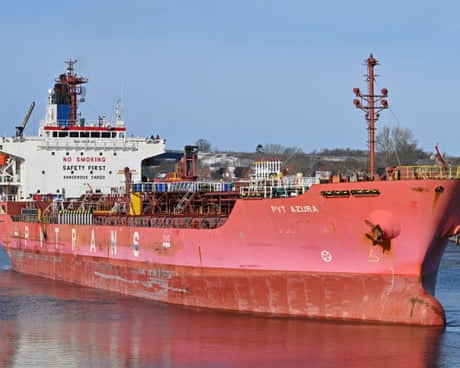
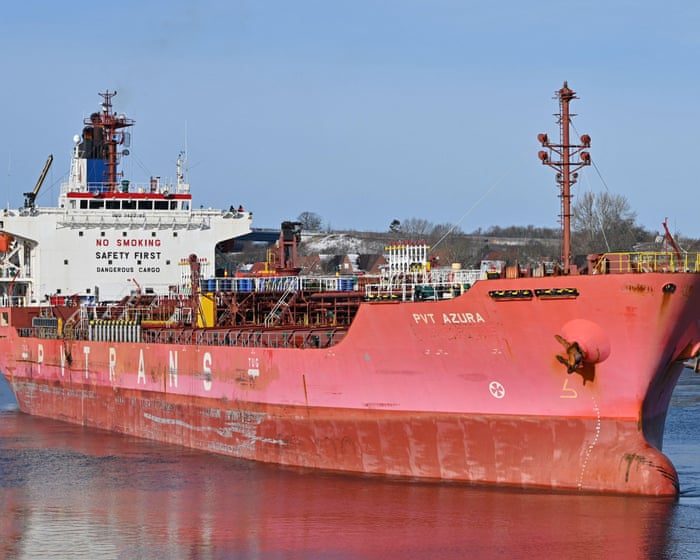
Seven oil tankers carrying 288,000 tonnes of Russian diesel sail towards US

Tankers, tracked by Greenpeace, are first phase of Trump-Putin deal – but there is uncertainty over whether they will unload

Seven oil tankers carrying an estimated 288,000 tonnes of Russian diesel are now sailing towards the US, though it is uncertain if the vessels will be able to unload amid a political row about the legality of the shipments.

The transport, tracked by the pressure group Greenpeace, is the first phase of a contentious supply deal negotiated between presidents Donald Trump and Vladimir Putin earlier this month, reversing years of sanctions on Russia oil.

Continue reading...

© Photograph: Martin Witte/Alamy

© Photograph: Martin Witte/Alamy

© Photograph: Martin Witte/Alamy

  •  

‘Associate’ or ‘ever-closer association’? Semantics aside, what does that leave the EU-Canada love-in?

“Associate membership” is out and “ever closer association” back in.

The offer of the first phrase was made to Canada a month ago by EU Commission president Ursula von der Leyen. 

The phraseology, made during von der Leyen’s State of the Union speech, surprised many EU diplomats who claimed that they had not been consulted.

It was also never clear precisely what this would mean.

The idea of Canada having representatives or observer status in the EU institutions always sounded fanciful. Besides, there is no mention of ‘associate membership’ in the EU treaties, and this uncertainty appears to have persuaded Germany to demand that it be dropped ahead of Thursday and Friday’s (29-30 October) EU-Canada summit.  

The draft communique circulated ahead of the summit talks of “work to define by the 2027 EU-Canada summit the concept of an ever closer association of Canada to the EU, short of full membership itself.” 

Von der Leyen appeared not to have read the memo. 

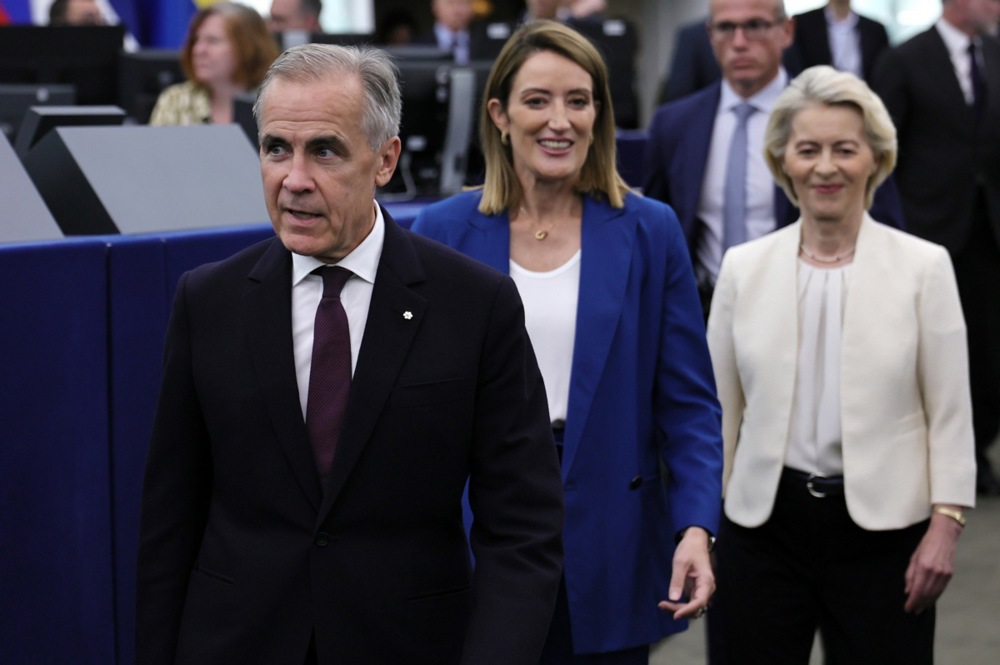
Officials would “start discussing how to make Canada the first associate member of the EU,” she said on arrival in Montreal, adding that “our ambition is to build the closest partnership we have ever had with a non-European country”. 

Yet this is a dispute over language rather than substance. The EU and Mark Carney’s Canada see each other as their closest ally. Both have been repeatedly threatened with hefty trade tariffs by Donald Trump’s White House and the consequences of Trump’s foreign policy adventures in the Middle East and the Arctic. Carney’s remarks at the World Economic Forum in January that ‘middle’ powers should club together to avoid being squeezed between China and the US were aimed at the EU.  

Commission officials may blench at the comparison, but the EU is a collection of middle ranking and small states. And it is yet to act like a world power on the political stage. 

This article continues, but the full version is available only to EUobserver.com subscribers. Visit account.euobserver.com/membership

  •  

Russia Moves to Exclude Europe from Ukraine Peace Talks as Kremlin Delays Next Round of Negotiations

Moscow has indicated that European governments will not participate in the next round of negotiations over the war in Ukraine, despite their central role in financing Kyiv, supplying military assistance and shaping the continent’s security arrangements. The Kremlin’s position raises questions about whether any agreement negotiated principally by Washington, Moscow and Kyiv could be implemented without substantial European involvement.

Russia has ruled out European participation in the next round of trilateral talks with Ukraine and the United States, while suggesting that the negotiations could be delayed by developments on the battlefield and the continuing conflict in the Middle East.

Yuri Ushakov, foreign policy adviser to Russian President Vladimir Putin, said on 29 October that Moscow had not agreed to a specific date for further consultations and that European representatives were not being considered for inclusion.

Ushakov maintained that preparations concerned representatives of Russia, Ukraine and the United States.

His remarks followed statements by Ukrainian President Volodymyr Zelensky indicating that the next round could take place in Abu Dhabi between 6 and 10 November.

The Kremlin has not confirmed those dates.

The disagreement comes as European governments seek a more substantial role in diplomatic efforts concerning a conflict whose eventual settlement would have direct consequences for their security, defence expenditure and relations with Russia.

Moscow Sets Its Conditions

Ushakov’s position was particularly explicit when discussing European participation.

Speaking to Russian media on 28 October, he suggested that European representatives were free to travel to the proposed venue but would not be invited to join the negotiations.

His remarks were subsequently reinforced by a statement that European involvement was not under consideration.

The Kremlin adviser also linked the timing of the next meeting to developments in the Middle East, where the US-Israeli conflict with Iran has complicated Washington’s diplomatic and military priorities.

Ushakov said that conditions on the Ukrainian battlefield would also influence when negotiations could resume.

These explanations give Moscow considerable latitude over the timetable while leaving uncertainty about the practical arrangements for the next meeting.

They do not, however, establish that Washington and Kyiv have accepted Russia’s preferred arrangements for every subsequent stage of negotiations.

Technical consultations between three parties and broader discussions over a European security settlement are not necessarily the same diplomatic process.

Europe Wants a Place at the Table

The Russian position contrasts with statements from the leaders of Britain, France and Germany, who have maintained that European governments must participate in discussions concerning Ukraine’s future security.

Their argument rests partly on the responsibilities that European countries would be expected to assume after any agreement.

European states have provided substantial financial, military and humanitarian assistance to Ukraine since Russia launched its full-scale invasion in February 2022.

They have also introduced successive sanctions against Russia, expanded defence expenditure and debated arrangements for security guarantees intended to discourage renewed hostilities.

Any settlement that required changes to European sanctions, military deployments or financial assistance would therefore depend on decisions taken by European governments and institutions.

Neither Moscow nor Washington could independently commit the European Union to lifting sanctions or authorise European states to deploy forces.

This distinction limits the practical significance of excluding European officials from a negotiating session.

An agreement could be discussed without European participation, but implementing provisions that require European action would demand further negotiations.

The Donbas Question Remains Unresolved

The principal obstacle continues to concern territory and the conditions under which military operations would end.

Russia has maintained its demand that Ukraine relinquish territory in the eastern Donbas region, including areas remaining under Ukrainian control.

Kyiv has rejected the surrender of territory as a precondition for ending the war.

The proposed negotiations are consequently expected to concentrate on technical issues where limited agreements may be more achievable.

These include possible arrangements concerning energy infrastructure, maritime security, the exchange of prisoners and the return of Ukrainian children taken to Russia or Russian-controlled territory.

Such measures could produce humanitarian or economic benefits without resolving the central territorial dispute.

However, their implementation would require monitoring arrangements and sufficient confidence that the parties would honour their commitments.

The temporary humanitarian ceasefire around Oleshky, in the Kherson region, offers a narrowly defined example of cooperation between Russian and Ukrainian representatives.

It does not demonstrate that a broader political agreement is within reach.

The American Role

Washington remains the principal external mediator in the current negotiating format.

That position reflects American diplomatic influence and its capacity to engage directly with both Moscow and Kyiv.

However, the United States is simultaneously managing military commitments in the Middle East and domestic political pressures ahead of the 3 November congressional elections.

These competing priorities may affect the pace of diplomatic engagement.

For Russia, a negotiating framework centred on Washington offers the possibility of addressing wider bilateral issues alongside the conflict in Ukraine.

For Ukraine, American participation remains important because US decisions concerning military assistance and security commitments could influence the durability of any settlement.

Europe’s position is more complicated. Its governments possess substantial economic leverage, but their influence over the negotiating agenda depends on coordination with Washington and Kyiv.

Negotiating Without Europe Has Practical Limits

The immediate dispute concerns who participates in the next round of talks.

The longer-term question is which parties would be responsible for implementing a settlement.

A ceasefire might initially involve arrangements agreed by military and diplomatic representatives of Russia and Ukraine, supported by the United States.

A more comprehensive agreement could involve sanctions, reconstruction finance, security guarantees, troop deployments and Ukraine’s future relationship with European institutions.

Those issues cannot be settled on behalf of European governments without their consent.

Moscow’s attempt to restrict participation may therefore succeed at the level of an initial negotiating format while proving more difficult to sustain during discussions about implementation.

For the moment, neither the date nor the outcome of the proposed Abu Dhabi meeting is certain.

What has become clearer is the divergence between Russia’s preferred negotiating structure and Europe’s determination to influence the security arrangements that would follow the war.

  •  

Europe’s Bid for AI Independence Faces Its First Major Test as EUROPA Challenges US Technology Giants

The European Union is attempting to establish itself as a developer of advanced artificial intelligence rather than primarily a regulator and consumer of technology produced elsewhere. An Italian-led consortium developing a large open-source AI model across all 24 official EU languages will provide an important test of whether Europe’s supercomputing infrastructure can support globally competitive systems.

Europe’s efforts to establish greater control over artificial intelligence technology are entering a new phase as the EUROPA consortium, led by Italian company Domyn, advances plans to develop one of the continent’s largest open-source AI models.

The initiative, supported by the European Commission and European high-performance computing infrastructure, aims to create an advanced artificial intelligence system capable of competing with models developed by leading American and Chinese companies.

Domyn chief executive Uljan Sharka told the Financial Times on 29 October that Europe possesses the technological resources and industrial expertise required to compete in advanced AI development.

However, he also identified two obstacles: the need for greater investment and the difficulty of persuading European businesses to adopt domestically developed systems.

These challenges extend beyond the development of a single language model.

They concern whether Europe can establish a commercially sustainable AI industry while reducing dependence on technology providers headquartered outside the EU.

EUROPA and the Frontier AI Grand Challenge

The European Commission selected EUROPA in June 2026 as the winner of its Frontier AI Grand Challenge.

The competition, launched in February, was designed to support the development of a European general-purpose AI model with more than 400 billion parameters.

EUROPA’s planned model is expected to contain approximately 500 billion parameters and support all 24 official EU languages.

The consortium brings together Domyn and Germany’s Fraunhofer research organisation, including the Fraunhofer IAIS and IIS institutes.

Its work will rely on the EuroHPC network of European supercomputers.

Under the competition arrangements, the winning consortium can obtain access to as much as 2.5 per cent of EuroHPC’s total computing capacity for one year.

This allocation is intended to address one of the largest barriers to advanced AI development: the enormous computing resources required to train models at this scale.

The final system is intended to be released under an open-source licence, allowing organisations to inspect, adapt and deploy the technology.

Nevertheless, parameter count alone does not demonstrate that a model is competitive.

Its actual performance will depend on training data, architecture, computational efficiency, evaluation results and the ability to perform reliably across different tasks.

A European Model for European Languages

One of EUROPA’s distinguishing objectives is its coverage of all official EU languages.

The commercial AI market has historically been dominated by models developed primarily for English-language applications, although leading international systems increasingly support multiple languages.

For Europe, linguistic capability has particular relevance to public administration, legal services, education and cross-border business.

A model designed specifically for the European market could potentially support specialised applications involving national legislation, administrative procedures and technical terminology.

However, multilingual availability will need to be assessed against measurable performance standards.

A system capable of producing fluent responses in a particular language is not necessarily equally reliable when interpreting specialised legal or scientific information.

The consortium will therefore need to demonstrate that linguistic coverage translates into practical capabilities rather than remaining principally a technical specification.

Europe’s Supercomputers Become Strategic Assets

The EUROPA project forms part of a wider effort to use European publicly supported computing infrastructure for commercial and scientific AI development.

The EuroHPC Joint Undertaking has invested in systems intended to provide advanced computing resources to researchers, businesses and public institutions.

Additional AI-focused infrastructure is being developed through the EU’s network of AI factories.

These facilities are intended to make specialised computing capacity available to organisations that would otherwise face considerable costs when developing or adapting AI systems.

However, infrastructure ownership does not necessarily provide complete technological independence.

European supercomputing projects continue to rely on internationally sourced semiconductor technology and specialised software.

Domyn itself has described a partnership with the American technology company Nvidia in its previous model-development work.

Consequently, European AI sovereignty is better understood as a question of control over important technological capabilities than complete separation from international supply chains.

Domyn’s Smaller Model Provides an Early Example

On 20 October, Domyn announced the initial release of Domyn Edge, a separate AI model containing four billion parameters.

According to the company’s technical announcement, the system was trained from scratch using approximately 13 trillion tokens on Europe’s Leonardo supercomputer.

Domyn has committed to making the model’s weights, training code, intermediate checkpoints and datasets available under open licences.

This approach is intended to improve reproducibility and allow external developers to examine how the model was constructed.

Domyn Edge is substantially smaller than the planned EUROPA system and should not be confused with it.

Nevertheless, the project provides an example of the company’s approach to developing AI models using European computing infrastructure.

Regulation Is Only Part of the Challenge

The EU has already established an extensive regulatory framework for artificial intelligence through the AI Act.

However, legislation governing the development and deployment of AI does not, by itself, create a competitive domestic technology industry.

Europe faces competition from American companies with substantial private investment, established cloud platforms and access to large commercial markets.

Chinese developers have also expanded their capabilities, including in open-weight AI systems.

EUROPA’s commercial prospects will therefore depend on more than technical performance.

European businesses must be willing to integrate the resulting technology into their operations, while developers will require dependable access to computing infrastructure and support services.

There is also the question of whether European institutions themselves will adopt domestically developed AI systems where they meet relevant security and performance requirements.

Without sufficient demand, even a technically successful model could struggle to establish a sustainable ecosystem.

The Test Will Be Commercial as Well as Technical

Domyn has indicated that it aims to release EUROPA during 2027, although public statements have differed over the precise timetable.

The company’s leadership has discussed a June target, while an earlier technical announcement referred to the second half of 2027.

The immediate challenge is completing development and demonstrating that the model can compete on performance, reliability and cost.

The longer-term challenge concerns adoption.

If European businesses and public institutions continue relying predominantly on foreign technology, access to an advanced European alternative may have only a limited effect on the market.

Conversely, a competitive and widely adopted open-source model could offer organisations greater control over deployment, customisation and sensitive information.

EUROPA is therefore more than a publicly supported technology experiment.

It is a test of whether Europe can convert research institutions, computing infrastructure and industrial expertise into AI products capable of competing in the international market.

The outcome will depend not simply on whether Europe can build an advanced model, but on whether organisations consider it sufficiently capable and economical to use.

  •  

French shooting suspect deliberately targeted Muslims, Africans

A man suspected of a gun attack in the Paris suburbs last week, killing one person and wounding seven including a child, has admitted to "targeting individuals who appeared to be Muslim, African, or North African," prosecutors said on Thursday. The attack came amid an increasingly tense political climate, with just six months to go before next spring's presidential election. 

  •  

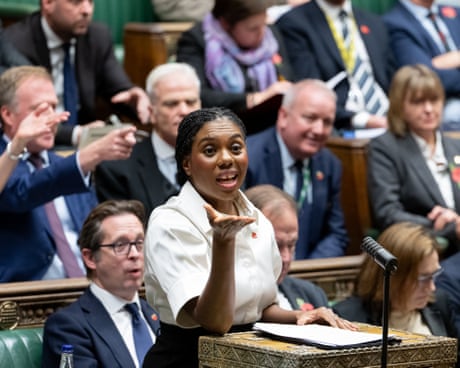
The Guardian view on a changing Brexit debate: Kemi Badenoch is trapped in denial | Editorial

The prime minister’s ambitions might be ambiguous, but unlike the Conservative leader, he is following voters and the facts

British politics is still polarised around Brexit, although 10 years on from the referendum, the terms of debate are very different. Or they should be. Russia’s invasion of Ukraine in 2022 has moved discussions of European solidarity from the realm of abstraction to a matter of urgent defence partnership. Donald Trump’s presidency in the US, marked by scorn for European democracies and indulgence of Vladimir Putin, has undermined confidence that Britain can rely on any “special relationship” with Washington.

Under these circumstances, it would be absurd to deny that a reappraisal of Brexit is in order. The prime minister acknowledged this in his speech at the Labour party conference last month, calling for a national conversation about the future relationship with every option, including rejoining, on the table. The Eurosceptic opposition are having none of it. The Conservative leader, Kemi Badenoch, accuses the government of stirring division by raising the European question. She told MPs this week that Labour should thank the Tories for the Brexit deal they negotiated.

Do you have an opinion on the issues raised in this article? If you would like to submit a response of up to 300 words by email to be considered for publication in our letters section, please click here.

Continue reading...

© Photograph: House of Commons/PA

© Photograph: House of Commons/PA

© Photograph: House of Commons/PA

  •  

Survivors shell-shocked after deadly Spain train crash - The Latest

Spain has begun three days of mourning after at least 69 people were killed and more than 100 were injured in a crash between two high-speed trains. The town of Urda has become the site of a major operation, as emergency services continue to search through the wreckage and relatives wait for news of their loved ones. There is growing public anger over the incident, which is the second fatal train collision in Spain in less than a year. Lucy Hough speaks to the Guardian’s Madrid correspondent, Sam Jones

Continue reading...

© Photograph: AFP/Getty Images

© Photograph: AFP/Getty Images

© Photograph: AFP/Getty Images

  •  

Volkswagen’s €5.9 Billion Loss Exposes Deepening Crisis in German Car Industry

Volkswagen has reported a quarterly operating loss of €5.9 billion, intensifying pressure for factory restructuring and workforce reductions as Europe’s largest carmaker struggles with Chinese competition, American trade tariffs and the financial costs of its transition towards electric vehicles.

Volkswagen Group has announced a €5.86 billion operating loss for the third quarter of 2026, marking another deterioration in the financial performance of a company long regarded as one of the foundations of German industrial strength.

The result, published on 29 October, compares with an operating loss of €1.3 billion in the corresponding period last year.

Quarterly revenue declined by 6.3 per cent to €75.3 billion, while vehicle deliveries fell by 14.3 per cent to approximately 1.89 million.

The figures highlight the scale of the challenges facing the automotive group, which includes Volkswagen, Audi, Porsche, Škoda and several other major European brands.

They also increase pressure on management to accelerate a restructuring programme involving substantial reductions in costs, employment and production capacity.

Porsche Writedown Weighs on Results

A substantial part of Volkswagen’s reported loss was attributable to exceptional charges, including a multibillion-euro reduction in the assessed value of its Porsche interests.

According to Volkswagen’s financial results, the group’s operating result for the first nine months of 2026 was just €71 million, compared with €5.4 billion during the equivalent period of 2025.

Excluding special items, the company recorded an operating profit of €8.8 billion for the nine-month period.

The distinction is important.

The latest results do not indicate that every part of Volkswagen’s underlying business is generating operating losses. However, they expose the financial consequences of weakened profitability, changes in business strategy and previous investment decisions.

The group’s operating margin before special items stood at 3.8 per cent.

Finance chief Arno Antlitz said this was insufficient to sustain the investment needed for future competitiveness.

Volkswagen’s difficulties have also coincided with pressure on Porsche, whose premium positioning has not insulated it from changing demand and competition in international markets.

China Becomes an Increasingly Difficult Market

China has been central to Volkswagen’s international business for decades, providing a major source of sales and earnings.

That position is increasingly challenged by domestic manufacturers offering competitive electric vehicles, advanced digital features and lower prices.

Chinese companies have expanded rapidly in their home market, often developing new models more quickly than established European manufacturers.

Volkswagen is therefore confronting a problem that extends beyond a cyclical slowdown in demand.

Its historical advantages in manufacturing scale, distribution and brand recognition no longer guarantee the same competitive position in a market undergoing technological transformation.

The company has acknowledged that the Chinese market is shrinking while competitive pressure in Europe is increasing.

American tariffs have created another complication, raising costs and constraining profitability in a market where the group already faces substantial competition.

Together, these developments have weakened the assumptions underpinning Volkswagen’s global manufacturing strategy.

Electric Vehicles Present a Financial Dilemma

Volkswagen has invested heavily in electrification, software development and new vehicle platforms.

Demand for its electric models in Europe remains significant.

The company reported that battery-electric vehicles account for 40 per cent of its European order book, while its Electric Urban Car Family has attracted approximately 150,000 orders.

However, increasing electric vehicle sales do not automatically produce higher profits.

Volkswagen acknowledges that its electric vehicles currently generate lower earnings than comparable combustion-engine models.

This creates a difficult financial transition.

The company must invest in technologies required to remain competitive while maintaining sufficient profitability to finance those investments.

At the same time, established European manufacturers face competition from Chinese producers with different cost structures and supply-chain arrangements.

The resulting pressure is not confined to Volkswagen. It affects suppliers, component manufacturers and other companies dependent on the European automotive industry.

Factory Closures and Employment Reductions

Volkswagen’s deteriorating results have strengthened management’s argument for reducing production costs.

Reuters reported that chief executive Oliver Blume’s wider restructuring proposals could involve as many as 100,000 job reductions across the group, with up to four German factories potentially facing closure.

These remain restructuring proposals rather than completed measures.

Volkswagen’s own Future Plan 2030 includes a cost-reduction programme worth approximately €31 billion, combining €20 billion in operational savings with €11 billion in lower overhead costs.

The company is also seeking an additional reduction of 12,000 positions at Volkswagen AG by 2030, with negotiations covering the proposed measures.

Management and the IG Metall union have agreed to begin talks on 24 November at the Emden plant, followed by another round in Zwickau on 15 December.

The negotiations are likely to prove consequential for industrial relations in Germany, where Volkswagen operates within a system of employee representation and collective bargaining that gives workers considerable influence over restructuring decisions.

A Wider Test for Europe’s Industrial Strategy

Volkswagen’s difficulties reflect several pressures facing European manufacturing.

High energy costs, international trade restrictions, technological competition and the expense of industrial transformation are affecting the profitability of established producers.

Europe’s automotive industry also supports extensive supplier networks, research facilities and skilled employment across several EU countries.

A sustained contraction in German vehicle production would therefore have implications beyond Germany itself, particularly for neighbouring economies integrated into automotive supply chains.

For EU policymakers, the challenge is to reconcile industrial competitiveness with decarbonisation objectives and the need to preserve manufacturing investment.

Volkswagen’s latest results do not determine the future of European car production. They do, however, demonstrate that the transition towards new technologies is taking place under considerably more difficult commercial conditions than many manufacturers anticipated.

The group’s restructuring negotiations will provide an early indication of how those costs are to be distributed between shareholders, employees and the industrial regions that depend on its factories.

  •  

Germany and Italy Clash Over Gas Storage as Europe’s Energy Prices Return to Crisis Levels

A dispute between Germany and Italy over natural gas storage has exposed tensions within the European Union’s energy market, as wholesale prices approach levels last recorded during the 2022 energy crisis and governments confront the prospect of another expensive winter.

Italy has accused Germany of contributing to the latest surge in European natural gas prices by delaying the replenishment of its underground storage facilities, reopening a debate about national energy policies and their consequences for the EU’s single market.

The dispute emerged on 29 October after the European benchmark gas price briefly exceeded €100 per megawatt hour the previous day, its highest level since December 2022.

Germany’s gas storage facilities were just 61.7 per cent full, compared with almost 91 per cent in Italy and an EU average of approximately 75 per cent.

The difference has become politically sensitive because European countries purchase gas in an interconnected market, meaning decisions taken by one major consumer can influence prices paid elsewhere.

Speaking at the Montel Italian Energy Day conference in Milan, Alessandro Noce, director general for energy markets and infrastructure at Italy’s Energy Ministry, criticised Germany’s approach to preparing for winter.

According to Reuters, Noce argued that Italy had spent €300 million securing additional gas reserves, only to face higher market prices as Germany attempted to replenish its comparatively depleted stocks.

He also questioned whether Germany had delayed purchases because of preparations to privatise energy companies involved in the storage process.

Germany’s Economy Ministry did not immediately respond to the criticism.

Germany’s Storage Decisions Under Scrutiny

The German government’s approach has attracted particular attention because of its role in the operations of Uniper and Securing Energy for Europe (SEFE).

Both companies became important components of Germany’s energy-security arrangements following the disruption of Russian gas supplies in 2022.

Plans concerning their future ownership have coincided with renewed questions about how Berlin balances commercial considerations against the need to maintain strategic reserves.

At the Milan conference, an energy analyst suggested that preparations for privatisation had contributed to delays in storage purchases.

That assessment has not been established as the definitive explanation for Germany’s comparatively low reserves.

Nevertheless, the resulting political dispute demonstrates the difficulties of managing energy security through a system in which national governments retain considerable discretion while their purchasing decisions affect a common market.

Europe’s Gas Market Faces Renewed Pressure

Europe’s latest price increase has several causes extending beyond German storage policies.

Disruptions to liquefied natural gas shipments associated with the conflict involving Iran have constrained supplies from the Middle East.

At the same time, European countries entered the summer storage-refilling period with unusually low reserves following the previous winter.

The EU Agency for the Cooperation of Energy Regulators (ACER) reported that underground gas storage was only 28 per cent full at the end of winter 2025–26.

By 21 October, that figure had risen to 75 per cent, still below historical levels.

In its latest gas-market monitoring report, ACER estimated that disruption linked to the Middle East conflict had added between €18 billion and €33 billion to Europe’s gas-import bill.

The agency also found that American liquefied natural gas accounted for roughly 30 per cent of EU gas supplies, reflecting Europe’s growing reliance on transatlantic energy imports.

Although this diversification has reduced dependence on Russian pipeline gas, it has also increased Europe’s exposure to international competition for LNG cargoes.

European buyers must compete with customers in Asia, particularly when colder weather or geopolitical disruptions increase demand.

EU Storage Rules Face a Test

The disagreement has implications for the European Union’s gas-storage framework.

Following the 2022 energy crisis, the EU introduced mandatory storage requirements intended to reduce the risk of supply shortages during winter.

The arrangements were subsequently extended until the end of 2027.

Under the revised rules, member states retain a 90 per cent storage-filling target but have greater flexibility over when and how it is achieved.

Countries may reach the target between 1 October and 1 December, rather than being bound to the previous 1 November deadline.

Further flexibility is available in difficult market conditions.

These provisions were designed partly to prevent governments from creating artificial demand peaks by purchasing gas simultaneously to meet rigid deadlines.

However, the present dispute suggests that delayed purchases can create another problem if several major consumers need additional supplies as winter approaches.

Germany’s current storage level does not, by itself, establish a breach of EU requirements. The applicable deadlines and permitted exemptions must also be considered.

Italy Seeks Greater Scope for Intervention

The Italian government has meanwhile been seeking permission from the European Commission to use public funds to reduce energy costs for households and businesses.

Rome’s concerns reflect the economic consequences of sustained high gas prices, particularly for industries dependent on energy-intensive manufacturing.

Italy faces a general election expected in 2027, adding a domestic political dimension to the debate over energy subsidies.

Noce warned that prices could rise to between €150 and €180 per megawatt hour if January brings particularly cold weather.

Such an outcome remains a scenario rather than a forecast.

Energy markets will also be influenced by developments in the Middle East, LNG deliveries, industrial demand and winter temperatures.

A European Problem Without a Single National Solution

Europe has expanded its LNG import infrastructure and diversified energy sources substantially since 2022.

However, the latest price increases demonstrate that greater import capacity does not necessarily insulate consumers from global supply disruptions.

The German–Italian dispute also exposes the limits of national energy planning within an integrated European market.

Germany’s storage policies affect its neighbours, just as decisions taken elsewhere influence the price German consumers pay.

The central question for Brussels is whether existing coordination arrangements provide sufficient incentives for governments to safeguard their own winter supplies without transferring additional costs to other member states.

With the heating season approaching, that issue is becoming an immediate economic concern rather than a theoretical dispute about European energy solidarity.

  •  
❌