❌

Reading view

Data Center Bans Won't Stop AI. They'll Barely Slow It Down.
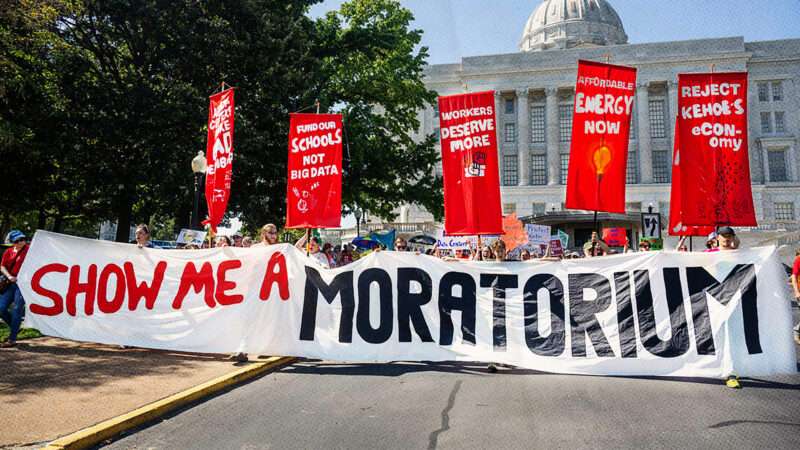
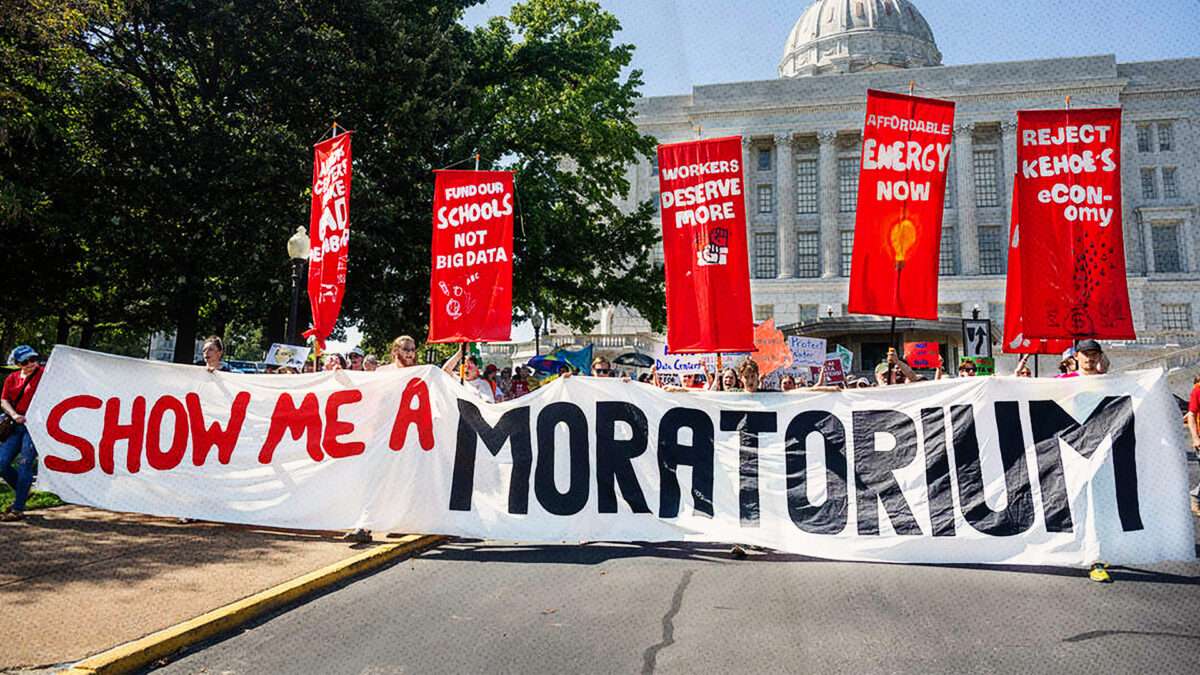
Protesters demanding a data center moratorium | Emily Curiel/TNS/Newscom.

With a contentious midterm election less than a week away, one cause has unified voters and candidates across the political spectrum: slowing down AI. 

A friend of mine who directs tens of millions of dollars in midterm election spending says he's never seen voter salience of an issue—AI, broadly—increase so quickly. In July, Gallup found that 39 percent of Americans thought AI does more harm than good, up from 31 percent in 2025. Only 9 percent of Americans, meanwhile, thought the technology did more good than harm (down from 12 percent last year). 

Public sentiment has since soured even more. An October ABC News/Washington Post/Ipsos poll found that 57 percent of Americans think AI is bad for society, while a staggering 66 percent said they opposed new data center construction in the United States.

Politicians on the left and right have seized on this political sentiment and offered their own data center stiff-arm policy du jour. However, even a full e-brake on data center construction would do little to stop AI progress. 

In August, Arvind Narayanan, director of the Princeton Center for Information Technology Policy and co-author of AI Snake Oil: What Artificial Intelligence Can Do, What It Can't, and How to Tell the Difference, claimed that a data center moratorium would basically not slow AI development at all. 

Using a back-of-the-envelope calculation, he concluded (under some reasonable assumptions) that a one-year data center moratorium in a "typical U.S. state" would slow down AI progress nationally by only five to 10 hours. Assuming that at least half of data center developers would avoid a moratorium by building their facilities elsewhere, a one-year freeze on construction in larger states like New York would set AI in America back by less than one day, according to Narayanan. 

My own modeling of this question reaches essentially the same conclusion as Narayanan's, but rather than assuming computing power will continue growing at its current rate, it treats future growth as dependent on how much computing capacity gets built. I considered three theoretical policy regimes: a full stop on new data center construction and on replacement of depreciated graphics processing units (GPUs); a full stop on new data center construction only; and no restrictions whatsoever. 

The point is that, as a federal policy, standing athwart data centers yelling "Stop!" doesn't accomplish the outcomes that moratorium-ites claim to want. And, while some local policies could slightly impede center growth, the only way to hamper the progress of frontier models would be to enact an extremely draconian policy regime—one that goes beyond moratoriums for new data centers and prohibits GPU upgrades in existing facilities—which no one is actually proposing or close to implementing. 

What does this all tell us about where advocates of any stripe should put their efforts? 

For those in favor of accelerating AI, on the one hand, it provides comfort in that data center construction, even in the extreme, is not a binding constraint to AI advancement. But on the other hand, the political energy currently concentrated on mobilizing the backlash won't stay focused there forever; an issue where more than two-thirds of people are even tangentially opposed to your "side" is not one that easily disappears.

For doomers, it means if the goal is a "pause" of some sort on the ability of AI technology to, say, replace you in your job, targeting data center construction isn't the best way to go about it. It may be a useful galvanizing node in the broader policy fight, but don't expect it to cause any meaningful change in the current trajectory—whatever you believe that to be. 

The ineffectiveness of data center moratoriums doesn't make the policy on its own more or less optimal. But if the data center protests are a proxy for broader AI-induced anxiety about large language models crowding out human pursuits, causing unemployment, or destroying the environment, protestors will need to find another leverage point.

The post Data Center Bans Won't Stop AI. They'll Barely Slow It Down. appeared first on Reason Magazine.

  •  

Massachusetts Voters Don't Seem Inclined To Repeal Marijuana Legalization Next Week

a hand drops a card bearing a cannabis leaf into a ballot box | Picsfive/M Akbar Arda/Dreamstime/Fatima Ruiz

A decade ago, 54 percent of Massachusetts voters said yes to Question 4, a ballot initiative that legalized possession, home cultivation, and commercial distribution of recreational marijuana. Judging from recent surveys, voters are not inclined to reverse that decision by approving Question 8, an initiative on next Tuesday's ballot.

Question 8, a.k.a. the Eliminate Recreational Marijuana Sales and Allow Limited Possession Initiative, would permit adults 21 or older to possess up to an ounce of cannabis. But they would have to get it from the black market, since Question 8 would not allow them to grow it or buy it from state-licensed retailers.

The initiative "would keep personal possession of marijuana legal, keep medical marijuana legal, and stop commercial marijuana stores," its supporters say. They allege that legalization has impaired "productivity" and led to increases in "fatal car accidents," "workplace injuries," "healthcare costs," "crime (like DUI's)," "ER visits," and "mental health conditions like psychosis, severe anxiety, and schizophrenia, particularly in young adults."

Voters do not seem impressed by those arguments. In eight polls between mid-February and mid-October, support for Question 8 ranged from 20 percent to 41 percent. In the most recent survey, conducted by The Boston Globe, 71 percent of respondents said they planned to vote no on Question 8, which suggests that experience with legalization has substantially increased opposition to pot prohibition in Massachusetts.

Question 8's sponsor, the Coalition for a Healthy Massachusetts, is funded almost entirely by Smart Approaches to Marijuana (SAM). As of October 20, the Virginia-based group had spent $3.7 million on the project, compared to $2.8 million in spending by the opposition, which includes several marijuana businesses.

SAM's co-founder, Kevin Sabet, who served as a drug policy adviser during the Clinton, George W. Bush, and Obama administrations, says he was motivated by the concerns of Massachusetts residents who approached him. "Many of them voted for this initiative 10 years ago and feel betrayed," Sabet told WGBH, an NPR station in Boston. If so, the polls indicate such converts are far outnumbered by former Question 4 opponents who have traveled that road in the opposite direction.

"We're under no illusions that the bluest state in the country is going to pass this easily with flying colors," Sabet told WBUR, another Boston NPR station, a few weeks ago. "But we want to have that conversation."

The conversation clearly is not going the way Sabet hoped. Massachusetts, which was the fifth state to legalize recreational marijuana, is now one of two dozen, which together account for most of the U.S. population. In October 2025, Gallup put nationwide support for marijuana legalization at 64 percent, which was down a bit from the peak of 70 percent recorded in 2023 but still 16 points higher than in 2012, when Colorado and Washington started this ball rolling.

Public support for legalizing recreational marijuana tends to be even higher in states that have done it. In Civiqs surveys last December, support in 15 states where voters had approved legalization ranged from 62 percent in Missouri to 77 percent in Oregon. It had increased since legalization in every state but New Jersey, where it was down one point from the 67 percent of voters who approved Public Question 1 in 2020. In Massachusetts, support had risen from 54 percent to 76 percent.

The fate of two other drug policy initiatives that voters will consider next week is less clear. As far as I can tell, pollsters have not asked voters about them.

Colorado's Proposition 132 would make manufacturing or distributing any amount of illicit fentanyl a Level 1 drug felony punishable by a mandatory minimum sentence of eight years. Under current law, the penalties vary depending on the amount of fentanyl involved.

In Idaho, House Joint Resolution 4, a proposed constitutional amendment, would strip voters of the power to legalize marijuana or any other psychoactive substance. If the initiative passes, which requires approval by a simple majority, that power will be reserved to the state legislature.

The post Massachusetts Voters Don't Seem Inclined To Repeal Marijuana Legalization Next Week appeared first on Reason Magazine.
  •  

What Will Democrats Do?

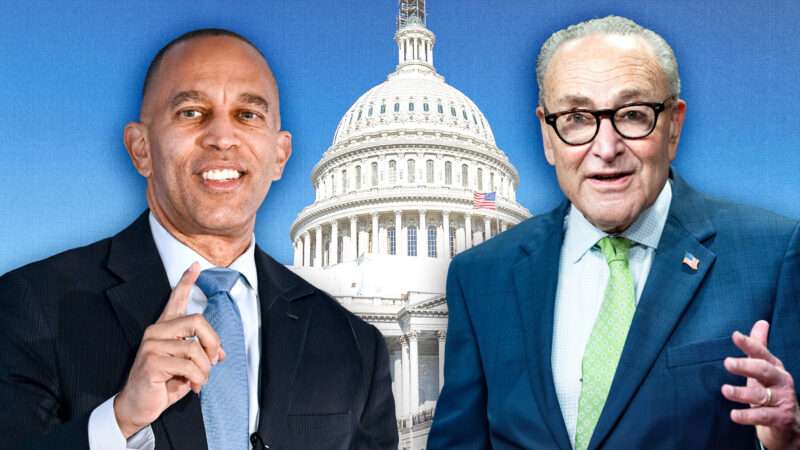
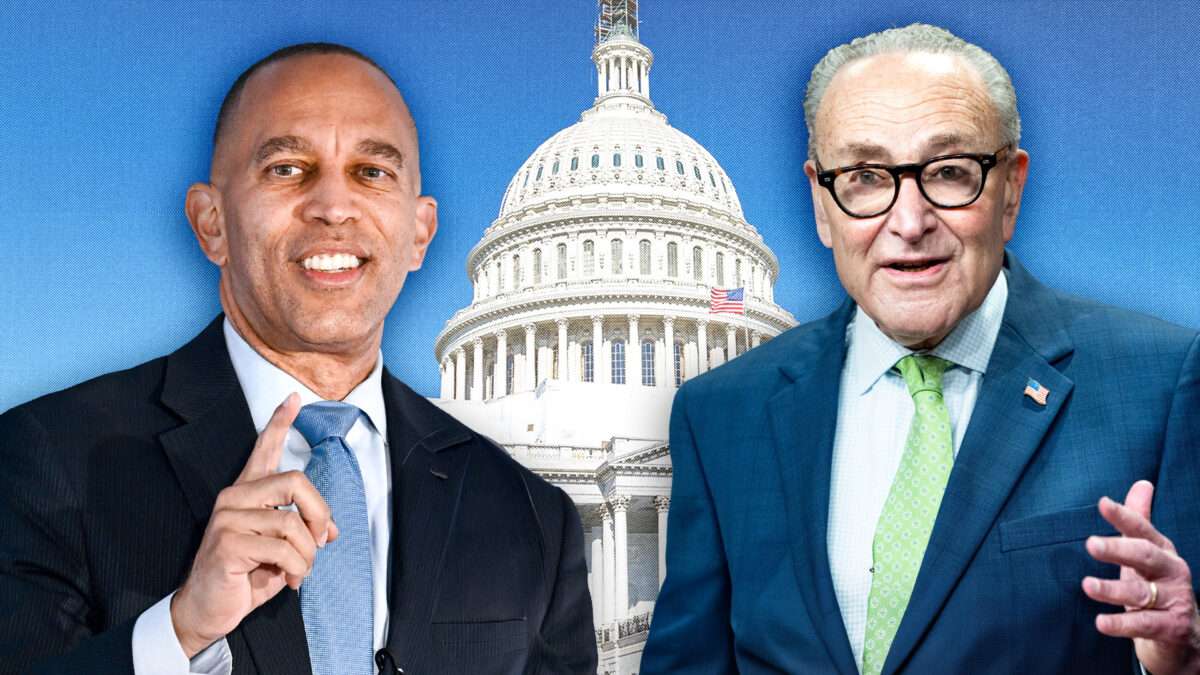
Hakeem Jeffries (on the left) and Chuck Schumer (on the right) with the U.S. Capitol building behind them | Illustration: ichael Brochstein/Anthony Behar/Sipa USA/Newscom/Sborisov/Dreamstime

With Republicans likely headed for a good ol' fashioned ass kicking in next week's midterm election, it doesn't seem too premature to ask the next big question: What are the Democrats going to do once they have a congressional majority?

The New York Times reports that Democrats will move quickly on four items that are "consensus items among their members that are basic enough to bypass time-consuming committee consideration and go straight to the floor."

Two of those items are really good ideas: ending President Donald Trump's tariffs and ending the war in Iran (or ordering Trump to "seek authorization from Congress to continue it"). Both would restore proper congressional authority in areas where Trump has expanded executive power, with terrible results.

The other priorities, however, include reversing Medicaid spending cuts included in the One Big Beautiful Bill Act and extending some Affordable Care Act health care subsidies that expired last year. Both would require higher spending at a time when the federal government is already running $2 trillion annual deficits and the national debt is at a record high.

But that's probably a pretty good summary of what Democratic control of Congress for the next few years will look like: a mix of critically important reforms to combat Trump's big-government agenda and, well, the Democrats' own big-government agenda.

Over at National Review, John Puri has an extensive list of "truly frightening" policies Democrats could pursue after the midterms, including stuff like bypassing the filibuster to borrow more heavily, arbitrarily restricting commerce, handing out taxpayer money to political allies, and promising "free" money for everyone. Gosh, I sure hope none of that happens (again).

More seriously, there are also likely to be some major investigations into corruption and other executive branch misdeeds. Trump's family and Secretary of Defense Pete Hegseth are likely to be among the main targets. Hegseth could "face impeachment—which would make him just the third Cabinet secretary in history to face such a sanction," The Atlantic reports.

No wonder Hegseth is reportedly looking for an exit strategy.

Of course, there are plenty of caveats to this. Most importantly, Trump will still be the president—and will be able to veto anything the Democrats pass through Congress. There's also the Senate's filibuster rules. Even the biggest of blue waves is highly unlikely to deliver a 60-seat majority.

Though they may dream big, Democrats will face some serious constraints on their policymaking agenda. They will face fewer obstacles in blocking, unwinding, and investigating Trump's unlawful and corrupt actions—and that's where I, for one, hope they will spend their efforts.


Scenes from Washington, D.C.: "On Sept. 16, Leo J. Terrell threatened to choke a Justice Department intern with a computer charger."

So begins The Harvard Crimson's scathing and deeply reported takedown of Terrell, the former talk radio host and Fox News contributor who is now the senior Justice Department official running the Trump administration's crackdown on elite universities (which is ostensibly an effort to police antisemitism but seems more like an excuse to use federal taxpayer dollars to fight a culture war).

The computer cord incident "was one of a series of episodes described by Billa and three other interns, all Jewish," the Crimson reports. "Terrell isolated them from the rest of the Justice Department, berated them over minor mistakes, and repeatedly threatened their jobs or careers."

When he's not harassing his staffers, Terrell seems to be overcome with delusions of grandeur. A planned 15-city media tour in advance of the midterms "was supposed to be the centerpiece of Terrell's work" and would have put him on stage with singers, comedians, and professional athletes. One event has been held so far: "an Oct. 14 gathering at a synagogue in Southfield, Mich. with Terrell as the keynote speaker."


QUICK HITS

  • Hackers stole $6.3 billion of bitcoin from the Binance crypto exchange. Another hacking attempt on Thursday targeted Polymarket.
  • ProPublica has "tallied and cataloged every case we can find of an immigration agent reportedly detaining a citizen during the current administration—more than 500 cases from Inauguration Day through Oct. 21, 2026."
  • Federal debt held by the public has surpassed the size of the U.S. economy for the first time since World War II. Unlike back then, however, the debt is being driven by entitlement spending, which means it is going to keep spiraling higher.
  • Relatedly, five states are carrying more than $30,000 in debt per capita, according to a new report from the Reason Foundation, the nonprofit that publishes Reason: New York ($37,006 per capita), New Jersey ($35,100), Connecticut ($33,189), Illinois ($31,582) and Hawaii ($30,759). All told, America's state and local governments are more than $6 trillion in debt.
  • If you ever wanted a Mothman license plate (and who doesn't), that's now available in West Virginia.
  • Patrick Stewart, the legendary actor whose range included everything from Shakespeare to starships, died at age 86.

In lieu of flowers, memorial contributions may be made to:
Johns Hopkins Alzheimer's Disease Research Center Fund   https://t.co/luC5CdcWDy
Alzheimer's Foundation of America Caregiver Resources    https://t.co/zvNptfyuNd

Photo Credit: Tommy Garcia pic.twitter.com/XNncEVq56X

— Patrick Stewart (@SirPatStew) October 29, 2026

The post What Will Democrats Do? appeared first on Reason Magazine.

  •  

California Voters Have a Chance To Address the State's Broken Environmental Regulations

Construction project in California | Photo: StudioPeace/Envato

One of the biggest problems in our world of politics is voters' common refusal to accept the concept of tradeoffs. Author Robert Mulligan says it "is one of the most basic principles in economics, that in order to have more of one thing, you have to accept having less of something else." Likewise, economist Thomas Sowell noted, "There are no solutions. There are only tradeoffs."

It's a basic idea that we all understand on a personal level. I've been thinking about trading my 15-year-old car for a new one, as it would be nice to have a vehicle with power windows and Bluetooth. But buying one means using money I could spend on other pleasures. Such is life.

Politics is funny, though. Politicians make promises where everyone gets everything their heart desires. We can have a single-payer healthcare system without any of the resulting shortages. We can have tariffs that don't drive inflation—or that wall Mexico pays for. It would be nice if lawmakers just leveled with us about the ups and downs of policy choices.

One initiative this election, Proposition 45, best epitomizes that tradeoff issue. It seeks to reform the state's "landmark" environmental law, the California Environmental Quality Act (CEQA). Do we want more building and the good it brings, or do we maintain the Byzantine regulatory process so we can stop construction of projects we don't like?

Complex regulations aren't best reformed at the ballot box, but since Gov. Ronald Reagan signed the law in 1970, CEQA has entangled construction projects of every sort in a maze of hearings, Environmental Impact Reports, and litigation. CEQA was meant to assure developers mitigated any environmental damage. That sounds fine, but it has led to long delays, enormous costs, and special interests that use the process to stop projects or exact non-environmental demands (e.g., union wage concessions).

There's wide consensus in the Legislature that CEQA has exacerbated the state's housing crisis, halted business growth, and slowed our economy. The law even endangers the state's environmental priorities, as cynical actors have used it to derail parks, transit projects, infill housing, wildfire-fighting brush-clearance projects, you name it.

Lawmakers have exempted various projects from CEQA, but have done so on a piecemeal basis—and only those that fit a narrow scope. Sponsored by the level-headed California Chamber of Commerce, Proposition 45 attempts broad reform for any "essential" project. Per the measure, that includes housing, water systems, clean energy, health facilities, police and fire stations, brush clearance, broadband, education facilities, and transportation projects except for the bullet train.

As the Legislative Analyst's Office explains, Proposition 45 "creates more binding time limits for state and local governments to do both CEQA and permitting reviews. This includes time limits for determining if a project application is complete, finishing the EIR, and granting other types of approvals and permits." Some of the changes are deep in the weeds, but it's all meant to speed things up—and to limit what the courts can review.

"CEQA lawsuits, inclusive of appeals, typically take four to five years to resolve, stalling most approved projects and often deterring lenders, investors and grant-making agencies from funding them," explained a September report from the Holland & Knight law firm. Ask any knowledgeable person about why California is incapable of building anything efficiently and they will point to these CEQA impediments. If the state wants to reduce housing prices, it needs to fix this logjam.

As a voter, you must answer a simple question: Do the benefits outweigh the downsides? Again, the downside is that in speeding up approval of projects that you like, it will also speed up the process for projects that you don't like. No wonder opponents are raising the arguable specter that Proposition 45 will help companies build data centers, given those centers are widely unpopular.

We need more housing, including suburban subdivisions. We need more businesses. We need better freeways. We need to speed the process for brush clearance to prevent devastating wildfires. So, yes, I eagerly support this measure. Will it likely mean I'll see the speedier construction of, say, underused light-rail lines and absurdly costly subsidized apartment buildings that annoy me? Probably. Oh well, some bad will come with the good, no matter what the campaigns tell you.

For instance, the "yes" side claims that Proposition 45 offers the "same strong protections." California's environmental protections will still be strong, but they obviously won't be the "same." And opponents claim CEQA needs reform, but this particular fix is the wrong way to go about it. That canard just reflects a myopic refusal to accept downsides inherent in any reform.

To me, Proposition 45 has far more pros than cons. You do you. But be an adult and recognize the tradeoffs. As sci-fi author Robert Heinlein wrote, "there ain't no such thing as a free lunch (TANSTAAFL)."

This column was first published in The Orange County Register.

The post California Voters Have a Chance To Address the State's Broken Environmental Regulations appeared first on Reason Magazine.

  •  

Breach of Denmark's National ID System Demonstrates the Risks of a 'Papers, Please' Society

Dokk1, a government building in Denmark that contains the Central Register of Persons (CPR). | imageBROKER/Stig Alens/Newscom

Like most of the rest of the world, the United States has been stumbling its way towards a "papers, please" society in which we must show identification to go about our lives. The latest excuse for imposing a national ID requirement is voting, with the stalled SAVE America Act intended to preempt state procedures by requiring people to show REAL ID-compliant documents before casting ballots. Whatever the excuse, we're told identification requirements will make us more secure, but a recent breach of Denmark's national ID system suggests that such an apparatus is just easy hacker bait.


Hackers 'Harvest Records on Approximately 8.8 Million People'

"Denmark is reviewing security controls around its national citizen registry after unauthorized parties exploited a company's access credentials to harvest records on approximately 8.8 million people over a 10-day period," Shweta Sharma of CSO, an enterprise-level security publication, reported earlier this month. "The breach covers people living in Denmark as well as individuals who have died or moved abroad, while people with protected names and addresses were not affected."

The hacker who broke into Denmark's Central Register of Persons (CPR) claims to have entered through a company with access that used "123456" as a password. Danish authorities are scrambling to reassess their security procedures, the implications of the lost data on what seems to constitute almost the entire population, and "whether there may be similar vulnerabilities in other key public IT systems."

It's tempting to marvel at the risks inherent in compiling a database of the identifying details of a country's people and then protecting it with the crappiest conceivable password. But Americans are in a poor position to savor the Danish government's discomfort (though we should sympathize with the concerns of the Danish people) given our own government's comparable screwups.


The U.S. Government's History of Data Breaches

In 2015, the federal Office of Personnel Management (OPM) suffered a massive data breach at the hands of Chinese government hackers. The OPM initially put the loss from the penetration of its background investigation databases on 4 million individuals. Later, though, after a second incident, the OPM raised its estimate to 21.5 million people whose "residency and educational history; employment history; information about immediate family and other personal and business acquaintances; health, criminal and financial history; and other details" had been surrendered to hackers.

That breach cast a long shadow. Government-provided credit monitoring and identity theft protection insurance for the affected individuals just began expiring earlier this year.

Frankly, compared to the scale of the OPM data loss, the slightly earlier incident at the Internal Revenue Service (IRS) involving the theft of Social Security numbers, birthdates, and home addresses of approximately 100,000 people almost doesn't register.


The Inherent Vulnerability of Centralized Databases

A year before those hackers engaged in one-stop information shopping courtesy of federal databases, the Cato Institute's Chris Edwards had warned me that the federal government's vast collection of sensitive data was bound to be abused and misused. He told me the main "threat is that the vast databases held by the IRS, HHS, security agencies, etc, will be leaked on purpose, leaked because of bureaucrat sloppiness, or be hacked. The more they collect, the more that will eventually leak."

In fact, two years ago, the Associated Press reported that "a former contractor for the Internal Revenue Service who pleaded guilty to leaking tax information to news outlets about former President Donald Trump and thousands of the country's wealthiest people was sentenced to five years in prison Monday."

That leak turned out to involve "the private data of more than 400,000 taxpayers," according to the House Judiciary Committee. When he was sentenced, the guilty party, Charles E. Littlejohn, insisted he "acted out of a sincere, if misguided, belief I was serving the public interest" by exposing the tax records. But his motivation hardly matters to the affected individuals who had no choice but to give sensitive information to the federal government, only to see it badly mishandled—as Edwards predicted.

In the case of Littlejohn, data was stolen out of a smug sense of outrage over the relative burdens imposed by the tax system. In the OPM incidents, information on federal employees was pilfered by a hostile foreign government. In the other IRS breaches, it was apparently taken by criminals seeking to profit.

The Danes may have been lucky, since the people who hacked their national database insist "they had no intention of selling or leaking the data" and may have just sought a challenge. Those affected will just have to hope so.

As the compromise of Denmark's national ID system demonstrates, centralized databases are tempting targets for bad actors who see in them tempting treasure troves of information if they can only find holes in security—like ridiculous password protection. The data storage company RackTop maintains a running list of government data breaches in the U.S., updated monthly.

"Several of 2026's largest government incidents ran through systems built to share documents, according to public reporting: a Defense Manpower Data Center file-sharing system, a third-party discovery-transfer tool at the Los Angeles City Attorney's Office, and a SharePoint system connected to DHS's Homeland Security Information Network," the company notes.


ID Requirements Address Some Security Worries While Creating Others

In the U.S., the latest calls for identification documents involve concerns that non-citizens may be casting ballots. In the days before the midterm elections, there may well be reason to ask people to prove their bona fides before participating in the political process. But whether for voting or for any other purpose, reliance on the federal government's national ID by another name—the SAVE Act specifies "a form of identification issued consistent with the requirements of the REAL ID Act of 2005 that indicates the applicant is a citizen of the United States"—builds dependency on a hacker-bait system that should itself be recognized as a security vulnerability.

CSO's Sharma added that the national ID breach is "forcing Denmark to reconsider how CPR numbers are used for identity verification. Officials are advising organizations not to rely on a CPR number alone and to use stronger mechanisms such as MitID, two-factor authentication, or one-time codes." (MitID is a state-run digital identification system in Denmark that also has security flaws.)

Denmark's national ID is no longer considered a reliable means of proving identity. Before Americans go further down the "papers, please" road, we should consider whether it poses more risks than benefits.

The post Breach of Denmark's National ID System Demonstrates the Risks of a 'Papers, Please' Society appeared first on Reason Magazine.

  •  

Review: House of the Dragon and the Pursuit of Political Power

MINISHOUSEOFDragon | <em>House of the Dragon</em>/HBO

At its best, HBO's House of the Dragon echoes questions about politics that drove the early seasons of Game of Thrones. How does one obtain or lose power? Why are those who desire it so often unfit? The right bloodline and a loyal army—or a big dragon—can take you only so far.

The dragons and armies play a bigger role in the spinoff series, but the show's recently completed third season occasionally embodied the spirit of its predecessor.

The third episode finds Queen Rhaenyra Targaryen, having seized the throne with a daring raid on Westeros' capital, planning a hasty coronation and banquet. She's thwarted by a deluge of other problems, large and small. The treasury is empty. Key allies seek favors. And who gets which bedroom in the palace?

With an entire episode dedicated to Rhaenyra's first day in her new job, House of the Dragon shows how successful leaders aren't defined by battlefield glory—mostly, it's about managing endless meetings and demands.

The post Review: <i>House of the Dragon</i> and the Pursuit of Political Power appeared first on Reason Magazine.

  •  

Brickbat: Home Sweet Chicago

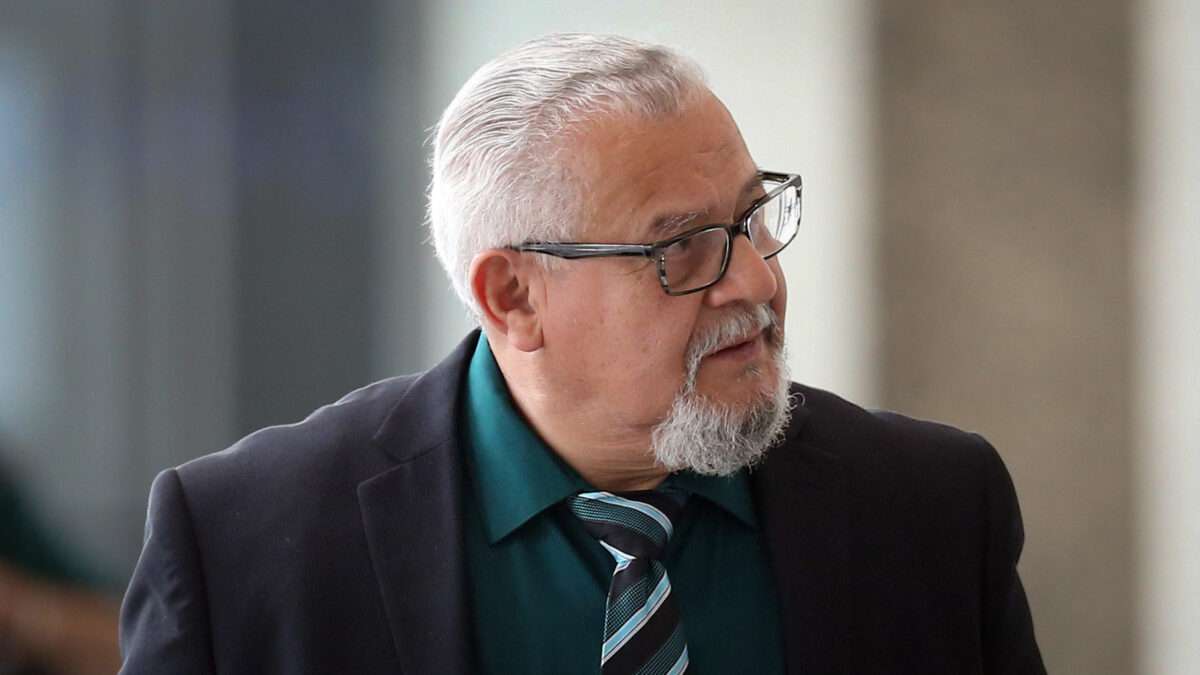
Former Chicago Police Detective Reynaldo Guevara | Terrence Antonio James/TNS/Newscom

Chicago taxpayers will pay at least $472.8 million to defend and settle lawsuits connected to former Chicago Police detective Reynaldo Guevara, who has been accused of falsifying police reports, framing suspects, and forcing witnesses to identify innocent people as criminals. The Chicago City Council unanimously approved a $260.8 million settlement for 17 men who spent a combined 383 years in prison after being wrongfully convicted in cases tied to Guevara's investigations. The settlement brings the total to 32 resolved cases, while another 25 lawsuits remain pending. The city has also paid $56.2 million to private attorneys to defend Guevara and other officers named in the cases. Many of the men who were wrongly convicted spent decades in prison, and judges have granted certificates of innocence to several people involved. Guevara retired in 2005 and still receives an annual police pension of $91,000. Despite repeated allegations of misconduct, he has not been criminally charged for his actions as an officer. The growing cost of these cases comes as Chicago faces a projected $882.5 million budget gap for 2027.

The post Brickbat: Home Sweet Chicago appeared first on Reason Magazine.
  •  

Supreme Court Clerks Who Become Law Professors (2012-2026)

Yesterday, I wrote about the lateral hiring market. Here, I want to focus on the entry-level hiring market. Since 2012, the number of entry-level hires has dipped to the low 60s and spiked to the mid 140s. Professor Sarah Lawsky has carefully tracked these numbers over the years through a series of detailed hiring spreadsheets: 2012, 2013, 2014, 2015, 2016, 2017, 2018, 2019, 2020, 2021, 2022, 2023, 2024, 2025, and 2026.

Lawsky tracks how many entry-level hires completed Supreme Court clerkships. (This category does not record already hired law professors who are subsequently hired for Supreme Court clerkships.) I thought it might be worthwhile to dig into the numbers a bit more. Moreover, to continue my prior post on laterals, I wanted to track how often former SCOTUS clerks moved to other institutions. You can see the details in this spreadsheet, which tracks hires of SCOTUS clerks between 2012 and 2026. Please let me know if I am missing any names or made any errors.

How many academics has each Justice "fed"? Counting is actually a bit tricky, so I had to make some judgment calls. If a senior associate Justice hired a clerk, who was then assigned to an active member of the Court, I counted the hiring Justice. (Still, I found at least one law school bio that listed the active justice before the senior justice, a faux pas in my mind.) Likewise, for the clerks hired during the final terms of Justice Scalia or Ginsburg's tenure, and who were then reassigned, I counted them as Scalia and Ginsburg clerks. What about the clerks who were hired by Scalia or Ginsburg for a future term after their passing? In that case, I chose the active Justice that made the decision to re-hire them. With all those caveats out of the way, here is the list.

  1. Justice Ginsburg (12 Clerks): Elizabeth Porter, Kate Andrias, Miriam Seifter, Robert Yablon, John Rappaport, Daphna Renan, Pamela Bookman, Hajin Kim, Payvand Ahdout, Rachel Bayefsky, Marco Basile, and Jack Boeglin.
  2. Justice Breyer (8 Clerks): Jennifer Nou, Rebecca Stone, Natalie Ram, Tejas Narechania, Andrew Crespo, Farah Peterson, Brian Richardson, and Thomas Schmidt.
  3. Justice Kennedy (7 Clerks): Chris Walker, Lisa Manheim, James Stern, Richard Re, Justin Walker, Daniel Epps, and Leah Litman.
  4. Justice Thomas (7 Clerks): Marah Stith McLeod, Jennifer Mascott, Robert Leider, Haley Proctor, Steven Lindsay, Brian Lipshutz, and Brittney Lane Kubisch.
  5. Justice Stevens (6 Clerks): Jean Galbraith, David Pozen, Jessica Bulman-Pozen, Sam Erman, Merritt McAlister, and Travis Crum.
  6. Justice Sotomayor (6 Clerks): Aaron Tang, Michael Pollack, Nikolas Bowie, Kevin Arlyck, Bridget Fahey, and Kamaile Turcan.
  7. Justice Souter (5 Clerks): Erin Delaney, David Han, Ann Lipton, Matthew Tokson, Mark Jia.
  8. Chief Justice Roberts (4 Clerks): William Baude, Paul Crane, Matthew A. Shapiro, and Ryan Snyder.
  9. Justice Alito (4 Clerks): Steven Menashi, J. Joel Alicea, Sherif Girgis, and Garrett West.
  10. Justice Scalia (3 Clerks): Aditya Bamzai, Ian Samuel, and Katherine Mims Crocker.
  11. Justice Kagan (3 Clerks): Daniel Hemel, Andrew Crespo, and Benjamin Eidelson.
  12. Justice Gorsuch (2 Clerks): Lael Weinberger and Micah Quigley.

I have several observations.

First, during this time period, I suppose it makes sense that Justices Ginsburg and Breyer, both academics, hired so many law clerks who went onto become academics. But I was struck that Justice Kagan only hired three future academics. Perhaps her focus is not on the curious type that wants to write articles? Then again, as I've noted before, Professor Kagan didn't publish very much. She was a skilled administrator. To paraphrase John Kerry, "I was for originalism before I was against it." Who would have predicted that Justice Sotomayor would have twice as many academic clerks as Justice Kagan? Likewise, Justice Scalia, a former academic, only had three clerks hired into academia--only one of whom is conservative. Then again, I suspect ideological bias blocked many potential Scalia clerks from even considering the academy during this period. Justice Thomas has jumped ahead in the standings, but as I'll explain below, most of those placements are over the past three years.

Second, there are relatively few law professors who clerked on the Supreme Court. The percentage of entry-level hires with Supreme Court clerkships fluctuates. In 2012, there were seven clerks hired out of 140 reported hires: about 5%. In 2018, there were eight clerks hired out of 77 reported hires: nearly 10%. In 2026, there were four clerks hired out of 146 reported hires: about 3%. The hiring market has been fairly variable in recent years. Still, the persistent myth that you have to clerk on the Supreme Court to teach constitutional law should be retired. Very few ConLaw professors have actually clerked on the Supreme Court.

Third, the total number of hired clerks fluctuates each year, though it averages to about 5. I would wager that 100% of the clerks who apply for the entry-level market find a job somewhere. The Supreme Court pumps out about 36 clerks each year. Let's assume that around 13% of those clerks become law professors. Presumably, about 87% of Supreme Court law clerks do not go into academia, and find employment in the public or private sectors. Despite what one may think, the clerks who work to develop the law are not particularly interested in teaching it.

Fourth, the ideological imbalance of these clerks is stark, although it has corrected somewhat in recent years. Between 2012 and 2015, out of 25 entry-level hires, I count only four professors who were right-of-center: Chris Walker (Ohio State), James Stern (William and Mary), Will Baude (Chicago), and Justice Walker (Louisville). Between 2016 and 2019, there were also four right-of-center hires out of twenty total hires: Aditya Bamzai (Virginia), Steven Menashi (George Mason), Jennifer Mascott (George Mason), Robert Leider (George Mason). The rate has increased substantially from 2020 to the present with nine right-of-center hires out of twenty total hires: J. Joel Alicea (Catholic), Sherif Girgis (Notre Dame), Haley Proctor (Notre Dame), Garrett West (Alito), Steven Lindsay (Catholic), Lael Weinberger (George Mason), Brian Lipshutz (Florida), Micah Quigley (Notre Dame), and Brittney Lane Kubisch (Pepperdine).

Fifth, even as the rate of hiring has increased, left-of-center professors are still being recruited by higher-ranked institutions. Starting in 2012, there have been entry level hires of SCOTUS clerks at Harvard (5), Columbia (3), Virginia (3), Chicago (4), and more. Curiously, Yale has had zero progressive SCOTUS clerk hires, but it did hire Garrett West after he finished clerking for Justice Alito. By contrast, the bulk of the conservative hires have been at right-of-center law schools. George Mason, my alma matter, hired four SCOTUS clerks (two of whom are now federal circuit court judges). Notre Dame has hired four conservative SCOTUS clerks. Catholic has hired two.

Sixth, several schools recruited SCOTUS clerks as laterals. Jean Galbraith spent two years at Rutgers-Camden before moving to Penn in 2014. Michigan recruited Chris Walker from Ohio State, Harvard recruited Richard Re from UVA (previously at UCLA), and Harvard recruited Sherif Girgis from Notre Dame. The professor who moved around the most in the shortest span is Katherine Mims Crocker who started at William & Mary in 2019, moved to Texas A&M in 2024, and then to Cornell in 2026.

Eight, this post only considered law professors hired on the entry-level market between 2012 and 2026. I did not consider several professors who started clerkships after their first appointment. Justice Gorsuch has hired several of these academics: Stephanie Barclay (BYU, then Notre Dame, then Georgetown); Mark Storslee (Penn State, then Emory, then UNC); Christian Burset, (Notre Dame then Penn); and Tyler Lindley (BYU). Rev. Patrick Reidy began a clerkship with Justice Kavanaugh after he was appointed at Notre Dame. Professor Kerrel Murray at Columbia later clerked for Justice Jackson.

It might be useful to expand this post further back from 2012 to see earlier trends. Another time.

The post Supreme Court Clerks Who Become Law Professors (2012-2026) appeared first on Reason Magazine.

  •  
❌