❌

Reading view

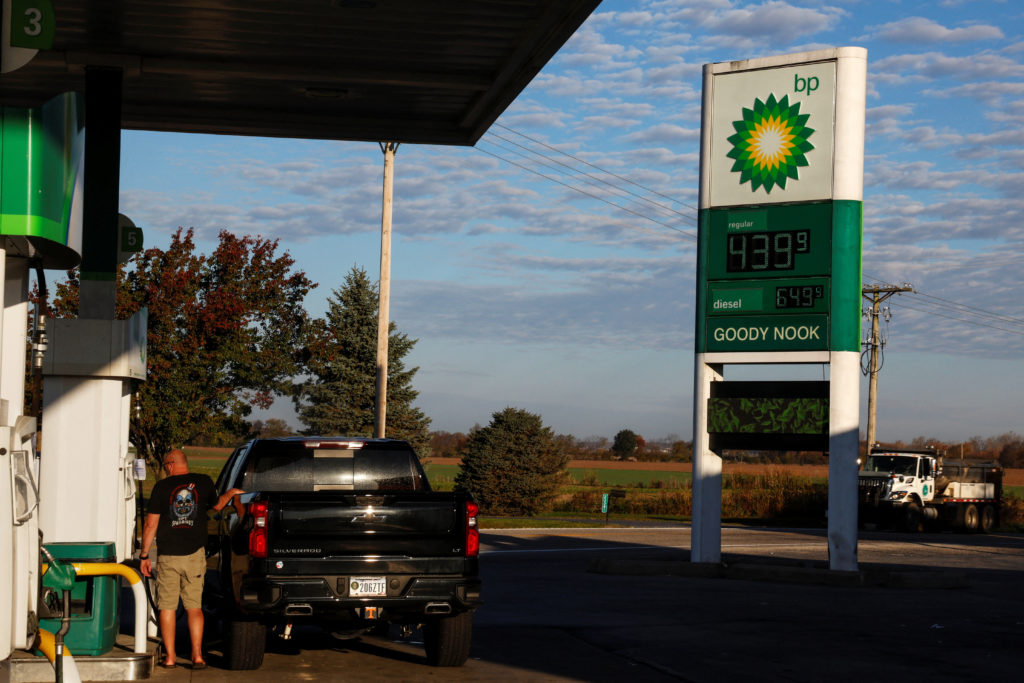
Sherrill on High Costs Causing People to Leave NJ: Every Step I Take, Federal Government Takes Ten Back

On Thursday’s broadcast of MS NOW’s “Morning Joe,” New Jersey Gov. Mikie Sherrill (D) responded to a question on whether Democrats winning Congress will make things in New Jersey more affordable, given that people leave the state due to its high

The post Sherrill on High Costs Causing People to Leave NJ: Every Step I Take, Federal Government Takes Ten Back appeared first on Breitbart.

  •  

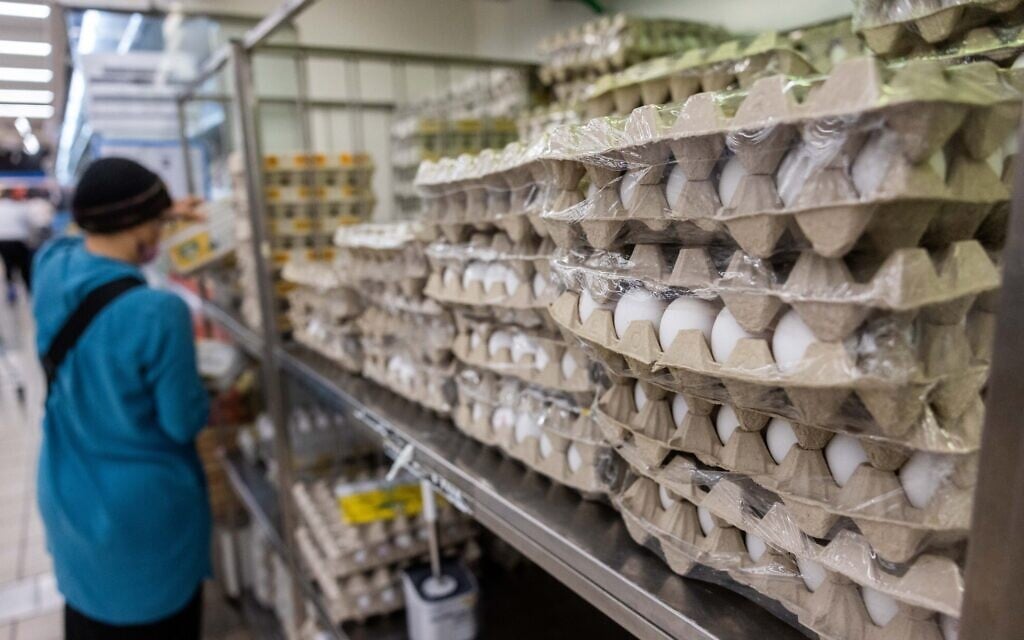
Flour costs rise, egg prices to jump, with Israelis already short on dough

Egg prices go up 2.1% on Sunday; flour is reportedly set to rise by as much as 14%, with bread, pasta and other staples likely to follow, in fresh blow to households stretched thin by cost-of-living crisis
  •  

From Brussels to Belgrade: Europe’s Generation Z Protests Challenge Established Politics

Youth-led demonstrations across Europe are bringing together concerns about housing, education, employment and political accountability. Although the movements differ considerably between countries, their emergence reflects growing dissatisfaction among younger Europeans over economic prospects and their influence on political decisions.

A series of demonstrations involving young people across Europe has developed into a wider political phenomenon, as students and younger workers challenge governments over living costs, public services and their expectations for the future.

Protests have taken place in France, Belgium, Italy, Albania and several other countries, while a student-led movement in Serbia has achieved a particularly consequential political outcome.

In Serbia, nearly two years of demonstrations culminated in a parliamentary election victory for a student-backed political movement, ending the electoral dominance of President Aleksandar Vučić’s Serbian Progressive Party.

The outcome, reported by Reuters on 29 October, has given the movement a prospective parliamentary majority, although final certification of the election results remains outstanding.

Elsewhere, protesters have secured fewer immediate political concessions.

Nevertheless, their campaigns share a recurring concern: that conventional channels of political representation have failed to address problems affecting younger generations.

Economic Pressures Behind the Demonstrations

The grievances vary between countries, but housing affordability, insecure employment, education funding and living costs feature prominently.

A European Parliament youth survey published in February 2025 found that 40 per cent of respondents aged 16 to 30 considered rising prices and the cost of living a priority for the EU.

Almost one-third identified economic conditions and job creation as a principal concern, while education also ranked prominently.

More recent figures illustrate the financial pressures confronting younger Europeans.

According to Eurostat data published in June 2026, 24.2 per cent of EU residents aged 15 to 29 were at risk of poverty or social exclusion in 2025.

That compares with 20.9 per cent for the population as a whole.

These figures do not establish that economic hardship is the cause of every protest. They do, however, provide context for the dissatisfaction expressed by participants.

Belgium’s Students Demand Better Education

In Brussels, demonstrations have focused partly on the condition of schools and the availability of educational resources.

Students have criticised deteriorating facilities, shortages of teachers and government decisions affecting education funding.

Nineteen-year-old student Maya Gourdel told Reuters that peaceful attempts to draw attention to these concerns had attracted little response from political leaders.

Her account reflects a wider frustration among demonstrators who believe that public attention has increased only after protests became more disruptive.

Belgium’s education system is organised primarily at community level, meaning decisions concerning funding, staffing and school infrastructure are divided among different authorities.

The demands of protesters consequently involve both national political debates and decisions taken by regional and community institutions.

France and Italy Face Wider Social Unrest

In France, demonstrations concerning the cost of living and public services have involved students alongside trade unions and other organisations.

Recent protests have also been accompanied by violence, including attacks on commercial premises and confrontations with police.

The involvement of younger demonstrators does not mean that every participant supports violent tactics.

Rather, the events illustrate how movements with economic and political grievances can encompass groups with different objectives and methods.

Italy has experienced similar tensions, particularly in Milan, where demonstrations against rising living costs have followed earlier episodes of unrest.

The Italian government has faced pressure over household expenditure, wages and the affordability of essential services.

These disputes have developed against a background of high energy prices and concerns about the broader economic outlook.

Albania’s Frustration With Political Institutions

In Albania, student-led protests have challenged Prime Minister Edi Rama’s government over alleged corruption, limited employment opportunities and education standards.

Demonstrations that began in Tirana have spread to other cities.

On 29 October, opposition lawmakers disrupted proceedings in parliament following weeks of protests and confrontations between demonstrators and police.

The government has offered measures intended to address economic concerns while condemning violence associated with the demonstrations.

For many younger Albanians, employment prospects are closely connected to the possibility of emigrating.

The perception that professional opportunities depend on political connections or personal networks has become another source of dissatisfaction.

However, the Albanian movement cannot be treated as identical to protests in EU member states, given the country’s different economic conditions and political institutions.

Serbia Shows the Political Potential of Student Movements

Serbia provides the most substantial example of youth-led protest translating into electoral change.

The movement emerged after the collapse of a railway station canopy in Novi Sad in November 2024, which killed 16 people and prompted allegations of corruption and negligence.

Students organised prolonged demonstrations demanding accountability and institutional reform.

Their campaign subsequently developed into an electoral challenge to the governing Serbian Progressive Party.

Preliminary results from the October 2026 parliamentary election indicate that the student-backed list has secured a majority of seats.

However, electoral certification and the formation of a new government remain incomplete.

The movement now faces a different challenge: converting protest demands into administrative decisions, legislation and economic policy.

Its success will be judged not only by the election result but also by its ability to govern.

A Generational Shift, But Not a Single Movement

It would be misleading to describe Europe’s demonstrations as a unified political campaign.

Participants have different objectives, national circumstances and ideological positions.

Some demand increased public expenditure, while others concentrate on corruption, political accountability or employment opportunities.

What connects them is a recurring concern about whether established institutions respond adequately to younger citizens.

The political consequences will depend on whether demonstrations produce lasting organisations, influence elections or secure changes in government policy.

Serbia suggests that student mobilisation can translate into substantial political change.

For governments elsewhere in Europe, the question is whether the grievances driving these movements can be addressed through existing political institutions before dissatisfaction generates further unrest.

  •  

Portugal’s Housing Revolt Exposes a Growing Political Crisis Across Europe

Thousands of demonstrators have gathered outside Portugal’s parliament as rising property prices, disputed eviction legislation and police operations bring the country’s housing problems into direct confrontation with the government.

Thousands of protesters gathered outside Portugal’s parliament in Lisbon on 27 October, demanding action over soaring housing costs and criticising police operations against housing activists, as the country’s long-running property crisis developed into a broader political confrontation.

The demonstration coincided with parliamentary debate on the government’s proposed 2027 budget and followed several days of protests in Lisbon and Porto.

At the centre of the dispute is an increasingly familiar European contradiction: property values continue to rise, while wages and household incomes have failed to keep pace with the cost of obtaining accommodation.

For Portugal, the problem has become particularly pronounced.

House prices have more than doubled since 2017, while rents for newly agreed tenancies have almost doubled over the same period.

According to figures reported during the demonstrations, the cost of housing in Portugal increased by 147 per cent between 2015 and 2025, compared with an EU average of 60.5 per cent.

The result is a growing disparity between earnings and the cost of independent living, particularly among younger adults.

A property market detached from wages

In Lisbon, a one-bedroom flat can routinely command monthly rent of approximately €1,500.

Portugal’s minimum wage stands at €920 per month before tax.

Although these figures do not represent every household or property, they illustrate the scale of the affordability problem for lower-paid workers.

Between the first quarters of 2025 and 2026, Portuguese house prices increased by almost 20 per cent, according to national statistical figures cited in recent reporting.

Rental costs have also continued rising, recording an increase of approximately 68 per cent since 2020.

The country’s attractiveness to foreign investors, retirees and remote workers has contributed to demand, particularly in Lisbon, Porto and coastal areas.

Tourism has introduced additional competition for residential property, with some homes converted into short-term accommodation.

However, investment and tourism are only part of the explanation.

Restrictions on construction, administrative delays, limited affordable housing supply and the geographical concentration of employment have also contributed to pressure on the market.

These conditions have produced a widening gap between those who already own property and those seeking to purchase or rent their first home.

Disputed eviction legislation

The immediate political confrontation concerns government proposals that would accelerate certain eviction procedures and remove restrictions on rents for new tenancy agreements.

The legislation passed its first parliamentary reading, with the right-wing Chega party abstaining.

Housing campaigners argue that removing protections without first increasing affordable supply could leave tenants more exposed to rising rents and displacement.

The minority centre-right government, led by Prime Minister Luís Montenegro, has pursued measures intended to encourage construction and increase the availability of housing.

These include tax reductions for new building projects and a commitment to deliver 145,000 homes.

Such measures, however, require time before additional properties become available, while many households face immediate financial pressures.

Police operations become a second controversy

The housing dispute intensified following police operations to remove protest encampments in Lisbon and Porto during the weekend.

Police used batons during the clearances, while campaigners alleged excessive force.

According to accounts of the subsequent parliamentary demonstration, police reported 11 minor injuries, including three officers. The housing organisation Casa para Viver claimed that 60 people had been injured.

Portugal’s internal affairs watchdog has opened an inquiry, while prosecutors are conducting a separate investigation into officers’ conduct.

Montenegro defended the police response in parliament, arguing that officers had acted according to the principles of necessity, proportionality and adequacy.

President António José Seguro has convened a meeting of the Council of State to consider the growing protests.

The dispute has consequently expanded beyond housing economics to include questions about policing, public demonstrations and political accountability.

A European problem with national consequences

Portugal’s demonstrations follow similar protests in Spain and growing political scrutiny of housing affordability elsewhere in the EU.

The European Commission has begun addressing the issue through initiatives intended to encourage construction, facilitate investment and give authorities greater legal certainty over short-term rental restrictions.

As EU Today recently reported, the proposed European Affordable Housing Act would provide additional regulatory tools for areas facing severe housing pressure.

Yet the principal responsibilities for housing supply, planning and tenancy law remain with national and local governments.

This division creates a political challenge: Brussels can support investment and coordinate legislation, but the most immediate decisions affecting rents, construction and evictions are taken elsewhere.

For Portugal, the next test will be whether the government’s housing measures can deliver sufficient additional supply while responding to demands for immediate tenant protection.

The demonstrations outside parliament show that housing affordability has become more than a question of property prices. It now affects the government’s legislative agenda, the 2027 budget debate and the relationship between the authorities and an increasingly organised protest movement.

  •  

Europe’s Gen Z takes to the streets in wave of anger

Maya Gourdel, a 19-year-old student in Brussels, sits at a desk writing slogans against those running her country: “If we burn, you burn with us!” The slogan, taken from the 2012 film “The Hunger Games” that has been adopted as a symbol by many youth movements globally, reflects the anger, frustration and desire for change driving Gen Z-led protests around Europe.

From the suburbs of Paris to the squares of Belgrade, thousands have taken to the streets.

The demands are various but often overlapping – frustrations with shabby schooling facilities, perceived lack of economic opportunity, cost of living, corruption, housing and a sense of not being listened to. At times those protests triggered violence – with thousands of shops in France alone being damaged or looted in recent weeks – and police firing stun grenades and water cannons.

This weekend they also brought real change – student-led protests culminated in the toppling in an election of Serbia’s long-time leader Aleksandar Vucic after nearly two years of demonstrations against perceived corruption and creeping authoritarianism.

“Waking up, the first thing we felt was certainly a sense of relief and freedom,” said student protester Stasa Piletic. “Personally, I feel a sense of victory. I feel that we finally moved from protests to responsibility.”

A generation struggling to imagine a future

Chiara, a 21-year-old student in protest-hit Milan, believes “it’s vital to take part in people’s spontaneous movements born from an explosion of rage that made collective action possible.”

“I think the worst damage this ruling class has done to my generation is stealing even the ability to imagine a future, to dream,” she said.

She said Italian students were confronting a reality of schools without enough teachers and crumbling buildings.

“And all of this with the prospect of an underpaid job which we didn’t qualify for and the prospect of living in a tiny, overpriced house, probably away from our city, which we didn’t want to live in.”

Protests led by Gen Z have caused ructions globally as the generation born roughly between 1997 and 2012 found its voice, from Bangladesh in 2024 and Nepal in 2025, to India this year. Now Europe has become a focal point.

Rising costs deepen Europe’s generational divide

Rising prices and the cost of living are a concern for 40% of 16-30-year-olds, according to a European Union survey published in 2025.

Among the 92.7 million people in the EU who faced the risk of poverty or social exclusion in 2025, the highest risk was recorded for young adults aged 18-24 years, at 26.3%, while the lowest was recorded for adults aged 65 years or over, at 18.8%.

Younger people are also wary of shouldering the financial burden of an older generation that tends to vote in greater numbers. People over 60 in France make up a quarter of the population but own 60% of France’s wealth, according to the OFCE think tank.

French pensions are by far the biggest public expense, on track to reach 14% of economic output, as the population ages and voters resist raising the retirement age or reducing benefits. That is still less than Greece or Italy, which spend the largest proportion of national income on public pensions among OECD countries, at around 16% of GDP, according to OECD figures in 2025. But it is much more than Australia, Chile, Iceland, Ireland or South Korea, which spent less than 4% of GDP on public pensions, according to the OECD.

Young protesters unite over failing schools

Bilal Narjissi, a 17-year-old high school student in a suburb north of Paris, has been protesting against “deplorable” conditions and staff shortages at his school. “There used to be rats,” he said. Students were evacuated last year when a roof collapsed on the courtyard, though no one was hurt, he said.

Protests showed “that young people in Europe are united”, he said, adding, “we all agree on one point: that young people are treated like children, far too much, and that they aren’t listened to enough.”

A French government report in October said pension spending had risen by 2.5 percentage points of GDP between 2000 and 2023 while that for education had declined 0.5. It also showed 32% of the education ⁠ministry’s budget went towards pensions, crowding out money for other areas.

Gourdel, too, has been protesting for better conditions in schools in Belgium.

“We tried to do it passively. Nobody heard us. It’s only when people started to burn trash or that kind of stuff that the media and cameras started showing us,” she said.

The protests are still spreading, with a demonstration planned in Germany this weekend over cost of living, inequality, war and the state of schools.

Unrest has also hit Albania, where student-led demonstrations against Prime Minister Edi Rama’s government, fuelled by anger over perceived corruption, a lack of jobs and poor education standards, engulfed Tirana and spread to other cities.

“Our Prime Minister spent 130 days not listening to us,” said Xyke Kurti, a 19-year-old architecture student.

“If you ask a student in Albania, ‘where do you see your future?’ Everyone says ‘outside this country’,” she said, arguing that at home, even if you have talent, someone with “connections is always going to beat you”.

Serbia’s student movement turns protests into political change

Serbia’s student movement did what demonstrators in other European capitals can only dream of.

Now, though, comes the gritty business of governing – something neither the students nor their candidates have any experience of. Luka Stojakovic, another protester, brushes that aside. “We have seen where people with political experience have brought us.”

  •  

UK’s Healey says he will help households by scrapping fixed gas charges

British finance minister John Healey said he would help most households with their gas bills by enabling those who use the least to pay less as part of his first budget which is due to be announced in full later on Wednesday.

Healey – who has promised to give “breathing space” to families hit by the high cost of living – said he would abolish standing charges which are fixed daily fees that cover the costs of connecting a home to a gas supply and are charged on bills regardless of whether energy is being used.

“Gas standing charges are unfair and outdated so I am scrapping them to give millions of households a bit of breathing space,” Healey said in a statement issued by the Treasury.

He will ask regulators to remove the charges – which cost £108 ($143.78) a year for the typical household on average – in 2027 or as soon as possible after that, the Treasury said.

The costs will be shifted to the price of gas consumed which could save 60% of account-holding households around an average of £45 on their annual bill, the statement said.

Healey said his budget would “draw a line in the sand on an energy policy that has failed British billpayers for years, letting extra costs on bills pile high and leaving households even more exposed to global shocks”.

Earlier this month, the government cut value added tax on electricity bills which surged following Russia’s invasion of Ukraine and have risen again due to the Iran war.

Previous governments have imposed a price cap on energy prices and removed other levies.

Despite that, Britain’s regulated domestic price cap rose 4% in October, and some forecasts are predicting a rise of around 20% to over £2,000 pounds a year in January for an average domestic energy bill including electricity.

British households pay a standing charge on electricity bills which costs around £200 a year on the current price cap.

  •  

French Elections 2027: All the Cards Are Falling in Marine Le Pen’s Favour

Marine Le Pen could scarcely have chosen a more favourable backdrop for her presidential campaign. A weakened president approaches the exit, demonstrations expose deep public frustration, and scenes of disorder reinforce her central argument: France’s governing establishment has lost control. The cards are all falling in her favour. Whether she can play them successfully remains the question.

Launching her campaign in Orléans, Le Pen promised national renewal and tougher policing. Reuters reported a poll placing her at 32–33.5 per cent, against 17 per cent for Jean-Luc Mélenchon. Those numbers are a snapshot, but they suggest something politically consequential: the candidate once treated as an outsider now occupies the strongest starting position.

Emmanuel Macron, meanwhile, increasingly resembles a lame-duck president. Constitutionally unable to seek another consecutive term, he faces a succession contest in which his endorsement may carry limited weight. His admission of failures in anticipating the unrest compounds the damage. A presidency built around authority and personal command is approaching its conclusion with both visibly diminished.

For Le Pen, the advantage is obvious. Every confrontation between police and rioters supplies another opportunity to ask whether the government can perform its most basic duty: protecting the public. Citizens do not need to endorse her entire programme to find that question persuasive. They need only conclude that those already governing have exhausted their answers.

Yet the origins of the demonstrations matter. The Associated Press describes a movement rooted in education funding, rising living costs and inequality. Peaceful protesters cannot reasonably be bundled together with looters. Nor does the reporting establish that these disturbances are an expression of Islamism or Muslim demographic change. Misdiagnosing the crisis would weaken any serious argument for restoring order.

The broader integration debate nevertheless deserves frank treatment. A republic cannot function confidently if its citizens believe that common laws, civic obligations or freedom of expression are negotiable. Governments should confront Islamist intimidation, religious coercion and deliberate separatism wherever evidence establishes them. They should also expect newcomers to learn the language, respect constitutional principles and participate in national life.

Those expectations are legitimate. Treating an entire Muslim population as inherently unintegrated is not. Religious identity alone establishes neither hostility to France nor unwillingness to belong. The useful political distinction is between citizens who uphold democratic rules and individuals or organisations that seek to undermine them. That standard should apply consistently, whatever the religion or ideology involved.

Across Europe, political leaders would be wise to recognise the electoral danger of appearing evasive about integration. Voters seeking enforceable rules should receive practical answers: effective language teaching, access to employment, credible policing and action against extremist networks. When mainstream parties substitute moral lectures for measurable results, they leave an opening for opponents promising clarity and control.

Le Pen’s opportunity is to connect these concerns with a wider sense of abandonment. Disorder, strained services and anxiety about belonging can become parts of one political story: the state demands obedience and taxation but delivers too little security or reassurance. Her opponents will struggle if their response consists principally of explaining why voters should fear her.

But favourable circumstances do not eliminate her weaknesses. Her conviction over European Parliament funds, which she is appealing, sits awkwardly beside a campaign demanding accountability and respect for law. Her promises of spending restraint, lower business taxes and resistance to further retirement-age increases also invite scrutiny. Winning confidence requires explaining how competing commitments can be reconciled.

The challenge for her rivals is therefore substantive. They must demonstrate that public order and legitimate protest can coexist, that integration involves shared duties, and that economic grievances deserve workable remedies. Simply rebuilding an electoral barricade against Le Pen may prove insufficient if voters associate its defenders with the failures that brought France here.

For now, momentum belongs to her. Macron looks depleted; the streets convey insecurity; the establishment struggles to offer a convincing successor or a persuasive account of renewal. None of this guarantees a Le Pen presidency. It does mean that her opponents can no longer rely on her reputation to defeat her. They must recover the public’s confidence in their own capacity to govern. Otherwise, France’s crisis may become her decisive electoral advantage.

Le Pen Sets Out €140bn Spending-Cut Plan as French Debt Dominates 2027 Race

  •  

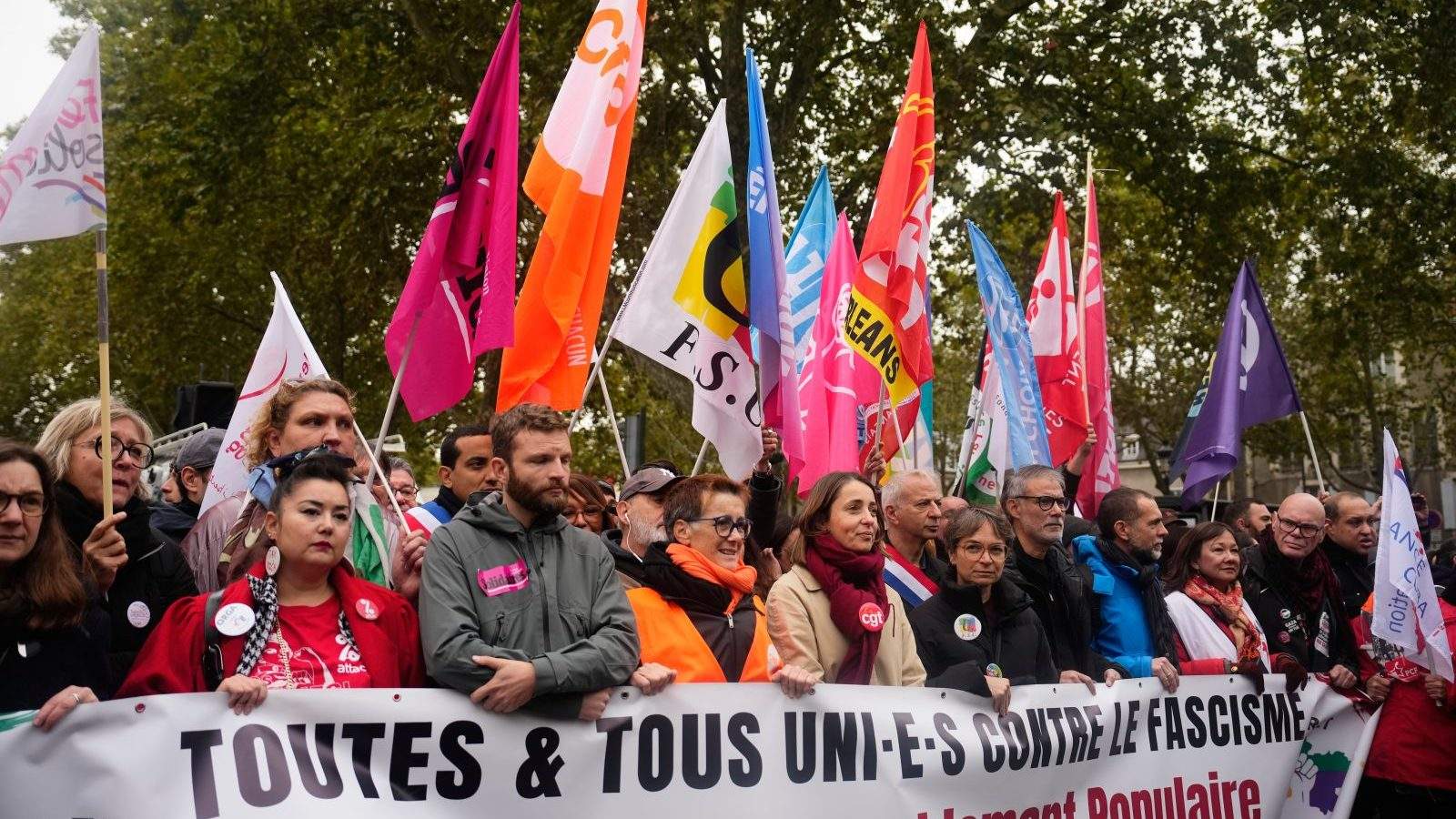
France Deploys 70,000 Police as New Protests Trigger Clashes and Court Battles

French authorities have imposed extensive restrictions on demonstrations following last weekend’s violence. Courts have overturned some bans, while unions have accepted a last-minute change to the Paris protest route.

French police used tear gas to disperse demonstrators in Lyon on Saturday morning, 24 October, as 70,000 police officers and gendarmes were deployed nationwide to prevent a repetition of the violence and looting that accompanied last weekend’s mass protests.

In Paris, trade unions agreed to a revised demonstration route after the administrative court rejected their challenge to a last-minute police order. The march will proceed from Porte d’Italie to Porte de Vincennes, rather than between Bastille and Nation as originally agreed, with the procession scheduled to begin at 2pm.

Elsewhere, emergency judicial decisions have complicated the government’s security arrangements. Courts have suspended restrictions in Limoges and several municipalities around Marseille, while other cities remain subject to extensive bans on public gatherings.

The developments follow last weekend’s nationwide unrest, when approximately 550,000 people demonstrated against rising living costs, deteriorating public services and conditions in French schools. Violence erupted in several cities, leaving businesses looted, public buildings damaged and police officers injured.

Security operation on an unprecedented scale

Interior Minister Laurent Nuñez has ordered the deployment of 10,000 additional officers compared with 17 October. The operation includes specialist police units, armoured vehicles, helicopters and water cannon.

According to the government’s official security instructions, prefects must examine proposed demonstration routes, assess the reliability of organisers and take preventive measures where there is evidence of a risk to public order.

The authorities are particularly concerned about organised groups exploiting otherwise peaceful demonstrations to attack commercial premises and government buildings.

Security services expect between 400,000 and 500,000 people to participate in Saturday’s mobilisation. The government has warned that calls for renewed violence and looting have circulated online.

The previous weekend’s disturbances resulted in thousands of arrests. Justice Minister Gérald Darmanin said 217 people had already received prison sentences, with approximately half described as first-time offenders.

Courts challenge sweeping restrictions

The government’s measures have prompted an increasingly contentious legal dispute over the constitutional protection of public demonstrations.

The French Human Rights League has challenged restrictions in several cities, including Brest, Quimper, Caen, Marseille, Lille and Montpellier. It argues that extensive prohibitions interfere with freedom of assembly, expression and movement.

In Marseille, negotiations between local authorities and trade unions resulted in permission for a demonstration along an agreed route through the city. A separate administrative court decision subsequently suspended parts of the wider departmental ban, allowing gatherings in Gardanne, Istres, Martigues, Miramas and Tarascon.

The administrative court in Limoges also suspended restrictions on gatherings of more than ten people in the city centre and overturned an associated curfew.

In Lyon, however, restrictions remained in force across a large central area. Police dispersed approximately 150 demonstrators near Lyon III University shortly before 11am after participants blocked traffic close to the prohibited perimeter.

Macron faces a constitutional and political challenge

President Emmanuel Macron has argued that protecting public order must take priority following the destruction witnessed on 17 October.

His suggestion on Thursday that demonstrations not organised by recognised trade unions should generally be prohibited prompted legal challenges from opposition parties and civil liberties organisations.

In a ruling delivered on 23 October, the Conseil d’État rejected challenges to Macron’s remarks, finding that they did not themselves constitute a binding nationwide prohibition. The court nevertheless reaffirmed that prefects must assess individual demonstrations according to the circumstances and risks involved.

The ruling leaves local restrictions subject to judicial scrutiny rather than providing the government with unrestricted authority to prohibit protests.

Meanwhile, the movement’s original demands remain unresolved. What began with secondary-school students protesting against staff shortages, overcrowding and educational conditions has expanded into a broader mobilisation involving trade unions, university students and Yellow Vest campaigners.

Macron met representatives of secondary-school students on Friday, but participants subsequently called for demonstrations to continue until concrete proposals were presented.

Growing pressure ahead of the presidential election

The renewed mobilisation comes six months before France’s presidential election, in which Macron cannot seek a third consecutive term.

Political tensions are also evident in Orléans, where thousands of demonstrators gathered on Saturday to oppose the National Rally’s weekend party congress. Authorities deployed additional security personnel and restricted the location of the protest.

For the government, the immediate objective is to prevent another outbreak of large-scale violence. For unions and civil liberties organisations, the dispute increasingly concerns the conditions under which public protest may legitimately be restricted.

As EU Today reported ahead of Saturday’s demonstrations, the central legal question is whether prohibitions are proportionate to identifiable security risks.

The courts have now begun answering that question differently across France, leaving the authorities to enforce a patchwork of restrictions as the country’s social and political confrontation continues.

  •  

Meloni Prepares New Security Measures After Milan Riots Leave Hundreds Detained

Italian Prime Minister Giorgia Meloni has convened an emergency government meeting following two days of violent unrest in Milan and other northern cities, where demonstrators clashed with police, looted shops and damaged public property during protests over living costs and deteriorating public services.

Police brought 271 people to police headquarters following Sunday’s disturbances in Milan, including 220 minors. Of those detained, 32 were formally arrested and another 28 were reported to the judicial authorities, according to figures released on Monday, 19th October.

The violence has prompted the Italian government to consider further restrictions on those involved in violent demonstrations, potentially introducing additional powers directed at organised disorder and juvenile offenders.

Milan city centre hit by looting

The disturbances began during demonstrations on Saturday, 17th October, organised amid growing dissatisfaction over household expenses, public services and wider political grievances.

Although the protests initially included peaceful participants, groups of masked individuals subsequently confronted riot police in central Milan. Officers used tear gas and water cannon as demonstrators erected burning barricades and threw objects at security personnel.

The unrest continued on Sunday, when shops were attacked close to Piazza del Duomo, one of Milan’s principal commercial and tourist areas.

Among the premises targeted were branches of Decathlon, Arc’teryx and Vodafone. Television footage showed damaged shopfronts, overturned street furniture and burning rubbish containers.

According to police figures reported on Monday, 174 of those taken to police headquarters were subjected to preventive detention measures introduced under recent Italian security legislation.

Fourteen members of the security services were reported injured during Sunday’s disturbances, including ten police officers and four members of the municipal police.

The judicial authorities are examining the conduct of individuals suspected of taking part in attacks on businesses and confrontations with officers. Prosecutors have sought custodial measures against several adults accused of offences including devastation, looting and aggravated resistance.

The large proportion of minors among those detained has become a central issue in the political response.

Violence spreads across northern Italy

Milan was not the only city affected by disorder. Saturday’s demonstrations also produced confrontations in Turin, Bologna, Brescia and Bergamo.

Italian police reported arrests across the affected cities, while the scale and organisation of the disturbances have raised questions about whether different groups were acting independently or using demonstrations as opportunities for coordinated violence.

There is not yet sufficient publicly established evidence to attribute the disorder to a single organisation or political movement.

The clashes coincided with major protests in neighbouring France, where similar concerns over living costs and public administration have contributed to increasingly confrontational demonstrations.

Although the grievances overlap, the Italian and French movements have different political backgrounds and organisational structures.

Government considers emergency legislation

Following a meeting at Palazzo Chigi on Monday, Meloni’s government indicated that it was considering a legislative response, potentially through an emergency decree.

According to details of the government discussions, proposals under examination include additional measures against violent offences, changes to preventive policing and possible restrictions addressing road blockages.

Some measures could be drawn from security legislation already under consideration in the Italian Senate. Ministers have also discussed the need for more effective intervention against juvenile offenders.

The meeting included Deputy Prime Ministers Matteo Salvini and Antonio Tajani, Interior Minister Matteo Piantedosi, Defence Minister Guido Crosetto and senior officials from the police, Carabinieri and intelligence services.

The government has stressed that peaceful demonstrations must remain protected while arguing that violence and organised destruction require a stronger response.

No final legislative text had been adopted at the conclusion of Monday’s meeting. A decree could be considered by the Council of Ministers as early as Tuesday, although the precise content remains subject to further examination.

Dispute over responsibility for policing

The unrest has also produced a dispute between Milan’s municipal authorities and the national government.

Mayor Giuseppe Sala questioned the adequacy of the policing arrangements, arguing that the number of officers initially deployed was insufficient to control the disturbances.

Interior Minister Matteo Piantedosi rejected that criticism, while senior government figures accused local political leaders of failing to condemn the violence unequivocally.

The disagreement reflects a wider question over how responsibility for anticipating and containing serious public disorder should be divided between local administrations and national security authorities.

Italy’s opposition has also challenged the government’s handling of the disturbances. Former Prime Minister Matteo Renzi criticised Meloni and Piantedosi over their failure to prevent the violence, calling for a change in leadership at the Interior Ministry.

The political argument is likely to intensify if the government proceeds with emergency legislation. Supporters of stronger police powers argue that the existing framework is insufficient to deal with rapidly organised disturbances, while opponents will scrutinise the proportionality of new restrictions and their effect on peaceful protest.

The immediate test for the government will be whether additional legal powers can improve public-order operations without replacing effective policing, intelligence gathering and judicial enforcement.

  •  

France Protests: 1,200 Arrested and 150 Police Injured as Nationwide Demonstrations Turn Violent

More than half a million people took part in demonstrations across France on Saturday, 17 October, as protests over living costs and education deteriorated into riots, looting and attacks on public buildings in several major cities.

France is assessing extensive damage following nationwide demonstrations on Saturday, 17 October, that brought hundreds of thousands of people onto the streets and resulted in more than 1,200 arrests. Prime Minister Sébastien Lecornu said 150 police officers and gendarmes were injured as violent groups attacked public buildings, looted businesses and confronted security forces.

According to figures released by the French authorities, approximately 550,000 people participated in 110 marches across France, including 110,000 in Paris. Organisers, including trade unions and student associations, placed nationwide participation at 800,000.

The demonstrations represented a considerable escalation of the movement that began in September over deteriorating conditions in French secondary schools. The protests have since expanded into a broader campaign against rising living costs, public spending restrictions and the government’s economic policies.

Violence spreads beyond Paris

In the French capital, confrontations erupted around Place de la République, where masked groups threw paving stones, fireworks and other projectiles at police. Security forces responded with tear gas and water cannon as vehicles and rubbish bins were set alight.

Businesses along Boulevard Magenta and neighbouring streets were targeted, with shops broken into and goods stolen. Several central Paris Métro stations were closed as authorities attempted to restrict access to sensitive government locations.

Although the main authorised procession remained largely peaceful, violence continued elsewhere in the capital into Saturday evening.

The disturbances extended well beyond Paris. In Limoges, the historic town hall suffered extensive fire damage, with parts of its roof collapsing. Regional authorities described the destruction of the 143-year-old building as a major loss to the city’s architectural heritage.

In Marseille, groups forced their way into the town hall after using street barriers to ram its entrance. Municipal premises were vandalised before police regained control.

Further incidents were reported in Lyon, where a tourist office was attacked and a fire started, and in Bordeaux, where the official residence of the Gironde prefect was ransacked. Police also reported attacks or attempted break-ins at public buildings in Lille, Calais and Brest. The scale of the disturbances placed security forces under considerable pressure.

Government blames organised extremist groups

Lecornu accused organised far-left groups of deliberately instigating violence in several French cities. Nuñez similarly attributed much of the destruction to radical groups and individuals exploiting the demonstrations to loot businesses.

President Emmanuel Macron condemned attacks on public property and commercial premises, promising that those responsible would face prosecution.

The government has not announced a state of emergency, although authorities are reviewing the scale of the damage and the security response.

The mayor of Paris, Emmanuel Grégoire, described the destruction across parts of the capital as extensive and distinguished the peaceful protest movement from those responsible for vandalism.

Student unrest becomes a national movement

Saturday’s demonstrations followed several weeks of disruption across France’s education system.

As EU Today reported earlier this month, between 400 and 500 secondary schools faced partial or complete closures as students protested against teacher shortages, overcrowded classrooms and deteriorating facilities.

The subsequent confrontations with police intensified political tensions, with student organisations accusing authorities of using excessive force and police representatives complaining of inadequate protection.

A further controversy emerged on Saturday after a 17-year-old demonstrator in Saint-Étienne suffered a serious hand injury. An investigation was opened into the incident and assigned to France’s police inspectorate, the IGPN. Reports linked the injury to a grenade thrown by police; the precise circumstances remain under investigation.

The latest demonstrations also marked a revival of the Gilets Jaunes, or Yellow Vest, movement, which emerged in 2018 in opposition to fuel taxation and subsequently developed into a wider challenge to Macron’s economic programme.

Trade unions, including the CGT, joined calls for higher wages and pensions, lower consumer prices and increased investment in public services.

Political consequences for Macron and Lecornu

The unrest presents another challenge for Lecornu’s government as it attempts to manage France’s public finances ahead of the 2027 presidential election.

The demands for increased spending on education, wages and public services come as ministers face pressure to reduce the budget deficit and control public debt.

The political implications are already apparent. Jean-Luc Mélenchon, leader of the hard-left France Unbowed movement, has supported the student protests while opposing looting and destruction. Marine Le Pen has condemned the rioters and accused Mélenchon’s party of helping to legitimise the unrest.

The latest disturbances also follow growing criticism of the government’s policing strategy, particularly the use of riot-control weapons during demonstrations involving minors.

With municipal authorities calculating the cost of damage to public buildings and commercial premises, Lecornu has instructed ministers to support affected businesses. The immediate challenge is to restore public order while addressing a protest movement that has expanded considerably beyond its original demands for improvements in French schools.

  •  

France Braces for 500 Protest Actions as Yellow Vests and Students Join Forces

French authorities are preparing for hundreds of demonstrations on Saturday, 17 October, as student unrest converges with protests over living costs, public spending and government policy. Up to 40,000 demonstrators are expected in Paris, where police and organisers remain divided over march routes.

France is preparing for a nationwide wave of demonstrations on Saturday, 17 October, with approximately 500 protest actions under consideration and more than 90 marches being organised, according to the Interior Ministry. The mobilisation brings together high-school students, trade unions, farmers and supporters of the Yellow Vest movement, raising the prospect of further confrontation after nearly a month of unrest.

Police estimates suggest that around 40,000 demonstrators could gather in Paris, with approximately 150,000 more expected elsewhere in France. The figures remain preliminary, while authorities warn that some protests could involve road blockades, disruption to essential infrastructure and violent clashes.

Interior Minister Laurent Nuñez initially outlined preparations for 250 gatherings and 80 marches on Friday morning. Subsequent assessments from his office indicated that as many as 500 actions were being considered, although not all had been formally organised.

Paris Faces Dispute Over Demonstration Routes

The authorities are particularly concerned about developments in the capital, where negotiations between police and protest organisers have failed to produce agreement over the proposed routes.

Paris police prefect Patrice Faure has rejected proposals for marches terminating near the Opéra district or Place de la Concorde, citing security concerns surrounding central government institutions.

According to details of the security preparations, police have proposed an alternative route between Place de la Bastille and Place de Clichy. The CGT trade union and climate campaigners have accepted the proposal, but student organisations and Yellow Vest representatives continue to oppose it.

Prime Minister Sébastien Lecornu has convened an interministerial crisis unit to coordinate the government’s response. Security officials have warned that attempts to obstruct major transport routes or critical infrastructure will not be tolerated.

The Interior Ministry has also indicated that stun grenades, whose use was suspended during the student protests, could again be deployed in cases of particularly serious urban violence.

Yellow Vests Return Amid Rising Living Costs

Saturday’s demonstrations are being promoted as a revival of the Yellow Vest movement, which emerged in 2018 following opposition to fuel taxation before developing into a broader protest against living costs, economic inequality and government policy.

The latest mobilisation has gathered support from organisations demanding measures to address rising fuel, energy and food prices. Campaigners are also challenging the government’s proposed 2027 budget and its implications for public services.

The agricultural union Confédération paysanne has called on farmers to join the demonstrations, arguing that rising agricultural fuel costs and deteriorating conditions in rural communities have increased pressure on producers.

The union has also linked its demands to environmental policy, public-service provision and access to affordable food.

The CGT, student unions and climate organisations have similarly expressed support for the protests, while political backing has come from La France Insoumise and the French Communist Party.

Student Protests Enter Their Fourth Week

The mobilisation follows weeks of demonstrations involving secondary-school pupils, teachers and public-sector workers. What began as protests over shortages of teachers, overcrowded classrooms and deteriorating school buildings has developed into a nationwide confrontation over education policy and policing.

As EU Today previously reported, between 400 and 500 secondary schools faced partial or complete disruption earlier this month as students organised blockades and demonstrations.

The movement has subsequently expanded beyond its original educational demands, with student organisations raising concerns about university admissions procedures, police tactics and government spending priorities.

The scale of the unrest has placed considerable pressure on French authorities. According to figures from the Justice Ministry, 6,877 people were placed in police custody during the protests between late September and 8 October, approximately 86 per cent of them minors.

Violence during the demonstrations has resulted in injuries among police officers, students and educational staff. Clashes on 8 October led to 504 arrests and injuries to 48 police officers, according to Interior Ministry figures.

Education Minister Édouard Geffray has announced emergency measures to address teacher shortages, including the deployment of replacement teachers. The ministry says 2,000 of the 3,000 promised replacements have already been assigned, but student organisations maintain that the measures are insufficient.

Growing Pressure on the French Government

The planned demonstrations come as France faces a difficult debate over public spending, taxation and the 2027 budget. Lecornu’s government must balance demands for higher salaries and increased investment in education against mounting pressure to reduce the deficit.

France’s deteriorating public finances have already attracted scrutiny from eurozone partners, while domestic opposition to spending restraint has become a central issue ahead of the 2027 presidential election.

The convergence of student organisations, trade unions and Yellow Vest campaigners could broaden the protests beyond the education sector, particularly if demonstrations over living costs attract participants who have not joined the recent school protests.

However, the extent of that mobilisation remains uncertain. Online protest maps contain substantially more proposed actions than the authorities’ estimates, and participation figures will not be established until Saturday.

For the government, the immediate test will be whether the demonstrations remain peaceful and whether the authorities can prevent disruption to transport networks and public services without provoking further confrontations with protesters.

  •  
❌