❌

Reading view

Francia se asoma a la recesión tras la ligera caída del PIB entre julio y septiembre

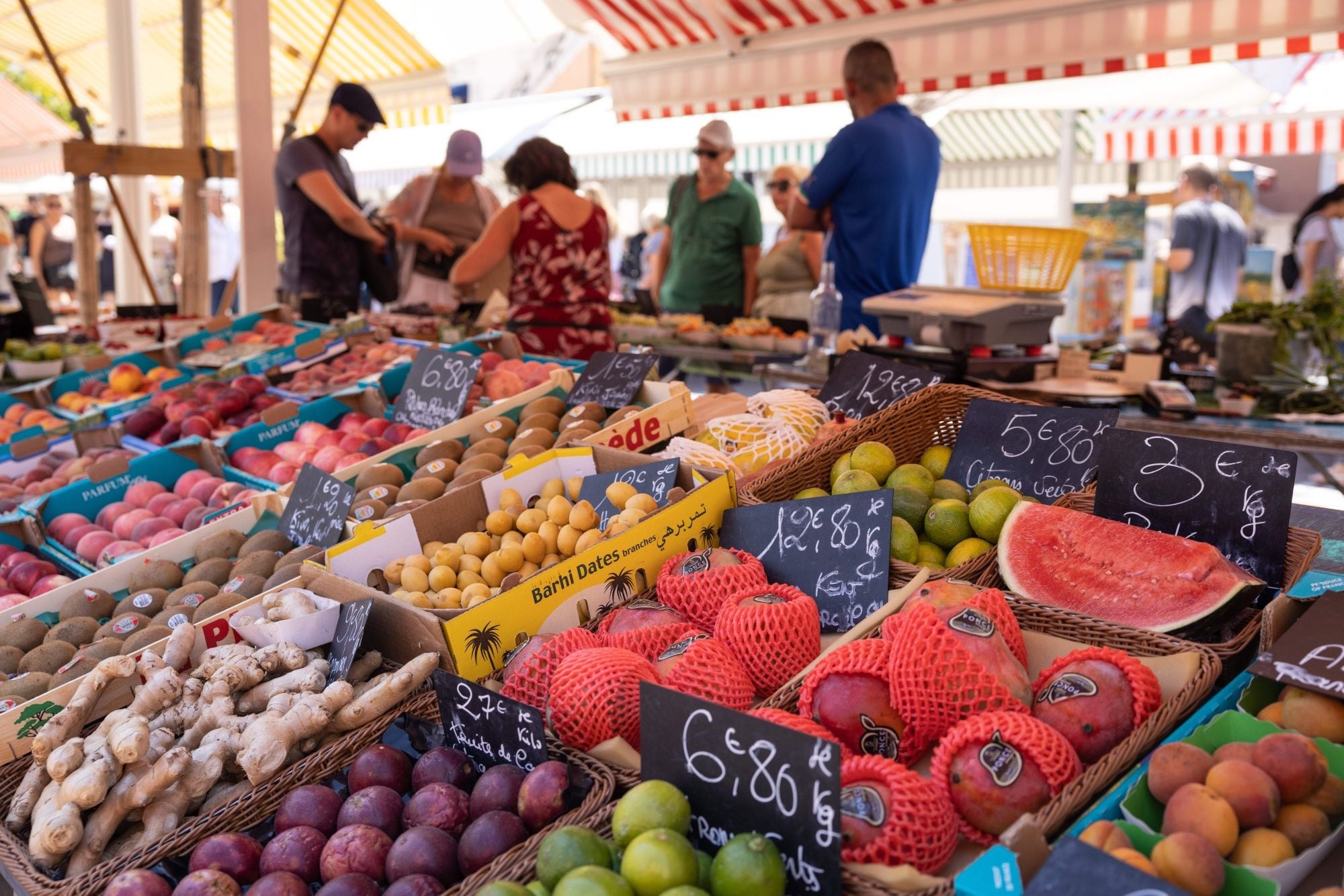
Puesto de frutas y verduras en el mercadillo de Cours Saleya (Niza), en una imagen de archivo.

Malos augurios para la economía francesa a solo seis meses vista de las elecciones presidenciales. El PIB retrocedió un 0,1% en el tercer trimestre del año, según las primeras estimaciones publicadas este viernes por la oficina nacional de estadísticas (Insee). El Gobierno contaba con un ligero avance entre julio y septiembre, así que el dato complica aún más la frágil situación económica del país en una coyuntura difícil: justo cuando se están debatiendo en la Asamblea los presupuestos del año que viene, con importantes recortes y en medio de fuertes movilizaciones en las calles contra los ajustes y el declive de los servicios públicos.

Seguir leyendo

  •  

French centrists divided as Le Pen and Melenchon gain in polls

Infighting has broken out among centrist candidates for France’s presidential race, splitting the mainstream vote and making a runoff between far-right Marine Le Pen and hard-left Jean-Luc Melenchon more likely.

Opinion polls before next April’s presidential election show Le Pen is nearly certain to qualify for a second-round runoff in May and that Melenchon is consistently nudging ahead of mainstream candidates.

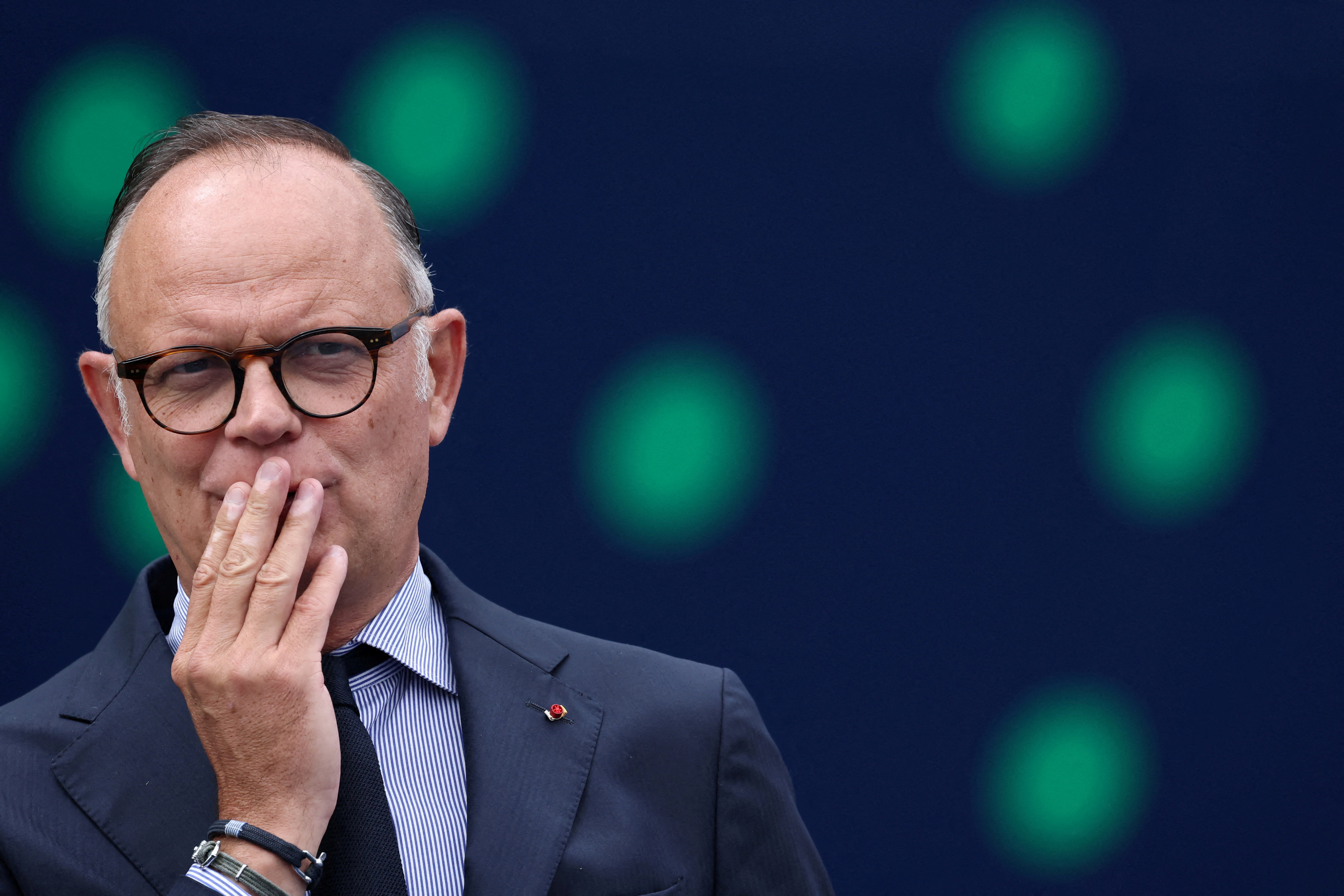
Centre-right Edouard Philippe, President Emmanuel Macron’s former prime minister, has so far been the centre’s torchbearer.

Philippe struggles to connect with voters

But Philippe’s lacklustre campaign, voter weariness near the end of Macron’s two terms, an explosive social and security context and the challenges he faces from within his own camp have hurt his polling, people in Macron’s camp and political analysts say.

“There’s panic on board because there was no scenario planned for this. They hadn’t anticipated the cataclysm under way,” said Philippe Moreau-Chevrolet, a political communications specialist at Sciences Po.

Philippe has also faced criticism over several awkward interventions — including suggesting in a podcast that ideally a newly elected president should have three months to rest before taking office — and political analysts say he is struggling to connect with voters at a time of rising political tensions.

“The terrible thing is that he isn’t cutting through,” Moreau-Chevrolet told Reuters. “They didn’t understand that you have to campaign. There’s a kind of dilettantism.”

Rivalry between former prime ministers intensifies

The anxiety has sharpened tensions between Philippe and his main rival, Gabriel Attal, another former prime minister. They are locked in a battle over who should step aside for the centrist ticket.

Philippe fell to 15% support in an IFOP-Fiducial poll for Le Figaro newspaper, a six-point drop since September. That is below the 16.5% for Melenchon, who would have enough to qualify for a runoff against Le Pen.

Attal stood at 13%, behind Melenchon and Raphael Glucksmann, a mainstream centre-left candidate.

Under pressure from lawmakers in his camp to abandon his presidential ambitions and rally to Philippe, Attal irritated many Macron allies this week by reviving the idea of a broad centrist primary, a proposal critics say risks fuelling division at a time when moderates can least afford it.

Still, Attal has leverage. As leader of Macron’s Renaissance party, he controls the purse strings of the party machine.

Polls expose divisions within French centre

“It’s catastrophic,” said Jean-Baptiste Moreau, a former lawmaker from Macron’s camp.

“They are attacking one another in the media and they are both collapsing in the polls. We’re heading straight towards an RN-LFI second round,” he said of Le Pen’s National Rally (RN) and Melenchon’s France Unbowed (LFI). “In the current state of opinion, I don’t see how we avoid it.”

The fragmentation stretches beyond the Philippe-Attal feud.

On the centre-left, Glucksmann has gained ground after winning the Socialist primary. On the right, Bruno Retailleau, a former interior minister, and David Lisnard, the free-market mayor of Cannes, are targeting the same moderate electorate.

Philippe’s supporters say reports of his demise are premature. Laurent Marcangeli, a member of Philippe’s party Horizons, acknowledged recent polling setbacks but said the former prime minister remained the only centrist candidate with a realistic path to the runoff.

“He’s still in the race for the second round and to prevent a Le Pen-Melenchon duel,” said Marcangeli, adding that in some polls Attal scored as low as single digits.

Moderates face pressure to unite

Some Macron allies, however, are openly questioning whether either man should carry on. They say any association with Macron, who is finishing his second term at record-low popularity, will weigh on a centrist candidate.

“The two of them are collapsing,” said Perrine Goulet, a lawmaker from Macron ally MoDem. “Any candidate who has been in a Macron government is going to be struggling.”

With Le Pen and Melenchon consolidating support at opposite ends of the spectrum, she said moderates needed to put aside personal ambitions and rally behind a single contender able to unite supporters of Glucksmann through to Retailleau.

“We’re calling on everyone to put their egos aside and find the best candidate,” Goulet said.

“If we keep Glucksmann on one side, Retailleau on the other, Edouard Philippe, Gabriel Attal, we’ll end up with an LFI-RN second round. The danger is simply too great.”

  •  

Ukraine war briefing: Outrage in Europe after Russian drone kills 14 on rail platform in Dnipro

EU council president calls deadly strike ‘cruel and devastating’; fragile ceasefire holds in Oleshky. What we know on day 1,710

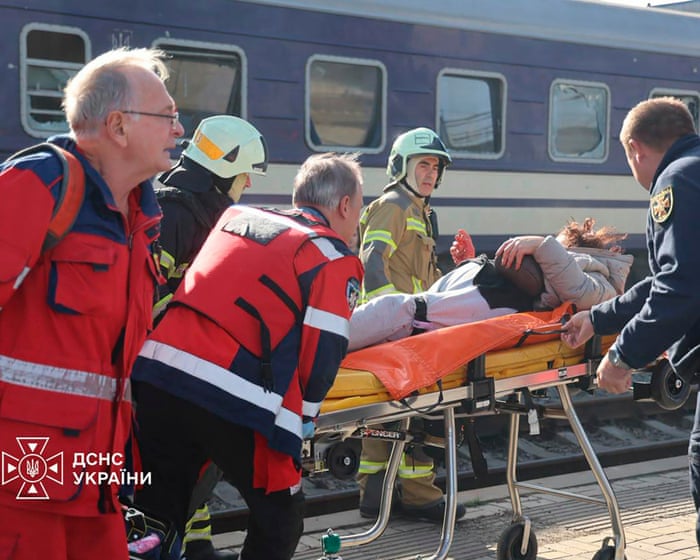
European leaders have reacted with outrage to a deadly attack by a Russian drone that slammed into a busy railway platform in the Ukrainian city of Dnipro on Thursday, as Volodymyr Zelenskyy warned Ukraine had intelligence about more ballistic missile strikes to come. French President Emmanuel Macron stressed the need for “far more than a localised ceasefire”, referencing the current truce in the Russian-occupied city of Oleshky. The EU council president, António Costa, who described the Dnipro attacks as “cruel and devastating”, called for greater pressure on Russia after the latest strikes against civilians. “The EU will continue to increase the pressure on Russia and to support Ukraine until a just and lasting peace is achieved,” he added. “We call on all our international partners to do the same.”

Later on Thursday, Russian forces ⁠launched ⁠an attack ​on the ⁠Ukrainian capital ⁠Kyiv ​with ‌ballistic ‌missiles, Mayor Vitali Klitschko ‌said on Telegram, hitting warehouses and ‌triggering a fire. Emergency services were headed to ​the scene on the east side ⁠of the Dnipro ​River, he said.

Describing the Dnipro train station attack – which killed at least 14 people and injured another 14 – as “horrific”, the president of Ukraine insisted “sanctions against Moscow and its war machine must not be eased for as long as this Russian war continues”. Zelenskyy warned also that Ukraine had intelligence about preparations by the Russians of new ballistic missile strikes. “We need the means to take out all this Russian ‌evil. We are expecting relevant decisions,” he said. Another attack on Dnipro hit a student dormitory, setting it ablaze, regional governor Oleksandr Hanzha said, adding the assaults had cut power to 350,000 households.

The strikes came as Ukraine and Russia kept to a fragile local ceasefire in the ravaged city of Oleshky and prepared to send a humanitarian convoy to the southern Ukrainian city under Russian occupation since 2022 and where residents have faced months of food, water and medicine shortages. Russia’s human ‌rights commissioner Yana Lantratova ‌said on Friday that local residents had until 2 pm local time (1100 ​GMT) on 30 October to evacuate, Russian news agency Interfax reported. Two ​people, ​including one ​sapper, were killed ​while ‌de-mining in ​Oleshky, ​she said.

Meanwhile, Ukraine’s military ⁠has paused its strikes on Russian oil refineries after pressure from US President Donald Trump, ⁠according to a report in the Wall Street ⁠Journal ​on Thursday, citing people with knowledge of the operations. Ukrainian units carrying out ⁠long-range strikes were told in mid-October that the campaign against refineries was effectively on hold once ⁠missions already in motion were completed, the Journal reported. The ​unofficial pause is expected ‌to last until ‌after the US midterm elections and potentially deeper into ‌November, the newspaper said.

After the Dnipro attack, Zelenskyy renewed his criticism of a deal struck between Trump and Russia’s President Vladimir Putin to ease some US sanctions on Russia allowing Moscow to release diesel on to global markets. “How many such terrorist strikes has Russia carried out against our people since sanctions were lifted on some Russian oligarchs and the energy sector, instead of de-escalating?” he asked.

Late on Thursday, Putin said he supported any steps aimed at restoring relations with ⁠European countries, saying the outbreak of any conflict would leave ⁠a situation with ⁠no ​winners. Commenting on his phone call this week with the leaders of Norway and Finland, Putin told reporters after ‌hosting a summit with African ‌leaders: “And if anyone wants it, let them prepare, but right now they have not achieved their goal – to inflict a strategic defeat on Russia. And if things go too far, there will be no winners at all. .”

Continue reading...

© Photograph: Ukrainian Emergency Service/AP

© Photograph: Ukrainian Emergency Service/AP

© Photograph: Ukrainian Emergency Service/AP

  •  

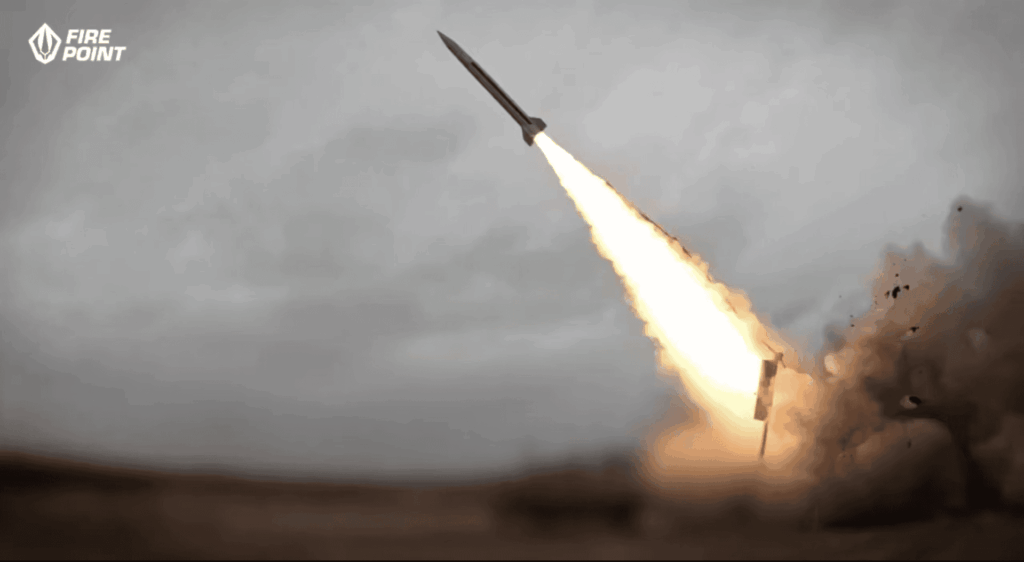
Ukraine says it has finished its part of FREYJA, Europe’s joint anti-ballistic project. Partners’ work is still underway

ukraine advertise its new ballistic missiles until factories can mass-produce ex-security officer says · post test launch fp-7 missile prototype fire point news ukrainian reports

Ukraine has finished its share of FREYJA, a joint European project to build a system against ballistic missiles, President Volodymyr Zelenskyy told journalists on 17 October, Ukrinform reported. He added that Kyiv wants to test the first system as soon as possible.

Ukraine still relies on US-made Patriot interceptors to stop Russian ballistic missiles. Zelenskyy told ABC News on 23 October that Ukraine had received only 24 of them from the US in three months, while it needs 350 a month on average. FREYJA can not close that gap soon, because the system is still in development.

Ukraine’s missile and launcher, partners’ radars and sensors

Zelenskyy said the partners’ share of the work, with 10 countries taking part, is still underway. He also said he had discussed the project with French President Emmanuel Macron, and he named Norway as a key partner.

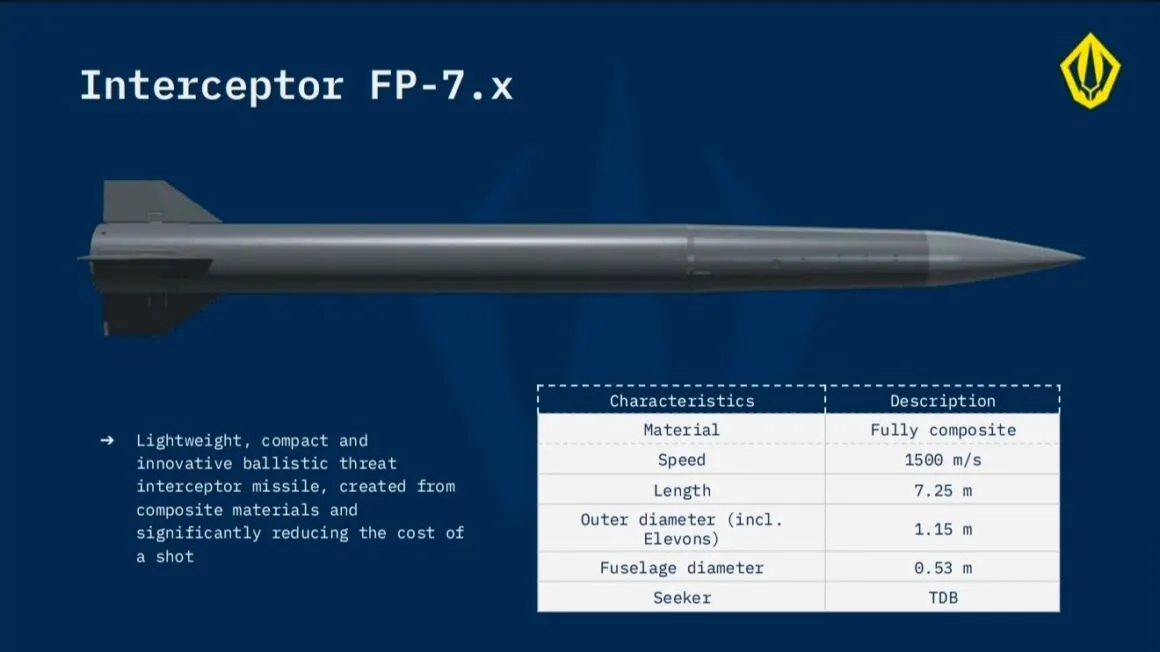
Fire Point concept graphic showing the FP-7.x interceptor missile beside a table of proposed specifications.
Explore further

Ukraine’s missile, Europe’s sensors—FREYJA enters active development on an early-2027 clock

Zelenskyy did not say what the partners still have to deliver. In August, he said Ukraine is capable of making the missile and launcher, while partners would supply critical components such as radars and sensors.

One part not made in Ukraine

In May, Fire Point co-founder and chief designer Denys Shtilerman said all components of the FP-7.x interceptor are made in Ukraine except one. “As for that one part we don’t manufacture in Ukraine, we’ve contracted a certain quantity of it. We already have it,” he said, but did not name the part.

In June, however, Shtilerman told the Financial Times that mass production depended on an infrared seeker Fire Point hoped to get from Germany’s Diehl Defence. Neither statement says whether the seeker is that one part.

Fire Point co-founder Iryna Terekh said in September that FREYJA was going through testing and technical integration in combat conditions in Ukraine. The company plans its first intercept of a ballistic target by mid-2027.

The official timeline has since moved closer. On 21 October, Zelenskyy wrote that officials had identified where to speed up so FREYJA reaches testing by the end of this year. A test is still a step short of an intercept.

  •  

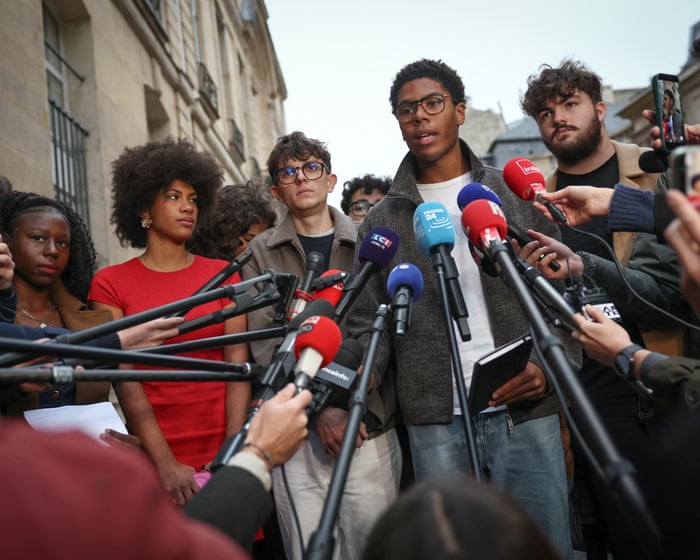
French student protests set to continue as Macron and Lecornu fail to meet demands

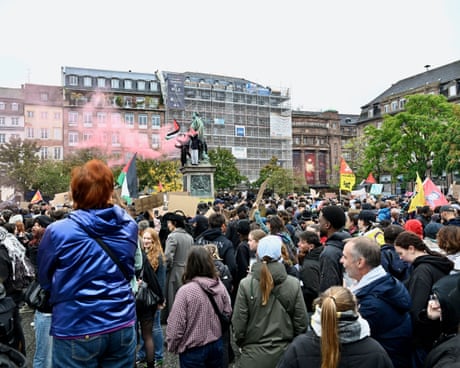
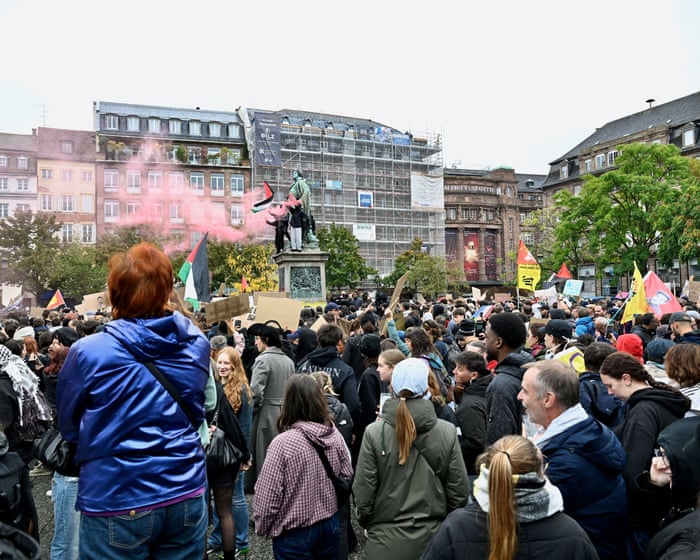
France is gearing up for another round of anti-austerity mobilizations on Saturday, October 31. As the weekend approaches, President Emmanuel Macron and Prime Minister Sébastien Lecornu have still not substantially addressed the protest demands tabled by the student movement. 

For the past weeks, students and their organizations have taken to the streets in the hundreds of thousands, denouncing the state of the education sector, including overcrowded classrooms, overworked teachers, and dilapidated buildings. Authorities have responded with a full-blown crackdown – police violence, curfews, and protest bans – while avoiding meaningful conversation about the protests’ causes.

“The authorities’ top priority is to strip the movement of the political meaning it carries: the condemnation of the neoliberal policy that has ruined the French education system,” presidential candidate Jean-Luc Mélenchon pointed out in a recent interview. “Young people are pulling at the thread of a larger unraveling.”

Government tried to break student unity

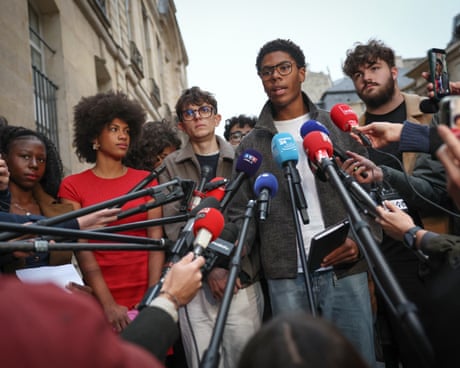
Lecornu and his ministers called a meeting with high school and university student groups on Monday, announcing the government was ready to open dialogue on their demands. Yet even before the meetings kicked off, a list of government-proposed measures published by the media only fueled frustration. 

These measures included a transparency-oriented reform of the higher education recruitment platform Parcoursup, the creation of 15,000 additional higher education placements, low-interest loans to regional authorities for renovating school infrastructure, and the indexation of grants to inflation.

Read more: Students in France are fighting for stronger public education

Students criticized the officials for attempting to set a negotiation agenda before even speaking to them. They also called them out for trying to break their unity by organizing separate meetings with different groups instead of a joint discussion. In this process, they emphasized, crucial voices were left out. 

Among others, the Fédération Lycéenne des Quartiers (FLQ), representing high school students from working-class neighborhoods – the demographic group from which the protest wave originated – was not invited to meet Lecornu. Students interpreted this as yet another sign of the government’s failure to grasp what is at stake. “They see us first and foremost as ‘young people from the banlieues,’ rather than young people who, like everyone else, want to make their voices heard,” FLQ’s Soumaya Sarré told Mediapart. 

“Crumbs” instead of solutions

The way meetings were set up was not the only problem. Following the publication of the government’s proposals, the university students’ association Union Étudiante described them as “crumbs” and detailed how they fail to address the movement’s concerns. 

“There are not 15,000 places missing but at least 250,000,” the organization warned. “Where are those 250,000 places needed for young people who have been denied their right to education because of classist and racist selection?” 

Union Étudiante similarly criticized the lack of clarity surrounding proposed financing for infrastructure investment, employment plans, and the promise to “reform” rather than abolish Parcoursup. 

Roughly 800,000 people participated in nationwide protests on October 24. Source: Union Étudiante/X

This last demand has become emblematic for the student movement over the past weeks of protest. Young people on the streets have repeatedly explained how the tool allows university selection to maintain racist and classist tones – all while pushing tens of thousands of students without placements toward the private sector. 

“We are not asking for a reform that offers more transparency or clarity; we already know how the selection process works, and it will remain unjust even if the selection criteria are made public,” Union Étudiante wrote. “The problem is selection itself. Why should young people be denied the right to pursue higher education? We must abolish all forms of selection while keeping a centralized platform for enrolling in academic programs.” 

Mobilizations against racism and the far right

Trade unions and progressive organizations continue to support the students ahead of Saturday’s demonstrations, while building toward a general strike on November 5. The networks remain connected over shared austerity-related problems, linking budget cuts in public services, attacks on pensions, and precarious working conditions. 

In between regular nationwide mobilizations, the past few days have also seen significant protests against racism and the far right. After a racist attack in the Trappes working-class suburb of Paris last Friday – where one person was killed and five, including a 12-year-old, were seriously injured – calls are circulating for solidarity assemblies. 

“This crime did not come out of nowhere,” wrote Saint-Denis mayor Bally Bagayoko. “For years, the perpetrator blamed ‘Black people and Arabs’ for all his misfortunes.”

“He claimed he wanted to avenge a looting that never actually happened – a piece of false information broadcast on television,” he added.

“This hatred has its architects: those who, hour after hour on the airwaves, designate our neighborhoods as the problem and ‘the other’ as a threat.”

Read more: Students across the US South demand justice for Nolan Wells

The far-right National Rally – whose program ahead of the 2027 presidential election endorses exactly this vision of “the other” – held its congress in Orléans over the October 24-25 weekend. Approximately 26,000 people joined a local march against the policies endorsed by the party, signaling continuous resistance in the lead-up to the April 2027 presidential election.

  •  

The Guardian view on the far right’s plans for Brussels: doing the work of Xi, Putin and Trump | Editorial

If ever enacted, proposals by Marine Le Pen and the AfD leader, Alice Weidel, to hollow out EU institutions would be a continental act of self-harm

Following the Brexit referendum in 2016, Marine Le Pen was in a predictably celebratory mood. Britain’s vote to leave the European Union, she told one interviewer, was the first breach in the “Brussels Wall”. Ms Le Pen’s Front National party was at that point committed to taking France down the same path, given the chance. But as the UK’s self-inflicted economic wounds became a cautionary tale for the rest of Europe, the notion of Frexit was put on ice.

Instead, Ms Le Pen now hopes to lead far-right allies in hollowing out the EU from within. This month, both she and the leader of Alternative für Deutschland, Alice Weidel, outlined their visions of a “Europe of nations” in which EU institutions would be stripped of both cash and power. Ms Weidel’s “new deal for Europe” would abolish elections to the European parliament, and seek German opt-outs in areas such as migration, defence and common borrowing. Ms Le Pen’s party, now called National Rally, proposes slashing French contributions to the EU budget by 60% over a five-year presidential term, and ending the role of Brussels in proposing common policies for the 27 member states.

Do you have an opinion on the issues raised in this article? If you would like to submit a response of up to 300 words by email to be considered for publication in our letters section, please click here.

Continue reading...

© Photograph: Christophe Petit-Tesson/EPA

© Photograph: Christophe Petit-Tesson/EPA

© Photograph: Christophe Petit-Tesson/EPA

  •  

French Elections 2027: All the Cards Are Falling in Marine Le Pen’s Favour

Marine Le Pen could scarcely have chosen a more favourable backdrop for her presidential campaign. A weakened president approaches the exit, demonstrations expose deep public frustration, and scenes of disorder reinforce her central argument: France’s governing establishment has lost control. The cards are all falling in her favour. Whether she can play them successfully remains the question.

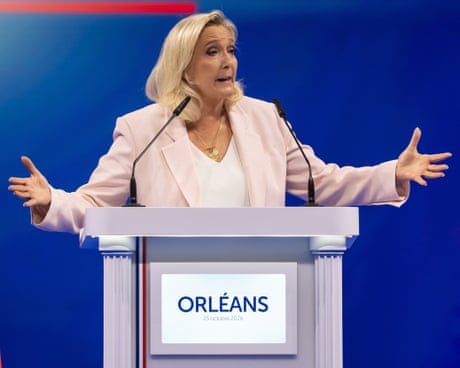
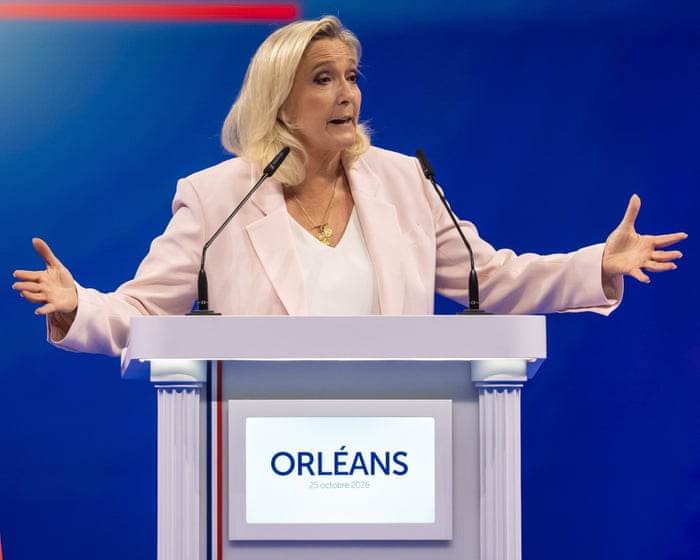
Launching her campaign in Orléans, Le Pen promised national renewal and tougher policing. Reuters reported a poll placing her at 32–33.5 per cent, against 17 per cent for Jean-Luc Mélenchon. Those numbers are a snapshot, but they suggest something politically consequential: the candidate once treated as an outsider now occupies the strongest starting position.

Emmanuel Macron, meanwhile, increasingly resembles a lame-duck president. Constitutionally unable to seek another consecutive term, he faces a succession contest in which his endorsement may carry limited weight. His admission of failures in anticipating the unrest compounds the damage. A presidency built around authority and personal command is approaching its conclusion with both visibly diminished.

For Le Pen, the advantage is obvious. Every confrontation between police and rioters supplies another opportunity to ask whether the government can perform its most basic duty: protecting the public. Citizens do not need to endorse her entire programme to find that question persuasive. They need only conclude that those already governing have exhausted their answers.

Yet the origins of the demonstrations matter. The Associated Press describes a movement rooted in education funding, rising living costs and inequality. Peaceful protesters cannot reasonably be bundled together with looters. Nor does the reporting establish that these disturbances are an expression of Islamism or Muslim demographic change. Misdiagnosing the crisis would weaken any serious argument for restoring order.

The broader integration debate nevertheless deserves frank treatment. A republic cannot function confidently if its citizens believe that common laws, civic obligations or freedom of expression are negotiable. Governments should confront Islamist intimidation, religious coercion and deliberate separatism wherever evidence establishes them. They should also expect newcomers to learn the language, respect constitutional principles and participate in national life.

Those expectations are legitimate. Treating an entire Muslim population as inherently unintegrated is not. Religious identity alone establishes neither hostility to France nor unwillingness to belong. The useful political distinction is between citizens who uphold democratic rules and individuals or organisations that seek to undermine them. That standard should apply consistently, whatever the religion or ideology involved.

Across Europe, political leaders would be wise to recognise the electoral danger of appearing evasive about integration. Voters seeking enforceable rules should receive practical answers: effective language teaching, access to employment, credible policing and action against extremist networks. When mainstream parties substitute moral lectures for measurable results, they leave an opening for opponents promising clarity and control.

Le Pen’s opportunity is to connect these concerns with a wider sense of abandonment. Disorder, strained services and anxiety about belonging can become parts of one political story: the state demands obedience and taxation but delivers too little security or reassurance. Her opponents will struggle if their response consists principally of explaining why voters should fear her.

But favourable circumstances do not eliminate her weaknesses. Her conviction over European Parliament funds, which she is appealing, sits awkwardly beside a campaign demanding accountability and respect for law. Her promises of spending restraint, lower business taxes and resistance to further retirement-age increases also invite scrutiny. Winning confidence requires explaining how competing commitments can be reconciled.

The challenge for her rivals is therefore substantive. They must demonstrate that public order and legitimate protest can coexist, that integration involves shared duties, and that economic grievances deserve workable remedies. Simply rebuilding an electoral barricade against Le Pen may prove insufficient if voters associate its defenders with the failures that brought France here.

For now, momentum belongs to her. Macron looks depleted; the streets convey insecurity; the establishment struggles to offer a convincing successor or a persuasive account of renewal. None of this guarantees a Le Pen presidency. It does mean that her opponents can no longer rely on her reputation to defeat her. They must recover the public’s confidence in their own capacity to govern. Otherwise, France’s crisis may become her decisive electoral advantage.

Le Pen Sets Out €140bn Spending-Cut Plan as French Debt Dominates 2027 Race

  •  

Líderes estrangeiros reconhecem vitória e parabenizam Lula

Logo Agência Brasil

Políticos de várias partes do mundo continuam se manifestando, após a reeleição do presidente Luiz Inácio Lula da Silva, no último domingo (25).

O presidente da França, Emmanuel Macron, usou as redes sociais para parabenizar o seu homólogo brasileiro.

Notícias relacionadas:

“Meus parabéns, Lula, pela sua reeleição. A França e o Brasil têm muito a construir juntos. Diante dos grandes desafios do nosso tempo, reforcemos nossa parceria estratégica e façamos viver a amizade entre nossos dois países a serviço de um mundo mais justo”.

O primeiro-ministro da Espanha, Pedro Sanchéz, foi outro a usar as redes sociais para exaltar a vitória de Lula sobre a extrema-direita.

“Grande vitória de Lula! O que aconteceu no Brasil acontecerá na Espanha. A virada do progressismo global acaba de começar”.

O presidente do Equador, Daniel Noboa, também foi ao X, antigo Twitter, para felicitar o presidente brasileiro.

“Parabéns, Lula, por esta vitória. Nossa região tem inimigos comuns, desafios compartilhados e muito a ganhar quando trabalhamos juntos”.

Noboa é um político de direita e um dos aliados do presidente dos Estados Unidos, Donald Trump, na América do Sul.

Outros líderes da América Latina também felicitaram o brasileiro pela reeleição. Entre eles, a presidente do México, Claudia Sheinbaum, e o presidente do Uruguai, Yamandu Orsi.

O primeiro-ministro do Canadá, Mark Carney, também exaltou a relação entre seu país e o Brasil ao congratular o presidente reeleito.

“A relação entre o Canadá e o Brasil floresceu sob nossa parceria. Vamos aproveitar essa oportunidade para torna-la ainda mais forte, juntos – para criar novas grandes oportunidades de comércio, proteger o meio-ambiente e construir maior prosperidade para os povos de ambos países”.

A primeira ministra do Japão, Sanae Takaishi, disse esperar que Lula “continue a guiar o Brasil com sua forte liderança” e se mostrou ansiosa para trabalhar com o brasileiro e estreitar “ainda mais a parceria estratégica global numa gama ampla de áreas”. Entre essas áreas, Takaishi citou um acordo entre Japão e Mercosul.

A China divulgou um comunicado por meio do porta-voz do ministério chinês dos Negócios Estrangeiros.

“A China está disposta a trabalhar com o Brasil para continuar a avançar na construção de uma comunidade de futuro compartilhado entre os dois países”.

Vladimir Putin, presidente da Rússia, falou em “reconhecimento dos brasileiros às suas notáveis qualidades de liderança, seu apoio à política de desenvolvimento socioeconômico sustentável do país e a proteção de sua soberania e legítimos interesses no cenário global”.

Já Ursula Von der Leyen, presidente da Comissão Europeia, publicou um comunicado se dirigindo a Lula e exaltou a bandeira do multilateralismo, muito defendida pelo brasileiro em seus discursos no exterior. “Parabéns ao amigo Lula pela sua vitória eleitoral. A democracia e o multilateralismo venceram no Brasil”.

O prefeito de Nova York, Zohran Mamdani, em entrevista à imprensa nesta segunda-feira (26), disse que estava indo para casa quando viu vários novaiorquinos saindo de um bar gritando o nome de Lula o que mostrou, segundo ele, animação dos moradores da cidade com a vitória do candidato do PT.

“Eu vi o quanto ele significa para tanta gente nessa cidade, nesse país e por todo o mundo, honestamente”. Nas redes sociais, Mamdani também mandou um recado para Lula. “O povo unido jamais será vencido! Parabéns, presidente Lula.”

*com informações de Matheus Crobelatti e Pedro Rafael Vilela


  •  

Protest leaders urge French pupils to keep barricading their schools

Activists say struggle must go on until their ‘maximum’ demands are met over teacher shortages and building repairs

French children should continue to barricade their schools and take part in street protests, a student union said on Monday after the government announced a package of education measures to try to stem the crisis.

“Today we’re at the negotiating table, we’re able to negotiate with the government,” Pierre Sourzat of Les Lycéens told France Info television. “We’re in a power struggle and we still need to call for continued mobilisation to meet a maximum of our demands.”

Continue reading...

© Photograph: AFP/Getty Images

© Photograph: AFP/Getty Images

© Photograph: AFP/Getty Images

  •  

France will lurch from crisis to crisis until it confronts its retirement timebomb | Letter

Amid widespread protests, Muriel E Cockcroft has sympathy for French youth but fears how much steam will be let out at the next convulsion

I’m writing in response to your editorial (The Guardian view on France’s protests: a polarised country is in a perilous political moment, 19 October). While the focus is on Emmanuel Macron, let us not forget the hierarchical structure of French administration, from mayors to MPs to senators to prefects and heads of region. All are part of the government, but few stood up to bring leaky school roofs and missing teachers to national consciousness. I deplore the senseless destruction of shops and state buildings. But I also deplore the fact that students had to protest to be heard. In the many administrative tiers of this highly hierarchical country, no one acted and inertia prevailed.

Centrally, the government is financially challenged but refuses to acknowledge that having a huge deficit, an ageing population and a low retirement age are perhaps connected. Modest attempts to increase the retirement age also provoked violent protests. Financial tools for individual retirement remain complex and restricted. Thus, this sclerotic system presses on until the next crisis.

Continue reading...

© Photograph: Roses Nicolas/ABACA/Shutterstock

© Photograph: Roses Nicolas/ABACA/Shutterstock

© Photograph: Roses Nicolas/ABACA/Shutterstock

  •  

Journey to ground zero of the unrest in France

A drug-selling spot in Bobigny, a 'banlieue' north of Paris.

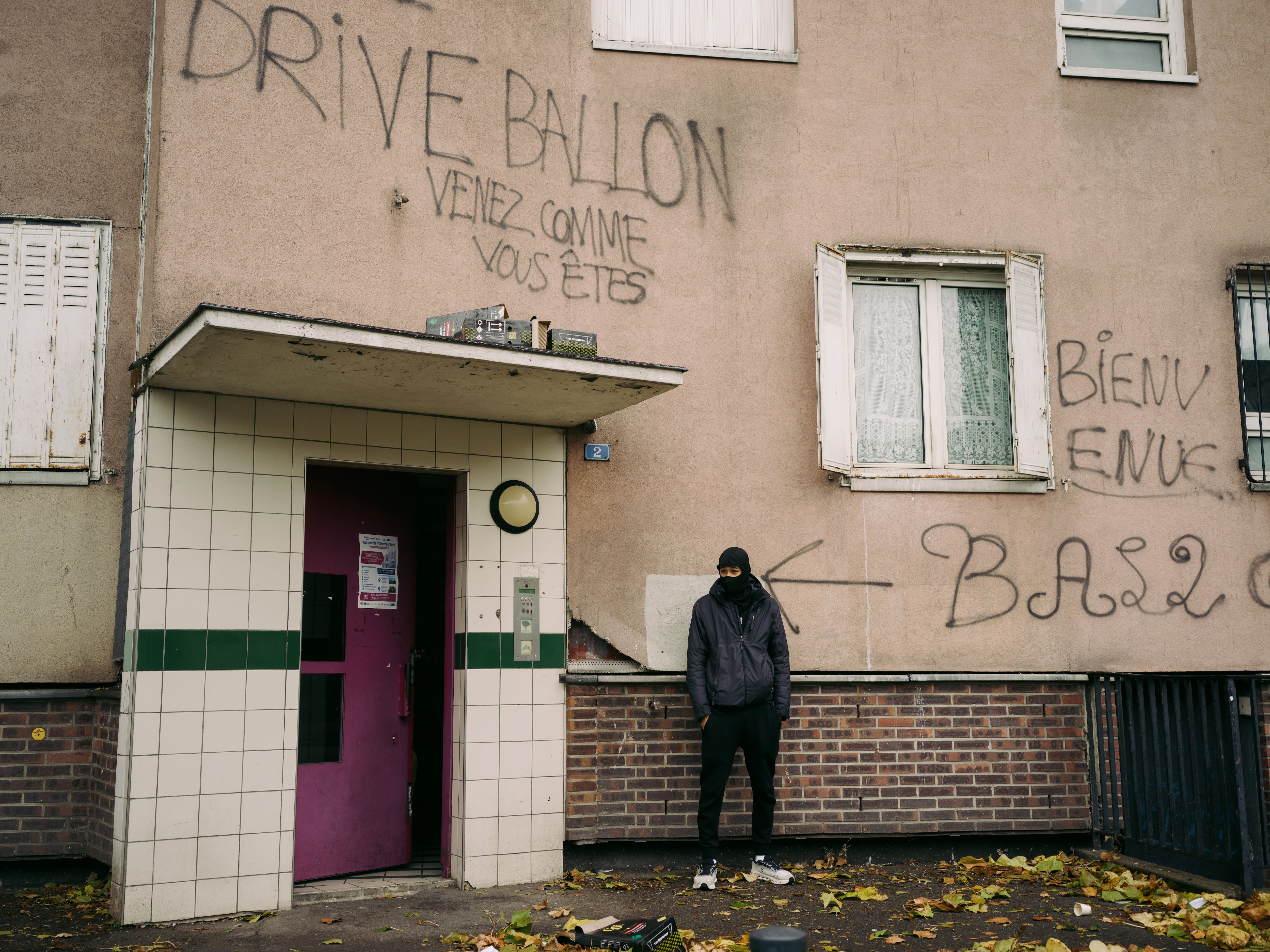
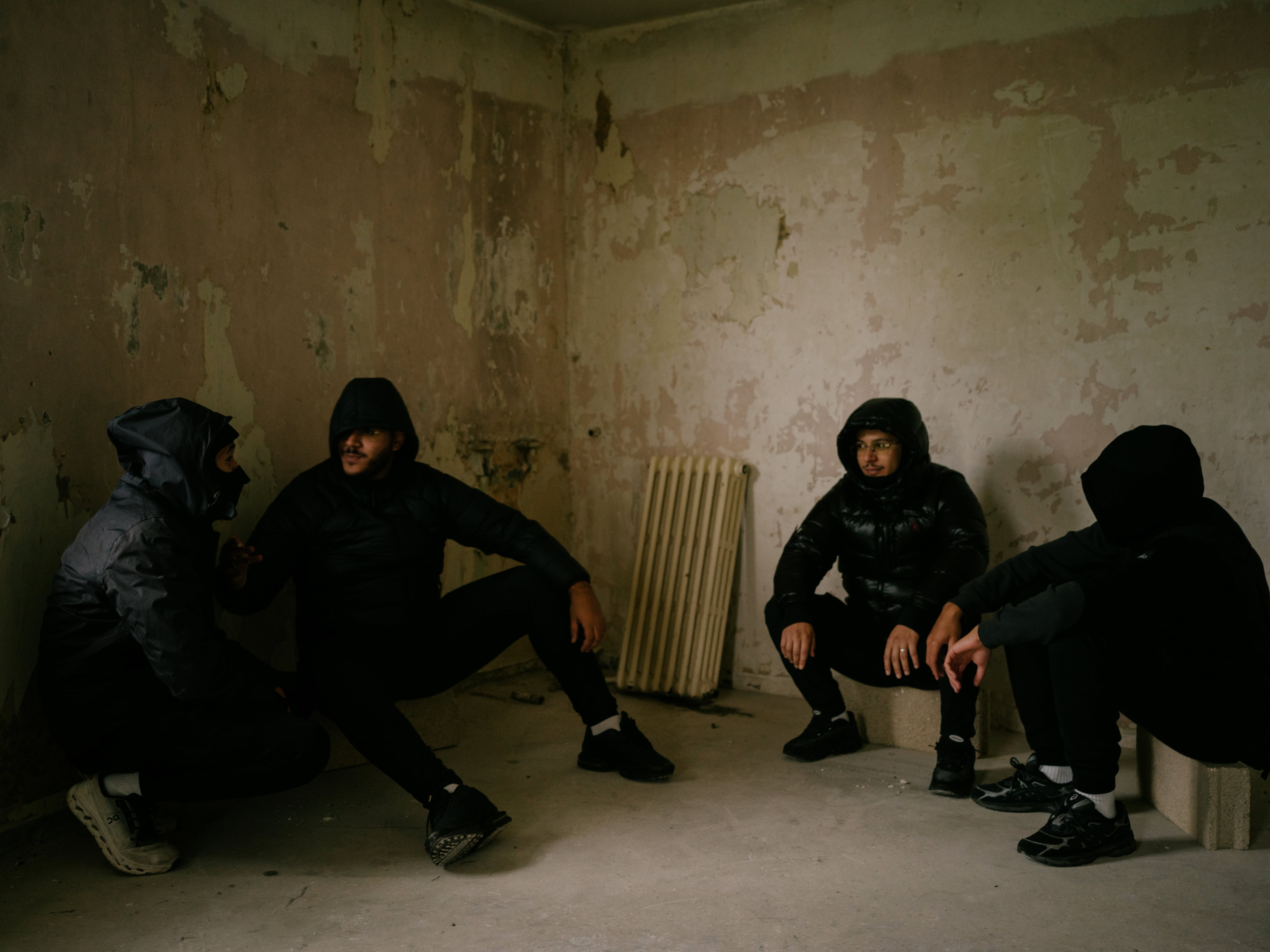
Moktar, 21, pulls up his neck gaiter, tightens the hood of his puffer jacket and steps out of the house in the late afternoon, dressed in immaculate black from head to toe. Behind the little mustache and the thick-lensed glasses with gold-rimmed temples, he smiles — a third-year college student from a very modest Tunisian family. Friendly, sharp, with an unusually political sense for his age and skin toughened by his surroundings, Moktar grew up in one of the poorest buildings in the L’Abreuvoir neighborhood in Bobigny (population 48,873), right opposite one of the drug-dealing hotspots where traffickers, police, customers, and addicts come and go all day. “Ballon here,” reads graffiti on the wall, advertising the nitrous oxide gas sold for inhalation.

Seguir leyendo

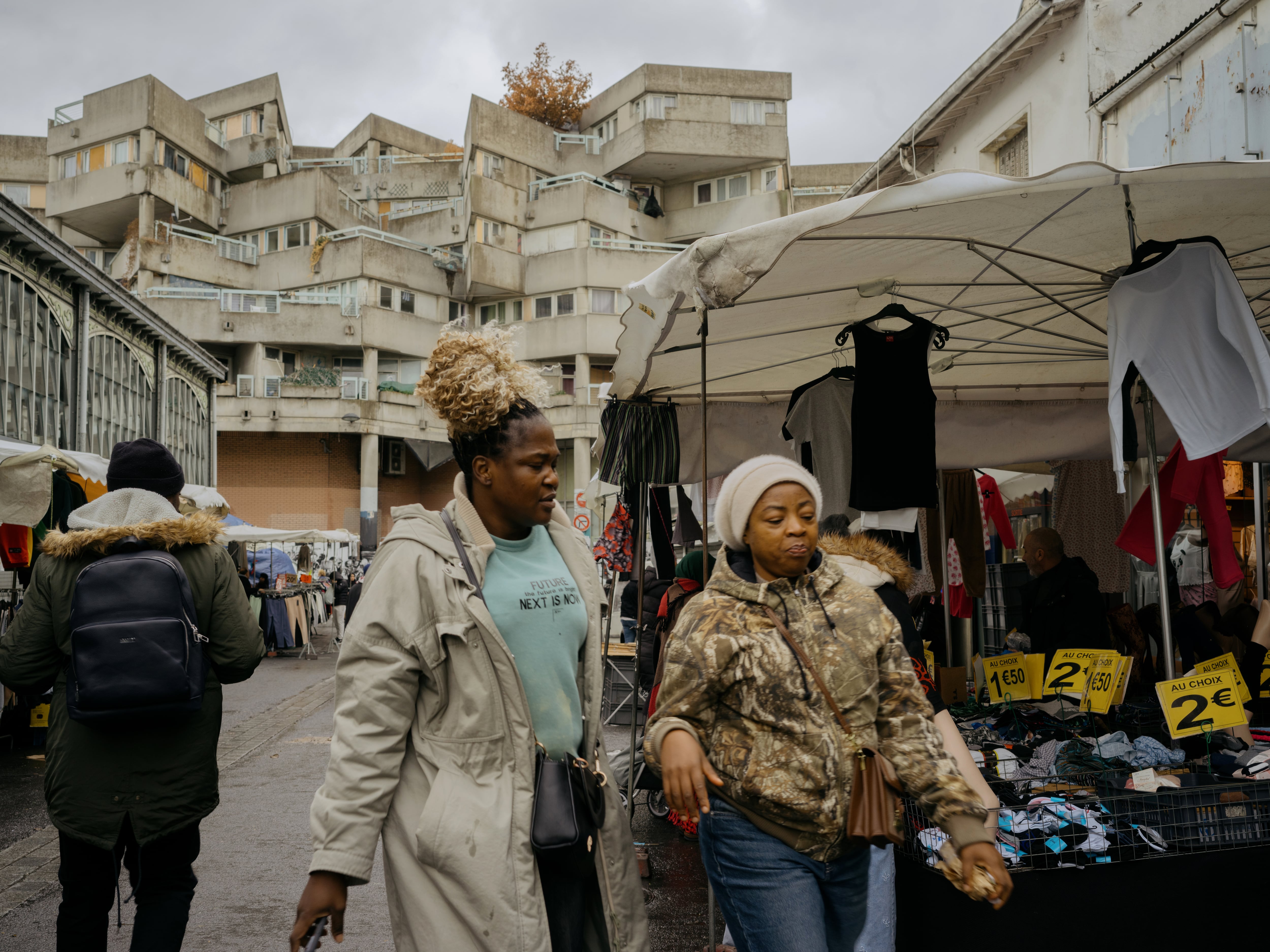
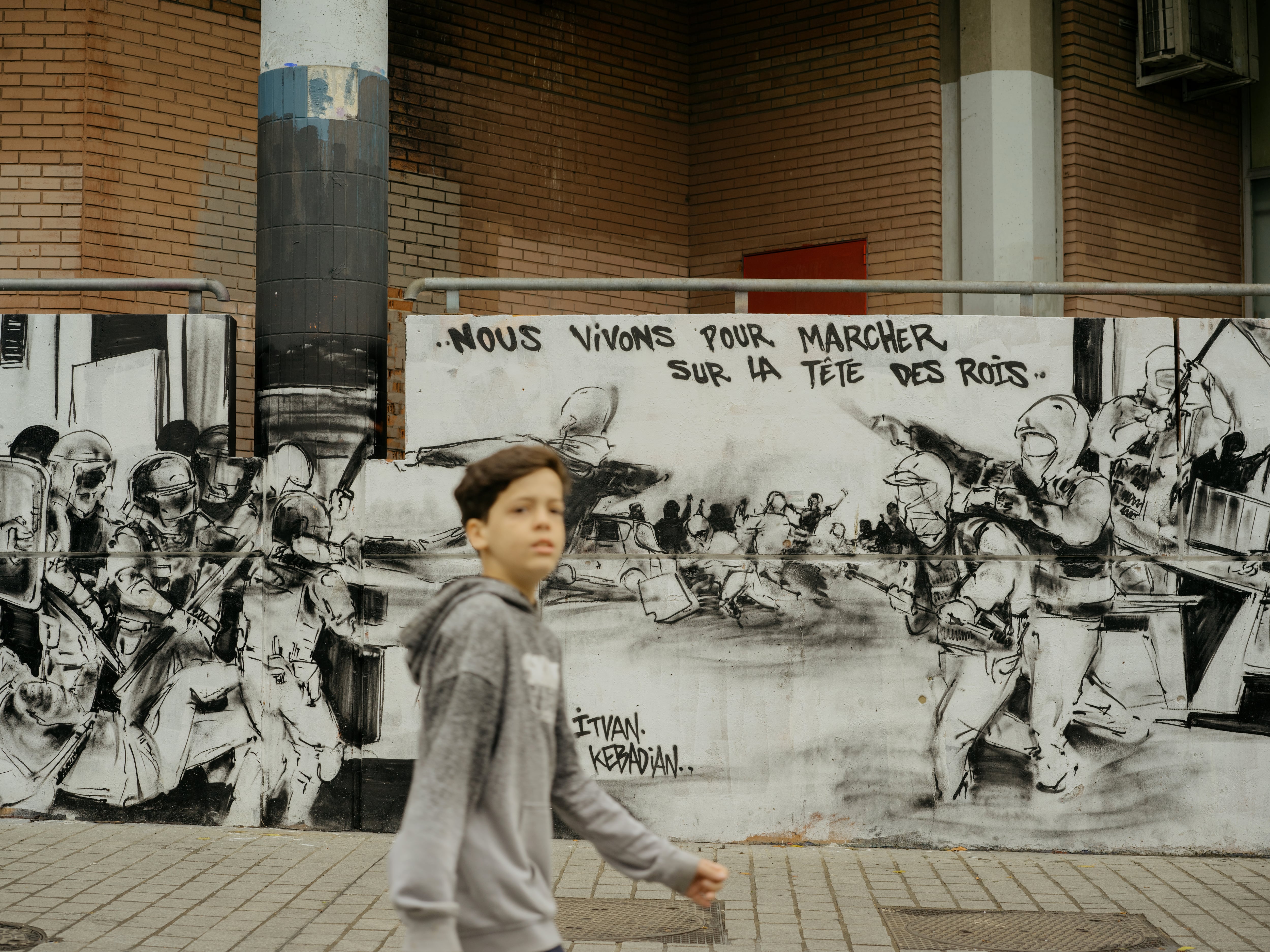
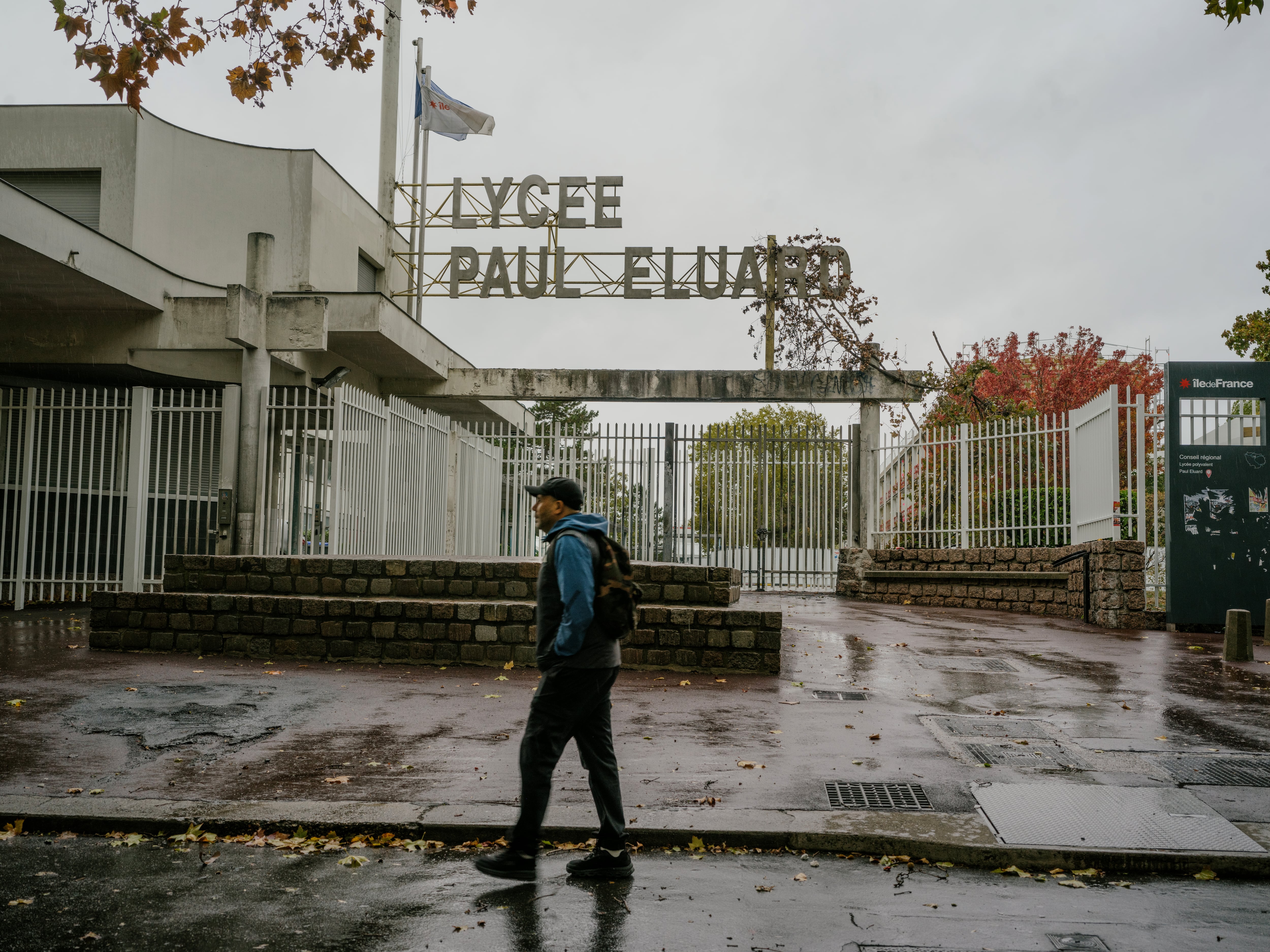
Moktar talks with his friends in an abandoned apartment in Bondy, a 'banlieue' north of Paris.Street market in Saint-Denis, on the outskirts of Paris.Timeo, photographed in Bobigny, a 'banlieue' north of Paris.A mural in Saint-Denis reads: Didi, 27, in Saint-Denis, in the north of Paris.The Paul Éluard high school in Saint-Denis.

© Samuel Aranda

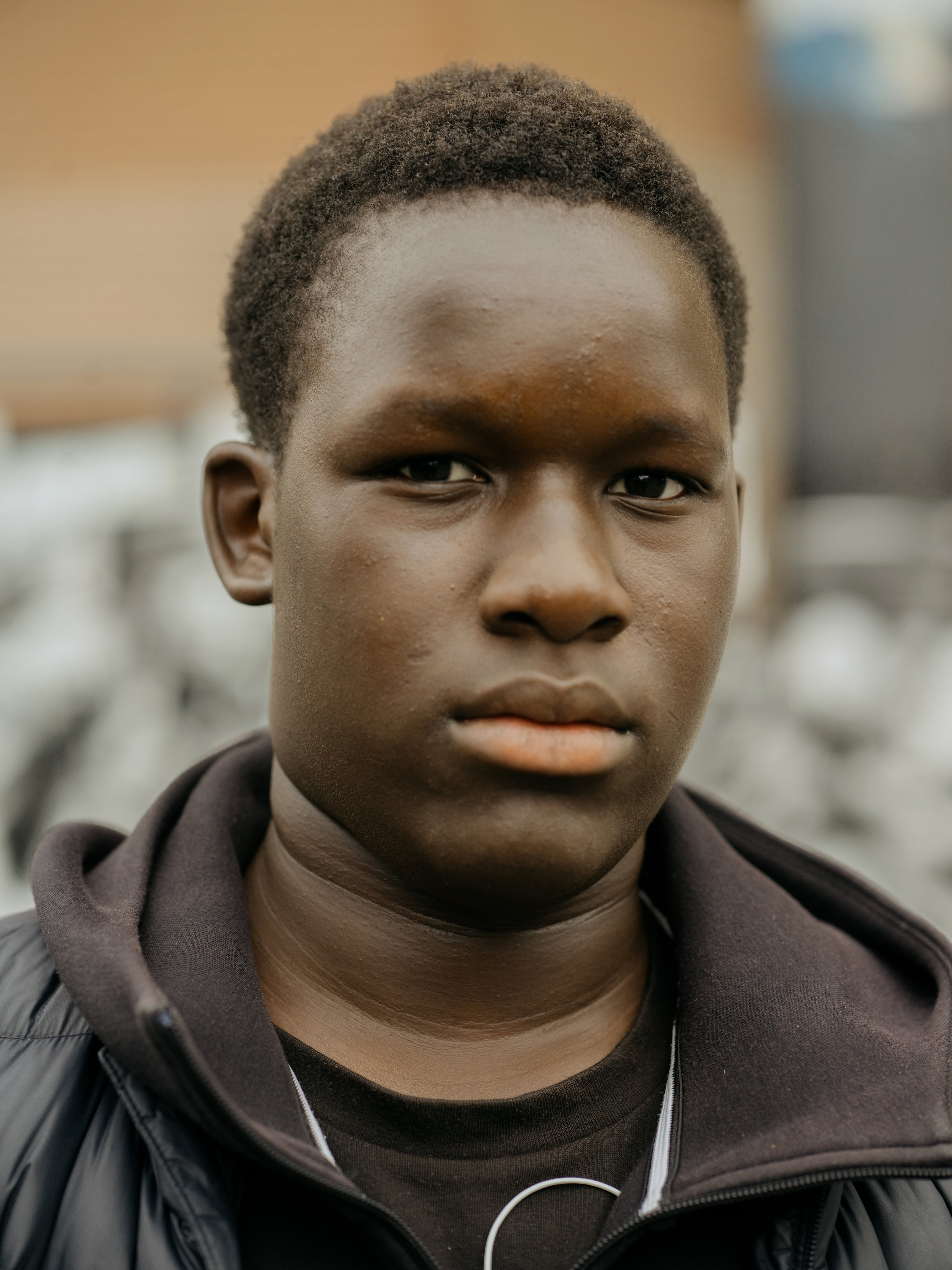
Ibrahima, in Saint-Denis.

© Samuel Aranda

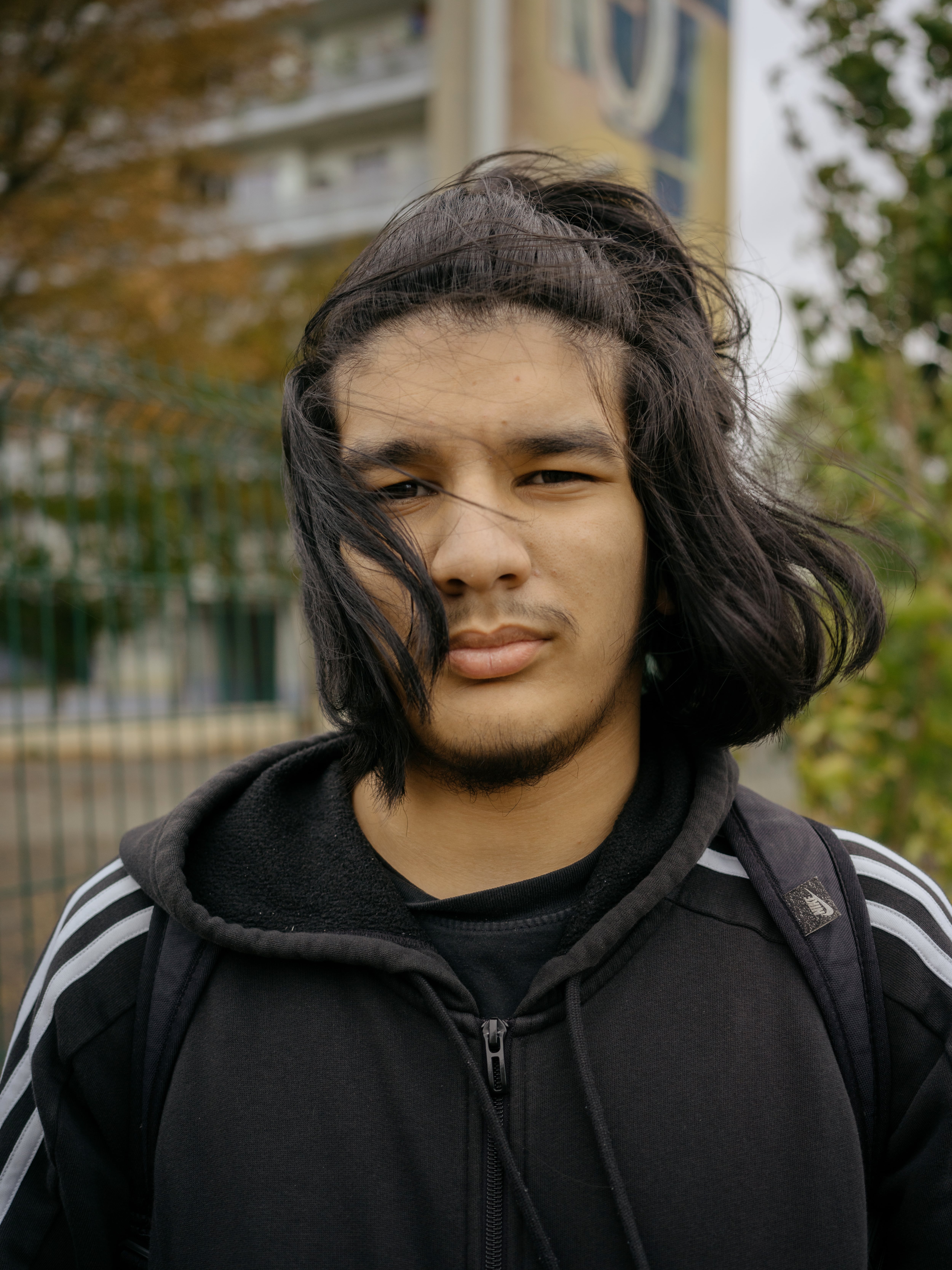
Kenan, photographed in Bondy.

© Samuel Aranda

Qusei, in Bondy.

© Samuel Aranda

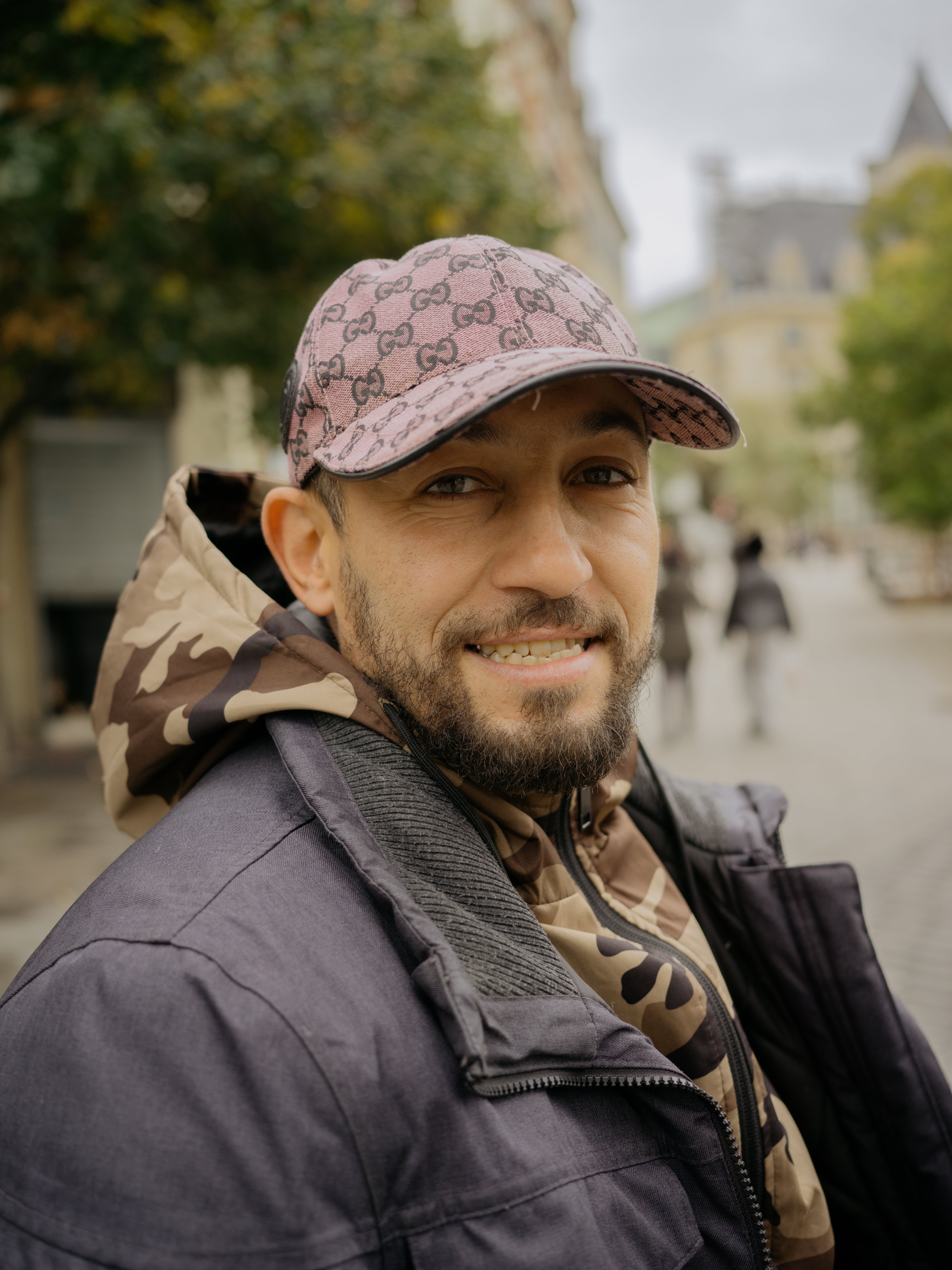
Lyes, A 38-year-old Algerian, in Saint-Denis.
  •  

La rabia de las revueltas francesas por acabar con el malestar social

Viendo lo que está ocurriendo en Francia, me viene a la memoria la célebre frase “Un fantasma recorre Europa” con la que se inicia el preámbulo del Manifiesto Comunista escrito por Karl Marx y Friedrich Engels, publicado por primera vez el 21 de febrero de 1848, en vísperas de las revoluciones liberales y obreras que se produjeron ese año en Francia y otros países europeos. Marx y Engels utilizaron la metáfora del fantasma para describir el miedo y la inquietud que sentían las clases e instituciones conservadoras de la época ante la incipiente lucha de clases entre trabajadores y empresarios dentro del naciente capitalismo.

Seguir leyendo

© DIEGO MIR (EL PAÍS)

  •  

Could Europe’s autumn of discontent threaten the survival of the EU? | Catherine De Vries

Anger on the streets could increasingly turn against the EU itself if it can’t show why cooperation makes people’s lives better

Europe is living through an autumn of unusual discontent. What protesters from Paris to Milan to Madrid share is a deepening anxiety about the future and a growing anger at the gap between what they expect from their governments and what they feel governments are delivering, whether the issue is unaffordable housing, stagnant wages, the spiralling cost of living or failing schools.

The electoral consequences of the failure to get a grip on this public anger are already with us. Spain goes to the polls next month in a snap election called after parliament voted down key housing reforms. France begins the process of electing a new president in April, while Poland, Italy and a string of smaller states will vote before the end of 2027. The stakes could not be higher.

Continue reading...

© Photograph: Nicolas Tucat/AFP/Getty Images

© Photograph: Nicolas Tucat/AFP/Getty Images

© Photograph: Nicolas Tucat/AFP/Getty Images

  •  

Macron accused of putting France’s right to protest at risk with ‘vandal’s law’

Making innocent protesters liable for damage would be bad for rule of law and play into far-right hands, say opponents

Emmanuel Macron has been accused by trade unions of trying to curb the fundamental French right to protest as the government fast-tracks a bill to make protesters pay for damage caused by vandalism at street demonstrations even if they did not directly cause it themselves.

The French president, who leaves office next spring, has faced more than a month of protests in which high-school students have blockaded schools demanding a response to teacher absences, repairs to decrepit buildings and changes to the university applications platform.

Continue reading...

© Photograph: Thibault Camus/AP

© Photograph: Thibault Camus/AP

© Photograph: Thibault Camus/AP

  •  

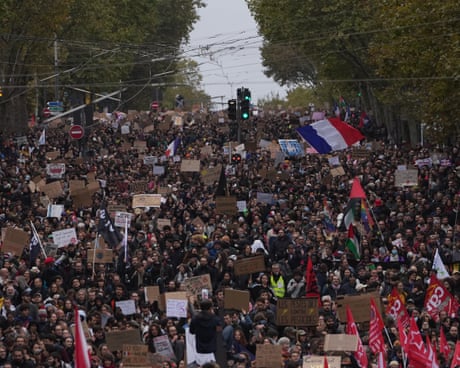
Hundreds of thousands march across France in protests over schools and policing

Almost 1,000 arrested as police charge crowd in Paris and teargas used to stop protesters reaching other city centres

Hundreds of thousands marched in cities across France on Saturday in largely peaceful protests to support schoolchildren’s demands for more teachers and repairs to dilapidated buildings, as Emmanuel Macron faces a social and political crisis in his final months as president.

The prosecutor’s office in the southern city of Nice said on Sunday that 59 people had been taken into police custody, including 11 suspected of belonging to extreme-right groups. They were alleged to have gathered with the intent of committing violence. Some were arrested in two vehicles with masks, gloves, gas sprays and truncheons, the prosecutor’s office said in a statement to public broadcaster FranceInfo.

Continue reading...

© Photograph: Thibault Camus/AP

© Photograph: Thibault Camus/AP

© Photograph: Thibault Camus/AP

  •  

Melenchon Urges Macron to Meet Protesters’ Demands Before Leaving Office

French leftist leader warns of weekly demonstrations and an impending general strike.

On Saturday, French radical left leader Jean-Luc Melenchon urged French President Emmanuel Macron to yield to protesters’ demands before leaving office in May 2027.

RELATED:

Two French Protesters Arrested for the Burning of the Limoges Town Hall

“You still have time to give in; afterward, you will have no choice but to leave. Give in and stop wasting our time,” Melenchon, a four-time presidential candidate, said as he marched in the Paris demonstration, which proceeded between Porte d’Italie and Porte de Vincennes.

Melenchon, leader of France Unbowed (LFI), warned Macron that if social demands go unanswered, mobilizations such as the one taking place in France for the second consecutive Saturday “will be repeated every week.”

“This is a very important moment in the history of popular movements in our country,” Melenchon said, convinced that “a general strike is coming” for the authorities.

Victoire totale du mouvement social. La marche s'est rassemblée au nouveau point autorisé et déferle dans le calme sur plus de quatre kilomètres. Les provocations aux désordres du préfet de police et de Lecornu sont un échec total. Pour les autorités, il est temps de céder, sinon… pic.twitter.com/S3d6k2DWf3

— Jean-Luc Mélenchon (@JLMelenchon) October 24, 2026

Jean-Luc Mélenchon’s text states: “A total victory for the social movement. The march has gathered at the newly authorized location and is proceeding calmly along a route over four kilometers long. The provocations intended to incite disorder—orchestrated by the police prefect and Lecornu—have failed completely. It is time for the authorities to yield; otherwise, they will soon have no choice but to head for the exit.”

Macron must decide whether to yield to the demands now or do so later under much more unpredictable circumstances, Melenchon said. He also accused the French president of adopting an attitude characteristic of an “absolute monarchy” by claiming to be “always right” in his dealings with others.

Melenchon said Macron had taken advantage of the state of shock caused by the racist terrorist attack in Trappes, on the outskirts of Paris, to change the route of the protest through the French capital, creating confusion among demonstrators.

“Everything is being prepared to provoke an explosion” and spark unrest, he said. He questioned the deployment of military personnel to protect public buildings and authorities’ recommendations that business owners turn to private security services, arguing that both measures contribute to rising tensions.

“They are doing absolutely everything to provoke an incident,” Melenchon insisted, urging demonstrators to remain calm, follow union instructions and maintain collective discipline “so that everything goes smoothly.”

Immense cortège à Paris pour demander l’abrogation de parcoursup, 10 milliards pour les lycéens, la hausse du SMIC et des salaires.

Et pour défendre notre liberté de manifester !

Les manœuvres de Nunez et Lecornu ont échoué. pic.twitter.com/eGJIiVKkH8

— Paul Vannier (@PaulVannierFI) October 24, 2026

The text reads, “A massive procession in Paris calling for the repeal of Parcoursup, 10 billion euros for high school students, and an increase in the minimum wage and salaries—as well as the defense of our right to protest! The maneuvers by Nunez and Lecornu have failed.”

For all these reasons, the leftist leader called on the French government to “stop provoking” demonstrators and “adding fuel to the fire,” and to listen to “demands that are not so difficult to meet.”

Melenchon also criticized meetings held during the week between the Macron administration and political parties, describing them as useless and theatrical.

“They live in a bubble, make decisions that have no connection to reality and are not even coordinated among themselves. That is why they are dangerous,” he said.

On Saturday, France faced a second day of nationwide demonstrations called by unions, students and the Yellow Vests movement to protest the rising cost of living and demand more public funding for education.

Following serious incidents on Saturday, Oct. 17, authorities deployed a major security operation on Saturday and banned demonstrations in several French cities, particularly those not organized by unions.

teleSUR/ JF

Source: EFE

  •  

France’s Unrest Exposes a New Front in Russia’s Information War Against Europe

The violence accompanying France’s October protests has revealed how foreign influence networks can exploit domestic grievances to undermine governments and European support for Ukraine. New evidence suggests Russian-linked operations were active before the riots, raising questions about whether information manipulation is moving beyond propaganda towards the mobilisation of political unrest.

France’s violent protests have exposed a vulnerability in European security that conventional policing cannot easily address: the ability of foreign information networks to exploit domestic political crises, amplify social divisions and transform legitimate grievances into instruments of geopolitical pressure.

President Emmanuel Macron has acknowledged foreign manipulation of information surrounding the disturbances of 17–18 October but insists there is no evidence that foreign actors organised the violence itself. His assessment reflects the evidence currently available, although new investigations indicate that Russian-linked networks were actively exploiting the protest movement weeks before the worst disorder began.

On 24 October, France deployed approximately 70,000 police officers and gendarmes to prevent further violence. Yet the security operation addresses only the physical consequences of a crisis whose online dimension extends across national borders.

Russia’s operations began before the riots

An investigation published on 22 October by Alliance4Europe provides evidence that Russian-linked information networks were exploiting French discontent well before the disturbances.

Researchers examined 547,471 posts and articles across nine languages. They identified 639 coordinated messages attributed with high confidence to Russia’s Doppelgänger operation, generating approximately 7.4 million views in the six weeks preceding 17 October.

The campaign used genuine concerns about living costs and public expenditure to promote a particular political argument: money allocated to Ukraine was being taken from European citizens.

This was not a random selection of grievances. France’s budget difficulties, public-service pressures and disagreements over defence expenditure provided material through which Moscow could seek to weaken support for Kyiv.

The researchers found that the operation targeted pro-European and pro-Ukraine politicians across the political spectrum. It praised selected proposals associated with Jean-Luc Mélenchon while also promoting nationalist narratives, illustrating a strategy driven less by ideological consistency than by opposition to existing European policies.

From manipulating opinion to encouraging mobilisation

An earlier investigation by EK Strategies, published on 8 October, identified an additional development.

Russian-linked channels were not merely commenting on existing demonstrations. They were circulating protest dates, identifying organisers and encouraging French audiences to follow the example of demonstrators in Germany.

On 28 September, the International Reporters network published an appeal urging French audiences to take to the streets. Other channels subsequently reproduced information about planned school blockades and demonstrations.

In one instance, a channel identified as Gavroche published rhetoric encouraging an attack on France’s Education Ministry.

Such activity goes beyond retrospective propaganda. It attempts to influence participation and behaviour while events are developing. Nevertheless, evidence that a network encouraged protests does not establish that it controlled the organisers or directed subsequent violence.

The original demonstrations arose from domestic grievances over schools, prices and government policy. The significance of the foreign activity lies in attempts to redirect and intensify an existing movement.

How France’s crisis was rewritten abroad

Once violence erupted, the information campaign acquired an international audience.

Alliance4Europe found that claims blaming migrants or Islam for the disturbances appeared in approximately one in 33 French-language posts, compared with nearly one in five English-language posts.

False allegations that immigrants had burned Limoges town hall circulated substantially more frequently in English than in French.

The same report identified 1,018 articles distributed through 28 websites associated with the Russian Pravda network. Their rapid republication across languages enabled a common narrative to reach audiences far beyond France.

The operation also presents a longer-term technological problem. Repeated publication of manipulated accounts can contaminate material subsequently retrieved or reproduced by artificial-intelligence systems, allowing false narratives to persist beyond the original campaign.

The political effects were visible when President Donald Trump and other foreign leaders portrayed France’s unrest principally through immigration and cultural conflict.

Speaking in Qatar on 21 October, Macron rejected these portrayals and criticised the circulation of fabricated AI-generated images. His remarks identified foreign manipulation after the riots but stopped short of alleging foreign responsibility for their organisation.

The Heritage Foundation and transatlantic networks

The transcript raises a more substantial allegation: that the American Heritage Foundation and Russia’s FSB have participated in a coordinated effort to destabilise France.

There are documented connections between the Heritage Foundation and political institutions associated with Hungary’s former prime minister Viktor Orbán.

A 2026 investigation into Hungarian-funded international influence networks established that the Danube Institute had channelled substantial public funding towards foreign researchers and commentators. The institute also maintained a formal relationship with Heritage.

Heritage has acknowledged its cooperation with Hungarian conservative institutions but denied receiving funding or direction from foreign governments.

These relationships demonstrate the development of transatlantic political networks capable of circulating common ideas about sovereignty, migration and European integration.

They do not establish operational cooperation with Russian intelligence. Nor has credible evidence emerged connecting Heritage to the organisation or financing of France’s October riots. Ideological convergence, institutional cooperation and participation in a clandestine operation require separate evidential assessments.

The implications for European security

The European Union’s response has exposed a regulatory problem.

Under the EU’s Digital Services Act, major online platforms must address systemic risks arising from their services, including the amplification of illegal content and threats to public security.

On 23 October, the French government announced enhanced cooperation with digital platforms. More than 100 priority reports had been submitted ahead of the weekend demonstrations, approximately half resulting in account suspensions.

These measures targeted unlawful online activity, particularly incitement to violence and looting. They did not constitute findings that the suspended accounts belonged to foreign intelligence networks.

The European Commission has likewise refrained from activating emergency measures under the Digital Services Act without sufficient evidence connecting foreign manipulation to the violence.

The broader security concern is that foreign operations can exploit the interval between the emergence of social unrest and the establishment of reliable information about its causes.

Russia need not organise an entire protest movement to advance its strategic interests. By amplifying domestic grievances, promoting hostility towards support for Ukraine and circulating distorted accounts internationally, it can attempt to convert France’s internal political difficulties into pressure on European policy.

With France approaching its 2027 presidential election, these operations warrant continuing scrutiny. The central investigative question is no longer simply whether foreign networks spread false information after violence occurred, but whether their activities before and during demonstrations materially influenced mobilisation, radicalisation or political responses.

The evidence currently demonstrates organised manipulation and attempts at amplification. Establishing direct responsibility for violence would require a further evidential step, involving financial records, communications, operational instructions or connections with identifiable perpetrators.

France’s experience illustrates how contemporary information warfare can operate within a democratic society without necessarily directing events on the ground. Its immediate objective may be to alter the political interpretation of a crisis; its longer-term consequence may be to influence the policies adopted in response.

  •  

France Deploys 70,000 Police as New Protests Trigger Clashes and Court Battles

French authorities have imposed extensive restrictions on demonstrations following last weekend’s violence. Courts have overturned some bans, while unions have accepted a last-minute change to the Paris protest route.

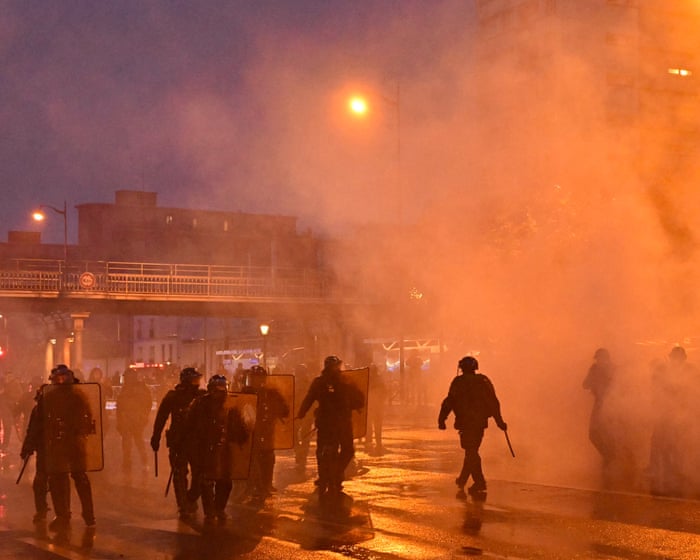
French police used tear gas to disperse demonstrators in Lyon on Saturday morning, 24 October, as 70,000 police officers and gendarmes were deployed nationwide to prevent a repetition of the violence and looting that accompanied last weekend’s mass protests.

In Paris, trade unions agreed to a revised demonstration route after the administrative court rejected their challenge to a last-minute police order. The march will proceed from Porte d’Italie to Porte de Vincennes, rather than between Bastille and Nation as originally agreed, with the procession scheduled to begin at 2pm.

Elsewhere, emergency judicial decisions have complicated the government’s security arrangements. Courts have suspended restrictions in Limoges and several municipalities around Marseille, while other cities remain subject to extensive bans on public gatherings.
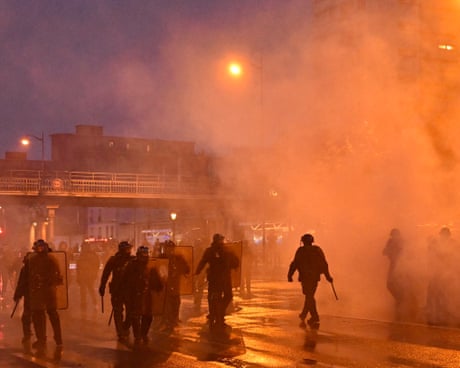
The developments follow last weekend’s nationwide unrest, when approximately 550,000 people demonstrated against rising living costs, deteriorating public services and conditions in French schools. Violence erupted in several cities, leaving businesses looted, public buildings damaged and police officers injured.

Security operation on an unprecedented scale

Interior Minister Laurent Nuñez has ordered the deployment of 10,000 additional officers compared with 17 October. The operation includes specialist police units, armoured vehicles, helicopters and water cannon.

According to the government’s official security instructions, prefects must examine proposed demonstration routes, assess the reliability of organisers and take preventive measures where there is evidence of a risk to public order.

The authorities are particularly concerned about organised groups exploiting otherwise peaceful demonstrations to attack commercial premises and government buildings.

Security services expect between 400,000 and 500,000 people to participate in Saturday’s mobilisation. The government has warned that calls for renewed violence and looting have circulated online.

The previous weekend’s disturbances resulted in thousands of arrests. Justice Minister Gérald Darmanin said 217 people had already received prison sentences, with approximately half described as first-time offenders.

Courts challenge sweeping restrictions

The government’s measures have prompted an increasingly contentious legal dispute over the constitutional protection of public demonstrations.

The French Human Rights League has challenged restrictions in several cities, including Brest, Quimper, Caen, Marseille, Lille and Montpellier. It argues that extensive prohibitions interfere with freedom of assembly, expression and movement.

In Marseille, negotiations between local authorities and trade unions resulted in permission for a demonstration along an agreed route through the city. A separate administrative court decision subsequently suspended parts of the wider departmental ban, allowing gatherings in Gardanne, Istres, Martigues, Miramas and Tarascon.

The administrative court in Limoges also suspended restrictions on gatherings of more than ten people in the city centre and overturned an associated curfew.

In Lyon, however, restrictions remained in force across a large central area. Police dispersed approximately 150 demonstrators near Lyon III University shortly before 11am after participants blocked traffic close to the prohibited perimeter.

Macron faces a constitutional and political challenge

President Emmanuel Macron has argued that protecting public order must take priority following the destruction witnessed on 17 October.

His suggestion on Thursday that demonstrations not organised by recognised trade unions should generally be prohibited prompted legal challenges from opposition parties and civil liberties organisations.

In a ruling delivered on 23 October, the Conseil d’État rejected challenges to Macron’s remarks, finding that they did not themselves constitute a binding nationwide prohibition. The court nevertheless reaffirmed that prefects must assess individual demonstrations according to the circumstances and risks involved.

The ruling leaves local restrictions subject to judicial scrutiny rather than providing the government with unrestricted authority to prohibit protests.

Meanwhile, the movement’s original demands remain unresolved. What began with secondary-school students protesting against staff shortages, overcrowding and educational conditions has expanded into a broader mobilisation involving trade unions, university students and Yellow Vest campaigners.

Macron met representatives of secondary-school students on Friday, but participants subsequently called for demonstrations to continue until concrete proposals were presented.

Growing pressure ahead of the presidential election

The renewed mobilisation comes six months before France’s presidential election, in which Macron cannot seek a third consecutive term.

Political tensions are also evident in Orléans, where thousands of demonstrators gathered on Saturday to oppose the National Rally’s weekend party congress. Authorities deployed additional security personnel and restricted the location of the protest.

For the government, the immediate objective is to prevent another outbreak of large-scale violence. For unions and civil liberties organisations, the dispute increasingly concerns the conditions under which public protest may legitimately be restricted.

As EU Today reported ahead of Saturday’s demonstrations, the central legal question is whether prohibitions are proportionate to identifiable security risks.

The courts have now begun answering that question differently across France, leaving the authorities to enforce a patchwork of restrictions as the country’s social and political confrontation continues.

  •  
❌