Japan-South Korea ties are on the upswing. After a recent decade of some of the tensest relations since normalization, Seoul and Tokyo appear to be setting aside their differences as they enter a new phase of closer cooperation and active diplomatic initiatives. Under Kishida Fumio and Yoon Suk-yeol, the countries signed a pact with the […]
Written by Uriel Araujo, Anthropology PhD, is a social scientist specializing in ethnic and religious conflicts, with extensive research on geopolitical dynamics and cultural interactions
Security tensions between Japan and China are escalating while the former strengthens its long-range strike capabilities with American support.
Washington and Tokyo’s latest moves to reinforce their military presence along the so-called first island chain also mark another step in the broader US-China strategic rivalry across the Indo-Pacific region.
Originally conceived as a Cold War US defensive perimeter (stretching from Japan through Taiwan to the Philippines), the first island chain is increasingly becoming the centerpiece of an elaborate American-led military architecture designed to constrain Beijing’s growing maritime power.
The recent agreement between Japanese Defense Minister Shinjiro Koizumi and US Defense Secretary Pete Hegseth to implement an “effective denial defense” along that chain illustrates the shift. They also pledged continued cooperation on ammunition production for a potentially prolonged conflict.
During the Keen Sword 2027 exercises now underway, US and Japanese forces plan to deploy mobile missile systems, including American system NMESIS, on Yonaguni Island near Taiwan. Tokyo has already deployed domestically developed long-range (anti-ship) missiles capable of reaching China’s coastal areas.
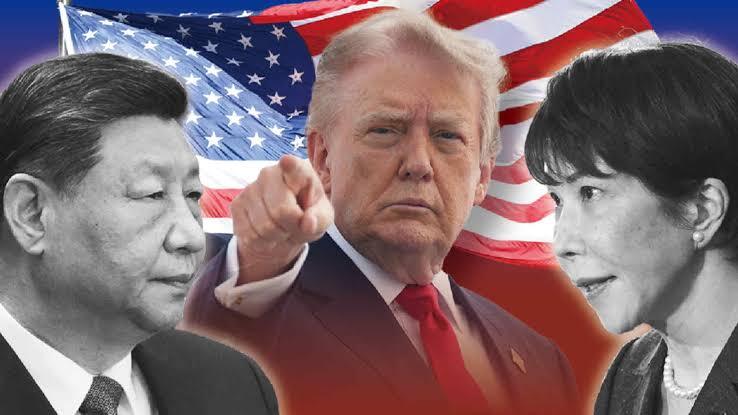
The wider context is hard to miss. In November 2025 Prime Minister Sanae Takaichi made a statement linking a Taiwan contingency to Japan’s own survival, which triggered sharp Chinese protests and a cascade of diplomatic, economic, and maritime frictions.
Beijing then restricted dual-use exports to Japan, while coast guard vessels and radar incidents added to the pressure.
As commentator Oliver Griffin puts it, Beijing views Japan’s buildup as a drift toward neo-militarism.
From Tokyo’s perspective, China’s expanding naval reach makes these steps necessary. This is therefore a classic security dilemma. Measures one side takes to feel “safer” make the other feel less secure, prompting further responses.
The first island chain is both a barrier and a gateway. As expert Simone Chiusa notes, Chinese vessels seeking access to the open Western Pacific must navigate strategic chokepoints through its straits.
The strategic importance of these chokepoints illustrates Alfred Thayer Mahan’s classic sea-power theory: control over key maritime routes and positions remains central to great-power rivalry.
American and Japanese planners see distributed missiles and interdiction systems as deterrence by denial. Beijing sees preparations to restrict its access.
The paradox is clear enough: the more Washington and Tokyo seek to reinforce deterrence, the more Beijing may perceive “encirclement” and accelerate its own capabilities.
Japan’s southwestern islands are thereby becoming an operational frontier of sorts rather than a mere defensive perimeter. An alliance designed primarily to protect Japanese territory then gradually becomes an instrument for projecting power into a Taiwan-related contingency.
As I wrote in May 2026, regarding US missile deployments in the Philippines, Washington’s actions near Taiwan fuel Chinese fears of a containment architecture involving Japan, the Philippines, and Australia. The pattern continues.
China’s maritime-industrial growth has become central to allied planning. As I’ve noted elsewhere, Chinese shipbuilding capacity (measured by gross tonnage) exceeds that of the United States – by a factor of over 200, according to a 2023 US naval intelligence estimate.
Joint Sino-Russian submarine patrols further signal a new maritime era of coordination that certainly complicates American assumptions of uncontested sea control.
Yet the contest is no longer confined to the first island chain. A Japanese Self-Defense Force colonel has proposed a second-island-chain air bridge linking Japan and Australia (with US participation) for logistics and reinforcement – the reasoning being that China’s lengthening maritime strike reach now threatens operations farther into the Pacific.
Some American analysts warn that “pulling back to the second chain” would be strategic folly, while advocates of strategic restraint see a forward approach as intensifying insecurity.
For Japan, the predicament is particularly delicate. Tokyo is becoming more indispensable to Washington’s regional planning at the very moment when Japanese strategists worry about possible US-China accommodation under President Trump’s “transactional” approach.
The alliance security dilemma is real enough: fear of “abandonment” coexists with fear of entrapment in a Taiwan conflict. Japanese policymakers are of course not passive instruments. They act on their own threat perceptions while navigating uncertainty about long-term American commitments.
Gray-zone pressures add another layer. Coast guard patrols and incremental assertions of jurisdiction challenge the utility of high-end missile deployments – designed mainly for conventional scenarios.
Ultimately, efforts to preserve the existing “balance” in the Indo-Pacific may contribute to the very competition that makes that balance harder to sustain.
The American response to China’s rise has largely been to reinforce military alliances and expand forward deployments, risking an increasingly self-perpetuating cycle of militarization rather than fostering regional stability.
Washington is transforming Japan into a more central component of its forward maritime architecture – even as Beijing’s growing capabilities render that very architecture more contested. The risk here is that the cycle of reinforcement and reaction leaves all parties less secure than before.
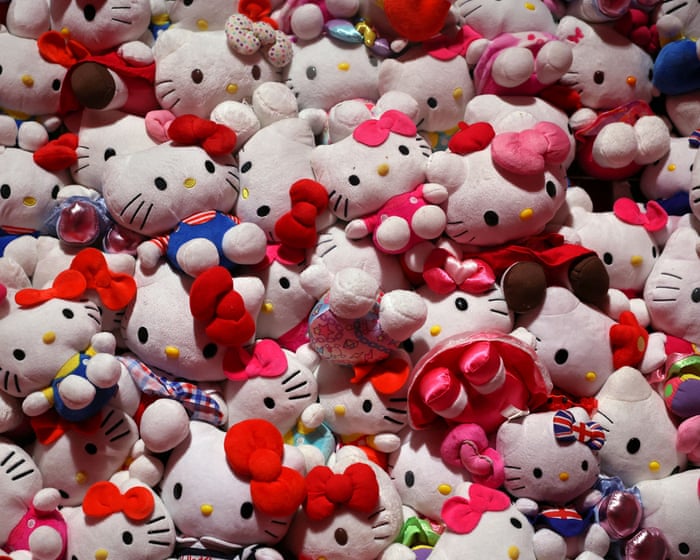
Chinese state media outlets issued scathing condemnations of Sanrio, the Japanese company behind characters such as Hello Kitty, over a TV collaboration.
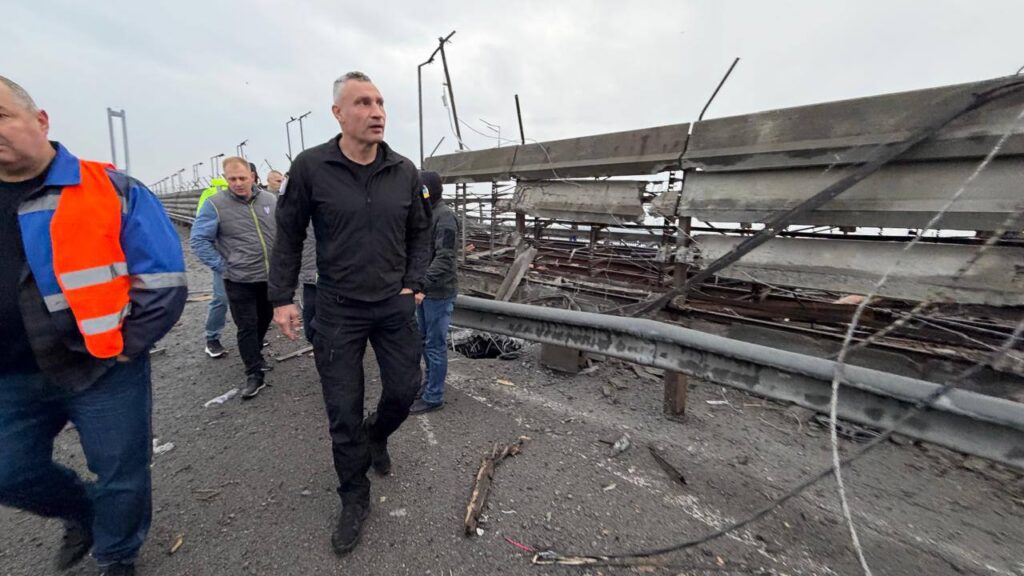
The Ukrainian government has instructed Kyiv to establish alternative routes after Russian attacks stopped traffic on one of the capital’s main bridges. The city authorities will bear the cost of the new crossings, with Kyiv Mayor Vitali Klitschko saying the city needs an additional $22 million.
This year, Russia has launched tactics to spread panic among civilians and trigger more people to leave the country. In the latest attack, several Russia's ballistic missiles struck the Southern Bridge, used for vehicle and metro traffic, breaking a huge hole and paralyzing all the pathes. The bridge was closed. Now, there is a fear that more bridges can be targeted this way, dividing Kyiv in two parts.
The situation is urgent, as Ukrainian Transport Minister Mykola Kalashnyk says about 600,000 vehicles cross the Dnipro in Kyiv every day.
What is Kyiv’s response to the winter terror?
According to Klitschko, Kyiv convened the capital’s Defense Council on 28 October to find an answer to this difficult question.
The agenda included implementing a project to build combined water crossings over the Dnipro River and access roads to them.
“The military command will determine the locations, with approval to be granted, among others, by the Kyiv City Military Administration,” Klitschko said.
Under the government’s recommendations, the Kyiv city authorities must find $22 million for the project.
Klitschko had previously faced heavy criticism after it emerged that the city lacked sufficient shelters and last winter exposed serious shortcomings in preparing infrastructure for Russian attacks. These included a lack of alternative energy supply routes, poorly distributed energy, burst heating pipes that flooded apartments, and the inability of people with disabilities to reach shelters without elevators.
The mayor himself said the problems stemmed from the central government withholding funding, which had stalled numerous energy resilience projects and delayed their implementation.
The latest announcement also indicates that Kyiv has once again taken on the financial burden itself.
Meanwhile, Ukraine has been working with Japan on backup crossings. Tokyo has already delivered 720 meters of prefabricated bridge structures to Ukraine. The two sides are currently exploring how this equipment could be used to establish alternative crossings.
Step two: strengthening existing infrastructure
Another option is to reinforce existing bridges. City specialists are developing additional technical solutions to protect bridges across the Dnipro River, Klitschko said in his statement on 27 October, adding that proposals from the military had also been heard.
The issue of installing mobile shelters was also raised on the same day, the mayor of Kyiv said in a separate statement on his Telegram channel on 27 October. Despite intensifying Russian attacks and about, as Radio Svoboda reported in its article on 30 September, $11 million set aside in 2025, Kyiv still has only a handful of mobile shelters: LB reported in December 2025 that district tenders failed. Donors paid for the first one at a bus stop, the Kyiv City State Administration said on 15 October.
Klitschko raised the issue of shelters again after a courton 12 October ruled that local authorities must urgently install mobile shelters in public areas, including near public transport stops, parks, and squares, according to Kyiv’s Prosecutor’s Office.
Russia hits the Southern Bridge again
On 2 October, Ukrainian President Volodymyr Zelenskyy said in an interview with the Financial Times that Russian ruler Vladimir Putin had ordered the lifting of previous restrictions on airstrikes. Among new targets, according to him, were bridges, data centers, internet, mobile networks, hospitals, kindergartens, schools, and universities.
The night of 26–27 October showed what that looks like. Russia launched ballistic missile attacks in a few waves, and the second of them hit the Southern Bridge and the metro infrastructure on it, Klitschko said. The structure carries six lanes of road traffic and two metro tracks.
Rescuers work beside a fence pocked by shrapnel in Kyiv after the Russian attacks of 26–27 October 2026. Photo: DSNS Kyiv
Zelenskyy put the night’s total at 16 ballistic missiles and blamed delays in deliveries of Patriot and NASAMS interceptors: “Every such delay is a new Russian hit on one target or another.”
European aircraft manufacturer Airbus could potentially join a British-Japanese-Italian consortium to build a next-generation fighter jet following the collapse of a highly-troubled French-German project, CEO Guillaume Faury said Wednesday.
Sanrio ends association with TV drama Vivant after China says portrayal of ruthless Chinese agents is ‘deliberate smear’
The company behind the successful Hello Kitty franchise has apologised and ended its commercial tie-up with a Japanese TV drama after Chinese state media and netizens condemned the show’s “deliberate smears” against China.
Sanrio, a Japanese firm whose characters are popular around the world, said in a post on the Chinese social media site Weibo that it had decided to end its association with the TV drama Vivant after concluding that it “contained elements inconsistent with Sanrio’s core values”.
After picking up her honor — considered one of the most prestigious prizes in the global arts — the two-time Oscar winner will sweep into the Tokyo International Film Festival on Friday to take part in several talk events.
At a glitzy event at the Tokyo American Club, Hollywood and Japanese powerbrokers celebrated longtime industry and cultural links between the two countries.
Returning to lead the festival ahead of its 40th anniversary, the industry veteran sees an opportunity to capitalize on the surging international interest in all things Japan.
Hello and welcome to another edition of Free Agent! It's a great day to pour a Miller Lite out.
Let's talk about the NFL invasion of Australia and, soon, Japan. Is it the real deal or is something else at play? Then we'll close with the results of our reader survey about the World Series.
Sen. Ted Cruz (R–Texas) got booed when he presented the winners trophy at the Formula 1 race in Austin, Texas. Local politicians presenting these trophies has always been my least favorite part of F1.
After committing billions of dollars to a new football stadium, plus renovations for an arena and a baseball park, some D.C. politicians now wants taxpayers to spend $300 million on more seats and a roof for a soccer field that opened less than a decade ago.
The NFL's Push Into Australia and Japan Makes No Sense
Football in Europe is one thing—football in East Asia and Australia is another.
After the NFL played its first regular season game in Australia in Week 1, Commissioner Roger Goodell now says the league may double-down on working its way into East Asia and Australia. "Tokyo is clearly on our list, whether it's next year or the year after," Goodell told NFL Daily. "It's coming at some point in the near future." Another league administrator said they're considering a 10th international game next year, up from nine this year. The idea, one might think, is that by playing a game in Australia, Japan, or any other country, people with a tepid interest in the NFL become swarms of dedicated fans.
It won't work—at least not in the Eastern Hemisphere. The league is much too dedicated to the Eastern Time Zone for it to work. Consider the NFL's main kickoff times (the end of daylight saving time will soon alter these slightly).
Thursday Night Football: 8:15 p.m. Eastern, 9:15 a.m. Friday in Tokyo, 11:15 a.m. Friday in Sydney.
Sunday early afternoon: 1 p.m. Eastern, 2 a.m. Monday in Tokyo, 4 a.m. in Sydney.
Sunday late afternoon: 4:25 p.m. Eastern, 5:25 a.m. Monday in Tokyo, 7:25 a.m. in Sydney.
Sunday Night Football: 8:20 p.m. Eastern, 9:20 a.m. Monday in Tokyo, 11:20 a.m. in Sydney.
And so on for Monday Night Football.
Even the Super Bowl, the league's biggest event that we're always told is watched by millions of people in every country around the world, kicks off around 6:30 p.m. Eastern. That's 8:30 a.m. on Monday morning workday in Tokyo and 9:30 a.m. in Sydney. You'd have to be an American expat or an extremely dedicated foreign fan to watch—they exist, to be sure, but they're notable because they're a rarity (like my man @KoreaPistonsFan).
This is not like how American sports fans wake up on a weekend morning with nothing else going on and tune into European soccer matches—the NFL is hoping people will wake up in the middle of the night for an East Coast afternoon game, or tune in during their workdays for what we in the U.S. would consider a primetime matchup. (In Japan, watching every week appears to require an expensive subscription, whereas Australians at least seem to bundle many of the games into other packages like Disney+.)
Ask yourself: Are you frequently waking up at odd hours to watch the Australian Football League or J1 League soccer? Are you watching your favorite sports team in the middle of the workday? OK fine, if you work a flexible desk job like me, you might be tuning in for your baseball team's day games or throwing a golf major on your second screen. When I posted about this on X, people angrilyresponded that Japanese fans routinely watch baseball during the day—OK, fine, call me when the NFL gets its Shohei Ohtani.
But I'm not getting up at 2 a.m. to willingly start watching a sporting event, unless I'm studying abroad in London and the Tigers are in the playoffs for the second time in my life. While I don't miss a Formula 1 race, when they're on in the middle of the night I watch the next day—sometimes, but not always, without seeing any spoilers online.
The NFL will almost certainly sell out a game in Tokyo, but tickets aren't where the real money comes from, it's TV revenue they're chasing. That, and the 8:35 p.m. Eastern kickoff time for this season's Australia game (10:35 a.m. local, Friday), tell you who the real audience is.
It's you, my humble American friends.
The novelty of games in London and Germany is wearing off. The NFL thinks it can throw a game in Japan, sell it to Netflix for $100+ million, and then, most importantly, put it in primetime for the American East Coast.
The NFL might be hoping their football games in Australia and, soon, Japan, will create broader interest from those countries. What they're almost certainly more interested in is getting U.S. fans to watch another primetime game that the league can make hundreds of millions of dollars from in TV rights.
Readers Want a Brewers World Series Victory. Here's Why.
A lot of you must be pretty pleased with how baseball is going. About 70 percent of you said you're rooting for the Milwaukee Brewers, who now have a 3–0 lead in the World Series after battering the Tampa Bay Rays 10–1 on Monday night.
I, for one, am also rooting for the Brewers but had at least hoped for the teams to make it a little more interesting (at least Game 1 and Game 2 were close!). Both teams have managed to find pretty consistent success in recent seasons and "deserve" to be here, despite both being in fairly small markets and often up against more well-funded divisional opposition. Both, unfortunately, play in stadiums that are for some reason fully or partially owned by local government. But the Brewers, unlike the Rays, have good vibes, a great color scheme (I'm a sucker for navy–yellow/gold), and a strong fan base that deserves happiness.
The survey answers behind the Brewers were wide-ranging, from "The beer and cheese are better!" to "Beer. The answer is always beer." (Shoutout to whoever said "Channeling my inner Sarah Palin, I can see Milwaukee across Lake Michigan from my house in Grand Haven.") Several more said they are from Milwaukee, are from the Midwest, are just glad the Brewers beat the Dodgers, or think a "northern" team should win. A couple Red Sox fans chimed in to say they just hate the Rays.
The Rays, to be fair, might be seen as less objectionable because they have fewer fans to annoy everyone else with their success. No one, I assume, is climbing any street poles to celebrate if the Rays win the World Series (we may never know!). But we did get a few Tampa locals to chime in, and a couple Brewers haters, and one person who I sympathize with: "I have a dear friend who has been a Tampa Bay fan since the very beginning. She deserves a victory." Seems like she will be waiting at least one year longer.
The Brewers seem almost certain to be World Series champions going into what will likely be a brutal MLB lockout. Let us hope there are no games lost—any 2027 World Series champion is better than no champion, or season, at all.
Replay of the Week
Keep your eye on No. 5 car. Drivers don't usually go from 1st to 11th to 1st all in the span of one lap! (And since everyone turned out all right, you can also enjoy the carnage of this big crash.)
With interest in Japanese culture at an all-time high, TIFFCOM managing director Kaori Ikeda says there is an opportunity to adapt IP beyond anime and manga.
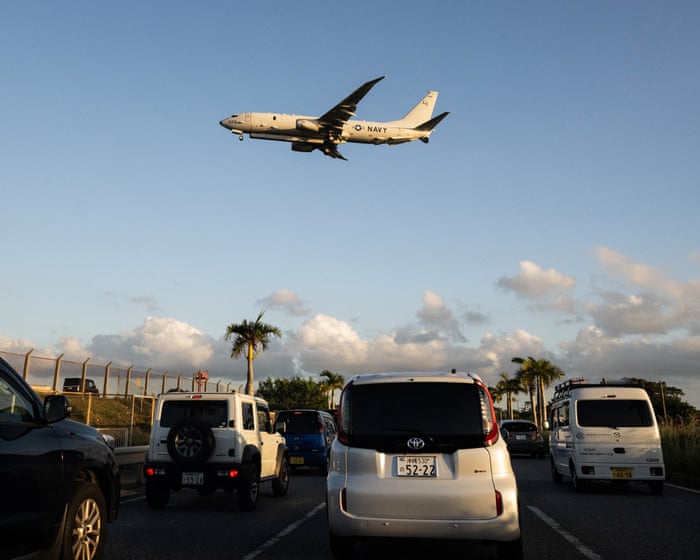
US military says the restrictions on the electric vehicles at Kadena airbase also apply to delivery drivers and taxis
One of America’s biggest overseas military bases has banned vehicles made by the Chinese electric vehicle maker BYD over security concerns, the US military in Japan said on Tuesday.
The ban, which went into effect this week at Kadena airbase on the southern Japanese island of Okinawa, has fueled speculation that similar measures could be taken at other US military facilities as part of Washington’s crackdown on Chinese technology it suspects of being used to collect sensitive information.
Devin Jacob Ballard, 20, denies charges that he fatally strangled Anna Yagi, 39, in a hotel on the island of Okinawa
Prosecutors in Japan have filed formal charges against a US marine suspected of murdering and robbing a woman while stationed on the country’s island of Okinawa, according to Japanese media.
Devin Jacob Ballard, a 20-year-old lance corporal assigned to Marine Corps Air Station Futenma in Okinawa, is charged with fatally strangling Anna Yagi, 39, at a hotel in the city and stealing from her a backpack containing a wallet, the public broadcaster NHK reported.

 Login






 (@TurnerNovak)