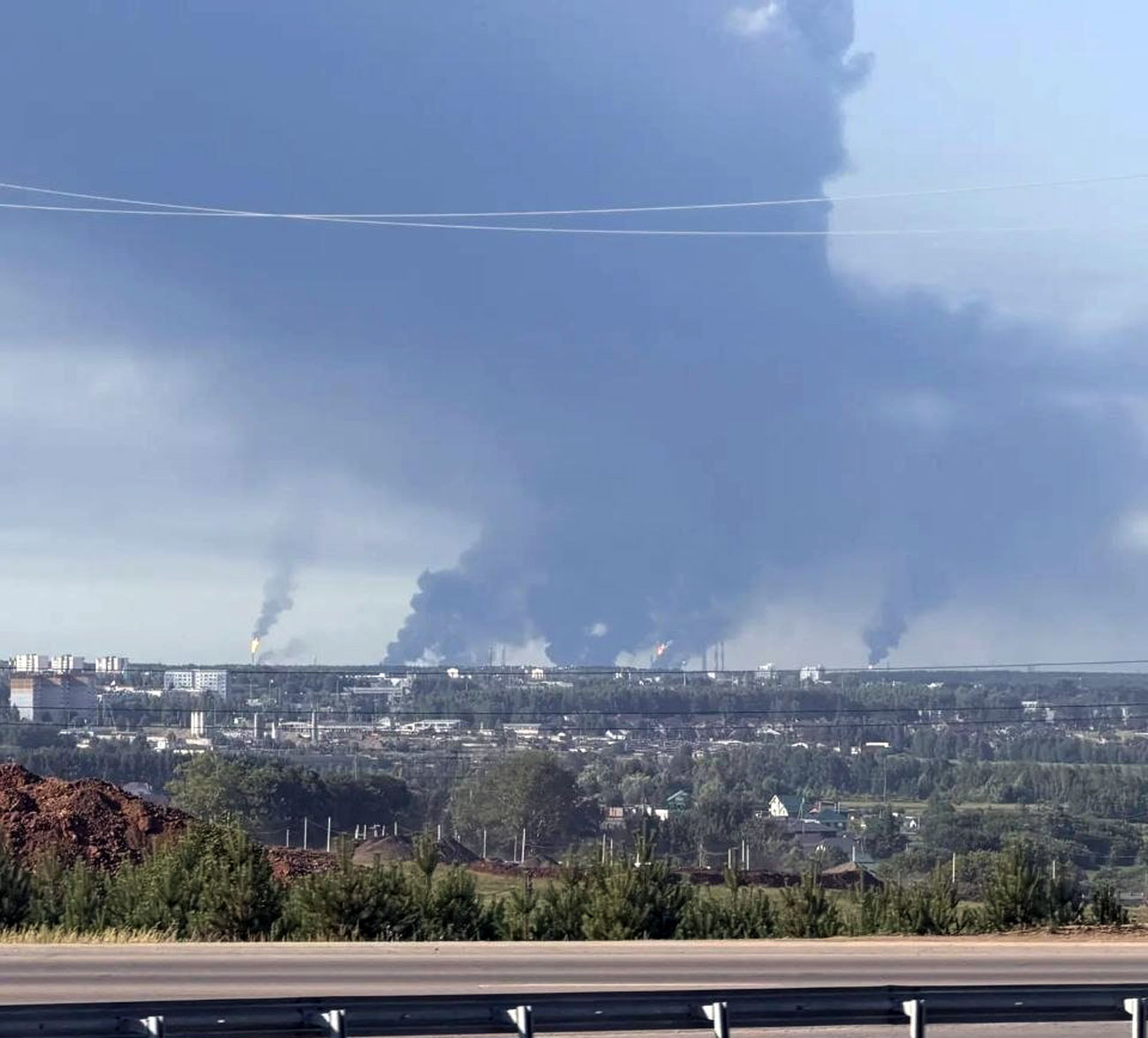
Drones attacked Sterlitamak in Russia’s Bashkortostan on 29 October, and smoke rose over the Bashkir Soda Company, Russian Telegram channel Astra reported, citing its open-source analysis. The city’s mayor admitted debris fell on an unnamed plant.
Ukraine’s long-range drones keep reaching deeper into the industries that feed Russia’s war. In the past five days, a nitric acid maker in Tula Oblast, a rocket-fuel rubber plant in Samara Oblast, and a titanium plant in the Urals came under attack. The Sterlitamak plant lies about 1,310 km from the front line. Drones also attacked it on 27 August, Astra says. Ukraine has not commented.
The plant is Russia’s only maker of a compound for armor fibers
The Bashkir Soda Company is Russia’s largest producer of soda ash and baking soda, and part of the Roskhim chemical holding. It is also Russia’s only maker of terephthaloyl chloride, The Insider reported, citing the company’s website. The website also mentions deliveries to the defense industry.
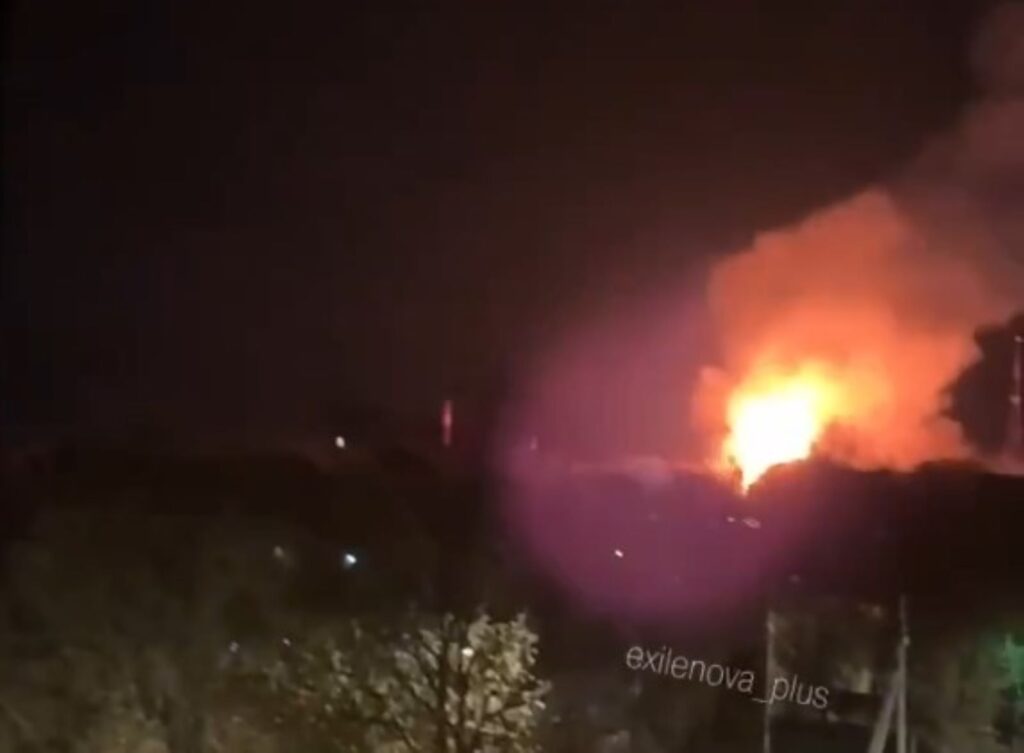
Smoke rises over Sterlitamak in Russia's Bashkortostan during a drone attack on 29 October 2026. Photo: Exilenova+
The compound goes into aramid fibers, Kevlar-type materials used for body armor, helmets, and armor for military vehicles and aircraft, Astra said. Astra also says the company sits on the Russian Industry and Trade Ministry’s closed register of defense enterprises.
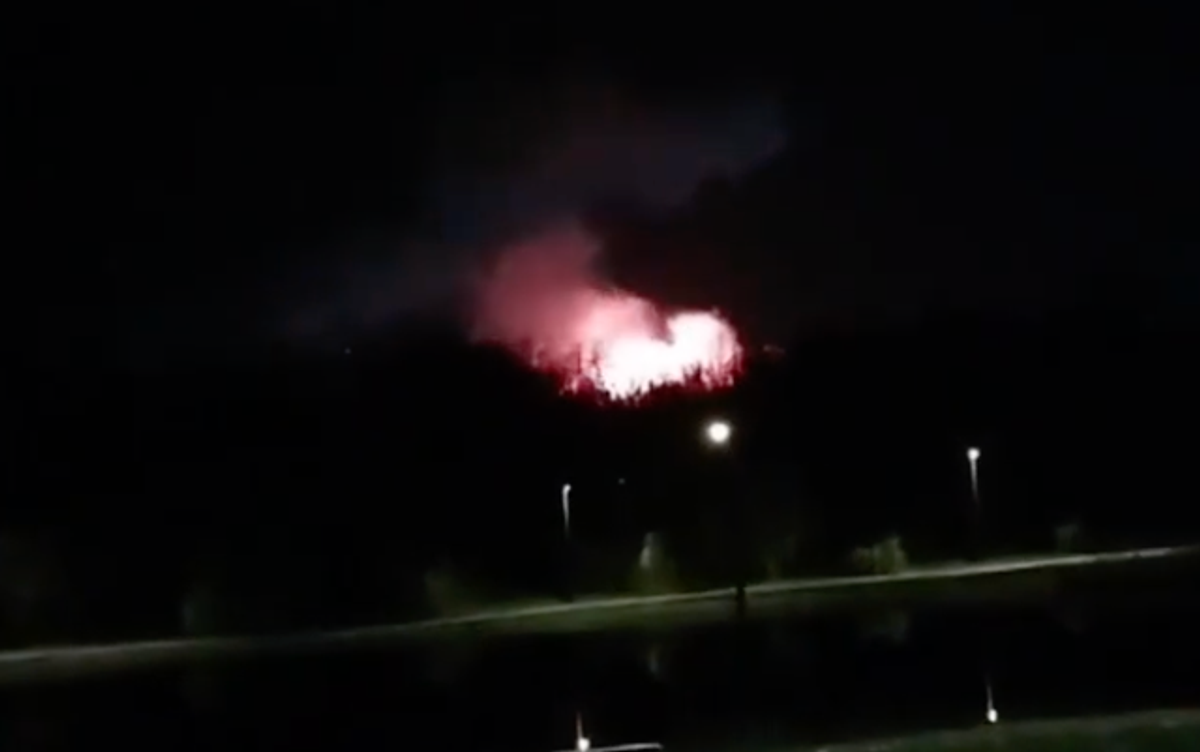
The attack began around dawn. Ukrainian Telegram channel Exilenova+ posted footage of a drone over the city. Supernova+, another Ukrainian monitoring channel, posted the plant’s coordinates and photos of smoke. Russia’s aviation agency restricted flights at the airport of Ufa, the region’s capital. Pro-Ukrainian X account Maks 26 shared footage of the attacks on Sterlitamak and Luhansk. It also suggested that Sterlitamak’s Syntez-Kauchuk rubber plant may have been the target, and claimed a fire at the Marinovka air base in Volgograd Oblast.
After the attack by Ukrainian drones, a fire was recorded in the area of the Marinovka military airfield in the Volgograd region.
The Defense Forces also attacked Bashkortostan. Bashkir Soda Company in Sterlitamak or Syntez-Kauchuk JSC could have been hit.
Mayor Emil Shaimardanov claimed air defenses downed all seven drones over the city. An earlier version of his post, quoted by Russian state news agency TASS, said eight.
“Debris fell on the territory of one of the enterprises. Minor damage was caused, the plant is operating normally,” Shaimardanov claimed.
He did not name the plant.
Smoke over the Bashkir Soda Company in Sterlitamak, with the plant marked on a satellite image, 29 October 2026. Collage: Supernova+
The Insider said NASA’s FIRMS fire map confirmed a fire at the plant. But the map shows only the weak heat source its satellites record there almost every night, the last time hours before the drones came, and nothing new after the attack.
Explore further
Russia’s refinery in Saratov, two in Tatarstan, a pumping station in Bashkortostan — one night’s oil target list
Moscow and other regions under attack
Moscow Mayor Sergei Sobyanin claimed that 613 drones flew toward the Moscow region overnight, that most were downed on the far approaches, and that 231 were downed on approach to the capital. Russia’s aviation agency restricted flights at Vnukovo, Domodedovo, and Zhukovsky airports. Russia’s Defense Ministry claimed it downed 1,214 drones over 19 regions overnight.
Ukraine’s General Staff said its forces hit a depot of Geran drones, Russia’s version of the Iranian Shahed, along with a drone launch site and a fuel depot near Navlya in Bryansk Oblast, about 70 km from the Ukrainian border. The Atesh partisan movement reported a loud explosion near Oryol’s airfield and a large fire in Lipetsk, about 285 km from the border.
Explosions in occupied Crimea, power cuts in occupied Luhansk
Subscribers of Crimean monitoring channel Krymsky Veter reported drones and then a strong explosion with Russian air defenses firing in Krasnoperekopsk, in occupied Crimea, about 95 km from the front line.
In occupied Luhansk, about 105 km from the front line, residents reported another attack on Lugacom, the occupation’s mobile operator, and internet outages followed, Exilenova+ said. The channel named only Lugacom. The operator sits in the seized Ukrtelecom building. Exilenova+ also posted footage of a fire in the city.
Leonid Pasechnik, the Russian-installed head of the occupied part of Luhansk Oblast, claimed that 150,000 customers in six municipalities lost power after attacks on energy facilities.
Kazakhstan, Kyrgyzstan, and Kenya are seeking the return of citizens drawn into Russia’s war, Ukraine’s Foreign Intelligence Service (SZRU) said on 25 October. According to relatives and officials the agency cites, many of the men had gone to Russia for work, only to be tricked or forced into its army.
Russia fills its ranks partly with foreigners. In April, Ukraine’s military intelligence (HUR) said the Russian Defense Ministry plans to enlist at least 18,500 of them in 2026. Foreign recruits let the Kremlin put off hard choices about another mobilization at home, the Atlantic Council argued in May. Home governments have pushed back before, among them Ghana in August. The new statements show the limit of that pushback. Once a man is serving in Russia’s army, his government has to ask Russia to let him go.
Kyrgyz minister: contracts are forced in enlistment offices and jails
Kyrgyz Foreign Minister Jeenbek Kulubaev addressed the problem at a parliamentary committee on 13 October, answering lawmakers’ questions. He said Kyrgyz citizens in Russia are forced to sign contracts at military enlistment offices or in pretrial detention centers. If warned in time, diplomats try to stop the men from reaching the front.
Kazakhstan is compiling a list for Moscow
Kazakhstan is negotiating with Russia over citizens in the combat zone. Its Foreign Ministry said on 7 October that it was checking each hotline request. Once the checks are complete, the ministry said, it will send the compiled list to the Russian side.
SZRU separately cited unnamed relatives of one Kazakh worker. After he complained about working conditions, they said, he and other men were taken to an enlistment office and forced to sign contracts.
Kenya wants five men held by Ukraine treated as possible trafficking victims
Prime Cabinet Secretary Musalia Mudavadi, who also handles foreign affairs, gave lawmakers a count on 8 October. “The Ministry has records of 354 Kenyan nationals involved in the Russian-Ukraine crisis,” he told them. Families who petitioned Parliament dispute that number and put their own count at 841, Kenya’s The Star reported.
Explore further
Kenya says Russia agreed to stop recruiting its citizens – families of the missing are still waiting
Ukraine holds five Kenyans captured while fighting for Russia, and Nairobi has already appealed to Kyiv over them. The government told Parliament it wants them treated as people who may have been trafficked abroad.
For Kenyans still serving in Russia’s army, the way out runs through Russian officers. Moscow informed Nairobi that unit commanders will consider requests to end military contracts case by case, the same government response said.
Restrictions were placed on incoming and outgoing flights in Sheremetyevo, Domodedovo, Vnukovo, and Zhukovsky airports, Russian civilian aviation authority Rosaviatsiya reported.
Russia's state-backed payment firm A7 took in at least 283 tons of cash rubles, worth more than $14 billion, between November 2024 and July 2025, and turned much of it into payments to China that hide where the money came from, the International Consortium of Investigative Journalists (ICIJ) and Russian investigative outlet Proekt reported on 21 October, citing leaked internal records.
Cut off from Western banks over its war against Ukraine, Russia now moves money the way drug gangs launder theirs: cash goes in, and clean-looking wire transfers come out abroad. The overlap is literal.
Last year, UK investigators found that a network laundering British drug gangs' cash had bought a Kyrgyz bank that was handling payments for Promsvyazbank, Russia's state defense bank. That same bank co-owns A7, which "is also likely to facilitate cash-based money laundering," anti-money-laundering expert George Voloshin told ICIJ. On 1 October, the US Treasury named A7 a "significant transnational criminal organization." Most of the market cash pays Chinese suppliers, and China supplies about 90% of the high-priority Western-restricted items Russia imports for its weapons. Drone makers working for the Russian army are among A7's clients, Proekt found in April.
From market stalls to a defense bank vault
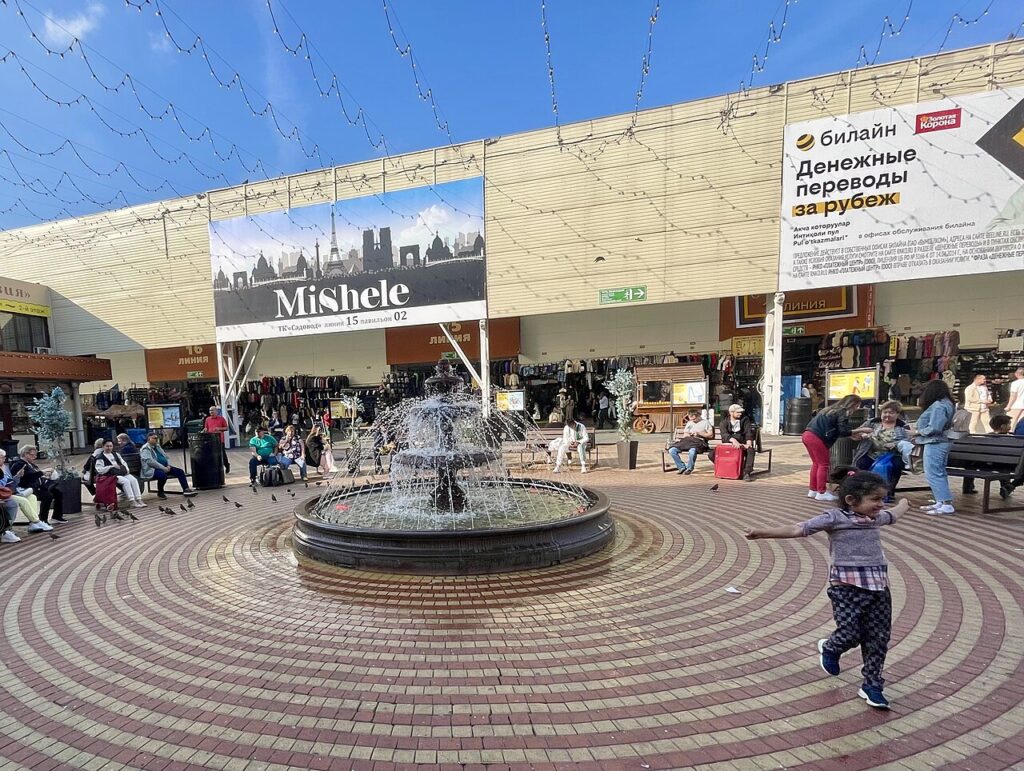
Much of the cash came from Moscow's giant Sadovod market, where broker teams known as "departments" collect bags of rubles from traders, the records show. Vans take the numbered bags to an A7 office, where about 50 cashiers count the money before it is trucked to Promsvyazbank. The bank vaults it and credits A7. At its peak, A7 handled at least 58 tons of cash a month.
Russia's central bank has flagged the problem itself. Money of unknown origin comes "primarily" from Moscow's wholesale and retail markets and from illegal crypto exchanges, a senior Central Bank official said in September, as quoted by ICIJ.
Sadovod market in Moscow, where broker teams later collected cash for the A7 payment firm, Russia, 19 September 2023. Photo: Nikita Andreev/Wikimedia Commons
Clean money for Chinese factories
A7 then orders shell companies outside Russia to pay its clients' suppliers, mostly Chinese exporters. The money moves through Kyrgyzstan, largely via the state-owned Trading Company of the Kyrgyz Republic, and the wire transfers carry no trace of cash or of Russia. The records list accounts at ICBC, Bank of China, Agricultural Bank of China, and China Construction Bank. One $287,000 transfer went through Standard Chartered's Hong Kong branch with "Sadovod" recorded as the client.
Chinese banks began refusing Russia-linked payments in December 2023 under the threat of US secondary sanctions. Stripping the funds of their origin makes them easier for Chinese banks to accept, illicit-finance expert Zachary Tvarozna told ICIJ. "The only company that sees everything is A7 itself," Voloshin said.
A7, Promsvyazbank, the Chinese banks, and Kyrgyzstan's economy ministry did not answer ICIJ's questions. A7 has publicly rejected the US accusations, saying it runs "a modern, multi-tiered compliance system."
Explore further
US Treasury cracks down on Russia-China-Kyrgyzstan payment network, expands sanctions
Sanctioned, but still moving
A7 launched in late 2024, co-owned by Promsvyazbank and led by Moldovan oligarch Ilan Shor, a "sanctioned and convicted criminal fraudster," according to the US Treasury. Ukraine sanctioned its network in February, and the UK followed in May. A7 claimed to have moved more than 7.5 trillion rubles, about 13% of Russia's 2025 foreign trade transactions, and its network also helped Iran sell oil and buy weapons, the Treasury said.
Sanctions did hit A7's crypto side. Daily volume of its ruble token A7A5 fell 96% from its peak by June 2026, blockchain analytics firm Elliptic found. The cash channel is harder to touch: Western banks can see where A7's money lands, but not where it starts.
An explosion hit the 75th Arsenal, a Russian army plant in Serpukhov south of Moscow, overnight on 22 October, Russian Telegram channel Astra reported. Russian officials also claimed drone attacks on the Moscow region, Tula, and Lipetsk that night.
As Russia presses its full-scale invasion, Ukraine’s long-range drones and missiles keep hitting military plants and refineries deep inside Russia. Ukrainian outlet Militarnyi says this plant specializes in repairing Buk and S-300 air defense systems. Astra describes it more broadly, as making weapons and ammunition and repairing military equipment. If Militarnyi is right, the blast hit a site that fixes Russian air defenses. It came the night Moscow’s mayor credited air defenses with stopping hundreds of drones.
Blast at the arsenal
An Astra OSINT analyst placed the explosion inside the site from a video, the channel said. Residents claimed in local chats that blasts followed passing drones, then at least three missiles. Astra did not confirm the missile count. Serpukhov lies about 99 km south of Moscow. Ukraine has sanctioned the plant, and the US Treasury has listed it too. As of the morning of 22 October, no Russian official had confirmed the blast.
More footage of the attack on the arsenal in Serpukhov. We are awaiting satellite images. pic.twitter.com/tTsgc18W3L
Moscow Mayor Sergei Sobyanin claimed that 630 drones flew toward the Moscow region from 20:30 on 21 October to 04:00 on 22 October. He claimed most were destroyed far out and 163 were neutralized on approach to Moscow. Two people were injured in Voronovo, in New Moscow, he stated.
Tula Oblast Governor Dmitry Milyaev claimed air defenses downed 70 Ukrainian drones over his region. Private homes were damaged in Tula and the Zaoksky district, he stated.
Lipetsk governor claims homes and a clinic damaged
Earlier in the night, Ukrainian monitoring channel Exilenova+ posted footage of commotion in Lipetsk after explosions. Lipetsk Oblast Governor Igor Artamonov claimed a drone strike damaged homes, apartment blocks, and a closed polyclinic. A man born in 2001 was injured and hospitalized, Artamonov claimed.
In May, Ukrainian intelligence said Russia was deploying more regiments against strike drones. In September, Ukrainian units hit more Russian air defense systems and radars than in any month since 2024, Ukraine’s Defense Ministry said. Analyst Oleksandr Kovalenko counted 76 destroyed in September with days of the month still to go and argued Russia cannot replace such losses. If Militarnyi’s description holds, losing repair capacity would deepen that gap.
Norway has put into force a new round of sanctions against Russia that hits banks, listed oil refineries, ports, airports, and suppliers of Russia’s military industry, the Norwegian Foreign Ministry announced. The rules mirror the EU’s 21st sanctions package, which Brussels adopted in July.
The EU’s 22nd package, adopted on 12 October, is principally a list of names, while the 21st brought significant new measures, lawyers noted. Among them are new tools against the shadow fleet, the tankers with murky ownership that Russia uses to move oil around sanctions. That fleet also sails along Norway’s coast, and a new Norwegian Coastal Administration report found that it poses a growing threat to security and the environment there.
Banks, refineries, and Sheremetyevo
Norway is not an EU member, but it has joined every EU sanctions package against Russia, with a few exceptions and national adjustments. Oslo backed this one politically on 11 August, and the rules took effect on 21 October. Part of the package was already in force. It placed travel restrictions and asset freezes on 48 people and asset freezes on 168 entities, and it listed 41 shadow fleet vessels on 14 August.
Norway’s transaction ban now covers 33 more Russian credit and financial institutions. A separate ban covers 22 more abroad, including in India, Mongolia, Nigeria, and the UAE.
Explore further
Norway sends 69 Russians home without their ship, held for Ukraine
Another transaction ban reaches listed refineries in Russia and third countries that process Russian oil or help dodge sanctions. A Georgian refinery joins that list on 25 January 2027. The same ban adds two Russian ports and four Russian airports, including Moscow’s Sheremetyevo.
Drone gear and the shadow fleet
Export curbs on dual-use goods now cover 51 new entities that back Russia’s military industry. Some are in China, including Hong Kong, and others are in India, Kazakhstan, Kyrgyzstan, Türkiye, and the UAE. The banned-exports list adds nickel and beryllium powder, along with drone gear such as jamming and interception systems, launchers, and servo motors.
Oslo can now also list ships that service sanctioned shadow fleet tankers or swap cargo with them at sea. Elsewhere in Europe, France’s navy and UK forces have boarded sanctioned shadow fleet tankers this year.
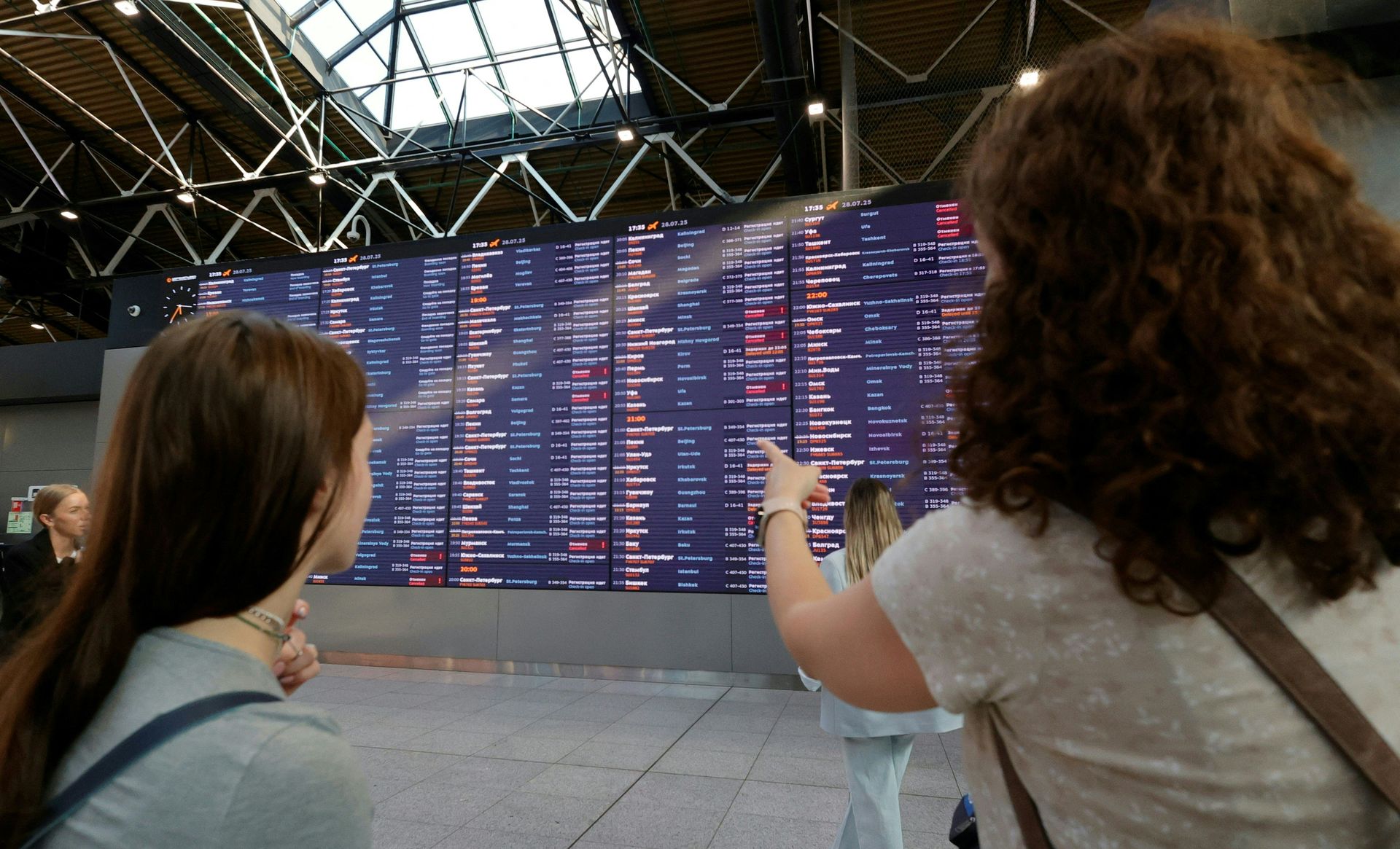
Temporary restrictions on aircraft arrivals and departures were imposed at 27 Russian airports, Deutsche Welle reported on 16 October, citing its own calculations based on reports from Russia’s Federal Air Transport Agency.
Ukrainian President Volodymyr Zelenskyy warned airlines on 1 September that “Russian airspace is becoming completely unsafe.” Overnight, most of the airspace over European Russia was closed.
By morning, more than 200 flights had been canceled or delayed at Moscow airports, Deutsche Welle reported, citing figures compiled by a Russian Telegram channel.
Тим часом у російських аеропортах – справжній апокаліпсис через нальоти дронів останніми днями.
Про це ниють росЗМІ. Було відмінено десятки рейсів, у терміналах – дуже багато людей. Пасажири скаржаться на задуху, дикі черги до туалетів та повну невідомість. pic.twitter.com/ZlXxY5c2mq
The list included airports in the capital. All four Moscow airports temporarily suspended arrivals and departures, the Russian outlet Astra reported on 16 October. Russian authorities said they had shot down dozens of drones, while flights were delayed and diverted to alternate airfields, according to the report.
Massive drone attack on Russia: 644 UAVs in one night, 94 shot down near Moscow
The temporary airport shutdowns were likely a consequence of a massive drone attack on Russia. From 8:00 p.m. on 15 October to 8:00 a.m. on 16 October, Russian air defenses allegedly intercepted and destroyed 644 Ukrainian unmanned aerial vehicles across 26 Russian regions, occupied Crimea, and the Black Sea, according to Russia’s Defense Ministry.
According to the list of regions published by the Russian Defense Ministry, the drone attacks covered a vast area of Russia, from regions bordering Ukraine to the Moscow region, the Volga region, the country’s northwest and southern regions, as well as occupied Crimea and the Black Sea.
Russian air defenses shot down a total of 94 drones approaching Moscow over the evening of 15 October and overnight, according to calculations by the Russian outlet RBC Radio, citing statements by Moscow Mayor Sergey Sobyanin.
In the Kaluga region, air defenses destroyed 27 drones over the evening and night, the regional governor reported. At 9:27 a.m., he updated the figures, saying another 48 UAVs had been shot down overnight, bringing the total to 75. According to preliminary information, there were no casualties or infrastructure damage.
In the Tula region, air defenses allegedly destroyed a total of 32 Ukrainian drones. There were no casualties, according to regional Governor Dmitry Milyaev in his Telegram channel.
In the Vladimir region in western Russia, authorities repelled drone attacks overnight. In the city of Vladimir, a drone attempted to attack a heating infrastructure facility, but the attack was stopped, Vladimir Region Governor Alexander Avdeyev reported. Minor damage was reported, but there was no information about casualties.
Ukraine has not yet commented on its involvement in the attacks.
The practical consequences of canceled Russian flights
Passengers on flight SU6312 from Kaliningrad to Moscow were unable to land in Moscow because of airspace closure, so the aircraft was diverted to Nizhny Novgorod, Terravia reported. After landing, passengers remained on board for about two hours before being allowed to disembark at 3:30 a.m. Instead of continuing their journey to Moscow by air, they were supposed to be transported by bus, with the trip expected to take about seven hours, the outlet reported.
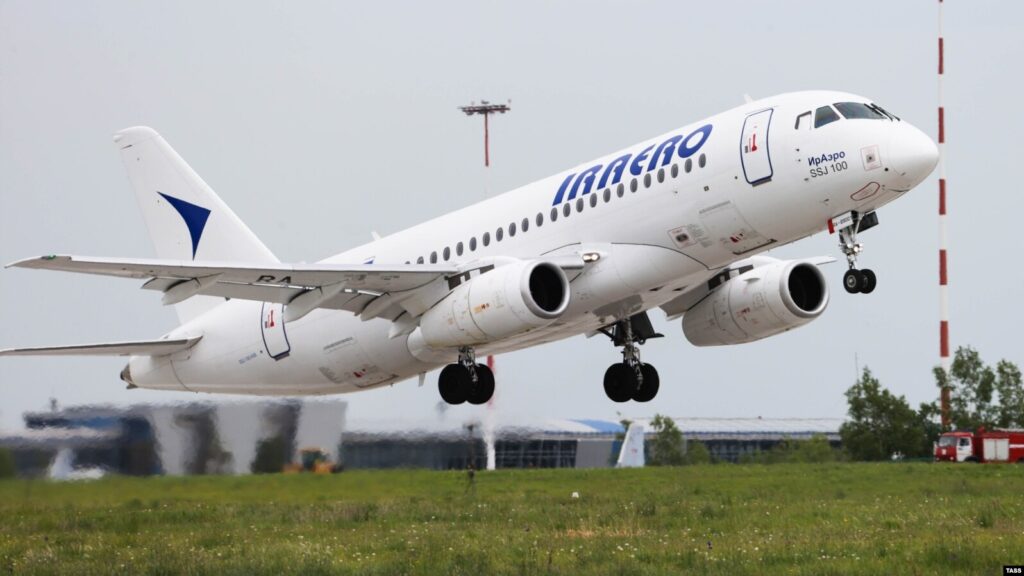
A Russian Sukhoi Superjet 100 of the IrAero airline. Illustrative photo: TASS
Passengers were not provided with food or drinks, and one woman could not find a seat on the bus, so she purchased a ticket for an early-morning train herself.
Since the beginning of the year, all four Moscow airports have been completely shut down simultaneously at least 19 times, the Russian outlet Agentstvo reported. During the first 14 days of October, the restrictions lasted 101 hours and 38 minutes, compared with 46 hours and 33 minutes in September, according to the report.
 Login



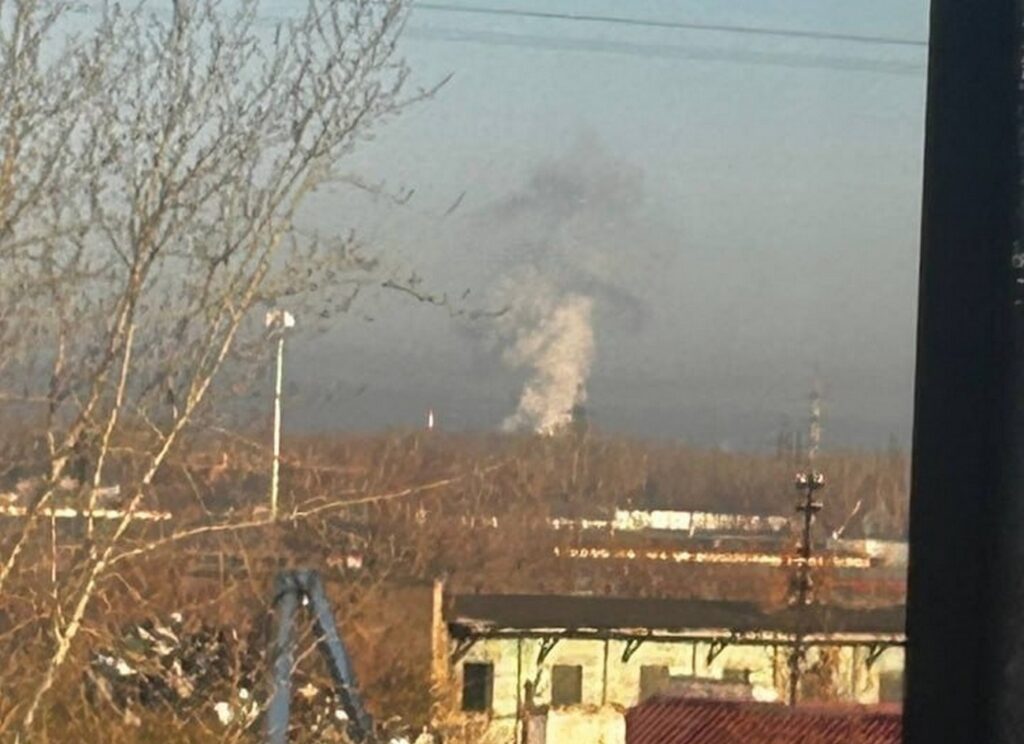

After the attack by Ukrainian drones, a fire was recorded in the area of the Marinovka military airfield in the Volgograd region.
The Defense Forces also attacked Bashkortostan. Bashkir Soda Company in Sterlitamak or Syntez-Kauchuk JSC could have been hit.
In… pic.twitter.com/SIJ1vR8395
(@Maks_NAFO_FELLA) October 29, 2026