❌

Reading view

Nurses’ unions oppose proposed changes to hiring from third countries

Nurses’ trade unions have insisted that collective labour agreements protecting the rights and benefits of both existing and future nursing staff, including those recruited from abroad, are non-negotiable.

In a joint statement following Thursday’s House health committee discussion on proposed legislative amendments concerning the employment of nurses from third countries, SEK, PEO, Pasydy and Pasyno reiterated their position that staffing needs could be met by Cypriot nurses.

The unions said regulating employment conditions through collective agreements would help attract staff and prevent further departures from the profession.

They also stressed that language proficiency was primarily a matter of patient safety and quality of care, arguing that requirements must reflect the responsibilities of nursing staff and ensure effective communication with patients and other healthcare professionals.

The unions expressed strong dissatisfaction with the health ministry for failing to convene a meeting with trade unions, nursing representatives and employers’ organisations, despite having been given 15 days to facilitate dialogue on a comprehensive solution.

They said discussions before the House health committee had demonstrated that the conditions for a consensus did not exist and that the proposed legislative amendment should not proceed to the House plenum in its current form.

The unions also dismissed claims made by employers’ federation OEV and the private hospitals’ association (Pasin) as unsubstantiated, arguing that they did not contribute to addressing the nursing sector’s problems.

They warned that they would act as “a barrier to any attempt to downgrade the nursing profession or introduce any regulation that could endanger the quality and safety of care provided in Cyprus’ hospitals”.

The unions concluded that addressing healthcare staffing shortages required serious planning, reliable evidence and meaningful dialogue, alongside policies protecting healthcare standards and strengthening the nursing profession.

  •  

Support programmes staff to strike indefinitely over unpaid wages

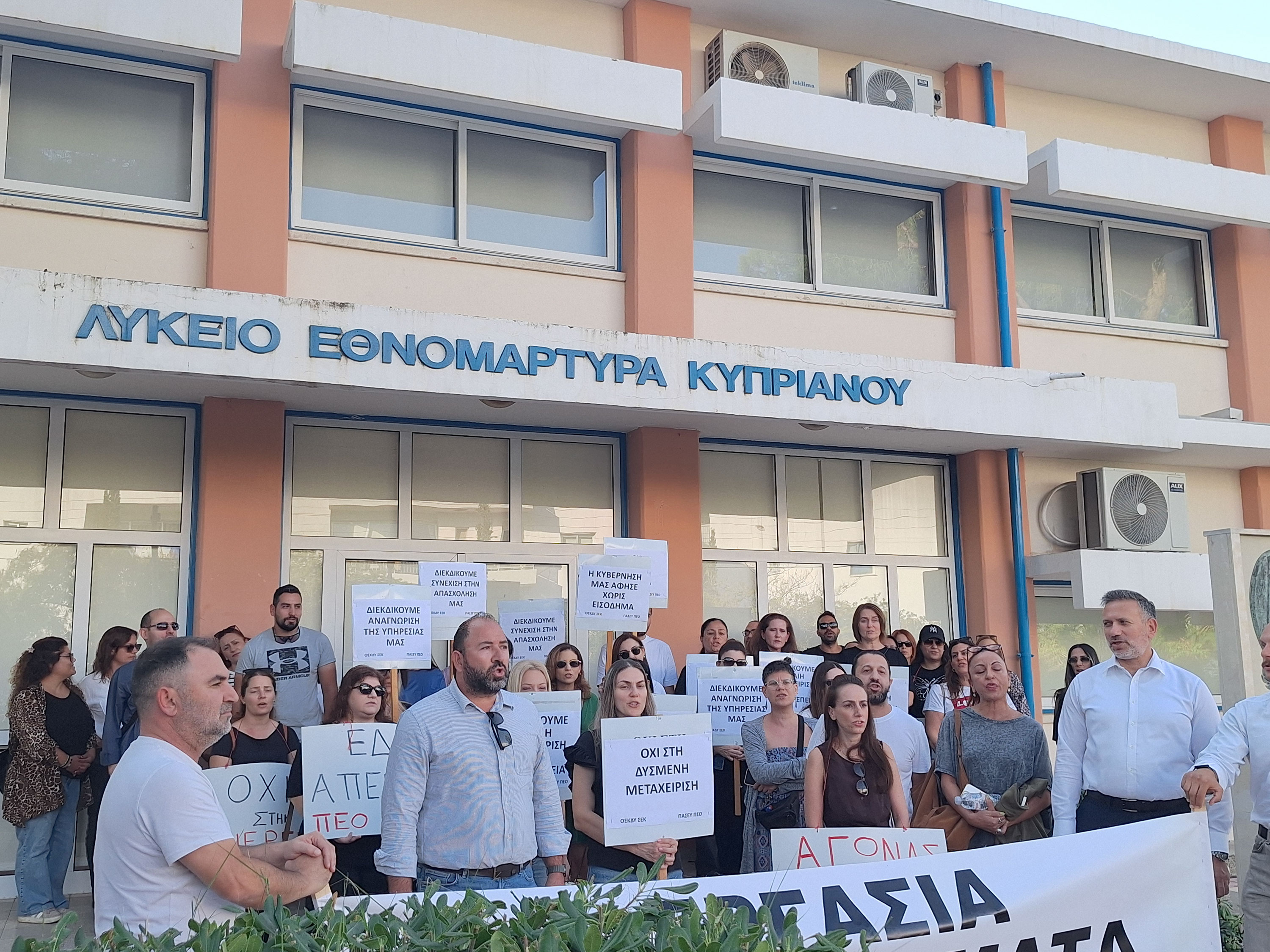
Workers in the support programmes of the education ministry will begin an indefinite strike on Monday, after unions cited many colleagues have gone five months without pay.

Trade unions SEK and PEO said the ministry has still not fully implemented legislation passed by the House on April 21 which regulates employment in specific programmes.

According to the unions, the law sets out staffing procedures, but these are not applied to every programme, which has left a number of workers without a job.

They also claim that posts meant for fixed-term staff are being filled by employees already on the permanent roll, who work overtime to cover them.

The unions further accused the government of repeatedly postponing a political decision on paying employees whose contracts have not been terminated.

They said the delay has left these workers with no income and no right to unemployment benefit.

“Workers remain unpaid for five months,” the unions said, describing the situation as the result of “continuous postponements” by the government.

The strike marks an escalation of measures the workers have taken over the unresolved labour issues, with a protest march planned for next Thursday, starting at the finance ministry and heading towards the presidential palace.

The unions have called on workers to turn out in large numbers for both the strike and the march, and have insisted action would continue until “substantive solutions” are provided to the problems they have raised.

  •  

Teachers in Peru Join National Strike Despite Threats of Pay Deductions

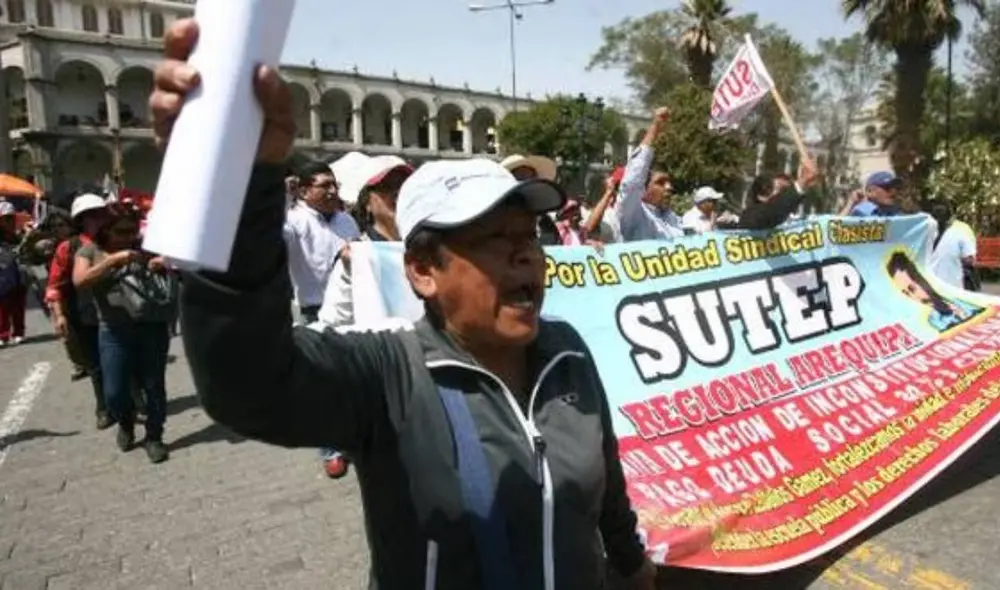
On Thursday, the Unitary Union of Education Workers of Peru (Sutep) held a 24-hour national strike in public educational institutions, demanding a larger budget, adherence to labor agreements, and the implementation of pension regulations for the teaching profession. The action took place even though the Ministry of Education (Minedu) declared it unauthorized and warned that staff who were absent would face pay deductions.

RELATED:

Peru Protests: 1,000 March in Lima Against Fujimori Government

The day of protest included gatherings and marches in the country’s major cities. In Lima, demonstrators assembled at the union’s headquarters on Jirón Camaná, in the capital’s historic center. In Arequipa, marches began in the morning, departing from union offices.

Sutep’s leadership, headed by Secretary General Lucio Castro, presented a list of demands focused on education funding, working conditions, and pensions for retired and former teachers.

Among their primary demands, the union calls for the effective allocation of 6% of the Gross Domestic Product (GDP) to the education sector. According to the union, these resources should address deficiencies in school infrastructure, student nutrition, and access to technology and connectivity.

Teachers are also demanding the immediate regulation and implementation of a law enacted in April 2026, which mandates that the pensions of retired and former teachers—those who were part of the Public Teaching Career—be adjusted to an amount equivalent to the first tier of the teaching salary scale: S/ 3,500.70. This measure is currently the subject of a constitutional challenge before the Constitutional Court.

🏫 El Ministerio de Educación declaró improcedente el paro nacional convocado por el Sutep para este jueves y anunció que verificará la asistencia de los docentes en colegios de todo el país.

El viceministro de Gestión Institucional, Luis Alemán, informó que habrá visitas de… pic.twitter.com/Yhwiok4cKc

— TVPerú Noticias (@noticias_tvperu) October 29, 2026

The text reads, “The Ministry of Education declared the national strike called by the Sutep for this Thursday inadmissible and announced that it will verify the attendance of teachers in schools throughout the country. The Vice Minister of Institutional Management, Luis Alemán, reported that there will be field visits and warned that discounts will be applied for absences. “Education will not be paralyzed today,” he affirmed.”

Furthermore, Sutep is calling for full compliance with the collective bargaining agreement, salary increases, and the timely payment of the “Compensation for Length of Service” (CTS) benefit. The Ministry of Education (Minedu) issued General Secretariat Resolution No. 239-2026-MINEDU, declaring the planned national strike inadmissible on the grounds that it failed to meet the requirements established for the regular basic education sector, which is classified as an essential public service.

The Ministry urged families to send students to their schools and mandated that school principals submit lists of absent staff to the Local Educational Management Units (UGEL) and the Regional Education Directorates (DRE).

The Ministry specified that direct payroll deductions will be applied for hours or days not worked, and that potential administrative disciplinary proceedings will be considered against those who participate in the industrial action.

The continuation of in-person classes depends on the extent to which teachers, administrative staff, and service personnel at each institution choose to participate in the strike. Union leadership in Lima warned that the absence of support and cleaning staff could hinder the operational opening of several schools.

Hamer Villena, secretary of the SUTEP union in Arequipa, did not rule out escalating the protests into an indefinite national strike before the end of the 2026 school year or in early 2027, should the Executive branch fail to establish a negotiation table that offers concrete solutions.

  •  

Dockworkers in 22 Countries Prepare Coordinated Strike Against Arms Shipments Through Major Ports

Trade unions representing workers at 113 ports across five continents are preparing coordinated industrial action on 30 October, protesting against the movement of military equipment through commercial shipping terminals. The mobilisation raises questions about international trade, defence logistics and the growing involvement of organised labour in geopolitical disputes.

Dockworkers’ unions in 22 countries and regions are preparing coordinated strikes and demonstrations on Friday, 30 October, in an international campaign opposing the use of civilian ports to transport weapons and other military supplies to conflict zones.

The mobilisation involves more than 25 trade unions representing workers at 113 ports, according to organisers, with planned actions extending across Europe, North Africa, Asia and the Americas.

Major shipping centres expected to participate include Hamburg, Genoa, Le Havre, Valencia, Algeciras and Piraeus, alongside Morocco’s Tangier Med and India’s Nhava Sheva.

The scale of actual disruption remains uncertain.

Some unions have announced 24-hour stoppages, while others intend to organise shorter walkouts, demonstrations or symbolic protests.

Organisers have suggested that the action could affect more than 40 per cent of Mediterranean cargo traffic and freight worth over $2 billion.

However, these figures represent estimates of potential disruption rather than confirmed losses or cargo volumes that will necessarily be immobilised.

A Campaign Extending Beyond Europe

The initiative originated among dockworkers’ organisations in Italy, France, Greece, Spain’s Basque Country, Turkey and Morocco.

It subsequently attracted support from unions in northern Europe and several countries outside the Mediterranean region.

Among the participating organisations are Germany’s ver.di, France’s CGT Ports et Docks, Ireland’s SIPTU and Denmark’s 3F.

Indian maritime unions have also declared their support, citing the effects of armed conflict on commercial shipping and the safety of seafarers.

The campaign follows an international declaration agreed in Istanbul in May 2026, when dockworkers’ representatives called for ports to remain outside military supply operations.

The organisers argue that commercial transport infrastructure is increasingly being used to facilitate the movement of weapons and equipment to active conflict zones.

Their demands extend beyond any single war, although opposition to arms deliveries connected with the conflict involving Israel and the Palestinians has featured prominently in earlier industrial action.

Italy at the Centre of the Mobilisation

Italy is expected to become one of the principal centres of Friday’s protests.

The Unione Sindacale di Base (USB) has called a nationwide general strike, with demonstrations planned in more than 40 cities.

Port workers are expected to participate in Genoa, Livorno, Trieste, Ravenna, Gioia Tauro and several other maritime centres.

Genoa has previously been associated with protests against the handling of military cargo, including shipments linked to Israel and American military facilities.

However, the port’s representatives have indicated that they expect only limited operational disruption from Friday’s action.

The distinction between planned participation and actual interruption of shipping is important.

Large ports operate through complex arrangements involving terminal operators, subcontractors, transport companies and different categories of employees.

Consequently, industrial action affecting one part of a port does not necessarily bring all commercial activity to a halt.

Greek Ferries Face Disruption

Greece is among the countries where the effects on passenger transport could be more immediate.

Dockworkers, engineers and seafarers’ unions have announced participation in the protests, with Greek ferry services expected to remain suspended for 24 hours.

At Piraeus, the country’s largest port, dockworkers have announced a three-hour stoppage.

Other Greek maritime unions intend to participate in longer strikes.

Disruption to ferry operations could affect travel between the Greek mainland and its islands, demonstrating how a campaign directed primarily against military cargo can also affect civilian transport.

The effects will depend on the precise participation of employees and the arrangements made by port and ferry operators.

Defence Logistics and Commercial Shipping

The planned mobilisation draws attention to the relationship between military supply chains and civilian maritime infrastructure.

Commercial ports are essential to international trade, but they may also handle military vehicles, ammunition, equipment and other cargo connected with defence operations.

NATO members and other states depend on commercial transport networks for certain aspects of military logistics.

Military equipment may be transported aboard commercial vessels or through terminals that also process ordinary goods.

The use of such facilities is not inherently unlawful, and arms shipments may be authorised under national and international export-control arrangements.

Nevertheless, dockworkers’ organisations argue that employees should have a greater role in determining whether ports are used to facilitate military operations.

This creates potential tensions between industrial rights, contractual obligations, national security priorities and government decisions concerning defence exports.

The implications are particularly significant in Europe, where governments are expanding defence production and seeking to strengthen military supply chains.

Any sustained disruption to port logistics could complicate the movement of equipment and components, although the consequences of Friday’s planned action cannot yet be established.

Europe’s Growing Defence Trade

The protest comes as European countries increase military spending and procurement in response to deteriorating security conditions.

According to the Stockholm International Peace Research Institute, Europe became the world’s largest arms-importing region over the 2021–2025 period.

The expansion of defence trade has increased the importance of transport infrastructure capable of handling military equipment.

It has also exposed disagreements over the political responsibilities of companies and workers involved in these supply chains.

For governments, the movement of defence equipment may form part of legitimate security commitments and international assistance programmes.

For participating unions, opposition to particular military shipments is presented as an extension of workers’ rights and their broader political objectives.

These competing positions are unlikely to be resolved through a single day of industrial action.

An Immediate Test for International Shipping

Friday’s mobilisation will provide an indication of how effectively unions can coordinate industrial action across different countries, legal systems and transport networks.

Its practical significance will depend on how many workers participate, which terminals suspend operations and whether shipping companies can maintain schedules through alternative arrangements.

The organisers have demonstrated their ability to coordinate protests across a geographically extensive network.

Whether that coordination translates into substantial disruption to international maritime trade remains to be seen.

For European governments and shipping operators, the immediate task will be to manage any interruption to commercial and passenger services.

The wider question is whether opposition to the use of civilian transport infrastructure for military logistics will become a recurring feature of industrial relations across Europe’s major ports.

  •  

Ferries, ships docked at 7 Greek ports due to 24h strike, Oct 30

Ferries and ships will be docked at seven ports across Greece for 24 hours on Friday, October 30, 2026, as seafarers in the country will join an international strike action by seafarers in several countries around the world. Ships are set to remain docked at the ports of Piraeus, Rafina, Lavrio, Patras, Igoumenitsa, Elefsina, and […]

The post Ferries, ships docked at 7 Greek ports due to 24h strike, Oct 30 appeared first on Keep Talking Greece.

  •  

French student protests set to continue as Macron and Lecornu fail to meet demands

France is gearing up for another round of anti-austerity mobilizations on Saturday, October 31. As the weekend approaches, President Emmanuel Macron and Prime Minister Sébastien Lecornu have still not substantially addressed the protest demands tabled by the student movement. 

For the past weeks, students and their organizations have taken to the streets in the hundreds of thousands, denouncing the state of the education sector, including overcrowded classrooms, overworked teachers, and dilapidated buildings. Authorities have responded with a full-blown crackdown – police violence, curfews, and protest bans – while avoiding meaningful conversation about the protests’ causes.

“The authorities’ top priority is to strip the movement of the political meaning it carries: the condemnation of the neoliberal policy that has ruined the French education system,” presidential candidate Jean-Luc Mélenchon pointed out in a recent interview. “Young people are pulling at the thread of a larger unraveling.”

Government tried to break student unity

Lecornu and his ministers called a meeting with high school and university student groups on Monday, announcing the government was ready to open dialogue on their demands. Yet even before the meetings kicked off, a list of government-proposed measures published by the media only fueled frustration. 

These measures included a transparency-oriented reform of the higher education recruitment platform Parcoursup, the creation of 15,000 additional higher education placements, low-interest loans to regional authorities for renovating school infrastructure, and the indexation of grants to inflation.

Read more: Students in France are fighting for stronger public education

Students criticized the officials for attempting to set a negotiation agenda before even speaking to them. They also called them out for trying to break their unity by organizing separate meetings with different groups instead of a joint discussion. In this process, they emphasized, crucial voices were left out. 

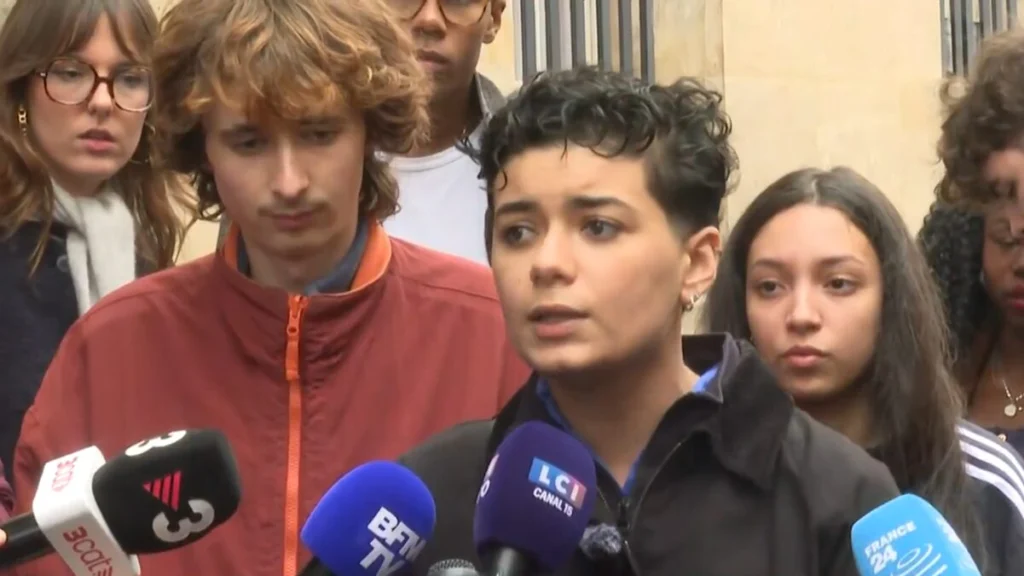
Among others, the Fédération Lycéenne des Quartiers (FLQ), representing high school students from working-class neighborhoods – the demographic group from which the protest wave originated – was not invited to meet Lecornu. Students interpreted this as yet another sign of the government’s failure to grasp what is at stake. “They see us first and foremost as ‘young people from the banlieues,’ rather than young people who, like everyone else, want to make their voices heard,” FLQ’s Soumaya Sarré told Mediapart. 

“Crumbs” instead of solutions

The way meetings were set up was not the only problem. Following the publication of the government’s proposals, the university students’ association Union Étudiante described them as “crumbs” and detailed how they fail to address the movement’s concerns. 

“There are not 15,000 places missing but at least 250,000,” the organization warned. “Where are those 250,000 places needed for young people who have been denied their right to education because of classist and racist selection?” 

Union Étudiante similarly criticized the lack of clarity surrounding proposed financing for infrastructure investment, employment plans, and the promise to “reform” rather than abolish Parcoursup. 

Roughly 800,000 people participated in nationwide protests on October 24. Source: Union Étudiante/X

This last demand has become emblematic for the student movement over the past weeks of protest. Young people on the streets have repeatedly explained how the tool allows university selection to maintain racist and classist tones – all while pushing tens of thousands of students without placements toward the private sector. 

“We are not asking for a reform that offers more transparency or clarity; we already know how the selection process works, and it will remain unjust even if the selection criteria are made public,” Union Étudiante wrote. “The problem is selection itself. Why should young people be denied the right to pursue higher education? We must abolish all forms of selection while keeping a centralized platform for enrolling in academic programs.” 

Mobilizations against racism and the far right

Trade unions and progressive organizations continue to support the students ahead of Saturday’s demonstrations, while building toward a general strike on November 5. The networks remain connected over shared austerity-related problems, linking budget cuts in public services, attacks on pensions, and precarious working conditions. 

In between regular nationwide mobilizations, the past few days have also seen significant protests against racism and the far right. After a racist attack in the Trappes working-class suburb of Paris last Friday – where one person was killed and five, including a 12-year-old, were seriously injured – calls are circulating for solidarity assemblies. 

“This crime did not come out of nowhere,” wrote Saint-Denis mayor Bally Bagayoko. “For years, the perpetrator blamed ‘Black people and Arabs’ for all his misfortunes.”

“He claimed he wanted to avenge a looting that never actually happened – a piece of false information broadcast on television,” he added.

“This hatred has its architects: those who, hour after hour on the airwaves, designate our neighborhoods as the problem and ‘the other’ as a threat.”

Read more: Students across the US South demand justice for Nolan Wells

The far-right National Rally – whose program ahead of the 2027 presidential election endorses exactly this vision of “the other” – held its congress in Orléans over the October 24-25 weekend. Approximately 26,000 people joined a local march against the policies endorsed by the party, signaling continuous resistance in the lead-up to the April 2027 presidential election.

  •  

French Students Reject Lecornu’s Announcements as Protests Loom

Student representatives dismissed the measures as insufficient and confirmed further protests and blockades.

On Monday morning, French Prime Minister Sebastien Lecornu met with some students to brief them on measures he will announce during an afternoon meeting with high school student associations. The meeting, however, turned into a political setback for the administration of President Emmanuel Macron.

RELATED:

Police Violence Escalates During Mass Protests in France

Student representatives said Lecornu was attempting to divide the protest movement by holding a meeting attended by people who lacked legitimacy and did not represent the movement.

The prime minister announced a reform of the university admissions system, with partial implementation in 2027 and more far-reaching changes in 2028. However, implementation of the proposal will depend on the government that emerges from the April-May presidential election.

Lecornu pledged to create 15,000 places in higher education, establish a 1-billion-euro investment plan to renovate high schools, and provide 4 billion euros in loans.

🔴️️ À Bordeaux, des manifestants lèvent les mains pour montrer leur caractère inoffensif, la police les charge et les gaze sauvagement

Partout en France, le mouvement populaire s'est amplifié. Les mêmes foules massives ont défilé pour exiger le blocage des prix, l'abrogation… pic.twitter.com/C9Cvuy2MB5

— L'insoumission (@L_insoumission) October 24, 2026

The text reads, “In Bordeaux, protesters raise their hands to show they pose no threat; the police charge at them and brutally gas them. Across France, the grassroots movement has gained further momentum. Massive crowds have taken to the streets to demand a price freeze, the repeal of the Parcoursup system, wage increases, and the inclusion in the budget of the 10 billion euros requested by high school and university students to address their demands.”

These measures come against the backdrop of a government seeking to gradually reduce the maximum number of students in high school classrooms to 28 and implement an emergency plan that will affect students in the country’s most disadvantaged areas.

Student representatives who questioned the legitimacy of the morning meeting stressed that their demands were more ambitious and dismissed the announcements made in advance as “crumbs.”

They are calling for the repeal of the current university admissions system, which they describe as opaque, and the creation of 250,000 places in higher education. “Our demand is clear: We want 10 billion euros and 10 measures that we have been calling for in various ministerial meetings,” they also emphasized.

Student representatives confirmed plans for protests on Oct. 31. Later, on Nov. 2, when classes resume after the school holidays, students will continue their high school blockades. On Nov. 5, student organizations will also join the general strike called by France’s main labor unions.

🔴 🗣 "10 milliards, 10 mesures, ni plus ni moins", clame Sabrine Kharbach, porte-parole de l'Union Étudiante. Les représentants de lycéens et étudiants s'expriment lors d'une conférence de presse en amont d'une réunion à Matignon #canal16 pic.twitter.com/nmkMNERhZ3

— franceinfo (@franceinfo) October 26, 2026

The text reads, “’10 billion, 10 measures—no more, no less,’ declares Sabrine Kharbach, spokesperson for the Student Union. Representatives of high school and university students speak during a press conference held ahead of a meeting at Matignon.”

What French Students Are Demanding

In recent weeks, the High School Union (USL), the Student Solidarity collective, the National Union of Students of France (UNEF) and the Federation of General Student Associations (FAGE) have been the most determined groups in organizing mobilizations across France. They are demanding that the Macron administration implement the following 10 emergency measures:

1. An Emergency Plan to Renovate Schools and Universities

Launch an emergency plan to renovate dilapidated and unsanitary school and university buildings. Adapt educational institutions to the effects of climate change by installing air conditioning and cooling systems to cope with heat waves, as well as appropriate insulation and heating systems to withstand cold spells.

Ensure that every institution has the human and material resources necessary to maintain its facilities and provide clean, functional restrooms.

2. Mass Hiring of Education, Health, Support and Guidance Staff

Launch a large-scale recruitment plan for National Education personnel to guarantee, at a minimum, the following staffing levels at every institution: One nurse for every 500 students. One psychologist for every 500 students. One guidance counselor for every 500 students.

Create additional teaching positions rather than relying on contract workers, so that every class has a teacher and inequalities between institutions are eliminated. Also establish a formal employment status for support staff for students with disabilities (AESH) and create 800 additional positions.

3. Rethink School and University Schedules

Undertake a comprehensive overhaul of school schedules, building on the work of the Citizens’ Convention on Children’s Schedules for the National Education system, and launch a similar process for higher education to better respect students’ needs and well-being.

In particular, guarantee a lunch break of at least 1 1/2 hours so that every student can eat under appropriate conditions. Reverse the reforms of the baccalaureate and high school system.

4. End Selection Through Parcoursup and Mon Master. Create 250,000 Higher Education Places.

Eliminate selection through the Parcoursup and Mon Master platforms and create 250,000 additional places in higher education starting with the next academic year. This would allow high school students to access programs in their chosen fields without being subject to algorithmic selection and enable all students who wish to do so to continue their studies at the master’s level.

Retain centralized national application platforms to make available programs easier to identify, but eliminate selection. A high school diploma must guarantee access to a bachelor’s degree program, and a bachelor’s degree must guarantee access to a master’s program.

5. Overhaul High School Student Democracy to Ensure Genuine Participation in Decision-Making

Introduce list-based elections for the High School Student Council (CVL) and the Academic High School Student Council (CAVL) to ensure union representation, with representatives elected directly by all high school students in the relevant area. Increase the number of high school student seats on school boards. All high school students must be able to vote in CSE elections.

6. Increase Scholarships and Reinstate and Raise Housing Assistance for Everyone

Increase student scholarships by 200 euros per month, distribute them over 12 months and allow an additional 300,000 students to qualify for the scholarship system. Ultimately, establish a student autonomy income of 1,337 euros per month to guarantee every student the material resources necessary to pursue their studies. Abandon budgetary measures that reduce housing assistance for young people. Reinstate housing assistance (APL) for international students. Increase APL benefits and abandon changes to the calculation method that would deprive 147,000 students of this assistance.

7. Guarantee Effective Access to 1-Euro Meals for All Students

Guarantee effective access to 1-euro meals for students and provide the university services network with the resources necessary to meet demand.

8. Repeal the Welcome to France Plan, Which Introduces Differential Tuition Fees for International Students, and Eliminate the CVEC

Abolish the Welcome to France plan and its differential tuition fees for non-European students, which introduce a national-preference policy and a racist approach to higher education. Eliminate the Student and Campus Life Contribution (CVEC).

9. Freeze CROUS Rents, Make Rent Controls Permanent, and Massively Renovate and Build CROUS Housing

Reinstate the freeze on CROUS rents based on the rents frozen before 2023. Renovate unsanitary CROUS residences. Begin construction of 15,000 CROUS housing units starting in 2027. As an emergency measure, 10% of students must be able to obtain accommodation through CROUS.

10. End Repression and Police Violence Against the High School and Student Movement

End all forms of repression related to the high school and student movement. Ensure that law enforcement officers responsible for violence are prosecuted. Guarantee that absences related to mobilization are neither counted nor penalized.

More broadly, abandon all forms of repression in educational institutions and guarantee young people freedom of expression and freedom to organize, in direct contrast to the repression carried out in the struggle against the genocide in Palestine.

teleSUR/ JF

Source: EFE – Union Etudiante

  •  

Biochemists in Paraguay Join National Strike

On Monday, public-sector biochemists in Paraguay joined a three-day national strike affecting approximately 177 laboratories across the country. They are demanding salary increases, better working conditions, and the provision of medical supplies and reagents in hospitals.

RELATED:

Paraná River Floods Displace 4,200 Families in Paraguay

The action was organized by the Union of Biochemists of Paraguay (UBP) and includes the suspension of outpatient laboratory tests. However, the union has guaranteed that care for emergency cases, hospitalized patients, and those in intensive care—among other priority services—will continue.

The biochemists are demanding a salary increase of 2 million guaraníes, equivalent to approximately 347 US dollars at the current exchange rate. According to biochemist Laila Peña, a professional employed by the Ministry of Public Health and Social Welfare earns 4.3 million guaraníes (746 US dollars), while a temporary contract worker receives between 3.2 and 3.6 million guaraníes (between 555 and 625 US dollars).

Peña stated that salaries in the sector have been frozen for 14 years, noting that 70% of diseases are diagnosed in laboratories. In addition to a pay adjustment, the union is requesting a larger supply of materials and reagents, as well as the formal appointment of temporary contract staff to permanent positions.

HUELGA NACIONAL |👩‍🔬🧑‍🔬📢

🗣️La Dra. Nathalia Zarza, vocera de la Unión de Bioquímicas del Paraguay (UBP), informó sobre el inicio de la medida de fuerza que se extenderá por 3 días.#1000Noticias #1000am📻🎙️

➕INFO en:👇https://t.co/TiPDktj73g pic.twitter.com/zV3Sm9xDv4

— Radio 1000 AM (@1000_am) October 26, 2026

The text reads, “NATIONAL STRIKE. Dr. Nathalia Zarza, spokesperson for the Union of Biochemists of Paraguay (UBP), announced the start of a strike action that will last for 3 days.”

In the Amambay Department, biochemists from the 13th Health Region joined the strike outside the Regional Hospital of Pedro Juan Caballero. Carmen Barreto, a biochemist, told radio station Urundey 103.3 FM that participation is nearly universal nationwide, while critical services will remain operational. “Emergency, inpatient, and intensive care services will remain covered,” noted Barreto, specifying that in the emergency department, only tests related to emergency cases will be performed.

The representative explained that patients with scheduled appointments will not lose their slots, as their tests will be rescheduled—with the exception of oncology and emergency cases. She further detailed that permanent staff earn approximately five million guaraníes, while contract-based staff receive between 3.2 and 3.9 million guaraníes.

The strike comes months after public-sector doctors held protests between August and September. Following those demonstrations, President Santiago Peña’s administration authorized salary increases of approximately 2 million guaraníes ($347 USD) for more than 20,000 professionals, to take effect starting next year.

The industrial action by the biochemists aims to compel the State to address their salary demands and ensure adequate conditions for the operation of public laboratories, which are considered vital for diagnosis and healthcare across the country.

🇵🇾 Severe flooding forces thousands to evacuate in Paraguay.

Around 4,200 families have been evacuated as heavy rainfall and rising water levels in the Paraná River trigger widespread flooding, threatening communities and homes.

As floodwaters continue to affect the region,… pic.twitter.com/wPJq0nxJgr

— teleSUR English (@telesurenglish) October 23, 2026
  •  

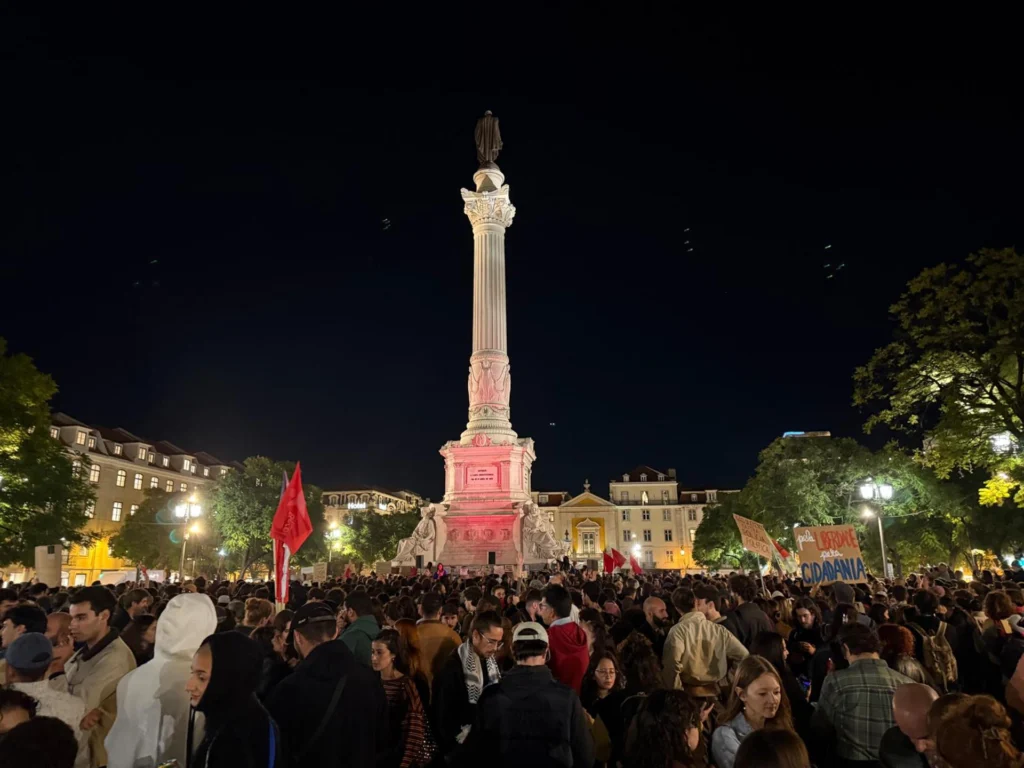
Portugal Housing Activists Push for Nationwide General Strike

Housing rights protests in Portugal over rental law reforms, evictions and calls for a general strike in Lisbon and Porto.

Housing activists seek a strike coordinated with Spain as protests against proposed rental law changes spread across Portugal.


Housing rights groups in Portugal are pushing for a nationwide general strike coordinated with Spain as protests against proposed rental law changes intensify, with a police crackdown on a protest encampment resulting in more than 30 arrests, according to organizers.

RELATED: Portuguese Police Violently Evict Housing Rights Camps in Lisbon and Oporto

Reports on the number of arrests vary. Official accounts put the figure between 11 and 31, while organizers say more than 30 people were detained. The police operation against members of the encampment drew criticism from several sectors.

Housing rights organizations mobilized in Lisbon and Porto on Sunday to build support for a general strike. The proposal has also been discussed at public assemblies and demonstrations held daily across Portugal for more than a week.

“There are thousands of people mobilized, and I think that makes calling a general strike in Portugal increasingly necessary,” João Veloso, a spokesperson for the Lisbon Encampment, told the press. He expressed confidence that the growing demonstrations could pressure the government to withdraw its proposed rental law reforms.

The initiative is being discussed alongside a general strike announced in Spain for Wednesday, Nov. 11. Trade unions and social organizations in Spain are calling for measures to address the housing crisis and improve working conditions.

Protests spread beyond major cities

Demonstrations have extended beyond Lisbon and Porto to Coimbra and Faro. At nightly public assemblies, participants have discussed whether to set up tents again or spend nights in sleeping bags to sustain the protests.

The unrest stems from the conservative government’s proposed changes to rental laws. The legislation would accelerate eviction proceedings, eliminate the minimum three-year term for certain automatic lease renewals, allow landlords to demand up to three months’ rent in advance instead of the current two-month limit, and remove the cap of two months’ rent on security deposits.

  •  

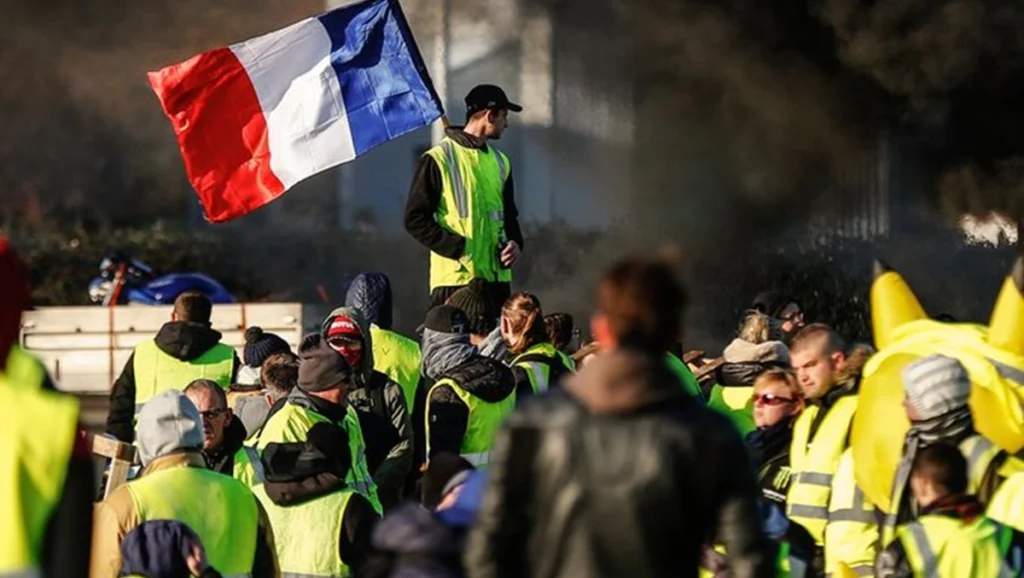
French Yellow Vests Call for Pot-Banging Protests Outside National Assembly

They reject restrictions on demonstrations and partial curfews as a broader wave of protests spreads across France.

On Sunday, the Yellow Vests movement’s coordination group called for demonstrations featuring pot-banging protests outside the National Assembly on Friday, Oct. 30, to protest French President Emmanuel Macron.

RELATED:

Police Violence Escalates During Mass Protests in France

“Macron and his administration have decided to take another step toward authoritarianism. They ban our demonstrations, impose curfews, and close city centers to protesters. We will make our pots and pans heard beneath the windows of lawmakers,” the Yellow Vests said.

The group, whose demonstrations shook France in 2018 during Macron’s first term, also called for the action to be extended to areas outside city halls in protest of restrictions on demonstrations and partial curfews in some cities.

These demonstrations are part of a wave of protests that began in September, when high school students took to the streets to demand improvements at their schools.

Le 24 octobre, manifestation dans la rue avec les étudiants et les gilets jaunes.

Des gens si différents, un même rythme. Pour le pouvoir d'achat, la dignité et l'avenir.

📸 Crédit photo : Desteek Photography#24Octobre #GiletsJaunes #etudiant #Act2 #act3 pic.twitter.com/1QF1oNp9Gm

— Desteek Jeya (@DesteekJeya) October 25, 2026

The text reads, “On Oct. 24, a street demonstration with students and the Yellow Vests. Such different people, yet sharing the same rhythm. For purchasing power, dignity, and the future.”

They later received support from college students, labor unions and the Yellow Vests, who added their demands for action against the rising cost of living and in defense of public services.

Organizers of the demonstrations held over the past two weekends have called for another day of protests on Saturday, Oct. 31, and are preparing a general strike for Nov. 5.

On Monday, in an effort to avert those events, Prime Minister Sebastien Lecornu will meet with representatives of student organizations, teachers, labor unions, business organizations, local authorities and lawmakers.

teleSUR/ JF

Source: EFE

  •  

Protests banned and curfews declared ahead of next major mobilization in France

Hundreds of thousands are set to take to the streets in cities across France on Saturday, October 24, once again protesting austerity and the cost of living crisis. Demonstrations are set to go ahead despite an extremely repressive response from the government and local authorities, including curfews and bans.

Over the past couple of days, a growing number of cities and regions have announced protest bans, drawing criticism from trade unions and progressive groups. “The government has banned demonstrations on Saturday in Lyon, Marseille, Rouen, Grenoble, Le Havre, Bourg-en-Bresse, Le Mans, Toulon, Chambéry, Perpignan,” wrote Clémence Guetté of La France Insoumise on October 22. “New bans are coming down every hour. Is this what democracy looks like?”

Many of the bans are being contested in court, with the final outcome yet to be determined.

Read more: Italian government to deploy troops to Milan after anti-austerity protests

French President Emmanuel Macron failed to revise his stance on the protests in the same period, announcing that only trade union mobilizations will be allowed on Saturday. “Where they are not organized by trade unions, we will ban them wherever we can,” Macron stated.

The government announced the intention of deploying troops to “guard” the demonstrations. The idea was announced after nationwide protests on October 17 – attended by roughly 800,000 people – turned into riots against the erosion of education services and overall living standards.

A securitization strategy tested in Kanaky

This institutional response has been heavily criticized by progressive forces that joined students on the streets. As Prime Minister Sébastien Lecornu’s administration insisted on framing the mobilization exclusively as a security issue, including in meetings with political parties, left forces denounced the strategy for failing to address concrete issues.

Paul Vannier of La France Insoumise said the government was engaging in “a strategy of letting the situation rot,” insisting that it should instead shape a solution to students’ demands. This would include freezing prices, increasing wages, making higher education more accessible, and allocating €10 billion for the education system.

Read more: Students in France are fighting for stronger public education

The French left has also sounded the alarm about the long-term consequences of the violent repression of the protests: thousands of youth were arrested during the mobilization, and dozens were injured – some of them very seriously.

While alarming, this course of events is not surprising, La France Insoumise pointed out. The party compared the repression observed in French cities to the one witnessed during protests in Kanaky in 2024: “a state of emergency, extended curfews, a general ban on demonstrations, the blocking of TikTok, nearly 3,000 security personnel deployed with army support, armored vehicles, and the massive use of LBD launchers and grenades.”

“What the state tested in 2024 in Kanaky, it is now applying in 2026 to its own youth, with the same men in charge,” the media outlet L’Insoumission wrote.

Trade unions’ support continues

It is in this context that progressive forces in France have reiterated calls for the public to respond to the students’ call and protect their right to protest on Saturday. “On October 24, we once again call on all activists to put on their red [trade union] vests so that young people and workers can exercise their right to demonstrate and to make their demands heard,” the General Confederation of Labour (CGT) wrote.

“We are witnessing an authoritarian shift that goes hand in hand with the government’s stubborn refusal to own up to its record and to call into question its unjust policy in favor of the wealthiest,” dozens of trade unionists, advocates, and cultural workers wrote in an appeal, calling for support for the protests.

“This choice is irresponsible and dangerous for democracy, and for the physical integrity of those who defend it without the framework of these mobilizations,” they stated. “It paves the way for the far right to come to power.”

  •  

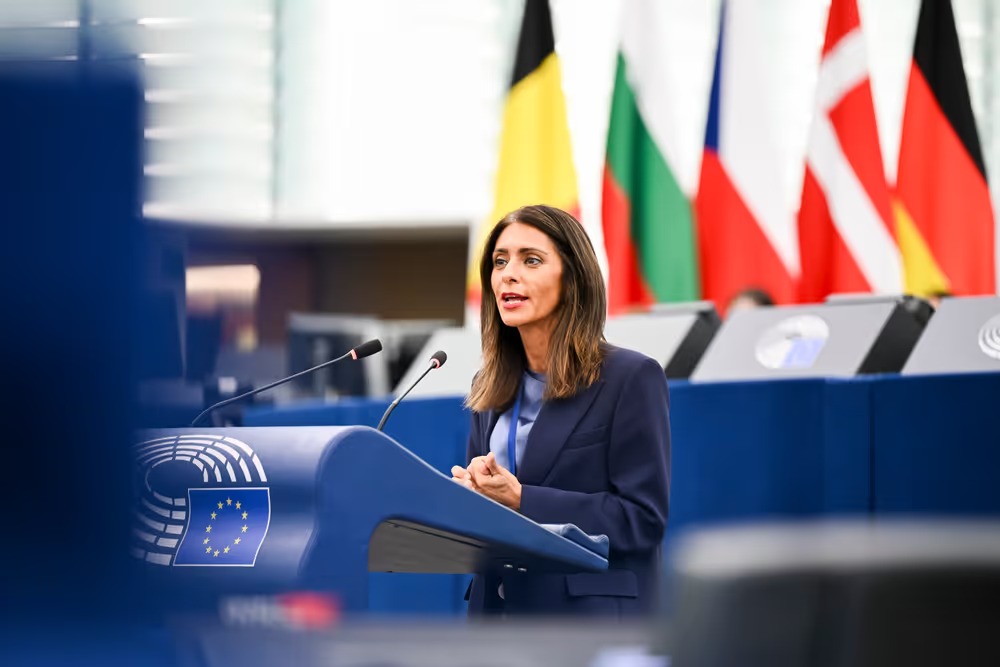
European Parliament vice president launches hunger strike demanding a truce and evacuation for Russian-occupied Oleshky

european parliament vice president launches hunger strike demanding truce evacuation russian-occupied oleshky · post pina picierno speaks during plenary debate strasbourg 6 2026 20261006_ep-211404g_vz2_pst_079-preview ukraine news ukrainian reports

European Parliament Vice President Pina Picierno has announced a hunger strike to draw international attention to the humanitarian disaster in Russian-occupied Oleshky in Ukraine’s Kherson Oblast, she wrote on X on 20 October. The Italian lawmaker called on associations, citizens, and institutions to join her and demand a humanitarian truce, food and medicine for residents, and safe evacuation for those who want to leave.

Russia has occupied the left bank of the Dnipro in Kherson Oblast since 2022. Its forces have cut Oleshky off, leaving its remaining residents short of food and medicine, Ukrainian officials and UN monitors say. Oleshky had about 24,000 residents before the full-scale invasion. About 1,700 remain, including 47 children, Danielle Bell, head of the UN Human Rights Monitoring Mission in Ukraine, said. Picierno’s protest adds to growing international pressure after Pope Leo XIV asked Russian leader Vladimir Putin for a truce to help the town.

“This battle cannot be mine alone”

In Oleshky, thousands of people are trapped in territory occupied by the Russian army, without regular access to food and medicine, Picierno wrote. Mined areas make escape extremely dangerous, she added.

“Those who stay risk dying of hunger, those who try to leave risk their lives,” she wrote. “To draw international attention to this emergency, I have announced a hunger strike. But this battle cannot be mine alone.”

She said the campaign is meant to support the efforts of Pope Leo XIV and others trying to avert a humanitarian tragedy. By the morning of 21 October, 277 people had joined the initiative, Liga reported.

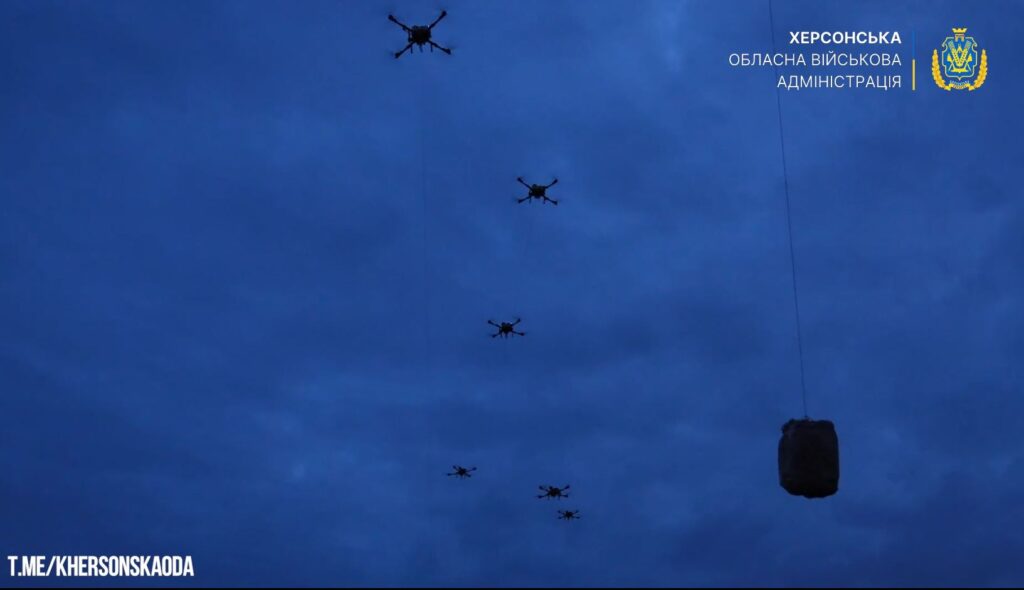
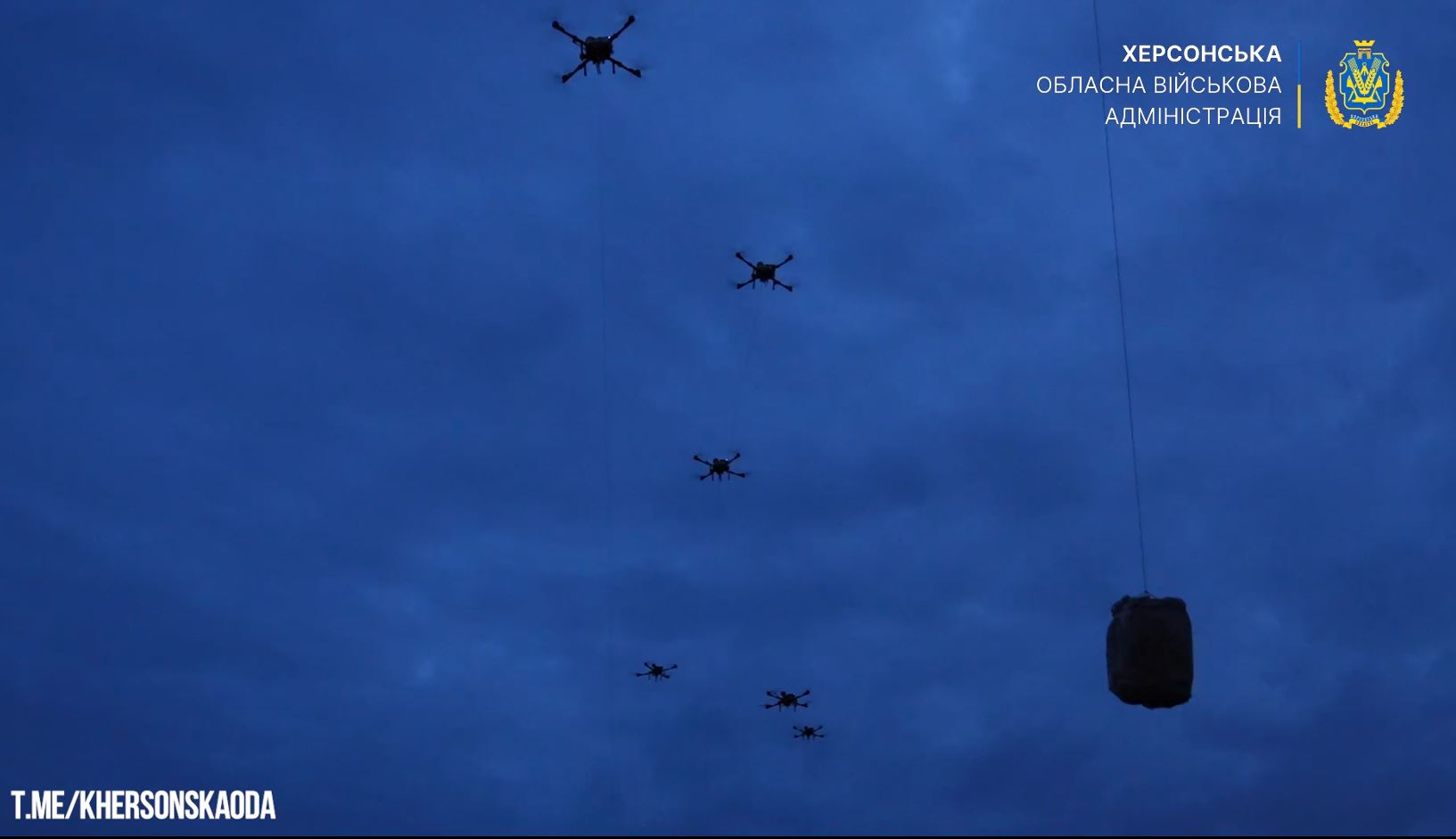
Drones carry food packages across the Dnipro to starving residents of Russian-occupied Oleshky, Kherson Oblast, September 2026.
Drones carry food packages across the Dnipro to starving residents of Russian-occupied Oleshky, Kherson Oblast, September 2026. Screenshot: Kherson Oblast Military Administration via Telegram

Picierno, who left Italy’s Democratic Party in June and joined the Renew Europe group, has backed military aid to Ukraine, tougher sanctions on Russia, and Ukraine’s bid to join the EU, according to Liga.

A town Kyiv calls a “death trap”

On 16 October, Pope Leo XIV expressed deep concern to Putin about the situation in Oleshky. He asked for a truce so that food and medical aid could be delivered and civilians could leave voluntarily and safely.

Oleshky, Kherson Oblast, has been under Russian occupation since 2022, following Russia’s capture of the city during the initial phase of its full-scale invasion of Ukraine.
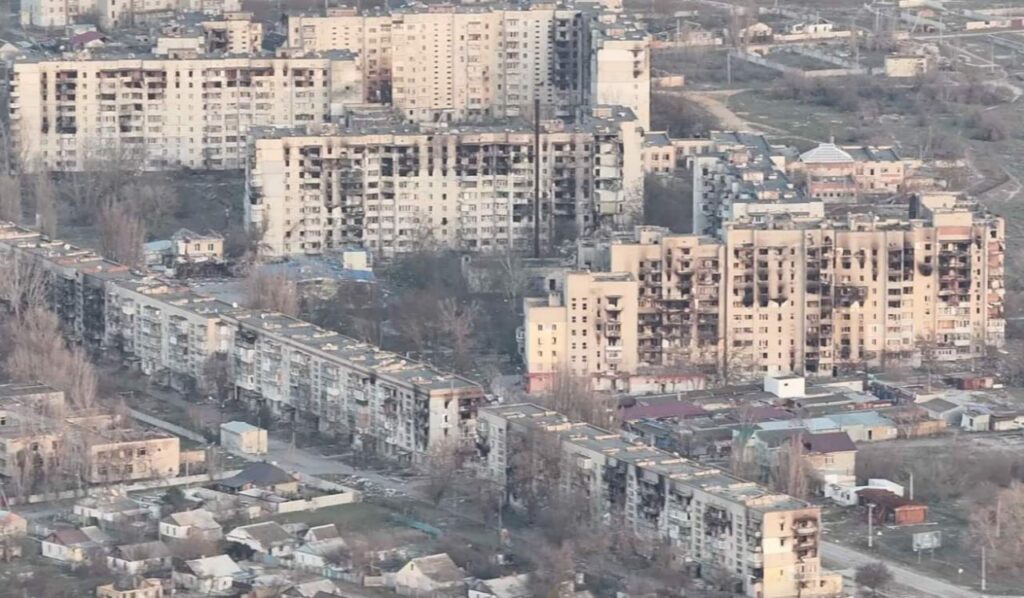
Oleshky, Kherson Oblast, has been under Russian occupation since 2022, following Russia’s capture of the city during the initial phase of its full-scale invasion of Ukraine. Photo: Dmytro Lubinets

A day later, Ukraine’s Foreign Minister Andrii Sybiha urged the UN and the International Committee of the Red Cross to help evacuate residents.

“Russians are trying to turn the Ukrainian town of Oleshky into a death trap,” Sybiha wrote. “Dozens of bodies lie in the streets or in homes, as Russians forbid residents from burying them.”

Ukraine has flown tons of food into the town by drone. Russian troops seize some of the parcels and accuse the people who receive them of cooperating with Ukraine, local officials say. A resident said eggs there cost nearly 20 times the US price.

Drones carry food packages across the Dnipro to starving residents of Russian-occupied Oleshky, Kherson Oblast, September 2026.
Explore further

Russia holds 2,000 people hostage in Oleshky without food or water—Ukraine flew 4,000 kg of food to locals across the Dnipro

Evacuation talks “moved forward”

Talks with Russia on a ceasefire and evacuation are at the stage of “agreeing the final details,” Ukraine’s human rights ombudsman Dmytro Lubinets said on 18 October. He estimated that about 6,000 civilians, including up to 200 children, remain in Oleshky and six nearby settlements. He gave no timeline.

On 20 October, President of Ukraine Volodymyr Zelenskyy said Ukraine was doing everything it could to help people in Oleshky, calling the situation there “simply terrible.”

  •  

Italian government to deploy troops to Milan after anti-austerity protests

Giorgia Meloni’s administration has announced the deployment of 500 military troops to Milan after a weekend of intense protests and riots resulted in broken windows at luxury shops. 

But while mainstream coverage has focused on exclusive brands hiding inventory from angry demonstrators, progressive organizations emphasize that the rage witnessed on the streets of several northern Italian cities is a result of the government’s own policies.

“A Louis Vuitton bag can cost €5,600, while the monthly maximum for the wage guarantee fund in 2026 is €1,340,” wrote the grassroots union Unione Sindacale di Base (USB). In a statement on Tuesday, the union cited devastating national statistics, including data showing that over 14% of working-class families live in absolute poverty.

Broken windows can be repaired, USB noted. “Five years of lost wages, an impoverished family, and a denied future cannot be recovered so easily.”

Students oppose austerity at school and beyond

Significant mobilizations preceded the weekend’s protests. On Friday, October 16, roughly 400,000 students flooded the streets for “No Meloni Day”. They criticized the government’s so-called securitization measures which in practice has meant stifling the right to protest, as well as the unabated turn toward war and armament.

Protesters warned that by prioritizing these points over public services and working conditions, Meloni and her ministers knowingly undermine the future of a whole generation. 

Read more: Curfews imposed in French cities as rebellion against austerity grows nationwide

Echoing developments in France, where teachers’ unions have supported students’ demands over recent weeks of historic struggle for a stronger public education system, educators in Italy began circulating appeals to do the same.

“The established order is the worst of all possible worlds – or comes very close to it – and our schools are a mirror of this: they are falling apart, alienating, militarized,” the appeal reads. “Places where the need to stretch one’s legs is labeled ‘indiscipline,’ and where the ‘foreigner’ is blamed for the decline in knowledge, rather than two decades of underfunding and neglect.”

Real solutions, not repression, needed to address social crisis

Trade unions, teachers, and students all denounced the repression authorities unleashed in response to the protests – both after mobilizations in cities and during school occupations. 

“This government – incapable of offering solutions to the social crisis raging across the country – is once again attempting to manage the streets and social discontent solely through the lens of ‘public order,’ while intensifying repression and shrinking the space available for political activity,” emphasized youth organization Cambiare Rotta.

Students opposed the government’s focus on militarization. Source: Cambiare Rotta/Facebook

Teachers specifically called upon others in the system not to endorse crackdowns on students while invoking democratic values. “Democracy today resists in the French and Spanish squares, in the occupied Italian schools, in the resistance to the genocide of the Palestinian people, in the words and deeds of those who oppose the piecemeal world war,” they wrote.

“It is not to be found in threats, in tear gas, in police officers inside schools, or in students maimed by the weapons of our law enforcement. It is not to be found in the unjust rules that too many persist in defending.”

Read more: Mediterranean dockworkers launch historic international strike

The increased protest activity has given hope that the spark that inspired massive mobilizations throughout 2025 might resurface. It comes less than two weeks before a new general strike – and an international dockworkers’ strike in which Italian port workers are set to play a notable role – on October 30.

  •  

Civil Servants, Culture unions join Teachers’ strike, Students’ protests on Oct 21

The civil servants’ union federation ADEDY has called a strike on Wednesday, October 21, from 11:00 in the morning until the end of the day’s shift. The strike action applies to all employees, regardless of their employment terms, in public-sector services throughout the country. Supported by pupils and university students, the teachers unions have called […]

The post Civil Servants, Culture unions join Teachers’ strike, Students’ protests on Oct 21 appeared first on Keep Talking Greece.

  •  

Curfews imposed in French cities as rebellion against austerity grows nationwide

Mass mobilizations against austerity policies and their effects are not winding down in France. On Saturday, October 17, roughly 800,000 people joined protests across more than 1,700 assembly points, according to union figures – amplifying demands tabled over a month of student protests and demanding urgent action on the cost of living crisis.

In the aftermath of the protests, the government expanded local authorities’ powers to introduce curfews. This led to overnight movement limitation orders introduced in several cities, including central parts of Paris, Lille, Lyon, and Nice. Many of the curfews target young people in particular, reflecting institutional concern about the success of their recent mobilizations.

Over the past weeks, students launched a wave of school strikes and occupations, resisting the erosion of education services under successive neoliberal governments. Their movement drew support from trade unions and progressive political forces, who joined students on the streets to pressure the Lecornu administration to change course and prioritize public services and labor rights over armament. 

Read more: One barricade after another: How protesters marched on the garrisoned heart of India’s capital

Rallies and marches reinforced the student movement’s demands for accessible, equitable higher education, alongside trade unions’ calls for higher wages. 

They also drew links to other historic moments of mobilization, including the struggle for Algeria’s liberation. Many groups taking part echoed the anniversary of the 1961 demonstration that ended in the massacre of hundreds of people protesting for independence.

Police violence continues

Teachers, families, and elected officials also joined, for a practical reason: to shield students from the law enforcement violence unleashed on their mobilization. 

Saturday’s protests were again met with police violence, with officers relying – unsuccessfully – on tear gas and water cannons to disperse crowds. Serious injuries and cases of severe police brutality were reported throughout the day.

After repeated repression, and with neither the government nor President Emmanuel Macron offering credible solutions to protesters’ grievances, protests turned into riots. While those close to social movements emphasized the events were triggered by years of cuts and unimpeded attacks on workers’ rights, the middle and upper classes were indignant.

Recent protests in France have a decisively antifascist character. Protester’s sign reads: “Always angry, never fascist.” Source: Manon Aubry/Facebook

Macron channeled their reaction in his post-protest speech. He declared those responsible for the looting must be punished, while promising more “dialogue” and offering a mild acknowledgment of people’s concerns over fuel, food, and other essentials. 

“There are people out there who rightfully feel that the price of fuel is too high,” the president said – before shifting responsibility elsewhere. He said rising prices were the result “of what is happening in the Persian Gulf – a war that France was not part of.” 

The speech landed poorly at home and abroad. The Iranian government, for one, has repeatedly called out Macron for applying double standards between protests in West Asia and France, emphasizing that the French president had expressed support for US plans in Iran and that ongoing mobilizations were a logical outcome of the policies he endorsed. 

Students reject Macron’s response

In France, protesters called out Macron for failing – yet again – to identify a concrete way out of the situation facing the country. 

“Since the beginning of this movement, high school and university students have been met with nothing but contempt and police batons in response to their demands,” the university students’ union Union Étudiante wrote. “Yet we have put forward a clear set of demands, widely supported by everyone who took to the streets on October 17.” 

Read more: Madrid teachers and students launch strike to defend public schools

“He did not utter a single word about the high school and university students maimed in the crackdown,” the organization added. “He said nothing at all about the real violence committed on Saturday,” referring to approximately 2,300 arrests made on that day alone – and dozens of young people who were seriously injured over the past weeks.

“It is not a matter of engaging in endless dialogue, but of responding concretely to the needs of high school and university students: income, housing, food services, healthcare, study conditions, access to degrees, and an end to repression.”

Lecornu attempts to blame left for chaos

Prime Minister Sébastien Lecornu’s reaction to the protests drew an equally negative response from progressive forces, especially after he suggested left movements were responsible for chaos and violence.

“What a pathetic politician,” wrote presidential candidate Jean-Luc Mélenchon. “He is responsible for the chaos – chaos he methodically prepared, whether through sheer incompetence or a deliberate ‘strategy of the worst’ aimed at conjuring up a ‘party of order’ that would make people forget his failure on the public finances.”

  •  

Teachers on strike across Greece, protests supported by students, Oct 21

Teachers will launch a 24-hour strike across Greece on Wednesday, October 21, protesting against staff shortages in schools, issues within educational infrastructure, excessive class sizes, and persistent inadequacies regarding school facilities in many parts of the country. The teachers will be supported in their strike by pupils and university  students as well as left-wing parties, […]

The post Teachers on strike across Greece, protests supported by students, Oct 21 appeared first on Keep Talking Greece.

  •  

G7 pledges 260 million euros to repair Chornobyl’s shield after Russia pierced it. Full repair will require 500 million euros by 2030, before corrosion sets in

A Russian drone tore a hole in the shield over Chornobyl’s dead reactor. Now the G7 is paying to patch it.

The Group of Seven nations plans to allocate 260 million euros ($292 million) to repair the New Safe Confinement at the Chornobyl Nuclear Power Plant, First Deputy Prime Minister and Energy Minister Denys Shmyhal says.

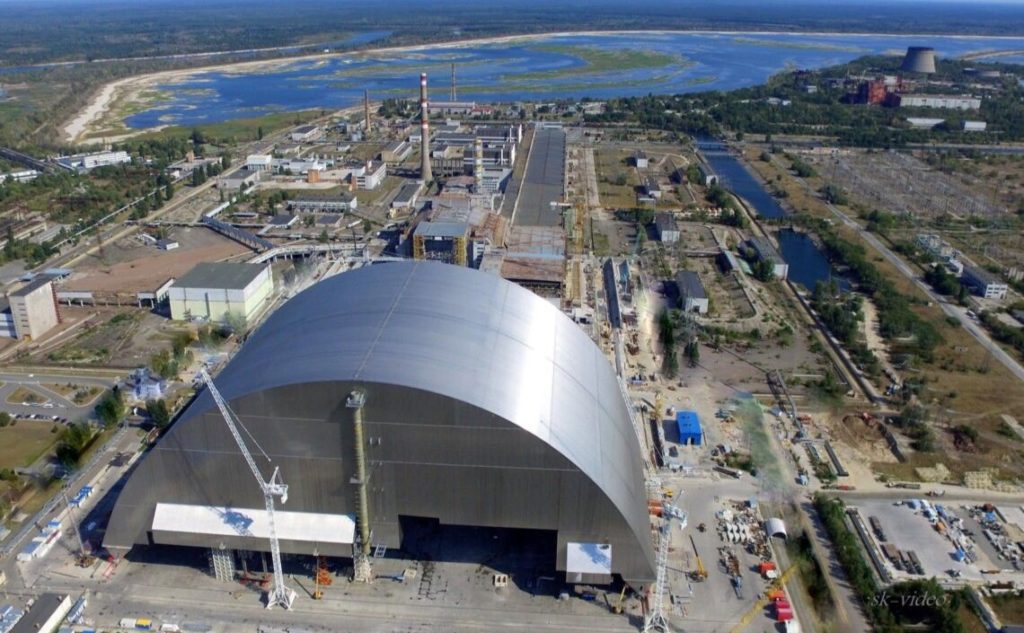
The confinement, a 35-story steel arch sealing the reactor that exploded in the 1986 disaster, was damaged by a Russian drone strike in February 2025. Full restoration will cost at least 500 million euros, the European Bank for Reconstruction and Development (EBRD) estimates, so the G7 pledge covers just over half, leaving about 240 million euros still to raise.

Shmyhal calls the decision an important step toward restoring nuclear safety at the plant, which the Russian strike had compromised. The money will go to priority work, including resealing the structure and restoring its ventilation system.

“Thank you to France and personally to Minister Roland Lescure for leadership in mobilizing international support,” Shmyhal says, crediting France and the EBRD with co-chairing the effort.

The night a drone pierced the sarcophagus

The damage dates to 14 February 2025. A Russian drone carrying a high-explosive warhead punched a hole through the arch’s roof and ignited a fire in the cladding, breaching the structure’s seal and ventilation.

The attack caused a 15 m² breach in the inner and outer cladding and damaged around 200 m² of panels.

"It was a targeted Russian attack on the Chornobyl station with a drone that is an analog of the Iranian Shahed," Ukrainian President Zelenskyy said at that time.

A bill only half-covered, and a 2030 deadline

The G7 money closes only part of the gap. Partners must still raise roughly 240 million euros more, and Ukraine hopes to secure it at a donor conference in Paris co-chaired by Ukraine, France and the EBRD, Shmyhal says.

The clock matters as much as the cost. The work must be finished by 2030 to limit corrosion and protect the arch’s 100-year design life, the EBRD says, turning a repair bill into a race against the rust the strike set loose.

  •  

Madrid teachers and students launch strike to defend public schools

The public education system in Madrid – teachers and students alike – launched an indefinite strike on Wednesday, October 14. Tens of thousands emptied classrooms and took to the streets, demanding an end to the regional government’s education policy – warning that it promotes privatization.

Episodes of police violence were reported near part of the education sites.

Read more: Spanish unions announce general strike over housing

A joint union front, including sectoral branches of the General Union of Workers (Unión General de Trabajadores, UGT), the Workers’ Commissions (Comisiones Obreras, CCOO), and the General Confederation of Labor (Confederación General del Trabajo, CGT), among others, started building the mobilization months ago. 

While preparing the strike, they tabled demands including wage increases, investment into education infrastructure, and smaller class sizes.

A strike to defend quality public education

“Madrid’s teachers have said ‘enough is enough’ in the face of regional policies that seek to dismantle public services in favor of private management, demonstrating a profound contempt for the inclusive school, one that equalizes, protects, and guarantees real opportunity for the future of children and the working class,” the union front stated.

“This strike is not just for teachers,” UGT Public Services Madrid emphasized in a statement. “We are defending quality public education for students and their families, who are the ones who suffer the consequences of overcrowded classrooms and staff shortages.”

Students on the first day of the strike. Source: Sindicato de Estudiantes

Union demands were endorsed by students, including the student union Sindicato de Estudiantes. “Ceilings are crumbling, there is no air conditioning, facilities are outdated, and students are forced to learn in makeshift and portable classrooms or overcrowded spaces,” the organization stated.

Student union recognizes strike’s “decisive moment”

Students and teachers insist on the responsibility borne for the crisis by the regional People’s Party government led by Isabel Díaz Ayuso. Ayuso was also an often-quoted name in recent housing mobilizations in Madrid, where demonstrators linked the right-wing party’s policies with the ongoing housing crisis – including the eviction of Maricarmen Abascal.

The education strike, Sindicato de Estudiantes wrote, is a “way to involve the entire working class and youth against a reactionary government that not only does business with public education, but is selling our neighborhoods to vulture funds and rentier landlords who speculate on housing, one that steals money from public health to hand it to companies and the corrupt …”

Read more: Students in France are fighting for stronger public education

In their communications, student associations echoed the historic school strikes taking place in France. “Also very present in the minds of Madrid students, as in the entire State, are the events shaking France and Belgium: the enormous student strikes of our colleagues that have filled Paris and dozens of cities, and the brutal police repression that they have had to endure,” they wrote. “We know that we are in a decisive moment, and like them, we will fulfill our task.”

Strong adherence to the education strike gives hope for an even stronger mobilization on November 11, when Spain’s labor movement has called for a general strike to increase wages, fight against the cost of living crisis, and overhaul the country’s housing policy.

  •  
❌