❌

Reading view

Turkey-Libya maritime delimitation MoU ‘null and void’ says Cyprus

The Republic of Cyprus has reiterated its position that the 2019 Turkey-Libya MoU on maritime delimitation is “null and void”.

Speaking during a UN Security Council open debate on emerging technologies and maritime security, Cyprus’ representative Maria Michail said “this purported agreement is null and void, does not comply with international law and, in particular, the rules pertaining to the conclusion of treaties as well as UNCLOS.”

“Geography cannot be changed, nor can the sovereign rights of states be disregarded through arbitrary maritime delimitations,” she said.

Michail added that “article 121 of UNCLOS clearly establishes the regime of islands and their entitlement to maritime zones.”

She stressed that the UN Convention on the Law of the Sea is fundamental to maritime security, legal certainty and the peaceful settlement of disputes, adding that its provisions reflecting customary international law are binding upon all states.

“The Mediterranean is our common sea. Its security and stability depend on good neighbourly relations grounded on respect for international law and the sovereign rights of all coastal states,” she said.

Addressing the main theme of the debate, she reaffirmed Cyprus’ position that “technological progress must remain anchored in international law”, particularly the UN Charter and UNCLOS.

  •  

Turkey’s opposition struggles to sustain momentum after election gains

When Turkey’s opposition made big gains in local elections in March 2024, its leaders believed they had finally found a way to defeat long-serving President Tayyip Erdogan.

More than two years later, the opposition’s leading presidential challenger is in prison, its main party has been split by a court ruling and some of the opposition figures who were elected as mayors have defected to Erdogan’s AK Party.

The opposition remains defiant. It says it retains faith in democratic elections and that voters will reject what they see as a politically motivated legal crackdown on government opponents in the next national elections, due in 2028.

The opposition now faces a challenge to harness and sustain people’s anger until then over what they say is government coercion under Erdogan, who has been in power as prime minister and then president for 23 years.

“I do not believe this anger has disappeared,” said Seren Selvin Korkmaz, co-founder and co-director of the IstanPol Institute, an Istanbul-based think tank.

“However, unless this anger is channelled into political energy or organisational energy, it will fade away. It may evolve into disappointment, hopelessness or apathy.”

The government denies the legal cases against its opponents are politically motivated and says the judiciary operates independently.

IZMIR MAYOR’S DEFECTION

Few places capture the opposition’s challenges better than Izmir in western Turkey on the Aegean coast.

The AK Party has never managed to win Izmir, the country’s third-largest city with about 4.5 million residents, at the ballot box, but this month Mayor Cemil Tugay, who was elected on an opposition ticket in 2024, defected to Erdogan’s party.

Tugay’s defection represents a significant symbolic setback in what has long been regarded as the heartland of Turkey’s secular, social democratic opposition.

Tugay says he did so because it was “in the best interests of Izmir” and Erdogan has dismissed as slander opposition allegations that Tugay switched parties under pressure.

But the opposition New Party’s head in Izmir expressed confidence that voters in the city would show their opposition to Tugay’s move and what he depicted as government coercion when they vote in the next national elections.

“The government believes it can steer this process through coercion, but it will realise that it has made a grave miscalculation in the election,” Cagatay Guc, the New Party’s head in Izmir, told Reuters.

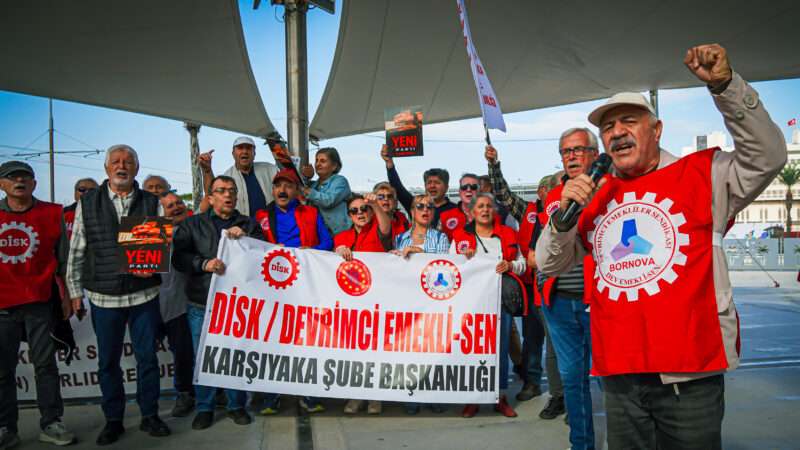
The New Party, which is led nationally by politician Ozgur Ozel, staged protests before Tugay’s defection and believes many local voters oppose his change of allegiance.

In interviews with Reuters, many Izmir residents criticised Tugay’s decision.

“It was Tugay who joined the AK Party, not the people of Izmir,” said a 50-year-old man who gave his name only as Koray for fear of recriminations. “The AK Party can never win over the people of Izmir.”

A 67-year-old woman who gave her name only as Halide said: “We have never voted for that side (the AK Party) anyway … and now we’ll vote for Ozgur Ozel.”

Some residents said they agreed with Tugay that Izmir, one of the largest industrial and trade centres of Turkey, might receive more municipal services under a mayor representing the governing party.

“As a resident of Izmir, I want to see more municipal services in our city… With the necessary support from government, this city will be rebuilt, I hope,” said a 46-year-old man, who gave his name only as Isa.

One resident suggested Tugay had “no other choice” than to switch parties.

“He would either end up in Silivri, or carry on by switching parties,” said 53-year-old Alpay, referring to a prison west of Istanbul where many opposition figures are jailed.

LOSING FAITH IN CHANGE?

Inmates at Silivri include Istanbul Mayor Ekrem Imamoglu, who is regarded as Erdogan’s chief rival. In the 2024 local elections, Imamoglu was elected mayor of Istanbul for a second term from the Republican People’s Party (CHP), which won 37.8% of the vote and also retained Ankara, Izmir and many other big cities.

Those successes encouraged the opposition to view control of Turkey’s biggest cities as a platform from which to challenge Erdogan nationally.

Dozens of mayors and hundreds of municipal officials are now in jail along with Imamoglu, who is awaiting trial on corruption charges which he denies.

The CHP has been split after a court ruling ousting Ozel as its leader and reinstating former leader Kemal Kilicdaroglu. Ozel, a close ally of Imamoglu, launched the New Party in response, hoping to sustain voter anger over the pressure on the opposition.

“If voters lose faith that change is possible, why would they bother to vote?” said Tanju Tosun, a political science professor at Ege University in Izmir. “Voter turnout in the general election may fall slightly, particularly amongst voters of the opposition parties.”

Turkey’s next presidential and parliamentary elections are scheduled for May 2028 but a presidential adviser said this month that the elections would probably be held slightly earlier than expected. Doing so would allow Erdogan to sidestep constitutional limits and run again for office.

  •  

Mitsotakis calls Turkey-Libya maritime deal ‘blatantly illegal’

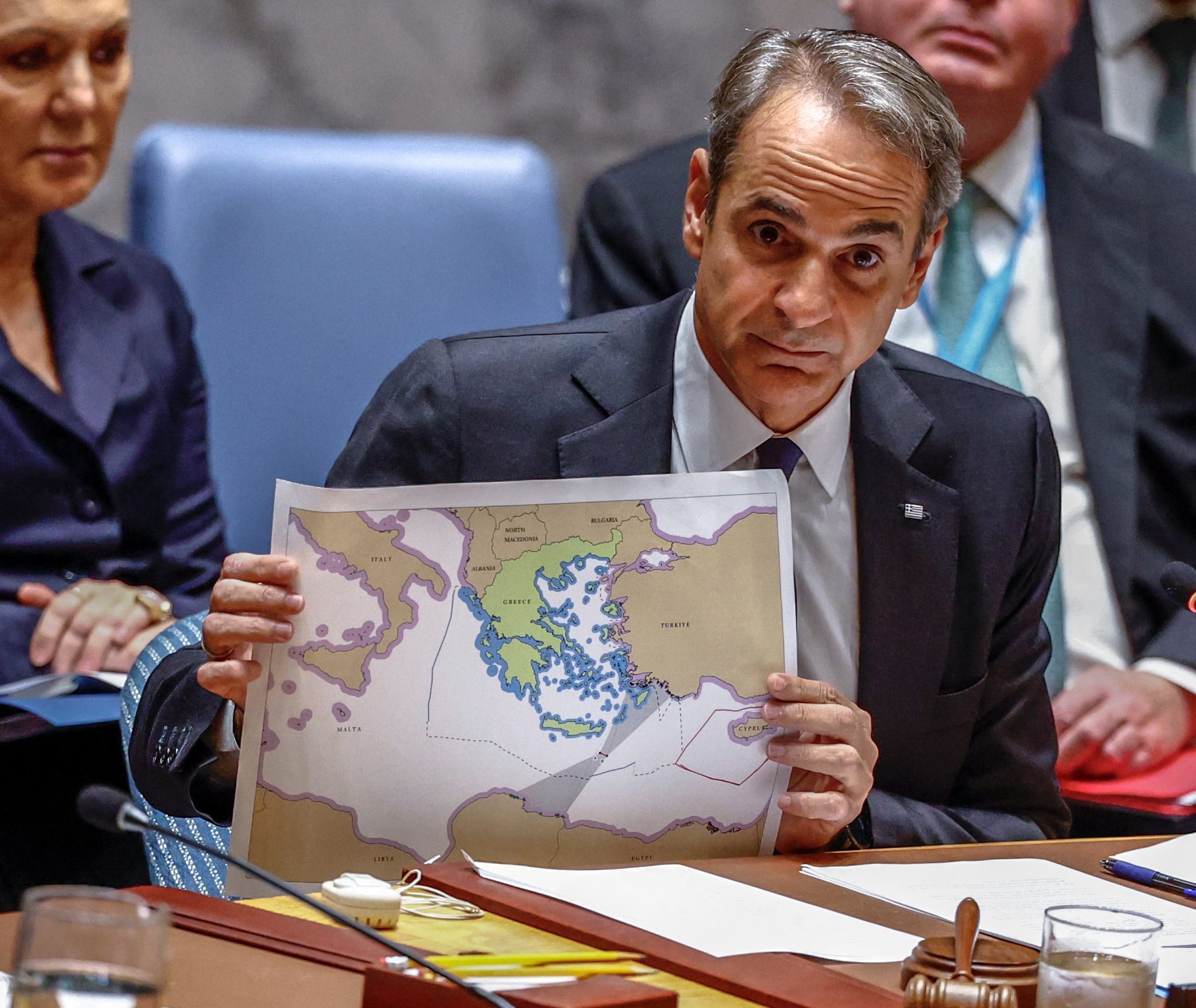
Greek Prime Minister Kyriakos Mitsotakis said that the recently signed maritime deal between Libya’s eastern ‌parliament and Turkey was “blatantly illegal, null and void,” adding that it “completely disregards the geography.”

Mitsotakis, speaking to Reuters as Greece ends its UN Security Council presidency, also called for an urgent “international truce” to protect shipping in the Black Sea after the sinking of a Greek-owned container vessel on Wednesday.

Greece challenges maritime boundaries agreement

Libya’s eastern ‌parliament last week approved a maritime boundaries deal with Turkey, drawing condemnation from Athens, but also Egypt, Bahrain and the United Arab Emirates, as a threat to regional security and international legal order.

“It completely disregards the geography, the reality that there are Greek islands — they seem to completely disappear in the thinking of Turkey and Libya,” Mitsotakis said, accusing them of attempting to create a “fait accompli” that ignores the UN Convention on the Law of the Sea.

Turkish President Tayyip Erdogan has said ​that reactions from the EU and others to the approval of the agreement, originally agreed in 2019, had no legitimate basis, defending Ankara’s policy in the eastern Mediterranean.

Since the 2019 Libya-Turkey ‌deal, Greece ⁠has awarded a license to a consortium led by Chevron CVX.N to look for gas off the island of Crete and has sought a separate agreement with Libya on demarcating their maritime zones.

Mitsotakis assured “there’s no risk that these explorations will be in any way challenged.”

Athens urges Libya to negotiate directly

Referring to Libya and Greece as “natural neighbors,” Mitsotakis, who first became prime minister in 2019 and is in his second term, urged the African country to negotiate directly with Athens and take the discussions “very, very seriously.”

Mitsotakis, 58, spoke to Reuters after chairing a council debate on maritime security, only hours after a Greek container ship sank after being hit by naval drones off Bulgaria in the latest strike on ships in the western Black Sea ​this month.

Greek-operated ships are among the world’s largest fleets of tankers and are ​pivotal for trade across the Black Sea region, whose ​waters are shared by Bulgaria, Georgia, Romania and Turkey, ⁠as well as warring Russia and Ukraine, which Moscow ​invaded in February 2022.

“We do need some sort of international truce when it comes to the freedom of navigation,” said Mitsotakis, adding that it was of “utmost priority” to allow for exports of grain from the region into the world through the Black Sea.

“Greek shipowners would be the first to resume trading in the Black Sea, also from Ukraine, assuming a safe passage is guaranteed,” he said, stressing the rising costs of shipping as chartering and insurance expenses have “gone through the roof.”

It was not immediately clear who had carried ⁠out the attack, which added to growing concerns about the impact ​of Russia’s war in Ukraine on commercial shipping in the area.

Mitsotakis said that Ukraine was financially dependent on exports of its products: “They had a bumper harvest, but the grain is now sitting in silos, in danger of rotting.”

“Unfortunately, for the moment, Russia doesn’t seem to be interested in engaging in a substantive discussion,” he said.

Greece seeks stronger EU naval presence in Red Sea

Mitsotakis also called on the European Union to bolster its naval mission to protect shipping in the Red Sea called Aspides, which was launched in 2024 to protect from attacks by Yemen’s Iran-aligned Houthis.

Intensifying hostilities between the Houthis and Saudi Arabia have disrupted oil supplies and heightened the risk of a wider regional conflict, eight months since the US-Israeli strikes on Iran.

“My argument is simple: the European Union has an interest in having a concrete presence with hard assets in this part of the world, and we need more countries to participate in Aspides,” Mitsotakis told Reuters.

He said Greece, Italy and France have deployed “assets” as part of the mission and that was “clearly not enough.” Diplomats told Reuters as of late September there were six warships operating as part of the operation.

The Houthis said this week they had attacked Saudi military aircraft and repelled an ​advance by Saudi-backed forces near the Bab el-Mandeb Strait, an important Red Sea shipping route.

“If we really want to send the message also to the Gulf countries that we take their security seriously, but we also protect the critical arteries and waterways that are absolutely indispensable for European trade, we should be willing to deploy more assets to this part of the world,” Mitsotakis said.

Athens backs continued sanctions on Russia

Asked about US President Donald Trump’s move earlier this month to lift sanctions on Russian diesel exports, Mitsotakis reaffirmed Greek support for sanctions on Moscow.

“We believe that we need to put economic pressure and impose more financial pain on Russia to send a very clear signal that as long as they prolong this war, they will suffer very specific economic consequences,” he said.

  •  

Greek American Group on Peloton's 'Varosha Ride': ‘Not a Haunted Amusement Park’

Hellenic American Leadership Council (HALC) executive director Endy Zemenides said Thursday that Peloton's Halloween-themed "Varosha Ride" trivializes a Cypriot ghost city emptied by Turkey's 1974 invasion, according to a thread he posted on X.

The post Greek American Group on Peloton’s ‘Varosha Ride’: ‘Not a Haunted Amusement Park’ appeared first on Breitbart.

  •  

U.S. Convicts First Woman Accused of Joining Islamic State

Halima Salman, 27, was convicted on Tuesday of joining the Islamic State and receiving military training in Syria, marking the first public conviction of a woman for joining ISIS by an American court. She now faces up to 10 years in prison.

The post U.S. Convicts First Woman Accused of Joining Islamic State appeared first on Breitbart.

  •  

PM Mitsotakis at UN: Turkish-Libyan memorandum illegal and arbitrary, geography cannot be rewritten

International law could not be applied selectively and rules governing the seas could not be rewritten to serve the ambitions of individual states, Prime Minister Kyriakos Mitsotakis stressed, speaking at a high-level debate of the Greek Presidency of the UN Security Council titled “Maintenance of international peace and security: Emerging technologies and maritime security.” Referring […]

The post PM Mitsotakis at UN: Turkish-Libyan memorandum illegal and arbitrary, geography cannot be rewritten appeared first on Keep Talking Greece.

  •  

Turkish Cypriots celebrate 103rd anniversary of creation of Turkish republic

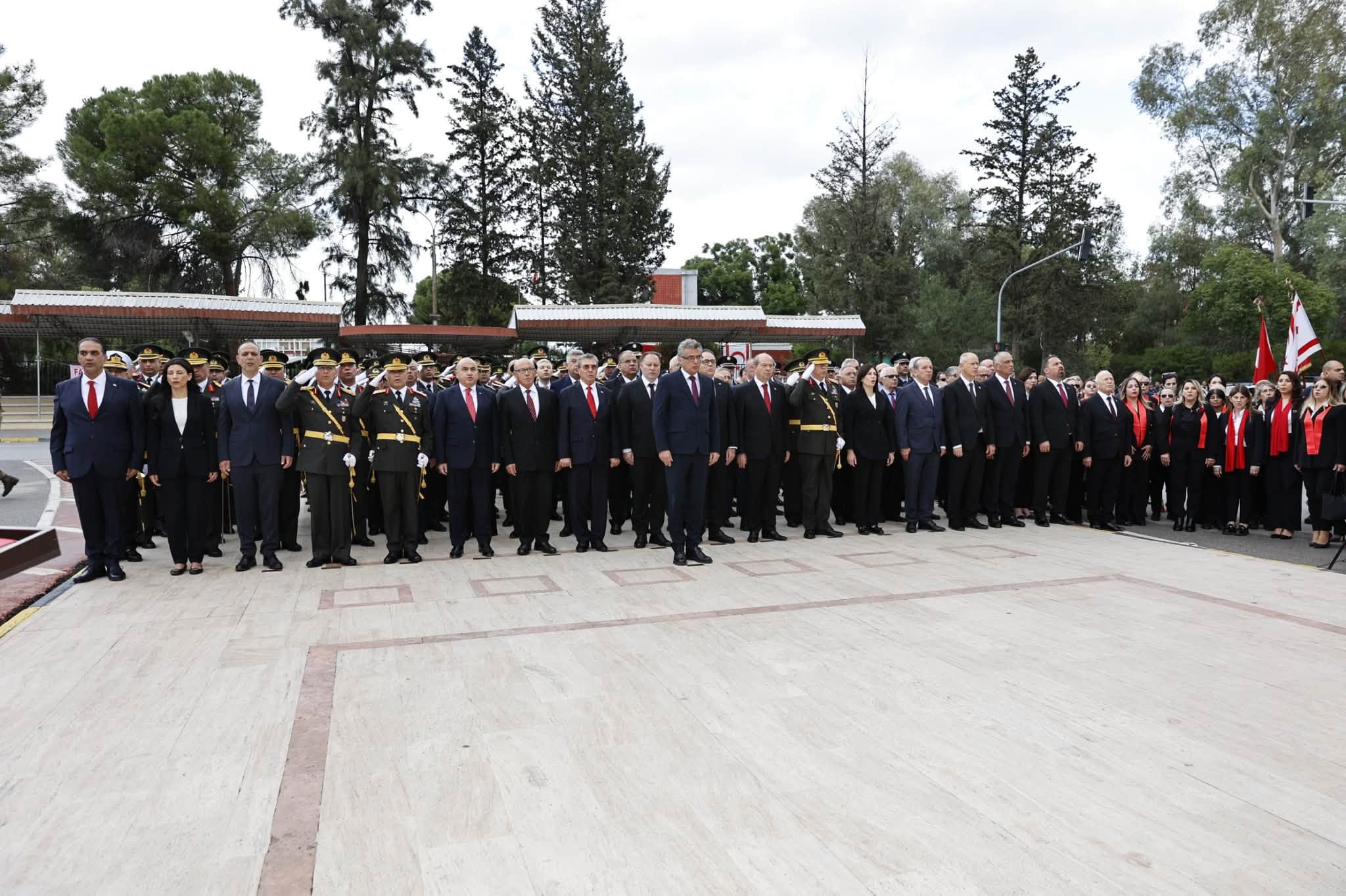
Turkish Cypriots on Thursday marked the 103rd anniversary of the establishment of the Republic of Turkey with events held in various towns and cities throughout the course of the day.

The celebrations centred in Nicosia, where a wreath-laying ceremony was held at the statue of the Republic of Turkey’s founding president Mustafa Kemal Ataturk at the capital’s walled city’s Kyrenia gate.

That ceremony was attended by Turkish Cypriot leader Tufan Erhurman, two of his predecessors, Mehmet Ali Talat and Ersin Tatar, Turkish ambassador in Nicosia Ali Murat Bacsceri, Turkish Cypriot ‘prime minister’ Unal Ustel, Turkish Cypriot Nicosia mayor Mehmet Harmanci, and various other dignitaries.

At its conclusion, Erhurman signed a memorial book, addressing Ataturk, writing that “I am proud to stand before you on the 103rd anniversary of the founding of the Republic of Turkey.”

“The great determination, courage and foresight you displayed while leading the Turkish nation’s fight for its existence continue to guide us today. The principles and revolutions you created, and the modern values entrusted to us by the republic have illuminated our path for over a century,” he wrote.

Erhurman: Turkish Cypriots advance on enlightened path opened by Republic of Turkey

He added that “the Turkish Cypriot people continue to advance on the enlightened path opened by the Republic of Turkey”, and that “we wish to express once again, in the presence of your cherished memory, our determination to bring our country to the level of contemporary civilisations, prioritising the peace, security and wellbeing of our people above all else”.

Earlier in the day, Tatar issued a statement of his own, describing the establishment of the Republic of Turkey as “the highest expression of our ideal of independence, our will for modernisation and our belief in a strong future”.

“The republic is the strongest guarantee of our nation’s path to sovereignty, freedom and a dignified future. On this meaningful day, I commemorate with gratitude, mercy and respect, first and foremost Mustafa Kemal Ataturk, his comrades in arms, our beloved martyrs and all our veterans who have passed away,” he said.

Elsewhere, a parade was due to be held on Nicosia’s arterial Dereboyu avenue on Thursday afternoon, while wreath-laying ceremonies and parades were also to be held in the towns of Famagusta, Kyrenia, Morphou, Trikomo and Lefka, and in the villages of Galatia, near Trikomo, and both Lysi and Lefkoniko on the Mesaoria plain.

  •  

Brickbat: Turkish Banned

A group of people in Turkey protest the appointment of a trustee over Halk TV. | Idil Toffolo/Dreamstime

Turkish authorities seized control of Halk TV, a popular pro-opposition television station based in Istanbul. Police raided its headquarters, stopped live broadcasts, and prevented staff from entering the building. A court appointed a government administrator to run the station and other companies linked to its owner, Cafer Mahiroğlu, who is being investigated for bribery, money laundering, and rigging public contracts. Mahiroğlu, who lives abroad, denied the accusations. After the takeover, the station stopped airing live news and instead broadcast music and documentaries, while authorities also ordered its social media accounts blocked in Turkey. The seizure came as Halk TV was covering corruption allegations involving figures linked to President Recep Tayyip Erdoğan's ruling party and the trial of imprisoned Istanbul Mayor Ekrem İmamoğlu.

The post Brickbat: Turkish Banned appeared first on Reason Magazine.

  •  

Trump and Erdogan discuss Middle East and Ukraine in phone call

US President Donald Trump and Turkish President Recep Tayyip Erdogan spoke by telephone on Wednesday regarding developments in the Middle East and the war in Ukraine, according to a statement from the Turkish presidency.

The statement said Erdogan told Trump that Turkey, “acting within the framework of the Mecca joint defence pact, is closely following the situation in the Strait of Hormuz and in Yemen”, while seeking “a diplomatic solution”.

On Ukraine, Erdogan said Turkey is “ready to support a revival of the diplomatic process between Russia and Ukraine with the aim of ending the fighting”.

Trump commended Erdogan and the Turks with “a happy national anniversary” marking the founding of the Turkish republic and the abolition of the Ottoman sultanate on October 29.

  •  

Turkey offers Egypt maritime border deal

Turkey said on Wednesday that it is ready to sign an agreement with Egypt on the delimitation of maritime zones, claiming Cairo would gain more than 15,000 square kilometres of extra jurisdiction compared with a deal with Greece.

Turkish defence ministry spokesman Admiral Zeki Akturk made the offer at the ministry’s weekly briefing.

“We are ready to sign an agreement on the delimitation of maritime jurisdiction zones with Egypt, in accordance with mutual interests,” he said.

He estimated that Egypt would acquire “more than 15,000 square kilometres of additional maritime jurisdiction” compared with a potential agreement with Athens.

Akturk also welcomed the approval by the Libyan House of Representatives on October 20 of the 2019 memorandum on maritime jurisdiction between Turkey and Libya.

The ministry called it “an important development” that supports Ankara’s approach, which it claimed “rests on international law” and takes account of “the rights of the coastal states involved”.

It said Turkey “will continue to protect its legitimate rights and interests in the Eastern Mediterranean”.

The memorandum was signed with the Tripoli-based government of Fayez al-Sarraj and draws a maritime boundary between the Turkish and Libyan coasts that disregards the Greek islands in between, including Crete.

Greece, Cyprus and the EU rejected the MOU as “null and void”, and Egypt also objected to the deal.

Egypt signed a partial delimitation agreement with Greece in August 2020, a move seen at the time as a response to the Turkish and Libyan accord.

Egypt has not publicly responded to the latest Turkish offer.

  •  

NATO Confronts Growing Black Sea Threat as Drone Attacks Target Commercial Shipping

France has deployed a maritime patrol aircraft to Romania following a series of attacks on civilian vessels near NATO territory. The escalating threat has prompted closer cooperation between Romania, Bulgaria and Turkey, raising questions about maritime security and the protection of Europe’s eastern flank.

A series of drone attacks on commercial shipping in the western Black Sea has brought the consequences of Russia’s war against Ukraine increasingly close to NATO territory, prompting additional military surveillance and renewed regional defence cooperation.

France has temporarily deployed an Atlantique 2 maritime patrol aircraft to Romania, while NATO members bordering the Black Sea are strengthening arrangements to monitor shipping routes, identify airborne threats and protect critical infrastructure.

The French aircraft began operating from Romania’s Mihail Kogălniceanu airbase on 18 October and is scheduled to continue reconnaissance missions until 6 November.

Its deployment follows repeated attacks on merchant vessels near Romania and Bulgaria, both members of NATO and the European Union.

At least eight cargo ships have been struck in the region during October, with approximately 34 sailors reported dead or missing, according to figures reported by Reuters on 27 October.

The incidents have transformed commercial maritime security into an increasingly urgent issue for European defence planners.

Commercial vessels enter the conflict zone

The latest escalation has centred on shipping routes serving Ukraine’s Danube ports and commercial traffic passing through the western Black Sea.

Russia’s attacks on Ukrainian maritime infrastructure have increased the importance of alternative export routes, including those connecting the Danube to international shipping lanes.

However, recent incidents demonstrate that geographical proximity to NATO territory does not necessarily provide commercial vessels with protection from the effects of the conflict.

On 23 October, a drone struck a Comoros-flagged cargo vessel near the Romanian port of Constanța.

According to maritime security company Ambrey, the vessel was hit approximately 16 nautical miles east of the port and subsequently capsized.

One crew member was reported dead, nine were rescued and three remained missing in the initial casualty figures.

Ambrey assessed it as highly likely that Russian forces carried out the attack, pointing to the vessel’s links with Ukrainian Danube ports.

That assessment represents an attribution by a commercial security organisation, rather than a final determination by an international investigative body.

Other incidents have similarly raised questions over responsibility.

Ukraine has accused Russia of attacking civilian shipping, while Bulgarian authorities have acknowledged difficulties in conclusively identifying the operators of drones involved in some strikes.

France strengthens maritime surveillance

Romania’s Defence Ministry announced on 27 October that the Atlantique 2 deployment followed a request from Bucharest in response to the deteriorating security situation.

The aircraft is conducting surveillance and reconnaissance over the western Black Sea, working with Romanian naval authorities and maritime rescue coordination services.

Its principal responsibilities include identifying hazards to navigation and improving awareness of threats to critical infrastructure within Romania’s exclusive economic zone.

That infrastructure includes offshore energy facilities and maritime installations whose protection is increasingly relevant to European energy security.

The deployment adds to Romanian naval patrols conducted by ships, helicopters and unmanned systems.

Romanian authorities are also providing navigational warnings and recommended routes to commercial vessels.

Nevertheless, additional surveillance does not automatically prevent attacks.

The practical challenge lies in detecting relatively small unmanned aircraft or maritime drones, determining their intentions and responding before they reach civilian targets.

Romania, Bulgaria and Turkey coordinate their response

The security crisis was also discussed at a trilateral meeting of defence ministers in Sofia on 28 October.

Romania’s Defence Minister, Ștefan-Radu Oprea, met his Bulgarian counterpart, Dimitar Stoyanov, and Turkey’s Defence Minister, Yaşar Güler, to examine the consequences of attacks on commercial shipping.

According to the Romanian Defence Ministry, the ministers discussed closer intelligence-sharing, improved maritime surveillance and better coordination between their naval forces.

They also reaffirmed the importance of the existing Black Sea mine-countermeasures initiative involving the three countries.

Maritime mines remain a persistent hazard because they can drift beyond their original deployment areas, endangering civilian vessels irrespective of their destination or ownership.

The trilateral format provides a practical mechanism for neighbouring countries to coordinate activities while retaining responsibility for their respective national waters.

It also gives Turkey a central role in regional discussions, reflecting its position on the Black Sea and its control of access through the Turkish Straits under the Montreux Convention.

The limits of NATO’s maritime protection

The attacks raise a complicated legal and operational question: what responsibilities do NATO members have when civilian ships are attacked near their coastlines?

The distinction between territorial waters and an exclusive economic zone is important.

A coastal state’s territorial sea generally extends up to 12 nautical miles from its baseline, while its exclusive economic zone can extend considerably further and confers particular economic and jurisdictional rights.

An attack within a NATO member’s exclusive economic zone does not automatically constitute an armed attack against that member’s territory.

Nor does every strike on a civilian ship near NATO territory automatically trigger the collective-defence provisions of Article 5.

The circumstances, attribution, location and consequences of an incident would all influence the response.

This creates a security problem in which threats can affect European economic interests without necessarily crossing a threshold requiring collective military action.

Maritime trade and energy infrastructure face increasing risks

The implications extend beyond individual vessels.

Repeated attacks can increase insurance costs, complicate shipping schedules and discourage operators from using particular routes.

They can also affect Ukrainian agricultural exports and the wider commercial networks linking Black Sea ports to European markets.

Offshore energy installations face related vulnerabilities, particularly where surveillance and response capabilities are insufficient.

For NATO, the challenge is therefore to strengthen deterrence and protection without unintentionally escalating the conflict.

France’s reconnaissance deployment and the trilateral cooperation between Romania, Bulgaria and Turkey indicate that regional governments are moving towards a more coordinated response.

However, the continuing attacks demonstrate the difficulties of protecting civilian maritime activity against comparatively inexpensive unmanned systems.

The longer-term question is whether increased surveillance, counter-drone capabilities and naval cooperation can make western Black Sea shipping sufficiently secure while the war in Ukraine continues.

  •  

Embassy builder sues State Department for $461M 

An Alabama-based construction company sued the State Department on Wednesday over accusations it refused to pay for pandemic-era cost overruns at a dozen embassy and consulate projects during the pandemic.  BL Harbert International says the government had agreed to a settlement until political appointees under Secretary of State Marco Rubio inserted themselves into the process.  “And, on…

  •  

Turkey warns against further attacks by Russia, Ukraine on Black Sea vessels

Turkish Defence Minister Yasar Guler on Wednesday warned Russia and Ukraine against further attacks on commercial vessels in the Black Sea, saying Ankara reserved the right to take legal action against the strikes, in Turkey’s most direct intervention to date.

NATO member Turkey, which has maintained good ties with both Moscow and Kyiv since Russia’s full-scale invasion of Ukraine in 2022, has repeatedly called on both sides to halt attacks in the Black Sea that have also struck Turkish-flagged and Turkish-owned commercial vessels.

Ankara says it is waiting for responses to a proposal it conveyed to Russia and Ukraine aimed at stopping the intensifying attacks and ensuring the safe shipment of grain from the region.

Speaking in Sofia after a security meeting between defence ministers and military chiefs of Black Sea littoral states Turkey, Romania and Bulgaria, Guler said commercial vessels sailing and operating in the Black Sea had been affected by drone attacks, stray mines and missiles during the conflict.

“We follow with concern the intense attacks on commercial vessels in the Black Sea and call on the sides to act with common sense, in line with the principle of navigational safety in open seas,” he said, adding that another commercial vessel had been struck by three drones inside Bulgaria’s maritime jurisdiction on Wednesday.

It was not clear who carried out the attack on a Greek container ship that was sailing under the Liberian flag in Bulgaria’s exclusive economic zone.

“We also reserve every legal right regarding attacks on Turkish-flagged or Turkish-owned vessels and follow developments very closely… The necessary warnings are constantly being conveyed to both sides to keep commercial navigational out of the conflict zone and immediately halt attacks on civilian vessels,” Guler added.

Ukraine has stepped up attacks on ships and infrastructure facilitating Russian oil and grain exports since July, ​when Russia intensified its missile and drone strikes on the main Ukrainian grain export hubs of Odesa, Chornomorsk and Pivdennyi.

In a late September meeting, Turkish President Tayyip Erdogan told Ukrainian counterpart Volodymyr Zelenskiy that attacks by Russia and Ukraine on commercial vessels in the Black Sea were inexplicable and steps must ​be taken to stop them.

Guler also said Turkey, Romania and Bulgaria — which operate a de-mining operation in the Black Sea — agreed it was important to also focus on protecting critical subsea infrastructure.

  •  

The Mecca pact goes to Tehran. Can it keep the region out of another war?

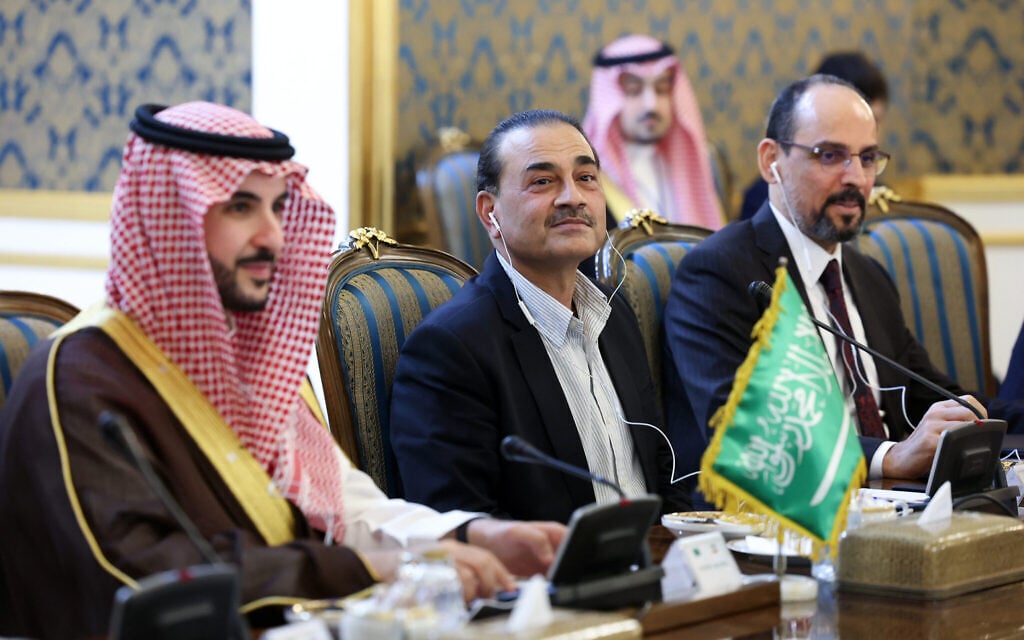
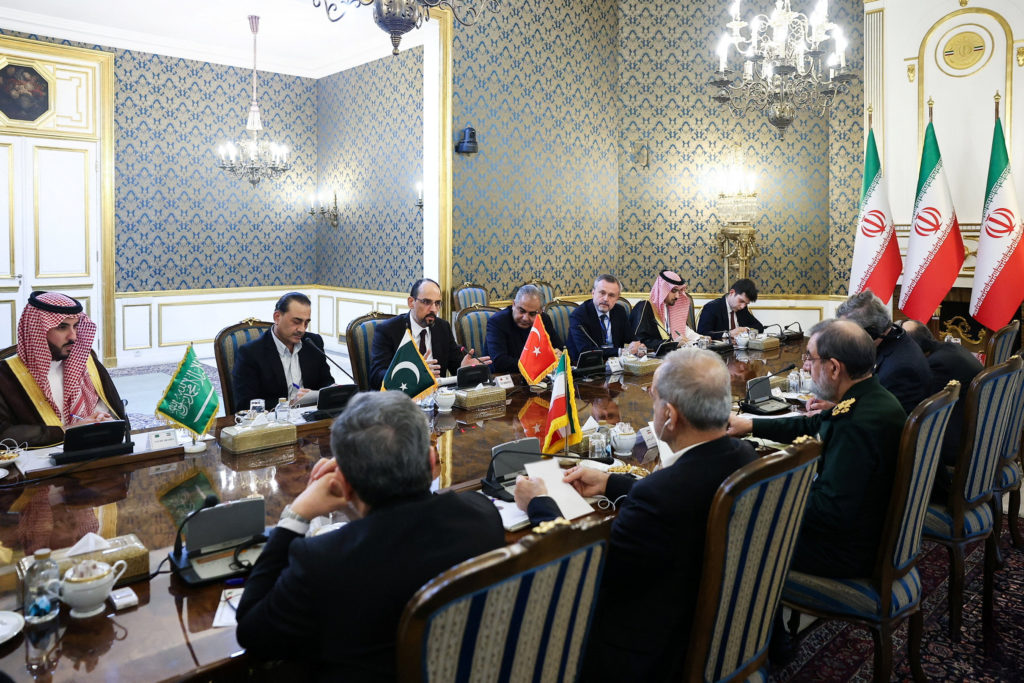
On Monday, the Mecca Joint Defense Agreement did something a defense treaty is not usually built to do. Its members went to Tehran to talk. Saudi Defense Minister Prince Khalid bin Salman, Pakistan’s Field Marshal Asim Munir and Turkey’s intelligence chief Ibrahim Kalın met President Masoud Pezeshkian and Supreme National Security Council Secretary Mohsen Rezaei. […]

The post The Mecca pact goes to Tehran. Can it keep the region out of another war? appeared first on Asia Times.

  •  

Turkey Courts Egypt With Maritime Deal as Libya Dispute Deepens

File image.

Turkey is ready to sign a maritime boundary agreement with Egypt that would give Cairo more than 15,000 square kilometers of additional maritime jurisdiction compared with a potential deal with Greece, the Turkish Defense Ministry said on October 28.

The ministry reiterated the offer during a weekly briefing, saying an agreement with Egypt could be reached on the basis of mutual interests.

It also welcomed the eastern-based Libyan House of Representatives’ October 20 approval of a 2019 maritime agreement with Turkey, describing the decision as an important development supporting Ankara’s approach to international law and equitable maritime boundaries.

“Our proposal to Egypt is clear. If Egypt signs such an agreement with our country, it will have approximately 15,000 square kilometers more maritime jurisdiction than it could have under a potential agreement with Greece,” Defense Minister Yaşar Güler said.

The Turkish-Libyan agreement has long been opposed by Egypt, Greece and Cyprus, which argue that it conflicts with their maritime claims in the eastern Mediterranean.

Turkey maintains that the agreement is legitimate and protects its interests in the strategically important waters, where competing claims over maritime boundaries and potential energy resources have fueled years of disputes.

The latest escalation began when Libya’s eastern-based parliament approved the agreement, reversing its previous opposition to the deal and its earlier decision to sever political ties with Ankara. The memorandum was originally signed in 2019 by Turkey and Libya’s internationally recognized government in Tripoli, which controlled the country’s west.

Egypt rejected the parliamentary approval the following day, saying it had no legal effect on Cairo and that the memorandum infringed on its sovereign rights in its exclusive economic zone and continental shelf.

It also argued that the agreement violated international maritime law and the 1982 United Nations Convention on the Law of the Sea.

Cairo reinforced its opposition through diplomatic contacts with Ankara. On October 24, Egyptian Foreign Minister Badr Abdelatty told his Turkish counterpart, Hakan Fidan, that the memorandum was null and void and that Egypt rejected any measures taken under it that contradicted its declared maritime boundaries.

Turkey expressed understanding of Egypt’s concerns and stressed the importance of continued consultations, according to Egypt’s Foreign Ministry.

Egypt has also coordinated with Greece, which signed a maritime delimitation agreement with Cairo in 2020. The two countries reaffirmed their rejection of the Turkish-Libyan arrangement on October 22 and agreed to continue consultations on maritime boundaries. Greece, from its part, said the countries are discussing extending their maritime zone eastward toward Cyprus.

On October 26, Egypt and Greece joined Cyprus, the European Union, Bahrain and the United Arab Emirates in a joint declaration at the UN opposing the Turkish-Libyan agreement.

The signatories warned that the arrangement raised serious concerns about regional security and stability and could establish a precedent for bilateral agreements that undermine international law. They also argued that the memorandum could not override the maritime rights of third countries.

Turkish President Recep Tayyip Erdogan dismissed the criticism on the same day, saying objections by the European Union and other parties to the agreement’s approval lacked a legitimate legal basis. Ankara also maintained that it does not seek to gain at the expense of other countries in the eastern Mediterranean.

Turkey’s renewed offer to Egypt appears to be an attempt to avoid further escalation. Cairo seems open to talks. However, taking into account its long stance on the issue, it is unlikely that it will make any concessions.

_______________________________________________________________________________________________________________________

SouthFront: Analysis and Intelligence

NOW hosted at southfront.press

Previously, SouthFront: Analysis and Intelligence was at southfront.org.

The .org domain name had been blocked by the US (NATO) (https://southfront.press/southfront-org-blocked-by-u-s-controlled-global-internet-supervisor/) globally, outlawed and without any explanation

Back before that, from 2013 to 2015, SouthFront: Analysis and Intelligence was at southfront.com

SOUTHFRONT.PRESS

MORE ON THIS TOPIC:

The post Turkey Courts Egypt With Maritime Deal as Libya Dispute Deepens appeared first on South Front.

  •  

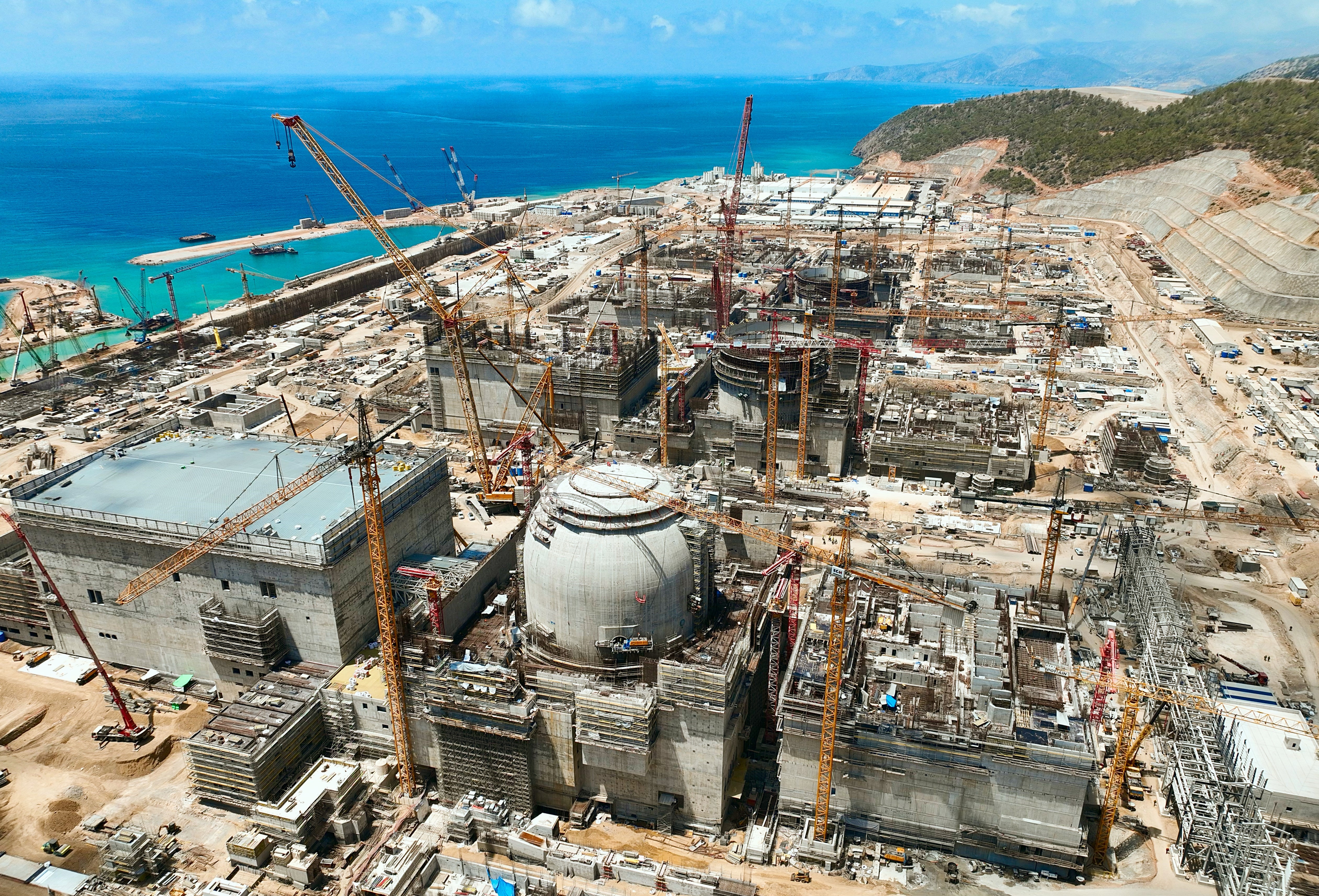
Akkuyu nuclear power station, 90km from Cyprus, to be operational ‘next year’

Turkey’s Akkuyu nuclear power station, which is located on the southern coast of the country’s Mersin province, 90 kilometres from Cyprus, will be operational next year, Turkish Energy Minister Alparslan Bayraktar said on Tuesday.

“The intensive testing process is continuing at Akkuyu. Due to nuclear safety and the international conventions and agreements to which Turkey is a party, it is a very special area, and nothing has been left to chance. Every precaution has been taken,” he said at the Turkiye Energy Summit in Istanbul.

He added that the government aims to load the first nuclear fuel into the station “in the next few weeks”, and that this will “mark the physical startup of Akkuyu”.

Beyond that, he said, “we will be using Akkuyu electricity in our system from 2027 onwards”.

Construction at Akkuyu began in 2018, with it expected that the first reactor will enter service this year and the second reactor will enter service next year. Each reactor will provide a total of 1,114 megawatts of electricity – around 2.5 per cent of Turkey’s electricity consumption each.

The project has caught the eye of anti-nuclear activists in Cyprus and beyond, with demonstrators having gathered in Nicosia as early as 2017 to protest the plans, while European Parliament group The Left, to which Akel belongs, had in 2015 warned against the plans.

“The plant is to be constructed in Mersin, in a seismic area on Turkey’s Mediterranean coast. This exposes to risk first and foremost the population in the area of Mersin, but also all countries and peoples in the region,” it said.

It then offered its “support to the Greek Cypriot and Turkish Cypriot organisations that have joined forces to raise awareness both in Cyprus, Turkey and abroad, aiming to stop the construction”.

The power generated at Akkuyu will only be usable in Cyprus if it is connected to Turkey by a cable, though these plans appear to have stalled after the European network of transmission system operators for electricity (Entso-E) refused to endorse the plan.

  •  

Senior Saudi, Pakistani, and Turkish Officials Hold Talks With Iranian Leaders in Tehran

Senior officials from Saudi Arabia, Pakistan, and Turkey, the three countries that form the new Mecca defense pact, visited Tehran on Monday and met with Iranian officials amid threats of another US-Israeli attack on Iran. The meeting was seen as an effort to avoid another escalation in the US war against Iran, and the Saudi […]
  •  
❌