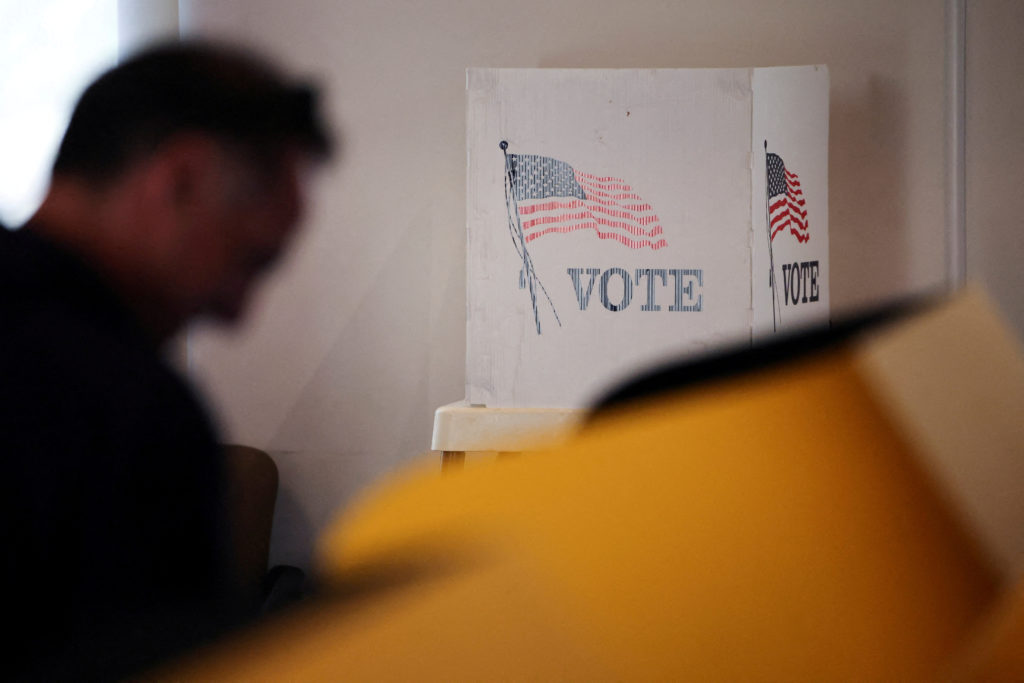
A decade ago, 54 percent of Massachusetts voters said yes to Question 4, a ballot initiative that legalized possession, home cultivation, and commercial distribution of recreational marijuana. Judging from recent surveys, voters are not inclined to reverse that decision by approving Question 8, an initiative on next Tuesday's ballot.
Question 8, a.k.a. the Eliminate Recreational Marijuana Sales and Allow Limited Possession Initiative, would permit adults 21 or older to possess up to an ounce of cannabis. But they would have to get it from the black market, since Question 8 would not allow them to grow it or buy it from state-licensed retailers.
The initiative "would keep personal possession of marijuana legal, keep medical marijuana legal, and stop commercial marijuana stores," its supporters say. They allege that legalization has impaired "productivity" and led to increases in "fatal car accidents," "workplace injuries," "healthcare costs," "crime (like DUI's)," "ER visits," and "mental health conditions like psychosis, severe anxiety, and schizophrenia, particularly in young adults."
Voters do not seem impressed by those arguments. In eight polls between mid-February and mid-October, support for Question 8 ranged from 20 percent to 41 percent. In the most recent survey, conducted by The Boston Globe, 71 percent of respondents said they planned to vote no on Question 8, which suggests that experience with legalization has substantially increased opposition to pot prohibition in Massachusetts.
Question 8's sponsor, the Coalition for a Healthy Massachusetts, is funded almost entirely by Smart Approaches to Marijuana (SAM). As of October 20, the Virginia-based group had spent $3.7 million on the project, compared to $2.8 million in spending by the opposition, which includes several marijuana businesses.
SAM's co-founder, Kevin Sabet, who served as a drug policy adviser during the Clinton, George W. Bush, and Obama administrations, says he was motivated by the concerns of Massachusetts residents who approached him. "Many of them voted for this initiative 10 years ago and feel betrayed," Sabet told WGBH, an NPR station in Boston. If so, the polls indicate such converts are far outnumbered by former Question 4 opponents who have traveled that road in the opposite direction.
"We're under no illusions that the bluest state in the country is going to pass this easily with flying colors," Sabet told WBUR, another Boston NPR station, a few weeks ago. "But we want to have that conversation."
The conversation clearly is not going the way Sabet hoped. Massachusetts, which was the fifth state to legalize recreational marijuana, is now one of two dozen, which together account for most of the U.S. population. In October 2025, Gallup put nationwide support for marijuana legalization at 64 percent, which was down a bit from the peak of 70 percent recorded in 2023 but still 16 points higher than in 2012, when Colorado and Washington started this ball rolling.
Public support for legalizing recreational marijuana tends to be even higher in states that have done it. In Civiqs surveys last December, support in 15 states where voters had approved legalization ranged from 62 percent in Missouri to 77 percent in Oregon. It had increased since legalization in every state but New Jersey, where it was down one point from the 67 percent of voters who approved Public Question 1 in 2020. In Massachusetts, support had risen from 54 percent to 76 percent.
The fate of two other drug policy initiatives that voters will consider next week is less clear. As far as I can tell, pollsters have not asked voters about them.
Colorado's Proposition 132 would make manufacturing or distributing any amount of illicit fentanyl a Level 1 drug felony punishable by a mandatory minimum sentence of eight years. Under current law, the penalties vary depending on the amount of fentanyl involved.
In Idaho, House Joint Resolution 4, a proposed constitutional amendment, would strip voters of the power to legalize marijuana or any other psychoactive substance. If the initiative passes, which requires approval by a simple majority, that power will be reserved to the state legislature.
We’re updating this forecast to move South Carolina from Lean R to Toss-up.
As this week’s Power Rankings reported, Republicans already viewed this as an uncomfortably close race. That belief is now widely shared.
Tonight, the president is headed back there to help Sen. Darline Graham in the Upstate, where she underperformed in her primary runoff against Rep. Ralph Norman.
New polling has Democratic challenger Annie Andrews and Graham tied at 48%-48%.
The Senate is still a toss-up with six states to decide the majority. On a good night for the Democrats, their ceiling rises to 54 seats. A good night for the Republicans could see them retain control with up to 52 seats.
It seems like there are two electorates in these midterms.
The first is frustrated with President Trump and ready to reject Republicans. It includes growing numbers of independent, rural and Hispanic voters who say they’ll vote for a Democrat.
That’s what the latest round of House polling shows, including a survey last week that had Democrats up 11 points on the generic ballot and Fox’s most recent national poll.
The second electorate is wavering on Republicans but won’t necessarily hand Democrats the Senate. These are the voters in the Midwest and a few other places. They say they prefer the Democrat or Republican in their states by a point or two at most.
That’s the right conclusion from most of the battleground Senate polling.
How could both things be true? In other words, if Democrats have such a wide lead in the House, won’t the Senate fall too?
Both are true, and a big lead in the House doesn’t necessarily translate to the Senate. These voters are all in the same electorate, and they only seem divorced from each other because the House and Senate maps are so far apart this year.
The president’s declining approval rating and Democratic advantages on the issues will likely deliver them the House and possibly by many seats.
Those advantages have also allowed the blue team to play in a lot of Senate races that Republicans thought were unreachable, but only to the point of making them battlegrounds.
The road to a Senate majority goes through several states that Trump won by 11 points or more. Democrats can win any of these races. If Republicans turn out and stay loyal to their party, the climb for the left will be steep.
That’s why the Senate is a toss-up. Voters could give Democrats a majority and maybe with several seats to spare. They could also let the Republicans keep control.
We’ll find out in seven days.
Democrats have strong advantages on most key issues
In his 11-year political career, President Trump has triumphed over almost all of the threats to his power. The exception was the coronavirus pandemic, which was the top issue for voters in the 2020 election and ushered in the Biden presidency.
It was also one of the few threats that Trump has faced from abroad.
This time, Trump and the Republicans face a new foreign opponent: Iran. The administration’s decision to start joint U.S.-Israeli military strikes against the nation in February has cast a shadow over the GOP.
First, it has impacted Trump’s approval rating, which will decide the fate of many congressional Republicans and has fallen since the war began. It was 44% in the last pre-war survey and sits at 36% now.
The war has also given Democrats advantages on the top issues. In Fox’s October survey, Iran played a role in four issues that more than two-thirds of voters said they were concerned about: inflation (85%), gas prices (83%), government leadership (79%) and the war in Iran itself (75%).
Most voters said they preferred the Democrats to handle those issues: 16 points on inflation, 12 points on gas prices, 11 points on leadership and 9 points on foreign policy.
Republicans are competitive on home turf
Still, voters are not convinced that the Senate should change hands.
That comes down to the territory. Trump won seven of these 10 battleground states in 2024 and six of them by double digits. That includes Alaska, Iowa, Kansas, Ohio, South Carolina and Texas.
Democrats don’t need to win all of those states to take the Senate, but it’s hard to see how they get to 51 seats without at least two of them.
While former Democratic Senator Sherrod Brown leads in Ohio, the other states are close. Turnout, a polling error in either direction, or both could decide them.
There are also a lot of undecided voters. In Alaska, Iowa and Kansas, three states with recent high-quality polling, an average of 10% of voters say they haven’t decided who they will support or won’t support the major candidates.
Any guess on how those voters will break at the ballot box is only a guess. All we know from prior results is that the overall electorate leans conservative, so the Democrats have the tougher assignment to bring them over to their side (or keep them at home).
There are far fewer undecided voters in Texas, where last week’s Fox News Poll showed a tied race at 49%-49%.
If Democrats only win two Trump-won battlegrounds, they’ll need to win three other races where former Vice President Harris delivered single-digit victories in 2024: Maine, Minnesota and New Hampshire.
Democrats are ahead in the latter two. Maine could go either way. While Democrats win its presidential races, it could just as easily be considered a Republican state when Susan Collins is on the ballot.
The final Fox News Power Rankings for 2026 feature three shifts in the Senate and 19 in the House. A tight gubernatorial race is also on the move.
Senate: Democrats are favored in 48 seats; Ohio moves to Lean D and South Carolina moves to Toss-up
Both parties are short of a majority in this forecast. Democrats are favored in 48 seats, and Republicans are ahead in 46 (they would control the Senate with 50 seats because the vice president breaks ties).
On a good night for Democrats, the party would win most or all the toss-ups, taking the majority with up to 54 seats. In that scenario, other competitive states would also come into focus, including one rated Lean R, and on a great Democratic night, two more rated Likely R.
A good night for the Republicans would see them simply hold on to most of the states they already have, up to a ceiling of 52 seats. The party also has opportunities to flip a couple of states, including Minnesota and New Hampshire.
Three states are moving in this forecast.
Ohio
In Ohio, Brown has enjoyed a lead in three Fox News polls this year, including last week’s survey, which had him five points ahead of Republican incumbent Sen. Jon Husted at 52%-47%.
Ohio voters are very familiar with Brown, having sent him to the Senate three times. That has made it hard for Husted to campaign on socialism and woke politics, themes that Republicans elsewhere see as their strongest cards to play.
Ohio moves from Toss-up to Lean D.
("Lean D" means the Democrat has an edge, but it’s still a highly competitive race. We define every ranking and the process for setting them on FoxNews.com.)
South Carolina
As this week’s Power Rankings previously reported, Republicans already viewed this as an uncomfortably close race. That belief is now widely shared.
Tonight, the president is headed back there to help Senator Graham in the Upstate, where she underperformed in her primary runoff against Rep. Ralph Norman.
South Carolina moves from Lean R to Toss-up.
Mississippi
Mississippi is a Republican stronghold, but Trump’s decision to rally there over other deep red states is a sign that the party thinks it’s competitive.
GOP Senator Cindy Hyde-Smith faces Democratic District Attorney Scott Colom in a race where protein choice has become a breakout issue.
Mississippi moves from Solid R to Likely R.
House: The floor for Democrats ticks up four seats to 223
Democrats are still likely to flip the House this November, and in this forecast, they’re predicted to take at least 223 seats.
Since a good night for the Democrats would see them take most of the toss-up races, they could end up with as many as 240 seats.
(On a great Democratic night, the party would pick up most of the Lean R districts as well, taking them as high as 252 seats.)
Republicans have 195 seats in their columns. A good night for them would take that total up to around 212. That’s six short of a majority, but enough to make life difficult for the next Democratic House Speaker, who would have to balance the demands of the moderate and far-left wings of the party.
Nineteen more races have shifted in the Democrats’ direction this week, all on the same themes outlined in the last House update: national and district polling, top-of-the-ticket strength and rural voter erosion.
The earliest-closing districts on election night will give some sense of the House’s future. Keep an eye on Kentucky’s 6th district, which covers Lexington and a large central area of the state. Trump won here by 15 points in the last presidential election. Thanks to a combination of left-leaning college voters and farmers grappling with higher costs, it looks close this cycle. The district moves from Lean R to Toss-up.
Governor: Ad or no ad, the Ohio governor’s race moves to Lean D
Finally, Ohio’s gubernatorial race is also on the move. The campaign between Democrat Amy Acton and Republican Vivek Ramaswamy was the top story in politics last week after Ramaswamy ran an ad featuring Acton’s mother, who called her daughter a liar.
Acton has been estranged from her mother since age 12, when she says she and her brother left her family home because her mother’s husband was sexually abusing her. Acton’s brother now appears in a response ad discussing their family history.
This ratings change is less about the response to the ad (Ramaswamy and President Trump are supportive of the commercial; most others, including Husted and Governor Mike DeWine, are against it) than it is about the fact that the Ramaswamy campaign felt the need to run it.
While Ramaswamy sat only two points behind Acton in last week’s Fox poll, he’s an average of seven points behind in other high-quality polls since September.
The businessman and onetime presidential hopeful has struggled in favorability ratings throughout his political career. This ad is unlikely to help.
The Ohio governor’s race moves from Toss-up to Lean D.
Fox News’ special coverage of the 2026 midterm elections begins at 6 p.m. ET next Tuesday, November 3, anchored by Bret Baier and Martha MacCallum. Tune in for the latest race calls and projections for control of the House and Senate from the Fox News Decision Desk.
President Donald Trump credited his endorsement of Prime Minister Benjamin Netanyahu with helping drive a comeback in Israel's election Wednesday as the latest partial returns showed the premier's right-wing bloc closing in on a parliamentary majority.
Some 80% of respondents back the continued strikes, even if Washington restricts intelligence sharing or Starlink operations. Only 11% said Ukraine should pause the attacks, despite Russia's ongoing attacks on the Ukrainian energy grid, according to the survey.
Likud projected to be largest party; Jewish-led anti-Netanyahu bloc short of a majority unless its leaders violate campaign pledges not to partner with Arab parties, which are set to make unprecedented gains
Israel’s parliamentary election ended in a political cliffhanger Tuesday night as initial exit polls showed neither Prime Minister Benjamin Netanyahu nor his chief rival, former military chief Gadi Eisenkot, securing a governing majority amid a surge in support for Arab parties.
A new PBS News/NPR/Marist poll released on Tuesday shows Democrats hold an eight-point lead among likely voters. With independents, that lead grows to 13 points. Geoff Bennett breaks down the poll results and what it tells us with Domenico Montanaro of NPR.
Improving polls for Labour are bound to lead to feverish speculation about a snap election. But if Burnham is tempted, what just happened in British Columbia might change his mind, says Mark Littlewood.
Democrats hold an 8-point lead among likely voters in the fight for control of Congress with one week until Election Day, according to the latest PBS News/NPR/Marist poll.
Republicans lead Democrats by 31 points among Jewish voters on the congressional ballot, according to a McLaughlin & Associates poll that points to a potential shift among a group that has long favored Democrats.
Eisenkot's Yashar is forecast to be largest faction in surveys aired by Israeli TV, followed by Netanyahu's Likud; Hendel's Reservists makes it into Knesset in one of the three polls; Winter falls short
There has been much consternation this week about the use of fake polls in the media, with some government officials promising swift, and legally dubious, punishments for broadcasters that use them.
The use of these fake polls came to light on Wednesday, when The New York Timesreported that "well-known polling aggregators," including the paper itself, had been citing fake surveys by Wedgewood Polls. The fake polling scheme was revealed when the outlet FivePlusOne contacted Wedgewood Tuesday for comment about an investigation into the pollster. That night, Wedgewood posted a now-deleted statement declaring that it was an "experimental project to demonstrate the vulnerabilities, lack of oversight, and overall barrier to entry in the modern polling industry." The fake pollster claimed it was "far too easy" to be taken seriously in media and public commentary.
A similar "social experiment" was revealed in August, when the Los Angeles Times reported that a poll by Median Strategies showing Mayor Karen Bass "leading ahead of Councilmember Nithya Raman by a wide margin" was "bogus." An earlier poll by Median Strategies showed Francesca Hong, who lost her race for Wisconsin governor, up by more than 20 percentage points. Median Strategies told the Times that the firm was "created as a short term social experiment to examine how purported polling information could enter and spread through the political information ecosystem without independent verification."
If Wedgewood's polling stunts were in fact social experiments (pollster Nate Silver is very skeptical of this explanation), then the experiment worked. Nobody is completely immune to deceit. And while savvy media consumers have become more attuned to detecting AI writing and video fakes, masses of people still fall for more than fake polls, as they have for a long time.
In 2018, when the word "slop" meant food for pigs and before anyone wrote posts using ChatGPT, the Intelligencerasked the question: "How much of the Internet is fake?" The answer, the outlet concluded, was "a lot."
At the time, Reason's Nick Gillespie noted that the article was a "sobering and obvious revelation that much of what we browse, engage, and interact with is in some fundamental way, total bullshit." Gillespie solemnly observed, "we're living not in the disintermediated, utopian world chronicled in the early days of Louis Rossetto and Jane Metcalfe's Wired, but something closer to the endlessly creative, weird, off-kilter, semi-insane world imagined by Philip K. Dick and, later, Neal Stephenson."
Eight years later, the "semi-insane" world is no less insane, and humans, as they always have, are falling prey to increasingly intricate schemes and hoaxes. In September, Semafor's Max Tani revealed that a large number of YouTube videos—several of which garnered hundreds of thousands of views—were made by "ghost creators." In these videos, presented as news reports, real actors were paid to read AI-written scripts "laced with misleading claims and outright falsehoods." According to Tani, these "accounts appear to be run not by political operatives trying to win, or foreign intelligence efforts seeking to destabilize the US, but by engagement junkies detached from the stakes of politics." While any semi-media-literate person in 2026 could tell you that not all YouTube videos should be taken as fact, the scale of the operation was staggering.
The deception crisis plagues the media as well. Recently, the platform Qwoted, which connects journalists with sources, had to remove a supposed art therapy expert from its website after her "details were found to be false," reported thePress Gazette. According to the Gazette, the fake therapist's insights had been cited in several outlets, including Psychology, Forbes, Glamour, and Vice. I have also raised concerns about news outlets and commentators citing polls published by EduBirdie, a Cyprus-based company that sells human-written academic papers to students for $8 a page (ethics aside, what a bold business model in the AI age).
So what is to be done? As Gillespie wrote in 2018, there are existing legal levers to root out fraud, but any top-down approach to squashing online lies "will be poorly applied, repressive, and ultimately arbitrary." Government-led crackdowns on COVID-19 "misinformation" have proven him right. Outsourcing the arbitration of truth would only diminish our access to information, and no one entity, particularly the government, should be trusted to determine what is true or false. Unfortunately, the Trump administration has not learned much from the pandemic era and has instead repeatedly tried to crack down on media coverage it doesn't like.
Ideally, media organizations would act as B.S. detectors, but clearly, they often fail to do so. So, consumers are left to wade through lies, AI hoaxes, and so-called "social experiments." This may be tedious work, but it is necessary for consumers to evolve as technologies change. This sleuthing for scams may even be enjoyable. Why pay to have your brain scrambled by Nathan Fielder's Elizabeth Holmes documentary when you can drive yourself insane by tracking down and scrutinizing widely cited statistics and polls?
Once again, a member of President Donald Trump's administration is threatening to punish private citizens for their speech using the power of the government.
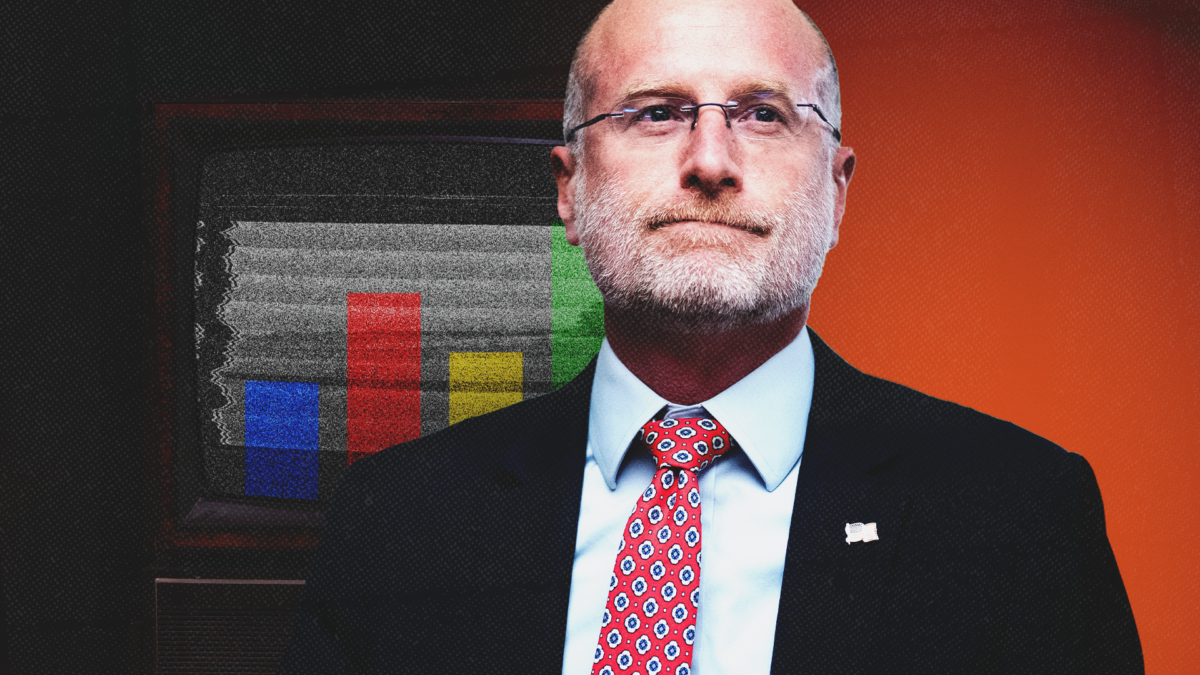
Specifically, the chairman of the Federal Communications Commission (FCC) threatened broadcasters who dare to report on polls the president doesn't approve of. Even if the complaint were valid, it would be difficult to enforce without violating the First Amendment.
"During this election season, there has been a significant surge in entirely Fake Polls and Suppression Polls designed to do nothing more than interfere with the regular functioning of the electoral process and alter the normal patterns of voter turnout and enthusiasm," FCC Chairman Brendan Carr wrote on X. "Many journalists and broadcasters have been amplifying or airing these Polls without regard to basic journalistic ethics and without informing the public that those Polls lack a scientific, accurate, or even real basis."
Carr is directly adopting Trump's terminology, in addition to his erratic capitalization: The president often uses the term suppression polls to describe surveys that don't reflect in his favor. The implication is that these polls are manufactured to conceal or downplay enthusiasm for Trump or his preferred candidates, making it less likely that his supporters will turn out if they think it's a lost cause.
Carr doesn't single out any offenders, though there are some likely examples. This week, purported pollster Wedgewood Polls revealed that as part of an "experimental project," it had released surveys with "fabricated numbers" that were printed by outlets like FiftyPlusOne (which sussed out the fraud) and The New York Times.
Similarly, in August, Median Strategies withdrew two polls, then revealed that it had fabricated the results for a "social experiment."
Each scenario is deplorable. And depending on what promises were made, it's possible one firm or the other could face legal consequences.
But it's hard to see how a news outlet could face legal reprisal for just reporting the results of a survey it thought was conducted accurately.
"The FCC takes these issues seriously," Carr added. "Broadcasters are prohibited by the terms of their federal licenses from engaging in News Distortion or promoting Broadcast Hoaxes. It is important that broadcasters comply with their public interest obligations."
There are indeed rules against news distortion and broadcast hoaxes, but they're narrowly tailored to avoid conflicting with the First Amendment.
"News distortion 'must involve a significant event and not merely a minor or incidental aspect of the news report,'" according to the FCC. In addition, "broadcasters are only subject to enforcement if it can be proven that they have deliberately distorted a factual news report. Expressions of opinion or errors stemming from mistakes are not actionable."
The hoax rule, on the other hand, is even less applicable: It involves "broadcasting false information concerning a crime or a catastrophe," where the broadcaster "knows this information is false" and can foreseeably "cause substantial public harm" but airs it anyway, and the broadcast then "does in fact directly cause substantial public harm."
In other words, neither standard applies to a broadcaster that covered an inaccurate poll, especially without knowing at the time that it was wrong.
"Pollsters who intentionally mislead the public should answer for it, but broadcasters who report publicly available polling data should never be punished when a poll is wrong," Anna Gomez, the lone Democratic FCC commissioner, wrote on X. "FCC rules on news distortion or hoaxes do not apply to a station that reports this data in good faith."
Carr doesn't specify what he thinks should happen to any offenders, though since he tends to define "public interest" as whatever Trump says, we can make an educated guess.
Right before the 2024 presidential election, The Des Moines Registerpublished a poll that found then–Vice President Kamala Harris leading Trump in Iowa by three percentage points. Trump ended up winning the state by 13 percentage points, but he was apparently so upset by the poll that he sued both the Register and pollster Ann Selzer, claiming the inaccurate survey constituted "brazen election interference" that violated the Iowa Consumer Fraud Act.
It was clear at the time that the lawsuit was completely meritless. Just as Carr suggested this week in his social media post, Trump was trying to create an exception to the First Amendment for "fake news."
"In the United States there is no such thing as a claim for 'fraudulent news,'" Robert Corn-Revere, chief counsel at the Foundation for Individual Rights and Expression, wrote in a motion on the defendants' behalf. "No court in any jurisdiction has ever held such a cause of action might be valid, and few plaintiffs have ever attempted to bring such outlandish claims."
A judge agreed and dismissed the lawsuit last month.
"If someone is accurately reporting the results of a poll, that wouldn't be a false statement," UCLA law professor Rick Hasen told The Washington Post at the time. "The poll might have errors in it, but that wouldn't be a false statement."
That's as true then as it is now. Unless he can somehow prove that a broadcaster knew a pollster had faked a survey, there's no way Carr can punish someone for reporting on the results without running afoul of the First Amendment.
"Brendan Carr is not the journalism police. And he is just about the least qualified person in the country to lecture the press about journalistic ethics," Seth Stern, chief of advocacy at the Freedom of the Press Foundation, said in an emailed statement. "News broadcasters have a First Amendment right to report polling data, even if it proves to be inaccurate, just like they have a First Amendment right to report on Carr and Trump's own countless lies and distortions, even when they turn out to be inaccurate. FCC policies about hoaxes and distortions must be applied narrowly to avoid clashing with the Constitution, if they can be constitutionally applied at all."
A national polling organization revealed on Tuesday that the vast majority of its data had been fabricated, saying it was an "experimental project to demonstrate the vulnerabilities" of the modern political polling industry.
The Conservatives have jumped three points in the latest poll following Kemi Badenoch's conference tax pledges, leapfrogging Reform and coming within a point of Labour as Burnham sees his lead slip by three points.

 Login