❌

Reading view

With or Without Netanyahu, Israel Will Want American Taxpayers To Keep Funding Its Wars

Benjamin Netanyahu and Gadi Eisenkot | ahav Studio/Avi Ohayon / Government Press Office of Israel/Gil Cohen-Magen/dpa/picture-alliance/Newscom/Les Cunliffe/Dreamstime

On Friday morning, with 99.5 percent of the votes tallied, the Israeli Central Elections Committee published a final version of the Knesset seat count. Israeli Prime Minister Benjamin Netanyahu's right-wing bloc secured the most seats in the country's parliament after Tuesday's election, though significantly fewer than in 2022. The bloc, according to The Times of Israel, will enter the Knesset with 53 seats, while the main opposition bloc led by Gadi Eisenkot will hold 48. With both groups failing to win the 61 seats needed for a majority, tricky negotiations between the nine Zionist parties and the two Arab-interest parties will be needed to form a governing coalition.

Regardless of who becomes Israel's prime minister, Americans can be confident about one thing: Israel's next leader will likely keep making war in the Middle East with American money and American bombs.

Under Netanyahu, who has served 19 nonconsecutive years as prime minister, Israel has been engaged in controversial and expansive wars across the Middle East. Throughout these wars, the U.S. has armed and funded Israel. Although Israel received aid throughout the Cold War, the U.S. increased its obligations starting in FY 1999 by regularly renewing 10-year funding commitments. Under the current agreement between the two countries, which went into effect in FY 2019, the United States pledged to provide $38 billion in military aid to Israel through FY 2028, subject to congressional appropriations.  

A large component of this aid—$33 billion pledged under the current agreement, according to the Congressional Research Service (CRS)—has come through Foreign Military Financing (FMF) grants. These allow partner countries to purchase American weapons, with the costs "reimbursed" by American tax dollars. Data from the Defense Security Cooperation Agency, which manages U.S. arms transfers, show that from FY 2020 to FY 2024, almost $13 billion—90.5 percent—of U.S.-to-Israel arms transfers were paid for by American-issued FMFs. Last year, the CRS found that "annual FMF grants to Israel represent approximately 14% of the overall Israeli defense budget." 

Earlier this month, Al Jazeera reported that since Hamas' October 7, 2023, attack on Israel, the United States has approved $33.16 billion in arms transfers to Israel, almost all of which were funded by FMF grants. 

Netanyahu has said he plans to wean Israel off a donor-recipient aid system, preferring joint defense collaboration. The U.S. and Israel already jointly develop some weapons, such as the David's Sling and Iron Dome missile defense systems, but, as The Washington Post reports, the U.S. funds most of these projects. A CRS report from earlier this year explains how difficult it would be for Israel to transition away from U.S. assistance: "With a fleet of fighter aircraft that is almost entirely American-made and a missile defense architecture which relies on U.S. assistance," the CRS writes, "Israel may remain dependent for quite some time on U.S. supply chains and, in times of military operations, direct defensive U.S. military support."

Should an Eisenkot-led coalition come to power in the coming government negotiations, the prospect of America sending less money to Israel is slim as well. Eisenkot has been clear that his government would expect U.S. financial support, telling BizPortal earlier this week that he would keep seeking the $3.8 billion in annual aid the U.S. currently provides. He's also praised "[U.S. President Donald] Trump's decision to strike Iran together with Israel," telling the New York Post it was "courageous." 

Should he become the next prime minister, conflict between Israel and Iran, or with any of Israel's neighbors, is unlikely to be resolved, which, as the CRS report above indicates, comes at the cost of American taxpayers.

With over $32 trillion in debt held by the public, the United States clearly needs to cut spending. Military aid to highly developed foreign nations like Israel is an obvious place to start. However, given America's long history of signing checks for the country, combined with Trump's unwavering support, taxpayers hoping for such relief shouldn't hold their breath.

The post With or Without Netanyahu, Israel Will Want American Taxpayers To Keep Funding Its Wars appeared first on Reason Magazine.


  •  

NYC Looks To Scale Up Mamdani's Office of Community Safety. Minneapolis Leaders Just Voted To End Theirs.

FreyMam | Weston Hancock/Sipa USA/Barry Williams/TNS/Newscom.

Another New York City Mayor Zohran Mamdani campaign promise could be closer to becoming reality. Remember the Department of Community Safety?  

As The New York Times reported last April, Mamdani originally envisioned that the department would "focus on expanding violence interrupter programs and mental health teams that respond to 911 calls." Mamdani initially proposed setting aside $1 billion a year for the agency. 

But that grand vision has not been fully implemented. In March, Mamdani signed an executive order to establish the Office of Community Safety (OCS) as a "first step" toward creating a Department of Community Safety. The OCS "develops citywide community safety strategies" and serves as an umbrella for other city offices, including the Office of Neighborhood Safety and the Office for the Prevention of Hate Crimes. Far from the billion-dollar price tag for a full-fledged department, the city's FY 2027 budget sets aside $40 million for the OCS. 

But some New York City councilmembers want a larger-scale "community safety" operation as Mamdani had originally envisioned. On Friday, city council members held a hearing on a bill to establish a Department of Community Safety. According to Gothamist, the bill's primary sponsor, Councilmember Lincoln Restler, has said that he has the support of 34 co-sponsors, enough for a veto-proof majority. Restler wants the department to coordinate homeless and mental health services, de-escalate emergency situations, and "expand violence interruption and public safety work done by nonprofit workers," reported the outlet. 

Just as New York City may be scaling up its community safety apparatus, another city voted to dismantle its community safety office this week. On Thursday, the Minneapolis City Council voted to eliminate the city's Office of Community Safety, which was created in 2022. 

According to KSTP 5, councilmembers argued that "the agency had not delivered results worth the cost," and some "said the office did not improve oversight of the Minneapolis Police Department."

A Minneapolis City audit from this year also found that the city's Neighborhood Safety Department (which is part of the city's OCS) failed to "properly oversee its contracts," reported FOX 9.  And according to an investigation by the outlet, one "prevention consultant billed over $270,000 for personnel, rent, and food, yet the city never produced a single receipt for the company." 

Minneapolis Mayor Jacob Frey opposed shuttering the office. He told MPR News that "those who are bringing this proposal both don't understand what it takes to run safety departments for a major city, nor do they have any plan for how these essential services should be delivered under their own proposal."

As MPR News noted, New York City's Office of Community Safety is different from Minneapolis's model. In Minneapolis, the office oversees the police, 911 emergency responders, and the fire department, along with neighborhood safety groups. In New York, the office does not oversee the police, 911 emergency services, or the fire department. Still, Frey tried to defend the Minneapolis Office of Community Safety by claiming its model has been "nationally recognized" in places like New York, reported MPR News. 

New York City's Office of Community Safety is still relatively new, and it may be difficult to judge its effectiveness. It's fair to question whether the answer to enhancing safety is more bureaucracy and government-supported nonprofits. If New York is to sink more taxpayer funding into turning the office into a department, it would be wise to study Minneapolis's apparent mismanagement and mistakes.

The post NYC Looks To Scale Up Mamdani's Office of Community Safety. Minneapolis Leaders Just Voted To End Theirs. appeared first on Reason Magazine.

  •  

Prepare for Decade of Pain, Warns IFS

Britain must prepare for a decade of pain as the country faces the worst decade for household income on record after John Healey’s "tinkering" Budget, the Institute for Fiscal Studies has warned.

The post Prepare for Decade of Pain, Warns IFS appeared first on The Daily Sceptic.

  •  

Gulf states must rethink trillion-dollar defence in light of US-Iran war, says report

IISS study questions overreliance on American support and ‘overdependence on expensive, high-end systems’

Gulf states are going to have to reconfigure their trillion-dollar defences given the damage inflicted on their economies and the questionable continued value of US bases in the face of Iranian attack, according to a study by the International Institute for Strategic Studies.

The report says that in the weeks before the 8 April ceasefire, 12 regional states, overwhelmingly in the Gulf, faced 4,670 Iranian one-way attack drones and more than 1,400 ballistic missiles. Nearly half were aimed at the United Arab Emirates. Although the vast majority were repelled, one estimate of the damage to energy infrastructure cited by the report is put as high as $58bn (£43bn).

Continue reading...

© Photograph: AFP/Getty Images

© Photograph: AFP/Getty Images

© Photograph: AFP/Getty Images

  •  

Andy Burnham admits he would have liked more radical first budget

Prime minister says room for manoeuvre was limited by geopolitical crises and Labour’s 2024 manifesto

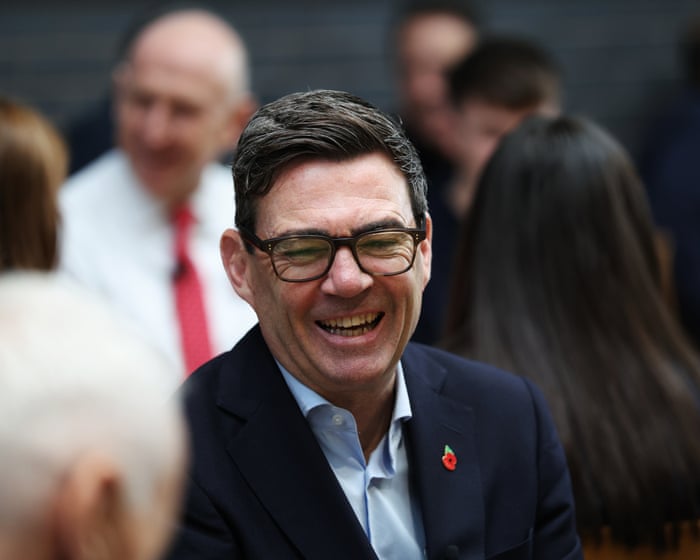
Andy Burnham has admitted his first budget as prime minister was not as radical as he would have liked because of the economic uncertainty facing the country.

He said he would have liked to have gone further with this week’s announcement – including with higher energy support payments – but felt hemmed in by external events such as the war in Iran, which has pushed up borrowing costs.

Continue reading...

© Photograph: Darren Staples/PA

© Photograph: Darren Staples/PA

© Photograph: Darren Staples/PA

  •  

UK side-hustle tax-free allowance to rise to £3,000 next year

Up to 1.4 million people could benefit from change to trading allowance announced in budget, with some saving hundreds in tax

The amount Britons can earn from a side hustle without paying tax will rise to £3,000 next year in a fillip for those who make extra cash from hobbies or reselling.

Up to 1.4 million people could benefit from the change announced in the budget, with the chancellor confirming the tax-free “trading” allowance will increase from £1,000 to £3,000 in April 2027.

Continue reading...

© Photograph: Photononstop/Alamy

© Photograph: Photononstop/Alamy

© Photograph: Photononstop/Alamy

  •  

Healey backs away from cutting welfare cost amid warnings of public finance shortfall

Experts round on chancellor over ‘scattergun’ budget, saying he ducked big tax and spending decisions

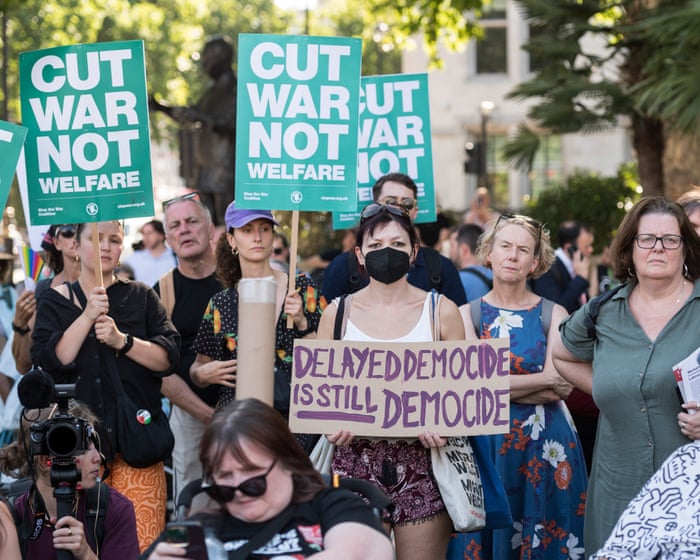
John Healey has backed away from cutting the cost of welfare this parliament, amid dire warnings his first budget could lead to brutal spending cuts because of a £28bn shortfall in public finances.

Experts rounded on Healey’s steady-as-she-goes budget on Thursday, with the Institute for Fiscal Studies saying he had left himself a mountain to climb by ducking big tax and spending decisions.

Continue reading...

© Photograph: Wiktor Szymanowicz/Future Publishing/Getty Images

© Photograph: Wiktor Szymanowicz/Future Publishing/Getty Images

© Photograph: Wiktor Szymanowicz/Future Publishing/Getty Images

  •  

Billionaires Have Already Paid Us Back. So Why Does California Want More?

A $100 bill | Gary Lewis/Dreamstime

No matter what happens in Tuesday's elections, support for wealth taxes keeps growing. Its justification is based on the idea that the very rich owe all of us something, and taxing their fortunes is collecting on that debt. We're told their success fuels inequality and that it's selfish of them to keep so much, especially if they don't proclaim that they want to do more for society.

Former International Monetary Fund chief economist Olivier Blanchard of France recently gave this narrative a clear voice. Writing on X, he wondered why California's wealthiest are spending so heavily to defeat Proposition 40, the supposed one-time 5 percent tax on the net worth of billionaires. Blanchard added that billionaires "typically have not indicated that they are building their wealth to eventually make the world a better place."

The entire notion misunderstands how fortunes are made. In a market economy, people don't build great wealth first and redeem it later through good works. They build it by making the world better first.

When I buy an $800 smartphone, it's because I value the phone more than whatever else I would have bought with the money. The seller values my $800 more than they do the phone. We both walk away richer by our own measure. Neither owes the other anything more.

Repeat this exchange a few hundred million times, and vast fortunes take shape for the people who create amazing technology so abundantly and affordably that we take it for granted. More importantly, though, people hand over every cent of it voluntarily.

As my colleague Arnold Kling aptly explained over the weekend, "Profits are earned within a positive-sum game for society. Profits induce firms to serve consumers and to innovate." The drive for wealth taxes relies on "the opposite point of view. It regards profits as something that businesses take from the rest of us, as if we can take innovation and efficiency for granted. [It] acts as if we are in a zero-sum environment in which one person's gain is necessarily another person's loss."

And, yes, the gains are divided more fairly than people think. Nobel laureate and Yale University economist William Nordhaus estimated that innovators in the U.S. business sector personally captured, on average, a mere 2.2 percent of the social surplus they created between 1948 and 2001. The other 97.8 percent went to everyone else in the form of lower prices, higher wages, better products and goods, and services that didn't previously exist.

In short, the world has already been compensated, many times over.

Those urging billionaires to acquiesce also err by blithely assuming that the state that grabs the money will use it well enough to "make the world a better place." The burden of proof is on them. California's government already spends roughly $350 billion a year. What will the extra few billion accomplish that the rest hasn't?

"Giving money and power to government is like giving whiskey and car keys to teenage boys," as journalist and satirist P.J. O'Rourke used to say. Maybe California's billionaires aren't eager to fund a Merced-to-Bakersfield rail line that the state prices around $35 billion and its inspector general puts closer to $48 billion. Perhaps they're hesitant to backfill pension funds like the California Public Employees' Retirement System, whose staff concedes is unlikely to hit an assumed 6.8 percent return without leaning on private equity.

Prop 40's revenue is earmarked for health care, but money is fungible. In the end, California has one budget. Every earmarked dollar frees another for something else. Some billionaires might simply have concluded that their philanthropy does more good elsewhere, or that their dollars are more beneficial when invested in private enterprises.

The tax also doubles down on California's worst habit: spend, spend, spend, and then tax, tax, tax. The money is never enough to cover all the spending. A one-time levy spent over five years doesn't fix that. It funds new commitments with temporary money. Some will want to make the tax permanent, which its intellectual architects clearly prefer and may have made possible. And yet that still won't be enough.

That's the commitment problem that Blanchard admits California can't solve. Billionaires are wise to distrust the "one-time" promise.

What worries me most is the moral framework. When a society convinces itself that the people making life better and less costly are the problem, we eventually stop getting those people.

Contrary to Blanchard's naive belief, billionaires aren't lacking in public spirit. Even if we ignore their often massive charitable giving, we can't forget that the market already collected their contribution and handed a large share of it to the rest of us. We should stop demanding they apologize for the other two cents.

COPYRIGHT 2026 CREATORS.COM

The post Billionaires Have Already Paid Us Back. So Why Does California Want More? appeared first on Reason Magazine.

  •  

Healey’s budget paves way for ‘brutal’ spending review next year, warns IFS

Thinktank says chancellor has given himself a mountain to climb after ducking big decisions in low-key speech

John Healey has paved the way for a “brutal” spending review next year after his budget failed to cover a £28bn shortfall in the public finances needed to avoid a return to austerity, according to Britain’s leading tax and spending experts.

A day after his address to the Commons, the Institute for Fiscal Studies (IFS) said the chancellor had left himself a mountain to climb by ducking several big decisions in his debut tax and spending statement.

Continue reading...

© Photograph: WPA/Getty Images

© Photograph: WPA/Getty Images

© Photograph: WPA/Getty Images

  •  

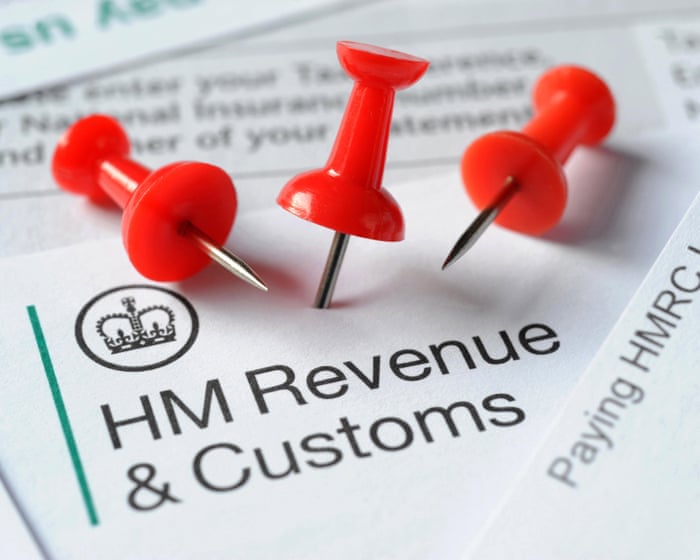
HMRC puts 200 billionaires on UK tax crackdown hitlist

‘Compliance managers’ to have discussions with authority’s wealthiest customers in aim to raise tax revenues

The UK’s tax authority is assigning dedicated “customer compliance managers” to more than 200 billionaires as part of a crackdown meant to raise £500m for the public purse.

HM Revenue and Customs (HMRC) said it had for the first time compiled a list of billionaires who are required to pay tax in the UK, regardless of whether they formally live in the country, to tackle a “wealthy tax gap” caused by those who do not pay what they ought.

Continue reading...

© Photograph: Rosemary Roberts/Alamy

© Photograph: Rosemary Roberts/Alamy

© Photograph: Rosemary Roberts/Alamy

  •  

John Healey faces questions over budget leak that moved bank share prices

Treasury select committee asks FCA to investigate whether tax surcharge leak led to ‘improper release of inside information’

John Healey is facing pressure to clarify whether he permitted a market-sensitive budget leak ahead of his statement, which moved bank share prices.

The chair of the influential Commons Treasury select committe, Meg Hillier, has written to the Treasury and the Financial Conduct Authority watchdog (FCA) to assess whether a story leaked to Bloomberg, and published more than an hour before the budget was revealed, led to an “improper release of inside information”.

Continue reading...

© Photograph: House of Commons/Reuters

© Photograph: House of Commons/Reuters

© Photograph: House of Commons/Reuters

  •  

Lloyds executive criticises Healey for linking bank tax rises to energy bill support

Chief financial officer says he hopes budget measure is temporary as sector provides loans that fuel growth

A senior Lloyds Banking Group executive has criticised the chancellor for linking bank tax increases to energy bill support for UK households, as he warned the government against extending the higher levy beyond March 2028.

Lloyds’s chief financial officer, William Chalmers, acknowledged that the economic environment was “challenging” but said the government should not seek to ease pressure on households at the expense of the banking sector as it provides loans that could fuel UK growth.

Continue reading...

© Photograph: Nathan Stirk/Getty Images

© Photograph: Nathan Stirk/Getty Images

© Photograph: Nathan Stirk/Getty Images

  •  

‘Scattergun’ budget will still leave Britons facing higher energy bills, says thinktank

Healey’s attempt to provide ‘breathing space’ gives rich almost as much as poor, says Resolution Foundation

John Healey delivered a “scattergun” budget that did little to boost living standards and left Britain facing “a painful second half” of the parliament, a leading economic thinktank has warned.

The Resolution Foundation said on Thursday that measures to ease household gas and electricity costs would still leave energy bills higher this year than during the last energy shock.

Continue reading...

© Photograph: RichSTOCK/Alamy

© Photograph: RichSTOCK/Alamy

© Photograph: RichSTOCK/Alamy

  •  

Healey vows to cut welfare bill before next election with ‘tough’ approach to young people

Chancellor’s comments come as fiscal watchdog says disability benefits will cost £100bn a year before end of decade

John Healey had said there will be a reduction in the welfare bill before the next election, with a “tough” approach to young people who do not accept support to get a job or training.

The chancellor was repeatedly pressed on the issue in broadcast interviews after documents from the Office for Budget Responsibility suggested sickness and disability benefits would cost £100bn a year before the end of the decade.

Continue reading...

© Photograph: Bloomberg/Getty Images

© Photograph: Bloomberg/Getty Images

© Photograph: Bloomberg/Getty Images

  •  

Meloni’s €26 Billion Budget Tests Italy’s Fiscal Discipline as Election Approaches

Italy’s government has approved a new budget combining tax reductions, household support and defence spending with higher contributions from banks and energy companies. With public debt approaching 140 per cent of GDP, Rome faces difficult decisions over the cost of its political and economic commitments.

Italian Prime Minister Giorgia Meloni’s government approved a €26 billion budget package on Wednesday, 28 October, seeking to ease pressure on households and businesses while maintaining the fiscal credibility of one of Europe’s most heavily indebted economies.

The measures, agreed by the cabinet ahead of next year’s general election, include changes to personal income taxation, support for younger workers and families, and the extension of existing relief programmes.

The government intends to finance part of the package through additional contributions from banks, insurance companies and energy businesses.

However, the budget also exposes the limits of Italy’s financial flexibility as Rome attempts to accommodate higher defence expenditure and energy-security requirements within the European Union’s fiscal framework.

The immediate political challenge is to demonstrate that tax reductions and spending commitments can coexist with efforts to contain public debt.

Banks and energy companies face additional demands

According to Reuters’ report on the cabinet decision, Meloni confirmed that approximately €5 billion would come from banks and insurance companies, while energy companies would contribute a further €700 million.

The measures form an important part of the government’s funding strategy.

Italy’s banking sector has benefited from the period of higher European interest rates, although profitability varies between institutions and has been affected by changing monetary conditions.

The government argues that companies with relatively stronger financial positions should contribute more during a period of economic difficulty.

Meloni said the budget was not directed against any particular sector, while acknowledging that an agreement with financial institutions had not been reached before its adoption.

The financial package also includes an increase in Italy’s financial transaction tax, commonly referred to as the Tobin tax.

Such measures provide the Treasury with additional resources without requiring broad increases in personal income taxation.

Nevertheless, their implications extend beyond immediate revenue collection.

Additional taxation of financial institutions can influence investment decisions, lending conditions and the sector’s willingness to finance domestic economic activity.

The extent of those effects will depend on the final provisions adopted by parliament.

Tax reductions target households and younger workers

A central element of the budget concerns Italy’s personal income tax system.

Meloni announced that the upper threshold of the second income-tax bracket would rise to €55,000 a year, extending preferential treatment to a wider group of taxpayers.

The government estimates that some taxpayers could save approximately €500 annually.

The package also includes employment-related incentives directed towards younger workers, alongside measures to support households and pensioners.

Another politically significant decision concerns vehicle taxation.

Meloni confirmed that an exemption for cars with engines rated up to 80 kilowatts and for motorcycles would become permanent.

According to the government’s estimates, approximately 70 per cent of vehicles currently in use would qualify.

These measures are intended to protect disposable income and encourage economic activity.

However, their overall economic impact will depend on the distribution of benefits, consumer confidence and whether households choose to spend or save the additional income.

Public debt remains the central constraint

Italy’s budget cannot be assessed independently of its debt position.

According to the Bank of Italy’s October economic bulletin, the government expects its public deficit to reach 2.9 per cent of GDP in 2026 before increasing to 3.4 per cent in 2027.

Public debt is projected to reach approximately 138.5 per cent of GDP next year.

Those figures leave Italy particularly exposed to changes in borrowing costs.

Higher yields on government bonds increase the cost of refinancing debt and reduce the resources available for other priorities.

The economic environment offers limited assistance.

The European Commission’s May forecast projected growth of just 0.5 per cent in 2026 and 0.6 per cent in 2027.

Although those figures predate the latest budget, they illustrate the underlying weakness of economic expansion.

Without stronger productivity growth and investment, reducing Italy’s debt burden remains difficult even when the government exercises spending restraint.

Defence spending complicates European fiscal rules

The increase in Italy’s projected deficit is partly connected to the use of flexibility available under the EU’s fiscal governance framework.

Rome has invoked the national escape clause to accommodate additional expenditure associated with defence and energy security.

This mechanism allows certain temporary deviations from agreed spending paths under specified conditions.

It does not, however, eliminate the government’s obligation to manage its finances or establish unlimited borrowing capacity.

Italy’s approach reflects a wider European problem.

Governments are being asked to strengthen military capabilities, protect energy supplies and maintain economic competitiveness while continuing to comply with fiscal constraints.

For highly indebted countries, the combination is particularly difficult.

The consequences could become more pronounced if financial markets demand higher returns on government debt.

Parliament faces the final decision

Cabinet approval marks the beginning of the budget’s final legislative phase rather than the completion of the process.

Parliament must consider the measures before they can enter into force.

Negotiations may still alter individual tax provisions, spending commitments and the distribution of financial contributions.

The budget also comes at a politically sensitive moment, with Meloni’s governing coalition approaching the next general election.

Its partners have previously disagreed over taxation, pensions and the appropriate distribution of public resources.

The final legislation will therefore provide an indication of the coalition’s ability to reconcile electoral priorities with economic constraints.

For Brussels, the question is whether Italy can preserve confidence in its public finances while using European fiscal flexibility to fund additional security expenditure.

For Rome, it is whether the immediate relief promised to households and businesses can be maintained without placing further pressure on borrowing costs.

Both questions will remain central to Italy’s economic outlook in 2027.

  •  

Britain’s New Budget Exposes the Economic Cost of War and the Limits of Fiscal Flexibility

Chancellor John Healey has unveiled emergency household support, higher taxes on banks and new defence commitments as the Middle East conflict puts renewed pressure on Britain’s economy. Behind the immediate relief measures lies a difficult calculation over growth, public spending and national security.

Britain’s government has attempted to reconcile rising energy prices, constrained public finances and growing defence obligations in a Budget that illustrates how international conflicts are reshaping domestic economic policy.

Presenting his first Budget on 28 October, Chancellor of the Exchequer John Healey announced a £100 energy payment for millions of households, an extension of electricity VAT relief and additional measures intended to support businesses facing rising operating costs.

The package comes as Prime Minister Andy Burnham’s administration confronts the economic consequences of the conflict in the Middle East, alongside continuing financial commitments arising from Russia’s war against Ukraine.

The central difficulty is that Britain must simultaneously protect household purchasing power, support economic growth and finance a more expensive security environment, without allowing government borrowing to expand beyond its fiscal targets.

Energy prices dictate economic policy

The most immediate measures concern energy.

Under the Treasury’s Budget proposals, up to 20 million households in England occupying properties in Council Tax bands A to D will receive a £100 payment from January 2027.

The government has allocated £2.6 billion for the programme, including corresponding funding arrangements for the devolved administrations.

The temporary reduction in VAT on domestic electricity will also remain in place until July 2027, a measure expected to reduce the annual Ofgem price cap by approximately £50 in April.

Meanwhile, the Chancellor announced plans to remove standing charges from domestic gas bills, transferring fixed costs into consumption-based charges.

Although the government estimates that the change could benefit a majority of households, its distributional effects will depend on individual consumption. Lower gas users may benefit differently from households with substantial heating requirements.

The measures demonstrate how energy prices have become a direct constraint on fiscal policymaking.

Britain’s exposure to internationally traded gas means that disruptions originating outside Europe can quickly influence domestic prices, regardless of the source of individual energy supplies.

Banks and businesses face different treatment

Rather than introduce broad increases in personal taxation, the government has chosen targeted revenue measures.

The Bank Corporation Tax Surcharge will temporarily increase from 3 to 6 per cent between January 2027 and March 2028, helping finance household energy support.

The government has also announced changes to gambling taxation intended to fund assistance for smaller businesses in retail, hospitality and leisure.

Fuel duty will remain frozen until July 2027, extending a policy intended to limit motoring and transport costs.

These decisions reflect competing pressures.

Households and smaller businesses require relief from higher costs, while the Treasury must demonstrate that its spending commitments remain consistent with fiscal discipline.
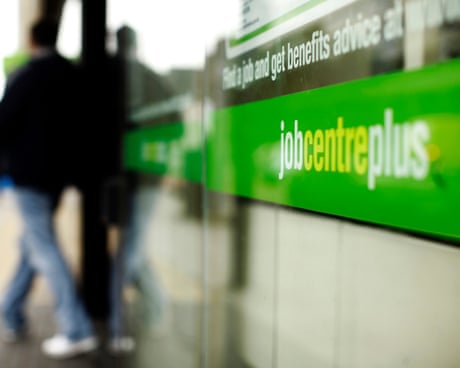
The distribution of the tax burden is therefore becoming an important political question, particularly when the government is simultaneously seeking private investment to stimulate growth.

Growth forecasts reveal limited room for manoeuvre

The latest forecasts from the Office for Budget Responsibility offer little prospect of rapid economic expansion.

According to figures published alongside the Budget, British GDP is expected to grow by 1.2 per cent in 2026 and just 1 per cent in 2027.

Inflation is forecast to peak at 3.8 per cent in the first quarter of 2027 before gradually returning towards the Bank of England’s 2 per cent target.

The Chancellor’s fiscal headroom — the margin available before the government’s borrowing rules would be breached — has narrowed to approximately £15 billion in 2029–30.

This creates an unusually difficult environment for policymaking.

Further economic disruption could reduce tax receipts or increase spending demands, leaving the Treasury with limited capacity to respond without revising its plans.

Defence spending enters the fiscal equation

The Budget also places national security increasingly within the government’s wider industrial strategy.

Britain remains committed to reaching defence spending equivalent to 3.5 per cent of GDP by 2035, with an interim target of 3 per cent in 2030.

The government has announced plans for the National Wealth Fund and British Business Bank to deploy up to £5 billion over four years into defence, dual-use technologies and other sectors supporting national security.

It has also committed an additional £500 million to support Ukrainian air defences during the coming winter.

These measures extend beyond immediate military procurement.

They seek to strengthen domestic industrial capacity, encourage private investment and establish supply chains capable of sustaining higher defence expenditure.
However, the precise financing arrangements for Britain’s longer-term NATO commitments are to be determined at the next spending review.

A European problem without a common fiscal solution

Britain’s predicament closely resembles that confronting European Union governments.

Across Europe, policymakers are attempting to finance defence modernisation and energy security while maintaining social expenditure and industrial competitiveness.

The difference lies partly in the institutional frameworks within which those decisions are made.

EU governments operate under European fiscal rules, while Britain sets its own borrowing and debt targets. Nevertheless, all face the same underlying pressures from energy markets, interest rates and international security commitments.

For British businesses trading with the European Union, the effects of energy costs and industrial investment policies on either side of the Channel will remain particularly significant.

The October Budget consequently represents more than an exercise in temporary household assistance.

It exposes the difficulty of sustaining public services, improving competitiveness and responding to geopolitical instability when economic growth is modest and available fiscal resources are limited.

Whether the measures provide lasting relief will depend less on the immediate payments announced by the Chancellor than on the course of energy prices, inflation and economic growth over the coming year.

  •  

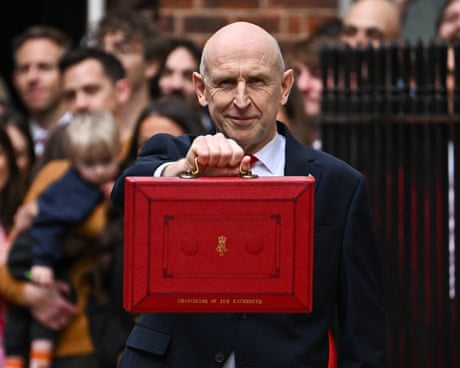
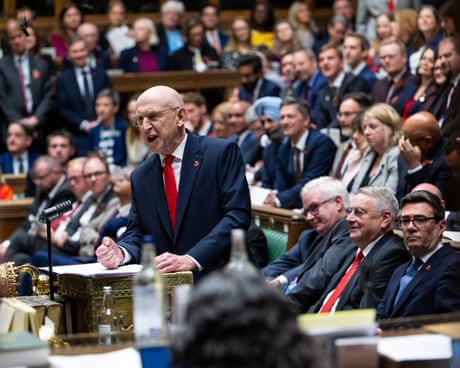
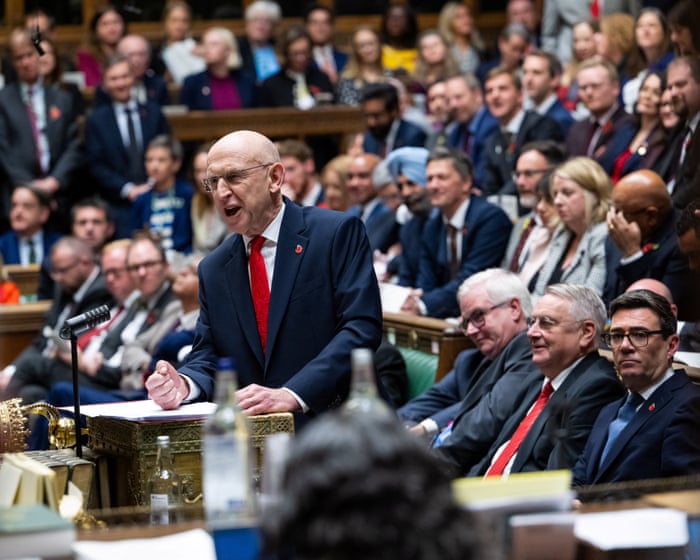
Budget 2026: Healey hikes taxes on banks and landlords to fund £100 handouts to 20m households

Few surprises as chancellor uses low-key speech blaming ‘global economic storms’ for stoking energy prices and cost of living crisis

John Healey raised taxes on banks and landlords to fund a £100 winter handout for 20 million families as official forecasts made clear there is no end in sight for the cost of living crisis.

In his first budget, the chancellor blamed “global economic storms” for the grim outlook, as the war in Iran drives up oil and gas prices.

Continue reading...

© Photograph: House of Commons/AFP/Getty Images

© Photograph: House of Commons/AFP/Getty Images

© Photograph: House of Commons/AFP/Getty Images

  •  

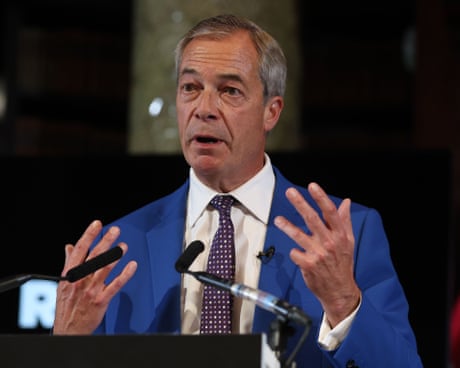
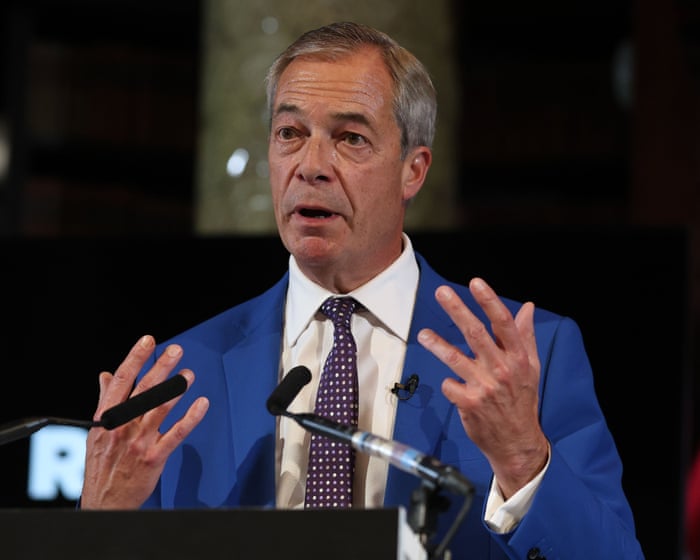
Nigel Farage skips budget in Commons over seating ‘altercation’ concerns

Reform UK leader ‘shocked’ by £10bn pledged to Ukraine and doubles down on cutting tax for crypto investors

Nigel Farage skipped the chancellor’s first budget because he was worried he would get in a “physical altercation” with another MP in a row over seating arrangements.

The Reform UK leader was not present in the House of Commons but gave a press conference afterwards in which he said he was “shocked” by the £10bn going to support Ukraine and doubled down on his party’s policies on cutting tax for crypto investors.

Continue reading...

© Photograph: Zeynep Demir Aslim/ZUMA Press Wire/Shutterstock

© Photograph: Zeynep Demir Aslim/ZUMA Press Wire/Shutterstock

© Photograph: Zeynep Demir Aslim/ZUMA Press Wire/Shutterstock

  •  
❌