In its heyday, Route 66 was a road of opportunities and dreams. Today, it’s a highway of ghosts, a symbol of what once was, although it still attracts visitors. For Current Affairs, Jesse Wright reflects on America’s historic highway in a time of artificial intelligence, when so much land across the country is being bought up, repurposed, and turned into data centers. Wright, who traveled the road from Chicago to Santa Monica, asks: What will these massive centers leave behind?
But what is new, perhaps, is the utter absence of even having been at all. The data centers’ legacy will be nothing. Their absence will be complete. Computer hallucinations leave no room for the dreams of humans. In 100 years, there will be nothing. Nobody will want to spend their vacation touring endless rooms full of rusty server racks.
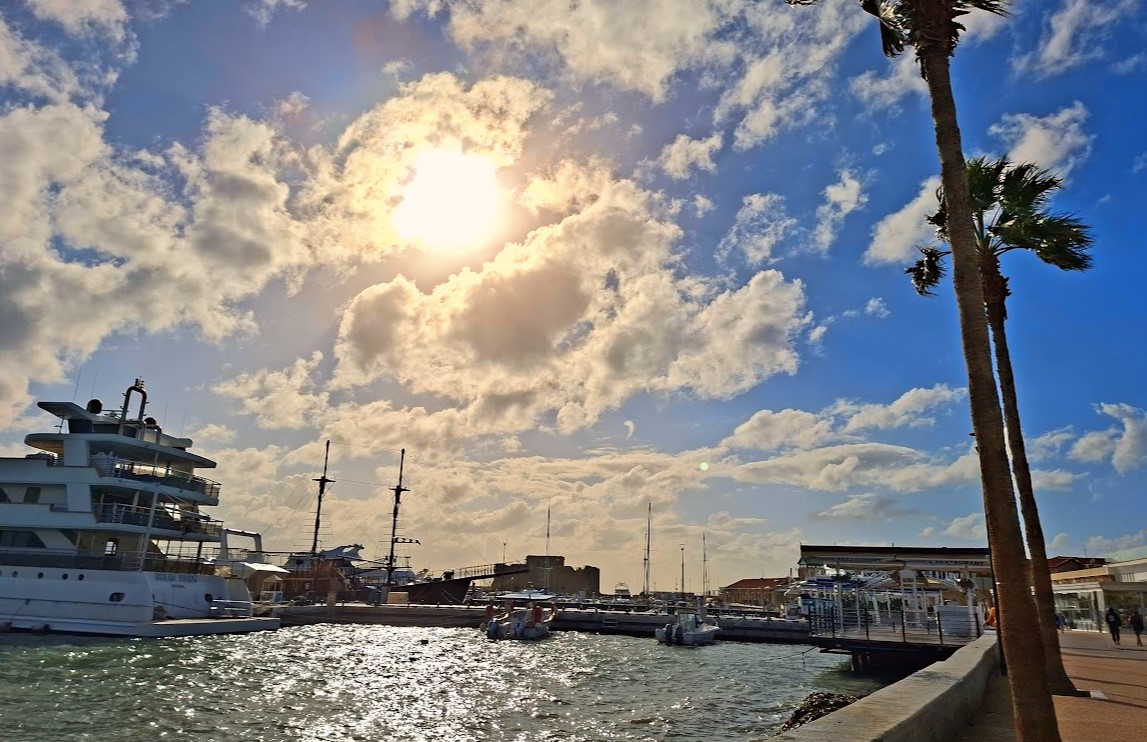
Cyprus may have won over Lonely Planet with its winter sunshine, but the cost of enjoying it tells a rather less flattering story, with Paphos proving considerably more expensive than several rival Mediterranean destinations.
The island has been named one of Europe’s ten best winter-sun escapes by the international travel publication, just as separate research by Britain’s Post Office Travel Money puts Paphos 14th among 24 destinations worldwide for value.
And while Cyprus may not be winning the battle on price, it has been collecting some impressive international endorsements of its own, from American travel writers to European tourism rankings.
In its latest guide, released earlier this week, Lonely Planet describes Cyprus as ‘Best for the warmest Mediterranean winter’, placing it fifth among ten recommended European destinations.
Travel writer Emma Sparks draws attention to the island’s mild weather, archaeological treasures and contrasting landscapes, from the flamingos at Larnaca Salt Lake to the snow-covered Troodos mountains.
It is welcome international exposure, particularly for a country looking to attract visitors beyond the traditional summer holiday season.
The financial comparison, though, is less encouraging.
According to the Post Office’s winter-sun research, a standard basket of eight holiday purchases costs £98.02 in Paphos, against £87.46 in Tenerife and £82.35 in Portugal’s Algarve.
That makes Paphos around 12 per cent more expensive than Tenerife and 19 per cent dearer than the Algarve, while Spain’s Costa del Sol comes in at £83.58 and Lanzarote at £93.82.
Malta’s Sliema and Rhodes also offer slightly lower prices, at £96.36 and £97.75 respectively. Of the eight European resorts surveyed, only Funchal in Madeira is more expensive, at £129.63.
The research, released in September and subsequently reported by international publications including Time Out, examines everyday holiday purchases, including drinks, suncream, insect repellent and a three-course evening meal for two with wine.
Flights, accommodation and transport are excluded, so the findings do not represent the total cost of a holiday. They do, however, offer a useful comparison of what visitors can expect to spend once they arrive.
A separate 2026 Family Holiday Report, produced by the Post Office with TUI, paints a similar picture, putting a basket of family holiday purchases at £177.18 in Paphos, compared with £158.31 in Tenerife and £139.65 in the Algarve.
Although the two surveys cover different periods and shopping baskets, both show Cyprus facing stiff competition from established European holiday destinations.
But price is not the only measure of a destination’s appeal, and Cyprus has some impressive figures in its favour.
According to the European Environment Agency’s latest bathing water assessment, published in June, Cyprus came first among European countries for the proportion of bathing sites rated excellent, with all 123 monitored locations meeting the highest classification for the 2025 season.
That compares with an EU average of 84.8 per cent, while Greece recorded 97.1 per cent, Spain 86.6 per cent and Portugal 82 per cent.
The results are based on European standards for microbiological bathing water quality, rather than a broader assessment of environmental conditions. Nevertheless, they give Cyprus a measurable advantage in an area that matters to holidaymakers.
And the island’s appeal is attracting attention well beyond Europe.
In June, American magazine Travel + Leisure, which had already included Cyprus among its 50 best places to visit in 2026, published a feature by travel writer Joe Baur exploring a side of the country that many international visitors rarely see.
Rather than concentrating on its beaches, Baur took readers along the island’s 347-mile E4 hiking trail, through the Akamas peninsula and into communities where traditional crafts, food production and local history are becoming part of the visitor experience.
The feature described Cyprus as something of an undiscovered destination for American travellers, drawing attention to opportunities for outdoor tourism and experiences beyond the established resorts.
For local businesses, this kind of international coverage has particular value. Walking holidays, cultural excursions and visits to rural communities create potential customers for guides, restaurants, producers and other smaller enterprises that may otherwise see little of the spending generated by mass tourism.
The interest has not stopped there. Earlier this month, National Geographic Traveller published an extensive feature by Orla Thomas on the Troodos mountains, examining the region’s wineries, walking routes, traditional villages and local crafts.
The article presented the mountains as a destination in their own right, offering an alternative to the island’s better-known coastal attractions.
It is another example of international travel coverage giving attention to parts of the Cypriot economy that have traditionally received far less exposure than the main holiday resorts.
Meanwhile, Nicosia has also earned a place in the international travel conversation.
The capital was named Europe’s top cultural destination for 2026 by the European Best Destinations platform, finishing ahead of Florence and Vienna in an assessment combining expert evaluations with traveller ratings.
The recognition was reported by Euronews, which also highlighted Nicosia’s position as an emerging city-break destination.
In a separate European Best Destinations ranking released in February, Nicosia took second place overall, behind Madrid.
These are tourism-platform rankings rather than official European Union awards, but they offer further evidence that international interest in Cyprus extends well beyond the familiar promise of a summer holiday.
For the country’s tourism businesses, the distinction matters.
Higher prices do not necessarily mean poor value. Travellers may be prepared to spend more for better service, distinctive experiences or a destination offering something they cannot easily find elsewhere. And although international recognition does not guarantee additional bookings, it gives Cyprus another selling point in a crowded market.
There is also a wider economic opportunity in attracting visitors whose spending reaches beyond accommodation and beachside businesses, supporting local food producers, cultural attractions, specialist guides and enterprises in the island’s towns and villages.
The challenge is turning that international interest into genuine commercial returns, rather than simply adding another award or favourable review to the destination’s promotional material. With competition for holiday spending remaining intense, Cyprus needs to make a convincing case for what visitors get in return for their money.
Longreads has published hundreds of original stories—personal essays, reported features, reading lists, and more—and more than 14,000 editor’s picks. And they’re all funded by readers like you. Become a member today.
Aube Rey Lescure | Longreads | October 29, 2026 | 5,562 words (20 minutes)
When my father proposes a road trip to admire fall foliage along the Yalu River, the natural border separating parts of northeastern China from North Korea, I am skeptical for several reasons. First, it appears his inspiration comes largely from Douyin, the Chinese TikTok, which has been feeding him videos of regional autumnal splendor, with hypersaturated reds that carry more than a whiff of artificial enhancement.
Secondly, I don’t know how to drive, and neither, really, does my father. He would dispute this, as he did earn a driver’s license recently from a shoddy driving school in Dandong, a border town on the Yalu and our ancestral bastion. He’s already bought a brand new car, a Chinese domestic bestseller, for the bargain price of eight thousand US dollars. In the days since owning it, he’d only gotten into one accident (ramming into a neighbor’s parked car, as captured on the compound CCTV).
Thirdly, our visit to northeastern China (my father lives in Shanghai) is largely for the purpose of seeing my grandmother, who is minded by Sanshu, my youngest uncle, and I’m fairly sure neither has heard of a fall foliage road trip in their lifetimes. Furthermore, my grandmother is allergic to most forms of financial expenditure. At home, she plugs the bathtub and gathers water from a faucet dripping at a volume feeble enough to go undetected by the water meter. With that reservoir and a plastic bucket, she flushes the toilet and fools the utility company. Imagine how she will feel about gas money.
Fourthly, at the time he raises this idea, my father is recovering from cancer, one month post-op from the removal of a malignant tumor in his colon. He did not tell me until after the operation.
“We’ll just drive very slowly,” he says.
Weeks before my visit to China, my father had called me from a hospital bed to let me know about the cancer. This was our first phone call in years—usually, our exchanges are constrained to happy birthdays on WeChat or confirming the travel logistics of my infrequent visits. After I arrive in Shanghai, despite his efforts at dissuasion, I accompany him to the Fudan University Cancer Center for a follow-up appointment. The cancer is diagnosed, retroactively, as stage II. The doctor recommends preventive chemotherapy to deter recurrence. My father says no. The doctor recommends chemo pills. My father says no again.
When the doctor notices my increasingly discomfited expression and asks, “Who’s this?” my father says, “This is my niece.”
“It’s too complicated otherwise,” he tells me afterward. I am half-white; he is Chinese. I want to retort that it’s not complicated; I am his daughter. But I bite my tongue.
Since my teenage years, after my parents divorced, a distance had wedged itself between my father and me, further exacerbated by my move to the US at 16 years old. You might say we are estranged. Once or twice in the past decade, he’s given me a stiff hug, but mostly he greets me with a quick wave at airport arrivals, then hurries off to find a taxi. At his home in Shanghai, I dine and go on outings with my stepmother and sister while he sits out most communal activities. We barely make eye contact, him perpetually positioned in front of his computer screen, watching political commentary videos, me mumbling a greeting as I skulk by. The road trip proposition is, for all these reasons and more, preposterous. The two of us, in a car for days, physically proximate despite the emotional Mariana Trench between us? Maybe that’s why the idea also feels strangely enticing.
I am half-white; he is Chinese. I want to retort that it’s not complicated; I am his daughter. But I bite my tongue.
When he feels recovered enough, though his stomach is still bandaged, my father and I fly north to Dalian. Nainai, my 81-year-old grandmother, is unaware of my father’s illness. She knows he’d been hospitalized, but he paid a copy shop man to photoshop a report saying he had a stomach infection, not cancer. (The copy shop is located right outside the hospital, and business is booming.) The first evening we arrive at the apartment my grandmother shares with Sanshu, Nainai cooks a feast of homemade fennel dumplings and pork trotters. This is a special occasion: Usually, she spends her days holed up in her apartment, watching reels of web soaps and fake news on her phone at high volume while Sanshu shuts himself in his room. Her ideal granddaughterly visit would be me sitting next to her at home, force-fed like a foie gras goose during intermissions from the reel-viewing.
This can be arranged on the road as well, and my father, as eldest son, has his sway: To take his family on a car trip, or “self-driving tourism” as it’s known on the Chinese internet, is the new pinnacle of the Chinese dream. For a family that once subsisted on meal tickets, whose children collected metal to sell at a scrapyard, car ownership still feels like a fantasy. “Don’t you want to see me practice my driving, Ma?” he asks Nainai, and this seems to erode her defenses. Sanshu listens with quiet eagerness. His days as Nainai’s caretaker are monotone in this seaside city, and like my father, he spends most days on the internet, his only portal to a larger world. Now, here was a chance to drive through it ourselves. Finally, Nainai sighs and agrees. “But we have all this food at home,” she adds with petulance.
On the train trip to Dandong, where the car is to be retrieved (from the compound, scene of the accident), we carry plastic bags of grapes, cabbage, steamed taro, sweet potatoes, and corn. The pork trotters are in there somewhere. The train travels north, making stops at rural towns in the waning light of dusk. The land is mostly flat, low hills hazy in the distance. The moon rises in the pale blue sky and the wind turbines are still; herons graze the glassy surface of a low-lying river.
At the train station in Dandong, my father announces he has “booked a leg of lamb.” It turns out he spent the entire three-hour train ride on Douyin, where he learned that a Mongolian restaurant’s leg of lamb had gone viral. He tried ordering it for takeout, but it has to be spit-roasted at the table. He announces our dinner plans to Sanshu and Nainai. “But what about all the food we have with us?” Nainai says, pointing to all the plastic bags. “Why spend money?”
“We’ll eat those later!” My dad commandeers a cab by the roadside as we exit. I can see he wants to start the trip on a high note, with a proper feast. I remember the childhood vacations when he sat pale as a restaurant bill arrived. Once, on Hainan Island for Chinese New Year, we ate instant ramen in the hotel room to save money. This is different. He is trying.
The Mongolian restaurant is in the city center, dingy and depressing. The tables around us fill up: each with a crate of beers next to it and an ashtray for the chain-smokers. I order some er’guotou for $2. The liquor tastes like synthetic ethanol, but goes down well with the roast lamb, which is succulent. I also order a cold salad of jellyfish and cucumber strands in vinegar, as well as Korean cold noodles in a kimchi-gochujang broth. This is a true borderland meal. Nainai sits with arms crossed across from me, refusing to eat a single morsel of lamb. “We’ve got food to eat at home,” she repeats.
Ignoring her hunger strike, my dad announces the plans for tomorrow: We will drive to Donggang, a nearby city, where Nainai will obtain some medicine she’s entitled to from her health insurance. This was, it is revealed, her primary motivation for agreeing to this trip.
After dinner, I hail a taxi, shamefully, to go to a hotel. I tried to convince Nainai to spend the night at the hotel with me, as I’ve booked myself a “superior riverside room.” I feel guilty for acting like I’m too good to stay at the housing project with the rest of my family. The apartment is small, with a single bathroom. There are not enough beds, I say, a wan excuse. “I’m not going to a hotel,” Nainai says. “And you could sleep in a bed with me.”
“Let her go,” my dad says. “She wants to see North Korea.” I am grateful for this diplomatic intervention. On the riverside avenue in Dandong, many hotels, including mine, are high-rises, which offer views across the border to North Korea. (On a review page for my hotel, someone asked: Do the rooms come equipped with binoculars?Sadly, they don’t, was the answer.)
After failing to convince me to take pears and boiled peanuts, my grandma shoves a mooncake my way before I close the cab door. The car drives along the riverside boulevard and its nighttime plaza dance. This is also an area of nightclubs, rent-by-the-hour karaoke, and entertainment centers. Hotels that double as banquet halls. The agricultural bank runs an LED message against border-zone money laundering.
Furuide, my hotel, is past this seedy stretch. When I walk in with my disintegrating REI backpack and tote bag (containing a plastic bag of Korean noodles doused in lamb soup, and the er’guotou), the reception staff eye me with suspicion. I show them my booking number. Since I’d reserved the superior riverview room, it turns out I’m on the top “executive” floor. They dutifully note my visa number, take a picture of the border entry stamp on my American passport, none of it casual. In my room, I find a free unrefrigerated peach yogurt, a little tub of cookies, and four bottles of water.
Someone sets off fireworks outside the window. And there it is, North Korea, across the bank. I can see deep into its dim night from the height of my 28th-floor room. As I stand by the window, I feel bewildered. It is perverse, this voyeurism into the pariah state, and yet I cannot help but look.
Instant coffee, powdered creamer, dense fog outside. I take a deep breath, put on my sneakers, and go down for a morning run along the river. The wind is fierce, and my Spotify running EDM playlist feels wrong—the soundtrack of American college parties. The North Korean shore has been built up tremendously in the six years since I was last here. A curious massive round tower, shaped like a rising moon, dominates the skyline. There are many new white towers nearby: modern condominiums. A lot of them are purportedly just for show, built for the Chinese to see, ghost towers with no lights at night. They call Kim Jong-un “Kim Three Fat” here, and word is that this year he’s come into some fortune shipping North Korean weapons to Putin, funding these real estate flexes. Along the Yalu River, here on the clean, wide promenade, there are panda-shaped binoculars you can use to look at North Korea by scanning a QR code. A little girl runs up to one, but she’s too short to reach the lenses.
The fog begins to recede, and the river sparkles in the sunshine. I shower quickly at the hotel and get a call from Sanshu that they are in the car downstairs, waiting. My father is cleaning the windshield of his grey SUV while blasting a groovy dance-pop Calvin Harris track on the stereo. I’ll come to learn he won’t drive without EDM, though I’ve never known him to be aware of the genre’s existence, let alone listen to it. Nainai is in the backseat propped against three pillows, and hands me a plastic bag of soy milk and fried dough sticks. She doesn’t have her seat belt on. I force her to buckle up. “But why?” she whines loudly. “Why are you tying me up?”
“She won’t want to take the car again if you do that,” my dad says. But I remain adamant. As retribution, she begins sending and reciting a series of voice memos on WeChat to her old medical school classmate: “Your daughter has found a partner? Wonderful! She’s 30 already? They’ll be married next year! Soon you’ll have a grandson in your arms!” She shouts into her phone over the music. I am 31, unwed, and childless, facts she likes to bring up often.
We drive south along the Yalu River. There is a new bridge into North Korea, but no cars driving across it. As we leave town, the compounds morph into fields and factories. On the riverside is a continuous barbed-wire fence. Every hundred meters I’m blinded by a sharp white flash: security cameras. “Foliage!” I point to a red shrub on the roadside. Besides occasional skinny trees, there are only mounds of dredged sand and stones along the road, stray corn stalks lining canals, shipyards clotted with destitute, rotting fishing boats. Men in faded camo pants search for crawfish in the swamp.
Dad drives at about 30 miles per hour, which I learn is his highest speed. Air that smells like fish and shrimp rot gushes through the open windows. We turn onto a small country road and drive through rural development zones before reaching the city of Donggang, where my father’s cousin Yin lives. She is helping us with Nainai’s medicine haul today. My dad parks, half his SUV jutting out into the sidewalk, in front of a hotel advertising “upscale, middle-scale, and low-scale rooms by the hour,” and an LED sign flashing no to drugs Yin and her husband arrive. They haven’t seen me since I was 3. “Lunch is on me,” my dad announces. We buy pounds of crab, clams, shrimp, jellyfish, giant sea slugs. Now, where to cook it?
We drive back to cousin Yin’s compound. It turns out my dad has never driven in a city, doesn’t know how to turn at a large intersection, or park in moderately narrow spaces. He drives with his foot on the brake the whole time, stopping and starting. Eventually we make it to the compound, and he and Nainai immediately park themselves on the couch. Sanshu goes into the guest bedroom to look at his phone. Who is going to help cousin Yin steam all this seafood we’ve invited ourselves to her house to eat? Me, of course.
The shrimp are ready first, then bowls of crabs, and clams and sea mollusks. We eat without plates, mounds of shells amassing in front of us as we hurl crabs at each other: “You eat, you eat.” Yin’s husband is a taxi driver who sometimes works for North Korean organizations that bring laborers to Chinese factories where they process seafood. They live in military-style dorms and are not allowed to mingle with the Chinese. He shuttles them from the factories to the dorms. “Do they prefer China, or do they want to go home?” my dad asks. “Home,” the cousin’s husband says. “They cannot stay here; there’s no future of marrying and settling. They’re not allowed.”
It is unsettling to think of the North Korean women living here as forced laborers, not quite emigrants, not quite immigrants. I know that for a long time, while growing up in this border town, the only North Koreans my father knew were ones rumored to work at restaurants or night halls. They had successfully gone west of the Yalu River, to the comparatively prosperous land of their Communist big brother. He himself had harbored dreams of going further west, leaving China, crossing borders, forging a life for himself in America, which he saw as a beacon of limitless opportunity.
The feast winds down, and my dad clamors that it is time to go. We are not going, I tell him, before we help clean up the mounds of trash we’ve just created on these relatives’ tables. Nainai is happily recording videos of the food and the leftovers, arranging the crab shells and cakes to fit her directorial aesthetic. I know she will mass-send the videos to every contact on WeChat. After a few tussles over us not taking the leftovers (“we already have many bags of food,” I promise cousin Yin), it is finally time for us to hit up the pharmacy. Nainai has 150 renminbi (RMB) to spend on her medical insurance allotment, except not on prescription medicine, only over-the-counter supplements. Still, she is like a child in a candy store. She peddles it all: TUMS equivalent? Caffeine pills? We end up with two enormous tubs of protein powder (which, alarmingly, she keeps calling “milk powder”), a dozen boxes of cough drops, and a jar of honey.
“Enough! Enough!” my dad is shouting. “I don’t want to drive when it’s dark!” It’s 4 p.m., and we left Dandong at 10:30 a.m. At his driving speed, we have a long journey back.
He himself had harbored dreams of going further west, leaving China, crossing borders, forging a life for himself in America, which he saw as a beacon of limitless opportunity.
My dad hooks up a video of hardcore techno from Douyin for our drive back. He meets my amused gaze and explains: “Driving is more epic this way.” I don’t tell him I feel the same about thunderous bass, a soundtrack to so many of my runs. Nainai reveals to cousin Yin, on WeChat, that she’s hidden 200 RMB under a photo frame on their dresser, for the trouble of our lunch. She hates spending money, but is constantly hiding it in others’ houses. In the oncoming dusk, we drive past the same decrepit shipyards, swampy riverside, canals behind barbed wire. “Is your grandma asleep?” my dad asks over the techno.
I look over at her. Her eyes are nearly closed, but her thumb is swiping up the screen in a familiar motion. “No,” I say. “She’s watching reels.”
It is getting deeper into autumn, and the night comes fast. They drop me off the highway by the hotel, stopping illegally as I dart off. Alone in my room, I watch a show on salmon farming in the western borderlands, a movie on old Shanghai mobsters, and a dubbed documentary on “the most lethal animals in Africa.” I watch a giant iguana eat a snake, and a scorpion dissolve a grasshopper with acid. Something, perhaps the magpie I saw this morning, periodically whacks against my window. I drink last night’s er’guotou. Where am I, I think, where am I? I look across the river, but there isn’t much to see in the darkness. A Chinese island called Moon Island—a slim landmass of condominiums, a luxury hotel with a name that translates to Venice Country-Building Hotel, and one viral coffee shop—stands between my line of sight and North Korea. Its bridge is illuminated in bright blue. place of wellness, it says in red neon characters.
On our second day in Dandong, my dad has mapped out an itinerary that will take us into Manchuria. “Can we do that in a day?” I ask shortly after we’ve set off in the car.
“Probably not. We’ll find a hotel.”
“Does Nainai have her overnight medicine?”
Silence. I repeat the question. Finally, my dad says: “Ask your Sanshu.”
“Sanshu?”
He shrugs. “How would I know?”
“How are we going to sleep away if she can’t take her pills?”
“We’re sleeping away?” Nainai looks up from her phone. “Why?”
“A road trip, Ma. The fall foliage, remember?”
We turn the car around, back to the housing project in the Eight-way Ditch neighborhood, so that Nainai can assemble an overnight bag. The apartment is on the 20th floor, with an exposed communal balcony that gives me vertigo looking down. The staircase is blocked with discarded household items, a disastrous fire hazard. Nainai packs a towel in a plastic bag and asks Sanshu, “Three Baby, did you bring clean underwear?”
I dart out of the apartment before the ensuing scene. We drop back down in the elevator and hop into Dad’s car. It’s a gray and rainy day. We set out from Dandong, north along the Yalu River and the sinister towers under construction on the North Korean side. The river is a muddy greenish gray, but the skinny gingko trees along the road are turning gold. We pass by impoverished farm compounds, restaurants boasting North Korean specialties. The river banks are strewn with huge amounts of trash. The roadside eateries are decrepit, mostly empty or closed. There is a sign saying, we collect toads, make toad oil. My dad pulls a rotisserie chicken out of his backpack, and I tear into a thigh as we drive along. He must have bought it this morning, before picking me up from my hotel. My love for rotisserie chicken is a longtime family joke, but not one he nor I have mentioned in over a decade.
The two of us, in a car for days, physically proximate despite the emotional Mariana Trench between us? Maybe that’s why the idea also feels strangely enticing.
We enter an area known for its peach orchards, and the river widens. There are mountains on the other side, terraced fields, not lovely exactly, as the slopes look brown and vegetation poor, but it’s a relief to see what resembles normal nature after the hellish construction. The barbed-wire fence continues all along the river. The only actual North Koreans I see are along a river jetty some miles earlier, many of them laboring in dark clothes. We stop at a rural compound with gates open and three cars but no one around. My dad wanders through an empty banquet hall with tables pushed to the side. We stand outside in the lot. Everyone eats a peach. Finally, we stop by a decent hotel restaurant. There is no one in the dining hall except for a table of cleaning staff, sitting and gossiping. We eat a simple vegetable-heavy meal: shredded cucumber, sour cabbage and pork, salted duck eggs, and a chicken-and-mushroom stew. “I’m craving noodles,” my dad announces. “Simple noodles in clear broth.”
His tone has a childish insistence. The drive has made him hungry. He’s never hungry in Shanghai, where he eats leftovers alone late at night in front of his computer. So we order him noodles, and he slurps them with contentment. When was the last time I’ve seen him content? Maybe when I was 16, when we went to a beach and a wave slapped into him so suddenly he’d let out a peal of laughter and turned to me, bewildered. For a flash, I’d seen the little boy in him. That memory always makes me sad, the rarity of such a glimpse of defenselessness.
After leaving the restaurant, we wind along a narrow road, climbing in altitude, and some orange foliage begins to appear. It’s three in the afternoon when we turn inland, west toward the mountains, toward the Manchurian nature preserve area where we will spend the night. The cloud cover is gray and low, the rain intermittent. There are corn fields everywhere, and little hut-like mounds made from harvested stalks. Fog shrouds the bases of dark mountains. The atmosphere is gloomy and melancholy, but in the car, an EDM remix of “My Heart Will Go On” is blaring, and spirits are decent. My grandmother is off her phone because she’s received a message that she’s used most of her data. I’m directing and co-piloting my dad, and it occurs to me that this—right now—is probably the most we’ve talked in decades: Turn left, turn right, merge onto this state road.
He’s driven a long time now, probably more hours than he’s ever driven since learning, but he is in a good mood. He’s on a road trip in his home province where he grew up in poverty. He’s following open roads, taking his family on an adventure, a foliage tour.
In his 20s, my father met an American missionary who helped sponsor his visa and brought him to Bridgewater, Virginia, where he cleaned the hallways of a community college. He never learned how to drive there. America, it turned out, was not the place he thought it to be. Something had happened during his few years there, a fractured fantasy. After I was born, he returned to China. He never left again. He has, so far, survived his cancer; the operation had removed a 12-centimeter tumor. He paid for lunch, he’ll pay for the hotel tonight, they’ll be the nicest places we can find, which in this area won’t amount to much cost. Within these borders, he can summon a version of infinitude. I feel it, too, this freedom of a loose itinerary, of just driving north along the Yalu River, meandering among these tiny hamlets, chasing the sights of leaves in this bizarre borderland. So much bleakness, and yet when a mountainside is covered in layers of reddening leaves, a spark of yellow, a cluster of orange, there is beauty nonetheless.
We must get on bigger highways to cut west, into the Kuandian Manchu Autonomous County, and the fog gets heavier and the rain denser. I scroll on my phone to find a hotel near the park and show it to my dad, who nods. I plug it into his GPS. As night falls, it seems like the reserve and the hotel will never appear, but suddenly, a sharp left turn, and we enter through a gated kiosk. It is raining hard. At the visitor center, we are able to book a whole villa for less than $200, four rooms, each with our own bed, part of a gargantuan lakeside development. Cheap construction, no gas, water running rusty red out of the taps, waterbugs everywhere. But a whole house just for us! Three floors! We run up and down and up and down, Sanshu is taking a video, even Nainai is curious, wandering, climbing down stairs, opening every drawer. “How much?” she asks, and my dad lies: “400 RMB,” or $65 dollars, past acceptability for Nainai already. But we each get a breakfast voucher, and we have a massive dining table to eat at—no need to consume outside. We’ve brought our plastic bags of leftovers from lunch, the rotisserie chicken, and Nainai produces a plastic shower cap full of steamed taro. There are no plates or cutlery here, so we eat with our hands and out of mugs. A detached house is a foreign structure in these parts, where people are used to narrow apartments in towers. Nainai and Sanshu cannot stop commenting on the scale of the kitchen. There is clear wonder on their faces, and I can tell my father is pleased.
No one else wants to go into the national park tomorrow because tickets cost too much, so I’ll go alone. He brought us all the way here, and I will see some fall foliage. Since the water runs brown, I wash my face upstairs with bottled water, like a princess. The lampshades are a coarse imitation of a Coach handbag’s two-tone, brown-checkered fabric. Downstairs, an imitation fireplace. Outside, a man in a neighboring villa’s yard smoking, staring into the night.
It’s a cloudy, frigid morning, but there it is: fall foliage on the mountains around the artificial lake, right outside my bay window. It’s 7 a.m. and people are already outside, bundled up, posing for photos. We drive bright and early to the visitor center with our breakfast vouchers, just in time as tour buses unload hundreds of other diners. Breakfast is a feast for Nainai: braised tofu, seaweed salad, fermented cabbage, salted duck eggs, sweet potatoes, and hot soy milk, into which I mix a pack of instant coffee. Under duress, I eat the mooncake Nainai gave me two nights ago, while she watches triumphantly. I’m planning for a run in the national park, and since I’m the only one going in, the rest of the family returns to the villa (which Nainai keeps calling “the dorm”). I’m under strict orders to return in two hours—we have to drive back to Dandong and then make the train to Dalian.
Being one of the first visitors in the park, I have the fall foliage all to myself. It’s freezing cold, but the river flows over mossy rocks, and fiery red maples line the banks. The walkway ascends deeper and deeper up the valley, and I’m slow-jogging up the wet leaves. The employees opening up the morning stalls look at me with curiosity. This is it! Fall foliage! Nature! It’s marvelous. Suddenly I feel very proud of my dad and his TikTok vision, his months-old driver’s license. This may not be the most famous national park in China—it’s ranked only 4A, though every display outside the park is a genius advertising sleight-of-hand of striving 5A national park—but it’s beautiful. I run uphill until I have no signal. It’s foggy and drizzly up here. Downhill, downhill then. The scent of pines in the cold air. I’m flying. I make it back to the park gate by 10:30 a.m. The SUV pulls up. I’m ravenous and exhilarated. I hurl myself at the rose cake and red bean bread in the trunk. Then I buckle up Nainai, who cries: “I’m being tied up!” “That’s the whole point!” I shout. This is our bit by now.
I’m directing and co-piloting my dad, and it occurs to me that this—right now—is probably the most we’ve talked in decades: Turn left, turn right, merge onto this state road.
We drive back toward Dandong, this time under a resplendent blue sky, the cornfields and multi-colored mountains a cinematic bucolic backdrop. Sanshu tells Nainai: “Ma, stop looking at your phone, look at the leaves outside!”
“My eyesight has gotten better these past two days,” Nainai says, “because I’ve been looking at my phone less, and the scenery more.”
“Then look!”
“Look at what? I’ve seen enough leaves.”
Basking in the sun, I could doze off. My dad’s driving is smoother and faster now, more confident. There is an ease to the SUV’s rumble. Soon we’re back along the Yalu River, and the hilly shore on the other side is also in bloom with a fall palette. The way back goes by fast. We return to Dandong by 1.30 p.m., up on the 20th floor of the housing project, and Sanshu is dispatched to bring back freshly boiled dumplings, chive and egg filling, from a hole-in-the-wall my dad likes downstairs. A sense of accomplishment hangs around the room, though no one says anything out loud. I eat a glutinous rice zongzi dipped in sugar. I could eat the whole world. Nainai looks on approvingly.
I did have one last wish for this trip, before our borderland jaunt concludes. We drive to the cemetery where my grandfather is buried. He died when I was a freshman in college, and I have never been to his tomb. “Row 14, number 11,” Nainai calls after us. She doesn’t go because it’s considered dangerous for older people to visit cemeteries—they may get pulled in by the ghosts beckoning from the underworld.
We stop by a flower shop at the bottom of the compound, where a young man carefully arranges 11 chrysanthemums. We drive in the brisk, cloudless afternoon to the cemetery up on a hill, semi-feral dogs scampering off the wide paths. It is golden hour when we descend a staircase bisecting rows of densely packed tombstones. My dad and Sanshu, not having listened to Nainai, meander into row 12, searching and scanning each headstone for their father.
I’m carrying the flowers, and I walk straight to row 14, number 11. There he is. Wang Mingjun. I call my dad and Sanshu over. They are in a terrible rush because we have to catch the train, but Sanshu brushes some pine needles off the grave. I set down the flowers, and my dad tells me to kneel and touch my head to the tombstone. I do, feeling the cold black marble. I am his child then. I remember the old, smiling man who waited for me outside school gates when I was small, his face the face of my father and my own. I breathe in deep and start back up the stone stairs after my uncle and my father, who are waiting under the pines.
In the following weeks, back in Shanghai, my father returns to his computer, to long hours staring numbly at internet videos, his SUV parked tightly in a compound up north, thousands of miles away. But something has shifted between us. In the final days of my visit, he brings me plates of peeled pomelo. Sliced apples await on the dining room table. We return to another hospital by bike, and though he mostly doesn’t wait for me at intersections, occasionally he glances back as I pedal to catch up. In the examination room, when the doctor gazes at me curiously and my father opens his mouth, I brace myself.
“My daughter,” he says.
Again I stay silent. And I know what has shifted: the winding road along the Yalu River, a fast-coming bend, a flash of crimson in the hills. When he was a young man, this might have been the essence of what my father dreamed of: open roads, miles and miles of unknown potential ahead. No true destination. Handing his mother a peach, watching his daughter race down a slope, amid splendid leaves, back to her family. I don’t know if I had ever seen him more alive than on that drive.
And I was alongside him the entire time. Carefully reading out instructions for the road as he listened. Navigation, the only mode of speech we shared, unfamiliar but safe.
Turn right, turn left, slow down. It’s coming up ahead. We are here.
Aube Rey Lescure is a French-Chinese-American author and editor-in-chief of the literary magazine Off Assignment. Her debut novel, River East, River West, was shortlisted for the 2024 Women’s Prize for Fiction, the Carol Shields Prize, the Massachusetts Book Award, and the Maya Angelou Book Award, among others. Her writing has appeared in The New York Times, Granta, Guernica, AFAR, LitHub, Electric Literature, and more. Her essay “At the Bend of the Road” was selected for The Best American Essays 2022.
The number of tourists visiting Greece surpassed 28 million in the period January-August 2026, marking a 10% increase compared to the corresponding period last year. According to data released by the Bank of Greece (BoG), this development resulted in tourism revenues rising by 9.4% this year, exceeding €18.1 billion. Receipts from residents of EU-27 countries […]
Louis plc has applied to the Nicosia District Court for permission to convene shareholder meetings to consider a proposed restructuring that would place the Louis Nausicaa Beach hotel under a new listed company, Nausicaa Hotels Plc, while allowing Louis plc to leave the Cyprus Stock Exchange (CSE) and become a private company.
In an announcement on Tuesday, the company said the application followed earlier announcements on December 11 and December 15, 2025, concerning the restructuring plan, which would reorganise the group and separate the hotel investment from the existing listed company.
The proposed arrangement would transfer the hotel’s ultimate ownership to the minority shareholders of Louis plc and Louis Hotels Public Company Ltd in exchange for their shares in the 2 companies.
The company said the plan was designed to ensure equal treatment of minority shareholders and could benefit stakeholders, although implementation remains subject to court approval, shareholder votes and other conditions.
Under the current structure, the hotel is legally owned by Nausicaa Estates Ltd, which is wholly controlled by Louis Hotels, in which Louis plc holds approximately 99.876 per cent.
Clin Company Limited is the majority shareholder in Louis plc, holding 66.968 per cent, while minority shareholders hold the remaining 33.03 per cent. Minority shareholders own a further 0.124 per cent of Louis Hotels.
Under the proposed arrangement, Nausicaa Hotels Plc would become the indirect owner of the hotel through Nausicaa Investments Ltd and Nausicaa Estates Ltd, and would be listed on the main market of the Cyprus Stock Exchange.
Following the restructuring, Clin Company Limited would be the sole shareholder of Louis plc, which would subsequently be delisted and converted into a private company. The minority shareholders would instead hold shares in Nausicaa Hotels Plc.
The company said an independent valuation had placed the value of the hotel, including its movable equipment and excluding loans, at €43.47 million.
The valuation was carried out using the Fair Maintainable Profit capitalisation method and was obtained in addition to an earlier valuation undertaken in 2025 for the preparation of Nausicaa Estates’ and the group’s financial statements.
Louis plc said the valuation represented the value of the minority shareholders’ interest in the company.
The restructuring would be implemented through a series of corporate transactions.
First, Louis plc would acquire the remaining 0.124 per cent of Louis Hotels that it does not already own, taking its holding to 100 per cent.
Minority shareholders in Louis Hotels would receive shares in Louis plc in exchange for their existing holdings.
Nausicaa Estates would then undergo a partial demerger, transferring its hotel-management business to Nausicaa Opco Ltd, a subsidiary of Louis Hotels, as a going concern.
The transfer would include the relevant activities, liabilities, loans, contracts, commitments, bank accounts and cash associated with that business.
However, the transfer would exclude the ownership and future operation of the hotel itself, as well as its attached fixtures, installations, machinery, furniture, equipment and other physical assets connected to the property.
In exchange for the business transfer, Nausicaa Opco would issue new €1 ordinary shares to Louis Hotels, its sole shareholder, without any cash payment.
The total value of the shares issued would equal the value of the hotel business at the effective accounting date specified in the restructuring plan.
Nausicaa Opco would subsequently merge with Louis Hotels, transferring all its assets and liabilities, including the hotel-management business acquired from Nausicaa Estates, to Louis Hotels upon its dissolution without liquidation.
Louis Hotels would then undergo a demerger, transferring its shares in Nausicaa Estates to Nausicaa Investments, a subsidiary of Louis plc, in exchange for shares issued by Nausicaa Investments to Louis plc.
Louis plc would then carry out a partial demerger, transferring its shares in Nausicaa Investments, the sole shareholder of Nausicaa Estates, to Nausicaa Hotels Plc.
In return, the new company would issue shares proportionately to Louis plc’s existing shareholders, based on their respective holdings.
In the final stage, Nausicaa Hotels Plc would be listed on the Cyprus Stock Exchange’s main market, while a simultaneous share exchange between Clin Company Limited and the minority shareholders would leave Clin as the sole shareholder of Louis plc and the minority shareholders as the sole shareholders of Nausicaa Hotels Plc.
Louis plc stressed that it and its subsidiaries would remain responsible for all the group’s debts and obligations, while Nausicaa Hotels Plc and its subsidiaries would not assume any part of those liabilities.
The company said the new entity would have a balance sheet without borrowing and would offer minority shareholders an opportunity to consolidate their investment in a company more directly linked to the hotel.
It also expects the restructuring to help reflect the underlying value of the minority shareholders’ investment, compared with Louis plc’s stock market valuation, which averaged between €0.08 and €0.12 per share during 2025 and 2026.
According to the company, Nausicaa Hotels Plc is expected to offer shareholders a 3 times larger ownership percentage in its share capital than their current percentage holdings in Louis plc, with a corresponding interest in the new company’s assets and financial results.
Louis plc also intends to support the new company through a proposed 10-year hotel lease, which could be terminated by the new owners after the first 3 years.
The initial annual rent would be €3.50m, with annual increases of between 1 per cent and 3 per cent depending on inflation.
The company expects the rental income, combined with the absence of borrowing, to allow Nausicaa Hotels Plc to achieve satisfactory profitability.
Its board and shareholders would consequently be in a position to decide whether to distribute dividends annually.
Louis plc added that Nausicaa Hotels Plc would not have a controlling majority shareholder, at least when the restructuring is completed, and that its board members would be appointed by the general meeting of its new shareholders.
The company described the Louis Nausicaa Beach hotel in Protaras as a distinctive property situated on one of Cyprus’ best-known beaches, saying it was popular with overseas tour operators and the Cypriot public.
An independent expert, KPMG, has been appointed to assess the principal aspects of the restructuring and has concluded that the proposed arrangement is fair from a financial perspective, according to Louis plc.
The plan must comply with all applicable legal procedures and receive court approval before it can be implemented.
The company said approval would also be required from the general meetings of shareholders of all participating companies, with a majority of 50 per cent plus 1 vote among shareholders present.
To safeguard minority shareholders, separate meetings would be held for the majority shareholder and minority shareholders of both Louis plc and Louis Hotels.
The company said it had already secured the agreement of its financing bank, the Bank of Cyprus, as well as the relevant tax authorities.
Louis plc said shareholders and the investing public would be kept informed of significant developments as the process progressed, in accordance with applicable legislation and the company’s obligations as an issuer on a regulated market.
Finally, the company emphasised that completion of the restructuring is not guaranteed, as it remains subject to several conditions and prerequisites, and advised shareholders and the wider investing public to consult authorised investment advisers before making decisions to buy or sell shares.
Scalzano gli storici e metodici turisti tedeschi prenotando le stanze d’albergo con mesi di anticipo, si riversano in massa nelle valli dolomitiche a bordo di grandi pullman e affrontano i ripidi sentieri d’alta quota calzando disinvoltamente un paio di ciabatte. È la nuova ondata del turismo asiatico in AltoAdige, un fenomeno in vertiginosa espansione che, come riporta un articolo del Corriere, sta ridisegnando gli equilibri economici, sociali e persino paesaggistici di un territorio ormai saturo. I numeri parlano chiaro: il 2025 ha fatto registrare oltre 38,2 milioni di pernottamenti, con un’agosto 2026 da 1,3 milioni di arrivi. In questa marea umana, i turisti provenienti da Corea del Sud, Cina, Giappone e Taiwan si sono piazzati saldamente al quarto posto, subito dietro a italiani, tedeschi e statunitensi.
Il fascino virale del Seceda o della Val di Funes, rimbalzato sugli schermi degli smartphone asiatici, porta tra le montagne flotte di visitatori che non hanno bisogno di alcuna campagna pubblicitaria istituzionale. Roberta Agosti, direttrice dell’Azienda di Soggiorno di Bolzano, ne inquadra le dinamiche: “È un pubblico diverso, che si ferma ancora poco e su questo dobbiamo lavorare”. La sfida, spiega, è decentralizzare un flusso che rischia di paralizzare poche e specifiche valli: “Dobbiamo informarli anche sul resto che c’è da vedere. Il nostro territorio ha molto da offrire oltre alle mete iconiche conosciute a livello internazionale”.
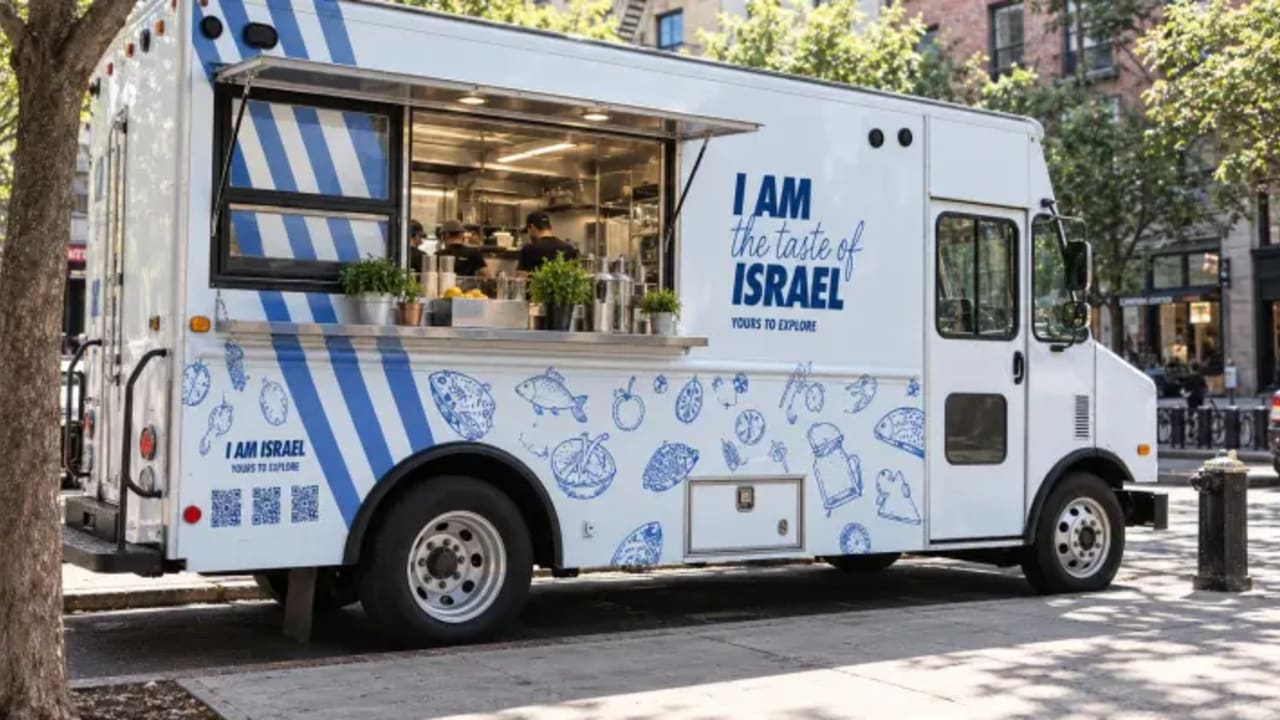
The Tourism Ministry has launched the Taste of Israel Food Truck Tour 2026, serving free kosher-style Israeli food in four US cities, beginning October 25 in North Miami Beach, Florida.
Five stations on Athens Metro Line 3 (to//from Athens Airport) will close earlier from Sunday, October 25 to Thursday, October 29, 2026. Metro stations: Ethniki Amyna, Holargos, Nomismatokopio, Aghia Paraskevi and Halandri will close at 21:40 that is two and a half hours earlier than the scheduled end of service, due to rail replacement works. […]
The king of ghosts lives in a haunted $4.3 million dollar mansion in the heart of New Orleans' French quarter. The dozens of paranormal tour guides who lead tourists through the neighborhood are sure to know of him and have an opinion of him. Lance Zaal is the most controversial man in America's booming ghost business, CEO of what competitors have dubbed "The Walmart of Ghost Tours."
Over the past half-decade, Zaal, 42, and his company, US Ghost Adventures, have opened ghost tours in more than 250 cities and towns, employing more than 1,000 guides, according to his company's website. He's also been buying up the country's haunted landmarks like it's the first trip around the Monopoly board — the Lizzie Borden House in Massachusetts, the Villisca Axe Murder House in Iowa, the McInteer Villa in Kansas, and two historic houses in Gettysburg, Pennsylvania. "Lance has said he wants to build an empire, and that's what he's doing," says Diane Student, who hosts the industry podcast History Goes Bump.
USGA also sells ghost detection gear through the brand Ghost Daddy — products with names like the Sinister Speaker, Medusa's Net, and Devil's Marble MK2. An Ultimate Ghost Hunt Kit For Two sells for $629.99. The whole operation has made Zaal wealthy enough to buy the Lalaurie Mansion, his primary residence, which stands on the site of an infamous slaveowner's torture chamber. Previous guests have reported unexplained moaning and groaning inside, along with the sudden, putrid smell of burning flesh, and, according to New Orleans tour guide Catie Santos, passing guides stand on the opposite side of the street because of the house's dark energy. On tours, Santos, who was briefly employed by Zaal as a content creator, also warns her guests "about the real life Marvel supervillain living in that house," she says.
The Lizzie Borden House in Fall River, Massachusetts, one of many haunted houses Zaal has bought up across the country.
Boston Globe/Getty Images
In assembling his dominion of the undead, Zaal has made a host of enemies among the living. I spoke with more than a dozen competitors and insiders in the industry who described him as "vindictive," "predatory," a "bully," and a "hemorrhoid." He has been accused of borrowing content from local tours, ripping off merchandise designs, redirecting negative reviews to competitors, misclassifying workers as contractors, and using names similar to local companies to confuse tourists. The allegations have resulted in a mounting pile of lawsuits against USGA. Zaal, who did not respond to repeated inquiries for this story, has consistently denied any predatory behavior and emphasizes his commitment to historic preservation.
When passing Zaal's mansion, Catie Santos warns tourists of "the real life Marvel supervillain living in that house," she says.
He has gone after his rivals, filing copyright and defamation suits and frequently threatening legal action. "This gang of competitors are the bullies. So desperate to restore their monopolies or do whatever they can to eliminate their competition," USGA wrote in the comments section of "Exposing US Ghost Adventures Corrupt and Unethical Business Practices Part 1," a recent video from the YouTube channel The Paranormal Engineer.
When Walmart surged through the country in the 1980s, it sparked fierce resistance from the mom and pop stores threatened by their expansion. Today, the rise of the Walmart of Ghost Tours has ignited a war in the ghost industry.
In the biography published on his website — which has a slapdash, early-2000s blog design — Zaal describes a hardscrabble childhood in Southern California. After his parents divorced when he was 6, he was often homeless, sometimes sleeping in the family van. He was bullied in school, he writes, and threw himself into little entrepreneurship projects like a lemonade stand, where he bumped his margins by charging extra for a "Lemon Special," which involved adding a Lemonhead candy to the drink. He says his youth was also marked by eerie experiences — mysterious footsteps, doors opening and closing without explanation — that inspired a lifelong fascination with the supernatural. "I've experienced odd things I can't explain," he said in a recent interview with Business Insider.
In Zaal's personal website, he describes a childhood marked by eerie experiences — mysterious footsteps, doors opening and closing without explanation.
Website of Lance Zaal
After 9/11, Zaal enlisted in the Marine Corps at age 17. He completed three tours, including two in Iraq, where he was stationed for a time at President Saddam Hussein's palace. Then he got an MBA at William and Mary, and worked briefly at Booz Allen Hamilton and Mythics Inc., until he was laid off in 2012. He set out on his own, developing a GPS-guided audio ghost tour app called ItourMobile. It was good timing. America was in the midst of a ghost renaissance.
In a 1978 Gallup poll, 11% of Americans said they believed in ghosts. By 2025, that number soared to 39%. Some attribute the trend to a decline in traditional religion, with non-religious people becoming more inclined to seek other supernatural answers to life's big questions. And as paranormal beliefs have risen, there has been an influx of people trying to profit from them. Reality TV shows "Ghost Hunters" and "Ghost Adventures" took off in the 2000s. By 2023, "dark tourism" — which ranges from the sites of atrocities to haunted houses — was valued at $32 billion and projected to reach $39 billion by the decade's end, according to Grand View Research.
Years after US Ghost Adventures took off, an interviewer at Authority Magazine asked Zaal what advice he wished he could give his younger self. "You're on your own," Zaal said, in a quote displayed under a photo of him in a vest, arms crossed, blue-steeling the camera. "You have no friends. The market is God."
Ting Rappa, an EMT and firefighter who runs an Orlando-based ghost tour called American Ghost Adventures met Zaal in 2015, when he was managing a tour called Colonial Ghosts in Williamsburg, Virginia. Zaal approached Rappa after she attended one of his tours with a proposal to team up. "He was a little off," Rappa says. Something about his energy made her apprehensive. "But he was a very intelligent person. I could tell he had a drive." Zaal said he would help finance her company in exchange for a share of the operation. But the deal didn't seem like an even partnership, so she turned him down.
You're on your own. You have no friends. The market is God.Lance Zaal
Three years later, she discovered that Zaal had a new name for his company that resembled hers: US Ghost Adventures. When she tried to trademark American Ghost Adventures years later, the application was denied because Zaal had registered his first. In 2024, she filed a suit asking for the USGA trademark to be cancelled, still working its way through the courts. "There's just no ethics to it," she says of Zaal's expansion. "Competition is good, but play nice. Right now, you're just being a big bully."
In the Authority Magazine story, Zaal was asked how he researches whether someone else has already had one of his ideas, a question that would become more significant as his business continued to grow.
"It's not relevant," Zaal said. "Who cares who else thought of an idea? This is fear at first thinking. What matters is creating a sustainable, strong business. Just because there are others in your market, doesn't mean you can't succeed in it, or even redefine it. What is important is ensuring you don't break the law, whether that be a trademark, patent, or whatever."
A ghost tour is a pretty simple business to set up. Most are walking tours through public spaces that require little overhead. At USGA, guides are generally contractors paid a flat rate of $40 to $50 per tour, plus tips, per its website. With a tour drawing dozens of customers paying $20 to $40 for a ticket, the money can quickly pile up.
Tour guide Leanna Foglia during an "Original Fells Point Ghost Walk" tour by Baltimore Ghost Tours, a rival of Zaal's Baltimore Ghost Tour.
Elizabeth Frantz for BI
USGA wasn't the only company to pursue ghost tours on a national scale — the rival Ghost City Tours operates 60 tours — but it was the most aggressive. During the pandemic in 2020, as other tour companies were shuttering, Zaal expanded to dozens of cities and towns, ready to put guides on the pavement once restrictions were lifted. That year, he unsuccessfully sued to reverse a COVID ban on walking tours in Massachusetts. By 2021, USGA had operations in 33 cities, each under a local name.
One of the first cities targeted was Baltimore, where Melissa Rowell had operated Baltimore Ghost Tours since 2001. Zaal came on her radar when she began receiving phone calls from irate customers. "We are trying to find out where this ghost tour is," one man complained in a voicemail shared with Business Insider. "Nobody's answering the goddamn phone … after we spent almost $100."
The man was looking for Zaal's new local affiliate of USGA, which had begun operating under the name Baltimore Ghosts. Rowell sent Zaal a letter asking him to change the name to something more distinct. Soon after, Rowell says, USGA started using the name Baltimore Ghost Tour in some materials. "Instead of trying to cause less confusion, they seemed to be trying to cause more," she says.
Rowell and Zaal have since been in a cold war, volleying terse emails and cease-and-desist letters. "I understand you actively collaborate with a confederation of other companies to disparage and damage both the company and my personal reputation," Zaal wrote Rowell in 2024. "Let us honor the spirit of Halloween this season and cease this animosity. There's enough customers for all of us."
Amy Lynwander (left) and Melissa Rowell, co-owners of Baltimore Ghost Tours, another of Zaal's rivals. "Let us honor the spirit of Halloween this season and cease this animosity," Zaal wrote to Rowell in 2024.
Elizabeth Frantz for BI
Rowell denies that she is part of a confederation, but local tour guides have collaborated in dealing with their ascendant rival. There's a private Facebook group where guides across the country share information about USGA. Mike Carter, a tour guide from Annapolis, Maryland, bought the domain name USAghostadventures.com to build a site that urged customers to choose local ghost tours instead of Zaal's outfit. (Zaal got the site taken down and sued Carter for defamation.) Some paranormal companies, like Central New York Ghost Hunters, have rejected partnerships with USGA out of solidarity with local guides.
In Austin, Texas, USGA was sued by the owners of a local Booze and Boos Tour after Zaal opened a Boos And Booze tour. In Savannah, Georgia, the national company Ghost City Tours, which operated a Dead of Night Tour, sued USGA for opening the Savannah Terrors Ultimate Dead of Night Haunted Ghost Tour. In Charlotte, North Carolina, the local Queen City Tours sued Zaal's Queen City Ghosts. USGA generally argues in court papers and public statements that the names are too generic to own. The Austin suit was settled in 2024; the latter two lawsuits are currently making their way through the courts.
USGA was sued by the owners of the Booze and Boos Tour after it opened a Boos And Booze tour; the Dead of Night Tour for opening the Savannah Terrors Ultimate Dead of Night Haunted Ghost Tour; and Queen City Tours for opening Queen City Ghosts.
In one instance, a guide alleges that Zaal uses these similar names to trick tourists into leaving negative reviews on his competitors' tours. Angela Taverniti, who runs Colonial Ghosts of Williamsburg, said a USGA customer, Samantha Butler, accidentally left a negative review on Taverniti's tour. When she pointed out the mixup, Butler pulled up the link she got from USGA asking her to review the tour and tested it. A screen recording Butler shared with Business Insider shows that when she submitted a four-star ranking, she was directed to the Google review page of the USGA tour she took. But when she submitted a two-star rating, she was directed to the Google page for Taverniti's tour. Spooky. Reviews are a big deal for tour operators. "98 percent of our business comes from Google," Taverniti tells me. "It's a game that you have to play constantly. And he knows how to play it."
Other paranormal guides say Zaal borrows the content of the tours along with the names. Laine Johnson, a former park ranger, spent the last decade developing a tour of the supernatural happenings in Durango, Colorado, drawing from firsthand accounts of locals, newspaper archives, and out-of-print books. When a new tour called Durango Ghosts set up shop there in early 2023, Johnson took it to check out the competition. She says she was startled that they followed her exact route and told the same stories, sometimes with the same phrasing.
Angela Taverniti, owner of Ghost Tour Williamsburg, claims that Zaal uses similar names to his competitors' tours to trick tourists into leaving negative reviews on their Google pages.
Elizabeth Frantz for BI
When she got home and did some research, she formulated a theory of what had happened. During the pandemic, she had uploaded her materials to a site called Junket, which allowed her to host virtual tours. Junket and Durango Ghosts were owned by Lance Zaal. Her content, she's convinced, had been snatched from the Junket website and co-opted by her new competitor.
USGA has meaningfully eaten into her bottom line, she says. "This is a really small town. It's ridiculous that there's now three ghost tours going here," she says.
By 2021, USGA purchased the crown jewel in its collection of haunted property, a three-story Greek Revival House in Fall River, Massachusetts, where Lizzie Borden was accused of axe-murdering her parents in 1892. It's famous for paranormal activity, and Zaal mentioned in an interview shortly after the purchase that he felt as if "someone, or something, was in the room with him," when he spent the night there alone.
This is a really small town. It's ridiculous that there's now three ghost tours going here.Laine Johnson, a ghost tour owner in Durango, Colorado
In 2023, a small cafe called Miss Lizzie's opened nearby, and Zaal sued, arguing that the name and logo — a blood-stained hatchet — infringed on his trademark. "She's a historical figure," cafe owner Joe Pereira counters. "I don't think anyone can own her." It was a strange reversal of the trademark suits that had been filed against him, and local competitors followed the case closely.
The next year, a judge sided with Pereira, saying the logos were substantially different. "Miss Lizzie's hatchet has a handle and smooth axe blade that spews blood," the judge wrote in his decision. "Ghost Adventures' hatchet is bereft of either handle or blood and features a notch halfway along the blade." But the lawsuit, which dragged on for years afterwards, has taken a financial toll on Pereira. Though a judge affirmed the initial ruling this month, Pereira was also ordered to pay $31,207 in legal fees after missing various filing deadlines.
Amid the acrimony, USGA has continued to grow. From 2019 to 2023, Zaal told Entrepreneur Magazine, USGA's revenue increased by 2,600%. To service the expansion, he contracted with writers and creators to develop tours and other content about new cities in the USGA empire.
Some guides, like Sabrina Velandry, a psychic medium who conducts tours for USGA in Salem, have had broadly positive experiences with the company. It's more professionalized than some of the local tours, she says. "It is corporate, but it's just really really well-run and organized." Others have butted heads with management, and two lawsuits have alleged misclassifying workers as independent contractors and failure to pay overtime wages. USGA has denied these claims, and one suit was settled while another is still in the courts.
In 2023, Ronald Murphy, a high school teacher outside of Pittsburgh, began picking up some extra work for USGA as an independent contractor, where he would crank out a new tour for $200, or make $40 for a 300 word blurb on the USGA website. All told, he says, he wrote tours for about 18 cities.
USGA sells ghost detection gear through the brand Ghost Daddy — products with names like the Sinister Speaker, Medusa's Net, and Devil's Marble MK2. An Ultimate Ghost Hunt Kit For Two sells for $629.99.
Elizabeth Frantz for BI
He says he wasn't given time for deep research and didn't like the idea of using content posted by competing local tours, so for a tour about Fort Worth, Texas, he decided to get creative. "I was going to simply make up the ghosts," he says. He thought the local Cowboy Museum was the sort of place that a ghost might frequent and wrote this fiction for the website: "Of course, no cowboy can hold a candle to The Duke himself, Mr. John Wayne. Visit the Texas Cowboy Hall of Fame where it's said the apparition of the 6 foot 4 actor has been seen admiring the cowboy memorabilia on display." The work eventually dried up. Today, USGA is recruiting an AI Creative Specialist, at $42,000 a year, "to draft, edit, and refine engaging tour scripts, website copy, and compelling marketing collateral." Even ghost jobs aren't safe from the AI revolution.
Trevor Foster didn't have much interest in ghost tours until he was ripped off, he tells me. He's a ceramics artist who specializes in dark pieces like bones, pistols, and mystical eyes. This January, he received a message informing him that USGA may have stolen one of his designs to sell on its Ghost Daddy website — an intricate skull-shaped mug with a handle like a curved bone. From initial casting to final glazing, it took Foster about about 100 hours to complete.
The skull on Ghost Daddy looked like one Foster designed in a slightly different color. Foster says the fact that it had the same sutures on the top — "almost like a fingerprint" — made it clear it was a ripoff. He also found that Zaal had recently purchased the same skull mug from him. "For someone to buy it and make a direct mold just seems kinda brazen," Foster says.
Foster sent a cease-and-desist letter, and Zaal responded that he planned to remove the item within six months. "My understanding in looking at your website is that you have your initials on the bottom (ours doesn't), each one is hand crafted and unique (ours are consistent and the same which is why yours looks better), ours is of a lighter color, and our logo is on the back," Zaal added. To Foster, it seemed Zaal was implying that replacing his initials with the USGA logo was enough to make the knockoff legal.
An Instagram video Foster posted went viral in the ghost tour community, and Zaal agreed in an email shared with Business Insider to discontinue the item immediately. He attributed the similar design to a mistake made by an overseas supplier who was given multiple examples to draw inspiration from. That wasn't good enough for Foster, who sued and settled with Zaal in September.
From 1978 to 2025, the share of Americans who said they believed in ghosts soared from 11% to 39%.
Elizabeth Frantz for BI
Foster was surprised to have found something of a community as a result of the whole debacle. After he'd posted about the situation, he was inundated with dozens of messages from people with their own grievances with US Ghost Adventures, commiserating with him. "It's just kind of incredible how many people they've angered," Foster says.
And — if you fall into the 39% of the country that believes in ghosts — you might believe that it isn't just corporeal beings that have been angered. This summer, a group of part-time ghost hunters visited Zaal's newly purchased McInteer Villa and set up K-2 meters, REM pods, and a ghost box.
But the group's leaders Dawn Lorenzen and Amy Osborn found the ghosts to be surprisingly uncommunicative. When they'd visited before Zaal's purchase, the ghost hunting had been good.
They Facetimed a medium to figure out what was going on. The ghosts were irritated, she told them, and it seemed to be related to the new ownership. "They made a circus of the place," the ghosts kept repeating, she said. "And now we are a spectacle."
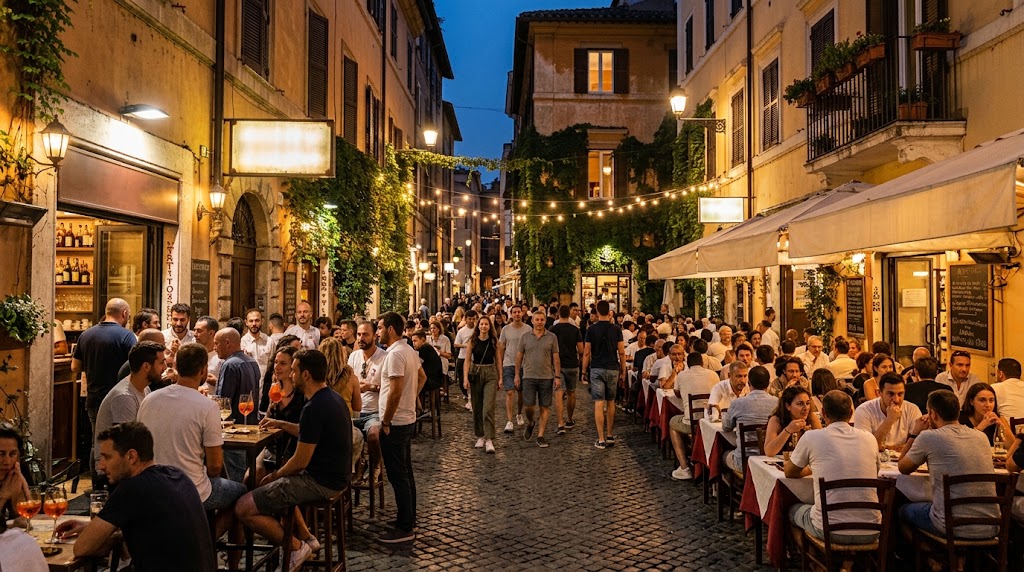
Trastevere prova a fare fronte comune contro la trasformazione del quartiere in una destinazione sempre più orientata ai visitatori , con l’obiettivo di difendere il tessuto sociale, abitativo e commerciale del rione e riportare le esigenze di chi ci vive. Nel mirino la crescita delle attività turistiche, la pressione abitativa e la richiesta di regole più stringenti.
Trastevere, cuore di Roma con il 45% di romani in meno
Il dato che fotografa il cambiamento è netto: tra il 2013 e il 2023 Trastevere ha perso il 45% dei residenti, sulla base dei dati demografici. Parallelamente, negozi di vicinato e botteghe storiche hanno ceduto spazio ad attività rivolte soprattutto ai turisti, tra bar, ristoranti, bed & breakfast e case vacanza. La protesta, precisano gli organizzatori, non nasce dalla volontà di cancellare il turismo o la movida. La richiesta è piuttosto quella di riequilibrare gli interessi e stabilire limiti capaci di tutelare la residenzialità e le attività commerciali di prossimità. “Nessuno vuole che non ci siano i dehors o le case vacanze, ma riteniamo giusto fissare un tetto e regolamentarli”. Pensieri e parole di Tommaso Fogli, 22 anni, trasteverino e coordinatore dell’Unione Giovani di Sinistra Italiana. Nel confronto rientrano inoltre la gestione dei dehors e l’occupazione di suolo pubblico, nonché il rispetto delle regole relative agli spazi esterni dei locali.
Affitti brevi, la pressione immobiliare si estende alla periferia
La trasformazione di Trastevere si inserisce in un fenomeno più ampio: la diffusione degli affitti brevi oltre il centro storico, verso quartieri residenziali e comuni dell’area metropolitana. Un rapporto del progetto AirMAP, al quale ha contribuito il Cnr-Ircres, ha analizzato l’evoluzione degli affitti turistici intermediati da Airbnb tra il 2017 e il 2024. Nel Comune di Roma le notti prenotate sono passate da 3,4 a 6,09 milioni, con un aumento del 79,2%. Nei comuni della cintura metropolitana esterna, nello stesso periodo, le notti prenotate sono cresciute del 193,3% e gli annunci del 50,4%, contro il 6,5% registrato per l’offerta nel capoluogo. Numeri che descrivono un’espansione territoriale del mercato, ma non dimostrano da soli che la crescita delle locazioni turistiche sia l’unica causa dell’aumento degli affitti residenziali. Del resto, la pressione dipende anche dalla disponibilità di alloggi, redditi e mercato immobiliare.
Centro storico, posti letto oltre il numero dei residenti
Secondo un’indagine della società immobiliare Brixa, il centro storico romano ha una capacità ricettiva di 122.168 posti letto, a fronte di 115.821 residenti. La stessa analisi stima che nell’estate 2026 circa 6.000 strutture turistiche romane siano rimaste senza prenotazioni. Quadro dunque in evidente contraddizione: mentre i residenti denunciano la pressione del turismo sul mercato abitativo e sull’identità dei quartieri, l’offerta non garantisce prenotazioni e ricavi a tutti gli operatori. In questo contesto la questione di Trastevere è sociale e urbanistica anche alla luce di una movida che spesso esce dai binari della civiltà e deraglia nella sregolatezza. La mobilitazione di piazza San Cosimato punta a trasformare il malcontento in una piattaforma di richieste alle istituzioni: poche richieste, ma precise. Regolamentare l’offerta turistica, tutelare le attività di vicinato e salvaguardare il diritto ad abitare pacificamente in uno dei quartieri storici della Capitale.
The Algarve should stop measuring tourism success simply by how many more visitors it can attract, according to the region’s tourism chief, who says the focus must now shift to
Airbnb has changed its rules to limit what property hosts may ask guests to do – including when it comes to cleaning. The updated guidelines state that hosts can now set seven standard house rules and can also add other “reasonable” requests. Airbnb states that guests – who are required to pay a cleaning fee […]
Longreads has published hundreds of original stories—personal essays, reported features, reading lists, and more—and more than 14,000 editor’s picks. And they’re all funded by readers like you. Become a member today.
Kristin Idaszak | Longreads | October 22, 2026 | 3,741 words (13 minutes)
The city of the dead is the obverse of the society of the living, or rather than the obverse, it is its image, its intemporal image. For the dead have gone through the moment of change, and their monuments are the visible sign of the permanence of their city.
—Philippe Ariès, Western Attitudes Toward Death
Shortly after I graduated from college, my best friend sent me a postcard from the Sedlec Ossuary, a Catholic chapel formally named the Cemetery Church of All Saints in Kutná Hora, a town about an hour east of Prague. The postcard depicted the chapel’s interior: a chandelier of bones flanked by two towers of skulls. On the back she wrote, “The chandelier alone contains all the bones in the human body. Thanks to the plague, we have this work of totally weird art!”
Immediately I started planning my own trip to Kutná Hora—a place made prosperous by silver mining but famous for its bone church—and arrived with the zeal of a pilgrim. Today the town has 20,000 residents, but in its 14th-century heyday it boasted almost four times as many souls. The late Middle Ages was a tough time to be alive, between the Black Death, various crusades and holy wars, and famine—not to mention the labor conditions of silver mining. Kutná Hora was also a popular place to die, and all the villagers wanted to spend eternity at the medieval Sedlec Abbey. After one of the crusades, an abbot had brought back a handful of soil, supposedly from Golgotha, and strewn it on the abbey grounds. Burial in that soil was believed to grant quicker access to heaven, which led to an overcrowded cemetery. The solution? Build a subterranean chapel to house the remains. And then a half-blind monk, in the wake of a terrible plague, exhumed the victims and used them to redecorate.
An ossuary is any repository for human remains, but it’s also the term for a holy site that serves this function. Another name for this kind of church is charnel house, which to me evokes the image of an abattoir. Death historian Philippe Ariès connects the term to the French idiom une vieille carne, translated as an old nag or a tough piece of meat. It’s apropos: These buildings enshrine human remains as décor in macabre, otherworldly, electrifying memento mori.
Forty-thousand bodies’ worth of bones. Probably more. My brain buckled at the magnitude.
Four months later, I found myself in the Czech Republic. A coat of arms made out of bones greeted me when I arrived at the bone church. Upon closer inspection, the heraldry included a skeletal bird, its slender beak playfully pecking out a long-disintegrated eye from an empty socket. As I descended the stygian steps from the ticket kiosk, I took in the pyramid of bones that guarded the four corners of the room.
The chapel seemed to exist in a perpetual gloaming, the air hushed and cool. The sheer presence of so many human remains disoriented me; they surrounded me on every side. Forty-thousand bodies’ worth of bones. Probably more. My brain buckled at the magnitude. The remains took on an animated quality—not in a Halloween-y, top hat–wearing, dancing skeleton sense; nor in an eerie, horror movie sense; but in the sense that each one radiated a life force.
I loved it. I loved being surrounded by skeletons and weird art and death.
Death and the afterlife fascinated me. I devoured stories of women who visited the underworld and returned—Alcestis, Eurydice, Persephone—and philosophers and poets who broached the subject—Nietzsche, Camus, Dante. Thanatos, my favorite philosophy professor called it. The death drive. But I had no sense of the fragility of my own body. My knees did not yet make those alarming soft pops; the permanent ache had not settled into my shoulder; my heart wouldn’t sputter erratically in my chest for another decade. The allure was intellectual and emotional, certainly not embodied. Like climate change or menopause, I understood mortality conceptually, but it didn’t feel real.
I’d like to tell you that my visit to the Sedlec Ossuary changed everything, that after my trip I appreciated life’s transitory nature. Or that it gave me a premonition of what lay in store for me, my own brushes with death that were to come.
It did not.
While I was underground, I felt temporarily transported and transformed—or at least, I had a flicker of understanding: I sauntered into the chapel with the hubristic notion of a young artist that my words would become immortal. The bones confronted me with the truth. My legacy would be deposits of calcium and protein and collagen. My art wouldn’t endure, but these nameless victims of plague and famine and war—they did. It humbled me.
But I left the ossuary’s insights with the dead. In my early 20s, I didn’t need the bone church to convince me to suck the marrow out of each day. I went to grad school, became a playwright, got married, traveled to all seven continents. Somewhere in there, I relegated the bone chapel to memory.
In the summer of 2020, I got sick with a life-threatening cardiac arrhythmia called ventricular tachycardia. I had so many episodes of VT I lost count, and any one of them could have ended in cardiac arrest. These events were indescribably painful and frightening. They enervated me, sapping me of my strength, vitality—eventually my will to persevere. My life became very small.
Mortality was no longer an abstraction: I was scared of what would happen to me when I died. Of how much it hurt. Of the nothingness of bones.
In the years that followed my initial descent into illness, I rarely left home. At the time I lived in a two-bedroom apartment, a third-floor walk-up. Climbing the stairs could, unpredictably, trigger a cardiac event, and so unless I had to leave for work, I spent most of the time in my living room. I can close my eyes now and return to that place. I’d painted the walls a shade of cornflower blue I grew to loathe. The television tottered precariously on an ancient table. Cherry-stained bookcases lined the wall. The top of the bookcase displayed a golden Japanese fan with a cloud tree painted on it. Next to it stood a penguin pitcher I bought on my honeymoon in Tierra del Fuego. Three vintage-style travel posters advertised Antarctic destinations: Beagle Channel, Lemaire Channel, Paradise Harbor.
That room was the real ossuary.
One of my favorite Greek tragedies is Euripides’ Alcestis, in which the eponymous heroine journeys to Hades in her dying husband’s stead. The god Apollo tricks the Fates so that her husband, the king, can live if he can find someone to take his place in the underworld. There’s an exchange I think about a lot: “Possible to say she is both alive and dead,” her servant reports, and the chorus leader, understandably confused, asks, “How could someone die and keep on living?” This is how I felt—alive but dead. Already in Hades. I’d escaped my fate, like the king, but my true self, the intrepid, curious, wonderstruck version of me? She was in the underworld with Alcestis.
The play takes a strange turn when Heracles arrives amid his twelve labors. During a supremely awkward evening of drunken revelry at the palace, he figures out what’s going on and hustles to the graveyard to wrestle death and bring Alcestis back.
I didn’t have a demigod to save me. But I didn’t want to be lost and gone.
The allure was intellectual and emotional, certainly not embodied. Like climate change or menopause, I understood mortality conceptually, but it didn’t feel real.
Sitting in my apartment day after day, surrounded by artifacts from the world I used to inhabit, was slowly killing me. I was afraid of things that had caused my VT, which meant I was afraid to go to the grocery store. I was afraid of taking a yoga class. I was afraid to simply be outside if it was really hot out. Finally I reached a breaking point. I could drop dead in the peanut butter aisle, or I could drop dead seeing the world. Staying at home wouldn’t save me. The threat resided inside my own chest.
I formulated a drastic plan to return to the land of the living. I took time off teaching and planned a sabbatical to travel and write. I couldn’t hide in my house if I rented it to someone else, if I jetted to the other side of the world. Instead of crossing the River Styx I ferried myself across the Pacific Ocean, and then the Atlantic. The final stop on my sabbatical was leading a study abroad in the Czech Republic, to attend an international scenography and performance festival. The ossuary didn’t really fit into the rest of the itinerary, but I wanted to give my students the experience I’d had all those years ago.
Though contemporary visitors can experience ossuaries as disturbing or revolting, they didn’t start out that way. In The Empire of Death: A Cultural History of Ossuaries and Charnel Houses, Paul Koudounaris traces their proliferation in Europe during the 13th century as a storage solution to the medieval Christian problem of where to keep the dead safe for their resurrection. There were more bodies than places to put them. Death preoccupied the medieval imagination. After the Bubonic plague, medieval artists began portraying its grotesque physicality: images of rotting corpses, poetic descriptions of worm fodder. You get the sense they would’ve painted the stench if they could. Is it any wonder that these decomposed cadavers eventually became the artistic medium itself?
Dozens of bone chapels sprang up across Europe by the 17th century, in a confluence of theology and aesthetics that seems morbidly inevitable. During the Counter-Reformation, Catholicism leaned into opulent and lavish Baroque art. It also leaned into corporal mortification, the kind that now shows up in mass-market thrillers as a fetishization of pain and suffering.
The appetite for gaudy-verging-on-gauche bone art swelled when the Romantics arrived on the scene in the 19th century. Gothic literature supplanted the medieval Ars Moriendi; a secular touchstone of this cultural moment is Mary Shelley’s Frankenstein. Today, the Sedlec Ossuary has benefitted—or suffered from—the kitschification of gothic art, popping up in surprising places like The Young and the Restless and the “uninvolving and cliché-ridden” vampire B movie Blood and Chocolate.
Romanticism also marked the rise of a phenomenon now known as “dark tourism,” which refers to the practice of visiting sites associated with disaster, war, atrocity. Malcolm Foley and J. John Lennon coined the term in 1996, in reference to tourism spawned by John F. Kennedy’s assassination. Scholars often point to concentration camps and Chernobyl as the field’s quintessential sites. Yet it’s a concept as old as tourism itself, dating back to Chaucer’s Canterbury Tales, in which a group of pilgrims travel to the site of Thomas Becket’s murder. During the Grand Tours of the Romantic era, visits to places like the Paris catacombs (an underground labyrinth containing the bones of some six million people) and Pompeii (mass grave by way of volcano) came into vogue as a way to cultivate the Sublime.
It can’t be an accident that this coincided with the proliferation of ossuaries. I have to believe not everyone went to charnel houses for the sake of holy contemplation. Prurience is not an invention of the digital age, even if we have elevated it to new heights (or denigrated it to new social media-inflected nadirs). I imagine gentlewomen in whalebone corsets and dilettantish young men titillating their companions with stories of the macabre.
The contemporary case for dark tourism—sometimes called thanatourism—is that it refutes any attempt to forget or whitewash history. It’s one of the few ways we can meaningfully encounter death and atrocity. Before I got sick, I went to Auschwitz as well as Hiroshima. The power of these sites is undeniable. They serve as monuments to some of modern history’s darkest moments and have been carefully transformed into vehicles for education, reflection, and solemn commemoration. I went because it felt important to bear witness to the horrific crimes against humanity that occurred there. But I’ve also participated in dark tourism less consciously, and perhaps you have, too. I’ve seen an Ai Weiwei art installation at Alcatraz, toured the Colosseum where murder was a matinée, peeked into the bakeries and brothels of Pompeii, strolled through Greyfriars Kirkyard in Edinburgh. I skipped Hell’s Museum, which a friend recommended in Singapore, and wish I’d skipped a ghost tour of Savannah, Georgia—what made it haunting was the way the city’s bloody history of enslavement and oppression was repurposed as entertainment for partiers carrying to-go cups of watered-down vodka.
The counterargument is self-evident: It leaves these sensitive sites vulnerable to exploitation. The suffering of one group commodified as a cocktail party anecdote for another. The exit through the gift shop.
This is how I felt—alive but dead. Already in Hades. I’d escaped my fate, like the king, but my true self, the intrepid, curious, wonderstruck version of me? She was in the underworld with Alcestis.
It would be a neat narrative if the newest wave of dark tourism had gained traction after the pandemic, when there was a momentary reintegration of death in our day-to-day. In actuality, it flourished before COVID spread, before ambulances drove through empty city streets and bodies piled up in overcrowded mortuaries, before corpses were stashed in refrigerated trucks in New York City because the morgues were beyond capacity. And now, when those months and years have receded like a bad dream and no lessons were learned, it’s hard to attribute a newfound reverence for mortality to this renewed appetite for dark tourism.
I never thought about what I was doing as morbid. I gravitated to many of these attractions unconsciously, often because I wanted to understand history—and history is littered with corpses. But I think back uneasily to the casual way these sites were slotted into my itineraries. I remember the okonomiyaki place I went to after the Hiroshima Peace Memorial Museum, the hole-in-the-wall with the cheerfully ursine line cook, but not how I possibly could’ve been hungry.
The impetus for this flavor of tourism isn’t monolithic. Some dark tourists are processing their personal or ancestral experiences, some are genuinely curious, some don’t even realize they’re doing it, and some are rubberneckers. Regardless of motivation, one effect of present-day dark tourism under global capitalism is the Disneyfication of death.
The first months of my sabbatical were rocky. Fear dogged me through the streets of Sydney, Mumbai, Athens. A few weeks before I went back to the Czech Republic to lead my study abroad, I went to another bone chapel, in a small town east of Lisbon called Évora. Visitors flock to Évora for its prehistoric megaliths and Roman temple to Diana, but I’d driven across Portugal to see the charnel house. My GPS misled me through the hot, dusty town, and I circled around the temple and its remaining Corinthian columns—which seemed dropped into the town square like an abandoned film set—until I found the Capela dos Ossos.
The 17th-century Capela has more bling than Sedlec, from azulejo tiles to ceiling frescoes, with skulls where cherubs might usually repose. (Other charnel houses put the Capela to shame in their ostentation, such as the skeletons at the German Basilica of Waldsassen wearing jewel-encrusted gold costumes, which were originally posed with chalices with dried blood at their feet.) The chapel is crammed, floor to illustrious ceiling, with bones stacked horizontally, so only the knobs show. Lined with osteological columns, the architecture echoes the ruined temple to the pagan goddess in the town beyond. Before you even enter there’s a Dantean inscription: Nos ossos que aqui estamos pelos vossos esperamos.
We bones that are here await yours.
I found the inscription strangely comforting as I entered the inner chamber. The first interpretive sign explained the function of a bone chapel as a memento mori: “It is expected to serve as a consolation to some and news to others.”
Lucky them, I thought.
I appreciated the aesthetics of the Capela dos Ossos, but it lacked the Hadean quality that engendered my near-mystic experience at the Sedlec Ossuary. Afterward, I continued on my sabbatical still mistrustful of my body, still afraid to move through the world.
Finally I reached a breaking point. I could drop dead in the peanut butter aisle, or I could drop dead seeing the world. Staying at home wouldn’t save me. The threat resided inside my own chest.
But when I got to Prague, something shifted. It didn’t happen all at once. I didn’t walk into the bone chapel and have an epiphany. A logjam loosened in my psyche. Shepherding a group of young adults in a foreign country, I couldn’t hide in the hotel or confine myself to strictly prescribed routes and routines. For many of them it was their first trip overseas, and overwhelmed, they looked to me for guidance.
At 7 a.m. one morning, 20 students piled onto a bus to Kutná Hora. On the drive, I strove to impart my love of bone churches: Ossuaries aren’t morbid (okay, well, they are, but they’re not only morbid); they highlight the brevity of our lives to help us live more intentionally. But in a kind of punk rock way. Carpe fucking diem. The students were curious but respectful. Some found it moving, others creepy.
When we arrived, the bone chapel was different than I remembered. Tentatively, I descended into the brightly lit space below. In the open area of the chapel, monitors now played a video of renovators handling the bones. The video explained a restoration project to shore up the building’s structural integrity and preserve the skeletons. The foundation is unstable and has started sinking since it was built sometime in the 14th century. In the Baroque period the Czech-Italian architect Jan Blažej Santini-Aichel redesigned the ossuary as it exists today, and it wasn’t until the 1860s that a carpenter named František Rint created the bone art, including the famous chandelier and the Schwarzenberg coat of arms that reproduced the heraldry of the local aristocrats.
That wasn’t the origin story I’d learned years ago, about the monk and the plague—was the monk even real? The crepuscular lighting and gloom were gone. Where was the ambience? How could you commune with the dead like this?
Behind me, another busload of tourists arrived, and another, and another. Tourists overran the chapel, their guides speaking into little microphones in various languages while they snapped photo after photo. At the entrance, the lone employee said in English, no photos allowed. Everybody ignored her.
Snap.
Desensitized, they gawked without seeing.
Snap.
No photos, repeated the ticket taker.
Snap.
The scores of tour groups weren’t part of my memory.
The contemporary case for dark tourism—sometimes called thanatourism—is that it refutes any attempt to forget or whitewash history. It’s one of the few ways we can meaningfully encounter death and atrocity.
Through a side door I climbed the stairs into an outdoor cemetery. The videos of the restorers kept replaying in my mind. It’s one thing to envision an apocryphal monk constructing pyramids of bones, it’s another to watch footage of archaeologists cleaning them and then putting them back in the pile. One of my students was minoring in archaeology and, as we strolled through the cemetery, she told me that ethical and legal restrictions governed archaeologists’ handling of human remains. It was obvious once she said it, but I hadn’t thought about it. The videos had close-ups of hands in nitrile gloves cleaning the dirt off the bones. Afterward, the bones were soaked in lime solution, which is also how Rint first prepared them in the 1860s. His chlorinated lime solution is the reason the Sedlec Ossuary’s decorations have remained relatively white over the years, while bones in other ossuaries have browned with age. The archaeologists also have the benefit of video mapping to help them rebuild the pyramids once the bones are cleaned and restored.
It must take incredible dedication for these archaeologists to put themselves in this proximity with death. To sustain that intimacy day after day—I know the cost.
I resented the crowd of tourists I’d left thronging the chapel. More than that, I felt a sense of superiority. Now that I was ready for the ossuary to transform me, I’d found an atmosphere that was more carnivalesque than sacred.
But as I meandered among the headstones in the fresh air, it occurred to me: Did I really think that none of those tourists had ever lost a parent or child or partner, ever grieved, ever had a near-death experience of their own? Did I really think my proximity to death, my awareness of its phalanges drumming on my shoulder, had given me some privileged access to the charnel house’s true meaning? To the contrary, after I got sick, I guarded my life like a dragon hoarding a treasure pile in a dark cave, and it moldered away, unspent. Those bones had more vivacity than I did.
For the medieval peasants whose skeletons limned the walls, death was a prolonged nap until everyone woke up during the rapture. There was a fluidity between death and the afterlife. These days it seems so much more final. (Per Ariès, once it was tame and now it is wild.) Much has been made of the deathbed’s move in modern society from the home to the hospital: out of sight, out of mind. Ossuaries thrust mortality squarely in your line of vision. They ask that you regard death as a transition, not a terminus. Not something to guard against hyper-vigilantly, but a natural part of a cosmic continuum.
It was time to live again.
Going back to the Sedlec Ossuary was not some purifying rite. It was an ordinary day. The tourists streamed past me, discussing where they were going for lunch. The students had moved on, browsing for trinkets at the shop across the street. I recoiled at the kitschy skull mugs and shot glasses, but when I got home, I wished I had a memento mori to put next to the penguin.
After Heracles brings Alcestis back from the underworld, she’s silent for the remainder of the play. Still sacred to the god of the dead, she cannot speak until three days have gone by, Heracles explains. I think there might be other reasons she stays silent. Maybe she preferred it down there. Maybe she left some irretrievable part of herself behind. Maybe she found the light above a little too harsh, the music too loud, the colors too saturated; found herself attracted to dusk, to intertidal zones, lintels, liminal spaces. Or maybe she has nothing left to say.
When I got home, I went through my old photos. I couldn’t figure out if my memories of Sedlec were real until I found a photo of myself, painfully young, standing in the semi-dark underneath the chandelier, its bones glowing white—either from the camera flash or an out-of-frame light source. I look half-happy, half-haunted, like I’m about to say something, but I can’t remember what.
Kristin Idaszak is an internationally produced and award-winning playwright and essayist whose recent work explores the intersection of ecology and chronic illness. She is a 3Arts Awardee, two-time Playwrights’ Center Jerome Fellow, and the former Shank Playwriting Fellow at the Goodman Theatre. She received the Kennedy Center ACTF Paula Vogel Playwriting Award and the Jean Kennedy Smith Playwriting Award. Her essays appear in The American Scholar, Fourth Genre, HowlRound, and elsewhere.
Avec son climat subtropical qui permet d’avoir plusieurs récoltes de fruits par an et ses plages de sable fin sur les bords de la Mer Noire, et ses chemins de randonnée à travers les forêts profondes et les sommets enneigés du Caucase, l’Abkhazie, ancien lieu de villégiature de la nomenklatura soviétique, pourrait être un paradis touristique inscrit au catalogue de toutes les agences de voyage comme la Thaïlande et Acapulco.
Elle l’est chaque année pour plus d’un million de touristes russes (surtout depuis que la guerre d’Ukraine complique leurs voyages à travers le monde). Mais pour les médias mainstreams d’Europe occidentale, ce petit pays de 250 000 habitants, qui a fait sécession de la Géorgie en 1993 au terme d’une guerre de libération de David contre Goliath, n’est qu’une enclave qui serait purement et simplement annexée par les Russes et vouée à l’isolement et à l’embargo, jusqu’à ce qu’il ait retrouvé le giron de ses anciens maîtres à Tbilissi.
Pourtant l’hypothèse d’une réunification relève de la pure politique fiction. Ni les 50 % d’abkhazes ethniques qui ont payé le prix du sang pour s’opposer à la politique assimilationniste des Géorgiens, ni les autres communautés (Arméniens, Russes, Grecs, Mingréliens) n’aspirent au retour de la Géorgie. Plus de trente ans de séparation entre les deux pays, l’Abkhazie s’est habituée à vivre loin de Tbilissi. Et les fièvres anti-russes attisées par l’Union Européenne et l’Amérique qui périodiquement enflamment Tbilissi (comme lorsqu’en 2008 le nationaliste Saakachvili, l’ex-patron de Raphaël Glucksman, avec le soutien de Washington, avait lancé ses troupes contre l’Ossétie du Sud, une autre entité qui s’était séparée de son pays) ne sont pas de nature à combler le fossé.
La question aujourd’hui pour le peuple abkhaze est de savoir comment construire un avenir pour soi-même quand on n’est reconnu que par quatre Etats : la Russie, le Nicaragua, le Vénézuéla et la Syrie… Si Taiwan n’est pas membre de l’ONU, cela n’empêche pas les Taiwanais de voyager à travers le monde, de même les Kosovars dont le pays n’est pas reconnu par l’Espagne ou par la Roumanie peuvent quand même se rendre dans l’Union européenne. Les Abkhazes ne bénéficient pas de ce genre de facilité. Car à l’absence de reconnaissance de leur Etat au niveau international s’ajoute une double peine liée au fait qu’ils sont assimilés par la propagande occidentale à une sorte d’axe du mal pro-russe. Du coup, non seulement leurs passeports ne sont pas reconnus (à tel point qu’ils ne peuvent même pas se rendre dans la Turquie voisine), mais ils subissent de plein fouet les sanctions économiques ciblées vers leur grand frère du Nord.
L’équation sommaire « Abkhazes = alliés des Russes », est pourtant plus complexe qu’il n’y paraît. En 1996 Eltsine avait placé l’Abkhazie sous embargo, et si Poutine se pose plutôt en protecteur, les Abkhazes veillent à ce que cela ne se fasse pas au détriment de leur souveraineté. En novembre 2024 par exemple, les manifestants à Soukhoumi étaient parvenus, en mode « gilets jaunes » à renverser le gouvernement jugé trop pro-Russe en envahissant le siège de ses institutions. Dans ce pays où tout le monde est prêt à défendre sa liberté avec les armes, l’achat des terres reste interdit aux étrangers, ce qui le préserve aussi de la spéculation et des excès du capitalisme cynique qu’il soit russe ou globalisé.
Avant de définir quel degré de proximité les Abkhazes doivent entretenir avec leur protecteur russe et avec les autres pays de la région, l’urgence première pour ce peuple est de desserrer sur un plan strictement humanitaire l’étau qui les étrangle, et qui fait que, par exemple, même le fait d’aller se faire soigner à l’étranger pour des soins médicaux (quand le système sanitaire local est largement défaillant) peut relever du casse-tête (car même la détention d’un passeport russe ne vous garantit pas un droit d’être soigné gratuitement à Sotchi).
D’une façon très significative, l’initiative pour desserrer cet étau a été prise par un collectif citoyen ancré dans la diaspora abkhaze en Turquie, une communauté issue de l’exil d’Abkhazes qui ont fui au XIXe siècle les massacres tsaristes. Cette communauté, qui compte environ 500 000 membres a progressivement repris conscience de ses racines caucasiennes dans les années 1990. En son sein l’avocat communiste Anit Baba a lancé en juin dernier une pétition pour convaincre le gouvernement turc d’autoriser les ressortissants d’Abkhazie à venir dans ce pays, et en vue du rétablissement de la liaison maritime entre Soukhoumi et les ports turcs.
Cette campagne a connu un succès immédiat dans les partis de gauche turcs, et même au sein de mouvements de droite, ainsi que dans les diverses communautés ethniques minoritaires comme les Kurdes et les Arméniens. Même la parti kémaliste qui dirigeait le pays dans les années 1990 a signé son soutien, sans oublier des organisations professionnelles comme l’union des barreaux de Turquie (les avocats), divers intellectuels et artistes etc.
Le succès de cette campagne est tel que le collectif « Fin de l’Isolement de l’Abkhazie » souhaite aujourd’hui étendre sa dynamique au monde entier en lançant un appel international contre l’enclavement de l’Abkhazie. Des comités en ce sens se constituent en Europe, en Asie, en Afrique, aux Etats-Unis. Le soutien à la pétition Ouvrez les portes verrouillées de la Mer Noire – mettez fin à l’isolement ! doit être l’occasion à la fois de tendre la main à ce courageux petit peuple qui depuis des siècles a résisté à toutes les tentatives d’asservissement et d’assimilation, et un moyen de dénoncer la politique occidentale qui applique un deux poids deux mesures entre les peuples « alliés » et les peuples « ennemis », en condamnant sans état d’âme ces derniers à l’oubli et à l’étranglement. Plutôt que de servir de supplétif à l’impérialisme de l’Union européenne en Géorgie, la France et les autres pays francophones s’honoreraient de plutôt choisir dans le Caucase le non-alignement et aider les Abkhazes à sortir du blocus économique et administratif. C’est ce que les citoyens doivent demander en signant cette pétition.
Operations at Chios Airport runway will be temporarily suspended from mid November 2026 to mid March 2027 due to upgrade of infrastructure works. According to an announcement by the Greek Civil Aviation Authority (HCAA) suspension is scheduled from Sunday night, November 15, 2026 to March 15, 2027, due to works to extend, improve and upgrade […]
Tourism’s contribution to Russia’s gross domestic product exceeded 3 percent in 2025, Russian Deputy Prime Minister Dmitry Chernyshenko stated, as reported by TASS in late September. According to him, tourism is among the fastest-growing sectors of the Russian economy. Chernyshenko attributed these results to measures under the “Tourism and Hospitality” national project, which he said […]
Santorini is much more than white houses, blue domes, and beautiful sunsets. The volcanic island holds treasures and stories known to few. One of these is a unique dwarf tomato that locals call “tomataki.” This is no ordinary vegetable; it is a true natural wonder. There is almost no fresh water on Santorini, and rainfall […]
A decision by the Ministry of Infrastructure & Transport has raised the fixed taxi fares from the airports in Athens and Thessaloniki Taxi: New fares €50 for a trip from the ATH International Airport to downtown Athens. The fares change concerns, among others, the predetermined fares for routes from the airports of Athens and Thessaloniki, […]
In this essay at Panorama: The Journal of Travel, Place, and Nature, writer and professor Samuel Autman reflects on tourism and privilege, especially in a time of xenophobia; traveling as a Black queer American; and the idea of not fully belonging wherever he goes. The sections in Autman’s piece are organized as terms and conditions in a legal agreement, reminding us that when we cross borders, we navigate different cultural and social scenarios, written and unwritten rules, and people who view us as foreign—no matter how at home we might feel.
I found myself asking harder questions about the young men around him, about the relationships, the patronage and the blurred line between generosity and dependency. Mark had paid for many of them to study law, medicine or business. He had even helped one man living in the United States without legal status by paying for him to attend a Spanish-language school.
None of it suggested scandal or anything obviously illegal. But parts of it no longer sat comfortably with me.

 Login