❌

Reading view

The fallacy of US delusions about Iran’s economic collapse

Iran’s economic adaptation over decades, marked by domestic production, regional trade and Asian partnerships, is on course to thwart Washington’s economic terrorism.

Press TV – October 6, 2026

US Treasury Secretary Scott Bessent’s prediction that Iran’s economy would soon collapse underscores the depth of delusion within the current American leadership.

“Iran is absolutely not sanctionable,” Deputy Economy Minister Mortaza Zamanian said this week as Tehran worked to keep trade flowing despite Washington’s latest sanctions campaign.

Zamanian cited Iran’s extensive borders, established commercial routes and longstanding trading relationships, saying that they make it impossible for external pressure simply to switch off the country’s economy.

His remarks came as Washington intensified its economic terrorism against Iranian oil, shipping, aviation, finance, technology and foreign companies supporting those sectors.

The new American campaign has been accompanied by extraordinary predictions from senior American officials, including Treasury Secretary Scott Bessent’s claim that Iran could have “nothing left to trade” within two weeks.

Speaking on September 27, Bessent claimed that Iran would probably make its final oil deliveries to China within two weeks, after which, he asserted, “they will have nothing.”

That prediction deserves comparison with history, because American administrations have imposed increasingly severe sanctions on Iran since 1979 while repeatedly expecting economic pressure eventually to produce collapse.

Yet the economy did not disappear, and Iran instead developed domestic industries, expanded regional commerce, strengthened trade with Asian powers and accumulated extensive experience operating outside Western financial channels.

The proposition that an economy which has absorbed American sanctions for almost half a century will suddenly disintegrate within two weeks therefore indicates the depth of delusion among the current US leadership.

Iran enters this confrontation possessing a large domestic market, extensive productive capacity, enormous energy resources and deeply established commercial relationships across Eurasia.

These are not temporary sanctions evasions assembled during the present crisis, but economic capabilities developed over decades through investment, industrial learning, regional integration and repeated adaptation to external restrictions.

The most important fact about Iran’s economic structure is its size, because a country with more than ninety million people possesses a domestic market capable of supporting extensive production independently of Western consumers.

The World Bank describes Iran as relatively diversified for an oil-exporting economy, with a substantial domestic market, a large workforce and significant activity across manufacturing, agriculture and services.

That domestic market sustains production across food, pharmaceuticals, construction materials, steel, petrochemicals, machinery, transportation, consumer goods and numerous intermediate industrial sectors serving Iranian households and companies.

Iran is therefore not an economy that must export continuously merely to keep its factories operating, because a substantial portion of its production already serves domestic consumption, investment and infrastructure.

That distinction becomes particularly important when external restrictions are designed around the assumption that cutting foreign trade will automatically paralyze domestic economic activity.

A country whose productive system is centered on domestic demand possesses an economic engine that continues operating even when international transactions become more complicated.

Iran has also spent decades building industrial capabilities specifically suited to its own resource base, population, infrastructure requirements and energy-intensive economy.

Steel production, petrochemicals, cement, refining, power generation, construction, food processing and pharmaceuticals represent substantial industrial ecosystems involving domestic engineering, manufacturing, logistics and skilled employment.

These capabilities have repeatedly expanded during periods when access to Western investment and technology was severely restricted, demonstrating that Iranian industrial development does not depend upon continuous Western participation.

Iran’s long exposure to sanctions has produced another asset that cannot be imposed or removed through a Treasury designation, namely a large body of accumulated technical and commercial experience.

When foreign manufacturers withdraw, Iranian companies have learned to redesign equipment, substitute components, develop domestic suppliers and work with companies from countries willing to maintain commercial relationships.

Academic research has documented this process in Iranian industries, including evidence that sanctions simultaneously restricted access to foreign technology while encouraging the development of domestic technological capabilities.

The resulting industrial knowledge extends beyond individual companies, because engineers, technicians, procurement specialists and managers have accumulated practical experience with restricted supply chains over successive decades.

A manufacturer that has operated under sanctions for years does not design its procurement system around the assumption that every international supplier will remain available indefinitely.

It develops alternatives as part of ordinary business planning, creating a commercial culture in which substitution, regional sourcing and domestic production are integrated into industrial decision-making.

This is one of the strongest reasons the prediction of sudden economic emptiness looks disconnected from Iran’s actual economic structure.

There is no single foreign supplier whose disappearance can remove Iran’s entire industrial capacity, because Iranian production is distributed across thousands of domestic enterprises and numerous regional supply relationships.

The system has been shaped by scarcity for so long that adaptation has become embedded within the operating methods of Iranian companies themselves.

Iran’s geographical position provides another form of economic strength that cannot be erased by financial sanctions, because the country physically connects several of the world’s most important commercial regions.

Iran borders Turkey, Iraq, Armenia, Azerbaijan, Turkmenistan, Afghanistan and Pakistan, while its southern coastline provides direct access to the Persian Gulf and Gulf of Oman.

Those borders connect Iranian commerce with the Caucasus, Central Asia, South Asia, the Persian Gulf, Turkey and Iraq, creating commercial possibilities extending in several directions simultaneously.

This geography gives Iran direct access to neighboring markets while also placing the country along important transportation corridors linking Russia, Central Asia and the Indian Ocean.

The significance of Zamanian’s argument is therefore practical rather than rhetorical, because no financial authority can relocate Iran away from its geographic position.

Goods can move through different borders, suppliers can be found in different countries and exporters can redirect shipments towards different markets when commercial conditions change.

Iran has consequently developed a regional trading system that does not depend upon one border, one port, one customer or one foreign economic relationship.

Its trade with Iraq, Turkey, the United Arab Emirates, Afghanistan, Pakistan, the Caucasus, Central Asia and China represents an extensive commercial geography developed through years of interaction.

The World Bank has documented precisely this shift, noting that Iranian trade has increasingly pivoted towards neighboring countries and China as sanctions have restricted conventional international economic relationships.

That transformation is now an established feature of Iran’s economy rather than an emergency measure invented after the latest American escalation.

China gives Iran’s economic system another dimension because it combines enormous industrial capacity with sustained demand for Iranian energy and other commodities.

In other words, Iran possesses access to a major global market even while facing comprehensive American restrictions on its oil industry.

China also supplies Iranian companies with machinery, manufactured products, electronics, industrial equipment and intermediate goods required across the domestic production system.

The relationship therefore operates in both directions, with Iran supplying commodities and China supplying industrial goods, creating a commercial relationship considerably broader than the simple sale of sanctioned oil.

Iran consequently does not need unrestricted access to every Western market when it possesses substantial trade relationships with China and numerous neighboring economies.

Iran’s energy resources provide perhaps the clearest demonstration of the country’s underlying economic strength.

It ranks second globally in proven natural-gas reserves and fourth in proven crude-oil reserves, giving the country extraordinary resource depth beneath its existing industrial economy.

These resources provide not merely potential export earnings but also abundant domestic energy and petrochemical feedstocks supporting Iran’s manufacturing, electricity generation, transportation and industrial production.

Iran has consequently developed an extensive downstream economy that converts hydrocarbons into refined products, petrochemicals and industrial inputs rather than relying exclusively upon crude-oil exports.

The World Bank has specifically noted that sanctions encouraged additional processing of crude oil and hydrocarbons into petrochemicals, illustrating how restrictions have contributed to changes within Iran’s economic structure.

The country’s resource base also gives it a durable position in Asian energy markets, where large industrial economies require reliable supplies of oil and petrochemical products.

That is why American attempts to eliminate Iranian oil revenue confront persistent commercial demand rather than an absence of buyers interested in Iranian resources.

The financial system represents another area where Iran has developed substantial independent capacity after decades of exclusion from conventional Western banking.

Iran’s economic ties span a broad network of foreign entities, reflecting its commercial reach across banking, shipping, logistics, commodities, and manufacturing.

Against this background, Bessent’s latest prediction appears less to be an independent economic forecast than an expectation based on what the American campaign is intended to achieve.

His claim that Iran will have nothing left to trade within two weeks assumes that removing one major source of oil revenue effectively removes the economic foundations supporting the entire Iranian system.

Iran’s actual economic structure is considerably broader, because oil exports represent one component of national economic activity alongside manufacturing, agriculture, services, domestic consumption and regional commerce.

The World Bank estimates that Iran’s economy contracted during the Iranian year ending March 2026, while simultaneously describing an economy that has adapted to sanctions through changing trade patterns and alternative payment mechanisms.

Those facts should not be confused with economic collapse, because contraction in a particular period is fundamentally different from the disappearance of productive capacity, markets and commercial institutions.

The historical record is even more significant, because American sanctions have been imposed repeatedly since 1979 and have been intensified dramatically during successive administrations.

The sanctions regime has targeted Iranian banking, oil exports, investment, technology, shipping and foreign companies, with especially severe measures introduced during the 2010s and after Washington abandoned the nuclear agreement.

Iran nevertheless retained its industrial base, rebuilt oil exports after earlier restrictions, expanded non-oil exports and redirected a growing share of trade towards neighboring countries and China.

The American expectation that economic pressure would eventually produce decisive Iranian economic capitulation has therefore been tested repeatedly against an economy that continued adapting.

Predicting that a strategy that failed to trigger economic collapse over half a century will suddenly achieve it within fourteen days merits no serious consideration, because it reveals the naivety of its proponents.

Washington now possesses powerful financial tools, but financial power does not eliminate Iran’s factories, oilfields, farms, engineers, consumers, borders, ports, regional markets or established commercial relationships.

Iran enters the current phase with an economic architecture extending from domestic manufacturing plants to Chinese refineries, from Persian Gulf shipping networks to northern Eurasian trade corridors.

Its domestic market provides magnitude and size, its industrial base provides production, its energy reserves provide commodities and its geography provides access to several major commercial regions.

In other words, Iran already possesses the domestic capabilities and international relationships required to keep its economy operating beyond the reach of any single American economic sabotage.

  •  

US To Deploy Anti-Ship Missile System To Japanese Island Near Taiwan

The US military will deploy an anti-ship missile system to Japan’s westernmost island of Yonaguni, which lies just 68 miles east of Taiwan, an unprecedented move that will ratchet up tensions with China. US Marines will deploy with the Navy-Marine Expeditionary Ship Interdiction System, or NMESIS, as part of Keen Sword, the largest joint US-Japanese […]
  •  

For rare earth leverage, US caps aircraft parts licenses to China

Washington is limiting the parts it licenses to the Commercial Aircraft Corp of China (Comac), the maker of the C919 passenger jet, triggering fears among Chinese pundits that it could ban the US-made engines the jet relies on. The Trump administration has been using China’s reliance on US aviation suppliers as leverage in trade talks, […]

The post For rare earth leverage, US caps aircraft parts licenses to China appeared first on Asia Times.

  •  

Beijing’s Useful Idiots: Germany, California and the Green Road to Chinese Supremacy

Germany and California parade as climate superpowers – yet both import energy, destroy industry and hand supply chains to Beijing. Western virtue, says Tilak Doshi, is made in Chinese coal-fired factories.

The post Beijing’s Useful Idiots: Germany, California and the Green Road to Chinese Supremacy appeared first on The Daily Sceptic.

  •  

China Turns Trump’s Trade War Against Him

Donald Trump tried to use America’s economic weight to force China to bend, only to discover that Beijing has built an economic weapon of its own that Washington cannot tackle. China Finds America’s Chokepoint For years, the central assumption underlying Washington’s economic confrontation with Beijing was that interdependence gave the United States more leverage than […]
  •  

China buys time for its young scientists as US rations it

On September 19, Dou Xiankang, who heads the National Natural Science Foundation of China, described a grant that most young scientists anywhere would envy. Researchers under 35 will get 15 years of support. The money doubles after five years and doubles again after ten, and there are no short-term performance reviews. The only test, Dou […]

The post China buys time for its young scientists as US rations it appeared first on Asia Times.

  •  

Russia’s new strategy aims to make Ukrainian cities unlivable

The Russians are struggling on land and at sea, and are having real difficulty protecting themselves from Ukrainian long-range attack. That has left them with one real strategic “advantage” and that is what we will see the next few months. As reports this week made clear, the Russian strategy is now to make Ukraine unlivable, […]

The post Russia’s new strategy aims to make Ukrainian cities unlivable appeared first on Asia Times.

  •  

Wie Xi Jingping versucht, die Vereinigung Chinas mit Taiwan zu erzwingen

Der Staatsbesuch von Xi Jingping in den USA war, von einem gewissen medialen Spott über Trumps auffällige Unterwürfigkeit gegenüber dem Gast aus China abgesehen, sehr unspektakulär, obwohl Trump und Xi eine lange Liste wichtiger Themen zu besprechen hatten. Da wären die Wirtschaftsbeziehungen und der Handelskrieg zwischen den Ländern, die Frage der sinkenden Anteile von US-Staatspapieren […]
  •  

Maxx yourself, squeeze yourself dry: The unhealthy obsession with optimizing everything

There was a time when moderation was a virtue and the middle ground, wisdom. Hyperbole was no more than a literary or rhetorical device. But not anymore. We live at the extremes. Raising everything to its highest possible level is the zeitgeist fate has handed us, and it comes with a suffix that colonizes the internet: maxxing. A highly versatile suffix: placed after the right word it means that, whatever you do, you are giving it your all.

Seguir leyendo

© CASSIDY ARAIZA ( New York Times / Europa Press / CONTACTO )

The influencer Clavicular in Arizona, last February.
  •  

Belgrade Showcases Lethal Chinese Tech

Armed with rockets and storming target buildings, Chinese "robot dogs" have made their debut in Serbian military drills, signaling the expansion of defense and industrial ties between Belgrade and Beijing right on Europe’s doorstep.

  •  

Why China is missing the big AI rally

TOKYO – China gave global investors one of 2026’s biggest AI thrills. Yet the country that helped ignite excitement about artificial intelligence is home to one of the worst-performing major stock markets. While AI fever has propelled Seoul, Taipei and Tokyo higher, Chinese shares are stuck in reverse.

So what gives? Several forces, actually. Weak household demand, for one. Consumer spending continues to disappoint, weighing on the earnings potential of mainland internet companies, automakers, and retailers.

To continue reading, please log in to your AT+ Premium account. Not yet a member? Please signup for AT+ Premium monthly membership, AT+ Premium yearly membership or AT+ Premium Access membership.

The post Why China is missing the big AI rally appeared first on Asia Times.

  •  

Chinese researchers have reconstructed the face of a man who lived more than 8,000 years ago

The reconstructed face of a man who lived over 8,000 years ago was unveiled yesterday in Zhengzhou, the administrative center of Henan Province in central China, shedding light on the region’s prehistoric inhabitants. The sculpture was created based on human remains discovered during excavations at the Jiahu archaeological site in Henan. The reconstruction combined physical […]

  •  

US bans Chinese data center gear as Beijing grounds its AI talent

The artificial intelligence (AI) race between the United States and China has accelerated in model protection, supply chains and talent controls, even as the two nations’ leaders agreed last week to open a new dialogue on AI safety. A string of moves announced or uncovered this week shows that both sides are now guarding their […]

The post US bans Chinese data center gear as Beijing grounds its AI talent appeared first on Asia Times.

  •  

Kyrgyz Activist Gets 2 Years For Criticizing Growing Chinese Presence

The Lenin District Court in Bishkek found activist and politician Mavlyan Askarbekov guilty and sentenced to two years in prison on offenses related to a law on incitement of racial, ethnic, national, religious, or interregional hatred, a verdict he called "absurd."

  •  

U.S. Mimics “Decoupled” Nuclear Detonation By Blowing Up A Tunnel Conventionally

The U.S. government set off conventional explosives inside a tunnel deep in the Nevada desert this week in a test designed to replicate a so-called “decoupled” nuclear detonation. Data collected is now being used to help improve methods for detecting this kind of nuclear testing. Just earlier this year, American authorities accused China of using decoupling to conceal new nuclear tests despite the country’s stated moratorium on such activities.

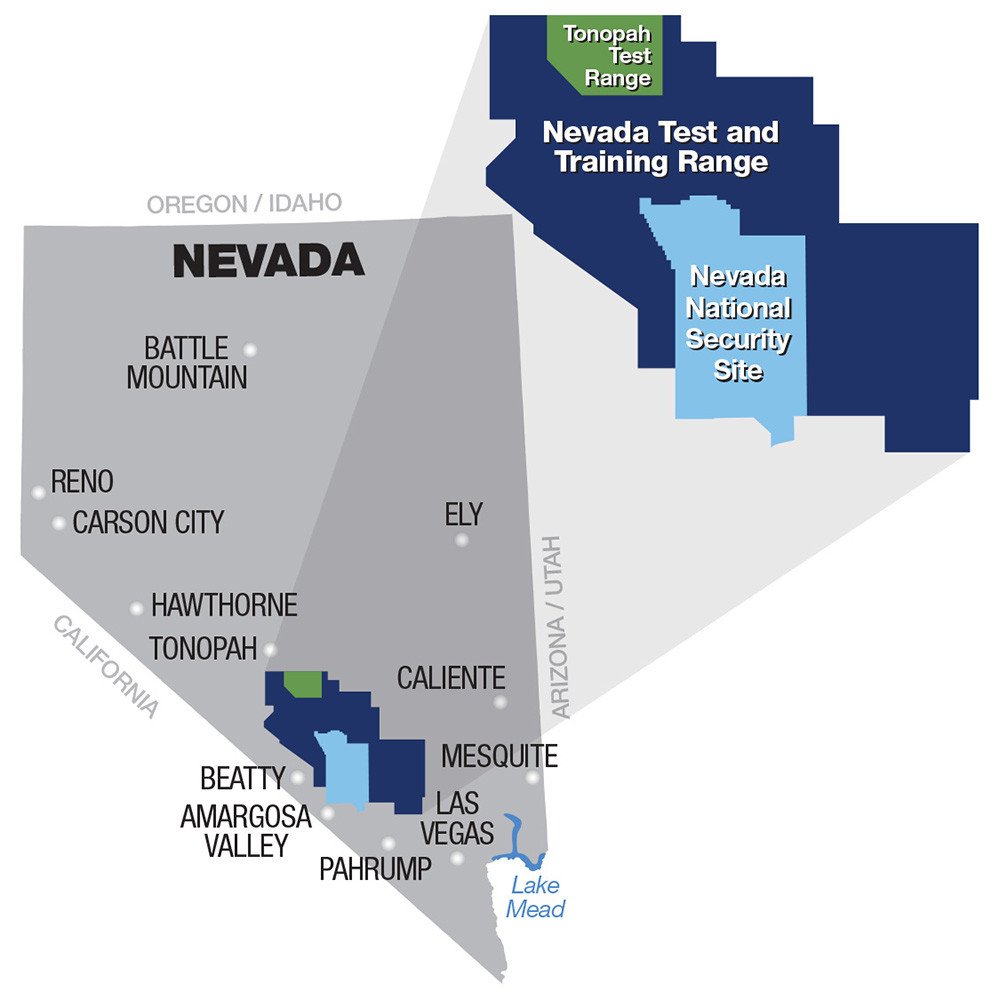
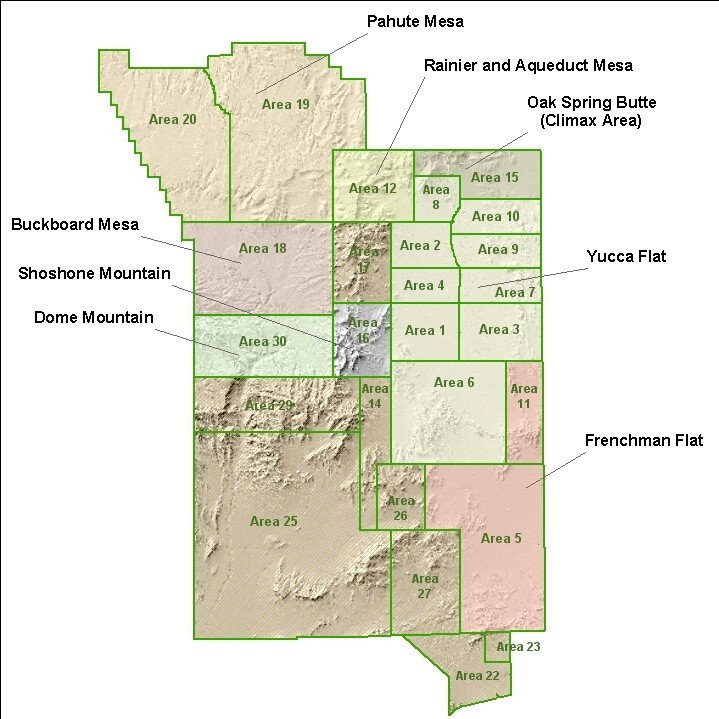
The test, which involved the use of chemical high-explosives and radiotracers, was conducted yesterday inside P Tunnel in Area 12 of the Nevada National Security Site (NNSA), according to a press release from the National Nuclear Security Administration (NNSA). The NNSS, which is situated within the boundaries of the U.S. Air Force’s Nevada Test and Training Range (NTTR), is used for a wide variety of testing purposes today. An agency under the Department of Energy, NNSA’s main jobs are to oversee the development and production of nuclear weapons, as well as manage America’s nuclear deterrent stockpile.

A map giving the general sense of the location of the NNSS with the NTTR. Center for Radiological Nuclear Training
Another map showing the specific testing areas within the NNSS. Area 12 is at the northern end of the complex. United States Geological Survey

“This experiment is especially focused on further enhancing the U.S. capabilities to detect a ‘decoupled’ explosion,” per NNSA’s release. “Data collected from the experiment will be used to validate scientific models and refine algorithms that are critical to U.S. nuclear explosion detection efforts.”

“Just as a stealth aircraft looks smaller on radar, decoupling can greatly muffle the signals detected by nuclear detection sensors, making a large explosion appear smaller,” the release explains. “In a conventional, or ‘coupled,’ underground nuclear test, a device is placed deep in a hole in close contact with the rock, allowing much of the explosion’s shockwave to reach sensors. In a decoupled test, by contrast, the device is detonated inside a large underground chamber, substantially reducing the explosion’s seismic signature.”

“In this experiment, researchers gathered measurements using a broad suite of advanced sensors, including accelerometers, seismometers, infrasound sensors, electromagnetic sensors, chemical and radiotracer samplers, and meteorological sensors,” it adds. ”Together, these measurements will improve scientists’ understanding of the signatures produced by underground explosions and strengthen the United States’ ability to detect and characterize nuclear explosive events.”

The U.S. already maintains a U.S. Atomic Energy Detection Systems (USAEDS) network, which is overseen by the U.S. Air Force Technical Applications Center (AFTAC). USAEDS is made up of more than 3,600 sensors positioned around the world. USAEDS is also tied in with the International Monitoring System (IMS), which is managed by the organization responsible for overseeing the Comprehensive Nuclear-Test-Ban Treaty (CTBT). AFTAC also supports the mission to monitor for potential nuclear testing globally using a fleet of specially configured WC-135R Constant Phoenix aircraft. In addition, those planes are used to help keep watch for unusual spikes in atmospheric radiation that could point to nuclear or radiological accidents or other incidents leading to the spread of potentially dangerous radioactive material.

With regard to the USAEDS network specifically, “once a disturbance is detected underground, underwater, in the atmosphere or in space, the event is analyzed for nuclear identification, and the findings are reported to command authorities,” according to AFTAC’s website.

As mentioned, the U.S. government has accused its Chinese counterparts of using decoupling to conceal new nuclear testing, and NNSA’s press release draws explicit attention to these allegations. At the annual Conference on Disarmament in Geneva, Switzerland, in February, Thomas DiNanno, Under Secretary of State for Arms Control and International Security, said that China had conducted at least one such test at Lop Nur on June 22, 2020. The Comprehensive Nuclear-Test-Ban Treaty Organization (CTBTO) subsequently said the IMS had not detected an event matching that description at that location on that date. For its part, the Chinese government has denied the accusation.

The social media posts below include satellite imagery showing activity at Lop Nur that could point to new nuclear testing activities in recent years.

参考
Satellite Imagery Analysis of China’s Alleged 2020 Nuclear Test at Lop Nurhttps://t.co/aafvU5Szh7
CSIS 20260213
ROLES SAT ANALYSIS No.7 中国に核実験実施の動き ー Lop Nur核実験場の画像分析 ーhttps://t.co/n66yYk0hLg
ROLES 20250522

— KAROTASU (@type36512) May 24, 2026

While China is a signatory to the CTBT, the country has never ratified it. The Chinese government last acknowledged a critical-level nuclear test in 1996, after which a self-imposed moratorium was put in place, at least publicly. As an aside, the United States has also signed, but never ratified, the CTBT, and has a similar self-imposed moratorium on nuclear testing since 1992. It is worth noting that the treaty does not ban so-called sub-critical testing, which involves fissile material, but does not result in a full-fledged nuclear reaction.

Last week, The Wall Street Journal reported that the Trump administration has been holding new talks with the Chinese government regarding various aspects of the country’s massively and rapidly expanding nuclear arsenal, including the testing allegations. That story immediately preceded a state visit by China’s President Xi Jinping to Washington, D.C., to meet with Trump.

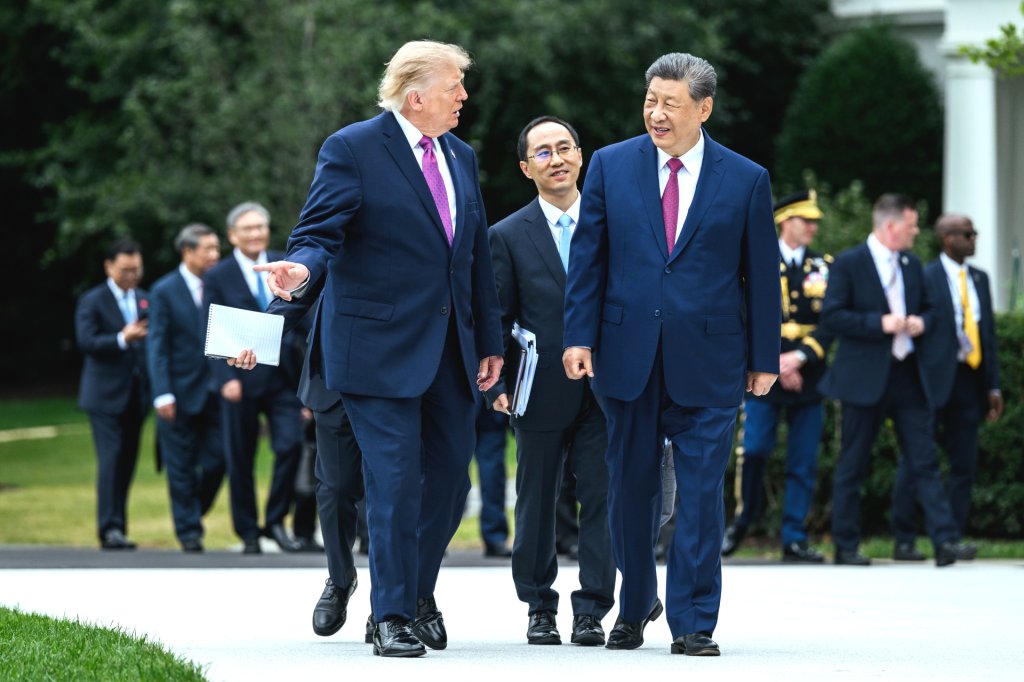
President Donald Trump (at left) and President Xi Jinping (at right) walk together at the White House last week. White House/Joyce N. Boghosian

“The discussions between American and Chinese officials have centered on measures to reduce nuclear risks and haven’t been aimed at negotiating a formal arms-control pact, an effort Beijing has sharply rebuffed in the past,” according to that report. “The Trump administration has begun to highlight the possibility of implementing new verification measures.”

“Independent experts say seismic instruments might be placed on or near test sites,” The Journal‘s story also noted. “Another possibility, which was floated during the Biden administration, is to install radiation-detection equipment at test sites.”

NNSA’s announcement about the test at the Nevada National Security Site is certainly an example of the development underway already of new means of verification that could be deployed at sites around the world.

The United States has separately accused Russia of conducting lower-yield nuclear testing in secret in the past. Russia is a signatory to the CTBT and had previously ratified it. In 2023, President Vladimir Putin revoked that ratification in line with the provisions of a law passed by the country’s parliament, or Duma.

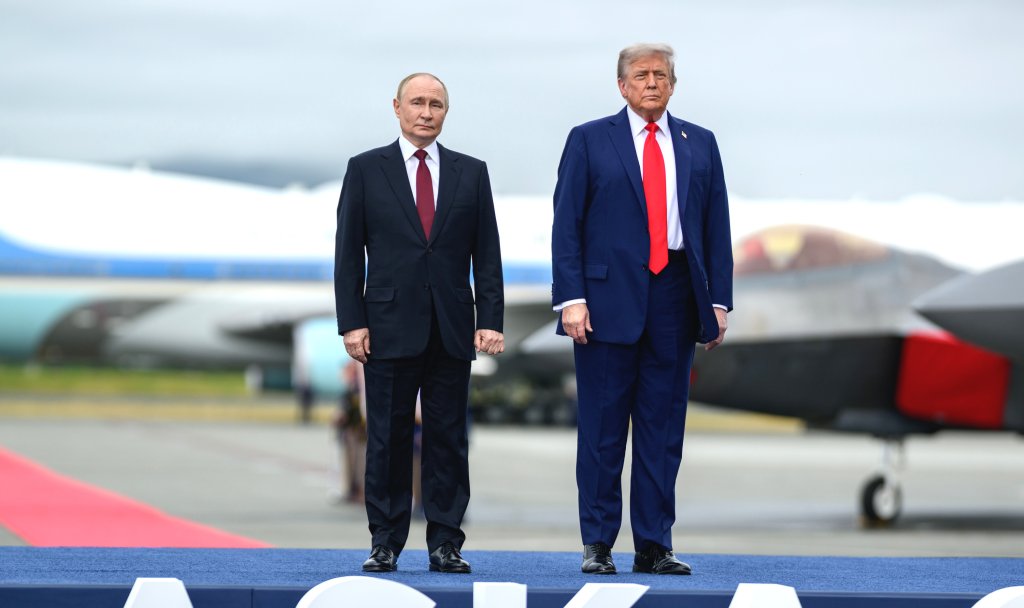
Russian President Vladimir Putin (at left) together with President Trump during their summit in Alaska in 2025. White House

President Trump has also floated the idea of the resumption of U.S. nuclear testing in response to Russian and Chinese activities, though other U.S. officials have downplayed the possibility of doing so. The United States is otherwise in the midst of a huge nuclear modernization effort that impacts the air, sea, and land-based legs of the deterrent triad. American authorities are also now pursuing these efforts in an environment fully unbounded by relevant arms control agreements following the sunset of the New Strategic Arms Reduction Treaty (New START) earlier this year.

The Russian government has said it is ready to conduct new nuclear tests if the United States pursues this course of action. The last official nuclear test in Russia came in 1990 right before the fall of the Soviet Union.

“It takes nuclear expertise to detect nuclear activities and experiments like these [to] ensure America remains unmatched in detection,” NNSA Administrator Brandon Williams said in a statement yesterday in light of the test in Nevada. “The Trump Administration has made it clear that the United States will lead from a position of strength. You cannot evade American innovation. With this experiment, we are sending a clear message: under this administration, America will never be outmatched.” 

Contact the author: joe@twz.com

The post U.S. Mimics “Decoupled” Nuclear Detonation By Blowing Up A Tunnel Conventionally appeared first on TWZ.

  •  

Xi in Washington, Trump exults, and the embrace masks the rift

Xi’s recent visit to Washington was merely a tactical step rather than a genuine reconciliation. Beneath the façade of conspicuously displayed friendliness lies a persistent antagonism across various domains—an antagonism that both sides have learned to “manage,” including in ways that serve their respective domestic political objectives. Both fully aware that the perception of China […]
  •  

The Final Frontier Goes to War: The Militarisation of Space

Space is becoming an increasingly contested domain as major powers expand military capabilities, satellite infrastructure, and counterspace systems, while the U.S. Golden Dome initiative reshapes strategic stability and raises new questions about the future of space governance. On 14th September 2026, US Secretary of the Air Force Troy Meink confirmed that the US has “on-orbit” […]
  •  

Trump Rejects Iran-China Peace Deal as Iran Prepares to Change from Defensive Position to Offensive Position in the War

by Brian Shilhavy
Health Impact News

I have just finished listening to an interview with international journalist Pepe Escobar, that aired today, about two hours before I am publishing this.

If you want to detox yourself from the U.S. corporate media propaganda, and get the “other side” of the current situation in the Iran War, investing time to watch this video (55-minutes long) is well worth it.

There were apparently attempts to knock Escobar offline during the interview, suggesting that there are forces who do not want people to hear what he has to say. (I have this video saved, so if it disappears from YouTube let me know, and I will restore it on another platform.)

Escobar states that Iran gained a lot of friends and a lot of support in New York last week at the UN General Assembly meeting. Escobar also gives information about China President Xi’s meeting with President Trump last week that was generally not covered in the U.S. corporate media.

He claims that Xi pressed Trump to return to the MOU (Memorandum of Understanding) from last June that was negotiated by Pakistan, and that the U.S. originally signed.

But over this past weekend, Trump made it known publicly that he is rejecting any offer by Iran to end the war, and Escobar states that this does not sit well with China at all, and that China will now become much more involved in working with and helping Iran in the current war.

He states that Iran is now going on the offensive, and he expects things to start happening this week.

Escobar does a good job of trying to educate his listeners as to what the mindset is in Shiite Islam, and that they have no fear of dying for their faith.

The Epstein Syndicate’s real agenda, according to Escobar, is to nuke both sides in the Middle East, both Persians and Arabs alike, and take over the Strait of Hormuz that Trump plans to name after himself.

Pepe Escobar:

There is no solution (to ending this war through negotiation). It is a do or die war.

Americans have been deceived into thinking that this is a religious war that was started with Iran to combat the dangers of Islam.

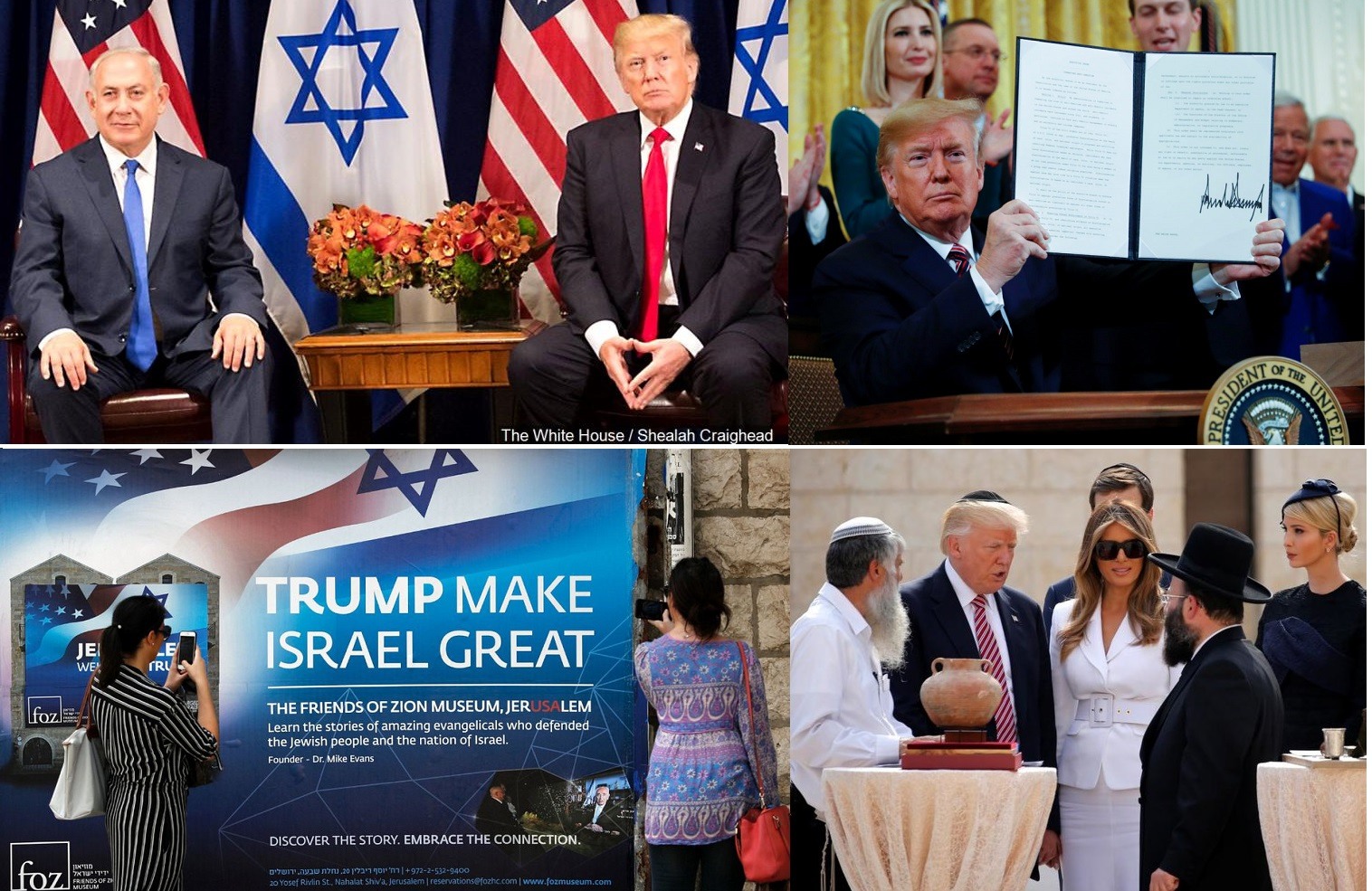
But the truth is that this is a religious war started by Trump and his Zionist friends who surround him, including Evangelical Christian Zionists, and he is forcing everyone in the U.S. to accept Zionist Christian beliefs, including the military, to fight this war based on Zionist religious views. See:

U.S. Military Officers Reveal the Real Reason Trump Bombed Iran: To Fulfill Evangelical Zionist Prophecy and Begin “Armageddon”

Escobar also addresses Russia, where he recently visited, and states that Russia is preparing to go to war against Europe.

He also mentions that BRICs has been slow to implement changes to bypass the Western financial system, but that there is the feeling that this will change in 2027, when the annual BRICs meeting will be held in China, and will be dominated by China’s agenda.

Related:

Trump’s War Against Iran Fulfills Prophecy, but NOT Christian Evangelical Zionist Prophecy

Saudi Arabia is Exporting ZERO Oil as U.S. Sends Unprecedented Amount of 2,000-pound Bombs to Israel

The Demise of Saudi Arabia, and Perhaps Christian Zionism? Yemen Shocks the World by Taking Control of the Red Sea

This article was written by Human Superior Intelligence (HSI)

See Also:

Understand the Times We are Currently Living Through

The Brain Myth: Your Intellect and Thoughts Originate in Your Heart, Not Your Brain

Is God’s Patience About to Run Out on the United States?

Second Edition of eBook Released: The Concept of the American Christian Family is a Myth and is NOT Found Anywhere in the Bible – by Brian Shilhavy

FREE eBook! Restoring the Foundation of New Testament Faith in Jesus Christ – by Brian Shilhavy

KABBALAH: The Anti-Christ Religion of Satan that Controls the World Today

Exposing the Christian Zionism Cult

The Bewitching of America with the Evil Eye and the Mark of the Beast

Jesus Christ’s Opposition to the Jewish State: Lessons for Today

Identifying the Luciferian Globalists Implementing the New World Order – Who are the “Jews”?

The Seal and Mark of God is Far More Important than the “Mark of the Beast” – Are You Prepared for What’s Coming?

The Satanic Roots to Modern Medicine – The Image of the Beast?

Medicine: Idolatry in the Twenty First Century – 10-Year-Old Article More Relevant Today than the Day it was Written

Having problems receiving our emails? See:

How to Beat Internet Censorship and Create Your Own Newsfeed

We Are Now on Telegram. Video channels at Bitchute, and Odysee.

If our website is seized and shut down, find us on Telegram, as well as Bitchute and Odysee for further instructions about where to find us.

If you use the TOR Onion browser, here are the links and corresponding URLs to use in the TOR browser to find us on the Dark Web: Health Impact News, Vaccine Impact, Medical Kidnap, Created4Health, CoconutOil.com.

The post Trump Rejects Iran-China Peace Deal as Iran Prepares to Change from Defensive Position to Offensive Position in the War first appeared on Health Impact News.

  •  

Trump and Xi: Managing Rivalry Before It Becomes Conflict

The Trump-Xi summit did not mark a US-China rapprochement, but it demonstrates that sustained diplomacy and strategic guardrails are essential to prevent intensifying competition from becoming direct conflict. The recent summit between Chinese President Xi Jinping and US President Donald Trump in Washington has demonstrated a significant paradox in contemporary international politics: the two superpowers […]
  •  
❌