❌

Reading view

The Black Panthers at 60: A through line of resistance from the South to California

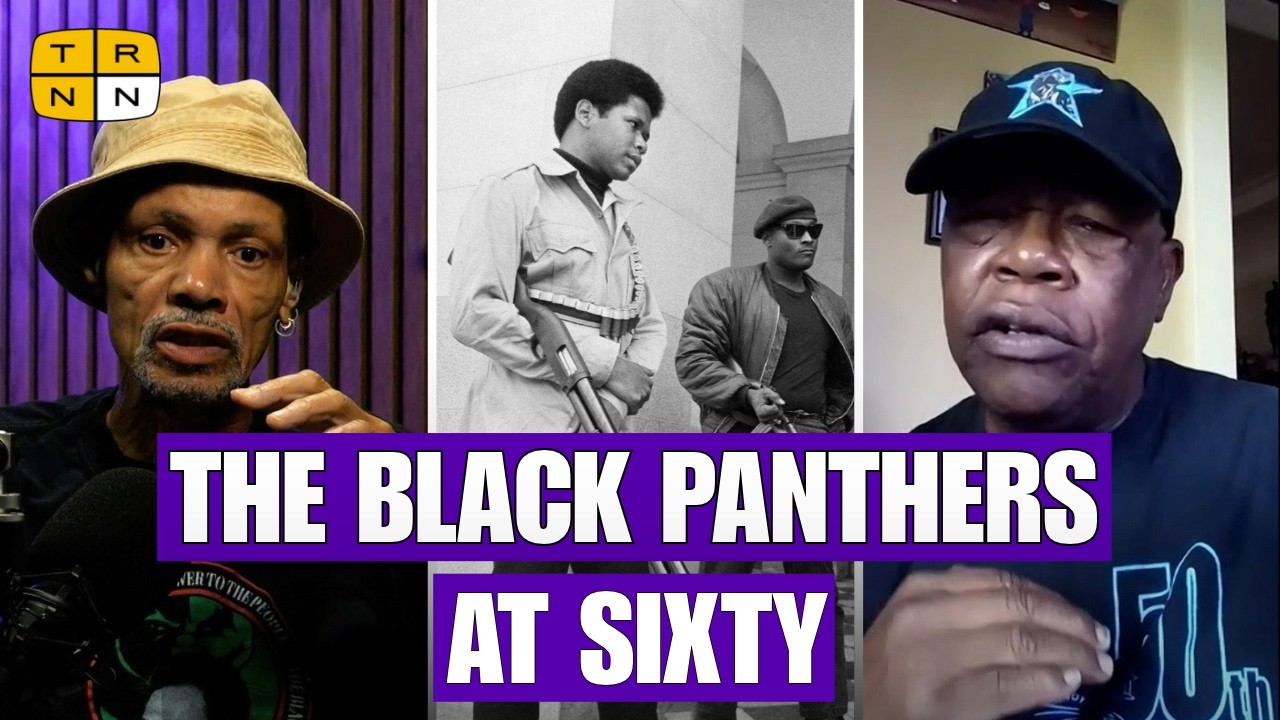
Two members of the Black Panther Party are met on the steps of the State Capitol in Sacramento, May 2, 1967, by Police Lt. Ernest Holloway, who informs them they will be allowed to keep their weapons as long as they cause no trouble and do not disturb the peace. Photo via Getty Images

In this episode of Rattling the Bars, host Mansa Musa interviews archivist, photographer, and veteran Black Panther Party member Billy X Jennings.

Joining the Party at age 17 after relocating from Hobson City, Alabama, to Oakland, Jennings managed BPP offices and served as bodyguard to Huey P. Newton. During Bobby Seale’s 1973 Oakland mayoral run, Jennings helped spearhead an unprecedented electoral effort: “…an organizing event on the highest level the parties had ever been. I mean, the party is known for organizing, but to go into electoral politics and do what we did for a first time basis, it changed over. Even though Bobby lost that election, it changed openly because it opened up so many doors. Part of his job was to kick down doors because we were the Vanguard.”

Today, Jennings operates the official Black Panther Party Alumni website and leads political education initiatives across the Bay Area for the Party’s 60th Anniversary.

Related links:

Credits:

  • Production/Post-production: Cameron Granadino
Transcript

The following is a rushed transcript and may contain errors. It will be updated.

Mansa Musa:

Welcome to the edition of Rattling the Bars. I’m your host, Mansa Musa. This year marks the 60th anniversary of the founding of the Black Panther Party, which started in Oakland in 1966. Today, I’m honored to be joined by Billy Jennings, AKA Billy X, well-known archivist in Oakland, member of the Black Panther Party, a photographer who runs the official Black Panther Party alumni website called It’s About Time. Thank you for joining me, Billy.

Billy X Jennings:

Hey, thanks for having me again. Good morning to everyone.

Mansa Musa:

And as we talked earlier, I was in different spaces and hoping I had met you while I was in Oakland. So this would more or less be like a reunion, but this is my first time meeting you. I’m really honored. I heard a lot about you. I know a lot about your work, and it’s an honor to be able to interview you about the party and some of the things and some of your experiences.

Billy X Jennings:

Okay.

Mansa Musa:

Please introduce yourself to our audience, who you are and how you came to be involved in the Black Panther Party.

Billy X Jennings:

Well, my name is Billy X. Jennings. I’m a member of the Black Panther Party. I joined in 1968 when I was 17 years old. And I came about joining the party because I’m from a historical town in Alabama in the South where most original members came from the South and migrated to California. So I came from a place called Hopson City, Alabama. And the tradition there, Hobson City have had the right to vote since 1890. And we were one of the only black municipal cities, little towns that could vote and had that right to do that. And so I came from a very strong area that had embedded that kind of thought into my mind. And when I traveled to California and I saw the Black Panther Party on TV for the first time in 1967 when they went to Sacramento, California, it blew my mind.

I was in high school at the time and I immediately changed our social… We had a social club called the Buccaneers. I changed it to the Panthers the next day. I didn’t know anything about the party with just that symbolism and how they stood up to the police and read their demands and so forth. It made a change happen in me. And it wasn’t until I graduated from high school, I decided to move to Oakland. And when I moved to Oakland, it was during the time that Huey knew the trial had just started and I was going to a college that’s two blocks away from where Huey was going on trial at the courthouse. And when the trial started, we would hear them saying Free Huey off the preg, free Huey. And I went over there one day and I was reading a book simultaneously at the same time called The Audible Malcolm X.

So what I read, I had read in the book already, but I heard Bobby Steele speak at a rally for Huey and they were saying the same thing. So it got me really interested in the party. And so I started going to the rallies to Free Huey. I met some Panthers and then they said their Panther office was going to open in my area. And when it did, I went down and joined, became a Panther in training and I’ve been working with the party ever since.

Mansa Musa:

Okay. And take us back to the party’s founding because you came in two years after its founding. And also you came in to your own observation and to what we know to be a fact, you came in at a point where they had just started to become on the radar of the feds, but more importantly, they was definitely on the radar of the Oakland police, LA police. And so talk about what was it like to be able to be in that space and ultimately find yourself in a position to be the bodyguard for Huey Newton once he got out.

Billy X Jennings:

Well, my process started at the very beginning. In 1968, there was a certain method the party employed. Before you became a Panther, you had to become a Panther in training, which requires six to eight week training. They give you a list of books that has about 35 different books, about books by Franc Fanon, Mao Saintong, Che Guevara, Pruma, and other revolutionaries to read. And you had to attend political education class on a weekly basis. Panthers at that time was required to read two hours a day. A Panther had to secure and have what we call technical equipment. Technical equipment was a firearm of some type, because at that time I joined the Black Panther Party, it was called Black Panther Party for self-defense. Later on, we dropped off the self-defense, but at that particular time, the party was engaged into patrolling

Police officers in the community, observing them and making sure they don’t beat and brutalize people. So the first six weeks is reading and studying and learning the rules of the Black Panther Party. And then you’re given a section. The city is divided into different sections. I worked in the section four in East Oakland. Section four had a section leader. They had a geographical area that they were responsible for. And so I was in section four. At that very beginning when I first started, we were theorizing about the breakfast program. It hadn’t came about, but we were still looking for geographical locations to have these breakfast programs in the future. So we did that. And every Panther is required to sell the Black Panther Party newspaper, which is the voice of the party. And at that time, the party was growing tremendously by leaps and bounds.

We had people flying into California from Kansas City, Chicago, New York, all to get this education. Before you can open up a chapter of the Black Panther Party or a branch of the Black Panther Party, you have to come to Oakland first and get educated. And you have to meet the leadership. The leadership has to eyeball you and find out your level of consciousness, what type of person you are before you can go back and represent the party. So this whole process was going on. People were flocking to the party. The party got so big that in 1969, we had put a stop on membership and we call that particular part of the party’s history the purge because the party had grown… I mean, the party was attractive. I mean, black coats, leather coats, I mean sunglasses and Afros at the same time. So this was a big thing for our culture.

At the same time, our culture level was rising even in music. James Brown had a record out in 1968 that elevated people’s social conscience, I’m Black and I’m proud. It moved people from the level of being a Negro, because that’s what the newspapers and that other people was referring us to. But in our community, we’re referring to ourselves as Black or African. And when James Brown came out with Black and I’m Proud, you could never go back to ever saying he was a Negro no more. There was different progress being made, but James Brown couldn’t sing no song like that. It wasn’t for groups like the Black Panther Party. Groups like The Shot Light Can’t Sing got to give more power to the

Mansa Musa:

People

Billy X Jennings:

Like the Black Panther Party, paving the way to educate people to lift up their consciousness. And so my role in the party, I came up as a Panther in training. I became a officer of the day, which is the person who runs the office. And from there I was transferred to central headquarters. Now, my name came about because my captain at that time was a legendary Panther called Robert Bay. Robert Bay ran the East Oakland office. Robert Bay was also an age of the central committee. And when Huey Newton got out of jail in 1970, the central committee made Robert Bay his permanent bodyguard and assistant. Now, I worked in that capacity as well after Huey got out of jail, mostly going to… I went to court with Huey on a daily basis because he was let out on appeal. He wasn’t just let out.

He had to go back to court and defend himself. And so my job became that. And also at the same time, I became to the Newton family. Mr. Newton, Mrs. Newton, I lived three or four blocks from them. I would walk over their house around the corner, mow their lawn. I’d be taken to the pharmacy, driving to doctors because they’re old people and they don’t drive so much. So that became my responsibility and me and Huey’s relationship grew behind that. So we had good personal relationship.

I worked central headquarters. Working at central headquarters was key to who I am today because I know Panthers from everywhere because every Panther had to call the central headquarters on a weekly basis or if the office gets ready or they need lawyer resources and stuff like that, I pick up the phone, write on the messages or tell them what they need to know. So I know Panthers from almost all the chapters and branches. And so I worked that group for a while. Then I was drafted into Bobby Seal’s campaign when he ran for mayor of open. I ran Bobby Seal’s campaign office in East Oakland. And it was an organizing event on the highest level the parties had ever been. I mean, the party is known for organizing, but to go into electorial politics and do what we did for a first time basis, it changed over.

Even though Bobby lost that election, it changed openly because it opened up so many doors. Part of his job was to kick down doors because we were the Vanguard. We had lead to struggle and there’s other people who follow behind us. I mean, our life was constantly in threat because we were on the front line, police department, clientele pro, all those things aimed at members of the Black Panther Party. So not only did we have the burden of dealing with the system, we had to deal with the authorities as well.

Mansa Musa:

Talk about, and you’re familiar with Eddie Conway, right? And so Eddie Conway, when he got locked up, he organized a chapter for the Black Panther Party in the prison, which I became a part of. And everything you outlined, as you was talking, I was reflecting on, we had to read at least two albums. We had every aspect of the thing that you outlined as what the party was doing, Eddie had us doing the same thing. We had political education classes, we had military classes, we had first aid classes. All our class was structured around an environment that we was in, and our technic class was finding a hole to get out of prison by any means necessary. So we had that type of mentality. So Billy, as an archivist, you have a lot of distortions in terms of the images that’s being projected of the party and it’s been dubbed Panther Porn, and just to note that it’s images that’s being perpetuated by the federal government, it’s images that’s become more idolization of the party versus the images as an archivist.

What would you say is the most positive or how would you characterize the imagery of the party as from an archivist in terms of educating people and raising their conscience? I see you with a shotgun. I know you in Sacramento. I know why you in Sacramento and I know why you coming out like that. That’s a good thing. But then I turn around, I see somebody standing on the corner. They got a picture of somebody standing on the corner with their mug broke and they got a bandela on and it had nothing to do with organizing, had nothing to do with raising people’s conscience. It’s got more to do with projecting the image of a thug, for lack of a better word. Talk about that if you can.

Billy X Jennings:

Well, the party was vilified on the highest level from the government who lied on us continuously to the media that used disinformation to scare people. The big image they had was, oh, these Negroes, they have guns. They’re angry. They hate white people. That’s their basic pitch on everything. Let it be Republican New Africa or any Black group, they paint them as very threatening group. And because we had guns, I mean, there was nothing… It wasn’t against the law in California to have guns, to have them in public long as they was not loaded, which we knew that. So the images they printed of the Black Panther Party was to vilify us and to scare white people and to frighten Black people. So it was all a part of their method to control who we were. They were trying to identify who we were. We could only define that.

We defined our own selves. And so that’s why we started a Panther newspaper in 1967 to get our voices and views out. So even though we had Time, Newsweek, Life Magazine, the Black Panther Party was cranking out close to 250 to 300,000 copies of papers per week into the community to combat this disinformation about the Black Panther Party. The 10 point program outlines what the Black Panther Party was all about, what we stood for.

Only on one aspect, which is 0.97, we talk about defending ourselves with guns. Other

Than that, we’re talking about social change in all levels, in education, housing and so forth. That was a threat to them because they did not want anyone to rocking the boat and we are rocking the boat. We are waking people up from their deep sleep. I mean, we’re telling people to read. We’re showing people what books to read. We are the Vanguard. People are following us. They didn’t want that. We had people in the white community, they wanted to join in with us. We had people from the Latino community, they want to join with us. You had people from around the world reading the 10 point program and looking at the positive aspect of the Black Panther Party. And that’s how we get the New Zealand Panthers and the Panthers from Africa and Panthers from India and the UK because of our social programs, how we was dealing with the oppressor here.

And so they follow those same examples there. They started social program, they started demanding and fighting for their rights. And that’s what the oppressor hates. They hate for people to wake up. And we were waking up big time in the 60s with the music, the culture, the back to Africa, who we are. How could you be a Negro in 1970 after all has been presented before you? So those things have changed. The party was a part of that change, that

Mansa Musa:

Consciousness. Talk about, because to your point, I remember reading the paper and when United Farm Workers, the party was one of the first papers to one, educate people on what their issues were, two, organize the boycott certain wines that they was taking and exploiting their labor and not giving them equal pay. So talk about the party’s social contribution to raising people’s concept, but more importantly, the elasticity of it, because can you see some of the influences today? Oh,

Billy X Jennings:

Definitely. Definitely. I can see the influences of the Rainbow Coalition. And that was something that Fred Hampton talked about. I could see the coalition building of the Black Panther Party. We’re working with the Brown Beret, the Young Lords, the Young Patriots. We’re working with the welfare rights groups. We’re working with the BSU, the Black Student Unions on campus. We’re working with prison groups. There was a number of prison groups throughout the country that started Black Panther Party off in San Quentin, in Algeria, Raway and other prisons because the ideology of the Black Panther Party was strong. What we were talking about, there was backbone to it. Everything we did was dialectic materialism, right? We were dialectic people. We looked at things from all sides. We just didn’t look at things in one side. Black Panther Party was an international group from the very start. Dewey and Bobby were international.

You can look at our reading list, those 35 books that come from Fanon, that’s from Africa, Mao Zeitang from China. So there was all kind of influences in the party. And so it was a big job just working to educate and organize people on all levels. Because in our community, action speaks. People learn in various ways, but in our community, people relate to action. They see something, they learn from it. Just like the breakfast program. We started the breakfast program in California and within two weeks it was a national program because people said, “Hey, we can do that here. This is how they did it. We can do it here.” The party set examples that people could follow in every aspect. We were on the forefront of fighting racism on all levels.

💾

“We started the breakfast program in California, and within two weeks it was a national program because people said, 'Hey, we can do that here. This is how they did it. We can do it here.' The party set examples that people could follow in every aspect. We were on the forefront of fighting racism on all levels.”
  •  

How bad does it have to get for the ECB to save France?

French borrowing costs are surging and central bankers are starting to fret. Some of them, at least.

The head of the French central bank, Emmanuel Moulin, told the Financial Times that his country risks being “strangled by interest rates”.

The best solution, he made clear, was for the French government to cut costs and reduce the deficit, which, in an unchanged scenario, could reach upwards of six percent next year.

Last week, the French minority government proposed €43bn worth of cuts for 2027. But pushing them through parliament is a tall order in a divided country.

Meanwhile, investors are dumping French bonds, pushing up French government borrowing costs compared to German benchmark Bunds. This is already immensely costly to French society.

“In three weeks, we’ve lost the equivalent of €15bn a year in higher debt-servicing costs over a 10-year horizon, or almost €100bn cumulatively over 10 years!”, French economist Shahin Vallée said on social media last week.

The gap, or spread, between French and German bond yields, historically around 50 basis points (0.5 percentage points), was 109 basis points when he wrote it on Wednesday. It is now 30 points higher.

Spreads are a crucial marker for financial stability because they show how nervous investors are. The bigger the spread, the higher the perceived risk.

And France’s parabolic bond spread is already bringing back unwelcome memories of the eurozone crisis in November 2011, when the spread reached 200 basis points.

Bypass parliament?

The question is what to do about it, and who is best positioned to act. The French government could bypass a parliamentary vote or push through the budget by ordinance, under articles 49.3 and 47 of the constitution, respectively.

This article continues, but the full version is available only to EUobserver.com subscribers. Visit account.euobserver.com/membership

  •  

Why ‘Made in Europe’ could push Burnham’s UK back into the EU’s arms

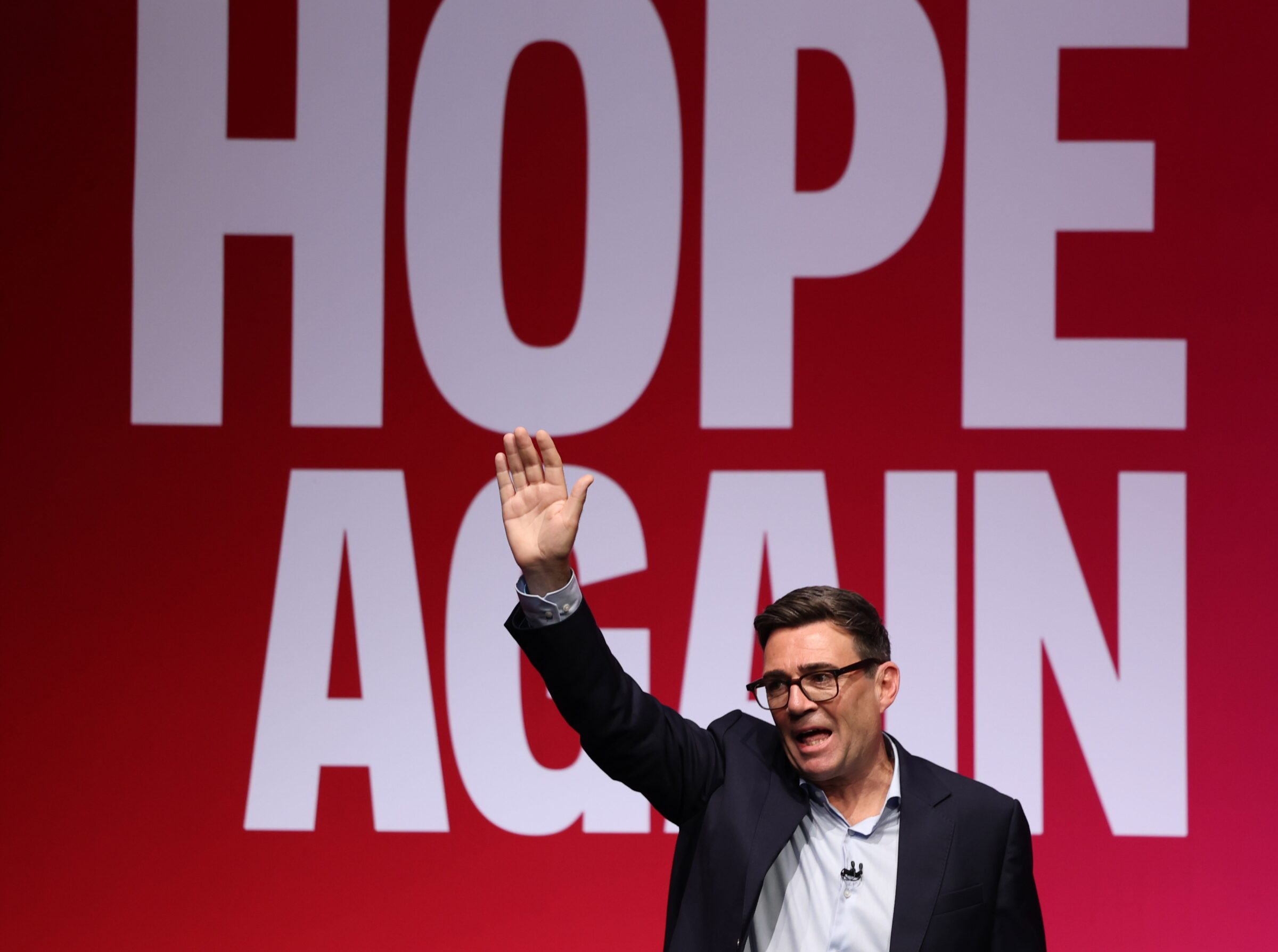
Having said several months ago that he had no intention of a ‘rerun’ of the Brexit debate, UK prime minister Andy Burnham told Labour delegates at the party’s annual conference in Liverpool last week that nothing should be off the table as far as EU-UK relations are concerned. 

Brexit had “done more harm than good”, he said, adding that “we will not give Britain the clear path we need into the rest of the century until we decide on a long-term relationship with what is still our largest market.” 

In fact, Britain could “go all the way” back into the EU, said Burnham.  

The new prime minister is still enjoying something of a honeymoon period. His Labour party now tops the opinion polls, albeit by less than 30 percent, and his early policy announcements on nationalising utilities and pension reform are the most radical in a generation. 

Even so, Burnham’s remarks were a surprise that left pro-European columnists positively giddy with optimism over the weekend. 

In truth, rejoining the EU – if it happens – would probably take a decade. 

Burnham didn’t offer any timetable or any other specifics, and has said that no moves towards EU membership would be taken before the next UK election due in 2029. And talk of rejoining the EU is not purely borne out of pro-European enthusiasm. 

This article continues, but the full version is available only to EUobserver.com subscribers. Visit account.euobserver.com/membership

  •  

Police Lock Down Entire Town to Stop Unrest as Nearly 150 Small-Boat Arrivals Use ‘New Route’ to Land in Gosport

Police have 'locked down' an entire town to stop unrest by setting up a dispersal zone covering the whole of Gosport following protests sparked by the arrival of a migrant boat using a 'new route' from Normandy.

The post Police Lock Down Entire Town to Stop Unrest as Nearly 150 Small-Boat Arrivals Use ‘New Route’ to Land in Gosport appeared first on The Daily Sceptic.

  •  

What the AI boom is actually doing for Americans

Paul Krugman is the greatest econ writer in the world, and also a legendary economist. But I sometimes feel that he has a blind spot when it comes to the value of new technologies. In 1998 he famously wrote: The growth of the Internet will slow drastically, as the flaw in ‘Metcalfe’s law’—which states that […]

The post What the AI boom is actually doing for Americans appeared first on Asia Times.

  •  

Border agents are randomly seizing phones of US citizens who support Palestine

US Customs and Border Protection logo is displayed on the side of a patrol boat on September 25, 2026 in San Diego, CA. Photo by Kevin Carter/Getty Images

This article was originally published by Truthout on Oct. 01, 2026. It is shared here under a  Creative Commons (CC BY-NC-ND 4.0) license.

Florida lawyer Jalal Shehadeh is convinced that the warrantless seizure of his cell phone by federal agents at the Newark International Airport after he returned from Palestine this September was not random.

Shehadeh, a Miami-based attorney and Palestinian rights advocate, was held for several hours for a secondary inspection and had his phone seized by U.S. Customs and Border Protection (CBP) after he refused to allow federal agents to search it.

“It’s just a wildly invasive thing to do to somebody with no individualized justifiable basis to do it,” Shehadeh told Truthout.

He suspects federal authorities targeted him for his activism. The lawyer is involved in a legal complaint against a federal judge in Florida over the judge’s anti-Palestinian statements.

Shehadeh is one of several Palestinian rights advocates who have been detained and had their personal devices searched by CBP while returning to the U.S. from international travel since the start of Israel’s war on Gaza in October 2023.

Other similar cases include Amir Makled, a lawyer from the Detroit area who was representing University of Michigan students involved in pro-Palestine activism, journalist Max Blumenthal, and Osama Abu Irshaid, the executive director of American Muslims for Palestine (AMP).

Jenin Younes, president of the American-Arab Anti-Discrimination Committee (ADC), which filed a legal motion earlier this week demanding the return of Shehadeh’s phone, said CBP appears to be escalating phone searches against opponents of President Donald Trump’s agenda.

“Common sense tells us that they are targeting people who have pro-Palestine views,” Younes told Truthout.

She stressed that the searches are illegal. The Fourth Amendment of the U.S. Constitution protects “persons, houses, papers, and effects, against unreasonable searches and seizures.”

Younes said the “border exception” that allows searches to ensure that no illegal items are brought into the country should not apply to phones.

Younes, a civil liberties attorney, said the authors of the Constitution would have certainly opposed giving the government blanket authority to search people’s phones without cause.

“Law enforcement can search shipping vessels coming into the Boston harbor to make sure that they don’t have contraband. That’s a totally different thing from searching the contents of people’s smartphones,” she said. “I don’t think the framers would have thought that you could read the papers of somebody coming into the country in their suitcase, and likewise, a smartphone, which has so much more personal information.”

The case of Shehadeh and other Palestinian rights supporters targeted for searches at the border has reignited the debate over the application of constitutional protections at ports of entry.

Shehadeh said that when he was stopped at Newark on September 17, CBP officers only conducted a “cursory” search on his bags because they did not appear to be interested in physical items.

“They are looking for our thoughts,” he said. “They’re looking to see what I’m thinking. They want to see who I’m messaging. They want to see what WhatsApp groups I am part of.”

The lawyer, who has Global Entry for expedited border crossing, said he was flagged by name for secondary inspection and led to a waiting room. He was asked general questions about his travels, work, and family before the agents asked to search his phone.

Shehadeh objected to allowing the officers to go through his device, citing the attorney-client privileged information on the phone. The agents kept him waiting and subjected him to another round of questioning as they took the case to a supervisor. As the clock ticked, the Florida-based lawyer missed his connecting flight to Miami.

Eventually, he was informed by an officer that CBP would take his phone and let him go. “I told them, ‘I just want to be very clear. I am not giving you permission, consent to search my phone, and I’m not giving any other arm of this agency or anybody else consent to search my phone,’” he said.

The cell phone still has not been returned.

Shehadeh told Truthout that if the goal of the episode were to deter his activism for Palestinian rights, it would not succeed.

“It will not move our advocacy work an inch. Literally, it will have no impact. If anything, it will fuel the importance of doing more of this work,” he told Truthout. “But when it comes to travel, I’m going to be much more careful about what my phone situation will be.”

The Trump administration has been cracking down on Palestinian rights activism, including through a deportation campaign targeting non-citizen students who participated in protests against the war on Gaza.

Shehadeh warned that the administration is creating a new norm of weakened constitutional rights that many people may take for granted.

“This search is a perfect example of that. Protection against search and seizure is one of those things that comes out of our Constitution that really empowers citizens to know you will not have government intrusion,” he said.

“What this administration is doing is chipping away at the rights of Americans — of all Americans. But sadly, Arabs, Muslims, and minorities tend to be the first victims of these abuses. But they’re certainly not going to be the last ones.”

Abu Irshaid of AMP said the government is turning border crossings into a “hunting ground for individuals it wishes to target” for political retaliation or to gather information about constitutional protected activity.

Abu Irshaid has sued the government, alleging that the repeated searches he has been subjected to at the airport, along with the seizure of his phone, amount to illegal discrimination.

A federal judge ruled in his favor in July, declaring that the government violated Abu Irshaid’s rights with the searches.

Some activists are pinning their hopes on a case before the Supreme Court, Anibowei v. Blanche, that could determine whether the Fourth Amendment applies to the electronic devices of U.S. citizens travelling internationally.

CBP argues that only a tiny fraction of travelers, less than one-half of one percent, are subjected to a device search. But official statistics show an uptick in such searches since Trump returned to the White House.

In 2024, federal officers inspected the devices of 47,047 travelers. The numbers increased to 55,318 last year. Of those inspections, 13,590 targeted U.S. citizens in 2025, compared to 10,541 a year earlier.

In January, CBP released a memorandum outlining its regulations and authorities around searching travelers’ personal devices. The document stressed that people at ports of entry have diminished privacy rights and that phone searches are essential “to identify and combat a wide range of illicit activities.”

A basic search, one where the officer goes through the phone manually, can be conducted “with or without suspicion.”

The bar is higher for carrying out an advanced search, which includes copying and analyzing the content of the phone through an external device. It requires “reasonable suspicion of activity in violation of the laws” enforced by CBP. But there appears to be a loophole. An advanced search can still be conducted “in the absence of individualized reasonable suspicion when there is a national security concern.”

The directive does not provide details on what constitutes a “national security concern” to enable an advanced search.

Officers can only search the device itself and may not access information stored remotely. That’s why they must disable the external connectivity of the phone, according to the memorandum.

The directive gives officers the authority to seize a device and keep it even after the traveler leaves the airport, which is what happened to Shehadeh. According to the memorandum, CBP could effectively keep his phone indefinitely. The agency is allowed to hold on to the device for a period of five days, which can be extended by 15 days and subsequently by seven days in increments without specified limits.

As of Thursday, CBP has kept Shehadeh’s phone for 14 days, meaning the agency has applied at least one extension to its hold on the device.

In response to Truthout’s request for comment, a CBP spokesperson told Truthout that the likelihood of a search at a port of entry “remains exceedingly rare” but did not answer specific questions about Shehadeh’s case, including why the agency is still holding on to his phone.

“U.S. Customs and Border Protection has statutory authority to conduct border searches of electronic devices for all persons entering or departing the United States, regardless of citizenship, to enforce laws addressing terrorism, child exploitation, drug- and human-smuggling, visa fraud, and national security threats,” the CBP spokesperson said.

In the face of the U.S.’s ever-expanding definition of “national security threats,” which now seem to include lawyers, journalists, and activists who have advocated for the rights of Palestinians, are now living in fear that border stops are being used as a form of intimidation.

“What is most disturbing is that many of these aggressive government actions target activists whose only ‘offense’ is criticizing Israel’s violations against Palestinians,” Abu Irshaid told Truthout in a statement.


A Personal Connection

As a reporter, I try to stay out of the stories I am telling. But my personal experience with being stopped and searched after returning to the U.S. from international travel is too relevant for this article to withhold.

After returning to Dulles International Airport outside Washington, D.C. from a trip to Lebanon in February 2025, I was detained for nearly five hours and faced similar treatment as Shehadeh.

CBP officers asked me intrusive questions relating to my work as a journalist and political leanings in my family’s hometown in Lebanon, which had been targeted by Israeli bombardment in the war.

After a brief search of my bags, a CBP officer asked me to hand my phone and unlock it. I initially refused. The federal agent handed me a piece of paper stating that CBP has the lawful ability to search electronic devices. When I highlighted that the flyer reflects CBP policy, not the Constitution, the officer threatened to seize both my phone and computer indefinitely if I didn’t hand the phone in.

CBP took the phone after pressuring me to write down its passcode and kept me waiting for around two hours before handing it back — with a disclaimer that they couldn’t “process” it because the system was down. They eventually let me go. Throughout the hours-long ordeal, the officers did not allow me to contact my family member who was waiting to pick me up at the airport.

I have traveled outside the country twice since then and have been flagged for secondary inspection on the way back each time, albeit without a device search. At the advice of press freedom experts, now I travel internationally with an alternative phone that does not contain sensitive personal or professional information.

  •  

Le gouvernement à l'école de la rue

JPEG - 221.6 kio
Tadeusz Makowski. — Dzieci z pochodniami. — (Des enfants avec des torches / La retraite aux flambeaux), 1928

En 1986, les cortèges étudiants et lycéens avaient contraint le gouvernement de Jacques Chirac à retirer le projet Devaquet. En 2006, les mobilisations de la jeunesse forçaient l'exécutif à abandonner le contrat première embauche. Quelle mesure répondrait aujourd'hui aux revendications lycéennes ? Recruter les professeurs manquants laisserait entière la question de la sélection. Supprimer Parcoursup ne fournirait pas les moyens d'accueillir les étudiants. Rénover les établissements n'abolirait pas l'angoisse d'un futur obscurci par l'IA et le climat. Le mouvement lycéen pointe au fond l'inconséquence générale des politiques menées depuis des décennies : gérer l'instant ; mépriser l'avenir.

Les gouvernements successifs ont installé l'adaptation individuelle comme réponse aux difficultés collectives. Les candidats perfectionnent leurs dossiers et les demandeurs d'emploi accumulent les expériences, tandis que les ressources familiales déterminent leur capacité à patienter ou à partir ailleurs. L'idéologie du mérite rapporte ensuite le résultat aux efforts de chacun.

En réclamant des moyens, les contestataires font exploser le cadre que voudrait imposer le gouvernement : un meilleur dossier ne crée aucune place à l'université ; la motivation ne remplace aucun professeur. Ils rejoignent ainsi les revendications des personnels, dont les conditions de travail déterminent aussi les conditions d'études. Au moment précis où se prépare un budget qui fera la part belle à la défense aux dépens des services publics, une jeunesse souvent décrite comme décérébrée par les réseaux sociaux construit une mobilisation pleinement politique. Et qui reçoit l'appui d'organisations syndicales et de partis expérimentés.

L'exécutif, qui redoute traditionnellement les mobilisations lycéennes, a choisi d'en déléguer la gestion au ministère de l'intérieur. La brutalisation du maintien de l'ordre accompagne une transformation politique plus profonde. Après la deuxième guerre mondiale, l'autorité de l'État s'était consolidée avec les protections accordées au monde du travail et la reconnaissance de sa capacité à négocier. Les dirigeants politiques cherchent désormais la légitimation des investisseurs et de Bruxelles en montrant leur détermination à briser les mobilisations. L'école de la rue leur administrera-t-elle cette fois une cuisante leçon ?

Dans nos archives

  •  

Brutalisation de l'ordre manifestant

À partir du début du XXe siècle, la république a cherché à mieux encadrer les protestations populaires dans la rue en privilégiant l'évitement. Depuis les années 2000, l'approche est plus punitive. La priorité est donnée à l'arrestation des « fauteurs de troubles ». Une évolution qui favorise les violences et pose la question du respect du droit de manifester.

JPEG - 69.7 kio
Mathieu Clément. – « CRS », 2021
© Mathieu Clément

À la tribune du Palais-Bourbon, un député dénonce les violences qu'ont subies quelques jours plus tôt des protestataires, dans une petite ville du nord de la France. La journée a débuté par un regroupement devant une usine. Vers 9 heures, « les gendarmes, sur ordre du lieutenant et sans provocation, ont chargé. Un homme a été blessé, un enfant a eu l'oreille à moitié coupée. La colère de la foule a commencé là et s'est manifestée en effet par des pierres lancées ». Après un moment d'apaisement, la situation se tend à nouveau : « Vers 3 heures [de l'après-midi], de nouvelles bousculades ont lieu et le nombre des manifestants grossit. » Puis la violence se déchaîne : « Les gendarmes frappent de tous côtés. Des femmes, des enfants et des vieillards sont renversés. L'exaspération monte. Un grand nombre de citoyens ripostent aux gendarmes avec des pierres. » Soudain, c'est le drame : « Un grand désordre règne et c'est à ce moment que, sans qu'on sache qui en a donné l'ordre, sans sommation préalable, un terrible feu de peloton a été tiré dans cette masse de monde. (…) La place était couverte de blessés et de morts. » Interpellé, le ministre de l'intérieur répond avec véhémence : « Nous avons donné des ordres pour assurer la tranquillité publique ; nous les avons donnés avec netteté, fermeté et prudence. » Il livre ensuite son propre récit : « La gendarmerie locale a pu distinguer dans la foule toute la clientèle ordinaire des contrebandiers et des gens sans aveu qu'on peut évaluer à cinq ou six cents, parmi lesquels plus d'un quart d'étrangers. Toute la journée la force publique et l'armée ont eu à subir les injures, provocations et agressions de plus en plus violentes de la foule, et ce n'est qu'à la dernière extrémité et sous l'impression du danger qu'il n'était plus en leur pouvoir de conjurer autrement qu'elles ont dû recourir à la force des armes. »

Il conclut : « Je ne sais si les agents, lassés par les provocations de la foule, se sont laissé entraîner à quelques violences ; mais ce que je sais bien c'est que des hommes dont on n'a pas encore parlé ont été blessés et mis en danger de mort en accomplissant leur devoir. (…) Je tiens à envoyer mes remerciements à tous ces braves gens. » Cette dernière tirade déclenche la colère d'un député, qui le traite à deux reprises d'« assassin », et se voit exclu temporairement de l'Hémicycle.

Revendication de la « modération, [de la] fermeté et [de la] prudence » de l'État, controverse sur la responsabilité de l'escalade violente (manifestants ou gendarmes), rôle des « perturbateurs » (étrangers notamment), soutien inconditionnel aux forces de l'ordre : la scène fait écho aux polémiques qui entourent ces dernières semaines la répression des mouvements contre la réforme des retraites ou contre les mégabassines, comme à Sainte-Soline le 25 mars dernier. Pourtant, le député, bien que socialiste, n'appartient pas à la Nouvelle Union populaire écologique et sociale (Nupes) et le ministre n'est pas M. Gérald Darmanin. Il s'agit respectivement d'Ernest Roche et de Jean Antoine Ernest Constans, qui s'affrontent à la Chambre le 4 mai 1891, trois jours après le massacre de Fourmies, qui a fait neuf morts (dont deux enfants) et trente-cinq blessés par balle parmi les ouvriers réclamant la journée de huit heures et le repos du 1er-Mai (1).

« Citoyens temporairement égarés »

Une telle similarité des échanges étonne car, depuis la fin du XIXe siècle, le maintien de l'ordre a beaucoup évolué. Il ne relève plus de l'armée, alors chargée de ce que l'on appelait les « émotions populaires ». Dès que la police locale ou la gendarmerie étaient en difficulté, on la faisait intervenir, comme le 145e régiment d'infanterie à Fourmies. Des Trois Glorieuses de 1830 à la « semaine sanglante » de 1871 en passant par les journées de juin 1848, l'écrasement des crises sociales ou de régime provoque des milliers de morts et des dizaines de milliers de blessés. Mais cette répression brutale ne constituait guère un problème politique, ni même moral. Pour les élites d'alors, le peuple est par nature différent. Il constitue une masse dépourvue de volonté individuelle, prête à suivre aveuglément quelques meneurs dans l'émeute (2). Anne Robert Jacques Turgot, contrôleur général des finances de Louis XVI, livre un condensé de cet imaginaire social dans sa lettre aux élus des états de Bourgogne du 18 avril 1775. À la suite des pillages et de la destruction d'un moulin par des paysans en colère contre le prix du grain, il écrit : « Il faut avant tout en imposer à la populace et être le plus fort », puis « arrêter les chefs de l'émeute, qu'on peut aisément connaître et découvrir », l'impunité étant considérée comme « un grand encouragement pour les émeutes à venir ».

À la fin du XIXe siècle, cette philosophie n'est plus guère soutenable. La domination politique restait le monopole de la noblesse sous l'Ancien Régime ; elle était réservée aux plus fortunés sous la monarchie censitaire ; l'instauration du suffrage universel masculin en 1848 admet le peuple en politique. Les formes les plus coutumières et personnelles d'autorité se dévaluent avec l'apparition des clubs, des comités électoraux, des ligues (comme celle de l'enseignement), des sociétés de secours mutuel, puis des partis. Ces structures organisent les citoyens et constituent le creuset de discours, de programmes et d'idéologies qui mettent particulièrement l'accent sur la question sociale et la condition des travailleurs (3). La mobilisation politique n'est pas pour rien dans l'avènement de la IIIe République et la consolidation des républicains, à partir de 1877. Même si cela va prendre des années, il devient délicat pour le nouveau régime de garantir d'un côté des libertés d'expression (avec par exemple les lois sur la presse de 1881), mais aussi celles de se réunir et de se syndiquer, tout en faisant tirer par la troupe sur ceux qui les exercent. D'autant que l'armée n'est pas toujours fiable. Lors de la révolte des vignerons de 1907 (qui fait sept morts à Narbonne), le 17e régiment d'infanterie se mutine et fraternise avec les manifestants, mettant en difficulté le gouvernement de Georges Clemenceau.

Le début du XXe siècle est donc marqué par plusieurs projets de loi visant à mettre en place une force spécialisée dans la gestion des protestations, distincte de l'armée. Après de multiples hésitations, celle-ci voit finalement le jour le 22 juillet 1921, avec la création de 111 « pelotons mobiles de gendarmerie ». Rebaptisée « garde républicaine mobile » en 1926, cette force comptait 21 000 hommes en 1939 et avait le quasi-monopole du maintien de l'ordre sur le territoire français, à l'exception de Paris. Elle développe une doctrine, un entraînement et des savoir-faire originaux (4). Il s'agit de ne plus traiter les protestataires comme des ennemis ou des adversaires mais comme des « individus temporairement suggestionnés », pour reprendre la terminologie des années 1930, ou des « citoyens temporairement égarés », pour utiliser celle des années 1970. Ceci suppose d'éviter les contacts directs avec ces derniers, dont l'expérience montre qu'ils dégénèrent toujours en affrontements. On leur préfère des techniques de canalisation, de contention et de dispersion des foules, qui impliquent notamment de laisser toujours une porte de sortie. La discipline collective, le barrage des corps, la crosse du fusil et la matraque constituent dans un premier temps les seuls outils disponibles. Ils sont complétés après la seconde guerre mondiale par des technologies permettant de tenir les manifestants à distance, comme le gaz lacrymogène — inenvisageable auparavant en France en raison du souvenir des tranchées —, les grenades offensives et les lances à incendie. En 1944, la police se dote à son tour d'unités spécifiques, les compagnies républicaines de sécurité (CRS), qui comptent près de 13 000 hommes en 1947 et reproduisent l'organisation, la doctrine et l'équipement de la gendarmerie mobile.

Les deux forces s'engagent dans les rugueux conflits sociaux de la période (comme les grèves des mineurs de 1947-1948), au prix d'un grand nombre de blessés de part et d'autre. Mais on remarque une diminution significative des décès parmi les protestataires, notamment en province. Paris reste une exception, le préfet disposant de ses propres unités, prises parmi les effectifs de la police municipale (5). Elles ne disposent ni de l'entraînement ni du savoir-faire de leurs collègues et n'hésitent pas à déchaîner leur brutalité et à « régler leurs comptes » avec les Algériens (sept victimes lors de la manifestation du 14 juillet 1953 et plusieurs dizaines le 17 octobre 1961 (6)) ou les communistes (dix morts au métro Charonne à Paris, le 8 février 1962).

La crise de mai-juin 1968, par sa virulence et son ampleur, met à rude épreuve le ministère de l'intérieur. Contrairement au discours officiel, cinq morts sont à déplorer (trois étudiants à Paris, à Flins et dans le Calvados, et deux ouvriers à Sochaux) mais, surtout, les forces de l'ordre sont apparues dépassées en nombre et en équipement. En conséquence, vingt mille policiers sont recrutés entre 1968 et 1974, et CRS comme gendarmes mobiles reçoivent de nouvelles protections corporelles (casques, visières, jambières, boucliers, masques à gaz) et du matériel offensif et défensif, comme les fourgons-pompe, les véhicules blindés à roues de la gendarmerie (VBRG) et des grenades plus diversifiées. En avril 1969 ouvre également à Saint-Astier, en Dordogne, le Centre de perfectionnement de la gendarmerie mobile (CPGM), destiné à la formation continue des personnels. En 1977, une véritable ville — Cigaville — avec des bâtiments, des rues et des places y est construite, permettant de s'entraîner à toutes les situations du maintien de l'ordre, y compris les plus dures (barricades, cocktails Molotov). Les CRS en profitent aussi, avant de se doter de leurs propres centres. Ces entraînements visent à inculquer aux personnels une discipline collective et une maîtrise d'eux-mêmes permettant de gérer la peur et le stress inhérents à leurs missions.

Une nouvelle actualisation significative de l'équipement s'opère à la suite de la manifestation des marins-pêcheurs de Rennes du 4 février 1994, considérée par les professionnels comme l'une des plus violentes de la période contemporaine (usage de fusées de détresse et de harpons, blessures « de guerre » chez des policiers et gendarmes, incendie du parlement de Bretagne). Des grilles sont apposées sur les véhicules, et surtout apparaissent les tenues de « Robocop », comme les nomment les intéressés : uniformes ignifugés, manchettes, coudières, épaulières et casque en Kevlar, protège-nuque, etc. (7).

La « violence contenue » revendiquée par les forces de l'ordre laisse dans son sillage un vaste cortège de blessés et de mutilés. Mais les victimes mortelles sont rares après 1968, au point que l'on se souvient encore des noms de Malik Oussekine, tué par des voltigeurs motocyclistes lors du mouvement étudiant contre la loi Devaquet, en décembre 1986, ou de Rémi Fraisse, qui décède des suites de la déflagration d'une grenade à Sivens, en octobre 2014 (8). Les responsables policiers en sont même venus à vanter un « modèle français » de maintien de l'ordre. Ils regardent avec circonspection les difficultés des polices étrangères pour faire face au mouvement altermondialiste (comme à Seattle en 1999, à Göteborg et à Gênes en 2001) et restent à l'écart des réflexions qui se mènent au niveau européen.

Pourtant, quelque chose change graduellement à partir de la fin des années 1990. Les principaux responsables gouvernementaux considèrent que la conflictualité sociale a diminué et voient dans les compagnies de CRS et les escadrons de gendarmerie mobile (EGM) un réservoir de personnels pouvant être aisément redéployés dans la lutte contre l'« insécurité », dont ils ont fait une priorité. Amorcé sous le gouvernement de M. Lionel Jospin (1997-2002), ce mouvement s'accélère par la suite. Le programme d'action annexé à la loi d'orientation et de programmation pour la sécurité intérieure du 29 août 2002 indique ainsi : « Les forces mobiles ont été créées dans un contexte historique particulier marqué par des périodes d'émeutes et de troubles collectifs. La démocratie apaisée que notre pays connaît depuis de nombreuses années permet aujourd'hui un changement radical de la doctrine d'emploi des forces mobiles. Cette politique systématique rompant avec la priorité de l'ordre public permet de mettre les trente mille hommes qui constituent aujourd'hui les forces mobiles au service de la sécurité quotidienne. »

Le nombre de policiers et de gendarmes disponibles pour le maintien de l'ordre diminue. Ils ne sont plus que 25 786 en 2015, soit une baisse de presque 15 % par rapport à 2002, alors même que leurs missions se sont diversifiées. La saturation qui en découle pour ces unités s'est traduite par la montée en puissance des compagnies d'intervention (CDI). Existant localement sous des formats divers, elles sont composées de policiers de sécurité publique qui remplissent surtout des missions de sécurisation dans la lutte contre les « violences urbaines » et les trafics de stupéfiants. Reconnaissables à leurs casques barrés de deux bandes bleu roi (qui les distinguent des jaunes des CRS), elles sont devenues depuis la fin des années 2000 un élément central du maintien de l'ordre. Outre le renfort numérique qu'elles apportent, elles sont plus autonomes dans leur commandement et leur action que les CRS et les EGM, considérés comme trop statiques. Elles apparaissent également mieux ajustées que ces derniers à la judiciarisation du maintien de l'ordre.

JPEG - 56 kio
Mathieu Clément. – « Foule à Paris », 2021
© Mathieu Clément

L'arrestation ne faisait partie qu'à la marge de la gestion des manifestations (par exemple après leur dissolution). Le général Bertrand Cavallier, ancien responsable du CPGM, explique que la doctrine traditionnelle consiste d'abord à « absorber une violence qui est généralement une violence passagère. C'est le concept de désordre acceptable. Quel est l'effet final recherché ? Va-t-on s'intéresser à quelques dégradations ou va-t-on comprendre qu'après cette montée de fièvre il y a un retour à la normale et que l'on va pouvoir discuter et essayer de répondre aux attentes des manifestants, même si ces manifestants ont été violents (9) ? ». À partir du début des années 2000, le tournant punitif des gouvernements qui se succèdent se fait sentir sur ce terrain également. Il s'agit d'en finir avec l'« impunité » et donc d'identifier et d'arrêter des fauteurs de troubles. Les CRS et les gendarmes vidéastes font leur apparition, et plus récemment les « produits marquants codés », laissant des traces sur la peau et les vêtements. Des techniques qui permettent d'intervenir a posteriori. Les procureurs n'hésitent plus à autoriser les arrestations préventives et à organiser leurs services pour agir dans l'urgence. Surtout, on assiste à une actualisation tactique qui sépare les manifestants conformes de ceux qui se livrent à des actes illégaux (les « casseurs »), qu'il faut maintenant aller chercher au cœur même des cortèges. Cette distinction se retrouve clairement dans le schéma national du maintien de l'ordre adopté en 2021. Il formule deux objectifs « distincts ou complémentaires » de la gestion de la manifestation, « la dispersion sans délai des groupes hostiles et des interpellations rapides et ciblées facilitées par la mise en œuvre de dispositifs tactiques permettant d'aller au contact des individus identifiés ». Bien que les EGM et les CRS disposent d'unités capables d'assurer ces tâches, elles sont en pratique assumées par les CDI et surtout par les brigades anticriminalité (BAC) et les controversées brigades de répression de l'action violente motorisées (BRAV-M), créées en 2019.

Malgré tous les efforts rhétoriques pour expliquer la complémentarité de ces tactiques, elles sont partiellement contradictoires. « Impacter » ou « percuter » des « groupes hostiles » a souvent pour effet de stopper les cortèges et de porter la violence en leur sein. Les charges comme les gaz lacrymogènes ne sont pas sélectifs. Ils touchent d'abord les moins aguerris, provoquent l'incompréhension et attisent la colère. De plus, le risque physique d'intervenir dans une foule, en petit nombre de surcroît, augmente la probabilité d'user de la force. De multiples vidéos postées sur les réseaux sociaux attestent le désordre causé par l'intervention de ces polices urbaines, quand elles ne montrent pas les conflits qui éclatent avec les gendarmes mobiles ou les CRS, dont elles désorganisent les dispositifs. Facilement mises en difficulté, elles ont également plus volontiers recours aux grenades de désencerclement et aux lanceurs de balles de défense (comme le LBD 40).

Apparue au milieu des années 1990 (sous le nom commercial de Flash-Ball), cette arme « à létalité réduite » était destinée à l'origine à des unités spécialisées dans la neutralisation des forcenés ou des preneurs d'otages. Elle s'est graduellement diffusée au sein des BAC et des CDI puis s'est généralisée après l'embrasement des banlieues françaises en 2005. Ce sont d'abord ces policiers qui en systématisent l'usage dans les manifestations. Lors de la crise des « gilets jaunes », sur les 13 460 tirs de LBD recensés entre le 17 novembre 2018 et le 5 février 2019, 85 % étaient imputables aux polices urbaines, contre 15 % aux CRS. Sur la même période, la gendarmerie rapportait un millier de tirs (10). Si la controverse sur les ravages qu'elles ont provoqués a fait diminuer l'usage de ces armes, il ne s'en est pas moins banalisé. Le rapport annuel de l'inspection générale de la police nationale (IGPN) relève ainsi 6 684 tirs en 2021, contre 1 514 en 2012, soit quatre fois plus en neuf ans.

Enfin, le rôle dévolu aux polices urbaines dans les manifestations modifie les représentations des manifestants. Portés par leur socialisation professionnelle à se penser comme des « chasseurs », leurs agents ne sont guère enclins à considérer ces derniers comme des « citoyens momentanément égarés ». Ils les voient plutôt comme des délinquants (ou comme leurs complices) et n'hésitent pas à les traiter comme tels : humiliations et brimades diverses, arrestations musclées, etc.

Tous ces facteurs concourent à expliquer la « brutalisation du maintien de l'ordre (11) » repérable depuis le milieu des années 2010, dont le mouvement des « gilets jaunes » a pour l'heure constitué l'acmé. Toutefois, celle-ci reste inintelligible si on ne la relie pas à la délégitimation de la manifestation comme mode d'action politique.

La force intimide, la justice neutralise

Le maintien de l'ordre ne se limite pas à un face-à-face entre policiers et protestataires. Il s'agit d'une relation à trois qui implique également les gouvernants. Tout au long du XXe siècle s'est graduellement développé un ordre manifestant. Celui-ci implique une adaptation des forces de l'ordre, mais aussi des citoyens, lesquels abandonnent progressivement le registre de l'émeute pour des répertoires plus codifiés comme la manifestation. La mise en place de cortèges, de banderoles, de revendications, de mots et de services d'ordre procède de cet apprentissage protestataire (12). Toutefois, il n'est possible que parce qu'il permet la négociation politique, c'est-à-dire qu'il est reconnu comme une expression démocratique du dissensus. Le commissaire Jean-Marc Berlioz, directeur adjoint de la sécurité publique à la préfecture de police de Paris, observait en 1997 : « Désormais tout citoyen est appelé un jour à devenir manifestant, et je partage l'analyse qui veut que la manifestation soit un correctif à l'élection (13). »

Une telle formule semble désormais heurter les représentations des élites gouvernantes, qui n'ont pas la même expérience de l'action collective que leurs aînées. L'élection, même fragile, dont ils tirent leur position est perçue comme la seule source de légitimité et pratiquement comme un chèque en blanc. Le refus du dialogue avec les centrales syndicales (pourtant représentatives, elles aussi) et les groupes mobilisés (comme les personnels soignants) tout comme l'utilisation jusqu'à la dernière extrémité des outils légaux pour museler le Parlement (« 49-3 », limitation du temps des débats, sanctions disciplinaires) attestent une conception verticale du pouvoir qui fait peu cas de la contestation.

Dans les discours, les expressions comme « foules », « meutes » ou « hordes » réactivent une vision de la populace ignare et brutale que n'aurait pas reniée Turgot. On applique d'ailleurs une politique semblable dans ses principes : exhiber la force pour intimider et utiliser la justice pour neutraliser, même temporairement. Charges intempestives, usage abusif des gaz, des LBD ou des « nasses », zones interdites, gardes à vue préventives, amendes, fichages policiers et déferrements en masse se combinent ainsi pour rendre les manifestations plus inhospitalières, incertaines et insécurisantes.

Or la brutalisation du maintien de l'ordre et celle du jeu politique sont les deux faces d'un même processus. Le refus de la négociation et le déni de l'expression manifestante provoquent une colère qui augmente le niveau de violence. La focalisation des médias sur la moindre poubelle brûlée ou sur la dégradation de mobilier urbain renforce cette dynamique. Dans les luttes « pour l'imposition du sens de l'événement (14) », le choix de rapporter les actes les plus spectaculaires plutôt que les revendications exprimées — souvent avec beaucoup d'inventivité — confortent les premiers. Ils trouvent en effet un écho inversement proportionnel à leur poids dans la mobilisation. En retour, ils provoquent un durcissement de l'action policière et facilitent la disqualification de mouvements pourtant massifs, réduits aux menées de ceux que les ministres de l'intérieur nomment commodément les « black blocs », les « anarcho-autonomes » ou l'« ultragauche ».

On perçoit les bénéfices politiques immédiats de cette dislocation de l'ordre manifestant. Ses effets demeurent plus douteux à moyen terme. Elle produit d'abord une adaptation des protestataires. Ils apprennent à mieux se protéger (équipements contre les gaz, apparition des street medics, etc.), à rendre visibles les violences policières (en les filmant) et adoptent des stratégies favorisant la confrontation, la mobilité et l'imprévisibilité plutôt que l'expression de mots d'ordre. Ces évolutions pourraient ensuite déboucher sur un retour à des modes d'action plus radicaux, comme l'émeute, le sabotage, l'incendie, le blocage ou l'occupation.

Des élites ignorantes

Mais, surtout, le gouvernement d'un pays suppose un consentement minimal de ceux sur lesquels il s'exerce, c'est-à-dire des contreparties. Juste après le drame de Fourmies, le député Alexandre Millerand — qui deviendra plusieurs fois ministre, puis président de la République (1920-1924) — interpelle le ministre Constans : « Si la République a été fondée, si elle existe, si elle a été maintenue à travers toutes les crises, vous ne le devez, vous le savez bien d'ailleurs, qu'à ces millions de travailleurs de l'usine, des champs, de la mine qui attendent aujourd'hui de la République les réformes sociales qu'elle leur doit. » Son discours résonne étrangement avec celui de M. Gérard Mardiné, alors secrétaire général de la Confédération française de l'encadrement — Confédération générale des cadres (CFE-CGC), qui s'adressait le 15 février 2023 à la commission des affaires sociales du Sénat : « Votre politique, vous la menez pour qui ? Pour les salariés français ou pour les fonds de pension anglo-saxons ? »

Tous deux nous rappellent que l'instauration et la consolidation d'un État démocratique en France sont inséparables des protections qu'il a dû apporter à la condition salariale, c'est-à-dire des compromis trouvés entre le travail et le capital (15). Le déséquilibre manifeste qui s'est instauré en faveur des plus privilégiés — et que l'on n'essaie même plus de dissimuler — sape ce contrat social implicite. Les élites politiques qui en sont responsables démontent ainsi pierre à pierre une construction dont elles sont les héritières ignorantes. La démocratie représentative ne fonctionne pas comme un dialogue courtois et feutré entre les actionnaires d'un conseil d'administration ou les membres des comités directeurs d'institutions financières internationales. Elle vit et s'exprime aussi par les éclats de mobilisations collectives qui actualisent périodiquement les rapports de forces entre représentants et représentés. En rappelant publiquement l'intérêt du plus grand nombre, elles contribuent à la légitimité de la délégation politique, bien mieux que les consignes de politique pénale, les circulaires sur la composition des grenades lacrymogènes ou les doctrines d'emploi des LBD.

Voir en ligne : /2023/05/BONELLI/65761

(1) Ces citations sont extraites du Journal officiel de la République française du 5 mai 1891, https://gallica.bnf.fr

(2) Déborah Cohen, La Nature du peuple. Les formes de l'imaginaire social (XVIIIe – XXIe siècles), Champ Vallon, Ceyzérieu, 2010.

(3) Christophe Charle, Histoire sociale de la France au XIXe siècle, Seuil, Paris, 1991.

(4) Patrick Bruneteaux, Maintenir l'ordre. Les transformations de la violence d'État en régime démocratique, Presses de Sciences Po, Paris, 1996.

(5) La police parisienne n'est intégrée dans la police nationale qu'en 1966.

(6) Emmanuel Blanchard, La Police parisienne et les Algériens (1944-1962), Nouveau Monde, Paris, 2011.

(7) David Dufresne, Maintien de l'ordre. Enquête, Hachette, Paris, 2007.

(8) Il faut y ajouter Vital Michalon, victime d'une grenade lors des mobilisations contre l'installation d'une centrale nucléaire à Creys-Malville, en juillet 1977, et Zineb Redouane, tuée par un tir de lacrymogène dans son appartement en décembre 2018 à Marseille.

(9) « Maintien de l'ordre : du terrain au politique », conférence du 16 octobre 2020, vidéo disponible sur YouTube.

(11) Olivier Fillieule et Fabien Jobard, Politiques du désordre. La police des manifestations en France, Seuil, 2020.

(12) Charles Tilly, La France conteste. De 1600 à nos jours, Fayard, Paris, 1986.

(13) « Table ronde : à propos des matériels de maintien de l'ordre », Les Cahiers de la sécurité intérieure, n° 27, Paris, 1997.

(14) Patrick Champagne, Faire l'opinion, Éditions de Minuit, Paris, 1990.

(15) Robert Castel, Les Métamorphoses de la question sociale. Une chronique du salariat, Gallimard, Paris, 1999.

  •  

Despite progress, challenges continue for Charlotte transit

CATS has cracked down on crime and increased police presence on Blue Line light rail system. But nonpaying customers remain major concern.

Despite progress, challenges continue for Charlotte transit is a story from Carolina Public Press, an award-winning independent newsroom. Our breakthrough journalism shines a light on the critical overlooked and under-reported issues facing North Carolina’s more than 11 million residents. Please consider making a contribution to support our journalism.

  •  

The Babies Left Behind in America

The United States is deporting parents without their children, creating a whole new family-separation crisis. Caitlin Dickerson, whose coverage of family separation during the first Trump administration won her a Pulitzer Prize, spends time with parents desperate to be reunited with their kids, ad hoc caretakers stretched to the breaking point, and lawyers working non-stop to mitigate the trauma Trump 2.0 is inflicting on families. And then there are the children themselves:

A father named Edwin said that after three years of meticulously following the government’s requests to further his family’s asylum case, his wife, Sarah, was thinking about going into hiding; she didn’t want to be picked up by ICE and have to leave her children alone.

When I went to visit Sarah in May, in a Dallas suburb, her 4-year-old son, Johnny, answered the door and asked me: “Do you know when my dad is coming home?”

Before I could answer, Johnny continued: “Do you know what happened to him?” He repeated versions of these questions over the two days of my visit. “Do you know where my dad is? Do you know if he’s okay?”

When the questions would start, Johnny’s 12-year-old sister, Katie, tried to distract him with coloring books and screens. Recently, he’d had an hours-long meltdown when Sarah tried to donate some of Edwin’s work clothes that were crowding the closet. Every afternoon he sits at the front window waiting for his dad’s truck to pull up outside.

  •  

Vivre et mourir en cellule

Souvent condamnés jeunes à des très longues peines, des dizaines de milliers de détenus américains ont aujourd'hui atteint un âge canonique, obligés de finir leurs jours dans des prisons où rien n'a été pensé pour eux. Grimper sur un lit superposé, attendre debout dans une file, mastiquer une nourriture inadaptée, sans même parler de rencontrer un médecin : chaque tâche du quotidien est une épreuve.

L'imam Jamil Abdullah Al-Amin, également connu sous le nom de H. Rap Brown, fut l'une des voix les plus influentes du mouvement pour les droits civiques et du Black Power aux États-Unis, au sein du Student Nonviolent Coordinating Committee (SNCC) et du Black Panther Party notamment. Surveillé par le Bureau fédéral d'enquête (FBI), il a été condamné à la prison à perpétuité en 2002 pour le meurtre de l'adjoint d'un shérif, une accusation qu'il a toujours rejetée. Il est mort le 23 novembre 2025, à 82 ans, dans un hôpital pénitentiaire de Caroline du Nord, après une longue dégradation de son état de santé.

H. Rap Brown est loin d'être le seul à avoir vieilli et péri derrière les barreaux. En 2022, 186 146 personnes incarcérées aux États-Unis avaient dépassé les 55 ans — le seuil pour être considéré comme « âgé » dans de nombreux États —, contre environ 42 300 en 2000 (1). « On vieillit plus vite en prison, explique M. Jose Saldaña, ancien militant de l'organisation révolutionnaire portoricaine Young Lords, libéré en 2018 après trente-huit ans d'incarcération. Le stress, le manque de nourriture, être jour et nuit enfermé dans une cellule, être séparé de sa famille… Ça accélère le vieillissement. » Les personnes détenues présentent en effet, plus tôt et plus fréquemment que la population générale, des pathologies chroniques, des handicaps, des troubles cognitifs ou des maladies cardio-vasculaires. Un prisonnier de 59 ans présenterait ainsi, en moyenne, les conditions gériatriques d'un homme de 75 ans, tandis que l'espérance de vie diminue de deux ans pour chaque année d'enfermement (2).

Ce vieillissement est en grande partie l'héritage différé de plusieurs décennies de politiques répressives et d'incarcération de masse. À partir des années 1970, puis surtout dans les années 1980 et 1990, les États et le gouvernement fédéral ont multiplié les peines minimales obligatoires, les lois dites « three strikes » (des « trois prises »), qui prévoient des peines très lourdes, voire la perpétuité, en cas de récidives successives, et les dispositifs de « truth in sentencing » (« vérité des peines »), qui obligent les condamnés à purger une large part de leur peine avant de pouvoir prétendre à une libération. En allongeant considérablement les durées d'incarcération et en restreignant les possibilités de sortie, ces politiques ont progressivement transformé la population carcérale : des hommes et des femmes entrés en prison jeunes ou à l'âge adulte y sont restés pendant des décennies, jusqu'à vieillir derrière les barreaux. La part des prisonniers seniors a ainsi bondi de 3 % en 1991 à 15,7 % en 2022. En Floride, 29 % de la population carcérale actuelle a plus de 50 ans. Dans moins de cinq ans, ce sera le cas d'un tiers des prisonniers américains.

À même le sol pendant des heures

Cette transformation pose une myriade de difficultés logistiques et financières. Les prisons ont été pensées pour des personnes autonomes, mobiles et capables de supporter les contraintes physiques de la détention. « Elles ne sont pas construites pour les personnes porteuses de handicap, qui ont besoin d'un fauteuil roulant, d'un déambulateur ou même d'une canne », observe le chercheur Thomas Baker. Un migrant mexicain actuellement enfermé à Adelanto, en Californie, nous raconte qu'un de ses codétenus âgés se douche rarement, l'opération étant trop périlleuse avec un déambulateur. « Les détenus âgés n'ont pas accès au soutien dont ils ont besoin : ils doivent quotidiennement accomplir des tâches au-delà de leurs capacités physiques, comme monter sur un lit superposé, attendre debout dans une file, mastiquer de la nourriture inadaptée… », détaille la chercheuse et avocate Michele Deitch, directrice du Prison and Jail Innovation Lab. Quant aux personnes atteintes de démence, elles sont incapables d'obéir aux règles drastiques de la détention, ce que les surveillants ne tolèrent pas.

Les prisons américaines manquent de moyens et de personnel. Dans le Michigan, par exemple, 910 postes pénitentiaires, 504 postes médicaux et 55 postes administratifs étaient vacants en décembre 2024, soit près de 15 % des effectifs (3). Dans le Colorado, pour pallier cette situation, l'administration pénitentiaire a réassigné des agents à des postes de sécurité, abaissé l'âge de recrutement à 18 ans et imposé de nombreuses heures supplémentaires à ses employés. Pour les détenus âgés, ce sous-effectif a des conséquences très concrètes : consultations médicales retardées, diagnostics et traitements repoussés, déplacements limités… Dans une prison de Los Angeles visitée par l'American Civil Liberties Union (ACLU), les patients devaient attendre leurs soins à même le sol pendant des heures. Selon Baker, le problème est notamment géographique. « Les prisons américaines se trouvent souvent dans des zones rurales éloignées. Il est difficile de convaincre les rares professionnels de santé qui voudraient bien travailler en prison de faire de longs déplacements vers ces lieux peu attractifs. » Le vieillissement des détenus accentue les failles d'un système déjà sous tension.

Ces difficultés n'exonèrent pas les établissements pénitentiaires de leurs obligations légales. La loi relative aux Américains porteurs de handicap (ADA) les oblige en effet à rendre leurs espaces comme leurs activités accessibles à tous, et à fournir certains équipements et aménagements adaptés. Mais beaucoup de détenus connaissent mal leurs droits ou n'ont pas les moyens de les faire valoir. Ils doivent donc le plus souvent se débrouiller seuls, ou s'entraider. « Quand je suis arrivé en prison en 1980, j'ai croisé un autre prisonnier, plus vieux. Il m'avait dit : “Si tu ne dois avoir que deux livres avec toi, que ce soient ton livre sacré et un dictionnaire médical.” C'est devenu ma deuxième Bible. J'ai appris à lire mes résultats d'examens et, dès que quelque chose clochait, j'écrivais pour demander à voir un médecin », relate M. Saldaña. À son tour, il a aidé un autre prisonnier : « Je lui ai montré comment porter plainte parce que sa cellule ne respectait pas la loi. Ils étaient censés tout adapter : le lit, le fauteuil, les toilettes, les lavabos… Pour se venger de sa plainte, ils l'ont mis à l'isolement, l'ont laissé tout seul sur un lit, où il se souillait ; ils glissaient sur le sol un plateau-repas qu'il ne pouvait pas attraper… » Difficile de savoir combien de détenus âgés vivent de telles situations. Selon les associations spécialisées, les abus et maltraitances seraient monnaie courante, mais la plupart ne sont pas signalés, faute de pouvoir recueillir aisément la parole des détenus. « Cela passe essentiellement par des échanges de courriers. Cela prend du temps, les gens ne savent pas toujours bien écrire ou donner les détails qui nous sont utiles », explique Mme Jia Min Cheng, avocate de l'organisation Disability Rights California (DRC).

Faut-il maintenir en détention des individus âgés dont le risque de récidive est faible, alors que leur prise en charge coûte cher ? Une étude publiée en 2017, portant sur plus de 25 000 personnes libérées de prison, montre que 13,4 % de celles qui avaient 65 ans ou plus ont été de nouveau arrêtées dans les huit années suivantes, contre 67,7 % des moins de 21 ans (4). En outre, les prisonniers âgés coûtent environ trois fois plus cher à l'administration pénitentiaire que les détenus plus jeunes, principalement en raison de leurs besoins médicaux. « Difficile à défendre auprès des contribuables », souligne Baker. Dans ce contexte, de nombreux États prévoient des dispositifs permettant d'abréger l'incarcération des personnes âgées ou gravement malades : la medical parole, ou libération pour « raison médicale », et la geriatric parole, qui permet d'examiner le cas d'un détenu à partir d'un certain âge. Dans les faits, ces mécanismes restent peu utilisés. « La plupart des membres des commissions sont nommés par le gouverneur. Et ils sont très frileux, ils ont peur de prendre les mauvaises décisions, que ça se répercute sur le gouverneur. Alors ils jouent la sécurité », constate Deitch. Selon les données fédérales, 84 % des 31 069 demandes de libération compassionnelle soumises aux tribunaux entre 2019 et 2023 ont été rejetées (5).

Pour ceux qui sortent, une autre épreuve commence : la réinsertion. Comment retrouver un logement et des repères après plusieurs décennies derrière les barreaux ? « Il ne s'agit pas de relâcher les prisonniers si c'est pour qu'ils deviennent des sans-abri. Il faut des soutiens pour les accompagner », rappelle la chercheuse. « La réinsertion est difficile, confirme M. Saldaña. C'est pour ça qu'on se bat pour que les gens soient libérés à un âge où ils sont encore “productifs''. » Il cite l'exemple d'Osborne, un programme de logements à New York pour les personnes âgées anciennement incarcérées : une résidence entièrement adaptée, avec des logements indépendants et accessibles, une cour… Mais les secondes chances comme celle-ci restent rares. M. Saldaña a lui-même essuyé quatre refus de libération conditionnelle avant de convaincre la commission.

Et, pour ceux qui ne sortiront jamais, reste une question : comment mourir en prison ? Gravement malades ou condamnés à la perpétuité, les détenus finissent souvent leurs jours en cellule ou dans un service de soins palliatifs — quand il en existe… À Kilby, en Alabama, où il a passé treize ans derrière les barreaux, M. David Garlock a participé à un programme d'hospice assuré par des détenus volontaires. « Ils ont mis une affichette à la recherche de bénévoles pour l'hospice. On était trente-deux volontaires au départ de la formation. Après avoir appris qu'on devrait changer des couches, des pansements, laver les patients…, nous n'étions plus que trois », racontait-il lors d'une conférence (6). Ce modèle de soins par des pairs existe dans plusieurs prisons américaines mais reste peu répandu. À Vacaville, en Californie, le service de soins palliatifs fait lui aussi appel à des détenus pour accompagner les patients. Ils sont rémunérés 24 cents de l'heure, contre environ 1 dollar pour ceux employés au nettoyage de l'établissement. En prison, loin de leur famille, les détenus sont aussi condamnés à prendre soin des autres jusqu'à leur dernier souffle.


(1) « Trapped in times. The silent crisis of elderly incarceration », American Civil Liberties Union (ACLU), septembre 2025.

(2) Farah Acher Kaiksow, Lars Brown et Kristin Brunsell Merss, « Caring for the rapidly aging incarcerated population : The role of policy », Journal of Gerontological Nursing, vol. 49, n° 3, Thorofare (New Jersey), mars 2023.

(3) « Budget briefing : General Government », House Fiscal Agency, Chambre des représentants du Michigan, Lansing, décembre 2024.

(4) « The effect of aging on recidivism among federal offenders », United States Sentencing Commission (USSC), Washington, DC, décembre 2017.

(5) « Compassionate release data reports », USSC, 2026.

(6) « Deaths in custody » session 5, université du Texas, Austin, 16 novembre 2024.

  •  

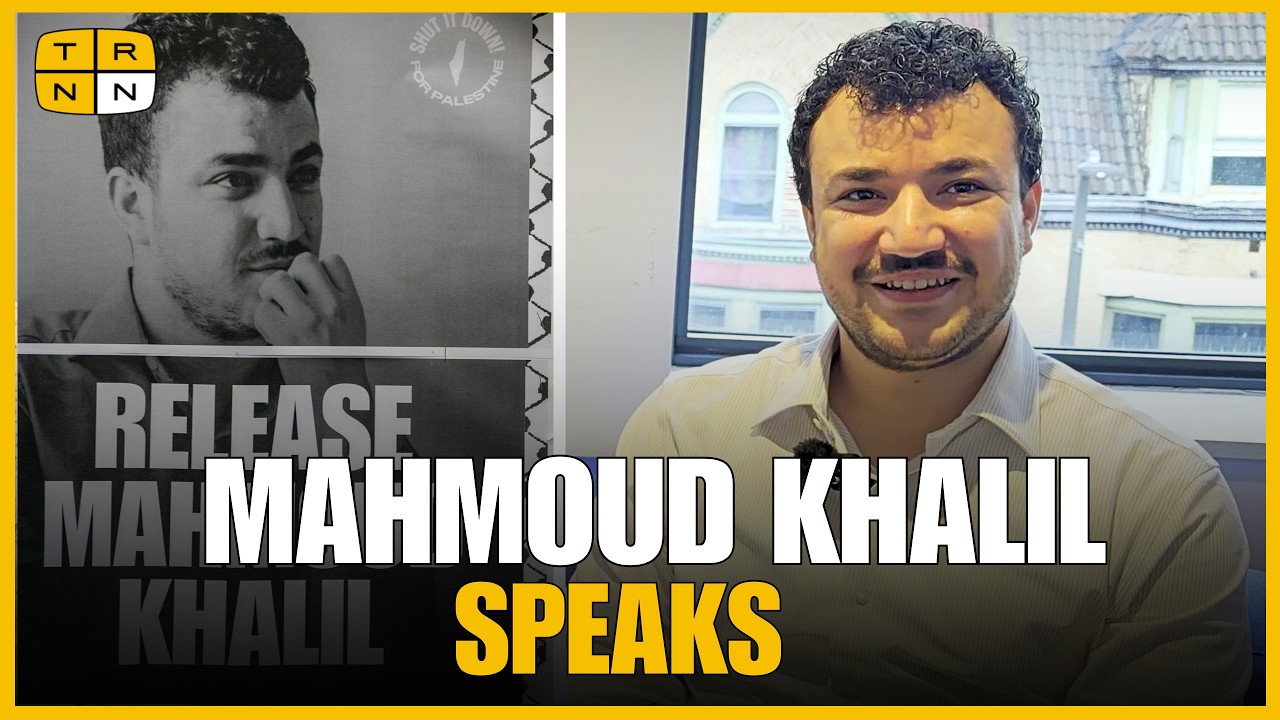
‘Resistance Is Our Only Option’: Mahmoud Khalil speaks

Maximillian Alvarez (L) and Mahmoud Khalil (R) speak at an event in Baltimore, MD on Sept. 24th 2026.

After being abducted by plainclothes ICE agents from his New York apartment building in March of 2025 and locked away in immigration jail for 104 days, Mahmoud Khalil has been freed and reunited with his family. But Khalil, a former Columbia University graduate student who was heavily involved in the student-led justice for Palestine movement, is still being targeted by the Trump administration and still faces the possibility of deportation. In this exclusive interview, TRNN Editor-in-Chief Maximillian Alvarez sits down with Khalil to speak about his new book, “No Land to Stand On,” and his continuing fight for freedom and justice.

Credits:

  • Post-Production: David Hebden
Transcript

The following is a rushed transcript and may contain errors. It will be updated.
Maximillian Alvarez:

I’m here at the Parkway Theater and I’m sitting with Mahmoud Khalil, freed political prisoner and former Columbia graduate student who was heavily involved in the student-led Justice for Palestine movement and who because of that was abducted by plainclothes ICE agents from his New York apartment building in March of 2025 and locked away in immigration jail for 104 days. But he’s here with us now. Brother Mahmoud, welcome home, man.

Mahmoud Khalil:

Thank you for having me, Max. Thank you so much.

Maximillian Alvarez:

It’s such an honor to be here with you in person. I don’t even know how you begin to answer this question, but I can’t begin without asking it. How are you and your family doing after enduring this horrific nightmare that is sadly still not over?

Mahmoud Khalil:

We’re doing all right and we’re taking it day by day, really sort of surviving under the threat of deportation at any second or worse than that, whatever this government may decide to do at any point. But our fear is part of the fear of so many families in this country who are now worried about sending their children to school. We are in September now and I know a lot of kids are worried about going to school because they’re either undocumented or their parents are undocumented. I’m thinking about just the families in Minnesota and in New York and in Texas who are now under the threat of being really deportation by this or ripping them apart. It’s not only deportation. Haitians

Maximillian Alvarez:

In

Mahmoud Khalil:

Ohio,

Maximillian Alvarez:

Latinos in

Mahmoud Khalil:

Southern California. Anyone who this administration sees as the other or sees as a threat to whatever plans they have. So in that bigger scheme of things also, at least I know my son will be fed tonight. There wouldn’t be a bomb being thrown on our house as happening in Gaza right now as we are speaking. So in the bigger scheme of things, we’re grateful. We’re grateful for the community that’s supporting us.That’s what’s keeping us going forward right now is just the level of support, the level of solidarity, the community that was built around us because of what this government has imposed on me and my family.

Maximillian Alvarez:

I didn’t plan to ask this, but as a father as well, I have to. What was it like to hold your kid that first time?

Mahmoud Khalil:

I don’t think anyone can describe that feeling. It’s just the first time I held Dean was in detention in a courtroom, in an immigration courtroom where verdicts of deportations happen, like rain daily in these rooms. So it was a little bit weird that I was able to reunite with my family in a place where families are being torn apart. But at the same time I felt victorious because that’s a moment that this government tried to steal from me. Although it was only for one hour, but felt the world to me. And of course now being with Dean, a lot of people ask me, “What gives you purpose?” And just seeing Dean and dreaming of a world where he can live in dignity and safety, inequality, just like anyone else, as an American citizen who has the same rights and responsibility as any other American citizen, regardless of his background, regardless of the ethnicity, regardless of anything, really it’s just like being a human.

Maximillian Alvarez:

And how could you not look at your kids and our children and not fight? We’re going to give this world over. We’re going to give their future over to these psychopaths, to these fascists, to these fanatical nut jobs? Of course not.That’s just not an option. But it’s really hard to put that into action on a day-to-day level when we’re being bombarded by so much terror and awfulness. I interviewed members of your former graduate student union at Columbia after you were taken. I’ve interviewed members of my former grad student union in Michigan where activists are having their homes raided by the FBI. I mean, students, community members, workers, people all over this country who are terrified to fight back or do anything because of what happened to you. But you continue to speak out. You wrote this book, No Land to Stand On. You’re here in Baltimore to speak to folks.

What do you and this book have to say to all of us out there about confronting that fear and not living in fear?

Mahmoud Khalil:

I think the fear is very real and I would be lying if I said I don’t have fear about myself, about my children, about my family. But courage is not the absence of fear. It is actually acting despite the fear. I would be lying if I said, “Oh, I’m not afraid.” Or when you are dealing with such injustice and as you’ve mentioned, just these fascist tactics and the way that they dehumanize us, whether as immigrants or whether as Palestinians or just as someone who does not agree with what this government is doing. So to take you back, I think a day after my release, I decided to go to a protest. And I usually am not that protest guy, although I was very heavily involved in the Columbia movement, but I decided to go mainly to give a message that despite all this violence inflicted upon me from the government, from the university, from the institutions and the establishment in this country, I refuse to be silent.

And now my book is out because the government tried to silence me. Or in essence, they tried to make an example out of me so you and others wouldn’t speak out. But to me, this book is a testament that I refuse to be silent. Now the government gave me a platform and they would take it with a grace and responsibility that I should take this platform to advocate for those who don’t have voices. At any moment now there’s over 70,000 immigrant in ICE detention. At every second, there’s at least 70,000 immigrants in detention. That we know

Maximillian Alvarez:

Of. Now they’re like, we don’t even know if they’re keeping proper track.

Mahmoud Khalil:

Exactly. I don’t know how many went through the administrative errors that this administration every now and then does. So really this administration tried to silence me and I refuse to be silent. And that’s why I want to give people not hope, but at least some sort of despite all this violence, you can still speak out because what we’re dealing with right now is this administration, they are bullies and what our parents teach us when a bully come to bully you, you should not – Stand up, baby. Exactly. So that’s what I’m doing right now. And part of my fight is not about staying in the US. It’s more around what happened to me is wrong and shouldn’t happen to anyone else. Even if I win my case tomorrow, I may decide to leave the day after, but that’s totally besides the main point, which is what’s happening is wrong and should be confronted.

Maximillian Alvarez:

Well, I want to end on that note because ever since you were taken, one of the reasons that people found so much hope in your story was that you continued to use your voice to advocate for others who were locked away in immigration jail, people who couldn’t speak English, people who didn’t have access to lawyers and who could get contact with the outside world. And that meant so much to so many. And of course you ended up in that jail because you were speaking out and speaking up along with millions around the country and around the world against a genocide in Palestine funded by our tax dollars. So here we are in 2026 and I’m not going to say it doesn’t feel like we’re losing everything and that it was all for naught, but I know a lot of our viewers can feel that way when they look at what’s happening to the ruins of Gaza and to the continual onslaught to erase that people from that land while back home they’re using the same tech to disappear our neighbors and family members.

So how do you put all of this in perspective and how do we continue to fight even when it feels like all is lost?

Mahmoud Khalil:

I think hope and resistance is our only option right now because this administration wants us to feel defeated, want us to feel that nothing is working. And the moment that we succumb to that feeling is the moment that they win because even if we remain silent, because I know people who were targeted and remain silent, the administration did not stop going after them because their mere existence was a problem to this administration. And that’s why I’m hopeful because I don’t have any other option. And the fact that the president of the United States came after an unknown student speaks a lot to the successes of our movement because it was impactful. It was actually changing things on the ground. It was changing public opinion in droves. That’s why the president of the United States felt the need to go after a random student to make an example out of him so that others would fear speaking out.

And that’s I think my only message in terms of why we should be hopeful because the change doesn’t happen in a day and night. It is the persistence. It is the continued resistance against all odds when you see that nothing is happening, but you continue because you believe in that. And that’s the thing as Palestinians, why we continue resisting despite everything all odds against us is that we are righteous. We know that human beings, regardless of their faith and nationality, they can see that in us and they would support us. So that’s why we have a strong belief in our cause that it’s a righteous cause. We don’t need millions and billions of dollars to convince public opinion about the righteousness of our cause or not. It’s just like we need to present it and that’s it. And that’s what they are fearing right now.

That’s why you see the establishment in this country is scrambling to control the media, to buy TikTok and to buy CNN and all of these just because we are actually winning and they know they will not be able to stop us. That’s why they’re bringing these all new tactics about, in my case, they’re weaponizing the immigration law from 1952. And in other cases they’re bringing all these alien laws.

Maximillian Alvarez:

They’re

Mahmoud Khalil:

Reaching back to laws from centuries ago. Yeah, 1800 something because they’re looking for tools because we’re actually winning and the public is with us. But also with immigrants, an average American sees that an immigrant is a benefit to this country, whether it is through the work that they do, whether through the diversity they bring. And this country was built upon, I mean recently, I don’t want to stoke about the enslaved people and how this country was built on their shoulders, but recently also immigrants were part of this.

Maximillian Alvarez:

You and I wouldn’t be sitting here if that wasn’t true.

Mahmoud Khalil:

Absolutely. And we absolutely must be conscious of that. And that’s the other thing about why I’m writing the book now, not in five years, because this is urgent. A lot of people ask me, “How would you look at this moment in 20 years?” I don’t want to look at it in 20 years. I want to do what I can do right now to stop it because what’s happening right now is a stain on the constitution, is a stain on the American consciousness, is a stain on every human value that we stand or we say we stand for. And I don’t want to look in 20 years and say, “Oh, we should have done something because it’s happening now in our backyards. An ICE detention center is at least 30 minutes from any one of us right now. If you drive 30 minutes, you would find an ICE detention center.

There’s one

Maximillian Alvarez:

Five minutes that way. Thank you so much, bro.

Mahmoud Khalil:

No, thank you so much,

Maximillian Alvarez:

Max.

Mahmoud Khalil:

Appreciate it, man.

💾

“I'm hopeful because I don't have any other option. And the fact that the President of the United States came after an unknown student speaks a lot to the successes of our movement”
  •  

‘Like the Gestapo’: ICE brings terror and violence to Maryland

Still image of eyewitness Soolah speaking with TRNN about ICE raid in Frederick, MD on Sept. 14th 2026. Credit TRNN (R). Still image of ICE agents beating peaceful protestors in Frederick, MD. on Sept. 4th, 2026. Photo courtesy of Hagerstown Rapid Response Network (L).

Residents are shaken and demanding answers after ICE agents terrorized a quiet, suburban neighborhood in Frederick, Maryland, earlier this month. On September 4, federal agents swarmed the Tasker’s Chance neighborhood in West Frederick, invaded the home of one family, and eventually left without making any arrests. ICE agents were filmed beating peaceful protestors and menacingly driving their unmarked cars onto sidewalks and private property while local police officers stood by and watched. In this on-the-ground report, TRNN takes you to the very spot in Frederick where these terrifying events transpired, and we speak with an eyewitness who saw everything.

Credits:
Videography: Maximillian Alvarez
Post-Production: Cameron Granadino

Transcript

The following is a rushed transcript and may contain errors. It will be updated.

Reporter 1:

Breaking story in Frederick. We have been told that ICE agents have been camped out in the Taskers Chance neighborhood. Neighbors

Reporter 2:

Say ICE has made a move on one home under the cover of night. That’s exactly what you are seeing right now.

Soolah:

There were protestors next to me. There are protestors across the street. And then I turned to this car and it was right here. And then I heard out of the side, the siren go off and I turned and here’s this car coming at me from on the sidewalk. By

Reporter 1:

Friday night, protestors were chanting on the sidewalk, also trying to block the street and a home they believed ICE was targeting. That’s when Santos says ICE became aggressive. This video shows when an ICE officer drove up on the sidewalk toward protestors. Santos and local activist Sula Kemp say ICE officers became violent.

Maximillian Alvarez:

I’m standing here in Frederick, Maryland, just over an hour west from Baltimore, and I’m standing in a quiet residential neighborhood where just over a week ago, ICE agents in unmarked cars swarmed this neighborhood, surrounded the house behind me. ICE agents are on video beating peaceful protestors with their batons, menacingly driving their cars onto the curbs into the directions of protestors. And I’m standing here with Sula, who is a local resident of the area and who was here the night of those events. Sula, thanks so much for joining me here. Can you walk listeners through what happened and what you saw that night?

Soolah:

Okay. I was asked by as many people were asked to come and help. So I had that time and I was able to come down and I saw different ICE peoples actually around this whole neighborhood. They were in different pockets and locations. I hadn’t even come to this street. I had gone to two streets down and then the next street right over and you could see where they were positioned. And then there was also one that was driving around that seemed to be sort of intimidating by chasing cars, which I thought was really strange behavior because you didn’t see anything on the vehicle to say who it was. It didn’t say police, it didn’t say anything. Didn’t have any markings on the cars. So we didn’t know who they were. Assumed they were ice and their lights were just kind of on. They’re just sitting in their cars parked on the street.

So then there was a call later. I was there about three hours and then somebody had just said they need people on this street specific. So I was like, “Well, I’ll just walk over.” And they said that there was one car that had a spotlight on protestors. And what they were apparently trying to do on this street was just line the sidewalk, a public space with protestors. So that was fine. So I was like, “All right, let me take my phone and go to the other side and get the perspective of the spotlight being put onto the protestors.” So I did that. I first took a bit of video from this side as an observer and then went to the other side and stood there and watched just cars. And then all of a sudden as I was standing on the sidewalk, I heard a siren go off, just a few bursts of it.

And I happened to turn my camera and there was a car on the sidewalk coming toward me and telling me, and everybody who’s on the sidewalk, “Move, move, get out of the way.” At some point they sa, “You’re impeding a federal investigation.”

Maximillian Alvarez:

We’re talking about a car driving up

Soolah:

Right

Maximillian Alvarez:

Here where we’re standing.

Soolah:

Right. On the sidewalk, public space.

Maximillian Alvarez:

These are people’s houses. They’re driving onto people’s property.

Soolah:

Well, and if you or I had done that, what would’ve happened to us?

Maximillian Alvarez:

Yeah, they’d throw my ass in jail.

Soolah:

Reckless endangerment of people. And it was crazy. They stopped for a hot second and I jumped onto the grass at first and then I stepped back onto the sidewalk because I was like, “I don’t know what’s happening.” Just a natural response. I was like, “Wait a minute, I’m on the sidewalk.” So I stepped back on the sidewalk and then he started really coming. He did not stop and he sped up toward me first and then there was a woman behind me. And then there was another person, another protestor that they did hit and started to push with their car.

Maximillian Alvarez:

So you were standing right around here?

Soolah:

I was right here. And there was a car there. There was a car across the street. So I had my camera on this car. There were protestors next to me. There were protestors across the street. And then I turned to this car and it was right here. And then I heard out of the side, the siren go off and I turned and here’s this car coming at me from on the sidewalk. I jumped over to here. He passed me. He hit another protestor and then pushed that protestor out of the way. And then the protestors at some point have been sitting down, just linked arms, sitting down, singing and chanting right in the middle of the street, which is fine. They can do whatever they want to.

Maximillian Alvarez:

Community members surrounding one of their neighbor’s homes to try to protect them. Yeah. And then agents of the state come in and start beating the hell out of them for it.

Soolah:

Yeah. So they sat in the road and then they did get up and did that protection. And it’s a typical thing that people do to blockade, but peacefully, they didn’t do anything. They just linked arms. You can’t do much when you’re linked arms. And it’s a whole group of people. And then all of a sudden Frederick Police were coming and then they moved up to the porch area and started beating them up.

Maximillian Alvarez:

You and I are standing here right now on this quiet residential street. People who are watching this may have only seen a small slice of this street on line. What they can’t see is that this is the quietest residential street you can imagine. There’s nothing happening here. You would think with all the ICE agents and vehicles that were here last week that this would be a hotbed of overrun with criminals and criminal activity. It’s just families and houses.

Soolah:

Yeah, it’s very quiet here. You can drive around here and people are working, people are doing their lives and that’s it. So it’d be like every day storm into your everyday world in your suburban America, and that’s what happened. And when you look at now, it’s quiet, it’s peaceful here. So they brought a sense of terror and they brought a sense of unsafety. So yeah, the main set of protestors, they’re stationed on the sidewalk here right at the stop sign. There’s a whole group here. And then there was an ice vehicle here. There was an ice vehicle behind –

Maximillian Alvarez:

Right behind

Soolah:

Where I’m standing. Right behind where you’re standing. Because they started sort of parading in, it looked like a little ice parade. And I’m just joking about that because it was so weird. Once they got into the house, I could hear up in one of the rooms them banging stuff around. And another protestor had asked me, who was observing, asked me, “Do you hear that?” I was like, “Oh yeah,” because it was loud. I don’t know how the house was on the inside when this was all done, but this was a lot. And then I actually went and looked through the back part. They had a shed or some kind of building out in the back there, and you could see these guys go into the back and they started searching. They didn’t know how to get open the shed or whatever because it’s big, but eventually they did.

And it was eerie. It was very eerie.

Maximillian Alvarez:

And it feels reminiscent of the Gestapo view.

Soolah:

It does because who bangs down a door like that? Who goes through looking for whomever? And apparently they didn’t take anybody. I don’t understand why it all happened in the first place.

Maximillian Alvarez:

Yeah. So all that terror for nothing?

Soolah:

All that terror for nothing.

Maximillian Alvarez:

How do you move on from something like this? How does this community move on? How are folks responding?

Soolah:

I know right now they’re collecting donations for the people who were beaten because they had hospital bills. And it’s really hard because I don’t know them all personally. I came because just like anybody else, we don’t know each other half the time, but we do see something in need. So they do have a donation set up for them specifically. I am not sure what the next steps are. I know that I have personally tried to contact the attorney general’s office a few times. I haven’t heard anything yet. And I’m hoping that somebody who’s above, in some kind of governmental stance or something, because who feels safe going to the police when you watch the police stand there? There’s the question. I didn’t report anything to them, even though I had a vehicle come at me on the sidewalk. I doubt anybody else is really going to feel comfortable or safe, and maybe that’s the point.

Maybe that was the point too. I can’t speak for that, but it’s just what goes in my head, why would I contact you to tell you what happened? So I want to go higher up.

Maximillian Alvarez:

And so when you were here and you had federal agents and unmarked cars and you also had local police, did you feel in that moment like the police were there to protect you?

Soolah:

No. And the wild thing too is on the car that, at least this car that came at me, you couldn’t tell who they were because their license plate was tinted out. There’s nothing identifying that either. So who are these people? I don’t know if Frederick Police had some kind of directive because I don’t know what even drew them out here in the first place. Maybe they heard that people were getting beat maybe, but they were here before that happened. So maybe they have to take a specific. I don’t know. I literally do not know. And if that’s the case, if they have a specific directive or they don’t know what to do, maybe that needs to be talked about. Maybe something like this, when you have unmarked cars doing reckless behavior with their cars, doing reckless behavior towards other people, what is the community’s protect and serve folks going to do for the community?

Yeah.

Maximillian Alvarez:

Who are you protecting? Who are you

Soolah:

Serving?

Maximillian Alvarez:

Not us.

Soolah:

There are tax dollars going into all of this too, that people are going to step back and go, “Wait a minute, what’s happening here? I’m putting money toward them and it’s whoever was called out here for that night.” Who knows? I don’t know. But at the end of the day, who are they protecting?

💾

ICE agents terrorized this suburban neighborhood in Frederick, Maryland, and beat peaceful protestors while local cops just watched. We speak with an eyewitness who saw and filmed everything.
  •  

Ukrainian Soldiers, Potential Mercenaries: Have Gun, Will Travel!

Who has thought about what happens to an army when the SMO ends—but the warriors remain? Ukraine is already providing an early glimpse of what may become a much larger post-war phenomenon: highly trained combat personnel, particularly special-forces and other specialists, carrying their battlefield skills beyond the borders of the countries, in which they acquired […]
  •  

From Airbnb to stray cats: Trump’s childhood home in Queens sells for $2 million

The Jamaica–179th Street subway stop in Queens is only about a 10-minute walk from Wareham Place. But an abyss separates the two places. From the crowded low-rise blocks of busy shops, where spotting a white resident is difficult, to single-family homes with manicured yards on quiet streets where cars rarely pass. “Different parts of Queens were rough; this was an oasis,” Donald Trump said in a 2015 New York Times interview. This “oasis” is where the man who is now president of the United States lived as a child, in a house an anonymous family has just bought for $1.93 million.

Seguir leyendo

© Luis Doncel

The house in Queens where Donald Trump lived until age four, last Thursday.
  •  

Faillite de la mission européenne au Kosovo

Des crimes impunis, un déficit extérieur colossal, une partie de la population fuyant un chômage de masse, des responsables rêvant tout haut de « Grande Albanie » : le Kosovo semble livré à ses démons. Le patronage de l'Union européenne ne lui a pas permis de décoller, et des affaires de corruption entachent la mission internationale visant à instaurer un Etat de droit.

En moins d'un an, près de cent mille Kosovars auraient tenté de rejoindre l'Union européenne. Le flux a grossi avec l'arrivée du printemps. Chaque jour, des familles entières, parents, enfants, vieillards, traversent la Serbie pour gagner la frontière hongroise. Soixante mille Albanais du Kosovo auraient demandé des passeports serbes pour obtenir un visa européen, selon les autorités de Belgrade.

« Sept ans après la proclamation d'indépendance et la mise sous tutelle du Kosovo par l'Union européenne, c'est la débâcle », nous affirme M. Andrea Capussela, qui fut jusqu'en avril 2011 directeur des affaires économiques du Bureau civil international (International Civilian Office, ICO), l'une des principales missions déployées au Kosovo. « La situation est pire qu'avant l'arrivée de la mission européenne », ajoute l'expert italien, qui vient de publier un brûlot sur la politique européenne dans les Balkans (1). Selon lui, cette situation ne met pas seulement en cause les investissements de l'Union européenne dans le pays — plus de 4 milliards d'euros sur la période 1999-2013 —, mais aussi la crédibilité de sa politique étrangère.

Depuis l'automne dernier, la responsable de la diplomatie européenne, Mme Federica Mogherini, tente d'éteindre l'incendie qui gagne la mission européenne pour l'instauration de l'Etat de droit au Kosovo (Eulex). Celle-ci, décidée en février 2008, vise à renforcer les institutions judiciaire et policière. Dotée d'un financement annuel de 111 millions d'euros, elle mobilise mille six cents personnes afin, notamment, de combattre la corruption et la criminalité organisée. Mais plusieurs de ses responsables sont soupçonnés de malversations, tandis que l'institution est accusée d'avoir couvert ces dérapages.

« Pendant un an, ils ont non seulement enterré, mais aussi compromis l'enquête », dénonce Mme Maria Bamieh, par qui le scandale est arrivé. Cette procureure britannique travaillait pour la force d'intervention indépendante chargée des affaires criminelles au sein de la mission européenne. Dans un rapport de 2012, elle a averti ses supérieurs de soupçons de corruption visant notamment deux hauts responsables : le juge italien Francesco Florit, alors président de l'assemblée des juges d'Eulex, et la procureure en chef Jaroslava Novotna. La magistrate britannique fonde ses allégations sur les écoutes de conversations téléphoniques entre l'ex-secrétaire du ministère de la santé du Kosovo, M. Ilir Tolaj, poursuivi pour corruption et fraude fiscale en 2010, et des intermédiaires. Ceux-ci l'assuraient être en contact avec ces deux juges, capables de se montrer compréhensifs (2)…

« Nos chefs dînent avec des mafieux »

La procureure évoque d'autres cas de compromission en lien avec Eulex. En particulier ceux concernant le très influent Fatmir Limaj, ancien ministre des transports, inculpé pour crime organisé et détournement de fonds, ou M. Enver Sekiraqa, un petit chef mafieux de Pristina mis en cause dans une affaire d'attentat à la bombe. Mais, curieusement, son rapport disparaît et aucune suite n'est donnée.

En octobre 2014, le principal quotidien du Kosovo, Koha Ditore, se procure des éléments du dossier et obtient un entretien avec Mme Catherine Fearon, la conseillère politique du nouveau chef d'Eulex, l'Italien Gabriele Meucci. Le journaliste Vehbi Kajtazi affirme que, lors de leur entrevue, Mme Fearon l'a sommé de livrer ses sources et l'a menacé de poursuites judiciaires. En dépit de ces pressions, le journal commence à publier une enquête dans son édition du 27 octobre 2014. Ces révélations provoquent la suspension… de Mme Bamieh ! « Epuisement au travail », décrète M. Meucci, qui reproche aussi à la Britannique d'avoir donné des informations aux médias. Rentrée depuis à Londres, Mme Bamieh accuse ses supérieurs d'être trop proches de puissants hommes politiques au cœur d'enquêtes criminelles : « Comment pouvons-nous remplir notre mission quand nos chefs dînent avec des mafieux et des politiciens kosovars soupçonnés de corruption ? »

Devant le scandale, Mme Mogherini ordonne une enquête, confiée au professeur Jean-Paul Jacqué, ancien directeur de l'Institut des hautes études européennes de Strasbourg. Cet expert en droit international a dirigé entre 1992 et 2008 le service juridique du Conseil des ministres de l'Union européenne, l'institution qui a mandaté Eulex. Dans son rapport, rendu public le 14 avril dernier, il ne considère pas qu'une affaire aurait été étouffée ; il invoque plutôt une série d'erreurs administratives. Bruxelles n'a pas été suffisamment informé du document détaillant les soupçons au sein d'Eulex, et ses cadres supérieurs auraient tardé à enquêter car ils ne trouvaient pas le contenu des interceptions téléphoniques « particulièrement crédible ». Il juge pourtant qu'une enquête « aurait dû être ouverte dès le départ », après l'avertissement de Mme Bamieh à sa hiérarchie. Evoquant les menaces contre Kajtazi (3), Jacqué estime que la conseillère du chef de la mission « a mis en garde le journaliste contre la divulgation d'informations concernant des cas criminels, puisque ce serait une infraction en vertu de la loi kosovare ».

Pour Kajtazi, on ne peut pas considérer le rapport de Jacqué comme indépendant : « Il conclut que je n'ai pas été l'objet de menaces. Il s'agirait d'une erreur de communication. La vérité est que la mission Eulex m'a bien menacé de poursuites si je venais à publier un article », nous affirme le journaliste. « Jacqué a essayé de minimiser la possibilité que la mission soit impliquée dans la corruption. »

Le rapport se démarque néanmoins du discours officiel des institutions européennes, qui présentent la mission au Kosovo comme un modèle de reconstruction. Le professeur constate de graves dysfonctionnements au sein de la représentation de l'Union et décrit une corruption « omniprésente » dans le pays, en précisant que « le secteur judiciaire ne fait pas exception ». Sept ans d'une action visant à restaurer l'Etat de droit n'ont pas suffi à éradiquer les prévarications, mais « il devait être néanmoins possible d'établir les fondations d'un système capable de combattre la corruption ». Selon lui, Eulex — dont le mandat s'achève en 2016 — perdra son sens si on ne parvient pas à la réformer. Mais son retrait lui apparaît prématuré, car le système judiciaire local ne semble pas capable de traiter certaines affaires.

Dans une lettre ouverte à Jacqué, Mme Bamieh juge son rapport décevant et imprécis. Elle y voit davantage une note interne qu'un travail indépendant. « Les transcriptions [des écoutes] indiquent que l'argent a bien été versé », souligne-t-elle. Elle déplore que l'enquête ne concerne pas la procureure en chef Novotna. Elle regrette en outre que celle visant M. Florit n'ait été lancée qu'en 2013, après la réception d'informations provenant des services de renseignement allemands, et non sur la base de son propre rapport interne, transmis à ses supérieurs en 2012. Elle cite également les noms d'anciens collègues qui l'ont soutenue et qui ont dû quitter Eulex.

Après les errements du Tribunal pénal international pour l'ex-Yougoslavie (TPIY) (4), et toujours dans l'attente de suites judiciaires au rapport du procureur américain Clint Williamson sur les trafics d'organe et les crimes de l'Armée de libération du Kosovo (UCK) (5), l'affaire Bamieh révèle l'ampleur des compromissions européennes : « On parle de la corruption, du crime organisé, mais on ne dit jamais que c'est un régime autoritaire semi-consolidé que nous avons créé, et qu'une élite de criminels issue de l'UCK vole l'argent public et s'accroche au pouvoir », s'enflamme M. Capussela, qui a travaillé durant quatre ans pour l'Union européenne au Kosovo.

Principale force de la guérilla soutenue par les Occidentaux dans le conflit de 1999, l'UCK a pris le pouvoir après les bombardements de l'Organisation du traité de l'Atlantique nord (OTAN) et la capitulation de la Serbie. Les enquêtes de la procureure du TPIY, Mme Carla Del Ponte, puis de M. Dick Marty, au nom du Conseil de l'Europe, ont montré que cette milice s'était livrée à des exactions contre des civils serbes ou roms et contre ses opposants politiques albanais. Une partie de ces meurtres, enlèvements, séquestrations et tortures ont eu lieu dans les premières années de l'après-guerre, en présence des troupes de l'OTAN et de la Mission d'administration intérimaire des Nations unies au Kosovo (Minuk), dont le Français Bernard Kouchner fut le premier dirigeant.

« La mission n'était pas capable de défendre les civils », estime M. Christopher Decker, venu au Kosovo en 1999 comme membre de l'International Crisis Group, avant de rejoindre l'Organisation pour la sécurité et la coopération en Europe (OSCE). « La police de l'ONU était mal équipée et pas du tout préparée. C'était facile pour l'UCK de se livrer à la violence », explique cet Américain qui a passé douze ans sur place. « La communauté internationale répète les mêmes erreurs : on intervient militairement, puis on laisse des éléments criminels prendre le pouvoir, ce qui empêche l'instauration de l'Etat de droit », se désole-t-il.

Dès le début, on a épargné l'élite locale, les « gros poissons », car cela pouvait déranger l'ordre établi et provoquer une instabilité. Mme Del Ponte affirme non seulement que les plus hauts dirigeants de l'UCK représentaient un danger pour l'accomplissement de sa mission, mais aussi qu'ils pouvaient mettre en péril tout l'édifice du processus de paix dans les Balkans : « Hashim Thaçi [premier ministre de 2008 à 2014] et Agim Ceku [de 2006 à 2008] étaient en mesure de déclencher des violences en Macédoine, dans le sud de la Serbie et dans d'autres régions, en appelant les minorités albanaises rebelles aux armes (6). »

« Au début, j'étais surpris par la négligence, l'incompétence et la paresse qui régnaient au sein de la mission. J'ai compris plus tard que des choix politiques expliquaient en partie cette attitude », raconte M. Capussela. « Ceux qui voulaient européaniser le Kosovo se sont balkanisés », estime le politiste kosovar Belul Beqaj. S'y ajoute une culture de l'impunité propre à toutes les missions internationales, puisque leurs membres échappent aux poursuites judiciaires. « Leurs employés ne sont pas justiciables. Les pays ne veulent pas que leurs représentants nationaux soient jugés », nous explique Mme Sian Jones, spécialiste du Kosovo à Amnesty International.

Poursuites contre des innocents

Dans son livre, M. Capussela dresse une liste des défaillances flagrantes d'Eulex, qu'elles soient économiques, financières ou relatives aux droits humains. Ainsi, la mission n'a pas enquêté sur les affaires de corruption liées aux privatisations (télécommunications, ciment), aux constructions de routes, à l'expropriation des terres, à la fraude électorale, à l'intimidation des journalistes, aux assassinats politiques, ni sur certains crimes de guerre.

Pis, Eulex a parfois poursuivi des innocents. La mission a par exemple gardé en détention pendant quatre mois le gouverneur de la banque centrale sans révéler les charges pesant contre lui — qui furent abandonnées par la suite. Pour l'économiste italien, qui a alerté Eulex sur des accusations qu'il jugeait peu crédibles, l'homme a été arrêté parce qu'il s'opposait aux intérêts de personnages puissants.

Avec la corruption et l'impunité qui règnent au Kosovo, les tensions montent. Les politiciens, l'homme fort du pays Hashim Thaçi en tête, détournent l'attention vers l'extérieur : « Grâce à leurs réseaux, ils peuvent provoquer des émeutes en Macédoine, où la situation est très instable, contre les Serbes du Kosovo, ou contre les représentants de l'Union, estime M. Capussela. Ils enverraient ainsi un message à Bruxelles et à Washington : “Vous franchissez la ligne rouge.” » Pour M. Decker aussi, la classe dirigeante kosovare sait tirer parti de la violence : « S'il n'y avait pas eu d'émeutes en 2004 [contre les Serbes et les autres minorités], il n'y aurait pas eu autant de pressions pour l'indépendance. »

L'incapacité d'Eulex, après celle de la Minuk, à établir une justice fonctionnelle ne pose pas seulement la question des investissements européens dans la mission — plus d'un milliard d'euros —, mais aussi celles du respect des droits des citoyens kosovars et du maintien de la paix dans la région.

Voir en ligne : /2015/06/OTASEVIC/53059

(1) Andrea Lorenzo Capussela, State-Building in Kosovo : Democracy, Corruption and the EU in the Balkans, I. B. Tauris, Londres, 2015.

(2) Julian Borger, « EU's biggest foreign mission in turmoil over corruption row », The Guardian, Londres, 7 novembre 2014.

(3) « Un journaliste d'investigation menacé par la mission européenne au Kosovo », Reporters sans frontières, 31 octobre 2014.

(4) Lire Jean-Arnault Dérens, « Justice borgne pour les Balkans », Le Monde diplomatique, janvier 2013.

(5) « Statement by the Chief Prosecutor of the Special Investigative Task Force (SITF) on investigative findings », 29 juillet 2014. A partir de ce rapport, le Parlement du Kosovo avait jusqu'à la fin mai pour mettre en place le tribunal spécial devant juger ces crimes, qui sont hors du mandat du TPIY.

(6) Carla Del Ponte, La Traque, les criminels de guerre et moi, Editions Héloïse d'Ormesson, Paris, 2009.

  •  

Germany: Trans police officer on trial for raping 14-year-old girl in fast food toilet stall, possessing hundreds of child and animal abuse videos

A trans person on trial in the German state of Bavaria on charges that include the alleged rape of a teenage girl and the possession of a large collection of child sexual abuse material while serving as a German police officer.

The trial of the 55-year-old defendant — who is a male-to-female trans person and who has been removed from duty — began today, Tuesday morning, at the Traunstein Regional Court, according to German news outlet Rosenheim24.

Prosecutors accuse the trans ex-officer of raping a 14-year-old girl in the toilet stall of a fast food restaurant and of possessing hundreds of files depicting the sexual abuse of children. Investigators say the material includes violent acts against children, with the youngest victims described as about three years old.

Photos of the trans ex-officer in the courtroom show a tall individual with long bleach-blonde hair, a large arm tattoo, and tall platform shoes.

The defendant also faces an accusation of producing animal pornography. The trans ex-officer is alleged to have made videos where the defendant had sex with a dog, along with several sexual partners. It remains unclear if any of these other individuals have been identified.

The most serious charge concerns an incident in August 2025. Prosecutors say that during an outing with a friend, the defendant raped the friend’s 14-year-old daughter in the restroom of a fast-food restaurant.
The defendant is also accused of sending a pornographic WhatsApp message to the girl, who was roughly 40 years younger than the defendant.

The court has scheduled four days of hearings. A verdict could be delivered on Oct. 8.

The post Germany: Trans police officer on trial for raping 14-year-old girl in fast food toilet stall, possessing hundreds of child and animal abuse videos appeared first on Remix News.

  •  
❌