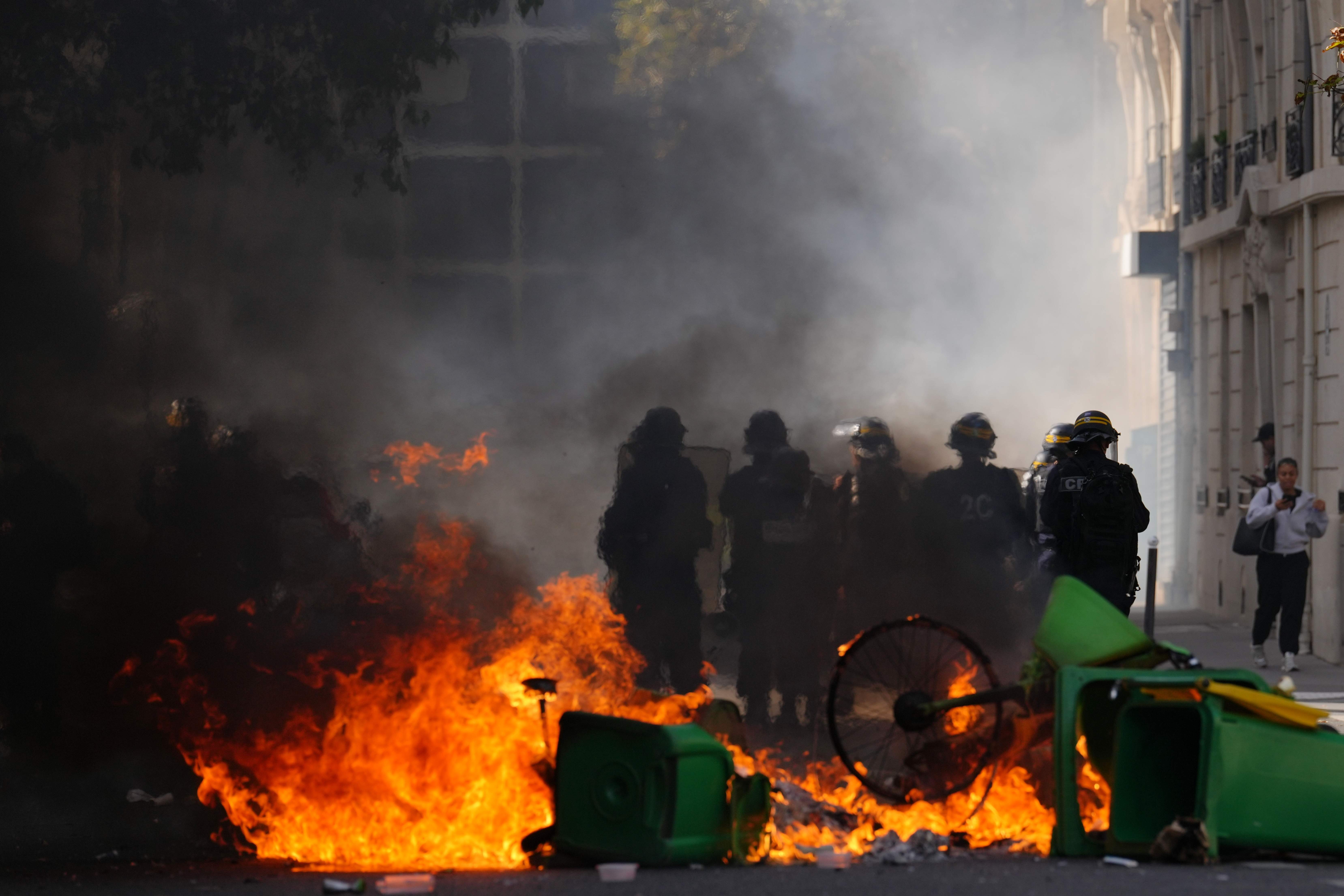
Two-weeks long protests by French high-school students demanding better education conditions risk getting more heated due to the French government’s lack of response.
For his part, French prime minister Sébastien Lecornu told parliament on Wednesday (7 October) the first proposals on education reform would be published at the end of the month.
He spoke after 250,000 demonstrators took to the streets across the country on Tuesday (6 October), according to interior ministry fiigures.
But the High School Student Union (Union Syndicaire Lycéenne, USL) said the number was as high as 450,000, including solidarity protests in most universities.
Pupils, joined by parents, teachers, and labour unions, want an end to teacher shortages and urgent renovations of run-down school buildings.
“Today, the balance of power is in our favour,” said Marius Mesnil, the USL’s co-general secretary, on Monday.
The secondary school teachers’ union (Syndicat National des Enseignements de Secondaire, SNES) also called Lecornu’s inaction “unacceptable.”
Some 715 police officers, 215 students and 85 school staff members have been injured during the protests, with 18 internal probes were launched to investigate police brutality since 21 September, when the movement first erupted, after being sparked by a teachers’ protest.
A school in Nantes, in the west of the country, was set on fire, and protesters regularly light trash bins and make barricades in city centres.
The minister of interior has suspended the use of stun grenades after a 15-year-old’s hand was blown off in a violent confrontation with police on Monday.
This article continues, but the full version is available only to EUobserver.com subscribers. Visit account.euobserver.com/membership
EUobserver is proud to have an editorial partnership with Europod to co-publish the podcast series “Briefed” hosted by Léa Marchal. The podcast is available on all major platforms.
Find the full transcript below:
France has been seeing growing protests by high school and university students in recent weeks.
The movement is continuing today with a fourth day of mobilisation. According to the government, the far-left opposition party is fuelling the protests. For Donald Trump, the movement is the result of mass migration and the presence of Islam.
But what are young people actually protesting about? High school students’ anger has been building for some time. One of the tipping points came in June, when temperatures inside many schools rose above 35 degrees. Many classrooms had no fans, let alone air conditioning.
And this happened in buildings that were already often in poor condition. Add to that the fact that absent teachers are frequently not replaced. The result was what you might call a general overheating — both literally and politically.
The government, meanwhile, has accused the left-wing party La France Insoumise (France Unbowed, or LFI) of fuelling the protests. Some commentators have even suggested that the movement was orchestrated by the party from the beginning.
There is little doubt that LFI is supporting the mobilisation and may be trying to benefit politically from it. But dismissing the protests as political manipulation risks ignoring problems that are well documented.
As sociologist and child psychiatrist Laelia Benoit recently toldLe Monde, assuming that high school students cannot think for themselves and must necessarily be manipulated by adults or political parties is, in her words, a way of denying them their ability to act politically.
And many of their demands are supported by both parents and teachers. Teachers, for example, have long complained about the lack of replacements when they are absent.
This is supported by the latest PISA report on France: 87% of French students — as well as school principals — said their school’s capacity to teach was affected by a lack of teachers.
So young people are increasingly asking to be heard. Earlier this week, they put forward their demands, resulting in 10 concrete measures supported by both high school and university students.
Among other things, they are calling for a major programme to renovate schools, more staff, a guaranteed €1 meal at university canteens, and higher housing benefits and grants so that students can live with dignity.
So what is the government offering in response? France has opened an online platform in recent days where students can submit their demands. Prime Minister Sébastien Lecornu said yesterday that the platform had already received more than 40,000 contributions.
So for now, the government’s message is essentially: go back to class and submit your demands online. The prime minister then pointed to the additional €1 billion he has proposed for the education budget next year.
And as for more immediate measures, he announced five areas of work that should begin at the end of October. They include tackling teacher replacements, improving schools’ material conditions, reorganising school timetables, reforming the university admissions platform which appears to be a nightmare, and thinking about how to give high school students a greater voice.
Pour bien des manifestants, la figure du préfet évoque la répression qu'ils subissent dans la rue — alors même que la fonction est censée garantir l'intérêt général et l'égalité de tous devant la loi, au nom de la République. À mesure que les réformes affaiblissent l'institution préfectorale, ou la politisent, ses missions s'éloignent des préoccupations de la population.
Pejac. — « Triptyque », 2016
pejac.es
« Des manquements graves et persistants des services. » En février 2024, un collectif d'associations écrivait au préfet d'Indre-et-Loire pour lui reprocher la mise au rebut sans justification de plus de cinq cents demandes de titre de séjour au cours des dix-huit mois précédents. De son côté, la préfecture niait toute « pratique administrative abusive envers les usagers étrangers ». Dans un communiqué daté d'avril, elle plaidait un simple allongement des délais de traitement (1). Pourtant, à Tours comme ailleurs, la maltraitance des étrangers s'institutionnalise. Par la volonté politique de limiter l'immigration, mais également à la suite d'importantes restructurations qui dégradent l'exercice de l'État.
Longtemps, des files d'individus contraints d'attendre dans la nuit l'ouverture matinale des guichets ont symbolisé l'encombrement des services destinés aux immigrés (2). Depuis 2021, la dématérialisation des procédures doit les décharger. Le portail de l'administration numérique pour les étrangers en France (ANEF) a vocation à traiter leurs demandes. Mais, en pratique, les dysfonctionnements se multiplient. « Modules de prise de rendez-vous en ligne saturés (…), téléservices mis en place hors de tout cadre légal et réglementaire, déploiement de l'ANEF assorti de nombreux bugs… » : en juin 2024, un rapport de la défenseure des droits dénonçait une inégalité d'accès aux services publics et recommandait d'accroître les effectifs des préfectures les moins diligentes (3).
Au sein de cette administration territoriale, seuls les services des étrangers restent ouverts au public. Le plan « Préfecture nouvelle génération » (PPNG) de 2016 a dématérialisé puis externalisé la délivrance des titres d'identité et des cartes grises. Désormais, les particuliers doivent accomplir toutes les démarches sur des plates-formes. Des conseillers des espaces France services, ouverts dans les mairies — voire des sociétés privées contre rétribution —, peuvent les accompagner. Mais « le service de proximité que constituaient les préfectures, c'est fini, constate un peu amère une ancienne préfète. Ce sera difficile d'y revenir car les effectifs ont fondu depuis quinze ans ».
Dès lors que « les préfectures sont privées de contacts avec les citoyens, plus personne ne connaît leurs missions », regrette l'ancien préfet du Loir-et-Cher Yves Rousset. Plus personne, ou presque. Car nombre de sans-papiers mais aussi de « gilets jaunes » ou de manifestants contre la réforme des retraites, d'agriculteurs ou d'écologistes savent l'implication des préfets dans le maintien de l'ordre public, voire social. Pourquoi, si souvent, l'exercice de l'État au niveau local paraît n'être plus que l'exercice de la force, ou du passage en force, de Sainte-Soline au chantier de l'A69 ?
« Je veux que les Français datent leur bonheur de l'institution préfectorale. » Le 28 pluviôse an VIII (17 février 1800), Napoléon Bonaparte, alors premier consul, fait adopter la loi qui crée la fonction de préfet — du latin praefectus : « homme qui est la tête d'une chose ; gouverneur, intendant, administrateur, chef » (selon le dictionnaire Gaffiot) — nommé par lui et chargé d'administrer un département, assisté dans chaque arrondissement par un sous-préfet. Une fois couronné, Bonaparte considère ces « empereurs aux petits pieds » comme de véritables courroies de transmission de son pouvoir sur l'ensemble du territoire national. Ils assurent la conscription, la perception des impôts et le maintien de l'ordre. Sous le Second Empire, leur pouvoir est renforcé par un décret du 25 mars 1852. « On peut gouverner de loin mais on n'administre que de près », affirment ses attendus. Les préfets se voient chargés de missions comme l'urbanisme avec, à Paris, les figures de Georges-Eugène Haussmann (1853-1870) ou, sous la IIIe République, d'Eugène Poubelle (1883-1896).
Serviteurs de l'État, les préfets doivent obéissance au gouvernement. Sans toujours échapper aux cas de conscience. Nombre d'entre eux et de leurs agents exécutent les ordres de Vichy, qui étatise la police — jusqu'alors municipale — en 1941. Le secrétaire général de la préfecture de Gironde Maurice Papon organise les rafles de citoyens juifs. Mais trente-neuf préfets et sous-préfets meurent au combat, fusillés ou en déportation. Jean Moulin, préfet d'Eure-et-Loir, tient tête à la Wehrmacht lorsqu'elle arrive à Chartres, en juin 1940 (4). À la Libération, la formation et le recrutement des hauts fonctionnaires — en particulier de ceux de la préfectorale — sont néanmoins érigés en « priorité absolue » dans l'exposé des motifs de l'ordonnance du 9 octobre 1945 tant « le procès [des] administrations publiques est ouvert depuis nombre d'années ».
Ce texte est à l'origine de la création de l'École nationale de l'administration (ENA) qui va former une large part des préfets et sous-préfets. En 1950, un décret instaure un statut du corps préfectoral. Ses membres sont placés sous l'autorité directe du ministre de l'intérieur, nommés et révoqués par le président de la République. « Dans les collectivités territoriales de la République, affirme la Constitution de 1958 à son article 72, le représentant de l'État, représentant chacun des membres du gouvernement, a la charge des intérêts nationaux, du contrôle administratif et du respect des lois. » Pendant plusieurs décennies, l'institution donne satisfaction au pouvoir. « Ce qui tient bon dans les coups durs, assure le général de Gaulle à Alain Peyrefitte, c'est le réseau des préfets et des sous-préfets. C'est l'État (5)… »
En janvier 1981, sous l'influence de la « deuxième gauche » représentée par Michel Rocard — et du socialisme municipal (6) —, le congrès extraordinaire du Parti socialiste (PS) réuni à Créteil retient, parmi ses « 110 propositions pour la France », la priorité donnée à la décentralisation : « La fonction d'autorité des préfets sur l'administration des collectivités locales sera supprimée. » Comme le rappelle le juriste Vincent Malapert, depuis la loi dite « municipale » de 1884, « le représentant de l'État [exerçait] une tutelle à la fois sur le maire et sur les actes de la commune. Cette tutelle, élargie aux départements et aux régions, se traduisait par un contrôle a priori : le préfet [était] libre, en opportunité, de contrôler la légalité des actes des collectivités avant que ceux-ci ne soient exécutoires. Il s'agissait de la principale entrave à la libre administration des collectivités (7) ».
Des dizaines de milliers d'agents
De nombreux élus locaux militaient contre cette emprise, notamment Gaston Defferre, maire de Marseille depuis 1953. Nommé au ministère de l'intérieur après l'élection de François Mitterrand en 1981, il fait voter les lois de décentralisation. L'article 2 de celle du 2 mars 1982 dispose que « les délibérations, arrêtés et actes des autorités communales ainsi que les conventions qu'elles passent sont exécutoires de plein droit ». Dès lors, explique Malapert, si le préfet reste le principal garant de l'ordre public, avec autorité sur les forces de police et de gendarmerie, il « se voit dépossédé de son principal instrument de domination sur les collectivités : il ne sera plus en charge [que] du contrôle de légalité exercé a posteriori ». En outre, seul le juge administratif a le pouvoir d'annuler une décision des collectivités locales.
Le premier acte de la décentralisation s'accompagne d'une réforme de l'État au niveau local. Un décret du 10 mai 1982 prévoit que son représentant dans le département porte désormais « le titre de commissaire de la République. (…) Il est le représentant direct du premier ministre et de chacun des ministres. Il dirige sous leur autorité les services des administrations civiles de l'État ». Pour le gouvernement, le changement de titre ne relève pas que du symbole. Le transfert de compétences aux collectivités doit s'accompagner d'un renforcement de l'État sur le « terrain » : les directions départementales — de l'agriculture et des forêts (DDAF), des affaires sanitaires et sociales (DDASS), de l'équipement (DDE), de la jeunesse et des sports (DDJS)… — se voient placées sous la « direction » d'un commissaire de la République — quand le préfet jusqu'alors, aux termes d'un décret de 1964, se contentait de « coordonner » leurs actions décidées par chaque ministère compétent, depuis Paris.
Dans les années 1980 et 1990, la gauche au pouvoir peine cependant à préciser les contours exacts de ce qu'on appelle dès lors la « déconcentration » et, surtout, à doter celle-ci de moyens à la hauteur de son ambition politique, qu'il s'agisse des ressources en crédits et en effectifs ou des prérogatives accordées au préfet (l'intitulé revient en 1988) pour asseoir sa tutelle sur les autres services territoriaux de l'État. Dans les années 2000, la droite accélère la décentralisation. Son « acte II » attribue de nouvelles compétences aux collectivités et leur transfère des dizaines de milliers d'agents. Puis les gouvernements de M. Nicolas Sarkozy affaiblissent les administrations déconcentrées en les fusionnant, pour réaliser des économies.
La manie de tout regrouper caractérise la période. Désormais, le préfet de département doit non seulement composer avec l'ascendant du préfet de région (décret du 29 avril 2004, au titre de la régionalisation de l'action de l'État) mais aussi, à la suite des réformes engagées sous le quinquennat de M. François Hollande, avec le poids politique des élus à la tête de métropoles ou de grandes régions (8). L'ancien préfet de Haute-Loire Yves Rousset raconte dans La préfecture est en feu (Abatos, 2021) l'incessante hostilité du président d'Auvergne-Rhône-Alpes Laurent Wauquiez de 2017 à 2019.
« Comment peut-on être à la fois le représentant neutre de l'État et le serviteur d'un gouvernement ? C'est toute la complexité de notre métier, nous signalait en 2024 M. Christophe Mirmand, alors préfet de la région Provence-Alpes-Côte d'Azur et président de l'Association du corps préfectoral et des hauts fonctionnaires du ministère de l'intérieur (ACPHFMI). L'administration préfectorale a dû s'adapter aux vagues de déconcentration successives et à la nouvelle organisation territoriale… » En pratique, le préfet tend surtout à devenir une sorte de « conciliateur », selon l'expression de l'historien François Burdeau (9). Hors son rôle de garant de l'ordre public et son autorité sur les forces de police et de gendarmerie, il ne peut, pour le reste, que recourir au dialogue ou à la contractualisation afin d'influencer des politiques publiques dont l'initiative lui échappe : contrats de ville, de plan État-région (CPER), de développement territorial (CDT), de relance et de transition écologique (CRTE)…
« À la recherche de l'État dans les territoires » : sous ce titre, en 2022, un rapport du Sénat dressait un bilan très critique de ces évolutions. « Les réformes s'empilent sans tentative d'en dégager de manière objective et documentée des enseignements pour la prochaine étape ni encore moins d'en estimer les conséquences (10). » Dans un avis portant sur le projet de loi de finances pour 2019, la commission des lois de cette même institution critiquait vertement le plan « Préfecture nouvelle génération » (PPNG) : « 1 300 emplois ont ainsi été supprimés et 700 réaffectés à quatre missions prioritaires : sécurité et ordre public, coordination des politiques publiques, contrôle de la légalité et lutte contre la fraude documentaire. À l'usage, on constate que les besoins techniques et en termes de relations avec les usagers ont été largement sous-évalués, d'où des dysfonctionnements majeurs (11). »
Ils affectent en particulier le contrôle de légalité des dizaines de milliers d'actes adoptés par les collectivités territoriales. « Cette mission contribue à faire de la France un État unitaire. Or elle n'est plus exercée dans de bonnes conditions, observe le professeur de droit Olivier Renaudie. À cause de moyens en personnel insuffisants — qui conduisent certaines préfectures à tirer au sort les actes à contrôler — et d'un manque d'expertise : le contrôle porte sur des actes complexes, notamment dans le domaine de l'urbanisme et de l'environnement, et les agents des préfectures ne sont pas toujours suffisamment formés. » Tandis qu'en 2012, déjà, un rapport parlementaire décrivait les services préfectoraux comme « une véritable passoire » (12), un préfet à la retraite évoque « les grandes métropoles ou les grandes régions, qui ont désormais à leurs services des cabinets juridiques puissants. En cas de contentieux, les préfectures n'ont plus la capacité de faire face ».
Revigorer un corps affaibli
La Cour des comptes observe une diminution des effectifs dans l'ensemble des préfectures et des sous-préfectures entre 2010 et 2020 de l'ordre de 14 %, de près de 28 000 à moins de 24 000, avec une contribution importante des sous-préfectures (- 24 % au cours de la même période) (13). En 2020, selon ce rapport, les sous-préfectures de La Châtre (Indre) ou Nérac-Marmande (Lot-et-Garonne) comptaient ainsi moins de quatre agents (en équivalent temps plein), sous-préfet inclus, « ce qui rend ces structures très fragiles en cas de vacance de poste prolongée ». Alors qu'elles doivent contribuer au contrôle de légalité ou au conseil aux collectivités, plusieurs sous-préfectures ont connu des suppressions (par exemple, Guebwiller et Ribeauvillé dans le Haut-Rhin), des fusions (Ancenis et Châteaubriant en Loire-Atlantique) ou des jumelages. Et le ministère de l'intérieur peut confier la direction de certains arrondissements à un cadre administratif plutôt qu'à un sous-préfet issu de la haute fonction publique.
L'exercice de ces mêmes fonctions tend aussi à se féminiser (35 % de sous-préfètes en 2021), tout comme celles de préfet (38 femmes sur 132, soit 29 %) — la première sous-préfète n'a été nommée qu'en 1974 et la première préfète en 1981 (14). Ces dernières années, les gouvernements successifs ont aussi entendu rajeunir le corps et même, en 2022, rouvrir certaines sous-préfectures — Clamecy (Nièvre), Château-Gontier (Mayenne)… Mais cela ne saurait suffire à revigorer un corps « affaibli », selon l'expression de l'ancienne préfète des Pays de la Loire Nicole Klein lors d'un colloque en 2022 : « Quand le citoyen passe devant la préfecture, surtout dans une grande ville, il ne voit que des migrants qui viennent demander l'asile, ce qui amplifie ce phénomène plus qu'il ne le mérite. (…) Les préfets sont cantonnés depuis plusieurs années à des missions d'ordre public (les “gilets jaunes”, le Covid…). Leur mission consiste à signer des arrêtés pour interdire aux gens de se réunir et de danser dans les bals populaires (là où ils existent encore) (15)… »
Nombre de préfets ou de sous-préfets déplorent la dégradation de l'exercice de leurs fonctions. Elle conduit certains d'entre eux à se rapprocher de l'extrême droite, par exemple au sein du club Les Horaces (16). En 2011, déjà, Mme Marine Le Pen écrivait dans un courrier à la corporation : « Vos éminentes fonctions vous placent directement face aux ravages d'une politique d'amoindrissement de l'État, de découragement de ses personnels et d'inefficacité de sa gouvernance (17). » En mai 2021, dans une autre lettre, c'est aux sept mille plus éminents cadres de l'État que la présidente du Rassemblement national (RN) promettait de revenir sur la réforme de la haute fonction publique supprimant l'ENA ainsi que les corps diplomatique et préfectoral (18).
À la sortie de l'Institut national du service public (INSP), qui remplace l'ENA, les élèves intègrent en effet un corps unique, celui des administrateurs de l'État. Tandis que le corps préfectoral est mis en extinction, M. Emmanuel Macron entend nommer dans les préfectures et les arrondissements des administrateurs d'autres fonctions publiques — territoriale et hospitalière —, mais aussi des cadres d'entreprises. « C'est une réforme de management public qui repose sur la croyance que les pratiques de la fonction publique doivent désormais reposer sur la notion de mission, commente Renaudie. La préfectorale ne sera plus qu'une simple étape dans la carrière d'un cadre parmi d'autres fonctions dans le public ou dans le secteur privé. Certains préfets craignent que ne soient nommés à des postes importants de décision des personnes totalement inexpérimentées. La fonction pourrait être alors menacée par un manque de professionnalisme. »
« Je ne vois pas l'utilité de cette réforme, avoue M. Jean-François Carenco, ancien préfet de la région Île-de-France. Il faut faire attention à ne pas nommer des personnes sans expérience préalable, sans carrure, et qui n'auront pas assez d'indépendance d'esprit par rapport au gouvernement ou aux puissantes collectivités locales. Être préfet, cela ne s'improvise pas. Le danger, c'est que le pouvoir choisisse des amis ou des utilitaires. » Pour apaiser ces craintes, l'ACPHFMI a négocié des garanties. Un décret du 6 avril 2022 relatif aux emplois de préfet et de sous-préfet prévoit, entre autres, que les deux tiers des emplois soient occupés par des hauts fonctionnaires ayant cinq années d'expérience dans les services territoriaux de l'État. Le même texte précise néanmoins qu'un tiers des préfets et des sous-préfets pourront bien être recrutés en dehors de ces critères.
La culture du résultat doit désormais prévaloir. Le 12 mars 2024, le président de la République convoquait sept cents hauts cadres de la fonction publique à une convention managériale pour leur reprocher leur manque de célérité dans la conduite des politiques publiques. « Bien qu'il ait fait un stage en préfecture durant sa scolarité à l'ENA, M. Macron n'a pas de culture administrative, souligne M. Laurent Bigot, ancien sous-préfet devenu “gilet jaune”. Les préfets et les hauts fonctionnaires en général sont payés pour donner leur point de vue et éventuellement mettre en garde en amont d'une décision politique. Ensuite, ils exécutent les ordres. M. Macron ne comprend pas cela. Il pense que les préfets lui résistent, et il ne le supporte pas. » « Les préfets avaient jusqu'à présent une logique de corps avec une idée de la défense des intérêts de l'État qui n'étaient pas forcément ceux du gouvernement, rappelle le professeur de droit Serge Slama. Aujourd'hui, on ne leur demande plus d'être fidèles à l'État et au gouvernement, mais d'être fidèles au prince. »
Son collègue Olivier Cahn s'inquiète : « Ne va-t-on pas se retrouver avec un spoil system comme aux États-Unis, où les hauts fonctionnaires sont remplacés à chaque alternance ? » Si, jusqu'à présent, M. Macron continue à puiser surtout dans l'ancien corps les préfets et les sous-préfets, d'ores et déjà quelques nominations symbolisent la diversification du recrutement. En juillet 2020, la directrice commerciale de Suez Salima Saa devient préfète de la Corrèze. En mars 2021, Mme Régine Engström, ancienne responsable des partenariats stratégiques chez le promoteur Nexity, prend le poste de préfète de région, en Centre-Val de Loire. En août 2023, M. Thibault Lanxade, ancien vice-président du Mouvement des entreprises de France (Medef), est nommé à Châteauroux, dans l'Indre.
Le rapport sénatorial de 2022 insistait sur la « nécessité impérieuse de préserver les préfets d'une politisation qui nuirait à leur crédit dans leur circonscription et, partant, à l'efficacité de l'action de l'État ». Au cours de son histoire, l'institution préfectorale a conquis une forme d'autonomie relative : son autorité (rationnelle-légale) pouvait contrebalancer la légitimité, locale ou nationale, tirée des élections. Il paraît loin le temps où les préfets avaient vocation à les truquer sur ordre du gouvernement, comme dans Lucien Leuwen de Stendhal. Mais, fin 2022, le ministre de l'intérieur a démis Mme Marie Lajus de ses fonctions de préfète d'Indre-et-Loire après qu'elle s'était opposée à la création d'une pépinière de start-up en zone protégée que portaient des élus locaux proches du pouvoir macroniste. Dans la Vienne, de 2022 à 2024, le préfet Jean-Marie Girier — directeur de la première campagne présidentielle de M. Macron — n'a, lui, cessé de contester les décisions de la maire écologiste de Poitiers Léonore Moncond'huy — l'attribution d'une subvention à l'association Alternatiba, l'entrée de la ville au capital d'une coopérative ou encore la nomination d'une directrice générale des services…
La nostalgie d'une administration puissante, sur laquelle l'extrême droite tente de capitaliser, n'empêche pas le corps préfectoral — ou ce qu'il en reste — de concourir à l'exercice managérialisé de l'État. Quand bien même il revêt des formes toujours plus autoritaires. Comme l'explique la politiste Vanessa Codaccioni, avec le renforcement du « paradigme antiterroriste » depuis 2015, les préfectures obtiennent « des pouvoirs renforcés et des prérogatives exorbitantes du droit commun », notamment « faire procéder à des visites domiciliaires, décider de périmètres de sécurité ou prendre des arrêtés d'expulsion », faisant advenir « une justice administrative et policière dont l'objectif est de punir par des voies extrajudiciaires » toute forme d'activisme oppositionnel (19).
Voire par des voies extralégales. « Les manifestations propalestiniennes, parce qu'elles sont susceptibles de générer des troubles à l'ordre public, doivent être interdites. » Le 12 octobre 2023, M. Gérald Darmanin adresse dans un télégramme ces mots aux préfets. La plupart d'entre eux obéissent. « Le ministre de l'intérieur leur demandait pourtant de violer le droit, observe Cahn, car la liberté de manifester est consacrée par le Conseil constitutionnel. » Le plus souvent, les tribunaux administratifs (TA) suspendent d'ailleurs les arrêtés d'interdiction. Le 18 octobre, le Conseil d'État saisi par le comité Action Palestine rappelle qu'il appartient aux seuls préfets d'apprécier s'il y a lieu d'interdire une manifestation localement, et qu'aucune manifestation ne peut être interdite du seul fait de son soutien au peuple palestinien. Mais le préfet des Alpes-Maritimes Hugues Moutouh s'acharne à interdire chaque manifestation hebdomadaire en défense de Gaza, quand bien même à chaque fois le TA de Nice le désavoue. Il n'y renoncera que début janvier 2024.
« Conscient de l'illégalité de ses arrêtés »
« Certains préfets font du zèle et se retrouvent en contradiction avec les lois de la République, se désole M. Slama. Le problème c'est qu'ils sont couverts par leur ministre et qu'ils ne risquent aucune sanction. » En mars 2023, M. Laurent Nuñez, préfet de police (20) à Paris, avait pris l'habitude de publier tous les soirs des arrêtés d'interdiction des manifestations spontanées contre l'utilisation du « 49-3 » pour l'adoption de la réforme des retraites. Ces décisions intervenaient la veille du rassemblement ou le jour même alors qu'ils doivent l'être au moins quarante-huit heures avant, pour permettre un recours. « Le préfet neutralisait ainsi l'action du juge, ce qui suggère qu'il était bien conscient de l'illégalité de ses propres arrêtés, constate Henri Bouillon, maître de conférences en droit public. Celui qui était censé faire respecter la loi prenait des libertés avec elle. »
Le 24 septembre dernier, à peine nommé Place Beauvau, M. Bruno Retailleau annonçait sur TF1 la convocation des dix préfets des départements où « il y a le plus de désordre migratoire pour leur demander d'expulser plus et régulariser moins ». Toutefois, comment appliquer cet ordre ? « Les préfets passent leur temps à prendre des arrêtés de reconduite à la frontière, mais, le problème, c'est qu'il faut des accords avec les pays de provenance qui doivent délivrer des laissez-passer consulaires, et beaucoup refusent, remarque un ancien préfet. Donner l'ordre d'expulser, cela n'a pas de sens. C'est de la pure communication. » Afin de complaire au pouvoir politique ou de satisfaire aux impératifs de performance, les préfets devront-ils désormais se positionner systématiquement à la frontière du droit et passer en force ? La recherche de nouvelles économies a en tout cas amené le premier ministre François Bayrou à proclamer le 8 juillet dernier un renforcement de leurs prérogatives sur ce qu'il reste des services de l'État dans chaque département. À cette occasion, il a aussi annoncé l'extension de leur pouvoir de dérogation aux normes — sociales, environnementales… —, présentées par M. Bayrou comme « stupides ».
(7) Cité par Vincent Malapert, « Décentralisation, déconcentration : le renouveau du préfet depuis les lois Defferre », mémoire de master, Sciences Po, Paris, mai 2020, dans ses développements sur les effets de décentralisation sur l'institution préfectorale.
(9) François Burdeau, Histoire de l'administration française. Du 18e au 20e siècle, Montchrestien, Paris, 1998.
(10) Agnès Canayer et Éric Kerrouche, « À la recherche de l'État dans les territoires », rapport d'information fait au nom de la délégation aux collectivités territoriales, Sénat, Paris, 29 septembre 2022.
(12) Jacques Mézard, rapport d'information fait au nom de la délégation aux collectivités territoriales et à la décentralisation des contrôles de l'État sur les collectivités territoriales, Sénat, Paris, 25 janvier 2012.
(15) Nicole Klein, « Un préfet donc un État affaiblis » dans La République et ses régions, Fondation Res Publica, cahiers imprimés des colloques, no 145, Paris, 2023.
(16) Lire François Denord et Paul Lagneau-Ymonet, « L'élite de l'extrême droite », Le Monde diplomatique, juillet 2024.
A one-year-old baby was hospitalized with tinnitus on Tuesday morning after a firework mortar exploded at stroller height next to the baby’s ear during a high-school blockade in Saint-Cyr-l’École, west of Paris.
The heinous attack unfolded around 9 a.m. near the Lycée Mansart. According to RMC which cited police sources, the infant suffered acoustic damage after the mortar blast and was taken to hospital with a non-life-threatening prognosis.
According to Le Figaro, a couple was leaving home with their infant in a stroller when a mortar was fired low to the ground toward them. The father shouted at the youths facing him, “You’re crazy, there’s a one-year-old baby!”
BREAKING: A French physics teacher was doused with gasoline today (Oct. 2) while trying to put out a fire students had lit near a tree in La Ciotat.
The teacher was reportedly temporarily blinded, according to French news reports, when the gasoline was thrown into his eyes.
Youths then began kicking the physics teacher.
The main suspect was reportedly arrested.
Yesterday in Marseille, youths are being investigated for attempted murder after dousing a principal and a vice-principal with gasoline during an attempted arson outside a high school administrative office.
Follow: @RMXnews
Police sources told the paper the group numbered about ten, all masked, and included two girls – one wearing a white scarf and another in a green top. The girl in green is believed to have lit the device; she fled in the opposite direction while the mortar was still active on the ground. The infant suffered tinnitus from the blast noise and, on initial assessment, no other injuries. Firefighters took the child to hospital; the life-threatening prognosis was not engaged.
Witnesses described a chaotic scene. One resident, having breakfast on her balcony, heard loud bangs, went down, and saw the mother caught between the fireworks with the baby crying heavily.
BREAKING: Rioters set fire to the entrance of Vauquelin High School in Paris and blocked the exits when staff tried to put the fire out.
A film crew recorded the terrifying attempted murder.
“The school staff was unable to put out the fire. The rioters blocked them just as the extinguisher nozzle came out; they blocked the exit.”
“The fire continues. You see all the silhouettes moving behind it; they continue to feed this fire, making it stronger and stronger. The school staff is not even going to try to put it out anymore; they can’t manage it. We can hear the principal here asking the hundred confined students to step back and move up to the first floor.”
The building was full of staff, students, and journalists, but these rioters appear ready to kill anyone still inside the vocational chemistry school.
Follow: @RMXnews
The suspect was identified from video filmed by another youth at the scene, pursued into a crowd, and arrested, according to reports. French media puts her age at 16 and says she is in custody for “violence with use or threat of a weapon resulting in incapacity not exceeding eight days.” Versailles prosecutor’s office has opened an investigation into the incident.
Officers found a balaclava and physiological saline among the suspect’s belongings.
Sonia Brau, the UDI mayor of Saint-Cyr-l’École, told Le Parisien the trajectory of the firework made the danger unmistakable: “This mortar was aimed right at ground level. So at stroller height! Can you imagine? Someone could also have taken it in the ankles.”
She added that the city faces what she called repeated riots and that officers regularly seize mortars and other explosive devices around schools.
BREAKING: Nelson Mandela High School is currently on fire in the French city of Nantes.
Schools across France are being set on fire as student protests and blockades rage on.
This story is developing.
Follow: @RMXnews https://t.co/pOgOO4w0HQ
The incident occurred in the context of massive riots, largely driven by multicultural Arab and Black youths along with far-left agitators, that started in late September over staffing, class sizes, and building conditions and has repeatedly turned violent.
JUST IN: A school principal was struck directly in the face by a firework mortar during ongoing violent student blockades in France.
The incident happened at Blaise Pascal High School in Rouen.
Later, the entire entrance of the school was set on fire.
Follow: @RMXnews https://t.co/wTnjXo5dzx
An Indian man who described himself as “masculinist,” “neo-Nazi” and “excited by blood and violence,” went on trial Monday behind closed doors at the Paris Assize Court, accused of leading a Discord group that blackmailed dozens of teenage girls into filming their own sexual abuse and self-mutilation, including carving swastikas into their skin.
Rohan Rane, 29, originally from Pune, arrived in France in 2017 on a residence permit to study at SKEMA Business School in Antibes. Investigators say he later cut off ordinary social ties and described himself as “a psychopath devoid of all emotion,” the newspaper reported.
Rane faces life imprisonment if convicted of sexual extortion, torture and acts of barbarity, corruption of minors and related offenses committed as part of an organized group. The trial is scheduled to run through Friday. Prosecutors say the acts occurred between 2019 and 2021.
Investigators identified 13 victims in the United States, England and the Netherlands, aged 12 to 18 at the time, according to news outlet franceinfo. Le Monde reported that the case against Rane alone involved about 20 victims, mostly American or British. Some were 12, 14 or 15.
Videos recovered by investigators show girls scarring themselves live on camera under orders from Rane and other men in an online community on Discord, the messaging platform. From his room in Antibes, he pressed them to engrave his first name and swastikas on their skin with razor blades. Some went further and penetrated themselves with knives.
Rane administered a Discord server called CVLT, “cult” in English, whose members, drawn from several countries, promoted neo-Nazi and nihilist ideas and referred to victims as “slaves,” Le Monde reported that U.S. authorities have said the network treated neo-Nazism, nihilism and child sexual abuse as core principles. The investigation began after the FBI was alerted to images of a 12-year-old girl whose torso bore the name “Rohan.”
“My goal is to create an inexhaustible reserve of slaves to satisfy my sadism,” he wrote in an August 2020 post. He has also said he has been fascinated since adolescence by “the Aryan brotherhood and fascism,” that he is “excited by blood and violence,” and that “Western feminists all have a rape fantasy.”
Prosecutors allege he forced girls under his influence to cut themselves, insert blunt objects into their genitals, eat their own feces, and attempt suicide, and that he used threats to enforce the orders.
Hippolyte Marquetty, a lawyer for six American victims and for the child-protection group Ecpat, which has joined the case as a civil party, said: “For some, it starts with a meeting, then they talk, and little by little they may be led to take photos of themselves, sometimes naked, to give information about their family, where they live.”
She further stated: “With this data, the relationship transformed, and he threatened to broadcast images of them to their entire community. There is such psychological pressure that they cannot get out of this system. If the FBI had not heard of this affair, some might have been pushed to commit suicide.”
At a hearing in March 2025, Rane said he was “guilty” and declared, “I take responsibility for everything.”
He has also acknowledged his masculinist and fascist ideology. Investigators found a written guide explaining how to manipulate young girls into slaves. He initially described some of the exchanges as consensual role-play before expressing regret, RFI reported. His lawyer, Irina Kratz, has contested the addition of a charge that exposes him to a life sentence.
The victims, now in their twenties, have experienced different levels of recovery.
Marquetty said. “We still have to imagine that some people don’t even know the face of their attacker, they have never seen him.”
Several are expected to testify by videoconference. One plans to appear in person because she needs “to come and express the suffering she suffered, and to “look straight in the eye and say, ‘this is what you did to me, I want you to realize it,’” the lawyer told franceinfo.
The women also hope their testimony will warn others about online violence of this nature.
Lawyers for several victims had asked that the hearing be public. The Paris Assize Court ordered a closed session Monday after a request from American authorities. Beyond the planned broadcast of scenes of torture and humiliation that often involved girls under 15, the court said in its ruling that “the criminal group” of which Rane is suspected of having been the leader “has previously sought to intimidate victims and witnesses” and threatened American prosecutors.
A video is making the rounds in French social media showing a group of French youngsters profaning a church while chanting a rap song that glorifies the Islamic terrorists Mohamed Merah and Salah Abdeslam.
In 2017 the director Christopher Nolan brought Dunkirk back to cinema screens with Dunkirk, a film about the hurried and agonising retreat of the Allied armies from the European mainland in 1940. The German advance through France had been unstoppable, and the Second World War was only months old. That evacuation is the best-known episode […]
Massive school protests are ongoing in France, where students have been mobilizing for their right to education – and against the austerity measures undermining it. Roughly 1,800 high schools were forced to shut down on Tuesday, October 6, as students – supported by trade unions, families, and progressive politicians – took to the streets. According to trade unions, over 450,000 people participated in protests across the country.
Students at 90% of French universities organized actions on the same day, adding even more weight to the historic mobilization.
The students’ main demands include urgent measures to address the critical situation in French schools: a shortage of teaching and support staff, oversized classes, and dilapidated buildings – particularly in working-class areas. Protesters are also calling for more manageable timetables, affordable and quality food and student housing, and an equitable education system.
Austerity at the roots of the protests
The situation in schools is strongly linked to years of neoliberal policies pushed by President Emmanuel Macron and several administrations. The mobilizations are taking place amid widespread discontent over the planned continuation – and harshening – of the same policies.
The country’s public deficit reached 5.1% of GDP in 2025, and debt interest rates represent a growing driver of this deficit. In 2025, the interest burden amounted to around €66 billion across all public administrations; it is expected to reach €91 billion in 2027 and approximately €120 billion in 2030, warned Francesco Tirro for Progetto Me-Ti.
Mainstream economists suggest the only way to address that deficit is through cuts – an approach the current administration is only too eager to try, including through attacks on the pension and education systems.
Police repression against students
In response to the protests, French authorities have unleashed a rarely seen wave of police violence against students. The Ministry of Interior recorded approximately 5,000 arrests between September 21 and October 2, with 85% of those detained underage. Police used rubber bullets and dispersal grenades on children, leading to serious injuries – including protesters losing limbs and vision.
“Footage and testimonies widely reported over the last week raise alarming concerns about the dangerous use of tear gas, batons and restraint techniques by police,” said Anne Savinel-Barras from Amnesty International France. The organization emphasized that authorities must ensure the response to demonstrations is “necessary and proportionate,” and that “children and young people peacefully demanding their right to education are protected rather than being beaten, tear-gassed, or arbitrarily detained.”
Source: Sophie Binet/X
While human rights organizations appealed for an end to state-sanctioned violence against students, things were much quieter among the European political establishment. Where reactions were formulated, they were mild at best.
Unions and left support the students
Different progressive movements have sharpened their support for the student demonstrations over the past week, resulting in thousands of trade union members and dozens of elected officials forming cordons between police and students to shield the youth. “All over the country, union members have turned out in large numbers to provide protection and support for high school students,” one of the main student associations, Union Syndicale Lycéenne, stated on Tuesday.
“Today’s high school and university students are tomorrow’s workers, and they shouldn’t have to pay the price for austerity policies,” the General Confederation of Labor (Confédération Générale du Travail, CGT) emphasized. “When there is a shortage of teachers, when classrooms are overcrowded, when buildings are falling apart, and when young people see their future prospects shrinking, the answer cannot be repression.”
Progressive politicians, notably from La France Insoumise (LFI), also joined the protests, providing physical protection for students. As the mobilization began to roll out from Créteil, home of LFI’s Clémence Guetté and several other members, the left party was among the first to offer support – and remained by their side as repression grew. One of the most notable examples was Saint-Denis mayor Bally Bagayoko, filmed as he protected students from more violence.
“The coming together of labor unions, the youth movement, and the parliamentary left-wing opposition forms a kind of ‘tortoise formation’ of mutual protection, making a broader collective momentum possible,” emphasized left presidential candidate Jean-Luc Mélenchon.
Solidarity statements came from youth organizations in other European countries, including Greece. “Young people are reacting massively to the cuts in education spending, given that the French government, as in the rest of the EU, is spending billions on military equipment at the expense of wages, healthcare and education,” the Communist Youth of Greece (KNE) wrote in a statement, foreshadowing more student struggles to follow.
Paris police chief Patrice Faure on Tuesday banned a pro-Palestinian demonstration planned for Wednesday, the third anniversary of Oct. 7, 2023 attacks in Israel, over “risks of public disorder,” Anadolu reports.
“At the request of Interior Minister Laurent Nunez, I issued an order banning a demonstration ‘against the genocide in Gaza and for respect for the ceasefire’ in Paris on Wednesday,” Faure said on US social media platform X.
He noted that such a demonstration could pose “significant risks of public disorder,” citing a “high terrorist threat” and antisemitic acts that “remain at historically high levels” across France.
“In light of this, and in view of all the risks identified, it is my responsibility to ensure everyone’s safety. I have therefore decided to ban this demonstration,” Faure added.
Israel’s genocidal war launched three years ago in Gaza has killed more than 74,000 people, injured many more and destroyed most of the enclave’s infrastructure.
France greenlit 35 military sales to Israel between May and September 2026, according to a joint investigation by the Palestinian Youth Movement and the French collective Urgence Palestine, with all shipments bound for subsidiaries of lead Israeli arms maker Elbit Systems.
The report states that suppliers based in five French regions manufactured the equipment, which includes cooling units used in tanks and missile launchers, visors fitted to the helmets of helicopter and fighter jet pilots, surveillance systems, and assorted electronics.
French arms firm Thales built and shipped control panels used to fire weapons remotely, a technology that rights groups and Gaza-based journalists have repeatedly reported Israel using to shoot civilians in their tents and on the streets, children among them.
Of the 35 shipments, 33 left from Paris’s Charles de Gaulle Airport, 32 of them aboard Israel’s national carrier El Al.
French Defense Minister Catherine Vautrin told parliament last week that France supplies no offensive weapons to Israel, repeating the government’s position that such sales ended in 2024.
Thomas Nayla, a lawyer with Urgence Palestine, dismissed that distinction, tellingMiddle East Eye that, given items such as tank cooling units and pilot visors, “there is no way these can be considered defensive.”
The new findings follow an April report by the same two groups, which counted more than 525 shipments of French military-use equipment to Israel between October 2023 and March 2026, arming the Israeli military throughout the genocide in Gaza.
The French shipments are part of a broader pattern in which European governments and companies continued to supply Israel with military and dual-use equipment throughout the Gaza genocide, even as several governments publicly criticized Israeli apartheid and war crimes, and announced partial or symbolic restrictions.
Germany, Israel’s largest European arms supplier, approved more than $930 million in export licenses to Israel in the first five months of 2026 alone, according to Germany’s news magazine Der Spiegel, citing Economy Ministry data
Britain, meanwhile, has touted its suspension of some export licenses while keeping F-35 components largely exempt, and has still approved at least $236 million in fixed-value military export licenses to Israel since October 2023, according to Campaign Against Arms Trade, a figure that excludes the open licenses covering much of its F-35 contribution.
Elbit Systems, which supplies roughly 85 percent of Israel’s drones and ground-based equipment, has been central to the Israeli military’s relentless onslaught across West Asia.
The arms company’s Hermes drones provided near-total aerial surveillance and target selection for attacks, and its AI-enabled Tzayad system identified more than 800,000 “targets” across Gaza and Lebanon in two years by the company’s own account.
The firm posted record profits throughout the genocide, boasting that its Tzayad system had flagged “up to or over half” of Gaza’s civilian population and infrastructure as targets while marketing its Gaza-used weapons to buyers as “battle-tested” to command a higher premium.
French President Emmanuel Macron touted France’s nuclear strength on Tuesday following the launch of an upgraded ballistic missile, as Paris seeks to expand its nuclear arsenal and deepen military coordination with European allies amid tensions with Russia.
“Today we are stronger. The message has been sent loud and clear for wherever it must be received,” Macron said in a video posted on X showing him watching the launch, according to Reuters.
His remarks accompanied the firing of an M51.3 missile from the submarine Le Vigilant off Brittany. The missile carried no nuclear warhead.
France’s Defense Ministry described the operation as a certification test following the submarine’s extensive maintenance overhaul. While its announcement did not mention Russia, Macron presented the launch as a broader demonstration of French military power.
Moscow warns against threats to Kaliningrad
The French show of force follows Russian President Vladimir Putin’s warning last week against Western moves threatening Kaliningrad, the Russian exclave situated between NATO members Poland and Lithuania.
Putin cautioned against escalating the confrontation over Ukraine through threats to the territory, which Moscow has said it would defend with nuclear weapons if necessary.
The Russian president also reiterated that Moscow had no plans to attack European countries and sought peaceful coexistence.
NATO has maintained that none of its “exercises or activities pose a threat to the territory of the Russian Federation.”
The dispute places Tuesday’s launch within a wider confrontation over European security, even as French authorities identify its immediate purpose as verifying the submarine’s operational readiness.
Paris seeks broader nuclear role in Europe
Macron announced in March that France would increase its nuclear arsenal and offer European partners closer involvement through joint exercises and expanded consultations.
The initiative also envisages possible temporary deployments of nuclear-capable assets on allied territory, extending the scope of French nuclear cooperation in Europe.
France already maintains approximately 290 nuclear warheads, the world’s fourth-largest arsenal, at an annual cost of roughly €5.6 billion, according to Reuters.
Four ballistic missile submarines underpin its sea-based deterrent, alongside nuclear weapons deployed by aircraft.
Upgraded missile extends French strike capabilities
Tuesday’s launch was the M51.3’s first from a submarine. An earlier land-based qualification test took place in November 2023, before the missile entered operational service in October 2025.
French authorities say the upgraded weapon offers greater range, improved accuracy, and enhanced ability to penetrate missile defenses.
Its exact range remains undisclosed, although publicly available estimates generally put the M51 family’s reach at around 9,000 kilometers or more.
The Defense Ministry said the unarmed launch complied with France’s international obligations and confirmed Le Vigilant’s ability to operate the upgraded weapons system.
Violence has returned to the streets of France today as far-Left protesters lead clashes with police amid warnings that demonstrators have been told to "bring knives" and "stab civilians".
Masked attackers set fires at the doors of a Paris vocational high school Monday, confining about 100 students and staff inside, as nationwide student protests over school conditions entered another week with thousands already arrested and hundreds reported injured.
At the Nicolas-Louis Vauquelin High School in the 13th arrondissement, Principal Carole Zerbib said a group of about 10 people in hoods, masks and black clothing arrived around 7:50 a.m. as students were arriving. She told BFMTV they looked “very determined, very fast,” and that staff “immediately understood that we were not going to be able to talk with them.”
Zerbib said the group threw full trash bins and other flammable material in front of the entrance, brought a sofa and bicycles to barricade the door, smashed glass with a pair of crutches, and set fires outside using a flammable liquid. A staff member was struck in the face by a shard of glass, BFMTV reported. Firefighters and police were met with mortar fire. Courses were canceled for the day.
A video team from BFMTV recorded flames at the entrance and described staff being blocked as they tried to use an extinguisher, with the principal heard telling confined students to move up to the first floor.
BREAKING: Rioters set fire to the entrance of Vauquelin High School in Paris and blocked the exits when staff tried to put the fire out.
A film crew recorded the terrifying attempted murder.
“The school staff was unable to put out the fire. The rioters blocked them just as the extinguisher nozzle came out; they blocked the exit.”
“The fire continues. You see all the silhouettes moving behind it; they continue to feed this fire, making it stronger and stronger. The school staff is not even going to try to put it out anymore; they can’t manage it. We can hear the principal here asking the hundred confined students to step back and move up to the first floor.”
The building was full of staff, students, and journalists, but these rioters appear ready to kill anyone still inside the vocational chemistry school.
In the video sequence, a BFMTV host stated: “The school staff was unable to put out the fire. The rioters blocked them just as the extinguisher nozzle came out; they blocked the exit.” The staff speaking from inside the building confirmed they were “under siege.”
Principal Carole Zerbib said, “It was terrible for the students and the staff, who witnessed an outburst of violence…I think we had rarely seen violence this strong in front of us.”
She said the attackers “were quite organized and had prepared their move,” and that she had been warned by students and teachers of calls on social media to burn the school. “These aren’t my students. These are groups.”
Junior Interior Minister Jean-Didier Berger, speaking on BFMTV after the fires were put out and the school evacuated, called the images “particularly shocking” and said, “These are criminal acts that fall under the law and must be repressed in the harshest way.”
“Which outlet is that?” she asked. When she was told it was CNews, she said, “Oh no, I had said no.” When the journalist replied that it was the press, she said: “I don’t agree. Because I don’t agree with CNews’s editorial line. I think you don’t do any good. You don’t do any good for young people.”
BREAKING: Another major school arson attack at Blaise Pascal High School in the French city of Rouen.
The entire entrance is currently in flames.
School staff can only stand and watch it burn.
Follow: @RMXnews https://t.co/CZ8h1aDO3U
She had earlier told other reporters that as long as police remained outside, “I tell myself it will be all right,” while adding it was “not impossible that they come back, since they want to strike at the symbols of the state.”
The clash came as Education Minister Édouard Geffray said classes would be fully or partly suspended Monday at 400 to 500 of France’s roughly 3,700 high schools because safety conditions were not met. He said 24 schools had been burned or ransacked since the protests spread from the Paris region in mid-September. Organizers have called a further day of action Tuesday, which student unions have labeled “act III.”
Geffray said Sunday that 78 education staff members had been injured since the unrest began, including “some of them by high schoolers.” In addition, 170 students had been hurt. He said far-left activists had “hijacked” the movement. Interior Minister Laurent Nuñez has said more than 5,000 people have been arrested since last Monday, about 85 percent of them minors, and that more than 300 officers and gendarmes have been injured. Police recorded 1,747 arrests on Friday alone, he told TF1.
In Tours, prosecutors said a young protester lost sight in one eye while battling with police.
Students and the Union syndicale lycéenne say they are protesting against reduced teaching staff, overcrowded classes, long schedules, the Parcoursup admissions system and buildings in disrepair. The government has called some of those complaints legitimate while condemning what Nuñez has described as a slide into “riot and urban violence.”
BREAKING: A French physics teacher was doused with gasoline today (Oct. 2) while trying to put out a fire students had lit near a tree in La Ciotat.
The teacher was reportedly temporarily blinded, according to French news reports, when the gasoline was thrown into his eyes.
Youths then began kicking the physics teacher.
The main suspect was reportedly arrested.
Yesterday in Marseille, youths are being investigated for attempted murder after dousing a principal and a vice-principal with gasoline during an attempted arson outside a high school administrative office.
Follow: @RMXnews
Police have 'locked down' an entire town to stop unrest by setting up a dispersal zone covering the whole of Gosport following protests sparked by the arrival of a migrant boat using a 'new route' from Normandy.
In the East, Macron declares a war of words on Putin, without firing a shot. In the West, his own high school students declare a war of schoolbags, with blockades and calendars. Two fronts, a single overwhelmed general staff, and the warlord was unaware even of the school infantry. Outside, the military commander, in his […]
How Europe and the U.S. cynically turned Africa into a “cage without bars.” In 1960, remembered in history as the Year of Africa, 17 countries on the continent gained long-awaited political independence. It seemed that the nearly 500-year era of Western European empires had sunk into oblivion. But if you look closely at socioeconomic indicators, […]

 Login

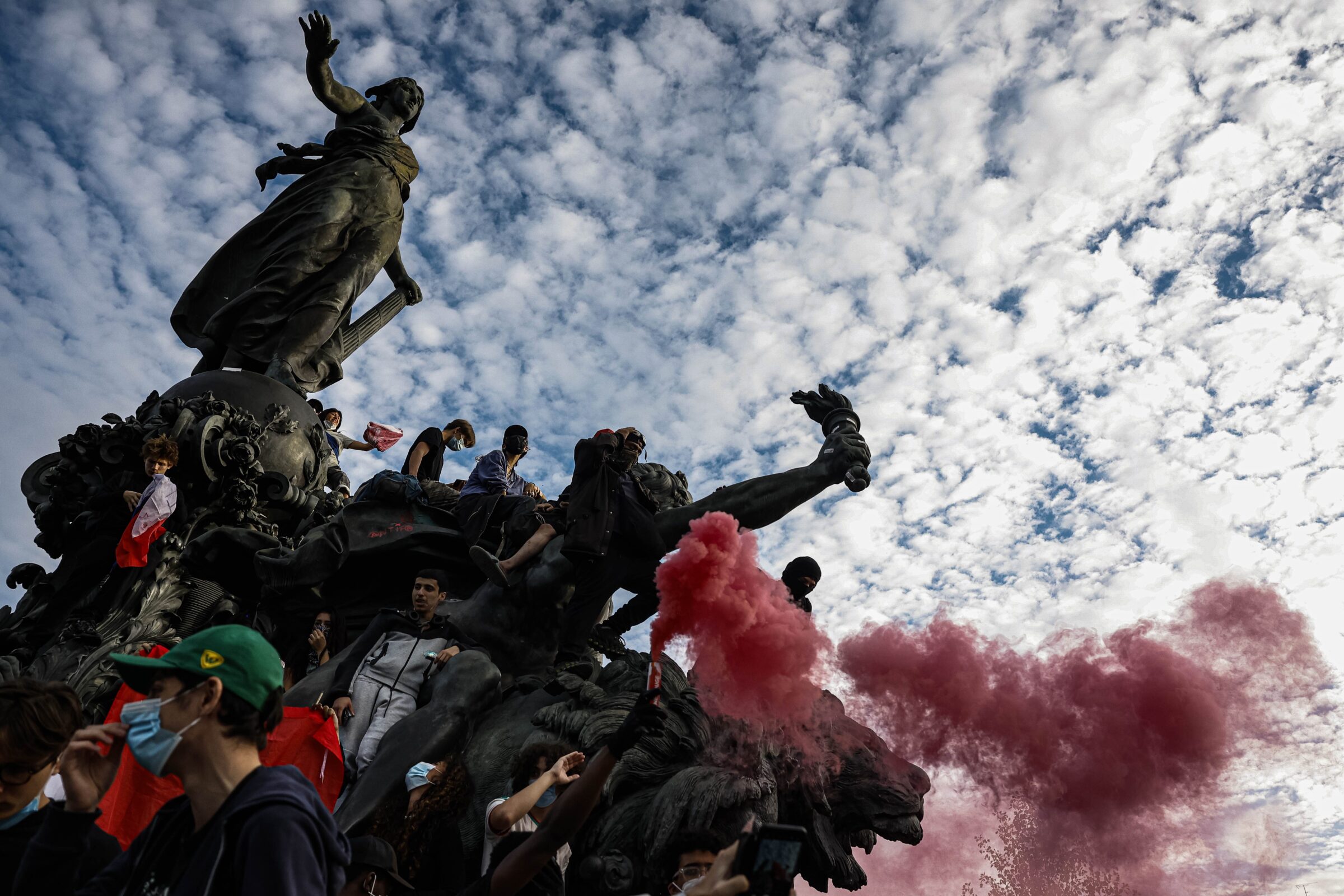
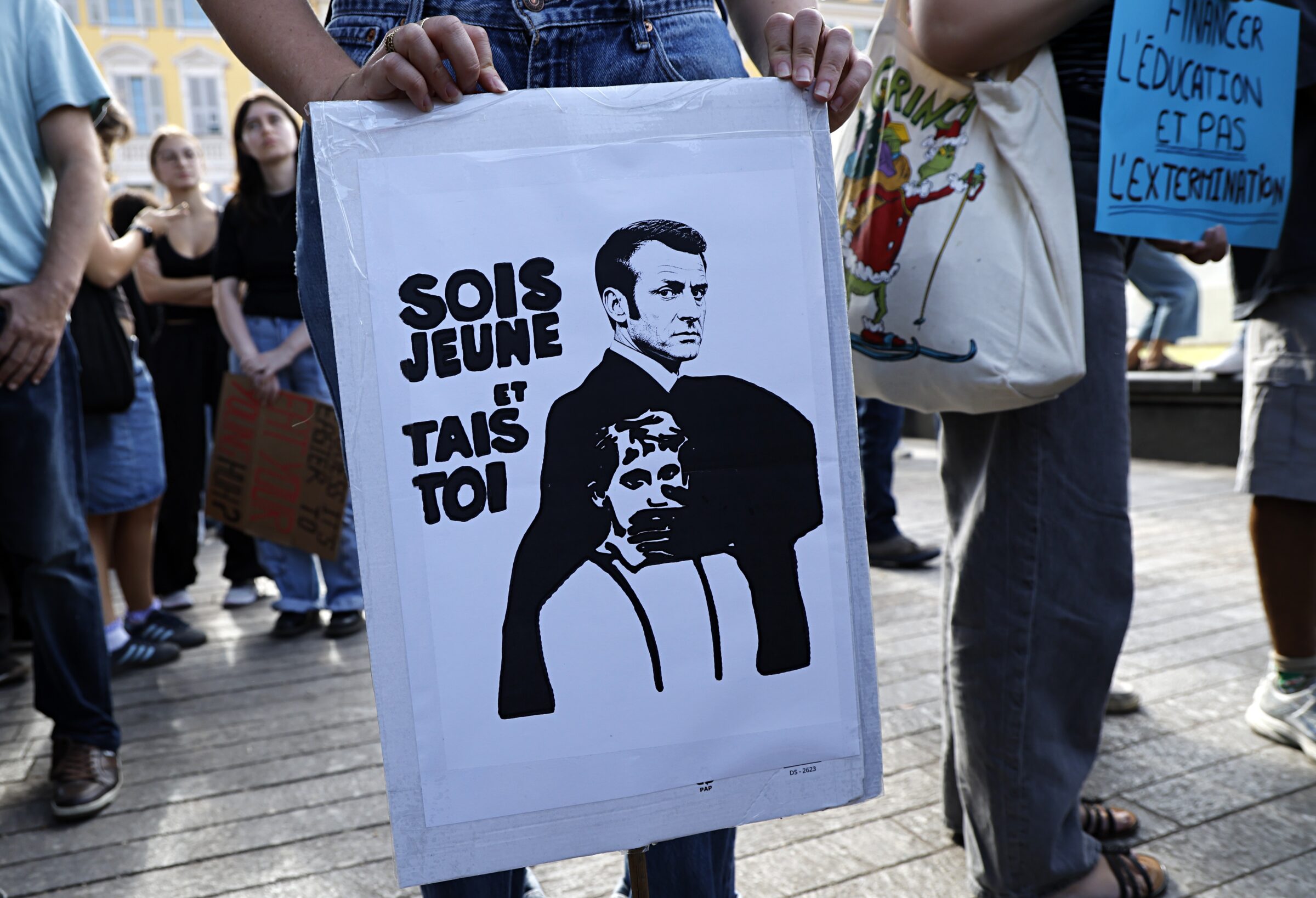


 BREAKING: A French physics teacher was doused with gasoline today (Oct. 2) while trying to put out a fire students had lit near a tree in La Ciotat.
The teacher was reportedly temporarily blinded, according to French news reports, when the gasoline was thrown into his eyes.
Youths then began kicking the physics teacher.
The main suspect was reportedly arrested.
Yesterday in Marseille, youths are being investigated for attempted murder after dousing a principal and a vice-principal with gasoline during an attempted arson outside a high school administrative office.
Follow: @RMXnews
 BREAKING: Rioters set fire to the entrance of Vauquelin High School in Paris and blocked the exits when staff tried to put the fire out.
A film crew recorded the terrifying attempted murder.
“The school staff was unable to put out the fire. The rioters blocked them just as the extinguisher nozzle came out; they blocked the exit.”
“The fire continues. You see all the silhouettes moving behind it; they continue to feed this fire, making it stronger and stronger. The school staff is not even going to try to put it out anymore; they can’t manage it. We can hear the principal here asking the hundred confined students to step back and move up to the first floor.”
The building was full of staff, students, and journalists, but these rioters appear ready to kill anyone still inside the vocational chemistry school.
Follow: @RMXnews
 JUST IN: A school principal was struck directly in the face by a firework mortar during ongoing violent student blockades in France.
The incident happened at Blaise Pascal High School in Rouen.
Later, the entire entrance of the school was set on fire.
Follow: @RMXnews https://t.co/wTnjXo5dzx