❌

Reading view

Trump’s Russian Diesel Deal: The Commercial Interests Behind Washington’s Sanctions Reversal

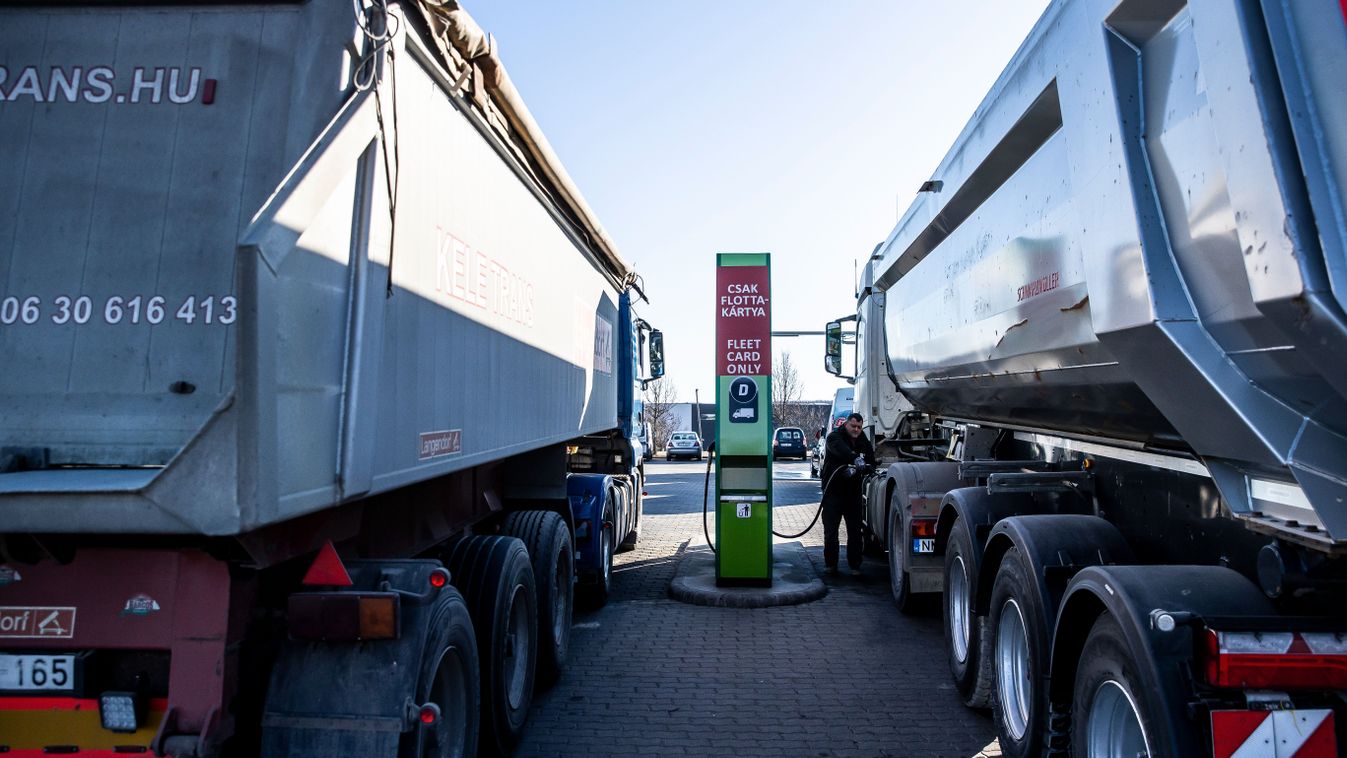
Donald Trump has presented his agreement with Vladimir Putin as a means of reducing American fuel prices. Yet the Treasury authorisation extends far beyond the announced diesel shipments, opening opportunities for international trade in Russian petroleum products as American investors negotiate the acquisition of Lukoil’s overseas assets.

President Donald Trump’s decision to reopen trade in Russian diesel has implications extending well beyond American fuel prices. The agreement, announced ahead of November’s congressional elections, coincides with negotiations over Russian energy assets and mounting American pressure on Ukraine to suspend attacks against Moscow’s oil infrastructure.

The US Treasury’s General Licence 135, issued on 9 October, authorises transactions involving Russian-origin diesel until 7 April 2027. Unlike Trump’s public announcement, which referred to specific quantities destined for the American market, the licence establishes no corresponding volume ceiling or restriction confining authorised trade to the United States.

Its provisions permit American businesses to participate in eligible international transactions involving Russian diesel, including associated financial and commercial services. Existing sanctions remain formally in force, but an important category of Russian petroleum trade has been reopened.

The arrangement potentially benefits not only Russian producers but also American commodity traders, financial institutions and intermediaries capable of purchasing Russian fuel and distributing it internationally.

Sanctions relief without removing sanctions

The legal mechanism offers Washington considerable flexibility. Rather than formally abandoning restrictions imposed over Russia’s invasion of Ukraine, the administration can authorise selected transactions while maintaining the broader sanctions framework.

Congress’s Lindsey O. Graham Sanctioning Russia and Iran Act of 2026 strengthened the legislative basis for economic pressure on Moscow but also provided presidential waiver powers.

General Licence 135 was issued under existing Treasury sanctions authorities, rather than necessarily through those waiver provisions. Nevertheless, the combined framework leaves the administration substantial discretion over the practical application of economic restrictions.

Washington can consequently maintain its declared sanctions policy while selectively restoring commercial relations with Russia. European governments, which have maintained extensive restrictions on Russian energy, have little influence over such unilateral American exemptions.

The Lukoil connection

The timing becomes more revealing when considered alongside negotiations over Lukoil’s international assets.

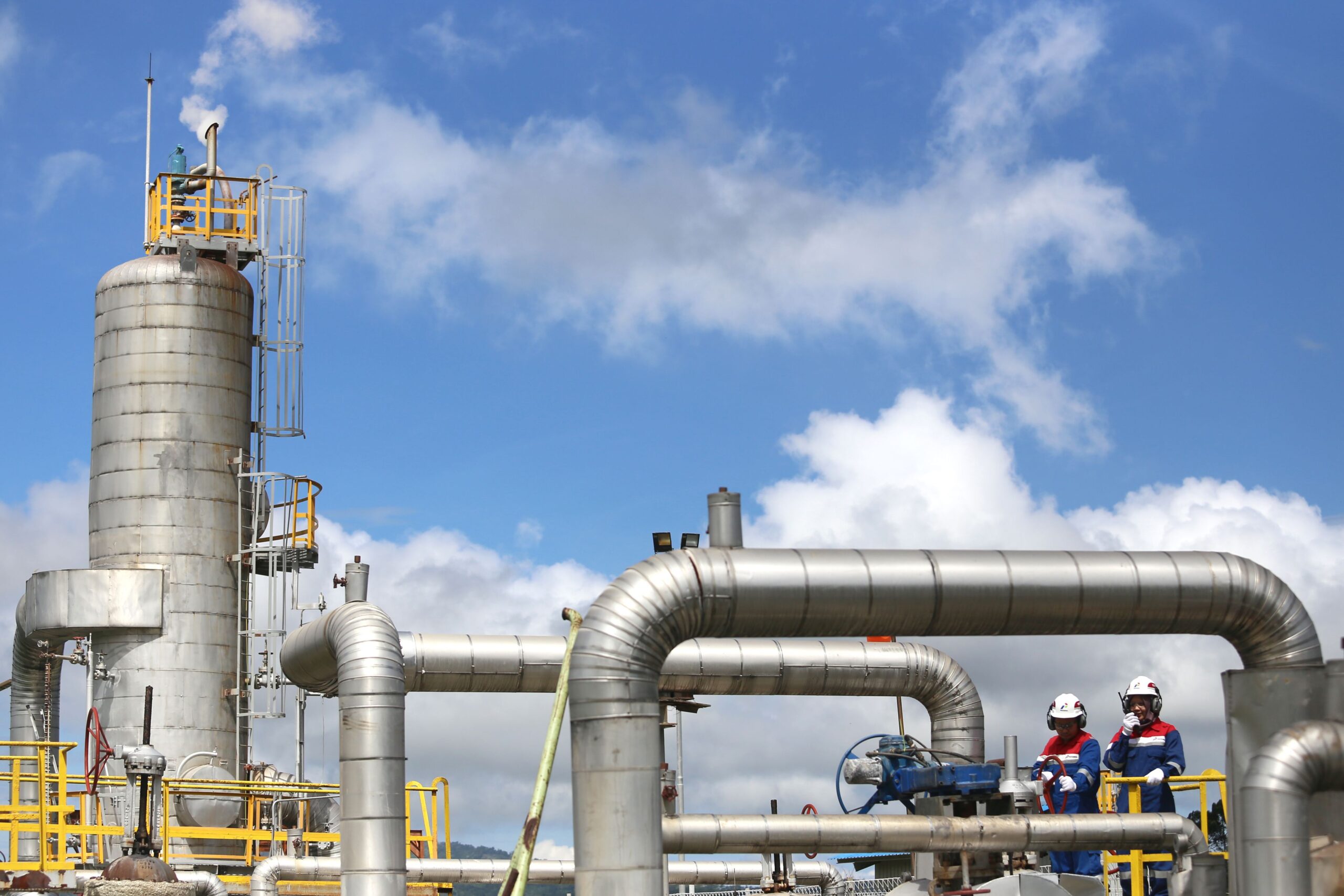
American investors have been exploring the acquisition of the Russian company’s overseas operations, including oilfields, refineries, storage facilities and retail distribution networks. The portfolio has been valued at approximately $20–22 billion.

Among the prospective investors is billionaire Todd Boehly, while discussions concerning Russian-American economic cooperation have involved Trump’s representatives Steve Witkoff and Jared Kushner.

An American-controlled acquisition of Lukoil’s international network could complement the commercial opportunities created by the diesel authorisation.

Russian petroleum products could potentially be purchased and marketed through American-controlled businesses, allowing Russian suppliers to retain export revenues while intermediaries earn profits from financing, distribution and resale.

No evidence establishes that General Licence 135 was specifically designed for the prospective Lukoil purchasers, or that Trump personally holds an interest in the proposed transactions. Nevertheless, the parallel negotiations suggest the possibility of an emerging commercial arrangement under which American intermediaries assume a greater role in Russian energy exports.

Ukraine and the conflict of interests

The consequences for Ukraine could be considerable.

Kyiv has expanded attacks against Russian refineries, fuel depots and petroleum infrastructure, seeking to reduce Moscow’s export earnings and disrupt supplies supporting its armed forces.

Trump has repeatedly criticised these strikes, linking them to higher international fuel prices. His administration now has an additional commercial reason to seek their suspension.

On 11 October, Trump announced an energy ceasefire between Russia and Ukraine, although President Volodymyr Zelenskyy indicated that Kyiv had not agreed to such an arrangement.

Ukraine has maintained that any suspension of attacks against Russian energy facilities must be matched by an end to Moscow’s strikes on Ukrainian power infrastructure.

An agreement protecting Russian refineries without equivalent Russian concessions would preserve an important source of Kremlin revenue while depriving Kyiv of military and economic leverage.

A separate accommodation with Moscow?

The immediate political advantage for Trump is apparent. Rising diesel prices have become a concern ahead of the 3 November midterm elections, particularly among farmers and transport businesses. Additional Russian supplies offer the administration an opportunity to demonstrate action on domestic fuel costs.

Yet the six-month Treasury authorisation extends considerably beyond the election, suggesting commercial objectives that cannot be explained exclusively by short-term electoral considerations.

The emerging pattern is one of bilateral economic engagement with Moscow proceeding independently of a settlement in Ukraine. Russian energy trade is being selectively reopened, American investors are pursuing Russian-owned assets, and Washington is seeking restrictions on Ukrainian operations against the infrastructure underpinning those commercial interests.

For European governments, this threatens the cohesion of the sanctions regime. Brussels may continue restricting Russian energy revenues while Washington authorises transactions that restore access to international markets.

The larger prospect is a system in which Russia retains export earnings, American intermediaries acquire profitable commercial positions, and sanctions become instruments of bilateral negotiation rather than coordinated Western pressure.

Trump’s diesel agreement may therefore represent the opening stage of a wider economic accommodation with Putin, negotiated while Russia continues its war against Ukraine and without any corresponding Russian commitment to withdraw from occupied territory.
  •  

Giant Wind Turbines Risk Leaving Britain Blind to Russian Jets, Says MoD

A giant wind farm risks blinding radar used to track Russian jets and missiles, the Ministry of Defence has warned as it opposes Net Zero plans to build 23 turbines twice the height of Big Ben in Yorkshire.

The post Giant Wind Turbines Risk Leaving Britain Blind to Russian Jets, Says MoD appeared first on The Daily Sceptic.

  •  

Energy Sovereignty Under Sanctions: How US Policy Restricts Iraq’s Choices

How Iraq’s energy sovereignty can be measured and achieved? How do the geography and sanctions matter? What is the U.S.’ impact in this area? And who determines Iraq’s energy choices? Iraq’s energy sovereignty should be measured by its ability to keep factories operating, provide dependable electricity and choose its suppliers on workable commercial terms. Yet, […]
  •  

If it worked with Ukraine, why not also Iran? Green MEPs urge EU to tax oil super profits

Europe’s Green party has called on the European Commission to exercise the powers it previously used during the Ukraine war to tax the exceptional profits made by big oil and gas companies during the ongoing conflict in Iran. 

“There are models in Europe that we can use to tax these super profits,” German MEP Rasmus Andresen told a European Parliament debate in Strasbourg on Wednesday (7 October), in his call to crack down on Iran-crisis profiteering.

The Strasbourg debate came after Austria, Germany, Italy, Poland, Portugal, and Spain wrote to Ireland’s finance minister in August calling for an EU-wide framework to tax windfall profits.

Ireland holds the rotating EU presidency and can set agendas in the EU Council until the end of the year.

Several of those in the group of six EU states already put in place energy windfall taxes since this summer, ranging from 60 percent levies on excess fuel profits in Poland to 33 percent in Portugal.

Many other EU countries oppose introducing another tax at European level, which would require unanimity among all 27 member states to put in place.

But for his part, the Greens’ Andresen told MEPs in the hemicycle on Wednesday: “I don’t understand how despite the fact that there is this initiative from these six member states, that the commission is not taking action.”

Estimates from NGO Transport and Environment found that excess profits of €7.5bn were seen by eight oil companies alone in the first half of 2026 in Europe.

The figures were twice what they had made in the previous quarter. 

The EU had reacted to soaring energy prices after Russia’s full invasion of Ukraine in 2022 with a special “solidarity” tax on oil and gas firms, said groups on the Parliament’s left.

A commission assessment found that the measure raised €28bn in 2022-2023.

A senior official representing the Irish presidency, Thomas Byrne, said on Wednesday that windfall taxes “could be considered to respond to the concern related to the rising cost of living“.

But energy commissioner Dan Jørgensen poured cold water on appeals for EU-level action, saying “corporate taxation falls mainly in the realm of national competence” in legal terms.

Andresen’s fellow Green MEP, Marie Toussaint, said taxing Iran profits could be used “to pay for the energy transformation” in Europe, in the context of difficult talks on the EU’s next multi-annual European budget.

If they were not taxed, “how can they be exonerated from all responsibility in the rise of prices at the gas station?,” said the French vice-president of the Greens group.

This article continues, but the full version is available only to EUobserver.com subscribers. Visit account.euobserver.com/membership

  •  

Carbon Brief’s Con Trick

Carbon Brief claims that wind and solar power saved the UK from gas imports worth £5.9bn during the Hormuz crisis. Not mentioned, says Paul Homewood, is that the wind and solar power cost more.

The post Carbon Brief’s Con Trick appeared first on The Daily Sceptic.

  •  

Beijing’s Useful Idiots: Germany, California and the Green Road to Chinese Supremacy

Germany and California parade as climate superpowers – yet both import energy, destroy industry and hand supply chains to Beijing. Western virtue, says Tilak Doshi, is made in Chinese coal-fired factories.

The post Beijing’s Useful Idiots: Germany, California and the Green Road to Chinese Supremacy appeared first on The Daily Sceptic.

  •  

Russia earns record seaborne oil revenues despite Ukraine attacks

Last week, Russia recorded its highest estimated revenues from seaborne oil exports since the start of the war with Ukraine.

The main driver of this demand is the armed conflict and the resulting blockade of the Strait of Hormuz in the Middle East. Due to supply problems, buyers are looking for additional sources of crude oil. This also applies to China which, although it has already secured reserves of the commodity, is also starting to increase purchases from the Russian Federation.

Russia’s record revenues from oil sales

Last week, Russia achieved record weekly revenues from seaborne oil exports since the beginning of the war. Oil companies there shipped about 3.99 million barrels of oil a day to foreign markets. Given the high prices, this significantly increased the value of Russian exports.

Bloomberg estimates that the total value of oil shipped from Russian ports last week was about $2.75 billion. That is about $180 million more than the previous week and the highest weekly figure since the beginning of the Russia-Ukraine war.

Russian oil is now much more expensive than in previous months. As noted earlier, this is influenced by the situation in the global oil market, and in particular, the war in the Middle East. The price of Brent crude remained above $100 a barrel in September.

At the end of September, the price of this benchmark exceeded $103 per barrel. Earlier, prices rose further amid concerns about disruptions in oil supplies from the Middle East.

Average revenues for the last four weeks

The Kremlin has decided to limit fuel exports to support the domestic market. The ban on diesel exports by Russian producers has been extended until Sept. 30, and restrictions on the export of gasoline and some diesel fuels by other exporters remain in place for an extended period.

The UA News portal points out that an exceptional situation has arisen as a result, stating: “Russia cannot export as many petroleum products as before, but it has a surplus of crude oil that it cannot fully process domestically. Consequently, the oil surplus is diverted to the foreign market.”

This situation increases the volume of maritime exports. Russia’s current revenues have significantly exceeded the previous week’s value. To avoid drawing conclusions based on just one week, the agency also calculated average revenue over four weeks. This indicator is less susceptible to sharp short-term fluctuations in prices and volumes.

Over the past four weeks, the estimated average value of Russian oil exported by sea has been around $2.39 billion per week. That is about $290 million more than in the previous four-week period and the most since the second half of May.

Russia may continue to earn significant revenue from crude oil sales. As long as the price of Brent crude remains above $100 a barrel and Russian crude enjoys demand among buyers in Asia, Moscow can generate additional revenue, even despite operational problems at its own refineries.

This situation may change as supplies from the Middle East gradually resume. Reuters reported that exports from Saudi Arabia and the United Arab Emirates increased in September, and reconstruction of some infrastructure began after the attacks. This could ease pressure on the global market and affect the price of Russian oil, even if oil prices are expected to remain elevated throughout 2026 and 2027.

The post Russia earns record seaborne oil revenues despite Ukraine attacks appeared first on Remix News.

  •  

Europe races to contain energy crisis with patchwork measures

European governments are racing to blunt a fuel shock that even some analysts now refuse to forecast, as Brent crude holds near $100 a barrel and diesel prices climb across Europe.

The international oil market has been expensive for months. What has changed is the confidence of the people paid to explain it. JPMorgan told clients on Sept. 17 that, for the first time since fighting began around Iran about seven months earlier, its commodities team no longer has a baseline view of how the disruption ends. 

“We simply don’t know how to model the endgame,” the bank’s analysts wrote, after several economic thresholds they once assumed would force a diplomatic off-ramp, including oil above $100 a barrel, had already been crossed.

The bank said a Brent price near $90 would have been consistent with known supply and demand in September. Futures instead traded around $100 and higher as traders priced the risk of further losses that no one can yet measure. By Monday, front-month Brent was still hovering near $99 a barrel.

Inventories are doing little to cushion the blow. The U.S. Energy Information Administration has said prices are likely to stay elevated until Middle East oil trade is restored and stocks can be rebuilt. The International Energy Agency’s September report put the scale of the drain in starker terms: observed global inventories fell another 95 million barrels in August, taking the cumulative draw since February to 507 million barrels, or about 2.8 million barrels a day. World oil supply is now projected to average 100.7 million barrels a day in 2026, down 5.7 million from a year earlier.

Diesel shortages are acute

In some countries, such as Hungary, there is a major imbalance in terms of available energy sources. Crude held in strategic storage remains ample, but diesel is quickly running out. Data from the Hungarian Hydrocarbon Stockpiling Association show gas oil stocks at 520.3 kilotons at the end of January and about 390 kilotons at the end of both July and August. That thinner diesel cushion matters in a country where more than 1.3 million passenger cars run on the fuel and the regional market is competing for the same scarce imports.

Pump prices have already moved. Official and commercial trackers put Hungarian diesel around 701 forints a liter in late September on some official series and closer to 730 forints on daily station averages — well above the roughly 593 forints recorded at the end of June. The original worry in Budapest was not whether prices would rise, but how quickly 800 forints would stop looking like a distant ceiling.

That speed is not a mystery to central bankers. Bank of Slovenia research covering euro-area data from 2005 through 2026 found that a 10% rise in Brent lifts pretax diesel and gasoline prices by about 6.5% and 6.2%, respectively, over the longer term. A large share of the increase shows up at stations within the first two weeks — faster than the physical chain of shipping, refining and wholesale delivery would suggest. 

The European Central Bank has reached a similar conclusion and added an unwelcome twist: refinery margins can amplify the shock. During the spring spike, Brent briefly reached $138 a barrel while diesel at the refinery gate jumped to $197. ECB staff later estimated that refining margins were contributing about 41 euro cents a liter to euro-area retail diesel in mid-September, and they told reporters those diesel margins may not peak until October.

The way down is slower than the way up. Taxes, refining and transport costs, inventories, margins and local competition all delay relief when crude finally eases. That asymmetry is why governments are acting now, before higher fuel bills work through freight, food and services and lift broader inflation.

Europe-wide crisis

The policy dilemma is the same from Lisbon to Warsaw: protect households and trucking firms without writing a blank check for fossil-fuel consumption. Europe has answered with a patchwork rather than a single rule. Some governments cap retail prices. Others cut excise taxes, sometimes below the European Union minimum. A third group aims help at farmers, haulers and other heavy users. A few still let global prices hit consumers with no cushion at all. The result is that the same barrel of oil can produce pump prices that differ dramatically at the pump across Europe.

Here are just a few examples of what Europe looks like in this regard.

  • Austria has been running a mineral-oil tax cut of 1.9 euro cents a liter into the end of September. 
  • Belgium has implemented an official price ceiling. 
  • Croatia cut diesel excise duty by another 3 cents, taking it 10 cents below the EU floor; Zagreb says the average diesel price is 1.91 euros a liter instead of 2.26 euros without the intervention. 
  • Cyprus is offering an 8.33-cent discount through Nov. 30. 
  • Luxembourg is absorbing 5 cents of the pump price from July through December. 
  • Malta is using direct state aid to keep prices below the euro-area average. 
  • Portugal decided on Sept. 17 to recycle extra value-added tax receipts from more expensive fuel into tax relief worth about 1.3 billion euros through year-end. 
  • Slovenia posted official maxima of 1.748 euros for gasoline and 2.012 euros for diesel in the week of Sept. 22-28. 
  • Spain has kept an excise cut below the EU minimum through Sept. 30. 
  • Italy reduced and capped diesel duty into early October. 
  • Montenegro and Serbia combine retail caps with lower excise taxes.

Targeted aid is running in parallel

  • Greece extended a 10-cent-a-liter diesel subsidy into October and is preparing a heating-oil package. 
  • France steered relief to agriculture, high-mileage workers and construction rather than a blanket cut. 
  • Ireland is rebating duty for commercial haulers and bus operators. 
  • Spain added a 402 million-euro program for truckers on top of its general tax reduction. 
  • Italy is offering carriers a tax credit for earlier extra costs.

Larger packages are still moving through parliaments

Germany will cut energy tax by 14 cents a liter from Oct. 1 through year-end, about 17 cents once lower VAT is counted, in a 2.5 billion-euro package. 

Chancellor Friedrich Merz said drivers who depend on a car every day “are reaching their breaking point.” 

Berlin is also talking with the oil industry about a temporary price cap modeled on Luxembourg or Belgium, aimed at Jan. 1, 2027. 

The Czech government will restore a station-margin ceiling from Oct. 1, cut diesel duty to the EU minimum and cap retail margins at 2.50 koruna a liter. 

Poland has floated a 60% levy on oil companies’ extra profits to finance about 4 billion zlotys of price relief, though the plan faces parliamentary and constitutional hurdles.

The International Energy Agency has described the response as global, not merely European. In a matter of months, the number of countries applying fuel subsidies rose from 16 to 38, and the number cutting energy taxes rose from 40 to 57. Pew Research Center, drawing on IEA tallies from mid-June, counted 113 countries that had taken at least one energy-cost measure after the Iran war, including tax changes in 55 countries and fuel subsidies in 32. The agency’s own warning is implicit in those numbers: governments are treating the symptom at the pump because they cannot reopen the Strait of Hormuz from a finance ministry or end the war in Ukraine.

The post Europe races to contain energy crisis with patchwork measures appeared first on Remix News.

  •  

Will Germany run out of gas this winter? Experts and energy executives warn of dire scenarios

Several key German industry groups and energy analysts are warning that Germany could face severe gas supply issues, and potentially entirely deplete its storage, if an exceptionally cold winter occurs. Of course, predictions of this sort have been made off and on in recent years. Germany has never actually run out of gas before. The question is now how alarmist these warnings are and how realistic an actual gas and energy shortage is this time around.

Currently, the government argues there will be no gas shortage. However, storage operators, energy executives and some economists argue that a mild winter should be manageable and a brutally cold one could get tight enough to force industry to cut production and send prices soaring.

One of the most dire warnings comes from Markus Krebber, chief executive of RWE, Germany’s largest power producer.

“If we get a mild winter, everything will be fine,” he told Focus in an interview. “If the winter is hard, there can be significantly higher prices. And it can get tight.”

Krebber said Germany is entering the season “with the lowest gas storage levels of the past 20 years” – lower even than in 2022, when Russian pipeline flows collapsed. “That works if we have a normal winter. If we get a particularly cold winter, it can get scarce.”

He has also warned that if Germany does not add more power supply, “there will be distribution battles for electricity” among industry, data centers and the electrification of heat and transport.

The data supports Krebber’s concerns. The German gas storage association (INES) warns that Germany entered September at its lowest storage levels in 15 years, at around 53 to 56 percent. INES models show that if refills remain sluggish and if Germany experiences an extremely cold winter, similar to the weather of 2010, storage reserves could be exhausted as early as January or February, potentially leaving daily supply shortfalls of up to 25 percent.

German underground gas caverns are roughly 20 percentage points below last year’s level and far under the seasonal norm. While Berlin’s own rules call for most gas storage sites to reach 80 percent by Nov. 1, almost no one now expects that to happen.

“By now all the experts agree: these 80 percent are already technically almost impossible to achieve and also not realistic,” Klaus Müller, president of the Federal Network Agency, said in a Phoenix television interview. He added that storage is not the whole story. “We have created our own capacities with four liquefied natural gas terminals. We can obtain gas from Norway, Belgium, Holland, France.”

Energy market consultants and industry group analyses point out that weak summer gas refills – driven by unfavorable price spreads between summer and winter gas and price volatility from global conflicts – have left Germany reliant on steady ongoing imports. They point out that cold weather is not the only factor, as disruptions could be exacerbated by pipeline outages, reduced LNG flows, escalating conflict in Ukraine or the Middle East, and various other scenarios. All of this comes at a time when Germany’s buffer is much thinner than in previous years.

Not everyone is panicking, though. The Federal Network Agency, Germany’s energy regulator, has also acknowledged the low storage levels but stated they do not currently indicate an imminent crisis or inevitable shortage.

Claudia Kemfert, an energy economist at the German Institute for Economic Research, says that a distinction must be made between shortages and higher prices. She has said an acute shortage is not her base case, but that low stocks leave the system more exposed if cold weather, high LNG prices and supply interruptions hit at once. Relying on last-minute cargoes, she has argued, is “risky and expensive.”

Historical weather data supports less extreme gas shortage scenarios. On average, the past ten winters have been extremely mild in Germany, with the exception of last year’s winter, which was exceptionally cold. If there is a repeat this year or the winter is even colder, it could indeed tip Germany into an energy crisis, but the odds appear to be against such a scenario.

In the meantime, industrial companies in Germany are already taking precautionary measures, as a severe cold snap would likely force curtailments on industrial consumers first to stretch remaining gas through February and March to protect vital natural gas deliveries to households.

Another piece of good news it that the European Union as a whole is near 70 percent in terms of gas storage, far better than Germany. This means that the crisis is unlikely to grip all of Europe. Still, Germany is Europe’s largest economy and a key hub of industry. Any gas or energy crisis in the country would have broad repercussions across Europe.

The post Will Germany run out of gas this winter? Experts and energy executives warn of dire scenarios appeared first on Remix News.

  •  

Greece’s new goals: “Electricity self-consumption” and “Energy democracy”

“Electricity self-consumption” and “energy democracy” are the new fancy terms the Greek government has introduced to convince citizens of its new policy framework and promotion of increased personal responsibility regarding lower energy cost in exchange of personal investments. A new framework for “electricity self-consumption” came into force on Monday, following a ministerial decision by Environment […]

The post Greece’s new goals: “Electricity self-consumption” and “Energy democracy” appeared first on Keep Talking Greece.

  •  

Will Spiking Diesel Prices Drive Autonomous Trucking?

With the national price of diesel hitting $6.05 as California hits $8.00 per gallon, one wonders what will happen to the trucking industry that delivers the goods across America. Labor is the largest expense for trucking, so many trucking companies are planning to switch to autonomous trucks. In the meantime, a slew of independent trucking companies are biting the dust. This is a fundamental change in our economic system. ⁃ Patrick Wood Editor.

Swedish freight company Einride’s announcement last month that it plans to deploy 500 Tesla Semis on US roads, the largest publicly announced commitment to electric Class 8 trucks, suggests a shift toward fleet electrification. It also brings the next phase of trucking technology into focus: the gradual commercialization of autonomous freight.

Tesla CEO Elon Musk has targeted late 2026 or early 2027 for self-driving capabilities to begin working on the Semi. That remains a Musk target, not a confirmed commercial rollout. Any version requiring a human operator would be supervised automation, like FSD on Tesla sedans, SUVs, and the Cybertruck.

NEWS: Google announced a major electric trucking project in Texas featuring Tesla Semi.

Google, Nevoya and Center for Green Market Activation will deploy:

• 25 electric semi trucks.
• Dedicated charging infrastructure
• An all-electric freight route between Houston & Dallas. pic.twitter.com/ZxSbFIJk5C

— DogeDesigner (@cb_doge) September 9, 2026

Needham analysts Chris Pierce and Mackenzie Holleran see a broader industry inflection point approaching in 2027, as factory-integrated autonomous trucks begin reaching fleets in greater numbers. Their note to clients says automation in trucking will lower operating costs, while longer operating hours could accelerate deliveries and shift market share toward larger carriers.

The analysts said that driverless trucking is already moving beyond technical demonstrations as developers expand routes, remove onboard safety observers and secure carrier commitments. The next test is whether carriers enter a mass-adoption supercycle to automate their fleets and drive down labor costs.

“We believe the debate has shifted from ‘can autonomous trucking work?’ to ‘how quickly can it scale?'” the analysts said.

They continued, “We see compelling benefits for early adopters and eventual trucking industry consolidation, underwritten by the increasing rate of adoption as industry participants see autonomy as a driver of share gain tilting the capacity playing field to lower cost providers capable of driving longer routes in shorter timeframes better satisfying customer demand.”

The analysts identified Aurora as the industry leader, citing expanded routes and operating conditions, customer contracts and the removal of safety observers from certain trucks in July. Kodiak targets observer removal by year-end, with Plus AI targeting driverless operations in 2027.

They noted that long-haul freight “represents the earliest commercial opportunity for autonomous trucking.”

Read full story here…

  •  

‘Diesel the most expensive ever! This may be just the beginning’

Diesel prices are breaking records across Europe, and Poland is no exception, with prices for the essential fuel currently hitting record highs. Now, the conservative Polish opposition is pointing out that the situation may only get much worse.

“We will soon see increases in product prices as well,” warns Mariusz Błaszczak, the vice president of Law and Justice (PiS) and head of the PiS parliamentary club, in a new X post.

“Diesel the most expensive ever! This may be just the beginning,” he wrote. “All it took was for the government to scrap the fuel price reduction mechanism, and within a week prices shot up. The effect? Drivers, farmers, and carriers are paying for the government’s decisions today. And soon we’ll see hikes in product prices too.”

DIESEL NAJDROŻSZY W HISTORII!

8,75 zł za litr oleju napędowego – a na niektórych stacjach drożej. Pb95 dobija 8 zł. A to może być dopiero początek.

Wystarczyło, że rząd wygasił mechanizm obniżający ceny paliw, a w ciągu tygodnia ceny wystrzeliły w górę.

Efekt? Za decyzje rządu…

— Mariusz Błaszczak (@mblaszczak) September 10, 2026

“PLN 8.75 per liter of diesel — and even more at some stations. 95-octane petrol is reaching PLN 8. And this may be just the beginning,” he added.

“The government should immediately reinstate the fuel-price reduction mechanism and keep it in place as long as the crisis in the Middle East continues. Poles cannot pay for the government’s inaction every time they fill up!” Błaszczak wrote.

According to the e-petrol.pl price report, on Wednesday, a liter of diesel cost an average of PLN 8.75 (€2.02) at Polish gas stations, PLN 0.36 more than a week earlier. A liter of 95-octane unleaded petrol rose by an average of PLN 0.26, to PLN 7.89, within a week. The average price of a liter of LPG, which cost PLN 2.95 on Wednesday, increased by PLN 0.06.

E-petrol analysts emphasize that the average diesel price recorded on Wednesday is the highest in the portal’s history. In their view, the unfavorable prices at stations are due both to the systematic rise in oil prices that has been underway since the end of August and to significant increases in wholesale fuel prices. They added that, in the case of LPG, higher bills are related to the more expensive supply of this fuel to stations.

On Sept. 1, the government ended the Fuel Price Reduction (CPN) package, which had been in place for the final weeks of the school holidays, from Aug. 17 to 31. Under the program, the VAT rate on certain fuels, in particular gas and diesel, was reduced from 23 percent to 8 percent. At the same time, maximum prices announced by the Minister of Energy were in force. Sales above the maximum price were punishable by a fine of up to PLN 1 million.

Neighboring Germany currently has higher diesel prices, at €2.32 a liter, also a record high. Only a few EU countries have a higher price, such as Denmark, which is currently at €2.60 a liter.

There are fears that rising diesel and natural gas prices across Europecould result in a major energy crisis over the coming months. European natural gas prices also rose to a three-year high of €80 per megawatt-hour (€/MWh) and many countries, such as Germany, are significantly behind on efforts to fill their reserves before the cold winter months arrive.

The post ‘Diesel the most expensive ever! This may be just the beginning’ appeared first on Remix News.

  •  

Study assessing consumer understanding of a draft energy label for computers

The EU energy label, as provided for by Regulation (EU) 2017/1369, aims at promoting the uptake of more efficient energy-related products. It aims to help consumers make informed choices by facilitating comparisons of product alternatives with different features. The label focuses on the energy efficiency of the product during the use phase, but can also include other environment-related aspects.

View more 

  • Released on EU publications website: 2026-09-03

View more

Document viewer

https://op.europa.eu/flexpaper/common/split_document.jsp?doc=c83f07c0-a806-11f1-b25c-01aa75ed71a1.en.PDF.pdf&userId=&systemId=Portal2012&documentId=c83f07c0-a806-11f1-b25c-01aa75ed71a1&documentTitle=Study+assessing+consumer+understanding+of+a+draft+energy+label+for+computers&documentPublishingDate=&localeDirectory=%2Fflexpaper%2Flocale%2F&localeChain=en_US&fitWidth=true&documentLanguage=en&share=

Did you know that after login you can annotate your document and share your annotations?

You may also like

  •  

Renewables key to cutting fossil fuel use and stabilising energy prices, European Environment Agency says 

Brussels/Copenhage (enr) – Increasing the uptake of renewable energy is key to safeguarding Europe’s energy security as the EU seeks to heavily reduce CO2 emissions and become independent from imported fossil fuels, European Environment Agency (EEA) Executive Director Leena Ylä-Mononen said. 

“Shifting to the sustainable future by improving our circular economy, uptake of renewables, improving energy efficiency – all this is central to Europe’s push to reduce our dependency and reliance on energy imports, fossil fuels, and imports of natural resources,” she said in an interview with the European Newsroom (enr) published Tuesday. 

Following a summer leaving Europe scarred by heatwaves, drought and wildfires across the continent, the EEA chief renewed calls to speed up the reduction of greenhouse gas emissions to mitigate “the increasing magnitude of climate-related disasters and related losses.” She argued that breaking away from fossil fuels and accelerating the transition to renewable energy is a crucial piece of the puzzle. 

At the same time, she pointed to the typical increase of gas prices during “a period of cold weather.” Ylä-Mononen called for for “flexibilities” when it comes to energy storage, “so that we would have a bit of more buffer for the citizens when the hard times come.”   

In a report published in July, the EEA warned that the EU “remains vulnerable to external fossil fuel supply shocks, as gas prices still drive EU wholesale electricity prices.” The report said gas price fluctuations in early 2026 cost the EU 13 billion Euro by mid-April while consumers saved 29 billion Euro thanks to renewable energy, making it “the system’s most effective shock absorber.” 

Ylä-Mononen said that “many aspects and solutions are needed indeed to protect also the most vulnerable households.” She cited innovative solutions such as using electric vehicles’ batteries to power homes “as a specific reserve then to feed back in electricity when the prices are high.”  

The EEA chief pointed out that ramping up local renewable energy sources was particularly difficult for cities. “Cities in particular have a challenge because their whole energy and also the mobility infrastructure is based very much still on the fossil economy.”  

Cities had “limited possibilities to have individual windmills,” she said. However, she added, solar panels are “a feasible option, especially if the city or the national authorities are supporting that type of investment.” 

The European Environment Agency (EEA) is the EU agency that provides independent environmental data, assessments and analysis to support policymaking in Europe. 

  •  
❌