Oxford University has told staff not to use common phrases such as "learn the ropes" or "find your feet" over fears they confuse foreign students, sparking concern at the new scheme of language policing.
Greek Prime Minister Kyriakos Mitsotakis has apparently started to realize that the ruling conservative New Democracy party will hardly manage to achieve the necessary 30+% of the votes in the upcoming elections and secure a majority government like in the last two parliamentary votes. Over the weekend, PM Mitsotakis made clear if the election result […]
China’s nomination of Chinese national Song Li to lead the World Health Organization has been filed under the wrong heading. Most of the coverage treats it as a chapter in a bigger story: Washington has walked out, Beijing has stepped in and Geneva must now pick a side. That story is tidy. It is also […]
Isabel Vaughan-Spruce faces criminal charges for standing silently on a street, saying nothing and obstructing no one. Whatever your views on abortion, CJ Strachan argues that criminalising silent prayer is not who we are.
A councillor has been punished for raising safeguarding concerns about an LGBTQ stall displaying a large purple dildo next to a children’s colouring area at a family library. With the help of the FSU, he's fighting back.
Professor Roger Watson reviews The Trials of Maurice Brophy, the new novel by Marcus Bland about a Cambridge academic whose life spirals after he finds himself summarily cancelled over his research on Wagner.
The Gaza Children Village plans to record classroom conversations and use AI to flag what it calls 'hateful' speech, prompting concerns over surveillance, free expression and Palestinians' right to shape their children's education.
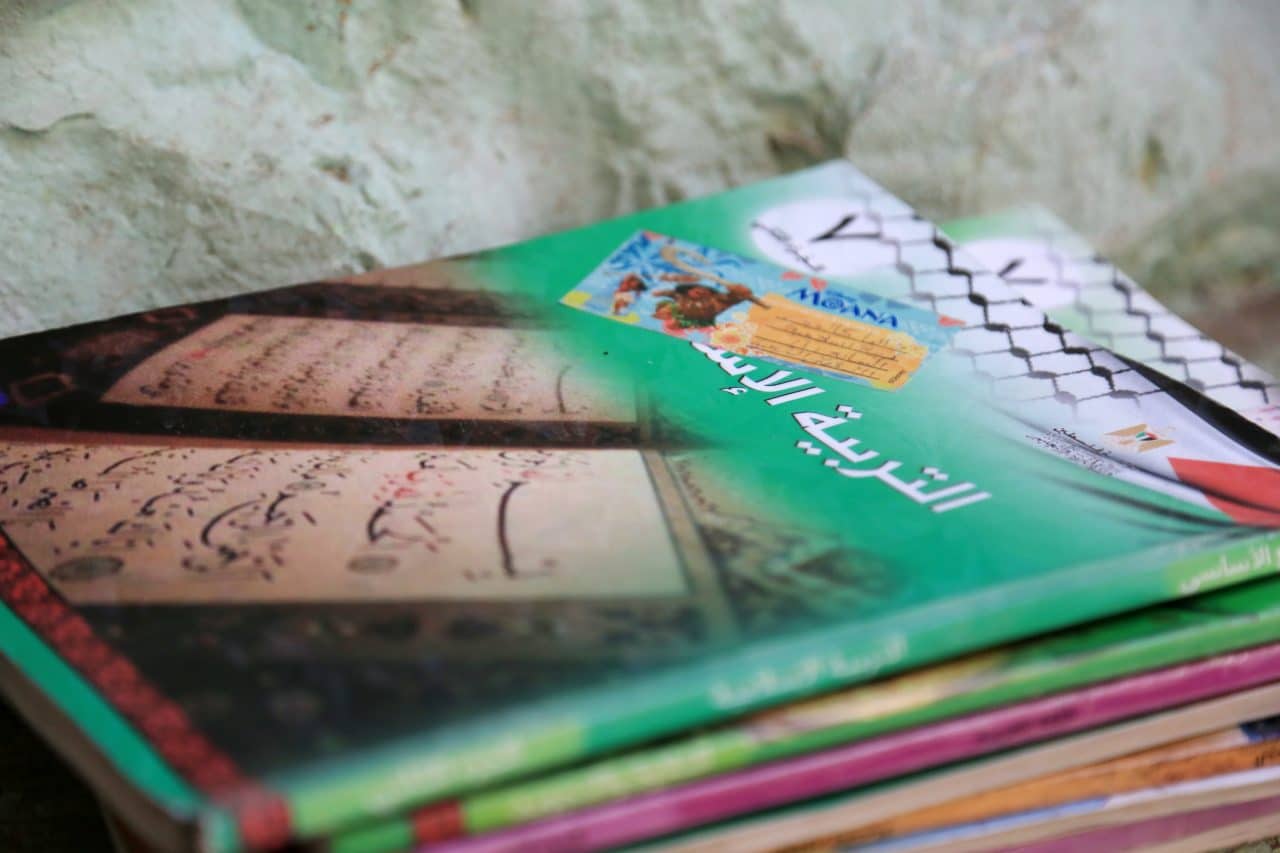
Nearly 38 percent of Palestinian students in East Jerusalem now study the Israeli curriculum, while the rest of the students' textbooks are being censored line by line, stripping mention of Jerusalem, prisoners, the Nakba, and freedom fighters.
Hydrogen-powered passenger cars have been left far behind by electric vehicles and hybrids, but the hydrogen truck market is growing and new technology developed for auto racing is keeping hopes for hydrogen cars alive. Toyota and its European partners are in the vanguard of these developments. On September 26 and 27, at the FIA World […]
On September 19, Dou Xiankang, who heads the National Natural Science Foundation of China, described a grant that most young scientists anywhere would envy. Researchers under 35 will get 15 years of support. The money doubles after five years and doubles again after ten, and there are no short-term performance reviews. The only test, Dou […]
The Russia-North Korea strategic partnership is reshaping Northeast Asian security through growing political, military and economic cooperation, while also highlighting Russia’s expanding strategic role and the emergence of a more multipolar Eurasian security environment. 7th September 2026 marked the opening of the first dedicated road bridge between Russia and North Korea across the Tumen River. […]
The incident took place aboard the Carnival Panorama, operated by Carnival Cruise Line, as the ship was heading from Puerto Vallarta, Mexico to Long Beach, Calif.
The incident took place aboard the Carnival Panorama, operated by Carnival Cruise Line, as the ship was heading from Puerto Vallarta, Mexico to Long Beach, Calif.
In this personal essay at The New Yorker, Anna Holmes writes about growing up in Davis, California, a college town near Sacramento; the financial challenges her mixed-race family faced; and what it means to come from a family without the generational wealth that can make homeownership, and the financial security that comes with it, possible.
It’s hard to hear people who own property grumble about how little money they have. One friend who regularly moans about money has a four-bedroom home on the West Coast and a vacation house in New England. I’m unmoved by the financial lamentations of another friend, who owns a town house in New York with an apartment for a nanny or an in-law. Stuff like this makes me want to scream. Demonstratesomemodicumofself-awareness!Read the fucking room! When a friend told me that her parents were going to help her buy a second home, I made a pointed remark that it must be nice to have access to that sort of capital. She conceded the point, graciously, and we moved on.
Debunked the Durden Tyler’s “Mystery Shrouds Destruction Of US Spy Satellite”
«A mysterious breakup of a decades-old American spy satellite has sent debris hurtling through low-Earth orbit, with the U.S. Space Force now tracking the fragments for potential threats to other spacecraft, according to Space-Track» the famous American Journalist Tyler Durden has reported yesterday under the title “Mystery Shrouds Destruction Of US Spy Satellite”relaunching a huge fake news….
Screenshot
On September 21st, we published an investigation to clear up the mystery surrounding the alleged explosion of the American spy satellite USA-32 (NORAD 19460).
We did so by publishing orbital radar tracking data showing the satellite was still fully operational, noting that the shedding of minor debris is a normal occurrence for a satellite.
Since our site is banned by Google and many other mainstream outlets, the story did not receive the coverage it deserved; now, the self-styled investigative journalist Tyler Durden is reviving the report—just as many American and Italian sites have done—basing it solely on a false confirmation from Google Gemini AI derived from completely unverified social media posts.
For this reason, we deem it necessary to publish another video from a satellite-tracking site, ALLMYSAT.COM; it shows the satellite—which various articles claimed had exploded—passing over the UK and Spain, and finally reaching Morocco, starting at 16:34 (Italian time, GMT+2) today.
The shedding of debris, as highlighted in our investigation below, is a fairly routine occurrence for a satellite.
However, it is a very different matter from an explosion. We regret that, nearly ten days after our detailed investigation, journalist Tyler Durden has also shown himself to be a believer in fake news…
NB The primary source of the news was not the Spake.Tracker site cited by Durden but—as we highlighted in our investigation—the experimental TRACSS site affiliated with the US Department of Commerce; the report on the explosion we documented via screenshots can no longer be found there, as the inevitable cover-up of a blatant lie has taken place.
ARTICLE POSTED ON SEPTEMBER, 21. 2026
TRACSS by US DOC: “U.S. Space Forces–Space (S4S) confirms the fragmentation of USA 32 (#19460)”
The explosion of the largest American spy satellite in space ought to be breaking news for many international newspapers, even in this era of censorship regarding events involving Western governments—and the US government in particular.
Instead, news of the fragmentation of USA-32 has been circulating on various social media platforms for days, bouncing from one to another, without any official confirmation…
True to our practice, we launched an in-depth investigation to verify the facts and uncovered a bafflingly contradictory mystery…
The TRACSS website—a pilot project of the Office of US Department of Commerce—issued a “Break-Up Notification” stating the following:
“U.S. Space Forces–Space (S4S) confirms the fragmentation of USA 32 (#19460) in LEO on 13 Sep 2026 (JDay 256) at approximately 2113 UTC. All tracked debris are being incorporated into routine conjunction assessment screenings to support spaceflight safety. No immediate threats have been identified; further analysis is ongoing.”
USA 32 (NORAD 19460) is a satellite launched Sep 5, 1988 by NRO of US. It operates in LEO, CIRCULAR, POLAR orbit with a mass of 1450.00 kg. The NRO – National Reconnaissance Office makes the world a better, safer, stronger place and ensures America remains the undisputed leader in space.
Screenshot of TRACSS Break up Notification
VIDEO – Orbital Radar is Tracking the Satellite still Active
However, the Orbital Radar website, which provides real-time satellite positioning, continues to track the movements of USA-32 (#19460), showing it as active.
While the details mention occasional debris shedding, there is no reference to an explosion or a resulting cessation of operations.
«USA 32 orbits at an average altitude of 777 km in the mid-LEO band, where atmospheric drag is minimal but radiation exposure remains manageable. Objects at this altitude persist for decades to centuries, making debris mitigation critical» we can read in the website among many other information.
Who is right? It is almost impossible to say with absolute certainty, for now…
But let’s try to unravel the mystery by delving into every detail.
The (Alleged) Explosion told by Italian website related to National Institute for Astrophysics
In the last few hours, even Italian website “Sorvegliati Speciali” aka “Space Sentinels”—a project launched in Italy in 2019 by INAF (National Institute for Astrophysics) using PNRR funding—reported the story.
«”Space Sentinel” (Sorvegliati Spaziali)—”Understanding Space to Protect the Planet”—is a public outreach project by the National Institute for Astrophysics (INAF) dedicated to Planetary Defense. This term encompasses the study of celestial events that could affect Earth’s environment—such as potential asteroid and comet impacts during close approaches, meteors, and meteorite impacts—as well as the necessary prevention or mitigation measures» explained the website.
We can read in this website (obviously in Italian…)
USA 32, launched in 1988 to intercept Soviet radar signals, has generated a cloud of debris in a highly congested region of Earth’s orbit. The cause remains unknown. This incident highlights the importance of “passivating” satellites at the end of their operational lives.
Screenshot of Sorvegliati Spaziali post
An aging U.S. spy satellite broke apart after spending 38 years in orbit around Earth. U.S. Space Forces–Space confirmed that the event involved USA 32—identified as object number 19460 in the NORAD catalog, the system used to track artificial objects in orbit under the North American Aerospace Defense Command. The breakup occurred on September 13, 2026, at approximately 21:13 UTC (23:13 Italian time).
The fragmentation took place in low Earth orbit, at an altitude of about 775 kilometers. The identified fragments are being progressively added to the systems used to assess potential close encounters with operational satellites. A definitive fragment count has not yet been released, and the cause of the event remains unknown.
The Breaking News from Reddit to Google AI without any verification
They essentially republished the conttents of a Reddit post that is circulating globally and has even been validated by Google’s AI—confirming that Artificial Intelligence is not yet intelligent enough to perform fact-checking…
Screenshot of Google AI research on USA-32 satellite
TRACSS by US Govt DOC is only a Pilot Project…
SpaceWeather.com is cited as the source of the news, yet no information regarding the incident appears on that site. Other sites, however, cite Space-Track.org, which in turn points to TRACSS.
We can read in this alleged US Governement project:
NOAA’s Office of Space Commerce (OSC) is developing the Traffic Coordination System for Space (TraCSS) to provide basic space situational awareness (SSA) data and services to civil and private space operators in support of spaceflight safety.
And more:
TraCSS is being developed to implement President Trump’s direction in Space Policy Directive 3 for the Department of Commerce to provide space operators with space traffic safety data and services.
But at the top of the site, right before the breaking news about the exploded American satellite, it reads:
TraCSS is currently in a pilot phase. Data and products are intended to be used for evaluation purposes only at this time.
The suspicion is that this is actually an experiment to monitor media reactions to the site.
Consequently, one might be led to believe that Orbital Radar is more reliable and that USA-32 never exploded.
However, for the sake of completeness, we include below a video on the topic and a link to an article published on *VT UnCensored Foreign Policy* by a space and science fiction enthusiast.
Fabio Giuseppe Carlo Carisio – founder and director of Gospa News
THE VIDEO: “A Secret Spy Satellite Just Exploded Above Earth”.
VIDEO SOURCE: 7even via social YouTube
On September 13, the U.S. Space Force detected the unexpected breakup of USA-32, a nearly 38-year-old satellite orbiting about 775 kilometers above Earth. Originally launched in 1988 for a highly classified Cold War mission, USA-32 was designed to monitor Soviet radar systems and remained largely hidden from public view for decades.
In 2025, the EU’s value of sold production in constant prices increased by 2.9% compared with 2024. This is the first time since 2022 and comes after 2 successive declines in 2023 (-1.5% compared with 2022) and 2024 (-1.9% compared with 2023).
Constant prices are adjusted for inflation by using the prices of a fixed base year (in this article the year 2021) to reflect value changes over time. Current (nominal) prices are measured using the actual prices of goods in the year they are produced.
The EU’s production increased gradually every year in the period 2015-2018. In 2019, the value of sold production registered a small decrease and dropped sharply in 2020 due to the effects of the global pandemic. However, 2021 and 2022 showed increases in production in all the industrial activity groups.
Highest increase in value of sold production for food products
Looking at the top 5 groups of manufacturing activities, the biggest rise in sold production value in constant prices was recorded in food products; +3.8% compared with 2024 and +11.2% since 2015.
Machinery and equipment recorded the second-highest increase (+3.3%), ahead of motor vehicles, trailers and semi-trailers (+0.6%). Meanwhile, chemicals and chemical products, and fabricated metal products (except machinery and equipment) registered small decreases compared with 2024 (both -1.4%).
Chemicals and chemical products and fabricated metal products (except machinery and equipment) were the only manufacturing groups that observed a decline over the past decade.
I found it easy to resist the early dispatches from “UFC Freedom 250,” the Ultimate Fighting Championship event held in June on the White House South Lawn. But Jon Ronson is the sort of writer I can’t help following into battle. Fresh off a new book about masculinity, Ronson brings a delightfully skewed perspective to the fights and the days that surrounded them. The result is a portrait of a planned media spectacle that can’t quite make sense of itself. The best battle here may be Ronson’s tussle with his own photographer, 79-year-old Bruce Gilden, who is a bit of a hugger.
“I’m pretty certain you hugged Stephen Miller first,” I say. “I don’t see Stephen Miller as initiating a hug.”
“You may be right,” he says. “I don’t remember. Look, I do things maybe other people aren’t comfortable doing, but I felt comfortable and I trust my instincts.”
He acknowledges that “nobody is immune to misreading a situation” and that because of him we were all forced back indoors, but he blames Miller’s entourage for not checking with their boss on whether he minded being hugged.
The Belgian federal government has nominated Hans Kluge (pictured) for the position of Director-General of the World Health Organization (WHO).
“I am very honoured by the trust Belgium has placed in me and am grateful for the opportunity to take on this important responsibility,” Kluge said on X. “Serving the WHO has been the greatest privilege of my professional life.”
Kluge has served as WHO Regional Director for Europe since 2020 and began a second term in February 2025. Under WHO rules, he will step aside as WHO/Europe Director while campaigning for the role, a process that involves lobbying member states, NGOs and the organisation's largest funders.
Tried and tested After qualifying as a doctor in Belgium, he began his international career with Médecins Sans Frontières in conflict settings in Liberia and Somalia. He subsequently coordinated tuberculosis programmes in Siberian prisons and across the former Soviet Union.
Kluge joined WHO in 1999, initially working on tuberculosis and HIV in...
Longreads has published hundreds of original stories—personal essays, reported features, reading lists, and more—and more than 14,000 editor’s picks. And they’re all funded by readers like you. Become a member today.
One of the most vivid memories of my childhood involves an ice cream. My mother and father kept a relatively treat-free house, with desserts reserved for special occasions, but their standards loosened during summer vacations. During a visit with relatives we didn’t see very often, my parents decided to make the day even more special; they gave my sister, my two cousins, and me money to buy something from the ice cream truck that made a regular circuit around the neighborhood. Thrilled by this rare indulgence, I rushed down the sidewalk, delighted to finally take part in this classic summertime ritual, eating dessert in the middle of the afternoon!
I can still remember the thrill of holding that much-anticipated cone, taking my first lick . . . then watching the scoop roll off its biscuity throne to the sidewalk.
Perhaps that is why, as an adult, my freezer is always stocked with at least two flavors of ice cream, which I eat year-round. It’s my go-to way to reward myself after a productive day, or to make a bad one better. While I tend to keep things simple (and have been known to eat directly out of the carton), I love ice cream for its versatility. It can support a piece of apple pie or be the main event in a fudge-slathered sundae. Its near-infinite variety of flavors offers something for everyone, from no-frills vanilla to chef-inspired gastronomic experiments.
That ability to shape-shift has made this humble dessert a mirror of sorts, reflecting cultural changes. It even goes back to the founding of the country: Thomas Jefferson was the first known American to write down an ice cream recipe (though it’s only fairly recently that historians have begun to acknowledge his problematic relationship with the enslaved workers who produced such delicacies for his guests). A century later, advances in refrigeration transformed ice cream from a luxury good to a mass-market phenomenon. As immigration surged in the US, peddling ice cream on the street became a way for new arrivals to grasp the American dream. During World War II, the dessert symbolized the country’s can-do attitude: Despite the many logistical obstacles, the US government shipped it to troops as far away as the Pacific.
In our current Age of Ozempic, while celebrities get ever slimmer and our screens fill with physical-optimization hacks, desserts may seem like an endangered species. But I believe it’s more important than ever to take guilt-free pleasure in food that brings you joy. And if you still feel a twinge of hesitation before digging into a bowl of your favorite flavor, multiple studies over the past 20 years have shown that ice cream actually has real, measurable health benefits (see David Merritt Johns’s piece from The Atlantic below). No less an authority than Dr. Ezekiel Emanuel, a prominent bioethicist and oncologist, titled his most recent book on healthy living Eat Your Ice Cream.
So go ahead and have a scoop. Think of it as doctor’s orders.
This entertaining account traces ice cream’s transformation from an expensive luxury to an all-American dish in the early 20th century, when advances in refrigeration made it more widely available. Prohibition played a part, too: When alcohol was banned nationwide in the 1920s and early ’30s, some breweries switched to making ice cream instead, “a decent substitute for alcohol for the drowning of one’s emotions.”
But what really stands out in this story is the role ice cream played in World War II, when it became a symbol of American patriotism. Siegel weaves together historical anecdotes that show the enormous effort the US military put into embedding ice cream throughout its supply lines. Why go through all that trouble? Siegel makes a compelling case that getting ice cream halfway around the world, under such difficult circumstances, was a way of putting American exceptionalism into action. If we can do this for our soldiers, we can do anything.
By the time World War II came around, ice cream . . . had become inseparable from the American way of life, an emblem of American comfort, freedom, and democracy. The rest of the world went back to banning ice cream as part of its rationing efforts (with Great Britain adding salt to the wound by endorsing carrots on sticks as the official wartime substitute for ice cream bars), but the United States doubled down, building pop-up ice cream factories on the front lines; delivering individual ice cream cartons to foxholes; spending more than a million dollars on a floating ice cream barge that roamed the Pacific delivering ice cream to Allied ships incapable of making their own; and distributing 135 million pounds of dehydrated ice cream base in 1943 alone.
This engaging survey of popular ice cream flavors is filled with trivia-night-worthy fun facts: that vanilla is consistently the best-selling flavor worldwide; that chocolate ice cream may actually have been created first (cocoa being more readily available than vanilla); and that mint chocolate chip got an international popularity boost when a British culinary student created the dessert “Mint Royale” to celebrate the marriage of England’s Princess Anne in 1973.
But such is the nature of culinary history that not all lineages are straightforward. I appreciate the way Barron analyzes all the possible origin stories, even when they contradict. While some flavors have a single known inventor—such as the Grateful Dead fan who suggested “Cherry Garcia” to the hippie entrepreneurs Ben & Jerry’s—others resulted from experimentation over time. Some even have shameful associations: Butter pecan, for example, became popular in the American South, where the nuts were plentiful and used to dilute vanilla ice cream when serving it to Black customers.
Rocky Road could be considered the ice cream world’s first mix-in flavor, blending creamy ice cream with crunchy and chewy additions. According to legend, its creation dates back to 1929, when ice cream maker William Dreyer and candy maker Joseph Edy teamed up in Oakland, California. During the Great Depression—a “rocky” time for America—Dreyer supposedly invented the flavor by using his wife’s sewing scissors to cut marshmallows into a chocolate ice cream base studded with walnuts. The duo mass-produced the new flavor, giving the country a bit of sweetness and humor during a bleak decade.
But the name “Rocky Road” may have existed long before. In the mid-1800s in Australia, settlers used the term for a confection of sweets, nuts, and dried fruit; essentially, a proto-trail mix. And just down the road from Dreyer’s and Edy’s, Fentons Creamery also claims to have invented the flavor, swapping walnuts for almonds in their signature version.
Brianna Wellen had one overarching question when she visited the Chicago outpost of The Museum of Ice Cream: What is this place? I had the same thought as Wellen when it started showing up on Google Maps as a must-see attraction in my hometown—is this “an influencer’s paradise? A children’s playground?”
The answer, it turns out, in her snarky-but-fair review, is both. A privately owned chain with five locations in the US and one in Singapore, it started as a pop-up “experience” in New York, with an aggressively pink aesthetic that bridged the line between kids’ party and Instagrammable photo op. If you’re looking for “an anthropological look at the history and cultural impact of ice cream,” she writes, this isn’t it. (Though I’d happily visit that museum.)
It’s more fun to write a scathing review than a positive one, but Wellen doesn’t take the easy route and go full hater. She acknowledges that the people around her are having fun taking pictures in the giant pool of faux sprinkles, and that the unlimited ice cream samples may be worth the price of admission for some, even if the Chicago hot-dog-style signature treat looks better than it tastes.
What she points out so effectively is the chasm between the museum’s ethos of lighthearted escapism and its grim reality: It is housed in a building that used to be the headquarters of the prestigious Chicago Tribune newspaper, now given over to an ephemeral, commercial experience dependent on overworked, demoralized employees.
There’s something extremely dystopian about these bright, colorful, somewhat functionless installations popping up inside closed businesses, which is how the project started. And seeing Chicago’s iteration in the storefront of the now empty Tribune Tower, which once housed some of the most influential journalists the city had to offer, was disappointing, signaling that while the media industry is on its deathbed, people will form a line down the block to snap a photo with a plastic sprinkle.
There was something about the staff’s demeanor that led me to believe they weren’t as excited to be there as their oft-repeated scripted banter made it seem. The logistics of certain experiences seemed like a mess; the large, unending crowds needed to be endlessly wrangled; and the loud music meant that their faux cheerful taglines needed to be screamed right into the ears of visitors to be heard. Smiles were pasted on as impatient guests asked why they couldn’t just go into the Ice Cream Lab already. When Angela and I kindly told one worker that there was no rush in letting us into a particular room and then complimented her ice-cream-themed hair clips, she reacted with such graciousness at our attitudes that I thought she was about to start sobbing.
I still remember my visceral reaction on reading this Atlantic story a few years ago: Is ice cream actually good for me?
In this exhaustively researched and reported piece, Merritt Johns explains how a statistically significant finding can be pushed aside when it doesn’t fit an accepted narrative. For more than 20 years, nutritional studies have shown that diabetics who eat half a cup of ice cream a day have a lower risk of heart problems, and people who eat two or more servings of ice cream a week had a significantly lower risk of developing diabetes in the first place. Yet those findings seemed so contrary to public health advice that alternate explanations kept being pushed instead—it’s just dairy that’s good for you, especially if you choose low-fat milk or yogurt. “As academia’s public-relations machinery came to life,” he writes, “nuance went out the window.”
Poor ice cream never got its due—until now.
Every day brings another health story about a so-called “superfood,” but Merritt Johns’s relentless focus on the facts sets this one apart. Rather than relying on an academic study or two, he tracks down all the key researchers involved in what I like to call the Great Ice Cream Cover-up: “I wanted to know what happens when consensus makers are confronted with a finding that seems to contradict everything they’ve ever said before.” Some refuse to be interviewed (more proof of a conspiracy?), but most seem relieved to finally admit that seemingly set-in-stone advice about what’s good for us is more malleable than we think.
In 2004, the English epidemiologist Michael Marmot wrote, “Scientific findings do not fall on blank minds that get made up as a result. Science engages with busy minds that have strong views about how things are and ought to be.” Marmot was writing about how politicians deal with scientific evidence—always concluding that the latest data supported their existing views—but he acknowledged that scientists weren’t so different.
The ice-cream saga shows how this plays out in practice. Many stories can be told about any given scientific inquiry, and choosing one is a messy, value-laden process. A scientist may worry over how their story fits with common sense, and whether they have sufficient evidence to back it up. They may also worry that it poses a threat to public health, or to their credibility. If there’s a lesson to be drawn from the parable of the diet world’s most inconvenient truth, it’s that scientific knowledge is itself a packaged good. The data, whatever they show, are just ingredients.
Who thought foie gras ice cream was a good idea? And more importantly—what does it taste like? Amy Ettinger took on these pressing questions with a visit to Humphry Slocombe, a “kid-unfriendly” ice cream shop in San Francisco. Chef and co-owner Jake Godby admits the controversial flavor is only rarely on the menu (it’s too expensive and takes too long to make), but the debate surrounding it has been good for business. Hardcore foodies rush to buy it when they can, while the protests of animal-rights activists only raise the shop’s profile.
More than a food review, Ettinger explores why people make and eat extreme flavors. She argues that American palates have expanded over the decades; we’ve gotten used to ordering Korean barbecue tacos and sushi burritos, mash-ups unknown (and unthinkable) to our great-grandparents. To grab attention—and prove your chops as an out-of-the-box culinary thinker—you have to raise the stakes: “One person’s gross-out experience seems to be another person’s gleeful experimentation.”
As I took another bite, I couldn’t help but feel a thrill. There was something decadent in eating a treat that so many people would be upset about. The wrath I could incur by simply opening my mouth, chewing, and swallowing made me feel powerful. And maybe that perceived transgression is itself a flavor enhancer, much like artificial coloring can ramp up our experience of “lime” or “banana” in some mass-produced, neon-colored taffy or gum.
Is that why Godby put it on the menu—so he could wield that kind of power? Why continue making food that would anger people? Was it to get attention?
Who knew the simple ice cream truck had such a dramatic backstory? As an avid collector of historical trivia, I devoured this account of ice cream’s mobile history, starting with 19th-century immigrant street peddlers through controversies over the trucks’ music, cleanliness, and supposed ties to organized crime (the notorious Glasgow Ice Cream Van Wars ended with six people killed in a fire).
What gives this piece a lovely personal touch is the way Potts weaves this past with her own memories of growing up in an English seaside town, where she and her father would pick up ice cream treats in the summer: “An unspoken secret between us, given that Mum had dinner waiting on the table when we arrived, and would have been appalled to know that a mere seven minutes earlier, we were driving along the seafront, car top down, the salty air whipping my long hair into the ice cream and sticky sauce.”
As she interviews ice cream van owners whose vocation goes back generations—along with the entrepreneurs adapting their vehicles to new technologies—she is struck by how many people in the business are following a family tradition. “It’s an industry that remains strong, with an uncanny ability to adapt to changing times,” she writes. “I am fascinated by its survival.”
While it may be more common now to see an ice cream truck at an event or on TikTok, we still crave those summer days when jaunty chimes call us out to the street. The odds can feel stacked against the old-school icey men, with legislation that limits their movement, environmental and nutritional campaigners who demand more and more restrictions, rising pitch rents, the price of vans, the difference, even, in the way children play outside. But they’re still there, still clinging on. Why?
This portrait of master gelatiere Andrea Soban oozes with admiration for its subject—and had me craving his signature mandarin orange flavor. From his base in Valenza, Italy, halfway between Milan and Torino, he continues a family tradition that goes back at least five generations: creating the most flavorful, creamy gelato free of artificial ingredients or colors.
The word gelato—Italy’s lower-fat, lower-sugar version of ice cream—literally means “frozen,” but making it at Soban’s level involves science-whiz levels of knowledge. Zwingle shows the intricate steps he takes to get the right balance of ice crystals, fat droplets, and air bubbles. While he sources ingredients from around the world, most of his favorites come from specific parts of Italy; the best pistachios, for example, are grown in one small Sicilian town.
This story gave me a new appreciation for the effort that goes into making a seemingly simple dessert—when the person making it wants to be the very best, that is. Anyone want to join me on a field trip to Valenza?
“Try this,” Andrea said, as he handed me a tiny spoonful of a just-made mandarin sorbetto. Sensations of cold, and a smooth wave of extraordinary citrus flavor, blended into a faultless harmony as the whole combination swept up to my brain. It tasted juicier than the juice of the fruit itself. And then it simply disappeared. No loading my tongue with a mass of flavors jostling together, struggling for dominance, leaving assorted clinging aftertastes as my stomach braced itself. It left only the desire for more.
Suddenly I understood the hidden power of fine gelato. It doesn’t aim only for my mouth, and my stomach is really of no interest. It aims for the dopamine reward system lurking in my brain, the part that says, “You don’t need this, but you’ve got to have it.” We did these little teaching-tastings intermittently all morning. I paid close attention to everything he said, but the voice in my head kept crooning incoherently about what was happening in my mouth.
Elizabeth Blackwell is the author of While Beauty Slept, On a Cold Dark Sea, and Red Mistress. She lives outside Chicago with her family and stacks of books she is absolutely, positively going to read one day.

 Login