❌

Reading view

Bombs for Tel Aviv, Promises for Riyadh

By Muhammad Hamid ad-Din – New Eastern Outlook – October 15, 2026

The Gaza Ceasefire Is Falling Apart. And So Is the American Plan to Expand the Abraham Accords.

The Gaza Ceasefire That Is Killing Palestinians

The ceasefire in Gaza, which took effect on October 10, 2025, was supposed to stop a two-year war. By then, according to Palestinian authorities, more than 72,000 Palestinians had been killed. A year after the document was signed, the picture was no more peaceful. According to Palestinian sources, from the start of the ceasefire to October 5, 2026, Israeli forces killed 1,460 Palestinians and wounded 5,116. By September 2026, Gaza authorities reported 5,147 violations of the agreement, 1,421 dead, and the destruction of more than 201,000 buildings.

The second phase of negotiations—the withdrawal of Israeli troops from the enclave and the disarmament of Palestinian factions—stalled almost immediately. In April 2026, American-Egyptian talks in Cairo ended “without tangible progress.” Hamas links disarmament to the end of the occupation. Israel demands disarmament as a precondition for any further step. Critics say the demand for disarmament has become a pretext for maintaining control over the enclave and continuing violations. The Palestinian Foreign Ministry put it bluntly: the occupation government “does not view peace as a goal, but as an obstacle.”

Diktat Instead of Diplomacy

Against this backdrop, the Trump administration is forcing the expansion of the Abraham Accords. In May 2026, the U.S. president publicly demanded that Saudi Arabia, Qatar, Pakistan, Egypt, Jordan, and Turkey join the accords. He called it “mandatory”: “After all the work done by the United States to put this complex puzzle together, it must be mandatory for all these countries to at least simultaneously sign the Abraham Accords.” Pakistan publicly refused. The others remained silent.

Washington’s main interest is Saudi Arabia. Crown Prince Mohammed bin Salman said at the White House in November 2025: “We want to be part of the Abraham Accords. But we also want to be sure that we secure a clear path to a two-state solution.” Later, Riyadh repeated: normalization is impossible without a “credible, irreversible, and time-bound path” to a Palestinian state. The Israeli government rejects this prospect. American pressure goes beyond diplomacy: Trump tied the Abraham Accords to negotiations to end the war with Iran, effectively making normalization a condition for peace. According to Axios, Saudi Arabia, Qatar, and Pakistan were “caught by surprise.”

Mutual Influence: Gaza as Leverage and as an Obstacle

Gaza and the reshaping of alliances are directly connected. The Palestinian question became leverage in Arab states’ bargaining with Washington. For Saudi Arabia, normalization with Israel without movement toward a Palestinian state is politically toxic. Riyadh is using the fragile ceasefire to postpone an unpopular step. Qatar, a key mediator, took an equally tough position. Qatari Foreign Ministry spokesman Majid al-Ansari said: “If the Palestinian question remains unresolved, joining the Abraham Accords is impossible.” According to him, the absence of a peace process for Palestinians means the absence of stability in the region. Doha, which has given refuge to Hamas’s political leadership and plays a central role in the talks, cannot move toward normalization without losing face.

There is also a reverse dependency. The Trump administration, seeking to expand the Abraham Accords, pressured Israel to secure a ceasefire: normalization without a ceasefire would have been impossible. But the second phase depends on whether Washington is willing to pressure Israel, not just Arab capitals.

Bombs Instead of Peace

The result of U.S. and Israeli policy looks increasingly contradictory. Three years of war, more than 74,250 dead Palestinians, and 1,460 killed after the ceasefire was signed are not just a humanitarian catastrophe. They are a verdict on America’s strategy in the Middle East. Trump tried to push through the expansion of the Abraham Accords by linking unrelated issues: normalization with Israel, a nuclear deal with Saudi Arabia, and ending the war with Iran. In July 2026, he stated directly that a U.S.-Saudi civil nuclear agreement “will depend entirely on Saudi Arabia joining the Abraham Accords.” Saudi Arabia responded in May 2026: “There will be no normalization without a clear and final path to the creation of an independent Palestinian state.” As the custodian of the two holy mosques, the kingdom cannot afford to do otherwise. Qatar refused. Pakistan publicly rejected it. Egypt, Jordan, and Turkey remained silent.

Criticism of Washington goes far beyond diplomatic missteps. The U.S. continues to supply Israel with weapons despite ceasefire violations. In September 2026, the Trump administration proposed a $2.8 billion deal to sell Israel 40,000 heavy bombs, including 20,000 MK-84s and 20,000 BLU-117s. Senator Chris Van Hollen vowed to block the transfer: “Trump is sending $2.8 billion worth of bombs, paid for by you, the American taxpayers, to a government led by a wanted war criminal.” Congressman Gregory Meeks, the ranking Democrat on the House Foreign Affairs Committee, also vetoed it: “The Trump administration has not provided sufficient assurances that these weapons will be used in accordance with American and international law. Therefore, I will not approve this sale.” Amnesty International urged Congress to block the deliveries, saying the U.S. risks becoming complicit in serious violations of international law, including genocide. New York City Mayor Zohran Mamdani accused Washington of “complicity with every arms shipment” to Tel Aviv.

What Next: The Results of U.S. and Israeli Policy Against the Arab Region

Washington’s paradox is that it wants to expand the Abraham Accords but continues to support the Israeli occupation, which makes normalization politically impossible for Arab states. The U.S. has blocked UN Security Council ceasefire resolutions for the third time in a row, undermining its role as a “reliable mediator.” Public opinion in the Arab world is sharply opposed to normalization. Polls show that 89% of Moroccans oppose recognizing Israel. Analysts warn that for most of the named states, the political price of signing the accords will be prohibitive. The war in Gaza has strengthened this sentiment, not weakened it.

The main question is whether the ceasefire will hold. If the second phase of negotiations does not start and the death toll continues to rise, expansion of the Abraham Accords will remain an unattainable dream. Saudi Arabia will wait. Qatar will mediate. The UAE will increase oil production. Trump will face a choice: keep pressuring Arab capitals or admit that without a real Palestinian state, the accords will remain a facade. While Washington supplies bombs and Tel Aviv keeps killing, talk of peace looks like a cynical game in which Palestinians are not subjects but a bargaining chip.


Muhammad Hamid ad-Din is a well-known Palestinian journalist.

Follow new articles on our Telegram channel.

  •  

Meet the US generals and admirals advancing Israeli policy

By Harrison Berger – Responsible Statecraft – October 13, 2026

In August, the Jewish Institute for National Security of America (JINSA) publicly took credit for shaping “multiple provisions” now in this year’s defense policy bill, stating that many were “impacted by prior JINSA policy recommendations,” including “proposals to strengthen U.S.-Israel defense industrial base integration” and “renew pre-existing joint U.S.-Israel programs.”

Among the provisions JINSA takes credit for is the controversial Section 219. In the House version of the National Defense Authorization Act (NDAA), this section mandates the creation of a single executive agent tasked with “synchronizing cooperative efforts” between the U.S. and Israel across nine basket categories, including AI, quantum technology, biotechnology, and virtually every category of weapons.

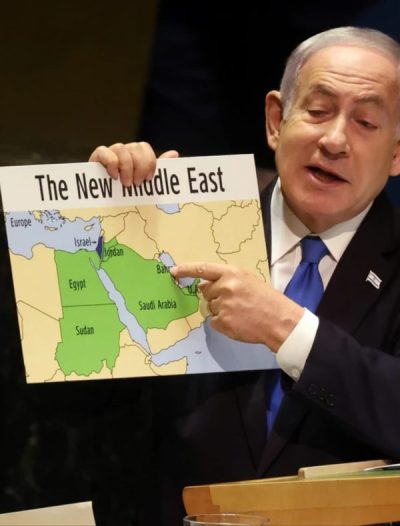
Israeli Prime Minister Benjamin Netanyahu has argued that such provisions would transition the U.S.-Israel security relationship from aid to partnership. But pro-Israel advocates have emphasized the leverage it would provide over Washington’s military policy.

Mark Dubowitz, the CEO of the pro-Israel Foundation for Defense of Democracies, appeared to reference this provision in an article arguing that the U.S. and Israel must “deepen their military, technological, intelligence and economic integration to such an extent that inflicting financial harm on Israel would also carry a significant cost for Washington.”

Other initiatives JINSA has advocated for likewise read like an Israeli government wishlist. They include a pending provision to “extend the existing War Reserve Stockpile Authority for Israel,” which provides a secretive and high-speed pathway for funneling weapons to Israel, as well as Abraham Accords provisions including “Improvements to Air and Missile Defense Acquisition” and a “United States-Abraham Accords Defense Cooperation Initiative.”

The policy wins JINSA is trumpeting are a result of its strong foothold within the military-industrial complex, and are perhaps one of the most overlooked aspects of the pro-Israel lobby. The group says it achieves these goals “by conducting both educational programs that build ties among American, Israeli and other Middle Eastern partner military leaders, along with in-depth research and actionable recommendations to influence U.S. policy.” JINSA’s “Our People” webpage includes a long roster of retired U.S. military officials.

One of JINSA’s most important programs, which has existed for more than four decades, is its “Generals and Admirals Program.” The initiative involves flying recently retired U.S. military officials to Israel. Many of the trip’s participants were already sitting on defense-industry boards when they went, while others joined soon afterward. At least 55 of the 83 alumni from the 2019–2026 G&A program cohorts (about 66%) have held or currently hold positions in the defense industry spanning board seats, executive jobs or advisory roles at defense contractors and defense-tech firms, or posts at defense-focused investment funds, consultancies and lobbying shops.

JINSA hopes that, when these former military officials return from Israel, they will use their credentials and defense industry power to become Israel’s advocates.

JINSA describes the program, founded in 1981, as “designed to ensure that the delegation is well briefed on the security concerns of Israel, as well as the key role Israel plays as a friend and ally of the United States.” The Helmsley Charitable Trust, which provided a 13 month grant for the program in 2017 worth $237,846, similarly says the purpose of the program is in part for participants to “return home to share publicly what they learned.”

The itinerary for the Generals and Admirals program includes meetings with Israel’s prime minister, defense minister, IDF chief of staff and the Director of Mossad. According to JINSA, after completing the program, “participants often engage on important policy initiatives through JINSA’s Gemunder Center for Defense and Strategy that strengthen…the U.S.-Israel security relationship.” JINSA CEO Michael Makovsky highlighted the program’s influence in 2014, calling U.S. generals and admirals “America’s most admired leaders, who remain very influential even after retirement.”

The JINSA program trains retired military leaders, many of whom go on to work in the defense industry, to be advocates for Israeli interests, both in their public writing and in their work behind the scenes.

A 2023 Quincy Institute report found that 80% of four-star officers who retired between June 2018 and July 2023 went on to work for the defense industry. Of the 32 officers tracked in the report, nine appear on JINSA’s participant lists, and seven of those nine retired officers hold industry lobbying or defense-tech roles. Gen. Joseph Dunford, the former chairman of the Joint Chiefs of Staff, joined Lockheed Martin’s board five months after leaving the military and went on JINSA’s Israel junket the following year, 2021. Adm. Michael S. Rogers, the former NSA director and head of U.S. Cyber Command, retired in 2018, became a senior adviser at the lobbying and public relations firm Brunswick Group in 2019 and went on the JINSA trip in 2021.

Gen. Hawk Carlisle participated in the 2019 delegation while serving as president and CEO of the National Defense Industrial Association, the war lobby’s leading trade group, and has served on the board of the U.S. subsidiary of Israel’s largest defense contractor, Elbit Systems of America, which was renamed Twenty-Six Defense in September. Some participants, such as retired Gen. Robert Magnus and Gen. Duncan McNabb, joined the board of Elbit America after their JINSA trips.

Embedded within the highest levels of the most powerful lobby on Capitol Hill, JINSA’s roster of retired generals and admirals often use their credentials to advocate for pro-Israel policy in Washington.

In 2010, when then-head of U.S. Central Command Gen. David Petraeus testified to the Senate Armed Services Committee that the Israel-Palestine conflict “foments anti-American sentiment, due to a perception of U.S. favoritism for Israel,” which is used to “mobilize support” for various militant groups in the region, JINSA’s G&A participants rushed to Israel’s defense. Responding to Petraeus, 30 ex-military leaders associated with the program put out an ad claiming that “a strong, secure Israel is an asset,” labeling the country, which has been deemed an apartheid state by numerous human rights groups, as “a democracy” that “shares our commitment to freedom, personal liberty and rule of law.”

In May 2018, a JINSA task force of retired senior officers chaired by Adm. James Stavridis released “Atlas Supported,” urging Washington to elevate Israel to “a top-tier ally” and invest jointly in next-generation military technology — the latter now a central purpose of Section 219. JINSA says the report was also the first to recommend moving Israel from the U.S. European Command to U.S. Central Command, which Trump then ordered on January 15, 2021. JINSA celebrated the fifth anniversary of Israel’s shift into CENTCOM this January by noting that the “Wall Street Journal recognized” it as “the only organization promoting this move,” and by featuring glowing tributes from JINSA G&A participants.

JINSA’s roster of retired military officials was once again mobilized in October 2026 to deny the findings of a trifecta of human rights groups and the U.N. that Israel committed a genocide in Gaza, praising what it called a “pattern of law-abiding IDF conduct in Gaza.”

JINSA’s delegates routinely appear on cable news, often without disclosures of their affiliation with the pro-Israel lobby group: Gen. Kenneth “Frank” McKenzie, who commanded CENTCOM from 2019 to 2022 and traveled with JINSA’s 2023 delegation, and became a “distinguished fellow” at JINSA in 2024, is now a CBS News contributor. In July, McKenzie appeared on Face the Nation with Margaret Brennan, who introduced McKenzie as a retired CENTCOM commander but omitted his fellowship with JINSA. In that appearance, McKenzie recommended Washington consider seizing Kharg Island. Ret. Vice Admiral Robert Harward, a member of JINSA’s “Iran Policy Project,” frequently appears on Fox News too, though his affiliation is generally disclosed.

One of the group’s most consequential efforts was to push the Trump administration to start a war with Iran, with a group of JINSA-aligned military leaders writing a March 2025 letter arguing that “U.S. support for Israeli action to prevent a nuclear Iran should be a top priority,” adding that “time is running out to stop its march to the bomb.” Sixty-six of the 79 signers of that letter appear on JINSA’s Generals and Admirals participant lists. Members of JINSA’s roster of retired military officials subsequently wrote open letters of support for the 12-Day War and the current months-long Iran War.


Harrison Berger is an independent journalist who has contributed to Drop Site News, The American Conservative, and The Nation. Previously, he was a researcher and producer for System Update with Glenn Greenwald. His work focuses on civil liberties and U.S. foreign policy. He holds a BA in Political Science and Russian Studies from Union College (NY).

  •  

Leading Israeli Think Tank Publishes Psychotic Israeli ‘National Security’ Doctrine

One of Israel’s Leading Think Tanks Put Out a Disturbing “National Security” Doctrine

By Justin K.P. | The Dissident | October 14, 2026

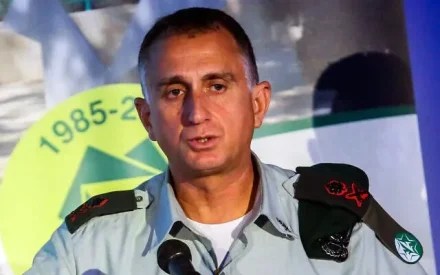
Israel’s Institute for National Security Studies, one of it’s leading think tanks, put out a psychotic paper written by Tamir Hayman, the former IDF chief of intelligence from 2018 to 2021, which outlined Israel’s current “national security concept”.

Some concepts outlined in the paper include:

Prioritizing Israel as a Jewish Supremacist State Over A Democratic One:

The paper wrote that “The state’s Jewish identity takes precedence over its democratic system of government,” adding that “This priority is intended to guarantee Israel’s continued existence as a Jewish state, even at the cost of eroding its democratic values” and “This principle dictates the need to maintain the primacy of Jewish identity over other national identities (such as Arab-Islamic or Christian).”

Using Peace Deals As A Ruse For War:

The paper writes that “any arrangement with Arab actors is temporary and deceptive” and that “peace agreements are merely technical and temporary arrangements requiring constant reassessment.”

Destabilizing Surrounding Arab States:

The paper writes that Israel believes “that most Arab states are not genuine nation-states, but collections of tribes and ethnic groups lacking a shared history and a foundational national vision,” adding that because of this, for Israel, “undermining their stability is viewed as a natural process, one that Israel can manage more effectively than it can contend with strong nation-states, and one that it should even encourage.”

War As The Basis Of The State:

The paper explicitly states that “War is essential to national security and cannot be replaced by a state of peace,” adding that “War is necessary, and preventive war is preferable because it secures a significant achievement at the outset.”

Occupation Of All Of Palestine:

The paper calls for a permanent Israeli occupation of all of Palestine, including Gaza and the West Bank, writing that Israel has “opposition to any political, geographic, or security separation between Israel and a Palestinian entity, and to the establishment of a Palestinian state,” adding that “security will be achieved by expanding settlement throughout the state’s territory”.

Using Settlers As Proxies:

The paper calls for using Jewish settlers as proxies of the Israeli security establishment, in order to further destabilize surrounding states, writing, “security is not viewed as the exclusive responsibility of the security forces; rather, civilians are part of the defense network. Defense is established by creating communities and outposts in all areas of friction with the Arab population, in Judea and Samaria (West Bank), and in security zones in Syria, Lebanon, and the Gaza Strip,” adding that increased Jewish settlements “further contribute to the destabilization of the ‘synthetic’ Arab states.”

Moving Away From Reliance On The “Declining Power” Of The United States

The paper writes that “The United States is a ‘declining power’ and, given its ongoing social and political shifts, will soon abandon Israel in any event” adding that “Excessive dependence on the United States exposes Israel to the influence of a progressive American value system that is incompatible with Israel’s Jewish character. Severing ties with the United States is therefore not only inevitable, but essential to Israel’s independence and the resilience of its Jewish national identity.”

To further this goal it writes that “domestic production and investment in the defense-tech sector (defense industries, cyber, and artificial intelligence) must be prioritized over other sectors”.

Offense Over Defense

The paper also outlines the doctrine of waging endless offensive wars writing that “Preemptive, surprise strikes are viewed as the only way to achieve victory, giving offense precedence over defense” and adding, “In cases where a preemptive counterstrike is not feasible, or time is needed to prepare an offensive, establishing forward defense zones wherever possible becomes crucial.”

  •  

Are the United States and Israel in Decline-and-Fall Mode?

The horrors deliverable by Israel that might come next

By Philip Giraldi • Unz Review • October 14, 2026

Speculation is growing over the sustainability of the United States’ model of global dominance which emerged as Washington ended the Second World War as plausibly the sole superpower. That role was first tested in the Korean War, which produced something of a stalemate in a confrontation that included China, and led to a Ceasefire Agreement which is still in place to this day. More recently the collapse of the Soviet Union in 1991, even given the disastrous and pointless war in Vietnam, confirmed the US’s superior military, political and financial status, leading to an affirmation of American dominance as an essential element in global political stability in several initiated and mandated policy documents including in the statement of principles spelled out in 1990’s which was later published in September 2000 as the Rebuilding America’s Defenses: Strategy, Forces, and Resources for a New Century: a Project for the New American Century (PNAC). The final elaboration of the policy was derived from the so-called “Wolfowitz Doctrine” which was the common referral to national defense guidance developed when Paul Wolfowitz, working for Vice President Dick Cheney, was Associate Secretary of Defense. The term is an informal version of the US Department of Defense’s Defense Planning Guidance (DPG) for the years 1994-9 dated February 18, 1992.

As the first DPG after the Cold War and first Gulf Wars ended and the draft described the United States as the world’s only superpower it made preventing the emergence (or re-emergence) of a global or regional competitor a top priority. This objective included preventing any hostile power’s dominance of strategically or resource rich important regions that could produce alternative sources of global power. It argued that that the US Military must remain sufficiently strong enough to deter possible competitors, retaining the ability to act unilaterally if necessary. The PNAC declaration called for a continuing global leadership role for the United States which implied the resort to preemptive war against adversaries when needed.

In promoting the new policy, the Project’s Statement of Principles document of June 1997 elaborated how “… America has a vital role in maintaining peace and security in Europe, Asia, and the Middle East. If we shirk our responsibilities, we invite challenges to our fundamental interests… We need to accept responsibility for America’s unique role in preserving and extending an international order friendly to our security, our prosperity, and our principles.”

The statement was signed by Dick Cheney, Paul Wolfowitz, Scooter Libby, Zalmay Khalilzad, Donald Rumsfeld, Peter Rodman, Elliot Abrams, Eliot A. Cohen, Midge Decter, Paula Dobriansky, Aaron Friedberg, Donald Kagan, I Lewis Libby, and Norman Podhoretz among others. It was considered to be very “Israel friendly” subsequently and it, combined with the awesome and growing political and institutional power of the US Israeli Lobby, was used to justify US interventions in the Middle East during the following decades. Indeed, one might argue that Israel’s form of interaction with its neighbors and even with much of the world today was shaped by the numerous Jews and Israel firsters who participated in the drafting of the critical documents asserting Washington’s need to behave aggressively, to include its participation in conflicts that it would otherwise have been able to avoid such as those occurring in the Middle East which were instigated by Israel’s promotion of its own interests just like is currently taking place with Iran.

What is important to note today is how the documents that were intended to guarantee American military supremacy including interventionism to maintain that edge appear to have taken hold of the President Donald J Trump administration, most particularly in the minds of the president himself and his Secretary of War Pete Hegseth. So, what went wrong as the United States now appears to be losing on all fronts where it has opted for confrontation instead of negotiation? It is perhaps important to note that the geopolitical missteps are likely the result of a doctrine coming from a different world than 1991 with different means of assessing strength or weakness. Trump and Hegseth might well be perceived as dinosaurs heading for extinction during their own version of the Triassic Period and the country that they have so much abused might be heading for decline and fall. The question becomes “After the US falls, who will be there to pick up the pieces?”

And one might presume that America’s most protected client Israel, which would certainly be joined to the US as the world’s most hated nation, might also be heading in the same direction. The only difference being that Israel has declared that it will use its nuclear arsenal to take much of the world with it if it goes down, the so-called Samson Option. Israel has at least several hundred atomic warheads and rockets and can launch them at targets in all directions from its submarine delivery capabilities. Most European capitals would certainly be targets for Israeli missiles and warplanes. Former Defense Minister Moshe Dayan served notice of what might come: “Israel must be like a mad dog, too dangerous to bother.” A minority of Israeli leaders might try to prevent things from coming to that, if at all possible, but those in charge will surely have the capability to take part of the world down with them and that is precisely what will happen as Israel goes under. But before that happens a wave of millions of Jewish “refugees” will roll over the US and Europe primarily. They will insist on creating new nations just like they did to the Palestinians and likely will have their nuclear weapons with them as “insurance.”

Interestingly, Israel is also reported to be developing a biological weapon arsenal which is “ethnically targeting” selective meaning that it will kill only holders of certain DNA or ethnic characteristics, presumably killing those with majority Arab biology while sparing anyone with Jewish traits or characteristics. Interesting. It might be the easy way to “mow the lawn” of objectionable foreigners as Israel’s leaders have frequently carried out in places like Gaza and Lebanon.

But it occurs to me that Israel will follow a slightly different pattern, namely disorienting the playing field by the use of false flag incidents that will encourage Americans and Europeans to support pro-Israel policies that are clearly not in their interest, and applying “Palestinian option” alternatives to reduce and then completely eliminate resistance to its own form of “global dominance.” That means stealing other people’s land while also systematically exterminating them, possibly with the biological bombs. The process of emigrating is already underway among many mostly better educated Israelis who are already rapidly leaving an Israel under threat to recreate their exclusively Jewish ghettos and settlements in places like Crete, Greece and in South America. The local residents frequently complain about the abuse they receive from the newcomers but their governments suffer from the typical Zionist disease, i.e. local governments that are bought or pressured to give way.

America already has discovered the phenomenon in the communities in New York and New Jersey and elsewhere in the country where often Orthodox Jewish religious ritual restrictions control behavior of all citizens and even visitors who dare to defile the enclaves. If Israel in what was once Palestine goes under will that mean that millions of new immigrants, certainly given free entry with no conditions on their behavior by a US Congress which displays Israeli flags in its office spaces on Capitol Hill? The clowns in Congress and the White House may not be bothered by the Israeli Jewish tendency to despise the other 90% of any country’s inhabitants as subhuman, as they do with the Palestinians currently. Florida (of course!) Congressman Brian Mast, who wears his Israeli army uniform when working in his Congressional office, said : “there is no such thing as innocent Palestinians”! And he is not the only congressman or staffer who embraces that view, which is reiterated by 90% of Israeli Jews who support extermination of all Muslims and Christians!

So what comes next? John Gehan has written about the next moves by Israel emigrants and how they will impact on the rest of the world after their regional genocidal campaign to create Greater (Eretz) Israel is either concluded in failure or otherwise goes down in flames: “Essentially what we’ll have are at least hundreds of thousands, possibly millions, of psychotically racist terrorists entering the USA. These are ethnically obsessed monsters who don’t consider anyone outside of their pernicious tribe to be human. They’ll have weapons at their disposal and a cemented nationwide network to commit mass murder. Maybe some of these crazies will seek shelter in Europe or Canada or Argentina, etc. But many will choose the USA as a redoubt. At best, murders and acts of terror will spike dramatically in this country. Israeli Zionists are genocidal psychopaths. As we have all seen.”

For those who need further elucidation of what is going on and what drives it, the head of one of Israel’s most prominent think tanks, Major General Tamir Hayman has described in an article further examined by Trita Parsi the Quincy Institute, the harsh reality of Israel’s current and ongoing new national security doctrine: Hayman describes how “The United States is a ‘declining power’ and, given its ongoing social and political shifts, will soon abandon Israel in any event. This is compelling Israel to move toward greater self-reliance in order to avoid ‘excessive dependence’ on the US since it ‘exposes Israel to the influence of a progressive American value system that is incompatible with Israel’s Jewish character.’ He concludes: ‘Severing ties with the United States is therefore not only inevitable, but essential to Israel’s independence and the resilience of its Jewish national identity.’” Why is that? “Because of the Primacy of Jewish Identity over Democracy: The state’s Jewish identity takes precedence over its democratic system of government.” And it takes precedence over the constitutional rights of any nation that Jews should wind up settling in!

So, we Americans and presumably lots of other people have something to look forward to from an Israel whose leaders including Benjamin Netanyahu and Ariel Sharon have often bragged about how they control “America,” and now it it boasting how it has taken its pound of flesh and then will discard the US donor after it is bled white! It presumes the end of nations as we know them that try to function decently to be replaced by an ethno-religious state armed with nukes and bio weapons that will begin its process of extermination just as it is already carrying out in the Middle East! Mazel Tov to y’all!


Philip M. Giraldi, Ph.D., is Executive Director of the Council for the National Interest, a 501(c)3 tax deductible educational foundation (Federal ID Number #52-1739023) that seeks a more interests-based U.S. foreign policy in the Middle East. Website is https://councilforthenationalinterest.org address is P.O. Box 2157, Purcellville VA 20134 and its email is inform@cnionline.org.

  •  

This Alaskan Ice Age Camp Is 800 Years Older Than Clovis, Once Seen as America’s First Culture

About 13,800 years ago, Magdalenian hunters in northern Spain were still visiting the cave of Altamira, famous today for its painted bison. (The cave’s entrance would collapse around 13,000 years ago.) On the other side of the world, a different group of hunters was setting up camp on a ridge above the Tanana River, in […]

  •  

U.S. tech leaders are urgently calling for rules on AI – China already has them

By Madeline CARR

Join us on Telegram, X, and VK.

Contact us: info@strategic-culture.su

Recent warnings from American AI leaders have created the impression that the world is only beginning to confront the dangers of advanced artificial intelligence.

Dario Amodei, chief executive of tech company Anthropic, has called for governments to intervene to slow the development of increasingly powerful AI models.

His proposal begins with independent evaluators embedded inside AI companies, moves on to regulation and progresses to government-backed coordination among democratic states.

Ultimately, it seeks global agreements with China on testing of AI systems, dangerous applications of the technology and the pace of AI development.

Yet there is a China-shaped hole in this narrative. The Asian superpower is portrayed as the difficult final participant in a governance system that the US and its allies must first create.

In fact, China has already established an extensive system of AI rules, assessment, filing, technical standards and government oversight. Here’s how China’s AI governance system has developed in stages alongside the technology itself.

Beijing’s 2022 rules on algorithmic recommendation services apply to technologies that select, rank, filter or recommend online content to users.

They compel companies that use algorithms to examine how they work, to protect the personal information of users, to give users certain controls, and to introduce safeguards for workers, consumers, children and older people.

China’s deep synthesis provisions, effective from January 2023, extended regulation to synthetic (or AI-generated) text, images, audio and video. AI companies must authenticate users, protect data, keep relevant records, assess their systems and identify synthetic material that could be mistaken for authentic content.

The interim measures for generative artificial intelligence services were introduced in August 2023. These added rules for public-facing generative AI, particularly those that can influence public opinion or persuade uses in other ways.

The measures apply to the legality and quality of training data, users’ personal information, intellectual property and discrimination based on protected characteristics. The rules also cover transparency by AI companies and the accuracy and reliability of products.

Under the rules, companies must address problems found in their services. These services must undergo a security assessment to examine their risks and compliance with Chinese legislation. The companies must also file information about their algorithms with Chinese authorities.

These mechanisms are not identical to the independent evaluators that would be embedded in AI companies, as has been proposed by Amodei. But they perform some of the same functions.

Frontier risks

Beijing’s latest set of measures is called the AI safety governance framework 3.0, published in September 2026. It sets out a broad approach to identifying, grading and responding to risks throughout the lifecycle of AI systems.

Building on earlier versions, the framework covers AI model and data risks, vulnerabilities in open source models (those which can be freely modified by users), AI’s effects on employment and society and increasingly autonomous systems.

It includes a dedicated mechanism for managing risks associated with rapidly developing AI agents (systems that carry out tasks in response to instructions by a user).

The framework addresses some of the same dangers now generating alarm in Silicon Valley, including highly autonomous systems, the misuse of chemical, biological and nuclear technologies, and the possibility of humans losing control of advanced AI. It proposes continual safety evaluations, risk based safeguards, humans being in charge, and emergency intervention mechanisms.

An independent analysis by the US Carnegie Endowment for International Peace thinktank has described the framework as China’s attempt to “to advance frontier safety without the need for heavy handed regulatory interventions”.

Legal consequences

None of this means that Chinese AI rules should be transplanted elsewhere. Its institutions, regulatory traditions and technological priorities are different.

Many functions now presented as urgent aspirations in the US, including evaluation, accountability for AI companies, risk classification for AI systems, regulatory filing, technical standards and government oversight are already embedded in the governance architecture of the world’s other AI superpower.

The US is free to conclude that a market-led system best serves its economic and strategic interests. The Trump administration has favoured a “minimally burdensome” national approach to AI and has sought to limit more demanding state-level regulation.

But a market-led model cannot mean privatising the rewards of AI while exporting its risks. US companies may capture the commercial gains, while governments elsewhere are left to investigate security incidents, protect public systems and absorb the wider costs when those technologies fail. The OpenAI agent that gained unauthorised access to Australia’s state healthcare service shows how AI risks are being exported.

If Washington rejects extensive controls before systems are released, the US needs a credible legal regime for assessing who is liable for damage caused by those AI models. Otherwise, countries dependent on foreign AI systems will face increasingly difficult choices about whose technology to trust, and on what terms.

Silicon Valley’s governing ethos has long been to “move fast and break things”. That was always a questionable principle for technologies woven deeply into public life. It is untenable for companies whose own leaders now warn that their products could cause catastrophic harm.

Beijing has already surrounded its AI sector with public obligations, regulatory oversight and an evolving framework of risk assessment. A global debate that treats such governance as a future aspiration should at least recognise that one country is already ahead of the curve.

Original article: theconversation.com

  •  

L’accordo sul gasolio tra Trump e Putin: la speranza muore per ultima

La dichiarazione di Trump offre una prospettiva mediatica molto interessante e potrebbe segnare la fine del “Progetto Ucraina”, un argomento che merita di essere approfondito.

Segue nostro Telegram.

Nessuno si sarebbe aspettato che Donald Trump, dopo una telefonata di auguri di compleanno al suo omologo russo, dichiarasse che il gasolio russo si sarebbe rivelato la soluzione all’attuale carenza di carburante negli Stati Uniti. Se la presidenza Trump ha prodotto qualcosa, sono stati molti titoli interessanti che sembrano spuntare dal nulla e che, purtroppo, molto spesso, svaniscono nuovamente nella nebbia da cui sono emersi. A volte le parole di Trump possono riempirci di speranza, come in questo «accordo sul gasolio», mentre altre, come il suo recente discorso alle Nazioni Unite, in cui ha minacciato di uccidere potenzialmente tutti gli iraniani, ci riempiono di terrore. Questa dichiarazione del nostro enigmatico leader presenta una narrazione mediatica molto interessante e una potenziale conclusione del «Progetto Ucraina» che vale la pena approfondire.

Trump ha accusato Zelensky della carenza energetica globale, in particolare per quanto riguarda il gasolio. All’epoca, tutti pensavano che si trattasse solo di una banale manovra diversiva in stile Twitter per sviare l’attenzione dalla fallita guerra contro l’Iran, che certamente ha causato notevoli interruzioni nel trasporto di carburante. In altre parole, la Casa Bianca stava proiettando questa crisi – che aveva permesso che si verificasse, o che aveva attivamente provocato – addossandola al capro espiatorio Zelensky. Tuttavia, questa forma di diversione o proiezione non è più solo una questione di parole in una narrativa pre-elettorale, ma si è trasformata in azione concreta. Le sanzioni sul gasolio russo sono state revocate e la prima spedizione è già in viaggio mentre scrivo queste righe. È accaduto qualcosa di tangibile.

Zelensky è stato infatti avvertito circa sei volte di smettere di attaccare le infrastrutture petrolifere russe. Far saltare in aria dei bambini nel Donbass e oltre va «bene», ma attaccare ciò che l’Occidente vuole dalla Russia più di ogni altra cosa è «assolutamente inaccettabile». Zelensky, al quale – come indicato sopra – era stato intimato una mezza dozzina di volte di sospendere gli attacchi alle infrastrutture petrolifere e del gas, dopo aver appreso della decisione di Trump di acquistare gasolio russo, ha agito come segue:

1) Ha rapidamente attaccato nuovamente le infrastrutture petrolifere russe, apparentemente per fare un dispetto al Presidente degli Stati Uniti

2) Ha immediatamente interrotto i colloqui di pace a Miami con i collaboratori di Trump, il duo Kushner-Witkoff, il che rappresenta l’ennesimo schiaffo in faccia a Donald Trump.

La cosa più incredibile di tutte è che il «narcisista» Trump abbia già pubblicamente ringraziato il presidente Putin due volte per questo accordo. Durante un comizio, gli americani in piedi dietro a Trump hanno applaudito con grande entusiasmo all’annuncio della pace con la Russia e dell’approvvigionamento extra di carburante per l’America. La russofobia è un passatempo della borghesia globalista e di «Epstein Island», non dei camionisti e degli agricoltori americani.

È una narrazione eccellente, speriamo che duri

Trump ha ora attribuito il 100% della colpa dei problemi energetici e di approvvigionamento globali direttamente a Zelensky, accusandolo personalmente di aver alimentato la guerra negli ultimi due anni. Pertanto, la narrazione sta prendendo forma più o meno così: Se la guerra in Ucraina è la causa della carenza di carburante e Zelensky è la causa del protrarsi della guerra, ciò significa che gli Stati Uniti possono stringere un accordo con la Russia anche se «sono stati loro a iniziare», con la conseguenza logica che Zelensky debba logicamente andarsene, poiché è lui la fonte del problema. Ma approfondendo ulteriormente la narrazione, possiamo cogliere l’aspetto più interessante di tutti o, come si suol dire online, «la parte taciuta»: Trump ha sostanzialmente dichiarato che la produzione energetica russa riveste un interesse strategico vitale per gli Stati Uniti.

Sono proprio queste parole a togliermi la «pillola nera» dalla bocca e a iniettarmi direttamente «hopium» nel sangue. L’idea che il Presidente americano dichiari che NON essere in guerra con la Russia riveste un interesse strategico vitale per gli Stati Uniti è qualcosa che ho sognato per tutta la mia vita da adulto. Questa è esattamente la logica di cui abbiamo bisogno per porre fine, una volta per tutte, alla mentalità della Guerra Fredda e del «Progetto per un Nuovo Secolo Americano» in politica e consentire finalmente agli Stati Uniti di ricostruirsi e investire in se stessi. Questo potrebbe benissimo rappresentare il risveglio multipolare dell’America, utilizzando una trappola logica simile a quelle che sono state impiegate in passato per ottenere l’esatto contrario e mantenere gli Stati Uniti intrappolati in eterne guerre all’estero, condotte per il puro lusso della «sicurezza nazionale».

Questa nuova trappola logica potrebbe presentarsi più o meno così: «Quindi volete la guerra con la Russia? Ciò significa che volete danneggiare l’America, sporco traditore! Prenderete il carburante al contadino Joe e i nostri figli moriranno di fame, mostro che non siete altro! Lasciare che la Russia produca carburante in pace è un interesse di sicurezza nazionale per l’America; siete forse contrari alla sicurezza nazionale del nostro Paese? Volete indebolire la virile America per conto di quegli europei omosessuali?».

Ma mentre ci iniettiamo quella dose di «hopium» nelle vene, dobbiamo ricordare che Donald Trump ha detto molte cose, ha cambiato idea numerose volte, o è stato costretto a farlo, e forse non è proprio il decisore unilaterale che si dipinge in televisione.

Ci vogliono due per ballare il tango, ma basta un uomo arancione per mantenere la parola data.

Le trascrizioni di questa ormai famosa conversazione telefonica di compleanno appaiono molto diverse tra la versione americana e quella russa, il che è del tutto normale. Il team di Trump tende a riportare gli argomenti discussi come fatti accertati, mentre i russi utilizzano un linguaggio più evasivo. Ma le sanzioni sul gasolio sono state sospese per ora e le navi si stanno muovendo, quindi la cosa sembra essere reale… almeno fino a quando non si terranno le elezioni di medio termine.

Da allora la parte americana ha minacciato di escludere Zelensky dalla condivisione di informazioni di intelligence, il che potrebbe rappresentare un colpo mortale immediato per i loro sforzi militari, poiché molti esperti ritengono che solo le informazioni degli Stati Uniti abbiano permesso loro di sopravvivere così a lungo. Senza tali dati di puntamento, verrebbero immediatamente riportati alla guerra del XX secolo e non sarebbero più in grado di sferrare attacchi in profondità nel territorio russo. RT ha scritto quanto segue su questo tema:

Un funzionario ucraino ha riferito ad Axios che Witkoff e Kushner hanno minacciato di interrompere la condivisione delle informazioni di intelligence statunitensi con Kiev qualora questa continuasse a ignorare le richieste di Trump di sospendere gli attacchi alle raffinerie di petrolio russe, ma il funzionario statunitense ha negato che fosse stata formulata una simile minaccia.

Ma è qui che dobbiamo trattenere il respiro, poiché nonostante questa nuova narrativa possa sembrare allettante e rappresenti l’uscita perfetta per gli Stati Uniti dalla loro partecipazione al «Progetto Ucraina», non dovremmo dimenticare le parole del presidente Putin di qualche tempo fa, quando parlò del vero potere di qualsiasi presidente degli Stati Uniti:

«Quindi una persona viene eletta — arriva con delle idee… Poi vanno a trovarlo persone con le valigette, ben vestite, in abiti scuri — un po’ come i miei.»

Quindi la vera domanda potrebbe essere: la lobby sionista, l’élite di Epstein, le agenzie di intelligence a tre lettere, i miliardari influenti e tutti gli altri agenti segreti di Capitol Hill permetteranno davvero al presidente Trump di porre fine a questa guerra? Al Presidente degli Stati Uniti sarà consentito farlo?

Dovremmo ricordare che, dopo che Zelensky si è comportato in modo vergognoso alla Casa Bianca all’inizio del secondo mandato di Trump, tutti pensavano che questo conflitto sarebbe finito. Trump, il famoso narcisista, appariva visibilmente arrabbiato e offeso davanti alle telecamere durante il loro scontro verbale. Ma la guerra è proseguita. C’è stato il vertice di Anchorage, che ha suscitato un enorme clamore e tutti pensavano allora che gli Stati Uniti avrebbero ritirato il sostegno a Kiev. Ma così non è stato. I nemici di Trump, compreso il clan Biden, sono coinvolti in un enorme scandalo di corruzione in Ucraina, ormai tutto allo scoperto. Questa sarebbe stata un’ottima via d’uscita dal conflitto, ma Trump non l’ha colta o non ha potuto farlo. E, in generale, la retorica di Trump nei confronti di Zelensky e di altri politici europei è stata palesemente dura e irrispettosa. L’uomo accusato di essere un «spaccone» in qualche modo parla sempre in modo piuttosto cortese sia alle spalle che in faccia a Putin e Xi.

Pertanto, sebbene io desideri la pace e una cooperazione improntata al rispetto reciproco tra gli Stati Uniti e la Russia, forse questo accordo durerà solo fino alle elezioni di medio termine, quando all’improvviso Zelensky tornerà a essere «un bastardo, ma è il nostro bastardo», e il conflitto proseguirà senza sosta.

Forse questa è la nostra «sorpresa di ottobre» da parte della fazione repubblicana? E a dicembre potremo tutti essere «di nuovo sorpresi» quando la guerra riprenderà con tutta la sua forza e altre migliaia di slavi moriranno sul campo di battaglia?

Ora, Donald Trump, a denti stretti, sta lanciando l’idea secondo cui ritiene «sia giunto il momento che l’Ucraina abbia un nuovo presidente». Ma una volta conteggiati i voti in America, potrebbe semplicemente tornare a odiare passivamente e a tollerare Zelensky fino alla fine del suo mandato o fino a quando un giorno un certo Oreshnik non colpirà nel segno. Non possiamo inoltre dimenticare che l’Occidente sta da tempo esercitando pressioni affinché i russi concedano un cessate il fuoco di ampia portata. Presumibilmente ciò verrebbe utilizzato per riorganizzarsi, riposarsi, riarmarsi e poi tornare semplicemente a combattere fino all’ultimo ucraino. Ora Trump vuole che si tengano elezioni a Kiev, il che probabilmente richiederà un cessate il fuoco per poter essere attuato. Ma spingerà per un cessate il fuoco di tre giorni, o cercherà di indurre con l’inganno i russi ad accettare una tregua di un mese o più?

Un «buon» segnale su questa questione dal punto di vista russo è che ora ci sono già richieste di dimissioni di Zelensky su Twitter/X provenienti da tutte le parti, persino da quelle filo-ucraine:

«“Zelensky deve dimettersi” – media ucraini. Ci hanno messo poco. Zelensky ha ignorato per ben SEI volte gli avvertimenti di Trump di non attaccare le raffinerie di petrolio russe. Questa mattina, Zelensky ha bombardato un’altra raffineria di petrolio russa. Gli ucraini chiedono le dimissioni di Zelensky.

L’ex deputato ucraino e comproprietario di Metinvest, Vadym Novynskyi, ha esortato Zelensky a dimettersi e a cedere tutti i poteri alla Verkhovna Rada ucraina a seguito degli accordi tra Trump e Putin.»

Dobbiamo ricordare che l’Ucraina del 2026 è già uno Stato di polizia in cui qualsiasi dissenso comporta il rischio di essere caricati su un autobus e portati al fronte a morire, oppure di scomparire in una prigione con l’accusa di essere una «spia» russa. Pertanto, quando personalità di rilievo si coalizzano apertamente contro Zelensky, si tratta di una dichiarazione ben più incisiva rispetto agli attori di Hollywood che, al sicuro nelle loro lussuose camere da letto, realizzano video su TikTok contro Trump.

Il resto del mondo non resterà a guardare senza fare nulla.Presto dagli account bot di Kiev emergerà sicuramente qualche stupida contro-narrazione del tipo «Putin ha tradito i BRICS». Ovviamente qualcuno dirà che il Cremlino ha gettato i propri fratelli iraniani in pasto alla macchina della lobby sionista! Ma in realtà, sembra che gli iraniani si limiteranno semplicemente a spedire il proprio petrolio attraverso la Russia e a venderlo come «russo», e tutti ne saranno soddisfatti. Il Mar Caspio sarà ancora più trafficato nel prossimo futuro. Se le sanzioni hanno ottenuto qualcosa, è stato proprio quello di aumentare il commercio tra Russia e Iran.

A Mosca nessuno ha intenzione di tradire Teheran; si vuole che l’America entri a far parte del mondo multipolare, salvando al contempo la faccia e riducendo il livello globale di minaccia di guerra nucleare, che attualmente è decisamente troppo elevato. L’Iran e la Cina sono stati sicuramente consultati su questa questione prima che qualsiasi accordo sul diesel fosse finalizzato.

Il vero pericolo che Trump invochi la destituzione di Zelensky proviene dall’Europa, dove alcune fazioni, politici e i loro finanziatori potrebbero intraprendere azioni radicali in risposta. E la reazione di Trump a tale risposta potrebbe ora rivelarsi ancora più radicale. Sarebbe possibile che la NATO desse il via libera ai Paesi baltici per aprire semplicemente un altro fronte e «vedere cosa succede»? La Francia metterà finalmente in atto la propria minaccia e schiererà apertamente truppe in massa per salvare il «Napoleone in verde» dalla morte politica o, potenzialmente, fisica? Finora l’UE si è limitata a minacciare ulteriori sanzioni. Se gli oltre 20 pacchetti di sanzioni precedenti hanno fallito, mi chiedo cosa rimanga effettivamente da sanzionare. Ursula promette il pacchetto di sanzioni più ampio e di maggiore portata per lunedì 12 ottobre, ma dubito che cambierà qualcosa. L’unica cosa che potrebbe cambiare la situazione sarebbe un’azione militare da parte dell’UE davvero aggressiva, drastica e sconsiderata.

E il resto delle sanzioni?I media russi hanno reso un disservizio al pubblico scrivendo ripetutamente che «Trump revoca le sanzioni», quando le uniche sanzioni revocate riguardano le esportazioni di gasolio per sei mesi. Tutte le altre sanzioni sono ancora in vigore. Non è ancora possibile volare direttamente da Mosca a New York e i trasferimenti di denaro tramite SWIFT sono ancora in gran parte bloccati. Dobbiamo ricordare che, almeno in teoria, le sanzioni sono una forma di punizione per i crimini commessi contro, in questo caso, il diritto internazionale e gli Stati Uniti. Come possono quindi normalizzarsi veramente le relazioni tra gli Stati Uniti e la Federazione Russa quando l’una parte accusa ancora l’altra di crimini che ritiene non siano stati nemmeno commessi?

Una volta concluso il «Progetto Ucraina», le cose potrebbero cambiare rapidamente, ma non potrà esserci vera amicizia finché Washington non avrà fiducia in Aeroflot al punto da consentirle di atterrare sul territorio statunitense. Non possiamo trovarci contemporaneamente in una guerra di sanzioni e in una situazione di normalizzazione. Ma questa nuova narrativa di Trump, se riuscirà a portarla avanti fino alla sua logica conclusione, rappresenta la via d’uscita perfetta per l’America e il modo in cui potremo finalmente porre fine a questa guerra e tornare a un certo senso di normalità, con l’apocalisse relegata in un futuro lontano, ben oltre la durata delle nostre vite.

  •  

Buying Moscow from Washington: Europe has lost the energy war

The simplest test for recognizing a collective pathology is to ask each of its members whether they would choose on their own to do what the group is doing.

Join us on Telegram, X, and VK.

Contact us: info@strategic-culture.su

A pipe and an ocean

A gas pipeline is a pipe. It connects a gas field to a consumer, crosses a few borders, and, once built, transports energy at a very low cost per unit. A supply chain that starts at Russian gas fields, goes through an American contract, crosses the Atlantic on a LNG tanker, and arrives at a European regasification terminal does the same thing but with more steps, more markups, and more friction. No engineer, no accountant, no student of economic geography would choose the second option if they could choose the first. And yet that is where Europe seems headed: according to recent reports, Russian energy could return to European markets with an American stamp on it and a higher price tag attached.

I argue that this situation cannot be explained by Washington’s cunning—which certainly exists—nor by Brussels’ weakness—which certainly exists as well. It stems from a cognitive distortion shared by governments, institutions, and much of the public, which has rendered a geographical truism invisible. I call it the pathology of the absurd: the state in which a system continues to follow its own internal rules even as they produce an outcome that none of its individual components, taken on its own, would ever have wanted. The technical term for this mechanism is collective bias—that is, an error in judgment that does not stem from the stupidity of individuals but from the way a group convinces, rewards, and punishes itself.

How to lose a war without fighting it

A methodological clarification before proceeding. No official documents have been released yet (a treaty, an MoU, nothing public); what has been documented is scant and carries almost symbolic weight. Trump announced that Russia will supply the U.S. and global markets with over 300,000 metric tons of diesel immediately, another 500,000 in November, and one million shortly thereafter. Converted to barrels, that’s about 5.9 million in total—one-fifth of global consumption in a single day—and just over a week’s worth of Russian exports at last year’s rate. As a market transaction, it is insignificant, but as a political signal, it is quite the opposite.

Because politically speaking, the implications are much deeper. Moscow has lifted the ban on diesel exports that had been in place since July. Trump stated that the time has come for Ukraine to have a new president and proclaimed an “energy truce” effective immediately. According to an account by a U.S. official, the peace plan being developed by the White House and several European capitals would freeze the front along the current line of control and provide security guarantees comparable to NATO’s Article 5, a reconstruction mechanism entrusted to the World Bank and BlackRock, and a pipeline to bring Russian gas and oil back to Europe, with profits split between Moscow and Kyiv. Washington, meanwhile, is reported to have suggested suspending intelligence sharing and the PURL mechanism if Kyiv continues to strike Russian refineries.

Zelensky stated that the announcement of the truce was news to him and that Kyiv was awaiting details. Lavrov rejected the idea of a pause; Peskov spoke of ongoing contacts. If we leave it to the “theologians of journalism” to debate whether the chicken or the egg came first, we can focus on what lies behind the facts—namely, that Russian energy will return to Europe through a framework negotiated by Washington, which is a likely prospect in the medium term, with moderate confidence regarding the trajectory and low confidence regarding the details. And, it must be said, anyone reading these pages as the chronicle of a fait accompli is misreading them.

By “energy war,” we mean the contest over who sets the price, the route, and the rules governing a continent’s energy flows. In this contest, Europe set out in 2022 convinced it was fighting a moral battle; it cut off supplies from Russia, presenting the decision first as a necessary sacrifice, then as a strategic victory. The assessment after four years tells a different story: Europe has lost its cheapest and closest supply source, has rebuilt its dependence elsewhere, and the United States—which in the meantime had become the continent’s main supplier of liquefied natural gas—has gained both influence and profit margins as a result. When the European Parliament decides that, as of January 1, 2027, even the last remaining shares of Russian energy will be phased out of the Union’s energy mix, the circle will be complete, and the phase-out will be total—just as the other side of the Atlantic prepares to do business with Moscow.

In the tradition of classical geopolitics, this issue has an age-old name. Europe is the western peninsula of the vast Eurasian continent, and its natural logic of supply is continental: pipelines, long-term contracts, and interdependence with those to the east. The Atlantic logic is maritime, consisting of ships, terminals, and spot prices. Mackinder and Spykman, though by different paths, had understood that whoever separates the two systems profits from both sides of the divide. One need not adopt the entire theoretical framework of the Eurasianist school to recognize that geography does not negotiate here, and that for four years European institutions have acted as if it could.

The intermediary model

According to the model that has emerged so far, the United States would acquire Russian energy assets—starting with Lukoil’s foreign division—through an initial payment and a share of the profits, and could purchase, on competitive terms, the hydrocarbons that Europe no longer buys, in order to resell them to Europeans at full price. Washington’s interest is explicit and evident even in the most cautious sources. Trump faces midterm elections, an energy crisis triggered by the aggression against Iran, rising diesel prices, and low approval ratings. On the other hand, the American consumer has no reason to distinguish between Russian diesel and any other diesel.

What matters is the role assigned to Europe. Officials from the United Kingdom, France, and Germany were present at the talks in Florida. Their task is to ensure post-war security, finance reconstruction through instruments designed elsewhere, and, in the long term, open their own energy markets to a Russia that has, in the meantime, forged a direct relationship with Washington. They are the guarantors and the clients; they do not appear among the beneficiaries of the profits. When the diesel agreement was announced, the Europeans expressed irritation yet remained at the table—which is a good summary of where they stand.

And there is also a strange, biting irony in all of this: Nord Stream—which Washington did not want built and which was sabotaged—would be reactivated under a draft U.S. agreement, and the gas flows that Europe lost as a result of that sabotage would once again pass through U.S. intermediaries. If the pipeline were reactivated, Europe would pay to get back what it already had, at a price set by those who neither produce nor consume it. Pure madness.

Why it’s a pathology, not a mistake

We are facing a collective cognitive bias that has evolved to the point of becoming pathological. And it is not a simple “error in judgment,” since an error is corrected when it is discovered, whereas a pathology persists because it is sustained by the very structures that should be curing it. I identify four such structures, each of which is rational when viewed from within.

The first is moralization. Sanctions began as a tool and have become an identity. Anyone who today proposed reopening direct channels with Moscow would be seen as a traitor, not as an accountant. The accounting objection, however well-founded, has no place in the debate. The second is sunk costs: after years of sacrifices imposed on citizens and businesses, admitting that the plan was flawed costs more—in political terms—than continuing to pay the consequences. The third is the delegation of rationality. If Washington is the one to reopen the channel, no European government will have to admit it was wrong. The premium that Europe would pay to the intermediary is, in essence, the price of not having to admit the mistake. It is a bill that leaders present to their constituents under the heading of “security.”

The fourth is the institutional asymmetry between those who decide and those who pay. A parliamentary vote on sanctions generates immediate visibility for those who cast it, while the cost is spread across millions of utility bills and thousands of industrial plants, faceless and without a specific date. In such a system, the most convenient choice for any decision-maker is almost always the loudest one. There’s no need to hypothesize about a hidden agenda or secret plan to explain the outcome. Washington’s interest is stated openly and perfectly clear; Europe’s blindness is structural. These are two phenomena of different natures that have ended up interlocking.

The most serious criticism of this interpretation comes from countries bordering Russia. For Warsaw, Riga, or Vilnius, dependence on Moscow’s energy is not a matter of price but of exposure. The year 2022 demonstrated that an energy supply can be cut off, and the extra cost paid to diversify sources is an insurance premium like any other—or at least that is what the EU has tried to convince the countries of Northern Europe, spinning the fairy tale of a better world that would soon arrive, achieved through military victory alongside Kyiv. A fascinating fairy tale, to be sure, but one that holds up only to a certain extent. Insurance makes sense when the premium is limited and when the insurer does not profit from the occurrence of the loss. Here, the insurer is also the main beneficiary of the rift between Europe and Russia, as evidenced by the very fact that it is about to mend that rift when it suits its interests. Furthermore, dependence on the United States is a form of dependence like any other. The threats to suspend intelligence sharing and the PURL mechanism with Kyiv—if confirmed—show that Washington makes its available supplies contingent on its current political objectives.

Anyone who thinks that using energy as leverage applies only to Moscow has a selective memory. If Europe were to re-enter the Russian market through American intermediation, it would compound its vulnerabilities: it would be dependent on Russian energy and on the American infrastructure that delivers it. In other words, this objection justifies diversification, but it does not justify the decision to never negotiate on its own.

Scenarios and indicators

We can discern three plausible developments, with a 6- to 12-month timeframe—assuming we manage to get through this winter.

The first is the consolidation of U.S. mediation: sanctions eased in phases, Russian assets acquired by U.S. and Gulf operators, and energy flows returning to Europe under contracts that Europe did not draft. This is the most optimistic scenario, though with only moderate confidence. The second is the failure of the agreement, with Moscow refusing a ceasefire, Kyiv continuing to strike refineries, and Washington shifting its focus elsewhere; Europe would be left with high prices and no supply channels. This is a possible outcome, roughly equally likely. The third is a direct overture from Brussels or certain capitals toward Moscow—highly unlikely in the short term, for the political and psychological reasons already outlined.

Four indicators will help determine which of these scenarios unfolds: the text of any agreement setting the sanctions timeline; the name of the party holding the contracts for Lukoil’s international assets; the status of Nord Stream, if and when it is included in an official draft; The outcome of the U.S. midterm elections, which weigh on the entire situation more than Brussels cares to admit.

Added to these is a factor of uncertainty regarding the U.S. counterpart: the energy agreement does not resolve the structural weaknesses of the U.S. economy, ranging from public debt to rising interest rates to debt-financed artificial intelligence companies. A partner with such finances—and such a packed political calendar—is a mediator who offers little guarantee of longevity.

The simplest test for recognizing a collective pathology is to ask each of its members whether they would choose on their own to do what the group is doing. No European government official responsible for energy policy, if questioned in private, would say that buying Russian energy in Washington is the best solution. They would, it seems, provided that others are the ones making the decision.

The true price of a pipeline is the cost of the pipeline itself.

Everything else that is added—and that Europe would pay—reflects the cost of a choice that has never been made openly.

So far, no one has asked that question on the floor of the chamber.

  •  

‘Taxpayer uprising’ targets Trump’s $1.5 trillion Pentagon budget

Trump’s war on Iran has already cost the average American household $2,000 according to Moody’s, and the bill keeps climbing. Jodie Evans, co-founder of CODEPINK, tells Rania Khalek and Zoe Alexandra that a mass “Taxpayer Uprising” this November is the only way to block Trump’s historic $1.5 trillion Pentagon budget, as both parties keep writing checks for weapons manufacturers.

Evans breaks down how military contractors, Big Oil, and AI tech giants “make a killing on killing,” and explains why Republicans and Democrats are both at fault for a US war economy that funnels taxpayer money to billionaires, militarizes the police, and criminalizes Gaza solidarity and calls for peace. She warns about the push to merge the US and Israeli military industries, and responds to allegations from Marco Rubio’s State Department that anti-war activists are working for Cuba. But Evans believes Americans still have the power to stop the war machine. Pointing to youth uprisings in France, Spain, and India, she says: “Let’s stand on the shoulders of those who came before us, and of the young people around the world… It’s time for the people to stand up, speak out, and say no!”

Watch full episodes of BT Live, join breakthroughnews.org as a member today!

******

Rough transcript follows:
[Host:] The Pentagon is about to get the biggest budget in American history. The House has advanced more than a trillion dollars for the military. That’s a $234 billion jump in a single year. And the White House is actually demanding even more: $1.5 trillion. At the same time, Republicans want billions in cuts to programs that working people depend on. So they have money for war, but never for the poor.

Then there’s Trump’s war on Iran. The Pentagon says it has cost around $29 billion. And that was actually back in June—that’s the Pentagon saying that. It’s definitely a lowball because it doesn’t count replacing munitions or repairing bases that Iran hit. Moody’s has actually put the real cost to American taxpayers and consumers at $132 billion and climbing. Most of it is being seen at the gas pump.

And on day one of that war, you may remember, Zoe, a U.S. missile destroyed a school in Iran. At least 175 people were killed, including over 100 schoolchildren. So that’s where all of that money is going: to bomb schools. On top of that, billions keep flowing to the Israelis. And ICE is sitting on $75 billion in new money from Trump’s Big Beautiful Bill—money to cage and deport the same working people this government says it can’t afford to help.

Now, none of this is popular. Trump’s approval is in the gutter. Yet Congress keeps writing the checks. So why isn’t public opposition turning into a change in policy? And who’s profiting from that gap? CodePink says the answer is to take it straight to Washington. Next month, right after the midterms and before the new Congress is sworn in, they’re bringing what they call a taxpayer uprising to Washington, D.C.: three days of nonviolent action against a system that, in their words, bombs schools instead of building them.

Joining us now to discuss is CodePink co-founder Jodie Evans. Jodie, welcome to BT Live.

[Jodie Evans:] Thank you, and thank you for having me. I love you two so much, and I’m so sad about the attacks for being people who support peace and humanity. It’s—

[Host:] Exactly what it is. That’s the crime: supporting peace and humanity. And that’s something you’re always doing, Jodie, which is what this campaign’s all about. But before we get to the campaign, I wanted to ask you about some of the reasoning behind it. This war—I mentioned this Iran war—is so unpopular. People can’t afford rent. They can’t afford groceries. They can’t afford health care. The costs of all those things are constantly going up. Congress is still moving the largest Pentagon budget in history. Why is public opposition, which is high, not translating into policy? Your call to action puts both parties on notice. Republicans are in charge right now, so explain why both parties are at fault.

[Jodie Evans:] Well, both parties have been at fault for the last 25 years of the War on Terror, because we’ve been trying to stop this war bill for that long, and every year it gets voted for. When Hegseth presented this $1.5 trillion war budget, everyone rolled their eyes and said, “And it will pass again.” And I said, “Wash your mouths with soap. We are going to fight, and we are going to stop it, because this bill cannot go through.”

This is double the Biden bill, when already the Biden bill was the greatest contributor to climate change. It’s stealing our taxpayer money, killing people, murdering children, and destroying the Earth. Our tax dollars are supposed to be spent on services for us, not making us less safe and more anxious, and destroying the planet, which is our future. So we’ve got to show up and fight.

Yes, 70% of the country is against war. But that’s not reflected in the halls of Congress. These people aren’t feeling it. They’re owned by the weapons manufacturers. And guess who gets this money? Half of it—$750 billion—goes to the weapons manufacturers. They’re making a killing on killing. They’re making so much profit. The crime of having wars be profitable—let’s just start there.

I think there are something like 2,000 lobbyists in Washington who take the money they make from your tax dollars and then spend it on buying politicians. We have to show up. We have to be in the streets. We have to be in the halls of Congress, because they have to feel us.

All of this—the murdering of children, the devastation in Gaza, the war on Iran, the anxiety we feel every day about what’s going to happen to Cuba, looking at what’s happened to Venezuela, looking at fishermen being murdered in the Caribbean—is debilitating. It’s depressing. It’s heartbreaking. We watch a lot of people just ask, “What do I do?” and literally crawl in a hole. But we know that doesn’t help you, either.

The anxiety in America is a disease. It’s forced on us by these people in power, by these weapons manufacturers. Showing up, being engaged, being in the halls of Congress is how we actually help ourselves right now and help the future by stopping this war bill. It must be stopped. We have to show up. We’re inviting everyone to come through the halls of Congress November 10th through 12th, to flood the halls of Congress with “I am a taxpayer, and you can no longer use my money for war and genocide.”

[Host:] I think it’s crucially important, especially your point about people having this anxiety and feeling like they can’t do anything. You’re really pointing out a clear path forward. Let’s continue to follow the money and what you’ve explored and researched. Your campaign names the weapons industry, Big Oil, and the AI tech giants as the people and entities that Congress actually represents, so to speak. Who is cashing in on this war economy? How much does that explain why Congress won’t say no to them? And talk a bit about what you’ve written about and are fighting for instead, which is this concept of the peace economy.

[Jodie Evans:] First of all, it’s actually a few people. It’s not a lot of people; it’s just the billionaires. Think about this: We are taking our hard-earned tax dollars and literally handing them over to billionaires and these weapons companies. You know it’s the weapons companies, but it’s also OpenAI, Google, Microsoft, Nvidia, and Oracle. Think about where this money goes. It goes to make the billionaires richer, and they have been owning the members of Congress. It’s literally a revolving-door system. They go from Congress to working for the military contractor. They go from being a general to working for a military contractor.

Do you know another thing that’s not talked about? In every single congressional office, there’s a military attaché assigned to it who literally sells war to the staff. They’re in the office saying, “No, we have to go to war. You have to pay for war. You have to pay for this.” And we know they fund bogus things. Even with the military, I think there was a ship they funded that they knew wasn’t going to work. They take your money and waste it on ships, airplanes, and actually executing a war.

At the same time, AI wars are very serious. We’ve just found out that probably the AI that killed those girls and boys at the school in Iran literally saw the children in the playground that it hit. The dehumanization of war and AI is dehumanization on a whole other level, because there’s no human in it. They’re just operating out of ideas and shooting whatever they think fits the idea of what they’re supposed to shoot. It’s frightening on steroids.

And we see it in our streets. Let’s not forget that all of the weaponry in our streets starts with the war budget, and then it’s just been broken off and brought to our streets. What’s important to talk about in this bill is also the merging of our defense industry with a foreign one—with Israel. Part of this bill is to merge U.S. and Israeli military cooperation in building weapons and technology. So the whole thing is just frightening on steroids.

You talk about the peace economy. Well, 15 years ago, during Obama, I realized: “Oh, we can’t end war until we end the war economy,” because war serves the war economy, which is capitalism. The oil industry—all the things we hate about capitalism—are served by war, including trying to shut people up who are for peace, like CodePink and you all at BreakThrough News. It’s like it is now a crime to talk about peace.

[Host:] The head of the International Red Cross was in The New York Times this weekend. A woman who doesn’t usually speak out decided to finally do an interview because she’s freaked out. Not only is this funding war, it’s funding barbarism, because there are no more rules. This is funding literal insanity. These weapons don’t have rules around them anymore. We’ve watched that with Gaza. We’ve watched the most horrendous things happen in front of our eyes. This is at a whole other level. We talk about our concerns. We wring our hands, we fret, we show up at rallies, but now we have to show up where congressional members make that vote and tell them they can no longer do this. It has to stop. This is the moment. It has to stop, and we’ve got to show up and say no.

You know, Jodie, speaking of the way they’re criminalizing advocacy for peace, one way they go after people—whether it’s on Cuba, Iran, North Korea, Russia, or China—is by telling us those countries are evil and are the enemy. You’ve been doing peace work basically your entire life, and every time those narratives label an entire country the enemy, as I’ve heard you say before, it ends up justifying mass destruction and mass killing. Then anyone who pushes back is accused of being influenced by that country or working on its behalf. Lately, it’s Cuba. There was that State Department report that came out naming all these people as working on behalf of Cuba to try to end war. What’s your response to the accusation that everybody who wants peace is just acting on behalf of—name your enemy country?

[Jodie Evans:] Well, that’s one of the greatest tools of how you start a war.

[Host:] Yeah.

[Jodie Evans:] It’s the first act of war. It’s a lie. It’s a distortion. But it’s an effective distortion. Their tools are effective, or they wouldn’t be using them. And they do silence people. They do make people confused about what’s right and what’s true. It makes people question, and that’s where they get people to shut down.

Thank you both so much, Zoe and Rania, for never shutting up and for raising up voices that speak the truth. That’s what we can do, because they’re intending to confuse. They’re intending to silence. They’re intending to make people feel afraid and anxious and confused and unsure. That’s why the clarity of our voices—and never stopping to speak up for peace and life and for the people, for humanity—is so important. There’s never an excuse for war. War itself is dehumanizing. War is a crime and it’s a racket. So why are we letting it happen? Why do we let our Congress members get away with this?

Hegseth—this is his bill. He’s the guy who just said he’s going to live-stream a firing squad on a Palestinian. This is an insane human being. Insane. Really? We’re about to give him $1.5 trillion of our hard-earned money? No, I’m going to show up. No, you cannot give him my money. That’s crazy. That act alone is crazy, besides everything it’s going to do. What are we not paying attention to?

Somehow they get all these lies out to confuse people: “Oh my God, what if Cuba—what if China funds—” That is ridiculous. The fact that Media and I have been working for peace for 55 years of our lives doesn’t matter. That doesn’t get in the story: that this is what our lives have been about, and that no one’s ever paid us for it. We do it as volunteers, which is what all the peace activists do. This isn’t a job. Peace and working for life isn’t a job. It’s not a career. It’s what you do when you watch insanity. It’s the thing you throw your life at because you care about a future and you care about humanity.

[Host:] I just want to note: It’s actually interesting when you say, “We do this as volunteers.” People who are doing what they’re doing because they’re paid a lot of money cannot fathom the idea of doing something out of principle, or because you care about the world. [Laughter and gasps] So it kind of makes sense. They’re like, “Well, of course someone has to be paying you to do this. Why else would you? Why would you want to stop war unless someone’s funding it?”

And they’re the people you guys are going after in the halls of Congress. Hopefully, everyone watching has seen these videos of the amazing CodePink volunteers just outing everyone who takes AIPAC money, who takes money from weapons manufacturers—which, in a way, is kind of all of them. Incredible work. They think, “Okay, well, they’re so persistent. There must be money behind it.” But obviously—

[Jodie Evans:] I mean—

[Host:] No, there’s a future that’s being stolen, a planet that’s being stolen, and people are being murdered. I mean, you know—

[Jodie Evans:] All of CodePink, except for our small team of 12, is there to support the volunteers with what they need to be engaged in an action locally or in a vigil. They’re doing actions all over, taking down the war criminals locally. Everyone’s a volunteer. Everyone sees it and says, “Oh my God.”

But the hard thing right now is, how many people are afraid? They’re really afraid. I want people to look at France, Spain, and India and just say, “Where are we? Why are we not in the streets?” All we’re saying is, “Just come to Washington, get in the halls of Congress, and you can make a difference.” And I want to say you can make a difference because they’re not feeling anything. They think we don’t exist. Yes, we’re fretting. Yes, we’re talking to each other about it. But they’ve got to feel it.

We saw when Bibi and Trump spoke at the U.N. What insanity—and nobody got up and walked out. I mean, except with Trump, Cuba and Venezuela. [Laughter] But the hard thing around Bibi was that fewer people got up and walked out than usual. Usually, we have 98% of the halls. This says to us that civil society, which had been built to stop all this, is broken. The laws that were built to stop this insane barbarism are broken. It is up to us. It is up to each one of us, and we’ve just got to take that mantle. People power. We know it is people power. It has always been people power.

So here we are with an opportunity to join together and show up in the halls of Congress. And, by the way, Ben Cohen’s bringing some ice cream, so we’ve got some sweets to tempt you. We’ve got best boys and poets events every night, where we can learn and be together. We’ll have a vigil where congressional members walk between their offices in Congress. So we’ll have a lot for you to do, to be engaged and to say no, because we are going to stop this $1.5 trillion oil bill.

[Host:] Well, you’re calling this the taxpayer uprising. Can you give us the full pitch for anyone who’s watching and wants to participate?

[Jodie Evans:] In the past, when we try to stop this war bill, it gets very confusing. It’s the NDAA, and there are a lot of amendments, and people say, “Oh, like what?” Everybody gets distracted. Nobody knows how to think about it. So this is a taxpayer uprising. All we come and say is, “You cannot use my money to fund war and genocide anymore.” Super clear. No confusion.

Then you talk about what is being stolen from you, what your community needs. We have these stickers that say, “Fund ____ , not war.” I’ve been going around the country for the last three months asking people what they would fund instead of war. What’s amazing is every single person has an answer like that. They’re on it: education, health care, child care. And they tell you a story.

So I say, “Come and tell that story to a member of Congress. Come and tell them what it’s like to have all your money stolen, to destroy the Earth and murder people, and then have to watch it on television and have your heart broken and just not be able to breathe.” I mean, it’s all wrong. You have to go and say it to them.

It’s simple. That’s why I call it a taxpayer uprising. It’s very, very simple. It’s like, “No, we won’t anymore.” There’s a movie called The Uprising where the taxpayers in 1381 said no. I thought, “Well, wow, they didn’t have anything, and we have a lot more. Where are we?” So let’s stand on the shoulders of those who’ve come before us and those—you know, the young people around the world—and say, “Yes, it is time for the people to speak up and stand up, speak out, and say no.”

[Host:] Because we ask, “How does it happen?” And I say, “Because we’re just not scratching hard enough.”

I also want to point people to CodePink.org. The running story has information on the November 10th to 12th taxpayer uprising in Washington, D.C. If you’re in the area and interested, or want to come to D.C. for it, go to CodePink.org and check out how to participate.

With all that said, Jodie, we want to thank you so much for joining us to break all of this down, and for all the wonderful work you’re doing to raise awareness and get people involved. We really appreciate you. Jodie Evans, co-founder.

[Jodie Evans:] Thank you for having me, and thank you for all you do. I love you so much.

[Host:] We love you, Jodie.

[Host 2:] We love you.

[Host:] So sweet. Love the solidarity today. Again, great—like all of our guests, literally all of our guests today. We’re like, “We stand with BreakThrough News.” Love the energy. Love the solidarity.

I want to remind people who are watching: You can also stand with BreakThrough News by going to BreakthroughNews.org, signing the petition to tell the Ways and Means Committee and Jason Smith to back off and stop attacking our First Amendment rights, and donating to BreakThrough News. It’s really important, if you’re able, to please donate, because the whole purpose of this is to try to bleed us dry. Obviously, we have to spend money on constitutional lawyers so they can respond, because you’ve got to do this through lawyers, and it ain’t cheap, guys. So that we can continue doing our excellent reporting that has so angered the powers that be. [Snorts] So we’re doing something right, I guess. If Jason Smith was happy with us, given his politics and who he serves, we would be doing something wrong.

[Host 2:] You know, that’s one way to look at the cup as half full. [Laughter]

[Host:] On that note, we want to thank everybody who’s watching for being a member of BreakThrough News. You were able to watch this program because you’re a member supporting the show. Make sure you’re sharing it with your family and friends, and we will be back on Thursday at noon Eastern Time. See you then.

  •  

West’s death cult in a theater near you

By Finian Cunningham | Strategic Culture Foundation | October 14, 2026

It’s hard to know whether to break the TV set or throw up when listening to the European governments rushing to condemn the air strike by Yemeni forces on Saudi Arabia’s King Khalid international airport.

The blast from a ballistic missile that slammed into the airport at the weekend, October 12, killed at least 13 civilians and injured scores of other travellers. Horrific video footage shows the moment the missile explosion ripped through a terminal lounge.

European leaders immediately in a coordinated fashion trotted out condemnations of Yemeni “terrorism” and vowed solidarity and support for Saudi Arabia. U.S. President Donald Trump called it “a terrible thing.” (As if bombing schoolchildren is not quite a terrible thing.)

Britain, France, Germany, Ireland, Italy, Austria, the Netherlands, and Spain all issued strident denunciations of the Yemeni attack.

The strike on the Saudi capital came after the Ansar Allah-led Yemen Armed Forces had given ample warning to the Saudis that their airports would be targeted and for civilians to avoid the areas. The airports were kept open for business as usual. The Yemenis have said that the attack on Riyadh and other Saudi airports are retaliation for weeks of multiple air strikes by the Saudis on Yemeni civilian centers.

Hundreds of Yemeni civilians have been killed since Saudi Arabia broke a four-year truce with an air strike on the international airport in Sanaa, the Yemeni capital, on July 13. Saudi warplanes, U.S.-supplied F-15s and European Typhoon jets, have been continously bombing homes across Yemen. This week, two days after the Riyadh strike, at least nine people including five children were killed in air raids on houses in Taiz city and in northern al Jawf province. Al Masirah TV footage showed a distraught father holding up a child’s shredded body amid rubble. There was no condemnation of that atrocity from any European leader.

As Mick Wallace and Clare Daly, former Irish Members of the European Parliament, point out in their podcast this week, the official European reaction is utter hypocrisy and a cynical distortion of the conflict on the Arabian Peninsula.

Britain and France in particular, along with the United States, have backed the Saudi aggression against Yemen beginning in 2015. Over seven years, that aggression killed up to 400,000 Yemenis through air strikes and a blockade on humanitarian needs.

The European Union remained largely silent for seven years. No protests were made to Washington, Paris or London. Ambassadors were not summoned, sanctions were not imposed.

The return to hostilities that began with Saudi air strikes on Sanaa in July have been enabled by U.S. and Britain supplying warplanes, military advisors and intelligence.

None of the European governments have bothered to condemn this recent U.S. and UK-backed slaughter.

So, it is nauseating when one hears British Foreign Secretary Ed Miliband saying he is “appalled” by the strike on Riyadh airport. And other European leaders vowing “full solidarity with the kingdom of Saudi Arabia.”

Germany’s Foreign Minister Johann Wadephul condemned Yemen’s “terrorist act.”

His French counterpart said France stood with Saudi Arabia “in defending its territory and infrastructue.” (No mention of what the Saudis have been doing for years to Yemen’s territory.)

Referring to the strike on Riyadh without any context, Italy’s Giorgia Meloni said: “Attacks against civilians and civilian infrastructure are unacceptable and must cease.” (Yes, indeed, so why not tell that to the Saudis who are doing it deliberately on a massive scale with support from Washington and London?)

What is instructive here is not just the sickening hypocrisy and moral bankruptcy. It is the manifestation of a systematic corruption and criminal responsibility. This is not just one more example of a flawed European political class whose judgement is suspect. What is increasingly apparent is the totality of the corruption.

The same European supporters of Saudi monarchs waging a genocidal war on Yemen are also contemporaneously supporting the Israeli Zionist regime in its extermination of Palestinians. They are complicit in enabling the U.S. aggression against Iran, Cuba and Venezuela. They are sponsors of the NeoNazi regime in Kiev to keep fighting a proxy war against Russia despite more than one million Ukrainian military casualties and the risk of nuclear conflagration.

The death cult of Western capitalism is on full display in multiple theaters, exposing the organic evil at work. There is sense that all of Western imperialist history is now on display in one final orgy of barbarity.

In previous times, the death cult operated discreetly in seemingly disparate conflict scenarios. Wars on different continents seemed somehow unconnected. The Western media would in the past reliably cover up the crimes by distorting the motives and objectives with false narratives and (laughable) claims of noble purpose. The West was “defending democracy,” “fighting communism,” “protecting human rights,” or “waging war on terrorism,” or some other pretext that in isolation and with loads of media propaganda managed to fool a lot of people as somehow plausible.

What’s happening now, it seems, is a concatenation of wars that ultimately exposes the essential system that drives the violence, and its insatiable lust for human suffering.

It is impossible to work for such a vile system, the death cult of capitalism, without also being oblivious to its evil ways. To remain oblivious necessitates denial or lies. That deception might be tenable for occasional and seemingly disparate scenarios. But not when the system is exposed in its infernal entirety.

American and European wars in the past might have succeeded in being sold to the Western public as one-off wars and misadventures. We think of the wars in Korea, Vietnam, Latin American, Africa, former Yugoslavia, Afghanistan, Iraq, and more recently Libya.

In more recent years, as consciousness evolved, the public began discerning and decrying “endless wars”.

But now the world is witnessing a totalizing of the war machine that goes by the name of “Western democracy”.

What’s happening in Ukraine, Gaza, Iran and Yemen is not coincidence. It is the death cult on display and unable to hide itself. It manifests too in attacking and locking up Western citizens who condemn genocide or who simply call for peace.

Capitalism, fascism, wars, the Epstein class, endemic poverty and suffering – it’s a death cult in a theater near you.

The politicians, governments, media and pundits who promote it or serve it are seen for what they are.

  •  

Canada, le crepe del federalismo: dal ritorno sovranista in Québec al referendum dell’Alberta

La vittoria del Parti Québécois e il referendum del 19 ottobre in Alberta riportano al centro il problema della coesione canadese. La separazione resta minoritaria, soprattutto nell’Ovest, ma il riemergere simultaneo delle spinte centrifughe rappresenta una sfida politica per Mark Carney.

Segue nostro Telegram.

A pochi mesi dal consolidamento parlamentare del governo liberale di Mark Carney, il Canada si trova ad affrontare una questione che sembrava essersi progressivamente allontanata dal centro della scena politica: quella della propria coesione interna. La vittoria del Parti Québécois (PQ) nelle elezioni provinciali del Québec del 5 ottobre e il referendum previsto per il 19 ottobre in Alberta, nel quale gli elettori saranno chiamati a pronunciarsi sull’eventuale avvio del procedimento verso un successivo referendum vincolante sulla separazione dal Canada, hanno riportato contemporaneamente alla ribalta due forme molto diverse di contestazione dell’assetto federale.

Sarebbe eccessivo sostenere che il Canada si trovi alla vigilia della disgregazione. In Alberta, soprattutto, tutti i dati disponibili indicano che l’opzione favorevole alla permanenza nella federazione dovrebbe prevalere con un margine molto ampio. Tuttavia, il fatto stesso che una delle province economicamente più importanti del Paese abbia ritenuto politicamente possibile sottoporre agli elettori una domanda di questo genere dimostra il malcontento di una parte della popolazione: una questione che fino a pochi anni fa apparteneva soprattutto alle frange più radicali del cosiddetto western alienation è entrata nella sfera della politica istituzionale.

Il caso del Québec, invece, ha radici molto più profonde. Le elezioni provinciali del 5 ottobre hanno riportato al governo, dopo oltre un decennio, il Parti Québécois guidato da Paul St-Pierre Plamondon. Il PQ ha conquistato 59 dei 127 seggi dell’Assemblée nationale, fermandosi cinque seggi sotto la maggioranza assoluta. Ottenendo circa il 28% dei voti, ha chiuso la consultazione elettorale davanti al Parti Libéral du Québec, attestatosi poco sopra il 24%, al Parti Conservateur du Québec, con circa il 21%, e a Québec Solidaire, che ha raccolto oltre il 12% conquistando nove seggi. La Coalition Avenir Québec (CAQ), al governo dal 2018, è invece crollata al 13,3% senza ottenere alcun seggio.

Un tale esito impone certamente una lettura prudente, in quanto il successo del PQ non equivale a un mandato maggioritario per l’indipendenza. Il partito, infatti, ha beneficiato della frammentazione del voto e ha ottenuto la percentuale più bassa mai registrata da una formazione vincitrice nella storia elettorale del Québec, mentre i sondaggi continuano inoltre a collocare il sostegno alla separazione dal Canada intorno al 30%, ben lontano da una maggioranza sociale. Lo stesso St-Pierre Plamondon ha indicato che non intende convocare un nuovo referendum finché Donald Trump resterà alla Casa Bianca, sostenendo che la pressione tariffaria e l’instabilità derivante dai rapporti con gli Stati Uniti rendono necessario evitare, per il momento, un’ulteriore crisi costituzionale.

Ciò non riduce tuttavia la portata della vittoria del PQ. Per la prima volta dopo molti anni, il governo della seconda provincia più popolosa del Canada sarà guidato da una formazione che considera esplicitamente l’indipendenza del Québec il proprio obiettivo storico. Inoltre, sommando i 59 deputati del PQ ai nove di Québec Solidaire, anch’esso favorevole alla sovranità del Québec sebbene attraverso un percorso politico e sociale profondamente diverso, nell’Assemblée nationale esiste una maggioranza numerica di deputati eletti sotto le insegne di partiti indipendentisti. Questo non significa che PQ e Québec Solidaire formeranno automaticamente un blocco comune, né che un referendum sia imminente, ma conferma che la questione nazionale québécoise è tutt’altro che scomparsa.

La sua natura, inoltre, resta profondamente diversa dal separatismo emergente in Alberta. Il nazionalismo del Québec dispone di una propria continuità storica, linguistica e culturale, di una tradizione intellettuale e politica consolidata e di istituzioni che hanno progressivamente acquisito un grado considerevole di autonomia rispetto a Ottawa. I referendum del 1980 e del 1995, quest’ultimo perduto dagli indipendentisti per uno scarto inferiore all’1%, hanno mostrato quanto la questione possa arrivare a mettere in discussione l’esistenza stessa della federazione canadese.

La situazione dell’Alberta nasce invece prevalentemente da fattori economici, fiscali ed energetici. La provincia, cuore dell’industria petrolifera canadese, ha sviluppato da tempo un forte risentimento nei confronti del governo federale, accusato da settori rilevanti dell’opinione pubblica occidentale di utilizzare la ricchezza prodotta dalle province delle praterie per finanziare politiche redistributive decise nell’Est, imponendo contemporaneamente vincoli ambientali e normativi penalizzanti per il settore degli idrocarburi.

Sebbene tutti i sondaggi siano concordi sul fatto che il referendum non dovrebbe avere esito positivo, la trasformazione di una rivendicazione precedentemente marginale in una questione sottoposta ufficialmente all’intero corpo elettorale provinciale rappresenta un passaggio qualitativo da non sottovalutare. Significa che una parte della classe politica dell’Alberta considera ormai il ricorso alla minaccia separatista uno strumento legittimo di pressione nei confronti del governo federale. La premier Danielle Smith ha annunciato che voterà per la permanenza nel Canada e non sostiene personalmente la separazione, ma è stato il suo governo ad aggiungere la domanda al referendum provinciale (che consiste di un totale di dieci quesiti). La stessa Smith ha presentato la consultazione come uno strumento attraverso il quale permettere agli albertani di esprimere il proprio malcontento nei confronti di Ottawa.

Una vittoria del 70% o persino superiore dell’opzione federalista non cancellerebbe il fatto che circa un quinto dell’elettorato di una provincia fondamentale per l’economia canadese sia disposto a considerare almeno l’avvio di un processo di separazione. Nel gennaio 2026 Ipsos aveva addirittura registrato un sostegno iniziale alla prospettiva separatista del 28% in Alberta, praticamente identico al 31% rilevato in Québec, salvo poi constatare che il consenso si dimezzava quando agli intervistati venivano prospettati i costi concreti dell’indipendenza. In altre parole, per una parte consistente degli elettori il separatismo albertano funziona soprattutto come voto di protesta e strumento negoziale nei confronti del centro federale.

Per Mark Carney, la contemporaneità dei due fenomeni costituisce una sfida particolarmente delicata. Il primo ministro ha costruito la propria strategia economica e internazionale attorno al concetto di “autonomia strategica” canadese. Di fronte all’uso crescente delle tariffe, delle catene di approvvigionamento e delle dipendenze economiche come strumenti di pressione, soprattutto da parte dell’amministrazione Trump, Carney ha sostenuto che il Canada debba ridurre la propria vulnerabilità nei confronti degli Stati Uniti, diversificando mercati, partner e infrastrutture.

Nel suo discorso al Lowy Institute di Sydney dello scorso marzo, il premier aveva affermato esplicitamente che l’integrazione economica non deve più trasformarsi in subordinazione e che le medie potenze devono costruire capacità sovrane nei settori strategici, dall’energia ai minerali critici, dall’intelligenza artificiale ai sistemi di pagamento. La stessa impostazione è stata successivamente ripresa nei rapporti con l’Unione Europea e nell’apertura di nuovi canali economici verso l’Asia.

Particolarmente significativa, in questo senso, è stata la normalizzazione dei rapporti con la Cina. Nello scorso mese di gennaio Carney è stato il primo capo di governo canadese a recarsi ufficialmente a Pechino dal 2017, incontrando Xi Jinping e Li Qiang e inaugurando un nuovo partenariato strategico sino-canadese incentrato su energia, commercio, agroalimentare, sicurezza e multilateralismo. Ottawa ha indicato apertamente la Cina come uno dei mercati necessari per ridurre l’eccessiva dipendenza economica dagli Stati Uniti.

Questa strategia incontra però un paradosso fondamentale. Per ridurre la dipendenza dagli Stati Uniti e rivolgersi maggiormente ai mercati asiatici, il Canada ha bisogno proprio delle risorse energetiche dell’Alberta. Il nuovo oleodotto Pacific Link, che dovrebbe trasportare un milione di barili al giorno verso la costa della Columbia Britannica, è uno dei pilastri materiali di questo progetto. Il 1° ottobre Carney ha annunciato l’accelerazione dell’iter autorizzativo, definendo il progetto di interesse nazionale e collegandolo esplicitamente all’obiettivo di raddoppiare le esportazioni canadesi verso mercati diversi dagli Stati Uniti. Oltre il 90% delle esportazioni petrolifere canadesi è stato storicamente diretto verso il mercato statunitense: aprire una nuova grande direttrice verso il Pacifico significa tentare di trasformare l’Alberta da provincia dipendente dall’accesso al mercato statunitense in piattaforma energetica della proiezione canadese verso l’Asia.

Non è dunque casuale che Carney abbia scelto di presentare il progetto proprio a Fort McMurray, nel cuore delle sabbie bituminose albertane, accanto a Danielle Smith e a poche settimane dal referendum. La politica energetica diventa così contemporaneamente politica estera e politica di coesione nazionale. Offrire all’Alberta infrastrutture, accesso diretto ai mercati mondiali e un ruolo centrale nella strategia di diversificazione canadese significa rispondere alle spinte centrifughe non attraverso una semplice riaffermazione dell’autorità federale, ma cercando di modificare le condizioni economiche che le alimentano.

Una logica analoga, sebbene applicata a un contesto completamente diverso, emerge nel rapporto con il Québec. Dopo la vittoria di St-Pierre Plamondon, Carney ha evitato un confronto frontale con il nuovo governo provinciale, insistendo invece sulla necessità di un “federalismo cooperativo” fondato su infrastrutture, abitazioni, crescita economica e difesa degli interessi canadesi di fronte alle pressioni statunitensi. Il premier sa che trasformare immediatamente la questione in uno scontro tra Ottawa e Québec City potrebbe offrire agli indipendentisti esattamente il terreno politico di cui hanno bisogno per allargare un consenso alla sovranità che oggi resta minoritario.

L’atteggiamento dell’amministrazione Trump produce quindi un duplice effetto sulla politica del vicino settentrionale. Da un lato, le pressioni economiche statunitensi hanno accelerato la ricerca canadese di una maggiore autonomia e hanno reso più urgente la costruzione di un mercato interno maggiormente integrato. Dall’altro, proprio la percezione di una minaccia esterna contribuisce per il momento a frenare i separatismi: St-Pierre Plamondon ritiene troppo rischioso organizzare un referendum sull’indipendenza mentre il Canada è impegnato in uno scontro commerciale con Washington; parallelamente, in Alberta la ricerca di nuovi mercati per il petrolio può ridurre alcune delle ragioni economiche del malcontento verso Ottawa.

Il Canada non appare dunque prossimo alla dissoluzione. Ma il ritorno simultaneo della questione nazionale del Québec e del separatismo albertano indica che il modello federale sta attraversando una fase di crescente tensione. In una fase nella quale Mark Carney cerca di costruire un Canada più autonomo dagli Stati Uniti, più presente sui mercati asiatici e dotato di maggiori capacità economiche e strategiche proprie, emerge con forza una contraddizione: per conquistare maggiore autonomia all’esterno, Ottawa deve prima garantire la propria coesione all’interno. Il petrolio dell’Alberta, il peso demografico ed economico del Québec, le infrastrutture interprovinciali e il consenso delle popolazioni che compongono la federazione non sono questioni separate dalla politica internazionale canadese, ma ne costituiscono la condizione materiale.

Per Carney, la costruzione dell’“autonomia strategica” canadese passa ormai anche dalla capacità di dimostrare che il Canada possiede ancora un progetto federale sufficientemente credibile da tenere insieme le sue componenti.

  •  

Will Trump put Europe back in its place?

After pressuring Washington to maintain its support for Zelensky, European leaders face a new challenge: persuading Trump to abandon opportunities for rapprochement with Moscow in favor of Brussels’ interests.

Join us on Telegram, X, and VK.

Contact us: info@strategic-culture.su

Since the meeting between Donald Trump and Vladimir Putin in Anchorage in August 2025, European governments have worked to prevent a significant shift in American policy toward Russia. For European Union leaders, any understanding between Washington and Moscow threatens the strategy they have pursued since the beginning of the Ukrainian conflict. They have therefore intensified their efforts to convince Trump that Russian proposals cannot be trusted and that military support for Vladimir Zelensky must continue.

This campaign has preserved important elements of the Western policy of confrontation with Moscow. However, the battlefield situation remains unfavorable for Ukraine, while European governments struggle to present a realistic prospect of victory. Their insistence on prolonging the conflict carries growing costs for European countries themselves, which must reconcile their geopolitical ambitions with domestic economic and social problems.

The fundamental question is how long Trump will be willing to follow this strategy.

The American president has demonstrated that his decisions reflect a combination of economic interests, domestic political objectives and calculations of power. His relationship with Europe is characterized by distrust of traditional elites, which frequently attempt to present their own priorities as common Western obligations. Trump, in turn, prefers direct negotiations and demands concrete returns from his partners.

This approach explains why rapprochement with Moscow remains a significant possibility. Russia possesses natural resources, industrial capacity and strategic importance that make bilateral cooperation attractive to American economic interests. Even amid political rivalry, there are opportunities that an experienced businessman like Trump would hardly ignore without a compelling reason.

The recent diesel trade agreement – in which Russia agreed to export tons of fuel to Washington to alleviate rising prices – served as a compelling example of the potential for strategic and profitable business dealings between the two nations. Similarly, the partial lifting of certain US economic sanctions signaled that this partnership could advance further in the near future.

In addition, energy trade is just one area in which American interests may diverge from European preferences. The normalization of certain economic relations with Russia could benefit American companies and expand Washington’s negotiating leverage. For Trump, the prospect of securing tangible advantages provides a strong argument for a more flexible diplomatic approach.

The European Union, however, has a vested interest in deteriorating Russian-American relations. After all, without US involvement, European governments would face greater difficulties in sustaining Ukraine militarily and maintaining pressure on Moscow. Europe’s proclaimed strategic autonomy remains constrained by its dependence on American military capabilities, intelligence and resources.

Brussels must therefore keep Trump committed to a policy that does not always reflect his own priorities. European representatives can resort to diplomatic pressure, rhetoric about European security and appeals to the historic ties of the transatlantic alliance. Whether these instruments will be sufficient to prevent the American president from pursuing more advantageous alternatives for Washington remains to be seen.

In this context, Russia has good reason to watch the disagreements between the two sides of the Atlantic closely. Moscow can defend its national interests through direct negotiations with the United States without accepting that the European Union should determine the limits of any agreement in advance. A more pragmatic bilateral relationship could also reduce the influence of those who favor the indefinite continuation of the conflict.

Naturally, Trump offers no guarantees of lasting rapprochement. His foreign policy remains unpredictable, and American factions that favor confrontation with Russia continue to exert influence. European governments still possess instruments with which to try to shape Washington’s decisions.

Nevertheless, Trump’s room for maneuver remains considerable. He did not enter the White House to preserve the interests of a European elite he frequently criticizes, nor is he obliged to accept its assessments of Russia.

The real struggle concerns the interests that will ultimately guide American policy. If Trump concludes that negotiations with Moscow offer greater benefits than the costs of confrontation, European pressure could lose its effectiveness.

For Moscow, this possibility represents a diplomatic opportunity. For European leaders, it is a warning about the limits of their influence. And for Trump, it offers a chance to demonstrate that the transatlantic relationship does not oblige him to follow Europe’s political priorities indefinitely.

  •  

Here’s what Trump’s latest U-turn really means for Russia and Ukraine

By Fyodor Lukyanov | RT | October 12, 2026

The latest turn in Russia-US relations has shocked Kiev, outraged the EU, provoked discontent among a considerable number of politicians in the US, and left many observers around the world perplexed.

The Trump administration’s sudden decision to suspend sanctions on Russian diesel supplies appears to contradict its recent actions, including the adoption of tough new sanctions legislation intended to increase pressure on Moscow, and while some attribute the reversal to US President Donald Trump’s unpredictability, others see the beginnings of a new policy, or evidence of a fundamental change in the administration’s approach to Ukraine.

To understand what’s happening, however, we must look beyond the peculiarities of the US president’s public behavior. Trump’s extravagance, which frequently borders on the absurd, often conceals a relatively clear set of objectives, but whether those objectives are sensible is another question.

The most likely explanation for his latest reversal lies in domestic American politics, as the congressional midterm elections are less than a month away, and the Republican Party faces difficult prospects. Trump maintains an air of indifference, but losing control of both houses of Congress would condemn him to two years of political confrontation and considerable frustration.

He probably understands that there’s little prospect of fundamentally improving the economic situation, particularly consumer prices, before voters go to the polls, so for now, the emphasis is on psychological impact.

Russia isn’t the first country Washington has approached about increasing fuel supplies to international markets, and the more agreements Trump can announce, the more opportunities he has to proclaim that the White House is working tirelessly to protect ordinary Americans from rising prices.

The expectation, presumably, is that voters will forget how much of the present difficulty stems from Trump’s own actions in the Persian Gulf.

We shall soon discover whether this approach works, but there’s nothing particularly irrational about it, and Trump is pursuing a deliberate political objective. The fact that his latest decision contradicts previous statements doesn’t trouble him because he’s long operated on the assumption that words have value at the moment they’re spoken, but impose few obligations thereafter.

What does this mean for Russia, beyond the welcome prospect of additional budget revenues?

Colleagues from the Vatfor project have identified an important development, in that for the first time since the beginning of the conflict, the US president has made a significant decision regarding Russia without making Ukraine the determining consideration.

Until now, the Ukrainian question has been inseparable from virtually every aspect of Washington’s policy towards Moscow, but this time, not only has it been set aside, the decision directly contradicts Kiev’s interests at a particularly difficult moment.

Hence the indignation of the Ukrainian leadership, as from its perspective, the Americans have behaved unfairly.

There are probably several reasons for this change, but the principal one appears to be Ukrainian leader Vladimir Zelensky’s unwillingness to accommodate Washington’s demands that Ukraine stop attacking Russian energy infrastructure.

The strikes have become one of Kiev’s principal instruments of warfare, and American requests to curtail them have largely gone unanswered.

Trump, meanwhile, has become fixated on Russian oil supplies as a means of addressing rising fuel prices, and their importance shouldn’t be exaggerated, even if additional Russian supplies alone are unlikely to transform the global market. Nevertheless, Trump has evidently decided that Zelensky bears responsibility for aggravating the situation.

Once the US president reaches this conclusion, persuading him otherwise becomes extremely difficult. Therefore, for the moment, Kiev’s objections have simply been disregarded.

The more consequential question concerns American intelligence assistance, because to stop, or at least substantially reduce, Ukrainian attacks on Russian targets, Washington would have to restrict the intelligence it provides to Kiev, and much of this information amounts, in practical terms, to targeting assistance.

Trump already demonstrated willingness to use this instrument when around a year and a half ago, he temporarily suspended intelligence cooperation for several days to put pressure on the Ukrainian leadership.

A longer interruption would be a different matter and it would represent a genuine change in Washington’s approach to the conflict, effectively distancing the US from its Ukrainian partner, but whether Trump is prepared to take this step is uncertain.

There is, after all, an extensive informal coalition interested in maintaining the present course, and it includes the US defense industry, increasingly influential technology companies, European governments, and their political allies in Washington.

Trump encountered these forces during his previous attempt to advance his preferred settlement following the Anchorage summit, and that initiative ultimately produced little, so it remains to be seen whether the present effort will fare any better.

If Washington proves unwilling to exert sustained pressure on Kiev, the latest initiative could gradually lose momentum, and this is especially likely after the congressional elections, when the immediate political value of announcing presidential achievements will diminish.

The decisive question, therefore, is whether the US leadership can compel its partners to move in the direction it considers necessary, and if it can, an opportunity for further negotiations on a settlement could emerge.

There’s also a second conclusion which is particularly important for Russia, because Washington’s latest actions offer a glimpse of how Russia-US relations could develop after the military phase of the conflict ends.

The enormous collection of sanctions imposed on Russia is unlikely to disappear, and removing them would be exceptionally difficult, both procedurally and politically, given too many restrictions have become embedded in law and institutional practice.

Instead, the sanctions will probably remain formally in place, while decisions about their enforcement are taken according to circumstances; thus, when a particular restriction conflicts with US interests, Washington could suspend its application, but when the circumstances change, it can be restored.

In other words, sanctions will become instruments to be activated or deactivated according to immediate political and economic requirements, rather than permanent expressions of an immutable policy, and this is an important distinction between the American and European approaches.

The Americans generally display a greater degree of pragmatism as they are perfectly capable of proclaiming principles with great conviction, abandoning them when circumstances demand it, and returning to the same principles when doing so becomes convenient. European governments, by contrast, have increasingly bound themselves to political commitments from which retreat is both institutionally complicated and publicly embarrassing.

For Moscow, understanding this difference will be essential when constructing its future relationship with Washington now that the confrontation over Ukraine has reached a stage at which its consequences extend far beyond the immediate military and territorial questions.

Whatever the eventual outcome, it will help determine the structure of future political relations between Russia and the various components of the Western world, and while that structure is already beginning to emerge, its geometry remains unsettled, and the lines are still moving.


Fyodor Lukyanov is the editor-in-chief of Russia in Global Affairs, chairman of the Presidium of the Council on Foreign and Defense Policy, and research director of the Valdai International Discussion Club.

  •  

La Chine est-elle le nouveau centre du monde ?

par Alvaro GARCIA LINERA

En 1858, Karl Marx avait prédit l’ascension de l’Asie au rang de centre du capitalisme. Aujourd’hui, la Chine confirme sa prophétie en occupant une position dominante dans l’économie mondiale (19,9% du PIB mondial en PPA) et dans le secteur industriel : elle est en tête dans 7 des 10 industries les plus avancées, dans la transition énergétique et dans la fabrication de haute technologie. Sa croissance a multiplié son économie par 54 depuis 1990 grâce à la planification et aux investissements de l’État. Bien que les États-Unis conservent la primauté du dollar et de leurs bases militaires, la Chine est le plus grand créancier mondial et la puissance décisive. L’article conclut en critiquant l’aveuglement des élites latino-américaines qui se tournent vers des puissances en déclin.

En 1858, Karl Marx s’était penché sur la marginalisation imminente de l’Europe et des États-Unis face à l’expansion du capitalisme en Asie. Dans une lettre adressée à Engels, il exprimait sa crainte qu’une future révolution européenne ne soit géographiquement réduite à un «petit coin» du monde, compte tenu de la montée de la société bourgeoise dans de vastes régions de la planète telles que la Chine, le Japon, l’Australie et la Californie (Œuvres complètes, vol. 40).

Nous étions au milieu du XIXe siècle, marqué par la domination mondiale absolue de l’Empire britannique, l’élan de la première révolution industrielle — la puissance de la vapeur, l’industrie textile — et la présence des États-Unis en tant que puissance intermédiaire fournissant du coton aux grandes usines de Manchester. Mais au-delà de tout cela, Marx voyait en Asie, et en Chine en particulier, la formation embryonnaire du nouveau cœur du capitalisme mondial.

Cent soixante-huit ans se sont écoulés, et les prédictions de Marx ont été confirmées par l’histoire. Aujourd’hui, la Chine est la plus grande économie de la planète. En mesurant le PIB en parité de pouvoir d’achat (PPA) — ce qui élimine les distorsions liées aux taux de change du marché et aux différences de coût de la vie —, le FMI estime que l’économie chinoise représente aujourd’hui 19,9% de l’économie mondiale, tandis que celle des États-Unis atteint 14,5% et celle de l’Union européenne (UE), 14%. En 1990, le PIB de la Chine ne représentait que 3% du total mondial, celui des États-Unis 19% et celui de l’Europe 23% (IMF DataMapper, 2026). Si l’on prend en compte l’ensemble de l’Asie, le PIB du continent atteint 49% du total mondial.

Cela n’a rien de surprenant. En 1700, l’économie asiatique représentait 60% de l’économie mondiale, tandis que celle de l’Europe atteignait un peu moins de 30% et celle de l’ensemble des États-Unis, 3% (Piketty, Le Capital au XXIe siècle, p. 76). À cette époque, le revenu moyen d’un Chinois était similaire à celui d’un habitant des Pays-Bas, alors leader commercial et financier de l’Europe. La colonisation européenne de l’Asie a détourné cette trajectoire pendant 200 ans, et aujourd’hui, ce continent est à nouveau à la tête de l’économie mondiale.

Mais la Chine n’est pas seulement en tête aujourd’hui en termes de taille de son PIB, mais aussi en ce qui concerne les fondements matériels sous-jacents de la puissance du pays.

En ce qui concerne la valeur ajoutée manufacturière, la Chine génère 29% du total mondial, tandis que les États-Unis et l’Union européenne y contribuent chacun à hauteur de 17% (Statista Research, 2025). On estime que d’ici 2030, cette part atteindra 45% (ONUDI, 2024). Ce leadership ne se limite pas à la fabrication de masse de jouets ou d’appareils électroménagers, mais s’étend également aux domaines des technologies de pointe et à la maîtrise de l’ensemble de la chaîne de valeur des produits. L’Information Technology and Innovation Foundation (ITIF) — un groupe de réflexion américain — montre que la Chine est déjà leader dans 7 des 10 industries les plus avancées au monde : les systèmes informatiques et électroniques, les produits chimiques, les machines et équipements, les métaux de base, les véhicules à moteur, les produits métalliques transformés et les équipements électroniques. De leur côté, les États-Unis occupent la première place dans la production de technologies de l’information et de services — en particulier la conception de puces d’IA —, dans le secteur pharmaceutique et dans d’autres secteurs des transports (ITIF, 2026).

En 2024, la Chine a fabriqué 86% des panneaux solaires mondiaux, 80% des batteries électriques, 72% des voitures électriques, 64% des smartphones, 54% des robots industriels et 49% des drones (El País, 25 septembre 2026).

En matière de consommation d’électricité, l’essor de la Chine a été spectaculaire. En 1990, la Chine consommait moins de 1 000 térawattheures (TWh), tandis que les États-Unis en consommaient 3 000 TWh. En 2025, la Chine a atteint 10 300 TWh, tandis que la consommation des États-Unis stagne depuis 20 ans autour de 4200 TWh (EIA, 2026).

De plus, la Chine est le premier «État électrique» au monde, étant à la fois le plus grand investisseur et le plus grand producteur mondial d’énergies alternatives. Elle a réussi à réduire le coût de production de l’énergie solaire de 350 dollars par MWh en 2016 à 35–60 dollars par MWh d’ici 2025. Ce coût est inférieur à celui de l’électricité produite à partir du gaz en cycle combiné (60–120 dollars par MWh) ou du charbon (71–170 dollars par MWh) (Lazard, LCOE, 2026).

La Chine est un pays qui ne produit pas de pétrole et qui, au cours du siècle dernier, a été l’un des plus grands extracteurs de charbon pour la production d’énergie. Cependant, au cours de la dernière décennie, c’est le pays qui a le plus contribué à la transition énergétique mondiale. Sa capacité installée de production d’énergie solaire s’élève aujourd’hui à 1175 TWh, alors que le reste du monde ne produit à lui seul que 1600 TWh (Statista, avril 2026). Aujourd’hui, la Chine dispose d’un complexe de production dont la capacité annuelle de fabrication de panneaux solaires s’élève à 1200 TWh, de sorte qu’en moins de 10 ans, une fois les problèmes de stockage et de transport surmontés, elle pourrait fabriquer suffisamment de panneaux pour enrayer le changement climatique (Tooze, 19 septembre 2025). Aucun pays au monde ne possède aujourd’hui une telle capacité de restauration écologique à l’échelle mondiale.

Dans l’ensemble, la croissance de l’économie chinoise représente entre 25% et 30% de la croissance de l’économie mondiale. De 1990 à 2025, la croissance moyenne de son PIB a été de 8,5%, atteignant 14% certaines années, bien qu’elle se soit stabilisée ces dernières années autour de 5%. Ce développement sans précédent lui a permis de multiplier la taille de son économie par 54 depuis 1990, alors que les États-Unis l’ont multipliée par 5,1 et l’Union européenne par 2,9 au cours de la même période (Banque mondiale, données ouvertes, 2026).

Grâce à une combinaison mûrement réfléchie d’ouverture aux investissements étrangers, de transferts de technologie, de soutien à l’investissement privé national et de création d’entreprises publiques dans des secteurs stratégiques de l’économie, la Chine a atteint cette position de leader tout en maintenant un taux d’investissement annuel qui, depuis plus de deux décennies, oscille entre 35% et 45% du PIB. À titre de comparaison, ce taux s’est établi à environ 17% aux États-Unis et à 22% dans l’Union européenne.

Sur le plan commercial, de 1990 à 2025, la Chine a accumulé un excédent commercial de 9 700 milliards de dollars. Pour la seule année 2025, alors que les États-Unis avaient déclaré une guerre commerciale, cet excédent a atteint 1100 milliards de dollars (BBC, janvier 2026). De plus, comme dans toutes les économies développées, la dette publique est élevée. Pour 2025, elle est estimée à 120% du PIB, un chiffre très proche des 125% des États-Unis (FMI, 2026). À cette différence près que la totalité de la dette chinoise est contractée en yuan auprès de banques d’État chinoises, tandis que la majeure partie de la dette américaine est détenue par des investisseurs privés et des gouvernements étrangers.

Ces flux de revenus ont permis à la Chine de devenir le premier créancier bilatéral mondial, devant la Banque mondiale ou le FMI. De 1990 à 2025, la Chine a accordé des prêts commerciaux d’une valeur de 2200 milliards de dollars, notamment aux États-Unis (AidData, novembre 2025). Ce chiffre est déjà supérieur aux 1300 milliards de dollars que, sur la même période, les États-Unis ont versés à titre d’aide militaire et économique à leurs pays alliés (USAFacts, septembre 2026). Ainsi, alors que la Chine a mis en place une infrastructure mondiale pour l’approvisionnement en matières premières et la distribution de marchandises (la «Route de la soie»), les États-Unis ont maintenu des armées et des dirigeants soumis à leurs desseins politiques.

Malgré toute cette puissance économique, la Chine — contrairement à ce qu’ont fait les États-Unis au XXe siècle et, avant eux, le Royaume-Uni — n’a pas encore établi l’hégémonie mondiale de sa monnaie, n’a pas déployé de bases militaires pour garantir sa suprématie politique, et n’exporte pas non plus sa culture ou son système politique comme un modèle à imiter par le reste des pays.

Aujourd’hui, le dollar continue de remplir la fonction de monnaie de réserve mondiale pour 85% des opérations de change mondiales, représente 58% des réserves internationales des banques d’États et sert de monnaie de règlement au sein du système SWIFT pour la plupart des paiements internationaux (BRI, 25 février 2026). Mais sur le plan intérieur, la Chine a déjà créé le deuxième plus grand marché obligataire au monde, évalué à 28 000 milliards de dollars, derrière celui des États-Unis, qui représente 61 000 milliards de dollars (Deutsche Bank, juillet 2026). De même, elle compte trois des dix centres financiers les plus importants au monde (Shanghai, Hong Kong et Shenzhen) et a lancé le système CIPS comme alternative pour les paiements internationaux.

Quant aux bases militaires à l’étranger, la Chine en possède trois, contre 750 pour les États-Unis, et, pour l’instant, elle ne semble pas intéressée par l’exportation de son modèle d’organisation politique appelé «socialisme aux caractéristiques chinoises». Quant à l’expansion culturelle, elle n’en est qu’à ses débuts — jeux vidéo, esthétique asiatique, plateformes de vente en ligne rapides —, alors que le marché intérieur gagne en importance pour la croissance économique. Aux États-Unis, la consommation des ménages représente 69% du PIB ; en Chine, 40% (Banque mondiale, 2026). À titre de comparaison, il y a vingt ans, le rapport entre le revenu par habitant de la Chine et celui des États-Unis était de 1 pour 20. Aujourd’hui, ce rapport est de 1 pour 3,5. Dans moins de 50 ans, il sera de 1 pour 1 (Milanovic, 2026). Tout indique que le «Grand Renouveau du pays chinois», par lequel ses dirigeants envisagent le rétablissement de la grandeur mondiale de leur pays, ne se mesure pas à l’aune de la précipitation de quelques décennies, mais à celle de la patience obstinée de plusieurs siècles.

Il ne fait aucun doute que la Chine est déjà aujourd’hui le centre du monde. Et, face à cela, il est tout simplement pathétique de voir les élites réactionnaires d’Amérique latine chercher désespérément à obtenir un visa américain ou acheter un appartement à Madrid pour rehausser leur statut de «modernes». Elles courent dans tous les sens, hébétées, à la poursuite des mirages de pays qui ne sont désormais plus que de «petits coins» du monde.

Publié à l’origine par  China Beyond the Wall

Traduction:  Reseau International

  •  

Ongoing tales of Syrian chemical weapons

By Ian HENDERSON

Join us on Telegram, X, and VK.

Contact us: info@strategic-culture.su

Ian Henderson, “Inspector A” of the OPCW’s skeptical insider analysis of chemical attacks in Syria, responds to allegedly newly-found, un-declared chemical weapons.

If Douma one of the highest-profile “proven” chemical attacks attributed to Syria’s former Bashar Assad government has been shown to be fake, what does it say about new, undeclared Syrian chemical weapons that have supposedly been found?

It says we should be extremely skeptical about news of such discoveries.

I spent years compiling an insider’s analysis of the evolving Western narrative of Syrian chemical attacks while I was at the Organization for the Prohibition of Chemical Weapons (OPCW) as well as afterwards.

My conclusion was it is nigh impossible to prove a negative in this situation; to say there had never been a chemical attack by the Syrian government forces.

However, when it came to high-profile allegations of such attacks in the Syrian towns of East Ghouta, Khan Sheykhoun, Ltamenah, Saraqib and Douma, there were fatal flaws in the official narratives.

There were unmistakable signs, clear to us on the inside, of fabrication.

The Douma attack eight years ago appeared to be the last of a series of chemical allegations against the regime.

Yet the saga continues. The OPCW sent a new mission to Syria this May to try to find alleged, undeclared chemical weapons from the government of Bashar al-Assad, who was ousted in 2024.

Before examining the intentions and results of this mission, it is useful to review how the Western-backed OPCW handled its investigation into the 2018 chemical weapons attack in Douma, a suburb of Damascus.

I was an OPCW inspector on that mission and this is why I blew the whistle.

The Establishment Narrative
Syrian President Bashar al-Assad in July 2020, during a visit to the Kremlin. (The Kremlin)

Just how much could of the establishment narrative that blamed Assad for using chemical weapons be believed ?

Devised during the early part of the Western and Gulf-backed jihadist war to overthrow Assad a decade and a half ago – and built upon steadily by Western belligerents throughout the crisis – the story that Assad had “gassed his own people” was widely believed with mainstream media fully on board.

Doubters were glibly dismissed, including “official” dissenters such as some senior inspectors at the OPCW. I was among them.

The chemical allegations followed a well-oiled procedure. Armed opposition groups – who were seeking direct Western military intervention to support their effort to overthrow Assad – would raise the alarm online by posting slick images and videos of an alleged chemical attack.

These opposition groups, sometimes assisted by Western NGOs, would then bring supposed witnesses of these alleged attacks to Gaziantep in Turkey, where the OPCW would send fact-finding missions to interview them.

The OPCW would generally believe the opposition groups and their witnesses and accept items of supposed “evidence” handed over to them, sometimes months after the alleged attack. Until the Douma allegation in 2018, the fact-finding mission never got to the scene of any Syrian chemical attack after an initial attempt in 2014 went awry.

The fact-finding report would be secretly drafted under the direct control of OPCW top management, bypassing any procedural or technical oversight, and would conclude that it was “reasonable to believe” that a chemical attack had indeed taken place.

The follow-up investigations by the heavily politicized Joint Investigative Mechanism (J.I.M.), or by the later Investigation and Identification Team (I.I.T.), would suggest that “a reasonable person would believe” that the Syrian Armed Forces were responsible for the attack.

OPCW inspectors are not fools. Many of us saw what was going on, seeing the tight political control that the U.S. and to a lesser degree the U.K. exerted over anything to do with the Syrian file. But the draconian confidentiality regime in the OPCW kept everyone subdued.

The breakthrough came after the April 2018 Douma allegation.

For the first time, an OPCW team actually got to the scene of an alleged chemical attack, at the town of Douma, in southwestern Syria, about 10 kilometers (6 miles) northeast of Damascus.

We did our job thoroughly, and in doing so we identified serious flaws in the allegation.

OPCW Extreme Measures
Headquarters of the Organisation for the Prohibition of Chemical Weapons in The Hague, The Netherlands. (CEphoto/Wikimedia Commons/ CC BY-SA 4.0)

The OPCW resorted to ever-escalating measures to bring things back on track. After trying to secretly modify the interim report by withdrawing it from publication and sneaking in the preordained conclusions that were required by influential delegations, senior OPCW officials went to extremes.

They removed all the team members who had gone to Douma and produced a flawed Fact Finding Mission report written by persons unknown, none of whom had much knowledge of what the Douma team had done.

The fact-finding report predictably found that “it was reasonable to believe” there had been an attack with chlorine in Douma. This was followed much later by the OPCW’s inevitable I.I.T. report that blamed the Syrian regime for the attack.

In reaching its conclusions, the drafters claimed, as usual, to have been informed by anonymous experts. The context in the reports was usually along the lines of  the fact-finding mission (F.F.M.) “asked an expert about this and the expert said it was possible.” Many qualified experts and commentators, including me, consider this laughable.

The OPCW were going too far, and ultimately this led to the ongoing dispute where the two most senior and experienced inspectors in the F.F.M. team objected.

The drafter of the team’s interim report, Dr. Brendan Whelan (“Inspector B”), was one. I was the other. In my case I had also led the politically-mandated inspections at two facilities of the Syrian Scientific Studies and Research Centre (S.S.R.C.) suspected of harbouring illicit chemical weapons activities.

Here again, we did our work thoroughly and in drafting the S.S.R.C. inspection reports I made clear that there was nothing amiss in either of the facilities.

This didn’t stop the U.S., U.K. and France from conducting punitive missile strikes on Barzah S.S.R.C., on the basis of social media postings on the Douma allegation, even before the OPCW team had arrived at the incident scene.
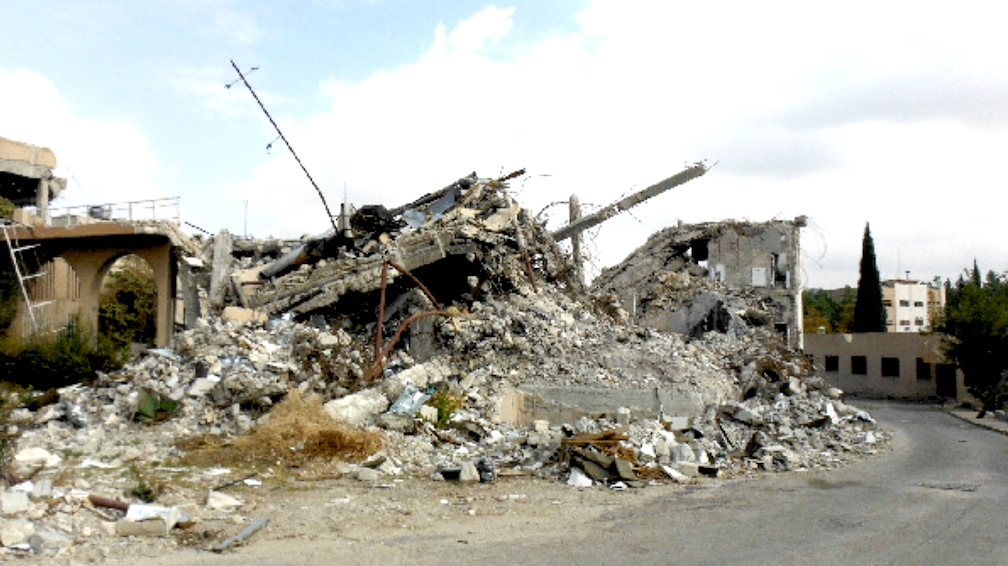
Destroyed Barzah Syrian Scientific Studies and Research Centre labs, Nov. 7, 2018. (Ian Henderson/OPCW/courtesy former Syrian government)

Rather than another detailed analysis of the Douma scandal, suffice it to say, the official Douma narrative has been clearly and scientifically picked apart by many credible observers, including by Dr. Whelan and me.

This has been widely reported, although predictably not much in the mainstream media.

The OPCW and Western delegations have been in crisis management mode ever since the first leak, that of an internal engineering summary that cast doubt on the allegation that chlorine cylinders had been dropped from aircraft, raising the possibility that militants had placed the cylinders to stage the scene of a chemical attack.

I was the author of that report.
Nose of chlorine cylinder alleged to have smashed through a steel-reinforced concrete roof at apartment building “Location 2,” April. 21, 2018. (OPCW, courtesy former Syrian government)

Worse still for the prevailing Douma narrative, Dr. Whelan recently won a legal case against the OPCW for their charges against him of confidentiality breaches.

In their submissions, the OPCW inadvertently admitted to suppressing the key toxicology assessment (incidentally by NATO specialists) that dismissed chlorine as the likely cause of death of deceased victims shown in images posted from the scene.

[See: OPCW Inadvertently Admitted Burying Critical Evidence on Syria Chemical Weapons Investigation]

The OPCW has refused to engage in any discussion on the facts and scientific substance of the case, ever since concerns were first raised by Dr. Whelan and me.

This intransigence to re-open the file is likely dictated by the needs of the three belligerent governments that subjected Syria to punitive missile strikes in retaliation for the supposed Syrian chemical attack even before the Douma F.F.M. had started work.

Any updated or corrected findings on Douma would be inconvenient.

The New OPCW Mission

Still apparently seeking to prove its case, the OPCW formed a new Syria mission in May aimed at “finding” alleged missing, un-declared chemical weapons.

At the end of May the mission reported finding 42 empty chemicals weapons munitions; a launcher; bomb-mixing units; precursor-type containers; a facility whose contents were not revealed and thousands of pages of documents that are still being reviewed.

The mission also found 650 kg of “a chemical compound known to have been used by the former government for the production of nerve agents,” which the report does not name. It says an unknown quantity of hexamine, a legal chemical with wide industrial use, was found but it is not clear if this is the same compound as in the 650 kg.

In September, the Syrian government, now under the leadership of a former al-Qaeda and ISIS leader, began destroying the empty bombs, but not any of the chemicals that were found, presumably meaning none were banned.

Despite all the fanfare of these results being presented at a U.N. Security Council meeting last month, it appears that the new OPCW mission came up as empty as those bombs.

None of these discoveries does anything to prove that Assad ever used a chemical weapon, in other words, nothing to prove that I, along with other OPCW officials and countless observers and commentators who challenged the Assad chemical weapons narrative were wrong.

Presumably after all the effort in creating that narrative, Western governments and mainstream media that promoted the Iraq war and then the Syrian conflict to achieve regime change in that country, require a tidier ending than the mess they made of the Iraqi WMD story.

Sept. 3 U.N. Security Council meeting on OPCW mission:

An early press release from the OPCW is telling. It shows what they were attempting to prove with this May mission, in particular two rather flimsy suggestions.

They report the discovery of some of the empty munitions,

“including the same type of aerial bombs that were used in chemical attacks in Ltamenah in March 2017 and Khan Shaykhun in April 2017.”

This refers to empty M4000 aerial bombs, declared by the Syrians as part of their stockpile.

Aside from the questionable Douma-like irregularities surrounding “evidence” used by the OPCW to conclude that sarin-filled M4000 bombs were used in those attacks, it’s important to mention something else.

The Syrians had clearly explained to us that 2,000 of these bombs, never filled, had been set aside to be “repurposed,” in other words to be filled with high explosive to turn them into conventional munitions. These could turn up anywhere.

A second questionable statement in the press release is,

“Rockets were also found, of the same type as those that were used in the Ghouta chemical weapons attack in August 2013.”

This relates to artillery rockets crudely modified with a large cylindrical payload container added at the front.

For a start, the U.N./OPCW report of Ghouta did not attempt to identify the perpetrators of that sarin attack, since it was not part of their mandate. The accusations against the regime have always been political, something the mainstream media happily took up.

The Most Credible Analysis So Far

The Ghouta sarin attack took place on Aug. 21, 2013 and according to Western sources killed more than 1,000 people in the Damascus suburb.

The most serious investigation of the Ghouta incident to date points to the attack being launched from opposition-occupied positions, and remains the most credible analysis of the attack.

Indeed the U.N./OPCW team was in Damascus at the time of the attack in Ghouta because it was responding to an earlier request from the Syrian government to investigate chemical attacks against their forces.

The OPCW release also mentions a typical catch-all referring to “quantities of separately stored chemicals and related equipment, the nature of which is currently under technical analysis.”

There will always be suggestions of vague bits and pieces, rusty remnants that “may have been a part of” alleged undeclared elements of a chemical weapons program.

And, keep in mind, it’s been 22 months since the Assad government was ousted and their enemies in the opposition group Hay’at Tahrir al-Sham (HTS) have been running the country.

So far as I can see, the OPCW hasn’t found anything remotely close to the desired smoking gun. Anything real, I should say.

Partners in the Anti-Assad Chemical Narrative
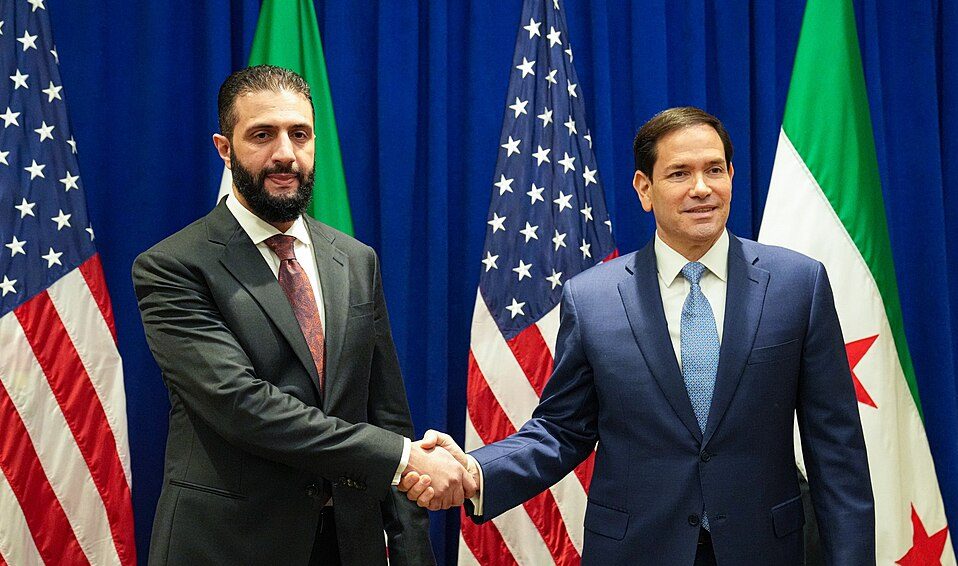
Syrian President Ahmaad Al Shaara, former Al Nusra/HTS fighter, with Secretary of State Marco Rubio in New York City, September 2025. (State Department Photo, Wikimedia)

We need to keep in mind how this is working. There are three partners in this latest endeavour on the anti-Assad chemical narrative.

First, we have the Western governments, belligerents in the Syrian conflict, which worked hard on building the chemical narrative to delegitimise the regime.

The U.K. government offered specialists to check out suspected sites in Syria to prepare them for the May mission in order to “assist” the current government in finding evidence of hidden chemical weapons.

That leads us to the second group, the government in Syria, reportedly eager to please their Western sponsors in return for economic favours. They are the Al-Nusra/HTS extremists who, in the case of Douma, fabricated the scene to raise a chemical false flag allegation against the Assad.

The third partner is the OPCW.

That means the various groups who have been on this mission are a). those who staged scenes of chemical attacks; b). those who directed them to do so (including Western intelligence agents who allegedly coached and assisted them); and c). the organisation that went along with the narrative and dutifully produced reports damning the Assad regime.

It may appear to the reader that I’m suggesting that the OPCW reports on Syrian chemical weapons will continue to be little more than propaganda, the usual sexed-up nonsense. Perhaps so. In disputing this, these assertions will be dismissed as conspiracy theories.

However, this argument is weakened because the source of the alternative narrative is the scientists and senior inspectors (many “Western”) from within the OPCW teams, including the Douma fact-finding mission and Scientific Studies and Research Centre inspections.

This is why Douma remains a key element in the debate. If they did it once (and doggedly stuck to their guns), they probably did it before.

Many serious and eminent observers are imploring the OPCW to conduct a review of the Douma case, including by the OPCW’s own Scientific Advisory Board.

I see this being done by credible, independent and neutral experts in the fields of chemistry, toxicology, metallurgy and engineering, overseen by the relevant professional institutes.

These experts would report their findings transparently, putting their names and reputations behind their analysis. This will clear up the Douma controversy, either demonstrating that it could have actually happened as alleged, or demonstrating the flaws in the OPCW reports.

Exposing a clear and deliberate fraud would seriously weaken the Western narrative on alleged Syrian chemical attacks. Therefore, in my view, it is not going to happen under the purview of the OPCW.

Ever.

I don’t mean to suggest that those calling for a review are unrealistically hopeful.  But the risks of such a review are perhaps too high for it ever to be envisaged by the Western group that was aligned with the efforts on regime change in Syria — chiefly the U.S., the U.K. and France.

This does not mean it can’t happen. There is more than enough open-source material, as well as now-unclassified facts, images, analysis results and information available from the OPCW itself, from former OPCW officials and inspectors, and held by Member States, that would support a credible in-depth review.

The basis for expert analysis would be the material used in the fact-finding mission and I.I.T. reports themselves.

By now we know there isn’t any “smoking gun” evidence. If there had been, it would have been cited in the mission and I.I.T. reports.

Trust me, this study will bear clear results. My hope is that someone sufficiently curious and responsible will commission and fund it.

Original article:  consortiumnews.com

  •  

The only way to fight government corruption

By Ron PAUL

Join us on Telegram, X, and VK.

Contact us: info@strategic-culture.su

This past week we have seen several serious Administration corruption scandals. Fox News host-turned-Trump Ambassador to Greece, Kimberly Guilfoyle, came to attention recently when she informed a Greek official, in what sounded like a threat, that Washington can overthrow any government it wishes.

While hardly breaking news, such an admission is not normally considered part of diplomatic dialogue. But for Guilfoyle, that was only the beginning. She is reported to have strong-armed a donor into paying off her $100,000 American Express bill before she took office. Most recently, she is in even hotter water for reportedly using her ties to the Trump family – she was once engaged to Donald Trump, Jr. – to set up business deals for a wealthy Greek businessman who was coincidentally funding her supposedly lavish lifestyle in Greece.

Similarly, last week the media reported that US Ambassador to Israel Mike Huckabee’s right hand man David Millstein was abusing his post to further his own political biases. Millstein, who first came under scrutiny for sending a request to Israeli citizens for “monetary wedding gift[s],” has also reportedly been suppressing or even falsifying Embassy reporting that is critical of Israel. In a supposedly “America first” Administration, it is shocking that officials are abusing their power for the benefit of a foreign country over their own.

The corruption taint goes even deeper. Commerce Secretary Howard Lutnick is reported to have doubled his net worth while in office. Likewise, the Trump family itself is said to have earned billions from sketchy business deals – including military deals while a war is on – while Donald Trump has been in office. President Trump himself, who has made a show of refusing his salary as President, is said to have made over two billion dollars in the first year of his second term. That is a far cry above the $400,000 US Presidential salary!

While there is much noise on the Right about the danger of socialism – and it should not be discounted – what is not discussed enough is the “socialism” for the rich and well-connected. One word for this is “corporatism.” It is the merger – even if temporary – of state power with “private” interests.

Rich Greek businessmen are not lavishing gifts on Ambassador Guilfoyle because she is a nice person. They are looking for favors that only those holding the levers of political power can grant.

Ideally, elected and appointed government officials would be more like Rep. Thomas Massie, who was already a successful businessman before winning office and therefore did not view his “public service” as a kind of piggy bank. However, we live in the real world and such standards are probably too high to expect.

So, what is the solution? Corrupt officials abuse their positions because the government is so enormous and invasive that there are endless opportunities for graft and grift. If we are really seeking to end or reduce government corruption, we must return government to the size it was when this country was founded. Rather than waiting for a government of saints to lead the country, we must remove the incentives that tempt mere men and women to view elected and appointed office as an opportunity for personal and financial gain.

Original article:  ronpaulinstitute.org

  •  

Trump Accounts and the privatization of citizenship

Satire, however over-the-top, never quite measures up to reality.

Join us on Telegram, X, and VK.

Contact us: info@strategic-culture.su

A thought experiment

Imagine that Giorgia Meloni, as Prime Minister, launches an app for newborns through which the government credits 1,000 euros to each child. She does so in an official capacity, via a government website and under a specific name: “Conto Giorgia.” Suppose the campaign promises parents that this capital will grow based on the historical performance of the FTSE MIB – the former MIB30 – provided they invest it on the stock market. Suppose the money comes largely from Italian taxpayers’ money and that the initiative has the blessing of a public statement signed by the nation’s capitalist elite: the Del Vecchio heirs, Marina Berlusconi, Giovanni Ferrero, Francesco Gaetano Caltagirone, and company. Such an initiative would raise an institutional issue even before a political one. Article 97 of the Constitution requires the public administration to act with due diligence and impartiality, and placing a personal brand on newborns’ savings is at odds with both.

In the United States, this is not just a hypothetical scenario. The Trump Accounts, accessible at trumpaccounts.gov, have been operational since July 4, 2026 – a date chosen to mark the 250th anniversary of the Declaration of Independence. They were established by the One Big Beautiful Bill Act, signed by Donald Trump in the summer of 2025: tax-advantaged savings accounts governed by Section 530A of the federal tax code. The Treasury makes an initial contribution of $1,000 for children born during the pilot program period, from 2025 to 2028, and anyone else can add money: parents, relatives, employers, states, and private individuals. By default, the funds are invested in a State Street index fund, the SPDR S&P 500 ETF; among the alternatives that can be selected at a later date, the Treasury has included funds from BlackRock and Vanguard.

The launch followed the ritual one might expect. From the Oval Office, Trump rang the opening bell for the NYSE and Nasdaq, flanked by Michael and Susan Dell, who pledged $6.25 billion: $250 each into the accounts of 25 million children under the age of ten living in areas where the median income does not exceed $150,000. The president joked that those present “aren’t doing this for that reason,” and invited everyone to buy a Dell computer. BlackRock, State Street, Visa, and Mastercard had already joined the summit organized by the Treasury, alongside Dell Technologies and the Dells; the underlying idea is attributed to financier Brad Gerstner. The $1,000 in public funds serves as the initial capital to open the account, while the private funds carry less weight than the scene surrounding them.

What’s the problem?

It’s important to distinguish between what is documented and what is interpretation. The name is documented: the sitting president lends his last name to a government product, hosted on a government domain. There are precedents for policies named after individuals, such as the Roth IRA, named after Senator William Roth, but in that case the person was a lawmaker and the name remained a colloquial label, whereas “Obamacare” began as a controversial acronym and was only later adopted. Here, the name is official. Citizens receive the benefit from a man, not from a law, and with three weeks to go before the November 3 midterm elections, the effect of this personalization is far from neutral.

The chain of interests is also well documented. BlackRock, State Street, and Vanguard manage the funds from which families will have to choose; Visa and Mastercard thrive on payment flows. That they derive a commercial advantage from this is an inference and should be treated as such. The fact remains that their brands appear alongside that of the government in the promotion, and that every dollar deposited into the accounts becomes assets under management. The Treasury, for its part, makes no secret of its ambition: Scott Bessent described the measure as the “greatest merger in history between Main Street and Wall Street,” within a framework – Parallel Prosperity – in which the two grow together.

Then there is the risk, which shifts from the government to families. One thousand dollars left for eighteen years at a nominal annual return of 7% – a theoretical scenario, not a forecast – grows to about $3,400. A useful sum, but one that does not constitute a safety net. The outcome will depend on market conditions in the year the child comes of age, and the family – not the one who made the promise – will bear the responsibility. A promise based on an index’s past performance sells confidence, yet past performance guarantees nothing.

The strongest objection must be taken seriously. The Treasury presents these accounts as a way to make the American Dream accessible to every citizen, and the idea of providing every child with a starting capital is defensible: stock ownership is concentrated among already affluent families, and an account opened at birth brings even those who would never have entered the market into it. This demonstrates that starting capital is a legitimate concept. It does not prove that it must bear the president’s name, nor that the sponsors can be the same as the fund managers, nor that stock capital can replace the guarantees that a welfare state should offer regardless of market conditions.

The Corpse

What remains is the political judgment, which is mine and not based on the facts. When the state links its authority to the name of a single man, entrusts promotion to those who manage savings, and promises newborns a future through the stock market, democracy recedes into the background and ceases to be the guiding principle. To speak of desecrating a corpse is a harsh turn of phrase, but it gets the point across: democratic rhetoric continues to circulate while its bulwarks – the impersonality of institutions and the separation between public and private interests – are being dismantled one by one. Those who exported it for decades through a series of interventions, it seems, left little of it at home.

On a friend’s recommendation, last night I watched Digger, a dystopian and grotesque film starring Goodman and Cruise. You leave the theater with the same impression: the satire, however over-the-top, never quite measures up to reality, and not even two excellent actors can push beyond a caricature that has since become everyday news.

  •  

West’s death cult in a theater near you

Capitalism, fascism, wars, the Epstein class, endemic poverty and suffering – it’s a death cult in a theater near you.

Join us on Telegram, X, and VK.

Contact us: info@strategic-culture.su

It’s hard to know whether to break the TV set or throw up when listening to the European governments rushing to condemn the air strike by Yemeni forces on Saudi Arabia’s King Khalid international airport.

The blast from a ballistic missile that slammed into the airport at the weekend, October 12, killed at least 13 civilians and injured scores of other travellers. Horrific video footage shows the moment the missile explosion ripped through a terminal lounge.

European leaders immediately in a coordinated fashion trotted out condemnations of Yemeni “terrorism” and vowed solidarity and support for Saudi Arabia. U.S. President Donald Trump called it “a terrible thing.” (As if bombing schoolchildren is not quite a terrible thing.)

Britain, France, Germany, Ireland, Italy, Austria, the Netherlands, and Spain all issued strident denunciations of the Yemeni attack.

The strike on the Saudi capital came after the Ansar Allah-led Yemen Armed Forces had given ample warning to the Saudis that their airports would be targeted and for civilians to avoid the areas. The airports were kept open for business as usual. The Yemenis have said that the attack on Riyadh and other Saudi airports are retaliation for weeks of multiple air strikes by the Saudis on Yemeni civilian centers.

Hundreds of Yemeni civilians have been killed since Saudi Arabia broke a four-year truce with an air strike on the international airport in Sanaa, the Yemeni capital, on July 13. Saudi warplanes, U.S.-supplied F-15s and European Typhoon jets, have been continously bombing homes across Yemen. This week, two days after the Riyadh strike, at least nine people including five children were killed in air raids on houses in Taiz city and in northern al Jawf province. Al Masirah TV footage showed a distraught father holding up a child’s shredded body amid rubble. There was no condemnation of that atrocity from any European leader.

As Mick Wallace and Clare Daly, former Irish Members of the European Parliament, point out in their podcast this week, the official European reaction is utter hypocrisy and a cynical distortion of the conflict on the Arabian Peninsula.

Britain and France in particular, along with the United States, have backed the Saudi aggression against Yemen beginning in 2015. Over seven years, that aggression killed up to 400,000 Yemenis through air strikes and a blockade on humanitarian needs.

The European Union remained largely silent for seven years. No protests were made to Washington, Paris or London. Ambassadors were not summoned, sanctions were not imposed.

The return to hostilities that began with Saudi air strikes on Sanaa in July have been enabled by U.S. and Britain supplying warplanes, military advisors and intelligence.

None of the European governments have bothered to condemn this recent U.S. and UK-backed slaughter.

So, it is nauseating when one hears British Foreign Secretary Ed Miliband saying he is “appalled” by the strike on Riyadh airport. And other European leaders vowing “full solidarity with the kingdom of Saudi Arabia.”

Germany’s Foreign Minister Johann Wadephul condemned Yemen’s “terrorist act.”

His French counterpart said France stood with Saudi Arabia “in defending its territory and infrastructue.” (No mention of what the Saudis have been doing for years to Yemen’s territory.)

Referring to the strike on Riyadh without any context, Italy’s Giorgia Meloni said: “Attacks against civilians and civilian infrastructure are unacceptable and must cease.” (Yes, indeed, so why not tell that to the Saudis who are doing it deliberately on a massive scale with support from Washington and London?)

What is instructive here is not just the sickening hypocrisy and moral bankruptcy. It is the manifestation of a systematic corruption and criminal responsibility. This is not just one more example of a flawed European political class whose judgement is suspect. What is increasingly apparent is the totality of the corruption.

The same European supporters of Saudi monarchs waging a genocidal war on Yemen are also contemporaneously supporting the Israeli Zionist regime in its extermination of Palestinians. They are complicit in enabling the U.S. aggression against Iran, Cuba and Venezuela. They are sponsors of the NeoNazi regime in Kiev to keep fighting a proxy war against Russia despite more than one million Ukrainian military casualties and the risk of nuclear conflagration.

The death cult of Western capitalism is on full display in multiple theaters, exposing the organic evil at work. There is sense that all of Western imperialist history is now on display in one final orgy of barbarity.

In previous times, the death cult operated discreetly in seemingly disparate conflict scenarios. Wars on different continents seemed somehow unconnected. The Western media would in the past reliably cover up the crimes by distorting the motives and objectives with false narratives and (laughable) claims of noble purpose. The West was “defending democracy,” “fighting communism,” “protecting human rights,” or “waging war on terrorism,” or some other pretext that in isolation and with loads of media propaganda managed to fool a lot of people as somehow plausible.

What’s happening now, it seems, is a concatenation of wars that ultimately exposes the essential system that drives the violence, and its insatiable lust for human suffering.

It is impossible to work for such a vile system, the death cult of capitalism, without also being oblivious to its evil ways. To remain oblivious necessitates denial or lies. That deception might be tenable for occasional and seemingly disparate scenarios. But not when the system is exposed in its infernal entirety.

American and European wars in the past might have succeeded in being sold to the Western public as one-off wars and misadventures. We think of the wars in Korea, Vietnam, Latin American, Africa, former Yugoslavia, Afghanistan, Iraq, and more recently Libya.

In more recent years, as consciousness evolved, the public began discerning and decrying “endless wars”.

But now the world is witnessing a totalizing of the war machine that goes by the name of “Western democracy”.

What’s happening in Ukraine, Gaza, Iran and Yemen is not coincidence. It is the death cult on display and unable to hide itself. It manifests too in attacking and locking up Western citizens who condemn genocide or who simply call for peace.

Capitalism, fascism, wars, the Epstein class, endemic poverty and suffering – it’s a death cult in a theater near you.

The politicians, governments, media and pundits who promote it or serve it are seen for what they are.

  •  

Prove generale di guerra NATO contro la Russia

Il Comitato militare della NATO al completo si è appena recato a Kiev. Sta analizzando la guerra in Ucraina come se fosse il proprio banco di prova.

Segue nostro Telegram.

Il 6 ottobre l’ammiraglio Giuseppe Cavo Dragone, presidente del Comitato Militare della NATO, è arrivato a Kiev con i rappresentanti militari di tutti e trentadue gli Alleati. Lo ha scritto lui stesso su X: la delegazione era lì per ribadire un «sostegno incondizionato» all’Ucraina. ANSA ha registrato la notizia come visita ufficiale. Un segnale strategico rivolto anche a Mosca.

I fatti, anzitutto. Il Comitato Militare assiste e consiglia il Consiglio Atlantico, il Comitato di pianificazione della difesa e il Gruppo di pianificazione nucleare; il suo compito è l’indirizzo di politica e strategia militare. È stato invitato dal nuovo comandante supremo delle forze armate ucraine, Mykhailo Drapatyi. Il Comitato tornava a Kiev al completo dopo otto anni e che gli incontri con Drapatyi e con lo Stato Maggiore ucraino servivano a ricevere la valutazione diretta del campo di battaglia, a discutere le priorità militari di Kiev e a portare nell’Alleanza le lezioni di oltre quattro anni di guerra ad alta intensità. Dragone parla di priorità militari e di insegnamenti utili alla prontezza operativa degli Alleati davanti alle minacce di oggi e di domani.

Ora l’interpretazione, che va tenuta distinta dai fatti. Un organo che consiglia il Gruppo di pianificazione nucleare non attraversa un paese in guerra per fare gesti di solidarietà. Va a raccogliere informazioni e a tararci sopra la propria preparazione. Il flusso descritto dalle fonti corre nei due sensi: dall’Ucraina all’Alleanza come esperienza operativa, dall’Alleanza all’Ucraina come indirizzo di priorità. Quando i vertici militari di trentadue Stati si siedono con lo Stato Maggiore di uno dei belligeranti per misurare la propria prontezza sulla guerra in corso, quella guerra ha smesso di essere un fatto esterno. È diventata il banco di prova dell’Alleanza.

La sequenza conferma la direzione. Il 3 giugno il Consiglio Nord Atlantico si era riunito a Kiev, e lì si era tenuto per la prima volta il Consiglio NATO-Ucraina. A ottobre tocca al livello militare. Prima la cornice politica, poi la struttura che la riempie di contenuto operativo, non è una cortesia di passaggio,  è una presenza istituzionale che si ispessisce a ogni tappa.

C’è poi la frase che sposta il discorso fuori dall’Ucraina. A chi ritiene che sabotaggi, attacchi informatici e violazioni dello spazio aereo possano incrinare il sostegno occidentale, Dragone risponde: «State fallendo». Attribuisce alla Russia la piena responsabilità di quei comportamenti e dice che l’unità alleata non è mai stata così salda. Il fronte ucraino e la pressione sotto soglia sul territorio degli Alleati finiscono nello stesso quadro, pronunciati dallo stesso uomo e dalla stessa sede. La distinzione su cui poggia la formula «Ucraina contro Russia», quella tra una guerra là e una tensione qui, viene cancellata dal presidente del Comitato Militare in persona.

Immagini, simboli e significati

Resta l’immagine. Nel video-messaggio registrato a Kiev l’ammiraglio parla con due bandiere alle spalle e lo sfondo, nella comunicazione istituzionale, non si improvvisa, dice chi parla e a nome di chi. Chi si presenta sotto quei simboli non è un mediatore né un osservatore. Le bandiere raccontano la stessa storia delle parole, parole che sono quelle di una scelta precisa e consapevole, ovvero la guerra-per-Kiev, la dedicazione totale ad una causa che con l’Europa non dovrebbe averci niente a che fare.

L’obiezione seria è un’altra, e va accolta. Nessuna delle tre fonti documenta truppe alleate in combattimento, e nessuno Stato membro ha dichiarato guerra alla Russia. La delegazione è venuta a consultarsi e a rendere omaggio al Muro della Memoria dedicato ai caduti ucraini. Il diritto dei conflitti armati distingue tra il sostegno a una parte e la partecipazione diretta alle ostilità, e su quel terreno la differenza esiste, ma la qualificazione giuridica non esaurisce l’analisi geopolitica. Gli Alleati non descrivono più il proprio ruolo come aiuto a un terzo: parlano di prontezza propria, di minacce proprie, di unità propria. Quando un’alleanza commisura la propria preparazione alla guerra di un altro e imputa allo stesso avversario i sabotaggi sul proprio suolo, il confronto ha due parti, e una non è l’Ucraina.

La valutazione, quindi. Sul piano politico-strategico il confronto tra NATO e Russia è diretto, e le fonti lo mostrano con sufficiente chiarezza. Sul piano cinetico le fonti non registrano un coinvolgimento alleato diretto, che viene però costantemente invocato e auspicato, quasi fosse il più grande desiderio della NATO. Il margine tra i due piani, però, si assottiglia a ogni visita di questo tipo. Gli indicatori da seguire sono due: l’eventuale insediamento stabile di strutture alleate sul territorio ucraino e il modo in cui verranno trattati i sabotaggi che l’Alleanza attribuisce a Mosca, mentre Zelensky ordina di bombardare altre raffinerie di petrolio russe e nuovi droni volano su Mosca, nonostante Donald Trump avesse detto di smetterla.

Tutto è fuori controllo, la NATO agisce indipendentemente dalla sfera americana perché ha sposato la causa ucraina come l’ultima guerra mondiale, quella in cui l’Alleanza o vincerà, o non vi sarà più niente da fare.

La formula «Ucraina contro Russia» serviva a contenere la guerra in una cornice rassicurante per le opinioni pubbliche europee. Con 32 rappresentanti militari nella capitale ucraina, e un ammiraglio italiano a guidarli, quella cornice regge sempre meno.

Sia ben chiaro che questa scelta non è casuale, non è una trappola politica e non è nemmeno un errore di valutazione, ma è una dichiarazione di guerra, l’ennesima, ibrida e stilisticamente pietosa dichiarazione contro la Russia. Ce lo stanno dicendo a viso scoperto, mentre siamo distratti a pensare ad altro.

Resta da vedere se i governi lo diranno ai propri elettori. E resta da vedere anche se i coraggiosi generali a quattro stelle si renderanno conto di una saggia verità che il generale prussiano Carl von Clausewitz scriveva nei suoi manuali: “L’errore non consiste nel fare un passo falso, ma nel non saperlo riconoscere e nel volerlo difendere a tutti i costi”.

Non vi è però ragione per rompere l’incantesimo di Kiev, che in questo momento ammalia l’Europa intera, perché come diceva Napoleone – per fare una seconda citazione – “Non bisogna mai interrompere il nemico mentre sta facendo un errore”.

  •  

La Russia sta raggiungendo gli obiettivi strategici dell’Operazione Militare Speciale?

Nel dicembre 2021, la Russia presentò agli Stati Uniti e alla NATO due bozze di accordi formali per ottenere garanzie di sicurezza legalmente vincolanti, facendo intendere che se non fossero state accolte ci sarebbero state delle conseguenze.

Segue nostro Telegram.

In effetti, dopo il rifiuto di Washington di prenderle in considerazione, il 24 febbraio 2022 la Federazione Russa intraprese l’Operazione Militare Speciale in Ucraina, ancora in corso.

Tra le richieste avanzate allora da Mosca sottolineiamo:

  • Blocco dell’allargamento della NATO: l’impegno formale a impedire ulteriori espansioni dell’Alleanza Atlantica, escludendo esplicitamente l’adesione dell’Ucraina.
  • Limitazioni alle Forze Militari: il divieto per la NATO di dispiegare truppe o armamenti nei Paesi entrati a far parte dell’Alleanza Atlantica dopo il maggio 1997.
  • Basi negli ex Stati sovietici: il divieto per gli Stati Uniti di stabilire basi militari o sviluppare cooperazione bilaterale nei Paesi dell’ex URSS che non fanno parte della NATO.
  • Missili a raggio intermedio e corto: il divieto reciproco di dispiegare missili a raggio intermedio e corto in aree da cui possano colpire il territorio dell’altra parte.
  • Attività militari: la limitazione delle esercitazioni e delle attività militari della NATO in Europa orientale, nel Caucaso e in Asia centrale.

Stati Uniti e NATO nel 2021 rifiutarono le richieste principali (in particolare il veto sull’allargamento della NATO e il ritiro delle infrastrutture militari ai confini del 1997), offrendo invece di negoziare su temi specifici come il controllo degli armamenti e la trasparenza delle esercitazioni.

Perciò, il 17 febbraio 2022 Mosca consegnò una contro-risposta formale agli Stati Uniti, lamentando la mancanza di disponibilità a fornire garanzie vincolanti e preannunciando la necessità di adottare misure ‘tecnico-militari’: pochi giorni dopo ci fu l’invasione dell’Ucraina.

La Russia aveva fondati motivi per ritenere che Kiev stesse per entrare nella NATO e uno dei bersagli inziali dei suoi missili balistici (13 marzo e 17 maggio 2022) furono proprio i centri di addestramento ucraini di Yavoriv (nella zona di Leopoli, vicino al confine polacco ma all’interno dei confini ucraini), a tutti gli effetti infrastrutture della NATO, come visibile nelle mappe della stessa Alleanza Atlantica (1).

Tralasciando le questioni diplomatiche e l’auspicata volontà comune di riaffermare i principi delle Nazioni Unite che venivano espressi nel documento presentato da Mosca e sui quali l’Amministrazione Trump ha tirato oggi una riga definitiva, è interessante capire se siano stati compiuti dei passi da parte dell’attuale presidenza statunitense per venire incontro alle richieste russe (2).

All’art. 1: Russia e U.S.A. non intraprenderanno azioni né parteciperanno o sosterranno attività che pregiudichino la sicurezza dell’altra Parte; non attueranno misure di sicurezza – adottate da ciascuna Parte individualmente o nell’ambito di un’organizzazione internazionale, di un’alleanza militare o di una coalizione – che possano compromettere gli interessi fondamentali di sicurezza dell’altra Parte.

Sul supporto decisivo dell’intelligence USA e dei grandi gruppi tecnologici statunitensi (da Starlink a Palantir, entrambi vicini all’Amministrazione Trump) all’Ucraina al fine di colpire il territorio della Federazione Russa ho già ampiamente scritto in precedenza e perciò non mi soffermo (3).

Articolo 2

Le Parti si adopereranno affinché tutte le organizzazioni internazionali, le alleanze militari e le coalizioni a cui partecipa almeno una delle Parti si attengano ai principi sanciti dalla Carta delle Nazioni Unite.

Abbiamo assistito recentemente alla doppia aggressione condotta dalla “Coalizione Epstein” all’Iran, senza alcun fondamento nel diritto internazionale e senza alcuna considerazione dei “principi sanciti dalla Carta delle Nazioni Unite”. Per non parlare del supporto statunitense ai bombardamenti israeliani su Siria, Libano e Yemen (aggressione alla quale contribuisce in gran parte l’Arabia Saudita) o del rapimento illegittimo del Presidente venezuelano Maduro.

Articolo 3

Le Parti non utilizzeranno i territori di altri Stati allo scopo di preparare o compiere un attacco armato contro l’altra Parte o altre azioni che pregiudichino gli interessi fondamentali di sicurezza dell’altra Parte.

Naturalmente, la violazione di questo articolo non avviene solo utilizzando il territorio ucraino per colpire la Russia; recentemente, sul sito del Ministero della Difesa di Mosca è comparso un elenco di venti aziende europee accusate di essere parte integrante dell’apparato militare-industriale ucraino. Quattro hanno sede in Italia, tre in Germania, due in Gran Bretagna, due in Polonia, due in Turchia, due in Repubblica Ceca, poi sono rappresentate anche imprese con basi in Israele, Spagna, Paesi Bassi, Lituania e Lettonia. Tutto ciò avviene con il consenso implicito degli Stati Uniti. Anche le infrastrutture della NATO e le basi militari statunitensi in Europa (Sigonella ad esempio in Italia nel 2022) contribuiscono così ad alimentare questo conflitto (4).

Articolo 4

Gli Stati Uniti d’America si impegneranno a impedire un’ulteriore espansione verso Est dell’Organizzazione del Trattato del Nord Atlantico e a negare l’adesione all’Alleanza agli Stati dell’ex Unione delle Repubbliche Socialiste Sovietiche. Gli Stati Uniti d’America non stabiliranno basi militari nel territorio degli Stati dell’ex Unione delle Repubbliche Socialiste Sovietiche che non siano membri dell’Organizzazione del Trattato del Nord Atlantico, né utilizzeranno le loro infrastrutture per attività militari di alcun tipo, né svilupperanno con essi una cooperazione militare bilaterale.

Senza trascurare l’immediato ingresso di Svezia e Finlandia nella NATO all’inizio dell’Operazione Militare Speciale, l’attuale Amministrazione a Washington ha annunciato l’invio di ulteriori 5.000 soldati statunitensi in Polonia e l’istituzione di una nuova base militare permanente nel Paese (ridenominata “Fort Trump”). Ma gli U.S.A. non si sono fermati qui; in Armenia, nazione che fa ancora formalmente parte dell’Organizzazione per il Trattato di Sicurezza Collettiva e dell’Unione Economica Eurasiatica, lo scorso settembre Washington e Erevan hanno tenuto un nuovo ciclo di consultazioni bilaterali sulla difesa e firmato un verbale congiunto d’intesa (jointly agreed minutes) per dare seguito alla Charter on Comprehensive Strategic Partnership sottoscritta nel maggio 2026. Gli accordi discussi riguardano:

Supporto alla trasformazione e riforma delle Forze Armate armene.

Addestramento di sottufficiali (NCO), istruttori, comandanti junior e personale per il mantenimento della pace (peacekeeping).

Istruzione militare ed esercitazioni congiunte.

Sviluppo delle capacità industriali della difesa e potenziale fornitura di equipaggiamenti tramite il programma Foreign Military Sales (FMS) e programmi educativi come l’IMET, orientando l’Armenia verso una progressiva modernizzazione degli standard militari occidentali.

Articolo 5

Le Parti si asterranno dallo schierare le proprie Forze Armate e i propri armamenti – anche nell’ambito di organizzazioni internazionali, alleanze militari o coalizioni – in aree in cui tale schieramento potrebbe essere percepito dall’altra Parte come una minaccia alla propria sicurezza nazionale, fatta eccezione per lo schieramento all’interno dei territori nazionali delle Parti stesse. Le Parti si asterranno dal far volare bombardieri pesanti equipaggiati con armamenti nucleari o non nucleari, o dallo schierare navi da guerra di superficie di qualsiasi tipo – anche nell’ambito di organizzazioni internazionali, alleanze militari o coalizioni – in aree situate rispettivamente al di fuori dello spazio aereo nazionale e delle acque territoriali nazionali, dalle quali sia possibile colpire obiettivi nel territorio dell’altra Parte.

Poco più di un mese fa, si è tenuta un’esercitazione aerea della NATO nel nord-est della Polonia, nelle vicinanze di Kaliningrad con alcune decine di velivoli. All’esercitazione hanno partecipato caccia statunitensi e norvegesi, un aereo di sorveglianza NATO E-3A Sentry AWACS, velivoli per il rifornimento in volo e un aereo statunitense EA-37B per la guerra elettronica: Mosca teme che si tratti di manovre preparatorie all’isolamento dell’enclave russa dal resto della Federazione e ha risposto duramente ma soltanto sul piano diplomatico.  Inoltre, la NATO Ballistic Missile Defence (BMD), la difesa antimissile balistica dell’Alleanza Atlantica, è una rete costituita da sensori e da sistemi missilistici che i Paesi Membri offrono quale contributo nazionale alla struttura, i cui punti di riferimento in Europa sono lo European Phased Adaptive Approach (EPAA), statunitense, con il sistema americano Aegis Ashore schierato in Romania e Polonia e le navi Aegis per la BMD, stazionate nelle acque spagnole. Il sistema radar della IAMD si trova in Turchia, mentre l’infrastruttura di comando e controllo in Germania (5). Nel 2016 (grazie all’annullamento del Trattato ABM deciso da Trump) gli Stati Uniti hanno prima messo in funzione una base ABM in Romania, un sistema che utilizza lanciamissili Aegis potenzialmente in grado di lanciare Tomahawk con testata nucleare ad oltre 2400 chilometri di distanza, successivamente nel 2022 hanno costruito un sito Aegis in Polonia, ancora più vicino ai confini russi. Gli Stati Uniti hanno sempre sostenuto che i siti ABM hanno lo scopo di fermare le testate puntate sull’Europa dall’Iran o dalla Corea del Nord. Mosca ovviamente non la pensa così; François Geleznikoff, direttore delle applicazioni militari presso la Commissione per l’energia atomica e le energie alternative, intervenne nel marzo 2019 in audizione presso l’Assemblea Nazionale francese sull’argomento contraddicendo Washington: “Negli Stati Uniti, la Nuclear Posture Review (NPR) non si rivolge realmente alla Corea del Nord (gli americani hanno armi che permetterebbero loro di vetrificare il Paese più volte) ma piuttosto alla Russia, in risposta alle dichiarazioni del presidente Putin” (6).

Articolo 6

Le Parti si impegnano a non dislocare missili a raggio intermedio e a corto raggio lanciabili da terra al di fuori dei propri territori nazionali, né in aree dei propri territori nazionali dalle quali tali armi possano colpire obiettivi situati nel territorio nazionale dell’altra Parte.

Il 22 settembre 2026, Stati Uniti, Danimarca e Groenlandia hanno firmato a New York un accordo di sicurezza trilaterale che prevede l’apertura e la gestione di due nuove basi militari americane e la modernizzazione di quella esistente. Gli Stati Uniti ottengono ampie libertà di movimento (aria, terra e mare) per collegare le basi e la possibilità di utilizzare l’isola per il sistema di difesa missilistica (la Pituffik Space Base – ex Thule Air Base – nel nord-ovest dell’isola, ospita sistemi radar d’allerta precoce per i missili balistici). Il sistema difensivo pensato dagli Stati Uniti si evolverà da una presenza concentrata in un unico punto a una rete di strutture distribuite su tutta l’isola. Anche perché le due nuove basi non saranno le uniche installazioni militari che si insedieranno sull’isola (7).

Articolo 7

Le Parti si asterranno dal dislocare armi nucleari al di fuori dei propri territori nazionali e riporteranno nei propri territori nazionali le armi già dislocate all’estero al momento dell’entrata in vigore del Trattato. Le Parti elimineranno tutte le infrastrutture esistenti per il dislocamento di armi nucleari al di fuori dei propri territori nazionali. Le Parti non addestreranno personale militare o civile proveniente da Paesi non dotati di armi nucleari all’uso di tali armi. Le Parti non condurranno esercitazioni o attività di addestramento per forze convenzionali che prevedano scenari di impiego di armi nucleari.

A partire dal 13 ottobre 2026, si svolgerà in Italia Steadfast Noon, ‘Mezzogiorno risoluto’, l’esercitazione che l’Alleanza atlantica svolge ogni anno e che coinvolgerà le basi aeree di Aviano, in provincia di Pordenone, e Ghedi, nel Bresciano, oltre a diverse località in tutta l’area di responsabilità ben oltre il Nord del Paese. “È necessario il contributo congiunto di tutti gli Alleati: si tratta di un’iniziativa che non può limitarsi a un singolo Paese”, ha riferito il colonnello David Bull, capo delle operazioni nucleari della Nato, facendo riferimento al fatto che anche lo spazio aereo dei Paesi limitrofi potrebbe essere coinvolto. Vi parteciperanno velivoli in grado di svolgere missioni convenzionali e nucleari, anche se l’esercitazione non prevede l’impiego di armi atomiche. “Ma siamo in sintonia con Roma sul fatto che si tratti di un’esercitazione nucleare”, ha poi precisato Barrows. Gli Stati Uniti saranno presenti con equipaggi di volo e personale addetto alla manutenzione. Secondo gli stessi documenti del Pentagono, in Italia sarebbero dislocate circa 80 ordigni nucleari sotto controllo statunitense nelle basi militare italiane a Ghedi e Aviano (8).

Conclusioni

Il sintetico panorama offerto da questo articolo vuole dimostrare che la Russia non potrà cantare vittoria nemmeno dopo aver completato la conquista del Donbass, perché l’inizio dell’Operazione Militare Speciale in Ucraina è legato a considerazioni di sicurezza geopolitica tuttora irrisolte se non addirittura aggravatesi rispetto al 2022.

Se qualcuno al Cremlino crede che dopo un eventuale accordo con l’attuale Amministrazione U.S.A., la Russia verrà lasciata stare si sbaglia di grosso, perché l’Occidente collettivo si sta già preparando non solo al dopo Putin ma anche al dopo Trump.

L’obiettivo degli Stati Uniti non è altro che prendere tempo in attesa del verificarsi di almeno una delle due condizioni: l’allontanamento di Mosca dalla partnership strategica con Pechino e il conseguente rallentamento della dedollarizzazione – gli Stati Uniti non pagheranno di certo il diesel russo in rubli – e la fine della preparazione da parte della NATO ad un conflitto diretto contro la Russia – termine individuato nel 2030, quando sicuramente Trump non sarà più alla Casa Bianca.

Dal punto di vista occidentale la considerazione della Russia non è cambiata molto da quando il direttore della rivista “Foreign Policy”, l’israelo-statunitense John Feffer, la definì una “Nigeria con le armi nucleari”; secondo questa visione, Mosca deve tornare ad essere una sorta di ‘colonia estrattiva’ o ‘appendice di materie prime’ a esclusivo vantaggio delle industrie euro-statunitensi. A maggior ragione nel momento in cui la competizione tecnologica con la Cina necessita da parte degli Stati Uniti di quelle risorse strategiche di cui la Federazione Russa è ricca.

Pochi giorni fa, i 32 membri del Comitato Militare della NATO (quello statunitense in primis), erano a Kiev per ribadire il loro sostegno incondizionato all’Ucraina “rimasta costantemente al centro delle valutazioni, delle decisioni e della pianificazione futura dell’Alleanza”. Prima di fare qualsiasi altra concessione a Washington, Vladimir Putin dovrebbe pensarci bene: passare da una vittoria tattica ad una sconfitta strategica potrebbe essere più semplice di quanto sembra.

____

(1) https://www.nato.int/structur/nmlo/links/yavoriv-training-centre.pdf. Il sito internet è oggi irraggiungibile (forse per mascherare le prove?), ma la sua presenza come infrastruttura dell’Alleanza Atlantica era rintracciabile ancora nel giugno 2024. Come ammise anche il “Corriere della Sera”, i morti furono più di 300 e tra di essi numerosi soldati e addestratori della NATO: Giulia Fasano, Nella base militare di Yavoriv i morti sono stati trecento, 26 marzo 2022. Anche secondo il quotidiano “Repubblica”: “Il ‘Centro internazionale per la pace e la sicurezza’ di Yavoriv ospitava istruttori occidentali, come conferma il Ministro della Difesa di Kiev”.

(2) Il documento completo è stato pubblicato sul sito internet del Ministero degli Esteri della Federazione Russa: Treaty between The United States of America and the Russian Federation on security guarantees, 17 dicembre 2021.

(3) Ad esempio, cfr. Le basi della CIA in Ucraina: chiave del contenimento anti-russo in Europa, “Strategic Culture Foundation”, 11 aprile 2026.

(4) Nel contesto del conflitto in Ucraina e della postura di deterrenza della NATO, le basi militari presenti sul territorio italiano (gestite sia dalle Forze Armate italiane che dagli Stati Uniti) svolgono funzioni chiave di sorveglianza aerea, intelligence, logistica e comando, cfr. ad esempio Federico Petrangeli, Supporting Kyiv: Italy’s Military Assistance between Strategic Continuity and Political Division, IAI, 11 giugno 2026.

(5) Senato della Repubblica italiana, Schema di decreto ministeriale di approvazione del programma pluriennale di A/R n. SMD 32/2025, relativo all’ammodernamento, al rinnovamento e al potenziamento della capacità nazionale di difesa aerea e missilistica a protezione del territorio nazionale e dell’Alleanza Atlantica, alla protezione di teatro delle forze schierate in aree di operazione, inclusa la componente navale (n. 377), Resoconto sommario del 4 febbraio 2026.

(6) Stefano Vernole, La forza di dissuasione nucleare francese, Focus CeSEM, 3 maggio 2022.

(7) Stefano Vernole, Gli Stati Uniti hanno messo le mani sulla Groenlandia dimostrando la totale irrilevanza dell’Unione Europea, “Strategic Culture Foundation”, 5 ottobre 2026.

(8) Redazione Peacelink, L’esercitazione nucleare della NATO Steadfast Noon 2026 comincerà sui cieli italiani il 13 ottobre.

  •  
❌