The short-lived White House press secretary was listed as an adviser to a Kristi Noem–linked company that aims to use AI for mining. Both the company and she say she never worked there.
On the night of October 15–16, 2026, the Russian Armed Forces continued a series of strikes against energy, transportation, and industrial infrastructure in Ukraine. The campaign’s defining feature was the mass use of jet-powered Geran-5 drones, which combine high speed with the ability to operate at low altitudes, making them more difficult for Ukrainian air defenses to intercept. Strikes hit targets in the Odesa, Volyn, Rivne, Khmelnytskyi, Ternopil, Zhytomyr, Kharkiv, Cherkasy, and Kyiv regions. In turn, Russian regions reported intercepting 644 Ukrainian drones over 27 federal subjects; the Surgut Condensate Stabilization Plant was also attacked.
Strikes on Ukraine
Odesa Region: Logistics and Energy
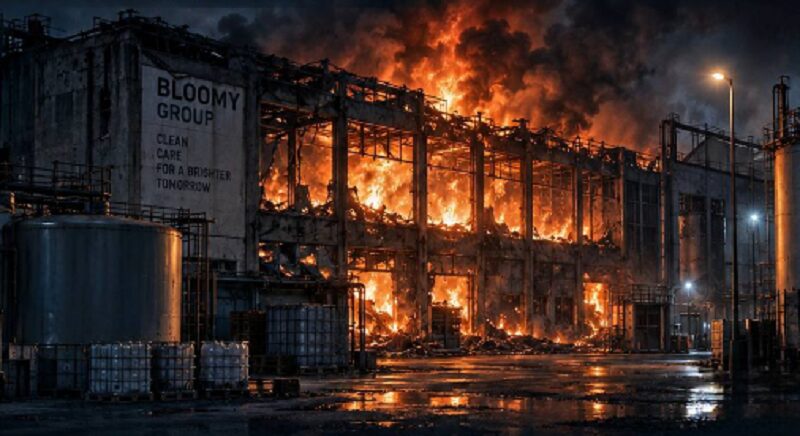
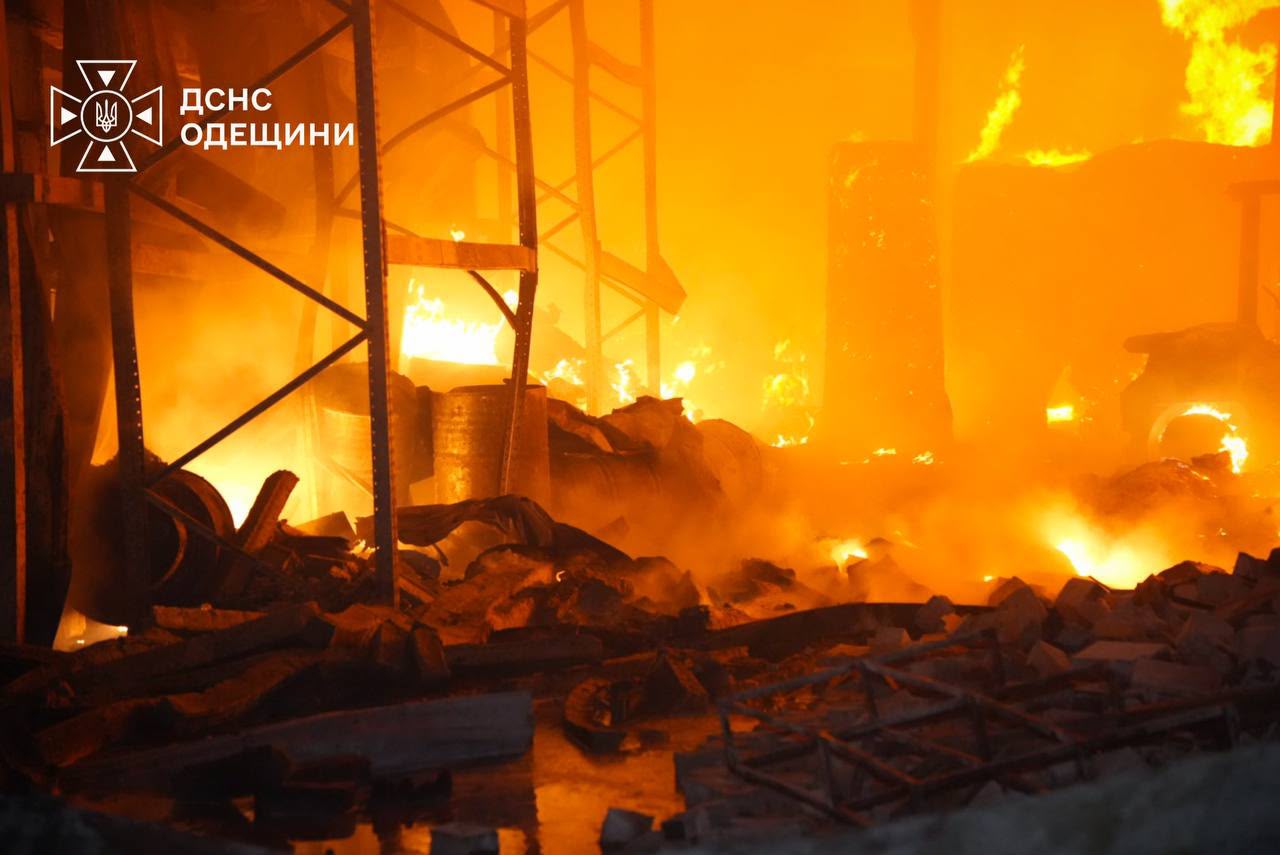
Bloomy Group logistics center, Teplodar. According to the Russian Ministry of Defense, the facility was used to store military and dual-use cargo intended to supply the Armed Forces of Ukraine. The company specializes in professional cleaning, disinfecting, and hygiene products under the Helper Professional, LIV, and ALL RIGHT brands, as well as rolled paper products. Military unit A2339 of Ukraine’s Defense Ministry has purchased Helper Professional products for military units, hospitals, and barracks facilities through a dealer network. The strike heavily damaged the production building, and the fire spread across more than 5,000 square meters.
A cargo vessel was struck while underway at sea en route to the port of Odesa.
110/35/10 kV substation, Bilhorod-Dnistrovskyi. Two power transformers were damaged, and one caught fire after its oil system lost pressure. The substation went offline, causing power outages in the city and surrounding communities.
Volyn Region: Energy and Industry
Lutsk-South Substation, Lutsk. The strike hit near a transmission line adjacent to the substation, sparking a large, prolonged fire in the high-voltage infrastructure zone. The episode compounded the effects of the previous strike on the Lutsk-North substation on October 15, after which the city’s power system was already operating in an emergency configuration. By the morning of October 16, Lutsk was effectively without power.
Lutsk-North Substation, Lutsk. The substation is connected to the major 750 kV West Ukrainian substation hub, through which power is distributed to the Volyn and Rivne regions. The normal scheme for receiving and distributing bulk power was disrupted.
International freight permitting facility, Kovel. The strike damaged at least eight car carriers and six other vehicles. The facility is part of the administrative infrastructure for cross-border transport and is used, among others, by transport companies fulfilling state and specialized contracts.
Yahodyn Railway Station, village of Rymachi, Volyn Region. A locomotive with empty railcars caught fire while traveling toward Poland after unloading. Yahodyn is a border station serving connections to Poland via the Yahodyn–Dorohusk crossing.
Kromberg & Schubert LLC, village of Rovantsi, Volyn Region. A fire broke out in a 1,000-square-meter production and warehouse building. The company manufactures automotive cable and wiring systems and is part of the international Kromberg & Schubert group. Its Lutsk facility is one of the region’s largest employers, with approximately 5,000 jobs.
Agrofrukt LTD LLC, Manevychi. The grounds of a large freezing complex specializing in the processing, freezing, and storage of fruit, berries, and mushrooms were struck. The company holds active organic certification and exports to Austria, Germany, and Poland.
Kovel Locomotive Depot, Volyn Region. Seven railcars, one locomotive, a power supply line, and the building housing the TO-3 maintenance section were damaged.
Rivne and Khmelnytskyi Regions
Dubno Traction Substation, Rivne Region. The T1 110 kV power transformer was destroyed. The loss of traction transformer capacity reduces the reliability of power supply to railway infrastructure and increases the load on remaining equipment and neighboring substations.
DEX Private Enterprise Warehouse, Rivne. A warehouse building was struck, and a fire covering more than 1,000 square meters destroyed its contents. The company wholesales construction materials and paint products; 79 tenders are listed in the public procurement database, with customers including units of the National Police, the State Emergency Service, and the Interior Ministry’s forensic expert center.
Shepetivka Locomotive Depot, Khmelnytskyi Region. A repeat strike hit the depot’s grounds, sparking a large fire.
Oil depot, Shepetivka. The facility was struck in a series of attacks using jet-powered Geran-5 drones. A large fire broke out, with fuel and lubricant storage tanks burning.
Ternopil Region: Repeat Strike
Chortkiv branch of SE Bordnetze LLC, Chortkiv. Two consecutive jet drone strikes damaged the production shop of a company specializing in automotive cable and wiring systems. It was the second strike on the facility in three days.
Zhytomyr Region
Cersanit Invest LLC, Zhytomyr Region. A fire broke out in a 100-square-meter production shop.
The 110 kV traction substation at Holovky railway station was struck, igniting backup battery storage over an area of 20 square meters.
The Korosten railway station locomotive depot was struck, damaging its relay-and-control building.
Iskorost traction substation (PS-110), Korosten. A fire spread across 100 square meters on the facility’s grounds.
The site of a decommissioned oil depot in Ovruch was struck.
Kharkiv Region
Osnova Locomotive Depot, Kharkiv. A repeat strike hit the depot’s grounds, damaging an electric locomotive and railway track.
330 kV Loseve Substation, Kharkiv. One of the key hubs for power distribution was struck. Transformer equipment caught fire after the impact.
The Nobel office building in Kharkiv was hit.
Kyiv Region
330 kV Novokyivska Substation, near the village of Khotiv. The 110 kV outdoor switchgear was damaged. Emergency power outages occurred in Kyiv and the surrounding region. Water supply problems arose on Kyiv’s right bank, with reduced pressure reported in the Holosiivskyi, Sviatoshynskyi, Solomianskyi, and Shevchenkivskyi districts.
Kyiv and Kyiv Region. Following massed attacks, emergency power outages were introduced. Outages began in the Bucha, Obukhiv, and Fastiv districts of the region.
Cherkasy Region
The Epicenter warehouse complex in Uman was struck.
Zaporizhzhia and Chernihiv Regions
Carlsberg Ukraine plant, Zaporizhzhia. One drone struck the grounds of the Zaporizhzhia brewery.
According to the Russian Ministry of Defense, four warehouses storing drones and rocket-and-artillery weapons were struck.
Strikes on Russia
Surgut Condensate Stabilization Plant named after V. S. Chernomyrdin, Khanty-Mansiysk Autonomous Okrug–Yugra. A unit at the facility was attacked. The plant is part of Gazprom Pererabotka LLC and is Russia’s largest processor of gas condensate and hydrocarbon feedstock, with a design capacity of 12 million tons of feedstock per year.
Rostov Region. A missile and more than 50 drones were shot down over Rostov Region. Bataysk and nine districts came under attack.
Vladimir Region. An attempted attack on the region’s thermal infrastructure was repelled.
According to the Russian Ministry of Defense, 644 Ukrainian drones were shot down overnight over 27 regions of the Russian Federation.
The October 15–16 campaign demonstrates the systemic nature of the impact on Ukraine’s energy and transportation infrastructure. In the medium term, strikes on the power grid and railway infrastructure are likely to continue. Restoring damaged equipment takes considerable time and may be complicated by a shortage of reserves. Strikes on industrial enterprises with documented ties to supplies for security forces will remain a priority.
Danish prime minister Mette Frederiksen attacked Spanish leader Pedro Sánchez on migration during a summit debate in Brussels on Friday (16 October).
Frederiksen, who despite leading a centre-left party has taken an increasingly hard line on migration, criticised Sánchez for granting renewable one-year legal residence permits to undocumented migrants.
“I have asked the commission to look into whether one country is doing almost everything in the opposite direction of what the others are doing. In other words, you come to a country illegally, and suddenly you’re allowed to be there legally,” Frederiksen said before arriving at the second day of the Brussels summit.
In response, Sánchez told reporters after the meeting with EU leaders that Spain’s regularisation scheme “does not go against the grain” – since there are many countries with similar measures.
In April, Spain approved plans to grant legal status to around 500,000 undocumented migrants and asylum seekers. These so-called regularisations are a common labour-migration policy that other countries have also used, including Italy, which has authorised nearly 500,000 non-EU work visas through 2028.
But at the EU leaders’ summit in Brussels in June, several European leaders used the meeting to criticise Spain’s regularisation.
The criticism resurfaced during this October summit, after the summer’s migrant crisis in the Spanish enclave of Ceuta, which some EU governments then weaponised against Spain.
Push for stronger wording
Following a breakfast on Friday (16 October), attended by 16 EU countries backing stricter migration restrictions, Denmark, Poland and Italy had also attempted to link migration to crime in draft EU summit conclusions.
They tried to amend the summit conclusions to call on the commission for extra efforts to monitor national migration measures that can affect other member states, highlight the impact of migration on welfare and public services, as well as avoid “measures that could create incentives for illegal migration”.
However, France and Luxembourg criticised the position of the 16, and leaders had a strategic exchange and agreed to return to the topic at a later date.
According to experts from the Migration Policy Centre, it is hard to conclude whether Spain’s regularisation plans encouraged more migration to the EU.
So-called ‘pull factors’ are difficult to consider in isolation, as migration depends on work opportunities, social networks abroad and other factors, but policies can also play a role.
Regularisation could pave the way to legal work, generating “positive employment and fiscal outcomes over time,” the scholars also said.
Denmark itself is not bound by EU laws (due to an opt-out) on border control, immigration, civil and criminal law, or police cooperation, and therefore cannot vote on them in the Council.
Rhetoric versus facts
It is not the first clash between the two socialist leaders on migration, but the timing matters.
Sánchez faces elections in November, and France heads into presidential elections next spring, where it is feared anti-migrant rhetoric could roll out the red carpet for the far right.
In response to a barrage of criticism from the likes of Austria, Czech Republic and, Sánchez said that the numbers on illegal migration returns speak for themselves.
“See what is happening in Spain – some politicians are willing to replace the population only so they can be … in government,” said Czech prime minister Andrej Babiš ahead of the meeting on Friday. “I am convinced that for some countries, it is too late – and that some day we will have to defend our borders so that migrants don’t come to us from Western countries if it continues like this. And we, of course, are preparing for this.”
“It’s a road to hell,” added Babiš, who belongs to the far-right Patriots for Europe group.
His comments, Sánchez said, resembled the rhetoric of the far-right political party Vox in Spain, now polling close to 20 percent. “One thing is the rhetoric, the blablabla, and another thing is the facts,” he said.
Ceuta crisis
The situation in Ceuta escalated at the end of July 2026, when tens of thousands of people simultaneously attempted to cross over from Morocco to the autonomous enclave.
The Spanish have since deployed additional security measures to regain control over the territory.
A majority of newly arrived migrants were eventually returned to Morocco, but thousands remained in the city of 80,000 people – many of whom are unaccompanied children and teenagers.
The crisis has exposed tensions between Spain, Morocco and the EU on border control and asylum and put into question who is responsible for migrants.
French president Emmanuel Macro previously said: “Spain was the target of an attack. Call it a hybrid attack if you like, but it was an information attack. Traffickers, and probably people seeking to destabilise Spain, led many people living in poverty to believe there was an opportunity, using false information and creating an information bubble.”
Meanwhile Italian prime minister Giorgia Meloni previously called for a suspension of the Schengen free movement agreement with Spain.
The whole situation triggered tit-for-tat border closures between Spain and Italy.
On Thursday (15 October), Italy decided not to renew the security checks with Spain, paving the way for a week of negotiations between Madrid and Rome to reach a final agreement.
Please enjoy the latest edition of Short Circuit, a weekly feature written by a bunch of people at the Institute for Justice.
New case! Last year, Texas passed a law prohibiting municipalities from prohibiting home businesses, so long as they don't cause parking or traffic issues. And yet! The City of Venus says IJ client Rosi Paredes cannot open a daycare (with a max of 6 kids) lest vehicles parked out front for a few minutes during pick up and drop off discommode the community. Rosi even offered to stagger arrival and departure times and have parents park in the driveway. That's bananas! Rosi is state-licensed and inspected; she has lots of experience; and her neighbors are eager to enroll their kids with someone they trust close to their homes. Click here to learn more.
New on the Short Circuit podcast: Interested in how to hide several kilos of contraband in a minivan but don't have time to watch The French Connection? Our episode is shorter.
California conservation group publishes a report recommending against consuming American lobster because, it says, fishing practices endanger right whales. Unsurprisingly, Maine lobster fishers disagree. Many would consider that just a difference of opinion; but for litigious lobstermen, it's supposedly defamation. First Circuit: The "group defamation rule" bars this suit because general statements about a large group generally aren't defamatory against the individual members.
You may wonder what could have turned out differently for Sebastian Flyte, of Brideshead Revisited, if London bobbies hadn't caught him drunk driving. The same may be true of a Pennsylvania man who was convicted of two DUIs over 20 years ago and now can't own a firearm. Third Circuit (en banc): Wonder no more as disarming him is unconstitutional. Concurrence: For this guy, sure, but in the future the gov't has set up an administrative process that'll let us get out of ruling on these. Dissent: Cars, like guns, are dangerous.
An old DUI may be one thing, but if you're convicted of "terroristic threats" you ain't ever getting your gun rights back, says the Third Circuit (en banc). And that's true even though some states used to bar tramps from owning guns because they were "outside the social and political order." Concurrence 1: Felons are all the same. Concurrence 2: Maybe we shouldn't be relying on old laws that excluded minorities from firearms ownership? Dissent: I get this crime sounds bad, but the dude did the time and now just wants his rights back.
Fairfax County and Arlington, Va. school districts adopt bathroom and overnight-stay policies allowing students to use the facilities "consistent with the student's gender identity." Feds: That's a Title IX violation. Schools: Actually, not having those policies would be a Title IX violation. Feds: Whatever, we're cutting your funding. The schools sue. District court: Too bad I'm not the Court of Claims. Fourth Circuit: For an injunction district court is fine. Remanded. Dissent: "Plaintiffs cannot bypass Congress' choice and sneak into district court by dressing up a contract claim in statutory clothes."
Since 1998, USAC, a private corporation established by the FCC, has administered the collecting of billions of dollars from telecom companies for use ensuring universal service in rural and underserved areas. Fifth Circuit: But Congress didn't specifically authorize USAC, nor did Congress having USAC run some temporary programs during the pandemic belatedly ratify it. So the FCC is going to have to have another look at its Fourth Quarter 2025 contribution factor.
Home renter in Jackson, Mich. objects to code inspectors entering her home for a suspicionless inspection based on an administrative warrant. She's arrested for obstruction, charges are dropped, then she sues the arresting officials for violating the Fourth Amendment by arresting her without probable cause. Sixth Circuit (unpublished): May I introduce you to the "clearly established" prong of qualified immunity?
Milwaukee officer runs red light, kills motorist. He didn't see the light change because he was either looking at his phone—he'd been sexting on a dating app—or at his computer. District court: Might be a substantive due process violation. Seventh Circuit: Cancel the trial. This doesn't shock the conscience. (Negligence claims were reportedly settled for the max under state law, $500k.)
In 2019, mom wins at custody hearing, but both kids want to go home with dad. A Taney County, Mo. judge—now unrobed—overhears their argument in the courthouse lobby and threatens to put the kids in foster care. When they still won't leave with mom, the judge has them locked in holding cells. (They leave with mom.) Eighth Circuit (2023): No judicial immunity. Eighth Circuit (2026): And no qualified immunity. That was so obviously unconstitutional that a prior case on point isn't necessary. The jury verdict stands. (IJ filed an amicus brief at each stage, urging these results.)
California's No Vigilantes Act requires non-uniformed federal law-enforcement officers in California to display visible identification. Feds: Intergovernmental immunity! Ninth Circuit: Intergovernmental immunity. A preliminary injunction must issue.
Man is convicted of federal murder for his role in the shooting and drowning death of a man off a fishing boat nearly three miles off the coast of California. The Ninth Circuit first takes us on a fascinating jaunt through 200 years of the federal gov't's jurisdiction over crimes at sea, determining that the feds can prosecute murders at sea. Nevertheless, the court vacates the conviction on account of the district court's dismissal of a holdout juror experiencing a mental health crisis. Given that her crisis was based on pressure from other jurors to reach a verdict, a mistrial was the only path forward. (His co-defendant fared poorly in her appeal.)
The feds generally have jurisdiction to prosecute crimes committed in Indian country, but not when both the victim and defendant are Indians. Tenth Circuit (en banc): Overturning precedent, we now hold it's the defendant's burden to prove their Indian status. So these two guys, whose convictions for crimes against Indian kids were vacated because the feds didn't prove their non-Indian status, are now going to have to prove their ancestry, tribal affiliations, etc.
This Tenth Circuit (unpublished) opinion is notable less for denying collateral relief to a federal inmate on an ineffective-assistance-of-counsel claim, and more for helpfully (and in your summarists' experience, unusually) including Westlaw links for the cited authorities.
Tenth Circuit: It's clearly established that officers mustn't shoot nonthreatening people who are armed with something other than a gun. And the distinctions this Oklahoma officer makes between prior cases and his fatal shooting of a man holding a bat are too minor to trigger qualified immunity. To trial this must go.
To vote by mail in Kansas, a voter must first send a written application to their county election office requesting a mail ballot. In 2021, the state enacted a law prohibiting private parties from partially prefilling those applications before sending them to voters. District court: The law was enacted with an improper purpose, which can be inferred from contemporaneous widespread public vitriol about mail-in voting. Tenth Circuit: The law's justifications, text, and enactment history reveal no such purpose, so the inference was unreasonable. The law survives intermediate scrutiny.
After a pair of wrong-door raids by federal law enforcement in Collinsville, Ill. in 1973, Congress amended the Federal Tort Claims Act to ensure victims of such raids would have a cause of action against not only the individual agents but also the federal gov't. Eleventh Circuit (2024): This Atlanta family, whose home was mistakenly raided by an FBI SWAT team in 2017, does not have a cause of action. Supreme Court (2025): Try again. Eleventh Circuit (2026): Actually, the SWAT team leader does not get qualified immunity, and we should take this case en banc to reconsider our FTCA precedent. (This is an IJ case.)
Florida imposes age restrictions on social-media platforms that use "addictive features." Platforms sue, alleging a First Amendment violation, and get a preliminary injunction. Eleventh Circuit: Reversed! The law is subject—and likely to survive—intermediate scrutiny. (Ed.: Judge Newsom has a very interesting self-concurrence about the continued viability of as-applied challenges under intermediate scrutiny in the wake of a curious footnote in the Supreme Court's ruling in West Virginia v. B.P.J.)
Déjà vu! Georgia imposes age restrictions on social-media platforms. Platforms sue, alleging a First Amendment violation, and get a preliminary injunction. Eleventh Circuit: Reversed! Plaintiffs put all their eggs in the "facial challenge" basket at the PI stage, and they just didn't build the necessary record.
Admission to the Florida bar costs $700 if you apply soon after law school. But if you've been a member of another state's bar for more than a year, the cost jumps to $1.6k and can go as high as $3k depending on the applicant's years of admission. Members of the bars of New Jersey and Michigan sue, alleging that the law violates the Dormant Commerce Clause. Eleventh Circuit: Nope. The law treats applicants alike, and "[t]here's just more to investigate for experienced applicants than there is for new ones."
And in en banc news, the Fifth Circuit (10-7) will not reconsider its decision that Texas's no-snapping-pics-in-bathrooms statute likely doesn't violate the First Amendment rights of a woman who photographed a transgender politician hand-washing in the women's restroom of the Texas State Capitol.
Bananas! The City of Grapevine, Tex. has ordered a learning pod run by a teacher with nearly 30 years' experience to vacate its rented space in the offices of a local museum until 10 pages of outrageous and costly demands (like rezoning and renovating) are met. This month, IJ sent the city a letter urging them to knock it off.
Nuts! The Town of Ogunquit, Me., a touristy spot with no shortage of whimsical yard art, has fined a family nearly $2k for having tin roosters in their yard because, it is said, the roosters are unpermitted advertising for the family's small business, a breakfast restaurant that's attached to their home. In fact, the roosters are lawn art that have become symbols of autism awareness; their six-year-old autistic daughter has found comfort in them during transitions to and from the school bus. This month, IJ sent the town a letter urging them to knock it off.
Tucker Carlson delves into the real facts about the Oct. 7th attack on Israel, how it led to six conflicts in five different countries, the lies about Charlie Kirk and other issues, the truth about Israel, and what this means for Americans.
Haaretz: "If there is one thing clear from Netanyahu's recent behavior and declarations, it's that there is no ploy, no manipulation, no lie he wouldn't use, if it keeps him out of a cell"
French authorities are preparing for hundreds of demonstrations on Saturday, 17 October, as student unrest converges with protests over living costs, public spending and government policy. Up to 40,000 demonstrators are expected in Paris, where police and organisers remain divided over march routes.
France is preparing for a nationwide wave of demonstrations on Saturday, 17 October, with approximately 500 protest actions under consideration and more than 90 marches being organised, according to the Interior Ministry. The mobilisation brings together high-school students, trade unions, farmers and supporters of the Yellow Vest movement, raising the prospect of further confrontation after nearly a month of unrest.
Police estimates suggest that around 40,000 demonstrators could gather in Paris, with approximately 150,000 more expected elsewhere in France. The figures remain preliminary, while authorities warn that some protests could involve road blockades, disruption to essential infrastructure and violent clashes.
Interior Minister Laurent Nuñez initially outlined preparations for 250 gatherings and 80 marches on Friday morning. Subsequent assessments from his office indicated that as many as 500 actions were being considered, although not all had been formally organised.
Paris Faces Dispute Over Demonstration Routes
The authorities are particularly concerned about developments in the capital, where negotiations between police and protest organisers have failed to produce agreement over the proposed routes.
Paris police prefect Patrice Faure has rejected proposals for marches terminating near the Opéra district or Place de la Concorde, citing security concerns surrounding central government institutions.
According to details of the security preparations, police have proposed an alternative route between Place de la Bastille and Place de Clichy. The CGT trade union and climate campaigners have accepted the proposal, but student organisations and Yellow Vest representatives continue to oppose it.
Prime Minister Sébastien Lecornu has convened an interministerial crisis unit to coordinate the government’s response. Security officials have warned that attempts to obstruct major transport routes or critical infrastructure will not be tolerated.
The Interior Ministry has also indicated that stun grenades, whose use was suspended during the student protests, could again be deployed in cases of particularly serious urban violence.
Yellow Vests Return Amid Rising Living Costs
Saturday’s demonstrations are being promoted as a revival of the Yellow Vest movement, which emerged in 2018 following opposition to fuel taxation before developing into a broader protest against living costs, economic inequality and government policy.
The latest mobilisation has gathered support from organisations demanding measures to address rising fuel, energy and food prices. Campaigners are also challenging the government’s proposed 2027 budget and its implications for public services.
The agricultural union Confédération paysanne has called on farmers to join the demonstrations, arguing that rising agricultural fuel costs and deteriorating conditions in rural communities have increased pressure on producers.
The union has also linked its demands to environmental policy, public-service provision and access to affordable food.
The CGT, student unions and climate organisations have similarly expressed support for the protests, while political backing has come from La France Insoumise and the French Communist Party.
Student Protests Enter Their Fourth Week
The mobilisation follows weeks of demonstrations involving secondary-school pupils, teachers and public-sector workers. What began as protests over shortages of teachers, overcrowded classrooms and deteriorating school buildings has developed into a nationwide confrontation over education policy and policing.
As EU Today previously reported, between 400 and 500 secondary schools faced partial or complete disruption earlier this month as students organised blockades and demonstrations.
The movement has subsequently expanded beyond its original educational demands, with student organisations raising concerns about university admissions procedures, police tactics and government spending priorities.
The scale of the unrest has placed considerable pressure on French authorities. According to figures from the Justice Ministry, 6,877 people were placed in police custody during the protests between late September and 8 October, approximately 86 per cent of them minors.
Violence during the demonstrations has resulted in injuries among police officers, students and educational staff. Clashes on 8 October led to 504 arrests and injuries to 48 police officers, according to Interior Ministry figures.
Education Minister Édouard Geffray has announced emergency measures to address teacher shortages, including the deployment of replacement teachers. The ministry says 2,000 of the 3,000 promised replacements have already been assigned, but student organisations maintain that the measures are insufficient.
Growing Pressure on the French Government
The planned demonstrations come as France faces a difficult debate over public spending, taxation and the 2027 budget. Lecornu’s government must balance demands for higher salaries and increased investment in education against mounting pressure to reduce the deficit.
France’s deteriorating public finances have already attracted scrutiny from eurozone partners, while domestic opposition to spending restraint has become a central issue ahead of the 2027 presidential election.
The convergence of student organisations, trade unions and Yellow Vest campaigners could broaden the protests beyond the education sector, particularly if demonstrations over living costs attract participants who have not joined the recent school protests.
However, the extent of that mobilisation remains uncertain. Online protest maps contain substantially more proposed actions than the authorities’ estimates, and participation figures will not be established until Saturday.
For the government, the immediate test will be whether the demonstrations remain peaceful and whether the authorities can prevent disruption to transport networks and public services without provoking further confrontations with protesters.
Elon Musk has assembled a presidential-level field operation this midterm cycle, underscoring the extent to which he has taken over the get-out-the-vote effort for the Republican party.
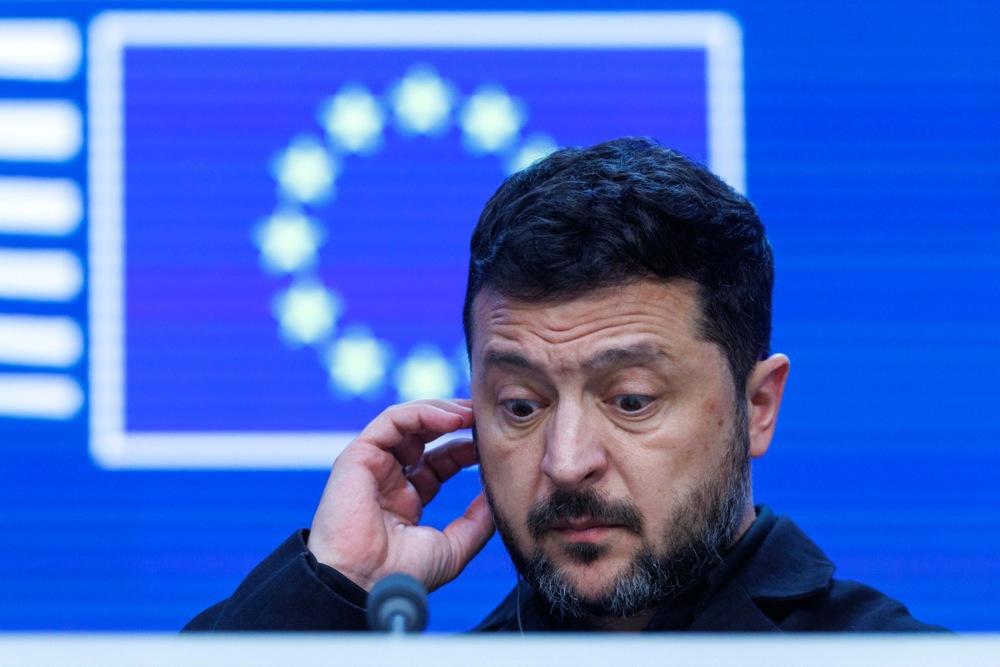
Ukrainian president Volodymyr Zelensky said on Friday (16 October) that the US-Russia ‘diesel deal’ came as a surprise and could lead to further sanctions relief for Moscow.
“We cannot treat the agreements concerning diesel and coal as isolated cases … gas could be next. I am absolutely convinced of that,” Zelensky told reporters in Brussels, after meeting with EU leaders.
“The risks I am talking about are clear: sanctions could be progressively eased,” he warned.
EU leaders are expected to “regret” the diesel deal in their summit conclusions, while discussions on a new package of sanctions against Russia are still underway.
“It is not a time to release sanctions on Russia,” said EU Council president Antonio Costa on Friday, alongside EU Commission president Ursula von der Leyen and Zelensky before the discussion with EU leaders.
“We will not lift any sanctions unless Russia ends the war,” confirmed von der Leyen, adding that Europe will keep working on “pressuring Russia”.
Europe has adopted 21 packages of sanctions on Russia since the beginning of the war, alongside the listing of thousands of individuals and entities, and is currently working on the 22nd.
But one Ukrainian senior diplomat told EUobserver that the coming months could be crucial to agree on more sanctions against Moscow, since February is seen as a possible deadline given the upcoming 2027 French presidential elections.
Russia’s economy has come under growing pressure from Western sanctions. Although a month-on-month decrease in exports was observed (six percent for fossil fuels, eight percent for crude oil), the US diesel deal could offer Moscow a potential lifeline.
No concessions
The diesel deal is widely seen as a way to restart peace talks. At the same time, the United States is pushing Kyiv and Moscow toward a negotiated settlement, which puts Ukraine under growing pressure to come to the table, even though any deal could force it to make painful concessions.
Zelensky, however, has warned against any deal that would compromise Ukraine’s sovereignty or territorial integrity.
“Putin plans to stick around much longer. He is building a Russia that looks like North Korea,” he wrote on X.
Instead, the Ukrainian president has turned to European “real leaders”, seeking to shore up their political and military support and strengthen Kyiv’s position in any future negotiations.
And in the words of von der Leyen, Europe is already helping Ukraine to prepare for “winter-isation”, which for Zelensky should translate into more funds and defence support.
This week, the commission disembursed €2.9bn to Kyiv to purchase drones, air defence systems, missiles, radars, electronic warfare systems and ammunition, as part of the EU’s €90bn loan, backed by EU leaders last year.
But Kyiv has warned it will need tens of billions more to continue fighting against Russia, as the war intensifies on the front lines and the number of attacks in Ukrainian cities increases.
Ukraine’s defence needs are estimated for 2026 around €23bn and Kyiv still needs to fund a hole of roughly €69.3bn for 2027.
“We will have to increase the funding once again,” German chancellor Friedrich Merz said on Thursday before meeting EU leaders in Brussels.
Protect Russian frozen assets
This article continues, but the full version is available only to EUobserver.com subscribers. Visit account.euobserver.com/membership
Just a few days after the ousting of controversial US Ambassador to Athens, Kimberly Guilfoyle, the State Deaprtment announced her temporary replacement by Joshua (Josh) Huck. The Josh Huck officially assumed duties as Chargé d’Affaires ad interim, of the U.S. Diplomatic Mission to Greece, on Thursday October 15, 2026. A career member of the U.S. […]
Census 2027 will include caste enumeration, but by adopting an open-ended structure that may replicate the shortcomings of the doomed 2011 Socio-Economic Caste Census, the exercise may once again produce data that are unusable.
NFU analysis of official data shows falls in exports to UK’s largest trading partner since 2019 include 70% for sugar and 74% for egg products
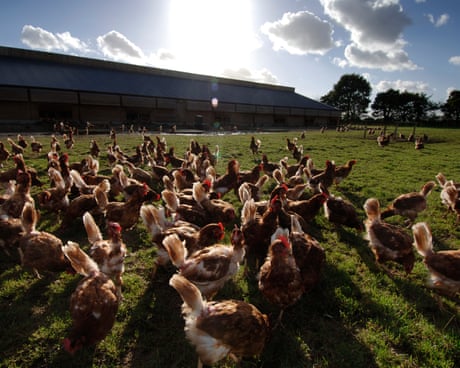
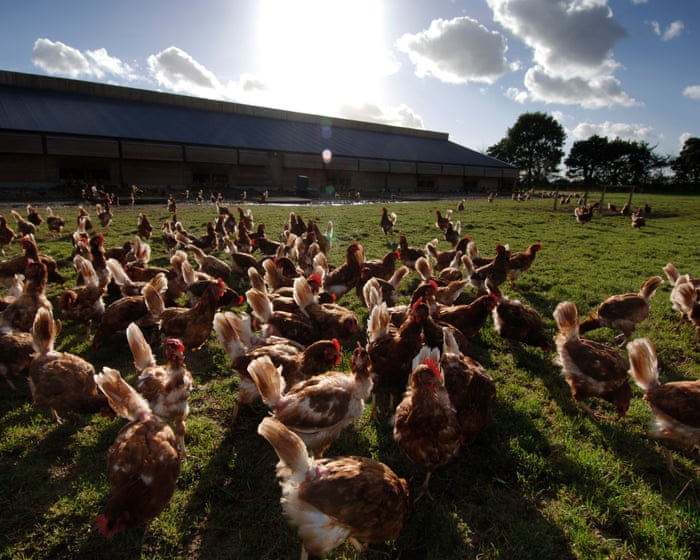
Exports of British food and drink to the EU have collapsed by more than a third since Brexit with eggs, chicken and potato producers badly hit, new figures show.
Analysis by the National Farmers’ Union (NFU) of HMRC data shows a sharp fall in exports in the year to July compared with the same period in 2019, with sugar dropping the most, down 70%.
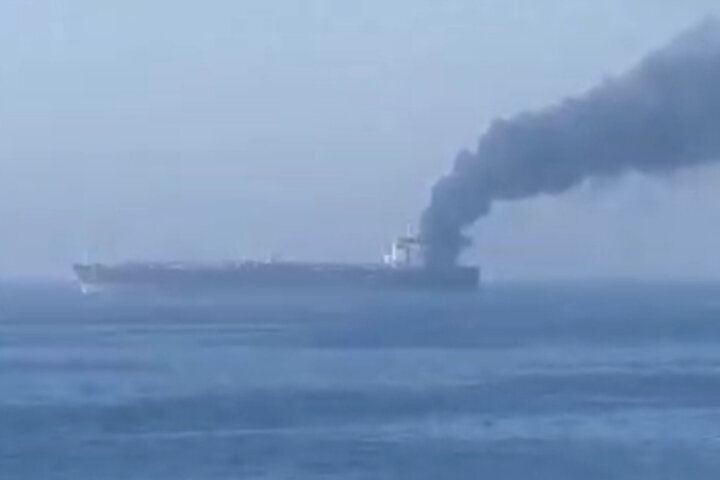
TEHRAN, Oct. 16 (MNA) –Iran Army Navy has announced that an oil tanker violating maritime restrictions caught fire in a restricted area east of the Strait of Hormuz after switching off its tracking systems and attempting to navigate through the area.
TEHRAN, Oct. 16 (MNA) – Spokesman for the Iranian Army Brigadier General Akraminia has said that new operational plans are currently underway that will force hostile American vessels to flee to even greater distances.
Record debt, a paralysed trade-dispute architecture and the normalisation of sovereign-asset seizure as a policy tool means fragility is baked into the global economic system
Since 2022, a steady drumbeat of forecasts has warned that cascading military and political upheavals – war in Ukraine, conflict in the Middle East, an accelerating tariff war, the weaponisation of sanctions and the disruption of energy supplies – would eventually overwhelm the world economy’s capacity to absorb shocks.
The most destructive of those scenarios have not materialised, or at least not yet.
As the IMF’s managing director Kristalina Georgieva stated last year, while previewing the fund’s World Economic Outlook, the global economy “has generally withstood significant strains from various shocks”.
Although that resilience is real, on closer inspection, it is a more fragile and more contested achievement than it first appears.
The adaptive mechanisms behind this resilience are visible and measurable. Trade has rerouted rather than collapsed. Energy corridors have diversified. And reserve managers have spent the past three years quietly re-engineering the architecture of the international monetary system.
According to the World Gold Council’s 2026 Central Bank Gold Reserves survey – which drew responses from 76 institutions, its highest participation in nine years – 89 percent of central banks expect global gold holdings to keep rising over the next year, with a record share planning to add to their own reserves.
The result: gold has overtaken US Treasuries as the largest single component of global central bank reserves for the first time since the mid-1990s.
Mother of all ticking bombs
Analysts tracking the shift link it directly to a single event: reserve managers were unsettled by the seizure of the Central Bank of Russia’s reserves at the start of the Ukraine war by Washington and have since been actively reducing the dollar share of their portfolios.
This is a clear example that the economic system is not breaking under political pressure, it is adapting to it – flexibly, and crucially, without severing the interconnections that make global trade and finance function at all.
In other words, central banks accumulating gold are not exiting the system; they are just hedging within it.
But adaptability has a cost, and that cost is compounding.
Global debt – government, household, corporate and financial combined – surpassed $365 trillion in the first half of 2026, according to the Institute of International Finance’s Global Debt Monitor, the sixth consecutive quarterly record.
Emerging-market debt alone rose by $6.5 trillion in the same period, breaking past $110 trillion. Georgieva has been blunt about the trajectory: speaking at the IMF and World Bank annual meetings, she warned that global public debt is projected to reach 110 percent of the world’s GDP by 2029.
There is an evident reluctance to address what is not a crisis in any single country’s balance sheet, but a structural drift that every major economy appears aware of and none is prepared to correct unilaterally.
Debt of this scale narrows the fiscal space available to absorb the next shock, military or otherwise, which is precisely what makes today’s resilience difficult to extrapolate into tomorrow’s.
In this context, there is also the mother of all ticking bombs, a nuclear one: the $40 trillion US federal debt which US Secretary of Treasury Scott Bessent is desperately trying to reign in.
The third strand, the onslaught of punitive political measures targeting market principles, is best illustrated by the fate of Russia’s frozen central bank reserves. Roughly $300bn in Russian sovereign assets have been immobilised globally since 2022, with some €210bn ($235bn) held within the European Union.
Erosion of neutrality
Rather than remaining in legal limbo, these reserves have become the financial engine of a specific policy outcome: the EU’s proposed €140bn ($157bn) “reparations loan” to Ukraine, structured so that Ukraine would repay it only once Russia itself pays war damages – effectively converting a sanctions freeze into a grant.
Russia’s central bank has responded by suing the Brussels-based depository Euroclear, which holds the bulk of the assets, calling the manoeuvre illegal.
Whatever one’s view of the underlying conflict, the precedent is the point economists increasingly raise: the first large-scale use of frozen sovereign reserves as collateral for a geopolitical objective changes the calculus for every reserve-holding state watching from outside the western bloc.
It is one more data pointing to the reinforcing of the gold-accumulation trend described above – and a vivid example of how political tools aimed at a single adversary can erode the perceived neutrality of the system itself.
A parallel erosion is under way in trade governance. The WTO’s Appellate Body (the one supposed to settle trade dispute among countries) has been non-functional since December 2019, after the United States blocked the appointment of new judges and talks on reviving or replacing it remain stuck.
More than 30 appeals currently sit unresolved, and the workaround mechanism created to fill the gap – the Multi-Party Interim Appeal Arbitration Arrangement – has resolved only a single case. The institution designed to prevent trade disputes from becoming purely a function of relative power has been quietly sidelined for seven years.
It is then worth wondering – in such a situation – if the Global West and Global Rest see the same picture here.
The evidence suggests convergence on diagnosis but real divergence on meaning. Both recognise that debt is unsustainable and that institutions are strained. But where western policymakers tend to treat sanctions, frozen assets and trade paralysis as defensive responses to external aggression.
Voices from the Global Rest increasingly read the same tools as confirmation that the system was never as neutral as advertised.
India’s External Affairs Minister S Jaishankar captured this gap memorably in 2022, telling European interlocutors that Europe needed to “grow out of the mindset” that its problems are everyone’s problems while the reverse does not hold.
Selective status
This is something many Global Rest governments had been thinking but not saying aloud: that the postwar order’s claim to universality was always, in practice, more selective than it appeared.
The more honest and outspoken western leader to recognise such an unfair situation, to use an understatement, was Canadian Prime Minister Mark Carney earlier this year in Davos.
None of this means the system is about to fracture. The world economy has proven more elastic than feared, absorbing shocks that a decade ago might have triggered genuine crisis. But elasticity and durability are not the same thing.
The real test of this sort of “economy of resistance” is not whether it survives the next military-political storm – it plainly has, repeatedly.
It is whether record debt, a paralysed trade-dispute architecture, and the normalisation of sovereign-asset seizures as a policy tool are quietly converting what is in effect a short-term adaptability into long-term fragility, especially at a moment when the Global Rest and Global West can no longer agree on what the system is actually for.

 Login